
Out of stock
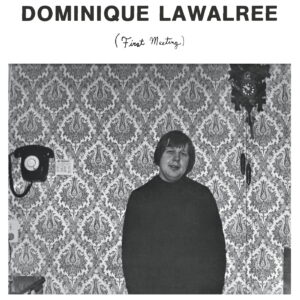
LP
Dominique LAWALRÉE
“First Meeting”
Finally issued on vinyl again, the impossibly gentle, sad, life-affirming ‘First Meeting’ is a record we’ve described as one of the loveliest chance-encounters we’ve ever had with music, and by all measures one of our favourite albums of all time. If you’re into anything from Erik Satie to Virginia Astley, Brian Eno’s short-lived Obscure label to Laila Sakini, or if you like the idea of timeless outsider music for piano, wurlitzer, bells, flute and voice, this precious selection of intimate wonders is ready and waiting for you to melt into. It might just change your life too.
‘First Meeting’ is an indispensable introduction to the wonderfully moving and expressive parlour music of Dominique Lawalrée - a singular figure who sadly passed away in 2019. Lawalrée had been recording music since 1976, almost appeared on Brian Eno’s Obscure label and counted Gavin Bryars a long time friend and fan of his music. It took until the first edition of this set compiled by Adrian Rew in 2017, however, for us to first encounter his work. Drawn from self-released material recorded between 1978-1982 on his own Brussels-based Editions Walrus (what a name?!), First Meeting reveals a quietly sublime and intimately idiosyncratic sound in 9 parts (15 on the expanded download version) - so quiet and intimate in fact that we feel like a privileged fly on the high ceiling of his apartment studio, twitching our antenna whilst he strokes his keys and synths into almost indescribably beautiful tapestries.
In the enlightening liner notes by Britton Powell, Lawalree’s music is perfectly described as “wallpaper; ornate and repetitive” when compared with the music of Satie and Eno, with whom he clearly shares an affinity for subtle and meditative musicality, but the distinction lies in the inherent surreality of his music and its ability to entice and encourage closer listening. Lawalrée is kind and generous with memorable melodies too, but layers his recordings with incidental room sounds and touches of more exotic, Eastern influence that reveal themselves with each new listen, perhaps even more so now thanks to Rashad Becker’s exquisite remastering, which sound like he’s removed a veil of cobwebs we didn’t even realise was there in the first place.
There’s a beautiful nuance of consonance to Lawalrée’s music that tantalises the ear with its warbling harmonic complexity and elegant pacing, yet it’s never challenging; conveyed with an honesty that points to his equal appreciation of Satie, Feldman and Stockhausen as much as The Beatles or Led Zeppelin, the latter of whom Lawalrée analysed for a book of second-by-second analysis, culminating in a meeting with The Beatles’ engineer, Geoff Emerick, to whom he pointed out mistakes in the classic recordings which nobody else has ever noticed.
28,00€
Out of stock
LP
Kali MALONE
“Velocity of Sleep”
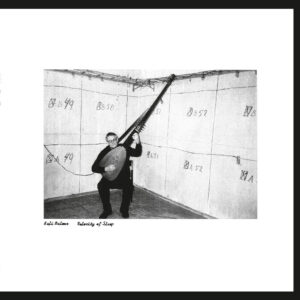
Composed, recorded and produced in Stockholm 2015-2016, ‘Velocity of Sleep’ sees Kali Malone’s work rendered in a septet of strings, gongs, lute, electronics and tape in the vast R1 Reaktorhallen (Sweden’s first nuclear reactor), the electroacoustic studio EMS, and at the Royal College of Music in Stockholm. Her presence is crucial, and liminal, making precise use of tuned sine waves and Studer B67 tape manipulation, while instrumental performance is handled by Peter Söderberg performing on the long-necked Theorbo (a large baroque lute, pictured on the sleeve), Samuel Löfdahl and Oskar Mattsson on Gongs, Vilhelm Bromander on Double Bass, Marta Forsberg on Viola and Adam Grauman on Viola de Gamba - all uniting to produce what feels like a geological time lapse and distillation of European and Indian classical drone musicks.
As far as opening solo statements go, ‘Velocity of Sleep’ is among the most memorable to have emerged this past decade from slow music and experimental classical paradigms. Its languorous yet rigorous consolidation of ideas from across the aeons crosses paths with others before her - the musics of Pauline Oliveros, Phill Niblock, Harley Gaber, Oren Ambarchi all spring to mind - but more importantly helped reset the limits of contemporary music in Malone’s own image. The 3-part, 43 minute work is an ideal example of how staid notions of early and classical music have been jettisoned to instead focus on fundamentals of tone, timbre, tuning, space and temporality with a radical and transfixing effect coolly detached from any directly traditional/sacred meanings.
Peter Söderberg’s justly tuned Theorbo plucks a slowly evolving additive pattern expanded by frippertronic tape delays on the 20 minute title piece, setting a stark tone for a quietly breathtaking resonance of gongs and floating sine waves in ‘1113’ that rest right on the biting point of sublime dissonance, while ‘In Light of Marwa’ pitches into a sort of raga-folk-drone tuned with the fine, durational intensity recalling Harley Gaber’s ‘The Winds Rise In The North’ and earthy cadence of Pauline Oliveros’ vision, yet somehow concentrated, refreshed in a way that’s best felt, and quite impossible to describe.
30,00€
Out of stock
LP
Maria W HORN & Sara PARKMAN
“Funeral Folk”
‘Funeral Folk’ pairs multi instrumentalist composer Maria W. Horn with violinist, singer and composer Sara Parkman on a soundtrack commission for Mattias Lech & Lisen Allard’s dance performance of the same name. Drawing on a shared, formative background playing in the same band as teenagers in their hometown Härnosand, Horn & Parkman naturally and skilfully collapse their worlds of influence, ranging from sacred songs and minimalist spectral music to Finnish black metal and Swedish folk, into epic arrangements for synths, zithers, hurdy gurdy, guitars, mellotrons and lamenting vocals. The results patently play into XKatedral’s love of slowly evolving harmonic and timbral sounds, but also reach to far more climactic appeal than we’ve come to expect from the label, edging on the sort of musical dramaturgy one might better expect from Anna von Hausswolff, or comparable to Okkyung Lee’s ‘Yeo-Nuen’. Stirring stuff, we tell thee.
Flocking around a mutual passion for the sort of progressive music coming from their native north Sweden as teenagers, as well as personal deep dives into their family’s Christian heritage of several generations, Horn & Parkman reassess the meaning of “rites of loss in a de-ritualised and dying civilisation” with a crafty blend of the sacred and profane guided by a heightened emotive intelligence.
Cinematic opener ‘Evighetens Sommar’ or ‘The Summer of Eternity’ establishes a grand sound stage spotlighting hushed vocals and luminous string swells, where ‘Till Margaretha’ follows with sky-clawing Finnish black metal riffs giving way to a keening Karelian vocal lament in staggering fashion. At its core ‘kyrie’ pushes this formula to its most impressively proggy peaks, and the choral vignette ‘Mementomori’ recalls Cucina Povera’s eyrie minimalism, seemingly prepping the way for the final send off ‘Hornalaten’, an unhurried 10 minutes of glistening timbral shifts and soothing drones that feels solemn yet optimistic, and as enchanting as Pauline Oliveros’ drone prayers.
33,00€
In stock
LP
LINIEN II
“1948-49”
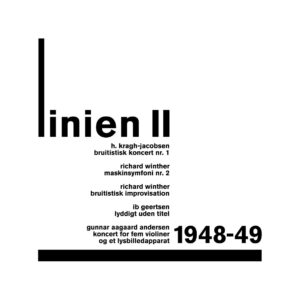
This release presents the earliest known Danish works of sound art. Five works from 1948-49 created by the visual artists Richard Winther (1926-2007), Hans “Bamse” Kragh-Jacobsen (1913-92), Niels Macholm (1915-1997), Ib Geertsen (1919-2009) and Gunnar Aagaard Andersen ( 1919-1982), all of whom were part of the artist group Linien II.
“This isn’t music; it is painters making noise paintings”
- Richard Winther
“One ought to be able to make a line that is free of the canvas, standing straight in the air – one ought to be able to do that with sounds”
- Gunnar Aagaard Andersen
The story of Linien II's sound experiments is a story about how a handful of young, idealistic, self-aggrandizing and silly Danish artist dandies in 1948 by a detour invented their own concrete sound art, almost exactly at the same time as radio technician and composer Pierre Schaeffer worked on developing his musique concréte in Paris – and even presented their concrete sound works to the public at an exhibition in Copenhagen before Schaeffer's first and landmark musique concréte work 'Cinq études de bruits' was premiered on French radio.
The release presents five experimental sound works that in different ways represent the artists’ attempts at finding new solutions to a set of formal aesthetic concerns in relation to concrete art by transposing them into the medium of sound. It is a story that hasn’t been told before, as the works until now have only existed in two sets of copies on the original fragile lacquer records, both of which have been locked deep inside museum archives. Now the historical sound works can finally be heard when the Institute for Danish Sound Archeology are releasing them on LP almost 75 years after their recording.
Accompanying the release, a comprehensive art historical text knits together the story about the creation and context of the experimental sound works.
25,00€
Out of stock

LP
Timothy ARCHAMBAULT
“Chìsake”
Chìsake [Algonquin]: to chant; to conjure; to cast a spell; this generally involves a shake-house, or shaking tent, in which the conjurer goes into a trance; the conjurer then has an out-of-body experience, going into the future to predict coming events, or into the past; as well as going into any locality in the universe to seek out someone or something generally practiced for ancestral divination.
The unaccompanied flute pieces within this album are adaptations of Anishinaabeg shaking tent chants. The Anishinaabeg also known as Anishinaabe are a group of culturally related Indigenous peoples that reside in areas now called Canada and the United States. They include the Odawa, Saulteaux, Ojibwe (including Mississaugas), Potawatomi, Oji-Cree and Algonquin peoples. The word Anishinaabeg translates to “people from whence lowered”. The Anishinaabeg origin myths describe their people originating by divine breath.
The shaking tent or conjuring lodge was the setting for a divinatory rite performed by specially trained shamans otherwise known as Chìsakewininì. During the shaking tent ceremony the Chìsakewininì would construct a special cylindrical framework typically of birch or spruce uprights planted in the ground with respective wood hoops to bind it together. This created a tensile structure of which birch bark, deer skin, or cloth was used as a covering. Rattles of caribou and deer hooves, or cups of lead shot, were tied to the frame. The floor was usually softened with freshly cut spruce boughs. The vertical axis of the shaking tent represents the realm of mediating beings, while the horizontal axis the earth or world of humans. The Chìsakewininì would enter the shaking tent at night and once inside would not be visible from onlookers. The singing of chants and drumming would summon the Chìsakewininì’s spirit helpers, whose arrival was signified by animal cries and erratic tent shaking. During this transcendent state, the Chìsakewininì could dispatch these spirit helpers or Manidò to distant regions to answer questions from the onlookers about the most auspicious places to hunt, the well-being of a distant relative, and what would happen in the future.
The chants were usually sung using vocables before, during, and after the Chìsakewininì entered the shaking tent. Like many other similar divination ceremonies, singular or collective, the opening chants begin lyrically. They gradually turn to more reductive abstract structures midway and then end in lyrical chants. This symbolizes the performer and listener leaving the external literal world, entering a more abstract state of mind, and then returning. Traditionally all songs were carved on birch bark for record-keeping with mnemonic pictographs or other marks for future use. Tally mark clustering, sometimes used for song-keeping throughout the Anishinaabeg, is used for this album’s track titles and numerical sequence.
The album intro begins with the shaking of a necklace of otter penis bone, fish spine, bear teeth, elk teeth and deer hide, gifted from Algonquin Elder Ajawajawesi. It is meant to focus the listener’s attention before the flute pieces begin. The warble or multi-phonic oscillation prevalent in the middle tracks traditionally represented the “throat rattling” vocalization of the tonic note or sometimes known as the horizon of which the melody floats off of. Due to the repetition of multi-phonic oscillation the performer will breathe erratically creating an altered state correlating with the Chìsakewininì ceremonial actions. All songs are repeated seven times to signify the seven sacred directions: east, south, west, north, above/sky, below/earth, and center.
-Timothy Archambault
*
Timothy Archambault is a Miami based Indigenous flute player, composer and architect. His repertoire includes traditional Canadian Algonquin flute songs (recorded for the Smithsonian National Museum of the American Indian Archives in 2007), early 20th-century Indigenous music and contemporary music by Indigenous composers. He has recorded extensively and received commissions from the Metropolitan Museum of Art, Agnes Etherington Art Centre, National Gallery of Art East Building, and the Winterville Mounds Association. He is a Hereditary Senator of the Kichesipirini Algonquin First Nation, a member of the Métis Nation of Quebec, First Nations Composer Initiative, and co-founder of The Creative Destruction.
21,00€
In stock

LP
Peter REHBERG
“at GRM”
Shelter Press and Ina grm are pleased and moved to present two previously unreleased recordings of Peter Rehberg, two live performances given at the GRM which, each in their own way, vividly illustrate the extent of his sonic palette.
On 22 July 2021, Peter Rehberg passed away, leaving a great emptiness in his wake. Many initiatives have already celebrated or will soon celebrate his memory and the titanic work he put at the service of so many artists - a whole musical community, in fact - through Editions Mego. INA grm, Shelter Press and Stephen O’Malley, who are continuing some of the collaborative Editions Mego sub-labels (Recollection GRM, Portraits GRM and Ideologic Organ), wanted to pay tribute more specifically to the musician Peter Rehberg, and to his immense talent.
Peter Rehberg, as an artist, has collaborated with the GRM on numerous occasions, both with Stephen O’Malley (as KTL) and solo. This release features two concerts given for the GRM, each time as part of the Présences électronique festival. The first concert, given on 15 March 2009 at the Maison de la Radio in Paris, marked the first collaboration between Peter Rehberg and the GRM and the beginning of a long and fruitful friendship. The second concert took place on 6 March 2016. Between these two concerts, 7 years have passed, 7 years in which the ties between Peter Rehberg and the GRM have been strengthened, 7 years in which Peter Rehberg’s music has flourished. What is striking in these two concerts is how Peter Rehberg’s unique musical sensitivity and ‘grammar’ can be heard beyond the instruments. For while the first concert is pure laptop music, the second is extended to the field of modular synthesis. However, in both concerts, the elements that are so personal to Peter Rehberg’s music are present and combine in a layering of sonic abrasions, raw sensations and a sensitivity that is as much about formal awareness as it is about the invocation of overwhelming emotions, even though a little hidden behind a radicality that is always a bit provocative. Peter Rehberg offers us a “portrait music”, a music that gives some clues about the personality of its author and whose absence continues to deepen an inconsolable sadness.
Live performances by Peter Rehberg at le Centquatre-Paris for INA grm’s Présences électronique festival, recorded on March 15, 2009, and March 6, 2016.
Mastered by Giuseppe Ielasi
Cut by Andreas Kauffelt at Schnittstelle, Berlin
Photo by Magdalena Blaszczuk
Sleeve design by Stephen O’Malley
25,00€
In stock

2 LP
Robert TURMAN
“Flux” (clear)
"Flux" is the 1981 debut solo outing of Robert Turman, an American multi-instrumentalist and avant-garde composer. Until recently, Turman was perhaps best known for his contributions to the ballistic NON project with Boyd Rice, as well as other obscured U.S. industrial acts such as Z.O. Voider.
In the summer of 1981 Turman decided he would take a drastic turn from the noisy/electronic/industrial work of his compatriots, and began work on what is now the classic "Flux" cassette. "Flux" was originally self-released in extremely limited numbers. Weary of the noisescapes of old, he set out to create long-form minimalism utilizing kalimba, piano, "Mini-Pops Jr." drum machine, and tape loops to create a complex bed of interweaving micro-stasis'. The results of these new experiments were as beautiful as they were perplexing.
A curious dusty fidelity carries these classic tracks across four sides of vinyl, including all of the original "Flux" content. These compositions glow with a sprawling, slow motion haze that's light years ahead of its time. "Flux" reveals wide spectrums of sound from melancholic kalimba and percussion patterns to slowed down, syrupy Exotica. Turman had complex ideas in his mind yet only the simple technologies of the day were at hand. Hear the click of the stopping and starting Tascam 3340 open-reel tape machine as one hand presses the "record" and "play" buttons and the other plays piano phrases. While there are similarities in style to Classical Minimalism, Turman's sound and vision is his own and is exclusive to his limited discography.
Released in a limited edition 2xLP set, Lovingly remastered and cut by Rashad Becker at Dubplates and Mastering from the original c-60 cassette master.
Original cassette artwork and scans provided by Aaron Dilloway.
2022 repress, clear vinyl.
24,50€
In stock
2 LP
Robert TURMAN
“Flux”
"Flux" is the 1981 debut solo outing of Robert Turman, an American multi-instrumentalist and avant-garde composer. Until recently, Turman was perhaps best known for his contributions to the ballistic NON project with Boyd Rice, as well as other obscured U.S. industrial acts such as Z.O. Voider.
In the summer of 1981 Turman decided he would take a drastic turn from the noisy/electronic/industrial work of his compatriots, and began work on what is now the classic "Flux" cassette. "Flux" was originally self-released in extremely limited numbers. Weary of the noisescapes of old, he set out to create long-form minimalism utilizing kalimba, piano, "Mini-Pops Jr." drum machine, and tape loops to create a complex bed of interweaving micro-stasis'. The results of these new experiments were as beautiful as they were perplexing.
A curious dusty fidelity carries these classic tracks across four sides of vinyl, including all of the original "Flux" content. These compositions glow with a sprawling, slow motion haze that's light years ahead of its time. "Flux" reveals wide spectrums of sound from melancholic kalimba and percussion patterns to slowed down, syrupy Exotica. Turman had complex ideas in his mind yet only the simple technologies of the day were at hand. Hear the click of the stopping and starting Tascam 3340 open-reel tape machine as one hand presses the "record" and "play" buttons and the other plays piano phrases. While there are similarities in style to Classical Minimalism, Turman's sound and vision is his own and is exclusive to his limited discography.
Released in a limited edition 2xLP set, Lovingly remastered and cut by Rashad Becker at Dubplates and Mastering from the original c-60 cassette master.
Original cassette artwork and scans provided by Aaron Dilloway.
2022 repress, black vinyl..
23,50€
In stock

LP
Thierry MONNIER
“Loose Connection”
Limited edition of 100 copies. Includes 2 postcards.
Work from this French guitarist has been reviewed before, primarily his work with Sun Stabbed and the, quite frankly brilliant named La Morte Young, but also a solo release (Vital Weekly 1095). The previous one was primarily electronic, but he solely uses an electric guitar for this new one. "This LP present tracks recorded at home for the neighbourhood pleasure during lockdown", and unfortunately, no reactions from the said neighbourhood were captured. However, I would not have minded hearing some responses, as Monnier's music isn't altogether easy listening. At times quite noise-based with lots of feedback thrown around, but it is not just about feedback. I believe all this is improvisation, yet none of this is quite regular. Monnier lets his guitar burn and rip, explode, but also the music finds its way through the tall grass, approaching you like a deadly snake. Sometimes the guitar is an object, such as in the opening piece, 'Baryon'. Sometimes there are bunches of stabs and loosely notes or heavy wails of distortion. This makes the album (eight songs in total, one extra as a bonus digitally) quite varied, which I think is a great thing. If these pieces had been too similar, the music would lose some of its raw power, whatever Monnier chose to play. Now, with all the variations, the music held my interest throughout. Monnier delivers a record here that is very unusual; not improvisation, noise, or electro-acoustic music, it is a bit of everything, and that is the beauty of it. - Vital Weekly 1342
21,00€
In stock

LP
Toshi ICHIYANAGI – Michael RANTA – Takehisa KOSUGI
“Improvisation Sep. 1975”
Toshi Ichiyanagi, Michael Ranta and Takehisa Kosugi originally got together in the summer of 1975 for an open-air concert in Sapporo. The concert felt like a great success but was unfortunately not recorded. As the desire arose to record together, they managed to arrange a studio session in the NHK Studio in Tokyo, with presence of sound engineers.
What was supposed to be a soundcheck for this session became the session itself: a haunting 50-minute séance of intense avantgarde improvisation using a large instrumentation and live processing (tape echo, ring modulation, phasing). A trident travelogue of the momentum masterfully controlled by the ensemble spirit, transcending the boundaries of psychedelic underground.
Official reissue of this underground classic from 1975, originally released in a tiny edition on the small Japanese Iskra label.
As the original master tapes of these recordings seem to be lost, the master had to be taken from an unplayed original LP copy. It was carefully restored and mastered by Jos Smolders with amazing result.
23,00€
In stock

LP
Johannes FRITSCH
“Kyo Mu / Hochtöner”
First LP release of Johannes Fritsch, long-time member of the Stockhausen Ensemble.
Kyo Mu (1982) – 30:20
For Shakuhachi and Tape
Johannes Fritsch: electronic and concrete sounds
Hitomi Endo: Shakuhachi
Weltmusik-Kongress, Vlotho 11.10.1982 – première recording
Hochtöner (1974) – 18:19
For Flute, Viola, Percussion, Synthesizer and Tape
Johannes Fritsch: Viola
Rolf Gehlhaar: Percussion
David Johnson: Flute, Synthesizer
Composed 1974, recorded 1975 at Feedback Studio Cologne
Johannes Fritsch (1941–2010) was an award-winning composer, musician, publisher, studio owner, author and music teacher.
Following his studies at Cologne University and the Cologne Musikhochschule (musicology, sociology, philosophy; viola, composition with Bernd Alois Zimmermann), Fritsch received his viola performance degree. From 1965–70 he taught music theory at the Cologne Conservatory. From 1964 to 1970 he was a member of the Stockhausen Ensemble, participating in numerous musical premieres, concert tours (e.g. the world exposition in Osaka in 1970), radio broadcasts and recordings. From 1971 to 1984 he was head of the composition course and the seminar for New Music at the Akademie für Tonkunst in Darmstadt. From 1984 to 2006 he was Professor of Composition at the Hochschule für Musik und Tanz Köln.
After returning from Osaka in 1970, Fritsch and two fellow former members of the Stockhausen Ensemble, Rolf Gehlhaar and David Johnson, established the Feedback Studio Köln. This was followed in 1971 by the founding of the Feedback Studio Verlag – the first publishing house owned by composers in Germany, which Fritsch mainly managed on his own from 1975 to 2010.
Fritsch’s complex musical estate consists of approximately 130 works: it covers electronic music, chamber music, ballet, theatre and film music, organ compositions, an opera and pieces for large orchestras. Although Fritsch’s compositions are varied, all of them convey a strong interest in new sound combinations and sound colours.
KYO MU (Japanese for ‘emptiness and nothingness’) is a composition for the Japanese bamboo flute shakuhachi und audiotape, premiered in 1982 by Hitomi Endō at the Second Weltmusik-Kongress in Vlotho, Germany. The recording on this LP is from the premiere and was made by the Feedback Studio. The version for shakuhachi was performed on numerous occasions in Europe as well as Japan. According to Johannes Fritsch, however, the piece can also be performed by tenor recorders or alto recorders.
The scores of Kyo Mu are accompanied by a passage from the spiritual treatise Hitori Mondo (‘A Solitary Dialogue’) from 1823, in which the mendicant monk and shakuhachi player Hisamatsu Fūyō discusses shakuhachi blowing as a religious discipline to help liberate oneself from the rational mind: 39 pieces are 36 pieces, 36 pieces are 18 pieces, 18 pieces are three pieces, three pieces are one piece, one pieces is no piece, no piece is the breath of the mind [kisoku], the breath of the mind is nothing besides emptiness and nothingness.
HOCHTÖNER, written in 1974 and premiered in the same year at the PRO MUSICA NOVA festival in Bremen, Germany, is a harmonic composition referencing Pythagorean tradition. It was written for and performed by the three Feedback Studio founders: Johannes Fritsch, viola; David Johnson, flute and synthesizer; Rolf Gehlhaar, percussion. The trio and the live electronics make this piece typical of the 1970s work of the Feedback Studio. HOCHTÖNER was performed several times in the 1970s during concert tours; the recording on this LP was made in 1974 at a Feedback Studio Hinterhausmusik concert.
Fritsch described the piece in a text for a CD published by cybele records in 2006:
“Various levels of the composition interpenetrate each other. On the one hand, there is the harmonics theory of the tone systems: there are sounds that are overtonal in nature (natural harmonics, whistle-tones on the flute) and ‘undertones’: a frequency divider built by David Johnson is used to make audible the undertones of a high-pitched fundamental tone, together with naturally tempered spectra. As well as major (arithmetic division of the intervals according to the formula a+b:2), minor (2ab:a+b) and different temperaments (vab), the ring modulation between flute and viola plays an important role. The ring modulator provides the sums and the differences of the frequencies from the two inputs (and the products of the amplitudes) at the start. The summation tones are an octave higher than the arithmetical division of the intervals; the differential tones give the spectra clearly recognisable roots depending on their degree of consonance. Besides this constructive principle underlying the harmonic form, the piece contains self-quotes, quotes, and associations from music history and non-European music. All instrumental sounds are amplified by microphone and blend with the sounds produced by the tape and synthesizer, making it often impossible to tell which sounds have been produced ‘live’ and which are taped. The figures and formations appear as in a dream, fragments in a broad, ever-changing expanse of sound, limited only by the high frequencies.”
Special thanks to Ingrid and Lena Fritsch
26,00€
In stock

LP
RG ROUGH
“70”
A musical jigsaw made out of sounds from the 70s, ripped to shreds, reshaped, reassembled and coerced into fitting.
This long piece in 10 parts (70 to 79) takes you on a journey through a decade which may have existed in a parallel universe...
For fans of electronic German music of the 70's and beyond...
18,00€
In stock

LP
Brunhild FERRARI & Christoph HEEMANN
“Stürmische Ruhe”
After her stunning collaboration with Jim O’Rourke (Le Piano Englouti, BT055), Brunhild Ferrari returns to Black Truffle with Stürmische Ruhe, her first duo with Christoph Heemann. A legendary figure in underground music, Heemann has quietly produced a unique body of work since his beginnings with the absurdist cutups of H.N.A.S. in the mid-1980, including collaborations with Merzbow, Organum and Nurse With Wound, the eerie psychedelia of Mirror (with Andrew Chalk), In Camera (with Timo van Lujik) and Plastic Palace People (with Jim O’Rourke), and the precise cinema pour l’oreille constructions of his solo works. Created together in Ferrari’s Parisian studio (once shared with Luc) between 2011 and 2014, Stürmische Ruhe is a single half-hour piece that folds rain and storm recordings into a intricately woven fabric of haunted electronics, unexpected edits and disorienting processing. Banging with the jarring thump of a slamming door (an element that will reappear periodically throughout the piece as a kind of punctuation mark), it is immediately obvious that concrete sound is used here in a free, poetic way outside of the strict confines of documentary field recording. The wind captured by Ferrari’s microphone roars and whistles, accompanied by thick clusters of wavering tones whose unpredictable rises and falls in volumes are synchronised with the bumping and thudding of windows and doors. At some points the microphone sound melts into a wavering low-bit digital smear before fanning out into broad, atmospheric depths. The cinema for the ear constructed here suggests not linear narrative or documentary, but an organic flow of cross-fades, double-exposures and abrupt cuts, a free-associative dream in which wind and water take on mythical characteristics. Throughout the piece's second half, layers of synthetic floating tones and pinging upward glissandi negotiate a constantly shifting balance with wind-borne whispers and rustles, at times dropping to silence, at others rising up with elemental force. As Ferrari explains in her liner notes, Stürmische Ruhe is a meeting of ‘completely opposite sound worlds’ in which ‘almost-violence’ is joined with a ‘reconciling harmony’. Reaffirming the infinite possibilities of the musique concrète tradition while avoiding its academic tropes, Stürmische Ruhe is accompanied by tri-lingual liner notes from Brunhild Ferrari and arrives in a sleeve graced with the beautiful art informel paintings of her father, Wolfgang Meyer Tomin. Cut at 45rpm for maximum fidelity.
28,50€
Out of stock

LP
Toshiya TSUNODA
“Landscape and Voice”
Black Truffle is pleased to present Landscape and Voice, a radical new work (and rare vinyl release) from major Japanese sound artist Toshiya Tsunoda. Undoubtedly one of the most influential artists working with location recordings since the 1990s, Tsunoda’s work possesses a rigorously searching quality that sets him apart from his contemporaries. Tsunoda is known to many listeners for the subtle atmospheric poetry of his early Extract from Field Recording Archive series, which focussed on vibrations recorded in various indoor and outdoor environments in his native Miura Peninsula, often inside pipes, bottles and other vessels. In more recent years, his work has explored the implications of his claim that field recording should be seen as ‘depiction’ rather than ‘documentation’. He has explored disorienting editing and processing in his works with Taku Unami, and, perhaps most radically, represented Maguchi Bay as a kind of kinetic sculpture for shaking speakers by removing all but the inaudible low frequencies from a field recording (Low Frequency Observed at Maguchi Bay).
One of the recurrent concerns of Tsunoda’s recent work, as he explains in the crystalline liner notes accompanying this release, is ‘exploring how I can establish a subjective relationship with an environment, rather than seeing it merely as an object to be recorded’. This has taken various forms, from documenting simultaneously an outdoor environment and the blood flowing through the listener/recorder’s body (captured with a stethoscope) on The Temple Recordings, to representing his own experience of the landscape as made up of ‘grains of space and time’ by inserting looped fragments into field recordings in Grains of Spring.
On Landscape and Voice, this meeting between subject and object becomes an almost mystical union between the natural and the human. As with all of Tsunoda’s work, a relatively simple concept leads to compelling, thought-provoking results. Landscape and Voice combines vowel sounds spoken by six voices with short, looped fragments of field recordings, their noise character suggesting consonants: voice and landscape thus join together in something like words. The record consists of three pieces, each using a different, richly evocative field recording, which periodically freezes, catching on a looped fragment to which is synchronised an abruptly looped spoken vowel sound. The lengths between these interruptions vary, as do the tempi of the loops. The interruption of these lushly immersive recordings of the world – bristling with bird song, rushing water, distant traffic, and clinking metal – only serves to intensify them, as if the depicted environment itself had been returned to the listener each time it abruptly reappears. At the same time, the constant interruption creates an uncannily frozen effect, as if the recorded environment were an object rather than a stretch of recorded time. When combined with the bare human presence of the vowel sounds, the result is both austere and magical. Pressed on 45RPM for maximum fidelity, in a gorgeous sleeve designed by Lasse Marhaug with liner notes from the composer, Landscape and Voice is a radical proposition from one of the deepest thinkers in contemporary sound.
25,00€
In stock

LP
Julia REIDY
“World in World”
Black Truffle is pleased to announce World in World, the latest solo offering from prolific Berlin-based guitarist-composer Julia Reidy. Where the recent trilogy of LP releases – brace, brace (Slip, 2019), In Real Life (Black Truffle, 2019), and Vanish (Editions Mego, 2020) – focussed on increasingly lush electronic settings for Reidy’s propulsive fingerpicking and auto-tuned vocals, arranged into wide-ranging side-long epics, World in World finds Reidy refocusing on the core elements of their approach while simultaneously pushing into challenging new areas. Comprising nine pieces ranging between two and seven minutes in length, the album’s opening title track promptly introduces the distinctive palette of just-intoned electric guitars, subtle electronic processing, and voice that is rigorously explored throughout. Where much of Reidy’s guitar work on previous recordings explored rapidly pulsed cycling figures, here notes often hang in the air in a more spacious, lyrical fashion. The elasticity of rhythm and non-linear repetition of pitches initially suggests improvisation until the listener becomes aware of the precise arrangements of spatialised lines. At times, World in World suggests classic bedroom electric guitar works of the 1990s such as Loren Connors’ Airs or Roy Montgomery’s Scenes from the South Island; like those works, Reidy’s possesses a wonderfully live ambience, with frequent pedal clicks adding to the music’s powerful sense of intimacy. In Reidy’s case, however, the yearning, melancholic mood of Connors or Montgomery is tempered by the unorthodox guitar tuning, which at points produces a unique and uncomfortable effect somewhere between the hyper-precision of Harry Partch or Lou Harrison and Jandek’s slack-stringed descent into the void. While World in World plots out its terrain with a bold single-mindedness that allows some pieces to appear almost as variations on a common theme, subtle changes in emphasis distinguish each track. Tactile percussive interjections skitter across the tremolo tones of ‘Paradise in Unrecognisable Colours’, while ‘Ajar’ ramps up the role played by the electronics, with glitching pitch-shifted and back-masked textures threaded through the guitars and thickly harmonised vocal layers. Ranging from autotuned melodic lines to buried murmurs, Reidy’s voice is a frequent presence throughout these nine pieces, at times creating the impression that a more conventional series of songs lurks underneath the chiming microtonal guitars. On the stunning ‘Poised’, whispers and distant, ghostly wails surround the layers of guitars, at times suggesting the foggiest outer reaches of Liz Harris’ Grouper. Both rigorously experimental and emotive, World in World is undoubtedly Julia Reidy’s finest work yet.
25,00€
In stock

LP
Oren AMBARCHI
“Live Hubris”
Black Truffle is pleased to announce Live Hubris, documenting the hypnotic and electrifying live performance of Oren Ambarchi’s 2016 LP Hubris by a fifteen-strong band at London’s Café Oto. Over three days in May 2019, Oto toasted Oren Ambarchi at 50/Black Truffle at 10 with Ambarchi and a large group of close friends and collaborators in a series of performances that interspersed existing projects with new collective endeavours, culminating with this: fourteen members of the extended Black Truffle family together on stage, joined by one special virtual guest, to translate the intricately studio-constructed layers of Hubris into a muscular live band workout.
Operating with only the bare minimum of pre-gig preparation after the planned afternoon rehearsal had to be wrapped up prematurely due to noise complaints, the gargantuan group lurches into motion with a 21-minute rendition of ‘Hubris Part 1’, powered by the pulsating electronics of Konrad Sprenger (the ‘ringmaster’ at the ensemble’s core) and no less than seven electric guitars spinning a web of intricately interlocking palm-muted polyrhythms. The layers of closely related but metrically distinct lines create ripples of shifting accents, flickering changes in emphasis that ricochet along the endless central pulse. Gradually building in density, this motorik continuum becomes the backdrop for the haunting tones of Eiko Ishibashi’s processed flute and an extended feature from long-distance guest Jim O’Rourke on guitar synth.
After the brief interlude of the second part, where Albert Marcoeur-esque guitar arpeggios accompany a halting attempt at phone conversation, the full ensemble gears up for the epic side-long rendition of ‘Hubris Part 3’. Now joined by the astonishing triple drum line-up of Joe Talia, Will Guthrie and Andreas Werliin, the layered pulse of the opening piece becomes a burning funk-fusion groove. Beginning on a medium simmer, the ensemble initially stick to its pulsating one-note mantra, over which Ambarchi unfurls a beautiful example of his signature shimmering Leslie-toned guitar harmonics, eventually joined by Ishibashi’s flute and some brooding, distorted dissonance from Julia Reidy’s guitar. Building steadily for the first nine minutes, the heat then rises dramatically with a first, gloriously loose chord change: with the all drummers now rolling and tumbling like a twice-cloned Jack DeJohnette circa 1970, Mats Gustafsson enters on baritone, his tortured roars and shrieks driving the band to peaks of insane intensity. Finally, the exhausted ensemble drops out, leaving only the jagged, skittering fuzz of Ambarchi’s guitar, brought to an abrupt conclusion at the command of crys cole. Arriving on hot pink vinyl with artwork by Lasse Marhaug and an extensive selection of live photos by Ivan Weiss and Fabio Lugaro, Live Hubris brings this ambitious and outrageous evening of music to the safety of the home stereo.
23,00€
In stock
LP
Claire ROUSAY
“Everything perfect is already here”
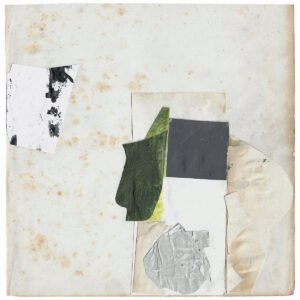
When words trail off at the beginning of claire rousay’s “everything perfect is already here,” ornate instrumentation is waiting to fill a void left by the breakdown of language. Yet it becomes clear as we trace rousay’s collaged sonic pathway that breakdown, of meaning and also of melody, is also a place to rest. everything perfect… is made up of two extended compositions that cycle between familiarity and unknowing. There are seemingly infinite ways to feel in response to these pieces of music, which shift tone across their languid duration, earnest like a familiar song but unbound from the emotional didacticisms of lyrical voice and pop form.
Rousay builds a fluid landscape around the acoustic contributions of Alex Cunningham (violin), Mari Maurice (electronics and violin), Marilu Donovan (harp), and Theodore Cale Schafer (piano), whose respective melodies weave gently in and out, sometimes steady, sometimes aching, sometimes receding altogether in deference to less overtly musical sounds. That is, percussive texture in the form of unvarnished samples and field recordings: the rattle and rustle and the stops and starts of life unfurling, voices sharing memories nearly out of reach, doors closing, wind against a microphone. Everything comes from somewhere in particular, possessing the veneer of the diaristic, but sound’s provenance is secondary here and so these details become tangled and fused. On this release I hear such details not as individual ornaments or stories but the collective architecture of the greater composition. It’s an architecture that is not quite formed and thus full of openings out to the world unfolding.
“The world unfolding,” that’s a kind way of saying change, movement, loss, transformation. Things rousay here indexes, not without shards of desire or pain, still somehow what I hear is coarse peace in the in-between. These two pieces sweep you away and then bring you to earth, but which is which, anyway? Where am I now? What is different outside of me? What is different inside of me? Um. I think. everything is perfect is already here, like the answers to these questions, is loose and beautiful in surprising ways.
The music guides a certain experience of the world around. In claire’s music there is this marriage—not just a pairing or juxtaposition but an interrelationship, an eventual confusion—of song/texture, narrative/abstraction, figure/ground. Everything comes from somewhere in particular but not just the voices, the field recordings, the what is being said or meant, what matters is “the where you are now.” There are so many ways of anchoring oneself in the present, some have to do with fantasy or storytelling and some with accepting what is.
These two compositions find peace between these modes. They sweep you away and then bring you to earth, but which is which, anyway? Their mode of feeling is inquisitive. Where am I now? What has changed outside of me? What has changed inside of me? The music, like the answers to these questions, is loose and beautiful in surprising ways.
21,00€
Out of stock
LP
Giancarlo TONIUTTI / Massimo TONIUTTI
“Stratégies Obliques I”
Second part of the "Stratégies Obliques" which this time brings together the two Toniutti brothers on this split LP. The principle is the same as Stratégies Obliques Ø. They both had to create their pieces using Oblique Strategies, an oracular deck of cards by Brian Eno and Peter Schmidt intended to be used as a prompt during the creation process. Any cards they used would become the titles of the plays.
-
Giancarlo Toniutti
A Tinct Myrrh (discard an axiom, just carry on)
Composed in March 2021. All sounds recorded early 2021.
Studio work from March to April 2021 at la stanza nera, Udine.
Sound sources : eraly percussion, rustler, iron wares, prepared slabs, domestic idiophones.
Massimo Toniutti
The Background Colour of a Paragraph (ask your body, mute and continue)
Recorded and composed : February/April 2021
1. sounds and ideas and experiments (February)
2. the domestic installation (March)
3. composition of the selected material (April)
200 copies, white vinyl.
23,00€
In stock
LP
L’OCELLE MARE
“Sans Chemin”
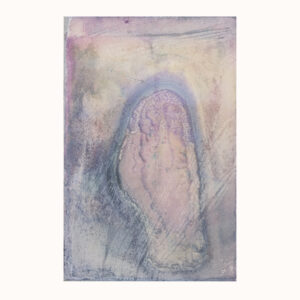
A ritornello that awakens, unfolds, disappears, resurfaces, transforms, forgets itself, awakens again.
A ritornello in folds and hollows, which gives us something to see as well as to listen, a theatre of acoustic shadows where each timbre, each rhythm, each modulation, is born from a meticulously refined gesture. “I don’t write music, it’s an assemblage of gestural memories”, says Thomas Bonvalet. Gestures found, accidentally or not, through long practice: such keyboard rubs on such guitar while preparing a concert, such tambourine vibrates in a singular way when placed on such amp, the duration and intensity of breath given to the flute so that the strings of the open piano decline and reverberate the harmonics...
Gestures that are both very skilful and very simple, that sovereignly refuse the categories of modern and archaic, natural and cultural. Instead, they summon an entire genealogy, both intimate and collective, musical and technical, the memory of a thousand different pieces from a thousand different eras. There is no path, in fact, no path at all in this dismantled world.
There are, however, these gestures that allow us to search for the human measure, that allow for a new attention to be given to bodies, objects, space. Gestures that invent new relationships between themselves and other ways of being alive, gestures to be worked on and shared endlessly. “It’s fragile, it can always fall apart. I have to fight, to stay in tune with what is at stake in a piece, to breathe into it what will make it stand up.
And so the ritornello continues its mutations in the folds and hollows of our own memories.
21,00€
In stock
LP
Andrew PEKLER & Giuseppe IELASI
“Palimpsests”
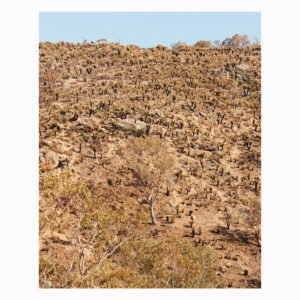
Both noted for strikingly forward-thinking bodies of solo work dating back to the 1990s, the duo of Andrew Pekler & Giuseppe Ielasi - collaborators for the better part of a decade - reemerge with 'Palimpsests’, their first outing with Shelter Press. Built from deconstructed layers of texture, tone, and arrhythmic percussiveness, the album’s 2 sides distill 6 years of work into 9 splintered, airy reimaginings of minimalism - each surprising, creatively rigorous, and startlingly beautiful - that rest at the outer reaches of contemporary electroacoustic practice and musique concrète.
Based in Berlin and Milan respectively, Andrew Pekler and Giuseppe Ielasi have individually carved singular paths across numerous disciplines within experimental music for more than 20 years, each deploying sampling, synthesis, and acoustic sources to weave their own, distinct worlds of sonorous abstraction. Brought together by years of friendship and a shared devotion to layered texture and complex, fractured structure, the pair first joined their creative energies in 2013, a collaboration that culminated as the LP, ‘Holiday For Sampler’, issued by Planam.
'Palimpsests’, the duo’s second outing, draws its material from a series of improvisations made by the Pekler and Ielasi in Milan during 2015. Over the ensuing six years, those recordings would undergo various transformations - cut, reworked, sampled, and added to by each artist, working at geographic distance between Berlin, Kyoto and Monza - before culminating, like the album’s title suggests, as a unique manifestation of musical palimpsest; “an object reused and altered, while still bearing visible traces of its earlier form”.
With each of the album’s compositions nodding toward a city with which Pekler and Ielasi hold biographical connections, 'Palimpsests’ constructs sound as poetic metaphor; a series of ghosts - traces of memory, image, and action - cut and reassembled, in cycling permutations, before been set into action at a glacial pace with layered, transparent forms.
Defined by remarkable restraint and pointillistic precision, across the album’s two sides Pekler and Ielasi weave the fractured remnants of their sessions - reduced to glitches and warbling fragments of texture and tonality - into pulsing expanses of spatial ambiance that defy imagism, blur the boundaries between the synthetic and organic - reducing their sources to a series of unknowns - recast the boundaries of electroacoustic practice on markedly singular terms.
Shelter Press is thrilled to present 'Palimpsests’, another brilliant outing from the duo of Andrew Pekler and Giuseppe Ielasi. Issued in a limited edition of 500 copies on black vinyl, with artworks on printed inner and outer sleeves by Traianos Pakioufakis.
21,00€
In stock
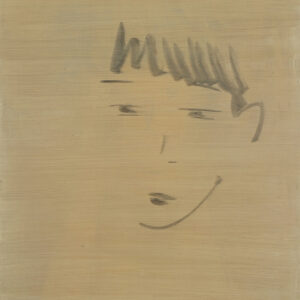
LP
Félicia ATKINSON & Jeffre CANTU-LEDESMA
“Un hiver en plein été”
From its earliest utterances, experimental music has been particularly disposed to transnational and cross-cultural collaboration. Seeking the answer for a fundamental problem - how to transcend the boundaries of difference, distance, and time - it presents a means to find common ground and communicate through the elemental form of sound. Over the last 5 years, this precisely what the duo of Félicia Atkinson & Jefre Cantu-Ledesma has achieved, intertwining sublime sonorities across the geographic expanses between their respective homes in France and the United States. Their third album for Shelter Press, ‘Un hiver en plein été’ (‘A winter in the middle of summer’) - the first to have been largely recorded by Atkinson and Cantu-Ledesma together in the same space - distills a mesmerizing pallet of acoustic and electronic sources into an open discourse of radically poetic forms, offering glimpses of warmth and intimacy waiting in the post-covid world to come.
Both veteran experimentalists with celebrated bodies of solo work behind them - each traversing the challenges of electroacoustic practice in their own singular ways - prior to their first recorded outing in 2016, Félicia Atkinson and Jefre Cantu-Ledesma had only crossed paths in person once, initially meeting in San Fransisco during 2009. The mutual bond formed during that brief encounter flowered into their first LP, ‘Comme Un Seul Narcisse’, followed two years later by 2018’s ‘Limpid As The Solitudes’. Both recorded remotely - sending files back and forth, fortified by conversations on a vast range of subjects - these two albums were guided by impassioned conceptual nods to Guy Debord, Baudelaire, Brion Gysin and Sylvia Plath, while seeking resolutions for the challenges and unique possibilities that working at a distance provoked.
Where the triumphs of its predecessors rose from the bridging of disparate moments and divergent spaces, ‘Un hiver en plein été’ culminates as a celebration of closeness, a result of Atkinson and Cantu-Ledesma working together in the studio, responsively in real time, for the first time. Recorded in Brooklyn during August of 2019 - a handful of months before the pandemic would impose chasmic distances across the globe - its six discrete works, carefully crafted and finalized over the ensuing year, evolve seamlessly across the album’s two sides, weaving a sprawling tapestry of sonority, within which both artists retaining their own voices and visions, while drawing each other towards uncharted ground.
Atkinson likens the recording of ‘Un hiver en plein été’ to have been akin to “a playground”, each artist “hungry for each sound, a bit like the rush in the Louvre in Godard’s Bande à part”, to which Cantu-Ledesma adds that the process seemed to have had “a mind of its own”, with both “along for the ride”. This organic sense of entropy and enthusiasm - a joyous exploration of the unknown - guides the momentum of the album’s evolving arc, as unfolding chasms of ambient space ripple with humanity, life, and fleeting glimpses of the actions that led to its material core.
Crafted from deconstructed melodic elements and drifting long-tones - laden with subtle nods to Indian classical ragas and free jazz - searching patterns of speech, textural elements captured within the studio and the outside world, and searching tonal and percussive interventions, ‘Un hiver en plein été’ coheres as a multi-faceted series of electroacoustic dialogues; nesting conversations between two artists working at the juncture of abstraction and narration, field recording and harmony, and the philosophical and phenomenological, in search for the meaning of friendship, and its manifestation in pure sound.
21,00€
In stock

LP
Jan BRUYNDONCKX
“Rails and Other Tracks”
First ever release of concrete and electronic collage works by Belgian underground sound explorer Jan Bruyndonckx. This album contains autonomous compositions, music for film and documentary; all independently recorded in his private studio between 1958 and 1965.
A small collection of adventurous and mysterious sound evocations with text/poetry (Paul De Vree) recited by Julien Schoenaerts.
21,00€
In stock
LP
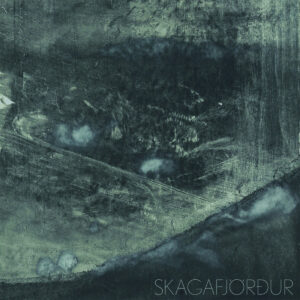
Andrew CHALK & Timo van LUIJK
“Skagafjördur”
Soundtrack to the silent film ‘Skagafjördur’ by Peter Hutton
Recorded live in Ghent, 14 April 2018 during
‘Night of the Experimental Film’ an event by Art Cinema OFFoff.
Originally released on cassette by B.A.A.D.M.
“A sea of clouds casting silent shadows on frozen time
A sky of flickering waters curling over the immense permanence Fractured light shrouded in
mist dissolving into shaded pigment The frontier of solitude melting in the winds of patient
eternity.”
12” LP in black vinyl, includes a duotone printed insert and set of three postcards.
19,00€
In stock

LP
AF URSIN
“Trois mémoires discrètes”
New edition 2022. 3 introspective instrumental (English horn, flute, percussion, double bass, Hammond organ) compositions performed, recorded and mixed by Timo van Luijk during 2010 - 2012 at Kulta Saha. In memory of Hugo Billens, Anja Hiilesmaa, Dirk de Hollander, Ger Boeske, Ourgon and Tosca.
21,00€
Out of stock
LP
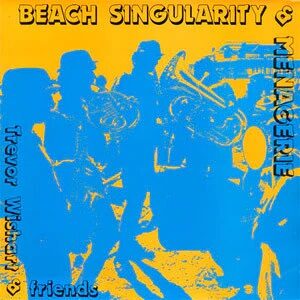
Trevor WISHART
“Beach Singularity – Menagerie”
Trevor discovered a long-forgotten box of this LP, which had never been opened. All copies are "new" but there is some age-related wear & fading to the sleeves, nothing too bad.
Beach Singularity was performed on the beaches at Morecambe, Cleveleys, St Anne's & Southport in the summer of 1977. Beach Singularity is an excerpt from a day long happening in which the composer performed with an ensemble that featured saxophonist Lyn Dobson avant-tuba player Melvyn Poore, vocalist Poppy Holden and clarinet improviser Robin Coombes. This performance was designed somewhat like a social intervention, where the musicians performed in conjunction with tape-music and electronics broadcast from small portable stereo systems scattered along the English sea-side. Menagerie began life in 1974 when Trevor Wishart asked a number of well known British performance artistis to build small assemblages for an exhibition in which each object would be accompanied by appropriate taped sounds. The exhibition, consisting of eleven assemblages, was first prepared for the Birmingham Arts Lab and presented there in January 1975. The accompanying tapes were all made at The University of York Electronic Music Studio by Trevor Wishart.
26,50€
In stock

LP
Charlemagne PALESTINE / Simone FORTI
“Illuminations”
Alga Marghen proudly presents the first ever release of "Illuminations", or Charlemagne Palestine and Simone Forti duo interactions, illuminated with dim red lights. In early 1970 Mort Subotnick asked Charlemagne Palestine to join his soon to be created Media Department at the new 'Dream School of the Future' endowed by the Disneys to be called the California Institute of the Arts.
Charlemagne and Simone Forti met there in 1970, when La Monte Young asked them to arrange a California concert for Pandit Pran Nath. They decided to try an improvisation session together and Charlemagne invited Simone the first time to the electronic music studio where he worked regularly. Their medium blended as a play of interacting sound waves and solid matter in motion as Charlemagne and Simone shared energy and focus.
The three previously unreleased recordings on this LP were made between October and December 1971. The first take, titled 'Illumination,' is for two voices moving in the space with small bells and crystal glasses while Simone Forti plays the molimo, a corrugated tube meant for connecting the gas stove. The second take titled, 'Wed Oct 13th 1971,' has Simone and Charlemagne in a song dialogue as animals do. It was also at Cal Arts that Charlemagne Palestine first encountered a Bosendorfer Imperial Piano of Vienna. He played it often as Simone danced during their 'Illuminations'. Take three is a song sang in falsetto while playing the Bosendorfer Imperial in an arpeggiated style that predates the 'strummings'. Listening to these 'three takes' 40 years later, they ooze a timeless, carefree mystical, magical, dreamy atmosphere that evoked the times of the late 60s to early 70s in Charlemagne and Simone part of the California Art Scene. 'Illuminations' were a unique open spontaneous form of performance, ritual and prayer.
Edition limited to 365 copies with an essay by both Charlemagne Palestine and Simone Forti, as well as photos of the performances reproduced on the LP front sleeve.
20,50€
In stock

LP
Charlemagne PALESTINE / Simone FORTI
“Meditative Sound Environments”
Alga marghen presents the second and final chapter in documenting Charlemagne Palestine and Simone Forti seminal collaborations. The new "Meditative Sound Environments" LP is more centered around electronic music and also includes a unique two-voice work based on Simone's chanting, the magically suspended "Simone Tape". All the tracks of this new LP present only previously unreleased recordings.
Charlemagne Palestine met Simone Forti through Dr. Richard Alpert, a professor at Columbia University who went to India to study with a Hindu guru and he himself became a guru afterwards called Baba Ram Dass. Coming back to US he brought Pandit Pran Nath with him. It was a time when everybody was experimenting. All came with a lot of orientalism because people were into timelessness, meditation and being stoned. It was in that atmosphere that Charlemagne met Simone because she also knew Pran Nath. Around that time Palestine moved from NY to California to work with electronic music at the newly invented school California Institute of the Arts. Simone was also living in LA and even though she was not officially connected to CalArts she knew many of the artists who were teaching there.
In summer 1970 Simone Forti was invited by Allan Kaprow (one of the Deans of CalArts) to do an evening of dance at the Pasadena Art Museum and for this performance she asked Charlemagne Palestine to try developing a new kind of work together. It immediately clicked!!!! In January 1971 in Pasadena they did their first "Illuminationss". All of a sudden they were doing a new kind of jamming together. Everybody in the audience loved it because it was so dreamy and they found amazing how a man and a woman can act in that strange, very dreamlike oriental way as in trance,,,,,together. This kind of collaboration between man and woman was uncommon at that time. Mostly other artists were doing very structural works while with "Illuminations" it was totally like they were on magicness drugs.
These performances had certain fixed elements... the piano or some electronics like in "Meditative Sound Environment", the title track of this LP. It turned out they liked red lights so they started to always do it in red light. Also they liked to do it in a resonant spaces. It became more an approach than a piece, because there were never two "Illuminations" that were alike.
The aspect of Charlemagne's music that most inspired Simone Forti's imagination was his melodies. Sometimes their texture of repetitions and evolving variations were so close that the term melody doesn't seem to apply. What most determined the "Illuminations" was Charlemagne's way of letting the elements in the music develop only very gradually.
As Simone Forti recalls: "Once, just before a performance, Charlemagne sang 'Simoney don't worry, you will dance and sing all right.' And of course i did as we walked arm in arm circling the wide-open space, a grand piano to one side shining black and covered with Teddy Bear deities, Charlemagne reflecting his childhood time as devotional cantor, and me, my childhood time striding along in the Tuscan hills, belting out Italian folksongs with her cousins". The recurring melodies were mostly Charlemagne's. But Simone Forti brought one too, with a beautiful song about not drifting away into the beyond that you can hear as the last track on this LP.
Edition limited to 365 copies with liner notes by Charlemagne Palestine and Simone Forti.
20,50€
Out of stock
2 LP + 7"
INCAPACITANTS
“As Loud As Possible”
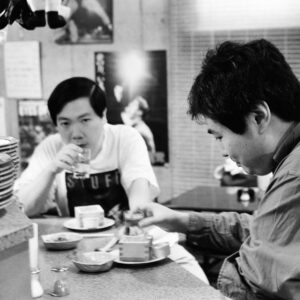
The mid-90s were particularly abundant years for harsh noise, producing many albums which are now considered masterpieces. One of the most beloved classics from this period is "As Loud As Possible" by Incapacitants. Active since 1981, the duo of Toshiji Mikawa and Fumio Kosakai found their stride in the early 90s and set off on an unrelenting course which produced countless gems of noise. Many of these have been well preserved and documented elsewhere, compiled on "Box Is Stupid" and "Alchemy Box Is Stupid", however, "As Loud As Possible" has never been reissued since its original release on Zabriskie Point. It is now made available for the first time since 1995, with no corner cut in preparation of its reissue. The audio was transferred from the original tapes by Din-I-Ilahi, and re-mastered for digital and vinyl formats by Rashad Becker. The iconic cover photographs by Naomi Hosokawa have been scanned from the original negatives and enlarged for the expanded format, along with outtakes and unused shots, which are now included here for the first time. T. Mikawa also dug into the Incapacitants archives and unearthed two additional tracks of previously unreleased material, recorded around the same time as the album. These two tracks, entitled "As Loud As Possible Revisited" are included as a bonus 7" with alternate picture sleeve. Features extensive liner notes written by Sam McKinlay aka The Rita. A personal all-time favourite, it is an honour to present "As Loud As Possible" as a double LP in deluxe gatefold sleeve. Includes digital download.
Incapacitants are T. Mikawa & F. Kosakai:
All electronics, voice
Edited by T. Mikawa
Photographs taken by Naomi Hosokawa at Factory Pub Bon-Ba-Ye
(Special thanks to Mr. Ohba)
Originally released by Zabriskie Point, 1995
Transferred from original master tape by Din-I-Ilahi
Remastered by Rashad Becker
31,00€
In stock

7" single
NURSE WITH WOUND
“Shipwreck’n’Roll”
The 2 tracks on this record have been constructed from flotsam, jetsam & driftwood gathered in the Lofoten Islands by Steven Stapleton & Colin Potter in 2004 & reassembled at IC Studio, London 2021. The single is a prelude to the vinyl release of ‘Shipwreck Radio Volume 1/Lofoten Deadhead’, but getting vinyl manufactured is difficult & slow (the single itself was many months late), so we're not sure when the boxset will be available....
16,00€
In stock
LP
Antoine CHESSEX – Francisco MEIRINO – Jérôme NOETINGER
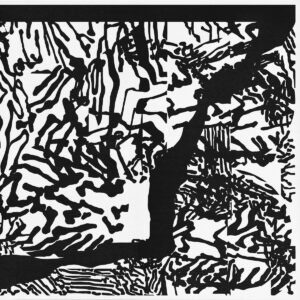
“Maiandros”
Testimony to the first encounter of the trio during a concert given at the cave12 on the 28.10.2020, on the same evening of the new Covid announcements which brought on a re-confinement in France, and eve to a six-month long shutdown of cultural places in Switzerland. A concert from which we emerged staggering and with burning ears due to the ongoing crisis surrounding us. A masterful sonic performance. Before silence.
Drawing from the dense and intense sound material of the evening, Francisco Meirino carried out a work of mixing and cutting, thus releasing an account of it, conceived for vinyl support and domestic use, an auditory result with a fascinating tension/frame.
Swirling field recordings, urban/mechanical sounds, ghostly radio, cannibal revoxian magnetic tape, unrecognizable saxophone chants from hell, synthesizer manipulations, intermingle and merge into a sonic flow of pure permanent tension. An uncompromising and hallucinating sound journey of the very first order. A captivating back-and-forth, rich and spiralling between different levels of listening, filled with recognizable or unrecognizable sound materials and disturbing textures à la perfectly mastered dynamics, on a knife edge of abyss & time. And with, on the album, a simply gargantuan, corrosive, and overwhelming B-side!
Antoine Chessex: Tenor saxophone, amplifier, electronics
Francisco Meirino: Modular synthesizer, contact microphone and transducer
Jérôme Noetinger: Revox B77, electronics
19,00€
In stock

LP
ENSEMBLE NIST-NAH
“Elders”
Elders is the debut release from Ensemble Nist-Nah, a nine-piece percussion group led by Nantes-based Australian drummer and percussionist Will Guthrie. The diverse group of French musicians that make up Ensemble Nist-Nah – whose collective experience encompasses traditional Gamelan performance, contemporary composition, noise, jazz, and everything in between – perform on drum kits, traditional and junk percussion, and a complete set of Javanese Gamelan instruments. Though building on the foundations of Guthrie’s solo work with Gamelan instruments (Nist-Nah, BT057) and primarily performing his compositions, Ensemble Nist-Nah is a collective endeavour, propelled by a breathtaking enthusiasm that has seen the ensemble manage to rehearse, perform, and even tour Europe during the Covid-19 pandemic.
From the first seconds of opening track ‘Geni / Tirta’, it becomes immediately obvious that this is no dry academic exercise or exotic indulgence. Rapid arpeggiated figures are propelled by manically busy kit drumming while slow-motion melodic lines float above. After a series of abrupt tempo changes and fragmented unison passages that crossbreed the rhythmic intensity of the Balinese Kecak with the joyride of an Ornette Coleman head, the music slows to a monumental groove, equal parts Javanese court music and Dark Magus. Another sequence of thrilling divagations leads us to the unexpected guest appearance of acclaimed vocalist Jessica Kenney, who elaborates a haunting Javanese Bedhaya across a spacious backdrop of massive gong hits, shimmering cymbals, rustling bells, and gritty textures.
The remaining pieces that make up Elders explore a dizzying variety of approaches, from the shifting rapid-fire muted textures of ‘Overtime’ to the ghostly bowed tones and ominous swells of the title piece (developed from a track on Guthrie’s solo Nist-Nah release), which gradually builds into waves of shuddering low resonance and asynchronous percussive clicks like a haunted clock mechanism. On the aptly titled ‘Rollin’, virtuosic twin drum kits criss-cross errant metallophone patterns in propulsive polyrhythms, while ‘Planeker’ manages to achieve a bizarrely effective fusion of Harry Partch and Autechre. Arriving bedecked in beautiful monochrome images of gongs drawn by ensemble member Charles Dubois, Elders is a feast for the ears: music that burrows deep into timbral and rhythmic possibility while possessing an intoxicating physicality and revelling in the joy of collective performance.
Ensemble Nist-Nah is:
Prune Bécheau, Charles Dubois, Thibault Florent, Will Guthrie, Amélie Grould, Mark Lockett, Sven Michel, Lucas Pizzini, Arno Tukiman
Playing Gamelan Kyai Bremånå
Special Guests:
Jessika Kenney
Toma Gouband
Annalee-Rose Guthrie
25,00€
In stock

LP
Oren AMBARCHI
“Sagittarian Domain”
10th anniversary reissue of this rhythmically churning one-man-band monster of an album, recorded in a single inspired studio session & originally released in 2012 on Editions Mego.
From the original Editions Mego press release:
“For anyone who still associates Oren Ambarchi exclusively with the clipped, bass-heavy tones of solo electric guitar works such as Suspension, this rhythmically churning one-man-band monster of an album-length piece might seem to come out of nowhere. However, listeners who have followed the breadth of his work for the last few years (solo and in projects with collaborators from Jim O’Rourke to Stephen O’Malley and Keith Rowe to Keiji Haino) will have noted how Ambarchi has allowed increasingly clear traces of his enthusiasms as a music listener (for classic rock, minimal techno and 70’s fusion, among other areas) to surface in his performances and recordings, all the time filtering them through his signature long-form structures and psychoacoustic sonics.
Recorded in a single inspired studio session, Sagittarian Domain displaces Ambarchi’s trademark guitar sound from the centre of the mix, its presence felt only as an occasional ghostly reverberated shimmer. Endlessly pulsating guitar and bass lines sit alongside electronic percussion and thundering motorik drumming (familiar from his work with Keiji Haino) at the core of the piece, locking into a voodoo groove like Faust covering a 70’s cop show theme. The work is founded on hypnotic almost-repetition, the accents of the drum hits and interlocking bass and guitar lines shifting almost imperceptibly back and forwards over the beat as they undergo gradual transformations of timbre. Cut-up and phase-shifted strings enter around the half-way mark like an abstracted memory of the eastern-tinged fusion of the Mahavishnu Orchestra’s classic Visions of the Emerald Beyond, before returning for an extended, stark yet affecting come-down coda, equal parts Gavin Bryars and Purple Rain.
While Sagittarian Domain contains traces of a diversity of influences, it mines all of them to uncover something that is clearly an extension of Ambarchi’s own investigations up to this point, exhibiting the same care for micro-detail and surrender to the physicality of sound that are present in all of his work, extending them in new ways to repetition, pulse and rhythm”.
25,00€