
In stock
2 LP
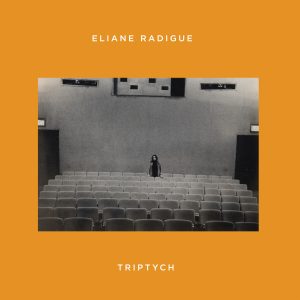
Eliane RADIGUE
“Triptych”
The final collaboration between Eliane Radigue and Important Records is this double LP edition of Triptych. Radigue insisted that her music only be released on vinyl if the pieces would fit without being edited or cut. Triptych met those requirements leaving room for an etching on the 4th side.
Back to music after three years of silence... On the suggestion of Robert Ashley, Douglas Dunn commissioned Triptych from Eliane Radigue for choreography. Only the first part of Triptych was staged at the premiere at the Dancehall/Theatre of Nancy on February 27 1978. Recorded in the composer's studio in Paris.
After the 1974 premiere of Adnos in San Francisco, a group of French students introduced Eliane Radigue to Tibetan Buddhism. When she returned to Paris, she†began to explore this spirituality in depth, which slowed her musical production up until 1978. Triptych marks her return to composition, and draws its inspiration from "the spirit of the fundamental elements, water, air, fire, earth" Eliane Radigue likes to add that this has often been useful to her in her moments of research and transitions.
This three-part composition, with its great humility and contemplative simplicity, heralded a new period of her work and was the first in a series of masterpieces inspired by Tibetan Buddhism: Adnos Trilogy (1980), Songs of Milarepa (1983) - with the voices of Lama Kunga Rinpoche and Robert Ashley , "Jetsun Mila"(1986), as well as the Trilogy of Death: Kyema (1988), Kailasha†(1991) and Koume†(1993).
45,00€
In stock
LP
Andrew CHALK
“Mystical Obscurant”
Over the course of more than four decades, Andrew Chalk has created one of ambient and experimental music's most distinctive, influential, and enduring bodies of work. Though his recordings have taken many forms—from the raw, post-Industrial sounds of Ferial Confine in the 1980s to the fragile guitar meditations, blurred keyboard studies, and richly textured collages that populate the Faraway Press catalogue—they remain united by a singular sensibility: an uncommon attentiveness to atmosphere, nostalgia, and the power of restraint.
Mystical Obscurant offers a rare opportunity to encounter the expansive character of that oeuvre in miniature. Rather than documenting a single period or methodology, it functions almost like a survey of Chalk's musical language—a collection of new music that illuminates the breadth of his practice while distilling the singular vision that unites it.
“The Seed of Sorrow” and “Peacemaker” feel cut from the same cloth as the sacred guitar minimalism of The River That Flows Into the Sands, while “Against the Tide” would sit naturally alongside the smudged and distant keys of Blue Eyes of the March. Other pieces draw upon environmental sound and loop-based constructions, hallmarks of Chalk's more recent, vignette-like compositions. Though these recordings emerge from different moments in his long creative journey, each inhabits a recognizable world: one where melodies drift in diffuse, unhurried forms and sound gathers with painterly grace.
What is most striking when these pieces are heard together is not their difference but their coherence. Across changing instruments, collaborators, and approaches, Chalk has consistently pursued a subjunctive music of suggestion rather than declaration, creating spaces where memory and imagination are allowed to unfold at their own pace.
25,50€
In stock
LP
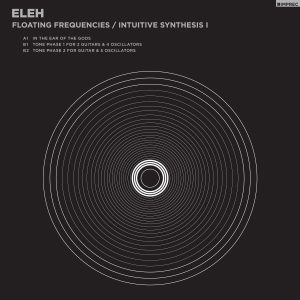
ELEH
“Floating Frequencies / Intuitive Synthesis I”
When ELEH's debut "Floating Frequencies/Intuitive Synthesis I" was originally released it was praised as a powerful piece of new electronic minimalism. Twenty years later the artist's legacy has grown while ELEH continues to hypnotize new listeners with time stopping music. Critics, fans and neurologists have praised the music of ELEH as aiding attention and focus while seeming to slow time. Eleh's slow change drones are a state of flow hypnotizing listeners into meditative focus.
From the original packaging, "Pure Sound. Pure Volume. Pure Analog. Dedicated To La Monte Young"
ELEH began in 1999 as an exploration of analog synthesis, emphasizing low frequency difference tones and other resonant acoustic phenomena. ELEH highlights the physical presence of sound as it has been inspired by the physical world. There is also something ‘cathedral-like’ and cosmos-inducing in the sound constructed by ELEH.
This audiophile quality presentation of ELEH's debut album was mastered by Tom Eaton at Sounds And Substance and manufactured at Optimal in Germany for the lowest possible noise floor and the highest analog resolution. Packaged using a 5th color metallic shimmer ink on solid black board stock.
25,00€
In stock
LP
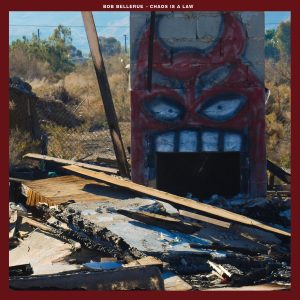
Bob BELLERUE
“Chaos Is A Law”
Avec Chaos Is A Law, Bob Bellerue fait du chaos une force créatrice. Feedback, cordes de piano, métal, électronique et drones s’entrechoquent dans une matière sonore en perpétuelle transformation, entre rugosité, dissonance et étranges éclats mélodiques.
Une musique physique et imprévisible, qui se construit, se fracture et renaît sans cesse. Ici, le bruit devient matière vivante, l’incontrôlable devient méthode, et le chaos, une forme de liberté.
27,50€
In stock
LP
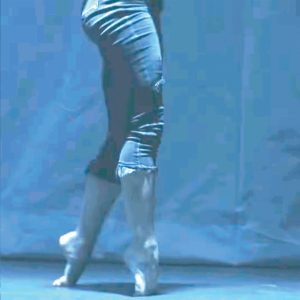
Klara LEWIS
“Opening”
Klara Lewis’ distinctive talent for disfiguring sound into forms that remain recognisably song-like reaches a new peak here. Her new album Opening is a deceptive recording with veiled melodies and clandestine bangers.
Lewis, creator of worlds, treats music as a mirror that reflects a perspective misaligned with the real image. Her music moves in unusual and often startling ways. Acoustic instruments such as ukulele and piano are subjected to processes of deconstruction and reconstruction, their original forms continually reshaped.
The tracks within Opening offer an array of disorientating tactics; damaged field recordings are suddenly sliced into ominous rhythmical patterns whilst deceptively simple tactics provide foreboding dread. Often alien on entry, the progression of a piece can land in a surprising tenderness, or the other way around. The momentum grows as a physical state but also one which is questioning, desiring, encapsulating a feeling, to explore a further way of expression and ultimately connecting: A new closeness, a new perspective.
Opening is an album in which the protagonist’s manipulation of sonic matter seems to extend beyond the music itself, resulting in a corresponding manipulation of the active listener. Sounds shift, dissolve, and re-emerge in altered forms, creating an experience that feels both intimate and disorienting. Lewis maintains a delicate balance between abstraction and emotional immediacy, drawing the listener into a world where familiar musical gestures are constantly reconfigured in surprising ways.
The works on Opening are refracted through an exploratory and transformative lens, suggesting an artist continuing to redefine the possibilities of musical language as a space where the instantaneous and the eternal come together.
26,00€
In stock

2 LP
KMRU
“Peel”
*2026 small repress*
KMRU is the moniker of Joseph Kamaru, a sound artist, and producer based in Nairobi. One of the leading exponents of the burgeoning experimental music scene in Nairobi and beyond he was listed by Resident Advisor as one of ’15 East African Artists You Need To Hear’ in 2018 and is a regular performer at the fabled Nyegenyege Festival having also presented live performances at CTM festival and Gamma Festival. Peel is KMRU’s first release for Editions Mego. exquisite mix of field recordings and electronics unravelling at a repetitive and leisurely pace to expose a rich tapestry of sound that has been revered for it’s ability to cross bordear with the sheer undertow of emotional content. The subtle calming atmosphere within Peel belies the compositional prowess as layers of delicate sounds wrap around each other creating a hybrid new form ambient musics both captivating through it’s textural depth and kaleidoscopic patterns. The track titles lend themselves to the themes and mood set within: Why are you here, Well, Solace, Klang, Insubstantial and the title track. This is a deep heartfelt journey with a new strong voice being expressed through the means of organically presented electronic ambient sounds, one which reveals further layers on repeat listens.
All tracks written and produced by KMRU
Recorded and produced in Rimpa, (Nairobi, KE)
Mastered by Stephan Mathieu at Schwebung Mastering, June 2020
27,00€
In stock
LP
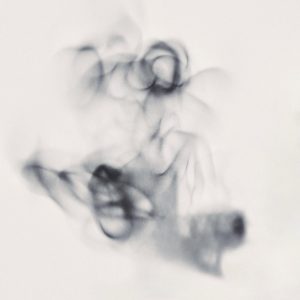
AF URSIN
“Ad Fontes”
The first Af Ursin album in a decade, this release features extraordinary Belgian vocalist and performer Bénédicte Davin.
Ad Fontes is a personal response to the fractured reality of our time. Created in the wake of visible social decay, manipulation, and institutional control, the album serves as a sonic mirror to an era defined by corruption and systemic failure. Instead of preaching political manifestos or claiming to have answers, this work is an intimate personal statement – a silent call to embrace spiritual values as the vital, untainted source of human nature.
26,00€
In stock
LP
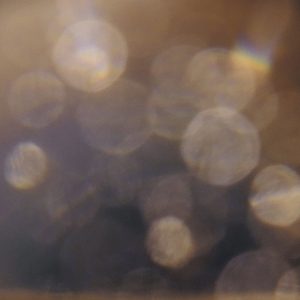
Pierre MARIETAN
“Musique d’été”
Pierre Mariétan (1935–2025) was a prolific Swiss composer, sound artist, and pioneer in acoustic ecology who spent most of his life working in France. Over his long career, he composed more than 300 instrumental, orchestral, vocal, and electronic pieces. Mariétan studied under avant-garde legends like Pierre Boulez, Karlheinz Stockhausen, and Bernd Alois Zimmermann. In 1966, he founded GERM (Groupe d’Étude et de Réalisation Musicales), a music collective that blurred the lines between strict composition and free improvisation. In 1969 the French BYG label released a GERM album and the same year GERM played at the legendary 5-day Festival in Amougies, Belgium, sharing stage with Pink Floyd, The Soft Machine, Frank Zappa, Don Cherry,…
In 1979 Mariétan founded the Laboratoire d’Acoustique Urbaine (Urban Acoustics Laboratory) to bridge environmental sounds, urban architecture, and musical composition.
Mariétan was also a professor at the University of Paris where he taught the relationship between sound and space. Later in life, he remained active as a director for the Movement of Environmental Sound and continued developing permanent, immersive sound installations across the globe. His album Musique d’été was originally released on cassette back in 1983 by Éditions Salabert and Costin Miereanu’s Poly-Art International, and it has been slightly tweaked for this LP reissue. The record splits his vision of “Summer Music” into two different vibes. Side A is a deep dive into an electronic, synthesizer-driven landscape, while Side B features raw acoustic field recordings of forests and traditional Swiss alphorns.
26,00€
In stock
LP
Robert NASVELD
“Robert Nasveld”
Robert Nasveld (born 1955) studied piano at the Utrecht Conservatory and specialized in the twentieth-century repertoire, with a particular focus on Dutch, Russian, and American music. He thoroughly immersed himself in the piano works of the American composer George Crumb with concerts in Europe, Russia, and the United States. As a composer he also studied electronic music with Ton Bruynèl and recorded a handful of tape pieces which are collected on this LP. They were created at Ton Bruynèl’s studio at the Utrecht Conservatory and the Institute for Sonology in Utrecht. Rather than using electronics for mere futuristic sound effects, he utilizes tape to create expansive acoustic environments. He expertly controls large, sweeping arches of sound, maintaining a continuous musical line while layering highly unpredictable and contrasting sonic elements. Nasveld also worked as a program producer for the Dutch National Radio and presented a series dedicated to electronic music pioneers.
26,00€
In stock
LP
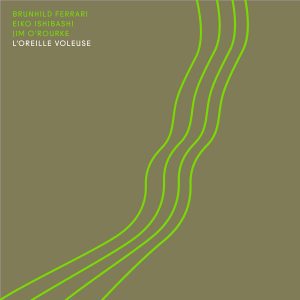
Brunhild FERRARI – Eiko ISHIBASHI – Jim O’ROURKE
“L’Oreille Voleuse”
Persistence of Sound releases a new work by Brunhild Ferrari called »L’oreille Voleuse« (The Thieving Ear). The LP features an extraordinary live reinterpretation by Eiko Ishibashi and Jim O’Rourke, recorded in October 2025 in Paris.
“No, without listening at doors, the ear captures noises here and there and unexpected sounds without choice, but remains attentive to the messages of each one picked up over the years. It gathers surprises and impressions, bringing them together in a simple mix. In waking up these ear memories again, which were mostly recorded on magnetic tapes, I am very happy about the collaboration of Eiko Ishibashi and Jim O'Rourke in playing on this mix tape.”
Brunhild Ferrari
28,00€
In stock
LP
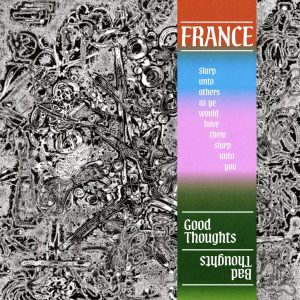
FRANCE
“Good Thoughts, Bad Thoughts”
Good Thoughts, Bad Thoughts captures the band in full flight during their very first English tour, recorded at The state51 Factory in East London. Until this tour, UK audiences had only witnessed France once before, at Liverpool Psych Fest some years back. This album documents what they've been missing. For this performance, the lineup featured Jérémie Sauvage on bass, Yann Gourdon on electrified hurdy-gurdy, and Cyril Bondi (La Tène, Cyril Cyril) stepping in on drums while longtime member Mathieu Tilly took a well-earned break.
29,00€
In stock
LP
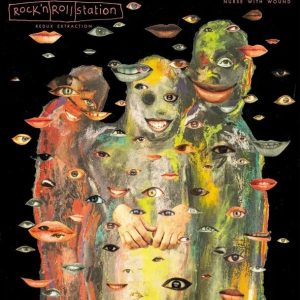
NURSE WITH WOUND
“Rock’N’Roll Station Redux Extraction”
At last Nurse With Wound’s classic masterpiece ‘Rock ‘n’ Roll Station’ gets it’s timely and well-deserved VIP treatment.
A much loved and firm favourite with fans and critics alike, this celebrated seminal work is here represented by 4 tracks, each unique with extended reworking and mixing.
This United Dirter 12” LP release is a forerunner to the imminent ‘The Iron Lung Gives Way To The Surgical Stocking’ 5CD boxset magnum opus to be released later this year. Featuring along side the usual suspects of Colin Potter, Matt Waldron, Andrew Liles, Diarmuid MacDiarmada is French pioneer and trail blazer of the ‘70’s, Jean Jacque Birge.
Black & pink vinyl
27,00€
In stock
LP
Jim O’ROURKE & Jos SMOLDERS
“Albumin”
Jim O'Rourke and Jos Smolders teamed up again after their first collaboration, Additive Inverse from 2021. Over a period of three years, both artists worked in sessions of a day, each in their own studio.
The result is sometimes like a warm cloud of sounds, suddenly breaking up into a rhythmic, irregular pattern, after which it dives into introverted mindsets. The music is in constant flux
The project followed the same workflow, but this time Jim took the lead and kicked off with a salvo of sounds that he extracted from his Kyma System. Both Jos and Jim were quite interested in the spectral character of sounds. Jim applied Kyma algorithms while Jos granulated his basic recordings. That way, textures are built, quite slowly moving from warm to gritty, from hard surfaces to deep sonic wells.
22,00€
In stock
LP
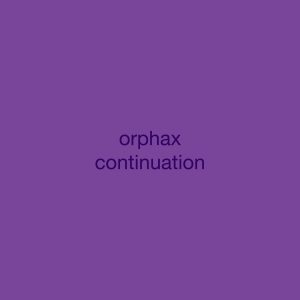
ORPHAX
“Continuation”
Words have never been my strongest point. I have many ideas in my head, often too many. I can talk a lot about them, but putting them on paper is not really me. I rather just work on my ideas. ‘cause whatever your thoughts are, as soon as it is out there and people start to listen it becomes theirs. What I might have thought up before, and have as concept behind the music, might not be how someone else listens to it. And that’s okay.
If we keep in mind that my music is time focused, and I love it when it isn’t polished too much, so small errors become part of it, the music should speak enough for itself.
“Continuation” is my first studio album since “En de stilstaande tijd” (2019), and shows a rougher sound staying closer to my live sound. I see this as a continuation of my live performances, though this time with various multi-track recordings brought together as a whole, all done in my home studio “Studio De Baviaan” over the course of 8 months.
--- Sietse van Erve / Orphax, January 2026
22,00€
In stock
LP
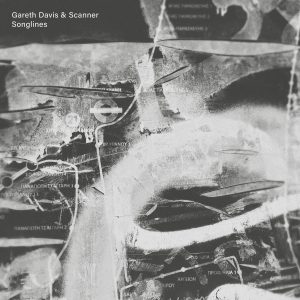
Gareth DAVIS & SCANNER
“Songlines”
When the ghost in the machine meets the breath in the reed, expect sparks. Electronic sound artist Robin Rimbaud – Scanner joins forces with acclaimed British bass clarinetist Gareth Davis to create an album where circuitry hums, wood vibrates, and the air between notes crackles with possibility.
This is no polite meeting of minds — it’s an elegant collision. Scanner’s intricate electronic textures weave around Davis’s deep, resonant tones, blurring the boundary between acoustic breath and digital pulse. The result is a sound world that’s at once intimate and expansive, familiar yet thrillingly unpredictable.
Think late-night conversations in abandoned buildings. Think fog rolling over neon. Think sound that slips through your fingers even as it takes hold of you.
The songlines in question , memories and distorted images of travels across various continents, form an imagined biography of places that might or might not have been but somehow seem to exist . Landscapes of blurred statements , lost words and echoes of meandering structures.
"If Miles Davis had been raised on shortwave radio static and midnight phone calls, it might have sounded like this."
22,00€
In stock
2 LP
COMPILATION
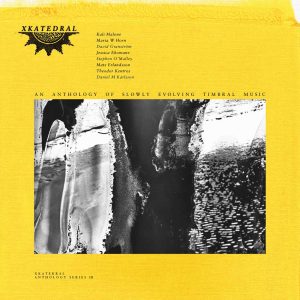
“Xkatedral Anthology Series III (An Anthology Of Slowly Evolving Timbral Music)”
XKatedral Anthology Series III is the third installment in a series of archival releases dedicated to presenting music by composers working within the realm of slowly evolving harmonic and timbral music. The pieces presented here focus on the use of synthetic and acoustic sound as well as algorithmic composition as tools for precise work within the realm of spectral exploration. This double-vinyl set is issued in celebration of the label’s decennalia and contains works from 2014 - 2025. It is released in conjunction with reissues of XKatedral Anthology Series I-II.
My Falling Sinks by Kali Malone is a sparse descending melody for justly tuned organ, cello and acoustic guitar featuring Lucy Railton and Stephen O’Malley. The piece is a compositional sketch in septimal just intonation made on an experimental tuning organ at La Temple de La Tour-de-Peilz while in residency at La Becque in 2021.
Empyrean Flare by Maria W Horn was composed in 2022 for The Dawn Chorus by choreographer Stina Nyberg. This piece uses the Tintinnabuli technique created by Arvo Pärt to animate four supersaw oscillators in slow diatonic arpeggiation, circling around a minor tonic triad, and destabilizing the harmonic framework by means of glissandi
and amplifying the sum of its parts by means of analog tape saturation.
Tessellation by David Granström was composed using generative synthesis methods in the summer of 2017. The musical periodicity and harmonic movement heard within the piece emerges as a result of fixed synthesized tape loops - exploring a space that opens up between antithetical worlds.
To Whoever Shall Inherit the Earth is the first piece of solo music made by Jessica Ekomane and it came together, according to the composer, almost by accident. The work was recorded late one night a decade ago and captures a fleeting, fragile, and unrepeatable moment preserved exactly as it happened.
Smoking Mother by Stephen O’Malley was created for Gisèle Vienne's Der Teich / L'Etang by Robert Walser. It was composed during a residency at the SMEM synthesis archive in Fribourg in 2018 and produced at EMS in August 2020. The piece draws from the works of Zia Mohuiddin Dagar, Krzysztof Penderecki and Popol Vuh while
exploring the roots of minimalism.
Att böja själarna by Mats Erlandsson was composed in 2018 and was included in On Eternity, a collection of four texts and four ten minute cassette loops released in the form of a limited edition box set in 2021 by Irrlicht Förlag. This work features performances by Gaianeh Pilossian and Sara Fors, on violin and voice respectively.
This will be my last piece for organ was composed by Theodor Kentros in 2025 and uses groups of clustered oscillators through resonant feedback to synthesize the fluctuating frequencies heard wandering through physical space when detuning an organ.
Fault Lines was composed by Daniel M Karlsson using generative methods with a deterministic and finite output solidified for this release. This piece features vocal performances by Sara Fors, Ansis Bētiņš and Artūrs Čukurs.
1. Kali Malone - My Falling Sinks 03:50
2. Maria W Horn - Empyrean Flare 15:00
3. David Granström - Tessellation 09:41
4. Jessica Ekomane - To Whoever Shall Inherit The Earth 08:04
5. Stephen O'Malley - Smoking Mother 08:16
6. Mats Erlandsson - Att Böja Själarna 10:12
7. Theodor Kentros - This Will Be My Last Piece For Organ 04:30
8. Daniel M Karlsson - Fault Lines 15:12
36,00€
In stock
2 LP
COMPILATION
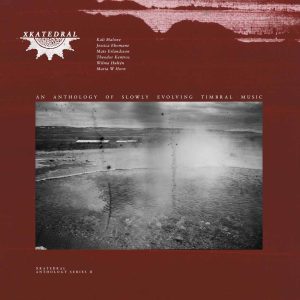
“XKatedral Anthology Series II (An Anthology Of Slowly Evolving Timbral Music)”
XKatedral Anthology II is the second installment in a series of archival releases dedicated to presenting music by composers affiliated with XKatedral working within the realm of slowly evolving harmonic and timbral music. This double-vinyl set contains an array of pieces written from 2018 to 2020 by composers Kali Malone, Jessica Ekomane, Mats Erlandsson, Theodor Kentros, Wilma Hultén and Maria W Horn. This collection of pieces focuses on the use of synthetic sound and algorithmic composition languages as tools for precise work within the realm of spectral exploration. In addition to this, the electronic instrumentation in many of the pieces is augmented by acoustic instruments.
1. Kali Malone - Music for Low Quartet 08:34
2. Jessica Ekomane - First Light 07:44
3. Mats Erlandsson - Hands Melt In The Sun 18:15
4. Theodor Kentros - Rough Draft v.7 06:09
5. Wilma Hultén - Inertia 14:03
6. Maria W Horn - Dies Irae (live) 22:04
36,00€
In stock
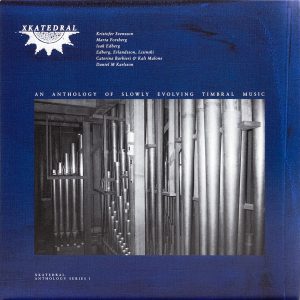
2 LP
COMPILATION
“XKatedral Anthology Series I (An Anthology Of Slowly Evolving Timbral Music)”
XKatedral Anthology I is the first in a series of archival releases dedicated to presenting music by XKatedral affiliated composers working within the realm of slowly evolving harmonic and timbral music. This double-vinyl set contains an array of pieces dating from 2010 - 2020.
Four of the works included here were originally released on cassette early on in the label's history, while the two remaining pieces are presented by the label for the first time.
1. Kristoffer Svensson - Ir Himinn, Groœn 04:09
2. Marta Forsberg - Disquiet (Heart) 17:40
3. Isak Edberg - Lamé 17:26
4. Edberg/Erlandsson/Lisinski - Dissolving Ceremony 07:05
5. Caterina Barbieri & Kali Malone - Glory 15:51
6. Daniel M Karlsson - Shipwrecks 20:00
36,00€
In stock
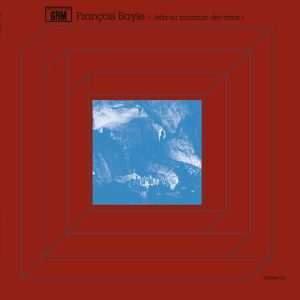
LP
François BAYLE
“Jeita ou murmure des eaux”
A major work in François Bayle’s repertoire, Jeîta ou murmure des eaux provides a journey and an immersion into a world of unleashed energies, with the Jeîta cave serving both as a backdrop and a particle accelerator. Here, the cave indeed stands for the concrete source of the composer’s inspiration as much as the mind space where metamorphoses occur. By combining such figurative spaces and immaterial sound projections, François Bayle evokes another subject, an inhabitant of the multiple and symbolic cave: the listening subject, who always reveals himself, implicitly, at the heart of François Bayle’s musical concerns and the path he has always defended: the acousmatic approach.
28,00€
In stock
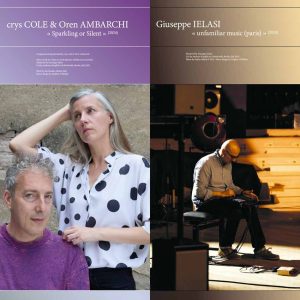
LP
Crys COLE & Oren AMBARCHI / Giuseppe IELASI
“Sparkling or Silent / unfamiliar music (paris)”
Sparkling or Silent, by the duo composed of crys cole and Oren Ambarchi, is a moment apart in their respective artistic approaches, taking a step aside and marking a point of fixation around an electroacoustic method which, while always latent in both of their works, here asserts itself as a central compositional modality. However, the electroacoustic approach is not called upon here for its formal reasons, or even less as an aesthetic line to follow. On the contrary, it is seen as a writing tool, open to all possible sonic possibilities, a tool that allows the artist to draw, within the sound itself, an intertwined space where reminiscences, impressions and sensations weave a narrative on the edge of the imagination and the moments experienced together, a narrative in which a complex and sensitive layer of sound is embedded, blurring the boundaries between artistic project, intimate journey and shared dreams.
—
Derived from a live performance, unfamiliar music (paris) reveals the essence of the obsessions and sonic universe of Giuseppe Ielasi, a musician whose discretion is matched only by his talent and boundless dedication to musical creation over almost 30 years. unfamiliar music (paris) is a remarkable manifestation of Ielasi’s approach, an approach in which delicacy, sometimes nostalgia, and emotions know how, with discretion, to infuse a sound universe built around polyphony and reminiscence, around textures and motifs that intertwine, combine and drive each other with grace and inspiration.
François J. Bonnet
24,00€
In stock
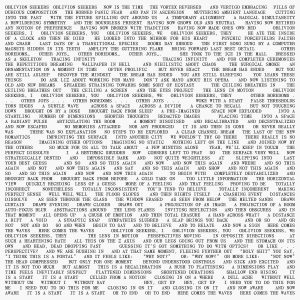
LP
Ben VIDA
“Oblivion Seekers”
To be an attentive listener to the world as it stands is to be saturated with language. Speech resounds through nearly every space that features human beings, whether unwanted or desired, mundane or profound. Words sit on the page and in the ear, proliferating endlessly. This superabundance has long been a point of fascination for composer and musician Ben Vida, but over the past several years it has led to a new method of music making that simultaneously exalts and interrogates the primacy of language in our sonic and cultural environments. Gently, playfully, Vida breaks down language’s hierarchy of meaning and sound until they exist in egalitarian harmony.
Oblivion Seekers is Vida’s newest album in this mode of composition, following 2023’s collaboration with new music ensemble Yarn/Wire The Beat My Head Hit. Like its predecessor, the music’s focus is on coordinated duets of spoken word in a neutral tone, the variable cadences of the words in motion creating complex internal rhythmic structures. He is joined by the voices of Nina Dante, Christina Vantzou, John Also Bennett, and Félicia Atkinson, creating a singular tone that is neither theirs nor his, fluid in its gender presentation, accent, and diction. The instrumental compositions that form the album’s understory have the casual flow of dialogue, conversational but subdued, rarely the agent of change. Here, Vida likewise called upon an accomplished community of players to accompany him: Dante on harp, Bennett on bass flute, Matt Bauder and Will Epstein on saxophones, Henry Fraser on bass, Cleek Schrey on violin, and Booker Stardrum on percussion.
Performed By:
Ben Vida - Voice, Keyboards, Vibraphone, Guitar, etc
Nina Dante - Voice and Harp
Christina Vantzou - Voice
Felicia Atkinson - Voice
John Also Bennett - Voice and Bass Flute
Matt Bauder - Tenor and Alto Saxophone
Will Epstein - Soprano and Alto Saxophone
Henry Fraser - Acoustic Bass
Cleek Schrey - Violin
Booker Stardrum - Percussion
28,00€
In stock
LP
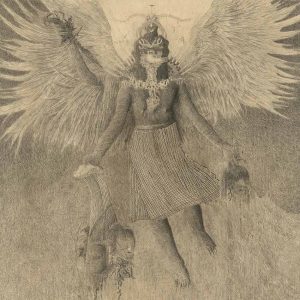
Alex Zhang HUNGTAI
“Dras”
Alex Zhang Hungtai stands in stillness on 'Dras', but it's the kind of stillness that contains entire ranges of possibility. Recorded in 2019 inside Montreal's Saint Joseph Oratory (right before a piano demolition, no less), these nine pieces sat dormant on his hard drive through pandemic years until something finally clicked. What emerges now feels like watching someone trace the contours of their own interior landscape, each melodic line a careful negotiation with the unconscious. This is only a saxophone record in the barest sense.
The terrain here is tactile and unforgiving. On the title track, difficult melodies get torn apart and molded into emotive drones, dissonance interlocking where tones cut paths through the senses with metallic sheen. "El Khela" refracts into spectral layers that pull with eternal gravity, while "Estado" finds solace inside its own haze, rhythms barely audible but guiding forward with their cadence smeared against grey walls. These are small moments that become cathartic sonic breaths, each one revealing new passages through psychic geography.
There's beauty encased in the subtle repetitions of opener "Erg,” and in the glowing progressions of "White Dwarf." Zhang's saxophone becomes a dowsing rod for the uncharted, with electricity running through the album's veins while his breath anchors everything to something wordlessly human. The digital manipulation applied to those church recordings doesn't obscure that human element of 'Dras'. It transforms the raw material into something that navigates between external space and internal landscape.
By the time closer "Mazil" arrives, Alex Zhang Hungtai lets his saxophone speak its full resonance. Low, guttural expressions open up like chasms beneath melodic constellations floating in thick gravity. There’s a finality here even though something in these passages feels weightless. This is music permeated with inner dialogue, a wordless spell dancing above the psychic abyss. Tonal sequences disintegrate into narcotized sonics, a sharp elegant edge that cuts without drawing blood. This lonely work of exploration becomes something communal. 'Dras' is a map for traversing the space between where we are and where we might go.
28,00€
In stock
LP
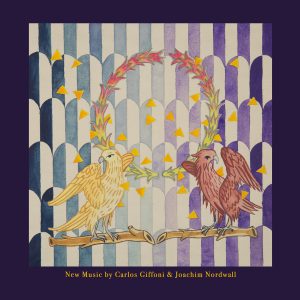
Carlos GIFFONI & Joachim NORDWALL
“New Music”
A meeting of two uncompromising sound artists, New Music fuses pulsating electronic rhythms, immersive drones, and abstract textures into a vivid, physical listening experience. Rising from the outer fringes where abstract techno, noise, and electro-acoustic composition converge, both artists channel their distinct sonic vocabularies into a shared space of tension and transformation. Giffoni’s deep synth drones collide with Nordwall’s ritualistic sense of structure and rhythmic, creating a sound that feels at once mechanical and organic, grounded and cosmic. Moving between dense rhythmic sequences and vast stretches of tonal drift, New Music unfolds like a continuous exploration of energy and decay - music that challenges the boundary between motion and stasis, chaos and control.
For listeners of forward-thinking electronics, this collaboration stands as a compelling testament to the power of sound and the unique chemistry that emerges when two creative worlds intersect. Nordwall explains: “Even though we spent a lot of time together, we never really talked about making music together. But when Carlos visited Sweden, I asked if he’d be into it, as I felt our recordings were starting to sound like they came from the same planet. He kindly agreed and sent me a batch of files to work on. That became New Music - our music, our shared sound.”
Carlos Giffoni is a Venezuelan-born experimental musician and composer known for his visceral approach. A central figure in the 2000s New York noise and experimental scene, he founded No Fun Fest and has collaborated with artists such as Merzbow, Prurient and Jim O’Rourke.
Joachim Nordwall is a Swedish artist and musician exploring industrial, drone, and minimalist, repetitive electronics. As head of iDEAL Recordings and a member of projects like The Skull Defekts and Organ of Corti he remains a key force in Sweden’s experimental music landscape.
22,50€
Out of stock

LP
Christina VANTZOU & Felicia ATKINSON
“Reflections Vol. 3: Water Poems”
On Reflections Vol. 3: Water Poems, Félicia Atkinson and Christina Vantzou channel their friendship and atmospheric artistry into ceremonial focus. Spoken-word environments and orchestral imagination flow like tributaries into a unified stream, resulting in a collection of dreamlike songs and soundscapes anchored in sea, sky and stone. Through electro-acoustic instrumentation, voice, and environmental sound, Water Poems invites listeners into a subconscious space somewhere between everyday intimacy and the oceanic enigma from which all life unfolds.
26,00€
In stock
LP
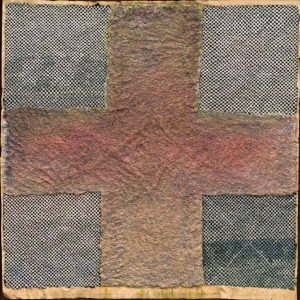
Kali MALONE & Leila BORDREUIL
“Music For Intersecting Planes”
Recorded at night by candlelight in the Temple of La Tour-de-Peilz, Switzerland, Music for Intersecting Planes captures the immediacy of sound in space. Cellist Leila Bordreuil and organist Kali Malone join in a work of austere, ritualistic presence, where the granularity of air, the vibration of strings, feedback, and subdued sine waves intersect in sculptural form.
Minimal in means yet expansive in effect, the music slowly unfolds like beads on a thread, punctuated by silence and deep breaths. Bellows whistle within feathered string harmonics, interference patterns pulsate throughout the chapel, and the environment itself becomes part of the composition, with ringing church bells and motorcycles passing in the distance.
Performed live in single takes, the music balances patience and intensity, composure and chance. The collaboration reveals new terrain: more tonal and composed than Bordreuil’s work, more textural and raw than Malone’s.
Music for Intersecting Planes is both severe and tender, an elemental convergence of cello and organ that resonates with the timeless intrigue of acoustic phenomena.
28,00€
In stock
2 LP
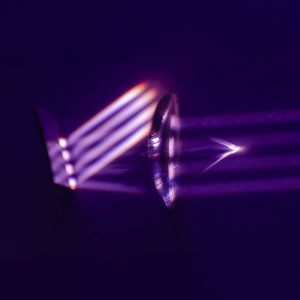
Meryll AMPE
“Two Daughters”
Méryll Ampe conceives sound as a medium to be sculpted in real time and improvises from analog sources oscillator, filters + drum machine.
All this to interrogate in a relentless way a dense and sonorous matter which evolves underground and in relief. Creating live different layers and playing with the interweaving of volumes,perspectives and dynamics, creates sharp and very raw materials.
29,50€
In stock
LP
ErikM – Pierre BASTIEN
“Observations”
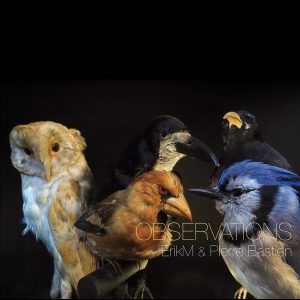
Limited edition of 250. Textured sleeve. Marbled yellow flame color. Jean Dubuffet used to define his music as something disordered and dirty. But here, it is a Dubuffet returning from a long journey in Africa, with haunting rhythms that reach trance-like states, corrupted by ErikM's UK Drill.
"With one exception, this disc is a recording of a concert given at the Ateliers Claus in Brussels in March 2024. It was preceded by three short hours of improvisation the day before and the day before that, during which ErikM and I made a series of careful observations of each other's playing. It must be said that neither of us had skimped on transporting a few cases, the contents of which would have allowed us to play several concerts in a row without ever repeating ourselves. Erik had brought his turntables to Brussels, as well as sophisticated electronic machines, accompanied by a virtually infinite sound bank. For my part, I had both a mechanical orchestra and a range of acoustic instruments at my disposal. In two sessions, we eliminated the superfluous and the ineffective. On the evening of the concert, it was through close observation-of each sound, each direction taken by one or the other, each intention, each break-that we composed this record in the moment: vigilant and scrutinizing, like the pairs of eyes on the cover of this album." --Pierre Bastien
16,50€
In stock
Livre + 45t
Vincent EPPLAY
“L’atelier des sons au service de l’inouï”
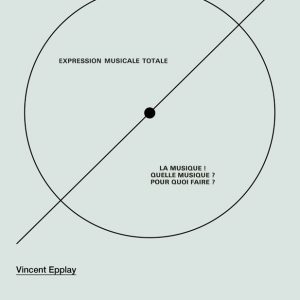
Cette édition (disque/ livre) est une libre interprétation d’archives audios et visuelles issues d’expériences sonores réalisées lors d’ateliers musique dans les écoles Freinet des années...
20,00€
In stock
LP
Jac BERROCAL – Vincent EPPLAY – Timo van LUIJK
“Ste Cy”
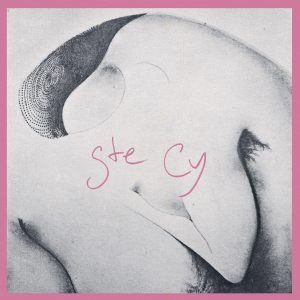
Ste Cy, the latest studio offering from the trio of Jac Berrocal, Vincent Epplay, and Timo van Luijk, ripens like a forbidden fruit—born of an improvised instrumental session captured in the secluded hush of Kulta Saha by Timo van Luijk.
These raw recordings were later reshaped into 12 songs by Vincent Epplay at Studio Villejuif in Paris. And over it all drifts the poetry of Jac Berrocal— sensual and incendiary, seeping into the music like spice into flesh.
Jac Berrocal: voice, words, trumpet, double bass
Timo van Luijk: guitar, piano, vibraphone, percussion
Vincent Epplay: field recording, drums, percussion, EMS Synthi A, Noizoid OCS 2, double bass
26,00€
In stock
LP
WIRED (Michael RANTA & Karl-Heinz BÖTTNER)
“Kyoto 1970”
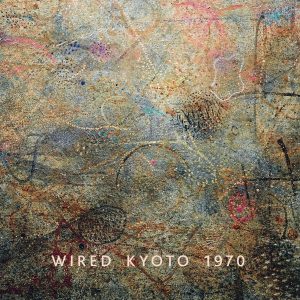
Wired was an ephemeral improvisational music project formed by Michael Ranta, Karl-Heinz Böttner, and Mike Lewis. On 28 April 1970, the trio recorded an extended studio session of approximately 140 minutes, in collaboration with Conny Plank, who engineered and mixed the recording in real time, incorporating elements of live electronics. This session was subsequently edited to album length and released in 1974 as part of the Free Improvisation 3LP box set issued by Deutsche Grammophon, alongside recordings by Iskra and New Phonic Art.
Owing to its exploratory electric sound world and Plank’s distinctive spatial production techniques, the Wired recording acquired a degree of underground cult status, particularly among listeners associated with krautrock and psychedelic improvisation.
Shortly after the studio session, Ranta and Böttner travelled to Japan, where they spent approximately six months performing with Karlheinz Stockhausen at Expo ’70 in Osaka. In addition to these activities, they engaged in various independent musical projects and performances.
The present release, sourced from the personal archive of Michael Ranta, documents a live duo performance by Ranta and Böttner, recorded on 27 July 1970 in an outdoor setting in Kyoto (the exact location remains unknown), before an audience of approximately 200 music teachers. The recording exhibits sonic and aesthetic characteristics closely aligned with the previously recorded studio material, retaining the distinctive “Wired” sound while situating it within a live, site-specific context.
Michael Ranta: percussion, voice, home-made instruments, tapes, tape delay, effects
Karl-Heinz Böttner: guitar, organ, ocarina, voice, effects
26,00€
In stock
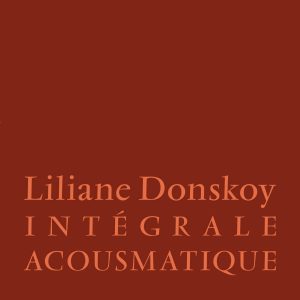
3 LP box
Liliane DONSKOY
“Intégrale Acousmatique” (box)
Hardboard linen box set edition with 8 page booklet and download code - 200 copies
Metaphon is pleased to present this première edition, which brings together a near-complete collection of the acousmatic works of Liliane Donskoy, recorded in the 1970s and 1980s.
Liliane Donskoy (*1933) is a French, classically trained pianist, music teacher, and composer of both instrumental and acousmatic music. She began her musical training at an early age, undertaking private piano studies with Yves Nat at the age of thirteen, shortly after the Second World War. During the 1960s and 1970s, she pursued advanced studies with prominent figures of twentieth-century music, including Darius Milhaud, Olivier Messiaen, Pierre Schaeffer, and Guy Reibel, and participated in courses led by Karlheinz Stockhausen, Luciano Berio, György Ligeti, and Iannis Xenakis.
Despite this extensive and diverse training, Donskoy encountered limited institutional and professional opportunities to fully realize her artistic vision. A decisive turning point occurred in 1977, when she gained access to the facilities of the Institute of Psychoacoustics and Electronic Music (IPEM) in Ghent. There, she realized and completed the majority of her acousmatic compositions.
Donskoy’s oeuvre is characterized by a high degree of structural complexity, precision, and expressive intensity. Her work reflects a pronounced and distinctive artistic temperament, manifested through a rigorous exploration of sound material and form. Notwithstanding its artistic significance, her music has remained largely unknown, as her compositions were neither widely circulated nor formally released, leading to their relative obscurity until the present publication.
Anthology produced by Timo van Luijk
Mastering by EARLabs
Booklet edited by Vincent de Roguin
Design by Meeuw
110,00€
In stock
3 LP
Liliane DONSKOY
“Intégrale Acousmatique”
Slipcase edition with 8 page booklet - 250 copies
Metaphon is pleased to present this première edition, which brings together a near-complete collection of the acousmatic works of Liliane Donskoy, recorded in the 1970s and 1980s.
Liliane Donskoy (*1933) is a French, classically trained pianist, music teacher, and composer of both instrumental and acousmatic music. She began her musical training at an early age, undertaking private piano studies with Yves Nat at the age of thirteen, shortly after the Second World War. During the 1960s and 1970s, she pursued advanced studies with prominent figures of twentieth-century music, including Darius Milhaud, Olivier Messiaen, Pierre Schaeffer, and Guy Reibel, and participated in courses led by Karlheinz Stockhausen, Luciano Berio, György Ligeti, and Iannis Xenakis.
Despite this extensive and diverse training, Donskoy encountered limited institutional and professional opportunities to fully realize her artistic vision. A decisive turning point occurred in 1977, when she gained access to the facilities of the Institute of Psychoacoustics and Electronic Music (IPEM) in Ghent. There, she realized and completed the majority of her acousmatic compositions.
Donskoy’s oeuvre is characterized by a high degree of structural complexity, precision, and expressive intensity. Her work reflects a pronounced and distinctive artistic temperament, manifested through a rigorous exploration of sound material and form. Notwithstanding its artistic significance, her music has remained largely unknown, as her compositions were neither widely circulated nor formally released, leading to their relative obscurity until the present publication.
Anthology produced by Timo van Luijk
Mastering by EARLabs
Booklet edited by Vincent de Roguin
Design by Meeuw
62,00€