
In stock

CD
SEMANTICS (ROTHENBERG / SHARP / BENNETT)
“Bone Of Contention”
Semantics was a jazz supergroup consisting of Elliott Sharp, Ned Rothenberg and Samm Bennett.
Elliott Sharp, born in Ohio in 1951, began playing the piano at the age of six and started to perform concerts two years later. He soon gave up the piano, first in favour of the clarinet and later for the guitar. Sharp became intrigued with all types of experimental music, from contemporary classical to free jazz and sophisticated rock. He studied anthropology at Cornell University, where he played in a band and took an electronics class with synthesizer inventor Robert Moog.
Ned Rothenberg is an American multi-instrumentalist who was born in 1956 in Massachusetts. He has been internationally acclaimed for both his solo and ensemble music, presented for the past 33 years on 5 continents. He performs primarily on alto saxophone, clarinet, bass clarinet, and the shakuhachi - an endblown Japanese bamboo flute. His solo work utilizes an expanded palette of sonic language, creating a kind of personal idiom all its own.
Samm Bennett was born in 1957 in Alabama. In 1977 he moved to Boston, a town that seemed to offer broader possibilities for a young musician eager to play and grow and try new things. It was there that he was first exposed to African drumming styles, mostly through attending weekly drum ensemble workshops led by Boston underground percussion legend Syd Smart. In late 1980, he went to Nigeria, West Africa. Traveling with a friend who introduced him to a family in Benin City, Nigeria, he remained there as their guest for six months, making daily trips to the home of drum master Idemudia Izevbihen. Later Bennett lived in Brussels and played many solo shows.
The short lived Semantics were active in the middle of the 1980s and released two albums. The second, Bone of Contention, was released in 1987 on SST Records. This new expanded CD version features three previously unreleased live tracks.
13,00€
In stock

CD
RENALDO & THE LOAF
“Hardly Gurning While The World Is Turning”
Renaldo and the Loaf is an English musical duo active since the late 1970s, consisting of a pathologist (David Janssen or Ted the Loaf) and an architect (Brian Poole or Renaldo Malpractice). By their own assertion, they achieved their unique sound in part by striving to get unnatural synthesizer-like sounds using only what instruments they had available (acoustic ones). To that end they routinely used muffled and de-tuned instruments, and, often to striking effect, tape loops and manipulation.
In 2018 they played their first ever live show at Klang 25 in Vienna, documented on the album Long Time Coming. In 2016 the group recorded a brand new album entitled Gurdy Hurding. When it was released on vinyl in 2019, it came with a fourth side of a new piece, Hardly Gurning While The World Is Turning. This has never been available on CD - until now.
Here's what the band says: "Hardly Gurning itself is part remix, part new recording, part re-imagining...to complement this we decided to ask some of our friends if they might create a remix/re-imagination of the Gurdy Hurding tracks. In a strange way, the lockdowns of 2020 have benefitted this project as, in most cases, it afforded our contributors some time to work on it, which otherwise they may not have able to. We’ve certainly been excited by what has emerged – almost the whole of Gurdy Hurding has been revisited."
13,00€
In stock

CD
Annie LEWANDOWSKI & Fred FRITH
“Long As In Short, Walk As In Run”
Fred Frith is an English multi-instrumentalist, composer, and improvisor. Probably best known for his guitar work, Frith first came to attention as one of the founding members of the English avant-rock group Henry Cow. He was also a member of Art Bears, Massacre, Skeleton Crew, Cosa Brava and the FF Guitar Quartet. He has collaborated with many prominent musicians, including Lotte Anker, Robert Wyatt, Derek Bailey, Brian Eno, The Residents, Bill Laswell, Lars Hollmer, Iva Bittová, Jad Fair and John Zorn.
Annie Lewandowski is a composer and performer who works in song and improvisation. As an improviser on piano, accordion, and electronics, she has performed and recorded with musicians like Fred Frith, the London Improvisers Orchestra or Caroline Kraabel. As a singer, guitarist, and keyboardist, she has recorded with bands and ensembles including Emma Zunz, Xiu Xiu, The Curtains, Former Ghosts, and Yarn/Wire. Her own band Powerdove has released ten recordings.
Long As In Short, Walk As In Run was originally released in 2011 on Danish Ninth World Music label and has been out of print for years. It's a piano and guitar album. For this re-edition we have added a previously unreleased 11 minute bonus track.
13,00€
In stock

LP
Brunhild FERRARI & Christoph HEEMANN
“Stürmische Ruhe”
After her stunning collaboration with Jim O’Rourke (Le Piano Englouti, BT055), Brunhild Ferrari returns to Black Truffle with Stürmische Ruhe, her first duo with Christoph Heemann. A legendary figure in underground music, Heemann has quietly produced a unique body of work since his beginnings with the absurdist cutups of H.N.A.S. in the mid-1980, including collaborations with Merzbow, Organum and Nurse With Wound, the eerie psychedelia of Mirror (with Andrew Chalk), In Camera (with Timo van Lujik) and Plastic Palace People (with Jim O’Rourke), and the precise cinema pour l’oreille constructions of his solo works. Created together in Ferrari’s Parisian studio (once shared with Luc) between 2011 and 2014, Stürmische Ruhe is a single half-hour piece that folds rain and storm recordings into a intricately woven fabric of haunted electronics, unexpected edits and disorienting processing. Banging with the jarring thump of a slamming door (an element that will reappear periodically throughout the piece as a kind of punctuation mark), it is immediately obvious that concrete sound is used here in a free, poetic way outside of the strict confines of documentary field recording. The wind captured by Ferrari’s microphone roars and whistles, accompanied by thick clusters of wavering tones whose unpredictable rises and falls in volumes are synchronised with the bumping and thudding of windows and doors. At some points the microphone sound melts into a wavering low-bit digital smear before fanning out into broad, atmospheric depths. The cinema for the ear constructed here suggests not linear narrative or documentary, but an organic flow of cross-fades, double-exposures and abrupt cuts, a free-associative dream in which wind and water take on mythical characteristics. Throughout the piece's second half, layers of synthetic floating tones and pinging upward glissandi negotiate a constantly shifting balance with wind-borne whispers and rustles, at times dropping to silence, at others rising up with elemental force. As Ferrari explains in her liner notes, Stürmische Ruhe is a meeting of ‘completely opposite sound worlds’ in which ‘almost-violence’ is joined with a ‘reconciling harmony’. Reaffirming the infinite possibilities of the musique concrète tradition while avoiding its academic tropes, Stürmische Ruhe is accompanied by tri-lingual liner notes from Brunhild Ferrari and arrives in a sleeve graced with the beautiful art informel paintings of her father, Wolfgang Meyer Tomin. Cut at 45rpm for maximum fidelity.
28,50€
Out of stock

LP
Toshiya TSUNODA
“Landscape and Voice”
Black Truffle is pleased to present Landscape and Voice, a radical new work (and rare vinyl release) from major Japanese sound artist Toshiya Tsunoda. Undoubtedly one of the most influential artists working with location recordings since the 1990s, Tsunoda’s work possesses a rigorously searching quality that sets him apart from his contemporaries. Tsunoda is known to many listeners for the subtle atmospheric poetry of his early Extract from Field Recording Archive series, which focussed on vibrations recorded in various indoor and outdoor environments in his native Miura Peninsula, often inside pipes, bottles and other vessels. In more recent years, his work has explored the implications of his claim that field recording should be seen as ‘depiction’ rather than ‘documentation’. He has explored disorienting editing and processing in his works with Taku Unami, and, perhaps most radically, represented Maguchi Bay as a kind of kinetic sculpture for shaking speakers by removing all but the inaudible low frequencies from a field recording (Low Frequency Observed at Maguchi Bay).
One of the recurrent concerns of Tsunoda’s recent work, as he explains in the crystalline liner notes accompanying this release, is ‘exploring how I can establish a subjective relationship with an environment, rather than seeing it merely as an object to be recorded’. This has taken various forms, from documenting simultaneously an outdoor environment and the blood flowing through the listener/recorder’s body (captured with a stethoscope) on The Temple Recordings, to representing his own experience of the landscape as made up of ‘grains of space and time’ by inserting looped fragments into field recordings in Grains of Spring.
On Landscape and Voice, this meeting between subject and object becomes an almost mystical union between the natural and the human. As with all of Tsunoda’s work, a relatively simple concept leads to compelling, thought-provoking results. Landscape and Voice combines vowel sounds spoken by six voices with short, looped fragments of field recordings, their noise character suggesting consonants: voice and landscape thus join together in something like words. The record consists of three pieces, each using a different, richly evocative field recording, which periodically freezes, catching on a looped fragment to which is synchronised an abruptly looped spoken vowel sound. The lengths between these interruptions vary, as do the tempi of the loops. The interruption of these lushly immersive recordings of the world – bristling with bird song, rushing water, distant traffic, and clinking metal – only serves to intensify them, as if the depicted environment itself had been returned to the listener each time it abruptly reappears. At the same time, the constant interruption creates an uncannily frozen effect, as if the recorded environment were an object rather than a stretch of recorded time. When combined with the bare human presence of the vowel sounds, the result is both austere and magical. Pressed on 45RPM for maximum fidelity, in a gorgeous sleeve designed by Lasse Marhaug with liner notes from the composer, Landscape and Voice is a radical proposition from one of the deepest thinkers in contemporary sound.
25,00€
In stock

LP
Julia REIDY
“World in World”
Black Truffle is pleased to announce World in World, the latest solo offering from prolific Berlin-based guitarist-composer Julia Reidy. Where the recent trilogy of LP releases – brace, brace (Slip, 2019), In Real Life (Black Truffle, 2019), and Vanish (Editions Mego, 2020) – focussed on increasingly lush electronic settings for Reidy’s propulsive fingerpicking and auto-tuned vocals, arranged into wide-ranging side-long epics, World in World finds Reidy refocusing on the core elements of their approach while simultaneously pushing into challenging new areas. Comprising nine pieces ranging between two and seven minutes in length, the album’s opening title track promptly introduces the distinctive palette of just-intoned electric guitars, subtle electronic processing, and voice that is rigorously explored throughout. Where much of Reidy’s guitar work on previous recordings explored rapidly pulsed cycling figures, here notes often hang in the air in a more spacious, lyrical fashion. The elasticity of rhythm and non-linear repetition of pitches initially suggests improvisation until the listener becomes aware of the precise arrangements of spatialised lines. At times, World in World suggests classic bedroom electric guitar works of the 1990s such as Loren Connors’ Airs or Roy Montgomery’s Scenes from the South Island; like those works, Reidy’s possesses a wonderfully live ambience, with frequent pedal clicks adding to the music’s powerful sense of intimacy. In Reidy’s case, however, the yearning, melancholic mood of Connors or Montgomery is tempered by the unorthodox guitar tuning, which at points produces a unique and uncomfortable effect somewhere between the hyper-precision of Harry Partch or Lou Harrison and Jandek’s slack-stringed descent into the void. While World in World plots out its terrain with a bold single-mindedness that allows some pieces to appear almost as variations on a common theme, subtle changes in emphasis distinguish each track. Tactile percussive interjections skitter across the tremolo tones of ‘Paradise in Unrecognisable Colours’, while ‘Ajar’ ramps up the role played by the electronics, with glitching pitch-shifted and back-masked textures threaded through the guitars and thickly harmonised vocal layers. Ranging from autotuned melodic lines to buried murmurs, Reidy’s voice is a frequent presence throughout these nine pieces, at times creating the impression that a more conventional series of songs lurks underneath the chiming microtonal guitars. On the stunning ‘Poised’, whispers and distant, ghostly wails surround the layers of guitars, at times suggesting the foggiest outer reaches of Liz Harris’ Grouper. Both rigorously experimental and emotive, World in World is undoubtedly Julia Reidy’s finest work yet.
25,00€
Out of stock

LP
Oren AMBARCHI
“Live Hubris”
Black Truffle is pleased to announce Live Hubris, documenting the hypnotic and electrifying live performance of Oren Ambarchi’s 2016 LP Hubris by a fifteen-strong band at London’s Café Oto. Over three days in May 2019, Oto toasted Oren Ambarchi at 50/Black Truffle at 10 with Ambarchi and a large group of close friends and collaborators in a series of performances that interspersed existing projects with new collective endeavours, culminating with this: fourteen members of the extended Black Truffle family together on stage, joined by one special virtual guest, to translate the intricately studio-constructed layers of Hubris into a muscular live band workout.
Operating with only the bare minimum of pre-gig preparation after the planned afternoon rehearsal had to be wrapped up prematurely due to noise complaints, the gargantuan group lurches into motion with a 21-minute rendition of ‘Hubris Part 1’, powered by the pulsating electronics of Konrad Sprenger (the ‘ringmaster’ at the ensemble’s core) and no less than seven electric guitars spinning a web of intricately interlocking palm-muted polyrhythms. The layers of closely related but metrically distinct lines create ripples of shifting accents, flickering changes in emphasis that ricochet along the endless central pulse. Gradually building in density, this motorik continuum becomes the backdrop for the haunting tones of Eiko Ishibashi’s processed flute and an extended feature from long-distance guest Jim O’Rourke on guitar synth.
After the brief interlude of the second part, where Albert Marcoeur-esque guitar arpeggios accompany a halting attempt at phone conversation, the full ensemble gears up for the epic side-long rendition of ‘Hubris Part 3’. Now joined by the astonishing triple drum line-up of Joe Talia, Will Guthrie and Andreas Werliin, the layered pulse of the opening piece becomes a burning funk-fusion groove. Beginning on a medium simmer, the ensemble initially stick to its pulsating one-note mantra, over which Ambarchi unfurls a beautiful example of his signature shimmering Leslie-toned guitar harmonics, eventually joined by Ishibashi’s flute and some brooding, distorted dissonance from Julia Reidy’s guitar. Building steadily for the first nine minutes, the heat then rises dramatically with a first, gloriously loose chord change: with the all drummers now rolling and tumbling like a twice-cloned Jack DeJohnette circa 1970, Mats Gustafsson enters on baritone, his tortured roars and shrieks driving the band to peaks of insane intensity. Finally, the exhausted ensemble drops out, leaving only the jagged, skittering fuzz of Ambarchi’s guitar, brought to an abrupt conclusion at the command of crys cole. Arriving on hot pink vinyl with artwork by Lasse Marhaug and an extensive selection of live photos by Ivan Weiss and Fabio Lugaro, Live Hubris brings this ambitious and outrageous evening of music to the safety of the home stereo.
23,00€
In stock
LP
Claire ROUSAY
“Everything perfect is already here”
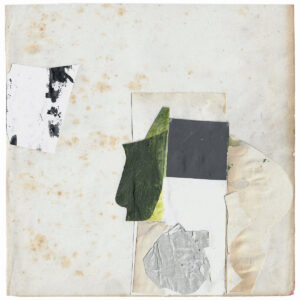
When words trail off at the beginning of claire rousay’s “everything perfect is already here,” ornate instrumentation is waiting to fill a void left by the breakdown of language. Yet it becomes clear as we trace rousay’s collaged sonic pathway that breakdown, of meaning and also of melody, is also a place to rest. everything perfect… is made up of two extended compositions that cycle between familiarity and unknowing. There are seemingly infinite ways to feel in response to these pieces of music, which shift tone across their languid duration, earnest like a familiar song but unbound from the emotional didacticisms of lyrical voice and pop form.
Rousay builds a fluid landscape around the acoustic contributions of Alex Cunningham (violin), Mari Maurice (electronics and violin), Marilu Donovan (harp), and Theodore Cale Schafer (piano), whose respective melodies weave gently in and out, sometimes steady, sometimes aching, sometimes receding altogether in deference to less overtly musical sounds. That is, percussive texture in the form of unvarnished samples and field recordings: the rattle and rustle and the stops and starts of life unfurling, voices sharing memories nearly out of reach, doors closing, wind against a microphone. Everything comes from somewhere in particular, possessing the veneer of the diaristic, but sound’s provenance is secondary here and so these details become tangled and fused. On this release I hear such details not as individual ornaments or stories but the collective architecture of the greater composition. It’s an architecture that is not quite formed and thus full of openings out to the world unfolding.
“The world unfolding,” that’s a kind way of saying change, movement, loss, transformation. Things rousay here indexes, not without shards of desire or pain, still somehow what I hear is coarse peace in the in-between. These two pieces sweep you away and then bring you to earth, but which is which, anyway? Where am I now? What is different outside of me? What is different inside of me? Um. I think. everything is perfect is already here, like the answers to these questions, is loose and beautiful in surprising ways.
The music guides a certain experience of the world around. In claire’s music there is this marriage—not just a pairing or juxtaposition but an interrelationship, an eventual confusion—of song/texture, narrative/abstraction, figure/ground. Everything comes from somewhere in particular but not just the voices, the field recordings, the what is being said or meant, what matters is “the where you are now.” There are so many ways of anchoring oneself in the present, some have to do with fantasy or storytelling and some with accepting what is.
These two compositions find peace between these modes. They sweep you away and then bring you to earth, but which is which, anyway? Their mode of feeling is inquisitive. Where am I now? What has changed outside of me? What has changed inside of me? The music, like the answers to these questions, is loose and beautiful in surprising ways.
21,00€
Out of stock
CD
Claire ROUSAY
“Everything perfect is already here”
When words trail off at the beginning of claire rousay’s “everything perfect is already here,” ornate instrumentation is waiting to fill a void left by the breakdown of language. Yet it becomes clear as we trace rousay’s collaged sonic pathway that breakdown, of meaning and also of melody, is also a place to rest. everything perfect… is made up of two extended compositions that cycle between familiarity and unknowing. There are seemingly infinite ways to feel in response to these pieces of music, which shift tone across their languid duration, earnest like a familiar song but unbound from the emotional didacticisms of lyrical voice and pop form.
Rousay builds a fluid landscape around the acoustic contributions of Alex Cunningham (violin), Mari Maurice (electronics and violin), Marilu Donovan (harp), and Theodore Cale Schafer (piano), whose respective melodies weave gently in and out, sometimes steady, sometimes aching, sometimes receding altogether in deference to less overtly musical sounds. That is, percussive texture in the form of unvarnished samples and field recordings: the rattle and rustle and the stops and starts of life unfurling, voices sharing memories nearly out of reach, doors closing, wind against a microphone. Everything comes from somewhere in particular, possessing the veneer of the diaristic, but sound’s provenance is secondary here and so these details become tangled and fused. On this release I hear such details not as individual ornaments or stories but the collective architecture of the greater composition. It’s an architecture that is not quite formed and thus full of openings out to the world unfolding.
“The world unfolding,” that’s a kind way of saying change, movement, loss, transformation. Things rousay here indexes, not without shards of desire or pain, still somehow what I hear is coarse peace in the in-between. These two pieces sweep you away and then bring you to earth, but which is which, anyway? Where am I now? What is different outside of me? What is different inside of me? Um. I think. everything is perfect is already here, like the answers to these questions, is loose and beautiful in surprising ways.
The music guides a certain experience of the world around. In claire’s music there is this marriage—not just a pairing or juxtaposition but an interrelationship, an eventual confusion—of song/texture, narrative/abstraction, figure/ground. Everything comes from somewhere in particular but not just the voices, the field recordings, the what is being said or meant, what matters is “the where you are now.” There are so many ways of anchoring oneself in the present, some have to do with fantasy or storytelling and some with accepting what is.
These two compositions find peace between these modes. They sweep you away and then bring you to earth, but which is which, anyway? Their mode of feeling is inquisitive. Where am I now? What has changed outside of me? What has changed inside of me? The music, like the answers to these questions, is loose and beautiful in surprising ways.
14,00€
Out of stock
LP
Giancarlo TONIUTTI / Massimo TONIUTTI
“Stratégies Obliques I”
Second part of the "Stratégies Obliques" which this time brings together the two Toniutti brothers on this split LP. The principle is the same as Stratégies Obliques Ø. They both had to create their pieces using Oblique Strategies, an oracular deck of cards by Brian Eno and Peter Schmidt intended to be used as a prompt during the creation process. Any cards they used would become the titles of the plays.
-
Giancarlo Toniutti
A Tinct Myrrh (discard an axiom, just carry on)
Composed in March 2021. All sounds recorded early 2021.
Studio work from March to April 2021 at la stanza nera, Udine.
Sound sources : eraly percussion, rustler, iron wares, prepared slabs, domestic idiophones.
Massimo Toniutti
The Background Colour of a Paragraph (ask your body, mute and continue)
Recorded and composed : February/April 2021
1. sounds and ideas and experiments (February)
2. the domestic installation (March)
3. composition of the selected material (April)
200 copies, white vinyl.
23,00€
In stock

7 CD box
Akos ROZMANN
“Mass / Mässa”
Ákos Rózmann’s Mass consists of twelve electroacoustic compositions created between 1989 and 2004 in the composer’s studio and at EMS in Stockholm. Like most of Rózmann’s compositions, Mass is a long-form work with a duration of around seven hours.
We can describe Rózmann’s Mass as an enormous fresco of personal observations on the two first parts of the Catholic Mass, Kyrie and Gloria. The intensely subjective perspective on the texts of the Mass is underlined by Rózmann’s freezing images – in his own words – “tropes”, i.e. meditations in Swedish, Hungarian and Latin over particular words in the mass text or connection to it. A few passages have nothing to do with the mass text: Organ piece VI in Gloria I (also performed with the subtitle Nocturne in silver and dance) is a sort of lament based on the phrase “Natten gråter” (the night is crying). We find the composer’s peculiar sense of humour in the intermezzo following Gloria I – a composed version of the intermission common in Swedish concert houses, complete with clashing coffee cups and empty chatter from the bureaucratic music establishment.
The overarching formal structure of Mass is an intricate one, with the various parts functioning simultaneously as independent pieces and as parts of sub-groups within the whole structure of the piece. As independent pieces, some of them go under the name Organ piece. For example, the three pieces included in the first Gloria part of mass form another independent composition named Triptykon, first performed as a separate work in 1996.
In the earlier parts of Mass, a battle fought between Positive forces is represented by the words in the Mass text and Negative forces represented by various challenging sounds, such as scornful laughter, grunts, burps, nauseous choking and vomiting sounds. First, the Negative powers drag down the Positive forces into a “black hole” or in pockets. Then the Positive forces return to dominate the remaining parts of Gloria. This formal narrative is nuanced by the composer, who, in interviews, offer a less dualistic, more complex viewpoint on the conflict central to the Mass:
“It’s presumable that everything in the general sense is about the notion of positive or negative because everything in the world is structured like that. But it’s not that simple in the Triptych [the first three pieces of the Gloria-cycle]. Different forces stand against each other, but their interrelation is more complex than that of good and evil.”
The most prominent sound sources in the work are the organ, a Hungarian zither and human voices. Throughout the whole piece, there is a vocal group from a village church in Corsica, singing the Latin mass texts solo and chorally. Other participants are Schola Gregoriana Holmiae under the direction of Viveca Servatius, a group of German Benedictine monks and – in the role of a sort of master of ceremonies, Thomas Hammar.
Ákos Rózmann was born in 1939 in Budapest, Hungary, where he studied composition at the Bartók Conservatory and the Liszt Academy. In 1971 he received a scholarship to come to Stockholm and completed his compositional studies with Ingvar Lidholm at the Royal College of Music in Stockholm and then settled down in Sweden. He was the organist at the Catholic Cathedral in Stockholm for a long time. His early encounter with electroacoustic music gave a new direction to his composing. Except for a few early pieces, Rózmann composed solely electroacoustic music – often preferring a monumental form, usually with the organ and the human voice as the most crucial sound sources in a complex, penetrating musical language loaded with symbols. As a composer, he worked involuntary seclusion, uncompromisingly and with great originality. Rózmann’s music is about the fundamental questions of existence, often on an ethical or religious (Catholic or Buddhist) basis, for example, in the enormous suites Images of the Dream and Death and Twelve Stations, both previously released on Ideologic Organ.
60,00€
In stock

7 CD box
Akos ROZMANN
“12 Stations / Tolv Stationer, For Voices And Piano (1978 – 2001)”
Final pressing of 300 copies.
***
Ákos Rózmann (1939-2005) was born in Budapest where he studied organ and composition at the Liszt Academy. From 1971 to 1974 he studied composition at the Royal College of Music in Stockholm and from 1978 he was an organist at the catholic cathedral in Stockholm. Throughout his life Rózmann dedicated himself to musique concrète developing one of the largest and most rewarding bodies of work in this, the most alchemical of all musical genres. In the early eighties, Rózmann started to build a private electroacoustic studio which he installed in the basement of the Catholic Cathedral whilst continuing to work in tandem at the Elektronmusikstudion (EMS Sweden) where he produced his earlier masterpieces.
With an unwavering commitment to the creation of music Rózmann would often lock himself up in his windowless studio working into the night in order to achieve the results he desired. He did not seek the approval of his peers nor the satisfaction of his audience with the only concern being the perfect articulation of his vision. This combination of vision, passion and stubbornness resulted in one of the most singular catalogues within the field of musique concrete. Commissioned by the Hungarian composer Miklós Maros who requested a five-minute work for piano and voice. Rózmann accepted the offer with the intention of writing a tape piece made from recordings of Miklós’ wife, the soprano singer Ilona Maros’ and his own experiments with prepared piano. The elements recorded here became the source material for Twelve Stations, a work which flew far from the initial five minute brief to land 20 years later as a spirit stretching journey of more than 6 1/2 hours. The compositional process is unique in Rózmann’s output due to the 18 year gap between the initial phase and completion of the final work. The first phase made between 1978-1980 consists of an exploration of traditional musique concrète techniques such as speeding up, slowing down, cutting and splicing tape. The last four stations made between 1998-2001 embrace digital technology where small sections of the original recordings from 1978 were fed through an effects processor and improvised on a sampler keyboard. Despite this gap and the different techniques deployed at each period of creation the monumental result sits as a complete and staggering whole.
Within the set limitations of the source material Rózmann’s skill unfolds in an uncanny ability to coax a vast world of flexible sound from the original piano and voice recordings. The result is a maelstrom of dynamic audio and one of the most daring, challenging and rewarding works of musique concrète from the 20th Century. ‘Property – Room’ parts I and II initiate proceedings with a vast landscape of Sturm und Drang. The original material of piano and voice are dissected and reconstructed as a means of evoking an aggressive otherworldly atmosphere. ‘The Contents and Life of the Black Pit’ shifts further outside with an expansive palate of heavily corrupted voice and frenzied electronics dancing in a most unsettling fashion. ‘The Abandonment of Hell’ leads the listener into a sophisticated and shocking melange of audio disorientation, one with a distinct ‘musical’ quality. One senses a master craftsman quietly whittling away at the individual elements in order to harness the previously unobtainable world within. Part V ‘The Awakening’ implants female forms in the mix as the growling, belching, disturbing voices of the early sequences are replaced with more heavenly voices ascending the malformed matter below. Rózmann was typically ambiguous about the meaning behind his work despite suggesting earlier that the first part of ‘Twelve Stations’ was an interpretation of the ‘Tibetan Wheel of Life’. Alongside his interest in Tibetan Buddhism he maintained his following of the catholic church and as a consequence one may also read this sequence, with its uplifting motifs as an ascent from hell into heaven. Rózmann concludes proceedings with ‘The Celebrators’, which presents itself not as an ending but rather a continuation of sorts. A short musical refrain conjures a prism where refractions of voice and sound appear like a hall of mirrors, spiralling onwards and outwards, without end.
Epic in scale, timbre, technique, mood and movement, Twelve Stations is a unique masterpiece of 20th Century musique concrète and presents itself as an intensely personal and bold realm of sound, an offering as such, a radical mass open to all.
Man meets different difficulties and sufferings through his wandering. These are forces between which a continuous struggle is going on. He cannot control and preside over these forces. He is being tossed up and down, powerless, like snowflakes in the storm: chaotic thoughts and feelings, gladness and suffering, which flow without intermission like a river that has no beginning nor end. All these are the fruits of our own deeds. However, in this life you have the chance to make easier those life wanderings that are to come. - Rózmann (from the programme notes for the 1984 premiere of the first seven stations).
– Mark Harwood
50,00€
In stock
CD
L’OCELLE MARE
“Sans Chemin”
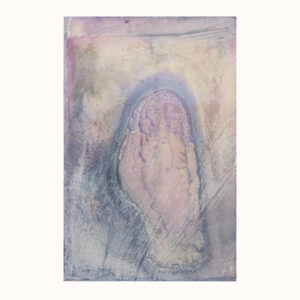
A ritornello that awakens, unfolds, disappears, resurfaces, transforms, forgets itself, awakens again.
A ritornello in folds and hollows, which gives us something to see as well as to listen, a theatre of acoustic shadows where each timbre, each rhythm, each modulation, is born from a meticulously refined gesture. “I don’t write music, it’s an assemblage of gestural memories”, says Thomas Bonvalet. Gestures found, accidentally or not, through long practice: such keyboard rubs on such guitar while preparing a concert, such tambourine vibrates in a singular way when placed on such amp, the duration and intensity of breath given to the flute so that the strings of the open piano decline and reverberate the harmonics...
Gestures that are both very skilful and very simple, that sovereignly refuse the categories of modern and archaic, natural and cultural. Instead, they summon an entire genealogy, both intimate and collective, musical and technical, the memory of a thousand different pieces from a thousand different eras. There is no path, in fact, no path at all in this dismantled world.
There are, however, these gestures that allow us to search for the human measure, that allow for a new attention to be given to bodies, objects, space. Gestures that invent new relationships between themselves and other ways of being alive, gestures to be worked on and shared endlessly. “It’s fragile, it can always fall apart. I have to fight, to stay in tune with what is at stake in a piece, to breathe into it what will make it stand up.
And so the ritornello continues its mutations in the folds and hollows of our own memories.
14,00€
In stock
LP
L’OCELLE MARE
“Sans Chemin”
A ritornello that awakens, unfolds, disappears, resurfaces, transforms, forgets itself, awakens again.
A ritornello in folds and hollows, which gives us something to see as well as to listen, a theatre of acoustic shadows where each timbre, each rhythm, each modulation, is born from a meticulously refined gesture. “I don’t write music, it’s an assemblage of gestural memories”, says Thomas Bonvalet. Gestures found, accidentally or not, through long practice: such keyboard rubs on such guitar while preparing a concert, such tambourine vibrates in a singular way when placed on such amp, the duration and intensity of breath given to the flute so that the strings of the open piano decline and reverberate the harmonics...
Gestures that are both very skilful and very simple, that sovereignly refuse the categories of modern and archaic, natural and cultural. Instead, they summon an entire genealogy, both intimate and collective, musical and technical, the memory of a thousand different pieces from a thousand different eras. There is no path, in fact, no path at all in this dismantled world.
There are, however, these gestures that allow us to search for the human measure, that allow for a new attention to be given to bodies, objects, space. Gestures that invent new relationships between themselves and other ways of being alive, gestures to be worked on and shared endlessly. “It’s fragile, it can always fall apart. I have to fight, to stay in tune with what is at stake in a piece, to breathe into it what will make it stand up.
And so the ritornello continues its mutations in the folds and hollows of our own memories.
21,00€
In stock
LP
Andrew PEKLER & Giuseppe IELASI
“Palimpsests”
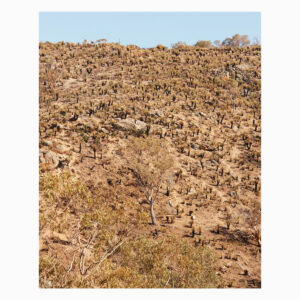
Both noted for strikingly forward-thinking bodies of solo work dating back to the 1990s, the duo of Andrew Pekler & Giuseppe Ielasi - collaborators for the better part of a decade - reemerge with 'Palimpsests’, their first outing with Shelter Press. Built from deconstructed layers of texture, tone, and arrhythmic percussiveness, the album’s 2 sides distill 6 years of work into 9 splintered, airy reimaginings of minimalism - each surprising, creatively rigorous, and startlingly beautiful - that rest at the outer reaches of contemporary electroacoustic practice and musique concrète.
Based in Berlin and Milan respectively, Andrew Pekler and Giuseppe Ielasi have individually carved singular paths across numerous disciplines within experimental music for more than 20 years, each deploying sampling, synthesis, and acoustic sources to weave their own, distinct worlds of sonorous abstraction. Brought together by years of friendship and a shared devotion to layered texture and complex, fractured structure, the pair first joined their creative energies in 2013, a collaboration that culminated as the LP, ‘Holiday For Sampler’, issued by Planam.
'Palimpsests’, the duo’s second outing, draws its material from a series of improvisations made by the Pekler and Ielasi in Milan during 2015. Over the ensuing six years, those recordings would undergo various transformations - cut, reworked, sampled, and added to by each artist, working at geographic distance between Berlin, Kyoto and Monza - before culminating, like the album’s title suggests, as a unique manifestation of musical palimpsest; “an object reused and altered, while still bearing visible traces of its earlier form”.
With each of the album’s compositions nodding toward a city with which Pekler and Ielasi hold biographical connections, 'Palimpsests’ constructs sound as poetic metaphor; a series of ghosts - traces of memory, image, and action - cut and reassembled, in cycling permutations, before been set into action at a glacial pace with layered, transparent forms.
Defined by remarkable restraint and pointillistic precision, across the album’s two sides Pekler and Ielasi weave the fractured remnants of their sessions - reduced to glitches and warbling fragments of texture and tonality - into pulsing expanses of spatial ambiance that defy imagism, blur the boundaries between the synthetic and organic - reducing their sources to a series of unknowns - recast the boundaries of electroacoustic practice on markedly singular terms.
Shelter Press is thrilled to present 'Palimpsests’, another brilliant outing from the duo of Andrew Pekler and Giuseppe Ielasi. Issued in a limited edition of 500 copies on black vinyl, with artworks on printed inner and outer sleeves by Traianos Pakioufakis.
21,00€
In stock
LP
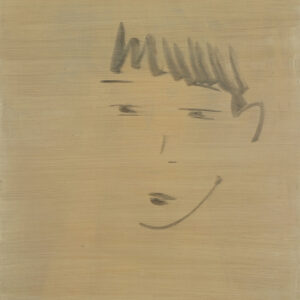
Félicia ATKINSON & Jeffre CANTU-LEDESMA
“Un hiver en plein été”
From its earliest utterances, experimental music has been particularly disposed to transnational and cross-cultural collaboration. Seeking the answer for a fundamental problem - how to transcend the boundaries of difference, distance, and time - it presents a means to find common ground and communicate through the elemental form of sound. Over the last 5 years, this precisely what the duo of Félicia Atkinson & Jefre Cantu-Ledesma has achieved, intertwining sublime sonorities across the geographic expanses between their respective homes in France and the United States. Their third album for Shelter Press, ‘Un hiver en plein été’ (‘A winter in the middle of summer’) - the first to have been largely recorded by Atkinson and Cantu-Ledesma together in the same space - distills a mesmerizing pallet of acoustic and electronic sources into an open discourse of radically poetic forms, offering glimpses of warmth and intimacy waiting in the post-covid world to come.
Both veteran experimentalists with celebrated bodies of solo work behind them - each traversing the challenges of electroacoustic practice in their own singular ways - prior to their first recorded outing in 2016, Félicia Atkinson and Jefre Cantu-Ledesma had only crossed paths in person once, initially meeting in San Fransisco during 2009. The mutual bond formed during that brief encounter flowered into their first LP, ‘Comme Un Seul Narcisse’, followed two years later by 2018’s ‘Limpid As The Solitudes’. Both recorded remotely - sending files back and forth, fortified by conversations on a vast range of subjects - these two albums were guided by impassioned conceptual nods to Guy Debord, Baudelaire, Brion Gysin and Sylvia Plath, while seeking resolutions for the challenges and unique possibilities that working at a distance provoked.
Where the triumphs of its predecessors rose from the bridging of disparate moments and divergent spaces, ‘Un hiver en plein été’ culminates as a celebration of closeness, a result of Atkinson and Cantu-Ledesma working together in the studio, responsively in real time, for the first time. Recorded in Brooklyn during August of 2019 - a handful of months before the pandemic would impose chasmic distances across the globe - its six discrete works, carefully crafted and finalized over the ensuing year, evolve seamlessly across the album’s two sides, weaving a sprawling tapestry of sonority, within which both artists retaining their own voices and visions, while drawing each other towards uncharted ground.
Atkinson likens the recording of ‘Un hiver en plein été’ to have been akin to “a playground”, each artist “hungry for each sound, a bit like the rush in the Louvre in Godard’s Bande à part”, to which Cantu-Ledesma adds that the process seemed to have had “a mind of its own”, with both “along for the ride”. This organic sense of entropy and enthusiasm - a joyous exploration of the unknown - guides the momentum of the album’s evolving arc, as unfolding chasms of ambient space ripple with humanity, life, and fleeting glimpses of the actions that led to its material core.
Crafted from deconstructed melodic elements and drifting long-tones - laden with subtle nods to Indian classical ragas and free jazz - searching patterns of speech, textural elements captured within the studio and the outside world, and searching tonal and percussive interventions, ‘Un hiver en plein été’ coheres as a multi-faceted series of electroacoustic dialogues; nesting conversations between two artists working at the juncture of abstraction and narration, field recording and harmony, and the philosophical and phenomenological, in search for the meaning of friendship, and its manifestation in pure sound.
21,00€
In stock

LP
Jan BRUYNDONCKX
“Rails and Other Tracks”
First ever release of concrete and electronic collage works by Belgian underground sound explorer Jan Bruyndonckx. This album contains autonomous compositions, music for film and documentary; all independently recorded in his private studio between 1958 and 1965.
A small collection of adventurous and mysterious sound evocations with text/poetry (Paul De Vree) recited by Julien Schoenaerts.
21,00€
In stock
LP
Andrew CHALK & Timo van LUIJK
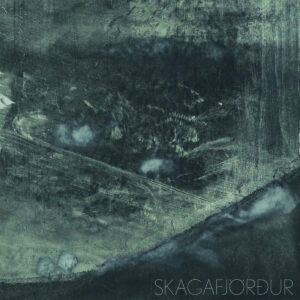
“Skagafjördur”
Soundtrack to the silent film ‘Skagafjördur’ by Peter Hutton
Recorded live in Ghent, 14 April 2018 during
‘Night of the Experimental Film’ an event by Art Cinema OFFoff.
Originally released on cassette by B.A.A.D.M.
“A sea of clouds casting silent shadows on frozen time
A sky of flickering waters curling over the immense permanence Fractured light shrouded in
mist dissolving into shaded pigment The frontier of solitude melting in the winds of patient
eternity.”
12” LP in black vinyl, includes a duotone printed insert and set of three postcards.
19,00€
In stock

CD
Michael RANTA
“Taiwan Years”
Three previously unreleased works from the 1970’s recorded and mixed in Japan and Taiwan.
1-Kagaku Henka (1971) 18’40”
2-China Filch (1975) 27’06”
3-At Night (1978) 23’06”
More than any other of Ranta’s releases this album shows his multiple roots and ideas as a composer, percussionist and concrete/electronic musician, building a seamless bridge between Eastern and Western tradition and avantgarde. Ranta is one of those rare composers able to organically melt his wide artistic span into a singular but yet diverse universe, morphing his rich vocabulary as a percussionist with the Oriental esoteric tradition, the psychedelic underground and the realm of electronic minimalism.
14,00€
In stock

LP
AF URSIN
“Trois mémoires discrètes”
New edition 2022. 3 introspective instrumental (English horn, flute, percussion, double bass, Hammond organ) compositions performed, recorded and mixed by Timo van Luijk during 2010 - 2012 at Kulta Saha. In memory of Hugo Billens, Anja Hiilesmaa, Dirk de Hollander, Ger Boeske, Ourgon and Tosca.
21,00€
Out of stock
LP
Trevor WISHART
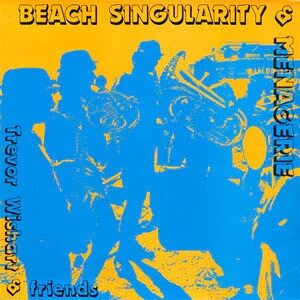
“Beach Singularity – Menagerie”
Trevor discovered a long-forgotten box of this LP, which had never been opened. All copies are "new" but there is some age-related wear & fading to the sleeves, nothing too bad.
Beach Singularity was performed on the beaches at Morecambe, Cleveleys, St Anne's & Southport in the summer of 1977. Beach Singularity is an excerpt from a day long happening in which the composer performed with an ensemble that featured saxophonist Lyn Dobson avant-tuba player Melvyn Poore, vocalist Poppy Holden and clarinet improviser Robin Coombes. This performance was designed somewhat like a social intervention, where the musicians performed in conjunction with tape-music and electronics broadcast from small portable stereo systems scattered along the English sea-side. Menagerie began life in 1974 when Trevor Wishart asked a number of well known British performance artistis to build small assemblages for an exhibition in which each object would be accompanied by appropriate taped sounds. The exhibition, consisting of eleven assemblages, was first prepared for the Birmingham Arts Lab and presented there in January 1975. The accompanying tapes were all made at The University of York Electronic Music Studio by Trevor Wishart.
26,50€
Out of stock

CD
NURSE WITH WOUND
“Man With The Woman Face”
Originally this was only available for a short period of time before World Serpent went bust and is often thought of as a ‘lost’ NWW work.
Review from brainwashed.com : Longtime NWW fans are going to be very very very pleased with this album. Shaved down to a mere duo featuring Steven Stapleton and Colin Potter, this is almost a tribute to the more ambient and free-form early to mid-period Nurse with Wound. The original mission statement from 1978 included a provision that Steven Stapleton didn't like "songs" and the last few full-length albums ('An Awkward Pause', 'Acts of Senseless Beauty', 'Who Can I Turn To Stereo' and 'Rock 'n Roll Station') have all been heavily song-based. Clocking in at under 40 minutes, this particular journey is comprised of three pieces: the two endpieces which linger around the 15-minute mark and the 8+ minute middle piece, whose title loosely translates to "Up in the Air, Singing" in Gaelic. Musically, it's perhaps the most intimate Nurse with Wound has been, with a particular, almost personal subtlety which I haven't detected probably since 'A Missing Sense.' The album opens with a warm underscore, scatterings of organic and electronic noises twitter and scurry by, accented with quiet, mumblesome voices, bees, finger piano or marimba (I can't tell) and various other sound effects -NOT- simply recycled from previous projects. It continues with an almost arguably surprising twist of events as the "band" jumps into full-force instrumental hyper Kraut-rock mode towards the end of the second track. The music and feel of the last track almost echoes the 'Musical Pumpkin Cottage'-era work from Stapleton with Tibet. The vocals repeat the title over and over again, comfortably easing any listener into utter bliss. This album can easily become one of my most listened-to records for 2002.
Jon Whitney
11,00€
Out of stock

Book + CD
NURSE WITH WOUND
“Gyllensköld, Geijerstam And I At Rydberg’s”
Art Book CD – Silver Collection 24 page Deluxe Art Book with augmented CD album. All artworks by Babs Santini.
22,00€
Out of stock
2 CD
NURSE WITH WOUND
“The Surveillance Lounge”
Long out of print and much in demand, this classic NWW CD is now back. This time as a double CD set with a CD of unreleased alternate mixes of each track.
It’s packaged in a stunning matt digipack, with all the information in a clear gloss spot varnish. This is only visible from certain angles!
NURSE WITH WOUND playing ‘The Surveillance Lounge’ were and are Steven Stapleton, Andrew Liles, David Tibet, Nadja Belabidi, Lynn Jackson, Ollie Mathura O’Keeffe, Freek Kinkelaar, Miranda Kinkelaar, Melon Liles and Maude Swift.
18,50€
In stock

CD
Lasse MARHAUG / Jérôme NOETINGER
“Top”
When our friend and inspiration Peter Rehberg passed suddenly in July 2021, I felt like I had to do something, and what I’m good at is something Peter deeply loved, producing records. so I put together this project with some of his longtime collaborators and friends, Lasse and Jérôme, Marcus Schmickler mastering and Tina Frank designing.
it’s titled Top for multiple reasons but one is that Top was often Peter’s entire reply to a message you’d sent, both concise and supportive. a second is that it can also be read ‘To P’, we miss you buddy.
— Jon Abbey
Lasse Marhaug: MacBooks 2003/2007/2011 with SuperCollider Keränen patches
Jérôme Noetinger: Revox, modular synth, CD player
recorded Sortland/Rives September-November 2021
mastered by Marcus Schmickler
design by Tina Frank
produced by Jon Abbey
for Peter Rehberg (1968-2021)
15,00€
In stock

LP
Charlemagne PALESTINE / Simone FORTI
“Illuminations”
Alga Marghen proudly presents the first ever release of "Illuminations", or Charlemagne Palestine and Simone Forti duo interactions, illuminated with dim red lights. In early 1970 Mort Subotnick asked Charlemagne Palestine to join his soon to be created Media Department at the new 'Dream School of the Future' endowed by the Disneys to be called the California Institute of the Arts.
Charlemagne and Simone Forti met there in 1970, when La Monte Young asked them to arrange a California concert for Pandit Pran Nath. They decided to try an improvisation session together and Charlemagne invited Simone the first time to the electronic music studio where he worked regularly. Their medium blended as a play of interacting sound waves and solid matter in motion as Charlemagne and Simone shared energy and focus.
The three previously unreleased recordings on this LP were made between October and December 1971. The first take, titled 'Illumination,' is for two voices moving in the space with small bells and crystal glasses while Simone Forti plays the molimo, a corrugated tube meant for connecting the gas stove. The second take titled, 'Wed Oct 13th 1971,' has Simone and Charlemagne in a song dialogue as animals do. It was also at Cal Arts that Charlemagne Palestine first encountered a Bosendorfer Imperial Piano of Vienna. He played it often as Simone danced during their 'Illuminations'. Take three is a song sang in falsetto while playing the Bosendorfer Imperial in an arpeggiated style that predates the 'strummings'. Listening to these 'three takes' 40 years later, they ooze a timeless, carefree mystical, magical, dreamy atmosphere that evoked the times of the late 60s to early 70s in Charlemagne and Simone part of the California Art Scene. 'Illuminations' were a unique open spontaneous form of performance, ritual and prayer.
Edition limited to 365 copies with an essay by both Charlemagne Palestine and Simone Forti, as well as photos of the performances reproduced on the LP front sleeve.
20,50€
In stock

LP
Charlemagne PALESTINE / Simone FORTI
“Meditative Sound Environments”
Alga marghen presents the second and final chapter in documenting Charlemagne Palestine and Simone Forti seminal collaborations. The new "Meditative Sound Environments" LP is more centered around electronic music and also includes a unique two-voice work based on Simone's chanting, the magically suspended "Simone Tape". All the tracks of this new LP present only previously unreleased recordings.
Charlemagne Palestine met Simone Forti through Dr. Richard Alpert, a professor at Columbia University who went to India to study with a Hindu guru and he himself became a guru afterwards called Baba Ram Dass. Coming back to US he brought Pandit Pran Nath with him. It was a time when everybody was experimenting. All came with a lot of orientalism because people were into timelessness, meditation and being stoned. It was in that atmosphere that Charlemagne met Simone because she also knew Pran Nath. Around that time Palestine moved from NY to California to work with electronic music at the newly invented school California Institute of the Arts. Simone was also living in LA and even though she was not officially connected to CalArts she knew many of the artists who were teaching there.
In summer 1970 Simone Forti was invited by Allan Kaprow (one of the Deans of CalArts) to do an evening of dance at the Pasadena Art Museum and for this performance she asked Charlemagne Palestine to try developing a new kind of work together. It immediately clicked!!!! In January 1971 in Pasadena they did their first "Illuminationss". All of a sudden they were doing a new kind of jamming together. Everybody in the audience loved it because it was so dreamy and they found amazing how a man and a woman can act in that strange, very dreamlike oriental way as in trance,,,,,together. This kind of collaboration between man and woman was uncommon at that time. Mostly other artists were doing very structural works while with "Illuminations" it was totally like they were on magicness drugs.
These performances had certain fixed elements... the piano or some electronics like in "Meditative Sound Environment", the title track of this LP. It turned out they liked red lights so they started to always do it in red light. Also they liked to do it in a resonant spaces. It became more an approach than a piece, because there were never two "Illuminations" that were alike.
The aspect of Charlemagne's music that most inspired Simone Forti's imagination was his melodies. Sometimes their texture of repetitions and evolving variations were so close that the term melody doesn't seem to apply. What most determined the "Illuminations" was Charlemagne's way of letting the elements in the music develop only very gradually.
As Simone Forti recalls: "Once, just before a performance, Charlemagne sang 'Simoney don't worry, you will dance and sing all right.' And of course i did as we walked arm in arm circling the wide-open space, a grand piano to one side shining black and covered with Teddy Bear deities, Charlemagne reflecting his childhood time as devotional cantor, and me, my childhood time striding along in the Tuscan hills, belting out Italian folksongs with her cousins". The recurring melodies were mostly Charlemagne's. But Simone Forti brought one too, with a beautiful song about not drifting away into the beyond that you can hear as the last track on this LP.
Edition limited to 365 copies with liner notes by Charlemagne Palestine and Simone Forti.
20,50€
Out of stock

CD
SMALL CRUEL PARTY
“Cervorum Simulacra”
"Cervorum simulacra" was originally released as a lathe-cut LP limited to 30 copies ; "Pour Eric S-W" has never been released.
Cervorum Simulacra (live à Qui Plume La Lune, Paris, 11.iv.08)
Pour Eric S.-W. (live, Radio KSER, Everett, Washington, 15.iv.92)
11,50€
In stock

CD
TARAB
“Rooms”
Between 2019 and 2021 I presented three installations. Seeking to move away from sharing borrowed representations of things, spaces and actions in the form of recordings, to instead shape spaces or situations with sounds and rooms, things and an audience. If we understand space not as physical, but as shaped through use, it raises the somewhat rhetorical or even quixotic question: can a space be shaped by sound? Can one space be shaped inside another?
However, ROOMS is not intended to act as a straight document of these installations, despite drawing heavily upon them. Rather, it has been made to explore some of the ideas and methods which emerged from the process, within the space formed by a pair of stereo speakers situated in yet another room. It is not intended as a re-presentation of those assembled spaces, but works towards being its own listening space within the rooms and ears of a listener.
Recorded audio material is explored as a shifting series of perceivable surfaces, textures and depths; traces of places and actions; points in space; vibration of speaker cone and microphone diaphragm; resonant objects acting as small sounding containers within larger containers; movements of air; a constant shifting set of perspectives; the traces that are left behind; debris gathered up and pawed over. Recorded sound is gathered and understood as partial, fragmentary, incomplete.
While ROOMS is a construction, it is presented not quite as an abstraction nor as a re-presentation, but as a form of both-ness or an inbetween-ness; somehow inside-out and outside-in. An interaction or assemblage of shifting, sounding elements and things. (Eamon Sprod)
11,50€
Out of stock
CD
Artur ZMIJEWSKI
“Singing Lesson”
First published as a Vinyl-LP in 2011 (Tochnit Aleph TA099) this extraordinary work by Polish conceptual artist Artur Żmijewski is finally available again!
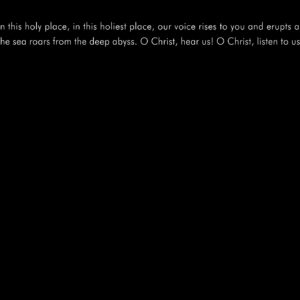
"In 2001 ARTUR ŻMIJEWSKI created the first part of the project "SINGING LESSON" in the Augsburg Evangelical Holy Trinity church in Warsaw. Accompanied by an organ a choir of 'deaf-mute' children sang the "Kyrie" from the "Polish Mass" by Jan Maklakiewicz (1899-1954). Among the cacophony of sounds uttered by them you can hear the words of the confession of faith: "In this holy place, in this holiest place, our voice rises to you and erupts as the sea roars from the deep abyss. O Christ, hear us! O Christ, listen to us!". The second part of the project ("Deaf Bach") was realized in 2002 in St. Thomas Church in Leipzig, in which Johann Sebastian Bach for many years was a cantor and where he was buried. 'Deaf-mute' or severely hearing-impaired children sang Bach's cantata "Herz und Mund und Tat und Leben" (Heart and Lips and Deed and Life)." (from the liner-notes)
"Along with admiration for the efforts of the deaf we feel an uneasiness caused by our deeply hidden aversion towards that which – like cripplehood – was removed from our consciousness: fear of ourselves, which is an inner mold of repulsion projected onto outside phenomena. Żmijewski's works convince us that neither suffering nor different kinds of physical dysfunction or social norms are able to kill the joy of life. The children singing Bach every so often snort with laughter as if they were trying to accustom themselves to the situation in which they found themselves, thus making it "normal". They whoop it up, forgetting the fact that the lesson in which they participate is beyond the social role ascribed to them, that it is an anomaly, a freaky idea. It is also a musical hybrid, a mix of the sounds uttered by the deaf children and the voice of a professional singer, a negation of all the rules, a mixture of the evenly-tempered baroque system and elements of modal and atonal music." (Violetta Sajkiewicz)
Polish artist Artur Żmijewski (born 1966 in Warsaw) is one of the most consistently challenging, provocative and profoundly thoughtful artists working today. He is an author of short video movies and photography exhibitions, which were shown all over the world. Żmijewski does not shy away from putting the generally accepted rules of Political Correctness into question. His works on the mentally and physically handicapped has drawn significant public attention. He appears to be an artist always in constant search of the next modality of artistic expression, ever striving to amplify the impact of his art on its subjects, enlarging its territory beyond its conventional borders. During the 1990s, Żmijewski was a leading force in the realm of critical art, his point of departure being the problems of body and The Other. In 2005 he represented Poland at the 51st Venice Biennale. He exhibited at Documenta 12 (2007), Manifesta 4 (2002), Wattis Institute for Contemporary Art, San Francisco (2005), Kunsthalle, Basel (2005), National Gallery of Art Zacheta, Warsaw (2005), Kunstwerke, Berlin (2004), Museum of Modern Art, New York (2009), Cornerhouse, Manchester (2009) and many more. He was the curator of the Berlin Biennale 2012.
CD in 8-panel digipak. Edition of 300 copies.
14,00€
Out of stock
2 LP + 7"
INCAPACITANTS
“As Loud As Possible”
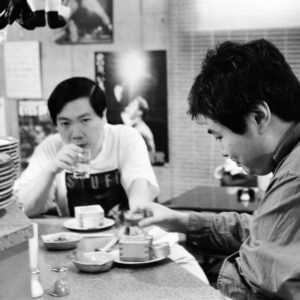
The mid-90s were particularly abundant years for harsh noise, producing many albums which are now considered masterpieces. One of the most beloved classics from this period is "As Loud As Possible" by Incapacitants. Active since 1981, the duo of Toshiji Mikawa and Fumio Kosakai found their stride in the early 90s and set off on an unrelenting course which produced countless gems of noise. Many of these have been well preserved and documented elsewhere, compiled on "Box Is Stupid" and "Alchemy Box Is Stupid", however, "As Loud As Possible" has never been reissued since its original release on Zabriskie Point. It is now made available for the first time since 1995, with no corner cut in preparation of its reissue. The audio was transferred from the original tapes by Din-I-Ilahi, and re-mastered for digital and vinyl formats by Rashad Becker. The iconic cover photographs by Naomi Hosokawa have been scanned from the original negatives and enlarged for the expanded format, along with outtakes and unused shots, which are now included here for the first time. T. Mikawa also dug into the Incapacitants archives and unearthed two additional tracks of previously unreleased material, recorded around the same time as the album. These two tracks, entitled "As Loud As Possible Revisited" are included as a bonus 7" with alternate picture sleeve. Features extensive liner notes written by Sam McKinlay aka The Rita. A personal all-time favourite, it is an honour to present "As Loud As Possible" as a double LP in deluxe gatefold sleeve. Includes digital download.
Incapacitants are T. Mikawa & F. Kosakai:
All electronics, voice
Edited by T. Mikawa
Photographs taken by Naomi Hosokawa at Factory Pub Bon-Ba-Ye
(Special thanks to Mr. Ohba)
Originally released by Zabriskie Point, 1995
Transferred from original master tape by Din-I-Ilahi
Remastered by Rashad Becker
31,00€
In stock

7" single
NURSE WITH WOUND
“Shipwreck’n’Roll”
The 2 tracks on this record have been constructed from flotsam, jetsam & driftwood gathered in the Lofoten Islands by Steven Stapleton & Colin Potter in 2004 & reassembled at IC Studio, London 2021. The single is a prelude to the vinyl release of ‘Shipwreck Radio Volume 1/Lofoten Deadhead’, but getting vinyl manufactured is difficult & slow (the single itself was many months late), so we're not sure when the boxset will be available....
16,00€