SEARCH
What are you looking for?
  • Account
  • Contact
  • Shipping
Facebook
  • Home
  • Shop
  • Sales
  • Infos
0 0

View Wishlist Add all to cart

0 0,00€ 0

No products in the cart.

Return To Shop
Shopping cart (0)
Subtotal: 0,00€

View cartCheckout

0 0
0 My Wishlist

View Wishlist Add all to cart

0 0,00€ 0
0 Shopping Cart

No products in the cart.

Return To Shop
Shopping cart (0)
Subtotal: 0,00€

View cartCheckout

  • Home
  • Shop
  • Sales
  • Infos
  • My Account
Facebook
Home

Shop

Return to previous page
Grid
List
Show

In stock

4 CD

Cornelius CARDEW
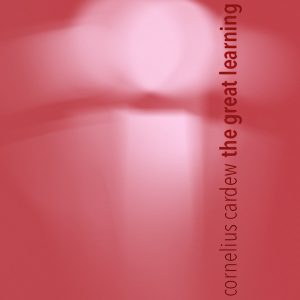
“The Great Learning”

All seven Paragraphs of Cardew's The Great Learning by the Scratch Orchestra Strasbourg under Didier Aschour, an orchestra born from an open call and two years of shared practice: 4CD box with a 116-page booklet. 4CD box with a 116-page booklet. Shiiin's thirteenth release is a complete recording of Cornelius Cardew's The Great Learning, the seven Paragraphs written between 1968 and 1971 on the opening of the Ta Hio (Daxue, "the Great Learning"), the Confucian treatise on self-cultivation and the harmonious ordering of collective life, in Ezra Pound's translation. Mixing voices, instruments, objects and actions through graphic and verbal notation, the score prescribes relationships between the performers more than sounds, and shares out among them the responsibility for the form. The work is inseparable from the Scratch Orchestra, which Cardew founded in London in 1969 with Michael Parsons and Howard Skempton. The Scratch Orchestra Strasbourg grew out of an open call launched by the Musica festival in spring 2023, with no condition of level or background: amateurs and professionals, the self-taught and people with no previous practice. First gathered in September 2023, the group worked regularly under Didier Aschour, with members of the Dedalus ensemble and Strasbourg musicians versed in improvisation, graphic scores and open protocols passing on tools rather than imposing a reading. The aim was neither to reproduce a traditional orchestra nor to rebuild Cardew's, but to put his principle back into play: turning a diversity of skills into a shared resource. On 15 September 2024 the orchestra performed all seven Paragraphs in the Saint-Paul church in Strasbourg, a concert of nearly seven hours that opened the music programme of the 42nd Musica festival, in dialogue with Mode d'emploi, the exhibition of instruction-based works at the city's museum of modern and contemporary art. The group went on working on other pieces and came back to The Great Learning for this recording, made in the same church from 27 to 29 November 2025. What it fixes is an interpretation shaped by more than two years of common practice, not a line-up assembled for a single date, which brings it close to Cardew's own idea of the orchestra as a lasting space of practice, learning and collective change. Alongside Aschour play Lou Renaud-Bailly, Jeanne Barbieri, Stéphane Clor, Yannick Guédon, Jean-Philippe Gross and Thierry Madiot, with Jérémy Marchal on the church organ, the Pelicanto choir directed by Mathilde Mertz and the De-ci De-là choir directed by Cédric Dosch. Paragraphs 1 to 3 fill the first disc and Paragraph 4 the second; Paragraph 5 alone runs over an hour and a quarter on the third, and the fourth holds Paragraphs 6 and 7. The booklet opens with a text by Stéphane Roth and gathers two essays. Dean Inkster's, written for the 2009 Cardew exhibition at CAC Brétigny, places the work within the composer's aesthetic and political path and shows how the dispersal of the voices opens onto a shared freedom of listening rather than a fusion of the collective. Matthieu Saladin's, first published in Revue & Corrigée in 2020, examines the devices of each Paragraph as so many attempts to contain the relations of domination that form again within any group.
49,00€
Add to cart

In stock

2LP

Eliane RADIGUE
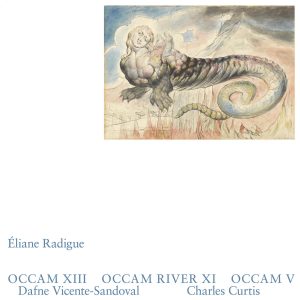
“Occam XIII, Occam River XI, Occam V”

Occam Ocean is a series of acoustic compositions made for and with individual instrumentalists by the late French composer Éliane Radigue. Extending the interactive process pioneered in Naldjorlak (2005–2009), Occam Ocean employs a scoreless method of composing in dialogue with each performer. Dating back to 2011, the series has proliferated almost organically, growing out of a musical and social dynamic of combinatoriality and multiplication to a catalog of more than eighty discrete compositions. This body of work stands as one of the most extraordinary late-career outpourings in recent music history. The Occam series was catalyzed in part by a visit to the Natural History Museum in Los Angeles, where Radigue encountered a depiction of the electromagnetic spectrum—from radio signals to gamma rays—which impressed upon her the minuscule range of human hearing relative to the seemingly unlimited compass of universal wavelength and frequency. The Occam compositions seem to address this vertiginous confrontation with the infinite; each individual composition elaborates a radically reduced technique or sound process, frequently working outward from only a handful of fundamental tones, to expose the flickering, idiosyncratic spectral behavior of the instrument. The reference to William of Ockham indicates a principled commitment to parsimony; paradoxically, the reduction in material content makes possible an incommensurate richness in perceived acoustical detail. Notable in the Occam series is the inextricable identification of the composition with the performer for whom, and with whom, it was made. The particular sounds and techniques of each individual performer are thus indelibly stamped in the composition; the piece composes the playing of that musician, as much as the musician plays the composition. The time-honored division of labor between performer and composer is thus suspended and reconfigured, proposing a model for new music composition that has not yet been fully theorized or understood. Occam XIII, Occam River XI (presented here in two distinct readings, which reveal subtle variations in instrumental response), and Occam V feature two longtime collaborators of Radigue in solo and duo formations. Charles Curtis, the first instrumentalist for whom Radigue wrote an acoustic composition (Naldjorlak), performs on cello, while Dafne Vicente-Sandoval—whose parallel investigations into her instrument’s complex sounding properties led her to collaborate with Radigue—performs on bassoon. The works were recorded at Temple Saint-Théodule, La Tour-de-Peilz, Switzerland, during a 2024 residency at La Becque, a setting previously explored by the musicians for its distinctive acoustic properties.
45,00€
Add to cart

Out of stock

CD

Eliane RADIGUE
“Occam XIII, Occam River XI, Occam V”

Occam Ocean is a series of acoustic compositions made for and with individual instrumentalists by the late French composer Éliane Radigue. Extending the interactive process pioneered in Naldjorlak (2005–2009), Occam Ocean employs a scoreless method of composing in dialogue with each performer. Dating back to 2011, the series has proliferated almost organically, growing out of a musical and social dynamic of combinatoriality and multiplication to a catalog of more than eighty discrete compositions. This body of work stands as one of the most extraordinary late-career outpourings in recent music history. The Occam series was catalyzed in part by a visit to the Natural History Museum in Los Angeles, where Radigue encountered a depiction of the electromagnetic spectrum—from radio signals to gamma rays—which impressed upon her the minuscule range of human hearing relative to the seemingly unlimited compass of universal wavelength and frequency. The Occam compositions seem to address this vertiginous confrontation with the infinite; each individual composition elaborates a radically reduced technique or sound process, frequently working outward from only a handful of fundamental tones, to expose the flickering, idiosyncratic spectral behavior of the instrument. The reference to William of Ockham indicates a principled commitment to parsimony; paradoxically, the reduction in material content makes possible an incommensurate richness in perceived acoustical detail. Notable in the Occam series is the inextricable identification of the composition with the performer for whom, and with whom, it was made. The particular sounds and techniques of each individual performer are thus indelibly stamped in the composition; the piece composes the playing of that musician, as much as the musician plays the composition. The time-honored division of labor between performer and composer is thus suspended and reconfigured, proposing a model for new music composition that has not yet been fully theorized or understood. Occam XIII, Occam River XI (presented here in two distinct readings, which reveal subtle variations in instrumental response), and Occam V feature two longtime collaborators of Radigue in solo and duo formations. Charles Curtis, the first instrumentalist for whom Radigue wrote an acoustic composition (Naldjorlak), performs on cello, while Dafne Vicente-Sandoval—whose parallel investigations into her instrument’s complex sounding properties led her to collaborate with Radigue—performs on bassoon. The works were recorded at Temple Saint-Théodule, La Tour-de-Peilz, Switzerland, during a 2024 residency at La Becque, a setting previously explored by the musicians for its distinctive acoustic properties.
23,00€
Read more

In stock

CD

David GRANSTRÖM
“Echoes of Impermanence”

Echoes of Impermanence sees David Granström’s previously established strict hermetic minimalist musical topography undergo a major shift with the introduction of the electric guitar, which instigates a breaking of the sealed crystal walls of the composer’s previous work within music of long duration and precise digital synthesis, bringing forth a riff-laden spirit previously lingering below the surface. The album was recorded at the world-renowned Elektronmusikstudion EMS as well as in the composer’s own studio with the help of Mats Erlandsson and features a guest appearance by long-time collaborator and XKatedral co-founder Maria W Horn performing on the Hurdy-Gurdy on the title track. David Granström is a composer and musician from Umeå in the northern part of Sweden. His hometown is a stronghold of extreme musical expression and consequently Granström grew up playing guitar in a metal band and started to compose music within that context which eventually evolved into solo projects, having access to studio facilities adjacent to the rehearsal space. Granström initially found his personal musical voice within the context of electroacoustic composition utilizing his advanced programming ability to manifest a sound and formal structure governed by algorithmic processes. The resulting musical work is characterized by harmonic simplicity and spatiotextural complexity, employing sounds of synthetic and acoustic origin in combination with strict digital synthesis techniques.
17,00€
Add to cart

Out of stock

CD

William BASINSKI
“Passing the Cup of Sorrows”

In the realm of past-life regression hypnotherapy, there is a concept known as “Life Between Lives,” wherein a sacred exchange of energy occurs between two souls in the spirt world, helping a spirit fully understand and forgive a being who hurt them in a past life. This exchange – called “passing the cup of sorrows” – became the unexpected inspiration for William Basinski’s first new album in six years. While sinking deeper into the daily abyss of our collective negativity bias, William Basinski stumbled upon a video describing the spiritual hypnotherapy exercise known as “passing the cup of sorrows.” Fixed on the glow of a screen that projected mounting anxiety and cynicism at a seemingly interminable pace, Basinski found the testimonials of this fascinating therapeutic practice to be profoundly moving. He sat at his piano, translating the transformation of those traumatic memories of past lives into cathartic tears of the present day. Channeling the quiet curiosity and asymmetrical patterns of pioneering 20th Century composer, Morton Feldman, Passing the Cup of Sorrows is a single 40-minute piece that employs a solitary piano and subtle electronics to truly haunting effect. It recalls fragments of traumatic memories and projects them as fractals in a slow-moving soft focus that’s as eerie as it is enlightened.
15,50€
Read more

In stock

LP

Oren AMBARCHI
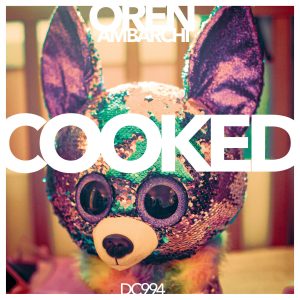
“Cooked”

With Cooked, Oren Ambarchi takes his adventurous sonic universe into gloriously unpredictable territory. Bringing together an extraordinary cast of international collaborators, including Eiko Ishibashi, Jim O’Rourke, Joe Talia and members of his Ghosted trio, the album unfolds across two expansive, side-long compositions. Blending hypnotic grooves, shimmering guitars, intricate electronics, jazz-inflected rhythms and surreal sonic detours, Cooked moves effortlessly between delicate atmospheres and exuberant experimentation. Meticulously constructed yet remarkably spontaneous, it reveals Ambarchi at his most playful, inventive and delightfully unpredictable. A dazzling journey through the outer limits of contemporary experimental music. Oren Ambarchi - Guitars and whatnot Hidden Tableau: Johan Berthling - Double bass Eiko Ishibashi - Piano Jim O'Rourke - Synth Konrad Sprenger - Voice synthesis, electronics & production Joe Talia - Drums Sleight of Hand: Johan Berthling - Double Bass Will Guthrie - Gamelan & drums Isak Hedtjärn - Whistling Michiko Ogawa - Shō Marcus Pal - Synthetic Sound Fredrik Rasten - Guitars James Rushford - Celeste, piano & portative organ Andreas Werliin - Drums
30,00€
Add to cart

In stock

CD

Oren AMBARCHI
“Cooked”

With Cooked, Oren Ambarchi takes his adventurous sonic universe into gloriously unpredictable territory. Bringing together an extraordinary cast of international collaborators, including Eiko Ishibashi, Jim O’Rourke, Joe Talia and members of his Ghosted trio, the album unfolds across two expansive, side-long compositions. Blending hypnotic grooves, shimmering guitars, intricate electronics, jazz-inflected rhythms and surreal sonic detours, Cooked moves effortlessly between delicate atmospheres and exuberant experimentation. Meticulously constructed yet remarkably spontaneous, it reveals Ambarchi at his most playful, inventive and delightfully unpredictable. A dazzling journey through the outer limits of contemporary experimental music. Oren Ambarchi - Guitars and whatnot Hidden Tableau: Johan Berthling - Double bass Eiko Ishibashi - Piano Jim O'Rourke - Synth Konrad Sprenger - Voice synthesis, electronics & production Joe Talia - Drums Sleight of Hand: Johan Berthling - Double Bass Will Guthrie - Gamelan & drums Isak Hedtjärn - Whistling Michiko Ogawa - Shō Marcus Pal - Synthetic Sound Fredrik Rasten - Guitars James Rushford - Celeste, piano & portative organ Andreas Werliin - Drums
17,00€
Add to cart

In stock

LP

Aaron DILLOWAY
“No Skill Comedy Mind Reading”

Aaron Dilloway returns to Dais Records with 'No Skill Comedy Mind Reading', his first full-length album since 2017, a collection of characteristically jarring, absurdist material. Marked by his signature distortions and contortions — feedback-shrouded found sounds, field recordings, and vocal improvisations — 'No Skill' collects nearly a decade of select solo work and feels distinctly in the present, a scattered product of volatility, both harsh and humorous. Few contemporary experimental artists over the past quarter-century are as prolific and revered as Dilloway, a pioneer of the American Midwest noise scene, a former member of Wolf Eyes, and the founder of the Oberlin-based label and record shop Hanson Records. But for wielding such an immense catalog, he has released only two proper solo LPs, amid a steadier output of tape releases and collaborative projects, with No Skill completing what has become an ambiguous album trilogy starting with his 2012 landmark 'Modern Jester'. "I almost feel like they're kind of part of one piece. All three records are trying to find humor in the worst possible situations. Depending on who is listening and what their mindset is, they could be seen as funny or just horrifying, horrible records." Half-serious, Dilloway continues, "This one to me, it's the result of, you know, fucked up stuff: mental illness, medications, divorce, funny shit. Immersion into weird stuff always fascinates me in one way or another." Alongside the aforementioned inputs from the human experience, No Skill draws on several technical and aesthetic curiosities: the methodical sound design of Alvin Lucier, Andy Milligan's low-budget 1989 cult horror film 'The Weirdo', and the pop eccentricity of film composer Hugo Montenegro. Dilloway came upon the latter’s oddball belongings through a storage-unit auction, which included notes from the composer’s early electronic experiments. Some of the album’s most unnerving moments, like the laughter that haunts "Bring Me The Head Of The Unknown Comic" — nodding sonically to avant-garde greats Nurse with Wound, and thematically to the paper bag-headed 1970s comedian — can be traced to the impact of this truly unusual find. 'No Skill' also follows recent artistic excursions: Dilloway’s realization of John Cage's 88-tape loop 'Rozart Mix', his original score for 'The Absence of Milk In The Mouths of the Lost', collaborative albums with Lucrecia Dalt ('Lucy & Aaron'), and Kim Gordon and Bill Nace ('Body/Dilloway/Head'). While working on these and other projects, he kept a mental folder for his next Dais record, setting aside recordings that fit a fairly nebulous vision. "This record has kind of consumed my head since I finished 'The Gag File' [2017]. At first, I was thinking it would be more of a pop record, but then the Lucrecia project kind of got that out of my system. It started to flow more like my live sets." He landed on a sequencing that keeps the listener slightly guessing, whether startled, amused, or confused; by design, the effect may lead one to think something is broken. He opens the album in shrill screeches before diving into pockets of drone, created by two Nepali sarangi bows rubbed together, with the first emergence of his ogre-like vocal presence. Several minutes are then engulfed in white noise ("Forced Auctioneer"). Dilloway cites The Weirdo's strange use of extended black space transitions and his lifelong love of tape hiss. He remembers getting cassettes from older kids, like the Misfits and Circle Jerks, and hearing the sounds as part of the songs, only to learn later that they were sonic artifacts left over from generations of tape dubbing. "I am into the idea of building all of these layers and turning them into something else. Like when I play live, things can get harsher than my recorded music, and for this, I wanted to get that feeling, for these blasts to be loud, but a bit more subdued. That complete static sound, almost like you're underwater." Dilloway collects sound poetry records, and while he’s quick not to file what he does within the genre, the absurdity of the craft, using phonetic sounds and non-verbal noises to replace traditional semantic meaning, does speak through his work. On the B-side's "Possession Audition Tape", he reads and digitally cuts up various phrases from a book detailing a 1700s French religious group that was prone to public disruptions, creating his own convulsions of echoed stutters across the mix. 'No Skill Comedy Mind Reading' ends in a synth and organ rhythm machine piece derived from music he made for Pieter Schoolwerth and Phil Vanderhyden's film 'Supporting Actor', in which an avatar of Dilloway gets pulled into a portal. There, he brushes shoulders with post-human creatures in a fantastical club. The scene, somehow transferable to audio, leaves the set in an appropriately disorienting dream state. A noise music luminary, a modern jester, dispatching from the unknown.
26,50€
Add to cart

In stock

LP

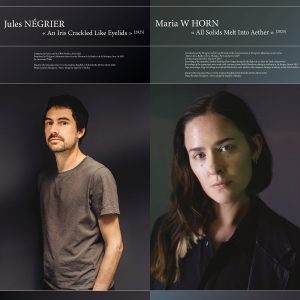
Jules NÉGRIER / Maria W HORN
“An Iris Crackled Like Eyelids / All Solids Melt Into Aether”

Jules NÉGRIER « An Iris Crackled Like Eyelids » In An Iris Crackled Like Eyelids, Jules Négrier explores two movements, two inner moments separated by the suspended time of an eyelid ‘crackling’. The first movement begins as a story ends, with a release of raw emotions, then blossoms into a broad surface of harmonic divergences. The second movement reintroduces a crossover of rhythms, torsions, descents and ascents to reveal a paradoxical space that unfolds in the time of an unresolved pacification. Inspiredly and intricately exposing sounds that are both diaphanous and tortuous, Jules Négrier composes a mysterious music, a music that draws from the torments of electronic matter forms and becomings that gradually gain ground in the regions of simplicity. Maria W HORN « All Solids Melt Into Aether » In All Solids Melt Into Aether, Maria W Horn weaves together chords created using an organ pushed to its limits with the relentless textures of computer-generated sounds. Between the extreme, cold precision of the electronic tones and the instability of the warm organ chords subject to pressure variations, a silent drama unfolds, giving rise to a complex world composed of harmonic states which, from their formation to their collapse, induce a powerful and poignant metaphor, conjuring up images of a perpetual, immemorial struggle. This struggle is the one that takes place, every moment, between two opposing energies: one forming the desire for a stable state, seeking a fragile balance, an energy constrained and contradicted, relentlessly, by the forces of entropy and chaos. In this respect, Maria W Horn delivers, with All Solids Melt Into Aether, a work of evocative and introspective power that is truly fascinating.
24,00€
Add to cart

Out of stock

LP

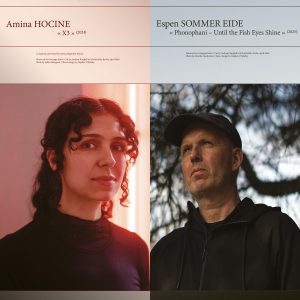
Amina HOCINE / Espen SOMMER EIDE
“X3 / Phonophani – Until the Fish Eyes Shine”

Amina HOCINE « X3 » (2024) X3, by Amina Hocine, draws progressively, subtly and inexorably on the complementary nature of sound materials. Patiently and delicately blending pure sine waves, field recordings and sounds produced with a ‘foghorn organ’ (an instrument developed by Hocine herself), X3 invites both introspection and contemplation. Inspired by a symbol of the Danish mystic Martinus Thomsen representing the evolution of a being in the physical world, Amina Hocine invites us on a long journey, balancing between the static and the changing, between the almost imperceptible and the grandiose, with rare elegance and grace. It is a music of transition that Amina Hocine offers us, a music where the mediation of sound, wave after wave, becomes meditation. Espen SOMMER EIDE « Until the Fish Eyes Shine » (2025) In Until the Fish Eyes Shine, Espen Sommer Eide takes an inspired panoramic and retrospective look at his musical work, often produced under the pseudonym Phonophani. By revisiting and reimagining the sounds of his early years, with the late 1990s ambient techno scene in Tromsø as a background, Eide summons a music that is anything but nostalgic, but instead offers a kind of ‘geological stratification’ where eras and protocols collide, overlap and complement each other, revealing the remarkable singularity of the Norwegian artist’s sound palette. The piece also expresses the extreme consistency and authenticity of his musical vision, a vision in which technological innovations, the contemplated environment and lived emotions converge in a space apart, that of dreamlike music, always to be invented, always in motion, always in transformation.
24,00€
Read more

In stock

LP

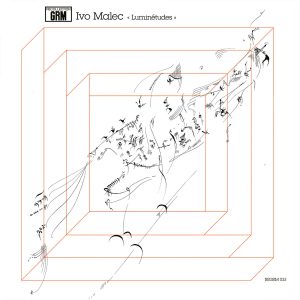
Ivo MALEC
“Luminétudes”

Composed over a period of twenty years, these four electroacoustic pieces by Ivo Malec reflect the richness of his sonic universe and reveal the unique power of his musical writing. His strength lies in an ability to harness emerging sounds and techniques (ranging from complex editing to early computer music and electronic synthesis) and develop them through an exploratory approach, giving rise to musical ideas of rare clarity. This sense of determination, not only in terms of the future of sounds but also of musical forms, is what makes Ivo Malec an essential composer on the contemporary music scene and a key figure in the GRM’s repertoire.
27,50€
Add to cart

In stock

LP

Kali MALONE
“Burning Song”

With Burning Song, Kali Malone unveils her first album of new solo compositions since All Life Long (2024), embracing a more intuitive and direct approach to her distinctive exploration of microtonal harmony. Recorded in Leipzig’s historic Thomaskirche, where J.S. Bach spent the final decades of his life, the album brings together Malone on organ, Lucy Railton on cello and Stephen O’Malley on bowed acoustic guitar. Slowly unfolding chords and subtle harmonic shifts create a deeply immersive sound world, moving between ambiguity and radiance, melancholy and quiet transcendence. Moving away from the strict structures of her earlier work, Malone allows emotion and intuition to guide the music’s gradual transformations. A meditation on change, continuity and renewal, Burning Song reveals a new sense of freedom, where sound becomes a space for tenderness, reflection and possibility.
29,50€
Add to cart

In stock

CD

Kali MALONE
“Burning Song”

With Burning Song, Kali Malone unveils her first album of new solo compositions since All Life Long (2024), embracing a more intuitive and direct approach to her distinctive exploration of microtonal harmony. Recorded in Leipzig’s historic Thomaskirche, where J.S. Bach spent the final decades of his life, the album brings together Malone on organ, Lucy Railton on cello and Stephen O’Malley on bowed acoustic guitar. Slowly unfolding chords and subtle harmonic shifts create a deeply immersive sound world, moving between ambiguity and radiance, melancholy and quiet transcendence. Moving away from the strict structures of her earlier work, Malone allows emotion and intuition to guide the music’s gradual transformations. A meditation on change, continuity and renewal, Burning Song reveals a new sense of freedom, where sound becomes a space for tenderness, reflection and possibility.
18,50€
Add to cart

In stock

2 LP

Felix KUBIN & Asmus TIETCHENS
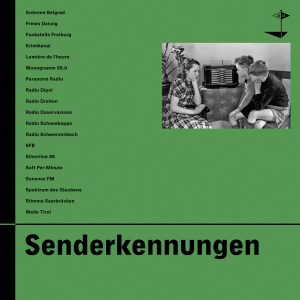
“Senderkennungen”

Senderkennungen marks the first ever collaboration between Hamburg veterans of sound art Asmus Tietchens and Felix Kubin, whose friendship began in the early 1990ies. The double album collects 25 original „Senderkennungen“ and their artistic deformation and further processing. Long wave, mid wave, short wave and ultra short wave – long since disappeared radio waves in forgotten ethers, where lost souls linger on a quest for a music that so far did not exist and essentially cannot exist. They don’t search for cosmic harmony – this is old news – but long for sounds beyond the spheres. Felix Kubin and Asmus Tietchens, corner stones of sound art, are united in the decades long fight for a music of the after tomorrow. With this album they have tried to help those lost souls. In order to make radio stations acoustically recognizable they need a so called station ID. This audible signal is synonimous to a visible logo. Both logo and station ID create identities. The German word for station ID is „Senderkennung“. For the album Felix Kubin composed a series of unique Senderkennungen - each ca. 5 seconds long – which have been commissioned by various radio stations, who where in need of a station ID or were looking to relaunch their existing acoustic branding. Most of these miniature compositions are tonal but some verge towards an atonal or noisy character. Time and again Kubin and I discussed the possibility of creating pieces out of these ultra compressed and short Senderkennungen. This was realized for the album in applying the rule of keeping Kubin’s original musical material recognizable while at the same time using any form of manipulation, modification, stretching, shortening or expanding in the development of the new pieces. One limitation: Those new pieces should not be longer than three minutes each. From these new works Kubin and Tietchens chose a selection which can now be heard on their album “Senderkennungen“. Asmus Tietchens
35,00€
Add to cart

In stock

LP

ILLUSION OF SAFETY
“Cancer”

The origianl 1991 album sequence has been edited down from the original 60 minute CD program to fit on an LP and remastered. Additionally the material has been coalesced into 7 specific tracks (instead of the arbitrary and annoying 31 indexes on the CD) as available here A1-B4. Track 8 (A1-3) and 9 (B1-4) are the full uninterrupted album sides available as such. This one was mostly a group effort focused on a dark ambient atmospheric environment and experimental minimalism that crawls under your skin. Mark & Thymme’s heavy synth is omnipresent, Mitch & Chris scraping every piece of scrap metal they could find, Jim’s extended piano & tabletop guitar is apparent, the abstract sampling techniques of founding member Daniel Burke appear throughout, & the beautiful solo minimalist piano composition of Thymme’s closes the LP. Soundtrack like in its scope the album is another in the ongoing concept of music without a film providing a dark soundtrack to the nightmares or realities we wish we could forget. The 2025 edit & remaster removes the excess and hones the meat down to 7 essential tracks that show the projects oeuvre at that point in their lengthy history sounding clear & fresh with the newly mastered version by Andrew Weathers. For IOS: Chris Block, Daniel Burke, Mark Klein, Jim O'Rourke, Mitch Enderle, Thymme Jones.
23,00€
Add to cart

In stock

CD

RLW
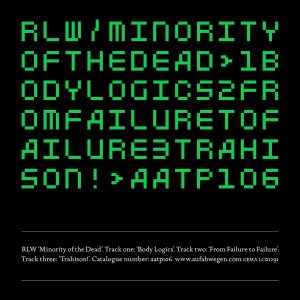
“Minority Of The Dead”

The backstory: 5 September, 2012 was the day John Cage would have turneed 100. Centenary celebrations for a prominent artist would seem rather conventional. Inappropriate for an extremely unconventional artist. But seemingly inappropriate things can be quite appropriate in unconventional contexts. So why not participate in a 100th birthday commemorative project? No sooner said than done... Ralf Wehowsky is a german experimental composer, active since the 80s (with the group p16.d4 then). his work is split between solo releases (under the moniker rlw) and collaborations, exploring all fields between media exchange and realtime presence recordings. collaboration partners include among others Lionel Marchetti, Merzbow, Jim O´Rourke, Bruce Russell, Das Synthetische Mischgewebe, Anla Courtis, Contrastate, Kohei Matsunaga, Annette Krebs - and Richard Francis.
14,00€
Add to cart

In stock

2 CD

Bruno DUPLANT
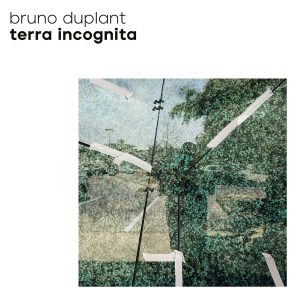
“Terra Incognita”

Two beautiful pieces merging piano, electronics and field recordings. Bruno Duplant is a prolific composer and musician (piano, organ, double bass, percussion, electronics, field recordings) living in the north of France. He has collaborated with many musicians around the globe and has also made solo works. His recordings habve been published by various labels including Another Timbre, Ftarri, B-Boim, elsewhere, Diafani, Notice Recordings, Moving Furniture, Unfathomless (and more) and his own label co-curated with Pedro Chambel, Rhizome.s.
19,00€
Add to cart

In stock

CD

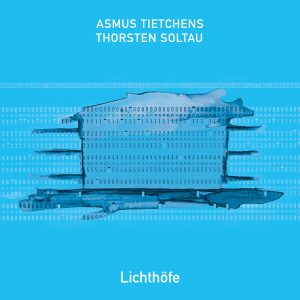
Asmus TIETCHENS – Thorsten SOLTAU
“Lichthöfe”

The musical material on „Lichthöfe“ is based on modular recordings by Thorsten Soltau. Conceptually these recordings deal with the spaciality of sound and the stereo field, while still maintaining an improvisational character. Asmus Tietchens has treated the material to intensive deformations, ranging from reductionist clusters to brittle textures. In each treatment a fragment of the original material remains audible. Thorsten Soltau Thorsten Soltau works in the field of sound design and electroacoustics since 2005. Main interests are sonic disintegration, conceptualism and dualism. Thorsten Soltau is a citizen of KonungaRikena Elgaland-Vargaland. He resides in Friesland, Lower Saxony. Asmus Tietchens Tietchens was born in Hamburg in 1947. Since 1975 he has been working as an independent musician; in 1980 he released his first solo record Nachtstücke. After producing a series of rhythmic and harmonic albums for the Sky label in the early 1980s he released his first industrial record Formen letzter Hausmusik in 1984 on United Dairies. Here Tietchens articulated his musical interests clearly: everyday noises were treated and at times deformed beyond recognition and placed into new contexts. Until now Asmus Tietchens has released more than 80 albums on international labels where he continues to explore the posibilities presented to him by specific sound sources (ranging from water sounds to pure sine wave tones). He has a more rhythm-oriented fake band project called Hematic Sunsets. Tietchens’ work is rooted in a deeply sceptic gesture, marked by frequent quotes from the works of philosopher E.M. Cioran on his album covers. Asmus Tietchens has been awarded with the prestigious Karl Sczuka Prize of the Südwestrundfunk (SWR) twice: in 2003 for his work Heidelberger Studien 1-6 and in 2006 for Trois Dryades. He lives and works in Hamburg.
14,00€
Add to cart

In stock

CD

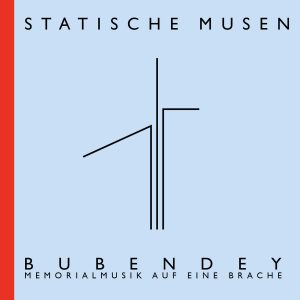
STATISCHE MUSEN (Asmus TIETCHENS)
“Bubendey. Memorialmusik auf eine Brache”

Statische Musen is the follow-up to Asmus Tietchen's Hematic Sunsets project. "Bubendey. Memorialmusik auf eine Brache" was recorded by Tietchens and his three alter egos Ute Massensicht, Ines Schmettsau and Senta Steumisch, who also wrote liner notes on the title-giving fallow land: "Decades ago, industry withdrew from this site, leaving behind bizarre ruins whose years of decay did not progress quickly, but clearly did. Eventually the ruins were demolished. Grass initially grew on the levelled area. Repeated attempts to establish new industry or even create living space here failed due to the contaminated soil and the remote location of the wasteland. In the meantime, grass and other plants have flourished and small birch trees are already forming a modest copse. The smell of paraffin has faded." Senta Steumisch, 2024
14,00€
Add to cart

In stock

2LP (purple)

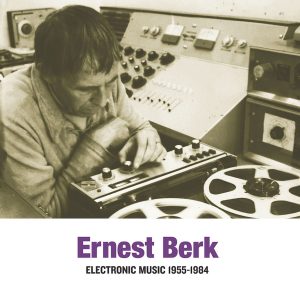
Ernest BERK
“Electronic Music 1955-1984” (purple)

Purple vinyl version. For decades, Berk’s position as a 1950s pathfinder remained largely unrecognised, while his remarkable body of electronic music — comprising more than 280 compositions — lay dormant and neglected. Ernest Berk was a singular figure and a 1950s pathfinder in electronic music in Britain. With a background as a dancer and choreographer, he devoted much of his attention to electronic music for dance. The music collected here spans almost twenty years and was created across his three North London studios at Camden Road, Dorset Street, and the Diorama in Peto Place. In this particular combination of electronic composition and contemporary dance, Berk had no direct counterpart in Britain, with the American composer and choreographer Alwin Nikolais providing the closest parallel. Berk’s musical language evolved from early tape manipulation, microphone recordings and radio interference towards electronically generated sounds produced with tone, pulse and white-noise generators. Throughout these technological changes, he maintained a strict economy of means, often limiting himself to only a few carefully selected sound sources. Rhythm, pulse and percussive tape loops remained central to his compositions, reflecting his experience as both a dancer and percussionist. Gemini (Les Amies), Op. 52, in which recordings of a kettle lid grinding and spinning on various surfaces are juxtaposed with percussion loops, offers a striking example of this approach. Berk also regularly returned to completed works, altering them, extracting sections and reusing recognisable motifs in new compositions. In Your Image, Op. 43 and No Fish (or Oh Mr. Bard), Op. 29 reveal this practice of self-quotation particularly clearly. The latter is presented here in an eleven-minute version preserved on one of a group tapes that had disappeared from Berk’s collection after his death and were thought lost, until Berk’s friend and colleague Andreas Wirth revealed in 2024 that he held a number of them. Dance remained central to Berk’s work. He composed fourteen works for dancer and choreographer Rebecca Wilson, their collaboration continuing until 1976, and in 1971 established the Dance Theatre Commune with his third wife, Ailsa Berk. Nocturne (While I was asleep), Op. 163, with its repeating looped sequences suggestive of breathing, also existed in an hour-long version created for the DTC’s semi-dark, all-night “Liberation” dance sessions. One of his later works, Osterglocken, Op. 221 (1980), distils Berk’s enduring interest in restricted sound materials through subtle variations of timbre, gesture and pulse. For decades, Berk’s position as a 1950s pathfinder remained largely unrecognised, while his remarkable body of electronic music — comprising more than 280 compositions — lay dormant and neglected. This anthology forms part of the ongoing process of rediscovering this distinctive body of work.
21,50€
Add to cart

In stock

2LP

Ernest BERK
“Electronic Music 1955-1984”

Black vinyl version. For decades, Berk’s position as a 1950s pathfinder remained largely unrecognised, while his remarkable body of electronic music — comprising more than 280 compositions — lay dormant and neglected. Ernest Berk was a singular figure and a 1950s pathfinder in electronic music in Britain. With a background as a dancer and choreographer, he devoted much of his attention to electronic music for dance. The music collected here spans almost twenty years and was created across his three North London studios at Camden Road, Dorset Street, and the Diorama in Peto Place. In this particular combination of electronic composition and contemporary dance, Berk had no direct counterpart in Britain, with the American composer and choreographer Alwin Nikolais providing the closest parallel. Berk’s musical language evolved from early tape manipulation, microphone recordings and radio interference towards electronically generated sounds produced with tone, pulse and white-noise generators. Throughout these technological changes, he maintained a strict economy of means, often limiting himself to only a few carefully selected sound sources. Rhythm, pulse and percussive tape loops remained central to his compositions, reflecting his experience as both a dancer and percussionist. Gemini (Les Amies), Op. 52, in which recordings of a kettle lid grinding and spinning on various surfaces are juxtaposed with percussion loops, offers a striking example of this approach. Berk also regularly returned to completed works, altering them, extracting sections and reusing recognisable motifs in new compositions. In Your Image, Op. 43 and No Fish (or Oh Mr. Bard), Op. 29 reveal this practice of self-quotation particularly clearly. The latter is presented here in an eleven-minute version preserved on one of a group tapes that had disappeared from Berk’s collection after his death and were thought lost, until Berk’s friend and colleague Andreas Wirth revealed in 2024 that he held a number of them. Dance remained central to Berk’s work. He composed fourteen works for dancer and choreographer Rebecca Wilson, their collaboration continuing until 1976, and in 1971 established the Dance Theatre Commune with his third wife, Ailsa Berk. Nocturne (While I was asleep), Op. 163, with its repeating looped sequences suggestive of breathing, also existed in an hour-long version created for the DTC’s semi-dark, all-night “Liberation” dance sessions. One of his later works, Osterglocken, Op. 221 (1980), distils Berk’s enduring interest in restricted sound materials through subtle variations of timbre, gesture and pulse. For decades, Berk’s position as a 1950s pathfinder remained largely unrecognised, while his remarkable body of electronic music — comprising more than 280 compositions — lay dormant and neglected. This anthology forms part of the ongoing process of rediscovering this distinctive body of work.
20,00€
Add to cart

In stock

2 CD

Ernest BERK
“Electronic Music 1955-1984”

For decades, Berk’s position as a 1950s pathfinder remained largely unrecognised, while his remarkable body of electronic music — comprising more than 280 compositions — lay dormant and neglected. Ernest Berk was a singular figure and a 1950s pathfinder in electronic music in Britain. With a background as a dancer and choreographer, he devoted much of his attention to electronic music for dance. The music collected here spans almost twenty years and was created across his three North London studios at Camden Road, Dorset Street, and the Diorama in Peto Place. In this particular combination of electronic composition and contemporary dance, Berk had no direct counterpart in Britain, with the American composer and choreographer Alwin Nikolais providing the closest parallel. Berk’s musical language evolved from early tape manipulation, microphone recordings and radio interference towards electronically generated sounds produced with tone, pulse and white-noise generators. Throughout these technological changes, he maintained a strict economy of means, often limiting himself to only a few carefully selected sound sources. Rhythm, pulse and percussive tape loops remained central to his compositions, reflecting his experience as both a dancer and percussionist. Gemini (Les Amies), Op. 52, in which recordings of a kettle lid grinding and spinning on various surfaces are juxtaposed with percussion loops, offers a striking example of this approach. Berk also regularly returned to completed works, altering them, extracting sections and reusing recognisable motifs in new compositions. In Your Image, Op. 43 and No Fish (or Oh Mr. Bard), Op. 29 reveal this practice of self-quotation particularly clearly. The latter is presented here in an eleven-minute version preserved on one of a group tapes that had disappeared from Berk’s collection after his death and were thought lost, until Berk’s friend and colleague Andreas Wirth revealed in 2024 that he held a number of them. Dance remained central to Berk’s work. He composed fourteen works for dancer and choreographer Rebecca Wilson, their collaboration continuing until 1976, and in 1971 established the Dance Theatre Commune with his third wife, Ailsa Berk. Nocturne (While I was asleep), Op. 163, with its repeating looped sequences suggestive of breathing, also existed in an hour-long version created for the DTC’s semi-dark, all-night “Liberation” dance sessions. One of his later works, Osterglocken, Op. 221 (1980), distils Berk’s enduring interest in restricted sound materials through subtle variations of timbre, gesture and pulse. For decades, Berk’s position as a 1950s pathfinder remained largely unrecognised, while his remarkable body of electronic music — comprising more than 280 compositions — lay dormant and neglected. This anthology forms part of the ongoing process of rediscovering this distinctive body of work.
16,00€
Add to cart

In stock

LP

COIL
“How To Destroy Angels”

First reissue of the seminal 1984 EP, originally released on L.A.Y.L.A.H. 180 gr Audiophile LP, Black vinyl, (1 side audio, 1 side etched), Insert.
18,00€
Add to cart

In stock

2 LP

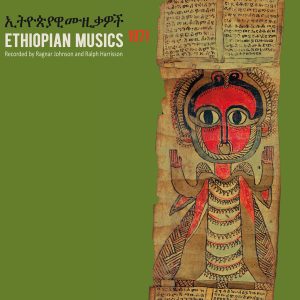
Ragnar JOHNSON – Ralph HARRISSON
“Ethiopian Musics 1971”

These recordings were made in the Empire of Ethiopia in 1971. The music recorded in Addis Ababa uses masenko fiddles, craar and bagana lyres, washint flutes and kabaro drums. There is folk music played in Addis Ababa tej beit bars with vocals, craar, masenko, washint and kabaro, Ethiopian Christian songs accompanied by the bagana large 'Harp of David' and Mary Armede's craar accompanied Amharic sung poetry. There are Afar chants and flutes from the Danakil Desert, Anuak thumb piano, Nuer harp and dance drumming and a Fila Flute Dance from the Sudan and Kenya borderlands. Ethiopian Musics 1971 is one of those albums where each musical moment is pure, intoxicating gold, while also being greater through the sum of its parts. There are the many songs, forming a rich tapestry of remarkable range across the respective two LPs/CDs (moments that wondrously flirt with sonic abstraction; hypnotic rhythms; pulsing chant; melodies that, in structural arrangement and tonal combination, help us reframe how such a thing might be understood, and a great deal more), each imbued with a remarkable directness and emotive sensibility, and there is the stunning quality of these recordings themselves, transporting each sound to our ears as though we intimately share its creator's space, while being imbued with the pure heart and remarkable spirit with which they were made. As we said before, it's little wonder, once heard, why these recordings and this music feels as fresh and relevant (enduring more than 50 years) today as when they were made. Once again, Sub Rosa has raised the bar with this essential addition to the incredible work that Ragnar Johnson and Ralph Harrisson did back in Ethiopia during 1971, radically expanding our access to the sounds that they captured with these stunning, beautifully produced 2LP and 2CD editions. A few words from the recordists: 'The recordings that Ragnar Johnson and Ralph Harrisson made in Ethiopia in 1971 have preserved the skill of the musicians and the beauty of the music for posterity. After more than fifty years the music lives on for the listener.' While Johnson's recording career was relatively brief, ending toward the end of the decade when he turned increasingly to teaching in UK universities - specifically the anthropology of art and social anthropology - his impact on the field was lasting. Between 1971 and 1979, in addition to those he made in Ethiopia, he made hugely significant recordings in Yemen (also issued by Lyrichord before being reissued by Sub Rosa) and Papua New Guinea, which were originally released by David Toop's Quartz Publications to wide celebration, before being revisited by Ideologic Organ in 2023. While it's worth noting that commercial releases of ethno musicological recordings by labels like Folkways, Lyrichord, and Ocora were still in their relatively early days when he entered the field, Johnson's recordings quickly stood apart for their vivid qualities and clarity of space, allowing them to stand the test of time. There is a clear sense of space, and the cries of the flutes exist across the entire stereo field; it is a reflection of his skill as a field recordist that these recordings continue to be reissued over fifty years later. As he later stated: "I used a Uher Report L stereo tape recorder, BASF quarter inch tapes at a recording speed of seven and a half inches per second with two directional microphones mounted to record an isosceles triangle of stereo sound. The location of the microphones and musicians was critical. The musicians were fully informed of all aspects of the recording process... I used to enjoy being in the moment and hearing something wonderful despite the stress of the vigilance required to ensure that the recordings were accomplished according to plan. The responsibility is to record and document the music as effectively as possible so that it has been preserved for posterity. It is better to actually record music than to sit in a seminar room debating the ethics of recording music." It is this very ethos and sense of clarity that can be encountered across the length of Ethiopian Musics 1971.
23,00€
Add to cart

Out of stock

LP

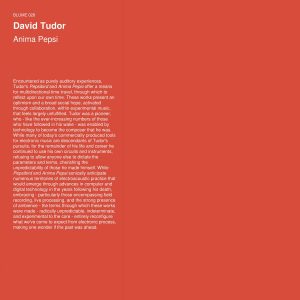
David TUDOR
“Anima Pepsi”

Blume presents Pepsibird and Anima Pepsi, two works composed in 1970 by David Tudor, one of electronic music’s most visionary pioneers, for the legendary Pepsi-Cola Pavilion at Expo ’70 in Osaka. Created by Experiments in Art and Technology (E.A.T.), the pavilion was conceived as a radical immersive environment where sound, architecture, light and technology converged.

Having emerged as one of the leading interpreters of the post-war avant-garde, performing works by John Cage, Karlheinz Stockhausen, Morton Feldman and many others, Tudor gradually abandoned the piano to develop his own electronic instruments and systems. For the Pepsi Pavilion, he helped create a unique sound environment using 37 speakers, allowing sounds to move through the space in complex stationary and rotating patterns. Pepsibird and Anima Pepsi take the principles of musique concrète into strange new territories. The former draws on recordings of human and animal brain activity, transforming subtle pulses and textures into vast, resonant fields of sound. The latter turns recordings of insects, animals and human voices into detailed, pointillistic patterns and otherworldly atmospheres through electronic processing. Radically experimental, unpredictable and technologically visionary, these works anticipate many later developments in electroacoustic music, from field recording and live processing to immersive spatial sound. More than fifty years later, they remain remarkable documents of an optimistic moment when electronic music sought not simply to create new sounds, but to imagine entirely new environments for listening and experience.
25,00€
Read more

In stock

LP

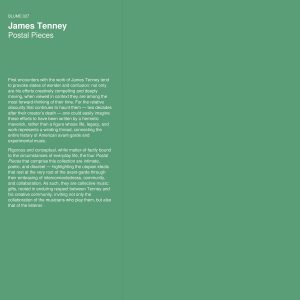
James TENNEY
“Postal Pieces 2”

This new collection continues Blume’s exploration of James Tenney’s Postal Pieces, presenting four works on vinyl for the first time: Swell Piece, for Alison Knowles (1967), Swell Piece #2, for Pauline Oliveros (1971), Swell Piece #3, for La Monte Young (1971), and Koan, for Malcolm Goldstein (1971), performed by The Barton Workshop under the direction of James Fulkerson.

Created between 1965 and 1971 as short scores sent to friends on postcards, the Postal Pieces stand among Tenney’s most elegant investigations into sound and perception. Built around sustained tones, repetition, intonation and his concept of “swell form,” these deceptively simple works invite the listener into meditative states where beating frequencies, harmonics and instrumental textures gradually come into focus. The three Swell Pieces emerge from near silence, slowly rising toward dense fields of sustained sound before returning along the same arc, while Koan places a single bowed gesture under intense scrutiny. Minimal in means but remarkably rich in perception, these pieces transform listening itself into the subject of the music — sound as a space for attention, contemplation and discovery.
25,00€
Add to cart

Out of stock

LP

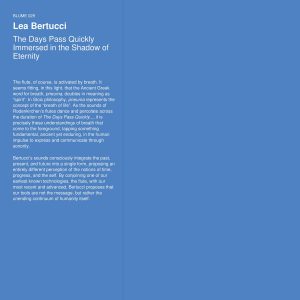
Lea BERTUCCI
“The Days Pass Quickly Immersed in the Shadow of Eternity”

With The Days Pass Quickly Immersed in the Shadow of Eternity, Lea Bertucci brings some of humanity’s oldest flutes into dialogue with contemporary electroacoustic composition. Commissioned by ZKM and created in collaboration with flutist Norbert Rodenkirchen, the work draws on his collection of Renaissance, Medieval and Neolithic instruments, conjuring sounds that have largely disappeared from the modern world.

Combining acoustic resonance, electronic processing and meticulously layered harmonies, Bertucci creates an imaginary space where different eras and environments overlap and dissolve. Ancient instruments evoke everything from Medieval halls to the reverberant caves of prehistory, while advanced technology subtly reshapes their presence without obscuring their distinctive voices. Moving between pulsing clusters and dense layers of sustained tones, the piece draws on a deep, archetypal memory of sound. By bringing together some of humanity’s earliest musical technologies with the tools of the present, Bertucci creates a haunting meditation on listening, time and the continuity of human experience.
25,00€
Read more

In stock

LP

CÉVENNES
“Musiques d’aventure”

Musiques d’aventure is the third album from Didier Delrieu’s Cévennes project. Composed in Toulouse in 2024 and 2025, it evokes the feeling of an extraordinary journey through a variety of atmospheres. https://cevennes2.bandcamp.com/album/musiques-daventure
25,50€
Add to cart

In stock

LP

Didier DELRIEU – Nicolas SENTENAC
“Nuit Dépliée”

This is Nuit dépliée. Composed with my friend Nicolas Sentenac, this album is the result of countless evenings of electronic manipulation in our respective studios as well as sound recordings in the countryside and the city. Besides the pleasure of collaboration and a shared taste for wandering, the album was born out of Jérôme Carrié's invitation to come and provide musical entertainment for the Fluo exhibition at CIAM La Fabrique in Toulouse. This music is quite experimental, sometimes cinematographic, and entirely conceived around the idea of a mental journey through a variety of atmospheres.
25,50€
Add to cart

In stock

LP

CÉVENNES
“Récit Des Cascades”

Récit des Cascades est le second album de Cévennes, alias Didier Delrieu. Il consiste en une déambulation musicale au départ d’une source tortueuse, accidentée, incertaine...
25,50€
Add to cart

In stock

CD

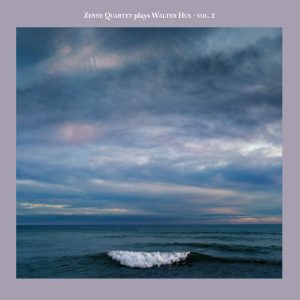
Walter HUS
“Zenne Quartet plays Walter Hus – vol.2”

2nd Volume of the close collaboration between Belgian composer / pianist Water Hus and the Zenne Quartet. Landscapes for a Lost Angel Within Walter Hus's series of string quartets, his tenth string quartet, Paysages pour un ange égaré, is certainly something of an outlier, if only because of its longer title and its more atmospheric character. All his previous quartets are characterized by short, laconic titles centred around an abstract concept (la Théorie, le Désir, le Miroir, la Folie, la Vague, nMalinconia, Jeunesse, l'oubli, le rêve...). In that series of titles, Paysages pour un ange égaré seems not quite to fit. It evokes images, questions and atmospheres. An angel wandering through landscapes, searching for traces... Hus makes this audible through a form that is highly unusual for a string quartet: a suite consisting of no fewer than 19 consecutive pieces of music, each telling its own story and each contrasting strongly with the others, yet together creating a kind of trance that results in an almost cinematic experience. Hus wrote the work during the final months of his wife Marie Brouchot's life, and it is dedicated to her memory. Walter Hus Belgian composer (born 1959), Walter is one of today's most original composers. In the 1980s, Walter Hus was co-founder, pianist, and composer of the group Maximalist!, with which he toured throughout Europe. Since the 1990s, he has performed less on stage and concentrated on composition. An uninterrupted series of composition commissions followed. His 'classical' work includes several operas, a collection of 24 preludes and fugues, cycles of melodies, concertos for violin and piano, symphonic works, pieces for ensembles, and chamber music. His ten string quartets (Theory, Desire, Mirror, Madness, Wave, Malinconia, Youth, Oblivion, Dream, and Landscapes for a Lost Angel) represent the backbone of his creative output, crystallizing his periods of inspiration over time. The Zenne Quartet, a young string quartet based in Brussels, has dedicated itself to performing and recording his complete works for quartet on the Sub Rosa label. In parallel with this "classical" creation and always thirsty for experimentation, he has multiplied collaborations with other artists in all genres: painting, video, dance, theater, cinema, comics, video games, rock and techno, etc., as well as projects with amateurs and children. Since 2000, he has added to this creative output the exploration of a new instrument unique in the world, the Decap Orchestrion, a vast ensemble of acoustic instruments (large organs, an accordion, various percussion instruments) automated and controlled by computer. With this installation, Walter Hus creates entirely new sounds and performs live in a wide variety of contexts, ranging from concert halls to museums, churches, industrial spaces, opera houses, techno music festivals. In 2022, filmmaker Astrid Mertens painted a portrait of him in her documentary film Walter Hus, a musical journey.
13,00€
Add to cart

In stock

CD

Walter HUS
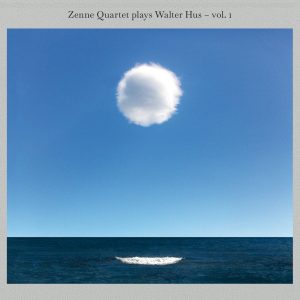
“Zenne Quartet plays Walter Hus – vol.1”

This album is the result of the close collaboration between Belgian composer / pianist Walter Hus and the Zenne Quartet. Walter Hus,Belgian composer (born 1959), Walter is one of today's most original composers.In the 1980s, Walter Hus was co-founder, pianist, and composer of the group Maximalist!, with which he toured throughout Europe. Since the 1990s, he has performed less on stage and concentrated on composition. An uninterrupted series of composition commissions followed. His 'classical' work includes several operas, a collection of 24 preludes and fugues, cycles of melodies, concertos for violin and piano, symphonic works, pieces for ensembles, and chamber music. His ten string quartets (Theory, Desire, Mirror, Madness, Wave, Malinconia, Youth, Oblivion, Dream, and Landscapes for a Lost Angel) represent the backbone of his creative output, crystallizing his periods of inspiration over time. The Zenne Quartet, a talentuous string quartet based in Brussels, has dedicated itself to performing and recording his complete works for quartet on the Sub Rosa label. In parallel with this "classical" creation and always thirsty for experimentation, he has multiplied collaborations with other artists in all genres: painting, video, dance, theater, cinema, comics, video games, rock and techno, etc., as well as projects with amateurs and children. Since 2000, he has added to this creative output the exploration of a new instrument unique in the world, the Decap Orchestrion, a vast ensemble of acoustic instruments (large organs, an accordion, various percussion instruments) automated and controlled by computer. With this installation, Walter Hus creates entirely new sounds and performs live in a wide variety of contexts, ranging from concert halls to museums, churches, industrial spaces, opera houses, techno music festivals. In 2022, filmmaker Astrid Mertens painted a portrait of him in her documentary film Walter Hus, a musical journey. Zenne Quartet about Walter Hus : 'as we delved into his music, we discovered a unique, deeply personal musical universe. Walter applies complex compositional techniques from the Western classical tradition, yet integrates elements from popular contemporary subcultures, making it easily accessible to a very broad audience. This combination of elements, we believe, is what defines the work of great composers throughout history.'
13,00€
Add to cart
  • 1
  • 2
  • …
  • 111
  • next


Catalogue


  • BACK IN STOCK
  • SALES

New arrivals :

In stock

4 CD

Cornelius CARDEW
“The Great Learning”

All seven Paragraphs of Cardew's The Great Learning by the Scratch Orchestra Strasbourg under Didier Aschour, an orchestra born from an open call and two years of shared practice: 4CD box with a 116-page booklet. 4CD box with a 116-page booklet. Shiiin's thirteenth release is a complete recording of Cornelius Cardew's The Great Learning, the seven Paragraphs written between 1968 and 1971 on the opening of the Ta Hio (Daxue, "the Great Learning"), the Confucian treatise on self-cultivation and the harmonious ordering of collective life, in Ezra Pound's translation. Mixing voices, instruments, objects and actions through graphic and verbal notation, the score prescribes relationships between the performers more than sounds, and shares out among them the responsibility for the form. The work is inseparable from the Scratch Orchestra, which Cardew founded in London in 1969 with Michael Parsons and Howard Skempton. The Scratch Orchestra Strasbourg grew out of an open call launched by the Musica festival in spring 2023, with no condition of level or background: amateurs and professionals, the self-taught and people with no previous practice. First gathered in September 2023, the group worked regularly under Didier Aschour, with members of the Dedalus ensemble and Strasbourg musicians versed in improvisation, graphic scores and open protocols passing on tools rather than imposing a reading. The aim was neither to reproduce a traditional orchestra nor to rebuild Cardew's, but to put his principle back into play: turning a diversity of skills into a shared resource. On 15 September 2024 the orchestra performed all seven Paragraphs in the Saint-Paul church in Strasbourg, a concert of nearly seven hours that opened the music programme of the 42nd Musica festival, in dialogue with Mode d'emploi, the exhibition of instruction-based works at the city's museum of modern and contemporary art. The group went on working on other pieces and came back to The Great Learning for this recording, made in the same church from 27 to 29 November 2025. What it fixes is an interpretation shaped by more than two years of common practice, not a line-up assembled for a single date, which brings it close to Cardew's own idea of the orchestra as a lasting space of practice, learning and collective change. Alongside Aschour play Lou Renaud-Bailly, Jeanne Barbieri, Stéphane Clor, Yannick Guédon, Jean-Philippe Gross and Thierry Madiot, with Jérémy Marchal on the church organ, the Pelicanto choir directed by Mathilde Mertz and the De-ci De-là choir directed by Cédric Dosch. Paragraphs 1 to 3 fill the first disc and Paragraph 4 the second; Paragraph 5 alone runs over an hour and a quarter on the third, and the fourth holds Paragraphs 6 and 7. The booklet opens with a text by Stéphane Roth and gathers two essays. Dean Inkster's, written for the 2009 Cardew exhibition at CAC Brétigny, places the work within the composer's aesthetic and political path and shows how the dispersal of the voices opens onto a shared freedom of listening rather than a fusion of the collective. Matthieu Saladin's, first published in Revue & Corrigée in 2020, examines the devices of each Paragraph as so many attempts to contain the relations of domination that form again within any group.
49,00€
Add to cart

In stock

2LP

Eliane RADIGUE
“Occam XIII, Occam River XI, Occam V”

Occam Ocean is a series of acoustic compositions made for and with individual instrumentalists by the late French composer Éliane Radigue. Extending the interactive process pioneered in Naldjorlak (2005–2009), Occam Ocean employs a scoreless method of composing in dialogue with each performer. Dating back to 2011, the series has proliferated almost organically, growing out of a musical and social dynamic of combinatoriality and multiplication to a catalog of more than eighty discrete compositions. This body of work stands as one of the most extraordinary late-career outpourings in recent music history. The Occam series was catalyzed in part by a visit to the Natural History Museum in Los Angeles, where Radigue encountered a depiction of the electromagnetic spectrum—from radio signals to gamma rays—which impressed upon her the minuscule range of human hearing relative to the seemingly unlimited compass of universal wavelength and frequency. The Occam compositions seem to address this vertiginous confrontation with the infinite; each individual composition elaborates a radically reduced technique or sound process, frequently working outward from only a handful of fundamental tones, to expose the flickering, idiosyncratic spectral behavior of the instrument. The reference to William of Ockham indicates a principled commitment to parsimony; paradoxically, the reduction in material content makes possible an incommensurate richness in perceived acoustical detail. Notable in the Occam series is the inextricable identification of the composition with the performer for whom, and with whom, it was made. The particular sounds and techniques of each individual performer are thus indelibly stamped in the composition; the piece composes the playing of that musician, as much as the musician plays the composition. The time-honored division of labor between performer and composer is thus suspended and reconfigured, proposing a model for new music composition that has not yet been fully theorized or understood. Occam XIII, Occam River XI (presented here in two distinct readings, which reveal subtle variations in instrumental response), and Occam V feature two longtime collaborators of Radigue in solo and duo formations. Charles Curtis, the first instrumentalist for whom Radigue wrote an acoustic composition (Naldjorlak), performs on cello, while Dafne Vicente-Sandoval—whose parallel investigations into her instrument’s complex sounding properties led her to collaborate with Radigue—performs on bassoon. The works were recorded at Temple Saint-Théodule, La Tour-de-Peilz, Switzerland, during a 2024 residency at La Becque, a setting previously explored by the musicians for its distinctive acoustic properties.
45,00€
Add to cart

Out of stock

CD

Eliane RADIGUE
“Occam XIII, Occam River XI, Occam V”

Occam Ocean is a series of acoustic compositions made for and with individual instrumentalists by the late French composer Éliane Radigue. Extending the interactive process pioneered in Naldjorlak (2005–2009), Occam Ocean employs a scoreless method of composing in dialogue with each performer. Dating back to 2011, the series has proliferated almost organically, growing out of a musical and social dynamic of combinatoriality and multiplication to a catalog of more than eighty discrete compositions. This body of work stands as one of the most extraordinary late-career outpourings in recent music history. The Occam series was catalyzed in part by a visit to the Natural History Museum in Los Angeles, where Radigue encountered a depiction of the electromagnetic spectrum—from radio signals to gamma rays—which impressed upon her the minuscule range of human hearing relative to the seemingly unlimited compass of universal wavelength and frequency. The Occam compositions seem to address this vertiginous confrontation with the infinite; each individual composition elaborates a radically reduced technique or sound process, frequently working outward from only a handful of fundamental tones, to expose the flickering, idiosyncratic spectral behavior of the instrument. The reference to William of Ockham indicates a principled commitment to parsimony; paradoxically, the reduction in material content makes possible an incommensurate richness in perceived acoustical detail. Notable in the Occam series is the inextricable identification of the composition with the performer for whom, and with whom, it was made. The particular sounds and techniques of each individual performer are thus indelibly stamped in the composition; the piece composes the playing of that musician, as much as the musician plays the composition. The time-honored division of labor between performer and composer is thus suspended and reconfigured, proposing a model for new music composition that has not yet been fully theorized or understood. Occam XIII, Occam River XI (presented here in two distinct readings, which reveal subtle variations in instrumental response), and Occam V feature two longtime collaborators of Radigue in solo and duo formations. Charles Curtis, the first instrumentalist for whom Radigue wrote an acoustic composition (Naldjorlak), performs on cello, while Dafne Vicente-Sandoval—whose parallel investigations into her instrument’s complex sounding properties led her to collaborate with Radigue—performs on bassoon. The works were recorded at Temple Saint-Théodule, La Tour-de-Peilz, Switzerland, during a 2024 residency at La Becque, a setting previously explored by the musicians for its distinctive acoustic properties.
23,00€
Read more

In stock

CD

David GRANSTRÖM
“Echoes of Impermanence”

Echoes of Impermanence sees David Granström’s previously established strict hermetic minimalist musical topography undergo a major shift with the introduction of the electric guitar, which instigates a breaking of the sealed crystal walls of the composer’s previous work within music of long duration and precise digital synthesis, bringing forth a riff-laden spirit previously lingering below the surface. The album was recorded at the world-renowned Elektronmusikstudion EMS as well as in the composer’s own studio with the help of Mats Erlandsson and features a guest appearance by long-time collaborator and XKatedral co-founder Maria W Horn performing on the Hurdy-Gurdy on the title track. David Granström is a composer and musician from Umeå in the northern part of Sweden. His hometown is a stronghold of extreme musical expression and consequently Granström grew up playing guitar in a metal band and started to compose music within that context which eventually evolved into solo projects, having access to studio facilities adjacent to the rehearsal space. Granström initially found his personal musical voice within the context of electroacoustic composition utilizing his advanced programming ability to manifest a sound and formal structure governed by algorithmic processes. The resulting musical work is characterized by harmonic simplicity and spatiotextural complexity, employing sounds of synthetic and acoustic origin in combination with strict digital synthesis techniques.
17,00€
Add to cart

Out of stock

CD

William BASINSKI
“Passing the Cup of Sorrows”

In the realm of past-life regression hypnotherapy, there is a concept known as “Life Between Lives,” wherein a sacred exchange of energy occurs between two souls in the spirt world, helping a spirit fully understand and forgive a being who hurt them in a past life. This exchange – called “passing the cup of sorrows” – became the unexpected inspiration for William Basinski’s first new album in six years. While sinking deeper into the daily abyss of our collective negativity bias, William Basinski stumbled upon a video describing the spiritual hypnotherapy exercise known as “passing the cup of sorrows.” Fixed on the glow of a screen that projected mounting anxiety and cynicism at a seemingly interminable pace, Basinski found the testimonials of this fascinating therapeutic practice to be profoundly moving. He sat at his piano, translating the transformation of those traumatic memories of past lives into cathartic tears of the present day. Channeling the quiet curiosity and asymmetrical patterns of pioneering 20th Century composer, Morton Feldman, Passing the Cup of Sorrows is a single 40-minute piece that employs a solitary piano and subtle electronics to truly haunting effect. It recalls fragments of traumatic memories and projects them as fractals in a slow-moving soft focus that’s as eerie as it is enlightened.
15,50€
Read more

In stock

LP

Oren AMBARCHI
“Cooked”

With Cooked, Oren Ambarchi takes his adventurous sonic universe into gloriously unpredictable territory. Bringing together an extraordinary cast of international collaborators, including Eiko Ishibashi, Jim O’Rourke, Joe Talia and members of his Ghosted trio, the album unfolds across two expansive, side-long compositions. Blending hypnotic grooves, shimmering guitars, intricate electronics, jazz-inflected rhythms and surreal sonic detours, Cooked moves effortlessly between delicate atmospheres and exuberant experimentation. Meticulously constructed yet remarkably spontaneous, it reveals Ambarchi at his most playful, inventive and delightfully unpredictable. A dazzling journey through the outer limits of contemporary experimental music. Oren Ambarchi - Guitars and whatnot Hidden Tableau: Johan Berthling - Double bass Eiko Ishibashi - Piano Jim O'Rourke - Synth Konrad Sprenger - Voice synthesis, electronics & production Joe Talia - Drums Sleight of Hand: Johan Berthling - Double Bass Will Guthrie - Gamelan & drums Isak Hedtjärn - Whistling Michiko Ogawa - Shō Marcus Pal - Synthetic Sound Fredrik Rasten - Guitars James Rushford - Celeste, piano & portative organ Andreas Werliin - Drums
30,00€
Add to cart

CORTICALART

Mail-order and distribution of experimental music (electroacoustic, improvised music, sound-art, noise, sound poetry), past or present, along with some books, magazines and DVDs.

NEWSLETTER

INFORMATIONS

  • Contact
  • My Account
  • Shipping

CORTICALART / Ass. META
44, rue Camille Sauvageau
33800 Bordeaux
France

© Corticalart 2026    • Terms Of Use    • Legal Notice    • Privacy Policy

• CGV    • Mentions légales    • Politique de confidentialité