
In stock
LP
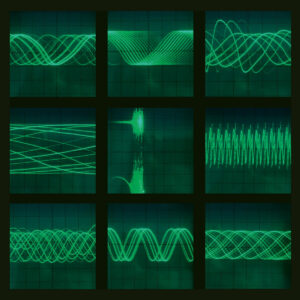
MIMICOF
“Distant Symphony”
New album by the Berlin-based musician, composer and producer Midori Hirano aka MimiCof, entirely recorded using the EMS SYNTHI100 at Electronic Studio Radio Belgrade during an artist residency: contemporary electronic music / ambient for the advanced listener.
Midori Hirano is a Japanese musician, composer and producer based in Berlin. She started learning the piano as a child and later studied classical piano at university. Therefore the music she releases under her own name is based on the use of piano, but yet experimental and an eclectic mixture of modern digital sounds with subtle electronic processing and field recordings. So far, Hirano released 7 solo albums under her civilian name on labels such as Sonic Pieces and DAUW.
Under the moniker MimiCof she explores the realm of more experimental music and detailed rhythmic patterns, combined with an idea of drawing melodic shapes and harmonies.
While the last MimiCof album “Moon Synch” (2017, Alien Transistor) was recorded on the Buchla analogue modular Synthesizer at EMS Elektronmusikstudion in Stockholm, her latest effort “Distant Symphony” (the 4th as MimiCof) was created on a different synthesizer: the EMS SYNTHI 100 Synthesizer at Radio Belgrade. All sounds from this instrument were recorded as single sound samples at first, then mixed and modified into three long pieces of music, so that the audience can experience the machine’s uniqueness and versatility of sound. Hirano understands this work as a gesture of respect for the SYNTHI 100’s character: though a vintage instrument, it has never lost the beauty of its modern sound.
20,50€
In stock
2 LP
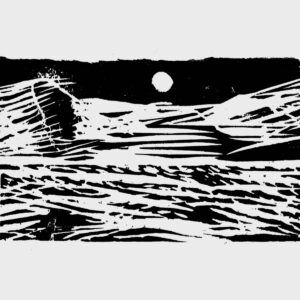
KONSTRUKT & Peter BRÖTZMANN
“Dolunay”
The ongoing series / tradition of a Konstrukt release in august this time returns to the early beginning: the overdue double vinyl reissue of the turkish free-formers’ studio meeting with the german free jazz titan Peter Brötzmann from 2008. Remastered by Kassian Troyer at D&M, Berlin.
As written in several info sheets before, the Istanbul-based collective led by multi-instrumentalist Umut Çağlar (also member of Karkhana) and reeds player Korhan Futaci has since its formation in 2008 created an impressive catalogue including collaborations / performances with significant musicians like Keiji Haino, Joe Mcphee, William Parker, Akira Sakata, Marshall Allen, Evan Parker, Thurston Moore, Michael Zerang, Alfred Harth Or Alexander Hawkins – and Peter Brötzmann. The German Free Jazz titan was invited to the Deneyevi Studio in the Turkish capital in november 2008 where they recorded „Dolunay“, an album that was released three years later on a small label in Turkey only. Back then a quartet with drums and percussion, guitar, reeds but no bass player, Konstrukt and their iconic guest took off on a session full of fire and fury: shrieking reeds, thundering drums andandand … Free Jazz of the wildest, most energetic and kathartic (afterwards) kind!
27,00€
In stock

LP
ZEITKRATZER
“Alvin Lucier”
By zkr director Reinhold Friedl’s personal request now available on vinyl for the first time: zeitkratzer's critically acclaimed interpretations of compositions by Alvin Lucier.
Alvin Lucier (1931 – 2021) was one of the most influential american minimalists. Some call him „sound physician“ as his compositions are often based on acoustic research settings. His pieces tend to turn inside-out the properties of space and instruments: poems based on acoustic settings!
Zeitkratzer worked with the composer in Dijon, France in 2008, and presented his music in various places. These recordings have been realized at Philharmonie Luxembourg that turned out to be the ideal space for this music.
On this album you can hear how Lucier enables zeitkratzer to create sounds a lot of people have never heard before. Ringing overtones, a singing piano, a thrilling concert triangle, pencils on little objects, and how irritating a violoncello, a viola and a piano can sound together creating shifting sonic interferences. Sound phenomenology, evoking a sensual listening experience.
20,50€
In stock

LP
Iannis XENAKIS
“Taurhiphanie / Voyage Absolu Des Unari Vers Andromède / Gendy 3 / S.709”
A1/ Taurhiphanie (1988)
A2/ Voyage Absolu Des Unari Vers Andromède (1989)
B1/ Gendy 3 (1991)
B2/ S.709 (1992)
20,50€
In stock

LP
Iannis XENAKIS
“Hibiki Hana-Ma / Mycenae Alpha / Polytope de Cluny”
A1/ Hibiki Hana-Ma (1962)
A2/ Mycenae Alpha (1696)
B/ Polytope De Cluny (1978)
20,50€
In stock

LP
Iannis XENAKIS
“Diamorphoses / Concret PH / Orient Occident / Bohor”
A1/ Diamorphoses (1957)
A2/ Concret PH (1958)
A3/ Orient Occident (1961)
B/ Bohor (1962)
20,50€
In stock

LP
Iannis XENAKIS
“Persepolis”
2022 repress.
After “La Légende d’Eer” in 2016, the Perihel series presents one of the milestones of electroacoustic music: Iannis Xenakis’ mindblowing 54-minutes oeuvre “Persepolis”, mixed from the original 8 track tapes by Martin Wurmnest and mastered / cut by Rashad Becker.
“Persepolis” is the longest electroacoustic composition by Iannis Xenakis (1922-2001) who ranks among the most influential 20th century avantgarde composers. Commissioned by the Persian Shah, the piece was part of a multimedia performance – Xenakis’ so-called “polytopes” – which premiered in 1971 in Shiraz-Persepolis (Iran) as a performance including light-tracks, laser beams, groups of children walking around with torches and 59 loudspeakers to project the music in an open-air situation.
Xenakis had realized “Persepolis” on 8-track analogue tape in the Studio Acusti in Paris and released a stereo reduction on vinyl in the famous Philips series “Prospective 21e Siècle” in 1972, adding the new subtitle “We bear the light of the earth”, his most hymnal title ever.
Out of print for decades now, the LP became – especially the Japanese edition from 1974 – one of the most expensive collector’s item of electroacoustic music. There were some later CD versions with different durations – too long due to a wrong sample rate, others shortened by 3 minutes due to other reasons. The Perihel series now presents a new version: mixed from the original (!) master 8 track tapes by longtime zeitkratzer sound engineer Martin Wurmnest and mastered by Rashad Becker at D&M, Berlin – the same experts who had already taken care of the 2016 KarlRecords release of “La Légende d’Eer”, another milestone composition among the works of the Greek-French avant-garde composer.
20,50€
In stock

LP
Iannis XENAKIS
“La légende d’Eer”
2022 repress.
180gr LP incl. 4c insert + download code, 1000 items.
Release
2 in the Perihel series is one of the most famous electroacoustic compositions by Iannis Xenakis. Mixed by Martin Wurmnest, mastered & cut by Rashad Becker, “La Légende d’Eer” is available as vinyl (180gr, DL code, insert with liner notes by Reinhold Friedl) and download for the very first time.
When Iannis Xenakis (1922-2001), who had fought against the occupation as part of the communist Resistance, moved to Paris in 1947 it was the start of a highly creative and impressive career. Xenakis not only studied composition with Messiaen and became one of the most innovative composers of the 20th century, he also worked as assistant to Le Corbuser and realized a.o. the Philips Pavilion for the World Exhibition in Brussels 1958. His compositions often are based on mathematical principles (in 1966 he founded the CEMAMu - Centre d'Etudes de Mathématique et Automatique Musicales), which give his music an unprecedented aesthetic and “shocking otherness” (The Guardian). The most famous works of Xenakis, who won the Polar Music Prize (considered the unofficial Nobel Prize for music) in 1999, are his compositions for orchestra Metastasis, Pithoprakta and Terretektorh (where the 88 musicians are spread within the audience) and the electroacoustic compositions Persepolis (to be re-released later on as part of the Perihel series), Concret PH, Bohor and La Légende d’Eer where Xenakis integrated his stochastic synthesis sounds for the first time. As legendary as this piece itself is the impenetrable thicket of versions and stories around La Légende d’Eer - it exists in different releases, wrong sample rates, digitized backwards… this now is a new version, using the 8-track-version that Xenakis himself presented at Darmstädter Ferienkurse in August 1978. As the automatic spatialization is lost, this became the only original version of this composition and is presented here (mixed down to stereo by Martin Wurmnest who tried to preserve the spatial movements as perceptible as possible – mastered by Rashad Becker at D&M) for the very first time. La Légende d’Eer not only became a milestone of electroacoustic music but is also an important reference for noise and industrial musicians up to the present day!
20,50€
In stock

CD
SMALL CRUEL PARTY
“Do you believe in a pencil”
Reissue of the first Small Cruel Party CD with different artwork done by Abo (Mark Schomburg/Petry Supply).
200 copies.
12,50€
Out of stock

CD
Bruno DUPLANT
“Zone Habitable”
Zone Habitable is as its name suggests, in astronomy and exobiology, a region of space where conditions are favorable for the appearance of life as we know it on Earth and therefore potentially capable of supporting extraterrestrial life. Like a fiction, Habitable Zone is a translation, a musical interpretation (using various instruments, electronic processing and field recordings) of what this exoplanet could be. (Bruno Duplant).
100 copies
11,00€
In stock
12"
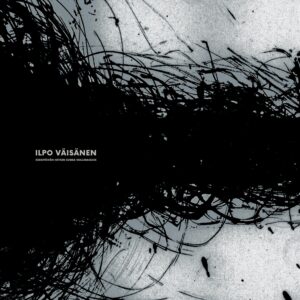
Ilpo VAÏSÄNEN
“Keskipäivän hetken sumea vaillinaisuus”
"Keskipäivän hetken sumea vaillinaisuus" collects new dark ambient & industrial leaning tracks by Finnish producer Ilpo Väisänen (Pan Sonic).
21,00€
In stock
LP
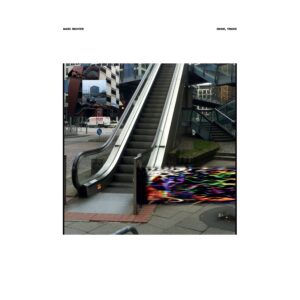
Marc RICHTER
“Diode, Triode”
This album presents two multichannel works recorded at the seminal INA GRM Studio in Paris and ZKM Institute in Karlsruhe respectively, mixed to stereo at the composer's Cellule 75 Studio in Hamburg with excellent mastering by Rashad Becker. While his releases under the Black To Comm moniker often touched the fringes of acousmatic techniques and Musique Concrete this is Richter's first foray into a more abstract spatial music.
Recorded in the week leading up to the Paris terror attacks at the GRM studio, "Diode, Triode" (21:57) is loosely based on a reading of (and, in parts, a failure to understand) "Le Parasite" (1980) by Michel Serres, a philosophic metaphor about human interaction and communication (which can also be interpreted as a lyrical essay on capitalism; part confusion, part enlightenment).
As core elements Richter is using speech synthesis and the transformation and distortion of concrete sounds, instruments, voices and breathing. Abstract incognisable sounds are combined with strings, reeds and percussion while dismembered musical fragments emerge and vanish rapidly. Chunks of interfering noise are followed by long periods of silence; chaos and order are alternating. Choirs of synthetic and processed human voices are recounting stock market values, seemingly random sequences of numbers and inscrutable lyrics while parasitic sounds are trying to crack, collapse and fractionise the compositional stream and sonic interactions. Finally, a haunting piano chord is wrestling with a broken Publison machine. Like the book, it's part confusing, part enlightening - and a radical piece of sonic art.
"We are buried within ourselves; we send out signals, gestures, and sounds indefinitely and uselessly. No one listens to anyone else. Everyone speaks; no one hears; direct or reciprocal communication is blocked." (Le Parasite)
"Diode, Triode" was premiered on the Acousmonium at INA GRM's Akousma Festival in Paris, January 22, 2016 alongside new works by François Bayle, Robert Hampson, Leo Kupper and Ragnar Grippe.
The second piece "Spiral Organ of Corti" (17:00) has been composed in 2014 for the 47-speaker Klangdom concert hall at ZKM Karlsruhe at the foot of the Black Forest (where Richter was born and raised).
How does one listen with closed ears? Sine tones, alienated human voices and breathing noises build a labyrinthine puzzle alternating between the natural and the artificial. Human sounds merge with winds and strings, sine tones morph into metal sounds. Acoustic illusions confuse the listener, and dense noise-clouds slowly emerge from deceptive silence. Deep base sounds define space. Temporary focus glides into chaos. "Spiral Organ of Corti" is yet another extended composition that proves Richter is on a path of his very own.
"Spiral Organ of Corti" is dedicated to the late Gary Todd.
"Tongues that came from wind and noise. To speak in tongues after the fire." (Le Parasite)
Marc Richter records as Black To Comm for Thrill Jockey, Type and Dekorder and under the Mouchoir Ètanche and Jemh Circs monikers for his own Cellule 75 imprint. He collaborated with visual artists such as Ho Tzu Nyen, Jan van Hasselt and Mike Kelley. Under his own name he is composing for film and installations.
19,00€
In stock

11 CD
Pauline OLIVEROS
“Reverberations : Tape & electronic music 1961-1970”
Reissue 2022, new version with 11 cds..
“Dense 11 disc collection of Pauline Oliveros’ early and unreleased electronic work including her very first piece for tape made in 1961. The majority of these pieces have never before been released.Organized chronologically by studio this set not only documents Pauline’s earliest electronic music but it also functions as an early history of electronic music itself. Extensive liner notes including essays from Pauline Oliveros, Alex Chechile, Ramon Sender, David Bernstein, Corey Arcangel and Benjamin Tinker. This box set is being released in conjunction with Pauline Oliveros’ 80th birthday celebrations. Pauline Oliveros, composer, performer and humanitarian is an important pioneer in American Music. Acclaimed internationally, for four decades she has explored sound -- forging new ground for herself and others. Through improvisation, electronic music, ritual, teaching and meditation she has created a body of work with such breadth of vision that it profoundly effects those who experience it and eludes many who try to write about it. "On some level, music, sound consciousness and religion are all one, and she would seem to be very close to that level." John Rockwell Oliveros has been honored with awards, grants and concerts internationally. Whether performing at the John F. Kennedy Center in Washington D.C., in an underground cavern, or in the studios of West German Radio, Oliveros’ commitment to interaction with the moment is unchanged. She can make the sound of a sweeping siren into another instrument of the ensemble.
Through Deep Listening Pieces and earlier Sonic Meditations Oliveros introduced the concept of incorporating all environmental sounds into musical performance. To make a pleasurable experience of this requires focused concentration, skilled musicianship and strong improvisational skills, which are the hallmarks of Oliveros’ form. In performance Oliveros uses an accordion which has been re-tuned in two different systems of her just intonation in addition to electronics to alter the sound of the accordion and to explore the individual characteristics of each room. (Tuning Chart)
Pauline Oliveros has built a loyal following through her concerts, recordings, publications and musical compositions that she has written for soloists and ensembles in music, dance, theater and interarts companies. She has also provided leadership within the music community from her early years as the first Director of the Center for Contemporary Music (formerly the Tape Music Center at Mills), director of the Center for Music Experiment during her 14 year tenure as professor of music at the University of California at San Diego to acting in an advisory capacity for organizations such as The National Endowment for the Arts, The New York State Council for the Arts, and many private foundations. She now serves as Distinguished Research Professor of Music at Rensselaer Polytechnic Institute and Darius Milhaud Composer in Residence at Mills College. Oliveros has been vocal about representing the needs of individual artists, about the need for diversity and experimentation in the arts, and promoting cooperation and good will among people.
“Time Perspectives”, “Mnemonics I”, “Mnemonics II”, “Mnemonics III”, “Mnemonics IV”, “Mnemonics V”, “II Of IV”, “III Of IV”, “IV Of IV”, “V Of IV”, “III”,
“Team & Desecrations Improvisation”, “The Day I Disconnected The Erase Head And Forgot To Reconnect It”, “Jar Piece”, “Another Big Mother”, “Fed Back 1”, “Fed Back 2”, “5000 Miles”, “Angel Fix”, “Bottoms Up 1”, “Nite”, “Ringing The Mods 1 Heads”, “Ringing The Mods 2 Tails”, “Three Pieces I”, “Three Pieces II”, “Three Pieces III”, “Big Slow Bog”, “Boone Bog”, “Bog Bog”, “Mind Bog”, “Mewsack”, “50-50 1 Heads”, “50=50 2 Tails”, “A Little Noise In The System”, “Red Horse Headache”.
85,00€
In stock

LP
Luc FERRARI
“Solitude Transit”
Transversales Disques is very glad to announce the release of Solitude Transit unpublished archives by electroacoustic music pioneer Luc Ferrari. Music composed for contemporary dance, choregraphed by Anne-Marie Reynaud.
Affiliated with French Radio's Groupe de Musique Concrète, co-founder of the GRM with Pierre Schaeffer in 1958, Luc Ferrari (1929-2005) major figure of musique concrète and electroacoustic music broke away to pave his own path of individualistic expressions of minimalist music, musical theater, field recordings, orchestral music and soundtracks.
25,00€
In stock

CD
Asmus TIETCHENS
“Schatten Ohne Licht”
Black Rose Recordings are proud to present the exceptional new album by Asmus Tietchens. E.M. Cioran plays a very important role in most of Tietchen's work and this release is no different. For this release Cioran has a fellow anthropofugal thinker: Ulrich Horstmann. The theme of this release deals with a return to a mineral world without any organic species, and therefore uninhabitable for human beings. This very radical dystopia serves as a foil to the six chapters of "Schatten ohne Licht". There is something profound about the music. It can be slow and is certainly contemplative. Maybe the music is a sign of the state of our times?
As a pioneer of electronic composition his work spans over four decades and doesn't fit easily into any one category. Early recordings ranged from experiments with tape machines and electronic sound through to experimental pop. Later works were a more sculptural blend of abstract microelectronics, industrial sounds and musique concrete.
Never straightforward or obvious, always unpredictable and innovative. His ground-breaking music influences many working in today's electronic music scene. He has worked almost exclusively as a solo artist, but other releases have seen him collaborate with well-known and diverse artists such as Dieter Moebius (Cluster & Harmonia), Thomas Koener, Richard Chartier, and Merzbow.
12,00€
In stock

CD
SRMEIXNER
“A Silent War”
This project started out during the first lockdown as means of communication and a basis for further recordings (when physical meetings were not possible). Initial inspiration came from the 1980s recycling projects such as “Captured Music” and “Destruct”, both released on the Selektion label who described recycling as “a procedure concentrating on materials already existing on their own or as separate sources as a practical base for further reworkings”. As the project was progressing news was sent across the world of the death of George Floyd whilst in police custody. Sadly, not a new phenomenon, but a repeat of past events highlighting the unfinished business of needing to change the future. I decided to incorporate the events into the initial theme using words and specific references to carry on a dialogue that interacts with the re-interpretations of previous sound sources.
11,00€
Out of stock

CD
RLW
“Agnostic Diaries”
2021
The common factor linking these recordings are projects that were never fully realized. The basic recordings started in 2005, however the period of reworking and transformation (2016 to 2017) is more important. All vocal parts and general revisions were done during this period. Agnosticism was the basic idea for the vocal/musical re-working of the pieces with the vocals implanted into the basic pieces, not just as simple overdubs, but inserted in a dialectical confrontation with the basic sounds and structures. "Le Ballet" relies on George Antheil's Ballet Mecanique; "For Gerald" on a co-operation with Anla Courtis using some sounds by Ovary Lodge planned for the Gerald Jupitter-Larssen series which stopped far too early. "Without M.B." includes RLW's parts for a collaboration with Marc Baron whilst "Monotype #6" includes vocals by Dylan Nyoukis, also used for a collaborative CD-r with him.
Ralf Wehowsky is one of the most respected electronic composers of our day and was also a founder member of the seminal German group P16.D4 and label Selektion whose ground-breaking releases influenced many working in today's experimental music scene. Previous releases have seen him collaborate with such well known and diverse artists such as Merzbow, Bernhard Guenter, Jim O'Rourke, Achim Wollscheid, and Lionel Marchetti. His music is impossible to pigeonhole into one simple bracket. It is neither industrial or musique concrete, nor computer music nor improvisation. In fact, it could be all of these.
10,00€
Out of stock

LP
LETTERA 22
“Exposition of Clove”
Exposition of Clove is the new fast electro-acoustic album by the duo of Matteo Castro and Riccardo Mazza. Hailing from the farthest North-East glacial tip of Italy, Lettera 22 utilize elements of musique concrete sound sources, delicately sampled, looped and edited; resulting in five very subtle and rich compositions of textured noise and field recordings via analog tapes and feedback. Recorded and mastered in 2020 by Ricardo Mazza and Matteo Castro.
24,00€
In stock

LP
PANSTARRS
“Batee2”
Nervous + sensitive Egyptian synth wave with Arabic vocals by Panstarrs, solo project of Youssef Abouzeid who has previously appeared under different monikers such as Captain Solo or YZEID. This LP -- equal parts Suicide and Mohamed Mohie -- pushes Youssef's detached and melancholic signature sound along radical and unconventional arrangements further into bolder electronic horizons while pulverizing any notion of established verse chorus song structures. Youssef Abouzeid is a fixture of Cairo's musical underground and has been intensely active for over a decade whether via his countless musical acts -- of which, his personal project, Panstarrs is the most prolific -- or his homemade oscillator-loaded effects pedals "NMR". He is also a co-founder of the downtown Cairo independent art space, Hizz, and its affiliate cassette label. Through the years and incessantly, Youssef has not stopped refining his own idiosyncratic aesthetic and sound while going forward with his DIY activities and tours. Front cover by Hendrik Hegray. Vinyl master and lacquer cut by Frederic Alstadt, Angstrom Studio. Edition of 300.
24,00€
Out of stock

LP
Sam SHALABI
“Shirk”
Shirk is the new AOR flavored free improvisation solo album by Sam Shalabi, featuring Eric Chenaux and Nadah El-Shazly, where synth pop and sound poetry fester. Sam Shalabi is an Egyptian-Canadian composer, improviser and guitarist living between Montreal and Cairo. Starting out during the late '70s punk era, his work has evolved into an experimental synthesis of modern Arabic music that incorporates free improvisation, traditional Arabic music, noise, classical, text, and jazz. Other than his numerous solo albums, he is a founding member of Shalabi Effect, a free improvisation quartet that bridges western psychedelic music and Arabic Maqam. He has also released four albums with Land Of Kush, the experimental 30-member orchestra which he directs. He has appeared on over 30 albums and toured Europe, North America, and North Africa. Mastered by Mark Gergis. Vinyl master and lacquer cut by Frederic Alstadt, Angstrom Studio. Edition of 300.
24,00€
In stock

LP
SKULLFLOWER
“Ophidian Vibrations”
"Sound coiled and uncoiling, the (well) spring and trap set and first trilogy concluded with three wordless hymns to the Apep serpent, and the serpent power in general. Skullflower slithers and glides through their third LP for Nashazphone, always revolving like geologic time sufis, conjuring wrinkles and portals in the multiverses stiff unyielding fabric. As Brian Wilson still might sing 'she's givin' me serpent vibrations'." --Matthew Bower and Samantha Davies West Yorks, UK August 2021.
24,00€
Out of stock

LP
Tomoyuki AOKI & Harutaka MOCHIZUKI
s/t
Reissue of the now long sold-out debut album (2014) by the guitar and saxophone duo of Aoki Tomoyuki (Up-Tight) and Harutaka Mochizuki. Initially limited to 200 CD copies only, this record features nine, reverb drenched, mourning pieces characterized by this duo's specific melancholic language via guitar and alto saxophone. Immediately evoking the Velvet Underground inspired electric and echo filled ballads of Les Rallizes Dénudés, it is also augmented with haunting horn improvisations simultaneously reminiscent of Anthony Braxton and Kaoru Abe. Recorded at A.B.U. Studio, Hamamatsu: 2014. Vinyl master and lacquer cut by Frederic Alstadt, Angstrom Studio. Edition of 300.
24,00€
In stock

CD
Cyprien BUSOLINI – Bertrand GAUGUET
“Miroir”
Cyprien and Bertrand have been playing together for several years. Their music, improvised, sober and tenuous, invites the listener to immerse himself in a state of intense listening. The materials of the viola and the saxophone cross, criss-cross, detach, move away and come closer as in a game of chase where each movement transforms the landscape, where each light variation modifies the environment in an imperceptible way.
10,50€
In stock

CD
Pascal BATTUS
“Cymbale ouverte”
Pascal Battus plays an instrument that he invented himself: inspired by the principle of the hurdy-gurdy, the rotating surfaces are driven by an electric motor. Pascal Battus uses many materials to rub, hit, play with the pitches, timbres and sounds produced.
With Cymbale Ouverte, the musician decided to use only cymbals to produce different types of resonances.
Four pieces make up the album and each one offers four sonic expanses that follow their own path, always guided by the spirit of improvisation.
10,50€
In stock

LP
Alvin CURRAN
“Drumming Up Trouble”
Black Truffle is thrilled to announce Drumming Up Trouble, the first release of previously unissued music by Alvin Curran on the label. Collecting works recorded between 2018-2021 and a side-long epic dating back to the early 80s, as the title suggests, Drumming Up Trouble focuses on a hitherto almost unknown aspect of Curran’s encyclopaedic and omnivorous musical world: his experiments with sampled and synthesised percussion. As Curran’s wonderful, wildly sweeping liner notes make clear, his fascination with drumming belongs to the radical investigation of music’s fundamental elements that has marked his output since the beginnings of MEV, who aimed (as he says in a recent interview) to return ‘in some collective way to a non-existent start time in the history of human music’. Whatever kind of music our proto-human ancestors played, he writes, ‘drums were front and centre in the mix. Drums rule!’
In a paradox typical of Curran’s approach, Drumming Up Trouble interrogates this most ancient dimension of music with contemporary technology. On the first side, we hear recent pieces performed using the sampling software and full-size MIDI keyboard setup Curran has refined since the 1980s. Two of them are wild real-time improvisations, primarily utilising an enormous bank of hip-hop samples. Building from polyrhythmic layers of drum machine fragments to wild cacophonies of clashing vocal samples, scratching, and frantic pitch shifting, these energetic and at times hilarious pieces occupy a space somewhere between John Oswald’s Plunderphonics, Pat Thomas and Matt Wand in the Tony Oxley Quartet, and the propulsive Kudoro/Grime fusion of Lisbon’s Príncipe label. They are improvisations are accompanied by two austere, minimal compositions realised in collaboration with Angelo Maria Farro: ‘End Zone’ for orchestral bass drum and high oscillator, and ‘Rollings’, where a snare roll is gradually stretched and filtered by digital means into ‘floating electronic gossamer’.
The incredible breadth of Curran’s output makes it pretty unlikely that a listener familiar with his work would be surprised to find it branching out in a new direction. But no degree of familiarity with his work can really prepare for side B’s epic and bizarre ‘Field it More’. It’s perhaps best to let the maestro describe this unhinged and infectious offering in his own words: ‘It features an 8 bar funky minimal riff à la James Brown, played on synth and an-out-of-tune piano, synced to a pre-paid patch on the Roland drum machine. Over this is laid a heavily processed track of the voices of dancer Yoshiko Chuma and movie-maker Jacob Burckhardt discussing an upcoming performance of theirs at the Venice film festival, capped by a track of my playing an increasingly out of control blues over the top of all of the above’. Only Pekka Airaksinen’s Buddhas of the Golden Light comes to mind as a reference point that might even vaguely compare to this wild home-brew of drum-machine funk, mad improvisation and squelching electronics, which eventually dissolved into a massive, layered cluster. Ancient and modern, synthetic and human, hysterical and rigorous, Drumming up Trouble is 100% Curran.
24,50€
In stock

LP
Arnold DREYBLATT & Paul PANHUYSEN
“Duo Geloso”
Black Truffle is thrilled to continue its program of archival releases from Arnold Dreyblatt with a recently unearthed concert recording from Dreyblatt and Paul Panhuysen’s "Duo Geloso". While isolated examples of Dreyblatt’s collaboration with the legendary Dutch multi-media artist appeared on the CD reissue of Propellers in Love and Black Truffle’s wide-ranging archival Second Selection, this is the first release to document the variety and playfulness of the concerts that Duo Geloso performed throughout Europe in 1987-88. Both working across sonic and visual forms, fascinated by numerical relationship and the infinite complexity of string harmonics, Dreyblatt and Panhuysen had a natural affinity for each other’s work, strengthened through Dreyblatt’s many visits to Het Apollohuis, the important experimental art space Panhuysen helped to found in Eindhoven. However, as René van Peer suggests in the liner notes enclosed within this release, Dreyblatt and Panhuysen took very different approaches to these shared interests; the wonderful energy of these Duo Geloso performances results from the meeting of Dreyblatt’s more austere, compositional process with Panhuysen’s spontaneity.
Recorded at a concert at Het Apollohuis in December 1987 (a series of beautiful photographs of which adorn the LP’s packaging), each of the six pieces presented here is distinctive in terms of instrumentation and performance approach. Using electric guitar and bass tuned by Dreyblatt and played using E-Bow and Panhuysen’s motorised plectrums, the opening ‘Razorburg’ moves slowly through a long series of held notes with a madly insistent tremolo that crosses Dick Dale with a mechanised take on the layered guitars of Günter Schickert. The same pair of instruments returns on ‘Duo for Guitars’, where the mechanised attacks dissolve into a harmonic wash, reminiscent of the machine guitar work of fellow Het Apollohuis alumni Remko Scha. On ‘Love Call’, the guitars and bass are accompanied by Panhuysen’s distant warbled vocals, familiar to Maciunas Ensemble listeners. On the remarkable ‘Synsonic Batterie’, Panhuysen begins proceedings with a solo barrage of electronic percussion on the Synsonics Drum Machine (a simple drum synthesiser produced by the toy manufacturer Mattell), joined eventually by Dreyblatt performing his signature percussive natural harmonics on pedal steel guitar. When Panhuysen adds his bird whistle to the mix, the performance becomes the perfect exemplar of the Duo Geloso’s unique mix of studious close listening and subtle absurdity.
Presented in a gatefold sleeve with archival photos and illuminating liner notes from René van Peer.
24,50€
In stock

LP
Dewa ALIT & Gamelan SALUKAT
“Chasing the Phantom”
Dewa Alit, Bali’s master of contemporary Gamelan composition, returns to Black Truffle with Chasing the Phantom, presenting two recent works played by the composer’s Gamelan Salukat, a large ensemble that performs on instruments specially built to his designs, using a unique tuning system that combines notes from two traditional Balinese Gamelan scales. Alit explains that the ensemble’s name suggests “a place to fuse creative ideas to generate new, innovative works” and both compositions demonstrate the composer’s ability to wring stunning new possibilities from variations on the traditional Gamelan ensemble. While using familiar elements of Balinese Gamelan music, such as unison scalar melodies and stop-start dynamics, Alit’s music is overflowing with harmonic, rhythmic, and timbral inventions, the latter often facilitated by unorthodox playing techniques.
“Ngejuk Memedi”, an English translation of which gives the LP its title, results from Alit’s reflection on the complex relationship between tradition and modernity in Balinese culture, particularly in the way that belief in the phantoms or spirits known as ‘memedi’ are shared through social media using digital technologies. Embodying this uncanny co-existence, the opening passages of the piece are at once immediately recognisable in their use of the metallophones of the Gamelan ensemble and strikingly reminiscent of electronics in their timbre and movement. At points, what we hear seems to have been fragmented with digital tools, or even to originate in some incessantly glitching DX7. Short melodic figures loop irregularly, with the ensemble splintering into polyrhythmic shards before unexpectedly recombining for intricate unison passages. After several minutes of this manically tinkling metallic sound world, the metallophones are joined by drums for a meditative passage of lower dynamics, as the uniformly high pitch range explored in the opening sections gradually opens up to include resonant low gong hits. Recovering some of the manic energy of the opening, but now enhanced with the full range of percussion, the piece weaves through a series of tempo changes to a stunning passage of rapid-fire melodies and ringing chords that sweep across the metallophones, their unorthodox tuning creating complex clouds of wavering harmonies.
“Likad”, written during Covid-19 lockdowns, channels anxiety and uncertainty into musical form, resulting in a piece that, even by Alit’s standards, is stunning in its complexity and the virtuosity it demands of Gamelan Salukat. Its opening section is perhaps most remarkable for its mastery of texture, with rapid transitions between dry, muted strikes and metallic shimmers calling to mind the use of filters in electronic music. At points, the complex irregular repetitions of short melodic patterns, where the music seems to get stuck or be suddenly interrupted by a skip, recall the mad sampler works of Alvin Curran or the skittering surface of prime period Oval more than anything familiar from acoustic percussion music. Moving through a dizzying series of twists and turns, the piece ends with a majestic sequence of chords possessing an almost hieratic power. A major statement from a radical contemporary composer, one cannot help but agree with Alit when he sees Chasing the Phantom as an answer to the “question of the future of Gamelan music”.
24,00€
In stock

LP
BERGISCH-BRANDENBURGISCHES QUARTETT
“Live ’82”
Black Truffle is pleased to announce a major archival discovery from the wildest outer fringes of the FMP universe, the Bergisch-Brandenburgisches Quartett’s Live ’82.
The Bergisch-Brandenburgisches Quartett (BBQ) was formed in 1980 in Rostock, East Germany, when three of the most radical and riotous members of the West German free music scene—reedist/accordionist Rüdiger Carl, percussionist Sven-Åke Johansson and Hans Reichel on violin and his modified ‘strange guitars’ — first played as a quartet with East German saxophonist Ernst-Ludwig Petrowsky. A rare example of a working band with members from both sides of the wall, during its lifetime the BBQ left only one recorded document, a studio LP on Amiga, the pop and jazz sublabel of the GDR state-run Deutsche Schallplatten Berlin. Neither pure fire music nor orthodox free improvisation, the four members of the BBQ shared an all-embracing aesthetic where quotes and jokes sat comfortably alongside radical extended techniques and sonic experiments.
Beautifully recorded at the 1982 Moers festival, the music presented here is a kaleidoscopic demonstration of what Johansson has called the BBQ’s ‘free postmodernism’. Beginning with a fractured landscape of clarinet flourishes from Petrowsky, Johansson’s spacious drums accents, banjo-esque plucks from Reichel’s handmade guitar and the groans and squawks of Carl on cuica, the music lurches between flowing melodicism and stunted locked grooves, settling after a few minutes into a lyrical clarinet and bass clarinet duet accompanied by shimmering guitar chords and some inexplicable percussive rotations. When Petrowksy starts to unfurl long, flowing flute lines accompanied by hand percussion, the music suddenly recalls Don Cherry’s global fusions, but this turn to the folkish quickly takes on a more European character when Carl and Johansson pick up accordions for the first of several comical but oddly moving duets. The more frantic second half of the set takes in a raucous digression into honking R&B, an Ayler-meets-Schlager romp with almost rockish chordal accompaniment from Reichel and an outrageous free jazz blowout with Carl on accordion, not to mention episodes of Johansson’s signature improvised Sprachgesang and antics with his expanded percussion set up, including items such as shoe stretchers and the Berlin yellow pages, which more than once cause the audience to burst into laughter. Arriving in a beautifully designed sleeve with copious archival photographs and flyers from Johansson’s collection and extensive new liner notes from Francis Plagne, Live ’82 is a major historical document that remains both musically challenging and immensely entertaining forty years on.
26,00€
In stock

2 LP
Léo KUPPER
“Electronic Works & Voices 1977-1987”
Perfect follow up to our precedent 2LP (Electronic Works & Voices 1961-1979), this release highlights Leo Kupper's earliest compositions with his GAME machine - Générateur Automatique de Musique Electronique (Automatic Generatorof Electronic Music) constructed during the 1960's. Purely electronic sounds into new structures, Leo Kupper shows through his 4 tracks a real spirit of renewal.
Leo Kupper was born in Nidrum, Hautes Fagnes (Eastern Belgium)`on the 16th of April 1935. He studied musicology at the Liège Conservatory, then became the assistant of Henri Pousseur who, in 1958, had just founded the Apelac Studio in Brussels. Kupper started to work on his first pieces there, but he would finalize them only upon putting together his own studio in 1967: the Studio de Recherches et de Structurations Electroniques Auditives (which means 'studio of audio electronic research & structuring'). That is where he would compose, to this day, over forty works, most of them on instruments of his own design. In the '70s and '80s, he built a series of Sound Domes (briefly established in Rome, Linz, Venice, and Avignon), places where every sound, every phonem uttered by the listening audience was transformed by hundreds of loudspeakers of various sizes organized in a dome shape.
This device transformed sounds through space AND time: something said could be morphed into another sound hours, days, perhaps years later.
Leo had envisioned that a device like his, a place for contemplation, would be much-needed in cities where Nature had been evacuated.
In the late '70s, after discovering Iranian music master Hussein Malek, Kupper became one of the very few Western virtuosos of the santur.
His first pieces were released by Deutsche Grammophon and, later, Igloo.
His latest works have been released by the New York-based label Pogus.
The GAME machine
In 1961, having terminated his musicology studies, Leo Kupper left Liège for Brussels. By that time, centres for music research such as those in Cologne, Paris and Milan had already produced works of experimental music, where pioneers were forging new and diverse routes in electronic music, 'musique concrète' and electro-vocal music. The GAME machine - Générateur Automatique de Musique Electronique (Automatic Generator of Electronic Music) was constructed during such period and spirit of renewal and technical exploration. The GAME consisted of a collection of variable 'sonic cells' sensitive to modulations of positive and negative voltages and programmable manually through the aid of colour-coded cables. Complex electronic loops and sound from loudspeakers and from microphone pick-ups were then either recorded by tape-machines or performed and interpreted by musicians who opened automatic channels, thus triggering automatic sound to exit the speakers. This in turn penetrated the machines by means of microphones and was replayed. Here then was an entirely new way of playing a musical instrument and how the works here were composed and performed.
20,00€
In stock

CD
Milan KNIZAK
“Another State of Stagnation / Piano Pieces (1991-2021)”
My piano compositions are a mixture of musical reminiscences and a confession of my love for disharmonic chords on the one hand, and lascivious melodies on the other. As in the case of almost all my pieces, I wrote them "dry", at a desk, without using any musical instruments. I only worked with memory and a little bit of imagination. The compositions often come across as randomly taken out of a pot, which contains a blend of fragments of works of a variety of periods, styles and creators. (Milan Knízák, Mongrelised Piano)
Another State of Stagnation contains six unreleased piano pieces by Milan Knízák, written between 1991 and 2021. Played by Czech piano virtuoso Miroslav Beinhauer in August 2020 and recorded in August 2021 at Czech Radio Ostrava under the Petr Bakla's recording direction. The author of the title and cover is Milan Knízák. Produced by re-set production.
In the second movement, at least two references to Czech "tramping" (hiking, country) music can be read or heard: Ceka huãí and Táboráku, plápolej. They are among the numerous references to other pieces, while they can concurrently be something else - for instance, a Beethoven minuet. Beinhauer pointed out: "Milan KníÏák's piano works abound in these 'quotations', some of which are just very similar to well-known melodies, while others are true quotations, I do not even recognise some of them at first listen, but that is not actually the point. If someone does identify these quoted fragments when listening, they can feel good about themselves or can even remember the whole piece better, but I myself do not deem it essential in the case of Milan's compositions. Alternation of styles is more important."
(Boris Klepal, Score and Performance - Milan Knízák: Tramp Sonate or Looking for Context)
Prof. Milan Knízák, Dr.A.
Multimedia artist working in fine art (actions, paintings, sculptures), music, literature, architecture, fashion and furniture design. Member of the international art group FLUXUS. Featured in majorgalleries around the world as well as archives, catalogues, encyclopaedias and dictionaries. His BROKEN MUSIC (SRV400 LP) was included among the 1000 most important compositions of the 20th century. One of the 500 artists in the 20th Century Art Book (Phaidon Press, London and New York). A dictionary of designers published by Ambiente lists him as "a central figure in modern Czech design". Curatorial work, theoretical essays, exhibition architecture. Extensive teaching, lecturing and publishing activities. Collector and expert on the history of puppet theatre (puppets, set design) and author of the only encyclopaedia of Czech and Slovak puppet theatre designers.
Under the communist regime he was arrested, searched and detained by the police approximately 300 times, spending several months in custody in total. He was convicted of failing to prevent a friend from deserting and of harming Czechoslovakia's interests abroad, and in 1968 he was arrested in Vienna for attacking two policemen. From 1966 onwards he was listed as an enemy of the state. His final prohibited exhibition was to have been held in November 1989.
Milan Knízák has had more than 120 solo exhibitions and hundreds of group exhibitions throughout almost the entire world. He has published approximately 80 books and catalogues and released many music recordings, as well as creating a number of design projects.
12,50€
Out of stock

2 CD
COMPILATION
“Exploring Gong Culture of Southeast Asia: Massif and Archipelago”
Recorded by Yasuhiro Morinaga + intro by David Toop
Gongs have played an integral role in the mythogeography of Asia. This is not music that aligns with national borders or ideas of homogenous populations, let alone racial stereotypes and exotic clichés. What connects all of these tracks is a simultaneous feeling of entrancement and social cohesion. Communal and collaborative, its form is hypnotically repetitious, melodies and rhythms spread out among the players using the technique of hocketing in which a flowing line is distributed among all the musicians. The effect is mesmerising, immediately intoxicating to anybody who loves Chicago footwork, free improvisation, Sun Ra or young hip hop producer Jetsonmade. The music is simple yet mysterious and enveloping, a sound world in which to disappear. A theory exists but this is not explained.
David Toop (extracts from the liner notes)
This project, Massif and Archipelago, is a field recording project initiated by Japanese sound artist Yasuhiro Morinaga, documenting traditional gong music by different Southeast Asian ethnic groups. The project aimed to examine the impact of the natural and social environment on the gong music culture of Southeast Asia.
During the project, he visited over 50 different ethnic groups and made hundreds of recordings. This album presents a selection of the unique gong music from different ethnic minorities.
The selected music has been divided into two broad sections: one focussing on the music from the Massif, i.e. mainland Southeast Asia (Central Highland of Vietnam and Northeast Cambodia), the other on music from the Archipelago, maritime Southeast Asia (the Luzon Islands of the Philippines, Borneo, Sulawesi, and the Flores Islands of Indonesia).
18,00€
In stock
LP
COMPILATION
“Exploring Gong Culture of Southeast Asia: Massif and Archipelago”
Recorded by Yasuhiro Morinaga + intro by David Toop
Gongs have played an integral role in the mythogeography of Asia. This is not music that aligns with national borders or ideas of homogenous populations, let alone racial stereotypes and exotic clichés. What connects all of these tracks is a simultaneous feeling of entrancement and social cohesion. Communal and collaborative, its form is hypnotically repetitious, melodies and rhythms spread out among the players using the technique of hocketing in which a flowing line is distributed among all the musicians. The effect is mesmerising, immediately intoxicating to anybody who loves Chicago footwork, free improvisation, Sun Ra or young hip hop producer Jetsonmade. The music is simple yet mysterious and enveloping, a sound world in which to disappear. A theory exists but this is not explained.
David Toop (extracts from the liner notes)
This project, Massif and Archipelago, is a field recording project initiated by Japanese sound artist Yasuhiro Morinaga, documenting traditional gong music by different Southeast Asian ethnic groups. The project aimed to examine the impact of the natural and social environment on the gong music culture of Southeast Asia.
During the project, he visited over 50 different ethnic groups and made hundreds of recordings. This album presents a selection of the unique gong music from different ethnic minorities.
The selected music has been divided into two broad sections: one focussing on the music from the Massif, i.e. mainland Southeast Asia (Central Highland of Vietnam and Northeast Cambodia), the other on music from the Archipelago, maritime Southeast Asia (the Luzon Islands of the Philippines, Borneo, Sulawesi, and the Flores Islands of Indonesia).
16,00€