
In stock

2 LP
Paul DEMARINIS
“Songs Without Throats”
Paul DeMarinis is a key figure in the history of electronic music since the 1970s. Collaborator with the likes of Robert Ashley, David Behrman, and David Tudor, DeMarinis is a pioneer in the development of gallery sound installation and digital music technologies. Black Truffle is thrilled to announce the release of a double-LP collection, selected in collaboration with the artist, focussing on DeMarinis’s exploration of synthesized voice and the digital analysis and manipulation of speech sounds. Drawing together tracks dispersed on compilations along with a number of pieces previously unheard in any form, Songs Without Throats offers a revelatory look into DeMarinis’s alternately accessible and uncompromising production between 1978 and 1995.
Opening with a mesmerizing piece from 1978 pairing the voice and tamboura playing of Anne Klingensmith with strings of letters spat out by a Speak n’ Spell to the accompaniment of the randomised melodic patterns of DeMarinis’s homebuilt electronic instrument ‘The Pygmy Gamelan’, the record then dispenses with the live human voice in favour of its recorded and synthetic doubles. We follow DeMarinis’s restless probing of the possibilities of new technologies, from the hacked Speak n’ Spell (which gives us the austere ‘Et Tu, Klaatu’ 1979, another duet with Klingensmith, this time on bowed psaltery, in which the toy’s synthetic voice is stretched into an alien song) through to the use of digital audio samples manipulated with home computer technology in the early 1990s (including a remarkable dream-like collage piece that weaves a rare recording of Stalin’s voice and bird-like electronic twittering derived from its formant-glides into a rich tapestry of samples reflective of the dictator’s musical life).
In between we get a rich sampling of DeMarinis’s signature work with speech melodies – usually unnoticed melodic inflections that lie within speech patterns – which he analyses and translates into synthesized musical accompaniment. These pieces draw on a wide variety of textual and vocal sources, which range from the hilarious to the menacing (‘Cincinatti [1830-1850]’ sets a detailed description of butchering techniques, for example) and an equally broad range of musical conceptions, combining elements as seemingly unlikely as Beethoven’s Opus 31 pianos sonatas and the sounds of 80s synth pop. The results are an extraordinary combination of the alien and the familiar. As DeMarinis himself characterises his work with vocal synthesis, this is ‘a kind of signal that simultaneously carried and obscured meaning and ideation, even as it created a sound world totally alien in esthetic’.
Presented in a deluxe gatefold sleeve with archival images and liner notes by Paul DeMarinis.
Design by Stephen O’Malley. Mastered and cut by Rashad Becker at D&M, Berlin
29,50€
Out of stock

LP
Ruedi HÄUSERMANN
“Galerie Randolph”
Black Truffle is excited to announce the release of the first-ever vinyl reissue of Ruedi Häusermann’s Galerie Randolph, a masterpiece of solo multi-tracking originally released on CD by Unit Records in 1995. Born in 1948 and residing in the medieval Swiss town of Lenzburg, and virtually unknown outside of the German-speaking world, Häusermann is a multi-instrumentalist and enormously prolific composer who works primarily in the medium of absurdist music-theatre. A virtuoso wind player and free improviser who also composes for traditional classical instrumentation, his work is characterised by subtly surreal humour and the unlikely combination of extended technique and simple, at times almost child-like, melodic ideas.
Named after his rehearsal room in Lenzburg, Galerie Randolph uses an enormous array of instruments to craft a work of singular compositional vision. Each of the twelve pieces begins from the same two elements: a woozy, sliding scatter of tones played on a home-made contraption stretching two guitar strings between the top of Häusermann’s alto saxophone and an amplified cup, and a series of uneasy block chords sounded on accordion and reeds. On each piece these two elements (whose pitch gradually raises throughout the record) are complemented by entirely different material, all of it played by Häusermann. Ranging from layered flutes to one-finger piano melodies to unintelligible vocals to musique concrete interjections to free jazz saxophone explosions, these additional layers combine with the endlessly returning idée fixe of the foundational elements to create a truly dream-like listening experience, a gently deranged realm in which we lose all sense of linear time.
Calling up the most unlikely combinations of possible predecessors – Erik Satie, Gerry Mulligan, and Helmut Lachenmann perhaps? –Galerie Randolph ultimately defies comparison. Almost unknown except to a select group of cognoscenti such as Jim O’Rourke, yet destined to become a cult classic, Galerie Randolph is an instance of that most rare thing: music the likes of which you have never heard before.
Presented in a deluxe gatefold sleeve with gorgeous archival images by the composer.
Design by Stephen O’Malley. Mastered and cut by Rashad Becker at D&M, Berlin
Original price was: 20,00€.10,00€Current price is: 10,00€.
In stock
CD
Mandhira de SARAM / Benoît DELBECQ
“Spinneret”
Mandhira de Saram - violin
Benoît Delbecq - prepared piano
Mandhira and Benoît met three years ago in Paris and soon discovered that they loved playing together. They recorded Spinneret a year later, over a day of quiet and meditative composing, at curious distance from the animated playing they are both usually drawn to in their own projects. With a natural flair for exploring the possibilities of their instruments, they weave together a delicate tapestry of sound and texture, which hangs as though stretched and suspended in the air. Spinneret evokes something of a folk-tale, as these two internationally acclaimed players tell of a unique sonic landscape: vast, subtle, and timeless.
9,00€
Out of stock

CD
Arild ANDERSEN / Clive BELL / Mark WASTELL
“Tales Of Hackney”
Arild Andersen : double bass / electronics
Clive Bell : khene (thai mouth organ) / shakuhachi / pi saw (thai flute) / shinobue
Mark Wastell : percussion / shruti box
This genre defying trio release their debut offering, Tales Of Hackney. Quick to capture the energy and undeniable empathy of their celebrated live performances at Cafe OTO on 24 September 2017, the troika reconvened the following day for an intense 10-hour east London studio session.
The beguiling, often meditative results see Andersen deploy his usual sensitivity of touch and evocative tone, as he works in empathetic tandem with Wastell's refined percussive textures and Bell's Asian woodwind armoury. (Jazzwise)
Original price was: 9,00€.5,00€Current price is: 5,00€.
In stock
Book
Ursula BLOCK & Michael GLASMEIER
“Broken music”
*** Back in stock ***
Broken Music is an essential compendium for records created by visual artists. The publication was edited by Ursula Block and Michael Glasmeier and originally published in 1989 by DAAD. Broken Music focuses on recordings, record-objects, artwork for records, and record installations made by thousands of artists between WWII and 1989.
It also includes essays by both editors as well as Theodor W. Adorno, René Block, Jean Dubuffet, Milan Knizak, László Moholy-Nagy, Christiane Seiffert, and Hans Rudolf Zeller, as well as a flexi disc of the Arditti Quartet performing Knizak’s “Broken Music.” The centerpiece of the publication is a nearly 200-page bibliography of artists’ records.
Works chosen for the publication revolved around four criteria: (1) record covers created as original work by visual artists; (2) record or sound-producing objects (multiples/editions/sculptures); (3) books and publications that contain a record or recorded-media object; and (4) records or recorded media that have sound by visual artists.
Artists documented in the volume include Vito Acconci, albrecht/d., Laurie Anderson, Guillaume Apollinaire, Karel Appel, Arman, Hans Arp, Antonin Artaud, John Baldessari, Hugo Ball, Claus van Bebber, John Bender, Harry Bertoia, Jean-Pierre Bertrand, Joseph Beuys, Mel Bochner, Claus Böhmler, Christian Boltanski, KP Brehmer, William Burroughs, John Cage, Henri Chopin, Henning Christiansen, Jean Cocteau, William Copley, Philip Corner, Merce Cunningham, Hanne Darboven, Jim Dine, Marcel Duchamp, Max Ernst, Lawrence Ferlinghetti, Fischli and Weiss, R. Buckminster Fuller, Allen Ginsberg, Philip Glass, Jack Goldstein, Peter Gordon, Hans Haacke, Richard Hamilton, Bernard Heidsieck, Holger Hiller, Richard Huelsenbeck, Isidore Isou, Marcel Janco, Servie Janssen, Jasper Johns, Joe Jones, Thomas Kapielski, Allan Kaprow, Martin Kippenberger, Per Kirkeby, Cheri Knight, Milan Knizak, Richard Kriesche, Christina Kubisch, Laibach, John Lennon, Sol Lewitt, Roy Lichtenstein, Annea Lockwood, Paul McCarthy, Meredith Monk, Josef Felix Müller, Piotr Nathan, Hermann Nitsch, Albert Oehlen, Frank O’Hara, Claes Oldenburg, Yoko Ono, Dennis Oppenheim, Nam June Paik, Charlemagne Palestine, A.R. Penck, Tom Phillips, Robert Rauschenberg, The Red Crayola, Ursula Reuter Christiansen, Gerhard Richter, Jim Rosenquist, Dieter Roth, Gerhard Rühm, Robert Rutman, Sarkis, Thomas Schmit, Conrad Schnitzler, Kurt Schwitters, Selten Gehörte Musik, Richard Serra, Robert Smithson, Michael Snow, Keith Sonnier, Strafe für Rebellion, Jean Tinguely, Moniek Toebosch, Tristan Tzara, Ben Vautier, Yoshi Wada, Emmett Walsh, Andy Warhol, William Wegman, and Lawrence Weiner.
Ursula Block is a curator living in Berlin, Germany. From 1981 until 2014, she ran gelbe Musik, a gallery and record shop in Berlin that featured work by artists at the crossroads between music and art.
Michael Glasmeier is a professor, writer, and editor living in Berlin, Germany. Since the early 1980s, he has curated dozens of shows that explore the intersection between the visual arts, music, film, and language.
34,00€
In stock
2 CD
INERT/E (AKERLUND – TOEPLITZ)
“Time Profiles”
Lars Akerlund : electronics. Kasper T. Toeplitz : bass & electronics.
After years of navigating in similar musical idioms - somewhere between noise, contemporary or "experimental" music - using as well traditional instruments that electronic or digital devices (Lars used to be a classical guitarist, Kasper composed many orchestral or ensemble pieces), now both work a lot on their computers - and having worked with the same musicians, such as Dror Feiler or Zbigniew Karkowski, among others, Those two musicians met during the summer of 2013 in Paris, at the GRM studios to create their INERT/E project, made of an organic accumulation of complex structures, an architecture of an electronic nature, made of different temporalities, with apparently no causalities, and in very slow, almost static, evolution - an electronic ecosystem.
10,00€
In stock
LP
Ellen FULLMAN & Okkyung LEE
“The Air Around Her”
This record documents music made by two women — one American and one Korean — who have both made a profound impact within experimental music. Ellen Fullman’s Long String Instrument has been a long-term life-work of incredible ambition and dedication. The results are immediate, exciting and inspirational. Okkyung Lee has completed rewritten the possibilities for the cello in solo and group improvisation whilst maintaining a steadfast defiance to the many attempts to contain her work within pre-defined genres.
‘The Air Around Her’ was recorded on 20 February 2016 during the First Edition Festival for Other Music in Stockholm, Sweden at Kronobageriet — the former bakery to Swedish Royalty that dates back to the 17th Century and is now the site of the city’s Performing Arts Museum. The Edition Festival was given access to the space while renovations took place and Fullman allowed the requisite time to install and tune her long string instrument along the full 26 metre length of the room.
17,00€
Out of stock
CD
Ellen FULLMAN & Okkyung LEE
“The Air Around Her”
This record documents music made by two women — one American and one Korean — who have both made a profound impact within experimental music. Ellen Fullman’s Long String Instrument has been a long-term life-work of incredible ambition and dedication. The results are immediate, exciting and inspirational. Okkyung Lee has completed rewritten the possibilities for the cello in solo and group improvisation whilst maintaining a steadfast defiance to the many attempts to contain her work within pre-defined genres.
‘The Air Around Her’ was recorded on 20 February 2016 during the First Edition Festival for Other Music in Stockholm, Sweden at Kronobageriet — the former bakery to Swedish Royalty that dates back to the 17th Century and is now the site of the city’s Performing Arts Museum. The Edition Festival was given access to the space while renovations took place and Fullman allowed the requisite time to install and tune her long string instrument along the full 26 metre length of the room.
11,00€
In stock
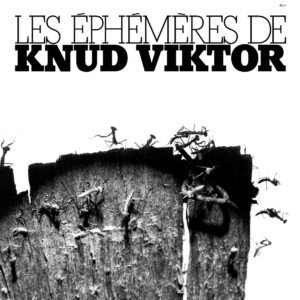
LP
Knud VIKTOR
“Les Éphémères”
The lost masterpiece Les Éphémères by the self labeled ‘sound painter’ Knud Viktor (1924-2013) now sees its first ever release by Institute for Danish Sound Archaeology – 40 years after it was conceived. Viktor’s pioneering work – his Images Sonores – are composed of field recordings of insects, animals and his surroundings. His only earlier releases, the much sought-after Images and Ambiances from 1972, were re-issued by Institute for Danish Sound Archaeology in 2017 to great critical acclaim.
A finished master tape and even a complete cover layout for Les Éphémères was found in Viktor’s archives after he passed away in 2013. The phenomenal piece was originally commissioned by the French radio station France Musique in 1977. The twenty short ‘sound images’ of Les Éphémères were originally broadcast as vignettes in-between other radio programs. Working with Allo la Terre, the association in charge of the estate of Knud Viktor, we at Institute for Danish Sound Archaeology are thrilled to finally be able to release this central and evocative work.
From the middle of the 1970’s Viktor began composing almost exclusively for four channels. He invented his own intuitive quadraphonic mixer – the Tetramix – to realise his spatial visions for his Image VI – The Lubéron Symphony, and from then on worked with quadraphonic sound, thus making the release of his works difficult. Les Éphémères is close in time and also holds close ties to The Lubéron Symphony, which Viktor considered his magnum opus. Perhaps most strikingly is the shift in the way he uses the recordings of insects, birds and animals in both The Lubéron Symphony and Les Éphémères: Often untreated and clearly recognizable, the field recordings leave the inherent melody and rhythm of the animal sounds to sing for themselves, layering recordings to create simple and elegant sound images. In two of the twenty pieces Viktor’s own voice blends with the animals, as he recites two poems. One about the singing vineyard populated by musical crickets, the other painting an autumn picture with wine bubbling in the barrels as we hear the wine flies humming.
22,00€
In stock
2 LP
Knud VIKTOR
“Ambiances – Images”
*** New edition. Available before end january ***
Re-issue of rare releases by Danish sound artist Knud Viktor. The Institute for Danish Sound Archaeology is re-issuing the Danish sound artist Knud Viktor’s only two releases. Ambiances and Images – both released in 1972 – are longtime sought-after rare collector’s items.
These are now re-issued as a 2 LP from the original master tapes with liner notes by poet and sound artist Morten Søndergaard.
Overlooked and unheard Danish sound art Knud Viktor (1924-2013) graduated from The Royal Danish Academy of Fine Arts in Copenhagen as a painter. In the 1960’s he moved to the Luberon valley in southern France to paint the Provençal light and nature. However, Viktor left the painting and gradually moved towards filming and recording the sounds of nature. He used the field recordings as raw material for a series of abstract electronic compositions, which also served as soundtracks for his filmworks. A selection of these compositions were released in 1972 on the two records Images and Ambiances on the French label L’Oiseau Musicien. The records came in very limited editions, and therefore Knud Viktor’s works have remained largely unknown. With the re-issue of these records The Institute for Danish Sound Archaeology wishes to revitalize Knud Viktor and his contribution to the history of sound art.
The small sounds of nature Knud Viktor is recognized as an important figure in the field of sound art in France and he is regarded as a pioneer within field recording and acoustic ecology. During the 1970’s he turned his house in Provence into one large mixing desk with a myriad of homebuilt microphones and cables spiralling into the surrounding landscape. From here he would carefully record the sounds of snoring rabbits in their holes, the rhythmic songs of cicadas in the night – even termites gnawing through an old cupboard in the bedroom As the Danish poet Morten Søndergaard writes in the essay A Sonic Seismograph, which accompanies the release: “Light became sound. The most fascinating aspect of Knud Viktor’s world is perhaps that there is a universal coalescence of all things: of artistic expressions and natural science, of painting, sculpture and installation. A paintbrush becomes a microphone. Music becomes sound.”
By re-issuing Ambiances and Images, The Institute for Danish Sound Archaeology hopes to contribute to a revitalization of Knud Viktor’s important work, and that more listeners will engage and lend the deserved attention to these works.
The Institute for Danish Sound Archaeology is an independent association with the overall purpose of uncovering and releasing historical Danish electronic music and sound art.
29,00€
Out of stock

LP
Éliane RADIGUE
“Geelriandre – Arthesis”
Geelriandre/Arthesis is named for the pieces that fill its two sides. Geelriandre, realized on an ARP 2500 synthesizer in 1972, features Gérard Fremy on prepared piano. Arthesis, realized using the University of Iowa's Moog in 1973, comprises the full duration of side B.
Eliane Radigue has received much deserved praise for her transcendent compositions for tape, synthesizers and acoustic instruments. Her work is deep, slowly changing and timelessly resonant with slowly shifting timbres so dense that they seem infinite. Accute physicality, overtones and psychoacoustic activity fills your space, follows you, grounds you, pulls you in or lets you go. It's all here/hear.
24,00€
Out of stock

2 LP
Pauline OLIVEROS
“Reverberations 1”
Pauline Oliveros Home Electronic Music Studio (1961)
Time Perspectives 19:38
San Francisco Tape Music Center (1964-1966)
Mnemonics I (15:09)
Mnemonics II (9:55)
Mnemonics III (17:34)
Mnemonics IV (18:64)
In 2012 Important Records released a historic 12 CD box set compiling much of Pauline Oliveros' early and unreleased electronic work. Reverberations 1 is the first release in an ongoing series dedicated to releasing the entire 12 CD box set on vinyl.
Organized chronologically by studio, the complete Reverberations not only documents Pauline's earliest electronic music but it also functions as an early history of electronic music itself.
Pauline Oliveros, composer, performer and humanitarian was an important pioneer in American Music. Acclaimed internationally, for four decades she explored found, forging new ground for herself and others. Through improvisation, electronic music, ritual, teaching and meditation she has created a body of work with such breadth of vision that it profoundly effects those who experience it and it eludes many who try to write about it.
In partnership with the Pauline Oliveros Trust, Imprec will be releasing essential titles from Pauline Oliveros' catalog on vinyl including the complete Reverberations box set, Tara's Room, Sounding/Way (with Guy Klucevsek) and many more.
"On some level, music, sound consciousness and religion are all one, and she would seem to be very close to that level." John Rockwell
"Through Pauline Oliveros and Deep Listening, I now know what harmony is. It's about the pleasure of making music." John Cage
31,50€
Out of stock

CD
Phill NIBLOCK
“Music For Cello”
Phill Niblock's Music For Cello collects three pieces from the 70's and early 80's, performed by cellist David Gibson.
This CD includes a 16 page unpublished interview with Phill Niblock.
Since the late sixties Phill Niblock has been composing long-form acoustic drones with a focus on the rhythms and overtones that rise from closely tuned instruments. His highly original and influential music is an exploration of timbre, microtonality, stability, duration and psychoacoustic phenomenon.
"3 to 7 - 196 is very direct, aggressive, and gritty. The overtone patterns that are produced by the proximal pitches become more prominent with louder volume. So please, play this piece very loud. This was the first piece of mine in which the musician was precisely tuned, in which I chose exact pitches in hertz. We used a sine wave oscillator and frequency counter for the tuning.
Descent Plus has four cello tones descending one octave over twenty-two minutes, from 300 hertz to 150 hertz. David Gibson played these tones without lifting his bow from the strings, constantly retuning. I made four different scores, manually changing an oscillator to which he was tuning, for each track's recording. For the revision, we added six more tracks, with David playing long tones which were not descending. The second part of the recording was made nearly twenty years later.
Summing II (one of four parts) is mellow and sonorous. David plays two strings simultaneously, one of which is retuned for each successive recording of that pair of tones. This is a mix of an eight track tape. It's better played loud also."
Phill Niblock from liner notes
13,00€
In stock

CD
ELEH
“Home Age 2”
ELEH’s Home Age series was composed and recorded over a period of 5 years and it reflects a search for color, form, connection and growth. The handmade artwork contained in each package was created during the same period of time the music was composed and is an integral part of the meaning of Home Age.
For this release Eleh plays modular & analog synthesizers, piano, organ, bass and symphonic chimes.
Although Home Age is a 2 part set, Eleh’s upcoming Living Space CD/LP for Touch is very much the conclusion of this era of Eleh. ELEH’s Home Age 2 is packaged in a thick, letterpress printed Arigato Pak by Stumptown Printers in Portland, Oregon. This is a one time CD edition of 480 copies.
13,50€
In stock

2 CD
Éliane RADIGUE
“Vice Versa, etc…”
"1970 was an important year in Eliane Radigue's musical life since it was the year just before she acquired her ARP 2500 synthesizer. Since 1967, she had been using the feedback as a material; feedback from two tape recorders reworked through intensive studio techniques: slowing down, alteration, superimposition, montage.
"In 1970, the last year she dedicated to feedback, several milestone pieces saw the light of day: Omnht, a wonderful sound installation for three out-of-phase tape loops and wall-mounted loudspeakers; the theoretical setting of Labyrinthe Sonore (eventually premiered at Mills College in 1998 in collaboration with Pauline Oliveros, Maggie Payne and William Winant, among others); Opus 17, one of her first compositions in fixed duration (according to Rhys Chatham, a decisive piece that would change his own compositional career); and Vice-Versa, etc…, which appears to be her very last feedback loop composition.
"Vice-Versa, etc… was conceived as a sound installation setting similar to S=a=b=a+b. A single magnetic tape can be played at any speed, a stereo tape of which allows three playings: left channel alone, right channel alone, left and right channels together. These different channels can be overlapped/crossed over as much as possible, at any speed. Thus the piece reveals itself in its whole dimension, its infinite grace. (...)" Manu Holterbach
18,00€
Out of stock

CD
Éliane RADIGUE
“Transamorem – Transmortem”
Transamorem - Transmortem was premiered on March 9, 1974 at The Kitchen in NYC, where the music programmer at the time was Rhys Chatham - this was right before his guitar phase. During this period, Transamorem - Transmortem was presented along with other compositions by Eliane Radigue in a linear mode of listening, although the piece had originally been conceived, during its composition, as a sound installation. Of course, both modes of listening are possible, and each works marvelously in its own way.
In their original form, Eliane Radigue's works are magnetic tapes. After being played a few times in public, the tape disappears to its case until a release proposal makes it available again through a disc.
During this period Eliane Radigue's compositions became fairly long, some lasting over an hour. Because the tracks could not be edited for some obvious reasons, a vinyl release was unthinkable. It was only in the 90s, with the advent of the CD format, that the long compositions of Eliane Radigue were made available (with the exception of the Song of Milarepa LP on Lovely Music, a work already divided into multiple movements and thus able to be fit onto two sides of an LP). For these reasons, the work of Eliane Radigue remained virtually unknown for twenty years - from the 70s to the 90s.
13,00€
In stock

CD
Éliane RADIGUE
“Triptych”
“Includes liner notes & archival photographs. On the suggestion of Robert Ashley, Douglas Dunn commissioned this piece from Eliane Radigue for choreography. Only the first part of Triptych was staged at the premiere at the Dancehall-Theatre of Nancy on February 27 1978. Recorded in the composer’s studio in Paris. After the premiere of Adnos I in San Francisco in 1974, a group of French students introduced Eliane Radigue to Tibetan Buddhism. When she returned to Paris, she began to explore this spirituality in depth, which slowed her musical production up until 1978. Triptych marks her return to composition, and draws its inspiration from the spirit of the fundamental elements", water, air, fire, earth... Eliane Radigue likes to add that this has often been useful to her in her moments of research and transitions. This three-part composition, with its great humility and contemplative simplicity, heralded a new period of work and was the first in a series of masterpieces inspired by Tibetan Buddhism: Adnos II (1980), Adnos III (1981), Songs of Milarepa (1983) - with the voices of Lama Kunga Rinpoche and Robert Ashley -, “Jetsun Mila” (1986), as well as the Trilogy of Death: Kyema (1988), Kailasha (1991) and Koume (1993). Archival images included in the accompanying booklet.”
15,00€
Out of stock

3 CD
Éliane RADIGUE
“Adnos I-III”
*** Back in stock, new edition ***
Initially produced by Table of the Elements in 2002. Eliane Radigue’s Adnos trilogy was composed between 1973 and 1980 and is among her finest compositions. Adnos is a deeply meditative work of infinite depth and sensitivity; one of the high points of modern minimal electronic composition. Packaged in a heavy duty 3CD jacket much like the recent Eleh releases and containing extensive archival materials.
31,00€
In stock
LP
Reinhold FRIEDL
“Music for Piano, … Spring/Flower/Cracker/Stream”
Zeitkratzer’s boss revisits the piano guts some years after his much acclaimed and genre-defying album Inside Piano (2011). While Friedl’s first solo album defined the practice of playing on the strings of a grand piano and revealed the source of sounds we couldn’t identify on some of Zeitkratzer’s recordings, Music For Piano, … Spring/Flower/Cracker/Stream, brings concrete and quasi electroacoustic sounds together with clearly articulated piano notes. In the enigmatically titled Music For Piano, … Spring/Flower/Cracker/Stream, Reinhold Friedl moves freely from plain motifs, to walls of noise and from screeching sounds to pure tones, while keeping strong compositional structures and transparent musical forms. A truly beautiful and ear-pleasing record that unashamedly shows the composer’s and performer’s love for the piano.
Beside his activities as composer and as leader of the internationally acclaimed new music group zeitkratzer, Reinhold Friedl is renowned for his passionate and peerless piano performances. He invented numerous new techniques of playing a grand piano directly on the strings and baptised it “inside piano”. “Reinhold Friedl has developed his “inside piano” technique to such a level of delicacy and precision that the tonalities extracted from the instrument bear little resemblance of their acoustic source.”, wrote The Wire Magazine London. Phosphormagazine stated: “Unbelievable that one can creates such sounds with a grand piano!” and the Australian Realtime attested “tremendous power. Overwhelming!”
Reinhold Friedl studied with piano with Renate Werner and Paul Schwarz in Stuttgart, Alexander von Schlippenbach and Alan Marks in Berlin, composition with Mario Bertoncini (nuova consonanza) and Witold Szalonek. He has collaborated with musicians like Phill Niblock, Elliott Sharp, Alvin Lucier, Keiji Haino, Lou Reed, Carsten Nicolai, Laurie Anderson, ...
14,50€
In stock

CD
TARAB
“Housekeeping”
"I am a collector of rubbish: not an archivist, but in a small way, a hoarder. Clutter seems to be attracted to me.
Housekeeping was originally conceived as a project to finally put to use some of this amassed junk, and then to discard it all once again. It first took shape as an installation work for 8-channel audio, found objects, speakers, transducers, desk, chair and room; presented at Blindside, Melbourne, August 2017.
Since then it has slowly shifted itself into this CD. However rather than a documentation of an installation, this iteration has been arranged from the debris collected during the process of making one. Sound was gathered together from various raw audio materials; object manipulation; rehearsals, studio tests and failures; recordings of both installation and de-installation; the final composition files ; recordings of the installation in-situ; the empty gallery space; the Nicholas Building (the home of Blindside); a performance made with Clinton Green enacted to close the installation. All collected materials were then cut up, tumbled around and de-arranged into the current form it finds itself in here."
Eamon Sprod / Tarab
10,50€
In stock
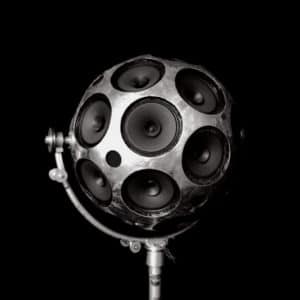
CD
Christina KUBISCH
“Schall und Klang”
»Schall und Klang« is the result of Christina Kubisch's extensive fieldwork on the trail of Hermann Scherchen (1891-1966), conductor and key figure in 20th century new music. After moving to the village of Gravesano (Ticino/Northern Italy) in 1954, Scherchen established an electroacoustic experimental studio on his premises and created a meeting place for scientists, composers, musicians and sound engineers from all over the world. Among his guests were Iannis Xenakis, Luc Ferrari, Edgar Varèse and Luigi Nono, just to name a few. Originally commissioned and broadcasted by Deutschlandfunk Kultur, »Schall und Klang« is a personal portrait of Scherchen and his time in Gravesano. Kubisch brings together archival footage from the Scherchen estate and the Scherchen archive at Akademie der Künste in Berlin, tape recordings, recited texts from Scherchen's own quarterly »Gravesaner Blätter« as well as her own compositions and field recordings referring to her research made on site in 2016.
»I have built this studio for myself [...] as a direct activity for my existence. I live Gravesano« (Hermann Scherchen)
Production: Deutschlandfunk Kultur / Studio für Elektroakustische Musik der Akademie der Künste / Studio Hoppegarten 2017. Edition of 500 copies in Digipak, incl. 8pp booklet with photos and texts by Christina Kubisch.
12,50€
In stock
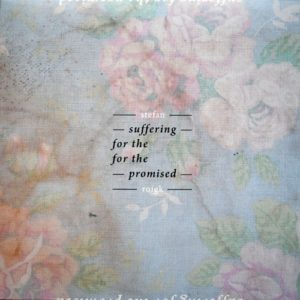
LP singled side
Stefan ROIGK
“Suffering For The Promised”
Being in the making – or un-making – for the past 14 years, Stefan Roigk's »Suffering For The Promised« has gone through many stages, from being finished, revoked, left untouched, reworked, discussed to finally getting banned onto vinyl in its ultimate and irrevocable form. An atmospherically intense but yet utterly fragile piece, combining concrete sounds, field recordings and devotional vocal fragments to an eclectic and highly intimate composition, consolidating Roigk's position as one of the top players in the game.
Single side LP. Edition of 316 copies on black vinyl, incl. full-colour inner sleeve w/ text by Stefan Roigk.
Stefan Roigk (b 1974) is a multi-disciplinary artist living in Berlin. Roigk deals with the borders between sound collages, sculptures, installations, film and graphical scores. His artistic strategy lays in the combination of different types of media to one single composition. Roigk's previous musical works have been released by labels such as Tochnit Aleph and Senufo Editions.
18,50€
In stock

CD
Alvin LUCIER
“Ricochet lady”
The recently composed "Ricochet Lady" (2016) is the only work for solo acoustic glockenspiel by the American experimental composer Alvin Lucier. Following in the manner of his pieces "I Am Sitting In A Room" and "Vespers", "Ricochet Lady" embodies Lucier's approach toward sound's individual function and mobility within space. This CD defines this approach through four realizations recorded in four dissimilar spaces, ranging from the standard to extraordinary: a university rehearsal hall with walls of drywall and glass, a chapel made of oak and stone, an empty forge and foundry warehouse for steel railway wheels, and a 36-meter tall dilapidated cement grain elevator. Never one to shy away from convention, Lucier intensifies each performance by instructing that the glockenspiel be placed against a wall or other reflective surface where the soloist systematically traverses the entire range of the instrument in rapid, repetitive patterns, actively disseminating the glockenspiel's sustain, clicks, and interferences throughout the space. In doing so, the glockenspiel maps the unique acoustical characters of each space as each space helps to compose the piece. Created in close collaboration with Trevor Saint, a rare (if not the only) specialist of experimental music for glockenspiel, Lucier has further enhanced the sophistication of this re-imagined instrument while maintaining his devotion to letting spaces speak. Presented in a stunning digipak with liner notes by Alvin Lucier and Trevor Saint. Design by Lasse Marhaug. Mixed and mastered by Matt Sargent at Bard College, Annandale-on-Hudson, New York. (For an optimal listening experience it is recommended that these recordings be played at high volume).
14,00€
Out of stock

LP
Luc FERRARI
“L’escalier des aveugles”
L’Escalier des Aveugles, or The Stairway of the Blind, was commissioned in November 1990 by Spanish National Radio (Radio Nacional de España). Asked for a piece to premiere as part of the European Day of Music, Luc Ferrari returned with a radiophonic concept that organised his anecdotal music into montage form, sequencing short, elusive narratives in a successive way.
The completed composition is formed of thirteen chapters containing a mixture of environmental and synthesised sound, commentary, chatter, and encounters with people and places. Each focuses on a small event within this playbook, and Ferrari notes that each “in addition to being a realistic photograph, will be the subject of a ‘setting to music’: fragments of voice and atmosphere will be sampled and will produce musical matter or a ‘song’.”
The sonic language of Madrid forms the setting to which Ferrari lays out the persistent theme of the piece, that of the composer being guided throughout the city by a young woman. Using a game-like structure (liners for this edition include Ferrari’s “Regles de Jeu”, or “Rules of the Game” which act as a script or score to the piece) the motivation is posed: imagine that one day you are told “I know a place in Madrid that sounds amazing (or bizarre)”, to which you reply “Let’s go to it together.” The recordings toy with the relationships between guide and tourist, translator, director and actress, and masculine and feminine that emerge as Ferrari and the actresses follow this action, documenting the shared experience and connections they make as they visit these places.
Six actresses guide Ferrari (and the listener) through locations simultaneously ordinary and sonically rich: the metro; the El Corte Inglés department store where we hear the gossip from changing rooms set against music emanating from the PA; vagabonds declaiming their political stance in the Conde de Barajas plaza; interactions buying apples in a market; the reverberant and spacious halls of the Prado Museum where one actress gives a moving description of her favourite painting - Goya’s The 3rd of May 1808.
Ferrari replies in French to their comments in Spanish, and there are several self-referential plots, devices, and word games that flirt with the poetics and rhythm of language and sound. A recital of Lorca’s poem "La Casada Infiel" in “Hommage À Lorca” in amongst the location recordings feels striking, and the call and response of “La Nouvelle de L’Escalier”, where one of the actresses descends the staircase of the blind - a long stone stairway in Madrid proposed to Ferrari as an interesting location to visit during the trip by producer José Iges. She replies to Ferrari’s vocal enunciation of the place (and title) in French - L’Escalier des Aveugles - with the place-name in Spanish: La Escalera de los Ciegos.
Using this repeated title and image of the staircase of the blind as a symbolic place, a line is drawn to a situational landscape experienced and diffused through snapshots and allusion rather than holistically overviewed, sound conjuring pictures within the imagination. In the sensorial qualities of Ferrari’s treatment of emotion and language—fortified with electro-acoustic motifs and musical properties—the piece accelerates towards a render that is truthful, beautiful, yet also surreal; somewhere between theatre and reality, a gonzo cinema of the ear.
23,90€
In stock

LP
O YAMA O
s/t
YAMA O explores a certain domestic and democratic quality of everyday life, born through associations to folk music of Japan and a folding of myth, tradition, and routine; the non-spectacular and the sublime.
Formed of musician and artist Rie Nakajima and Cafe OTO co-founder Keiko Yamamoto, the group has performed since 2014 at venues and festivals such as noshowspace, Ikon Gallery, Wysing Arts Centre, Supernormal, Borealis Festival, Mayhem, and allEars Festival.
Nakajima’s performance often focuses on the use of found and kinetic objects, using modest items such as rice bowls, toys, clockwork, balloons and small motors as instruments to create a “micro orchestra”. Elements are layered into impressive and immersive atmospheres. Yamamoto alternatively floats and charges through this with body and voice; chanting, incanting, thundering, whispering, stamping on the floor.
Their debut album consolidates their musical conversations into keenly paced studio music, the duo working with additional instrumentation and a resolved focus on melody to provide vivid portraits of folkloric Japan in song.
They move between pop and the philosophical, defined by the overall space afforded to texture and movement. In small, delicate sound an intimate musical climate is established that reflects on life, telling stories of improvised clockwork, whispered dreams, small movements of the hand and the rhythm to be found in the shuffle of a deck of cards.
Grandly theatric and dramatic flourishes add solidity to these illustrations, operas driven by the swooping energy and power of Yamamoto’s voice can be playful or emotionally charged, particularly when the duo arrange themselves in ensemble with violinist Billy Steiger and percussionist Marie Roux. Production by David Cunningham creates the shadowy presence of a leftfield Flying Lizards dubwise depth that adds subtle strangeness to the atmosphere. The result is something raw, full-bodied; full of energy, grace and mystery.
17,00€
Out of stock

LP
Evan PARKER
“The snake decides”
One of the final Incus releases and one that was written up in The Penguin Guide to Jazz as ‘an essential document of modern music’. Otoroku is proud to release the first ever vinyl re-issue of Evan Parker’s legendary recording The Snake Decides. Featuring 4 solos recorded in 1986 in St. Paul's Church, Oxford by the late Michael Gerzon. The Snake Decides is a groundbreaking example how far the language of a particular instrument can be taken.
From Brian Morton’s liner new notes:
“The Snake Decides attracts a certain array of adjectives - intense, radical, fearsome, hypnotic, virtuosic – and occasionally allows a more ambitious reviewer to avoid platitude by talking more specifically about 32nd harmonics, circular breathing, multiphonics and Gerson's exact choice and placement of microphones. But this misses a point, too. Listening to this record, either for the first or the fortieth time, is an arousing experience.”
Remastered by Giuseppe Ielasi and housed in a reverse board sleeve with new liner notes by Brian Morton this is the ultimate document of one of the most important recordings in all of Parker’s extensive and exploratory catalogue. Edition of 500 copies.
21,00€
Out of stock
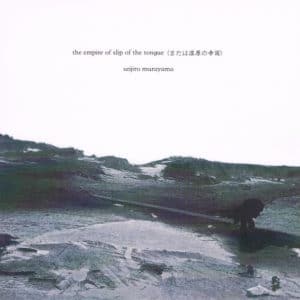
CD
Seijiro MURAYAMA
“The Empire of Slip of the Tongue”
Percussionist/voice performer Seijiro Murayama previously lived for a long time in France, and he moved back to that country in 2018 after several years back in Japan. His extremely original performances, using a drum set or some parts thereof, have been highly acclaimed in Europe and throughout the world. The two tracks on this CD, which follows Murayama's album Downdate (released on the Hitorri label in November 2017), are solo performances by Murayama using voice, percussion, and sign waves mixed with field recordings. Densely structured and mysterious, this is an overpowering, incomparable masterpiece.
12,50€
In stock
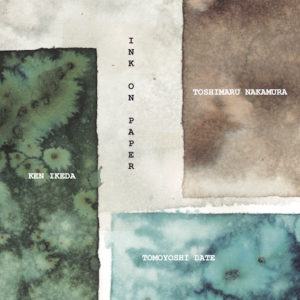
CD
Toshimaru NAKAMURA / Ken IKEDA / Tomoyoshi DATE
“Ink on Paper”
No-input mixing board player Toshimaru Nakamura makes wide-ranging use of mixer feedback in his many performances in Japan and other countries. London-based electronics player Ken Ikeda has released albums on a number of labels including Touch (UK), Matchless (UK), and Spekk (Japan). Tomoyoshi Date uses both electronic and acoustic instruments and specializes in ambient styles. This is the second CD release by these three musicians. (The first, Green Heights, was recorded in 2011 and released on the French label Baskaru in 2013.) In Ink on Paper, myriad longish sustained sounds and short tones bearing a variety of sonic qualities and timbres appear and disappear, followed by the emergence of new and different sounds. Flowing on the whole in a smooth, gentle and relaxed way, these sounds are infused with a comfortable and unique atmosphere. The single 40-minute track, divided into five parts, is an improvised performance recorded in 2013.
12,50€
Out of stock
In stock
In stock
In stock
CD
Ferran FAGES
“Detuning series for guitar”
Performers: Ferran Fages, Didier Aschour (electric guitars).
9,00€