
Out of stock

LP
MIRROR
“Some Days It Rains All Night”
La Scie Dorée presents a new album by Mirror (Christoph Heemann and Andrew Chalk) recorded at the Loft, Cologne. Christoph Heemann, with co-founder Achim P. Li Khan, was active in the celebrated group Hirsche Nicht Aufs Sofa in the 80's. In the mid-90's, Christoph concentrated on his solo career while collaborating with artists such as Jim O'Rourke and Edward Ka-Spel (Legendary Pink Dots) in the Mimir project. He also worked with Masami Akita (Merzbow) and with the Japanese duo Jack or Jive. Christoph contributed to several Current 93 albums. Andrew Chalk was similarly very active in the second half of the 80's, working in collaboration with David Jackman (Organum) and the Rupenus Brothers The New Blockaders), among several others. In 1993, Andrew joined forces with Darren Tate to form the collective Ora.
Since 1999, Andrew and Christoph worked together in the prolific collaboration known as Mirror. Mirror is the collaborative effort of Andrew and Christoph, with occasional participation of guest artists on some releases and live events. The guests in "Some Days It Rains All Night" are Vikki Jackman (Marsfield) and Timo van Luijk (Noise-Maker's Fifes, Af Ursin, Asra, La Poupée Vivante, In Camera).
Edition of 350 copies on transparent vinyl.
19,50€
In stock

LP
IN CAMERA
“Lost In Spice”
La Scie Dorée presents a new album by In Camera. In Camera is composed of Christoph Heemann and Timo van Luijk , both experienced and quite active in the contemporary experimental music world. In Camera was formed in 2003 out of a twenty year dialogue between the duo who have recorded two albums together. On these dates, Heemann plays the Moog and manipulates prerecorded sounds live to generate lush electronic drone-scapes while van Luijk symbiotically adds to the visual sound layers with his electronic and acoustic instruments, both of them balancing between the frontier of improvisation and composition, among drones, electronics and electroacoustics, the overall effect being of an intense beauty.
Edition of 400 copies
19,00€
Out of stock
LP
Okkyung LEE
“Yeo-Neun”
Springing from a decades deep body of work, defined by a rigorously singular and adventurous approach to sound, cellist, composer, and improvisor, Okkyung Lee, returns with Yeo-Neun, her first outing with Shelter Press, and arguably her most groundbreaking and unexpected album to date.
A vital, present force in the contemporary global landscape of experimental music, Okkyung Lee is widely regarded for her solo and collaborative improvisations and compositions, weaving a continuously evolving network of sonority and event, notable for its profound depth of instrumental sensitivity, exacting intellect, and visceral emotiveness. Yeo-Neun, recorded by Yeo-Neun Quartet - an experimental chamber music ensemble founded in 2106 and led by Lee on cello, featuring harpist Maeve Gilchrist, pianist Jacob Sacks, and bassist Eivynd Opsvik - represents the culmination of one of longest and most intimate arcs in her remarkable career. A radical departure from much of the experimental language for which she has become widely known, it is equally a fearless return.
Yeo-Neun loosely translates to the gesture of an opening in Korean, presenting window into the poetic multiplicity that rests at the album’s core. Balanced at the outer reaches of Lee’s radically forward thinking creative process, its 10 discrete works are born of the ambient displacement of musician’s life; intimate melodic constructions and deconstructions that traces their roots across the last 30 years, from her early days spent away from home studying the cello in Seoul and Boston, to her subsequent move to New York and the nomadism of a near endless routine of tours. At its foundation, lay glimpses of a once melancholic teen, traces of the sentimentality and sensitivity (감성 / Gahmsung) that underpins the Korean popular music of Lee’s youth, and an artist for whom the notions of time, place, and home have become increasingly complex.
Elegantly binding modern classical composition and freely improvised music with the emotive drama of Korean traditional music and popular ballads, the expanse of Yeo-Neun pushes toward the palpably unknown, as radical for what it is and does, as it for its approachability. In Lee’s hands, carried by a body of composition that rests beyond the prescriptive boundaries of culture, genre, geography, and time, a vision of the experimental avant-garde emerges as a music of experience, humanity, and life. Meandering melodies, from the deceptively simple to the tonally and structurally complex, slowly evolve and fall from view, the harp, piano, and bass forming an airy, liminal non-place, through which Lee’s cello and unplaceable memories freely drift.
Remarkably honest, unflinchingly beautiful, and creatively challenging, Shelter Press is proud to present Yeo-Neun, an album that takes one the most important voices in contemporary experimental music, Okkyung Lee, far afield into an unknown future, bound to her past.
Mastered and cut by Rashad Becker, housed in reversed-board printed inner and outer sleeve with artwork by American photographer Ron Jude.
22,00€
In stock

2 LP
Alvin LUCIER
“Works for the Ever Present Orchestra”
Black Truffle's documentation of the prolific recent work of legendary American composer Alvin Lucier continues with Works for the Ever Present Orchestra. This is a very special release for the composer, as it presents pieces written for the thirteen-member Ever Present Orchestra, formed in 2016 exclusively to perform Lucier's works. At the heart of the ensemble are four electric guitars, an instrument Lucier began composing for in 2013 with Criss-Cross (recorded by two core members of the Ever Present Orchestra, Oren Ambarchi and Stephen O'Malley, for whom it was composed, on Black Truffle 033). Through the use of e-bows, the guitars take on a role akin to the slow sweep pure wave oscillators heard in many of Lucier's works since the early 1980s, but with added harmonic richness. Like much of Lucier's instrumental music, the pieces recorded here focus on acoustic phenomena, especially beating patterns, produced by the interference between closely tuned pitches. The work presented here is some of the richest and most inviting that Lucier has composed. Though all of the pieces clearly belong to the same continuing exploration of the behaviour of sound in physical space and make use of related compositional devices, each takes on a strikingly different character. Titled Arc, for the full ensemble of four guitars, four saxophones, four violins, piano and bowed glockenspiel inhabits a world of sliding, uneasy tones, punctuated by a single piano note. Where Double Helix, for four guitars, rests on a pillow of warm, low hum, EPO-5, for two guitars, saxophone, violin, and glockenspiel possess a limpid, crystalline quality. Accompanying the four new compositions are two adaptations of existing pieces for radically different instrumentation, demonstrating Lucier's excitement about the new possibilities suggested by this dedicated ensemble. Works for the Ever Present Orchestra is an essential document of the current state of Lucier's continuing exploration, as well as offering a seductive entry-point for anyone who might yet be unacquainted with his singular body of work.
Presented in a deluxe gatefold sleeve with cover artwork and liner notes from Alvin Lucier. Includes a download code featuring hi-res versions of the LP material. The download code also includes the bonus Adaptions for the Ever Present Orchestra featuring two pieces ("Two Circles" and "Braid") that are not included on the LP version. Mastered by Rashad Becker. Design by Lasse Marhaug.
26,00€
In stock

LP
Kassel JAEGER – Jim O’ROURKE
“in cobalt aura sleeps”
Second outing from Jaeger and O’Rourke following the release Wakes on Cerulean on Editions Mego in 2017. Covering a vast terrain with delicacy and poise this new release unveils a spectral showcase for all manner of deep abstraction. The first side positions itself somewhere between stoned komische synth and more nuanced electroacoustic tactics, all weighted by a melancholic undertow. The second side builds on the tension of the former as an undulating drone teases all variety of matter to rise and fall amongst the foreign space it inhabits. The effect creates an enormous sense of deep space before subsiding into a smaller more anxious flickering world. All manner of machines fold into play; digital machines, industrial and analogue machines. The seemingly random yet ordered nature of events is reminiscent of the behaviour of the natural world providing this machine driven release a convincing organic feel. Whether invoking mirrors, distant galaxies or a pond of frogs it is a delightful challenge to focus and locate what is nature and what is nurture. To play this loud is to immerse oneself in a fascinating journey which carries the listener through an array of dizzying emotional states.
18,00€
Out of stock

2 LP
The TRANSCENDENCE ORCHESTRA
“Feeling The Spirit”
“Like La Monte Young and The Incredible String Band stuck in an elevator."
In the process of relocating to Den Bosch's Willem Twee Studios, The Transcendence Orchestra let love slip deftly out of its gate and reverberate around the walls of the studio's main hall, a high ceilinged former synagogue in the city's old town. Working intensively to capture its echoes, they coaxed it to appear in pipes and strings, directed it through resonant circuits and shepherded it round the room with beaters, horns and rattles.
Having returned home with the recordings, a purpose began to emerge. Through a process of extensive reconfiguration and testing it became clear that the love contained within could transform perception. Under the right circumstances, and accompanied by appropriate technology, it could serve as a map for navigating beginnings and endings. Like some distant mesmerising chant or a psychedelic folk song, it could connect us and reassure us that we can pass through the boundaries and survive. Perhaps not intact but at least whole.
Here is that map, love soaked diligently into its lines, ready to guide those at a loss or reassure those willing to explore.
Written and produced by Anthony Child and Daniel Bean
Mastered by Stephan Mathieu at Schwebung Mastering, January 2020
Cut by Andreas Kauffelt at Schnitstelle, Berlin, February 2020
25,00€
In stock

LP
CHRA
“Seamons”
Chra is the artist moniker for Austrian Christina Nemec (Bray, Shampoo Boy). Seamons is the latest missive in her ongoing exploration of suffocating abstract audio. At once designed and falling apart Seamons is rough and crude, a stumbling and staggering electronic expedition where nothing presents itself explicit in intent. It’s a tense obscure record that teases you into it’s peculiar vortex from it’s suggestive nature of exploring the enigma beyond it’s haunted facade.
Vicious Water Regimes stutters along as an ‘ugly’ mass of grey electronica. Cast(o)ro shines from light from the depths with it’s occasional foray into glistening tones. Colonia Marina Serenella is a dank squelching backdrop for a dark age. Cast twists tension with flickering electronics chaotic in their perpetual design of order confronting inevitable collapse. Let Sharks Sleep is not only a great title but a mind tickling adventure of descending/rising digital dance that builds in intensity with it's relentless repetition. Widow Walks gallops and creaks along a path veiled in whispers. Eenge lunges through time with an air of deep uncertainty. Seamons hovers on the outskirts, crawling out of the speakers with endless surprising turns, few of them comfortable.
Seamons is progressive ambient, not the kind that makes you escape, but rather one you can't escape from. Seamons crawls into the very guts of sound to uncover and unravel the uneasy and unsettling underbelly within.
18,00€
Out of stock
LP
15 KINDER & BRÖTZMANN – VAN HOVE – BENNINK
“Free Jazz und Kinder”
12" vinyl reissue of the rare & infamous double-7" originally published by FMP in 1973.
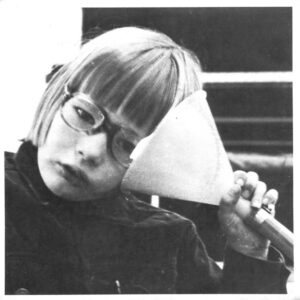
Recordings from a workshop at Akademie der Künste, Berlin, April 1972, featuring 15 children (aged 8-11) and Peter Brötzmann, Fred van Hove, Han Bennink.
19,00€
Out of stock

LP
Hermann NITSCH
“Akustisches Abreaktionsspiel”
Reissue of Nitsch's very first release, originally published 48 years ago by Edition Galerie Klewan in a limited edition of 100 copies.
Produced and recorded at the WDR Radio in Cologne, Germany, the Akustisches Abreaktionsspiel (Aktion 38b) is "neither a radioplay nor a work of music. it merely portrays the acoustic part of an "abreaktionsspiel" (a play of abreaction). the special and specific usage of the acoustic possibilities are in the foreground, while the visual part of the play is communicated by a narrator." A prime example of the intense & noisy wildness of Nitsch's early actions employing scream-choirs, beating, whistles, chaotic austrian folklore juxtapositions, rough brass sections and dissonant strings. Edition of 400 copies on vinyl and 200 copies on CD.
21,00€
In stock

LP
Gaudenz BADRUTT
“Ganglions”
Aussenraum records presents the first solo release of Swiss sound artist Gaudenz Badrutt. On Ganglions, Badrutt sculpts sinusoidal sounds, internal and external feedback as well as voice inputs and other sources into two pieces of otherworldly music. The release takes the listener into the realm of an arthropod central nervous system and its nerve cells processing tactile and visual information (Supraesophageal). The B-Side showcases a more primitive, destructive approach that could well be aligned with a nerve cluster that processes environmental feedback from the mouth and the legs of a creature with a ventral cord. Follow the input through the segments of the ladder. Appendages are damaged and lost along the way, scrambled information leaks into vessels unprepared. Balance is barely re-established, new pathways are carved out, raw strands maintain a steady gait. Ganglions is improvised and abstract, organic livesampling- computer music. 200 copies on 180g vinyl including a download code, cut by Flo Kaufmann.
14,00€
In stock
LP
Alvin LUCIER
“Criss Cross / Hanover”
*** Repress ***
Black Truffle is honoured to present the premier recordings of two recent works by legendary American experimental composer Alvin Lucier. A friend and contemporary of pioneers like Robert Ashley, David Behrman, Gordon Mumma, and Christian Wolff, Lucier has been crafting elegant explorations of the behavior of sound in physical space since the 1960s. Lucier is perhaps best known for I Am Sitting in a Room (1970), in which he repeatedly re-recorded his own speaking voice being played back into a room until the room’s resonant frequencies entirely obscure the spoken text. Beginning in the early 1970s, he has written a remarkable catalogue of instrumental works that focus on phenomena produced by the interference between closely tuned pitches, such as audible beating, often using pure electronic tones produced by oscillators in combination with single instruments.
Demonstrating the restless creative drive of an artist now in his 80s, the two recent works presented here both feature the electric guitar, an instrument Lucier has just recently begun to explore. In Criss-Cross, Lucier’s first composition for electric guitars, two guitarists using e-bows sweep slowly up and down a single semitone, beginning at opposite ends of the pitch range. The piece is a model of simplicity, exemplifying Lucier’s desire not to ‘compose’ in the conventional sense, but rather to eliminate everything that ‘distracts from the acoustical unfolding of the idea’. In this immaculately controlled performance of Criss-Cross by Oren Ambarchi and Stephen O’Malley, (for whom the piece was written in 2013), a seemingly simple idea creates a rich array of sonic effects – not simply beating patterns, which gradually slow down as the two tones reach unison and accelerate as they move further apart, but also the remarkable phenomenon of sound waves spinning in elliptical patterns through space between the two guitar amps.
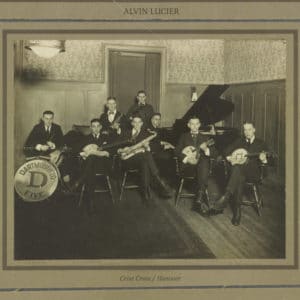
In the comparatively lush Hanover, Lucier draws inspiration from the beautiful photograph that provides the LP with its cover, an image of the Dartmouth Jazz Band taken in 1918 featuring Lucier’s father on violin. Using the instrumentation present in the photograph, Lucier creates an unearthly sound world of sliding tones from violin, alto and tenor saxophones, piano, vibraphone (bowed) and three electric guitars (which take the place of the banjos present in the photograph). Waves of slow glissandi create thick, complex beating patterns, gently punctuated by repeated single notes from the piano. The result is a piece that, like much of Lucier’s instrumental music, is simultaneously both unperturbably calm and constantly in motion.
Stunning LP design by Stephen O’Malley including an inner sleeve with a portrait of Alvin Lucier by Kris Serafin.
“Criss-Cross” recorded at Studios Ina GRM, Paris by Francois Bonnet and mixed by Alvin Lucier. “Hanover” recorded in Zurich and mixed by Alvin Lucier.
Mastered and cut by Rashad Becker at D&M Berlin.
20,50€
Out of stock
LP
Beatriz FERREYRA
“Echos+”
After a standout Recollections GRM side in 2015, Argentina’s Beatriz Ferreyra places more half a century of avant-garde knowledge at the service of this utterly enchanting new opus for Room40, ranging from elegiac vocal works to apocalyptic concrète composition... From Lawrence English: “I’m not really sure when I first heard Beatriz Ferreyra’s music. My best guess would be in the early to mid 2000s when I was working alongside the curatorial team at Liquid Architecture. Given the focus of the festival at that time, GRM and musique concrète more generally was very much a point of focus. That said, it wasn’t until this decade that her work was sharply in focus for me (and I am guessing a great many others). In 2017, I had the great pleasure to meet Beatriz in Braga, where we both were performing as part of the excellent Semibreve Festival. Subsequent to that I invited her to perform in Australia and we also had the pleasure to send time together this year in Rio during the Novas Frequencies Festival. Across these meetings, I have come to realise the incredible focus, generosity and vision that Beatriz has maintained across her life in sound. Beatriz Ferreyra is one of only a few female concrète composers who were active across the second half of the 20th century through to today. Her work, which is still very much an active investigation, is simultaneously complex and elegantly simple. Often drawing upon singular object of focus, Ferreyra’s use of tape and other forms of manipulation radically reconfigure her chosen sound materials, opening them outward. ‘Echos’ for example is sourced entirely from recordings of her niece who was killed in a car accident and ‘The Other Shore’ (composed as a response to the Tibetan Book Of The Dead) uses only percussion. Echos+ brings together three of Ferreyra’s most engaging compositions. Each of the works are deeply personal, but transcend that position, effortlessly welcoming us inside them. They collectively chart out a broad framework that not only defines her philosophical interests as a composer, but also marks out critical moments in her creative and technical approaches; shifting from her roots in tape music to more digital approaches.
26,00€
Out of stock

LP
Lucy RAILTON / Max EILBACHER
“Forma / Metabolist Meter”
Lucy Railton - Forma - 2019 / 23’19
Forma, for multichannel tape and live cello
Commissioned by INA GRM and first performed on the Acousmonium at INA GRM's Multiphonies Concert Series, Maison de la Radio, Paris on June 1st 2019.
Cello recorded live in concert, performed by Lucy Railton. Serge Synthesiser recorded at GRM Studios in April 2019.
Organ recorded in Skálholt Cathedral, Iceland, by Alex Bonney, performed by Kit Downes in 2017.
All other materials recorded, mixed and created by Lucy Railton at GRM Studios and in her Berlin studio between November 2018 and May 2019.
Mix by Lucy Railton / Premaster by Emmanuel Richier (GRM)
-
Forma by Lucy Railton, is a work that burrows deep inside. It disorientates and teases, without malice. Its beauty lies in gentle projections, which, though subtle, leave deep impressions, like the wings of a nocturnal moth reflecting dark light. Its path, too, is unpredictable, but such disorientation is not a reflection of chaos. Instead, a mysterious intention appears through an imperious unfolding - its logic escapes us, but nevertheless captivates us. It is the story of a becoming of forms, as well as of their fading away and their appearance as a disappearance .
----------
Max Eilbacher - Metabolist Meter (Foster, Cottin, Caetani and a Fly) - 2019 / 22’29
Created and recorded November 2018-March 2019 in Baltimore, Maryland.
Fly recording made September 2018 in Carrières-sous-Poissy, France.
Made for the Présences électronique festival 2019 in Paris, France.
Mixed from 8 channel to stereo August 2019.
Metabolist Meter (Foster, Cottin, Caetani and a Fly), by Max Eilbacher is a teeming piece, a matrix where textures and structures merge together, where the polyrhythmic instances become timbre, where the formal abstraction of the harmonic volutes coagulates around a vibrating form that is actualized in the dramatic reality of a dying fly. And this formal mastery is not disembodied in Max Eilbacher’s work and the kaleidoscopic forms of the sound spectra that he has deployed know how to resonate in the sensations and experiences of each one.
------
These two pieces have this in common, but each with their own agenda, that they evolve with grace and inspiration in the vast domain of the sound world and it is a great pride for us to present them in this new collection.
25,00€
In stock

LP
France JOBIN
“Death is perfection, everything else is relative”
All sounds recorded at various locations in Europe, South America and at EMS, Stockholm using the Buchla 200 modular synthesizer. Mastered by Russell Haswell. January 2020.
The last two years have seen me maintaining an association with an unusual bedfellow, death. The loss of Mika Vainio, as well as three members of my own family, has had a profound effect on me and spurred a lengthy reflection on life, death, and everything in between. Parallelly, while studying the philosophy of science, I came across shadow photons: “Tangible photons are the ones we can see or detect with instruments whereas shadow photons are intangible (invisible) detectable only indirectly through the interference effects on the tangible photons.
There is no intrinsic difference between tangible and shadow photons: each photon is tangible in one universe and intangible in all the other parallel universes.
They travel at the speed of light, bounce off mirrors, are refracted by lenses, and are stopped by opaque barriers or filters of the wrong colour. Yet, they do not trigger even the most sensitive detectors. The only thing in the universe that a shadow photon can be observed to affect is the tangible photon that it accompanies.
This is the phenomenon of interference.
Shadow photons would go entirely unnoticed, were it not for this phenomenon and the strange pattern of shadows by which we observe it. Thus the existence of a seething, prodigiously complicated hidden world of shadow photons has been inferred.” (The fabric of reality, David Deutsch, Penguin Press 1997.
)
I have drawn a parallel between shadow photons and death. The interference phenomena, parallel universes, and how shadow photons affect tangible photons they accompany, offer, in my opinion, similarities, an unknown universe which is death and how we, remaining tangible human beings, are affected. This quest has led me to be more willing to accept chaos in my life and to conclude that Death is perfection, everything else is relative.
18,00€
In stock
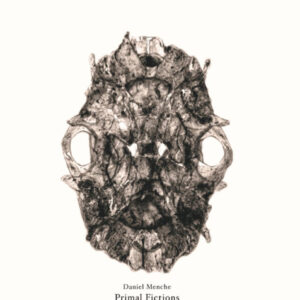
LP
Daniel MENCHE
“Primal Fictions”
“Primal Fictions” may sound like the early work of a literary novelist, but words are not Daniel Menche's chosen form of expression - instead, sound and noise form the foundation of his 30 year dedication to abstract sonic exploration. “Primal Fictions” (LP) released by Ferns Recordings is a prime display of Menche’s unique approach to field recordings and electronic manipulation. An earthly marriage of the acoustic and electronic worlds, “Primal Fictions” is a stunning example of Menche’s immersive and overwhelming music, one that invites the listener to become lost inside a vast sound forest. 200 copies.
19,00€
In stock

LP
Laurent PERRIER + David FENECH
“Plateforme #3”
After two albums on Baskaru with Felix Kubin, Lawrence English, Gianluca Becuzzi (2014) and later Francisco López, Tom Recchion, Christian Zanési (2016), Laurent Perrier continues his Plateforme series by inviting French musician David Fenech. Plateforme is a concept, a restrictive framework Perrier imposed on himself: to create an electronic music piece using solely a set of sound recordings provided by a "collaborator". “I simply asked the musicians to send me raw stuff close to their sound style" explains Perrier. "Some sent me a lot of material, others very little". The result shifts between Krautrock on side A (produced by Fenech) and Electroacoustic Music with a taste of Ralph Records on side B (produced by Perrier).
Laurent Perrier is a French electronic musician who composes and performs exclusively on modular synthesizers. An ex-member of the French cult industrial band NOX and founder of the record label and record shop Odd Size Records. He's now releasing his own music under the many monikers (Zonk’t, Pylône, Cape Fear, Heal). He's also deeply involved into composing for dance companies, plastic art, theater on top of working in sound design and teaching modular synthesizers in a training center.
David Fenech is a French musician living in Paris. His style has been described as ʻa kind of punk musique concrèteʼ. He uses the studio as an instrument, using a large panel of recording techniques. He has played and recorded with musicians such as Nurse With Wound, Felix Kubin, Jad Fair, Tom Cora, Rhys Chatham, Pascal Comelade, Jac Berrocal, Ghédalia Tazartès, Ergo Phizmiz, Pierre Bastien, and many others.
17,00€
In stock

LP
Makoto KAWABATA & RG ROUGH
A collaboration between Makoto Kawabata ( leader of the legendary Japanese psychedelic band Acid Mothers Temple ) and the French/British multi instrumentalist RG Rough.
The pair create an unsettling sonic jungle in which Makoto's guitar drones multiply, intertwine and collide with a wide variety of electronic and concrete sounds and percussion.
On two occasions a soft, sleepy sounding voice comes out of nowhere and whispers a strange lullaby which soon disappears under a cascade of strings or fades into a repetitive minimal piano figure...
17,00€
In stock

LP
Richard PINHAS HELDON
“Live London 1982 The Venue”
Live from the audience.
The last show by this particular " Richard Pinhas Heldon " line up, in London in 1982 , featuring among others Magma members (Patrick Gauthier, Bernard Paganotti, Clement Bailly) as well as Jean-Philippe Goude (Weidorje).
This is a historical document recorded live from the audience which captures an exceptional evening and a great concert.
Heldon is undoubtedly one of the most innovative and influential bands in French electronic rock music.
"Heldon live 82" was produced by Richard Pinhas himself.
17,00€
Out of stock

LP
Richard PINHAS & MERZBOW
“The KOLN ConZert Live 2008”
Recorded live at the Stadtgarten, 2008. Composed and played by Merzbow and Richard.Pinhas.
In 2008, guitarist and rock electronics innovator Richard Pinhas performed in KOLN a duo concert with notorious 'noise' artist Merzbow.
Merzbow’s collaboration with French pioneer Richard Pinhas features some of his best music and gleefully amplifies the psychedelic tendencies of both composers.It is fascinating to hear these two imposing figures interact.
17,00€
Out of stock
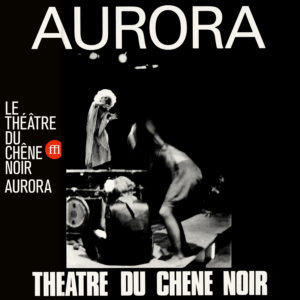
LP
LE THÉÂTRE DU CHÊNE NOIR
“Aurora”
In 1972, Steve Lacy recorded Solo, one of the gems in his discography, in the Théâtre du Chêne Noir in Avignon. The previous year (which was also the year in which Aurora appeared), the eponymous group of actors led by Gérard Gelas, took up residence in what was a 12th century chapel. The Théâtre du Chêne Noir is therefore not just the name of a space open to all kinds of artistic audacity, but also the name of the great Theatre Group which resides there.
Gérard Terronès showed some flair when he published, in 1971 on Futura, the first album by Théâtre du Chêne Noir. It has to be said that the group run by Gérard Gelas was right up his street: non-conformist, eccentric, protesting, just so alive… Singing too, as we can still hear today on Aurora, recorded at Avignon the 22 and 23 June 1971.
Aurora, which had been created a few weeks earlier at Ariane Mnouchkine’s Théâtre du Soleil, is according to, Gelas’ own words, a fantastic tale with actor musicians who play out the fabulous story of the Earth, and children who fight against terrifying bird men who fly from planet to planet to enslave the inhabitants and become the masters of the universe. It is an ambitious subject and thankfully (even more so for the album than for the play), the actors are also excellent musicians!
If we can find «Chêne Noir» between Checkpoint Charlie and Chillum in the Nurse With Wound List created by Steven Stapleton and John Fothergill, Aurora is closer to Stances à Sophie by the Art Ensemble Of Chicago and the Divine Comédie by Bernard Parmegiani and François Bayle.
So, we need to move forward cautiously in this landscape of recitals and songs, of mysteries and cries, where saxophones and flutes, electric guitars and percussions spring up… Could the tragic climax have been possible without music? The Théâtre du Chêne Noir replies no to the question and creates a fascinating mix of text and music without one dominating the other. Enjoy the show!
First ever vinyl reissue
Remastered from the master tapes
Licensed from Futura / Marge
20,00€
Out of stock
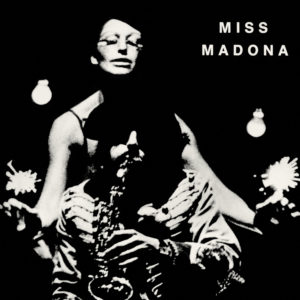
7"
LE THÉÂTRE DU CHÊNE NOIR
“Miss Madona”
Two years after having recorded Aurora, which Gérard Terronès released on his Futura Records label in 1971, the Théâtre du Chêne Noir put on another show, Miss Madona, first at Avignon, and then at Ariane Mnouchkine’s Théâtre du Soleil. From this play, Gérard Gelas’ group took three sound extracts which they made, with no further ado, into a single.
Miss Madona is thus the second recording by Théâtre du Chêne Noir. The two sides (and three tracks) offer up an unbelievable instrumental theatre with something of a white magic ritual about it. The actors, so much better for the record, were also musicians; alongside Miss Madona, ex-star of the circus and now idol, were the piano and electric organ of Daniel Dublet, the saxophones of Pierre Surtel and Jean-Louis Canaud, and the trumpet of Gilbert Say.
But there are also the vocals of Beatrice Le Thierry, Bénédicte Maulet, Jean Paul Chazalon, Monik Lamy, Nicole Aubiat… which added to the mystery of what happened on stage. The sound of this particular theatre may remind us as much of John Coltrane as of Ravi Shankar, Pierre Henry or the Art Ensemble of Chicago. There are voices from beyond the grave, inspirational for future musicians: Steven Stapleton, for example who included Théâtre du Chêne Noir in his Nurse With Wound List.
On the occasion of Record Store Day 2020, Souffle Continu, who are just to reissue Aurora, can be proud of re-releasing this single, which is rare in more ways than one
First ever vinyl reissue
Remastered from the master tapes
Licensed from Le Théâtre du Chêne Noir
9,00€
In stock
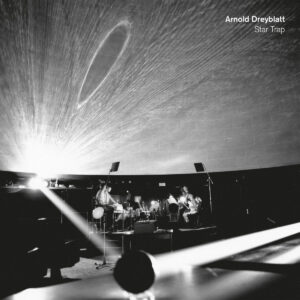
LP
Arnold DREYBLATT
“Star Trap”
Stunning archival live recordings from the 90s of Arnold Dreyblatt & The Orchestra Of Excited Strings which have remained unreleased until now.
Star Trap presents a selection of hitherto unreleased 1990s recordings from Arnold Dreyblatt and his Orchestra of Excited Strings. Following on from Black Truffle's wide-ranging archival Second Selection (2015), which presented a smorgasbord of unreleased material from between 1978 and 1989, Star Trap mines Dreyblatt's extensive archive of unheard recordings from the 1990s, uncovering six pieces performed by three different iterations of the Orchestra of Excited Strings.
While Dreyblatt often performs in his ensembles on his signature Excited Strings Bass (a double bass strung with piano wire), here we find him in the composer's chair and behind the mixing desk, leading ensembles of modified percussion, string, and wind instruments. Four of the pieces make use of Dreyblatt's Dynamic Processing System (heard on a stunning pair of solo pieces for electric guitar featured on Second Selection), in which the opening and closing of digital noise gates are controlled by an external signal (in this case, a recording of faulty escalator). Rather than the relentless thudding rhythms of 1980s works like Nodal Excitations, the ensemble pieces here are closer to the propulsive, at times even funky rhythmic foundation of Dreyblatt's classic Animal Magnetism (Tzadik, 1995), but further enlivened by the unpredictable accents of the Dynamic Processing System.
On 'Escalator', a six-piece version of the Orchestra performs the notated stuttering rhythms and shifting accents of the gated escalator recordings, without the actual Dynamic Processing System being audible. On the remaining two pieces, composed for the tenth anniversary of the Orchestra of Excited Strings in Europe, Dreyblatt made use of algorithmic software to generate material. But far from austere exercises, these pieces are perhaps the most immediate of all, as the Orchestra exuberantly tears through a sequence of repeating rhythmic and melodic cells, dazzling the ear with the overtones generated by Dreyblatt's twenty-note microtonal scale. At times recalling aspects of the work of Peter Zummo or Arthur Russell's Instrumentals, but with a massive dose of sonic heft, this is music for both the mind and the body.
Mastered and cut by Kassian Troyer at D&M, Berlin.
Design by Lasse Marhaug.
Includes liner notes by Arnold Dreyblatt.
19,00€
Out of stock
LP
FANTAZIO & LES TURBULENTS
“Cosmic Brain”
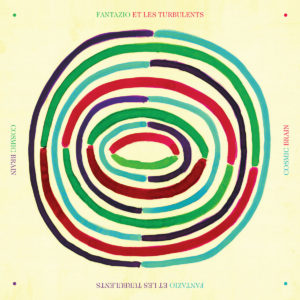
Warning ! Lovers of circumscribed horizons or watertight chapels, go your way, here, it is the anti-containment, it's the neighbor's hug and the shared tarantella. Fantazio & the Turbulents free their cosmic brains by freewheeling and see their bodies follow, the voices traveling towards strange territories, and the muscles beating the metric of a Martian bolero or a galactic ska.
For nearly 20 years, the winding road of the performer Fantazio has crossed those of the Turbulents, these actors, musicians and singers of ESAT Turbulences (Paris 17th). From the Adam Shelton center run by clown-psychologist Howard Buten who introduced him to Philippe Duban, who pilots Turbulences at the Les Évadés du Bocal festival, at La Fabrique du Macadam, via the Rencontres Encore Heureux and most recently at the Sonic Protest festival. Gradually, between improvisation and writing, forms appeared, figures emerged and a subtle crazy repertoire was created. A neo-dada cabaret if ever there was one, Cosmic Brain takes us by the hand and gives us a wild review of the extraordinary sonic creations born from these encounters. A blue truck dismantled like a puzzle, Luffy of One Piece wondering "how does he do that?" ... what is happening to me? »In Mathias' mouth, stellar trumpet interludes, a solo country ballad, an Otto blues, a rap that smashes, a melancolic zouk, ping-pong of signifiers, an ode to Limoges, a liaison battucada or an interstellar hymn on some hippie skinheads ... Full of images, and colors, that we would not have associated naturally but whose assembly and proximity become evident.
This is surely what emerges from listening to this disc, it is obvious that something new can arise from the meeting on condition of agreeing to go there really, without too many precautions, without too much d 'hesitation. We go there and see, we take the risk, we get out of balance, because that's where we feel the best. When they play together, no modesty of style, no false elegance of esthete, here it plays rough, the hands are made to type, the feet are made to dance.
Fantazio & Les Turbulents re-enchant the surrounding world, swallow, digest and regurgitate the sounds that surround them, but by deterritorializing them from a few galaxies, so inevitably, it distorts the shapes and contours a little, and it gives a truly unique and incredible result.
It is therefore without any hesitation that we accepted the proposal made by Fantazio to publish these recordings in the La Belle Brute Collection, which since 2016 has endeavored to make singular recordings heard and share atypical disc objects destined for all curious ears. This disc is like a backbone that brings generations together, from the Seine-Saint-Denis' historic canal around Duban & Buten to current initiatives in a way to rethink institutional psychotherapy, via Sonic Protest or La Belle Brute, like a puzzle bringing together pieces not so far apart and yet not so often gathered. This is also that, the fight against fragmentation, and it is also why this disc is precious.
16,00€
In stock

LP
Charlemagne PALESTINE – Mika VAINIO – Eric THIELEMANS
“PVT”
Recorded at Les Ateliers Claus back in 2013, this three-way collaboration between avant-garde figurehead and pianist Charlemagne Palestine, the late electronic pioneer Mika Vainio and percussionist Eric Thielemans titled P V T is now given a release on clear vinyl via Matière Mémoire.
Charlemagne Palestine, piano, voice & organ. Mika Vainio, electronics & live processing. Eric Thielemans, drums & percussion. Recorded at Les Ateliers Claus, Brussels, Belgium, in 2013.
22,00€
Out of stock
LP
Pali MEURSAULT
“{ Press }”
Universinternational & Artkillart — Ui024 + AKA16
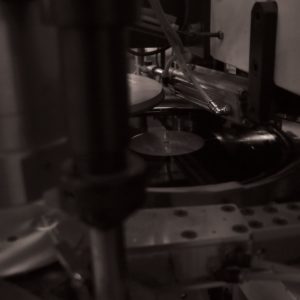
Press completes a “mechanist” trilogy, started by Pali Meursault with Offset in 2013 and Mécanes in 2016. Following the investigation of gestures and machines cycles in printing and letterpress workshops, this new work is a mise en abyme of the record as an object, created from field recordings of a vinyl record pressing plant: Rand Muzik in Leipzig.
Composed in the studios of GRM, Press is a piece of industrial musique concrète. The microphonic explorations of factory noises, as “byproducts” of the fabrication process, reveal the pulsations, rhythms, frequencies and sequences of an electroacoustic matter that seem to be already pointing to industrial and electronic music. Noise is apprehended as a social and cultural phenomenon, which attests of both a production process and an auditory culture.
The piece fills the first side of the record with three “movements” that correspond to the three main stages of the record fabrication: electrotyping, pressing, and packaging.
The second side is a deconstruction of the first one, presenting 33 locked groves. The medium conditions the shape of sound by imposing the never-ending repetition of the 1.8 seconds in take to complete a rotation.
Sound matter recorded in the R.A.N.D. muzik pressing plant in Leipzig. Music composed in the studios of GRM in Paris. Lacquer cut at DK Mastering by Hervé de Kéroullas.
Thanks to François Bonnet, Jan Freund, and Víctor Mazón Gardoqui.
Limited edition of 300 copies.
22,50€
In stock

LP
Charlemagne PALESTINE & TRRMA’
“Sssseegmmeentss frrooom baaari”
Stochastic music for percussion and synthesizers from New York avant conceptualist and keyboardist Charlemagne Palestine, here on voice, piano & electronics, with the Italian duo Trrma' a multifaceted project formed by Giovanni Todisco (percussion) and Giuseppe Candiano (synthetizers) in two side-long works of irregular rhythm, complexity and dissonance that build and recede in a suspenseful journey. Recorded in 2018.
Original price was: 20,00€.12,00€Current price is: 12,00€.
In stock

10"
Jean-Philippe GROSS – GOLDEN ORIOLE
“Optical Cadillac – The Granitoid Panics”
A split 10inch with Jean-Philippe Gross on one side and Golden Oriole on the other.
The first one delivers 7'30" of an impulsive electronic quicksand where everything seems unstable and elusive, with that strange feeling of not knowing if you are moving forward or not, or that experience of a "non-Newtonian fluid" - a fluid you can walk on. In short, we are between immobility and speed, between raw materials and etheric frequencies!
The second Golden Oriole, Thore Warland, drums, and Kristoffer Riis, guitar, who used to play in trio under the name of Staer, produced here by Jørgen Træen, alias Sir Dupermann, gives us a side of a harmonious and reverberated groove that Bill Laswell or Golden Palominos wouldn't have disavowed !
Original price was: 12,00€.6,00€Current price is: 6,00€.
Out of stock

2 LP
Norbert MÖSLANG
“Patterns”
With Sascha Armbruster, sopranosax. Kelsey Maiorano, oboe. Toshiko Sakakibara, clarinet. Jens Bracher, trompet. Stephen Menotti, trombone, Janne Jakobsen, tuba.
Mastering + recording: Pierre Bendel. Artwork: Albert Oehlen. Recorded November 10, 2018.
"Sonoristic experiments, strange timbres, extended playing techniques, exotic or unusual instrumental compilations, home-made resonators and innovative ways of improvising – the music of “Patterns” is fundamentally based on free improvisation and has many relations to experimental, spectral and contemporary academical music. Saxophone, clarinet, oboe and trumpet are the leading instruments. They contain the basic of the melody line which is driving filled with stunning passages, furious growls and full blasts. Vivid, elegant or intriguing and aggressive saxophone, expressive moving clarinet brings the basics of avant-garde jazz – free improvisation, spontaneous solos, sudden jumps from the one mood to another, strange, eclectic and exclusive musical decisions, dizzy passages and gorgeous ornaments are the main elements of saxophone improvisations. The improvisers get on shrieky exclamations, tremendous culminations with persecuting hysteric sequences, repetitive series and intriguing turns. More compounds related to avant-garde and modern jazz, and free improvisation, as well, are brought in by trumpet. It’s rigorous, bright and wild fullfilled with full blasts, hot growls, bursts of energy, thrilling, breaking, waining and vital solos, transcendental passages which are suddenly passing to subtle, silent and minimalistic mood. Here repetitive series, monotonous tunes, deep harsh sounds and haunted pieces make a great combo with trombone. A trombone keeps a stable basement of melody line – its deep bass line passing to bright cracking solos and reaching tremendous, luminous and vibrant culminations gives more stable, deep and solemn sound to the compositions. On the contrary, an oboe is more related to contemporary academical music and academic avant-garde – sonoristic experiments, evocative ideas, extravagant decisions, modern expressions and original instrumentation based on extended playing techniques related to contemporary academical music. That makes an effort to suggestive, inspiring and evocative sound. Deep heavy tuba’s solos form a stable bass line. As a result, a nice compilation is made by mixing up reeds and brasses of various ranges – oboe and tuba makes a strong relation to contemporary academical music, trumpet, trombone, saxophone and clarinet are completely based on free improvisation and avant-garde jazz. That makes an evocative and original sound." (from https://avantscena)
28,00€
Out of stock

LP
Jerzy PRZEZDZIECKI & Andrzej KARALOW
“Pedestal’s Complement”
Live at Ambient Festival – Gorlice 2019. Andrzej Karałow: grand piano / guitar / guitar effects. Jerzy Przeździecki: Buchla Music Easel / Eurorack System.
16,00€
Out of stock
LP
Qba JANICKI
“Intuitive Mathematics”
Qba Janicki played drums since he was four. Form an early age, he's been affiliated with the community functioning at the Mózg club. He's played hundreds of concerts with various artists, including Roscoe Mitchell, Toshinori Kondo, Peter Brotzmann, Fred Frith, Jarzy Mazzoll and Sławek Janicki and currently appears in bands such as Wojtek Mazolewski Quintet.
“Intuitive Mathematics” is illustrative improvisation registered with the use of percussion instruments amplified by piezoelectric sensors and an instrument I constructed myself called the Soundboard. I mounted metal springs, screws and tongues onto a pine board. Highly enhanced piezo amplification brings all sounds closer to the audience’s ears and allows them to hear rich harmonies of the percussion set as well as “non-musical” elements such as friction, shrieking or vibrations that occur inside a highly resonating set of mechanisms. All amplified instruments are transferred to an analogue mixer, which sends signal to speakers located behind the percussion, which allows me to play constantly on the verge of feedback controlled by correcting the frequency, changing the tension of particular membranes, placing various objects on the drums or changing the position of my body against the instruments and speakers.
16,00€
In stock
LP
Loup UBERTO
“Racconto Artigiano”
Music of indecisive ways, silent writing, white pictures, noise and songs. Loup Uberto founds the Bégayer trio with Alexis Vinéïs and Lucas Ravinale, explores the traditional melodies of northern Italy, records intriguing sound documents - Cuban "raw" music, Eastern European travel diaries, Kurdish songs from Syria -, initiates gestures for French "chanson" with Le Saule record label, questions the gaze and its fiction, the rough edges of language, documents exile and wandering through sound testimonies, writings and photographs.
Racconto artigiano, the artisanal tale, is inspired by Walter Benjamin's Experience and Poverty, where the author comments on the drying up of popular fables; it is the compendium of numerous attempts on various materials: mobile phones, percussion, short-circuited radio transistors, computer limiters, clarinet, medieval and popular songs from northern Italy, sound collages.
Recorded in the reformed church of Mens-en-Trièves, a village at the foot of the Obiou mountain range and digging towards the eastern slope of the Vercors, this album is the outcome of some three or four years of research, the account of a series of experiments, thus itself a sort of document, a repertoire of sketches delivered as they are, completely raw and made disturbing by their dryness, just as the folk tale - which refrains from speaking - is a view offered on the horizon of silence.
19,50€
In stock

LP single-sided
Daniel MENCHE
MMXX-05 “4424”
Matière Mémoire presents the MMXX Series. In anticipation of the year 2020, Matière Mémoire asked 20 great artists to create an original 20 minutes piece and an artwork. Throughout this year, each quarter will see the release of 5 new vinyls, available individually or as a bundle. Each record is limited at 500 copies and comes as a crystal clear vinyl featuring an original track of 20 minutes on one side, and a laser engraved artwork on the other. Each contained in a transparent sleeve printed with the MMXX logo, and each coming with a print of the artist artwork.
Original price was: 25,00€.12,00€Current price is: 12,00€.