
In stock

LP single-sided
Reinier VAN HOUDT
MMXX-04 “Les Champs Lissajous”
Matière Mémoire presents the MMXX Series. In anticipation of the year 2020, Matière Mémoire asked 20 great artists to create an original 20 minutes piece and an artwork. Throughout this year, each quarter will see the release of 5 new vinyls, available individually or as a bundle. Each record is limited at 500 copies and comes as a crystal clear vinyl featuring an original track of 20 minutes on one side, and a laser engraved artwork on the other. Each contained in a transparent sleeve printed with the MMXX logo, and each coming with a print of the artist artwork.
Original price was: 25,00€.12,00€Current price is: 12,00€.
Out of stock

LP single-sided
CM VON HAUSSWOLFF
MMXX-03 “For Marietta”
Matière Mémoire presents the MMXX Series. In anticipation of the year 2020, Matière Mémoire asked 20 great artists to create an original 20 minutes piece and an artwork. Throughout this year, each quarter will see the release of 5 new vinyls, available individually or as a bundle. Each record is limited at 500 copies and comes as a crystal clear vinyl featuring an original track of 20 minutes on one side, and a laser engraved artwork on the other. Each contained in a transparent sleeve printed with the MMXX logo, and each coming with a print of the artist artwork.
Original price was: 25,00€.12,00€Current price is: 12,00€.
In stock

LP single-sided
John DUNCAN
MMXX-02 “Panic @ 11000 Feet”
Matière Mémoire presents the MMXX Series. In anticipation of the year 2020, Matière Mémoire asked 20 great artists to create an original 20 minutes piece and an artwork. Throughout this year, each quarter will see the release of 5 new vinyls, available individually or as a bundle. Each record is limited at 500 copies and comes as a crystal clear vinyl featuring an original track of 20 minutes on one side, and a laser engraved artwork on the other. Each contained in a transparent sleeve printed with the MMXX logo, and each coming with a print of the artist artwork.
Original price was: 25,00€.12,00€Current price is: 12,00€.
In stock

LP single-sided
Franck VIGROUX
MMXX-01 “Tension 24”
Matière Mémoire presents the MMXX Series. In anticipation of the year 2020, Matière Mémoire asked 20 great artists to create an original 20 minutes piece and an artwork. Throughout this year, each quarter will see the release of 5 new vinyls, available individually or as a bundle. Each record is limited at 500 copies and comes as a crystal clear vinyl featuring an original track of 20 minutes on one side, and a laser engraved artwork on the other. Each contained in a transparent sleeve printed with the MMXX logo, and each coming with a print of the artist artwork.
Original price was: 25,00€.12,00€Current price is: 12,00€.
Out of stock

LP
Alvin LUCIER
“Vespers”
Vespers (1969) and Chambers (1968), the two works featured on this LP, witness Lucier rethinking the material and conceptual possibilities of music at every turn. First released as Lucier's contribution to the Sonic Arts Union's lone LP, Electronic Sound, in 1972, Vespers is a work generated by two equal actors —the performers and the space that they occupy. Conceived following a chance encounter with hand-held echolocation technology —the Sondol™, a pulse oscillator that emits short, sharp pulses at variable repetition speeds, producing echoes from the reflecting walls of a space to register relative location and orientation— it stands as one of the first works in history within which the decisions made during the performance are solely based on acoustics, allowing sound to be equally the content and structural determiner.
Written as a poetic "prose score", for the realization of Vespers, each performer is equipped with a Sondol™ and asked to move blindfolded within a defined space, moving from one point to the next using only echolocation, taking what Lucier describes as "sound photographs" that reveal discrete details of the given area. As the recording unfolds, the aptitude of this image becomes increasingly clear. While an aesthetic relationship to the movement of musical minimalism, embarked upon by a number of his peers, has often presented itself within Lucier's work, of all of them this is arguably most present within Vespers. Despite the radical leap it presented within the history of the sonic arts, Vespers was not the first of Lucier's works that began to specifically address the relation between sound, perception, and space. Notably Chambers, composed the year before in 1968 and embedded with the wry humor which lingers below much of the composer's output, explored the theme on a brilliantly miniature scale.
As a total work, Chambers contends with the relationship between the knowing and understanding of what we hear, our perception of the source of a sound, and its relation to space. When viewed in the immediate context of Vespers, as it is here, it presents as an unexpected inversion of what was to come. While it plays on the relation of sight and the sonic actor, here what is seen and unseen takes on a dynamically different role. Equally, there is not one space to perceive, but many. For the realization of Chambers, battery-operated radios, tape recorders, and various kinds of electric toys are hidden in paper bags, shoes, kettles, a suitcase, and other small resonant spaces, which not only limit the perception of these object to their sounds alone, but take on the role of acoustic actors on the sounds within, each space becoming as individual and distinct as the object it contains. Taking it one step further, rather than being static, these "chambers" are carried by performers into larger ones —those in which the work is performed— further altering the sounds which occupy them, drawing the ear, once again, to the action of that which contains a body of sound.
Vespers is released by Blume in an edition of 300 copies on 160gr audiophile coloured (dark blue) vinyl, housed in the label's traditional monochrome package coming with a newly designed obi-strip/insert with an introduction by Robert Ashley, liner-notes by Bradford Bailey and Gaia Martino, and also including a printed inner sleeve housing a Nagaoka anti-static record sleeve, plus an all-new transparent colour-matching outer plastic sleeve. Photography by Mary Lucier.
21,00€
Out of stock
LP
Bob BELLERUE
“Amplified Discovery”
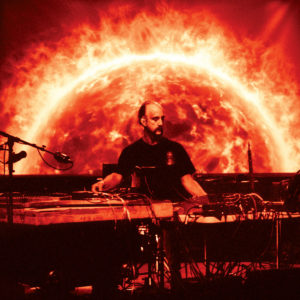
Two intense tracks from New York based noise artist, sonic multitasks master and festival organiser (the famous Ende Tymes every year in NYC, as well as working for years at Issue Project Room). Bob Bellerue creates living visceral sonic organisms with feedback and amplification in specific resonant spaces, using electronics, voices or even Supercollider, resulting in massive wild evolving and mutating drones into outbursts of noise deflagrations - a tension between hellish tellurism and multidimensional discoveries.
Mastered and cut for vinyl and digital by Frédéric Alstadt / Ångström Mastering.
17,00€
Out of stock
LP
Beatriz FERREYRA
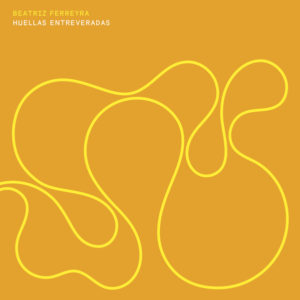
“Huellas Entreveradas”
Beatriz Ferreyra has been at the forefront of electroacoustic music composition since 1963 when she joined the Groupe de Recherches Musicales as one of Pierre Schaeffer's research assistants. She is one of very few composers still performing who was instrumental at the beginning of Schaeffer's theories of sound objects and reduced listening techniques. She continues to compose commissioned works and perform around the world in a career that has spanned some sixty years.
From the 1960s until 1997 Beatriz composed tape pieces for multi-speaker performance using three or four Revox reel-to-reel tape machines at each concert. She now works on Pro Tools with GRM plug-ins but still uses the Revoxes for certain tape techniques that can't be achieved with computer software. Beatriz discusses her music in the Schaefferian way, as a series of impulsions [sharp attacks], iteratives [repetitions], percutés [percussive hits], and trames [sustains] whilst also using her own onomatopoeic descriptions such as 'schkllang, prrrrwip, ferrrwisssssh, takatak' communicating sounds freely and directly as she hears them.
Her music is about movement; the movement of sounds around a performance space, or the positioning of sounds as point sources within the illusory stereo field between loudspeakers. It is also about movement within individual sounds, where each one is a composition of different shifting components and a 'little structure' in its own right, with its own character. She likens her sounds to a Russian doll, inside each is another one, which contains another, and so on.
During her time at Schaeffer's studios, Beatriz developed her own research project, Objets Construits, (constructed objects). These are layers of short sounds, chords made of different noises. Each layer is isolated on a separate piece of tape to analyse the relationships between components and the effect of minimal alterations in pitch, dynamics or timing, to the overall perception of the chord. This was a way of thinking about sound slowly and patiently, of taking time to experiment, analyse and contemplate each manipulation, that is lost in the speedy world of vast ready-made digital sound libraries and the immediacy of save and recall buttons.
In Beatriz's work, small, playful sounds interact like chattering creatures and merge into vast cavernous and mysterious immersive landscapes. These three signature pieces use snippets of speech which are gradually deconstructed to create abstract textures, interweaving vocals with percussive and sustained sounds. Small, playful sounds interact like chattering creatures and merge into vast cavernous and mysterious immersive landscapes. La Baballe du Chien Chien [The doggie's little ball] (2001) is a playful take on the way that we speak in a childlike way to pets. A brief narrative at the start invites the listener into this 'pet speak' scene, with the sound of footsteps and chatter. These gradually crescendo and morph into a cacophonous swirling explosion. Deux Dents Dehors [two teeth sticking out] (2007) is a pun on Bernard Parmegiani's piece Dedans Dehors [Inside Outside] (1977), composed for his birthday. It takes snippets of lively vernacular and processes these into complex patterns of unintelligible and unrecognisable speech, in sustained or percussive sequences and glissandi. Huellas Entreveradas (2018) is a new commission that transforms vocal sounds into choral textures which fragment, granulate and transform into continuous whorls and tidal washes interspersed with her trademark short silences.
23,00€
In stock

LP
Luca T. MAI – “Heavenly Guide”
Powerful saxophone textures from Luca T. Mai of the mighty ZU. On this debut album he is placing his probing and powerful saxophone artistry from energetic sound scapes to celestial layered drones. A stunning solo piece of work, immersive and deep.
20,00€
Out of stock

LP
Tashi DORJI & Tyler DAMON
“To Catch A Bird In A Net Of Wind”
Tashi Dorji (electric guitar) and Tyler Damon (drums/percussion) have developed a musical language that is not only shaped by original forms as free jazz, metal, rock and Buddhist monastic music. Their sound merges passion and emotions of literature, art, cultural movements, politics - flashes of ecstatic intensity, blurred timbral lines, fractal repetition, noir-ish, cinematic mystery and inclinations toward free play hint that the two are pleased to follow a winding path to destinations yet unknown.
20,00€
Out of stock
LP
Sven-Åke JOHANSSON
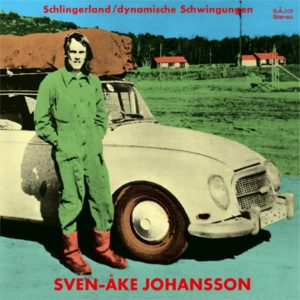
“Schlingerland / Dynamische Schwingungen”
Sven-Åke Johansson's 1972 record Schlingerland presents just the man and his drum set, exploring the polyrhythmic possibilities of his kit. Schlingerland fills a gap in the documentation of '70s European improvisation. At the same time, it retains a surprisingly contemporary sound which reverberates in the ear, mind, and heart of the 21st century listener. (All About Jazz)
Recording: Göran Freese, 1972 in Stockholm Schweden. Re-Mastering: Martin Siewert, 2019. Artwork: SÅJ.
25,00€
In stock
LP
Dewa ALIT & Gamelan SALUKAT
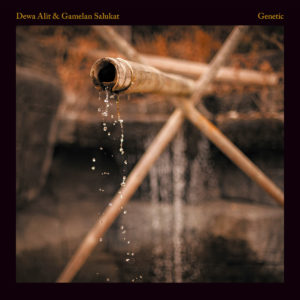
“Genetic”
Alit is a major force in contemporary Indonesian music, presenting his work extensively throughout Asia, Europe and North America and collaborating with renowned ensembles such as Bang On A Can and Ensemble Modern. Involved in the composition and performance of works for Gamelan ensemble since he was a teenager, in 2007 he founded Gamelan Salukat, a 25 member ensemble that perform on instruments specially built to Alit's designs, using a unique 11-note scale. The single composition that unfurls over the two sides of Genetic is an enchanting introduction to Alit's magical sound world. Beginning with a stately procession of isolated, hanging chords sounded on the ensemble's uniquely-tuned metallophones, the piece abruptly launches into a stunning passage of rhythmically complex call-and-response motifs, making striking use of abruptly muted chords – one of many moments where the acoustic ensemble sounds uncannily electronic. The piece continues to alternate between spare investigations of resounding tones and sometimes frenetic ensemble interplay using unorthodox techniques, including a stunning moment around half-way when the entire Gamelan seems to transform itself into a single, gigantic zither. Later in the piece, drums and wind instruments enter, and the metallophones begin to play virtuosic, rapid-fire passages of fragmented scalar melody. As Alit explains in his liner notes, the music of Gamelan Salukat is grounded in the tradition of Balinese Gamelan; however, he approaches this tradition not as something static, but as a set of concepts and principles that can be used to create something radically new. For many listeners, Genetic will inhabit precisely this space between the familiar and the invigoratingly unheard, as it takes the stop-start dynamics, unison melodies, and much of the instrumentation familiar from traditional Balinese Gamelan and puts them in the service of rhythmic, harmonic, and timbral experimentation, crafting a work possessed by at once by mysterious grandeur and a joyous volatility.
22,00€
In stock

LP
David BEHRMAN – Paul DEMARINIS – Fern FRIEDMAN – Terri HANLON – Anne KLINGENSMITH
“She’s More Wild...”
Black Truffle are honoured to announce the release of She's More Wild, a collaborative project by David Behrman, Paul DeMarinis, Fern Friedman, Terri Hanlon and Anne Klingensmith recorded at Mills College in 1981. Previously known only to cognoscenti through an obscure self-released three-track 7", this is the first publication of the complete album, an outrageous confection that mixes art-song and theatrical monologue with live electronics. Starting life as a performance art piece described by the artists as 'Western Performance Noir', the record centres on a series of texts written by Friedman and Hanlon in which female narrators comically embody a series of iconic roles (The Recording Artist, The Former Movie Star, and The Rancher). Other lyrical themes include recurring references to the notorious cannibal pioneers, the Donner Party, an ironic take on Japanophilia, and the luscious "Archetypal Unitized Seminar," a satirical poke at self-help culture, whose lyrics are rendered in Indian raga style to the accompaniment of electronic glissandi and toy noisemakers. Delivered by Friedman, Hanlon, Klingensmith and special guest Maggi Payne in forms ranging from spoken monologue to Country & Western waltz, the texts are accompanied by instrumental and electronic contributions by Behrman and DeMarinis. Musically, She's More Wild is truly unique, demonstrating these two pioneers of live-electronic performance adapting their signature processes to something approaching a 'pop' format: we hear the gliding, frequency-sensitive electronics familiar from Behrman's classic On the Other Ocean and the mutant hacked Speak n' Spell heard on DeMarinis' Songs Without Throats propelled by drum machines and twisted into song forms. Perhaps comparable only to the David Rosenboom and Jacqueline Humbert's contemporaneous Daytime Viewing in its interweaving of performance art tactics, high-tech electronics and pop sensibilities, She's More Wild is an essential document, both immediately gratifying and ultimately thought provoking.
Presented in a deluxe gatefold sleeve with various texts and archival images. Sleeve design by Lasse Marhaug. Mastered and cut by Kassian Troyer at D&M, Berlin.
22,50€
In stock
2 LP
Henning CHRISTIANSEN
“Peter der Große / Gudbrandsdal”
Two of Henning Christiansen’s tape works from the 1980’s, Peter der Große and Gudbrandsdal, are now released for the first time by the Institute for Danish Sound Archaeology. Originally composed for different contexts – Peter der Große as the score for a German radio feature and Gudbrandsdal for a performance in collaboration with Joseph Beuys and later Bjørn Nørgaard – the two works stand out in Christansen’s many-faceted oeuvre by employing almost entirely electronic sounds. Two absolutely enthralling and immersive pieces of tape music, now available for the first time. Background
With a career spanning six decades Henning Christiansen (1932-2008) was prolific as a composer, sound artist, and visual artist. Having studied composition at the Royal Danish Conservatory, Christiansen took a sharp turn towards the experimental art scene in the 1960’s and got involved with Fluxus and the Danish Experimental Art School, Eks-Skolen. In 1964, Christiansen met German artist Joseph Beuys, and they quickly started working together. During the sixties, Christiansen became a central collaborator for Beuys and created sounds for several of his actions using multiple tape machines, often on stage with Beuys, playing back mixes of his own compositions as well as recordings made specifically for the actions. In the seventies, Christiansen took another sharp turn: instead of Fluxus, performances and conceptually based art music, he began composing in a neo-romantic style with classical forms like waltzes, symphonies, and songs in the Danish song tradition. Return to tape music Around 1984, Christiansen returned to the artistic strategies he had left in the late sixties with a renewed commitment to his own vision of Fluxus. The following years were some of Christiansen’s most prolific – and also the period in which he composed some of his very best tape works. During these years, Christiansen also worked intensely as a visual artist, integrating performance art, sound, and visual art. During the eighties and nineties, Christiansen created tape music as commissions for theater productions, for radio, and performances – a large part of which have never been released. Neither of the two tape works on this release have been issued before. Peter der Große op. 174 (1986) and Gudbrandsdal op. 178 (1987) are close in time and both of them were created with the technical assistance of sound engineer Ernst Ludwig Kretzer, who worked on and contributed to several of Christiansen’s tape works and performances in the mid-to-late eighties. Peter der Große stands out in Christiansen’s body of work by involving electronic instruments like synthesizer and a crackle box, while Gudbrandsdal employs a more minimal approach and aesthetics through the heavy use of echo effects and manipulation of the tape speed. Gudbrandsdal was created for the performance Tiefland (– som det stiger frem) [Lowlands ( – as it rises up). Tiefland was a originally thought of as a series of performances that Christiansenhad been planning with Joseph Beuys since 1980, and when Beuys died in 1986, Christiansen instead collaborated with artist Bjørn Nørgaard on the project. Both of the tape works carry a heavy atmospheric tone and are set in a largely electronic sound world – something quite unprecedented in regard to Christiansen’s extensive and many-faceted oeuvre. First and foremost, these are two enthralling and immersive pieces of music, that now see their first release.
Double 180g LP + digital, housed in reverse-printed gatefold cover.
29,00€
In stock

LP
Bent LORENTZEN
“Electronic Music”
Bent Lorentzen is widely considered one of the key figures and pioneers of early Danish electronic music and he was one of a few classically trained composers seeking out the possibilities of the new technology in the 1960's. Lorentzen composed a fairly large number of electronic works, – mainly in the 60's and 70'es. Furthermore, he developed a significant educational practice in and around electronic music, conducted workshops, taught at courses, and published articles in both national and international journals, while also producing several educational records on electronic music.
'Electronic Music' was originally released in 1987 as a retrospective album, collecting three of Bent Lorentzen's electronic works from the 70'es. The thee works clearly demonstrate Lorentzen's close familiarity with his equipment and his great technical proficiency regarding the creation and manipulation of all sorts of electronic and recorded acoustic sounds – typically in the form of speed changes, reversed sounds, and reverb and filter effects. The music is often quite dramatic with distinct narratives and multiple dynamic layers of sound, but still with a clear sense of disposition and restraint, possibly stemming from Lorentzen's experience with classical instrumentation, and orchestration.
'The Bottomless Pit' (originally Afgrundens brønd) on side A was composed as the musical score for a ballet by the Norwegian dance company Høvik Ballett, commissioned by NOMUS (Nordic Music Commitee) and staged at Henie Onstad Kunstsenter in Oslo during the Nordic Music Days festival in 1972. The piece was originally composed for four channels, but mixed down to stereo for the 1987 release.
Side B's 'Visions' (originally Visione) and 'Cloud-Drift '(originally NUBES) were also both composed as 4-channel works. The back of the original LP-sleeve contains small prints of graphic notations accompanying the two compositions, here reproduced in enlarged versions for better readability.
The music on the record has been carefully remastered for this reissue. The Bottomless Pit and Visions are new stereo mixes made from 4-channel versions obtained from Gunner Møller Pedersen's private archive. These versions had much more clarity, detail, and depth than other masters we were able to find. The mix from four channels to stereo has been done with careful regard to how the stereo versions appear on the original record. Cloud-Drift was not to be found in its 4-channel version, but comes from the master tape for the 1987 release from OH Musik / Point Records. This piece appears a bit rougher and with less detail in the higher frequencies, but it is the exact same version, as the one on the original release from 1987.
21,50€
In stock

LP
C. LAVENDER
“Myth of Equilibrium” [!!damaged cover!!]
Tranche du haut fendue.
Split at upper edge.
C. Lavender is a New York based sound artist and sound healing practitioner whose third full-length album explores meditative physical rituals of sound with binaural recordings from inside a geodesic dome in the Catskill Mountains of New York.
“The future is a choice between utopia and oblivion,” noted architect, futurist and geodesic dome theorist Buckminster Fuller. Myth of Equilibrium delves into these divergent paths by featuring equal parts of pastoral raw acoustic percussion combined with C. Lavender’s signature “devastating caustic drones” (Ad Hoc) via her custom bass guitar and synthesizers.
An assistant to the late pioneering electronic composer and Deep Listening founder Pauline Oliveros, C. Lavender’s astute editing and the binaural recording process places the listener within the heady fluctuating underworld she has created on this album. The recording environment of the geodesic dome allowed for sounds to transfer out beyond the confines of the walls as well as allowing outside sounds from the surrounding wilderness to permeate in like that of a mutating cell. The album suggests “headphone listening” for the full hypnotic experience Myth of Equilibrium presents to the listener.
C. Lavender is a 2020 Pioneer Works (New York) Music Artist-in-Residence.
Original price was: 17,00€.10,00€Current price is: 10,00€.
Out of stock

LP single-sided
Klara LEWIS
“Ingrid”
Following 2018's acclaimed collaboration with Simon Fisher Turner, "Care", Swedish sound artist Klara Lewis returns with "Ingrid", her third solo release for Editions Mego.
"Ingrid" is a departure from Lewis's previous solo outings, drifting from the eerie rhythmic variations of "Too" and "Ett" and moving assuredly into long-form experimentation. The piece retains those records' pulsing core and builds on a single cello loop that is steadily enveloped by a surge of distortion. It's almost like a voice or chant, shifting pointedly from a whisper into a scream before singing peacefully into the light.
At times, "Ingrid" reminds of William Basinski's looping melancholy or Steve Reich's controlled and innovative phase experiments, while at others, it recalls the chaotic Scandinavian physicality of black metal. Yet the entire composition is anchored in Klara Lewis's distinct emotional world. By dissolving familiar and beautiful strings in baths of noise, Lewis allows something violent but tender to grow in its place. In a society struck through by cynicism, "Ingrid" is a cathartic listening experience and a beacon of hope.
17,00€
Out of stock

2 LP
Keiji HAINO + SUMAC
“Even for just the briefest moment”
Keiji Haino – Guitar, Voice, Flute, Taepyeongso
Aaron Turner – Guitar, Nick Yacyshyn – Drums, Brian Cook – Bass.
Post-metal sludge avantgarde powerhouse SUMAC around Aaron Turner (Isis, Old Man Gloom) follow up their collaboration with legendary Japanese guitarist and singer/performer Keiji Haino on Thrill Jockey (American Dollar Bill – Keep Facing Sideways, You are too Hideous to Look at Face on) with another monolith - heavy and experimental at the same time.
Press: "four sprawling tracks of ominous, atmospheric music that ranges from eerily dissonant to noisily disturbing. That it came out of an improvised jam is exciting; that it’s born of Sumac joining forces with one of psychedelic music’s weirder minds is just awesome." -Kerrang mag
27,00€
In stock
2 LP
Maggi PAYNE
“Arctic Winds”
Fully immersive electronic music by US composer Maggi Payne, inspired by the arctic winds.
Maggi Payne's sound worlds invite the listeners to enter the sound and be carried with it, experiencing it from the inside out in intimate detail. The sounds are almost tactile and visible.
The music is based on location recordings, with each sound carefully selected for its potential—its slow unfolding revealing delicate intricacies—and its inherent spatialization architecting and sculpting the aural space where multiple perspectives and trajectories coexist. With good speakers, some space in your schedule, and a mind-body continuum willing to resonate with Payne’s electroacoustic journey, but then it will take you to places that other music can’t reach.
From the sounds of dry ice, space transmissions, BART trains, and poor plumbing she immerses the listener in a world strangely unfamiliar. Maggi Payne is a composer, video artist, recording engineer, photographer, and flutist and is Co-Director of the Center for Contemporary Music and a faculty member at Mills College, in the San Francisco Bay Area.
Edition of 500 copies. Gatefold Sleeve.
26,00€
In stock

LP
Maggi PAYNE
“Ahh-Ahh”
Archival electronic experiments recorded in 1984-1987 on an Apple II computer and samplers.
Originally composed by Maggi Payne between 1984-1987 for the performance group Technological Feets. Formed by video artist Ed Tennenbaum in the San Francisco Bay Area in 1981, the group combines dance, live video processing and music.
Ahh-Ahh was first released in 2012 on Root Strata. Composed on an Apple II computer & various early sampling devices, Payne's compositions are a vibrant response to the call from the moving body. Populated with buoyant pulses, graceful analogue swells, dense fog-like drones and cascading rhythms that shift in space, AHH-AHH is a vital document of not only these early collaborations, but of computer based music as well. She studied with many greats in the field, including Gordon Mumma, Robert Ashley & David Berhman.
Edition of 500 copies. Gatefold Sleeve
22,00€
Out of stock

LP
Bernard PARMEGIANI
“Violostries”
Violostries (1963/64), 16'39
Premiered and recorded in April 1965 at the Royan Festival - France, by Devy Erlih (violin) & Bernard Parmegiani (sound projection).
Violostries represents the intersection of several musical research directions, presented as two simultaneous dialogues - composer/performer and instrument/orchestra.
After a short introduction tutti very spatialized:
1. Pulsion/Miroirs: multiplied by itself, the violin is projected into the four corners of the sound space.
2. Jeu de cellules: concertante piece for violin and audio medium, the latter being made up of very tightly woven microsounds.
3. Végétal: slow and invisible development following a continuous time, resulting from an internal and permanent processing of the matter.
Capture éphémère (1967, 1988 version), 11'48
This work was composed in four tracks in 1967 for quadraphonic diffusion.
Remixed in stereo in 1988.
Premiered at the Studio 105 of the Maison de la Radio, Paris, May 1967.
Sounds - noises that circulate as time unfolds - continue to exist despite our recording them.
Breaths, fluttering wings: ephemeral microsonic sounds streaking space, sound scratches, landslides, bounces, vertigo of solid objects falling into an abyssal void, multiple snapshots forever frozen in their fall. As many symbols leave inside us the permanent trace of their ephemeral brushing against our ear.
Some day, a desert, a sound, then never again....
Somewhere, in my head and body something still resonates... resonance, what could be more ephemeral.
La Roue Ferris (1971), 10'45
Premiered at the Festival des chantiers navals, Menton, on August 26, 1971.
Sound projection: Bernard Parmegiani.
La Roue Ferris (Ferris wheel) spins, merging with its own resonance, stubbornly perpetuating its variations. It only sketches a regularly evolving movement around a constant axis. Each of its towers generates thick sonic layers that penetrate each other, producing a very fluid interweaving. The crackling of the origin eventually metamorphoses into sonic threads whose lightness recalls high-altitude clouds, cirrus clouds, haunted by the cries of swifts twirling in the warm air. The wondrous arises and dies off, leaving us with an illusion of duration.
17,00€
Out of stock

LP
Sven-Åke JOHANSSON & Thomas KAPIELSKI
“Das Moabiter Duo – recovered”
The LP "recovered", mixed and mastered by Frieder Butzmann, features a previously unreleased concert recording from 1983. Joint performances by Kapielski and Johansson took place in clubs like the Korrekt (Alt-Moabit, Berlin) or - as part of the experimental concert series "Materialausgabe" initiated by Heiner Goebbels and Christoph Anders - at the Batschkapp in Frankfurt/Main.
Das Moabiter Duo, as we can see from today's perspective, already anticipated live performances between noise, improv and advanced electronics that now almost daily enrich the nightlife of a city like Berlin. But back to the concerts of that time: Kapielski's electronic manipulations of sounds from everyday objects resulted in, as he himself puts it as ironically as conceitedly, an "ingenious-stockhausianistical" performance. Meanwhile, Johansson explored the sonic possibilities of shoe trees, lashed out with towels, grabbed his accordion with its attached rear-view mirror, and, last but not least, played, of course, his astonishing drum kit.
Confusion arose - both during the actual performance and, in a completely different way, decades later, when Kapielski rediscovered the audio tape with a concert recording in an old carton - because of a typically unique idea by Johansson: "With a professional gesture, in the middle of the concert and while playing, Sven-Åke exchanged the cymbals, mounted on stands to the left and right of the bass drum, for large ‘cymbals’ made of thick foam pads. And he continued to play on them. We laughed - but we heard nothing. Or presumably even more. Each of us something different. That was enlightening - how else would this scene still be so present in my memory after 35 years." (Heiner Goebbels, text excerpt from the booklet)
Obviously, listening to the original recording on which the LP is based you wouldn't be able to see Johansson playing his foam cymbals, in order to, as it were, hear them before the inner eye. Moreover, as Kapielski remembers in an e-mail to Johansson printed in the booklet, the recording microphones were placed in such a way that little of Johansson's drums could be heard anyway.
So, across decades, a special kind of improvisation emerged: Johansson added new, "real" sounds with his drum kit, turning his improvisations with Kapielski into a, not only in a temporal sense, genuinely free-floating undertaking: "recovered".
In addition to a download code, the vinyl album contains an extensive format-filling 16-page booklet with drawings by Sven-Åke Johansson, a text by Heiner Goebbels, an e-mail from Thomas Kapielski and photographs by Gerald Domenig of the legendary performance.
Original price was: 31,50€.18,00€Current price is: 18,00€.
Out of stock
LP
Delphine DORA
“L’inattingible”
With L’Inattingible, Delphine Dora’s music unfolds by drawing upon a new palette of colors. It will not escape anyone, that after having sung, in foreign, invented languages, or through extended vocal techniques, the musician resorts for the first time, to solely using the French language; and that after having often set texts and poems by other authors to music, she authorizes herself here to sing her own texts and fragments.
But beyond these formal enrichments, the new musical ambitions developed through L'Inattingible are to be found in the very fabric of the record. If the previous albums had been conceived through improvisations or spontaneous compositions, the new pieces have found their definitive incarnations through a lengthy process of collation, rewriting, and a multitude of transformations. Moreover, the composition process now involves a complex montage of texts, sounds and instruments. If the keyboard remains the inextinguishable lung of the record, it is no longer rare to come upon Delphine's sung lines and have them echo into a lush instrumentation - where in voices and instruments create a language, and develop dialogues that have never been heard before.
17,00€
In stock

LP
Clément EDOUARD
“Dix ailes”
Dix Ailes is a musical proposal for 2 female voices, 1 percussionist, 1 electronic device and 1 place with high reverberation. Between minimalist music and pure pop, Dix Ailes plays on an acoustic illusion, that of making indistinguishable the origin of the sound (instrumental, loudspeaking or architectural), based on work on harmonics, frequency vibrations, the physical resonance of the place, psycho-acoustics.
Essentially centered on the voice, Dix Ailes addresses the notions of empty and full, of internal listening and silence, of liminarity and transformation. By a principle of initial composition based on symbols and archetypes, the music of Dix Ailes echoes universal rituals and myths, and shares with them a language that tempts to escape the sequences of rational logic, and thus to open up to an contemporary poetic landscape, made of archaic and invisible.
Clément Edouard: Composition & Electronics
Isabel Sörling & Linda Oláh: Voices
Julien Chamla: Percussions, Bass Harp
17,00€
In stock
LP
Christoph HEEMANN
“Perception & Association”
Consisting of two side-long pieces, Perception & Association was composed over a period from 2012-2018. Opening side-A is Time and Again, a startling work for tape and electronics which pulses over waves of interlocking spatial relationships. These elements are at once distant, even static, yet Heemann gradually propels the listener along chapters of an unexpected and further revealing sonic narrative. While the deliberate frames and events offer a specific path, even the most active listener will gain new insights with repeated spins. Side-B, The Trains, suggests not merely a travelogue, but a series of meticulously constructed episodes that reference the record's opposite side as well as the album title as a whole. In the spirit of early electroacoustic works by Jacques Lejeune, Eliane Radigue, and Jaap Vink, these new pieces continue to emphasize Heemann's ongoing filmic obsessions and firmly engage the listener with his latest cinéma pour l'oreille (cinema for the ear). Widescreen. Front cover artwork by Ruth-Marie Adam and back cover painting by Fritz Martin.
25,00€
Out of stock
LP
FOTE
“Fote”
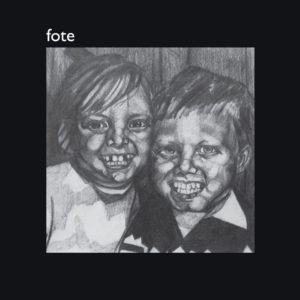
Following the short-lived Truth Club with Trefor Goronwy (who later went on to work with This Heat and The Camberwell Now), Fote was formed in 1981 with the trio of Robert Haigh, Deborah Harding, and Trevor Reidy. Releasing two 12" EP's along with one track featured on a split 7" with Truth Club, Fote's entire studio recordings consisted of just 8 tracks. With angular constructs of post-punk, free-form improvisations, and wicked time signatures, these tracks shredded boundaries one can still hear to this day. These early foundations are also heard in much of Haigh's later Sema compositions as well as Reidy's motorik percussion with Nurse with Wound, Danielle Dax, and The Monochrome Set. Curiously, Harding's vocal tensions and outright unhinged polarities in Fote sound like much of the exorcisms and brilliant psychodramas on many of Chrystal Belle Scrodd's (Diana Rogerson) later solo albums. Cut at 45 rpm for maximum fidelity, including all 8 tracks, and featuring the original sleeve artwork by Deborah Harding. An absolutely essential document from the early 80s independent British post-punk scene
25,00€
In stock

LP
Crys COLE
“Beside Myself”
Beside Myself is the second full-length release from Canadian sound artist Crys Cole. Known to many through her extensive collaborative practice with artists such as Oren Ambarchi, Leif Elggren and James Rushford, in her solo work cole uses contact microphones, voice, simple electronics and field recordings to create sonic environments that linger uneasily at the threshold of perception. Demonstrating how cole's work has developed and deepened since the relative austerity of her first solo LP Sand/Layna (2015, Black Truffle), Beside Myself offers two lushly immersive side-long pieces that explore ideas of compositional drift.
'The Nonsuch' is inspired by the aural hallucinations experienced in the hypnagogic state during the onset of sleep. Opening with scratching contact mic textures and unintelligible vocal murmurs, the piece threads together live and studio performances with field recordings of urban environments to create a texture that is at once seemingly consistent and marked by constant transitions. Individual elements rise up from the background thrum only to disappear just as we become conscious of them; heterogenous sounds and spaces succeed one another with the unassailable logic of dreams.
'In Praise of Blandness (Chapter IX)' also focusses on drift and transition, but in a much more single-minded way. Over a rich, slowly-evolving organ drone, cole reads a passage from the French sinologist François Julien's book In Praise of Blandness exploring the concept of 'blandness' in the Taoist aesthetics of sound. Beginning crisp and clear, cole's voice becomes gradually less distinct over the course of the piece, the spoken words blurred by resonant frequencies à la Lucier's I Am Sitting in a Room until we are left with only the rhythm of incomprehensible speech. The text that cole reads acts a perfect description of her aesthetic project: 'We hear it still, but just barely, and as it diminishes it makes all the more audible that soundless beyond into which it is about to extinguish itself. We are listening then, to its extinction, to its return to that great undifferentiated matrix'.
Francis Plagne (November, 2019)
Original price was: 17,50€.12,00€Current price is: 12,00€.
In stock
LP
Noel MEEK & Bruce RUSSELL
“Say No to hate”
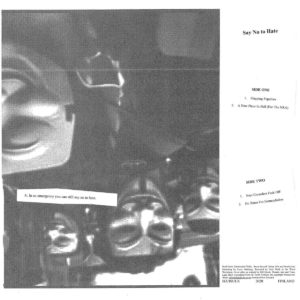
Bruce Russell and Noel Meek return with their second harsh noise collaboration. Their first, 'Classical Music' (2018) was an all-electronics wrestling bout that simulated engine testing on a long-haul passenger jet. Their new album combines guitar, violin and electronics and was recorded in a wood workshop. You can hear the power tools, even though none were actually used. Extreme noise can sometimes be associated with offensive, racist or extreme-right views. The New Zealand duo have chosen to spotlight that problematic tendency by recording their new record in Christchurch, scene of that country's worst right-wing terror atrocity, and calling it 'Say No to Hate'. It is an affirmation of life and collaborative solidarity, one of the signature characteristics of the fully international scene from which it springs.
Mixed and mastered by Lasse Marhaug.
200 copies.
18,00€
In stock
LP
MICRO_PENIS
“La maison de la justice”
Micro_Penis (Alexandre Kittel, Claude Spenlehauer, François Heyer, Sébastien Borgo) started in 2006. It can be described as follows: gross improv, illiterate, savagery amongst civilization, collective strain, drool and spit, mental deficiency, foul breath from brass instruments, exploiting human idiocy, musical pornography, sound rubbish chute that does not have respect for anything nor anyone.
After the publication of 3 LPs by Doubtful Sounds and one CD by Chocolate Monk, they have decided to explore new sound directions. Their fifth album "Maison De La Justice" closes a first cycle.
199 copies, silkscreen cover.
16,50€
In stock

2 LP
ELEH
“Living Space”
Following ‘Slow Fade for Hard Sync’ (2009) and Location Momentum (2010), Living Space is Eleh’s third physical release for Touch. Seven years in the making, this new release consolidates the artist’s parallel narrative between a series of vinyl and CD releases for Important Records – where the emphasis is on a minimalist aesthetic – to a visual counterpoint that hints at the cinematic and painterly qualities of the music.
Sound, as a healing force, is an idea as old as the medium itself. Inspired by the legacy and above all the spirit of John Coltrane, Living Space features 5 new compositions that seek to express the beauty of slow change, not only through the microtonal shifts in sound that Eleh navigates but moving with the atmospheric and shape–shifting conditions that the music creates as it interacts with the listening space, whether bedroom or concert hall, each one of them unique.
If the ambition of Living Space is to reflect both personal and collective growth cycles, the experience of its audition has the effect of stopping time. Melodic and harmonic progressions are implied and not stated obviously, to enable listeners to apply their own emotions and feelings to the music.
Using modular and analogue synthesisers, piano, organ, bass and symphonic chimes, Living Space stresses the promise of the final track – ‘Lighter Touch’ – forsaking the forceful hand for an approach that mirrors the slower and softer exposures of plant life and leaf formations, slow moving waters, not flash floods nor forest fires.
For those for whom Eleh needs no introduction, see if you agree. Anyone who has yet to experience the artist’s sonic alchemy, Living Space is the perfect starting point.
Now available as 2LP with gatefold cover.
Original price was: 23,00€.12,00€Current price is: 12,00€.
In stock

LP
INDEX
“Kainos”
Simon Scott (Slowdive) debuts his Index alias with a visceral new sound that absorbs and transmutes political, ecological and psychic dread into a caustic, dissonant style of noise sculpture for iDEAL
Recorded 2016-2019 in Los Angeles, ‘Kainos’ sees veteran UK composer, field recordist, drummer and mastering engineer Scott explore ongoing concerns of his oeuvre via a prism of formative musical influences from the post-industrial music of Coil, Throbbing Gristle and early Black Sabbath, plus non-musical and conceptual inspiration from the turmoil of Brexit - including recordings of the Houses of Parliament - thru to the radical feminist scientific writing of Donna Haraway, and the conceptual vigour of Luigi Russolo’s Futurist manifesto, ‘The Art of Noises’.
The album’s title ‘Kainos’, from the ancient Greek meaning “new” or “fresh”, characterises Scott’s efforts to glean something practical from this world’s current state of chaos. When taken in context of its use in Donna Haraway’s 2016 book, ‘Staying with the Trouble: Making kin in the Chthulucene’, and its central tenet that “our task is to make trouble, to stir up potent response to devastating events on a damaged earth”, Scott’s enacts a tectonic shift from bucolic sonic signifiers to signposts of the post-industrial world that could hardly be more apt at at a time when electronic and ambient music are prized for their safe and sterile wallpaper qualities, rather than a potential to evoke and invoke more powerful feelings.
Based around modular synth-mangled live stream recordings of the Houses of Parliament during the prelude to Brexit, Scott’s compositions take these fractious debates as building blocks for the album’s caustic improvisations and compositions, ranging from convulsive clangour to pulsating tracts of strobing distortion and gutted, lurching post-dubstep rhythms riddled with the voice of Slowdive’s Rachel Goswell, before eventually resolving with a more spacious, textured sense of relief by the album’s close.
His results are chaotic and noisily abrasive in a way that holds up a mirror to the modern world, reflecting a putative state of unrest and agitation that resonates with the artist’s profound discontent with the lack of “equilibrium we have right now and how disconnected we have all become in relation to nature and each other.” In concept this is nothing new for Scott, as previous release have variously explored ideas of climate change in ‘Below Sea Level’ (2012) and ‘Flood Lines’ (2016’, but the product this time is far more pointed, even aggressive, in its noisy insistence.
Limited edition of 300 copies pressed on bottle green vinyl.
Original price was: 20,00€.12,00€Current price is: 12,00€.
In stock
LP
Peter ZINOVIEFF & Lucy RAILTON
“RFG Inventions for Cello and Computer”
‘RFG Inventions for Cello and Computer’ is a steeply adventurous, highly structured and rewarding electro-acoustic collaboration between pioneering British/Russian inventor and engineer Peter Zinovieff and preeminent cellist Lucy Railton.
The collaboration is notably issued as Peter Zinovieff’s first album and also becomes the follow-up to Lucy Railton’s acclaimed solo debut ‘Paradise 94’ for Modern Love. It finds Zinovieff, co-founder of London’s influential EMS Synthesizer company and owner of the world’s first home computer, using custom computer software to create and orchestrate a “soft” version of Railton’s vast instrumental vocabulary, modelled from a large series of cello improvisations inspired by objects such as an Egyptian figure, pots, and old computer boards, as well as tales of pre-revolution Russia from his grandfather. Railton added solo cello to the manipulated results, before these quasi-improvisations were recombined into the work’s filigree matrix during final co-production with members of ZKM in Karlsruhe, Germany.
Initially conceived as a live project and performed at festivals including Norberg, Atonal, Rewire and FAQ between 2016-2017, the final 35 minute recording thrillingly sustains the duelling, visceral tension and unpredictability of their live shows in its brute scrapes across 17 variated sections. But, with the ability to unstitch/embroider sounds outside the structures of real-time live performance, the resulting structure is confoundingly labyrinthine, assiduously swerving the prosaic and sentimental in pursuit of explorative, emotively in/human expressions of complexity and unpredictability in a namanner that has always been key to the ideals of experimental music.
In effect, the pair speak as one through an electro acoustic prism in a symbiotic, syncretic process of transformation. Railton is here the catalyst for some of Zinovieff’s definitive work in a career spanning 60 years. Her performances provide a radical variable - a sort of spirit in the machine - which is diffused, inverted and scattered by Zinovieff using various software applications, so that Railton plays around herself like a fractal mise en abyme, cutting her warped image to ribbons in a double refraction of the “real”, the instrumental, and its virtual allegory. In this (un)common, metaphoric language and poly-temporal syntax, they incisively speak to ideas of an uncanny valley of perception between the haptic and the intangible, conducting an absorbing dialogue that transcends and bends the story of avant-garde and electronic music in beguiling, free fashion.
20,00€
Out of stock

2 LP
Kali MALONE
“The Sacrificial Code”
Kali Malone presents a quietly subversive new album featuring almost two hours of concentrated, creeping organ pieces governed by a strict acoustic and compositional code. It’s a major new work with ultimately profound emotional resonance.
‘The Sacrificial Code’ takes a more detailed approach to ideas first sketched out on last year’s ‘Organ Dirges’, which featured canon exercises spontaneously captured without much prior technical planning. By contrast, the recording of ‘The Sacrificial Code’ involved the more careful micing up of several organs in such a way as to eliminate acoustic impurities as far as possible – essentially removing the large hall reverb so inextricably linked to the instrument. The pieces were then performed free of gestural adornments and without expressive impulse – an approach that flows against the grain of the prevailing musical hegemony, where sound is so often manipulated, and composition often steeped in self indulgence. The question posed; can this strict methodology still speak to the listener in meaningful terms?
The answer is both obvious and entirely surprising; with its slow, purified and seemingly austere qualities ‘The Sacrificial Code’ guides us through an almost trance-inducing process where we become vulnerable receptors for every slight movement, where every miniature shift in sound becomes magnified through stillness.
As such, it’s a uniquely satisfying exercise in transcendence through self restraint – a stunning realisation of ideas borne out of academic and conceptual rigour which gradually reveals startling personal dimensions. It has a perception-altering quality that encourages self exploration free of signposts and without a preordained endpoint – the antithesis to the language of colourless musical platitudes weíve become so accustomed to.
Limited 2LP repress.
34,50€