
In stock

LP
Jacques BEKAERT
“Jacques Bekaert”
…Gentle threads of instrumental and electronic sounds are mixed with outdoor rural field recordings and occasional voices of his friends speaking, whistling or singing. Bekaert creates a warm environment within which we can hear subtle individual voices of good musicians who are relating to his loosely-notated scores and verbal instructions… (David Behrman)
‘A Late Lunch’ is the soundtrack to Akiko Iimura’s eponymous movie realized in 1978. It is based on acoustic instruments and field recordings, brilliantly reconfigured and mixed by Bekaert to create a surreal, immersive soundscape. The technique used includes superposition and speed change of recordings, radical sound effects and juxtapositions of sounds. The players were prominent musicians of the 1970’s, including Maggi Payne, George Lewis, David Rosenboom and Blue Gene Tyranny.
‘A Summer Day at Stony Point’ was composed in 1969, with participation of David Behrman, Shigeko Kubota and Charlotte Warren. The piece was commissioned by English composer Hugh Davies who presented it at the Harrogate festival the same year. Stony Point is a small village in New York State where John Cage co-owned a small pseudo-commune art resort where like-minded artists gathered. ‘A Summer Day at Stony Point’ is nothing more than a page of a journal, a fragment of a notebook that utilizes a series of sound sources recorded at Stony Point on one beautiful day in the summer of 1968. Other electronic sound sources were recorded at the Brandeis University where Alvin Lucier was professor. The final realization of the piece was done at Henri Pousseur’s APELAC Studio in Brussels, 1969.
The soundtrack for Akiko Iimura’s ‘Mon Petit Album’ was composed on the basis of a simple description of the technique of the film and its time span. It includes David Behrman on alto, from an outdoor recording at Stony Point, plus excerpts from a Transition concert in London, the band Bekaert formed in 1971 with Michel Herr, Takehisa Kosugi and Ryo Koike, both members of the Taj Mahal Travelers. The atmosphere is quiet and pastoral throughout with a very dreamlike flavour.
Jacques Bekaert (1940-2020) was a man of many gifts: author, journalist, composer, photographer, visual artist, wine connoisseur, radio talk show host, diplomat and expert in Southeast Asian affairs. His whole life Bekaert has been actively involved in music but not much of his work got recorded or published. In the early 60’s Bekaert studied with Pousseur and through his frequent visits to the US he became friends with artists like John Cage, David Tudor, Charlotte Moorman and most of all David Behrman with whom he had a close friendship ever since. Bekaert helped organize the first European tour of The Sonic Arts Union (David Behrman, Robert Ashley, Gordon Mumma, Alvin Lucier) and in the early 70’s he formed the group Transition (with Belgian jazz pianist Michel Herr, Takehisa Kosugi and Ryo Koike, both members of the Taj Mahal Travelers). His meeting with Japanese experimental film-maker Akiko Iimura resulted in two film soundtracks featured on this one of a kind discreet avant garde album.
When asked in a 1979 interview about his double life as a musician and a journalist, Bekaert replied, “I suppose they’re both unsafe, unstable, questioning jobs—composing and reporting. Journalism takes me to places, shows me the world as it is. My music is my wish for the kind of world I’d want to live in. The little peaceful state I dream for everyone, where you can be yourself, and happy, and as collective as possible without giving up total privacy.”
Originally released in 1981 on the Belgian Igloo label this reissue comes with the same sleeve as originally designed by Alain Géronnez.
26,00€
In stock

LP
MARSFIELD
“The Innocents”
2019
Andrew Chalk & Brendan Walls
Played and arranged 2007-2019 at Impression Lointaine & Glen Huon.
Marsfield is a collaborative project that involves British musicians Andrew Chalk (Ora, Mirror, Isolde...), Robin Barnes and Vikki Jackman along with Australian Ambient practitioner Brendan Walls. Following Three Sunset Over Marsfield and The Towering Sky - both released on Faraway Press in 2010, The Innocents is the group's third full-lenght release and includes two long mesmerizing compositions.
21,50€
In stock

LP
Andrew CHALK
“Paradise Lost”
Recorded at Impression Lointaine 2016-2019
Vocals by Naoko Suzuki
1. This Pendent World (17:04)
Superb melancholic electronic minimal prog with an Italian 1970’s elegance.
2. Paradise Lost (17:09)
Invisible and intangible, like the wind touches your skin.
21,50€

LP
P16.D4
“Distruct”
Distruct
Directed by P16.D4
Assemblage of transformed, organized and (re)structed sound material submitted by:
Bladder Flask, Déficit Des Années Antérieures, De Fabriek, The Haters, Philip Johnson, Hiroki Kocha, Merzbow, Fredrik Nilsen, Nocturnal Emissions, Nurse With Wound, Onnyk, Harold Schellinx, Die Tödliche Doris, Vortex Campaign.
"On this, their second LP, P16.D4 solicited tapes from several artists from Europe, England, the U.S., Canada, and Japan, and mixed that with their own material. Though in the current digital age collaborations from artists thousands of miles apart is quite normal, this was a quite radical approach back in 1982, when work on this LP began – an interesting concept that actually works quite well, since these artists, which include Bladder Flask, DDAA, the Haters, Merzbow, Nocturnal Emissions, Nurse With Wound, and several others – work in a similar free-ranging experimentalism as P16.D4, and their particular elements, usually just vocals or one instrument or noise implement, blend well without diluting P16.D4’s own peculiar brand of avant-garde post-industrialism, but merely give it another facet. One of the best tracks, “Aufmarsch, Heimlich,” consists of a choir submitted anonymously from Eastern Europe phasing in and out of static while a skronky alto sax bleats away. Most of the pieces exist somewhere just beyond the borders of free jazz, industrial, and even classical avant-garde, full of jarring noises and strange transitions and with a heavy overlay of electronics. What started out as an experiment yielded one of P16.D4’s best albums."
Rolf Semprebon / AMG
"Distruct is organized around sounds provided by the cream of experimental musicians of the early '80s, from Nurse With Wound to Nocturnal Emissions, via De Fabriek, Die Todliche Doris, The Haters, Merzbow, and others. Obviously, there is no question of remixing here, and at no time do P16.D4 seek to hide its sources, clearly identifying the contribution of each artist in the liner notes. It would be futile to try to find the paw of each artist, the trio operating vis-à-vis its collaborators the same methods as in their own work. Reworked, distorted by various effects, cut, edited, aggregated with other sounds, produced by P16.D4 themselves, reprocessed. Exchange, communication, two other data that will constantly recur in the work of P16.D4, rich in external contributions and encounters of all kinds. Musically, and despite the diversity of sources treated, Distruct escapes the heterogeneous character, which often marks this type of collaboration, to offer a coherent whole: fragments of opera, Soviet speeches, out-of-tune guitar, saxophone, tattered violins, overdriven and metallic noisy attacks, jackhammers, field recordings, battered choirs, and many other less identifiable sounds. In addition to the desired dialogue between the artists, Distruct also offers a real reflection on listening, and on the expectations of the listener."
Dissolve
P16.D4 was a German electronic noise music collective, active primarily from 1980 to 1988. P16.D4 embraced tape cut-ups, musique concrète, endless recycling and transformation of previously published material, and many long-distance collaborations with like-minded artists such as DDAA, Vortex Campaign, Nurse With Wound, and Merzbow. Their active participation in the international industrial tape scene yielded collaborative output such as their release Distruct, where bands such as Nurse with Wound, Nocturnal Emissions, Die Tödliche Doris, and The Haters provided the source material. The longest-term collaboration was with the installation and conceptual artist Achim Wollscheid, who used P16.D4 sounds as the basis for LPs he recorded under the name SBOTHI. Ralf Wehowsky, the only constant member of the group, later released solo material under the alias RLW. Members of P16.D4 were also involved with Selektion, a collective of people involved with sound as well as the visual arts. Selektion published LPs, CDs, books, visual art and design. The collective worked in a strongly improvised, spontaneous and anti-professional way, using acoustic and electronic instruments, using existing sound fragments, duplicating and alienating them, using repetition, distortion, changes in speed and playing direction. For this they used not only sounds of other artists but also their own material from earlier productions. Late works of the collective are associated with musique concrete.
P16.D4 was a German electronic noise music collective, active primarily from 1980 to 1988. P16.D4 embraced tape cut-ups, musique concrète, endless recycling and transformation of previously published material, and many long-distance collaborations with like-minded artists such as DDAA, Vortex Campaign, Nurse With Wound, and Merzbow. Their active participation in the international industrial tape scene yielded collaborative output such as their release Distruct, where bands such as Nurse with Wound, Nocturnal Emissions, Die Tödliche Doris, and The Haters provided the source material. The longest-term collaboration was with the installation and conceptual artist Achim Wollscheid, who used P16.D4 sounds as the basis for LPs he recorded under the name SBOTHI. Ralf Wehowsky, the only constant member of the group, later released solo material under the alias RLW. Members of P16.D4 were also involved with Selektion, a collective of people involved with sound as well as the visual arts. Selektion published LPs, CDs, books, visual art and design. The collective worked in a strongly improvised, spontaneous and anti-professional way, using acoustic and electronic instruments, using existing sound fragments, duplicating and alienating them, using repetition, distortion, changes in speed and playing direction. For this they used not only sounds of other artists but also their own material from earlier productions. Late works of the collective are associated with musique concrete.
20,00€

LP
P16.D4
“Kühe in 1/2 trauer”
"Though this German group started out as a the new wave band P.D., by the time of Kuhe in 1/2 Trauer, their first LP under the P16.D4 name from 1984, they had developed far beyond into extremely experimental music similar to other post-industrial artists working with abstract avant-garde soundscapes. There's a bleak industrial feel to the gritty, lo-fi electronics and tape loops, while the group throws in enough curve balls to keep it interesting. On some pieces, strange, looped choirs bubble out of throbbing pulses and drones of feedback, while others have clanging and clattering, and elements of musique concrète and improvisation blur the boundaries even further. The opening track, "Default Value," is one of those disorienting pieces with noises flying everywhere, while "Paris Morgue" takes excerpts from one of their old P.D. tracks and messes it up with additional instruments, while the ungainly titled fourth track throws in a heavy texture of percussive noises to create an edgy ambience about to teeter off the edge, and the even darker and more ambient title track takes the tension even further. Arrhythmic and amorphous and capable at moments of becoming quite noisy and abrasive, while at others far more somber and quiet, Kuhe in 1/2 Trauer is quite a fascinating release."
Rolf Semprebon / AMG
P16.D4 was a German electronic noise music collective, active primarily from 1980 to 1988. P16.D4 embraced tape cut-ups, musique concrète, endless recycling and transformation of previously published material, and many long-distance collaborations with like-minded artists such as DDAA, Vortex Campaign, Nurse With Wound, and Merzbow. Their active participation in the international industrial tape scene yielded collaborative output such as their release Distruct, where bands such as Nurse with Wound, Nocturnal Emissions, Die Tödliche Doris, and The Haters provided the source material. The longest-term collaboration was with the installation and conceptual artist Achim Wollscheid, who used P16.D4 sounds as the basis for LPs he recorded under the name SBOTHI. Ralf Wehowsky, the only constant member of the group, later released solo material under the alias RLW. Members of P16.D4 were also involved with Selektion, a collective of people involved with sound as well as the visual arts. Selektion published LPs, CDs, books, visual art and design. The collective worked in a strongly improvised, spontaneous and anti-professional way, using acoustic and electronic instruments, using existing sound fragments, duplicating and alienating them, using repetition, distortion, changes in speed and playing direction. For this they used not only sounds of other artists but also their own material from earlier productions. Late works of the collective are associated with musique concrete.
P16.D4 was a German electronic noise music collective, active primarily from 1980 to 1988. P16.D4 embraced tape cut-ups, musique concrète, endless recycling and transformation of previously published material, and many long-distance collaborations with like-minded artists such as DDAA, Vortex Campaign, Nurse With Wound, and Merzbow. Their active participation in the international industrial tape scene yielded collaborative output such as their release Distruct, where bands such as Nurse with Wound, Nocturnal Emissions, Die Tödliche Doris, and The Haters provided the source material. The longest-term collaboration was with the installation and conceptual artist Achim Wollscheid, who used P16.D4 sounds as the basis for LPs he recorded under the name SBOTHI. Ralf Wehowsky, the only constant member of the group, later released solo material under the alias RLW. Members of P16.D4 were also involved with Selektion, a collective of people involved with sound as well as the visual arts. Selektion published LPs, CDs, books, visual art and design. The collective worked in a strongly improvised, spontaneous and anti-professional way, using acoustic and electronic instruments, using existing sound fragments, duplicating and alienating them, using repetition, distortion, changes in speed and playing direction. For this they used not only sounds of other artists but also their own material from earlier productions. Late works of the collective are associated with musique concrete.
20,00€

LP
BLADDER FLASK
“One Day I Was So Sad …”
Bladder Flask
"One Day I Was So Sad That The Corners Of My Mouth Met & Everybody Thought I Was Whistling"
Bladder Flask's debut (in fact only) LP, originally issued by Orgel Fesper Music in 1981, is one of the most eclectic albums of the post-Industrial era. It is both challenging and perplexing... So, put down your puny instruments of normality and breathe in the frenzied fungal spores of Bladder Flask!
The fact that Steven Stapleton of Nurse With Wound is a big fan of this album is testament to its greatness:
'I love Bladder Flask's One Day I Was So Sad That The Corners Of My Mouth Met & Everybody Thought I Was Whistling and what a great title, perhaps my favourite ever. I must have listened to the album so much in the '80s. I listened to it again recently and it was like welcoming an old friend.'
Personnel: Richard Rupenus, Philip Rupenus + Sean Breadin, John Mylotte, Nigel Jacklin
Recorded at Wrongrong Studio and Spectro Arts Workshop 1980 – 1981
Audio Restoration & Mastering: Colin Potter @ IC Studio
LP tracklisting :
I: It Takes A Bliss
II: Musical Behind Head
A selection of comments & reviews: Very scrap merchant, very Dada... Comparisons could be made to NWW's Merzbild Schwet: a mixture of Musique Concrete and instrumental collages, but more intense and compact than NWW. An extremely interesting album and very cleverly done, especially the editing of complex tape treatments. Neumusik A puzzlingly great album. Ah, the halcyon days of bungled Kurt Weill renditions, overactive splicing hands and tape-loops lasting only a few seconds before being smudged by hyper fast-forwarding, like a random, operatic battle of thermopylae as re-created by members of NWW. Faced with omnipresent latter-day refined-aesthetic cognescenti, whose duty it is to remind one of the gravity of modern music, I find myself defending such gut-level joyous stupidity and its gung-ho determination to vertiginously swirl about all manner of daft sundries, with no regard for the mess that may be left afterwards. This is why I like this stuff and some of the worries of the world can be, if not alleviated, at least disguised in the scent of Bladder Flask's audio compost pot-pourri. Bananafish A masterpiece of unrestrained Dada music, Musique Concrete and Electro-Acoustic Improv. Primitive electronics meet the sounds, or rather shreds thereof, of various acoustic instruments, field recordings, found objects, mysterious devices as well as body slapping, whistles and smacks. An augury of what the radicals of Electro-Acoustic music do nowadays, but here you also get surreal humour that could safely rank alongside the best, wildest works of NWW. Activists One Day I Was So Sad... comprises two side-long tracks of extended Dadaist reverie, a sublime mix of Musique Concrete and instrumental collages. Bladder Flask and their ilk were spiritual forefathers to today's 'clicks and cuts' generation, creating a slapdash Industrial experimental music which exploited the idiosyncrasies of analogue tape assemblage and editing. I love this album to pieces and it gets my highest recommendation. Other Music This packs a helluva lot into its generous playing-time. The side-long 'It Takes A Bliss' ranges from free sounding structures of various instruments (played with relish) to a sometimes unnerving encounter with distorted piano strings, guitars and less identifyable sounds. The chemistry which prevents this from becoming self-indulgent is what makes Bladder Flask tick. They wind through an unsettling amount of images and the recording, mixing and editing must have taken a very long time. Most of the music is very spontaneous with even 'Goon' type voices appearing before being shredded by the next 'act.' It's like a successive queue of cameos all awaiting and clambering for your attention. Side two, 'Musical Behind Head,' has slightly more direction and cohesion (or perhaps I just began to adjust to the music?) I was rather stupefied by the contents of this strange menagerie of experimental dialogue. A unique album. Outlet Mind-boggling Fluxus, Dada, Improv, Sound Art and cut-up queasy lunacy. When the LP was originally issued in 1981 it left all those who heard it (including an awe struck Steven Stapleton) flat on their backs. Its two sides of collage combines spoken word samples, people shouting and going mad, hammered piano keys, strummed, out of tune guitars, honking saxophones, wheezy melodicas, sci-fi bloops, tape splurge, preset keyboard beats, train whistles, rattled cutlery drawers, clockwork toys, clanging steel pipes, records spinning at the wrong speed. A myriad of juxtaposed sounds and atmospheres of utter strangeness and beguiling entropy. A sound world that up until 1981 I doubt barely existed. An intriguing, delightful and, at times, unsettling experience. Idwal Fisher One Day I Was So Sad... is that ne plus ultra of cut-up sound art. It is an extremely strange - at times, quite hilarious - experiment in fast-moving cut-ups. Its sheer incoherence starts from the get-go and doesn't release its hold on your poor cerebellum until you too are dragged down to a state of lunatic frenzy. It's not a record you would play for fun, but its fractured consciousness, incoherence, and sheer Dadaist lunacy are considerable. God alone knows what sources were used to create it: screaming and coughing, all-manner of acoustic instruments are mauled and mutilated; a trumpet blown by a fat whaler, violins scraped by cretinous monkeys. Aiming for maximum disorientation, it challenges you to keep up with its restless and intense flow of ideas and you're challenged to see past the apparent silliness of it all. Sourced presumably from multiple found sounds, tapes, and records, the piece was assembled in a deliberately fragmented fashion, each sample lasting only a few seconds and bearing no connection whatever to the next. One of the striking aspects of this concoction is the odd and ill-fitting mix of vulgar, crass humour with moments of near-pathological darkness. It's like watching a slapstick movie from the 1930s spliced with a low-budget Italian zombie movie – custard pie fights morphing into monstrous flesh-eating, similar to how Dali and Bunuel claimed that they assembled the first Surrealist movie, Un Chien Andalou. You're pulled in both directions at once until you can hear your own sinews snapping. It's not a record you would play for fun, but its fractured consciousness, incoherence, and sheer Dadaist lunacy are considerable. It's as if Bladder Flask were possessed by some fevered desire to surpass the worst excesses of the lunatic fringe end of the United Dairies catalogue. But this LP had the underlying sinister aim of sending all those who heard it mad, through highlighting the complete absurdity and futility of everything. A gibbering masterpiece. The Sound Projector One Day I Was So Sad... comprises, for the most part, a series of short collages which are seemingly disparate and fragmented: humorous vocal exercises, detuned piano, excerpts from Pop music and Free Jazz, electronics, tape-loops, accelerated scrolling of tapes, excerpts from film dialogues, among a thousand other things that are more difficult to identify. The flirtation with Dadaism, in particular the humour, joyful absurdity and disparate elements, is obvious. Virtuosity doesn't seem to be of any concern to the 'musicians' and it seems rather inconceivable that Bladder Flask are themselves the performers of all that can be heard. Although apparently totally random, the structure, if it can be called that, is more complex than it first appears and this is in fact a very meticulous work which must have been extremely laborious considering all the tape-splicing and editing involved. Industrial Musics One Day I Was So Sad... is one of those records which could be described as abstract but it's much more than that with elements of Musique Concrete, Free Jazz and Free Improvisation although it doesn't sit comfortably in any particular genre. It has a total disregard for the constraints of Western music, be it song structure, tunes, harmony, scales, metrics, notations and other rules which are generally followed by musicians who pretentiously pose as experimental. To accurately describe this album would be very difficult, if not impossible. However, if you're looking for comparisons then I'd have to mention other records of an extreme, free-form nature such as The Faust Tapes or, maybe the most fitting of all, Frank Zappa's 'Nasal Retentive Calliope Music' which is one of the first and best examples of 'maniac' tape-manipulation. One Day I Was So Sad... is one of the most genuinely experimental (in the true sense of the word) records ever conceived and will appeal to those who like to push musical boundaries as far as possible. The fact that Steven Stapleton of NWW, who is considered by many to be a genius of experimentation and a living encyclopaedia of all things avant-garde, is a big fan of this album is proof of its greatness. One Day I Was So Sad... is a masterpiece of experimentation and a totally unclassifiable record. Debaser
A selection of comments & reviews: Very scrap merchant, very Dada... Comparisons could be made to NWW's Merzbild Schwet: a mixture of Musique Concrete and instrumental collages, but more intense and compact than NWW. An extremely interesting album and very cleverly done, especially the editing of complex tape treatments. Neumusik A puzzlingly great album. Ah, the halcyon days of bungled Kurt Weill renditions, overactive splicing hands and tape-loops lasting only a few seconds before being smudged by hyper fast-forwarding, like a random, operatic battle of thermopylae as re-created by members of NWW. Faced with omnipresent latter-day refined-aesthetic cognescenti, whose duty it is to remind one of the gravity of modern music, I find myself defending such gut-level joyous stupidity and its gung-ho determination to vertiginously swirl about all manner of daft sundries, with no regard for the mess that may be left afterwards. This is why I like this stuff and some of the worries of the world can be, if not alleviated, at least disguised in the scent of Bladder Flask's audio compost pot-pourri. Bananafish A masterpiece of unrestrained Dada music, Musique Concrete and Electro-Acoustic Improv. Primitive electronics meet the sounds, or rather shreds thereof, of various acoustic instruments, field recordings, found objects, mysterious devices as well as body slapping, whistles and smacks. An augury of what the radicals of Electro-Acoustic music do nowadays, but here you also get surreal humour that could safely rank alongside the best, wildest works of NWW. Activists One Day I Was So Sad... comprises two side-long tracks of extended Dadaist reverie, a sublime mix of Musique Concrete and instrumental collages. Bladder Flask and their ilk were spiritual forefathers to today's 'clicks and cuts' generation, creating a slapdash Industrial experimental music which exploited the idiosyncrasies of analogue tape assemblage and editing. I love this album to pieces and it gets my highest recommendation. Other Music This packs a helluva lot into its generous playing-time. The side-long 'It Takes A Bliss' ranges from free sounding structures of various instruments (played with relish) to a sometimes unnerving encounter with distorted piano strings, guitars and less identifyable sounds. The chemistry which prevents this from becoming self-indulgent is what makes Bladder Flask tick. They wind through an unsettling amount of images and the recording, mixing and editing must have taken a very long time. Most of the music is very spontaneous with even 'Goon' type voices appearing before being shredded by the next 'act.' It's like a successive queue of cameos all awaiting and clambering for your attention. Side two, 'Musical Behind Head,' has slightly more direction and cohesion (or perhaps I just began to adjust to the music?) I was rather stupefied by the contents of this strange menagerie of experimental dialogue. A unique album. Outlet Mind-boggling Fluxus, Dada, Improv, Sound Art and cut-up queasy lunacy. When the LP was originally issued in 1981 it left all those who heard it (including an awe struck Steven Stapleton) flat on their backs. Its two sides of collage combines spoken word samples, people shouting and going mad, hammered piano keys, strummed, out of tune guitars, honking saxophones, wheezy melodicas, sci-fi bloops, tape splurge, preset keyboard beats, train whistles, rattled cutlery drawers, clockwork toys, clanging steel pipes, records spinning at the wrong speed. A myriad of juxtaposed sounds and atmospheres of utter strangeness and beguiling entropy. A sound world that up until 1981 I doubt barely existed. An intriguing, delightful and, at times, unsettling experience. Idwal Fisher One Day I Was So Sad... is that ne plus ultra of cut-up sound art. It is an extremely strange - at times, quite hilarious - experiment in fast-moving cut-ups. Its sheer incoherence starts from the get-go and doesn't release its hold on your poor cerebellum until you too are dragged down to a state of lunatic frenzy. It's not a record you would play for fun, but its fractured consciousness, incoherence, and sheer Dadaist lunacy are considerable. God alone knows what sources were used to create it: screaming and coughing, all-manner of acoustic instruments are mauled and mutilated; a trumpet blown by a fat whaler, violins scraped by cretinous monkeys. Aiming for maximum disorientation, it challenges you to keep up with its restless and intense flow of ideas and you're challenged to see past the apparent silliness of it all. Sourced presumably from multiple found sounds, tapes, and records, the piece was assembled in a deliberately fragmented fashion, each sample lasting only a few seconds and bearing no connection whatever to the next. One of the striking aspects of this concoction is the odd and ill-fitting mix of vulgar, crass humour with moments of near-pathological darkness. It's like watching a slapstick movie from the 1930s spliced with a low-budget Italian zombie movie – custard pie fights morphing into monstrous flesh-eating, similar to how Dali and Bunuel claimed that they assembled the first Surrealist movie, Un Chien Andalou. You're pulled in both directions at once until you can hear your own sinews snapping. It's not a record you would play for fun, but its fractured consciousness, incoherence, and sheer Dadaist lunacy are considerable. It's as if Bladder Flask were possessed by some fevered desire to surpass the worst excesses of the lunatic fringe end of the United Dairies catalogue. But this LP had the underlying sinister aim of sending all those who heard it mad, through highlighting the complete absurdity and futility of everything. A gibbering masterpiece. The Sound Projector One Day I Was So Sad... comprises, for the most part, a series of short collages which are seemingly disparate and fragmented: humorous vocal exercises, detuned piano, excerpts from Pop music and Free Jazz, electronics, tape-loops, accelerated scrolling of tapes, excerpts from film dialogues, among a thousand other things that are more difficult to identify. The flirtation with Dadaism, in particular the humour, joyful absurdity and disparate elements, is obvious. Virtuosity doesn't seem to be of any concern to the 'musicians' and it seems rather inconceivable that Bladder Flask are themselves the performers of all that can be heard. Although apparently totally random, the structure, if it can be called that, is more complex than it first appears and this is in fact a very meticulous work which must have been extremely laborious considering all the tape-splicing and editing involved. Industrial Musics One Day I Was So Sad... is one of those records which could be described as abstract but it's much more than that with elements of Musique Concrete, Free Jazz and Free Improvisation although it doesn't sit comfortably in any particular genre. It has a total disregard for the constraints of Western music, be it song structure, tunes, harmony, scales, metrics, notations and other rules which are generally followed by musicians who pretentiously pose as experimental. To accurately describe this album would be very difficult, if not impossible. However, if you're looking for comparisons then I'd have to mention other records of an extreme, free-form nature such as The Faust Tapes or, maybe the most fitting of all, Frank Zappa's 'Nasal Retentive Calliope Music' which is one of the first and best examples of 'maniac' tape-manipulation. One Day I Was So Sad... is one of the most genuinely experimental (in the true sense of the word) records ever conceived and will appeal to those who like to push musical boundaries as far as possible. The fact that Steven Stapleton of NWW, who is considered by many to be a genius of experimentation and a living encyclopaedia of all things avant-garde, is a big fan of this album is proof of its greatness. One Day I Was So Sad... is a masterpiece of experimentation and a totally unclassifiable record. Debaser
20,00€
In stock

LP
Daniel TERUGGI
“Sphæra”
« Sphæra » (1984/89), 42’09
Between 1984 and 1989, my acousmatic work was focused on processing and merging the four fundamental substances. Each « element » gradually became articulated with the others, thus crystallizing my subjective perception of their materiality. Over the years, helped by the enthusiasm of a Greek friend who propelled me into the Socratic universe, what started out as an exploratory path has become a circular, spherical unity, in which each occurrence simultaneously belongs to one of the four substances as well as the whole.
These four sections, of uneven durations, embody the different resonances of each « element » upon my imagination. The movements are ordered compositionally and range from the intangibility of the air to the extreme density of the earth.
In Eterea, the dual nature of air, a space for the dissemination of sounds and an environment for mobile masses, shaped the work and the development of its forms. Whether it be the vast expanse of particles as organised movement or the displacement of sources in our three-dimensional perception, ethereal air fills the space and drives the immaterial motions and gestures.
Aquatica locates the materiality of water in relation to its amazing extremes: from the drop to the ocean, an extensive journey unfolds through the various phases of the reinvented liquid. Still waters, deadly waters, raging waters follow one another, leading to the aerial fusion of a primordial equilibrium eventually retrieved.
Then comes Focolaria and the unsteady fires, the elusive and wild will-o’-the-wisps that open and adorn the gates leading to the depths of the earth.
The land of Terra is devoid of atmosphere, a land of matters before the advent of life. The sounds of the original matter merge and evolve into purer forms. The motions trigger progressions towards new equilibriums of forces, the ultimate fusion, the very last attempt, needed for the emergence of life.
The sphere is now complete, the world ready for creation…
Daniel Teruggi
While the theme of the four elements has been a constant source of inspiration in the arts, its setting to music using electroacoustic techniques seems highly auspicious, since the notion of matter and its transformation is consubstantial with the concrete approach. In Sphæra, Daniel Teruggi precisely addresses this question, transcending matter with the help of novel digital audio techniques so as to draw out forms, trajectories, layers, and musical objects, all of which result from the merging or sublimation of primordial sounds. Indeed, this is where Daniel Teruggi’s music and compositional approach stand out: by engaging sounds, with strength, will and inspiration, in a close encounter with energies, whether tectonic or electrical. Such collisions, such metamorphoses, are then appeased in the whole space of the composition, a fascinating landscape, the final destination of all transmutations.
François Bonnet, Paris, 2021
26,00€
In stock

LP
Beatriz FERREYRA
“Senderos de luz y sombras”
Senderos de luz y sombras (Paths of Light and Shadows) – Commissioned by the French State for INA grm – 2016-2020
In memoriam Bernard Baschet, Bernard Parmegiani and Carlos Pellegrino.
A 16-channel piece inspired by astrophysics, the mystery of the pre-Big Bang era and some of the uncanny motions of the unconscious mind, where strangeness meets the ordinary.
The themes that permeate Senderos de luz y sombras simultaneously engage the overwhelming, unyielding immensity of the beginnings of the universe and the forces at work in the unconscious mind. What connects these themes are the dark energies operating outside our knowledge, far beyond the conceptual scope of our limited thinking. How to convey all this and build music from these concealed forces? What Beatriz Ferreyra achieves, thanks to her trademark virtuosity, is precisely to summon energies, to bring in the raw forces that govern the laws of Acoustics, so as to trigger sonic storms as one would call the rain, to transform all sound matters into the core of a ritual. Indeed, Beatriz Ferreyra addresses the mind-body reconciliation, for in providing this unique sound and musical experience, with a rare sensitive intensity, the great composer simultaneously invites us to engage in a personal experience.
François Bonnet, Paris, 2021
26,00€
In stock

LP
Lionel MARCHETTI
“La grande vallée / Micro-climat”
2022 repress
LA GRANDE VALLÉE (1993/95), 20’41
Musical composition, design and sound production carried out at the INA grm Studios (Paris) in 1993/95
Original audio recordings in the Drôme and the Mont Ventoux areas
Voice: Hélène Bettencourt
Vocal occurrences: Frédéric Malenfer, Bruno Roche, Lionel Marchetti
Bass clarinet (for processing): Jean Andréo
Commissioned by INA GRM and produced in its studios
Premiered during the Cycle Acousmatique/Maison de Radio France, INA grm (Paris) — 1996
Thanks: François Donato, Jérôme Nœtinger, William Pellier, Bruno Roche, Daniel Teruggi and Christian Zanési
MICRO-CLIMAT (1989/90), 21’33
Micro-climat is the first movement of the Sirrus cycle (Micro-climat, Passerelle, Sirrus) composed in 1989/90.
Musical composition, sound design and production, audio recordings in 1989/90 at the CFMI studios in Lyon (Lumière University, Lyon 2)
Premiered at Cycle Acousmatique/Maison de Radio France, INA grm (Paris) — 1991
Special thanks to Xavier Garcia
*
"Lionel Marchetti is a major figure of the “third generation” of concrète musicians, a term he values. Listening to these works, imbued with poetry and traversed by micro-narratives, one can indeed retrieve the original concrète spirit, the one that draws from the sonic world, with ears wide open, so as to extract a fertile, rich and multiple substance then shaped and conveyed towards a formal and musical abstraction. Lionel Marchetti has mastered this process, but his real distinctive feature is a truly unique talent for setting climates (as one sets traps) and keeping us on constant alert. The two pieces in this record perfectly illustrate the entrancing dimension of Lionel Marchetti's music, whose charm leads us, through each successive listening, to become voluntary captives so as to better liberate ourselves."
François Bonnet, Paris, 2020
20,00€
In stock

LP
Bernard FORT
“Fractals / Brain Fever”
2022 repress
FRACTALS (1981), 21’26
Composed at the GMVL from December 1979 to September 1981, this work was commissioned by Fnac.
Fractals are mathematical oddities that, when crossing our path, turn the smallest island into an immensity to be explored.
FRACTALS is a series of short studies, all based on the same sound source. Seeking in the sound and its very logic a proposal upon which a construction is elaborated, each Fractal remains open and is a mere fragment of itself.
FRACTALS, music pieces sculpted in four dimensions, are vast microcosms that can only be inhabited by the mind. Each Fractal can be approached from several angles, far, near, etc. Some can be listened to at different speeds, forwards or backwards.
FRACTALS: amorphous and endless music pieces whose centre is everywhere and circumference nowhere.
Brain Fever (2017), 18'00
Wherever you may be in the forest of South India, the Brain Fever bird, together with the Seven Sisters, literally gets into your head. Whether it be early morning, daytime, or nighttime, amidst the stridulations of insects, its song utterly reflects Indian life: sonorous, noisy, insistent, dense, overcrowded, mobile, swarming, frantic, overheated, deprived of rest and sleep.
Brain Fever echoes sonic images caught in the Aurovillian forest, near Pondicherry, and rich fragments of improvisations made in Lyon on analog sound synthesis or feedback devices, the kind I used to do in the first GMVL studios.
Brain Fever is dedicated to Sofia Jannok, a musician and sàmi singer.
26,00€
Out of stock

2 LP
Bernard PARMEGIANI
“De Natura Sonorum”
2022 repress
"De Natura Sonorum, Première série, 1975 (28'03)
- incidences / résonances
- accidents / harmoniques
- géologie sonore
- dynamique de la résonance
- étude élastique
- conjugaison du timbre
De Natura Sonorum, Deuxième série, 1975 (28'40)
- incidences / battements
- natures éphémères
- matières induites
- ondes croisées
- pleins et déliés
- points contre champs
Premiered at the Salle Wagram in Paris on 3rd June 1975.
A suite of twelve movements, divided into two series of six."
25,00€
In stock

LP
Luc FERRARI
“Music Promenade / Unheimlich Schön”
2022 repress
Music Promenade (1964–1969), 20’29"
Electroacoustic Music
World premiere for the Théâtre de la musique, March 16, 1970
Permanent version for four stand-alone tape recorders. A series of colliding realistic sounds and sonic images. Whilst walking, a man is struck by the violence of his surroundings.
Nature has disappeared in a whirlwind of warfare and industry in the midst of which he encounters a dying folklore and a lost young girl.
The "Installation" version is used to sonify a place in which walkers are free to choose their musical itinerary.
Unheimlich Schön (1971), 15’40"
Musique concrète made in 1971 in the studios of the Südwestfunk in Baden-Baden.
Voice: Ilse Mengel.
“How does a young woman breathe when thinking about something else ?”
To be listened to at a low volume.
26,00€
Out of stock

LP
Eliane RADIGUE
“In Memoriam-Ostinato / Danse des Dakinis
Alga Marghen presents the last chapter from the Feedback Works documentation series, a brand-new LP including "In Memoriam-Ostinato" and "Danse des Dakinis", two previous unreleased tracks by Eliane Radigue. Among the works of fixed duration from the feedback period, "In Memoriam-Ostinato" is the link between "Jouet Electronique" and "Opus 17", and allows you to understand the evolution of her approach. "In Memoriam-Ostinato" is a game of mirroring symbols which glide into a non-measured, bent and elastic, temporality. Eliane Radigue's working method and her aesthetic direction are evident in this work from 1969: her very own unique temporal space of sonic experiences. Even though it bears the same name as the third part of "Adnos III", "Danse des Dakinis" is a peculiar work in Eliane's oeuvre. Conceived in a short time, with all kind of tapes from the composer's past work, it fluently shows a kaleidoscopic vision of Radigue's sensibility for sound. In 1998 she put together a curious self-portrait in sound. There is a feedback ostinato conceived around 1969 and which refers to "In Memoriam-Ostinato" and "Opus 17". All through "Danse des Dakinis" you plunge into the sound of a creek recorded at Mills College campus that brings you back to the field-recordings from the beginning of the 1960s, made on the coasts of the Mediterranean Sea. Such elements construct "Elemental1" as well. There are also some discreet interventions on the ARP 2500 synthesizer. It is indeed a peculiar work, which doesn't have the same features of her other compositions, especially at that time of her compositional path. There is an explanation for the composer producing this kind of sound material in 1998, and not limited to the sound waves of the ARP synthesizer. Invited to a workshop at Mills College in 1998, Eliane Radigue could not load herself down with her bulky instrument on such a trip. So, she left with just a few tapes taken from her own collection, drawn from different periods, and composed "Danse des Dakinis" with those old elements. There is tension in this composition, a certain wildness, an unpredictability of elements, those which are recognized as fundamental elements, which give structure to the universe. "Dance des Dakinis" is an intimate and wild symphony, alive and unpredictable, which is to be the next-to-last gesture of the composer before completely stopping her work with electronics.
23,50€
Out of stock

LP
Éliane RADIGUE
“Jouet électronique / Elemental I”
New 2022 edition.
alga marghen proudly presents the new edition of two sublime pieces by Eliane Radigue, “Jouet Electronique” (1967) for feedback on magnetic tape and “Elemental I” (1968) for feedback of natural sounds on magnetic tape. This LP was first issued in 2010 on the occasion of an alga marghen presentation at Centre Pompidou in Paris and included in the series of publications connected to the Oeuvres Sonores events. We thought, after a long time this wonderful record was sold out, it's time now to have it available again, presenting it for the first time with it's own specific artwork and layout.
Both works were recorded at Pierre Henry's Studio Apsome in Paris. Between 1967 and 1968, Eliane Radigue was the assistant of Pierre Henry in his studio, mainly for the editing of "L'Apocalypse de Jean". He also put her in charge of organizing his sound archive according to different criteria. It was endless work - there were incredible sounds, a true sound library! Eliane Radigue really enjoyed doing this work, even if it took a long time. So, sometimes she decided to set the machines of the studio to do some little work on her own. "Jouet Electronique" and "Elemental I" were born this way as a kind of recreation during her time as a studio assistant.
Working with feedback is something that Eliane Radigue learned through Pierre Henry. Do you remember "Voyage"? There's that fluid part which is made of feedback constructed with a microphone. Everything had to be set at a precise distance from the loudspeakers because that is the specific problem with feedback - you have to be at the right distance. Afterwards, these high tone recordings were slowed down in order to discover the deeper character of their color. This work with feedback was in the end quite limited and the composer preferred working with two reel tape machines to produce sounds. The first was set on the recording mode while the other was playing and it was the accidents happening in this phase that made the feedback richer. With some fine-tuning you could reach very beautiful results: low pulsations, very high-pitched sounds - sometimes both at the same time - or long sounds. All of these sounds could be slowed down or accelerated, which gave her a beautiful material to work with.
With "Jouet Electronique" Eliane Radigue had a lot of fun, hence the title. As far as "Elemental I" is concerned, it was the first attempt at something which was very important to her based on the theme of the basic elements: water, fire, air and earth. Eliane had the chance to record in open air thanks to a small Stella Vox that Arman gave her in the beginning of the 1960s. At the time she was still living in Nice and every now and then she went for a walk to do some recordings of the sea, the wind, the rain, the fire - Eliane Radigue continued this way to build her very minimal sound library, consisting of not more than ten reel tapes. This was the starting point and in 1968 she used these recordings for her work with two reel tape machines.
New edition of 200 copies, with liner notes by Eliane Radigue and portrait photos by Arman.
20,00€
Out of stock

LP
Eliane RADIGUE
“Feedback works 1969-1970”
New 2022 edition.
alga marghen very proudly presents a remastered version of the complete documentation of Eliane Radigue sound installations from 1969-1970, including the broad tectonic vibrations of “Omnht“, the celestial voices of “Usral”, “Stress Osaka” massive chant… or the works of the feedback period finally revealed! It is amazing that she could build such formidably organic sonic edifices in her home studio with the primitive machines given to her by Pierre Henry: three tape recorders, a mixing board, an amplifier, two loudspeakers and a microphone. Eliane previously worked for him at the Studio d’Essai of the R.T.F. from 1955 to 1957, after having met Pierre Schaeffer almost by chance who invited her to learn the techniques of Musique Concrète. Created 10 years after her Studio d’Essai experience, the Feedback works of Eliane Radigue immediately take a new direction from the explorations of Musique Concrète. Her adventure is intuitively going towards flux, towards contemplative stasis - a music of continuous sounds, of apparently simple structures, which permits the revelations and expansion of rich acoustic phenomena. It is as if her musical work was in some way a martial art… as if she meditated for 10 years before striking the first blow, with an impressive precision! This is the context in which Eliane composed “Omnht” in 1970 for the architectonic spaces of the visual artist Tania Mouraud titled “One More Night”, presented at the Gallery of the Rive Gauche in Paris; “Usral” (the title comes from a phonetic compression of ultrasounds slowed-down, in French “ultra-sons ralentis”), one of the first works by Eliane Radigue to be given in public as sound environment for a sculpture by Marc Halpern in the Salon des Artistes Décorateurs at the Grand Palais of Paris in 1969; “Stress-Osaka”, conceived when the artist was invited to create a sonic environment for the International Fair in Osaka in 1970. There is no doubt that Eliane Radigue vocabulary is based on observing and entering into dialog with the fundamental behaviour of sounds: pulsing, beating, sustained, very light, a subtle and delicate evolution. When she moved from feedback sounds to the ARP synthesizer she naturally continued the same music. A continuity where the original use of feedback sounds stands out for its cruder and more savage inner character. One could say that somehow it’s the very texture of the sounds, which leads the form of her compositions. At the same time this approach favors an intense sensuality in the listening.
23,50€
Out of stock

LP
Eliane RADIGUE
“Vice-Versa, Etc…”
New 2022 edition.
alga marghen very proudly presents a remastered version of “Vice-Versa, Etc…” LP originally included in the first 400 copies of the now sold out Eliane Radigue “Feedback Works” 2LP. “Vice-Versa, Etc...” was originally a small handmade box, signed and numbered, realized as art multiple on the occasion of a show at Lara Vincy’s gallery in 1970. The box contained a reel of magnetic tape and the instructions for use. It indicates that all playback speeds are possible, forward or backward, as well as any combination of two channels, on several recorders, ad libitum… This LP presents two versions done by Emmanuel Hoelterbach following the indications of Eliane Radigue to the letter, respecting her composition methods. There is no doubt that Eliane Radigue vocabulary is based on observing and entering into dialog with the fundamental behaviour of sounds: pulsing, beating, sustained, very light, a subtle and delicate evolution. When she moved from feedback sounds to the ARP synthesizer she naturally continued the same music. A continuity where the original use of feedback sounds stands out for its cruder and more savage inner character. One could say that somehow it’s the very texture of the sounds, which leads the form of her compositions. At the same time this approach favors an intense sensuality in the listening. This edition limited to 300 copies includes an insert with liner notes.
20,00€
Out of stock

2 LP
Eliane RADIGUE
“Opus 17”
Repress. Remastered, improved sound quality.
alga marghen very proudly presents “Opus 17”, a major turning-point in the sonic oeuvre of Eliane Radigue. Finished in 1970 it was the last work composed with feedback materials. From that experimental period “Opus 17” preserves the plastic character: a music made of rough sonic phenomena, at once harsh and granular, possessing a quality of materiality and tactility. Its vibrations structure the air surrounding the listener with densities, thicknesses, indeed with palpable movement. Her compositions are frames which let us hear these phenomena, open frameworks from the sonic installations of her Endless Musics (cf. “Feedback Works 1969-70” LP issued on alga marghen) and here reinserted in the five scenes making up “Opus 17”.
In 1970, in her studio of very rudimentary means, she developed a completely unique body of work centered on sounds produced by feedback. “Opus 17” has the quality of showing off the sum of the achieved techniques and methods. Eliane Radigue’s music has never been rooted in ideas but in practice, the intimate experience of things in the wild which she has known how to tame. This dialog both intense and poetic which she keeps up with the solid matter of sound finds a remarkable concretization in “Opus 17”.
It is to be underlined that with “Opus 17” Eliane Radigue inaugurates a technique of composition which will be her footprint, her trademark: imperceptible transformations. For that she has developed a technique of meticulous mixings, based on the slow passage from one section to the next. Imperceptible, all during the piece, we pass, ceaselessly and without noticing the changes, from one frequency flux to another. Time is suspended, smoothed out, stretched. It is this technique which Eliane Radigue will be essentially using for all the electronic works to come and which she will never cease to refine and render always more subtile.
“Opus 17” is the great panoramic voyage through material sound, its electronic phenomena detailed as if in a microscope. Could feedback really contain such a universe? “Yes”, the work of Eliane Radigue answers, but that exploration was not that easy: one had to learn to listen. It required Eliane Radigue’s great demands on listening which led her to the discovery of such treasures. Unknown wealth in a material often rejected as trivial.
As Rhys Chatham recalls: “Eliane Radigue (...) had just moved to New York and had the idea of acquiring an analog modular synthesizer, which is why she worked at NYU in order to try out the possibilities of the Buchla 100 series which we had there. One day, while gossiping, she invited me to her loft, which was just on the corner. She had me listen to a piece composed in France; the piece called ‘Opus 17’. (...) What I heard changed to course of my life as a composer. (...) That piece, impressive source of inspiration, gave the impression of being in a grand cathedral, both for the sensation of immensity of being in such a large cathedral, as for the effect of being so close to God”. This anecdote has its importance because it is evident when listening to the feedback works that Eliane Radigue had already put in place the essential part of her musical æsthetic.
“Opus 17” was created at the artistic center of Verderonne on May 23, 1970, for the Fête en blanc (i.e. White Festival) organized by the visual artists Antoni Miralda, Joan Rabascall, Dorothée Selz and Jaume Xifra.
Previously unreleased, “Opus 17” is now issued on alga marghen in a first edition of 400 copies in gatefold sleeve.
34,00€
In stock

LP
Phill NIBLOCK – Kasper T. TOEPLITZ – Franck VIGROUX
“BestiaIRE”
2020.
A piece composed by Phill Niblock, performed live by Ensemble IRE trio: Kasper T. Toeplitz (ebass), Franck Vigroux (eguitar), Hélène Breschand (e harp) on side A / a piece composed and performed by Kasper T.Toeplitz (ebass) and Franck Vigroux (guitar, electronics) on side B.
18,00€
In stock

LP
Charlemagne PALESTINE – Oren AMBARCHI – Eric THIELEMANS
“KAANAL”
An original meeting, powerful and explosive, between Charlemagne Palestine, Eric Thielemans and Oren Ambarchi.
It was in Brussels, in October 2013, that Charlemagne Palestine and Eric Thielemans first met, during a residency organized by Ateliers Claus which also involved the Finnish electronic musician Mika Vainio (1963-2017), from the legendary duo Pan Sonic. The music composed over these four days, subsequently released on Charlemagne Palestine's Godbear label is at the root of this new performance, Palestine and Thielemans today being accompanied by guitarist Oren Ambarchi.
Charlemagne Palestine: piano, keyboard, voice.
Oren Ambarchi: guitar.
Eric Thielemans: drums, percussion.
Recorded live September 24, 2020 at KANAL-Centre Pompidou, Brussels.
26,00€
Out of stock

2 LP
Henning CHRISTIANSEN
“OP.163 Penthesilea”
A previously unreleased project of Henning Christiansen, monumental in scope, traversing years, countries and now, formats. The Henning Christiansen Archive is proud to finally present one of the crown jewels of the archive, the masterpiece ‘Penthesilea’ as a 2LP and 5CD set.
Pentheseila is one of the most ambitious works in the entire Henning Christiansen oeuvre. A large-scale work from the mid eighties based on the play of the same name by Heinrich von Kleist (1808). Both Henning and his widow, Ursula Reuter Christiansen, were enthusiastic about Kleist’s text, both making works around the themes within this portent text.
Henning Christiansen first developed a work around this text for the Rosenfest festival performed in Berlin in 1984. Rosenfest was curated by René Block and featured a variety of composers presenting works in response to Kleist’s work including Robert Ashley, “Blue” Gene Tyranny etc. Henning formulated a composition utilising tape, field recordings, voice, soprano, and violoncello alongside the home made instruments of Werner Durand.
The live presentation was then expanded upon and first performed two years later at Teatro Olímpico, Rome on the 8th November 1986 as directed by Carlo Quartucci. The two releases presented here include a 2 x vinyl LP of the Rosenfest recordings in 1984 and a 5CD set sharing the four and a half hour backing track prepared for the Teatro Olímpico performance in Rome in 1986. Together these two releases make up a substantial overview of one of the most significant works in the entire Christiansen canon.
45,00€
In stock

2 LP
Kiyoshi MIZUTANI
“Inferior’s Betrayal”
Reissue of the self-produced K7 in 1994 on Kiyoshi Mizutani's Ulcer House label.
Mizutani was a member of Merzbow in the '80s and has done solo work since 1989. He has recordings on Ulcer House, ZSF Produkt, Shirocoal Recordings, NEdS, Sounds For Consciousness Rape, Pure, Artware, Kaon, e(r)ostrate, Povertech Industries, and Flenix Records.
27,00€
In stock

LP
SMALL CRUEL PARTY
“È Vago Fior Del Tempo”
"This record presents some work from the late 1980s, originally self-released for friends on various cassette editions of about 5 to 7 copies. These pieces, along with others from the same period, were then later released on limited cassette editions by Petri Supply. This vinyl edition presents them with the intended playing order on side one, in a silkscreened sleeve printed by Charlotte at zyx-éditions, at Bretoncelles in Basse Normandie." (William Ransone)
20,50€
Out of stock
LP
Valentina MAGALETTI & Yves CHAUDOUËT
“Batterie fragile”
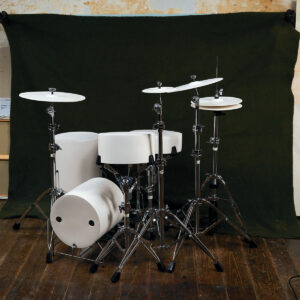
London based Valentina Magaletti, is a composer, producer and percussionist experimenting with new materials and sounds. She is one of the most prominent musicians of the wide experimental world. The prolific drummer collaborates with many musicians and releases albums in all musical directions (from noise to jazz by way of dub...). She was part of the acclaimed duo Tomaga. Lately Valentina Magaletti collaborates with Joao Pais Filipe, Lafawndah, Marlene Ribeiro among many others and she is part of bands like Vanishing Twin, Better Corners, Holy Tongue ... She released 3 solo albums, La Tempesta Colorata (A Colourful Storm, 2022), A Queer Anthology Of Drums (Takuroku/Cafe Oto, 2020) and Valentina Plays The Batterie Fragile (Un je-ne-sais-quoi, 2017).
The Batterie fragile is a sculpture conceived by artist Yves Chaudouët. A drum-kit made out of porcelain.
Yves Chaudouët is a French visual artist. His first interest was painting. From the 1990s, he began to experiment with other art forms such as filmmaking, installation, theater and novels.
To create this new album, Magaletti says, "I applied wood and metal and rubber to the porcelain. My starting point is always textural, and I'm very interested and enchanted by friction."
This second installment of recording on that amazing drum kit is an important work in the career of one of the best drummers and composers of her time, which Un je-ne-sais-quoi is proud to share with you.
18,50€
In stock
2 LP
Keiji HAINO – Jim O’ROURKE – Oren AMBARCHI
“Caught in the dilemma of being made to choose”
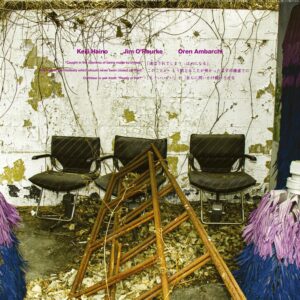
The renowned trio of Keiji Haino, Jim O’Rourke and Oren Ambarchi return to Black Truffle with their 11th release, “Caught in the dilemma of being made to choose” This makes the modesty which should never been closed off itself Continue to ask itself: “Ready or not?” Demonstrating once again their commitment to continual experimentation in instrumentation and approach, the record begins with a long-distance collaboration made in response to a commission from New York’s Issue Project Room in 2021 during widespread lockdowns and travel limitations. A unique piece in the trio’s extensive body of work, this side-long epic finds Haino performing on metal percussion, O’Rourke on electronics and Ambarchi on gongs and bells. Initially dominated by rapid patterns on resonant, high-pitched tuned percussion, the piece sets Haino’s dynamic and dramatic performance against a calm backdrop of cycling electronics, thrumming gong strikes and hanging bell tones. The performance develops a heightened, intensely concentrated atmosphere reminiscent of Haino’s classic Tenshi No Ginjinka or his Nijiumu project; when Haino moves to clashing hand cymbals in its second half, the piece’s ritualistic energy suggests aspects of the music of Tibetan Buddhism.
The remainder of the double LP documents the trio live at Tokyo’s SuperDeluxe (the location of all but their very first recording) in a wide-ranging set recorded in December 2017. The concert opens, in another first for the trio, with Haino on drums, O’Rourke on Hammond organ and Ambarchi on his signature Leslie cabinet guitar tones. Haino’s explosively untutored approach to the drumkit will be familiar to some listeners from the radical duo iteration of Fushitsusha heard on Origin’s Hesitation. Setting flurries of rapid activity against moments of silence, his drumming here at times suggests Milford Graves in its tumbling toms and thudding kick-drum propulsion. Accompanied by O’Rourke’s organ and Ambarchi’s guitar, which in their shared use of long tones and shifting modulation speeds almost blend into a single voice, the opening sections of this performance are some of the most magical music the trio has committed to tape thus far.
After an interlude of spoken vocals in both Japanese and English, Haino makes a dramatic entrance on guitar. Against O’Rourke and Ambarchi’s increasingly intense electronic backdrop, Haino unleashes a stunning passage of slowly moving chromatic melodies and sudden shrieking explosions bathed in distortion and reverb. By the time we reach the third side, the guitar/bass/drums power trio is established and lurches into a passage of massive, lumbering rock that threatens to fall apart at every beat, O’Rourke’s strummed chordal work on six string bass creating a harmonic density equivalent to a second guitar. An abrupt edit throws the listener in media res into a frantic locked groove grounded by fuzzed out bass patterns and caveman drums. As Haino moves through a variety of approaches, from massive edifices of stuttering fuzz to ominous swarms of feedback, the trio eventually stumble into a kind of Harmolodic military tattoo, Haino’s guitar weaving and slashing across the rhythm section’s irregular accents. Moving through an epic opening duet for O’Rourke on Hammond and Haino’s wailing guitar, the fourth side eventually ramps up into a frenetic finale of mad bass riffing, crackling snare hits and guitar squall.“Caught in the dilemma of being made to choose” This makes the modesty which should never been closed off itself Continue to ask itself: “Ready or not?” is a testament to the continuing power and invention of this trio, who continue to seek out new terrain after over a decade working together. 2LP set presented in a lavish gatefold sleeve on heavy stock along with inner sleeves containing live pics by Tsuyoshi Kamaike. Photography by Jim O’Rourke, design by Lasse Marhaug and translation by Alan Cummings.
32,00€
Out of stock
2 LP
Uri KATZENSTEIN
“Audio Works”
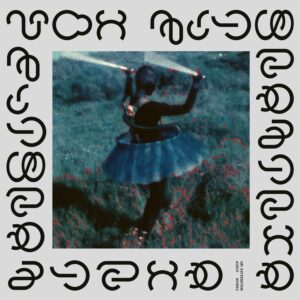
Black Truffle is pleased to announce Uri Katzenstein’s Audio Works, produced in collaboration with Holon’s Centre for Digital Art. Spanning sculptural installation, performance, video art, and many other media, Katzenstein’s absurdist, poetic, and often hilarious work made extensive use of sound and music. This, however, is the first release dedicated to the artist’s audio work, collecting 28 tracks produced between the early 1980s and 2017. Compiled from dozens of hours of recordings left uncatalogued (and in some instances unheard) at the artist’s death in 2018, these four sides are a treasure trove, offering a captivating glimpse into a uniquely uninhibited creative practice. Predominantly recorded alone, with some contributions from regular collaborators such as Ohad Fishof on the later pieces, many of these tracks stem from Katzenstein’s time living in New York in the 1980s. Feeding on the cross-pollination of post-punk energy, radical art practice, and new media possibilities that characterised the New York scene at this time, many of Katzenstein’s recordings squeeze multilayered vocal experimentation into synth-based miniatures with a distinctively pop twist, their forms ruptured with anarchic bursts of free-form electronics, sounds from self-built instruments, and field-recorded snatches of the outside world. Katzenstein’s electronic production calls up touchstones of skewed 80s art pop like Laurie Anderson, Ambitious Lovers, and Scritti Politti, but imbued with DIY directness and economy of means. The arrangements of synths, percussion, and noise elements are invigoratingly raw and, at times, almost austerely minimal. On ‘Intermission’, thick distorted chords accompany a wandering portamento melody, inhabiting the wayward carnival space of Roedelius’ most unhinged efforts. Many of the tracks centre on Katzenstein’s multi-tracked vocal performances, often moving between multiple languages, (most commonly English, German, French, and Hebrew). A bewildering range of vocal approaches are present on these pieces, from sweet wordless harmonies to hammed-up growls and monastic recitations. On ‘Skin O. Daayba – Complex Habits no. 3’, improvised resonance singing against a backdrop of echoing electronics and radio snatches. ‘Half Monk Half Herring’ layers multi-lingual syllabic fragments, crossing sound poetry techniques with melodic invention in a way rarely heard outside of Caetano Veloso’s Araçá Azul. On ‘Attempt to Raise Hell’, Katzenstein’s distorted voice spits out streams of alliterative nonsense (‘the hemlock of Henry, he was a hermit…purple pumpkin pulsates to pops’), while on the hilarious ‘Eric’, Katzenstein appears to instruct a small boy simultaneously in basic French and German conversation. On ‘Chicken’, vocal harmonies accompany the pecking and clucking of the titular fowl. Moving from bent, outsider synth pop to snatches of Jo Jones-esque automated instrumental clang and absurdist linguistic experiments, these are far more than footnotes to an artist’s gallery works. Accompanied by extensive, beautifully written liner notes by Roee Rosen and the little information that exists on the individual tracks, Katzenstein’s Audio Works inhabits an outer fringe of DIY pop and sonic experiment reminiscent of Pascal Comelade or Die Welttraumforscher, where accessible forms convey radical interrogations of song, word, and sound.
Deluxe 2LP set presented in a gatefold sleeve with extensive liner notes and an insert with track info.
29,00€
In stock
LP
Crys COLE
“Other Meetings”
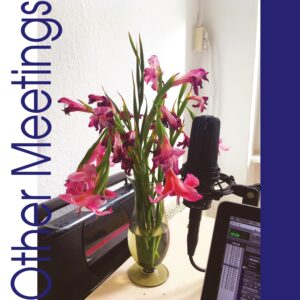
Following on from last year’s acclaimed Sylva Sylvarum, the epic double LP from Ora Clementi (her collaborative project with James Rushford), crys cole returns to Black Truffle with Other Meetings. Originally commissioned and released on cassette by Boomkat Editions in 2021, Other Meetings is a major addition to the body of carefully hewn solo work cole has released over the last decade, offering up two side-long suites of her radically intimate approach to sound. After many years dominated by touring and travel, cole found herself in lockdown in her Berlin apartment, working in a limited space with minimal equipment. Digging through archives of recordings taken overseas and exploring the sonic potential hidden in the objects surrounding her (including a coffee pot and a vase of dying flowers), she crafted what in her liner notes she calls ‘an internal dérive, a journey that drifted through many places without a defining compass’. Totalling over 50 minutes, the two pieces unfold at an unhurried pace, each containing four individually titled subsections. Beginning with a sequence of the highly amplified small sounds characteristic of much of cole’s work, the opening moments of ‘The time between two durations of sleep’ are underpinned by a gentle rocking motion, weaving together contact mic crunch, metallic resonance, glimpses of bird song, and isolated drum machine hits, the sonic space expanding and contracting as focus moves between elements. Briefly side-lined by a tactile but unplaceable sizzling, this complex weave of voices then returns in a kind of dubbed-out ‘version’, the percussive accents echoing around the stereo space. In one of the record’s most beautiful and unexpected moments, these sounds are joined by a sparse melodic line performed on a broken 1980s digital synth, the vaguely New Age timbres being taken on a long, tonally ambiguous wander. Cole’s immersion in memories of travel comes to the fore in the final section of the first side, titled ‘Wat Paknam’ after a royal temple in Bangkok, where snatches of voices, ringing bells and distant waves of chanting blur together with synth tones into an increasingly abstracted wave of sound. The second side, ‘Slices of cake’, opens in a similarly hallucinatory outdoor space of echoing bird song and liquified traffic before abruptly zooming in on a microscopic world of subtly processed and highly amplified objects, explored with a starkness and quiet insistence that calls to mind the fringe not-quite-concrète of outsiders like Paul A.R. Timmermans or Knud Viktor, whose obsessive interrogation of dripping water might also serve as a point of reference for the following sub-section, the aptly titled ‘magischer Abfluss’ (magic drain).
While Other Meetings develops many aspects of cole’s previous work – the hyper-magnification of small gestures, the unsettling edits and fades partly inspired by hypnagogic states, the location recordings smeared into oneiric haze – it is almost as if these pieces are somehow songs, the remnants of an evaporated music of which nothing remains except isolated hits from a synthetic drum, a handful of notes, or simply a duration of emptied atmosphere. Radically reductive yet deeply musical, Other Meetings is a major work from an artist driven by an uncompromising and idiosyncratic vision.
Presented with an inner sleeve with photos and liner notes from the composer and remastered audio.
24,50€
Out of stock

2 LP
Amelia CUNI
“Mumbai 04.02.1996”
Following on from the stunning recording of her 1992 performance at the Berlin Parampara Festival (BT079), Black Truffle is pleased to continue its documentation of the work of Berlin-based Italian singer Amelia Cuni, one of the great contemporary exponents of dhrupad, the oldest surviving style of North Indian classical vocal music. Beautifully recorded in concert at Vishweshwarayya Hall, Mumbai. 04.02.1996 presents expansive performances of three ragas stretching across four sides and almost one and a half hours of music. Beginning with the serene Raga Lalit, Cuni dwells for over twenty-five minutes on its opening alap movement, accompanied only by tanpura, her limpid yet full-bodied voice moving from graceful exposition in free tempo to increasingly rhythmically active variations, gradually spiralling upward in register. She is then joined by master pakwahaj player Manik Munde for the raga’s dhrupad and dhamar sections, the resonant tone of the drum and his constant invention with the complex 14-beat cycle serving as the perfect accompaniment for Cuni’s ecstatic melodic developments. On the more solemn Raga Bhairav, Cuni’s alap, again stretching out over a whole side, is particularly notable for its powerful held notes and mastery of microtonal movement of pitch. After Munde returns for another rhythmically intricate dhamar movement, the record ends with the buoyancy of the Raga Alhaiya Bilaval, whose mode has, for the Western listener, an unmistakably ‘major’ quality. The rapturous applause that greets the performance is reflected in a remarkable selection of press clippings contemporary with the recording, which demonstrate Cuni’s success with Indian critics. Arriving in a gorgeous gatefold featuring stunning colour photographs of Cuni taken by legendary Australian fashion photographer Robyn Beeche (who resided in India from the early 90s), Mumbai. 04.02.1996 is a document of indescribable beauty and a moving testament to music’s ability to cross national and cultural borders.
32,00€
In stock
LP
Steve REICH – Ensemble AVANTGARDE
“Phase Patterns / Pendulum Music / Piano Phase / Four Organs”
2022 repress
Three early compositions (1968-1970) by Steve Reich, one of the most prolific exponents of minimal music, in stunning interpretations by the critically acclaimed Ensemble Avantgarde. Available on vinyl (180gr, gatefold sleeve incl. download code) for the first time ever!
Steve Reich (born 1936) is undoubtedly one of the key figures in 20th century contemporary music and along with Terry Riley or Philip Glass one of the founding fathers of so-called minimal music. With classics like “Music For 18 Musicians”, “Drumming” or “Different Trains” the American composer proved himself one of "a handful of living composers who can legitimately claim to have altered the direction of musical history" (The Guardian). The four pieces on this collection date back to the time before his famous master pieces (1967-1970): “Four Organs” and “Phase Patterns” build on short, repeated patterns that gradually go in and out of phase with each other, creating “a shimmering matrix of sound that is both hypnotic and fascinating in detail” (Allmusic.com) and anticipate Reich’s later trademark sound. “Pendulum Music” is a process piece where only a few starting parameters are given: four microphones are suspended within an array of amplifiers and speakers, then set in motion - the shifts in feedback as they move in space create the music, the results differ with each new performance (as can be experienced listening to the 2 versions here). Reich’s early works are presented on this LP in stunning interpretations by Leipzig based Ensemble Avantgarde whose dedicated, inspired renditions of essential masterpieces of modernism (documented on CDs on reputated labels such as Wergo or Hat Hut Records) won them the Ernst von Siemens Foundation Prize and the Schneider-Schott Prize of Mainz.
20,50€
In stock
LP
MIMICOF
“Distant Symphony”
New album by the Berlin-based musician, composer and producer Midori Hirano aka MimiCof, entirely recorded using the EMS SYNTHI100 at Electronic Studio Radio Belgrade during an artist residency: contemporary electronic music / ambient for the advanced listener.
Midori Hirano is a Japanese musician, composer and producer based in Berlin. She started learning the piano as a child and later studied classical piano at university. Therefore the music she releases under her own name is based on the use of piano, but yet experimental and an eclectic mixture of modern digital sounds with subtle electronic processing and field recordings. So far, Hirano released 7 solo albums under her civilian name on labels such as Sonic Pieces and DAUW.
Under the moniker MimiCof she explores the realm of more experimental music and detailed rhythmic patterns, combined with an idea of drawing melodic shapes and harmonies.
While the last MimiCof album “Moon Synch” (2017, Alien Transistor) was recorded on the Buchla analogue modular Synthesizer at EMS Elektronmusikstudion in Stockholm, her latest effort “Distant Symphony” (the 4th as MimiCof) was created on a different synthesizer: the EMS SYNTHI 100 Synthesizer at Radio Belgrade. All sounds from this instrument were recorded as single sound samples at first, then mixed and modified into three long pieces of music, so that the audience can experience the machine’s uniqueness and versatility of sound. Hirano understands this work as a gesture of respect for the SYNTHI 100’s character: though a vintage instrument, it has never lost the beauty of its modern sound.
20,50€
In stock
2 LP
KONSTRUKT & Peter BRÖTZMANN
“Dolunay”
The ongoing series / tradition of a Konstrukt release in august this time returns to the early beginning: the overdue double vinyl reissue of the turkish free-formers’ studio meeting with the german free jazz titan Peter Brötzmann from 2008. Remastered by Kassian Troyer at D&M, Berlin.
As written in several info sheets before, the Istanbul-based collective led by multi-instrumentalist Umut Çağlar (also member of Karkhana) and reeds player Korhan Futaci has since its formation in 2008 created an impressive catalogue including collaborations / performances with significant musicians like Keiji Haino, Joe Mcphee, William Parker, Akira Sakata, Marshall Allen, Evan Parker, Thurston Moore, Michael Zerang, Alfred Harth Or Alexander Hawkins – and Peter Brötzmann. The German Free Jazz titan was invited to the Deneyevi Studio in the Turkish capital in november 2008 where they recorded „Dolunay“, an album that was released three years later on a small label in Turkey only. Back then a quartet with drums and percussion, guitar, reeds but no bass player, Konstrukt and their iconic guest took off on a session full of fire and fury: shrieking reeds, thundering drums andandand … Free Jazz of the wildest, most energetic and kathartic (afterwards) kind!
27,00€
In stock

LP
ZEITKRATZER
“Alvin Lucier”
By zkr director Reinhold Friedl’s personal request now available on vinyl for the first time: zeitkratzer's critically acclaimed interpretations of compositions by Alvin Lucier.
Alvin Lucier (1931 – 2021) was one of the most influential american minimalists. Some call him „sound physician“ as his compositions are often based on acoustic research settings. His pieces tend to turn inside-out the properties of space and instruments: poems based on acoustic settings!
Zeitkratzer worked with the composer in Dijon, France in 2008, and presented his music in various places. These recordings have been realized at Philharmonie Luxembourg that turned out to be the ideal space for this music.
On this album you can hear how Lucier enables zeitkratzer to create sounds a lot of people have never heard before. Ringing overtones, a singing piano, a thrilling concert triangle, pencils on little objects, and how irritating a violoncello, a viola and a piano can sound together creating shifting sonic interferences. Sound phenomenology, evoking a sensual listening experience.
20,50€
In stock

LP
Iannis XENAKIS
“Taurhiphanie / Voyage Absolu Des Unari Vers Andromède / Gendy 3 / S.709”
A1/ Taurhiphanie (1988)
A2/ Voyage Absolu Des Unari Vers Andromède (1989)
B1/ Gendy 3 (1991)
B2/ S.709 (1992)
20,50€