
In stock

DVD
Thomas RIEDELSHEIMER
“Evelyn GLENNIE – Fred FRITH. Touch the sound”
“Subtitled "A Sound Journey with Evelyn Glennie," German director Thomas Riedelsheimer’s exquisite Touch the Sound is nominally a portrait of the Scottish musician known as "the first full-time solo percussionist." Glennie is certainly a fascinating subject. Profoundly deaf since childhood, she disdains the use of hearing aids and sign language, relying instead on lip reading and, more crucially, on the use of all of her senses, especially touch, to "hear" with her entire body. The film reveals Glennie’s extraordinary skills in a variety of settings: playing a snare drum for bemused New Yorkers in cavernous Grand Central Station; improvising with guitarist Fred Frith in an empty warehouse in Cologne, Germany (their final vibes-guitar duet is one of the film’s musical highlights); working with hearing-impaired students in her native Aberdeenshire; jamming with taiko drummers in Japan, and later delighting customers in a Tokyo bar with a spontaneous workout involving chopsticks, dishes, cans, and glassware (the woman can make music with virtually anything). But Riedelsheimer, who was also the film’s editor and cinematographer, has a broader agenda here--namely, to intensify our awareness of the sounds that surround us everywhere, in every moment. From the streets of New York to the beaches of Santa Cruz, from the rocky Scottish coastline to a tranquil Japanese rock garden, he links heightened audio, as clear and natural as the best ECM recordings, to a succession of gorgeous visual images to create a balance of complex detail and overall sparseness, resulting in a kind of Zen feast. Even more of the same is found in a "making of" featurette that’s the highlight of the bonus material, making Touch the Sound easily one of the most rewarding documentaries in recent years”. --Sam Graham
21,00€
In stock
book
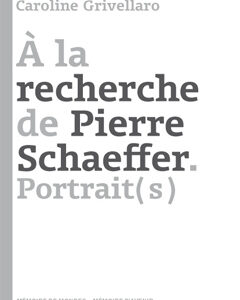
Caroline GRIVELLARO
“À la recherche de Pierre Schaeffer. Portrait(s)”
Texts from and around Pierre Schaeffer in French only. Translated from original edition in Spanish.
19,50€
In stock

LP + DVD audio
Russell HASWELL & Florian HECKER
“Kanal Gendyn”
“Editions Mego is happy to announce the release of “Kanal Gendyn”, a Vinyl and DVD set by Russell Haswell & Florian Hecker. This is the first full length release by the artists following their highly acclaimed albums, ’Blackest Ever Black (Electroacoustic UPIC Recordings)’ (Warner Classics, 2007), and ’UPIC Warp Tracks’ (Warp, 2008), in addition to their remix’s of Popol Vuh, and Voice Crack. In the late 90s, early 2000s, it became common for bands, or solo artists to perform live - often alternative - soundtracks to feature films or silent classics. Critical of obvious instrumentation and the combination with known classic film, the artists Russell Haswell & Florian Hecker chose to create a real-time soundtrack, to an unscored film, ’Kanal Video’ (1992, 60 min) by the Swiss artist duo Peter Fischli & David Weiss. Core to Kanal Gendyn is Haswell & Hecker’s ongoing research on the legacies of polymath Iannis Xenakis (1922-2001) and in particular his concept of the Dynamic Stochastic Synthesis, an abstract sound synthesis procedure that creates ‘sound out of nothing’. In an interview with Peter Hoffmann, the artists recall: “This video, which consists of an hour long ‘ride’ through the Zurich sewage system, with a remotely controlled maintenance vehicle equipped with a video camera to survey the sewers for eventual irregularities of defects - struck us both as an ideal piece to be projected in a ‘nightclub’ or music venue with a Gendyn only performance. We found twisted relations with such an hour long ‘tunnel vision’. Once with the seemingly endless amount of computer generated video projections used as visuals accompanying raves and techno parties during the 1990’s - and also to the accounts of visual hallucinations induced by Mescaline as described by Heinrich Klüver in the 1920’s - with the so called ‘form constants’ - where he mentions amongst others, ‘tunnel like’ patterns. The particularities of Gendyn, with its ever changing and meandering waveforms appeared to us as an ideal counterpart.” Kanal Gendyn was performed on the occasion of the event ‘Musterraum 9. Dual Presentation - Peter Fischli & David Weiss - Russell Haswell & Florian Hecker’ at Musterraum, Munich, 30.01.2004. Originally constructed as an experimental building, ‘Musterraum’ - German for sample or reference room - was a freestanding cube with a base area of 10 12 meters. Built as a test and reference space for the planning and construction of the adjacent Pinakothek der Moderne. Two stereo feeds were crossed for quadraphonic (4.0) diffusion using a L&B F12 / B12 loudspeaker system. Performed concurrently to the Peter Fischli & David Weiss, ‘Kanal Video’ (1992, 60 min.) screened on three facing walls. Kanal Gendyn is released as stereo vinyl LP + 4.0 DTS 24 Bit / 48 KHz DVD (audio only) set. The cover features 10 stills from the original Fischli & Weiss video, included inside is a 30 x 30 cm 170 gramm paper insert with a further, full-page still, plus extensive sleeve notes by musicologist and software developer Peter Hoffmann, and everything was designed by NORM, Zurich. Its also worth noting that, with a running time of over a hour, this is one of the longest single LP releases you will come across ! Cut by Rashad ’the Master’ Becker at Dubplates & Mastering, Berlin, September 2011.”
22,00€
Out of stock
CD
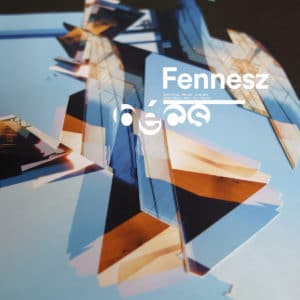
FENNESZ
“Bécs”
The last time Fennesz released an album on Austrian label Mego it was 2001 and the name of that release was “Endless summer”. Now, in 2014 Editions Mego is extremely proud to release the conceptual follow up that landmark of abstract pop. Bécs (pronounced “baeetch”) is Hungarian for Vienna and is the first full length Fennesz solo release since 2008’s “Black Sea”.
Eschewing the more drone orientated works of “Black Sea”, “Bécs” returns to the more florid pop mechanisms as deployed on Endless Summer. “Static Kings” features the extra leverage of Werner Dafeldecker and Martin Brandlmayer who deploy a range of atmospheric abstract effects to shape a bewitching sound world. The 10 minute centrepiece “Liminality” (featuring Tony Buck on drums) is classic Fennesz: epic, evocative, beautiful, impossible. “Pallas Athene” creates a
sanctuary of hovering beauty which leads into the title track. Emotional and assured, the track Bécs’ is an astonishing contribution to contemporary pop. “Sav” (co-written by Cédric Stevens aka Acid Kirk) inhabits a less structural terrain as one enters a forest of small sounds and oblique atmospheres, where the closing “Paroles”, a gentle melody unravels amongst swirls of electronics and fried disruption. Bécs is not just an album or a series of songs, it’s a world to
inhabit, a landscape ripe with sounds, songs and that esteemed Fennesz signature. A singular work by a singular artist.
All tracks by Christian Fennesz, except “Sav” by Cédric Stevens & Christian Fennesz. Modular Synthesizer on “Sav” by Cédric Stevens. Bass on “Static Kings” by Werner Dafeldecker. Drums on “Static Kings” by Martin Brandlmayr. Drums on “Liminality” by Tony Buck. Recorded & mixed at Amann Studios, Vienna, 2013/14. Mastered and cut by Rashad Becker at Dubplates & Mastering, Berlin. Cover design by Tina Frank.
12,50€
Out of stock
LP + 7"
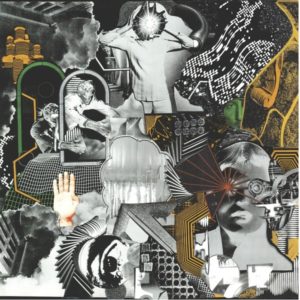
RAGLANI
“Real Colors Of The Physical World”
Sounds : Joseph Raglani. Speech : Melissa Meinzer. Mastered & Cut by Rashad Becker. Art: Jeremy Kanappell. “Real Colors of the Physical World” is a title whose parameters of reference may at first seem obvious, but a moment’s consideration renders it strange. The physical world, as opposed to the phenomenal, is, as we are able to suppose through the insights of science, an invisible place, if it is even enough to count as a place. What, then, are the qualities being named here? By way of an answer, it is worth recalling that musique concrete has not only an historical but a conceptual priority over kosmiche musik. The concrete in the cosmic: electronic music concerned itself from the beginning with getting past the emotional, historical, and religious themes that had defined traditional composition in order to head straight into the very matter of sound. For the concrete composers, this meant literal experimentation, stretching, analyzing, and recombining the properties and limits of auditory material and its perception. The kosmiche musicians conserved those approaches through metaphor as much as technique. The continuity between them involves a vocabulary of fundamental concerns: space, time, shapes, speed.... Electronic music arguably allowed for music to become actively self-reflexive, even ontological, for the first time. Its natural epic form has always been the cosmogony. The kosmiche focus on space travel and cybernetic futures has its roots in the earlier electro-acoustic renderings of a universe whose deepest origins are electrical and sonic. Two tacit, convergent metaphors structure the conceptual explorations of both approaches: that "electronic composition" accurately describes the activity of the human nervous system; and that cosmic evolution may be legitimately qualified as an act of modular synthesis. But much electronic music today has lost sight of the ambition to map that convergence, giving way instead to an emphasis on superficial prettiness, period nostalgia, the merely pleasant stupor of the New Age; or else to a vacuous static of technical fiddling. Raglani has never abandoned the grand vision that distinguished his ancestors, and this is his most determinedly comprehensive piece of work. It revisits the promise in the electronic synthesis of sound, implicit from its beginning, to construct a plastic image of the imperceptible dynamics beneath the surface of the world. This is a drama realized at constantly telescoping scales, in all directions. If the disintegration of a divine voice into the skittering communications of machines, or the transformation of a densely alien jungle into the promise of personal redemption, can count as objects of experience, they can do so only here, through the condensation of sound. But this hectic, exotically diffuse rendering has more in common with the world as we know it than does the placid stability of actual things; inner life has its own geometry, its own physics. The cosmic in the concrete: real colors remain within. Raglani has been making electronic music since he saw Otomo Yoshihide perform while under the influence of severe fever. This is his first full length album under his own name since 2006’s Of Sirens Born.” Michael Ferrer
9,00€
Out of stock
book
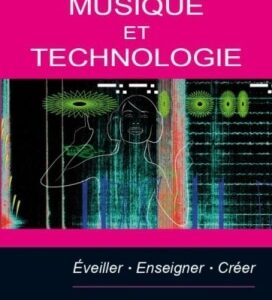
PORTRAITS POLYCHROMES 22
MUSIQUE ET TECHNOLOGIE. ÉVEILLER – ENSEIGNER – CRÉER
In French only. A book under the direection of Évelyne Gayou about the connections between technologies and teaching methods in electroacoustic musics. With texts by Claire Renard, François Delalande, Serge de Laubier, Vinvent Maestracci, Beatriz Ferreyra, Philippe Mion, Lucie Prod’omme, Christine Groult, Denis Dufour, Andrea Cohen, Francis Dhomont, Annette Vande Gorne, Laurent Pottier, Sébastien Béranger, Dominique Saint-Martin.
12,00€
In stock

DVD
Götz ROGGE+Frédéric LE JUNTER+Chiharu SHIOTA
“Streaming poesy-Urwald”
“Streaming poesy is devoted to environment and time. As a platform for multi-media collaborations, the project is an ongoing series realised at particular places; in 2006 Streaming poesy settled in the utopia of wilderness (Urwald). The commercial vice has been taking off what’s called a forest - a mere farmland for growing trees - that is now “allowed” to run to seeds. Thereby the sometimes graphical structures of cultural activity of hundreds of years are dissolving with the abstractions of scrubs and fallen trees (this even provocted regional political tensions). The painstaking subtlety in this work is a provocation to the conditioned eye of our time; it’s simplicity is akin to the japanese HAIKU. Though original aimed to be a stream on the internet in 3 parts, this dvd presents a unique version in one piece without interruption - it can be screened continuously. It presents sound recordings and visual mechanics on site by Frédéric le Junter (F) as well as the installation “Dialogue from DNA” by Chiharu Chiota (Jap): 500 shoes on red strings where exposed for the 3 month of autumn. Streaming poesy was commisioned by “URWALD vor den Toren der Stadt”, Saarbrücken-Germany and made possible by Deutsche Bundesstiftung Umwelt (DBU) as part of a innovative communication. DVD PAL length: 2h41min -16:9 HD (4:3 compatible).”
25,00€
Out of stock
CD
PINKCOURTESYPHONE
“taking into account only a portion of your emotions”
Formed from places, plastics, and particulars 2014-2016. Mastered at D&M, Berlin, September 2016. Design by Richard Chartier. The ongoing project by Los Angeles-based sound artist Richard Chartier (b.1971) sends you a new coded message of sumptuous distant drones and glacial orchestral heartrendings. Poised and polished slow motion pulsations tug at your emotions (but only a portion of them). For those listeners desirous of the output of The Caretaker, Angelo Badalamenti, William Basinski, and other such dark wistful wonderment.
Pinkcourtesyphone is dark but not arch, with a slight hint of humor. Amorphous, changing, and slipping in and out of consciousness, operating like a syrup-y dream and strives to be both elegant and detached.
Please don’t hang up. This call is important. You’re coming with Pinkcourtesyphone… leave everything… it’s getting late.
12,50€
In stock

LP
HOX
“Duke of York”
Hox is Edvard Graham Lewis (Wire/Dome/He Said/He Said Omala/Ocsid) and Andreas Karperyd (Omala/He Said Omala/Woodwork). Duke of York is their second release following on from the highly acclaimed ‘it-ness’ in 1999. Duke of York a bittersweet contemporary electronic pop record which could only exist as a result of the unison of these particular, peculiar souls.
At once tender, skewered, sophisticated and unsettling Duke of York is a both a journey through the collective minds of Lewis and Karperyd and a substantial representation of their individual talents. Whilst both tackling the sonic side of the outing Lewis also presents pleasantly paranoid lyrics, Karperyd drapes it all in a distinguished design. This combination presents a substantial study of the sonically impressive, visually inviting and songs rich in brooding, dark atmosphere and melodic content.
The production retains the mood of classic Lewis output whilst achieving a very fresh and radical approach to electronics and studio production with Karperyd. Duke of York is another significant chapter in Lewis’ distinguished and uncompromising career whilst adding to the intriguing output of Karperyd. As with the best experimental pop records, Duke of York, unfolds with repeated listening, revealing infinite charms.
15,00€
Out of stock

2 DVD
Gérard PATRIS-Luc FERRARI
“Les grandes répétitions”
Back in stocjk with a lower price !
On two dvds five films by Gérad Patris and Luc Ferrari. Produced: Service de La Recherche by Pierre Schaeffer for ORTF. In french only. “Olivier Messiaen : Et Expecto Resurrectionem Mortuorum” (1965). “Karlheinz Stockhausen : Momente” (1965). “Hommage à Edgar Varèse” (1965). “Herman Scherchen : Quand un homme consacre sa vie à la musique” (1967). “Cecil Taylor à Paris” (1966).
33,00€
In stock

LP + DVD
ETANT DONNES
“Le paradis blanc”
This album, recorded in 1983, is also the music of a movie directed by Etant Donnés the same yearand titled “Le paradis blanc”. Mastering Norscq.
The album Le Paradis Blanc was recorded in 1983. This unreleased album until today is also the music of a film directed by Etant Donnés the same year.
The film and music were part of a three days installation and performance of Etant Donnés in the ELAC (Espace Lyonnais d’Art Contemporain) at the Fifth Symposium of Art Performance in Lyon in 1983 : one day for the construction of the installation, one day with a performance and one day for the destruction.
The film on the DVD is an edit made with the movies of the construction and the destruction of the installation.
This music like all first works of Etant Donnés was made without any instrument or effect but is the fruit of a long work on a raw sound material coming from nature field recordings and other source like TV, films, radio, streets, factorys, etc.
In 1977, Eric and Marc Hurtado founded Etant Donnés that quickly became essential in the field of experimental films, performance and experimental and industrial music, recording approximately 30 albums and counting numerous collaborations with major artists of the international music scene and cinema : Alan Vega, Genesis P.Orridge, Michael Gira, Lydia Lunch, Philippe Grandrieux, Mark Cunningham, Bachir Attar and the Master Musicians of Jajouka, etc.
23,00€
In stock

CD
Kasper T. TOEPLITZ
“Inoculate ?”
nstability between sound and silence, between stagnation and air pressure; or else digital phantoms, remanences of what has not occurred - and the live electronics that sculpt this matter. Instruments increased to excess or, to the contrary, reduced to the flimsiest breath, distorted and exploited by themselves as much as by the teeming immobility of the dancer, body to hear. A slowness always in imbalance with abrupt accelerations, a stasis filled with electricity, a wall of sound.
8,00€
In stock
CD
HOX
“Duke of York”
Hox is Edvard Graham Lewis (Wire/Dome/He Said/He Said Omala/Ocsid) and Andreas Karperyd (Omala/He Said Omala/Woodwork). Duke of York is their second release following on from the highly acclaimed ‘it-ness’ in 1999. Duke of York a bittersweet contemporary electronic pop record which could only exist as a result of the unison of these particular, peculiar souls.
At once tender, skewered, sophisticated and unsettling Duke of York is a both a journey through the collective minds of Lewis and Karperyd and a substantial representation of their individual talents. Whilst both tackling the sonic side of the outing Lewis also presents pleasantly paranoid lyrics, Karperyd drapes it all in a distinguished design. This combination presents a substantial study of the sonically impressive, visually inviting and songs rich in brooding, dark atmosphere and melodic content.
The production retains the mood of classic Lewis output whilst achieving a very fresh and radical approach to electronics and studio production with Karperyd. Duke of York is another significant chapter in Lewis’ distinguished and uncompromising career whilst adding to the intriguing output of Karperyd. As with the best experimental pop records, Duke of York, unfolds with repeated listening, revealing infinite charms.
12,50€
In stock
2 LP
GOODIEPAL
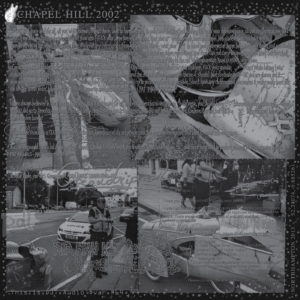
“Red Man K’s Bedrifter – Goodiepal Live, Chapel Hill 2002”
In 2001, Peter Rehberg (then of Mego) asked Parl Kristian Bjørn Vester aka Goodiepal while visiting Austria, if he would be interested in “doing something” for the label. Despite meeting on numerous occasions at various events and happenings around Europe nothing was delivered. One hot August day in 2013, a large package arrived containing lacquers for a double vinyl LP. Here it was! The Goodipal Mego album delivered as lacquers and not a wetransfer link.
To actually hear the audio the lacquers were sent to plant and made into test pressings, which revealed 3 looong sides of audio from a concert in Chapel Hill, NC in 2002. Not exactly 11 in years in the making but more like 11 years in the waiting. The fourth side is made up of a letter to Peter Rehberg etched onto the vinyl explaining amongts other things ’the longer a message have to travel over time the more importance you can add to it’. With this in mind this release has no ’digital footprint’ and is made available only as a physical vinyl LP in gatefold cover.
“And it came to my mind like a flashlight: Goodiepal is not an artist. He is an art critic. Or to be more precise: an art art critic, for he is using his art criticism as an art form. But of course, he would criticise this definition. Ahoi!”
Felix Kubin
19,00€
Out of stock
book
Peter BRÖTZMANN
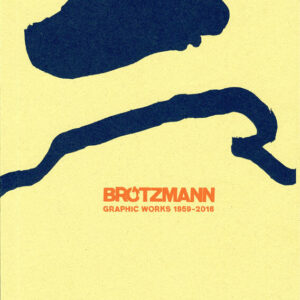
“Graphic Works 1959-2016”
With contributions by Lasse Marhaug, John Corbett, Gérard Rouy, David Keenan, Karl Lippegaus, and Jost Gebers.
Brötzmann has always created and still creates the covers of his recordings himself – sometimes also for other musician colleagues – and in the past also often the posters for various FMP projects (Workshop Freie Musik in the Academy of Arts or Total Music Meeting in the Quartier Latin, later in Podewil).
“Looking at his early posters and record covers it’s striking how fully formed his visual sense was from the very beginning. He had a background from both advertising and Fluxus art and built upon that. Just like his playing, he knew what he wanted to say with his graphic design. The music and visuals were coming from the same place. And there’s no question who it’s coming from. When you see a design by Peter there is little doubt who made it. His work has such a strong character that when we try to copy the style (and many have) it’s obvious who we’re stealing from – so we fail”. (Lasse Marhaug)
“In his graphic endeavors, Brötzmann has in fact made a body of work consistent with his music and his art, an oeuvre that undermines the presumption that design is inherently rigid. More than just the decoration of information, Brötzmann"s five decades of design bear witness to a sophisticated, delicate, and earthy sensibility, along with a dogged sense of internal logic. His record covers and posters are passionate and thoughtful, playful and brutal, basic and human”. (John Corbett)
This catalog with about 260 works is published to the exhibition at the Bimhuis, Amsterdam, Sept. 2016. 368 pages, catalogue, soft cover.
49,00€
In stock

DVD audio
Mathew ADKINS
“Mondes inconnus”
Mapping (1995-97). Aerial (2002). Deepfield (2000). Still Time (2001) for flûte and electronics. Melt (1994). Symbiont (2002). Silk to Steel (2005). Cortex (2004-05). DVD-Audio with several versions: Surround 5.1, Stéréo and Stéréo (Dolby Digital). “Composition is, for me, like a giant puzzle in which the overall shape is fixed but the pieces and the picture itself change and undergo subtle transformations as one is constructing it. The computer tools that I use, enable me to fix the edges - the large scale rhythmic and harmonic movement and other global parameters, whilst also allowing me to improvise with these materials at the surface level. Using these tools allows me to manipulate and play with sound - like a child with a chemistry kit - reveling in the novel colours and explosive concoctions that result.” Mathew Adkins. “Mathew Adkins is a composer, performer and lecturer in electroacoustic music. He read music at Pembroke College (Cambridge, UK) and then, in 1993, became a member of the BEAST (Birmingham ElectroAcoustic Sound Theatre). He studied electronic music with Jonty Harrison and then Simon Waters. It was at the age of 22 that he first came to international attention with the electroacoustic works Melt and Clothed in the Soft Horizon. Between them these works were awarded the Stockholm Electronic Arts Award (Sweden), the Résidence Prize (Bourges, France) and the Grand Prix of Musica Nova (Prague, Czech Republic). He has since won more than a dozen international prizes for his work, which has been performed and broadcasted throughout Europe, USA, Canada, Australasia, China, and Asia. He has worked in a number of prestigious European studios, including EMS (Stockholm, Sweden), Ina-GRM and IRCAM (Paris, France), Césare (Reims, France), and Heinrich Strobel Studio (Freiburg, Germany). In the early 1990s, Adkins concentrated predominantly on acousmatic concert music but has since diversified into composing electronic works for contemporary dance, multimedia works, and electroacoustic music. What he is particularly drawn to in writing such works is the collaborative process that evolves between the composer and artist-performers. The most notable of these have been Neurotransmission (1998), an hour-long acousmatic dance score written for Wayne McGregor and Random Dance in 1998, Still Time (2001) for the flutist Alejandro Escuer, Symbiont (2002) a multimedia collaboration with Miles Chalcaft, and nights bright daies (2003) for the Ictus piano and percussion quartet; the latter premiered in June 2004 at the Festival Agora No 7 at IRCAM (Paris, France).”
12,00€
In stock
CD
KERNEL
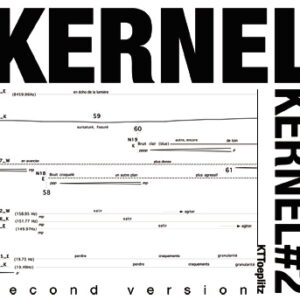
“Kernel #2 (second version)”
“The fourth CD of Kernel, september 2009, on R.O.S.A. Kernel
2 (second version) is a re-creation of their first CD, Kernel
2, two years later. Exactly the same score, but a differnet interpretation - a much longer one (53 minutes) and with much more density to it. Actually this CD defines very much what Kernel is about - live interpretation of written scores of electronic music. Comparing the 2 versions is something... !!”
8,00€
In stock

2 DVD
Jacqueline CAUX
“Anna Halprin. “Out of boundaries”. “Who says I have to dance in a theater”
These two films captures, from videotaped conversations and numerous excerpts of rehearsals, performances and rare archival footage, of fundamental changes made by Anna Halprin in the field of dance. As soundtrack its have musics by Pauline Oliveros and Terry Riley who both have, at various times, worked with her.
It was born in California, in the mid-fifties, long before swarm in New York, this form of artistic expression so peculiar that we later gave the name of “Post Modern Dance”. All those who participated in the outbreak of this phenomenon know Anna Halprin is an important pioneer. Born in 1920, she has literally exploded all agreements remained in contemporary dance by supporting research on the everyday actions, and taking into account the anatomy of men as well as his unconscious desires and his sexual impulses. She introduces in 1957 the concept of “task” (to perform actions such as dressing, undressing, walking...). Floor of sneakers or shoes with high heels, she improvises in parking lots, construction sites, in the street…
On the set dancing outdoors that her architect husband Lawrence Halprin has built below their house near San Francisco, she drives in her crazy adventures - to the extreme by galvanizing their own creativity - young artists from different fields still completely unknown. Dancers such as Simone Forti, Yvonne Rainer, Trisha Brown, Meredith Monk, as well as Robert Morris (before he choose the sculpture), which then introduce in New York on radical innovations of Anna Halprin, forming the core of “Judson Dance Theater”, composers like La Monte Young and Terry Riley, she called in 1959 co-musical directors, and experimenting with her music minimalist and repetitive they are inventing. Other artists such as Charles Ross, a poet like James Broughton, filmmaker Stan Brakhage...
An important step while leading it to take into account more than ever the real in work, will Anna Halprin media spotlight away from the city of New York with all the artistic means at its disposal, it will be his fight against the cancer she suffered in 1972 with a recurrence in 1975. Cured, that’s when she began working with cancer patients, and later of AIDS. “I’m not a therapist”, she is to clarify, “I am an artist who seeks to develop imaginative and personal social issues. For me, art is this: bring in a creative process things imposed on us”. Environment California has strengthened the inspiration of Anna Halprin and has enabled her to celebrate away from demonstrative virtuosity, beauty of the natural movement of the human body. This, combined with its long association with disease and death, leading to her most recent improvisations in nature such as “Returning Home” and “Season” or “Rocking Seniors” with more than fifty old persons”. Jacqueline Caux
36,00€
In stock

CD
Kasper T. TOEPLITZ
“Capture”
“A very micro-tonal score, played by 3 dancers/musicians whose infinitesimally slow movements are “captured” by web-cams and “mapped” to all the parameters of a real-time digital synthesis engine - frequency, amplitude, ambitus… No samples, no pre-recorded sounds, the sole sound source is a white noise generator, sculpted by filters, producing a polyphony of drones, oscillations, movements of electricity - a long electronic ascension”.
8,00€
In stock
CD
Marcus SCHMICKLER
“Palace of marvels (queered pitch)”
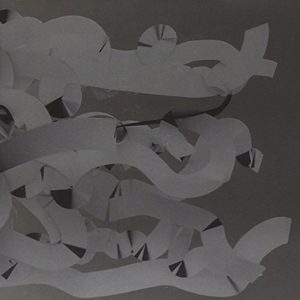
Composed by Marcus Schmickler. Recorded and Mastered at Piethopraxis, Köln. January-August 2010. Artwork by Tim Berresheim. Marcus Schmickler’s new release following his acclaimed ’Altars of Science’ is a must have for those interested in the rising field of contemporary Computer Music. It reconfirms Schmickler’s interest in the liaison of sound, phenomenology and cognitive sciences. Schmickler therefore utilizes a new interpretation of 1960’s discovery, the Shepard-tone, discovered by Roger Shepard, which creates the auditory illusion of a tone that continually rises or descends in pitch yet ultimately seems to get no higher or lower. The phenomenon first got imposed to the music world by James Tenney in his piece "For Ann Rising". Similarly, Schmickler has a musical take on the subject by creating Arpeggios, short sequences of tones creating an akin effect. Schmickler’s interest in the field got fired by Ernst Gombrich’s essays on "Art and Illusion" questioning the very foundations of our understanding of the history of the image and it’s representation of our world. Adequately Schmickler’s work ever since can be seen as a play within an anthropology of music. Here in terms of it’s very fundamental parameters rhythm, sound and pitch, as well as music practice wit it’s socio-economic implications. Beyond that, the title Palace of Marvels was found at French intellectual Jacques Attali, who, in his critically acclaimed book, "Noise: The Political Economy of Music", cites one of Leibniz’s little known but "extraordinary" texts, "Drôle de pensée touchant nouvelle sorte de représentation," in which the philosopher describes the "Palace of Marvels." The Palace of Marvels is Leibniz’s idealization of a perfect political organization, which is built in such a way that the master of the house is able to hear and see everything that is being said and done in the premises without himself being perceived by his subjects. Leibniz’s vision of disciplinary society not only predates Foucault’s subsequent versions of surveillance mechanism, the Panopticon, but it also conceptualizes a more effective and absolute form of power through eavesdropping, censorship, and recording, as well as surveillance through visual means. Listening in on, ordering, transmitting, and recording noise are at the heart of the modern State. The idea for the material was originally conceived for a collaborative Installation-piece together with arts-collective Interpallazo. The technical application was realized with the kind assistance of Prof. Dr. Alberto de Campo.
12,00€
In stock

CD
Kasper T. TOEPLITZ
“Almasty”
Solo bass played and composed by Kasper T. Toeplitz.
Layers of noise full of details like the voice of dead machines !
“A purely formal présentation of ALMASTY would point that it is a composition for solo bass – electric bass, which implies a few electric/electronc machines around the string instrument, which change or modifiy its résonances somehow, but nothing more that what is seen those days around any electric instrument. And ALMASTY is also a solo composition, as it is recorded and presented as it was played, live, one evening of november 2015, in Bagnolet, just outside of Paris (even if it was not the first time the piece was played) : no overdubs, re-recordings, no samples of the instrument replaced later in the final mix, no compositional work in the studio, except of the reduction of the original 4 tracks in a stereo, as the piece is written to be played on 4 speakers disposed in an arc in front of the audience.
And of course all this has no importance at all, it is not an "instrumental solo" which hopes to show a supposed virtuosity, nor is it an introspection of the musician facing himself : ALMASTY is best defined as a composition originating from an "electronic thought" of the music, which happens to be played on a basse just because the composer, which happens to also be the interpréter of the piece has some pleasure, or just a familiarity resulting from the years spend with the instrument, when playing the bass. But what Almasty is, is an electronic architecture, lasting just about one hour, layers of sounds, noises, textures, a constant attention to détails of the resulting sounds, dust or splinters, from the macroscopic to the powerful breathing of some machine, a never revealed presence – the Almasty. And the cover, a painting executed by Daria Gabriel, is of a similar density of texture.”
8,00€
In stock
CD
ATOM™ & Marc BEHRENS
“Bauteile”
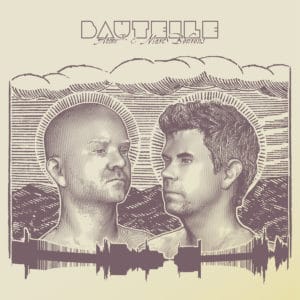
Recorded on Earth, 1987-2013. Produced, assembled, edited, mixed and mastered at Bowman Suite, Santiago, Chile. Violin: Carlos Zingaro. Design: Volkmar Hoppe and the artists. The over 70 minutes of “Bauteile” (German for "construction parts") were recorded from 1987 through 2013 and edited into a continuous flow over the last three years. Atom™ and Marc Behrens met during the heyday of the German Techno movement and have since ever pursued extensive research in all areas of contemporary music. Their findings, a sonification of their investigations, which span effectively two centuries of musical development, are now released as an album for the first time by Editions Mego.
12,50€
Out of stock

CD + DVD
Anne-James CHATON + Andy MOOR + Thurston MOORE
“Heretics”
‘Heretics’ is a series of portraits of radical heretical figures found throughout the history of schismatic thinking.
Heretics like Caravaggio, William Burroughs, Jose Mujica, Marquis de Sade and Johnny Rotten, fascinated the artists. These influential figures are presented here in the form of poetic texts and catchy melodies combined with experimental noise.
With the addition of ex-Sonic Youth guitarist, singer and songwriter Thurston Moore – Anne-James Chaton and Andy Moor’s more than a decade long collaboration becomes an exciting trio. They researched and created the material for Heretics during a residency in the French port of St Nazaire, in July 2014. They used voice, guitars and electronics in solo, duo or trio, to collaboratively explore their ideas and co-write texts and music.
Moore and Moor both emerged from the punk/post-punk scene – albeit on different continents. This familiarity with each other’s background and music meant they were able to work at an intuitive fast pace during the making of these pieces, and subsequent recordings. Chaton’s powerful delivery and hypnotic style holds it’s own amidst the two guitarists building a rich wall of sound, melody and noise around him. Chaton and Moore’s contrasting voices and choice of words ring out in the tradition of non-conformist poetry. Shaped by jagged distorted guitars and penetrating chords, the trio’s combination of guitar and poetry evokes a new genre.
‘Heretics’ was recorded at La Muse en Circuit (Paris), and first performed live at the Theatre de Saint Nazaire, in 2015. The making of Heretics is documented in a film made by Benoît Bourreau.
This release, containing a CD, book of texts, and DVD - is designed by Isabelle Vigier. There is also a signed edition of ‘Heretics’, including original prints by the three authors. This release was made possible with support from lebeau et associes (Paris) Herezie (Paris) Mona Films (Paris) la Muse en Circuit (Paris) .
18,00€
Out of stock
CD
Renato RINALDI
“Time Machine Vol.IV”
Fourth Volume of the series recorded directly from the Time Machine, a magic case containing an array of home-built oscillators activated by Rinaldi to create pulsing rhythms and noise patterns using the mixer feedback. Edited and mastered by Giuseppe Ielasi.
“The Time Machine project was conceived in order to find a simple and immediate way to work with rhythm. I built two cheap and imprecise, almost-square wave oscillators with a wide range of frequencies. These oscillators can sweep and cross-modulate from sparse pulses to high frequency audio signals. I use a mixer to create feedback between the filters, CV and audio signals and simply record the output; there are no overdubs.” (Renato Rinaldi). Pressing info: 200 copies
Original price was: 12,00€.5,00€Current price is: 5,00€.
In stock

DVD audio
Gilles GOBEIL
“Trilogie d’ondes”
Works for ondes martenot and tape. DVD audio. DVD vidéo. DVD rom.
“Voix blanche” (1988-89), “Là où vont les nuages...” (1990-91), “La perle et l’oubli” (1999-2002). All works were recorded and mixed in 2004-05.
About this Trilogy by Suzanne Binet-Audet. Gilles Gobeil’s body of work to date has been characterized by a rupture or break æsthetics, in which large-scale musical gestures are developed and brought to their acme before being immediately crushed into silence. It is a musical way of being, of breathing, a natural mark, a style, immediately identifiable and thus much more than a habit. The Trilogie d’ondes is testimony to this approach, so deeply rooted in the composer’s musical thought. The ondes Martenot’s electronic timbre and acoustic resonance are perfectly suited to the musical fabric of the electroacoustic tape part, turning it into a rich and complex mixed work. In places the instrument melds almost perfectly with the tape, while in others the ondes stand out from the sonic material, due either to the expressive quality of some melodic interventions or the contrast between the ethereal quality of the timbre and the colorful complexity of the tape sounds. In this case, Gilles Gobeil has chosen to rely mostly on the musician’s expressive accuracy in addition to virtuosity. Among the various contributions from the ondes, two themes stand out and underpin the entire structure: the “wrench theme,” which is always tightly woven into the tape and manifests itself through a long rising glissando, and the “cell theme” - or “soul theme” -, a cell consisting of four neighboring, distempered notes.
“Voix blanche” (1988-89)
The wrench theme, with its slow dramatic build-up, appears at the very beginning of this movement. Halfway through, the soul theme emerges, very legato. Following its long unfolding, it will be reintroduced in a form that is more spelled-out than linear, a form which will become definitive in the other two parts of the trilogy. Inhabited by a subtle form of poetry, this is the most lyrical movement of the cycle.
“Là où vont les nuages…” (1990-91)
This movement features a different technique. The ondes are almost always used as a trigger for prerecorded sound elements that are juxtaposed with the ondist’s playing. Through the ondes’ various interventions, the aforementioned themes are transformed into something more closely related to a sense of traveling. This movement is full of vitality and playfulness; at times, sound masses are built and taken down at vertiginous speed.
“La perle et l’oubli” (1999-2002)
Inspired by an apocryphal initiatory text from the second century, this piece consists of twelve sequences, six of which are variations on the “soul theme” cell played by the ondes. In this movement, the ondes play the part of the soul in its journey of incarnation. The final coda brings back the wrench and soul themes. The latter, modified one last time, closes the work in the bass register; its missing fourth note seems to irradiate from the dark aura of the last note played.
Suzanne Binet-Audet, iii-2005 [English translation: François Couture
13,00€
In stock
CD
LE DÉPEUPLEUR
“ZKT”
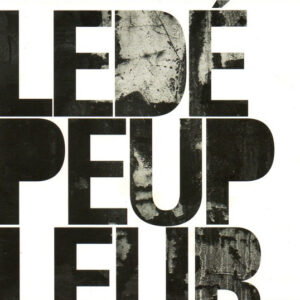
“Le dépeupleur is the electronic project of Zbigniew Karkowski and Kasper T Toeplitz. Both musicians use computers, and create electronic sounds - no samples, no “found” sounds - it’s all “pure” electronic. Even if their names can (also) be found in the "noise" circles - they did collaborate with musicians such as Merzbow, Tetsuo Furudate, CCCC or Francisco Lopez, to name a few - they are both composers having done, and still doing fully written down pieces for orchestras, ensembles etc
If there have to be some reference to the work of Le dépeupleur, it only could be Xenakis
“ZKT” is a long, one-hour piece structured in two parts - it ending being an eternal resonance. Re-read Beckett.”
8,00€
In stock
book + 2 CD
Olivier CAPPAROS & Lionel MARCHETTI
“Kitty Hawk, le sable et le vent”
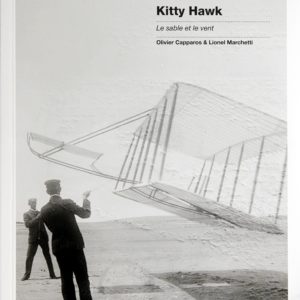
A composition by Olivier Capparos & Lionel Marchetti. For string quartet, two voices and three loudspeakers. An oratorio of musique concrète and instrumental music about “Kitty Hawk” the city where the Wright brothers did the first experiment with plane.
18,00€
Out of stock

DVDR
ÉPHÉMÉRIDES
“Éphémérides nocturnes”
Kasper T. Toeplitz, bass and Strom Varx, moving images. Slow and low !
5,00€
In stock

CD
SLEAZE ART
“Infra”
“Sleaze Art is a quartet of bass players: Eryck Abecassis, Frederick Galiay, Jb Hanak and Kasper T. Toeplitz, the latter also being listed as the composer of the piece. His compositions are usually, as far as I know, along the graphical side of things, and rather giving instructions than specific notes to play. Toeplitz is a man with a background in modern classical music but with penchant for all things quite loud. Loud and bass-heavy of course, as the bass is his primary instrument. […] This release is causing serious damage to my speakers, because of the bassiness of the music (and I have to seriously consider my relationship with neighbours all around here: the bass sound is more penetrating that the high end sound to surrounding areas; good to know if one of them has a loud party which I would want to end). At seventy minutes this is also quite a long work and not one that one easily digests. Heavy bass drones, loud bass
noise, sounding almost like the sound of plane engine from time to time, the work takes quite some time to develop”. (FdW, in Vital)
8,00€
Out of stock
book
Raymond MURRAY SCHAEFER
“Le paysage sonore”
French edition of the historical book from Canadian composer Raymond Murray Schaefer, The Tuning of the World written in 1977.
20,00€
In stock
CD
KERNEL
“The deep”
The Deep, a new composition by Kasper T. Toeplitz for the live electronic group Kernel (Abecassis, Toeplitz, Wendling) is an architecture of accumulations of grainy textures, layers of destructured, decomposed and distorted sounds - a long flow of a constant acceleration, freely inspired by the gesture of Pollock’s painting. In its center a fake calm, a slow, sub-bass breathing. As always with Kernel the music is fully pre-composed (and the score can be downloaded from the group’s web page) and is played live - using mostly computers - in real-time synthesis (no samples, sound files nor sequencers) by the three musicians. Between the electronic compositions of Iannis Xenakis or Jean-Claude Eloy and the work of Daniel Menche or Zbigniew Karkowski.
8,00€
In stock
CD
KERNEL
“D.R.”
“The third CD of Kernel - with still the same musicians - Eryck Abecassis, KTToeplitz & Wilfried Wendling - released in september 2009 on R.O.S.A. On this CD, two electronic compositions , and the first piece played by Kernel but written by someone else than KTT - which is for sure a “first” but is also the beginning of the “second phase” for Kernel. 1. “Dust reconstruction” (KTToeplitz) 2. “Drowning report” (E Abecassis).”
8,00€