
In stock
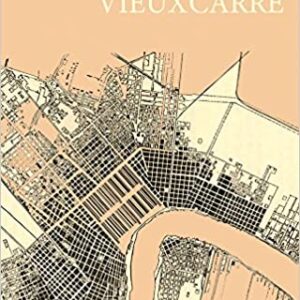
book + mini-CDR
Guillaume BELHOMME – Daunik LAZRO
“Sales rectangle” – “Vieux carré”
Published in April 2015. French edition. 10 x 15,5 cm (softcover). 48 pages + mini CD.
A literary text by Guillaume Belhomme combining metafiction and cut-up, with a CD on which Daunik Lazro performs Vieux Carré, a composition by Joe McPhee evoking the old French Quarter of New Orleans.
9,00€
In stock
CD
Yasunao TONE
“AI Deviation #1, #2”
Written and performed by Yasunao Tone. Recorded at ISSUE Project Room, Brooklyn, June 9th, 2016 by Bob Bellerue. Mix and mastered by Russell Haswell.
“I have had an idea if I apply the neural network to create my sound work for long time. When I had a performance at Centre Pompidou with Peter Rehberg and other friends I tried to talk about the idea with a French guy from IRCAM. But, he couldn’t understand my idea, which by using neural network the sound I create would never have any repetitions.
That was 2002 and I had to wait until 2015 when I had a grant from New York State Council on the Arts through Issue Project Room, then its director Lawrence Kumpf applied for my new work. The grant finally made possible for making my cherished idea, the neural network piece, reality.
I had talked about the idea with Prof. Tony Myatt at Surrey University, UK and he developed the software for the piece with a team included Dr. Paul Modler. At the lab in the University a series of my performances of my MP3 Deviation were captured and used to train Kohonen Neural Networks to develop artificial intelligences that simulate my performances. Hence a birth of new piece AI Deviations. I had a premiere at Issue Project Room on June 9th 2016 and the venue was more than packed and here is the performance of the piece.” (Yasunao Tone)
12,50€
In stock
2 LP
UUUU
UUUU are Edvard Graham Lewis, Valentina Magaletti, Matthew Simms & Thighpaulsandra. Recorded and Mixed at Aeriel Studios, Brechfa by Valentina Magaletti, Thighpaulsandra. Mastered by Sarah Register. Photography by Antonio Curcetti.
Individually these humans have implanted feathers in caps such as Coil, Dome, Wire, Tomaga, etc. Collectively they form UUUU, a powerhouse construction of fierce and free sonic exploration, as liberating as it is frightening, resulting in, the richly rewarding. The artists united present a project of exquisite curiosity and confident chaos where the individual thumbprints mesh into a gloriously muscular frenetic free sonic soup. It’s Going All Over The Floor presents itself as a terse meeting between dance, ambient, abstraction and improvisation. The Latent Black Path Of Summons Served proceeds in a tense energy field where random elements bounce around until locking into a fourth world pattern designed to fall into a dense mass of ecstatic noise. Boots with Wings is classic Lewis - a pop tune from the other side of the mind.
UUUU is a schizophrenic seething/soothing masterpiece of a past/present hybrid equally at home in the club, the home and the mind.
21,00€
In stock

CD + DVD
Harry BERTOIA
“Sonambients: The Sound Sculpture”
Sonambients: The Sound Sculpture Of Harry Bertoia is a deluxe CD/DVD package containing historic recordings made in Harry Bertoia’s Sonambient barn.
The DVD, a film titled Sonambients: The Sound Sculpture of Harry Bertoia, by Jeffrey & Miriam Eger, was shot in 1971 and follows Harry Bertoia in performance and interview throughout his Sonambient barn deep in the Pennsylvania woods. This film offers a rare opportunity to follow the artist in practice, listening carefully as he moves contemplatively through his sculptures and gongs. Interview footage offers rare insight into Bertoia's inspiration and process.
A separate CD contains four exclusive, recently discovered audio recordings. Included are the two earliest known collaborative tapes from Harry and brother Oreste, morning and evening sessions dated October 12, 1969, as well as a collaboration between the Bertoia brothers and their sister Ave who sings in careful unison with the overtones being produced by the sculptures. With the passing of Oreste Bertoia in 1972, these recordings mark the last meeting of all three Bertoia siblings.
A 16 page booklet includes many never before seen production stills shot by Jeffrey Eger. These iconic images capture the essence of the artist in practice. All of this is packaged in a heavy duty, tip-on style, gatefold sleeve printed with metallic inks at Stoughton Printing in California.
23,00€
Out of stock
book
Alexandre GALAND
“Field recording. L’usage du monde en 100 albums”
Only in French. A selection of 100 records that you can file under “Field recordings”. And interviews with Jean C. Roché, Bernard Lortat-Jacob and Peter Cusack.
23,00€
In stock

DVD
Patrick BOKANOWSKI
“Courts métrages”
Patrick Bokanowski : Short films. P. Bokanowski employs an extraordinary range of technical invention - combining live-action with optical experiments, drawing, performance, painting, and animation - to conjure magical forays into a parallel universe. All musics made by Michèle Bokanowski. “La Femme qui se Poudre” (1972), “Déjeuner du Matin” (1974), “La Plage” (1992), “Au Bord du Lac” (1994), “Flammes” (1998), “Le Canard à l’Orange” (2002), “Eclats d’Orphée” (2002), “Battements solaires” (2008). Bonus: Interviews with Patrick Bokanowski (English subtitles). Pal. Region Free. (We also have copies in NTSC, ask for it if you need).
29,00€
Out of stock
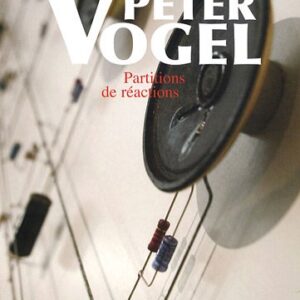
book + CD
Peter VOGEL
“Partitions de réactions”
French edition. Monograph. Peter Vogel (born 1937 in Freiburg) is a pioneer in the field of interactive electronic and musical sculpture. He was formally trained in physics, and has explored technology’s intersection with dance, musical composition, and visual art since the late 1960s. + one CD with different installations.
20,00€
Out of stock
book
PORTRAITS POLYCHROMES 17
ELIANE RADIGUE
A book only in French about Eliane Radigue with texts from Emmanuel Holterbach, Thibaut de Ruyter, Lætitia Sonami, Éliane Radigue, Charles Curtis, Tom Johnson. List of works, records and films.
13,50€
In stock

DVD
Anne MAREGIANO
“Charlemagne Palestine, The golden sound”
“Born in New York City, composer, performer, and visual artist Charlemagne Palestine was a contemporary of Steve Reich and Phillip Glass in the avantgarde classical music scene of the 1960s and 1970s. On stages filled with his own home-made stuffed animals, Palestine performs his trance-like strumming music. He is often referred to as a minimal composer, but rejects that in favour of "maximalism". Anne Maregiano’s documentary about Palestine, The Golden Sound (2011), allows the artist to tell his own story while putting his music and performance, in long, unedited takes, at the centre of the film…” - Michael Garrad, (Close Up)
Bonus Films: “The Red Suitcase” by Anne Maregiano (2011). “Body Music “by Charlemagne Palestine (1975). “Charlemagne 2 : Piltzer” by Pip Chodorov (2002).
“Sound Recording: March 7, 1975” by Charlemagne Palestine.
Book (44 pages) with texts written by Ingram Marshall, Roland Spekle, Pip Chodorov and Anne Maregiano. Photos by Kathleen Agnoli, Elaine Hartnett, James Lapine, Charlemagne Palestine.
English with French subtitles.
19,90€
Out of stock

4 CD + book
COMPILATION
OPIKA PENDE : AFRICA AT 78RPM
Compiled and edited by Jonathan Ward. 112 page book with 4 CDs. Dozens of full-color images from the era. The CDs feature 100 never-before-reissued recordings from the 1920s-1960s. “It is truly astonishing to consider the tremendous variety of music that was pressed to shellac discs on the continent of Africa. Popular songs, topical songs, work songs, comic songs, songs of worship, ritual, dance, and praise-the sheer range of musical styles resists any easy categorization. Further, African geography itself resists boundaries. The boundaries of cultures and languages are often far more complex than political boundaries. Complicating things further, entire countries seem to have been skipped over by both commercial 78 rpm record companies and ethnographers during the 78 rpm era. No doubt it was the same with many cultures. But that doesn’t mean that 78s weren’t everywhere, even in remote parts of the continent. By the mid-1960s, 78s were still a popular if not preferred medium in much of Africa, as a significant amount of the population still used wind-up gramophone players. I have created this compilation with one simple goal in mind: to showcase a diverse amount of long-forgotten music from Africa that transports me as a listener. It is one person’s offering of music that is wholly unavailable except in its original elusive and fragile format. While it is not definitive, nor am I attempting to construct or invent a narrative, there are important connections to be made. Around one musical corner is another corner, and another. Within these 100 tracks, traditional music stands side by side with popular music as traditional culture coexists with so-called modernity. As a non-African, I offer this set as an example of the riches that lay in waiting when considering the tens of thousands of phenomenal African 78 rpm discs that were issued, played, dispersed, and in large part, forgotten.” “Opika Pende,” is a saying in the Lingala language that means “be strong” or “stand firm.” It can also mean “resist.” Jonathan Ward, 2011
52,00€
In stock
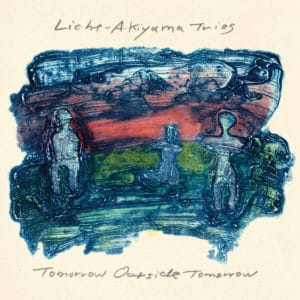
CD
Alan LICHT – Tetuzi AKIYAMA TRIOS
“Tomorrow Outside Tomorrow”
Alan Licht: guitar, electronics. Tetuzi Akiyama: guitar.
Oren Ambarchi: guitar on “Blues Deceiver”.
Rob Mazurek: cornet on “Tomorrow Outside Tomorrow”.
Recorded by Makoto Oshiro, Tokyo, Nov 4, 2014. Mixed by Ted Young & Alan Licht at Outer Space, Brooklyn, July 15, 2015.
Over the years Alan Licht (USA) and Tetuzi Akiyama (Japan) have individually explored the lines that divide improvisation, composition, folk, blues and experimental music. It was inevitable their careers and styles would cross paths. Tomorrow Outside Tomorrow captures a meeting of minds and techniques landing two extended works which blur genre and cliche.
Blues Deceiver presents itself as a dank blues: a dirty crawling mass of feedback, fluctuating vibrations, garage frequencies and distant interference. Featuring Oren Ambarchi the various musical and nonmusical elements weave about creating a music showcasing individual contributions hovering as a holistic whole. There is beauty in this beast.
Tomorrow Outside Tomorrow features the talents of Rob Mazurek in the guest role. Here the trio expand on the workshop blues drone with Rob placing a sombre jazz card on the table. What begins as a loose sound study evolves into an introverted and melancholic exploration of mood, atmosphere, interwoven notes, texture, sound, guitar and electronics.
Tomorrow Outside Tomorrow unveils a nebulous new music.
12,50€
In stock
book
Jacques DEMIERRE
“Corps, son et geste”
Improvisor, composer and performer, Jacques Demierre writes about gesture and writting. In French only.
12,00€
Out of stock
book
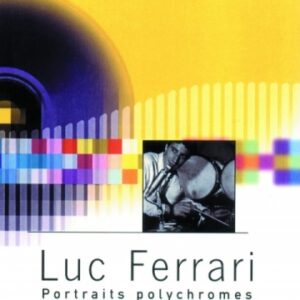
PORTRAITS POLYCHROMES 1
LUC FERRARI
New edition from 2007. “Luc Ferrari: Mnemosyne mise à nu par P.A.Castanet, “Avec, de, sur… Entre” entretien de Luc Ferrari avec E.Gayou, “Les presque rien de Luc Ferrari” par D.Teruggi, “Entretien avec Luc Ferrari” par Tatjana Mehner, “Entretien avec Brunhild Meyer” par Évelyne Gayou, “Ferrari et le mot” par Radosveta Bruzaud, “L’escalier des aveugles: un hörspiel de Luc Ferrari”, par Andréa Cohen, “La dramatique de la vie même: Cellule 75” par Monika Lichtenfeld, catalogue, bibliographie, discographie.
9,00€
Out of stock

DVD
Patrick BOKANOWSKI “L’Ange”
“L’Ange” (1982). “Dubbed ‘the artist-alchemist of celluloid’ avant-garde filmmaker Patrick Bokanowski’s legendary opus defies all categorisation, in its unique combination of experimental cinema, photography, animation and painting”. Bonus features: The Making of L’Ange & Interview with composer Michèle Bokanowski. (English subtitles). Pal. Region Free. (We also have copies in NTSC, ask for it if you need).
29,00€
In stock
2 LP
VOICES FROM THE LAKE
“Live at MAXXI”
After last year’s releases on Spectrum Spools, Italian techno masterminds Donato Dozzy and Nuel are returning as the duo Voices From The Lake with a release on the mother label Editions Mego: “Live @ MAXXI” is a marvellous organic live-set of hypnotic ambient techno, proofing the outstanding and elegant craftsmanship of their sonic sculpturing, that they both are famous for.
As was to be expected they stay true to their polyphonic topography of liquid scapes: aquatic sceneries are embedded in soaking dense atmospheres, gently gyrating us into trance. Sometimes soft echoes of sirenic voices are heard - the only remnants of human traces in these spaces that have suspended time, where smooth silky textures are being channeled into fractal structures that induce a state of transcendence. The haptic quality of their sound is adding up to a sonic matrix of metaphysic imaginary that is provoked by gentle glides and dynamic beat patterns of almost tribalistic quality.
Dunked in a bath of dark fluid, sometimes washed away at the shores of Kosmische - VFTL’s tunes are not scared to seduce us into a condition of haziness, culminating in a cover of Paolo Conte’s, Max’ which is turned into a dazzling sample of sweet, dreamy melancholia.
With this release Voices From The Lake succeed again in strengthening their position as one of todays most refined ambient techno producers.
19,00€
In stock
book + CD
Helen THORINGTON
“Il est si difficile de trouver le commencement.”
A book in French + CD about the radio artist Helen Thorington.
450 copies.
28,00€
In stock
3 LP
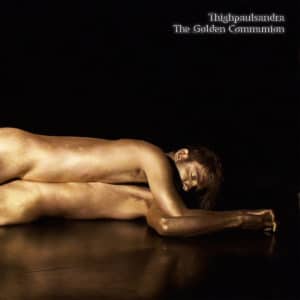
THIGHPAULSANDRA
“The Golden Communion”
September 2015 will see the release of Thighpaulsandra’s 7th full length album “The Golden Communion”, his first since 2006’s “The Lepore Extrusion”. Well over a decade in the making, this is his debut for Editions Mego. It comprises 10 new songs, running well over two hours with individual pieces clocking in between 4 and 28 minutes. Featured musicians on the album include regular collaborators Martin Schellard and Sion Orgon, plus the odd guest/ghost from bands Thighpaulsandra has worked with in the past.
If you have heard any of Thighpaulsandra's previous albums, you will know that you'd best approach this record with no fixed set of expectations, because once again he changes genres and defies easy classification, sometimes more than once within one song. Drawing on his long-time background as a key member in such diverse groups as Coil, Spiritualized and Julian Cope's band (in each case arguably at the height of their creative prowess) and his work as producer and sound engineer for an even larger variety of customers, you'll find classical passages next to hard rock riffing, krauty experimental work-outs turning into super catchy, almost radio-friendly songs and more.
Many adjectives have been used to describe Thighpaulsandra’s work: epic, challenging, timeless, idiosyncratic, but certainly never predictable or boring.
Possibly his most rewarding album yet and a welcome and unusual entry, in the Mego catalogue, which will entertain and astonish listeners who are fond of having their mind severely altered by sound.
31,00€
Out of stock
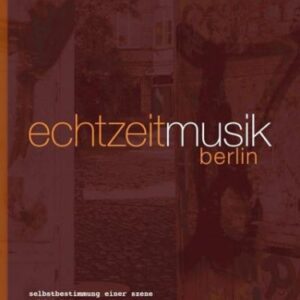
book
COMPILATION
ECHTZEITMUSIK BERLIN
“Shaped by the perspectives of participants and various observers, the book Echtzeitmusik Berlin - Self-Defining a Scene investigates, documents, and reflects on a multilayered phenomenon within Berlin’s musical culture, a phenomenon whose influence and meaning has effects that extend far beyond Berlin itself. Having emerged in the open spaces of the city’s east side after the fall of the Berlin Wall, and rooted in a cultural coordinate system made up of squats and free improvisation, punk and New Music, social experimentation and performance art, the Echtzeitmusik scene has passed through an eventful history of musical and social development and matured into a wide spectrum of predominantly experimental forms of music, bordering on fields as varied as noise, electronica, trash pop, free jazz, and contemporary composed music, not to mention performance and sound art.
This book is a theoretical approach to a scene that constituates itself through practice, that describes itself with every single contribution here, that invents, defines, and positions itself through writing. It is a verbal act of uncovering. There is not the history, but a myriad of histories, not the theory, but the widest range of somewhat discordant conceptions and approaches. Echtzeitmusik - Self-Defining a Scene mirrors this multiperspectivity. It is more than a mere documentation of the history of Echtzeitmusik, it might be considered a part of this history. Theoretical texts, memories, statements and artwork by Thomas Ankersmit, Harald Ansorge, Serge Baghdassarians, Boris Baltschun, Jürg Bariletti, Johannes Bauer, Burkhard Beins, Marta Bla anovi , Nicholas Bussmann, Lucio Capece, Diego Chamy, Clare Cooper, Werner Dafeldecker, Rhodri Davies, Bertrand Denzler, Bill Dietz, Axel Dörner, Phil Durrant, Ekkehard Ehlers, Sabine Ercklentz, Andrea Ermke, Kai Fagaschinski, Fernanda Farah, Kerstin Fuchs, Björn Gottstein, Matthias Haenisch, Hanna Hartman, Franz Hautzinger, Robin Hayward, Teresa Iten, Sven-Åke Johansson, Margareth Kammerer, Christian Kesten, Annette Krebs, Christof Kurzmann, Greg Malcolm, Thomas Meadowcroft, Chico Mello, Thomas Millroth, Toshimaru Nakamura, Gisela Nauck, Vered Nethe, Andrea Neumann, Nina Polaschegg, Michael Renkel, Ana Maria Rodriguez, Adeline Rosenstein, Arthur Rother, Olaf Rupp, Ignaz Schick, Ulf Sievers, Stefan Streich, T. Turner, Michael Vorfeld, Antje Vowinckel and Steffi Weismann”.
29,00€
In stock

DVDR
Oswald WIENER
“Dominik Steiger als Kind”
A Film by Oswald Wiener, Vienna 1965. Austrian artist Domink Steiger (born 1940) as ’a child’. Dressed up in a sailor suit, playing with himself and toys on a roof-top and out in the streets and at a playground with other children under the suspicious eyes of mid 1960’s Vienna inhabitants. This work could be seen as some sort of an (unintended) Steiger-esque version of the "Wiener Spaziergang" action by Günter Brus which coincidently happened the same year in the same city. But this film is not just a documentation of a happening but an experimental film by Oswald Wiener (b.1935), one of the founding members of the ’Wiener Gruppe’. Filmed with a Super 8 camera and edited by hand, with fast cut’s and short bursts of over-exposure. Edition of 100 numbered copies of which 50 copies are available to distributors.
17,00€
In stock
2 CD
THIGHPAULSANDRA
“The Golden Communion”
September 2015 will see the release of Thighpaulsandra’s 7th full length album “The Golden Communion”, his first since 2006’s “The Lepore Extrusion”. Well over a decade in the making, this is his debut for Editions Mego. It comprises 10 new songs, running well over two hours with individual pieces clocking in between 4 and 28 minutes. Featured musicians on the album include regular collaborators Martin Schellard and Sion Orgon, plus the odd guest/ghost from bands Thighpaulsandra has worked with in the past.
If you have heard any of Thighpaulsandra’s previous albums, you will know that you’d best approach this record with no fixed set of expectations, because once again he changes genres and defies easy classification, sometimes more than once within one song. Drawing on his long-time background as a key member in such diverse groups as Coil, Spiritualized and Julian Cope’s band (in each case arguably at the height of their creative process) and his work as producer and sound engineer for an even larger variety of customers, you’ll find classical passages next to hard rock riffing, krauty experimental work-outs turning into super catchy, almost radio-friendly songs and more.
Many adjectives have been used to describe Thighpaulsandra’s work: epic, challenging, timeless, idiosyncratic, but certainly never predictable or boring.
Possibly his most rewarding album yet and a welcome and unusual entry, in the Mego catalogue, which will entertain and astonish listeners who are fond of having their mind severely altered by sound.
18,00€
In stock

book
Lionel MARCHETTI
“La musique concrète de Michel Chion”
In French only. A book about the music of Michel Chion by a french composer Lionel Marchetti. With an interview of Michel Chion by Christian Zanési.
10,00€
Out of stock
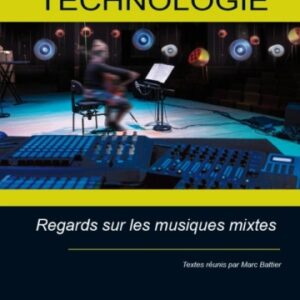
book
PORTRAITS POLYCHROMES 23
MUSIQUE ET TECHNOLOGIE. Regards sur les musiques mixtes
In French only. About the meeting of instruments and electronic. Texts from Daniel Teruggi, John Back, Denis Dufour, Pierre Couprie, Gilles Racot, Bruno Bossis, Laurent Cuniot… under the direction of Marc Battier.
12,00€
In stock

DVD
Jeff MERTENS
“Borbetomagus : A Pollock of Sound”
Filmmaker Jef Mertens brings a raw, urgent, and unpolished vision focusing on a band that has spent almost four decades defining and redefining not just their music, but the boundaries of music itself. Band members Don Dietrich, Donald Miller, and Jim Sauter tell their story with the help of artists, writers, photographers, and filmmakers that include noted critic Byron Coley, drummer Chris Corsano, guitarist Thurston Moore, groundbreaking Japanese noise unit Hijokaidan, and Switzerland's masters of “cracked electronics,” Voice Crack. Includes never-before-seen archival footage, amazing photographic finds, and previously unreleased recordings.
“The group drive furiously into the promise of freedom offered by improvised music to build their own unpredictable edifice. if there's a lesson to be drawn, it's that borbetomagus's focused, lateral expansion is an endlessly fertile plane in itself, regardless of the specifics of form. Mertens's film deftly navigates this idea without ever being overly prescriptive or sentimental. By allowing the work and its ambiguities to stay firmly in the foreground, any conclusions about how to evaluate the music are left up to the audience. Borbetomagus have always thrived on precisely this physical and conceptual interaction. The questions are the answers and vice versa, like two bells locked together.” (Matt Krefting, The Wire)
Region 0. NTSC.
15,00€
In stock

CD
Kevin DRUMM
“Trouble”
Recorded Winter 2013-2014 at Frostbite, Chicago, IL. Mastered by Russell Haswell. “Trouble” is the brand new dispatch from the assorted output of Kevin Drumm and sits as one of the quietest in his entire catalogue. A single continuous 54 minute excursion into the netherworld of the audio spectrum, “Trouble” is neither ambient nor drone but a more complex investigation into the deep recesses of sound. One which discreetly works itself into the mind of a listener willing to invest in the path laid out in this extremely subtle, beautiful and
exceptional release.
12,50€
In stock
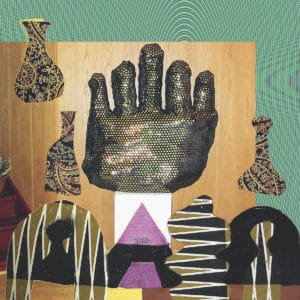
LP
BJ NILSEN & STILLUPPSTEYPA – Anla COURTIS
“Golden circle afternoon”
Recorded and mixed in Berlin, Reykjavík, Buenos Aires, 2013. Artwork by Helgi Thorsson, Bj Nilsen & Sigtryggur Berg Sigmarsson.
“Here back in Buenos Aires after more than three months touring… so nice to slow down and relax a bit.”
Those were the first words coming from an email from Anla after another long tour around Europe but there had been many other tours.
Day 10.
After a long train delay in Mannheim we were confused and exhausted and not remembering where the next destination would be. Mannheim had only offered a hard floor as bed and no sheets, and this is in the middle of winter time. Of course this experience gave us the idea that we should or more precisely MOST do a record together which concept would be: Travelling. Like an audio travel guide. Plus we are all big fans of the Travelling Wilburys. We thought this idea
to be one of the best one on this tour so far. In the train we were listening to Future Days by CAN.
Day 4.
Moving backwards a bit here. We caught Anla working on recordings in his hotel room. This was in Stockholm and one of the better paid gigs, with hotel rooms for all of us. Anla was interested in the sound coming from the heater in the bathroom. So he started recording it’s sound using a dictaphone. It sounded really interesting and was made into a long fade at the nights gig in Stockholm.
That same sound you can hear on the record.
Day 6.
Copenhagen: Here traditional town flavors, located bookstores can be found all around. Beer capital town some might say. Weather was not on our side and the trip took close to 12 hours but was all worth it. I think it was Siggi saying something along the lines of: “Expensive but worth it!” Helgi also remembering that time in the late 90s when touring with Reynols. Back then we did gigs with small card paper boxes as main sound source.
Day 8.
The Keukenhof Gardens, Leiden, Holland. We decided to invite some local musicians to the bar, as we had a few days off we took advantage of doing a few outtakes. Some of it appears on this record but we can't tell you where as the track listing got mixed-up by the recording engineers.
15,00€
In stock

DVD
Phill NIBLOCK
“Thir”
A milestone film from American composer and filmmaker Phill Niblock, presented for the first time in DVD with two alternate soundtracks. T H I R is a mesmerizing and hypnotic film from his Environments series shot in upstate New York in 1972. This film is one of Niblock’s finest and undiscovered jewels. A must have classic release.
18,00€
Out of stock
CD
Marcus SCHMICKLER & Julian ROHRHUBER
“Politiken der Frequenz”
Following an hypothesis according to which “Music and Economics share a fundamental object: number”, Schmickler and Rohrhuber’s project Politken der Frequenz circles around the acoustic rendering of number concepts. Inspired by Alain Badiou’s Le Nombre et les Nombres and accompanied by mixed choir, the piece attempts to question the apparent immediacy of number that allows calculation to govern today’s economy, social sciences and everyday life. "Change, flexibility, and movement are considered desirable today, while the static, rigid, and unchanging tends to be met with reservation or is implicitly opposed. Movement, perhaps even chaotic movement, or some form of change of the change of the change, appears promising: it suggests the invention of the new, rather than the discovery of the already-there, it is taken as the core of the revolutionary, or at least of the progressive. The unchanging, then, is only a brittle ladder to be used and then thrown away, a dead tool that merely points to life, or even a conservative prison of standardization. By consequence, what seems to exist in movement and nothing more, indeed appears in a favorable light: sound.
Be that as it may, such a positive evaluation of the potential of change mirrors a contemporary economic understanding of change and/or growth, where it is precisely what constitutes value as such. For algorithmic trading, success means the appropriate bet on a trend, for the employer, flexibilization and casualization of labour. And even though the appropriation of change as surplus value implies the arrest of its movement, this capture is only an intermediate unproductive
precondition of investment in the expected dynamical behaviour of free agents. The commenting chorus in Politiken der Frequenz (Politics of Frequency) is an attempt at exposing this mutual ideological support, by introducing a third element, namely the concept of number. A number and its properties can be considered either as an outcome of a dynamic process, like measurement or counting, or (and) as something that exists independently, and is a precondition
necessary for such operations in the first place. From both perspectives, however, the numerical is outside the frame of variation, something unchanging and infinitely resistant. It is in this role that it can serve as a middle and common ground of sound and economy, excluded, but necessary as a mere tool applied to provide external stabilization. What if number is taken as an object of investigation instead, an object of sound, one of mathematics? Can there be an alternative to the eternalized value of change, an alternative to the false dialectics of movement and arrest? Certainly, drawing from the history of mathematics, a sonification of number brings to light something fundamentally different, namely its acoustic shimmer, its glint.” Another version of the piece was commisioned by WDR3 Studio Akustische Kunst. Premiered November 2011. A joint release between Editions Mego & Tochnit Aleph.
12,50€
Out of stock
book + CD
Christian MARCLAY
“Fire & water”
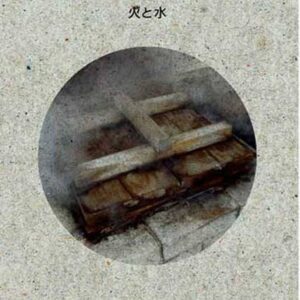
In 2012, Christian Marclay was invited to create an artwork for “Mixed Bathing World”, a contemporary art festival held in the town of Beppu, Japan, famous for its onsen (hot springs). It has eight major geothermal hot spots, sometimes referred to as the “Eight Hells of Beppu”.
On a jetty near the harbor Marclay installed a field of 100 flags banners, 50 represented water and 50 fire. At the bottom corner of each flag he attached a small bell.
This ArtBook CD includes an innovative work made of sound and pictures. A perceptual process which allows us to experience the world around us.
French and English. Size: 6.5 x 8.5 inch. Format: paperback.
29,00€
In stock

CD
COMPILATION
ZELPHABET VOL. J
“The tenth installment in Zelphabet’s new series of 26 alphabetically oriented compilations of noise. Volume J makes its mark with cuts from John Duncan, John Wiese, Jon Rose, Joseph Hammer and Justice Yeldham.” label info
4,00€
Out of stock
CD
Bill ORCUTT
“A history of every one”
“A History of Every One” by Bill Orcutt is an album of songs: minstrel songs, holiday songs, hymns, marches, cowboy songs, Disney songs, work songs, delta blues. The original tunes themselves are nothing special, well known, but not particularly well-regarded. Most would be filler on a mid-60’s Doris Day or Burl Ives LP. What Orcutt does with them however is remarkable: expanding upon techniques developed on 2011’s “How the Thing Sings” and incorporating ideas
forged since his recording of “The Star Spangled Banner” last year, Orcutt interrogates the apparent banality of his material, subjecting it to discontinuity, disjuncture and a fractured repetition that is disturbing and revelatory. Titled after a line from Gertrude Stein’s “The Making of Americans” and inspired by the scholarship of Elijah Wald and Eric Lott, “A History of Every One” is a bold re-writing of an important historical thread, an interpretation of a lost text and a bewildering extension upon Orcutt’s already singular language.
12,50€
In stock
LP
Alan LICHT
“Four years older”
Alan Licht, solo electric guitar. Four Years Later recorded December 14, 2012 at Echo Canyon West engineering: Ted Young technical assistance: Bentley Anderson. Four Years Earlier recorded live December 7, 2008 at the Electric Possible, Washington, D.C. All selections played as heard, no overdubs. A new set by the coolest chap in New York City documenting the development process of a solo electric guitar piece that Alan Licht has been playing out for last four years. Revered for his work in the Blue Humans and Text of Light, and a key figure in the pantheon of experimental solo guitar players born in the late sixties such Jim O’Rourke and Oren Ambarchi, ‘Four Years Older’ is his debut Editions Mego release, representing another peak in a career of mining the rich seams of minimalism, noise and avant-garde in general that stretches back more than two
decades. As it says on the box side A was recorded four years later than the side B (and vice versa). If that wasn’t enough it’s been four years since his last solo LP, YMCA, on Family Vineyard. Four Years Older sees a move away from the loop-based pieces of recent releases. On Four Years Later in particular the guitar’s fingerboard is actually touched more than on any other solo piece of the last ten years, although the guitar is pushed to sound more like a suitcase synth, a church organ, a hornet’s nest, and a malfunctioning PlayStation than a guitar per se. As Alan points out: “Four Years Earlier was the debut of the piece; it was in three sections, the latter two of which appear here. The first section was identical to the first section of Four Years Later. I scrapped the second two parts after a couple of subsequent performances and developed it into a six-part piece, and then a seven part piece in this studio version. In concert the piece lasts at least 30 minutes, I’ve shortened it on Four Years Later with an eye towards top 40 radio play. :)” The initial ‘Four Years Earlier’ session is a blistering electronic nailstorm that would not feel out of place on one of Russell Haswell’s legendary ‘Live Salvage’ sets. ‘Four Years Later’ is equally relentless but lets in some light with an ecstatic mid section that ascends toward the spiritual.
At the end of the day the final result is music which is both corrosive and lyrical, a feeling which is reflected in Stephen O’Malley’s eye melting artwork.
9,00€
Out of stock
book
Peter BRÖTZMANN
“We thought we could change the world – Conversations with Gérard Rouy”
One day in 2008 an old friend of mine came to me and said, ”I want to make a film about Peter Brötzmann, do you want to be part of it?” What a question! He didn”t know that much about (free) jazz and freely improvised music but from the late 70s on, he had been very much attracted - as we all were - by the graphic work of most of the Free Music Production records, a lot of them being worked out by Brötzmann. He also knew that I had been one of Brötzmann”s great fans and I had been acquainted to him for a very long time.
”Soldier of the road” was shot between November 2008 and August 2009. We went to different venues where Brötzmann was playing between those dates. We also had four long interviews with Brötzmann in his home in Wuppertal. Interviews of other people were made at the same time with Jost Gebers, Evan Parker, Fred Van Hove, Han Bennink, Fred Frith, Michael Wertmüller. And others with Joe McPhee, Conny and Johannes Bauer, Michael Zerang and Paal Nilssen-Love, Ken Vandermark and Mats Gustafsson, that were not used in the movie. Bernard Josse suggested me to ask Brötzmann some specific questions, some of them I did, some others I didn’t.
But I felt frustrated about the fantastic amount of information that Brötzmann gave us about the history of this music that would not going to be used in that 90 minutes long film - we can easily understand why. That’s how I started to realize that not using all that information would be a great loss.
All interviews appearing happened either during the shooting period of the movie, or have been published by the French Jazz Magazine during the last forty years, or were never published.
Illustrated with 58 photos by Gérard Rouy and 18 artworks by Peter Brötzmann.
in English.
28,00€