
Out of stock

CD
Paolo PARISI-John DUNCAN
“Conservatory (San Sebastiano)”
Back in stock. Full color 64 pp. paperbound catalogue with installation audio CD mounted in separate cover, both inserted in paper box. Catalogue : Texts (English / Italiano) by Daniela Cascella, Pietro Gaglianò, Giovanni Iovane, & Sergio Risaliti. Audio CD : John Duncan : shortwave, processing. Catalogue and CD cover produced by Maschietto Editore. CD produced by Allquestions. “Referring to the soundtrack for Conservatory (San Sebastian), Duncan speaks of “ghost voices”, emphasizing a line of research he’s followed in the last several years beginning with Phantom Broadcast (2002), the audio work and live concert performances that utilize a shortwave radio transmission intercepted in the course of a single recording: a shadow play that assumes the form of bells resonating into infinity, where they merge and reverberate, morphing into choruses suspended in space. Duncan’s recent work seems to outline the echoes of complex choral compositions and preclude the senses, where we can discern only a reflection that grows thin or thick, as if it were breathing. Tension is accumulated gradually without burning in dramatic or resolved passages; or better still, we could speak of infinite extensions of a single moment of climax, because at the climax these works contain the strength to unwind in a series of minimal tonal variations. Phantom broadcast: in his work Duncan renders perceptible sounds that are difficult to capture, belonging to a dimension impossible to measure in human terms, urging us to pay more attention to what we pass by and ignore. From the beginning of his more than twenty years of activity, his constant attempt has been to approach sounds that go beyond the normal, and the challenge given to everyone (above all to himself) has been to take possession of one’s own fears and limits. Voice is the sonic element investigated by Duncan with particular attention in the first years of the new century, as if it were a form of resident energy still calmed, capable of emitting forces that are vital to his art. This new investigation, outlined in a series of albums, is resolved in the installation The Keening Towers, realized for the 2003 Göteborg Biennial where childrens’ voices multiply in the air in an energetic rush. In the work realized for Conservatory (San Sebastian) Duncan utilizes darker vocal sounds giving form to an elusive audio-presence, a further ghost transmission at the limits of human measure: once more the sound is a gossamer diaphragm and necessary passage, so that what transcends our normal sense of hearing might be perceived here in all its evocative power.” Daniela Cascella, catalogue
31,00€
In stock
4 CD
Charlotte MOORMAN
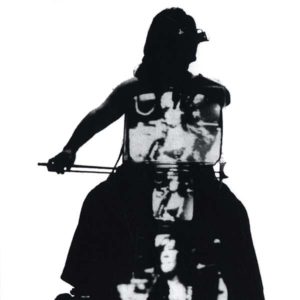
“Cello anthology”
4 CD with book and inserts in splicase. New edition of 250 copies!
It is certainly surprising that until now an exhaustive recognition of the work of Charlotte Moorman has not been undertaken. The cellist can be numbered among the most charismatic and influential protagonists to have appeared on the avant-garde or experimental music scenes since the early '60s. A documentation of her activities as a performer is generally available only in various catalogues which document the crucial intersection with the work of Nam June Paik, or the association with manifestations and events connected with the so exquisitely realistic gestures of the Fluxus movement. To have accepted the transformation of herself into a 'living icon' through the works realised in collaboration with Paik, has perhaps contributed to obscure a part of her individuality. As Giuseppe Chiari correctly noted, in a text which is authoritatively integrated into the documentation provided by the present publication, Charlotte Moorman's œuvre can in fact be sympathetically felt only in the absolutely 'unique' character of her interpretative gesture, a character which justly identifies her originality, her capacity of an authentic 'author'. The presence of Charlotte Moorman as catalyst must be realised in such an evaluation.
“Cello Anthology" is a collection of documents—sonic and photographic—as well as original texts and testimonials, made available for the first time in a unitary form, which permits a complete recognition of Charlotte Moorman's work. The biography and chronology faithfully reproduce the materials that the artist herself had ordered in booklet form. The range of her activity not only as an interpreter, but also as a promoter of the avant-garde artistic research progressively open to intersecting with the most varied disciplines—from music to sound and concrete poetry, form visual and plastic art to cinema and to video art—is moreover reconstructed through an unpublished text with which Charlotte Moorman meant to review the history of the fifteen editions of the New York Avant Garde Festival she organised between 1963 and 1980. At the core of her uninterrupted performative activity, here documented across a rich iconographic apparatus ordered chronologically, the works realised in collaboration with Nam June Paik doubtless represent a culminating moment in her striking career. It therefore seemed appropriate to also integrate the transcription of the primary texts and documents pertaining to them, to better perceive to what extent the aesthetic project of the Korean artist was indissolubly bound to the peculiar 'corporeality' of the cellist's performance 'gesture' and to her absolutely unique capacity of translating the musical experience within the limits of her own non-exchangeable physical presence. Giuseppe Chiari's affectionate testimony dedicated to the faithful interpreter of some of his most important works of the early '60s—works which affirmed the Florentine artist on the international scene—and the reprint of Gisela Gronemeyer's poignant essay dedicated toCharlotte Moorman, likewise offer a useful explanatory setting for the introduction of these copious texts and documents.
Indeed, for the first time, the work of Charlotte Moorman can be appreciated by means of a significant selection of vintage recordings. The first two CDs highlight a pair of exceptional documents—a performance recorded by radio station WBAI in New York on 12 September 1964, and a concert from 25 July 1966 in the Theatersaal in Aachen, Germany. These events superbly represent the type of repertoire that Moorman and Paik cultivated and proposed in the US and Europe, in the years following their meeting, in their memorable 'duo' exhibitions. The programs of the two concerts present several homogeneous choices and others more clearly divergent. The Aachen event, in fact, is testimony to the progressive and always more pronounced emergence of meta-musical elements deliberately turned toward the demystification of 'ritualistic' meanings of a concert, even while consciously accepting it as an exhibition frame. It is for this reason that the Aachen recording can document, with respect to the comprehensive programme, only those works in which the sound matrix constitutes the prominent factor. This is particularly evident, beyond several tried and true war-horses of their exhibitions which recur or are distributed equally in both concerts (26'1.1499" for a String Player by John Cage, Duet II by Toshi Ichiyanagi and two works by Giuseppe Chiari: Per arco and Ave Maria di Schubert, both of which were written for the cellist and dedicated to her), in the premiere of Earle Brown's Synergy, a rare and delightful duet with Terry Jennings on saxophone, an almost systematic version of Plus Minus by Karlheinz Stockhausen aided by Paik's Robot in the WBAI concert, as well as, in the Aachen concert Sonata No. 1 for Adults Only and especially the first performance of Opera Sextronique, both by Paik, in addition to other pieces by Earle Brown and Sylvano Bussotti. The second disc includes another unspecified rendering of Ichiyanagi's Duet II and an abbreviated version of Cage's 2'1.1499" for a String Player. Of the famous TV Cello—conceived by Paik for Moorman as a 'living sculpture'—the third CD offers an in situ recording realised on one of the three days inaugurating the Paik retrospective at the Museum of Contemporary Art in Chicago, on 11, 12 and 14 September 1982. This version contains respectively the TV Cello Duets with Paul Garrin and the Concerto for TV Cello and Videotapes, largely improvised, “including a tape collage by Ornette Coleman prepared for Charlotte, also talking with audience”. The fourth CD restores three other documents, collateral but definitely not secondary. One happy example is a choral work performed on 3 September 1964, during the second New York Avant Garde Festival, a performance of Jackson Mac Low's composition The Long Hot Summer, sees in an exceptional reunion the names of Charlotte Moorman, Nam June Paik, Benjamin Patterson, Philip Corner, and Malcolm Goldstein, as well as Mac Low himself. On the relevance of this performance, distinguished by a marked ethico-political intonation and valence, Philip Corner dwells extensively in an unpublished text printed here as an attachment to the sonic documentation. The voice of Charlotte Moorman, characterised by her unmistakable vital charge, is brought back to us through a long and meaningful interview conducted by Harvey Matusow in October of 1969 in the BBC New York Studios. The soundtrack of the video Waiting for Commercials, realised by Paik in 1972 in collaboration with Russel Connor, whose sound collage integrates musical insertions by Charlotte Moorman and David Behrman, completes the anthology put together and offered here.
Luxury edition including a 154 page book with original documents, full colour photos and scores; a set of 16 full colour inserts reproducing the original posters and programs of the Annual Avant Garde Festival of New York; 4 compact discs. Slipcase edition limited to 250 copies.
It is certainly surprising that until now an exhaustive recognition of the work of Charlotte Moorman has not been undertaken. The cellist can be numbered among the most charismatic and influential protagonists to have appeared on the avant-garde or experimental music scenes since the early '60s. A documentation of her activities as a performer is generally available only in various catalogues which document the crucial intersection with the work of Nam June Paik, or the association with manifestations and events connected with the so exquisitely realistic gestures of the Fluxus movement. To have accepted the transformation of herself into a 'living icon' through the works realised in collaboration with Paik, has perhaps contributed to obscure a part of her individuality. As Giuseppe Chiari correctly noted, in a text which is authoritatively integrated into the documentation provided by the present publication, Charlotte Moorman's œuvre can in fact be sympathetically felt only in the absolutely 'unique' character of her interpretative gesture, a character which justly identifies her originality, her capacity of an authentic 'author'. The presence of Charlotte Moorman as catalyst must be realised in such an evaluation.
“Cello Anthology" is a collection of documents—sonic and photographic—as well as original texts and testimonials, made available for the first time in a unitary form, which permits a complete recognition of Charlotte Moorman's work. The biography and chronology faithfully reproduce the materials that the artist herself had ordered in booklet form. The range of her activity not only as an interpreter, but also as a promoter of the avant-garde artistic research progressively open to intersecting with the most varied disciplines—from music to sound and concrete poetry, form visual and plastic art to cinema and to video art—is moreover reconstructed through an unpublished text with which Charlotte Moorman meant to review the history of the fifteen editions of the New York Avant Garde Festival she organised between 1963 and 1980. At the core of her uninterrupted performative activity, here documented across a rich iconographic apparatus ordered chronologically, the works realised in collaboration with Nam June Paik doubtless represent a culminating moment in her striking career. It therefore seemed appropriate to also integrate the transcription of the primary texts and documents pertaining to them, to better perceive to what extent the aesthetic project of the Korean artist was indissolubly bound to the peculiar 'corporeality' of the cellist's performance 'gesture' and to her absolutely unique capacity of translating the musical experience within the limits of her own non-exchangeable physical presence. Giuseppe Chiari's affectionate testimony dedicated to the faithful interpreter of some of his most important works of the early '60s—works which affirmed the Florentine artist on the international scene—and the reprint of Gisela Gronemeyer's poignant essay dedicated toCharlotte Moorman, likewise offer a useful explanatory setting for the introduction of these copious texts and documents.
Indeed, for the first time, the work of Charlotte Moorman can be appreciated by means of a significant selection of vintage recordings. The first two CDs highlight a pair of exceptional documents—a performance recorded by radio station WBAI in New York on 12 September 1964, and a concert from 25 July 1966 in the Theatersaal in Aachen, Germany. These events superbly represent the type of repertoire that Moorman and Paik cultivated and proposed in the US and Europe, in the years following their meeting, in their memorable 'duo' exhibitions. The programs of the two concerts present several homogeneous choices and others more clearly divergent. The Aachen event, in fact, is testimony to the progressive and always more pronounced emergence of meta-musical elements deliberately turned toward the demystification of 'ritualistic' meanings of a concert, even while consciously accepting it as an exhibition frame. It is for this reason that the Aachen recording can document, with respect to the comprehensive programme, only those works in which the sound matrix constitutes the prominent factor. This is particularly evident, beyond several tried and true war-horses of their exhibitions which recur or are distributed equally in both concerts (26'1.1499" for a String Player by John Cage, Duet II by Toshi Ichiyanagi and two works by Giuseppe Chiari: Per arco and Ave Maria di Schubert, both of which were written for the cellist and dedicated to her), in the premiere of Earle Brown's Synergy, a rare and delightful duet with Terry Jennings on saxophone, an almost systematic version of Plus Minus by Karlheinz Stockhausen aided by Paik's Robot in the WBAI concert, as well as, in the Aachen concert Sonata No. 1 for Adults Only and especially the first performance of Opera Sextronique, both by Paik, in addition to other pieces by Earle Brown and Sylvano Bussotti. The second disc includes another unspecified rendering of Ichiyanagi's Duet II and an abbreviated version of Cage's 2'1.1499" for a String Player. Of the famous TV Cello—conceived by Paik for Moorman as a 'living sculpture'—the third CD offers an in situ recording realised on one of the three days inaugurating the Paik retrospective at the Museum of Contemporary Art in Chicago, on 11, 12 and 14 September 1982. This version contains respectively the TV Cello Duets with Paul Garrin and the Concerto for TV Cello and Videotapes, largely improvised, “including a tape collage by Ornette Coleman prepared for Charlotte, also talking with audience”. The fourth CD restores three other documents, collateral but definitely not secondary. One happy example is a choral work performed on 3 September 1964, during the second New York Avant Garde Festival, a performance of Jackson Mac Low's composition The Long Hot Summer, sees in an exceptional reunion the names of Charlotte Moorman, Nam June Paik, Benjamin Patterson, Philip Corner, and Malcolm Goldstein, as well as Mac Low himself. On the relevance of this performance, distinguished by a marked ethico-political intonation and valence, Philip Corner dwells extensively in an unpublished text printed here as an attachment to the sonic documentation. The voice of Charlotte Moorman, characterised by her unmistakable vital charge, is brought back to us through a long and meaningful interview conducted by Harvey Matusow in October of 1969 in the BBC New York Studios. The soundtrack of the video Waiting for Commercials, realised by Paik in 1972 in collaboration with Russel Connor, whose sound collage integrates musical insertions by Charlotte Moorman and David Behrman, completes the anthology put together and offered here.
Luxury edition including a 154 page book with original documents, full colour photos and scores; a set of 16 full colour inserts reproducing the original posters and programs of the Annual Avant Garde Festival of New York; 4 compact discs. Slipcase edition limited to 250 copies.
98,00€
Out of stock
8 CD
COMPILATION
MUSICA FUTURISTA – A CURA DI DANIELE LOMBARDI
“A stunner of an 8CD box set dedicated to the history of Italian futurist music - put together by Daniele Lombardi - the most complete collection of music ever assembled in reverence of the historical Futurismo movement of the Italian avant garde! Disc 1 features Daniele Lombardi at the piano performing material by FB Pratella, Silvio Mix, F. Casavola and others, plus the first recording of L Russolo’s Intonarumori and Arco Enarmonico. Disc 2 features Metropolis - a three part composition by Lombardi, where intonarumori (noisemaker) samples are processed digitally. Disc 3 is the second collection of works by Daniele Lombardi with Gabriella Bartolomei, featuring recordings made for radio. Disc 4 features “vocal writing” performed by Gabriella Bartolomei and other works. Disc 5 is a tribute to Luigi Russolo. Disc 6 is a complete collection of all FT Marinetti’s “declamazioni”, from 1920 to 1935. Disc 7 features “Zavod”, a famous orchestral score by A. Mossolov and a collection of famous songs and piano compositions by H. Cowell. Disc 8 features Roberto Fabbricianni’s futuristic scores for solo flute.” label info
39,00€
Out of stock
7 CD
David TUDOR
“The art of David Tudor (1963-1992)”
David Tudor’s (1926-1996) identity morphed seamlessly from interpreter of mainly acoustic music to composer-performer of predominately electronic music over a period of about ten years, from the mid-1950s to the mid-1960s. This set of seven CDs, the first truly comprehensive survey of Tudor’s work as a composer, goes beyond any previous attempt to document that process of transformation. It captures his touch and sensitivity and offers an expansive, previously unavailable view onto more than three decades of Tudor’s astonishingly original work as an electronic musician. It neatly describes the arc of his career, from his first composition, Bandoneon ! (A Combine), through the fully-realized works of his long collaboration with the Merce Cunningham Dance Company. Six works that were issued in excerpted form in Music for Merce (1952-2009) are issued here complete. Other highlights include the live soundscapes for the Pepsi Pavilion at the 1970 Osaka World Expo, the marvelous simultaneous performance with John Cage of Mesostics Re Merce Cunningham/Untitled, and two extended binaural recordings of Rainforest IV with Composers Inside Electronics, the best recorded documents of this signature work. While Cage has finally more or less received his due, Tudor’s own accomplishments have been somewhat overshadowed and are ripe for a proper re-evaluation. It is our hope that the release of this set will prompt a thorough reconsideration of his seminal achievements.
David Tudor : Anima Pepsi, Bandoneon ! (A Combine), Neural Network Plus, Pepscillator, Pepsibird, Phonemes, Rainforest IV [Berlin, 1980], Rainforest IV [Stockholm, 1980], Virtual Focus, Weatherings, Webwork
John Cage / David Tudor [simultaneous performance]: Mesostics re Merce Cunningham / Untitled.
John Cage : Variations II.
Christian Wolff : For 1, 2, or 3 People.
David Tudor, Takehisa Kosugi, live electronics. John Cage, voice. Composers Inside Electronics : John Driscoll, Phil Edelstein, Ralph Jones, Martin Kalve, David Tudor, Bill Viola, live electronics.
David Tudor : Anima Pepsi, Bandoneon ! (A Combine), Neural Network Plus, Pepscillator, Pepsibird, Phonemes, Rainforest IV [Berlin, 1980], Rainforest IV [Stockholm, 1980], Virtual Focus, Weatherings, Webwork
John Cage / David Tudor [simultaneous performance]: Mesostics re Merce Cunningham / Untitled.
John Cage : Variations II.
Christian Wolff : For 1, 2, or 3 People.
David Tudor, Takehisa Kosugi, live electronics. John Cage, voice. Composers Inside Electronics : John Driscoll, Phil Edelstein, Ralph Jones, Martin Kalve, David Tudor, Bill Viola, live electronics.
90,00€
Out of stock
7 CD
COMPILATION
FTARRI COLLECTION
This 7-CD set contains 19 selected performances from the Ftarri Festival, held in April 2008 (Kyoto / Tokyo), and the Ftarri doubtmusic Festival, held in September 2010. The 7 CDs, together with a sequentially numbered Ftarri Collection card, come in a special handmade felt bag about 18 cm high and 17 cm wide. Each bag has a different design.
Ftarri Collection 1 with Opera Southern Cross (Taku Sugimoto: composition, images. Katsuaki Iida: words, reading. Toshimaru Nakamura: no-input mixing board. Taku Unami: computer). John Butcher / Toshimaru Nakamura / Tetuzi Akiyama. Otomo Yoshihide / Toshimaru Nakamura / Ryu Hankil.
Ftarri Collection 2 with Noid / Kai Fagaschinski / Axel Dörner / Taku Unami. Eddie Prévost / Sachiko M.
Ftarri Collection 3 with gnu (Masahiko Okura: compositions, bass clarinet, alto saxophone. Shinichi Tsukamoto: keyboards. Yukiya Taneishi: electric bass. Tadashi Kumada: drums. Itoken: drums). Ami Yoshida. Tim Olive / Anthony Guerra / Makoto Oshiro.
Ftarri Collection 4 with Los Glissandinos (Klaus Filip: lloopp + Kai Fagaschinski: clarinet). Bunsho Nishikawa / Tim Olive / Haco. Katsura Yamauchi / Ko Ishikawa / Tetsu Saitoh.
Ftarri Collection 5 with Naoaki Miyamoto. Chie Mukai / Tetragrammaton.
Ftarri Collection 6 with Chihei Hatakeyama / Kiyoshi Mizutani. Hello (Takahiro Kawaguchi: composition, bass guitar. Shinjiro Yamaguchi: guitar. Satoshi Kanda: bass guitar).
Ftarri Collection 7 with Seiichi Yamamoto / Umeda Tetsuya, VOIMA (Yasufumi Suzuki: computer. Tetsuro Yasunaga: computer). Tetuzi Akiyama / Utah Kawasaki / Katsura Yamauchi.
Numbered limited edition of 300
69,00€
Out of stock
7 CD
Luigi ARCHETTI
“Null I – VII”
Epic in scale, static, timbre and stillness, “Null” is a vast and profound music project that Luigi Archetti has been pursuing over a longer period. His musical research is not about Null (the German word for zero) as a mathematical object, as a real number. Instead, the term Null (zero) is used here as a metaphor in order to describe a state of pausing and anticipatory waiting. The music in project Null is characterised by static sounds, by drones and their overlapping and layering. The sound surfaces turn into acoustic sluggish material which flows slowly through time and gradually transforms itself. It is a constant gliding, a constant mutation of sound structures. Attempts to discover clearly defined melodies, rhythmically ordered structures or even beats are to no avail. A universe of sound particles diffuse in the foreground of the musical atmosphere, whereby the sounds do not provide any reference whatsoever to a possible location.
detail
All the sounds in the Null project are sourced from e-guitars, which are in part extensively defamiliarized through digitalization and thereby redefined. The e-guitars (frequently in scordatura tuning) are used to this end as suppliers of sound. The acoustic sedimentation of the diverse sounds and sound structures results in a dense and filigree sound fabric which develops a pull effect on the listeners. It is an invitation to travel in uncharted regions, a hypnotically captivating journey through timeless and minimal acoustic events.
detail
All the sounds in the Null project are sourced from e-guitars, which are in part extensively defamiliarized through digitalization and thereby redefined. The e-guitars (frequently in scordatura tuning) are used to this end as suppliers of sound. The acoustic sedimentation of the diverse sounds and sound structures results in a dense and filigree sound fabric which develops a pull effect on the listeners. It is an invitation to travel in uncharted regions, a hypnotically captivating journey through timeless and minimal acoustic events.
45,00€
Out of stock

6 LP
COMPILATION
MICHIGAN
“Hanson & RRRecords present: Michigan, a 6LP box-set featuring a full side each from twelve Michigan noise projects. Full LP sides from: Princess Dragonmom, Raven Strain, Redrot, Aaron Dilloway, Tovah D-Day, Charlie Draheim, Hive Mind, Mammal, Evenings, Cotton Museum, Sick Llama and Wolf Eyes. Compiled by Greh Holger and Aaron Dilloway. Limited to 600 copies. Packaged in fully silkscreened record mailers.”
50,00€
Out of stock
6 CD
COMPILATION
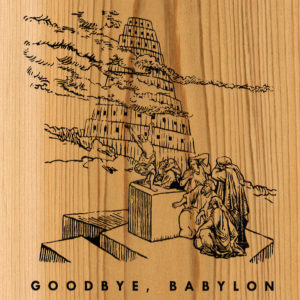
GOODBYE, BABYLON
Back in stock.
2003.
“In February 1999 a college radio disc jockey named Lance Ledbetter set out on a mission to compile rare and essential recordings of vintage religious music. Four and a half years later the result of this journey was released as a box set called Goodbye, Babylon. The set consists of five CDs featuring 135 Songs (1902-1960) and one CD featuring 25 Sermons (1926-1941). Accompanying the CDs is a 200 page book with Bible verses, complete lyric transcriptions, and notes for each recording. All of the components is reverently packed with raw cotton and housed in a deluxe 8" x 11" x 2.5" cedar box. Six CDs. 200 page book. Cedar box. Raw cotton.” 160 tracks with among others, Rev. T. T. Rose and Singers, Blind Lemon Jefferson, Carter Family, Frank Palmes, Brother Claude Ely, Stanley Brothers, Skip James, Johnson Family Singers, Blind Roger Hays, Blind Willie Johnson, Washington Phillips, Hank Williams, Sam Jones, Famous Blue Jay Singers, Dock Reed and Vera Hall Ward, Jimmie Strothers, Elder Otis Jones…
95,00€
Out of stock

6 CD
COMPILATION
WANDELWEISER UND SO WEITER
“Wandelweiser und so weiter” is a 6-CD box set with 8 hours of music by a wide range of composers in or around the Wandelweiser collective. The box brings together previously unissued works by the most well-known composers in the Wandelweiser collective (Michael Pisaro, Antoine Beuger, Radu Malfatti and Manfred Werder), pieces by other Wandelweiser composers (Johnny Chang, Sam Sfirri, Eva-Maria Houben, Stefan Thut, Taylan Susam), as well as music by other composers whose work relates to Wandelweiser in some way, such as James Saunders, Dominic Lash, Anett Németh and John Cage. A central focus of the collection is the way in which Wandelweiser music has in recent years come together with the ’post-reductionist’ strand within improvisation. Many of the pieces on the box set are realisations of Wandelweiser scores by musicians who are better known as improvisers, but who have recently been drawn to the soundworld of Wandelweiser. All the tracks on the box set are new recordings played by different groupings of over 50 musicians including Angharad Davies, Radu Malfatti, Lee Patterson, Jurg Frey, Philip Thomas, Patrick Farmer, Rhodri Davies, Phil Durrant, Sarah Hughes, Dominic Lash, Anton Lukoszevieze, Tim Parkinson and many more.”
CD1, Confluences. Sam Sfirri, “natural at last” (2010) with Neil Davidson, guitar & objects, Rhodri Davies, harp, Jane Dickson, piano, Patrick Farmer, amplified objects / open CD players, Dimitra Lazaridou-Chatzigoga, zither. Antoine Beuger, “Lieux de Passage” (2008) with Jürg Frey, clarinet + Angharad Davies, violin, Phil Durrant, electronics, Anton Lukoszevieze, cello, Radu Malfatti, trombone, Lee Patterson, amplified objects, Philip Thomas, piano. Manfred Werder”2011(4)” with Anett Németh, recording, instruments, objects. Sam Sfirri “natural at last” (2010) with Angharad Davies, violin, Phil Durrant, electronics, Jürg Frey, clarinet, Anton Lukoszevieze, cello, Radu Malfatti, trombone, Lee Patterson, amplified objects, Philip Thomas, piano. James Saunders, “various distinct spatial or temporal locations” (2011) with Simon Reynell, coffee carton. Radu Malfatti, “Heikou” (2010) with Angharad Davies, violin, Phil Durrant, electronics, Jürg Frey, clarinet, Joseph Kudirka, double bass, Anton Lukoszevieze, cello, Radu Malfatti, trombone, Lee Patterson, amplified objects, Philip Thomas, piano.
CD2, Crosscurrents. Sam Sfirri, “the undulating land” (2010) with NMC Chamber Ensemble: Jason Brogan, electric guitar, Bill Carson, acoustic guitar, Jared Sinclair, flute, Kim Larson, clarinet, Ron Wiltrout, percussion, Sam Sfirri, melodica. John Cage, “Three2” (1991) with Simon Allen, Chris Burn & Lee Patterson, percussion. Pierre Borel / Johnny Chang / Derek Shirley, “Etchings” (2012) with Pierre Borel, alto saxophone, Johnny Chang, viola, Derek Shirley, double bass. Phil Durrant, “Sowari for Ensemble” (1997) with Phil Durrant, electronics, Lee Patterson, amplified objects & processes, Philip Thomas, piano. Michael Pisaro, “fields have ears (3b)” (2010) with Set Ensemble:
55,00€
Out of stock
5 CD
COMPILATION
TEXT-SOUNDS COMPOSITIONS. A STOCKHOLM FESTIVAL
Back in stock. “Fylkingen Records in collaboration with the Swedish Radio released a series of LP records with text-sound compositions between the years of 1968-77. All of these were documentations of the international festival Text-Sound Compositions. A Stockholm Festival, which Fylkingen presented in Stockholm several times during these years. Most of the LPs were only pressed in batches of about 400-500 records, and most of the LPs sold out during the festivals. A re-release had long been planned, and this 5 CD box marks the complete re-release of the complete recordings. Apart from the 5 CDs with in all ca 6 hours of material, the CD box contains a 60 page booklet with essays by Teddy Hultberg and Sten Hanson, as well as historical photographs taken by Lütfi Özkök during the festivals.
The term text-sound composition was coined in 1967 in Sweden by the composers/writers Lars-Gunnar Bodin and Bengt Emil Johnsson, and was meant to serve to name a genre that was a vital art form in the no man’s land between sound, poetry, and music. Text-sound compositions had influences from previous modernistic waves such as futurism, dadaism, lettrism, etc., but perhaps the most important influence was the Swedish poet and visual artist Öyvind Fahlström, who had just over a decade earlier coined the term "concrete poetry". The term concrete poetry related to Pierre Schaeffer’s concrete music, and it is somewhere between concrete poetry and concrete music that text-sound compositions appear. The birth of the electronic music studio and concrete music’s idea that every sound can be freed from its original context and given a new meaning when it is reworked and put together with other sounds in the electronic music studio became the catharsis for text-sound composition. In the electronic music studio, voice and language sounds can be broken down, unleashed, and then fused together to become a poetry that had never been heard before. Certain text-sound composers would come to work only with pure lingual sounds, but most eventually came to integrate lingual sounds with other sounds, both concrete and electronic.
The CD box contains works by the following text-sound composers and sound poets: Charles Amirkhanian, Lars-Gunnar Bodin, Svante Bodin, Henri Chopin, Bob Cobbing, François Dufrêne, Gust Gils, Jarl och Sonja Hammarberg-Åkesson, Sten Hanson, Bernard Heidsieck, C. Christer Hennix, Åke Hodell, Bengt Emil Johnsson, Sandro Key-Åberg, Bengt af Klintberg, Ilmar Laaban, Annea Lockwood & Harvey Matusow, Arrigo Lora-Totino, Ghérasim Luca, Arne Mellnäs, Franz Mon, Ladislav Novák, Dieter Roth & Emmett Williams, Erik Thygesen, Paul de Vree.”
The term text-sound composition was coined in 1967 in Sweden by the composers/writers Lars-Gunnar Bodin and Bengt Emil Johnsson, and was meant to serve to name a genre that was a vital art form in the no man’s land between sound, poetry, and music. Text-sound compositions had influences from previous modernistic waves such as futurism, dadaism, lettrism, etc., but perhaps the most important influence was the Swedish poet and visual artist Öyvind Fahlström, who had just over a decade earlier coined the term "concrete poetry". The term concrete poetry related to Pierre Schaeffer’s concrete music, and it is somewhere between concrete poetry and concrete music that text-sound compositions appear. The birth of the electronic music studio and concrete music’s idea that every sound can be freed from its original context and given a new meaning when it is reworked and put together with other sounds in the electronic music studio became the catharsis for text-sound composition. In the electronic music studio, voice and language sounds can be broken down, unleashed, and then fused together to become a poetry that had never been heard before. Certain text-sound composers would come to work only with pure lingual sounds, but most eventually came to integrate lingual sounds with other sounds, both concrete and electronic.
The CD box contains works by the following text-sound composers and sound poets: Charles Amirkhanian, Lars-Gunnar Bodin, Svante Bodin, Henri Chopin, Bob Cobbing, François Dufrêne, Gust Gils, Jarl och Sonja Hammarberg-Åkesson, Sten Hanson, Bernard Heidsieck, C. Christer Hennix, Åke Hodell, Bengt Emil Johnsson, Sandro Key-Åberg, Bengt af Klintberg, Ilmar Laaban, Annea Lockwood & Harvey Matusow, Arrigo Lora-Totino, Ghérasim Luca, Arne Mellnäs, Franz Mon, Ladislav Novák, Dieter Roth & Emmett Williams, Erik Thygesen, Paul de Vree.”
49,00€
Out of stock
5 CD
Sven-Ake JOHANSSON
“More compositions”
KNM Berlin, Ensemble Zwischentöne, Eberhard Blum, Agnieszka Dziubak, Gunnhildur Einarsdottir, Sven-Åke Johansson, a.o. Rec.1992 - 2013.
“Italienische Vekehrsverständigung” (1983) for seven woodwindplayers
woodwind ensemble, conducted by SÅJ,recorded Ballhaus Naunynstrasse Berlin 1992. “Klingend und festgehalten” (1995) five stations for combo drum set
“Bom-Zeke-Bom” (1995) for septet, Ensemble Zwischentöne. “22 Miniaturen für Akkordeonorchester” (1991) for accordeon orchestra. Akeordeon Orchestra Berlin, direction by Gerhard Scherer, recorded Sophiensaele Berlin 2003. “Wagenstück” (1990) for sextet. Ensemble Zwischentöne, direction by Peter Ablinger, recorded Sophiensaele Berlin 2003. “Im Memoriam Tom Cora” (2007) for prepared cello and brushes. Agnieszka Dziubak cello, recorded Berlin 2007.
“Variations on Vimse” (2011) for harp. Gunnhildur Einarsdottir harp, recorded Berlin 2013. “Neue Kochstrasse” (2006) for grenaphon timpani and loudhailer.Sven-Åke Johansson grenaphon, timpani, loudhailer, recorded Technisches Museum Berlin 2006. “Konzert für MC(H-D) und gemischtem Chor” (2000) for motorcycles and mixed choir. Harley Davidson Ensemble, direction by Sven-Åke Johansson, recorded Marstall Berlin 2000. “Wegen Überfüllung bereits geschlossen” (1992), chamber piece for two voices, bandoneon, clarinet, piano, double bass, percussion. Ensemble Zwischentöne, direction by Peter Ablinger, recorded Ballhaus Naunynstrasse Berlin 1992. “Flötenquartett NR.1” (1992) for four flutes. Eberhard Blum, Johanna Kessner, Christiane Hellmann, Klaus Schoepp, flutes, recorded Museum der bildenden Künste Leipzig 1993. “Abovensen zur See” (2005) for Ship horns, voice and percussion. MS Friedrich, Hafenamt 1, Piguin, Feuerlöschboot Bremen, Schiff Zwei. Sven-Åke Johansson percussion, voice, recorded at Neues Museum Weserburg Bremen 2005. “Die neue Zeit ist pausenlos” (2008) for the Ensemble Zwischentöne, direction, Andrea Neumann, Bill Dietz, recorded Ballhaus Naunynstrasse Berlin 2008. “Polis, Wachs und Pomade” (2000) chamber piece for strings, wind instruments and voice. Axel Dörner, Michael Gross trumpets, Andrew Digby trombone, Ekkehard Windrich, Marc Sabat violine, Jörg Winkler viola, Sven-Åke Johansson voice, recorded at Konzerthaus Berlin 2002. “Abovensen geht leicht gebückt…” (2002) for voice and percussion. Sven-Åke Johansson drums, vocals, recorded at Konzerthaus Berlin 2002. “Einen staubigen Klang finden” (1998) for trumpet, bass clarinet, violine and double bass. Winfried Rager clarinet, Michael Gross trumpet, Arnulf Ballhorn double bass, Imke Dithmar viola, recorded at Rundfunkhaus Köln 1999.
35,00€
In stock
5 CD
Sven-Ake JOHANSSON
“Jazzbox”
Box with 5 CD’s with Cool Quartett vol. I, Cool Quartett vol. II, Cool Quartett / Cool Sextett, Tune up, Candy with Borghini, Delius, Dörner, Johansson, Roder, Takase, Terzic, Walsdorff, Williamson.
35,00€
Out of stock
5 CD
OMIT
“Enclosures 2011-2016”
Co-released with End of the Alphabet Records.
Since his first self-released cassettes in the early 1990s, New Zealand’s Clinton Williams aka Omit has been on a singular and personal musical journey. Described as one of the greatest outsider artists currently working in the field, Omit employs homebuilt instruments constructed from modified electric motors and salvaged sound sources to create a startlingly original soundworld. It is a world he inhabits alone, isolated in the small town of Blenheim in southern New Zealand, but it involves a deep exploration of the human condition. Over the years OMIT’s music has become less noisy and more sparse and minimal, as open signal patterns and oblique textures pass each other in haunted spaces.
“Enclosures 2011-2016” is a 5xCD box-set co-released by Pica Disk (run by Lasse Marhaug out of Norway) and End of the Alphabet (run by Noel Meek in New Zealand) and collects Omit’s most recent self-released albums, artefacts that originally came in super limited edition CDRs with hand-made covers between 2011 and 2016. Unavailable except directly from the artist, these beautiful works are now available remastered in a deluxe box-set along with OMIT’s famous surrealist drawings and science fiction themed artwork, plus liner notes by close friend and collaborator Bruce Russell (The Dead C/A Handful of Dust).
“Clinton Williams is the hardest-working man in minimal electronic music. He is one of two people I know fairly well who I honestly believe is possessed by genius.” Bruce Russell (from the liner notes)
Since his first self-released cassettes in the early 1990s, New Zealand’s Clinton Williams aka Omit has been on a singular and personal musical journey. Described as one of the greatest outsider artists currently working in the field, Omit employs homebuilt instruments constructed from modified electric motors and salvaged sound sources to create a startlingly original soundworld. It is a world he inhabits alone, isolated in the small town of Blenheim in southern New Zealand, but it involves a deep exploration of the human condition. Over the years OMIT’s music has become less noisy and more sparse and minimal, as open signal patterns and oblique textures pass each other in haunted spaces.
“Enclosures 2011-2016” is a 5xCD box-set co-released by Pica Disk (run by Lasse Marhaug out of Norway) and End of the Alphabet (run by Noel Meek in New Zealand) and collects Omit’s most recent self-released albums, artefacts that originally came in super limited edition CDRs with hand-made covers between 2011 and 2016. Unavailable except directly from the artist, these beautiful works are now available remastered in a deluxe box-set along with OMIT’s famous surrealist drawings and science fiction themed artwork, plus liner notes by close friend and collaborator Bruce Russell (The Dead C/A Handful of Dust).
“Clinton Williams is the hardest-working man in minimal electronic music. He is one of two people I know fairly well who I honestly believe is possessed by genius.” Bruce Russell (from the liner notes)
30,00€
In stock
5 CD
Jürg FREY
“L’âme est sans retenue I”
“L’âme est sans retenue I” (1997-98) for electronic tape.
Field recordings by Jürg Frey in Berlin, October - December 1997, composed and mixed in Aarau, Switzerland in 1998. Mastered by Taku Unami.
“There is music in which the time/space of sound and the time/space of silence appear in their own particular realms. Even if the sounds are often very soft, this music is not about failing into silence.. The sounds are clear, direct and precise. Since they have left musical rhetoric behind, there is instead a sensitivity for the presence of sound and for the physicality of silence. There are long periods of the presence of sound, and long periods of the absence of sound. The two together form the “time present” of the piece.” Jürg Frey from the liner notes.
Field recordings by Jürg Frey in Berlin, October - December 1997, composed and mixed in Aarau, Switzerland in 1998. Mastered by Taku Unami.
“There is music in which the time/space of sound and the time/space of silence appear in their own particular realms. Even if the sounds are often very soft, this music is not about failing into silence.. The sounds are clear, direct and precise. Since they have left musical rhetoric behind, there is instead a sensitivity for the presence of sound and for the physicality of silence. There are long periods of the presence of sound, and long periods of the absence of sound. The two together form the “time present” of the piece.” Jürg Frey from the liner notes.
43,00€
Out of stock

5 CD
Hartmut GEERKEN – Michael RANTA
“The Heliopolar Egg”
Documentary recordings of Hartmut Geerken and Michael Ranta’s November and December 1976 tour of the Middle East and East Asia. Geerken is known for his long relationship with Sun Ra including compiling a discography), but he wears many other hats too: musician, film-maker, archivist. Ranta is a percussionist best known for his famous “Improvisation Sep.1975” collaborative
record with Toshi Ichiyanagi and Takehisa Kosugi. This is a CD reissue of an LP boxset, originally released in 2010 as the last release on the now dormant Italian label Qbico. The tour started in Iran before moving east to India, Bangladesh, the Philippines, Korea, and ending in Japan. At their show in Osaka, they played together with Toshi Ichiyanagi. This edition includes the concert with Ichiyanagi, solo performances by Ichiyanagi and Shoko Shida, as well as a rare Delhi performance that was originally only included in the highly limited 6LP edition of the Qbico set. All the tracks overflow with rich multi-dimensionality, providing a glimpse of Ranta and Geerken’s depth as performers.
Boxset. Includes a 12-page booklet with flyers from the period.
Limited edition of 500.
Disc 1. rec. November 25; Baghe Ferdows-Zafaranieh, Teheran, Iran. rec. December 1; Max Mueller Bhavan, Delhi, India. rec. December 3/4; Max Mueller Bhavan, Calcutta, India.
Disc 2. rec. December 8, German Cultural Institute in co-op with the Academy of the Arts, Dacca, Bangladesh.
Disc 3. rec. December 13; Abelardo Inner Green (open air) in co-op with the U.P. College of Music, Manila, Philippines.
Disc 4. rec. December 15; Korea Drama Center, Seoul, Korea.
Disc 5. rec. December 18, Goethe-Institute, Osaka, Japan.
46,00€
Out of stock
4 CD
Ghédalia TAZARTÈS
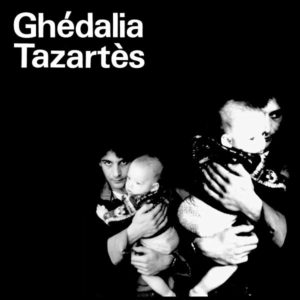
“Les danseurs de pluie – coffret”
New slipcase edition!
This lavish set includes the complete Ghédalia Tazartès recordings previously issued on CD by Alga Marghen. This editions is presented in a newly designed slipcase box including 4 CDs in elegant slim digipak sleeves.
“Diasporas” is the CD edition of Tazartès’ first album also including “Ferme ta gueule, Zarathustra” (previously issued as side A of “Granny Awards” LP).
“Tazartès’ Transports” is the CD edition of Tazartes' second album complete with four “Assassins” bonus tracks (previously issued as "Les danseurs de la pluie" miniCD).
“Une eclipse totale de soleil” is the CD edition of Tazartès' third album. Originally conceived in two parts, this CD edition is completed by the long bonus track “Il regalo della befana”, or “Eclipse totale de soleil (Part III)”.
“Tazartès” is the CD edition of Tazartès’ forth album also including “Whatever Works Singing Wild My Rock Ghédalia” (previously issued as side B of “Granny Awards” LP).
Ghédalia Tazartès is a nomad. He wanders through music from chant to rhythm, from one voice to another. He paves the way for the electric and the vocal paths, between the muezzin psalmody and the screaming of a rocker. He traces vague landscapes where the mitre of the white clown the plumes of the sorcerer, the helmet of a cop and Parisian anhydride collide into polyphonic ceremonies… The greatest trips were made in the deep end of the throat: the extra-European music open the ear to Ghédalia’s intra-European exoticism. Where was music before music halls? Where was the voice before it learned how to speak? Ghédalia is the orchestra and a pop group all in one person: the self is multitude and others. The author and his doubles work without a net, freely connecting the sounds, the rhythms, his voice, his voices. The permanent metamorphosis is a principle of composition, it escapes control, refuses classification. To hell with the technocrats of noise and the purists of synthetic culture. All art like all true mythology use a double clavier, playing nature and culture, feeling and the distance of the flesh, death. Off limits!
This lavish set includes the complete Ghédalia Tazartès recordings previously issued on CD by Alga Marghen. This editions is presented in a newly designed slipcase box including 4 CDs in elegant slim digipak sleeves.
“Diasporas” is the CD edition of Tazartès’ first album also including “Ferme ta gueule, Zarathustra” (previously issued as side A of “Granny Awards” LP).
“Tazartès’ Transports” is the CD edition of Tazartes' second album complete with four “Assassins” bonus tracks (previously issued as "Les danseurs de la pluie" miniCD).
“Une eclipse totale de soleil” is the CD edition of Tazartès' third album. Originally conceived in two parts, this CD edition is completed by the long bonus track “Il regalo della befana”, or “Eclipse totale de soleil (Part III)”.
“Tazartès” is the CD edition of Tazartès’ forth album also including “Whatever Works Singing Wild My Rock Ghédalia” (previously issued as side B of “Granny Awards” LP).
Ghédalia Tazartès is a nomad. He wanders through music from chant to rhythm, from one voice to another. He paves the way for the electric and the vocal paths, between the muezzin psalmody and the screaming of a rocker. He traces vague landscapes where the mitre of the white clown the plumes of the sorcerer, the helmet of a cop and Parisian anhydride collide into polyphonic ceremonies… The greatest trips were made in the deep end of the throat: the extra-European music open the ear to Ghédalia’s intra-European exoticism. Where was music before music halls? Where was the voice before it learned how to speak? Ghédalia is the orchestra and a pop group all in one person: the self is multitude and others. The author and his doubles work without a net, freely connecting the sounds, the rhythms, his voice, his voices. The permanent metamorphosis is a principle of composition, it escapes control, refuses classification. To hell with the technocrats of noise and the purists of synthetic culture. All art like all true mythology use a double clavier, playing nature and culture, feeling and the distance of the flesh, death. Off limits!
53,00€
Out of stock
4 CD
MUSICA ELETTRONICA VIVA
“Mev 40”
This 4-CD set, covering the years 1967-2007, comprises the best surviving recorded documents from four decades of performances, personally curated by its three core members - Alvin Curran, Frederic Rzewski, and Richard Teitelbaum. As such, it is an invaluable historical anthology of one of the pioneering and truly legendary exponents of live-electronic music. With Alvin Curran, Frederic Rzewski, Richard Teitelbaum, Karl Berger, Allan Bryant, Steve Lacy, George Lewis, Garrett List, Carol Plantamura, Gregory Reeve, Ivan Vandor… “Musica Elettronica Viva (MEV) was begun one evening in the spring of 1966 by Allan Bryant, Alvin Curran, Jon Phetteplace, Carol Plantamura, Frederic Rzweski, Richard Teitelbaum and Ivan Vandor in a room in Rome overlooking the Pantheon. MEV’s music right from the start was also totally open, allowing all and everything to come in and seeking in every way to get out beyond the heartless conventions of contemporary music. Taking its cue from Tudor and Cage, MEV began sticking contact mics to anything that sounded and amplified their raw sounds: bed springs, sheets of glass, tin cans, rubber bands, toy pianos, sex vibrators, and assorted metal junk; a crushed old trumpet, cello and tenor sax kept us within musical credibility, while a home-made synthesizer of some 48 oscillators along with the first Moog synthesizer in Europe gave our otherwise neo-primitive sound an inimitable edge. In the name of the collectivity, the group abandoned both written scores and leadership and replaced them with improvisation and critical listening. Rehearsals and concerts were begun at the appropriate time by a kind of spontaneous combustion and continued until total exhaustion set in. It mattered little who played what when or how, but the fragile bond of human trust that linked us all in every moment remained unbroken. The music could go anywhere, gliding into self-regenerating unity or lurching into irrevocable chaos-both were valuable goals. In the general euphoria of the times, MEV thought it had re-invented music; in any case it had certainly rediscovered it”. Alvin Curran.
49,00€
Out of stock
4 CD
Brunhild & Luc FERRARI
“Contes sentimentaux”
These pieces have been made between 1989 and 1994 for the German radio. Brunhild and Luc Ferrari are speaking around the pieces from Luc like “Petite symphonie intuitive pour un paysage de printemps”, “Ce qu’à vu le Cers”, “Collection de petites pièces” (36 enfilades pour piano et magnétophone), “Music promenade” among others, describing small details and anecdotes. They speak in French and German and consider the recorder as a scratchpad.
40,00€
Out of stock
4 CD
Nate WOOLEY
“The Complete Syllables Music”
Composer, improviser, and trumpet player Nate Wooley continues to cement his place as an American iconoclast by releasing the complete recordings of his revolutionary solo [Syllables] compositions. Pleasure of the Text Records is releasing the deluxe 4 CD set consisting of two reissues of out-of-print early works: 8 [Syllables] (originally released on Peira Records 2013) and 9 [Syllables] (originally released on Mnoád 2014) as well as the premiere recording of his
150 minute epic For Kenneth Gaburo.
The Complete Syllables Music is the first collected edition of trumpet experimentalist Nate Wooley’s groundbreaking solo compositions. His attempt to sidestep a positive/negative value based musical aesthetic and to expand his own preconceptions of what the trumpet tone should be led him to the construction of a new compositional language, based on adjusting the physical parameters of how one makes sound. This new way of thinking was based on the shape and positioning of the oral cavity necessary to produce the phonetic sounds in speech; using the International Phonetic Alphabet as a new kind of tone-row to create structures on the position of the teeth, tongue, throat and nasal cavity. The result is an approach to the sound of the trumpet that is involved in traditional nor extended technique, but treats virtuosity as a non-issue. The box set features the first two works in this vein, reissued from out of print recordings on the Peira and Mnoád labels and is capped off with the most ambitious, and final solo version of the Syllables pieces, the 150 minute long electro-acoustic masterpiece For Kenneth Gaburo.
Personnel: Nate Wooley: trumpet, amplifier, tape, analog synthesizers.
Recorded Disc 1 Recorded at Issue Project Room, Brooklyn, NY Originally Released on Peira Records October 1, 2011 Recorded, mixed and mastered by Philip White.
Disc 2 Recorded at I Beam, Brooklyn, NY Originally Released on Mnóad Records October 7, 2012 Recorded, mixed and mastered by Jeremiah Cymerman.
Discs 3 and 4 Recorded at Curtis R. Priem Experimental Media Performing Arts Center EMPAC), Troy, NY Previously Unreleased Recorded, mixed and mastered by Jeff Svatek.
27,00€
In stock
4 CD
WITCYST
“Real Folk – Lathe Cut Singles 1993-1997”
A bone-fide underground legend, Witcyst has been creating completely unique noise music from the isolation of smalltown New Zealand since the late eighties. For three decades Witcyst has been an infamous prol yet mysterious force of the deep noise underground, sharing handmade cassettes, lathe cut singles, CDRs and art objects via the post, but never touring or appearing live.
Witcyst’s mysterious career is marked by a complete absence of live performances and a massive prolificness in recordings wrapped in his own hand-made day-glo collaged artworks and assemblages. His music is the freest of free music. Unhampered by arch design or advanced technique, his work stands as an ever-surprising, unmatchable feast for the ears and eyes.
With the release of “Real Folk” Pica Disk and End of the Alphabet hope to break the long-held secret of Witcyst and bring his glorious visions to a wider audience. The 4xCD boxset collects 40 tracks from 20 self-released 7” lathe cut singles from the mid-nineties (all from legendary New Zealand lathe-cutter, Peter King), that were originally released in editions of 10 to 20 copies, so rare most of them have never appeared on Ebay or Discogs. The box-set also includes three booklets of artwork, photos and an extensive first-time home interview of Witcyst himself by Noel Meek.
• 4 CDs > 40 tracks > more than four hours of material
• 3 booklets totaling 72 pages, including first time in-depth interview with Witcyst and almost 100 colour photos and artwork.
• CDs in individual colour wallets reproducing the artwork of each 7” single
• Limited edition of 300 copies.
Witcyst’s mysterious career is marked by a complete absence of live performances and a massive prolificness in recordings wrapped in his own hand-made day-glo collaged artworks and assemblages. His music is the freest of free music. Unhampered by arch design or advanced technique, his work stands as an ever-surprising, unmatchable feast for the ears and eyes.
With the release of “Real Folk” Pica Disk and End of the Alphabet hope to break the long-held secret of Witcyst and bring his glorious visions to a wider audience. The 4xCD boxset collects 40 tracks from 20 self-released 7” lathe cut singles from the mid-nineties (all from legendary New Zealand lathe-cutter, Peter King), that were originally released in editions of 10 to 20 copies, so rare most of them have never appeared on Ebay or Discogs. The box-set also includes three booklets of artwork, photos and an extensive first-time home interview of Witcyst himself by Noel Meek.
• 4 CDs > 40 tracks > more than four hours of material
• 3 booklets totaling 72 pages, including first time in-depth interview with Witcyst and almost 100 colour photos and artwork.
• CDs in individual colour wallets reproducing the artwork of each 7” single
• Limited edition of 300 copies.
30,00€
Out of stock
4 CD
Keith ROWE
“The room extended”
Keith Rowe, guitar, electronics. Recorded at home from mid-2013 to mid-2016. 4 solo CDs, 246 minutes, no content overlap with the earlier The Room (ErstSolo 001) this is Keith’s solo masterwork.
“One of the first things that hits you is the immense depth of much of the work; there always seems to be at least four or five layers of sound occurring, enough that on each subsequent listen (I've been through its four-plus hours five times so far), you pick up not only sounds you've not heard/noticed before but, more rewardingly, new relationships between them, both simultaneous ones and ones spanning the course of the piece. For a while, Rowe has been interested in revisiting sound areas he's investigated over the years, seeing if there might be aspects he'd previously missed or investigating new ways of deploying them and at several moments here, listeners familiar with his history may well recognize some signature sounds. There are plenty of new, even startling ones as well, such as the artificial sounding bird call that's looped for an almost unconscionable length at one point. More tellingly, the habit he first (as far as I know) used in his solo performance in Tokyo in 2008, that of the intentional inclusion of extracts from Western classical music, is a thread that winds through the entirety of 'The Room Extended'. In at least one sense, it's simply an honest evocation of his room, the main room of his home in Vallet, in which any visitor will hear over his stereo, not the latest release from the contemporary improvising world, but rather Wagner, Haydn, Brahms, Purcell, Mondonville and others. This is, in a circumscribed sense, his room.” Brian Olewnick, Just Outside
“One of the first things that hits you is the immense depth of much of the work; there always seems to be at least four or five layers of sound occurring, enough that on each subsequent listen (I've been through its four-plus hours five times so far), you pick up not only sounds you've not heard/noticed before but, more rewardingly, new relationships between them, both simultaneous ones and ones spanning the course of the piece. For a while, Rowe has been interested in revisiting sound areas he's investigated over the years, seeing if there might be aspects he'd previously missed or investigating new ways of deploying them and at several moments here, listeners familiar with his history may well recognize some signature sounds. There are plenty of new, even startling ones as well, such as the artificial sounding bird call that's looped for an almost unconscionable length at one point. More tellingly, the habit he first (as far as I know) used in his solo performance in Tokyo in 2008, that of the intentional inclusion of extracts from Western classical music, is a thread that winds through the entirety of 'The Room Extended'. In at least one sense, it's simply an honest evocation of his room, the main room of his home in Vallet, in which any visitor will hear over his stereo, not the latest release from the contemporary improvising world, but rather Wagner, Haydn, Brahms, Purcell, Mondonville and others. This is, in a circumscribed sense, his room.” Brian Olewnick, Just Outside
38,00€
Out of stock

4 CD
Jakob ULLMANN
“Fremde Zeit – 1-4”
“Fremde zeit addendum” + “Fremde zeit addendum 4. Solo III für Orgel” now in a 4 audio-CDs box, booklet German-English.
Recordings in neuen Aufnahmen 2008-2011 · in new authorized recordings 2008-2011. “disappearing musics for six players (more or less)”, 1989-1991. Maruta Staravoitava, recorder. Pavlos Serassis, clarinet. Patrick Stadler, saxophon. Orsolya Sepsi, Éva Csizmadia, violins. Lucie Martin, Hans-Peter Schulz, keyboards. “solo I + II + III”, (1992-1993-2010). Molly McDolan, oboe. Dafne Vicente-Sandoval, fagott. Hans-Peter Schulz, organ. “komposition für streichquartett 2”, (1997-1999). Pellegrini-Quartett : Antonio Pellegrini, Thomas Hofer, violins. Fabio Marano, viola. Helmut Menzler, cello. “PRAHA: celetná. - karlova - maiselova” (2004-2007). Jardena Flückiger, voice. Christoph Bösch, recorder. Dafne Vicente-Sandoval, fagott. Helena Winkelman, violin. Oliver Margulies, viola. Ellen Fallowfield, cello. Clara Gervais, doublebass, percussion. Stephan Schmidt, voice. Leonardo Idrobo Arce, electronics. “Thus, Ullmann creates a quiet music in order to give himself and his listeners the opportunity to hear more, and better. This comes about because our ability to hear is augmented when listening to quiet music. We hear better because we make an effort to hear better. That is why Ullmann likes to locate his sound sources at the periphery, so as not to make it too easy for the ear. In order to let sounds develop and move on their own time, the pieces are usually longer than the general concert norm dictates. The opening minutes serve as the exposition of the tempo and the mode, to condition, as it were, the listening.” Bernd Leukert
39,00€
In stock

3 CD
Eliane RADIGUE
“Trilogie de la mort”
Trilogie de la Mort is a work in three parts for analogue Arp synthesizer. The first third of the work, Kyema is inspired by The Tibetan Book of the Dead and invokes the six intermediate states that constitute the existential continuity of the being. Kailasha, the second chapter, is structured on an imaginary pilgrimage around Mt. Kailash, one of the most sacred mountains in the Himalayas. Koumé, makes up the last part of the trilogy and emphasizes the transcendence of death.
28,00€
Out of stock
3 CD
AMM
“Laminal”
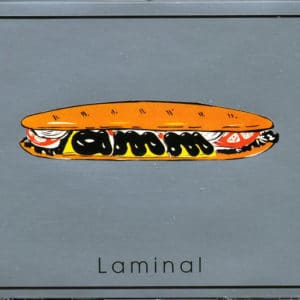
“A three CD set marking thirty years in the making of AMMmusic. Three concert performances: Aarhus, Denmark, 1969. London, 1982. New York, 1994. Featuring variously: Cornelius Cardew, Lou Gare, Christopher Hobbs, Eddie Prévost, Keith Rowe and John Tilbury. Includes an illustrated booklet with commentaries by Jim O’Rourke, Victor Schonfield, Malcolm LeGrice and John Tilbury”. Tremendous historical document of all exclusive material to this box, perfectly packaged, desperately awaited. “AMM moves on or comes together on any plane: it could be volume, speed or density as much as pitch. The most peaceful and united parts might be the ones which are the busiest and most crowded. AMM uses all the dimensions of musical space to create the feeling that sound is a solid object in solid space -- complete with size, shape, performance. It depends where they are sitting, what they are focussing on, how long and at what stage they can concentrate, and how widely or narrowly. There is no whole or centre, only parts. AMM reveals the behaviour of sound, and its anomalies. Low sounds absorb high ones, loud sounds blot out soft ones, but most sounds placed side by side either co-exist, reach out to each other or merge. Sometimes you can hear one sound being squeezed until it splits into two or more. The melody need not be sound changing: it could simply be sound being”.
30,00€
Out of stock
3 CD
Keith ROWE – Sachiko M – Toshimaru NAKAMURA – Otomo YOSHIHIDE
Keith Rowe guitar, electronics ; Sachiko M, sine waves, contact microphone on objects ; Toshimaru Nakamura no-input mixing board ; Otomo Yoshihide electric guitar, turntables. “ErstLive 005 is from the quartet of Keith Rowe, Sachiko M, Toshimaru Nakamura, and Otomo Yoshihide, the centerpiece show of AMPLIFY 2004: addition, the "four hour quartet". ErstLive 005 contains three individually packaged slimline CDs in a slipcase with original artwork by Keith Rowe, which wraps around the entire box, front, side, and back, as well as liner notes from all four musicians and numerous pictures from Yuko Zama. ErstLive 005 documents only the second performance of this quartet, after a brief set in Cologne the week before.” “One thing I can say for sure is that the boundary between listening to this CD and playing this music is totally dissolved, and there is only a difference of time and space where the sounds are heard.” -Otomo Yoshihide
32,00€
Out of stock
3 CD
Henri POUSSEUR – Michel BUTOR
“Paysages planétaires”
In year 2000 Henri Pousseur was asked by Philippe Samyn, architect of Brussels who likes to work in association with other arts, to lend his support to the plan for the construction of a business complex by one of the most important building enterprises in the country. There were four low buildings arranged like different parts of a medieval castle-village, grouped around a kind of large open central court. Leaning on the suggested image, Pousseur immediately suggested that the first spinal-column be composed of an electronic carillon, sounding in variations every hour, thus making the hours between 6 a.m. and 10 p.m.
Henri Pousseur imagined then a connection between the time of Nivelles (a city 40 km south of Brussels, where this large project will be situated) and the time of the entire planet and the more or less metaphoric sonic and musical realities attached to it. He made on the one hand the 16 hours of a theoretically complete day of work (from the cleaning service up to the last researches in the office) correspond to the 24 hours of a complete terrestrial revolution. And divided the globe into eight large north/south "slices", themselves divided into three perpendicular "rings": north, center, south, with the understanding that only inhabited lands were taken into consideration. To each of the 8 "great hours" of the total duration, Pousseur associated 3 regions, one of each ring (north/central/south) set out as far apart as possible on the terrestrial globe.
Over a background of a fairly continuous variety of noises which are perpetually evolving: sea, fire, city, swamp, industry, forest, etc. there are ethno-musical samples from one region or from several regions involved, more or less worked over by all sorts of numerical methods which vary their capacity to be recognized and their effectiveness as quasi-traditional music. This work once finished (realised in the Studio of the composer’s son Denis), Pousseur made a synthesis on three discs by superimposing the landscapes (a bit in the manner of the previous "Etudes paraboliques") in 16 Paysages Planetaires. The titles of the landscapes expresses by their contraction the simultaneous or alternate presence of several regions; for example, "Alaskamazonie" is self-explanatory. Something like "Gamelan Celtibere" brings out a play; between the West Coast of Europe with the Indonesian archipelago and even the northern part of Australia. Continuing like this you could find it amusing to reconstruct the circum-planetary movement of the work.
Michel Butor, for forty years accomplice of Henri Pousseur, has been willing to write the prose-verse alternating poetic structure, very luminous, which makes a global accompaniment to the procession of these landscapes. His text is included in the 60 pages documentation booklet, also featuring 2 long essays by Henri Pousseur: "Paysages Planetaires" and "Athmospheric and Cultural Sources for Each of the Landscapes".
Finally, by this work, Henri Pousseur renders homage to all the singers and instrumentalists, sound engineers, ethnic musicologists and editors who have either produced, or gathered and transmitted, all the marvellous musical invention which inspired and nourished the work and which, with the sounds of the world, of nature, of society and of industry, are supposed to represent a kind of formal summing-up of life’s multiplicity on this sailing Earth as she travels through cosmic space.
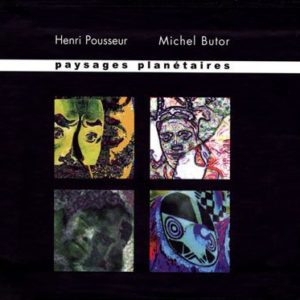
All the images, obtained through extensive digital treatments, were conceived and manipulated by Henri Poussuer.
Heavy coardboard slipcase with 3CDs and 60 pages booklet (French and English).
Henri Pousseur imagined then a connection between the time of Nivelles (a city 40 km south of Brussels, where this large project will be situated) and the time of the entire planet and the more or less metaphoric sonic and musical realities attached to it. He made on the one hand the 16 hours of a theoretically complete day of work (from the cleaning service up to the last researches in the office) correspond to the 24 hours of a complete terrestrial revolution. And divided the globe into eight large north/south "slices", themselves divided into three perpendicular "rings": north, center, south, with the understanding that only inhabited lands were taken into consideration. To each of the 8 "great hours" of the total duration, Pousseur associated 3 regions, one of each ring (north/central/south) set out as far apart as possible on the terrestrial globe.
Over a background of a fairly continuous variety of noises which are perpetually evolving: sea, fire, city, swamp, industry, forest, etc. there are ethno-musical samples from one region or from several regions involved, more or less worked over by all sorts of numerical methods which vary their capacity to be recognized and their effectiveness as quasi-traditional music. This work once finished (realised in the Studio of the composer’s son Denis), Pousseur made a synthesis on three discs by superimposing the landscapes (a bit in the manner of the previous "Etudes paraboliques") in 16 Paysages Planetaires. The titles of the landscapes expresses by their contraction the simultaneous or alternate presence of several regions; for example, "Alaskamazonie" is self-explanatory. Something like "Gamelan Celtibere" brings out a play; between the West Coast of Europe with the Indonesian archipelago and even the northern part of Australia. Continuing like this you could find it amusing to reconstruct the circum-planetary movement of the work.
Michel Butor, for forty years accomplice of Henri Pousseur, has been willing to write the prose-verse alternating poetic structure, very luminous, which makes a global accompaniment to the procession of these landscapes. His text is included in the 60 pages documentation booklet, also featuring 2 long essays by Henri Pousseur: "Paysages Planetaires" and "Athmospheric and Cultural Sources for Each of the Landscapes".
Finally, by this work, Henri Pousseur renders homage to all the singers and instrumentalists, sound engineers, ethnic musicologists and editors who have either produced, or gathered and transmitted, all the marvellous musical invention which inspired and nourished the work and which, with the sounds of the world, of nature, of society and of industry, are supposed to represent a kind of formal summing-up of life’s multiplicity on this sailing Earth as she travels through cosmic space.
All the images, obtained through extensive digital treatments, were conceived and manipulated by Henri Poussuer.
Heavy coardboard slipcase with 3CDs and 60 pages booklet (French and English).
55,00€
Out of stock
3 CD
Giuseppe IELASI
“3 pauses”
After a pause which lasted two years, senufo editions starts again.
Electronic music realised between 2014 and 2016, to be played at low volume.
25,50€
In stock
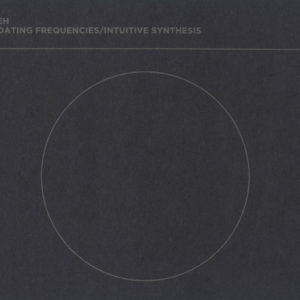
3 CD
ELEH
“Floating frequencies – Intuitive synthesis”
“Edition of 1000. This deluxe 3 CD set presents Floating Frequencies/Intuitive Synthesis in its completed 3 part entirety. Metallic silver print on a heavy duty matte black jacket. Intuitive Synthesis/Floating Frequencies takes full advantage of the low noise floor and clarity provided by the digital medium. Mastered by Eleh specifically for the digital environment. This box is not intended to be a replacement of the analog records but an entirely different experience.”
30,00€

3 CD box
Jean-Claude ELOY
“Anâhata”
“Anâhata” (1984-86). Primordial vibration. Sound ceremonial with a contemplative character for two voices of Japanese Buddhist monks (traditional Shômyô techniques - traditional temple chanting - in a larger, modern and creative form), three Japanese Gagaku instrumentalists (traditional court music in a modern and creative form), one percussionist (with a percussion instrument orchestra) and electro-acoustic (fixed interactive sounds). Electronic studio of the Sweelinck Conservatorium, Amsterdam (1984-86). With Ebihara Kôshin (Tendai sect): solo voice, Arai Kôjun (Shingon sect): solo voice, Yaotani Satoru: Ô-Hichiriki solo, Shiba Sukeyasu : solo Ryûteki, Miyata Mayumi: Shô solo, Ô-Shô, Alto-Sheng, Michael W. Ranta : solo percussions, Jean-Claude Eloy, electro-acoustic (sound projection, general coordination, mixing). Studio recording made during the Donaueschingen festival 1990 (Donaueschinger Musiktage) by the SWF (Südwestfunk), Baden-Baden. First World publication. Presented in a small box of 3 x CDs with 60 pages booklet.
“Jean-Claude Eloy is a French composer, born in 1938. He studied at the Paris National Superior Conservatory of Music, where he won First Prizes in Piano, Chamber Music, Counterpoint, Ondes Martenot, and studied composition with Darius Milhaud. He attended summer courses at Darmstadt (Pousseur, Scherchen, Messiaen, Boulez, Stockhausen) and was a student in composition in Pierre Boulez’ master class at the Music Academy in Basel (1961-1963). Works by Jean-Claude Eloy have been performed all over the world. They have been conducted by Pierre Boulez, Ernest Bour, Michael Guilen, Bruno Maderna, Diego Masson, Michel Tabachnik, Arthur Weisberg and others ... He has lived in the United States (professor at the University of California, Berkeley, in the sixties), Germany (invited by the WDR studios in Cologne, the Technische Universität in Berlin, guest artist at the Berliner Künstlerprogramm), Holland, Japan (where he collaborated with NHK and the National Theater of Japan, among other activities). He participates regularly in numerous international festivals, principally in Europe, but also in Asia, the United States, Canada and Latin America as sound-projectionist for his electro-acoustic works and with the soloists closely associated with his compositions : Fatima Miranda (vocalist), Yumi Nara (soprano), Michael Ranta (percussionist), Junko Ueda (Shômyô singer and Satsuma-Biwa player), Kôshin Ebihara and Kôjun Arai (Buddhist monk singers), Mayumi Miyata (Shô player), etc.”
35,00€
Out of stock
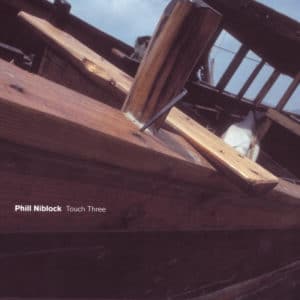
3 CD
Phill NIBLOCK
“Touch three”
“Sethwork” (2003) Seth Josel, acoustic unamplified guitars played with e-bow. “Harm” ( 2003) Arne Deforce, cello. “Lucid Sea” (2003) Lucia Mense, recorders. “Parker’s Altered Mood, aka, Owed to Bird” (2004) Ulrich Krieger, alto saxophone. “Zrost” (2004) Martin Zrost, soprano saxophone. “Not Yet Titled” (2003) Franz Hautzinger, trumpet. “Valence” (2005) Julia Eckhardt, viola. “Alto Tune” (2004) Ulrich Krieger, alto saxophone. “Sax Mix” (2004) Ulrich Krieger, alto, tenor and baritone saxo. These nine pieces were made from March 2003 to January 2005. They were all made (except "Sax Mix") by recording a single instrument with a single microphone. The recordings were direct to the computer-hard disk, most of them using my Powerbook G4, Protools, an M-box and an external firewire drive. The resulting mono sound files were edited to remove breathing spaces, leaving the natural decay of the tone, and the attack of the subsequent iteration of the same tone. Each note was represented by several repetitions, perhaps ten for each tone, of about 15 seconds duration each. Each piece uses a few tones. A simple chord, perhaps. Additional microtonal intervals were produced in Protools using pitch shift. The pieces were assembled in multitracks, usually either 24 or 32 tracks. The recording environment varied from a simple apartment in Berlin (Ulrich Krieger’s) to a very large hall used for symphony orchestra performances and recordings, with a sizable audience space (Deutschland Radio, Cologne). The recordings were generally done quite closely miked. One hears only the sound of the instrument. There is no electronic manipulation in the recording, the editing of the tones, or in the mix. The only changes to the recorded tones are the pitch shifts to create microtones. The microtones are doing the work.
20,00€
In stock

3 CD
MURAL
“Tempo”
Jim Denley, wind instruments. Kim Myhr, twelve-string guitar, zither. Ingar Zach, gran cassa, percussion.
“Tempo” is a 3CD box set recorded live during a 4-hour performance at the Rothko Chapel in 2013. Following up on the group’s Live at the Rothko Chapel from 2011, this release shows the group expanding into a much longer form. Mural consists of Australian windplayer Jim Denley, with Norwegians Kim Myhr (guitar) and Ingar Zach (percussion). They first performed in 2007 in Madrid, and have made concerts around the world since. The trio has released two critically acclaimed records.
After two successful concerts at the Rothko Chapel and a CD-release on the Chapel’s own publications, the trio visited the chapel in Houston, Texas for the third time in April 2013. Wishing to challenge traditional concert formats, they decided to play a four hour long performance in the chapel. The result was so satisfying to them that they decided to release the music as a 3CD-box set.
The music that was played in the chapel is an expansive and patient form of music, far beyond any traditional entertainment formats. In an abyss of time, Mural’s music was not only elevated to another level; one could say that in these long durations, it finally came to its own right.
Rothko’s paintings from the Rothko Chapel can be seen on the front cover of the release.
20,00€
Out of stock
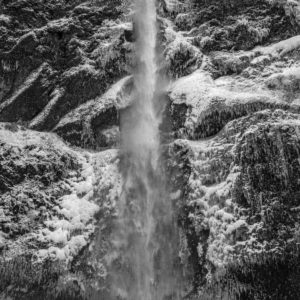
3 CD
Daniel MENCHE
“Sleeper”
Daniel Menche is best known for his assemblages of visceral, industrial-
strength noise. In such head-rinsing recordings as Vilké (2013), Deluge (2003), and Fields of Skin (1997), Menche’s compositional directives instigate and exacerbate the physiological properties of anxiety -- increased blood pressure, blurred vision, claustrophobia, panic, disorientation, etc. In the hands of a talented composer such as Menche, noise can be demonstrative, cathartic and even communal. But after three decades of intense relentlessness, Menche posed the internal question: “Why the hell do I gravitate to compositions that stresses people out?” In re-evaluating his own compositional strategies and philosophical stances, Menche worked out the ideas through sound. Out of that research came the makings an ambient record that he could fall asleep to. These recordings seek to amplify the re-imagined traces of light and dark across the inner eyelid of the dreamer caught in that crepuscular moment between wake and sleep.
To peg this album as merely an ambient record is to do Sleeper a gross disservice. This a Menche ambient record. Feckless new age drivel, this is not. While seeking a graceful tranquility and placid states of mind, Menche’s compositional tools remain the sonic equivalent of a chainsaw. Rough edges and bold gestures are steadfast reminders that Menche is at the helm. In Sleeper, Menche plunges into the harmonic dissonance and glassine minimalism found in the historical works of La Monte Young and Charlemagne Palestine. Never one to be static, Menche drapes his ephemerally half-melodic loops and unfurled sonic tapestries onto a distant, iron-clad thump as a rhythmic spine. The ghostly frequencies that flare out of from his drones almost always evolve into sharp and blinding coronas of sound, embruing the album with an unnerving tension.
An opus at a third of the length, Menche’s Sleeper is a monumental album of colossal driftwork clocking in well over three hours.
3 CD edition of 500 copies, housed in a custom printed tri-gatefold stumptown printing CD jacket.
18,00€