
Out of stock
3 CD
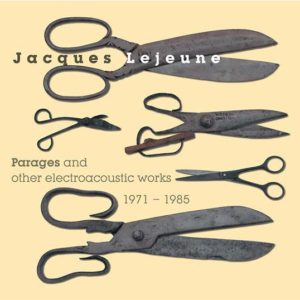
Jacques LEJEUNE
“Parages and other electroacoustic works”
Born (1940) in Talence, France, Jacques Lejeune studied music at the Schola Cantorum with Daniel Lesur, at the Conservatoire National Supérieur of Paris with Pierre Schaeffer, and at the Groupe de Recherches Musicales with François Bayle. He entered the GRM (Musical Research Group) in 1968 and directed the Cellule de la Musique pour L’Image (Music for Images Department) in which various productions for stage and television were produced. In 1978, in partnership between the National Audiovisual Institute, GRM, and the ADAC (City of Paris), Lejeune launched the Ateliers de Musique Électroacoustique (Studios for Electroacoustic Music) designing both its curriculum and program.
Six of Lejeune’s compositions are featured in this 3CD retrospective totaling near three-and-a-half hours of music. Presented chronologically, these works for tape represent a stunning array of themes, images, and destinations covering the years 1971-1985. Throughout Lejeune’s compositional development, the informal content of dreams, reflections on the written fable, and the mythological thinking of our ancestors - all reappear.
Originally released on LP by INA-GRM, both Parages and Symphonie au bord d’un paysage have been remastered and re-released here for the first time on CD. Parages (1973) is a work exploring distances (or vicinities), cycles, and the transparency of the sky. A deep undercurrent of perpetual movement, altitude - flight and fall - is ever-present in the piece, encompassing a procession of auditory colors, places, and events. These elements multiply, uniting beyond their individual musical processes, further immersing the listener within an increasing auditory field. Symphonie au bord d’un paysage (1981) is a composition concerned with motion, panoramas, and geographical relationships - all as if being at the edge of a vast chasm. This expanse projects the listener onto an audio compass, traversing specific territories, while contemplating the path and its spatial trajectories along the way. Also included is Lejeune’s masterwork, Blanche-Neige (1975). This has been regarded as one of the most peculiar and elusive recordings in the whole GRM-related canon. This early LP, also known as Fantasmes, was originally recorded for a theatre/ballet production of the same name. Loosely based on the text by the Brothers Grimm with its narrative symbolism and tale of the deep forest, Blanche-Neige is one of the finest compositions of cinéma pour l’oreille (cinema for the ear) for tape and electronics from the period. Cri (1971) is the earliest piece featured in the set, with an emphasis on the very nature of vocal expression. Integrating mixed landscapes and a spacious use of cyclical elements, this work offers a fantastic prelude to Lejeune’s evolution as a composer. Additionally featured are Entre terre et ciel (1979) and Les palpitations de la forêt (1985). These two works are concerned with the natural world, labyrinths, clusters, and intermingled morphologies of the Earth.
For Lejeune, his methods are always galvanized through tangible images. It is expressed in an acoustic research based on an ambiguity between the anecdotal and the musical. This follows the work of Luc Ferrari, with his notion of anecdotal music; bringing into relation the sounds of everyday reality and the musical narrative. Lejeune’s pieces may be further described as a “character passing through a series of landscapes.”
The boxed set includes a 28 page bilingual booklet (in English/French) with detailed program notes as well as a 32 page booklet of interpretive stanzas surrounding these bizarre and evocative works. Meticulously translated and collected for the first time in print, these writings offer a rare insight into Lejeune’s creative process. Parages and other electroacoustic works 1971-1985 is an essential overview of one of the seminal figures in musique concrète.
32,00€
Out of stock

3 CD
COMPILATION
PRIX PRESQUE RIEN PRIZE
In 2010 Brunhild Ferrari decided to make public some of Luc Ferrari’s original sound archives by offering a selected collection of recordings to other composers who may wish to use the material for the creation of original musical works.Her desire was to open this sonic treasure to other artists without wanting to impose any aesthetic direction on them, and with the only purpose of encouraging new artistic inventiveness.
This edition presents the “Presque Rien Prize” winners and other selected works of the first three biennial contests, the most recent contest having taken place in December 2015. Each of the competitions has been concluded by a concert including the winning and other selected works of the competition. While 109 new works were submitted to the three initial editions, we are delighted to keep receiving many other works from over the world for the forthcoming competition in 2017.
CD1, 2011 edition: John Palmer (winner), Elsa Justel (mention), Daniel Blinkhorn (mention), Dinah Bird & Jean-Philippe Renoult.
CD2, 2013 edition: Brian Jacobs (winner), Ayako Sato (mention), James Andean (mention), Masashi Isai, Andrea Belfi, Donia Jourabchi, Takuma Kuragaki.
CD3, 2015 edition: Hideki Umezawa (winner), Lisandro Barbato (mention), Johannes S. Sistermanns (mention), Manfredi Clemente, Manuella Blackburn, Laurence Bouckaert, Dimitris Maronidis, Yingzi Li.
The slipcase edition includes three CDs in individual digipak sleeves as well as a 68-page booklet in English, French and Japanese with liner notes written by the composers, their biographies, title tracks, photos and an introduction by Brunhild Ferrari.
This edition presents the “Presque Rien Prize” winners and other selected works of the first three biennial contests, the most recent contest having taken place in December 2015. Each of the competitions has been concluded by a concert including the winning and other selected works of the competition. While 109 new works were submitted to the three initial editions, we are delighted to keep receiving many other works from over the world for the forthcoming competition in 2017.
CD1, 2011 edition: John Palmer (winner), Elsa Justel (mention), Daniel Blinkhorn (mention), Dinah Bird & Jean-Philippe Renoult.
CD2, 2013 edition: Brian Jacobs (winner), Ayako Sato (mention), James Andean (mention), Masashi Isai, Andrea Belfi, Donia Jourabchi, Takuma Kuragaki.
CD3, 2015 edition: Hideki Umezawa (winner), Lisandro Barbato (mention), Johannes S. Sistermanns (mention), Manfredi Clemente, Manuella Blackburn, Laurence Bouckaert, Dimitris Maronidis, Yingzi Li.
The slipcase edition includes three CDs in individual digipak sleeves as well as a 68-page booklet in English, French and Japanese with liner notes written by the composers, their biographies, title tracks, photos and an introduction by Brunhild Ferrari.
36,00€
Out of stock
3 CD
Julius EASTMAN
“Unjust malaise”
Members of Creative Associates; Jodi Beder, Sarah Carter, Barry Gold, Julie Green, Christine Gummere, Maureen Hynes, Chase Morrison, Abby Newton, Larry Rawdon, David Sabee, cellos; Frank Ferko, Janet Kattas, Patricia Martin, pianos; Julius Eastman, piano, voice, conductor. This three-disc set marks the first appearance on disc of the music of the African-American composer Julius Eastman (1940-1990), who died sixteen years ago under unexplained circumstances and whose musical legacy was thought lost. This comprehensive and definitive document, which comprises almost all of Eastman’s signature works, will undoubtedly be a revelation for those who have thus far been unable to hear his work.
In his book American Music in the Twentieth Century, composer/author Kyle Gann briefly sums up Eastman’s work and its importance: “Born in New York, he graduated from the Curtis Institute in composition and was discovered by Lukas Foss, who conducted his music, including Stay On It (1973), one of the first works to introduce pop tonal progressions and free improvisation in an art context… Applying minimalism’s additive process to the building of sections, he developed a composing technique he called “organic music,” a cumulatively overlapping process in which each section of a work contains, simultaneously, all the sections which preceded it. The pieces he wrote in this style often had intentionally provocative titles intended to reinterpret the minorities Eastman belonged to in a positive light: for example, Evil Nigger, Crazy Nigger, and Gay Guerrilla (all circa 1980). These three pieces, all scored for multiple pianos, build up immense emotive power through the incessant repetition of rhythmic figures.”
Eastman was an energizing underground figure, one whose forms are clear, whose methods were powerful and persuasive, and whose thinking was supremely musical. His works show different routes minimalism might have taken, and perhaps some of those will now be followed up. This set of discs is a bold beginning to restoring to history the works of one of the most important members of the first post-minimalist generation.
Stay on It (1973). If You’re So Smart, Why Aren’t You Rich? (1977). Prelude to The Holy Presence of Joan D’Arc (1981). The Holy Presence of Joan D’Arc (1981). Gay Guerrilla (1980). Evil Nigger (1979). Crazy Nigger (1980).
In his book American Music in the Twentieth Century, composer/author Kyle Gann briefly sums up Eastman’s work and its importance: “Born in New York, he graduated from the Curtis Institute in composition and was discovered by Lukas Foss, who conducted his music, including Stay On It (1973), one of the first works to introduce pop tonal progressions and free improvisation in an art context… Applying minimalism’s additive process to the building of sections, he developed a composing technique he called “organic music,” a cumulatively overlapping process in which each section of a work contains, simultaneously, all the sections which preceded it. The pieces he wrote in this style often had intentionally provocative titles intended to reinterpret the minorities Eastman belonged to in a positive light: for example, Evil Nigger, Crazy Nigger, and Gay Guerrilla (all circa 1980). These three pieces, all scored for multiple pianos, build up immense emotive power through the incessant repetition of rhythmic figures.”
Eastman was an energizing underground figure, one whose forms are clear, whose methods were powerful and persuasive, and whose thinking was supremely musical. His works show different routes minimalism might have taken, and perhaps some of those will now be followed up. This set of discs is a bold beginning to restoring to history the works of one of the most important members of the first post-minimalist generation.
Stay on It (1973). If You’re So Smart, Why Aren’t You Rich? (1977). Prelude to The Holy Presence of Joan D’Arc (1981). The Holy Presence of Joan D’Arc (1981). Gay Guerrilla (1980). Evil Nigger (1979). Crazy Nigger (1980).
40,00€
In stock

3 CD
Joris DE LAET
“Sem etc.”
Joris de Laet (Belgium, 1947) is a fully autodidact composer of electroacoustic music. Between 1972 and 1975 he worked at the IPEM along with Lucien Goethals and Karel Goeyvaerts and in 1973 he founded the SEM (Studio for Experimental Music) where he organised plenty of group sessions, live performances, lectures... De Laet’s work is adventurous, complex and difficult to
classify, due to many interesting contrasts in his style and approach academic vs intuitive, modern composition vs free improvisation, acoustic vs electronic, sound vs noise... This selection (10 tracks) of his early recordings (1972 1979) represents an overview of his intriguingly radical and highly personal work which includes solo tape experiments, live electronics with Karel Goeyvaerts and group performances with experimental instrumentalists from the SEM ensemble : Pieter Kuyl (chapmanstick), Leo Verheyen (trombone), Paul Adriaenssens (flute and amplified objects), Maurice Verstuyft (flute). All material has been mastered from the original tapes and is previously unreleased. Edition of 300 copies.
40,00€
Out of stock
3 CD
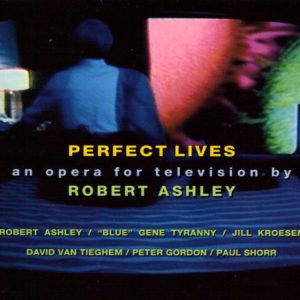
Robert ASHLEY
“Perfect lives”
Robert Ashley, solo voice; Jill Kroesen and David Van Tieghem, chorus; "Blue" Gene Tyranny, keyboards; David Van Tieghem, non-keyboard percussion; Peter Gordon, music producer; Paul Shorr, soundtrack producer. 3 CDs.
“Perfect Lives has been called "the most influential music/theater/literary work of the 1980s." At its center is the hypnotic voice of Robert Ashley. His continuous song narrates the events of the story and describes a 1980’s update of the mythology of small town America. Perfect Lives is populated with myriad characters revolving around two musicians --"R", the singer of myth and legend, and his friend, Buddy, "The World’s Greatest Piano Player". They have come to a small town in the Midwest to entertain at the Perfect Lives Lounge. As Robert Ashley describes in the opera synopsis, "they fall in with two locals to commit the perfect crime, a metaphor for something philosophical: in this case, to remove a sizable about of money from The Bank for one day (and one day only) and let the whole world know that it was missing."
The eloping couple, Ed and Gwyn, the old people at the home, the sheriff and his wife (Will and Ida) who finally unravel the mystery, and Isolde who watches the celebration of the changing of the light at sundown from the doorway of her mother’s house are some of the characters who journey through the seven episodes of the opera.
Derived from a colloquial idiom, Perfect Lives transforms familiar material into an elaborate metaphor for the rebirth of the human soul. It has been called a comic opera about reincarnation.”
“Perfect Lives has been called "the most influential music/theater/literary work of the 1980s." At its center is the hypnotic voice of Robert Ashley. His continuous song narrates the events of the story and describes a 1980’s update of the mythology of small town America. Perfect Lives is populated with myriad characters revolving around two musicians --"R", the singer of myth and legend, and his friend, Buddy, "The World’s Greatest Piano Player". They have come to a small town in the Midwest to entertain at the Perfect Lives Lounge. As Robert Ashley describes in the opera synopsis, "they fall in with two locals to commit the perfect crime, a metaphor for something philosophical: in this case, to remove a sizable about of money from The Bank for one day (and one day only) and let the whole world know that it was missing."
The eloping couple, Ed and Gwyn, the old people at the home, the sheriff and his wife (Will and Ida) who finally unravel the mystery, and Isolde who watches the celebration of the changing of the light at sundown from the doorway of her mother’s house are some of the characters who journey through the seven episodes of the opera.
Derived from a colloquial idiom, Perfect Lives transforms familiar material into an elaborate metaphor for the rebirth of the human soul. It has been called a comic opera about reincarnation.”
30,00€
Out of stock

3 CD
MERZBOW – KAPOTTE MUZIEK
“Works 1987-1993”
Both of these projects hardly need an introduction. Merzbow is since the late ‘70s the project of Masami Akita working in the field of noise music, having released a few hundred CDs/LPs/cassettes by now.
In 1987 Kapotte Muziek was then the solo project of Frans de Waard, after Christian Nijs left the group early ’87. De Waard concentrated on working with other musicians, and started trading tapes with a few musicians he was already in contact with, and one of them was Merzbow. The first release was a cassette, which was released in two versions, one of Merzbow’s ZSF Produkt and one on Belgium’s Therapie label (although none ever showed up, so perhaps it didn’t happen). In October 1989 Merzbow was invited to play at V2 in ’s-Hertogenbosch and a subsequent small tour was done in The Netherlands, playing in Utrecht and Nijmegen. On october 3rd 1989 Merzbow played in the evening in a small student club, Diogenes, and in the late afternoon as a duo with Kapotte Muziek. The first 20 minutes were released on one side of the LP ‘Documentation/Collaboration’, whereas the second side has ‘recycled’ versions of those recordings. For their next project Merzbow Kapotte Muziek took all the recordings from that day and reworked them in an extensive process into the LP ‘Continuum’.
This 3CD set compiles all of these recordings and more. It includes (CD1) the first cassette, ZSF Produkt version, (CD2) has for the first time the complete live recording from the collaborative concert at Radio Rataplan plus two compilation pieces that were made around the same, and (CD3) the complete ‘Continuum’ LP, as well as three highly obscure compilation tracks, including the long reworked ‘Radio Rataplan’ from the very obscure ‘Dutch Tour’ double cassette by V2_Archief.
All expertly remastered by Jos Smolders at Earlabs, all lovingely designed by Meeuw, in a carton box with three CDs, poster, shrinkwrapped and sticker. Edition of 300 copies only.
23,00€
Out of stock
3 CD
ELEH
“Homage”
Imprec is proud to present Eleh’s Homage series remastered and on CD for the first time. Certain frequency combinations that were impossible to cut on LP are effectively presented in this digital edition. Packaged in a heavy duty 6 panel fold out jacket with inner printing and a matte finish.
Eleh, an artist who flourishes in restraint, uses a reduced sonic vocabulary to highlight delicate intricacies in a logical path toward harmonious satisfaction. The organization of hypnotic square waves, rippling sine waves and triangle/saw tooth waveforms is a discourse in the infinity, rather than the limits, of reduction. By employing a natural practice of balanced interpretation, Eleh enables an individual reaction free of the clutter of white noise.
40,00€
Out of stock
3 CD
Michael PISARO
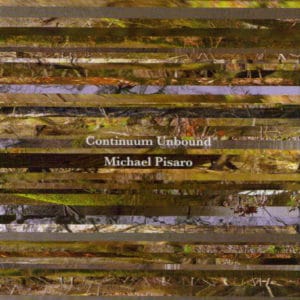
“Continuum Unbound”
Michael Pisaro’s Continuum Unbound is a three CD box set, featuring three individual as well as linked CD-length pieces, each 72 minutes long.
“Kingsnake Grey” is a field recording of sundown in the Congaree National Park in South Carolina. The beautiful and erratic sonic transformation that occurred over the 72 minutes was the model for the other two pieces.
“Congaree Nomads” takes as its basis 24 three-minute recordings Greg Stuart and I made in the park, along Cedar Creek and the Kingsnake, the Weston Lake and the River trails. It is a “nomadic” series that moves very gradually from the Creek to the Congaree River. Instrumental “fogs” (harmonies made by Pisaro and Stuart) overlay the field recordings.
“Anabasis” is a composition in 72 parts for five musicians, loosely based on four kinds of materials: Sand, Wind, Tone and Wave. The musicians featured on this recording (in addition to Pisaro and Stuart) are Patrick Farmer, Joe Panzner and Toshiya Tsunoda.
Continuum Unbound, as the title implies, attempts to hear how the apparent continuum of the sounding world is actually a series of states that are as fragile and discontinuous as they are solid and connected. (Discrete continuity is one of the ways we have of understanding contingency.)
The three discs come in an oversized box with a gorgeous cover collage by Greg Stuart, which also includes a 12 page full color booklet including additional photos and liner notes by Pisaro.
50,00€
Out of stock
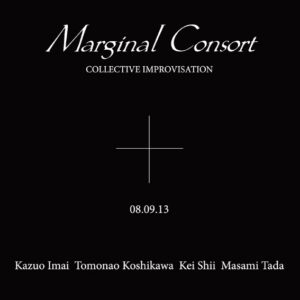
3 CD
MARGINAL CONSORT
“08.09.13”
Marginal Concert is the collective improvisation project made up of Kazuo Imai, Tomonao Koshikawa, Kei Shii, and Masami Tada. All of the members were students of Takehisa Kosugi at Bigakko art school in 1975. They started the project on the invitation of Imai in 1997. Each year Marginal Consort holds from one to several concerts in which they perform continuously, without interruption, for two to four hours. Various electronic and acoustic sounds blend and coexist, and myriad sound colors/textures and reverberations flow in a free and spacious way while making large-scale transformations over time. Superb. These 3 CDs document Marginal Consort's live performance at a gallery in London in September 2013.
27,00€
Out of stock
3 CD
Michael PISARO – Reinier van HOUDT
“The earth and the sky”
Erstwhile is proud to announce the first release on the new ErstClass imprint, an epic collection of Pisaro’s work for piano from 1994-2016, 11 pieces totalling 223 minutes. The pieces are performed by the brilliant Dutch pianist Reinier van Houdt (Current 93, Walter Marchetti, Robert Ashley, etc.) with close oversight by Pisaro as well as his own musical input at times. The gorgeous 8-panel digipak was designed by Yuko Zama (also the lead producer), and the 8 page booklet features liner notes by Marc Medwin.
29,00€
In stock
3 CD
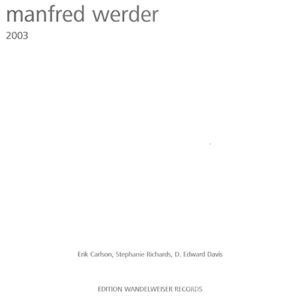
Manfred WERDER
“2003”
Erik Carlson (violin), Stephanie Richards (trumpet), D. Edward Davis (electronics).
“Stück 20031”
three instruments sharing the same pitch.
three performers determine a common pitch.
the duration of the performance is not determined. the performers do not use a watch.
two of the performers play the pitch, lasting three to seven seconds, once during the duration of the performance.
for itself. simple.
“Stück 20032”
one performer
the performer determines a sound.
the duration of the performance is not determ
ined. the performer does not use a watch.
the performer plays the sound lasting three to seven seconds twice during the duration of the performance.
for itself. simple.
“Stück 20033”
two instruments sharing the same pitch.
two performers determine a common pitch.
the duration of the performance is not determined. the performers do not use a watch.
the pitch lasting three to seven seconds sounds twice during the duration of the performance.
for itself. simple
10,00€
In stock

3 CD
John CAGE
“Klang der Wandlungen”
3 Audio CDs in a Box & Booklet German / English.
“Seventy-Four” (1992) for orchestra. SWR Symphonic Orchester, direction by Jonathan Stockhammer. Recorded 2011 in Paris.
“103” (1991) for orchestra. WDR Symphonic Orchestra, direction by Arturo Tamayo. Recorded 1992. “Postcard from Heaven” (1982) for one to 20 harps. Gabriele Emde, harp. Recorded 1985. “In a Landscape” (1948) for keyboard oder harp. Gabriele Emde, harp. Recorded 1985. “Some of The Harmony of Maine” (1978) for organ. Jakob Ullmann, organ. Recorded 1990. “In retrospect, the references to the difference between Cage’s pieces and the (largely) European tradition, cultivated over years if not decades, seem to be based much more upon the creative process rather than the actual sonic results. What was important for Cage was not the “deviation” of certain sound shapes, an audible difference from European tradition, but rather liberation from restrictive bonds of interpretation and expression. Even when he was a student with Arnold Schoenberg, who he held in high esteem throughout his life, Cage had already been enquiring into traditions in music and art in this sense, in a highly productive way as it was mostly entirely non-polemic – long before
so-called “postmodernism” was in sight. Cage’s conclusion, namely to establish from Schoenberg’s principle of equality of all tones in a row their complete equivalence through chance operations also proved applicable to entirely different traditions and constellations.” Jakob Ullmann
“103” (1991) for orchestra. WDR Symphonic Orchestra, direction by Arturo Tamayo. Recorded 1992. “Postcard from Heaven” (1982) for one to 20 harps. Gabriele Emde, harp. Recorded 1985. “In a Landscape” (1948) for keyboard oder harp. Gabriele Emde, harp. Recorded 1985. “Some of The Harmony of Maine” (1978) for organ. Jakob Ullmann, organ. Recorded 1990. “In retrospect, the references to the difference between Cage’s pieces and the (largely) European tradition, cultivated over years if not decades, seem to be based much more upon the creative process rather than the actual sonic results. What was important for Cage was not the “deviation” of certain sound shapes, an audible difference from European tradition, but rather liberation from restrictive bonds of interpretation and expression. Even when he was a student with Arnold Schoenberg, who he held in high esteem throughout his life, Cage had already been enquiring into traditions in music and art in this sense, in a highly productive way as it was mostly entirely non-polemic – long before
so-called “postmodernism” was in sight. Cage’s conclusion, namely to establish from Schoenberg’s principle of equality of all tones in a row their complete equivalence through chance operations also proved applicable to entirely different traditions and constellations.” Jakob Ullmann
33,00€
In stock

3 CD
Reinhold FRIEDL & Dirk DRESSELHAUS
“Real time”
Reinhold Friedl and Dirk Dresselhaus are coming from really different backgrounds: Dresselhaus released since the late ninties as Schneider TM several experimental-electronic Freakpop recordings. He started in the 80ies Indipendent rock/pop-postpunk and developed his personal approach to sound and structura as an autodidact, starting with guitar effect devices and 4-track homerecording. Reinhold Friedl studied mathematics and music, got scolarships and international commissions, and built up the ensemble Zeitkratzer, disrespecting all musical frontiers. So it’s not astonishing, that both met for the first time, when Zeitkratzer performed Lou Reed’s Metal Machine Music: Dirk Dresselhaus was restless enthusiastic about this unrestrained contemporary music group, succeeding to devote itself to the instrumentation of purely tuned guitar feedback. Dresselhaus and Friedl started their cooperation, that happened over years in studios only: what happen’s if you put those strange inside-piano sounds - another domain where Friedl set standards - or those powerfull hupe piano-drones into Schneider TM’s electronic devices, modulating them with an incredible complex Feedback system and recursive effect settings ? Sometimes violent, sometimes subtile, mostly large-scale sound fields, which always work out only one sound or noise, developing an overwhelming impact. Reinhold Friedl plays pianoforte, harmonics, horse hair, metal sheet, fishing line, metal tube: inside-piano, extended piano; Dirk Dresselhaus plays oscillator, spring reverb, isolator, memory man, digital delay, mixing desk, lfo, noise generator, vibrator - time machine, pitch shifter, ring modulator.
26,00€
Out of stock
3 CD
Vincent BARRAS – Jacques DEMIERRE
“Voicing through Saussure”
Jacques Demierre and Vincent Barras have collaborated for decades, creating a diverse body of sound performances exploring ties between language and the mind. Here everything is coming from materials found in the work of linguist Ferdinand de Saussure. The detailed analysis of the sonorities of various ancient and modern languages, their re-elaboration and re-composition is finally embodied in a score-text.
Original price was: 30,00€.10,00€Current price is: 10,00€.
Out of stock

3 CD
DIESEL GUITAR
“Maria -1995. Medium of Lights -1996. Assimilation -1999”
A repackaged and remastered 3CD set that compiles three of Diesel Guitar’s key 90's works: “Maria” (1995), “Medium of Lights” (1996), and “Assimilation” (1999). “Medium of Lights” and “Assimilation” have always been particularly hard to track down, both having been released in very limited editions.
All tracks were remastered by Kiyoharu Kuwayama (Lethe) in 2016. The individual sleeves provide printed reproductions of the original artwork and package design. Limited edition of 200.
“On the reissue of these three cassette works” by Youki Noseyama.
““Maria” (1995), “Medium of Lights” (1996) and “Assimilation” (1999) were a three-part solo work, where the album and track titles were deliberately designed to overlap and resonate with each other. Since the release of my first CD in 2002, I have concentrated on drone performance, so these three works record the final manifestation of the guitar amp feedback approach I used before. “Maria” was released by the Kyoto label G.R.O.S.S. in an edition of 120, but I released the other two works myself and they saw virtually no distribution. For a long time it has been difficult to hear my process prior to my first CD, so I am really grateful to be able to make these three works available again.
Back in 1995, I visited the late Akifumi Nakajima, who ran G.R.O.S.S., at his home in Kyoto to discuss the release of “Maria”. I am pretty sure it was summer and we spent about two hours together. Nakajima talked to me about his record collection and his own works, and I remember being astonished at the scale of talents. In order to create this reissue, Satoru Higashiseto who oversees the musical side of Nakajima’s estate was kind enough to lend me Nakajima’s tapes and production materials which proved to be extremely valuable. I would like to take his opportunity to thank him. And to offer another prayer to Nakajima’s peaceful repose.”
24,00€
In stock
3 CD
BOMONSTRE et Boris JOLLIVET-Lionel MARCHETTI-Joël BASTARD
“Ô saisons, ô trombones. Sites sonores du Haut-Jura”
“With Alain Gibert, Patrick Charbonnier, Etienne Roche, Olivier Bost on trombones, Boris Jollivet on recordings, Lionel Marchetti on musique concrète. In 2009, equipped with our trombones and mics, we walked around in several natural sound places in the mountains of Haut-Jura. As the seasons went by, we searched or provoked some unexpected recording situations that lead to invention, and we went on improvising, according to the geological echoes, the animal roars and human activities, as well as the climatic circumstances. Both CDs “Ô saisons, o trombones” tell about the odyssey of these unique moments. These recordings haven’t been treated, neither mixed nor mastered. Every sound effect is thanks to the performing and recording situation. In order to get the point of view of another listener, we commissioned the concrete music composer Lionel Marchetti, to make the most of the recorded sounds. He has proposed “Quatre études d’espace”, taking as a model the real effect in the original recordings. You can find the “Quatre études d’espace” in the 3rd CD of the set. In the end, echoing to these music, the author Joel Bastard has written a poetical suite, “De l’air en plus”, to take part in our journey. Instead of simple witness report, we offer you a reflection in facets of that one year of recordings “in situ”.” label info
20,00€
Out of stock

3 CD
INTERSYSTEMS
“Intersystems”
3x digipak CDs in Slipcase including a 56-page full-color booklet. First edition of 500 copies.
First historical edition!
“Number One Intersystems” (1967) CD presenting the correct sequence and featuring for the first time the original tracks sub-section divisions.
“Peachy” (1967) CD including for the first time the original tracks separations, timings and titles.
“Free Psychedelic Poster Inside” (1968) CD presenting for the first time the original double-title tracks.
All audio works re-mastered by John Mills-Cockell for this edition and presented in full-color digipak sleeves.
Also including a booklet with two texts by Michael Hayden and John Mills-Cockell situating Intersystems in the Contemporary Art and Music contexts. A text by Nick Storring about Blake Parker and analyzing the 3 original records is also included as well as the complete chronology of Intersystems Presentations. 23 full-page images illustrating the dense evolution of this short-lived and essential mixed-media collective complete the 56-page booklet.
First press limited to 500 copies.
First historical edition!
“Number One Intersystems” (1967) CD presenting the correct sequence and featuring for the first time the original tracks sub-section divisions.
“Peachy” (1967) CD including for the first time the original tracks separations, timings and titles.
“Free Psychedelic Poster Inside” (1968) CD presenting for the first time the original double-title tracks.
All audio works re-mastered by John Mills-Cockell for this edition and presented in full-color digipak sleeves.
Also including a booklet with two texts by Michael Hayden and John Mills-Cockell situating Intersystems in the Contemporary Art and Music contexts. A text by Nick Storring about Blake Parker and analyzing the 3 original records is also included as well as the complete chronology of Intersystems Presentations. 23 full-page images illustrating the dense evolution of this short-lived and essential mixed-media collective complete the 56-page booklet.
First press limited to 500 copies.
49,00€
Out of stock
3 CD
François DUFRÊNE
“Œuvre désintégrale – 3CD”
“alga marghen presents one of the most impressive sound poetry anthologies ever published, introducing you to the sound works of the Nouveau Realiste artist François Dufrene. His work, along with that of Gil J Wolman and Brion Gysin, was a strong influence for experimental poets like Henri Chopin, Bernard Heidsieck and Ake Hodell. Previously issued in 2007 as a 4LP box set, this first edition on CD also includes “Crirythme pour Tinguely” as bonus track.
François Dufrene could be considered the younger of the first generation sound poets. Already in the Lettrist group when he was only 16 years old, with his own style marked by an hyper-powerful voice. In 1953, at the age of 23, he became Ultra-Lettrist, starting his first crirhythms by overpassing the alphabet in the perspective of the physical improvised scream. With the crirhythms sound poetry enters for the first time in the factory of projective sounds. In the beginning Dufrene uses the tape recorder only to document his creations.These recordings show him that through the tape machine his poems could reached deeper and wider creative dynamics. Since the mid-1950s the tape-machine becomes for him a poetical and experimental tool and Dufrene fully develops its potentials with stereophonic recordings as well as with the superimposition of his crirhythms. The loudspeakers amplifies sounds while the microphone captures even the most detailed concrete sound produced by his voice. The physical tempest he produces is a real concrete electronic sound attack. Dufrene produced primitive, brutal poems opening the path of vocal sounds to contemporary composers: it’s known that Pierre Henry was deeply inspired by Dufrene. The anthology presented here includes 10 crirhythms from different periods dating from 1965 to 1976, plus “Crirythme pour Tinguely” (first issued on a 7” single included in Revue AXE No.2 in 1975 and not available on the alga marghen 4LP anthology from 2007). Also included is “Osmose-art”, a long piece from 1969 divided in two suites where Dufrene superimposes his crirhythms to classical music. A similar technique was applied a few years earlier adding jazz music (specially drum and percussion pieces) to poems marked by strong Lettristic esthetic. Two of those “Lecture-collage” dating from 1965 are presented here, as well as two “Comptinuum” from his early on-progress works started in 1958. François Dufrene also developed unique performances, with live reading of his written text. The most famous is “Tombeau de Pierre Larousse”, published in 1958. This is a work half way between the written text and the sound poem whose unity is achieved through Dufrene performing it. It’s a masterpiece of synthesis of active poetry. “Eryximaque, suite choreographique au Tombeau de Pierre Larusse” is also included in this anthology. Apart from the crirythmes that Henri Chopin issued on his Revue OU disc magazine (the complete OU anthology is available from alga marghen as a 4cd set) and a few short pieces issued on obscure sound poetry anthologies in the end of the 1960’s, François Dufrene work is practically unavailable. This 3 CD anthology, conceived by the Dufrene himself as a 3 cassette edition privately issued by Guy Schraenen in the mid-1970s (only a handful of copies made), includes only previously unpublished sound works that finally fully documents the creativity of such a radical artist. Edition limited to 300 copies, including 3CD as well as a 24 page booklet including two essays by Dufrene, the biography, the complete discography as well as original photos of various performances from the 1960s and 1970s.” label info
François Dufrene could be considered the younger of the first generation sound poets. Already in the Lettrist group when he was only 16 years old, with his own style marked by an hyper-powerful voice. In 1953, at the age of 23, he became Ultra-Lettrist, starting his first crirhythms by overpassing the alphabet in the perspective of the physical improvised scream. With the crirhythms sound poetry enters for the first time in the factory of projective sounds. In the beginning Dufrene uses the tape recorder only to document his creations.These recordings show him that through the tape machine his poems could reached deeper and wider creative dynamics. Since the mid-1950s the tape-machine becomes for him a poetical and experimental tool and Dufrene fully develops its potentials with stereophonic recordings as well as with the superimposition of his crirhythms. The loudspeakers amplifies sounds while the microphone captures even the most detailed concrete sound produced by his voice. The physical tempest he produces is a real concrete electronic sound attack. Dufrene produced primitive, brutal poems opening the path of vocal sounds to contemporary composers: it’s known that Pierre Henry was deeply inspired by Dufrene. The anthology presented here includes 10 crirhythms from different periods dating from 1965 to 1976, plus “Crirythme pour Tinguely” (first issued on a 7” single included in Revue AXE No.2 in 1975 and not available on the alga marghen 4LP anthology from 2007). Also included is “Osmose-art”, a long piece from 1969 divided in two suites where Dufrene superimposes his crirhythms to classical music. A similar technique was applied a few years earlier adding jazz music (specially drum and percussion pieces) to poems marked by strong Lettristic esthetic. Two of those “Lecture-collage” dating from 1965 are presented here, as well as two “Comptinuum” from his early on-progress works started in 1958. François Dufrene also developed unique performances, with live reading of his written text. The most famous is “Tombeau de Pierre Larousse”, published in 1958. This is a work half way between the written text and the sound poem whose unity is achieved through Dufrene performing it. It’s a masterpiece of synthesis of active poetry. “Eryximaque, suite choreographique au Tombeau de Pierre Larusse” is also included in this anthology. Apart from the crirythmes that Henri Chopin issued on his Revue OU disc magazine (the complete OU anthology is available from alga marghen as a 4cd set) and a few short pieces issued on obscure sound poetry anthologies in the end of the 1960’s, François Dufrene work is practically unavailable. This 3 CD anthology, conceived by the Dufrene himself as a 3 cassette edition privately issued by Guy Schraenen in the mid-1970s (only a handful of copies made), includes only previously unpublished sound works that finally fully documents the creativity of such a radical artist. Edition limited to 300 copies, including 3CD as well as a 24 page booklet including two essays by Dufrene, the biography, the complete discography as well as original photos of various performances from the 1960s and 1970s.” label info
53,00€
Out of stock

3 CD
Charlemagne PALESTINE
“The Lower Depths”
Edition limited to 300 numbered copies.
alga marghen proudly introduce you to an historical event, the publication of “The Lower Depths”, a 3CD set of previously unreleased unique piano sonorities by Charlemagne Palestine.
In 1977 Charlemagne Palestine was regularly performing in his red and gold loft on North Moore Street in Tribeca, down the street from Magoos bar where all the local artists hung out back then. He was working on a trilogy called “The Lower Depths”, a work conceived during the crucial moment when he experienced one of the peaks of his creative power.
The trilogy takes its name from the potentials of his Bösendorfer weapon which had lower notes than any other piano. The first section starts in the middle of the piano keyboard and the second section 2 octaves below while the third section arrives till the very bottom of the instrument. It’s a deep, thunderous, rumbling world that we experience. An extreme immersion in the depths of the dark side of strumming music.
“The Lower Depths” is a central work within the history of musical Minimalism, stretching and expanding what we understand and expect of an already singular voice.
Edition limited to 300 numbered copies not to be missed!
alga marghen proudly introduce you to an historical event, the publication of “The Lower Depths”, a 3CD set of previously unreleased unique piano sonorities by Charlemagne Palestine.
In 1977 Charlemagne Palestine was regularly performing in his red and gold loft on North Moore Street in Tribeca, down the street from Magoos bar where all the local artists hung out back then. He was working on a trilogy called “The Lower Depths”, a work conceived during the crucial moment when he experienced one of the peaks of his creative power.
The trilogy takes its name from the potentials of his Bösendorfer weapon which had lower notes than any other piano. The first section starts in the middle of the piano keyboard and the second section 2 octaves below while the third section arrives till the very bottom of the instrument. It’s a deep, thunderous, rumbling world that we experience. An extreme immersion in the depths of the dark side of strumming music.
“The Lower Depths” is a central work within the history of musical Minimalism, stretching and expanding what we understand and expect of an already singular voice.
Edition limited to 300 numbered copies not to be missed!
41,00€
In stock
2 CD mp3
John CAGE
“Empty words”
Four parts. Four times 2 hours and 30 minutes in mp3.
Sylvia Alexandra Schimag (speaking voice).
“begins by omitting sentences,
has only phrases, words, syllables and letters.
The second part omits the phrases,
has only words, syllables and letters.
The third part omits the words,
has only syllables and letters. And the last part ...
has nothing but letters and sounds.”
“A mix of words, syllables, and letters obtained by subjecting the Journal of Henry David Thoreau to a series of I Ching chance operations.
What was interesting to me was making English less understandable.
Because when it’s understandable, well, people control one another,
and poetry disappears.
A transition from language to music.
It’s bewildering at first, but it’s extremely pleasurable as time goes on. And that’s what I’m up to.”
10,50€
In stock

2 CD
Gottfried Michael KOENIG
2CD set with electronical and software-generated compositions by pioneer G.M. Koenig. Performers: Jan Marc Reichow, LaSalle Quartet, Trio Recherche.
CD 1: Two piano pieces 1957 (WDR 1995) [ Jan Marc Reichow, piano ], Suite “Materialien zu einem Ballett” 1961 (WDR 1961), Streichquartett 1959 (WDR 1961) [ LaSalle Quartet: Walter Levin, 1. violin. Henry Meyer, 2. violin. Peter Kamnitzer, viola. Jack Kirstein, violoncello ], Terminus X 1967 (Institut for Sonology in Utrecht 1967), Funktion Grün 1967 (Institute for Sonology in Utrecht 1967), Funktion Gelb 1968 (Institute for Sonology in Utrecht 1968). CD 2: 60 Blätter for string trio 1992 (WDR 1996) [ Trio Recherche: Melise Mellinger, violin. Barbara Maurer, viola; Lucas Fels, violoncello ].
CD 1: Two piano pieces 1957 (WDR 1995) [ Jan Marc Reichow, piano ], Suite “Materialien zu einem Ballett” 1961 (WDR 1961), Streichquartett 1959 (WDR 1961) [ LaSalle Quartet: Walter Levin, 1. violin. Henry Meyer, 2. violin. Peter Kamnitzer, viola. Jack Kirstein, violoncello ], Terminus X 1967 (Institut for Sonology in Utrecht 1967), Funktion Grün 1967 (Institute for Sonology in Utrecht 1967), Funktion Gelb 1968 (Institute for Sonology in Utrecht 1968). CD 2: 60 Blätter for string trio 1992 (WDR 1996) [ Trio Recherche: Melise Mellinger, violin. Barbara Maurer, viola; Lucas Fels, violoncello ].
24,00€
In stock

2 CD
David TUDOR
“Music for piano”
2-CD set with recordings by the legendary 20th century avan-tgarde pianist. “With compositions by Sylvano Bussotti, John Cage, Morton Feldman, Christian Wolff. David Tudor, pianist - a profession, a vocation, a life. From 1950 until around 1965, David Tudor was the epitome of the pianist who could simply play anything. In fact, David Tudor was no longer a name, but an indication for instrumentation as dozens of pieces were written “for David Tudor”. As early as 1960, after having conquered all of the challenges posed by serial piano music, Tudor began to differentiate between composers who filled him with life and those who left him cold - the focus of his repertory became crystallized. The main criterion for his choices were shaped by the part he would play as interpreter in the composition. He distinguished carefully between having a free choice among prefabricated parts - generally called aleatoric, as for example, Stockhausen’s Klavierstück XI (dedicated, as his Klavierstücke V-VIII, to Tudor) - and indeterminate actions. In the first case, they have a tendency to “put me to sleep”, whereby pieces that are less limiting led him to say, “I feel that I’m alive in every part of my consciousness”. The program of these CDs portrays these distinctions.”CD1 : John Cage : “Music for Piano 27...” 1955 (DR 1958) (John Cage- David Tudor), “Music for Piano 22, 21, 26, 36” 1955 (NDR 1956) (David Tudor), “Music for Piano 27, 21, 32, 36” 1955 (RB 1959) (David Tudor), “Variations I” 1958 (DR 1958) (John Cage-David Tudor), “Winter Music” 1957 (WDR 1957) (John Cage-David Tudor). Christian Wolff : “Duo for Pianists I” 1957, Version 1 (RB 1960) (John Cage, David Tudor), “Duo for Pianists I” 1957, Version 2 (RB 1960) (John Cage, David Tudor), Sylvano Bussotti : “Piano Piece for David Tudor III” 1959 (RB 1959) (David Tudor). Morton Feldman: “Piece for Four Pianos” 1957 (Columbia 1959) (David Tudor, Russell Sherman, Edwin Hymovitz, Morton Feldman). CD 2 : John Cage : “Varitations II” 1961 (Sony Music 1967) (David Tudor), “Music for Piano 27, 21, 32, 35, 36” 1955 (HR 1959) (David Tudor), “Music for Piano 21, 22, 26, 29, 34, 36” 1955 (WDR 1959) (David Tudor). Christian Wolff : “Duo for Pianists I” 1957, Version 2 (DR 1963) (John Cage, David Tudor), David Tudor “O-Ton” (DR 1963).
24,00€
In stock

2 CD
Ulrich KRIEGER
“-RAW:ReSpace-”
Ulrich Krieger: electric tenor saxophone, saxophone-controlled feedback, pedals, delays; 1/4-inch jack cable, vocals; Joshua Carro, drums (CD 1, tracks 3, 5).
CD 1: RAW
CD 2: ReSpace
“[Krieger] ranges wide as he seeks the spots where noise and beauty meet” Anne Power, Los Angeles Times
RAW/ReSpace is the first-ever experimental noise-metal saxophone solo album, changing and re-defining how the saxophone can sound and what saxophone playing means. No saxophone player ever dared to explore these uncharted outer realms of woodwind expression. RAW brings together noisescapes and electronica with death and doom metal approaches and contemporary instrumental composition techniques. While ReSpace combines dark ambient, controlled-feedback soundscapes with a reductionist approach to create eerie ambient sound-fields. All sounds are saxophone-produced and performed live, no sampling and no purely electronic sounds. RAW and ReSpace are part of the ongoing Universe series.
Ulrich Krieger is well known as a saxophone player in rock, noise, contemporary composed and free improvised music as well as a composer of chamber music and electronic music. He has been active in pushing the boundaries of saxophone playing in general and the function of the saxophone in rock and noise in particular, collaborating with Lou Reed (Metal Machine Trio, Lou Reed Band), Lee Ranaldo (Text of Light), Faust, Zbigniew Karkowski and his own death-doom-noise-metal band Blood Oath. His recent focus lies in the experimental fields and fringes of contemporary Pop culture: somewhere in the limbo between Noise and Heavy Metal, Ambient and Silence. His original compositions go back and forth between Just Intonation, Silent Music, Noise, Instrumental Electronic, often asking for elaborate amplification, and works in the limbo of Rock culture - not accepting stylistic boundaries. Krieger developed his own, often amplified style of saxophone playing, he calls “acoustic electronics”. He uses refined acoustic, quasi-electronic sounds, which then get processed, the saxophone often becoming more an “analogue sampler” rather than a traditional finger-virtuoso instrument. By amplifying his instrument in various ways, he gets down to the 'grains of the sounds', changing their identity and structure from within.
“When Ulrich introduced his “acoustic electronic” concept, there was another door blown wide open, and another glorious field of pure expression revealed. There is an openness, and a level of abstraction to the music that leaves room for “me” to exist within the music; I can bring my own associations, patterns and inner visuals — and let it blend, mutate and morph into the intended delivery from the artist. The acoustic element in Ulrich’s music makes the sonic reality deeper, as the organic qualities of acoustic-to-electronic resonate with the mind and flesh in a way electronic-to-electronic cannot.” (Ivar Bjørnson of Enslaved, from the liner notes)
13,00€
In stock
2 CD
Phill NIBLOCK
“YPGPN”
YPGPN (Young Person’s Guide to Phill Niblock) is the long-awaited re-release of a 2 CD-set that was a joint production by the UK based Blast First label and The Wire magazine in 1995. It includes the following works: Held Tones (1982-94) Barbara Held, flute; Didjeridoos and Don’ts (1992) Ulrich Krieger, didjeridu; Ten Auras (1994) Ulrich Krieger, tenor saxophone; Ten Auras Live (1994) Ulrich Krieger, tenor saxophone; A Trombone Piece (1978-94) James Fulkerson, trombone; A Third Trombone (1979-94) Jon English, trombone; Unmentionable Piece for Trombone and Sousaphone (1982-94) George Lewis, trombone and sousaphone.
15,00€
In stock
2 CD
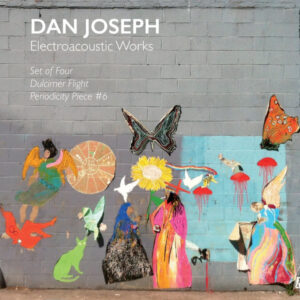
Dan JOSEPH
“Electroacoustic works”
CD 1: Set of Four (2008); Dulcimer Flight (1998-present).
CD 2: Periodicity Piece
6 (2005).
Electroacoustic Works collects three major pieces from the early 21st century by New York-based composer Dan Joseph. This 2 CD release includes Set of Four, a group of fixed-media sound collages using the processed hammer dulcimer as the primary sound source, two live performances of Dulcimer Flight for electroacoustic hammer dulcimer, and a 64-minute version of Periodicity Piece
6, a mixed-media work that originated as a multi-channel sound installation. With roots in early minimalism, ambient music and acoustic ecology, the works herein represent a significant subset of the composer’s larger body of work from the past twenty years that he has developed alongside an active career as a composer of instrumental chamber music.
From the liner notes by Alan Licht: “What’s striking about Dan Joseph’s music is that it’s drone oriented but also mindful of timekeeping. This would seem to be a paradox: most drone-based music and/or classic minimalism often reaches for a feeling of cosmic timelessness, or a sense of perpetuity via repetition, but the pieces on these discs all demarcate time in some way… Duration, another minimalist conceptual hallmark, is a means to an end rather than an end in itself for Joseph: the combination of simple harmonic material and extended lengths of time allows for more activity that is readily perceived, rather than to set up a near-static hypnotic state that is only occasionally jostled by a subtle shift in the music… In the computer age, digital memory and storage capacity are crucial technological attributes and an everyday concern; Dan’s electroacoustic pieces set up their own kind of memory banks for both the performer and the listener. The musical information is being supplied to and retrieved from both electronic and mental repository systems. This is post-minimal music where repetition is a mnemonic device, rather than a tool for trance or head-clearing.”
Based in New York City since 2001, Dan Joseph began his career as a drummer in the vibrant punk scene of his native Washington, DC. During the late 1980s, he was active in the experimental tape music underground, producing a series of ambient-industrial works for independent labels in the U.S. and abroad. He spent the ‘90s in California where he studied at CalArts and Mills College. His principal teachers include Pauline Oliveros, Alvin Curran, Mel Powell and Terry Riley. Since the late 1990s, the hammer dulcimer has been the primary vehicle for his music and he is active as a performer with his own chamber ensemble, The Dan Joseph Ensemble, as well as in various improvisational collaborations and as a soloist. In recent years he has also been active as a curator, presenter and writer, producing the monthly music and sound series Musical Ecologies in Park Slope, Brooklyn, the Music for Contemplation series in Williamsburg, Brooklyn and contributing to magazines and blogs such as NewMusicBox.org, Musicworks and the Brooklyn Rail.
15,00€
In stock
2 CD
Michel CHION – Lionel MARCHETTI – Jérôme NOETINGER
“Filarium”
In 1998, the Cultural Centre André Malraux of Vandoeuvre-Les-Nancy commissioned Michel Chion, Lionel Marchetti and Jérôme Noetinger to collaborate on a work of musique concrete. Les 120 jours was the result - a fresco for which the composers exchanged a mass of sounds from multiple origins, that each had worked, transformed and recomposed in their own style.
For this new commission (2014-2015), the work was realised in two stages. Firstly, during several recording sessions at the CFMI of Lyon (Université Lumière Lyon 2), the three musicians improvised to create some raw materials and sequences. From this large reservoir of sounds, they composed six pieces of musique concrète : one each independently, and three organised according to set rules of chance as chosen by the trio to create a series of sonic events.
The overall structure of Filarium is to be appreciated as a vivarium where just as many sound beings of different species cohabit - originating from varying lineages and junctions at porous borders, real, or imagined - as material and open poetics, antagonists, dissidents even, nevertheless connected here by a deliberate strangeness.
18,00€
In stock
2 CD
Phill NIBLOCK
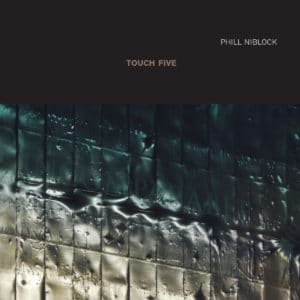
“Touch five”
“FeedCorn Ear” (2012). Arne Deforce, cello. “A Cage of Stars” (2012). Rhodri Davies, electric harp. Two Lips (2011). Zwerm Guitar Quartet. “Two Lips” (2011). Dither Guitar Quartet. “Two Lips” (2011). Coh Da Guitar Quartet.
These CDs have pieces made in two different ways. Traditionally (since 1968), I recorded tones played by an instrument (by an instrumentalist), arranging these single tones into mutli-layered settings, making thick textured drones, with many microtones. In the early days, I prescribed the microtones, tuning the instrumentalist, when I was using audio tape. Later, I used the software ProTools, and made the microtones as I made the pieces. FeedCorn Ear and A Cage of Stars were made this way. In 1998, Petr Kotik asked me to make a piece for orchestra, so, I began to make scores for the musicians to play from. The form of that piece, and the subsequent six scored works, were patterned after a piece in 1992-94, where the musicians were tuned by hearing tones played from a tape through headphones. These are the instructions for the scored piece on the second CD, Two Lips. The score was prepared by Bob Gilmore, from specific directions by me. Two Lips, aka Nameless, is conceived as two scores, A and B, to be played simultaneously, lasting 23 minutes. Each score consists of ten instrumental parts. The twenty separate parts should be distributed randomly amongst the musicians of the ensemble; the ’A group’ and the ’B group’ are not separated spatially. In each part, one note changes to the next in a graded sequence of microtonal steps. In score A, G gradually goes to F
. In score B, G
gradually goes to A. The piece calls for very subtle gradations of tuning in order to achieve a richness of ensemble sound, full of beatings of near-unison pitches, and with clouds of overtones and difference tones. The microtonal displacements are conceived in gradations of 10 cents, therefore resulting in ten divisions of the equal-tempered semitone (100 cents). An electronic tuner may be useful in rehearsal, and perhaps in performance, to achieve these small gradations. Be careful not to use glissandi to move from one note to the next; these are antithetical to Niblock’s musical language.
In score A, the G of the beginning is presented ’straight’, without microtonal embellishments of any kind, whereas the F
(into which it slowly transforms) is heard by the end in a multitude of microtonal variants above and below.
In score B this process is reversed: the G
at the beginning is immediately presented with a multitude of microtonal variants above and below, the pitches slowly transforming into the unison A by the end.
General comments: Phill Niblock’s music utilizes dense collections of microtones to yield a unique sonic palette. The musicians should sense being part of an intonational cloud of sound. The density will change throughout the piece, but the ’cloud’ will always be present. This score was used in recording three different guitar quartets; Zwerm (of Belgium), Dither (of New York) and an assembled group of world widers, Coh Da (well, ad hoc spelled backwards).
Each quartet recorded 40 tracks from the score, each playing the 23 minute piece ten times in one day. Stamina.
Zwerm line up for this recording: Kobe Van Cauwenberghe, Matthias Koole, Toon Callier, Guy De Bièvre (guest).
Dither: Taylor Levine, David Linaburg, Joshua Lopes, James Moore
Coh Da Quartet David First, Seth Josel, Robert Poss and Susan Stenger.
These CDs have pieces made in two different ways. Traditionally (since 1968), I recorded tones played by an instrument (by an instrumentalist), arranging these single tones into mutli-layered settings, making thick textured drones, with many microtones. In the early days, I prescribed the microtones, tuning the instrumentalist, when I was using audio tape. Later, I used the software ProTools, and made the microtones as I made the pieces. FeedCorn Ear and A Cage of Stars were made this way. In 1998, Petr Kotik asked me to make a piece for orchestra, so, I began to make scores for the musicians to play from. The form of that piece, and the subsequent six scored works, were patterned after a piece in 1992-94, where the musicians were tuned by hearing tones played from a tape through headphones. These are the instructions for the scored piece on the second CD, Two Lips. The score was prepared by Bob Gilmore, from specific directions by me. Two Lips, aka Nameless, is conceived as two scores, A and B, to be played simultaneously, lasting 23 minutes. Each score consists of ten instrumental parts. The twenty separate parts should be distributed randomly amongst the musicians of the ensemble; the ’A group’ and the ’B group’ are not separated spatially. In each part, one note changes to the next in a graded sequence of microtonal steps. In score A, G gradually goes to F
. In score B, G
gradually goes to A. The piece calls for very subtle gradations of tuning in order to achieve a richness of ensemble sound, full of beatings of near-unison pitches, and with clouds of overtones and difference tones. The microtonal displacements are conceived in gradations of 10 cents, therefore resulting in ten divisions of the equal-tempered semitone (100 cents). An electronic tuner may be useful in rehearsal, and perhaps in performance, to achieve these small gradations. Be careful not to use glissandi to move from one note to the next; these are antithetical to Niblock’s musical language.
In score A, the G of the beginning is presented ’straight’, without microtonal embellishments of any kind, whereas the F
(into which it slowly transforms) is heard by the end in a multitude of microtonal variants above and below.
In score B this process is reversed: the G
at the beginning is immediately presented with a multitude of microtonal variants above and below, the pitches slowly transforming into the unison A by the end.
General comments: Phill Niblock’s music utilizes dense collections of microtones to yield a unique sonic palette. The musicians should sense being part of an intonational cloud of sound. The density will change throughout the piece, but the ’cloud’ will always be present. This score was used in recording three different guitar quartets; Zwerm (of Belgium), Dither (of New York) and an assembled group of world widers, Coh Da (well, ad hoc spelled backwards).
Each quartet recorded 40 tracks from the score, each playing the 23 minute piece ten times in one day. Stamina.
Zwerm line up for this recording: Kobe Van Cauwenberghe, Matthias Koole, Toon Callier, Guy De Bièvre (guest).
Dither: Taylor Levine, David Linaburg, Joshua Lopes, James Moore
Coh Da Quartet David First, Seth Josel, Robert Poss and Susan Stenger.
15,00€
Out of stock
2 CD
Phill NIBLOCK
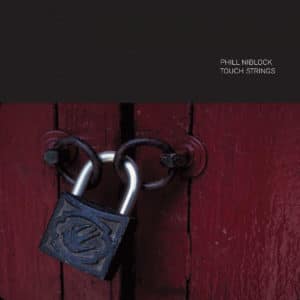
“Touch strings”
CD One - (6 tracks): 1. - 6. “Stosspeng”. Susan Stenger and Robert Poss, guitars and bass guitars. CD Two - (6 tracks): 1. “Poure”. Arne Deforce, cello. 2. - 6. “One Large Rose”. The Nelly Boyd Ensemble, Hamburg - Robert Engelbrecht, cello; Jan Feddersen, piano strummed with nylon strings; Peter Imig, violin; Jens Roehm, acoustic bass guitar strummed with nylon strings or e-bow. This is Phill Niblock’s 4th release on Touch, after Touch Works... [TO:49, 2000], Touch Food [TO:59, 2003] and Touch Three [TO:69, 2006]. “Stosspeng was completed in April 2007; Poure in September 2008 and One Large Rose in May 2008. The Stosspeng recording session to obtain the materials for the piece was on December 20 2006 at Robert Poss’s Trace Elements studio on E 4th Street and Ave A, in New York. Robert was the engineer. The piece was completed using Protools in April 2007, in Vienna, Austria. It was premiered at the Donau Festival in Krems Austria on April 30 2007. The material for Poure was recorded in Johan Vandermaelen’s Amplus studio in Aaigem Belgium, with technical assistance by Guy De Bievre. Much of the construction of the piece, in Protools, was done in a residency at Atelier Azur in Hoenefoss, Norway at the Hval Station, in mid August 2008. It was finished in Ellen Fullman’s studio in Berkeley California on September 7. It was premiered at Kasteel Schuurlo, Sint-Maria-Aalter, Belgium on September 12 2008 and it was commissioned by the Centre de Recherches et de Formation Musicales de Wallonie, CRFMW, Liege, Belgium. One Large Rose was made with the musicians playing from a score, and recorded acoustically and in real time. There are four recordings of 46 minutes each, superimposed. Recorded by Jens Roehm at Christianskirche, Hamburg, Germany, recording assistance by Julia Berg, on May 15 and 16 2008. Mixing was done by Jens Roehm and the ensemble in Hamburg, and the final mix was done in New York at Experimental Intermedia on October 13 2008. The mastering for CD, of all pieces, was done by Tom Hamilton, in New York.” Phill Niblock, August 2009. “Phill Niblock is a New York-based minimalist composer and multi-media musician and director of Experimental Intermedia, a foundation born in the flames of 1968’s barricade-hopping. He has been a maverick presence on the fringes of the avant garde ever since. In the history books Niblock is the forgotten Minimalist. That’s as maybe: no one ever said the history books were infallible anyway. His influence has had more impact on younger composers such as Susan Stenger, Lois V Vierk, David First, and Glenn Branca. He’s even worked with Sonic Youth’s Thurston Moore and Lee Ranaldo on “Guitar two, for four” which is actually for five guitarists. This is Minimalism in the classic sense of the word, if that makes sense. Niblock constructs big 24-track digitally-processed monolithic microtonal drones. The result is sound without melody or rhythm. Movement is slow, geologically slow. Changes are almost imperceptible, and his music has a tendency of creeping up on you. The vocal pieces are like some of Ligeti’s choral works, but a little more phased. And this isn’t choral work. “A Y U (as yet untitled)” is sampled from just one voice, the baritone Thomas Buckner. The results are pitch shifted and processed intense drones, one live and one studio edited. Unlike Ligeti, this isn’t just for voice or hurdy gurdy. Like Stockhausen’s electronic pieces, Musique Concrete, or even Fripp and Eno’s No Pussyfooting, the role of the producer-composer in “Hurdy Hurry” and “A Y U” is just as important as the role of the performer. He says: “What I am doing with my music is to produce something without rhythm or melody, by using many microtones that cause movements very, very slowly”. The stills in the booklet are from slides taken in China, while Niblock was making films which are painstaking studies of manual labour, giving a poetic dignity to sheer gruelling slog of fishermen at work, rice-planters, log-splitters, water-hole dredgers and other back-breaking toilers. Since 1968 Phill has also put on over 1000 concerts in his loft space, including Ryoji Ikeda, Zbigniew Karkowski, Jim O’Rourke.”
15,00€
Out of stock
2 CD
Phill NIBLOCK
“Touch food”
CD1: “Sea Jelly Yellow” [Ulrich Krieger, baritone saxophone]; “Sweet Potato” [Carol Robinson, bass clarinet, basset horn, and Eb clarinet]; “Yam almost May” [Kasper T. Toeplitz, electric bass]. CD2: “Pan Fried 70” [Reinhold Friedl, piano].
“In the music of Phill Niblock, we are confronted with the aural equivalent of trompe-l’oeil. Apparently static clouds of harmonically dense material turn out to be not so static as they appear. What’s more, one has the distinct impression that the music is changing spatially over time. How is all of this possible? The key is in Niblock’s use of time. In his music, the experience of time is as very slow and continuous. There are no disruptive, discontinuous musical events to disrupt the flow of time. Time is suspended. Niblock’s music gives the impression of having always been and continuing to be. Yet, this is not the idea of Being as stasis. Each time one feels that Niblock’s music isn’t changing, one realizes that it is never the same, an yet, always the same. Being and Becoming as one. Moving Immobility. This is a music that breathes slowly and deeply. It changes its spatial form slowly, as a person who is in deep meditation changes the form of his body ever so slowly as he peacefully expands and contracts the walls of his chest cavity with each new cycle of inspiration/expiration.” Gerard Pape.
15,00€
In stock
2 CD
Claire M. SINGER
“Solas”
Solas (‘Light’ in Gaelic) is Claire M Singer’s debut album spanning 14 years of her work in acoustic and electronic composition. In recent years she has focused on writing and performing a mix of organ, cello and electronics with regular performances at Union Chapel where she is Music Director, running a diverse programme of concerts and educational workshops around the Chapel’s Henry Willis 1877 organ.
Other performances include the Roundhouse London by The LCO Soloists; a' fàs soilleir, an audio-visual work, exhibited at Tate Modern London, XMV New York City and Ceremony Hall Austin TX and she has performed as part of Spire at Muziekgebouw, Amsterdam, Kunst-Station Sankt Peter Cologne and many more.
The Molendinar, which was co-commissioned in 2015 by Civic Room, Glasgow and Union Chapel, London to celebrate Glasgow’s Molendinar Burn Project will be performed on the 14th June 2016 at Glasgow Cathedral to conclude the weekend festival.
17,00€
Out of stock
2 CD
Christian FENNESZ + Ryuichi SAKAMOTO
“Flumina”
Originally released in Japan in August 2011 on Commmons. Artwork & photography by Jon Wozencroft. Mastered by Denis Blackham. Recorded at Amann Studios, Vienna and at KA+B Studios, NY and Japan. Mixed at BA+B Studios, NY. The 24 pieces of ’flumina’ are based on piano compositions/improvisations which Ryuichi Sakamoto had recorded whilst touring in Japan. On that tour Ryuichi played a piano piece in a different key at the begin of every show, always having a ’fennesz sakomoto’ project in mind. After 24 shows he had 24 tracks in 24 different keys, covering all 24 tonal steps of the western tonal system. Sakamoto sent the tracks over to Christian Fennesz and he worked on them using electronics, guitars and synths. They met in New York then and mixed the album together with Fernando Aponte at KAB Studios. This is their 3rd collaboration released on Touch, after the live recording of ’Sala Santa Cecilia’ [Touch
Tone 22, 2005] and ’Cendre [Touch
Tone 32, 2007].
Tone 22, 2005] and ’Cendre [Touch
Tone 32, 2007].
17,00€
In stock
2 CD
SELTEN GEHÖRTE MUSIK
“Novembersymphonie (Doppelsymphonie)”
Second part in the reissue series of all Selten Gehörte Musik records. Two CD's in printed CD sleeves packaged in fullcolour 12” LP gatefold sleeve (reproduction of the original artwork) and printed 12” innersleeve featuring rare photos and an english text on Selten gehörte Musik by Gerhard Rühm. This is the reissue of the second SGM release from 1974. Recordings of the second Berliner Musicworkshop with Dieter Roth, Gerhard Rühm, and Oswald Wiener, Berlin 15th - 26th November 1973. Also included are the two bonus pieces from the 7’ which came only with the first 100 copies of the original edition. Edition of 500 copies.
26,00€