
Out of stock

CD
Pascal COMELADE – Marc HURTADO
“Larme secrète”
Pascal Comelade was born in Montpellier, France. After living in Barcelona for several years, he made his first album, under the name of Fluence, influenced by electronic music and by the group Heldon. Since 1980 Comelade releases music under his own name. Ever since, his music has become more acoustic and is often characterised by the sounds of toy instruments, used as solo-instruments or as an integral part of the sound of his group, the Bel Canto Orchestra. Marc Hurtado is one half of the experimental French duo Étant Donnés. Active since the end of the 1970s, the group has released several albums, also collaborating with people like Alan Vega, Lydia Lunch, Michael Gira or Genesis P-Orridge. Hurtado has also released several solo albums under his own name, again collaborating with various artists, and has toured with Lydia Lunch celebrating the music of Suicide. Larme Secrete is the first time that Comelade and Hurtado have collaborated. Larme Secrete is the sound of an electric shock , the sound of two hearts beating at the same rhythm, united in the pulsating and hypnotic music of Pascal Comelade melted in the fire of the celestial poems of Marc Hurtado. Synthesizers, guitars, drums, organ, piano, sound loops, whispering, flying, screaming voices transport you in a blazing sonic dream."
12,00€
In stock
CD
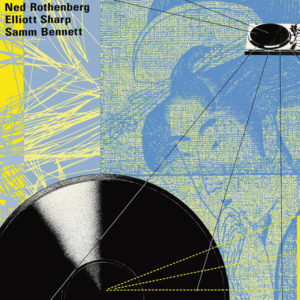
SEMANTICS (ROTHENBERG / SHARP / BENNETT)
“Semantics”
Semantics was a jazz supergroup consisting of Elliott Sharp, Ned Rothenberg and Samm Bennett. Elliott Sharp, born in Ohio in 1951, began playing the piano at the age of six and started to perform concerts two years later. He soon gave up the piano, first in favour of the clarinet and later for the guitar. Sharp became intrigued with all types of experimental music, from contemporary classical to free jazz and sophisticated rock. He studied anthropology at Cornell University, where he played in a band and took an electronics class with synthesizer inventor Robert Moog. Ned Rothenberg is an American multi-instrumentalist who was born in 1956 in Massachusetts. He has been internationally acclaimed for both his solo and ensemble music, presented for the past 33 years on 5 continents. He performs primarily on alto saxophone, clarinet, bass clarinet, and the shakuhachi - an endblown Japanese bamboo flute. His solo work utilizes an expanded palette of sonic language, creating a kind of personal idiom all its own. Samm Bennett was born in 1957 in Alabama. In 1977 he moved to Boston, a town that seemed to offer broader possibilities for a young musician eager to play and grow and try new things. It was there that he was first exposed to African drumming styles, mostly through attending weekly drum ensemble workshops led by Boston underground percussion legend Syd Smart. In late 1980, he went to Nigeria, West Africa. Traveling with a friend who introduced him to a family in Benin City, Nigeria, he remained there as their guest for six months, making daily trips to the home of drum master Idemudia Izevbihen. Later Bennett lived in Brussels and played many solo shows. The short lived Semantics were active in the middle of the 1980s and released two albums. The self-titled debut has so far never been released on CD. It is a masterpiece of contemporary jazz with a rock attitude added for good measure.
12,00€
In stock
CD
OFFICER!
“Yes Yes No No Yes No Yes”
Officer! was founded by Londoner Mick Hobbs. His roots were in the Rock In Opposition scene of the late 70s and early 80s. Initially he worked as guitarist in The Work, subsequently he became closely associated with This Heat and their Cold Storage Studio in Brixton, working with artists like Family Fodder, Catherine Jauniaux or Zeena Parkins. The band's first album "8 New Songs By Mick Hobbs" came out in 1982 on casette only. It was followed by the second album, "Ossification". The third album, "Cough" was recorded and released in France in 1985. It is often overlooked in the band's discography, a fate that many cassette releases share. "8 New Songs By Mick Hobbs" and "Cough" have been collected to form the CD "Earlier Music", which is also available from Klanggalerie. "Yes Yes No No Yes No Yes " was the band's fourth album and came out as a vinyl LP in 1988, released by the band themselves. It was recorded in France and England between 1986 and 1988. Performing on the album are Antoine Gindt, Bill Gilonis, Claudia Schmid, Daniel Koskowitz, Felix Fiedorowicz, Keisuke Matsui and of course Mick Hobbs. Hobbs is a songwriter with a gift for plangent melody, ingenious arrangement and lyrics at once caustic and courtly, playful and profound.
12,00€
In stock

CD
Asmus TIETCHENS
“Linea +”
Asmus Tietchens is a sound artist and composer from Hamburg, Germany. He got interested in Musique Concrete by listening to a German radio programme when he was 10 years old. In 1965, at the age of 18, Asmus started experimenting with tape loops and turned them into musical collages. Soon, the use of synthesizers was added. In 1980 his debut album Nachtstücke was released, produced by Peter Baumann of Tangerine Dream. This was soon followed by a series of albums of electronic pop music for the Sky label, home of many Krautrock bands. Tietchens often uses special source materials for his compositions such as water (Seuchengebiete), human voices (Von Mund zu Mund), paper (Papier ist geduldig). He is associated with the Industrial music scene through his collaborations and releases on labels such as United Dairies, Esplendor Geometrico or Dom Records. Tietchens never studied composition, he has no academic background, everything he does is self taught or learnign by doing. Nevertheless, he was professor for sound design in Hamburg in recent years. Linea was originally released on cassette on Dutch Korm Plastics label, later re-issued as a CDR in 1999. It is one of Tietchens's most minimal compositions, and has a special place in our music hearts here at Klanggalerie. For our new edition, Asmus Tietchens has dug deep into his archive and unearthed two further Linea pieces that have so far never seen the light of day.
12,00€
In stock

CD
Asmus TIETCHENS
“Dämmerattacke”
Asmus Tietchens is a sound artist and composer from Hamburg, Germany. He got interested in Musique Concrete by listening to a German radio programme when he was 10 years old. In 1965, at the age of 18, Asmus started experimenting with tape loops and turned them into musical collages. Soon, the use of synthesizers was added. In 1980 his debut album Nachtstücke was released, produced by Peter Baumann of Tangerine Dream. This was soon followed by a series of albums of electronic pop music for the Sky label, home of many Krautrock bands. Tietchens often uses special source materials for his compositions such as water (Seuchengebiete), human voices (Von Mund zu Mund), paper (Papier ist geduldig). He is associated with the Industrial music scene through his collaborations and releases on labels such as United Dairies, Esplendor Geometrico or Dom Records. Tietchens never studied composition, he has no academic background, everything he does is self taught or learnign by doing. Nevertheless, he was professor for sound design in Hamburg in recent years. The album Dämmerattacke was originally released on Dutch Korm Plastics label in 1997 as a limited edition vinyl LP only. It was later reissued as a double CD with Eisgang. For this latest edition, we have added another bonus track making the CD 20 minutes longer than the LP.
12,00€
In stock

LP single-sided
Daniel MENCHE
MMXX-05 “4424”
Matière Mémoire presents the MMXX Series. In anticipation of the year 2020, Matière Mémoire asked 20 great artists to create an original 20 minutes piece and an artwork. Throughout this year, each quarter will see the release of 5 new vinyls, available individually or as a bundle. Each record is limited at 500 copies and comes as a crystal clear vinyl featuring an original track of 20 minutes on one side, and a laser engraved artwork on the other. Each contained in a transparent sleeve printed with the MMXX logo, and each coming with a print of the artist artwork.
Original price was: 25,00€.12,00€Current price is: 12,00€.
In stock

LP single-sided
Reinier VAN HOUDT
MMXX-04 “Les Champs Lissajous”
Matière Mémoire presents the MMXX Series. In anticipation of the year 2020, Matière Mémoire asked 20 great artists to create an original 20 minutes piece and an artwork. Throughout this year, each quarter will see the release of 5 new vinyls, available individually or as a bundle. Each record is limited at 500 copies and comes as a crystal clear vinyl featuring an original track of 20 minutes on one side, and a laser engraved artwork on the other. Each contained in a transparent sleeve printed with the MMXX logo, and each coming with a print of the artist artwork.
Original price was: 25,00€.12,00€Current price is: 12,00€.
Out of stock

LP single-sided
CM VON HAUSSWOLFF
MMXX-03 “For Marietta”
Matière Mémoire presents the MMXX Series. In anticipation of the year 2020, Matière Mémoire asked 20 great artists to create an original 20 minutes piece and an artwork. Throughout this year, each quarter will see the release of 5 new vinyls, available individually or as a bundle. Each record is limited at 500 copies and comes as a crystal clear vinyl featuring an original track of 20 minutes on one side, and a laser engraved artwork on the other. Each contained in a transparent sleeve printed with the MMXX logo, and each coming with a print of the artist artwork.
Original price was: 25,00€.12,00€Current price is: 12,00€.
In stock

LP single-sided
John DUNCAN
MMXX-02 “Panic @ 11000 Feet”
Matière Mémoire presents the MMXX Series. In anticipation of the year 2020, Matière Mémoire asked 20 great artists to create an original 20 minutes piece and an artwork. Throughout this year, each quarter will see the release of 5 new vinyls, available individually or as a bundle. Each record is limited at 500 copies and comes as a crystal clear vinyl featuring an original track of 20 minutes on one side, and a laser engraved artwork on the other. Each contained in a transparent sleeve printed with the MMXX logo, and each coming with a print of the artist artwork.
Original price was: 25,00€.12,00€Current price is: 12,00€.
In stock

LP single-sided
Franck VIGROUX
MMXX-01 “Tension 24”
Matière Mémoire presents the MMXX Series. In anticipation of the year 2020, Matière Mémoire asked 20 great artists to create an original 20 minutes piece and an artwork. Throughout this year, each quarter will see the release of 5 new vinyls, available individually or as a bundle. Each record is limited at 500 copies and comes as a crystal clear vinyl featuring an original track of 20 minutes on one side, and a laser engraved artwork on the other. Each contained in a transparent sleeve printed with the MMXX logo, and each coming with a print of the artist artwork.
Original price was: 25,00€.12,00€Current price is: 12,00€.
Out of stock

LP
Alvin LUCIER
“Vespers”
Vespers (1969) and Chambers (1968), the two works featured on this LP, witness Lucier rethinking the material and conceptual possibilities of music at every turn. First released as Lucier's contribution to the Sonic Arts Union's lone LP, Electronic Sound, in 1972, Vespers is a work generated by two equal actors —the performers and the space that they occupy. Conceived following a chance encounter with hand-held echolocation technology —the Sondol™, a pulse oscillator that emits short, sharp pulses at variable repetition speeds, producing echoes from the reflecting walls of a space to register relative location and orientation— it stands as one of the first works in history within which the decisions made during the performance are solely based on acoustics, allowing sound to be equally the content and structural determiner.
Written as a poetic "prose score", for the realization of Vespers, each performer is equipped with a Sondol™ and asked to move blindfolded within a defined space, moving from one point to the next using only echolocation, taking what Lucier describes as "sound photographs" that reveal discrete details of the given area. As the recording unfolds, the aptitude of this image becomes increasingly clear. While an aesthetic relationship to the movement of musical minimalism, embarked upon by a number of his peers, has often presented itself within Lucier's work, of all of them this is arguably most present within Vespers. Despite the radical leap it presented within the history of the sonic arts, Vespers was not the first of Lucier's works that began to specifically address the relation between sound, perception, and space. Notably Chambers, composed the year before in 1968 and embedded with the wry humor which lingers below much of the composer's output, explored the theme on a brilliantly miniature scale.
As a total work, Chambers contends with the relationship between the knowing and understanding of what we hear, our perception of the source of a sound, and its relation to space. When viewed in the immediate context of Vespers, as it is here, it presents as an unexpected inversion of what was to come. While it plays on the relation of sight and the sonic actor, here what is seen and unseen takes on a dynamically different role. Equally, there is not one space to perceive, but many. For the realization of Chambers, battery-operated radios, tape recorders, and various kinds of electric toys are hidden in paper bags, shoes, kettles, a suitcase, and other small resonant spaces, which not only limit the perception of these object to their sounds alone, but take on the role of acoustic actors on the sounds within, each space becoming as individual and distinct as the object it contains. Taking it one step further, rather than being static, these "chambers" are carried by performers into larger ones —those in which the work is performed— further altering the sounds which occupy them, drawing the ear, once again, to the action of that which contains a body of sound.
Vespers is released by Blume in an edition of 300 copies on 160gr audiophile coloured (dark blue) vinyl, housed in the label's traditional monochrome package coming with a newly designed obi-strip/insert with an introduction by Robert Ashley, liner-notes by Bradford Bailey and Gaia Martino, and also including a printed inner sleeve housing a Nagaoka anti-static record sleeve, plus an all-new transparent colour-matching outer plastic sleeve. Photography by Mary Lucier.
21,00€
Out of stock
LP
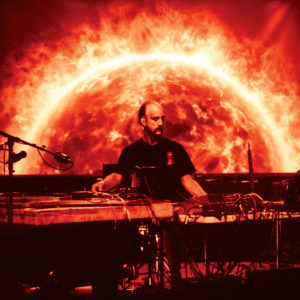
Bob BELLERUE
“Amplified Discovery”
Two intense tracks from New York based noise artist, sonic multitasks master and festival organiser (the famous Ende Tymes every year in NYC, as well as working for years at Issue Project Room). Bob Bellerue creates living visceral sonic organisms with feedback and amplification in specific resonant spaces, using electronics, voices or even Supercollider, resulting in massive wild evolving and mutating drones into outbursts of noise deflagrations - a tension between hellish tellurism and multidimensional discoveries.
Mastered and cut for vinyl and digital by Frédéric Alstadt / Ångström Mastering.
17,00€
Out of stock

book
SPECTRES
“N° 02 – Résonances”
The second issue of Spectres is devoted to the concept of resonances, with contributions by Maryanne Amacher, Chris Corsano, Ellen Fullman, Christina Kubisch, Okkyung Lee, Pali Meursault, Jean-Luc Nancy, David Rosenboom, Tomoko Sauvage, The Caretaker, David Toop, and Christian Zanési.
To resonate: re-sonare. To sound again—with the immediate implication of a doubling. Sound and its double: sent back to us, reflected by surfaces, diffracted by edges and corners. Sound amplified, swathed in an acoustics that transforms it. Sound enhanced by its passing through a certain site, a certain milieu. Sound propagated, reaching out into the distance. But to resonate is also to vibrate with sound, in unison, in synchronous oscillation. To marry with its shape, amplifying a common destiny. To join forces with it. And then again, to resonate is to remember, to evoke the past and to bring it back. Or to plunge into the spectrum of sound, to shape it around a certain frequency, to bring out sonic or electric peaks from the becoming of signals.
Resonance embraces a multitude of different meanings. Or rather, remaining always identical, it is actualised in a wide range of different phenomena and circumstances. Such is the multitude of resonances evoked in the pages below: a multitude of occurrences, events, sensations, and feelings that intertwine and welcome one other. Everyone may have their own history, everyone may resonate in their own way, and yet we must all, in order to experience resonance at a given moment, be ready to welcome it. The welcoming of what is other, whether an abstract outside or on the contrary an incarnate otherness ready to resonate in turn, is a condition of resonance. This idea of the welcome is found throughout the texts that follow, opening up the human dimension of resonance, a dimension essential to all creativity and to any exchange, any community of mind. Which means that resonance here is also understood as being, already, an act of paying attention, i.e. a listening, an exchange.
Addressing one or other of the forms that this idea of resonating can take on (extending—evoking—reverberating—revealing—transmitting), each of the contributions brought together in this volume reveals to us a personal aspect, a fragment of the enthralling territory of sonic and musical experimentation, a territory upon which resonance may unfold. The book has been designed as a prism and as a manual. May it in turn find a unique and profound resonance in each and every reader.
Spectres is an annual publication dedicated to sound and music experimentation, co-published by Shelter Press and Ina GRM – Groupe de Recherches Musicales.
bilingual edition (English / French), 13,5 x 20 cm (softcover), 196 pages.
14,00€
Out of stock

book
Éliane RADIGUE – Julia ECKHARDT
“Espaces intermédiaires”
In the long interview that forms the body of this publication, Éliane Radigue talks about her work, her reflections and underlying research, as well as her historical context. The publication also contains a commented list of works and Radigue's programmatic text on The Mysterious Power of the Infinitesimal.
Éliane Radigue (born 1932 in Paris) is considered one of the most innovative and influential contemporary composers, from her early electronic music through to her acoustic work of the last fifteen years. Influenced by musique concrète and shaped by regular sojourns in the United States, where she discovered analogue synthesisers, her work unfolds an intensity which is at once subtle and monumental. Through her deep reflections on sound and listening, not only her music but also her working methods have come to shape a widely resonating set of new parameters for working with sound as musical material.
Julia Eckhardt is a musician and curator in the field of the sonic arts. She is a founding member and artistic director of Q-O2 workspace in Brussels, for which she conceptualized various thematic research projects. As a performer of composed and improvised music she has collaborated with numerous artists, and extensively with Eliane Radigue. She has performed internationally, and released a number of recordings. She has been lecturing about topics such as sound, gender and public space, and is (co-)author of The Second Sound, Conversation on Gender and Music, Grounds for Possible Music, and The Middle Matter, Sound as Interstice.
Bilingual french-english edition.
20,00€
Out of stock

magazine
ROVEN
“N° 15 – Numéro spécial dessin et son”
Roven #15 is entirely devoted to the links between drawing and sound.
Featuring: from drawing to sound and vice versa (Tracer l'inarticulé by Marie Cantos, Le sténographe et la mécanographe by Damien Simon, interview with Félicia Atkinson, Hendrik Hegray and Rainier Lericolais by Guillaume Constantin, Max Neuhaus' practice of drawing by Matthieu Saladin, « C'est ce qui arrive quand on ne s'exerce pas à la maison », ou l'épanouissement d'une musique rarement entendue by Maike Aden, interview with Benjamin L. Aman by Julie Ramos); portfolios (Clarissa Baumann, Lars Fredrikson, Alex Chevallier, Daphné Oram, Dick Higgins, Sandrine Morgante, Bernard Pourrière, Collectif Void, Linda Karshan, Atsunobu Kohira, Alice Anderson, Morgan Patimo, Sara Wallgren, Felix Pinquier); artistic contributions (Farah Khelil, Élie Godard, Benjamin L. Aman).
Roven is a critical magazine devoted to contemporary drawing, structured around numerous monographic and thematical texts, a portfolio by one emerging artist, some interviews, and a creative section of unpublished works.
French edition, 21 x 26 cm (softcover), 128 pages (ill.)
22,00€
Out of stock

book
A-SIDES – A cosmology of audio editions by artists around the Arc Lémanique region
Art & vinyl: an analytic anthology of artist's records in Switzerland.
Since the beginning of its existence, the record has always been used by visual artists as a form of distribution for their sound practice. First experimented with by the early avant-garde movements, the role of these sound supports was later redefined in the context of the proliferation and hybridization of forms between sound and language.
While recording media such as discs or cassettes were used to document happenings, readings, and Fluxus concerts, these media also became a medium in their own right, used by artists to transmit their experiments. Moreover, the current economic and technological context generated a keen interest in editorial and multiple art practices.
A-sides brings into focus on a network of actors linked to the scene of the Lake Geneva region—on the history of artistic encounters and exchanges generating sound productions. The produced works, as well as the methods of exploration of this international network, formed the basis of this anthology of artists' sound publications.
A-sides gives an insight into the conditions and motivations that give rise to the creation of sound recordings as an art form and explores the ambiguity of the relationship between the current technological context, which is moving towards dematerialization, and the persistence of sound practices distributed on tangible recording media.
Edited by Laurent Schmid and Roxane Bovet.
Contributions by Camilla Paolino, Francis Baudevin, Laurence Wagner, Christophe Kihm, Luca Frei, Anne Le Troter, John Armleder, Karl Holmqvist, Charlemagne Palestine, Maurizio Nannucci, Mathieu Copeland, N.U. Unruh, Franz Treichler, FM Einheit, Hannah Weinberger, Daniel Löwenbrück, Jan van Toorn, Ben Schot, Volker Zander, Bruno Sphere, Tzii, Christophe Piette, Benjamin Novello (Blanktapes), d'incise, Frédéric Post, Francesco Cavaliere, Aymeric de Topol, Lieven Martens, Sixto Fernando, Zamzamrec, Ergo Phizmiz, Feldermelder, Joke Lanz.
English edition, 15 x 20 cm (softcover), 224 pages
22,00€
Out of stock
LP
Beatriz FERREYRA
“Huellas Entreveradas”
Beatriz Ferreyra has been at the forefront of electroacoustic music composition since 1963 when she joined the Groupe de Recherches Musicales as one of Pierre Schaeffer's research assistants. She is one of very few composers still performing who was instrumental at the beginning of Schaeffer's theories of sound objects and reduced listening techniques. She continues to compose commissioned works and perform around the world in a career that has spanned some sixty years.
From the 1960s until 1997 Beatriz composed tape pieces for multi-speaker performance using three or four Revox reel-to-reel tape machines at each concert. She now works on Pro Tools with GRM plug-ins but still uses the Revoxes for certain tape techniques that can't be achieved with computer software. Beatriz discusses her music in the Schaefferian way, as a series of impulsions [sharp attacks], iteratives [repetitions], percutés [percussive hits], and trames [sustains] whilst also using her own onomatopoeic descriptions such as 'schkllang, prrrrwip, ferrrwisssssh, takatak' communicating sounds freely and directly as she hears them.
Her music is about movement; the movement of sounds around a performance space, or the positioning of sounds as point sources within the illusory stereo field between loudspeakers. It is also about movement within individual sounds, where each one is a composition of different shifting components and a 'little structure' in its own right, with its own character. She likens her sounds to a Russian doll, inside each is another one, which contains another, and so on.
During her time at Schaeffer's studios, Beatriz developed her own research project, Objets Construits, (constructed objects). These are layers of short sounds, chords made of different noises. Each layer is isolated on a separate piece of tape to analyse the relationships between components and the effect of minimal alterations in pitch, dynamics or timing, to the overall perception of the chord. This was a way of thinking about sound slowly and patiently, of taking time to experiment, analyse and contemplate each manipulation, that is lost in the speedy world of vast ready-made digital sound libraries and the immediacy of save and recall buttons.
In Beatriz's work, small, playful sounds interact like chattering creatures and merge into vast cavernous and mysterious immersive landscapes. These three signature pieces use snippets of speech which are gradually deconstructed to create abstract textures, interweaving vocals with percussive and sustained sounds. Small, playful sounds interact like chattering creatures and merge into vast cavernous and mysterious immersive landscapes. La Baballe du Chien Chien [The doggie's little ball] (2001) is a playful take on the way that we speak in a childlike way to pets. A brief narrative at the start invites the listener into this 'pet speak' scene, with the sound of footsteps and chatter. These gradually crescendo and morph into a cacophonous swirling explosion. Deux Dents Dehors [two teeth sticking out] (2007) is a pun on Bernard Parmegiani's piece Dedans Dehors [Inside Outside] (1977), composed for his birthday. It takes snippets of lively vernacular and processes these into complex patterns of unintelligible and unrecognisable speech, in sustained or percussive sequences and glissandi. Huellas Entreveradas (2018) is a new commission that transforms vocal sounds into choral textures which fragment, granulate and transform into continuous whorls and tidal washes interspersed with her trademark short silences.
23,00€
In stock

2 CD
Hermann NITSCH
“Albertina Quartett”
Hermann Nitsch’s String Quartet No.2 in six movements for 2 violins, viola, and violoncello, transcribed by Michael Mautner and performed by the Viennese Koehne Quartet. Recorded during the exhibition NITSCH. Spaces of Color at the ALBERTINA Museum, Vienna on the 29th May 2019.
The Koehne Quartet: Joanna Lewis – 1. Violine, Anne Harvey-Nagl – 2. Violine, Lena Fankhauser – Viola, Mara Achleitner – Violoncello.
Hermann Nitsch does not write his music in regular musical notation, but divides the individual movements into time segments of one minute duration and precisely defines sound events, durations, dynamics and actions with words or signs. His instructions are e.g.: deep sound, whole tone cluster, D minor, F major or noise.
18,00€
Out of stock

CD
Peter BRÖTZMANN, Han BENNINK & Alexander VON SCHLIPPENBACH
“Fifty Years After… Live at the Lila Eule 2018”
For the celebration of the 50th anniversary of the legendary Machine Gun recordings at the Lila Eule in Bremen, Peter Brötzmann put together a trio with the Berlin pianist, composer Alexander von Schlippenbach and the percussionist Han Bennink, who already sat on the drums 50 years ago. They were so pleased with the music ,that they decided to release it and continue to play gigs as the trio.
Recorded live at Lila Eule, Bremen on 26.5.2018
Press: It might be 50 years since Machine Gun was released, but these three legends prove that they can continue in the same extravagant path, always leave behind gems from these explorations.- Spyros Stasis, Invisible Oranges
for sheer energy and excitement Fifty Years After is a great aural ride that can hardly be equalled or topped. - Ken Waxman, Jazzword
They created a stellar performance that ranks with that classic album in terms of intensity, but also displays all of the hard won knowledge and wisdom that fifty years in the musical trenches can instill.- Tim Niland, Jazzandblues
15,00€
In stock

LP
Luca T. MAI – “Heavenly Guide”
Powerful saxophone textures from Luca T. Mai of the mighty ZU. On this debut album he is placing his probing and powerful saxophone artistry from energetic sound scapes to celestial layered drones. A stunning solo piece of work, immersive and deep.
20,00€
Out of stock

LP
Tashi DORJI & Tyler DAMON
“To Catch A Bird In A Net Of Wind”
Tashi Dorji (electric guitar) and Tyler Damon (drums/percussion) have developed a musical language that is not only shaped by original forms as free jazz, metal, rock and Buddhist monastic music. Their sound merges passion and emotions of literature, art, cultural movements, politics - flashes of ecstatic intensity, blurred timbral lines, fractal repetition, noir-ish, cinematic mystery and inclinations toward free play hint that the two are pleased to follow a winding path to destinations yet unknown.
20,00€
Out of stock
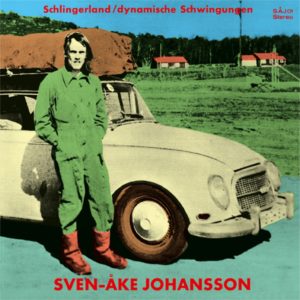
LP
Sven-Åke JOHANSSON
“Schlingerland / Dynamische Schwingungen”
Sven-Åke Johansson's 1972 record Schlingerland presents just the man and his drum set, exploring the polyrhythmic possibilities of his kit. Schlingerland fills a gap in the documentation of '70s European improvisation. At the same time, it retains a surprisingly contemporary sound which reverberates in the ear, mind, and heart of the 21st century listener. (All About Jazz)
Recording: Göran Freese, 1972 in Stockholm Schweden. Re-Mastering: Martin Siewert, 2019. Artwork: SÅJ.
25,00€
In stock
2 CD
Alvin LUCIER
“String noise”
Continuing Black Truffle's series of releases documenting the recent work of legendary American experimental composer Alvin Lucier, String Noise presents three major works for violin solo and duo composed between 2004 and 2019. Lucier has developed his compositions in close collaboration with many instrumentalists over the years; the three works presented here are performed by the violinists for whom they were originally written, Conrad Harris and Pauline Kim Harris, who together make up the innovative violin duo String Noise, and have premiered works by a plethora of major figures in contemporary music. The long-form compositions presented here continue Lucier's life-long exploration of acoustic phenomena, drawing on aspects of some of his most well-known compositions and extending them into new instrumentation. Tapper (2004) extends the experiments with echolocation – gathering information about an environment by listening to the echoes of sounds produced within it – that Lucier began with his classic 1969 work Vespers, where performers explore a space equipped with hand-held pulse oscillators. Here, the same principle is put into practice for solo violin, the body of which the performer taps repeatedly with the butt end of the bow while moving around the performance space. The result is a subtly shifting web of echoes and resonances produced by the reflection of the sharp tap off the surfaces of the room (in this case, the Drawing Center in New York). In Love Song (2016), two violinists are connected by a long wire stretched between the bridges of their instruments, causing the sounds played on one violin to also be heard through the other. As the two violinists play long tones using only the open E string, they move in a circular motion around the performance space, thus changing the tension of the wire, which creates a remarkable array of variations in pitch and timbre ranging from ghostly wavering pitches reminiscent of a singing saw to near-electronic tones. In Halo (2019), one or more violinists walk slowly through the performance space in a zig-zag pattern while sustaining long tones. As in Tapper, the consistent sound production reveals the sonic properties of the environment. As the title of the piece suggests, the outcome is a shimmering halo of sound produced by the reflection of the violin's extended tones off the walls and ceiling of the performance space (in this case, Alvin's home).
2CD release presented in a deluxe 4-panel digipak with liner notes by Alvin Lucier, live images and artist bios. Sleeve design by Lasse Marhaug. Mastered by Tom Hamilton.
14,50€
In stock
LP
Dewa ALIT & Gamelan SALUKAT
“Genetic”
Alit is a major force in contemporary Indonesian music, presenting his work extensively throughout Asia, Europe and North America and collaborating with renowned ensembles such as Bang On A Can and Ensemble Modern. Involved in the composition and performance of works for Gamelan ensemble since he was a teenager, in 2007 he founded Gamelan Salukat, a 25 member ensemble that perform on instruments specially built to Alit's designs, using a unique 11-note scale. The single composition that unfurls over the two sides of Genetic is an enchanting introduction to Alit's magical sound world. Beginning with a stately procession of isolated, hanging chords sounded on the ensemble's uniquely-tuned metallophones, the piece abruptly launches into a stunning passage of rhythmically complex call-and-response motifs, making striking use of abruptly muted chords – one of many moments where the acoustic ensemble sounds uncannily electronic. The piece continues to alternate between spare investigations of resounding tones and sometimes frenetic ensemble interplay using unorthodox techniques, including a stunning moment around half-way when the entire Gamelan seems to transform itself into a single, gigantic zither. Later in the piece, drums and wind instruments enter, and the metallophones begin to play virtuosic, rapid-fire passages of fragmented scalar melody. As Alit explains in his liner notes, the music of Gamelan Salukat is grounded in the tradition of Balinese Gamelan; however, he approaches this tradition not as something static, but as a set of concepts and principles that can be used to create something radically new. For many listeners, Genetic will inhabit precisely this space between the familiar and the invigoratingly unheard, as it takes the stop-start dynamics, unison melodies, and much of the instrumentation familiar from traditional Balinese Gamelan and puts them in the service of rhythmic, harmonic, and timbral experimentation, crafting a work possessed by at once by mysterious grandeur and a joyous volatility.
22,00€
In stock

LP
David BEHRMAN – Paul DEMARINIS – Fern FRIEDMAN – Terri HANLON – Anne KLINGENSMITH
“She’s More Wild...”
Black Truffle are honoured to announce the release of She's More Wild, a collaborative project by David Behrman, Paul DeMarinis, Fern Friedman, Terri Hanlon and Anne Klingensmith recorded at Mills College in 1981. Previously known only to cognoscenti through an obscure self-released three-track 7", this is the first publication of the complete album, an outrageous confection that mixes art-song and theatrical monologue with live electronics. Starting life as a performance art piece described by the artists as 'Western Performance Noir', the record centres on a series of texts written by Friedman and Hanlon in which female narrators comically embody a series of iconic roles (The Recording Artist, The Former Movie Star, and The Rancher). Other lyrical themes include recurring references to the notorious cannibal pioneers, the Donner Party, an ironic take on Japanophilia, and the luscious "Archetypal Unitized Seminar," a satirical poke at self-help culture, whose lyrics are rendered in Indian raga style to the accompaniment of electronic glissandi and toy noisemakers. Delivered by Friedman, Hanlon, Klingensmith and special guest Maggi Payne in forms ranging from spoken monologue to Country & Western waltz, the texts are accompanied by instrumental and electronic contributions by Behrman and DeMarinis. Musically, She's More Wild is truly unique, demonstrating these two pioneers of live-electronic performance adapting their signature processes to something approaching a 'pop' format: we hear the gliding, frequency-sensitive electronics familiar from Behrman's classic On the Other Ocean and the mutant hacked Speak n' Spell heard on DeMarinis' Songs Without Throats propelled by drum machines and twisted into song forms. Perhaps comparable only to the David Rosenboom and Jacqueline Humbert's contemporaneous Daytime Viewing in its interweaving of performance art tactics, high-tech electronics and pop sensibilities, She's More Wild is an essential document, both immediately gratifying and ultimately thought provoking.
Presented in a deluxe gatefold sleeve with various texts and archival images. Sleeve design by Lasse Marhaug. Mastered and cut by Kassian Troyer at D&M, Berlin.
22,50€
In stock
2 LP
Henning CHRISTIANSEN
“Peter der Große / Gudbrandsdal”
Two of Henning Christiansen’s tape works from the 1980’s, Peter der Große and Gudbrandsdal, are now released for the first time by the Institute for Danish Sound Archaeology. Originally composed for different contexts – Peter der Große as the score for a German radio feature and Gudbrandsdal for a performance in collaboration with Joseph Beuys and later Bjørn Nørgaard – the two works stand out in Christansen’s many-faceted oeuvre by employing almost entirely electronic sounds. Two absolutely enthralling and immersive pieces of tape music, now available for the first time. Background
With a career spanning six decades Henning Christiansen (1932-2008) was prolific as a composer, sound artist, and visual artist. Having studied composition at the Royal Danish Conservatory, Christiansen took a sharp turn towards the experimental art scene in the 1960’s and got involved with Fluxus and the Danish Experimental Art School, Eks-Skolen. In 1964, Christiansen met German artist Joseph Beuys, and they quickly started working together. During the sixties, Christiansen became a central collaborator for Beuys and created sounds for several of his actions using multiple tape machines, often on stage with Beuys, playing back mixes of his own compositions as well as recordings made specifically for the actions. In the seventies, Christiansen took another sharp turn: instead of Fluxus, performances and conceptually based art music, he began composing in a neo-romantic style with classical forms like waltzes, symphonies, and songs in the Danish song tradition. Return to tape music Around 1984, Christiansen returned to the artistic strategies he had left in the late sixties with a renewed commitment to his own vision of Fluxus. The following years were some of Christiansen’s most prolific – and also the period in which he composed some of his very best tape works. During these years, Christiansen also worked intensely as a visual artist, integrating performance art, sound, and visual art. During the eighties and nineties, Christiansen created tape music as commissions for theater productions, for radio, and performances – a large part of which have never been released. Neither of the two tape works on this release have been issued before. Peter der Große op. 174 (1986) and Gudbrandsdal op. 178 (1987) are close in time and both of them were created with the technical assistance of sound engineer Ernst Ludwig Kretzer, who worked on and contributed to several of Christiansen’s tape works and performances in the mid-to-late eighties. Peter der Große stands out in Christiansen’s body of work by involving electronic instruments like synthesizer and a crackle box, while Gudbrandsdal employs a more minimal approach and aesthetics through the heavy use of echo effects and manipulation of the tape speed. Gudbrandsdal was created for the performance Tiefland (– som det stiger frem) [Lowlands ( – as it rises up). Tiefland was a originally thought of as a series of performances that Christiansenhad been planning with Joseph Beuys since 1980, and when Beuys died in 1986, Christiansen instead collaborated with artist Bjørn Nørgaard on the project. Both of the tape works carry a heavy atmospheric tone and are set in a largely electronic sound world – something quite unprecedented in regard to Christiansen’s extensive and many-faceted oeuvre. First and foremost, these are two enthralling and immersive pieces of music, that now see their first release.
Double 180g LP + digital, housed in reverse-printed gatefold cover.
29,00€
In stock

LP
Bent LORENTZEN
“Electronic Music”
Bent Lorentzen is widely considered one of the key figures and pioneers of early Danish electronic music and he was one of a few classically trained composers seeking out the possibilities of the new technology in the 1960's. Lorentzen composed a fairly large number of electronic works, – mainly in the 60's and 70'es. Furthermore, he developed a significant educational practice in and around electronic music, conducted workshops, taught at courses, and published articles in both national and international journals, while also producing several educational records on electronic music.
'Electronic Music' was originally released in 1987 as a retrospective album, collecting three of Bent Lorentzen's electronic works from the 70'es. The thee works clearly demonstrate Lorentzen's close familiarity with his equipment and his great technical proficiency regarding the creation and manipulation of all sorts of electronic and recorded acoustic sounds – typically in the form of speed changes, reversed sounds, and reverb and filter effects. The music is often quite dramatic with distinct narratives and multiple dynamic layers of sound, but still with a clear sense of disposition and restraint, possibly stemming from Lorentzen's experience with classical instrumentation, and orchestration.
'The Bottomless Pit' (originally Afgrundens brønd) on side A was composed as the musical score for a ballet by the Norwegian dance company Høvik Ballett, commissioned by NOMUS (Nordic Music Commitee) and staged at Henie Onstad Kunstsenter in Oslo during the Nordic Music Days festival in 1972. The piece was originally composed for four channels, but mixed down to stereo for the 1987 release.
Side B's 'Visions' (originally Visione) and 'Cloud-Drift '(originally NUBES) were also both composed as 4-channel works. The back of the original LP-sleeve contains small prints of graphic notations accompanying the two compositions, here reproduced in enlarged versions for better readability.
The music on the record has been carefully remastered for this reissue. The Bottomless Pit and Visions are new stereo mixes made from 4-channel versions obtained from Gunner Møller Pedersen's private archive. These versions had much more clarity, detail, and depth than other masters we were able to find. The mix from four channels to stereo has been done with careful regard to how the stereo versions appear on the original record. Cloud-Drift was not to be found in its 4-channel version, but comes from the master tape for the 1987 release from OH Musik / Point Records. This piece appears a bit rougher and with less detail in the higher frequencies, but it is the exact same version, as the one on the original release from 1987.
21,50€
In stock

CD
TARAB
“Apophenia”
I have borrowed sounds made by people and some by things; some sounds I initiated myself.
Elements of this piece first appeared on the Aposiopèse compilation VIII. Sounds were then borrowed, discarded and re-arranged into a mix for the Ears Have Ears radio program (RIP). Further additions and subtractions were made, and over time it all de-arranged into the form it is in here. Thank you: air conditioning units, bicarb soda, malfunctioning white goods, alleyways, constructions sites, trains, escalators, plastic bags, hollow vessels, floor boards and empty rooms.
All sounds collected 2012-19. Arranged and de-arranged 2016-19. Mastered by Giuseppe Ielasi.
12,00€
In stock

CD
Anla COURTIS & DAS SYNTHETISCHE MISCHGEWEBE
“Squenun”
"We somehow tried to use sounds as idioms. Turning them upside down and back again, make them collide with each other's distorted mirror image, let them mean everything one would usually not think them to mean. "Careta" meaning someone who acts like someone they are not. A sound, in music, usually one would say doesn't mean anything, but the sound of the word "word" does (if you have learned English). But, a collaboration allows to pretend it would mean something else and language is but a collaboration, words and meanings have to be shared to exist. Maybe to craft their own little world."
Recorded in Rennes & Buenos Aires 2017 - 2019
℗ Ferns recordings 2020
© Anla Courtis & Guido Hübner
200 copies
Original price was: 11,00€.6,00€Current price is: 6,00€.
Out of stock

CD
FOSSIL AEROSOL MINING PROJECT
“Scaath Catfish”
Songs about the river are a common trope in the history of music. Psalms of being cleansed, being baptized, being redeemed. There are ballads of murder, lost love, jealousy, and all sorts of rank human emotion reflected in the surface of the water. Respect, praise, and worship of the river are other themes often channeled through music as well. Even in the realm of ambient music, digital mimesis of the aquatic is commonplace. Fossil Aerosol Mining Project, in their ongoing archaeological approach to a post-industrial sound design, offers their own variant on this topic with considerable differences. It is not only the sediment, the debris, the waste, the scum, the mud, and the rot that are the source materials in Scaath Catfish, but also what is preserved in those elements and new forms of life fostered in this conceptual framework. Sibilant mutations from Fossil Aerosol's multiple sources (field recordings, found sounds, etc.) spill forth as dilated tones, mesmerizing echos, clattering loops, and harmonic distortions. Floods of dense sonic accretion give way to languid mirages with human intervention complicating matters. Fossil Aerosol gives a preternatural language to the river, one that parallels their occasional collaborators in :zoviet*france: as well as the environmental ruminations of Biospshere and the practitioners of power ambient (Rafael Anton Irisarri, Fennesz, Tim Hecker, etc.).
14,50€
In stock

LP
C. LAVENDER
“Myth of Equilibrium” [!!damaged cover!!]
Tranche du haut fendue.
Split at upper edge.
C. Lavender is a New York based sound artist and sound healing practitioner whose third full-length album explores meditative physical rituals of sound with binaural recordings from inside a geodesic dome in the Catskill Mountains of New York.
“The future is a choice between utopia and oblivion,” noted architect, futurist and geodesic dome theorist Buckminster Fuller. Myth of Equilibrium delves into these divergent paths by featuring equal parts of pastoral raw acoustic percussion combined with C. Lavender’s signature “devastating caustic drones” (Ad Hoc) via her custom bass guitar and synthesizers.
An assistant to the late pioneering electronic composer and Deep Listening founder Pauline Oliveros, C. Lavender’s astute editing and the binaural recording process places the listener within the heady fluctuating underworld she has created on this album. The recording environment of the geodesic dome allowed for sounds to transfer out beyond the confines of the walls as well as allowing outside sounds from the surrounding wilderness to permeate in like that of a mutating cell. The album suggests “headphone listening” for the full hypnotic experience Myth of Equilibrium presents to the listener.
C. Lavender is a 2020 Pioneer Works (New York) Music Artist-in-Residence.
Original price was: 17,00€.10,00€Current price is: 10,00€.
Out of stock

LP single-sided
Klara LEWIS
“Ingrid”
Following 2018's acclaimed collaboration with Simon Fisher Turner, "Care", Swedish sound artist Klara Lewis returns with "Ingrid", her third solo release for Editions Mego.
"Ingrid" is a departure from Lewis's previous solo outings, drifting from the eerie rhythmic variations of "Too" and "Ett" and moving assuredly into long-form experimentation. The piece retains those records' pulsing core and builds on a single cello loop that is steadily enveloped by a surge of distortion. It's almost like a voice or chant, shifting pointedly from a whisper into a scream before singing peacefully into the light.
At times, "Ingrid" reminds of William Basinski's looping melancholy or Steve Reich's controlled and innovative phase experiments, while at others, it recalls the chaotic Scandinavian physicality of black metal. Yet the entire composition is anchored in Klara Lewis's distinct emotional world. By dissolving familiar and beautiful strings in baths of noise, Lewis allows something violent but tender to grow in its place. In a society struck through by cynicism, "Ingrid" is a cathartic listening experience and a beacon of hope.
17,00€