
In stock
LP
Alvin CURRAN
“The Works”
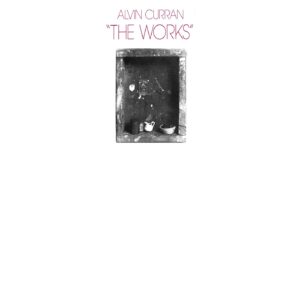
The Works - one of the most famous pieces by brilliant American composer Alvin Curran - was not created by will and direct purpose but, as the composer himself states, as a “providential accident” which is to say quite organically. Combining piano and voice with found sound and a custom-built Serge modular synthesizer, “The Works” is a slowly developing piece where space and ambient tape are eventually overtaken by raga-esque chanting and frenetic piano playing, where synthesizer washes become full-on workouts all leading to a coda where the listener is “finally carried off on the wheels of the Berlin U-Bahn.”
Curran - whose initial training and musical education was as a pianist - had been living in Roma, Italy, in the mid-‘70s returning to his roots and performing regularly in cocktail lounges on Via Veneto. It was this return to piano and vocals that became the genesis for The Works. In relearning the piano, a five-note “motive” took hold. Added to this was “a recording I had made of our 14 year old dachshund Caspar just before he died. It was, in fact, a love song which he persisted in singing all day after meeting a lovely bitch in heat in Piazza Navona. This I knew would be the beginning of the piece.” As the piece expands further the listener will hear “cows munching grass, the Rome-Florence express train, a horse-fly caught against a window pane, my footsteps approaching a Roman fountain and later going up the steps of my old studio, cicadas, an Amsterdam calliope, a tin can being kicked, and a series of sounds from La Serra di Lerici.”
Though “The Works” has been performed in many incarnations over the years, it’s this performance - captured on February 24, 1980, and originally released that same year by the short-lived Italian avant-garde label Fore - that is the definitive version, and one of the finest recordings ever made by the celebrated composer.
23,00€
Out of stock

LP
André STORDEUR
“Oberheim SEM 8 Voice 1979-80”
Sub Rosa presents in their Early Electronic series, the final chapter of music by Beglian key composer of early electronic experiments, André Stordeur (1941-2020). Side A features a previously unreleased, stark and poignant composition from 1979; while the B side is vibrant and almost playful of pieces from the 2000s.
André Stordeur His musical career started in 1973 with a tape composition for the soundtrack to a film on Gordon Matta-Clark titled Office Baroque. Later in the 1970s, he participated to avantgarde music ensemble Studio voor Experimentele Muziek, founded in Antwerp, Flanders, by Joris De Laet. Since 1980, Stordeur composes exclusively on Serge synthesizer, either a Serge series 79 and a Serge prototype 1980, which was especially built for him by Serge Tcherepnin himself. In 1981, Stordeur composed the music of Belgian film director Christian Mesnil's documentary Du Zaïre au Congo. He studied at IRCAM in 1981 with David Wessel and then flew to the US to study with Morton Subotnick. Stordeur became an influential sound synthesis teacher and, in 1997, completed his Art of Analog Modular Synthesis by Voltage Control,[4] a guide to everything modular.
Oberheim While 'Oberheim' is the centerpiece of this LP, we pressed for the first time on vinyl three pieces from the session André called 'Synthesis Studies,' previously featuring on Complete Analog and Digital Electronic Music, 1978-2000. 'I was helped in my studies by a must-have book: The Techniques of Electronic Music, by Thomas Wells and Eric Vogel (University Stores, 1974). That book aside, I learned synthesis on my own. After a trip to India in 1968, I discovered Indian music and took tabla and sitar classes in New Delhi; my teachers were students of Chatur Lal and Ravi Shankar. Later, in the 2000s, while living in the US, I tried to recreate through synthesis all the Indian musical instruments I loved so much.' 'Drone' is one of his most spectacular works.
15,00€
In stock

LP
Rip HAYMAN
“Waves: Real and Imagined”
Captain Rip Hayman (b.1951, New Mexico) has come ashore again, bearing fresh cargo. A student of John Cage, Ravi Shankar, and Philip Corner, Rip was a founding editor of the notable Ear Magazine (1975-1991), and since 1977 he has run New York's oldest bar, the Ear Inn. The focused minimalism of his new LP Waves: Real and Imagined varies from the collaged spectacle of his first Recital LP, Dreams of India & China (2019).
This oceanic dish holds two side-long works: “Waves for Flutes,” a multi-tracked flute composition recorded by the artist in 1977. ‘Angelic’, ‘Grave’, and ‘Sad’ modes overlap an effect of medieval choral organum, as shifting patterns evoke water and wind variations of the shore and vast sea beyond. An enchanting and arresting piece.
The second side holds “Seascapes,” which was recorded on the Pacific ocean in February and March of 2020 – through calm seas and tempestuous storms. The ship as the instrument played by the sea. We feel both lost and saved when at sea, the landfall feared or longed for.
The album is dedicated to all those whose souls have been lost and found at sea amidst the waves, for each sea wave is a child of Oceanus & Tethys, Greek gods of the sea, every one sent on their way to play...
27,00€
In stock

LP
KLEISTWAHR
“Winter”
Kleistwahr is the solo project of Gary Mundy, the legendary power electronic and noise-rock musician who is a founding member of Ramleh and runs the highly influential Broken Flag label. Solemn drones and elegiac long-form passages gird Kleistwahr’s Winter, which often chimes, glistens, and glows through a unhurried constructs for organ, synth, guitar, and electronics. Yet Mundy pivots throughout with triumphant explosions of shrill noise, redlined overload, and harrowingly anguished vocals from the great unknown. Quintessential Kleistwahr.
Winter was originally published as part of the instantly out of print On Corrosion - a 10 cassette anthology from 2019 that was housed in a handcrafted wooden box and featuring full albums from Kleistwahr, Neutral, Pinkcourtesyphone, Alice Kemp, She Spread Sorrow, G*Park, Relay For Death, Francisco Meirino, Fossil Aerosol Mining Project, and Himukalt. The collection also stood as the 50th release for The Helen Scarsdale Agency, an imprint founded in 2003 and dedicated to post-industrial research, recombinant noise, surrealist demolition, existential vacancy and then some.
With the necessary reissue of Winter, The Helen Scarsdale Agency will embark upon the reissue of much of that material from On Corrosion.
20,00€
Out of stock

2 LP
COMPILATION
“Strain Crack & Break Vol. 2, Music from the The Nurse With Wound List (Germany)”
With his ongoing commitment to like-minded archivist label Finders Keepers Records, industrial music pioneer Steven Stapleton further entrusts us to lift the veil and expose “the right tracks” from his uber-legendary and oft misinterpreted psych/prog/punk peculiarity shopping list known as The Nurse With Wound List. Following the critically lauded first instalment and it’s exclusively French tracklisting both parties now combine their vinyl-vulturous penchants to bring you the next Strain Crack & Break edition which consists of twelve lesser-known German records that played a hugely important part in the initial foundations of the list which began to unfold when Stapleton was just thirteen-years-old. From the perspective of a schoolboy Amon Düül (ONE) victim, at the start of a journey that commenced before phrases like kosmische and the xeno-ignant Krautrock tag had become mag hack currency, this compendium is devoid of the tropes that united what many would accurately argue to be the greatest progressive pop bands in Europe (namely CAN, Neu! and Kraftwerk) and rather shatters the ingredients across a ground zero landscape for both inquisitive fans and socially rehabbing musos to begin to assemble a unique self-styled identity. If Krautrock was the music that journalist told us lurked behind schlager (German pop) in the 1970s, then this record includes the music that skulked behind Krautrock and perhaps refused to polish its backhanded name belt. Including lesser-known artists like the late Wolfgang Dauner whose career proceeded and outlived the kosmische movement while consistently informing and outsmarting ‘em whenever they got stuck in their metronomic ruts, or how about Fritz Müller, the man who was to Kraftwerk what Stuart Sutcliffe was to The Beatles but had more in common with Yoko and quite rightly couldn’t give a shit about the Fab Four’s Hamburg roots. Elsewhere we have a plethora of German bands made for German audiences as they try and shed second hand flower power Americanisms and feel the benefits of much harder drugs and the realisations of difficult second album budgets while Kommune 1 newsflashes wipe smiles from everybody’s faces and replace them with opioid chic or acid-sarcastic grins. Bonzo Cockettes show us their Big Muffs and drummers ask for extra mics while Conny Plank goes for parliamentary office and gives babies good firm hand shakes for the camera. Strain Crack & Break Volume Two is the sound of Steve Stapleton’s sponge-like mind and the dividends of anyone who was brave enough to even peek inside those brick-thick gatefold covers never mind drop the needle, with tracks by Mr. and Mrs. Fuchs (aka Anima-Sound) who played their instruments completely naked throughout their anti- career alongside previously unpressed tracks by the scene’s leading Detroit-born African American drummer Fred Braceful who’s band Exmagma officially had the coolest record sleeves and track titles of ALL TIME (Torpedo Tits? Yes Please!). From an era where it was embarrassing to go into your local record shop and hum the tune over the counter, well that young lad Steve Stapleton was braver than that, and besides, these tracks are unhummable and at times unutterable. Did somebody in the crowd shout out for Joel Vandroogenbroeck! Good luck with that one. Stapleton is sharing. Even Stevens.
Over forty years since Nurse With Wound’s first album was released, Finders Keepers Records and Steve Stapleton take connoisseurs of OUR kind of music, back to the disused elevator shaft towards ground zero. Arrriving at the same checkout from different departments, Finders Keepers and Nurse With Wound continue to sing from the same hymnal with this ongoing collaborative attempt to officially, authentically and legally compile the best tracks from Steve’s list, where many overzealous nerds have faltered (or simply, got the wrong end of the stick). After Strain Crack & Break Volume One merely scratched the surface of this DIY dossier of elongated punk- prog peculiarities, our second lavish metallic gatefold double vinyl compendium drives a much deeper groove, which, in accordance with Steve’s wishes, focusses exclusively on individual tracks of German origin - the country whose music forged the prototype of the NWW inventory in the form of his secondary school vinyl want-list in the early 1970s. Comprising of disassembled free jazz, unshowered stoner psych, hypnotic prog, deranged monk funk and fuzzed out Deutschmark bin bonzo beats this second volume of the series throws us straight back in the deep end, putting the Bad in Baden and the odour in The Oder with little need for cheap Cologne.
Willkommen to another forgotten plateau found beneath the psychedelic underground, as Steve Stapleton and Finders Keepers dig new tunnels through the fabric of your vinyl wish-list, these German records are heavy, so find Solid Ground or watch you floorboards Strain Crack & Break before your bloody ears.
29,00€
Out of stock
LP
François J. BONNET & Stephen O’MALLEY
“Cylene Suisse redux”
Cylene Suisse Redux documents François J. Bonnet and Stephen O'Malley's Switzerland tour in December 2019, following the release of their first album, Cylene.
The two musicians chose to entrust sound material recorded on the tour to the expert ears of two friends and great musicians Jim O'Rourke and Ryoji Ikeda, giving them carte blanche, and each in turn chose a distinct personal approach. For Ryoji Ikeda, it was a question of finding a moment, circumscribing a fragment of time through his listening, with minimal intervention. For Jim O'Rourke, on the other hand, the live recordings became material to be deconstructed and reassembled, to tell, according to his musical sensibility, a path of metamorphosis for Bonnet and O'Malley's music.
Cylene Suisse Redux is a prismatic substrate of a series of concerts surrounded by friendship, lakes, mountains, and by nightfall.
21,00€
In stock

2 LP
Caterina BARBIERI
“Fantas Variations”
Fantas is the epic opening track on Caterina Barbieri’s acclaimed 2019 release Ecstatic Computation. The original Fantas laid out a magical path of patterns leading the listener on a journey into the sound itself. Fantas Variations maps out eight new potentials sprung from this initial path as constructed by a diverse mix of artists lending to a wide spectrum of new works extrapolated from the original work. For this project Barbieri invited friends and long time collaborators from a variety of musical backgrounds to create a more sustainable and inclusive landscape in terms of stylistic, geographical, gender and generational balance. The results are a diverse array of approaches and instrumentation which blur the boundaries between the acoustic and electronic.
Fantas Variations embraces a platform for mutual exchange and support between like-minded artists, where active and collective re-imagination is prioritised over the traditional model of remixes, which is often strategic, functional and more passive.
Longtime friend and collaborator Kali Malone rearranged Fantas to a slowed-down, austere and eerie version for two Organs. Evelyn Saylor created a piece for a vocal ensemble consisting of her, Lyra Pramuk, Stine Janvin and Annie Garlid, joining forces to express the choral, psychedelic and vitalistic nature of the piece. Barbieri’s former guitar professor at the Conservatory in Bologna, Walter Zanetti, composes Fantas for electric guitar, by translating every single gesture of the original electronic piece into a personal, nuanced and detailed interpretation. Bendik Giske’s reinterpretation for Saxophone and Voice captures the atmospheric essence of Fantas and its psychic meteorology. Longtime collaborator and along with Barbieri the other half of the outfit Punctum, Carlo Maria, resynthesizes Fantas for TR808 and MC202, bringing a more club-oriented dimension of the piece to life whilst unveiling the sonic continuum between rhythm and pitch through a sensitive timbral approach. Jay Mitta’s Singeli reinterpretation of Fantas transpires with pitched-up percussion and turbo-fast polyrhythmic patterns unleashing the frenetic, shifting, transformative matter within the piece to a higher plain of euphoric dance. Baseck’s variation is a rave fantasia, where the prismatic trance of the original is channeled into fierce, uncompromising hardcore, whilst Kara-Lis Coverdale’s take is a phantasmagoria for piano that gently, yet inexorably, captures the relentlessness chimerical qualities of the original, unveiling its spectral backbone.
Evelyn Saylor (feat. Lyra Pramuk, Annie Garlid & Stine Janvin) - Fantas Variation for Voices (7’38’’)
Composed by Evelyn Saylor. Performed by Evelyn Saylor, Lyra Pramuk, Stine Janvin and Annie Garlid. Recording, mix and additional production by Bridget Ferrill at Real Surreal Studio, Berlin 2021.
Bendik Giske - Fantas for Saxophone and Voice (7'31'')
Adapted and performed by Bendik Giske. Recorded, mixed, and produced by Bendik Giske in Funkhaus, Berlin 2020.
Kali Malone - Fantas for two Organs (10'21'')
Arranged for The Utopa Baroque Organ, The Sauer Organ and tuned sine waves. Recorded by Benny Nilsen at Orgelpark, Amsterdam 2020.
Walter Zanetti - Fantas for Electric Guitar (7'27'')
Recorded by Walter Zanetti, Bologna 2020.
Jay Mitta - Singeli Fantas (12'03'')
Recorded by Jay Mitta in Sisso Studios, Dar Es Salaam 2020.
Baseck - Fantas Hardcore (4'44'')
Mixed by Anthony Baldino, Los Angeles 2020.
Carlo Maria - Fantas resynthesized for 808 and 202 (4'29'')
Recorded by Carlo Maria, Milano 2020.
Kara-Lis Coverdale - Fantas Morbida (3'04'')
Performed, recorded and mixed at The Shop in Valens, Ontario by Kara-Lis Coverdale, January 2021. Engineering assistance from Robert Coverdale and Adam Feingold.
27,00€
Out of stock

LP
HECKER / Okkyung LEE
“Statistique Synthétique / Teum (the Silvery Slit)”
A split album as part of the GRM Portraits series with two electroacoustic pieces by Florian Hecker (computer-generated multiphonic sounds and resynthesized recordings of localized textures) and Okkyung Lee (an acousmatic piece written for computer-generated sounds, pre-recorded materials and cello that was developed for the Acousmonium sound diffusion system during a residence at Ina GRM, Paris, in January 2019).
Statistique Synthétique draws as much from the history of computer sound synthesis as from its latest developments. But well beyond developing simply as a proof of concept, this piece aims to transcend the abstract status of synthetic sound objects and lead them to a properly hallucinatory state, that is to say to a meeting point where the object and perception dissolve into each other, in a sort of transcendental field. Beyond, also, hylomorphism, to reach the world of matter-form fusions, where perception knows how to see “shoulders of hills”, as Cézanne wrote.
Teum (the Silvery Slit) is, as the title suggests, an overture, an opening to the game of multiplications, fragmentations, duplications. But it is also the opening understood as the void that blossoms between two borders, a break from which escapes a double tension, both the pulling force of these two edges which move apart and the opposite force of reconciliation, of compression. Okkyung Lee invites us to a truly telluric moment, a rare moment of expression where tectonic movements and shear stresses become music. If the earthquakes were, as we thought in the 18th century, due to underground thunderstorms, there is no doubt that this piece of music, both celestial and continental, could have been their audible manifestation.
In his sound installations and live performances, Florian Hecker (born 1975 in Augsburg, lives and works in Vienna) deals with specific compositional developments of post-war modernity, electro-acoustic music, and other, non-musical disciplines. He dramatizes space, time and self-perception in his sonic works by isolating specific auditory events in their singularity, thus stretching the boundaries of their materialization. Their objectual autonomy is exposed while simultaneously evoking sensations, memories, and associations in an immersive intensity.
Okkyung Lee (born 1975 in Daejeon, South Korea) is a cellist, composer, and improviser who moves freely between of artistic disciples and contingencies. Since moving to New York in 2000 she has worked in disparate contexts as a solo artist and collaborator with creators in a wide range of disciplines. A native of South Korea, Okkyung Lee has taken a broad array of inspirations—including noise, improvisation, jazz, western classical, and the traditional and popular music of her homeland—and used them to forge a highly distinctive approach. Her curiosity and a determined sense of exploration guide the work she has made in disparate contexts.
Okkyung Lee has appeared on more than 30 albums and has collaborated with Arca, David Behrman, Chris Corsano, Jacques Demierre, Mark Fell, Ellen Fullman, Douglas Gordon, Jenny Hval, Vijay Iyer, Christian Marclay, Ikue Mori, Phill Niblock, Bill Orcutt, Marina Rosenfeld, John Zorn, among others.
25,00€
In stock

2 LP
MUNE (J-L GUIONNET & C. BERGERAULT)
“Airs trouvés”
Jean-Luc Guionnet : organ
Claire Bergerault : voice
Cutting : Frédéric Alstadt - Ångström Mastering / Bruxelles january 2021.
28,00€
Out of stock
LP
GILBERT / LEWIS / MILLS
“Mzui”
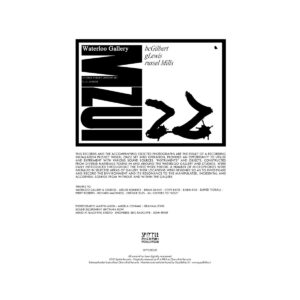
Originally conceived for a multi-media installation, the music contained in this album represents one of Lewis and Gilbert's earliest steps in their immediate post-WIRE period. With the band's break-up in February 1980, the duo began to take a more explorative approach through various projects (Dome, Kupol...). Clearly they needed something different and more open out. That's how they started to work on the Mzui multi-media installation, some sort of evolving work in progress that eventually took place at London's Waterloo Gallery in August 1981. Joined by artist Russell Mills, the ex-WIRE duo built an imaginary space where all sorts of sculptures, found objects, ambiance sounds and audience reactions were components of the same multiple experience. Some time afterward Cherry Red Records proposed a recording project based on the mixing of the resulting tapes. The whole MZUI album, originally released in 1982, is about the notion of sound as landscape, and the soundscape as a guide to an extended form of listening and a unique aural experience. Not a very different concept than Brian Eno's ambient experiments of the same period, but less lyrical and more dark-urban oriented. For too many years out of print, finally digitally remastered, here's the first vinyl reissue of this historical album. As for its 1981's first release, the record comes packaged in a six pages 12" foldable printed sheet with photos in a plain black sleeve, within a clear PVC cover. Ltd to 500 copies.
18,50€
In stock

LP
ALTERNATIVE TV
“Vibing Up The Senile Man (Part One)”
Possibly one of the weirdest experiment in the post-punk realm, Vibing Up the Senile Man (Part One) is the second studio album by English anti-heroes Alternative TV, released in March 1979 on small indie label Deptford Fun City. Forget about the influential 1978 debut - The Image Has Cracked – frontman Mark Perry is literally leaving the planet in this effort. ‘There are free jazz influences; I'd got into the Art Ensemble of Chicago, Sun Ra ..) I'd moved into this house with an amazing music room – pianos, clarinets, you name it – and we'd always be picking up stuff from junk shops.’ The description set the pace for a unique performance, not only the afro-american heritage , traces of the Canterbury school are almost evident as the early experiment of the BBC Radiophonic workshop. Is it safe to consider Vibing up The Senile Man on the same time-line as Robert Wyatt ‘The End Of An Ear’ and Throbbing Gristle ’20 Jazz Funk Greats’ (Genesis P-Orridge is on board on two tracks, playing assorted percussion) ? Judge by yourself and don’t be scared.
18,50€
In stock
LP
Asmus TIETCHENS & Miki YUI
“Neues Boot”
TAL presents the first musical collaboration between Hamburg based Asmus Tietchens and Japanese artist Miki Yui, operating out of Düsseldorf for almost 20 years now. Highly respected and hugely influential artist Asmus Tietchens first made his mark on the electronic music scene in the late 1970s, whereas Miki Yui debuted her sonic settings in 1999.
Their first joint album NEUES BOOT envelops the listener with a poetic sound sensibility and a conceptual clarity which was processed and passed back and forth between their individual studios in Hamburg and Düsseldorf.
Asmus Tietchens: After Stefan Schneider suggested to release a Yui-Tietchens album on his TAL imprint Miki and I quickly developed some ideas towards our eventual collaboration.
We agreed upon an ongoing mutual exchange of material. We have both been very familiar with each other's music for a long time and we found our individual approach towards sound design to be uniquely compatible. We do not use our electronic tools in order to merely achieve the maximum of technical possibilities, but to illustrate aesthetic necessities. This entails a deliberate reduction and refined perception of the sonic characteristics of the material. Only this approach enabled us to fully realise the complete spectrum of the sounds and noises we were working with in order to construct this New Boat. Each and everyone of my treatments is e x c l u s i v e l y based on a track supplied by Miki. I added no new sound sources. Naturally the spatial and temporal dimensions of the source material were thus altered. These transformations are exactly what makes our collaboration special and unique. Very early on we had agreed on New Boat as a working title and a guiding light . Of course in the beginning we had no idea where this New Boat might take us. Now we do know. After several months of ship-building the boat has now set sails for new sonic horizons. Ahoi!
Miki Yui: The title of the album as well as the individual tracks have been inspired by conversations with Asmus. When we had a chat after one of his concerts, he told me about Kōdō, the Art or the Way of the Scent. It is a 8th century Japanese incense ceremony. Very frequently the names of Japanese incense sticks are derived from natural themes, e.g. Bairin is the plum grove, the scent of the first blossom heralding the end of winter.
This poetry, the ephemeral nature of the world reminded me of Kigo, words from a Haiku (a form of Japanese poetry), which reference a particular season or a natural phenomenon. So I chose the names of the individual pieces from Kigo as if The Boat was exploring nature whilst sailing through the seasons. Only in retrospect I realised that the titles combined create this poem:
Early spring a hazy view in the night (Oboro)
Plum groves (Bairin)
Over a Dayfly (Kagerou)
A Milkyway (Amanogawa)
Dawn (Akatsuki)
Art of fragrance (Kōdō)
On fragile thin ice (Usurai)
17,50€
In stock
LP
Mike VERNUSKY
“Aatma”
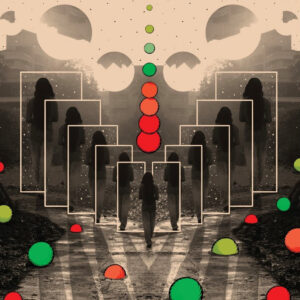
Aatma is the re-imagining of my recent journey into Mumbai through sound, place, and moment with a Nagra SD recorder. The work was composed immediately upon my return while these things were, in a very real sense, still resonating in my mind. Part 1 is the arrival. Echoes of the shanka can be heard from a distant past across the Arabian Sea, as waves wash debris ashore and push you deep into the tumult of the city. Here you may experience the current of life and ride old trains into spectral shadows of obscure & eccentric Bollywood and devotional vinyl records from a local music boutique. Part 2 is a precarious walk across the narrow causeway leading to Haji Ali Dargah, a 600-year-old mosque only accessible at low tide. It is difficult to reach the mosque without being taken aback by the disparate forms of life unfolding on the way in, both in the sky and on foot as can be heard here. Part 3, the final section, is a departure from the hustle of the city altogether. This section delves into the droning, colorful, and percussive instruments with their richly complex and evolving timbres. It culminates in a return to daily shanty life on the beach accompanied by transistor radios blasting modern bollywood music. Aatma is a tribute to Mumbai’s wonderful people and culture, and in the hope of representing different and altered states of listening, living, and celebrating. I hope you find this journey as inspiring as it was for me. - Mike Vernusky.
Music and field recordings by Mike Vernusky. Mastering and additional tempura by Cory Allen. Design by Noopur Choksi. Photography by James David Smith. Kind logistical support by Bhanuj Kappal, Damian O'Riain & Jay Kumar Singh. Special thanks to Manuella Blackburn and illapfest UK. Bollywood vinyl courtesy of Pilak Bhatt of MusicCircle.
150 copies
19,50€
Out of stock

LP
Anton BRUHIN
“Speech Poems / Fruity Music”
Black Truffle is delighted to offer up a rare serving of unheard works by legendary Swiss artist Anton Bruhin. Active as a visual artist, poet, and musician since the 1960s, Bruhin has created important work in forms as varied as concrete poetry and landscape painting, imbuing everything he does with wit, humility, and absurdist humour. A recognised master of the jew’s harp (or Trümpi, as this ancient folk instrument is known in Swiss German), Bruhin’s sound work also encompasses tape collage, sound poetry, and manipulated bird song.
On Speech Poems/Fruity Music we are treated to 26 short pieces made between 2006 and 2008 using the audio software Fruity Loops. These pieces carry on Bruhin’s long-running project of exploring the creative use and misuse of cheap, accessible technologies. In many of his analogue works, Bruhin explored the possibilities of simple cassette equipment. He invented DIY approaches to layering sounds by using multiple tape machines, experimented with distortion and tape speed, or, in his classic Inout (1981) created a maniacally single-minded audio monument to the pause button. Like the computer pixel drawings the artist produced around the same time as these recordings, Speech Poems/Fruity Music extends this approach to consumer software, presenting two parallel sequences of works that make use of Fruity Loops’ inbuilt synthetic instruments and its speech synthesis function. The instrumental works play like a twisted take on the aesthetics of 1980s video game soundtracks, using synthetic accordion and harpsichord sounds to realise jaunty little ditties that exploit their machine-realisation by making use of improbable pitch-bends and humanly impossible tempos and articulations.
Between these samples of Fruity Music, we are treated to the Speech Poems, a series of recitations by a lone computer-generated voice. Many of them are in fact songs, as the synthetic voice crudely and hilariously changes pitch as it moves through its fragmented syllables and odes to cream in coffee. Carrying on Bruhin’s interest in the creative misuse of technology, many of the Speech Poems attempt to force Fruity Loops’ voice synthesis, designed only to speak English, to speak German. By entering phonetic text into the program, Bruhin gets it to produce a passable German alphabet and a series of approximations to a proper pronunciation of his name.
Hilarious while strangely austere, entertaining but bizarre, Speech Poems/Fruity Music is classic Anton Bruhin, arriving in a beautiful mosaic cover by the artist, with the text of the ‘abc für anglophone’ on the back cover.
20,00€
Out of stock

LP
Keiji HAINO – Jim O’ROURKE – Oren AMBARCHI
“Each side has a depth of 5 seconds”
The trio of Keiji Haino, Jim O’Rourke, and Oren Ambarchi return to Black Truffle with their 10th release, recorded live in Tokyo in February, 2017. While many of the trio’s recent works have seen them focussing primarily on their core guitar/bass/drums power trio format, on Each side has a depth of 5 seconds A polka dot pattern in horizontal array A flickering that moves vertically these three multi-instrumentalists strike into new territory, utilising an almost entirely electronic set-up, with Haino on electronics, drum machine and suona (a Chinese double-reed horn), O’Rourke on synth, and Ambarchi on pedal steel and electronics.
Dedicated to the memory of legendary Tokyo underground figure Hideo Ikeezumi, founder of PSF Records and the Modern Music shop and a long-term collaborator with Haino, the LP, (recorded the night Ikeezumi passed away), begins in a sombre, meditative space of rippling, burbling electronics and distant jets of white noise. Though much of the ‘Introduction’ that occupies the record’s first side is spacious and at times almost hushed, the performance is full of unexpected twists and turns, momentary events, and fleeting impressions. The trio conjures up a free-flowing surge of sound in which individual contributions are often difficult to distinguish, calling up echoes of vintage live-electronic sizzle like It’s Viaje or the cavernous expanse of David Behrman’s Wave Train.
The LP’s second side opens in a similarly reflective realm, before Haino’s suona enters, taking the music in a more austere, hieratic direction, as the reed’s piercing tones are accompanied by O’Rourke’s uneasy, sliding synth figures and Ambarchi’s shimmering Leslie cabinet tones. On the side’s second piece, Haino’s signature hand-played drum machine takes centre-stage, at first sounding out massive, isolated strikes, before eventually building to a tumbling, Milford Graves-esque wall of thunder. As O’Rourke’s synth squelches and stutters and Ambarchi’s heavily effected pedal steel somehow begins to sound like a kind of hellish blues harmonica, this passage offers up one of the most electrifying and bizarre moments in the trio’s catalogue to date.
Containing some of the most abstract music the trio have waxed since their very first collaboration over a decade ago (Tima Formosa, BT04), this new missive from underground experimental music’s preeminent power trio shows them restless and risk-taking, clearly enjoying their remarkable improvisational chemistry while also continuing to push themselves into new directions.
Presented in a deluxe gatefold sleeve with artwork and design by Lasse Marhaug and an inner sleeve with live pics by Ujin Matsuo.
20,00€
In stock
LP
Anne GUTHRIE
“Gyropedie”
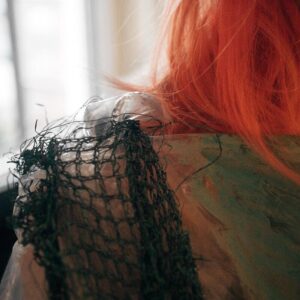
“Gyropedie,” Anne Guthrie’s third record for Students of Decay, takes us further into her hermetic practice, wherein expertly captured field recordings, French horn, and electronics are woven into potent and richly imagined electroacoustic environments. In Guthrie’s own words, “Quite literally a record of pilgrimage from East to West. Remnants of Midwest and East Coast soundmarks, instruments sold to lighten the travel load, sketched out and then buried under the new. Winter birds and crunching snow, frozen playgrounds, broken synths - I spent a year decoupaging over this, but of course it's still there. A second moon appears occasionally in the daytime, and there are frequent, murky transmissions. California has something alien about it I'm still trying to grasp. Primarily vintage, unabashed, corny, I find myself becoming an impressionist.”
Anne Guthrie is an acoustician, composer, and French horn player. She studied music composition and english at the University of Iowa and architectural acoustics at Rensselaer Polytechnic Institute, where she completed her Ph.D in 2014. Her music combines her knowledge of acoustics and contemporary composition/improvisation. Her electronic music has focused on exploiting the natural acoustic phenomena of unique architectural spaces through minimal processing of field recordings. Her composition has focused on the orchestration of non-musical sounds, speech in particular. Her French horn playing has focused on electronic processing and extended techniques used in improvisatory settings, as a soloist and with Fraufraulein and Delicate Sen, among others. Her acoustics research has focused on the use of ambisonics for stage acoustics.
17,50€
In stock

LP
BLUE CHEMISE
“Daughters of time”
Blue Chemise documents the hermetic soundworld of Australia’s Mark Gomes. “Daughters of Time” follows 2017’s brilliant full-length “Influence on Dusk,” released in micro-edition on Gomes’ own Greedy Ventilator imprint. It is an elegiac set of vignettes recorded straight to dictaphone with minimal post-production. These pieces function in a manner akin to Loren Connor’s evocative “airs,” conjuring poignant, intangible senses of longing and nostalgia then disappearing well before overstaying their welcome. Regarding their genesis, Gomes points to a quote from Australian artist Robert Hunter: "It's like I'm external to them. They develop their own assertion and character; their becoming finished is a thing they decide themselves. It's unexplainable."
16,50€
In stock

LP
SENYAWA
“Alkisah”
Alkisah is the new album by Indonesian duo Senyawa. Alkisah is co-released by a multitude of independent record labels from all over the globe each with different packaging and design, with multiple version of remixes by various artists.
Senyawa is an experimental music duo with Rully Shabara (extended vocal technique) and Wukir Suryadi (homemade instrument). The music that they create is a combination of extended vocal technique and a homemade instrument. The instrument was handcrafted by master instrument builder Wukir out of one long piece of bamboo, it is a string instrument with guitar pick-ups—it is amplified and processed through several effects pedals but at times is played as an acoustic instrument, percussion and string instrument.
They are located in the ancient city of Jogjakarta, Central Java, Indonesia and their music is a reflection of their traditional Javanese heritage filtered through a framework of contemporary experimental music practices. Senyawa try to push the boundaries of both traditions in an attempt to mix the musics’ of the east and the west to create a new sound.
16,50€
In stock

LP
Francisco MEIRINO
“A new instability”
in 2019, the swiss power-acoustic musician francisco meirino presented 'a new instability' a commission for the venerable ina-grm in paris. of course, this institution is the pre-eminent center for the research and study of electro-acoustic music dating back to founding of groupe de recherches musicales in 1958 by pierre schaeffer. to this day, ina-grm continues to be at the vangarde of the electro-acoustic composition, and it is quite an accomplishment and very appropriate for meirino to receive such a commission.
this recording for 'a new instability' condenses the 32-channel original piece down to a still very active stereo version. here, meirino continues to amplify and refine his compositions that walk a fine tightrope between raw expressivity of brutalist noise and conceptual rigor of more academic pursuits. such a work ranks him in with the likes of zbigniew karkowski, dave phillips, puce mary, and illusion of safety.
field recordings from a martial arts dojo in his hometown of lausanne cast a pugilistic, combative arch to these recordings which snap, burst, explode, and erupt with utterances of men and women engaged in hand-to-hand combat. seering frequencies build, swarm, and amass out of these episodes rise to psychologically tense crescendo that rupture at their heights, quickly turning attention towards a violence that originates from within. it is as if the objective observations of those martial arts recordings are sublimated within a subjective experience of psychic unease, disquiet, and imbalance.
'a new instability' is another magnificent chapter in the ongoing body of work for this accomplished composer of electro-acoustic noise.
crédits
photography by francisco meirino
design by jim haynes
mastering by james plotkin
20,00€
In stock

LP
Will GUTHRIE & James RUSHFORD
“Real Real World”
Real Real World is the first collaborative effort from Nantes-based Australian drummer/percussionist Will Guthrie and Australian keyboardist/composer James Rushford.
Primarily recorded in a fluid, spontaneous studio session in Nantes, with overdubs added later in Melbourne and Nantes, Real Real World presents five spacious, unhurried pieces that inhabit a unique sound world characterised by wheezing, half-voiced organ chords, chiming metal percussion, and eruptions of small sounds. Beginning with the eerily beautiful, shakuhachi-esque sound of Rushford performing on detuned portative organ, the opening title track is abruptly transformed by the entry of Guthrie’s sizzling cymbals, deep gong strikes, and rustling hand percussion. On the epic ‘Lumbering’, which occupies the majority of the record’s first side, organ chords define a space in which a kaleidoscopic succession of amplified thuds, chiming bells, rustled and dragged objects, and abruptly silenced clusters advance and recede in an oneiric blur, eventually making way for a passage of Guthrie’s virtuosic polyrhythms, itself unexpectedly overtaken by waves of melting fairground organ.
The record reaches an energetic climax mid-way through the second side with the stunning ‘Slakes’, where lugubrious chords in the organ’s lowest register are joined by Guthrie’s skittering rhythms, which somehow manage to call to mind both the most chaotic moments of Balinese Gamelan and the stochastic breakbeats of late-90s Autechre. On this piece, Guthrie and Rushford are joined by Melbourne saxophone maverick Scott McConnachie, who contributes an alto sax solo of burning precision, working with a single-minded palette of piercing long tones and wild intervallic leaps.
Though it makes extensive use of overdubbing, Real Real World retains a strong sense of having been performed, rather than constructed: while at times the fleeting succession of events can recall electroacoustic music, its primarily acoustic nature and unhurried pace is also reminiscent of the music of AACM affiliates or Marion Brown’s classic Afternoon of a Georgia Faun. Immediately engaging while also hiding countless details in the folds of its polychrome fabric, Real Real World is a relaxed and joyous document of collaborative musical invention.
20,00€
In stock

LP
PHEW – John DUNCAN – Kondo TATSUO
“Backfire of joy”
Black Truffle is thrilled to announce Backfire of Joy, a previously unheard recording from Phew, John Duncan and Kondo Tatsuo, documenting a concert at Tokyo’s Hosei University in 1982. Though the fertile exchange of ‘zines, tapes and records between the Japanese underground and the Los Angeles Free Music Society meant the artists were familiar with each other’s work, this performance (occurring on Duncan’s first visit to Japan) was their first meeting and only performance as a trio.
Duncan is heard on his signature shortwave radio set-up, while Kondo performs on synth, tape loops and echo-drenched piano, providing a spacious backdrop for Phew’s astonishing performance of spontaneous, free-associative song moving between Japanese and English. A testament to the unhinged exploration of the 1980s experimental underground, the trio careen wildly between crashing percussive tape loops, deluges of shortwave noise, insistent piano figures and playful synth melodies. On the B side, we are treated to a remarkable ten minute sequence moving organically from spaced-out synth and radio textures to a stunning finale of improvised balladry centred on piano and voice, unexpectedly broken up by electronic interjections. Beautifully recorded in crunchy vintage fidelity, Backfire of Joy arrives accompanied by archival photographs and newly authored liner notes from all three participants.
20,00€
In stock
LP
Pierre HENRY
“Un Monde Lacéré”
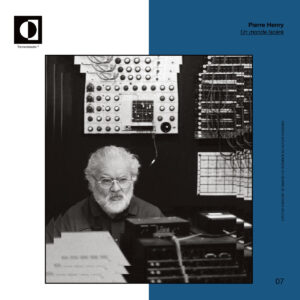
Transversales Disques is very glad to announce the release of "Un monde lacéré" by electroacoustic music pioneer Pierre Henry.
"Pierre Henry was born in 1927 In Paris. He started studying music as early as the age of 7.
In 1944, guided by Olivier Messiaen, he imagined and started composing music for the future. His meeting with Pierre Schaeffer was crucial for his creation.
Inventing new technical composition processes which in time have become widely used on a large scale, he has constantly given this music a far reaching power no one expected at the start.
He has also invented his own sound, as easily distinguishable as the sound of the most famous jazz musician."
This piece is a special tribute to Jacques Villeglé and his work.
It is the world opening performance of this opus, recorded in studio Son/Ré.
22,50€
Out of stock
LP
Rafael TORAL
“Aeriola Frequency”
Black Truffle is proud to announce the first vinyl reissue of Rafael Toral’s Aeriola Frequency, originally released by Perdition Plastics in 1998. Toral made his name in the world of mid-90’s experimental electronics with two releases, Sound Mind Sound Body (1994) and Wave Field (1995), both now recognised as classics and reissued on vinyl by Drag City, which saw him exploring the potential of electric guitar and pedals to immerse the listener in seemingly endless waves of sustained tones. On Wave Field, inspired by the striking resonance effects he experienced during a Buzzcocks gig with bad acoustics, he achieved a synthesis—often imitated but never bettered—of rock guitar, Ambient, and the acoustic exploration of Alvin Lucier, a kind of “liquid, abstract flux of rock sound”.
On Aeriola Frequency, Toral continued the explorations of Wave Field but dropped the guitar, creating a series of extended pieces using only a simple feedback loop designed to work with pure electronic resonance. The result is far more delicate than Wave Field, a steady but unstable flow of filtered tones that continually reorder themselves into new forms. On both the LP’s sides, the tones, like growing plants, imperceptibly shift from drifting freely in ambient space to weaving strangely natural melodic patterns, as the loops unfold and the resonance gently outlines recurring rhythmic shapes.
The overall effect is strikingly organic, as David Toop noted in the liner notes included in the original release (and reprinted in this reissue): “A crystal garden, the sound grows in reeds and streams, blown like spider web strands, glittering and invisible, pulsing with translucent colour, bubbling and imploding, fraying and powdering.”
A classic of the non-academic approach to electronics that flourished in the 1990s— and a big influence at the time on Black Truffle head honcho Oren Ambarchi—Aeriola Frequency ushers listeners into an endlessly fascinating world of gliding tones and shifting details that they might never want to leave.
Recorded at Noise Precision, Portugal, December 1997 and April 1998. Remastered by Rafael Toral in 2020.
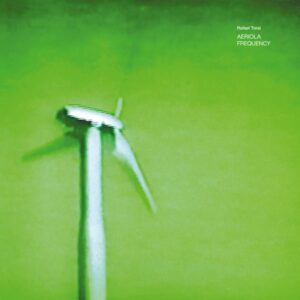
Images taken from Air Pass, a video by Rafael Toral.
Design by Lasse Marhaug.
Liner notes by David Toop and Rafael Toral.
21,00€
In stock
LP
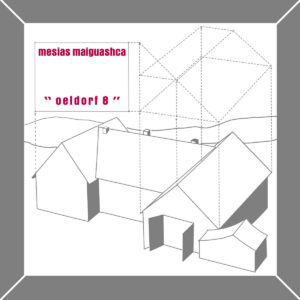
Mesias MAIGUASHCA
“Oeldorf 8”
First-ever official re-issue of the Ecuadorian composer’s stunning electroacoustic composition “Oeldorf 8” on vinyl and CD. Remastered by KASSIAN TROYER at D&M, Berlin.
MESÍAS MAIGUASHCA (b. December 24th, 1938 in Quito / Ecuador) is a composer of Neue Musik, especially electroacoustic music, who studied at the Conservatorio Nacional de Quito, at the Eastman School of Music in Rochester, NY (1958–65), with ALBERTO GINASTERA at the Instituto di Tella in Buenos Aires, at the Hochschule für Musik in Cologne and, after a short return to Ecuador, attended the Internationale Ferienkurse für Neue Musik in Darmstadt and the Fourth Cologne Courses for New Music in 1966–67 where he studied with KARLHEINZ STOCKHAUSEN. From 1968 to 1972, MAIGUASHCA worked closely with STOCKHAUSEN in the Electronic Music Studio of the Westdeutscher Rundfunk in Cologne and joined STOCKHAUSEN's ensemble for performances at the German Pavilion at the Expo '70 in Osaka. In 1971 he became a founding member of the OELDORF GROUP of composers and performers, and began work at the Centre Européen pour la Recherche Musicale in Metz, at IRCAM in Paris, and at the ZKM in Karlsruhe. From 1990 – 2004 MAIGUASHCA was Professor of Electronic Music at the Musikhochschule of Freiburg im Breisgau where he still lives today.
The OELDORF GROUP, named after the small village 40 km away from Cologne where they lived and worked in a rented farmhouse where they set up their own studio for electronic music and studio productions, was a musicians' collective active during the 1970s. In the adjacent barn, the group held concerts for audiences up to 300 people with an emphasis on live-electronic music and other kinds of new and avant-garde music. Thanks to a long-standing contact with the Westdeutscher Rundfund, the core members of the OELDORF GROUP (PETER EÖTVÖS - electronics and keyboards, the violinist/violist and composer JOACHIM KRIST, electronics specialist and composer MESÍAS MAIGUASHCA, who also played keyboards, and his wife GABY SCHUMACHER – cello) received commissions for compositions, invitations to perform in the Musik der Zeit concert series, as well as having many of their summer concerts recorded for the late-night broadcasts of WDR3.
One of these commissioned compositions is „Oeldorf 8“: a retrospective portrait of the OELDORF GROUP consisting of a series of ten short pieces for four instrumentalists (clarinet, violin, cello, electric organ/synthesizer) and tape which may be played either simultaneously or continuously without a break. It premiered in 1974 at the Darmstädter Ferienkurse and was released on LP two years later and turned into a sought-after, but not very well-known rarity achieving collector‘s prices., and was later unofficially reissued on KEITH FULLERTON-WHITMAN’s Creep Pone CDr label.
Conceived as a sonic diary with an edge to encompass radical electronic synthesis, the 48 minute composition proves „ … a thing of wonder; from the outset, MAIGUASHCA's spoken introduction of the players & concept gets slowly eroded by errant, pointillist electronic sound … which then lets loose for a good 10 minutes before a swarm of slowly rising held tones c/o the players acoustic arsenal slowly comes to the fore. On the second side, the acoustic sounds - patiently, elegantly state their cases across a good half of the segment until a rising pulse-wave drone essentially annihilates the more nuanced phrasing & slowly builds to an almost ROLAND KAYN-esque climax of raw oscillator gristle” (Soundohm).
44 years after its original release, MAIGUASHCA’s stunning album finally sees its deserved and overdue re-release on CD and LP, carefully remastered by KASSIAN TROYER at D&M, Berlin.
„Maiguashca … is part of the first generation of South American maverick sound explorers that in the 1960s paved the way for a tradition of innovation that persists in the present noise and psychedelic scenes of the continent. Along with Edgar Valcárcel, César Bolaños, Beatriz Ferreyra, Mauricio Kagel or José Vicente Asuar, he contributed to expand the possibilities of musical language beyond the dominant Western canon …“ David Jarrin / Kraak Festival
19,00€
Out of stock

LP
Julia REIDY
“Vanish”
Since 2019, Julia’s bubbling 12-string guitar work - sighing streams of crystal plucks drawn closer or echoing on - has moored a tactile, ever-lusher sound. On ‘Guitar’, the Australian, Berlin-based musician melts down sharp synths; electric fuzz and flex; uncanny found sounds; and autotuned voice and harmonica in a heady, overpowering potion.
Reidy’s music sweeps you up. It’s restless, always travelling on. Lonesome tones into machine chorales into hesitant hum. The LP’s side-long cuts sway between scenes but are always rooted: Julia’s guitar and vocal lines seem mapped to the natural ebb and flow of breath and thought, they lull you as they push through vast and secret spaces.
Vanish completes a trio of releases begun with last year’s ‘brace, brace’ (Slip) and ‘In Real Life’ (Black Truffle). The delicious unease, the anxious burning of the preceding volumes has settled, becoming more wide-eyed and resolute. For all its poise, the album’s sense of build - electric licks rasping into glistening synths, punctured by distant kicks - feels freshest. When 'Oh Boy'’s smudged whistle comes, it has fought its way out of the thickets, and hits like heartbreak.
Music by Julia Reidy
Mixed and mastered by Joe Talia at Holding Pattern Berlin, June 2020.
18,00€
Out of stock

2 LP
Eyvind KANG
“Ajaeng Ajaeng”
To be heard with ears half bent, or with one side facing what Maryanne Amacher calls “the third ear”.
The great reverence in which the Tanpura is held by Indian classical music, its transcendental but occulted place in the tradition alongside its normal function as a drone, made a strong impression on the composer such that it has taken decades to formulate even a simple Tanpura Study.
The fundamentals, the Om, as well as the overtones, the music of the spheres -all these have their valid rights, but in Tanpura Study they are embedded in a series of gestures, what I call signatures, on the melodic level.
In Tanpura and Harpsichord, there is an encounter of overtones with chords braided into pun-notes, what Gerard Grisey calls “degrees of transposition”. Taken together, this amounts to a non-spectralism in which, contrary to first impressions, there are no fundamental frequencies, even in the bass.
Ajaeng Ajaeng: with respect to European string instruments, the technique col legno affords the direct encounter of wood and string, opening the way to a more tactile conception of the sustained sound, while bringing the materiality of the bow and its practices into question. In violin, viola, cello bows, Pernambuco wood offers an ideal example of extraction, colonialism, deforestation.
With the Ajaeng, a Korean musical instrument, the situation is more complex. The dialectic of court to folk music, always political, always incendiary, may be heard here in the encounter of forsythia and silk, of Dae Ajaeng to So Ajaeng, and on a broader level of Dang Ak (Tang Dynasty music) to Hyang Ak (native Korean music) and their representations.
Alternating music and sound, overtone arrays mingled with noise, marked by the bow change, in flamelike patterns which flicker, emerge, and fade again. A slow down structure, also formalized in Time Medicine, seems to produce a long decrescendo, with the technique of the players drawing out the flicker patterns in a kind of game.
The point here is not to produce a drone but to delve into the question of life in sound. This apparent emergence of life is due to the apparatus, what Marx calls a “social hieroglyphic”, which brings forsythia and silk together in technique, cultivated by practices which are themselves sustained by the real relations of student to teacher to student.
The recording engineer too, by placing one mic below and one above each Ajaeng, bifurcates the listening space; the mix, one Ajaeng in each speaker, again produces a bifurcated image of the sound. Thus the sound is split in four directions, to be reconstituted in the cochlea, but with the center of the body as the real target.
This music is made for meditation. On retreat in 2019 I had a revelation: there is no difference between the prayer, the hearing, and the void. There is nothing original in this idea; Wonhyo and many sages have thought it before.
—Eyvind Kang, April 2020
25,00€
Out of stock

LP
Ai ASO
“The Faintest Hint”
Ai Aso’s immaculately crafted form of minimalist pop music skirts the edges of tensity with the manner and with the skill of a tight rope walker, calmly balancing repeatedly at every step, with a combination of surety and the risk of a slip, a fall, and an unknown uncoiling of events. Aso's capacity to capture, or inspire, the tension and attention from within the listener and observer are quite pronounced. At Aso's concert the performance constantly teeters near the brink, a sharpened awareness in the hall emerges from all observing, with the will of that most delicate balance. On “The Faintest Hint” she brings a meta level to the proceedings, the dream of a singer in a bright sunlit room in the centre of the density of the society, simply and precisely searching for single ideas, single tones, a sense of sensuality and even a dream of a grandeur (rock dream) emerge. A stillness prevails, even a sharp set of instances of dreaming, melancholia, nostalgia… or even saudade. The album was recorded, mixed & mastered by Soichiro Nakamura at Peace Music between 2018-2020. Atsuo and I joined these sessions as producers, and moreso as catalysts, yet also became the skeleton of a band on the album (with the tender touch). The legendary Japanese rock band Boris accompany Aso on two pieces. A faintest hint of sharpness and la tendresse féroce quickly erodes into a fine brief cloud of the purest crystalline dust.
Stephen O'Malley, Stockholm June 2020
Ai Aso : Vocals & Guitar & Synth
Stephen O’Malley : Guitar, Bass & Synth
Atsuo : Percussion
also Boris Play on "Scene" & "Sight"
All songs & words written by Ai Aso
Produced by Stephen O’Malley and Atsuo
Recorded, Mixed and Mastered by Soichiro Nakamura at Peace Music 2018-2020
18,00€
In stock

LP single-sided
Giuseppe IELASI
MMXX-10 “Untitled, 2020”
Matière Mémoire presents the MMXX Series. In anticipation of the year 2020, Matière Mémoire asked 20 great artists to create an original 20 minutes piece and an artwork. Throughout this year, each quarter will see the release of 5 new vinyls, available individually or as a bundle. Each record is limited at 500 copies and comes as a crystal clear vinyl featuring an original track of 20 minutes on one side, and a laser engraved artwork on the other. Each contained in a transparent sleeve printed with the MMXX logo, and each coming with a print of the artist artwork.
Original price was: 25,00€.12,00€Current price is: 12,00€.
Out of stock
LP single-sided
Karbé DINEL
MMXX-09 “Ouroboros”
Matière Mémoire presents the MMXX Series. In anticipation of the year 2020, Matière Mémoire asked 20 great artists to create an original 20 minutes piece and an artwork. Throughout this year, each quarter will see the release of 5 new vinyls, available individually or as a bundle. Each record is limited at 500 copies and comes as a crystal clear vinyl featuring an original track of 20 minutes on one side, and a laser engraved artwork on the other. Each contained in a transparent sleeve printed with the MMXX logo, and each coming with a print of the artist artwork.
25,00€
Out of stock
LP single-sided
Susana SANTOS SILVA
MMXX-08 “Sometimes it’s raining a lot”
Matière Mémoire presents the MMXX Series. In anticipation of the year 2020, Matière Mémoire asked 20 great artists to create an original 20 minutes piece and an artwork. Throughout this year, each quarter will see the release of 5 new vinyls, available individually or as a bundle. Each record is limited at 500 copies and comes as a crystal clear vinyl featuring an original track of 20 minutes on one side, and a laser engraved artwork on the other. Each contained in a transparent sleeve printed with the MMXX logo, and each coming with a print of the artist artwork.
25,00€
In stock

LP single-sided
Jim O’ROURKE
MMXX-07 “In all due deference”
Matière Mémoire presents the MMXX Series. In anticipation of the year 2020, Matière Mémoire asked 20 great artists to create an original 20 minutes piece and an artwork. Throughout this year, each quarter will see the release of 5 new vinyls, available individually or as a bundle. Each record is limited at 500 copies and comes as a crystal clear vinyl featuring an original track of 20 minutes on one side, and a laser engraved artwork on the other. Each contained in a transparent sleeve printed with the MMXX logo, and each coming with a print of the artist artwork.
Original price was: 25,00€.12,00€Current price is: 12,00€.
In stock

LP single-sided
Charlemagne PALESTINE
MMXX-06 “Vvvoooodddoooo Ddddooooodddddooooo”
Matière Mémoire presents the MMXX Series. In anticipation of the year 2020, Matière Mémoire asked 20 great artists to create an original 20 minutes piece and an artwork. Throughout this year, each quarter will see the release of 5 new vinyls, available individually or as a bundle. Each record is limited at 500 copies and comes as a crystal clear vinyl featuring an original track of 20 minutes on one side, and a laser engraved artwork on the other. Each contained in a transparent sleeve printed with the MMXX logo, and each coming with a print of the artist artwork.
Original price was: 25,00€.12,00€Current price is: 12,00€.