
In stock

CD
Darren TATE & Paul BRADLEY
“DroneReworks 4”
Back in 2004 Paul Bradley started a sub-label to his Twenty Hertz imprint called Drone Works. The principle was that he would ask ‘fellow travellers’ to make a piece of around 20 minutes, each of which would be released as a simple CDR. Fourth in the series was the surprisingly titled ‘Drone Works 4’ by Darren Tate,a piece that I was particularly fond of. Fast forward 17 years and Darren decided to do a limited art edition re-release, a copy of which he sent to me. I was surprised to find that it was a double CDR, comprising 2 tracks per disc, all variations of the same theme. When I asked him about this he said that originally he had sent a track of organ improvisations to Paul, who had then made 4 versions using the source recording. Darren chose his favourite, which became the release and the other variations remained unheard until 2021. I listened to both discs many times and enjoyed them very much. I came to the conclusion that they deserved a wider release. With a little editing, I managed to fit all 4 tracks on to a single CD. I hope you enjoy this as much as I do.
Colin Potter, London 2022
Darrent Tate : Electric organ, artwork
Paul Bradley : Remixing and re-imagining
Edited & mastered : Colin Potter, IC Studio, London
Design & layout : Jonathan Coleclough
11,50€
In stock

CD
ETANT DONNES
“Ceux qu’on aime – Ce que je hais”
Etant Donnes is a French duo named after Marcel Duchamp's last major work. The group consists of brothers Marc and Eric Hurtado, born in Morocco and working mainly as performance artists and musicians. Their sound can be described as a mix of field recordings, found sounds and sometimes whispered, sometimes violent vocals. They describe their sounds like this: "Through Marc and Eric, it is the volume of each word that becomes an object-sculpture, together with the power of their bodies expressing their voices. Each event is a scream - indeed even the glissando - of the strength of the word that sometimes abruptly becomes a rock, a solid surface, not in the least fluvial, as is the narrative of a tale, novel or poetic epic. With both of them, there is no more trace of ancient prosodies, no more trace of the incomprehensible Sainte-Beuve who could claim: "I have to collect a volume of prose". The word, the voice, the volume take shape with each other, unveiling a theatre that theatre usually ignores, which has given it such things as a Samuel Beckett's Fin de Partie." Over the years Etant Donnes have collaborated with people like Lydia Lunch, Michael Gira, Alan Vega and Genesis P-Orridge.
Ceux Qu'on Aime - Ce Que Je Hais was the band's fourth album, dating back to 1983 and originally issued on French Bain Total label (run by Philippe Fichot of Die Form). For this CD re-issue we have added a long bonus track not on the original album.
13,00€
In stock

CD
HASTINGS OF MALAWI
“Vibrant Stapler Obscures Characteristic Growth”
A classic masterpiece from 1981, never re-released on CD before. Originally 1000 copies pressed on orange/red vinyl. 120 copies were sold through Rough Trade and Virgin Records. 800 copies were bought and later destroyed by the United Dairies label, makin this record even more rare.
Hastings of Malawi were Heman Pathak, David Hodes and John Grieve. They recorded the album in one night in 1981 with no plan and no idea of what they were doing. They played drums, clarinet, synthesiser and piano but also made use of things that they found lying around the studio – old records, cookery books, telephone directories and a telephone. The recordings were played down the phone to randomly dialled numbers and the reactions added to the recording. All three had been involved in the recording of the first Nurse with Wound album Chance Meeting On A Dissecting Table Of A Sewing Machine And An Umbrella and had contributed metal scrapings, piano, effects, clarinet and guitar during the session.
13,00€
In stock

CD
SEMANTICS (ROTHENBERG / SHARP / BENNETT)
“Bone Of Contention”
Semantics was a jazz supergroup consisting of Elliott Sharp, Ned Rothenberg and Samm Bennett.
Elliott Sharp, born in Ohio in 1951, began playing the piano at the age of six and started to perform concerts two years later. He soon gave up the piano, first in favour of the clarinet and later for the guitar. Sharp became intrigued with all types of experimental music, from contemporary classical to free jazz and sophisticated rock. He studied anthropology at Cornell University, where he played in a band and took an electronics class with synthesizer inventor Robert Moog.
Ned Rothenberg is an American multi-instrumentalist who was born in 1956 in Massachusetts. He has been internationally acclaimed for both his solo and ensemble music, presented for the past 33 years on 5 continents. He performs primarily on alto saxophone, clarinet, bass clarinet, and the shakuhachi - an endblown Japanese bamboo flute. His solo work utilizes an expanded palette of sonic language, creating a kind of personal idiom all its own.
Samm Bennett was born in 1957 in Alabama. In 1977 he moved to Boston, a town that seemed to offer broader possibilities for a young musician eager to play and grow and try new things. It was there that he was first exposed to African drumming styles, mostly through attending weekly drum ensemble workshops led by Boston underground percussion legend Syd Smart. In late 1980, he went to Nigeria, West Africa. Traveling with a friend who introduced him to a family in Benin City, Nigeria, he remained there as their guest for six months, making daily trips to the home of drum master Idemudia Izevbihen. Later Bennett lived in Brussels and played many solo shows.
The short lived Semantics were active in the middle of the 1980s and released two albums. The second, Bone of Contention, was released in 1987 on SST Records. This new expanded CD version features three previously unreleased live tracks.
13,00€
In stock

CD
RENALDO & THE LOAF
“Hardly Gurning While The World Is Turning”
Renaldo and the Loaf is an English musical duo active since the late 1970s, consisting of a pathologist (David Janssen or Ted the Loaf) and an architect (Brian Poole or Renaldo Malpractice). By their own assertion, they achieved their unique sound in part by striving to get unnatural synthesizer-like sounds using only what instruments they had available (acoustic ones). To that end they routinely used muffled and de-tuned instruments, and, often to striking effect, tape loops and manipulation.
In 2018 they played their first ever live show at Klang 25 in Vienna, documented on the album Long Time Coming. In 2016 the group recorded a brand new album entitled Gurdy Hurding. When it was released on vinyl in 2019, it came with a fourth side of a new piece, Hardly Gurning While The World Is Turning. This has never been available on CD - until now.
Here's what the band says: "Hardly Gurning itself is part remix, part new recording, part re-imagining...to complement this we decided to ask some of our friends if they might create a remix/re-imagination of the Gurdy Hurding tracks. In a strange way, the lockdowns of 2020 have benefitted this project as, in most cases, it afforded our contributors some time to work on it, which otherwise they may not have able to. We’ve certainly been excited by what has emerged – almost the whole of Gurdy Hurding has been revisited."
13,00€
In stock

CD
Annie LEWANDOWSKI & Fred FRITH
“Long As In Short, Walk As In Run”
Fred Frith is an English multi-instrumentalist, composer, and improvisor. Probably best known for his guitar work, Frith first came to attention as one of the founding members of the English avant-rock group Henry Cow. He was also a member of Art Bears, Massacre, Skeleton Crew, Cosa Brava and the FF Guitar Quartet. He has collaborated with many prominent musicians, including Lotte Anker, Robert Wyatt, Derek Bailey, Brian Eno, The Residents, Bill Laswell, Lars Hollmer, Iva Bittová, Jad Fair and John Zorn.
Annie Lewandowski is a composer and performer who works in song and improvisation. As an improviser on piano, accordion, and electronics, she has performed and recorded with musicians like Fred Frith, the London Improvisers Orchestra or Caroline Kraabel. As a singer, guitarist, and keyboardist, she has recorded with bands and ensembles including Emma Zunz, Xiu Xiu, The Curtains, Former Ghosts, and Yarn/Wire. Her own band Powerdove has released ten recordings.
Long As In Short, Walk As In Run was originally released in 2011 on Danish Ninth World Music label and has been out of print for years. It's a piano and guitar album. For this re-edition we have added a previously unreleased 11 minute bonus track.
13,00€
Out of stock
CD
Claire ROUSAY
“Everything perfect is already here”
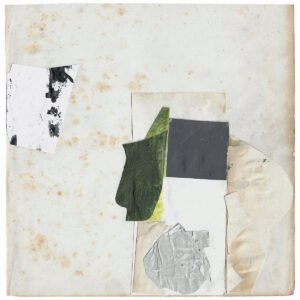
When words trail off at the beginning of claire rousay’s “everything perfect is already here,” ornate instrumentation is waiting to fill a void left by the breakdown of language. Yet it becomes clear as we trace rousay’s collaged sonic pathway that breakdown, of meaning and also of melody, is also a place to rest. everything perfect… is made up of two extended compositions that cycle between familiarity and unknowing. There are seemingly infinite ways to feel in response to these pieces of music, which shift tone across their languid duration, earnest like a familiar song but unbound from the emotional didacticisms of lyrical voice and pop form.
Rousay builds a fluid landscape around the acoustic contributions of Alex Cunningham (violin), Mari Maurice (electronics and violin), Marilu Donovan (harp), and Theodore Cale Schafer (piano), whose respective melodies weave gently in and out, sometimes steady, sometimes aching, sometimes receding altogether in deference to less overtly musical sounds. That is, percussive texture in the form of unvarnished samples and field recordings: the rattle and rustle and the stops and starts of life unfurling, voices sharing memories nearly out of reach, doors closing, wind against a microphone. Everything comes from somewhere in particular, possessing the veneer of the diaristic, but sound’s provenance is secondary here and so these details become tangled and fused. On this release I hear such details not as individual ornaments or stories but the collective architecture of the greater composition. It’s an architecture that is not quite formed and thus full of openings out to the world unfolding.
“The world unfolding,” that’s a kind way of saying change, movement, loss, transformation. Things rousay here indexes, not without shards of desire or pain, still somehow what I hear is coarse peace in the in-between. These two pieces sweep you away and then bring you to earth, but which is which, anyway? Where am I now? What is different outside of me? What is different inside of me? Um. I think. everything is perfect is already here, like the answers to these questions, is loose and beautiful in surprising ways.
The music guides a certain experience of the world around. In claire’s music there is this marriage—not just a pairing or juxtaposition but an interrelationship, an eventual confusion—of song/texture, narrative/abstraction, figure/ground. Everything comes from somewhere in particular but not just the voices, the field recordings, the what is being said or meant, what matters is “the where you are now.” There are so many ways of anchoring oneself in the present, some have to do with fantasy or storytelling and some with accepting what is.
These two compositions find peace between these modes. They sweep you away and then bring you to earth, but which is which, anyway? Their mode of feeling is inquisitive. Where am I now? What has changed outside of me? What has changed inside of me? The music, like the answers to these questions, is loose and beautiful in surprising ways.
14,00€
In stock

7 CD box
Akos ROZMANN
“Mass / Mässa”
Ákos Rózmann’s Mass consists of twelve electroacoustic compositions created between 1989 and 2004 in the composer’s studio and at EMS in Stockholm. Like most of Rózmann’s compositions, Mass is a long-form work with a duration of around seven hours.
We can describe Rózmann’s Mass as an enormous fresco of personal observations on the two first parts of the Catholic Mass, Kyrie and Gloria. The intensely subjective perspective on the texts of the Mass is underlined by Rózmann’s freezing images – in his own words – “tropes”, i.e. meditations in Swedish, Hungarian and Latin over particular words in the mass text or connection to it. A few passages have nothing to do with the mass text: Organ piece VI in Gloria I (also performed with the subtitle Nocturne in silver and dance) is a sort of lament based on the phrase “Natten gråter” (the night is crying). We find the composer’s peculiar sense of humour in the intermezzo following Gloria I – a composed version of the intermission common in Swedish concert houses, complete with clashing coffee cups and empty chatter from the bureaucratic music establishment.
The overarching formal structure of Mass is an intricate one, with the various parts functioning simultaneously as independent pieces and as parts of sub-groups within the whole structure of the piece. As independent pieces, some of them go under the name Organ piece. For example, the three pieces included in the first Gloria part of mass form another independent composition named Triptykon, first performed as a separate work in 1996.
In the earlier parts of Mass, a battle fought between Positive forces is represented by the words in the Mass text and Negative forces represented by various challenging sounds, such as scornful laughter, grunts, burps, nauseous choking and vomiting sounds. First, the Negative powers drag down the Positive forces into a “black hole” or in pockets. Then the Positive forces return to dominate the remaining parts of Gloria. This formal narrative is nuanced by the composer, who, in interviews, offer a less dualistic, more complex viewpoint on the conflict central to the Mass:
“It’s presumable that everything in the general sense is about the notion of positive or negative because everything in the world is structured like that. But it’s not that simple in the Triptych [the first three pieces of the Gloria-cycle]. Different forces stand against each other, but their interrelation is more complex than that of good and evil.”
The most prominent sound sources in the work are the organ, a Hungarian zither and human voices. Throughout the whole piece, there is a vocal group from a village church in Corsica, singing the Latin mass texts solo and chorally. Other participants are Schola Gregoriana Holmiae under the direction of Viveca Servatius, a group of German Benedictine monks and – in the role of a sort of master of ceremonies, Thomas Hammar.
Ákos Rózmann was born in 1939 in Budapest, Hungary, where he studied composition at the Bartók Conservatory and the Liszt Academy. In 1971 he received a scholarship to come to Stockholm and completed his compositional studies with Ingvar Lidholm at the Royal College of Music in Stockholm and then settled down in Sweden. He was the organist at the Catholic Cathedral in Stockholm for a long time. His early encounter with electroacoustic music gave a new direction to his composing. Except for a few early pieces, Rózmann composed solely electroacoustic music – often preferring a monumental form, usually with the organ and the human voice as the most crucial sound sources in a complex, penetrating musical language loaded with symbols. As a composer, he worked involuntary seclusion, uncompromisingly and with great originality. Rózmann’s music is about the fundamental questions of existence, often on an ethical or religious (Catholic or Buddhist) basis, for example, in the enormous suites Images of the Dream and Death and Twelve Stations, both previously released on Ideologic Organ.
60,00€
In stock

7 CD box
Akos ROZMANN
“12 Stations / Tolv Stationer, For Voices And Piano (1978 – 2001)”
Final pressing of 300 copies.
***
Ákos Rózmann (1939-2005) was born in Budapest where he studied organ and composition at the Liszt Academy. From 1971 to 1974 he studied composition at the Royal College of Music in Stockholm and from 1978 he was an organist at the catholic cathedral in Stockholm. Throughout his life Rózmann dedicated himself to musique concrète developing one of the largest and most rewarding bodies of work in this, the most alchemical of all musical genres. In the early eighties, Rózmann started to build a private electroacoustic studio which he installed in the basement of the Catholic Cathedral whilst continuing to work in tandem at the Elektronmusikstudion (EMS Sweden) where he produced his earlier masterpieces.
With an unwavering commitment to the creation of music Rózmann would often lock himself up in his windowless studio working into the night in order to achieve the results he desired. He did not seek the approval of his peers nor the satisfaction of his audience with the only concern being the perfect articulation of his vision. This combination of vision, passion and stubbornness resulted in one of the most singular catalogues within the field of musique concrete. Commissioned by the Hungarian composer Miklós Maros who requested a five-minute work for piano and voice. Rózmann accepted the offer with the intention of writing a tape piece made from recordings of Miklós’ wife, the soprano singer Ilona Maros’ and his own experiments with prepared piano. The elements recorded here became the source material for Twelve Stations, a work which flew far from the initial five minute brief to land 20 years later as a spirit stretching journey of more than 6 1/2 hours. The compositional process is unique in Rózmann’s output due to the 18 year gap between the initial phase and completion of the final work. The first phase made between 1978-1980 consists of an exploration of traditional musique concrète techniques such as speeding up, slowing down, cutting and splicing tape. The last four stations made between 1998-2001 embrace digital technology where small sections of the original recordings from 1978 were fed through an effects processor and improvised on a sampler keyboard. Despite this gap and the different techniques deployed at each period of creation the monumental result sits as a complete and staggering whole.
Within the set limitations of the source material Rózmann’s skill unfolds in an uncanny ability to coax a vast world of flexible sound from the original piano and voice recordings. The result is a maelstrom of dynamic audio and one of the most daring, challenging and rewarding works of musique concrète from the 20th Century. ‘Property – Room’ parts I and II initiate proceedings with a vast landscape of Sturm und Drang. The original material of piano and voice are dissected and reconstructed as a means of evoking an aggressive otherworldly atmosphere. ‘The Contents and Life of the Black Pit’ shifts further outside with an expansive palate of heavily corrupted voice and frenzied electronics dancing in a most unsettling fashion. ‘The Abandonment of Hell’ leads the listener into a sophisticated and shocking melange of audio disorientation, one with a distinct ‘musical’ quality. One senses a master craftsman quietly whittling away at the individual elements in order to harness the previously unobtainable world within. Part V ‘The Awakening’ implants female forms in the mix as the growling, belching, disturbing voices of the early sequences are replaced with more heavenly voices ascending the malformed matter below. Rózmann was typically ambiguous about the meaning behind his work despite suggesting earlier that the first part of ‘Twelve Stations’ was an interpretation of the ‘Tibetan Wheel of Life’. Alongside his interest in Tibetan Buddhism he maintained his following of the catholic church and as a consequence one may also read this sequence, with its uplifting motifs as an ascent from hell into heaven. Rózmann concludes proceedings with ‘The Celebrators’, which presents itself not as an ending but rather a continuation of sorts. A short musical refrain conjures a prism where refractions of voice and sound appear like a hall of mirrors, spiralling onwards and outwards, without end.
Epic in scale, timbre, technique, mood and movement, Twelve Stations is a unique masterpiece of 20th Century musique concrète and presents itself as an intensely personal and bold realm of sound, an offering as such, a radical mass open to all.
Man meets different difficulties and sufferings through his wandering. These are forces between which a continuous struggle is going on. He cannot control and preside over these forces. He is being tossed up and down, powerless, like snowflakes in the storm: chaotic thoughts and feelings, gladness and suffering, which flow without intermission like a river that has no beginning nor end. All these are the fruits of our own deeds. However, in this life you have the chance to make easier those life wanderings that are to come. - Rózmann (from the programme notes for the 1984 premiere of the first seven stations).
– Mark Harwood
50,00€
In stock
CD
L’OCELLE MARE
“Sans Chemin”
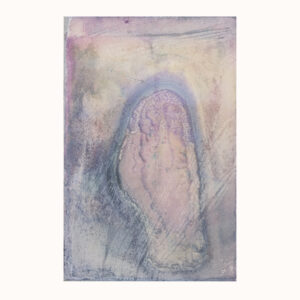
A ritornello that awakens, unfolds, disappears, resurfaces, transforms, forgets itself, awakens again.
A ritornello in folds and hollows, which gives us something to see as well as to listen, a theatre of acoustic shadows where each timbre, each rhythm, each modulation, is born from a meticulously refined gesture. “I don’t write music, it’s an assemblage of gestural memories”, says Thomas Bonvalet. Gestures found, accidentally or not, through long practice: such keyboard rubs on such guitar while preparing a concert, such tambourine vibrates in a singular way when placed on such amp, the duration and intensity of breath given to the flute so that the strings of the open piano decline and reverberate the harmonics...
Gestures that are both very skilful and very simple, that sovereignly refuse the categories of modern and archaic, natural and cultural. Instead, they summon an entire genealogy, both intimate and collective, musical and technical, the memory of a thousand different pieces from a thousand different eras. There is no path, in fact, no path at all in this dismantled world.
There are, however, these gestures that allow us to search for the human measure, that allow for a new attention to be given to bodies, objects, space. Gestures that invent new relationships between themselves and other ways of being alive, gestures to be worked on and shared endlessly. “It’s fragile, it can always fall apart. I have to fight, to stay in tune with what is at stake in a piece, to breathe into it what will make it stand up.
And so the ritornello continues its mutations in the folds and hollows of our own memories.
14,00€
In stock

CD
Michael RANTA
“Taiwan Years”
Three previously unreleased works from the 1970’s recorded and mixed in Japan and Taiwan.
1-Kagaku Henka (1971) 18’40”
2-China Filch (1975) 27’06”
3-At Night (1978) 23’06”
More than any other of Ranta’s releases this album shows his multiple roots and ideas as a composer, percussionist and concrete/electronic musician, building a seamless bridge between Eastern and Western tradition and avantgarde. Ranta is one of those rare composers able to organically melt his wide artistic span into a singular but yet diverse universe, morphing his rich vocabulary as a percussionist with the Oriental esoteric tradition, the psychedelic underground and the realm of electronic minimalism.
14,00€
Out of stock

CD
NURSE WITH WOUND
“Man With The Woman Face”
Originally this was only available for a short period of time before World Serpent went bust and is often thought of as a ‘lost’ NWW work.
Review from brainwashed.com : Longtime NWW fans are going to be very very very pleased with this album. Shaved down to a mere duo featuring Steven Stapleton and Colin Potter, this is almost a tribute to the more ambient and free-form early to mid-period Nurse with Wound. The original mission statement from 1978 included a provision that Steven Stapleton didn't like "songs" and the last few full-length albums ('An Awkward Pause', 'Acts of Senseless Beauty', 'Who Can I Turn To Stereo' and 'Rock 'n Roll Station') have all been heavily song-based. Clocking in at under 40 minutes, this particular journey is comprised of three pieces: the two endpieces which linger around the 15-minute mark and the 8+ minute middle piece, whose title loosely translates to "Up in the Air, Singing" in Gaelic. Musically, it's perhaps the most intimate Nurse with Wound has been, with a particular, almost personal subtlety which I haven't detected probably since 'A Missing Sense.' The album opens with a warm underscore, scatterings of organic and electronic noises twitter and scurry by, accented with quiet, mumblesome voices, bees, finger piano or marimba (I can't tell) and various other sound effects -NOT- simply recycled from previous projects. It continues with an almost arguably surprising twist of events as the "band" jumps into full-force instrumental hyper Kraut-rock mode towards the end of the second track. The music and feel of the last track almost echoes the 'Musical Pumpkin Cottage'-era work from Stapleton with Tibet. The vocals repeat the title over and over again, comfortably easing any listener into utter bliss. This album can easily become one of my most listened-to records for 2002.
Jon Whitney
11,00€
Out of stock

Book + CD
NURSE WITH WOUND
“Gyllensköld, Geijerstam And I At Rydberg’s”
Art Book CD – Silver Collection 24 page Deluxe Art Book with augmented CD album. All artworks by Babs Santini.
22,00€
Out of stock
2 CD
NURSE WITH WOUND
“The Surveillance Lounge”
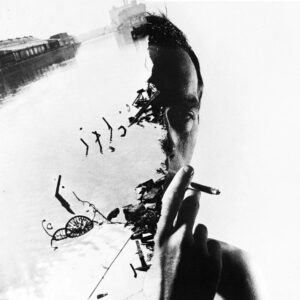
Long out of print and much in demand, this classic NWW CD is now back. This time as a double CD set with a CD of unreleased alternate mixes of each track.
It’s packaged in a stunning matt digipack, with all the information in a clear gloss spot varnish. This is only visible from certain angles!
NURSE WITH WOUND playing ‘The Surveillance Lounge’ were and are Steven Stapleton, Andrew Liles, David Tibet, Nadja Belabidi, Lynn Jackson, Ollie Mathura O’Keeffe, Freek Kinkelaar, Miranda Kinkelaar, Melon Liles and Maude Swift.
18,50€
In stock

CD
Lasse MARHAUG / Jérôme NOETINGER
“Top”
When our friend and inspiration Peter Rehberg passed suddenly in July 2021, I felt like I had to do something, and what I’m good at is something Peter deeply loved, producing records. so I put together this project with some of his longtime collaborators and friends, Lasse and Jérôme, Marcus Schmickler mastering and Tina Frank designing.
it’s titled Top for multiple reasons but one is that Top was often Peter’s entire reply to a message you’d sent, both concise and supportive. a second is that it can also be read ‘To P’, we miss you buddy.
— Jon Abbey
Lasse Marhaug: MacBooks 2003/2007/2011 with SuperCollider Keränen patches
Jérôme Noetinger: Revox, modular synth, CD player
recorded Sortland/Rives September-November 2021
mastered by Marcus Schmickler
design by Tina Frank
produced by Jon Abbey
for Peter Rehberg (1968-2021)
15,00€
Out of stock

CD
SMALL CRUEL PARTY
“Cervorum Simulacra”
"Cervorum simulacra" was originally released as a lathe-cut LP limited to 30 copies ; "Pour Eric S-W" has never been released.
Cervorum Simulacra (live à Qui Plume La Lune, Paris, 11.iv.08)
Pour Eric S.-W. (live, Radio KSER, Everett, Washington, 15.iv.92)
11,50€
In stock

CD
TARAB
“Rooms”
Between 2019 and 2021 I presented three installations. Seeking to move away from sharing borrowed representations of things, spaces and actions in the form of recordings, to instead shape spaces or situations with sounds and rooms, things and an audience. If we understand space not as physical, but as shaped through use, it raises the somewhat rhetorical or even quixotic question: can a space be shaped by sound? Can one space be shaped inside another?
However, ROOMS is not intended to act as a straight document of these installations, despite drawing heavily upon them. Rather, it has been made to explore some of the ideas and methods which emerged from the process, within the space formed by a pair of stereo speakers situated in yet another room. It is not intended as a re-presentation of those assembled spaces, but works towards being its own listening space within the rooms and ears of a listener.
Recorded audio material is explored as a shifting series of perceivable surfaces, textures and depths; traces of places and actions; points in space; vibration of speaker cone and microphone diaphragm; resonant objects acting as small sounding containers within larger containers; movements of air; a constant shifting set of perspectives; the traces that are left behind; debris gathered up and pawed over. Recorded sound is gathered and understood as partial, fragmentary, incomplete.
While ROOMS is a construction, it is presented not quite as an abstraction nor as a re-presentation, but as a form of both-ness or an inbetween-ness; somehow inside-out and outside-in. An interaction or assemblage of shifting, sounding elements and things. (Eamon Sprod)
11,50€
Out of stock
CD
Artur ZMIJEWSKI
“Singing Lesson”
First published as a Vinyl-LP in 2011 (Tochnit Aleph TA099) this extraordinary work by Polish conceptual artist Artur Żmijewski is finally available again!
"In 2001 ARTUR ŻMIJEWSKI created the first part of the project "SINGING LESSON" in the Augsburg Evangelical Holy Trinity church in Warsaw. Accompanied by an organ a choir of 'deaf-mute' children sang the "Kyrie" from the "Polish Mass" by Jan Maklakiewicz (1899-1954). Among the cacophony of sounds uttered by them you can hear the words of the confession of faith: "In this holy place, in this holiest place, our voice rises to you and erupts as the sea roars from the deep abyss. O Christ, hear us! O Christ, listen to us!". The second part of the project ("Deaf Bach") was realized in 2002 in St. Thomas Church in Leipzig, in which Johann Sebastian Bach for many years was a cantor and where he was buried. 'Deaf-mute' or severely hearing-impaired children sang Bach's cantata "Herz und Mund und Tat und Leben" (Heart and Lips and Deed and Life)." (from the liner-notes)
"Along with admiration for the efforts of the deaf we feel an uneasiness caused by our deeply hidden aversion towards that which – like cripplehood – was removed from our consciousness: fear of ourselves, which is an inner mold of repulsion projected onto outside phenomena. Żmijewski's works convince us that neither suffering nor different kinds of physical dysfunction or social norms are able to kill the joy of life. The children singing Bach every so often snort with laughter as if they were trying to accustom themselves to the situation in which they found themselves, thus making it "normal". They whoop it up, forgetting the fact that the lesson in which they participate is beyond the social role ascribed to them, that it is an anomaly, a freaky idea. It is also a musical hybrid, a mix of the sounds uttered by the deaf children and the voice of a professional singer, a negation of all the rules, a mixture of the evenly-tempered baroque system and elements of modal and atonal music." (Violetta Sajkiewicz)
Polish artist Artur Żmijewski (born 1966 in Warsaw) is one of the most consistently challenging, provocative and profoundly thoughtful artists working today. He is an author of short video movies and photography exhibitions, which were shown all over the world. Żmijewski does not shy away from putting the generally accepted rules of Political Correctness into question. His works on the mentally and physically handicapped has drawn significant public attention. He appears to be an artist always in constant search of the next modality of artistic expression, ever striving to amplify the impact of his art on its subjects, enlarging its territory beyond its conventional borders. During the 1990s, Żmijewski was a leading force in the realm of critical art, his point of departure being the problems of body and The Other. In 2005 he represented Poland at the 51st Venice Biennale. He exhibited at Documenta 12 (2007), Manifesta 4 (2002), Wattis Institute for Contemporary Art, San Francisco (2005), Kunsthalle, Basel (2005), National Gallery of Art Zacheta, Warsaw (2005), Kunstwerke, Berlin (2004), Museum of Modern Art, New York (2009), Cornerhouse, Manchester (2009) and many more. He was the curator of the Berlin Biennale 2012.
CD in 8-panel digipak. Edition of 300 copies.
14,00€
Out of stock

CD
ENSEMBLE NIST-NAH
“Elders”
Elders is the debut release from Ensemble Nist-Nah, a nine-piece percussion group led by Nantes-based Australian drummer and percussionist Will Guthrie. The diverse group of French musicians that make up Ensemble Nist-Nah – whose collective experience encompasses traditional Gamelan performance, contemporary composition, noise, jazz, and everything in between – perform on drum kits, traditional and junk percussion, and a complete set of Javanese Gamelan instruments. Though building on the foundations of Guthrie’s solo work with Gamelan instruments (Nist-Nah, BT057) and primarily performing his compositions, Ensemble Nist-Nah is a collective endeavour, propelled by a breathtaking enthusiasm that has seen the ensemble manage to rehearse, perform, and even tour Europe during the Covid-19 pandemic.
From the first seconds of opening track ‘Geni / Tirta’, it becomes immediately obvious that this is no dry academic exercise or exotic indulgence. Rapid arpeggiated figures are propelled by manically busy kit drumming while slow-motion melodic lines float above. After a series of abrupt tempo changes and fragmented unison passages that crossbreed the rhythmic intensity of the Balinese Kecak with the joyride of an Ornette Coleman head, the music slows to a monumental groove, equal parts Javanese court music and Dark Magus. Another sequence of thrilling divagations leads us to the unexpected guest appearance of acclaimed vocalist Jessica Kenney, who elaborates a haunting Javanese Bedhaya across a spacious backdrop of massive gong hits, shimmering cymbals, rustling bells, and gritty textures.
The remaining pieces that make up Elders explore a dizzying variety of approaches, from the shifting rapid-fire muted textures of ‘Overtime’ to the ghostly bowed tones and ominous swells of the title piece (developed from a track on Guthrie’s solo Nist-Nah release), which gradually builds into waves of shuddering low resonance and asynchronous percussive clicks like a haunted clock mechanism. On the aptly titled ‘Rollin’, virtuosic twin drum kits criss-cross errant metallophone patterns in propulsive polyrhythms, while ‘Planeker’ manages to achieve a bizarrely effective fusion of Harry Partch and Autechre. Arriving bedecked in beautiful monochrome images of gongs drawn by ensemble member Charles Dubois, Elders is a feast for the ears: music that burrows deep into timbral and rhythmic possibility while possessing an intoxicating physicality and revelling in the joy of collective performance.
Ensemble Nist-Nah is:
Prune Bécheau, Charles Dubois, Thibault Florent, Will Guthrie, Amélie Grould, Mark Lockett, Sven Michel, Lucas Pizzini, Arno Tukiman
Playing Gamelan Kyai Bremånå
Special Guests:
Jessika Kenney
Toma Gouband
Annalee-Rose Guthrie
15,00€
Out of stock

CD
Oren AMBARCHI
“Sagittarian Domain”
10th anniversary reissue of this rhythmically churning one-man-band monster of an album, recorded in a single inspired studio session & originally released in 2012 on Editions Mego.
From the original Editions Mego press release:
“For anyone who still associates Oren Ambarchi exclusively with the clipped, bass-heavy tones of solo electric guitar works such as Suspension, this rhythmically churning one-man-band monster of an album-length piece might seem to come out of nowhere. However, listeners who have followed the breadth of his work for the last few years (solo and in projects with collaborators from Jim O’Rourke to Stephen O’Malley and Keith Rowe to Keiji Haino) will have noted how Ambarchi has allowed increasingly clear traces of his enthusiasms as a music listener (for classic rock, minimal techno and 70’s fusion, among other areas) to surface in his performances and recordings, all the time filtering them through his signature long-form structures and psychoacoustic sonics.
Recorded in a single inspired studio session, Sagittarian Domain displaces Ambarchi’s trademark guitar sound from the centre of the mix, its presence felt only as an occasional ghostly reverberated shimmer. Endlessly pulsating guitar and bass lines sit alongside electronic percussion and thundering motorik drumming (familiar from his work with Keiji Haino) at the core of the piece, locking into a voodoo groove like Faust covering a 70’s cop show theme. The work is founded on hypnotic almost-repetition, the accents of the drum hits and interlocking bass and guitar lines shifting almost imperceptibly back and forwards over the beat as they undergo gradual transformations of timbre. Cut-up and phase-shifted strings enter around the half-way mark like an abstracted memory of the eastern-tinged fusion of the Mahavishnu Orchestra’s classic Visions of the Emerald Beyond, before returning for an extended, stark yet affecting come-down coda, equal parts Gavin Bryars and Purple Rain.
While Sagittarian Domain contains traces of a diversity of influences, it mines all of them to uncover something that is clearly an extension of Ambarchi’s own investigations up to this point, exhibiting the same care for micro-detail and surrender to the physicality of sound that are present in all of his work, extending them in new ways to repetition, pulse and rhythm”.
15,00€
Out of stock
3 CD box
NURSE WITH WOUND
“Soliloquy For Lilith”
The NWW classic 3CD set is back in stock. For those of you that missed out on the green foil version, it’s now repressed with “iridescent” foil on the front and spine. It changes colour as the light catches it. 500 copies of this new edition
Originally a limited-edition three-album set housed in a handsome 12-inch gold and black foil embossed box, this new edition, a CD facsimile of the original vinyl set, contains the entire album plus 40 minutes of superb quality, previously unreleased music from the original sessions.
23,00€
In stock

LP + CD
LE UN
“Le Havre”
Large ensemble improvisation has a history and already many historical references such as Globe Unity Orchestra, King Übü Örchestrü, The Celestrial Communication Orchestra, London Improvisers Orchestra... or more recent ones like Splitter Orchester, Insub Meta Orchestra, GGRIL, ONCEIM...
How to combine energy, individuality, unexpectedness... with 26 people?
How to develop different improvisation strategies without falling into the obvious drone?
How can you simply improvise freely with 26 people?
Le UN (new version) was initiated by David Chiesa in 2019.
Le UN acts as an improvisation society: each member is involved in the artistic realisation as much as in the social, non-hierarchical organisation of the ensemble.
The individual and their practice - and not its dilution in the collective - are at the centre of this orchestral experimentation. Importantly, each individual preserves their singularity within a protean mass without obstructing the collective space.
This LP (+ CD) was recorded during a three-day residency at Le Volcan, Scène Nationale du Havre, in April 2021.
This recording is a manifestation of a collective practice of free improvisation beyond genres, a music full of effervescence and turbulence, where the acoustic and electric sources attempt the wager of spontaneous collective fabrication without any direction, irradiated by strong flickering light, with a flight of incongruous actions!
Sophie AGNEL, piano
Pascal BATTUS, rotating surfaces
Claire BERGERAULT, voice and accordion
Benjamin BONDONNEAU, clarinet
Christophe CARDOEN, lighting apparatus
Patrick CHARBONNIER, trombone
David CHIESA, double bass
Michel DONEDA, soprano saxophone
Camille EMAILLE, percussion
Nina GARCIA, electric guitar
Amanda GARDONE, double bass
Bertrand GAUGUET, alto saxophone
Anouck GENTHON, violin
Rozemarie HEGGEN, double bass
Benoit KILIAN, percussion
Soizic LEBRAT, cello
Lionel MARCHETTI, electronics
Michel MATHIEU, actions
Natacha MUSLERA, voice
Jérôme NOETINGER, electronics
Jean-Luc PETIT, contrabass clarinet, sopranino saxophone
Christian PRUVOST, trumpet
Aude ROMARY, cello
Mathieu WERCHOWSKI, violin and viola
20,00€
In stock
CD
ILLUSION OF SAFETY
“New Rules, Same Game, Less Instruction”
Chicago's post ambient industrial legend is back with a work that combines electronic sounds and field recordings: microscopic audio events, loops, heavily processed material of all kinds form seven multi-layered collages that seem to be full of electro-magnetic static, morphing and transforming like a hallucinogenic object in every second and in all possible directions... in all it's subtleness this is far away from the shock treatment noises of the early IOS times.
'New Rules, Same Game, Less Instruction' is the first release of new IOS compositions since 'Surrender' in 2015.
Featuring extensive synthesizer source material as well as other now familiar electro-acoustic techniques it is conceived as a follow up to the 1995 3” CD release of 'Rules Of The Game', alluding to the social, political, and psychological games humans engage in for validation, survival, or dominance. New Rules, same game, less instruction, harsher penalty.
Illusion Of Safety now more than ever.
Mastering: Thomas Dimuzio / Artwork: Dan Burke
13,50€
In stock

CD
DDAA
“Objet: when a cap is raising”
Jean-Luc André, Sylvie Martineau-Fee and Jean-Philippe Fee started DDAA (Deficit Des Annees Anterieures) in 1977. They are pioneers of the French experimental and indie scene, also connected with Industrial 80s music and audiovisual projects. Approaching music in a completely unique way, and brilliantly produced by their own Illusion Production label (with more 40 published items), DDAA was and is undoubtedly one of the most legendary groups of the French underground for the past 30 years. Their early albums are classics - the self-titled debut, Action and Japanese Demonstration or Les Ambulants (re-issued and still available on Klanggalerie) are a must-have for every connoisseur of usual music. They appeared on the compilation album of music by outsider artist Adolf Wölfli alongside Nurse With Wound and Graeme Revell of SPK. The 10" album When A Cap Is Raising came out originally in 1988 on UK label Big Noise in Archgate. For this re-issue, the band has remastered the music and added bonus tracks from the compilation album Objet, and other sources, some previously unavailable.
12,50€
In stock

CD
GEINS’T NAÏT
“L’Or’n’Cät”
Geins't Naït was founded in Nancy, France, in 1986 by Thierry Merigout and Vincent Hachet, both students at the Architecture School of Nancy. A year later Laurent Petitgrand joined the band. Their sound is often described as an equivalent of bands like Einstürzende Neubauten, Coil or Test Dept., but Geins't Naït is not pure classic Industrial. While Geins't Naït offers rough pieces of music as an extension of its punk attitude, Petitgand refines them to create some musicality within the post-industrial collages, adding guitars, piano, and classical instruments. Geins't Naït and Laurent Petitgand sharpen sounds, giving them a kind of balance and density and ensuring that the musical language evokes a deep experience. Their music is raw and fascinating, and largely influenced by Surrealists and Situationists. Their early albums were released by French label Permis De Construire, with L'Or'n Cat being the second, released in 1987. It features ten tracks which have been carefully remastered for this first ever CD re-issue by Martin Bowes.
12,50€
In stock

CD
Elisabeth HARNIK – Didi KERN – Jaap BLONK
“Steamology”
Elisabeth Harnik, an Austrian based pianist and composer has created a multi-faceted body of work by blurring genre boundaries through various collaborations in the field of improvised music, interdisciplinary projects and contemporary compositional works. She studied classical piano and later – with Beat Furrer – composition at the University of Music and Performing Arts, Graz. As an improviser she works within an electro-acoustic inspired sound-world, using specific preparations and extended techniques while pushing the limitations of the piano. Amongst others she has collaborated with Frank Gratkowski, Dave Rempis & Michael Zerang, Joelle Leandre and Ken Vandermark.
Didi Kern is an Austrian drummer who is best known for his work with Bul But, Fuckhead or Glutamat. He is equally at home in the rock scene and in the free improvisation scene. He has a duo with keyboarder Philip Quehenberger, plays drums with KGB and has performed with jazz greats like Peter Brötzmann, Mats Gustafson, Weasel Walter, Saadet Türköz or Ken Vandermark.
Jaap Blonk is a Dutch avant-garde composer and performance artist. He is primarily self-taught both as a sound artist and as a visual/stage performer. He studied physics, mathematics, and musicology for a time, but did not complete his studies. One of his early influences was Kurt Schwitters, whose Ursonate he first heard in 1979; he memorized the entire work, and it became one of the cornerstones of his repertory.
For Wels Unlimited 2020, the trio got together for a live stream during one of the Covid lockdowns. This album is a recording of that show.
12,50€
Out of stock
CD
Robert RENTAL
“Mental Detentions”
Robert Rental was a British pioneer of the post-punk DIY industrial electronic music scene in the United Kingdom. Originally from Port Glasgow, Scotland, he moved to the south of England with Thomas Leer in the late 1970s, and became involved with the local music scene. Robert Rental however released very little of his solo music, preferring to collaborate with Thomas Leer, as well as with Daniel Miller. The only solo recording from The 1970s is the 7" single "Paralysis" first released on the homemade Regular Records, then re-released on Company Records in 1978. Mental Detentions was released as a cassette in 1979, the same year as his masterpiece The Bridge with Thomas Leer (who also features on several tracks on this album). It is an album full of electronic songs ranging from abstract Industrial to rhythmic proto pop. Robert spoke to friends of his frustration at being unable to replicate his sound in a commercial studio – it was these demos’ sound that he wanted to create. Sometimes having only access to the most rudimentary of equipment can hone the creative talent into something sharper and more focused – necessity is the mother of invention, indeed.
12,50€
In stock

CD
Pauline OLIVEROS – Gyorgy LIGETI
“Musica Nuvolosa”
After its reading of Julius Eastman's Feminine, released in 2021 (SR 501CD), the Ensemble 0 revisit the repertoires of Pauline Oliveros and György Ligeti from another angle. From the works of Oliveros, they exhumed a deeply meditative piece for accordion and voice, giving it a new life in the form of vaporous, cloud-riding chamber music. With Ligeti, the piano radicalism of the Musica Ricercata miniatures crop up again in a new and as yet unreleased orchestration.
György Ligeti (1923-2006): György Ligeti was a Hungarian-Austrian composer of contemporary classical music. He has been described as "one of the most important avant-garde composers in the latter half of the twentieth century" and "one of the most innovative and influential among progressive figures of his time."
Pauline Oliveros (1932-2016): Pauline Oliveros was an American composer, accordionist and a central figure in the development of post-war experimental and electronic music.
Ensemble 0: "Music that's immediately attractive and persistently elusive" --The Wire, UK. The Ensemble 0 (pronounced "zero") is a collective created in 2004 whose full-time members are Stéphane Garin, Joël Merah, and Sylvain Chauveau. They are based in Bayonne (France), Barcelona (Spain), and Brussels (Belgium). The ensemble performs mainly pieces by living composers, as well as compositions by its members. The band has many regular collaborators and guests, allowing the line-up to increase or decrease according to each specific project. The ensemble 0 has played live around Europe (France, Switzerland, Spain, Belgium, Netherlands, Portugal, Germany) and in Asia (Japan, Taiwan). They have released a number of records on international labels and have been reviewed or interviewed in magazines and websites such as The Wire, Vital Weekly, Fluid Radio, Mouvement, Ecocolo, The Sound Projector, Textura.
13,00€
In stock

CD
SOTE
“Majestic Noise Made in Beautiful Rotten Iran”
It's an all-electronic affair, harmonically maximalist, predominantly symphonic-synthetic, requiring active listening. Some pieces function as challengers of musical structural habits, provoking the short attention span culture, others present a problem-solution scenario, collectively via a neoteric noise aesthetic and detailed melodic weaving. Ultimately, the objective was to engineer an assortment of works full of sound, euphonic, and vivid in nature. The making of this album was intentionally a very personal process, going into self-therapy territory at times interpreting the composer's contemplating mind dealing with tolerance, destruction, compassion, misery, grace and tyranny in an auditory manner. Some pieces function as challengers of musical structural habits, provoking the short attention span culture, others present a problem-solution scenario, collectively via a neoteric noise aesthetic and detailed melodic weaving. Ultimately, the objective was to engineer an assortment of works, awash with euphonic sound vivid in its essence, with a deep focus on various synthesis techniques within a compositional framework. Dedicated to Peter Rehberg aka Pita.
Ata "Sote" Ebtekar composes music with a deeply-held conviction that rules and formulas should be deconstructed and rethought. He alters musical modal codes from their original tonality and rhythmic tradition to achieve vivid, synthetic soundscapes. Over the last three decades, his work has been published by labels such as Warp, Sub Rosa, Opal Tapes, Diagonal, Mute, and Morphine, among others.
13,00€
In stock

CD
Jos SMOLDERS & Jim O’ROURKE
“Additive Inverse”
*** Repressed ***
What if sounds were to fold in on themselves? Quite quickly after being 'born', even. Only to be released back into the 'normal' world of linear projection and moving waveforms from a resonant source to the ear drum to hearing and listening, some album length later?
Through a looking glass of sorts, as if emerging from an anechoic chamber through the backdoor. From absolute silence into all hearing, all sound anew, flooding over, rushing in. A ghostly aural universe with perspective shift, familiar knowns flipped upside down and inside out.
Could this inverted aural space be the one which is always there to begin with, like the inverse of an acoustic emission - the literal backside of the speaker? The inverse as diametrically opposed or quintessentially other, but with identical value and properties. The hitherto unheard side as sine qua non to the heard.
This collaboration between Jos Smolders and Jim O'Rourke offers a unique opportunity to investigate the intricate, topological complexities of (deep) hearing and its inverse; an exploration into the very essence of sound herself.
- Sven Schlijper-Karssenberg
Jos Smolders and Jim O'Rourke - Field recordings and electronics
Sleeve by Rutger Zuydervelt
11,50€
In stock

CD
Kaori SUZUKI
“Music For Modified Melodica”
Music for Modified Melodica was born out of two explorations: one of tuning (and subsequently degrading) the small reeds of a melodica, and the other to modify it playable with foot pumps, allowing for the sustained excitation of the reeds.
Playing with the highly resistive foot bellows introduced massive ‘volumes’ of air to the reeds, overblowing them to vibrate loudly. This aspect led me to work with the sound potentials of combination tones which appear at high acoustical volumes- an area which has been elemental, especially to my durational sound works, over recent years.
The pumped breaths of the melodica are amplified and brought through time delays, with electronically manipulated high frequencies and oscillators to further activate the mix. The resulting experience, as a performer, lends affinity to what a participant to the music previously called it—one which “rewards endurance with transcendence”.
MMM was performed and recorded live. Similar iterations have been performed in New York, Osaka, and Tokyo in various settings, and at least once in an abandoned naval magazine.
Intended for hi-volume listening!
11,00€
Out of stock
CD
Éliane RADIGUE – Frédéric BLONDY
“Occam XXV”
In 2018 experimental festival Organ Reframed commissioned Éliane Radigue to write her first work for organ, 'Occam Ocean XXV'. Radigue worked closely with organist Frédéric Blondy at the Église Saint Merry in Paris before transferring the piece to Union Chapel for its premiere at Organ Reframed on 13 October 2018. The recording on this compact disc was made at a private session at Union Chapel on 8 January 2020.
'Occam XXV' inaugurates the very special record series of works exclusively commissioned by Organ Reframed, the organ-only, one of a kind experimental music festival, carefully curated by Scottish composer/performer and London's Union Chapel organ music director Claire M Singer.
'Occam XXV' is the latest chapter of Radigue's broader series of works Occam Ocean which she has been composing in the last decade. Carefully selected by Radigue she has closely collaborated with various extremely experienced yet sensitive instrumentalists. For Occam XXV Radigue collaborated with pianist, organist, composer, improviser, artistic director of the Orchestra of New Musical Creation, Experimentation and Improvisation (ONCEIM) Frédéric Blondy, which is their second collaboration in the Occam Ocean series. 'Occam XXV' premiered in 2018, and was later recorded privately in 2020 at London's Organ Reframed headquarters Union Chapel.
Packaged in a matt A5/DVD style digipack. Includes a full colour 16 page booklet containing text from Éliane Radigue, photographs of her writing Occam XXV in Paris and of the 1877 Henry Willis organ at Union Chapel.
18,00€