
Out of stock

book
COMPILATION
EREWHON CALLING : EXPERIMENTAL SOUND IN NEW ZEALAND
Erewhon Calling: experimental sound in New Zealand is a lavishly-illustrated new publication from the Audio Foundation and CMR. It is a survey of how a bunch of antipodean misfits and malcontents have forged new ways and new reasons to make noise, here at the end of the earth. Edited by Bruce Russell (the Dead C.), in association with Richard Francis and Zoe Drayton; the aim of this volume is to survey the full range of ‘non-standard’ audio practices in contemporary NZ culture. The book’s remit runs from the borders of composed art music, through improvised noise, to deconstructed rock’n pop filth’; and every genre, every scene, every permutation of unconventional audio practice,in-between. The aim is not to be comprehensive, there is literally too much vitality and diversity for,any book!). The hope is to ‘throw a good handful of gravel into the pool’. While not every eel will have been hit, the surface will have been rippled from shore to shore, which is more than anyone else has even attempted before. Erewhon Calling makes room for many voices, allowing multiple and possibly conflicting voices and points of view. A range of artists and informed commentators mainly tell their own stories, describe their own work, and outline their own goals in working on the fringes of audio culture. The readers of this important new source book will be able to discern their own meanings and make their own connections from this thought-provoking and unique publication. Edited by Bruce Russell in association with Richard Francis and the Audio Foundation. Text / page works by Branden W. Joseph, Phil Dadson, Bruce Russell, Michael Morley, Byron Coley, Alastair Galbraith, Empirical, White Saucer, Clayton Noone, Andrew
Clifford, Jeff Henderson, Daniel Beban and Nell Thomas, Su Ballard, Jon Bywater, Dan Vallor, Clinton Watkins, Witcyst, Andrew Scott, Campbell Kneale and Antony Milton, Vitamin S, Jon Dale, Mark Williams, Lee Noyes, Nathan Thompson, Beth Dawson, Sean O’Reilly, Kraus, Sean Kerr, Peter Stapleton, Stephen Clover, Dugal McKinnon, Omit, Peter Wright, Jo Burzynska, Ian-John
Hutchinson, Kim Pieters, Paul Winstanley, Gentle Persuasion, Zoe Drayton, Simon Cuming, Stevie Kaye, Rachel Shearer, Richard Francis, Rosy Parlane, Kiran Dass, None Gallery, Zita Joyce, mr sterile Assembly, Ben Spiers. Designed by Richard Francis. Co-published by Audio Foundation and CMR, August 2012. Soft-cover. 192 pages (black and white). Edition of: 900. Dimensions: 170mm x 240mm x 16mm. Individually shrinkwrapped.
27,00€
Out of stock
book
COMPILATION
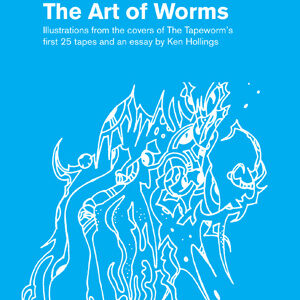
THE ART OF WORMS
The first publication from The Bookworm. Contents: “Parasitic Infestation”, an essay by Ken Hollings. Illustrations from the first 25 Tapeworm tapes, including works by SavX, Derek Jarman and Leif Elggren. 66pp, 110mm x 117mm, soft cover, thread bound booklet - no ISBN. Edition of 250 copies only.
5,50€
In stock
book + 7"
Mats GUSTAFSSON’S
“Discaholics!”
Record Collector Confessions Volume 1.
Swedish saxophone player/improviser/composer/music archivist Mats Gustafsson has worked in the outer regions of jazz, avant-garde, experimental rock and free improvisation for more than 35 years. Gustafsson is also a passionate record collector who strongly believes that actively nurturing the urge to seek for rare and obscure vinyl is a gateway to higher musical knowledge – a knowledge that it is a musician’s duty to share. He has coined the term Discaholism – and on his website Discaholic Corner he interviews fellow artists who have the same urge to spend all their waking hours obsessing about music and records.
This book presents ten selected interviews with artists/record collectors: Brian Morton, Byron Coley, Dennis Lyxzén, Elena Wolay, Harald Hult, Henry Rollins, Oren Ambarchi, Paal Nilssen-Love, Thurston Moore and Robert Crumb.
Also included are 25 TOP 10 lists of Gustafsson’s personal vinyl obsessions; an in-depth interview with Gustafsson himself; numerous illustrations and photos; plus a one-sided 7” vinyl single with an exclusive new track recorded 2017,
created using elements from Gustafsson’s record collection.
30,00€
In stock
book + CD
COMPILATION
HEAR & NOW – ENTRETIEN D’ARTISTES
2013, bilingual edition (English / French), 14 x 19 cm (softcover), 168 pages (+audio CD). A series of interviews with 27 international artists/musicians, centered on the relation of sound to space. The book includes interviews with the 27 artists of Parisonic 2011 in an original way: each artist states The question he would like to be asked on his work. The set of questions is then proposed to each artist. Thus, Hear & Now, artists interviews emphasizes the words of the artists themselves rather than outside comment. A text by Laurent Catala, published in 2011 in the journal Mouvement, and photographs illustrating the book provide an overview of the exhibition. The included CD presents the works shown in the listening room Magnetic Traces (with Loic Blairon, Thomas Tilly, Camilla Hannan & Eamon Sprod, Eric La Casa & Philip Samartzis, Jean-Luc Guionnet, Marc Baron, Anthea Caddy & Thembi Soddell, Lizzie Pogson, Geoff Robinson, Yannick Dauby, Rosalind Hall & Alice Hui-Sheng Chang, Cédric Peyronnet, Kristian Mark Roberts, Rainier Lericolais, Pali Meursault). Published following the Parisonic sound art exhibition in 2011. Interviews with Marc Baron, Mélanie Berger, Loic Blairon, Dominique Blais, Charlotte Charbonnel, Yannick Dauby, Jean-Luc Guionnet, Luc Kerléo, Eric La Casa, Rainier Lericolais, Nicolas Maigret, Pali Meursault, Nicolas Montgermont, Cédric Peyronnet, Philippe F. Roux, Thomas Tilly, Anthea Caddy, Alice Hui-Sheng Chang, Rosalind Hall, Camilla Hannan, Marcia Jane, Lizzie Pogson, Kristian Mark Roberts, Geoff Robinson, Philip Samartzis, Thembi Soddell, TARAB/Eamon Sprod.
23,00€
Out of stock
book + 2 CD
Charles DUVELLE & Hisham MAYET
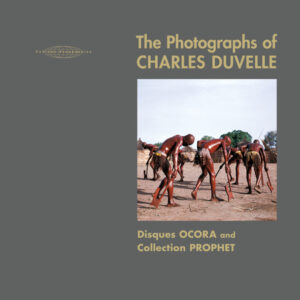
“The Photographs Of Charles Duvelle – Disques Ocora And Collection Prophet”
Limited edition. One time printing.
Disques Ocora, a French label dedicated to capturing and publishing the sounds of folkloric culture from around the world, is held in the highest possible regard in the realms of professional and amateur ethnomusicology. Instigated in 1958 by Pierre Schaeffer, the founder of musique concrète, Disques Ocora’s sterling reputation is largely built on composer and musicologist Charles Duvelle’s pioneering field recordings, as well as his now-iconic photographs and graphic design.
Charles Duvelle’s (1937 - 2017) work is indisputably one of the most important contributions to the human understanding of the rich biodiversity of our planet’s music and language. In 1977, his field recordings from Benin were selected by Carl Sagan for inclusion on the Voyager Golden Records, which were carried into outer space by the Voyager spacecraft to stand as an example of humanity’s highest musical expressions for the universe’s unknown listeners.
Sublime Frequencies’ most ambitious project to date, this 296-page fine-art photography book comprises an exhaustive collection of Charles Duvelle’s field photography from 1959 to 1978, demonstrating that this master musicologist had an equally unerring eye for photography. It also contains an exhaustive interview with Charles Duvelle by Hisham Mayet, detailing the history of the label and offering Duvelle’s unique insights into the discipline of field recording. The package includes two full-length CDs of archival recordings (some of which have never been published) selected by Duvelle himself.
In a tribute to Disques Ocora’s exquisite design sensibility, the book is printed on 170gsm Lumisilk matte artpaper and bound in grey buckram with gold foil stamping on the cover and spine. The front cover includes a tipped-on glossy photograph by Charles Duvelle.
Contents
• 188 black & white and 58 color photographs selected by Charles Duvelle and Hisham Mayet from five regions surveyed during his time with Ocora: West Africa, Central Africa, Indian Ocean, Pacific Islands, and SouthEast Asia.
• Two CDs of music compiled exclusively for this volume by Charles Duvelle with fully annotated track listings and recording details.
• An interview with Charles Duvelle by Hisham Mayet (French and English facing text).
• “Disques Ocora / Charles Duvelle Discography, 1959–1974,” a complete overview illustrated with 94 full-color album thumbnails.
• “The Prophet Collection, 1999–2004,” a discography of Duvelle’s post-Ocora label, illustrated with 41 full-color album thumbnails.
• Ocora catalogues, 1964–1973.
• A photo index listing the details of each photograph in the book.
• “Eastern Music in Black Africa,” a 17 page report prepared by Charles Duvelle at the request of UNESCO, February 1970.
Produced and edited by Hisham Mayet.
55,00€
In stock
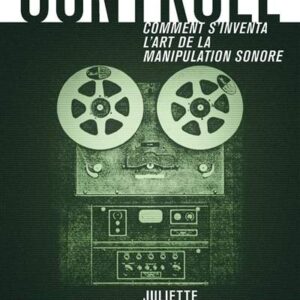
book
Juliette VOLCLER
“Contrôle. Comment s’inventa l’art de la manipulation sonore”
In French only.
After sound as weapon, here’s sound as a social manipulation through the story of Harold Burris-Meyer.
Juliette Volcler is a producer of audio documentaries for the radio program « L’Intempestive», broadcasted on the independent local radio stations : Radio Galère et Fréquence Paris Plurielle. She is also a regular contributor to the independent newspapers CQFD and article 11.
14,00€
Out of stock
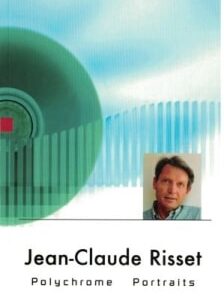
book
PORTRAITS POLYCHROMES 19
JEAN-CLAUDE RISSET
Jean-Claude Risset, today considered one of the major pioneers of computer music, was born in France in 1938 and pursued simultaneous studies in music and science. In the 1960s he worked as a young researcher in the Bell Telephone Laboratories alongside the “father of computer music”, Max V. Mathews.
This book originally published in French presents recent articles by composers and musicologists, often published in English for the first time, concerning the aesthetic, ideas, repertory and career of JC Risset. Texts by Pierre-Albert Castanet, Olivier Meston, Daniel Teruggi, Fabien Lévy, Daniel Teruggi, Jean-Claude Rissetr, Pierre Couprie.
12,00€
In stock
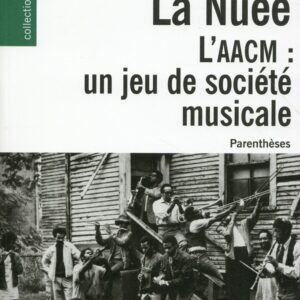
book
Alexandre PIERREPONT
“La Nuée. L’AACM : un jeu de société musicale”
The history of Association for the Advancement of Creative Musicians (AACM) ! In French only. With a postface from George E. Lewis.
19,00€
In stock

DVD
Ivan PALACKY & VJ Vera LUKASOVA aka CARPETS CURTAINS
Ivan Palacky - dictaphones, MD, amplified knitting machine Dopleta 160. Filip Cenek aka VJ Vera Lukasova - real-time image manipulation in interaction with sound.
“Combining live audio "micro-improvisations" (refined by musician Ivan Palacky) with live video manipulations (by video and VJ-artist Filip Cenek aka VJ Vera Lukasova), Carpets Curtains express an engaging and nuanced interplay of audio and visual material. With live visuals being mostly based on self-made video sequences in which emphasis is placed on ambiguous "narration" whilst VJ software-mistakes are used to reach new amoebic image qualities, the result is a principle or method of remaining fixed to moving images while vacating the essential aspects for building concrete meaning. Such visual approaches find parallel in Palacky’s delicate musicalities, in which found objects and minimal electronics are fused to create elegantly small sound mixtures.
Ivan Palacky has (in the 80s and the beginning of the 90s) played with various groups and taken part in several music projects. He was a member of the guitar/doublebass/bassoon group "Slede, zive slede" (Herring, live herring) - and currently performs in a duo called "Tilko" (Singlet) and audiovisual project Koberce, zaclony (Carpets, Curtains). He "writes" a sound diary from all his journeys - collects excerpts of stories, weird sounds and various "acoustic mistakes". He likes to take part in one-shot improvisational groups or duos (with Cremaster, Ruth Barberán and Margarida Garcia, Will Guthrie, Andrea Neumann...) as well as playing solo performances. Since 2005 his main interest has been to "dig out" sounds from an amplified Dopleta 160 knitting machine from the 70s.
Filip Cenek (born 1976 in Jesenik, Czech Rep.) is educated projectionist, graduated from the Faculty of Fine Arts Brno, Video Studio (Keiko Sei), where he currently teaches. From 2004 he has been a postgraduate student at the FAMU Centre of Audiovisual Studies in Prague. He is the co-author (predominantly with Jiri Havlicek) of several short films and animations presented at various fine art exhibitions and experimental film festivals (Centre Pompidou, Paris. L’immagine leggera, Palermo. EMAF, Osnabruck. Wardrobe, Leeds. Parker`s Box, New York. MNAC, Bucurest. Among others). He is represented in the National Gallery Collection of Modern and Contemporary Art in Prague. He was awarded the Developmental Grant of Tranzit for his work in the field of visual media last year, which allowed him to realize "Carpets Curtains" DVD-Video disk, documenting his cooperation with musician Ivan Palacky.”
DVD Pal 4:3 Dolby digital 2.0 Region free.
5,00€

CD
OSSO EXOTICO VI
“Church organ works”
“Osso Exotico is a Portuguese group formed in 1989 around André and David Maranha. They always play with acoustic instruments with a very few treatments or effects, making a personal music influenced by minimalism and the American avant-garde. This CD gathers together 10 tracks recorded in two churches in Lisbon. This new work explores the entire range of an organ’s sonorities without electronic treatments or effects.”
"The three piece group from Portugal explore in ten tracks the possibilities of the church organ. The members play in various combinations on different organs. The outcome is very varied. The opening piece is barely audible, but the second piece is a loud, repitive, all register open one. Of course it's hard to see this music without any religious overtones, but Osso Exotico don't give a clue in that direction: all their pieces are untitled. Meditative pieces in most cases, but less minimal then the known minimalist who grew up with playing organ. This is a different approach then Charlemagne Palestine would do, but none the less this is quite interesting." (Frans de Waard - Vital weekly)
5,00€
In stock
book
Pierre SCHAEFFER
“Essai sur la radio et le cinéma”
An essay around radio and cinema that Pierre Schaeffer called “arts-relais” in 1941-42. This book has been made by Sophie Brunet and Carlos Palombini who did collect Pierre Schaeffer’s texts.
15,00€
In stock

book + DVD
Nicolas COLLINS
“Micro analyses”
Texts in French only from Nicolas Collins around John Cage, Alvin Lucier, David Tudor, around experimentation in “Pea soup” or “Devil’s Music”, and around do-it-yourself with differents examples.
The book comes with a DVD presenting seven different pieces from Nicolas Collins.
28,00€
In stock

mini CD
SPIRACLE
“Iris”
“During the seven-million years of the Cyclops’ sleep, the rutile mountain became a flower. The ocean-cloud has crossed the Pangaea, transformed to the rainbow dewdrop of a petal.”
“SPIRACLE : An aperture for breathing, such as a whale’s blowhole, the opening behind the eye of sharks, rays, and skates, or the tracheal openings on the sides of the bodies of certain insects and spiders.”
3,00€
In stock

CD + CDR
RM74
“Fireproof in 8 parts”
“Nothing is holy! With his fourth solo-release, Reto Mäder aka RM74 takes us on a fevery missionary journey which is driven by an unholy quest for saturation and leads us into the dark places where tortured souls dwell. Unpredictably muckraking in the shoals of timeless abysses, RM74 seeks to kindle the supressed fires of passion. Nothing less!
To do justice to this mission, Mäder interweaves acoustic instruments such as an organ, a piano, a bassguitar or a harp with analogue and digital treatments into 8 firey and frivolous revelations. The symbiotical relation on “Fireproof In 8 Parts” is clearly in favour of the beatified instruments, which are re-discovered as liberating tools: “The dusty organ winds itself ecstatically in purgatory. The rickety piano holds confused and atonal soliloquies. The detuned strings of the bassguitar gleefully dance to the song of wantonness, and the harp calls for the exorcism of charaded awe!” “Fireproof In 8 Parts” also contains a bonus-CDr titled “Part 9: LoFire”. This goodie offers additional insight into the works of RM74, concentrating on his LoFi-inspired Songwriter drafts.
Guestmusicians: Ralf Wehowsky (RLW), Dave Phillips, Roger Ziegler (Herpes Ö DeLuxe), Alexei Borisov and Reverend Lester Knox (archived by Tom Smith).”
5,00€
Out of stock
book
Matthieu SALADIN
“Esthétique de l’improvisation libre – Expérimentation musicale et politique”
Improvisation as musical and political experimentation (essay). With AMM, Spontaneous Music Ensemble et Musica Elettronica Viva. In French only.
26,00€
Out of stock
book
PORTRAITS POLYCHROMES
FRANÇOIS BAYLE
Avant-propos, by Pierre-Albert Castanet. “La recherche de François Bayle”, portrait de l’artiste” by Gianfranco Vinay. “Hasard et nécessité” entretien de François Bayle avec Evelyne Gayou. “Entrons dans Camera Oscura et son Labyrinthe avec l’auteur” par Jean-Christophe Thomas. “Camera oscura, regard sur l’œuvre et sa chorégraphie”, par Solange Barrachina. “Mes images” de François Bayle.
9,00€
Out of stock
book
PORTRAITS POLYCHROMES 10
FRANCIS DHOMONT
In french only. “Entretien avec Francis Dhomont “ by Évelyne Gayou, “Phénomènes” by François Bayle, “Charme discret du simulacre chez Francis Dhomont” by Jean-Christophe Thomas, “Du poétique au poïétique” by Francis Dhomont, “Points de fuite, analyse d’une errance existentielle” by Stephane Roy, “Types de sons et comportements sonores dans Novars” by Andrew Lewis, “ Forêt profonde - Fragment, implication et déflexion” by Anna Rubin, “ Pareil à un voyageur perdu” by Katharine Norman, “Catalogue des œuvres de Francis Dhomont” by Annette Vande Gorne, “Bibliographie - Discographie”.
9,00€
In stock
book
John CAGE
“Silence”
New edition. The book of John Cage, “Silence” from 1961, translated into French by Vincent Barras.
28,00€
In stock
book
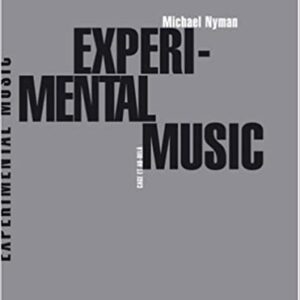
Michael NYMAN
“Experimental music”
New edition of this French translation (by Nathalie Gentili) fromt his very important book written in 1974.
25,00€
In stock

CD
Claudio ROCCHETTI & Klaus JANEK
“Reisenotizen – Aus Dem Land Der Mitte”
Klaus Janek plays processed doublebass. Claudio Rocchetti processes fieldrecording and feedbacks. This recording contains sounds by Li Zenghui, Yan Jun, Stephen Roach, Feng Hao, Liu Xinyu, Torturing Noise, Sin:Ned. Recorded during August 2011 In China, Hong Kong and Malaysia.
Original price was: 15,00€.5,00€Current price is: 5,00€.
In stock
2 CD + book
COMPILATION
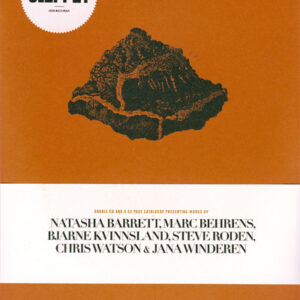
SLEPPET
’Natasha Barrett, Marc Behrens, Bjarne Kvinnsland, Steve Roden, Chris Watson and Jana Winderen. Six artists toured western Norway in april and may 2007, to experience and record its nature and rural culture. The itinerary included the small town of Sandane, the Jostedal glacier, Utvær - Norways westernmost island and the fjord city of Bergen. The works created out of the sonic input from this tour made out the components of Sleppet - a sound art exhibition curated by J¿rgen Larsson and presented by Grieg07, Lydgalleriet, Galleri 3.14 and Ultima. +3dB records is proud to present a series of works based on the materials from Sleppet. ’in my art I could not help but search for a way to express the wild music of the ocean’s roar, - but alas, in vain. I felt most deeply the impossibility of conveying that mighty chord in music. There was in that rushing and roaring something so infinite that it seemed presumptuous to dwell even for a moment on the idea of being able to reproduce it. Nonetheless I found some comfort in that it is the artist’s responsibility not to convey its material effect, but the reflection of the emotions it awakens; if this is done with genius then the impression can be equally divine despite the lack of the mass effect which is nature’s own.’ Edvard Grieg.’ label info
18,00€
Out of stock
book
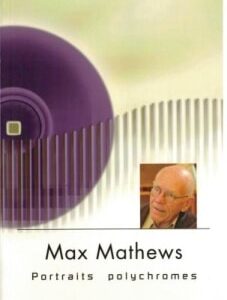
PORTRAITS POLYCHROMES 12
MAX MATHEWS
English version. Interviews with Max Mathews by Evelyne Gayou, Max Mathews and the digital age, by Jean-Claude Risset, Max Mathews at Ircam, and afterwards, by Gerald Bennett, Max and Ccrma, by Chris Chafe and John Chowning, Max’s importantce to field of electroacoustic muysic, by Jon Appleton, Letkrowsky’s Will ‘SF short story), by Max Mathews, Annnotated Catalog of the writing of Max Mathews, by Marc Battier. Annotated Catalog of the musical compositions, by Max Mathews.
9,00€
Out of stock
Out of stock

CD
Marcia BASSETT – Carlos GIFFONI
“Organized anatomy”
Collaborative release from No Fun creator Carlos Giffoni and Marcia Bassett of Hototogisu & Double Leopards. Edition of 300.
5,00€
In stock
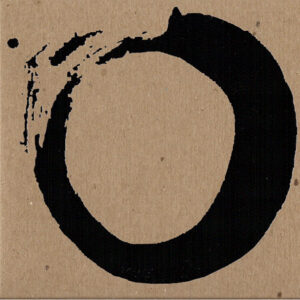
CD
REDGLAER
“American Masonry”
2007. Originally released as a 10” in 2006, and as a CD in 2007, by Anarchymoon Recordings. Recorded at Matthews Warehouse, Tulsa OK, 12 March 2006.
Redglaer is Bob Bellerues experiment in harsh textural environments, and he finds himself a dandy of a harsh one inside a huge concrete warehouse in Tulsa. American Masonry is the celebration of the spaces acoustics. Filling the booming structure with dark rumbles, antic squeedles and sheer blather, Bellerue fully engages the cavernous sonics, creating chittering walls of echoed overtones and hints of eternal combustion. He roars through the space like a giant robot, spluttering sparks and evil intent all the way.
CD version includes the same material as the 10” except longer edits, plus a CD-only 3rd track.
Original price was: 9,00€.5,00€Current price is: 5,00€.
In stock

book + DVD
Éric LA CASA-Jean-Luc GUIONNET
“Reflected waves (Ondes réfléchies)”
Bilingual edition (English / French). 21 x 25 cm (softcover). 60 pages (ill.), DVD video 108’.
First published in 2010 in a limited edition of 100 copies .
This publication documents the making of a sound mapping project of the city of Melbourne by musicians and artists Jean-Luc Guionnet and Eric La Casa.
In 2005, Jean-Luc Guionnet and Eric La Casa were invited by the Festival Liquid Architecture to lead a topographical and sound research on Melbourne, Australia. The artists sound mapped the city’s four cardinal points as well as the Central Business District to work with the landscape's reflected waves. The result was shown at West Space Gallery in the form of an audiovisual installation. This edition offers a complete description of the process as well as an analysis of the recordings and mixing protocols.
20,00€
In stock
LP
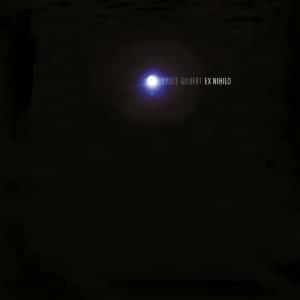
Bruce GILBERT
“Ex Nihilo”
All tracks written and recorded by Bruce Gilbert, mastered by Russell Haswell. Design: David Coppenhall, front image/ concept: Bruce Gilbert. Cut by Rashad Becker @ Dubplates and Mastering, Berlin.
Editions Mego’s 250th release continues its ongoing legacy of cross-pollinating and perverting various threads of radical 20th Century music whilst concocting and properling further ideas into the nebulous region where we currently reside.
With Ex Nihilo, Editions Mego resumes it’s enduring relationship with long term collaborator and stalwart representative of the labels aesthetic with a new release from London’s most charming deviant occupant, Mr Bruce Gilbert (formerly of Wire, Dome etc..).
Gilbert’s peculiar approach to sound over four decades has seen him engage with a wide variety of practice and performance always hovering amongst the grey area between his mind and the surrounding architecture. Ex Nihilo is another significant entry into Gilbert’s outre sound-book.
Inhabiting a murky zone between interference and trauma, Ex Nihilo is a daring and dark audio ride through a contemporary ketamine haze, one which haunts identifiable parameters whilst remaining too oblique to be truly quantified.
Change and Not teases discomfort, Black Mirrors embraces disorder, Nomad skirts the unsettling. Whilst never quite resolving its own logic Ex Nihilo invites the casual listener to privy a devastating peculiar and somewhat paranoid fantasy (reality?).
Another effortless Gilbert classic.
15,50€
Out of stock
book
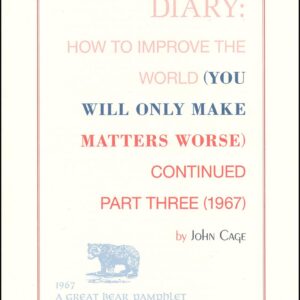
John CAGE
“Diary: How to Improve the World (You Will Only Make Matters Worse) Continued Part Three (1967)”
The third in Cage’s series of “Diary” essays (the other parts were published in different contexts), defined broadly as “collections of thoughts that develop out of working and being alive.” The text is formally and discursively roving: its margins, typeface, and color undergo continuous alteration by chance methods as Cage contemplates computers, Erik Satie; life on the road with Merce Cunningham; death; encounters with Mies van der Rohe, Duchamp, and Marshall McLuhan; books; cold remedies, and more. Above all, Diary seems to confront the problem of truly ecumenical thought. Dick Higgins, as the publisher’s original printing technician, meticulously engineered the variations in color, and as such, this may be the most outwardly beautiful of the Great Bears series.
Originally published by Something Else Press between 1965 and 1967, the Great Bear Pamphlet series was envisioned by founding editor Dick Higgins as a “poor man’s keys to the new art,” or a means of exposing the most vital work of the time to a mass-market audience, and vice versa. The series made uncompromisingly radical work maximally accessible, with slim, chapbook-like publications of a mostly uniform, pared down design. Taken together, the pamphlets constitute a firsthand survey of the sixties avant-garde (Higgins, Barbara Moore, and Emmett Williams all had a hand in the editorial process) that is both sweeping and utterly unique, transmitting a still-vibrant signal of expanded possibility in art, music, and poetry. Presented here in a facsimile edition, the Great Bears epitomize the utopian vision of Higgins and Something Else.
5 x 8 inches, 16 pages, Paperback, B&W.
7,50€
In stock
book
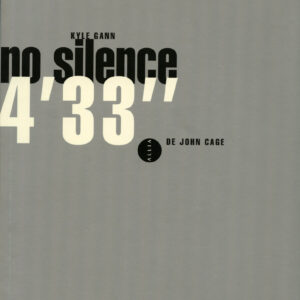
Kyle GANN
“No silence. 4’33” de John Cage”
French translation from this book around the work of John Cage published in 2010.
15,00€
In stock

book + 2 CD
Teddy HULTBERG
“Öyvind Fahlström on the Air – Manipulating the world”
Reissue ! Under the motto: “Manipulate the world - take care of the world”, Fahlström set up a variety of meeting-places in which participants were invited to take part in an interdiciplinary game of purposeful discovery. He introduced elements of popular culture into his work early on and made substantial contributions to a critical assessment of the “medialisation” of art. In this, the most extensive book about Öyvind Fahlström to date, Teddy Hultberg charts the artist’s predominant lines of creative development and shows how his cross-genre endeavours were based on a few central ideas: character forms, signs, games and life materials.
The present study focuses on two innovative and extraordinary compositions for radio: “Birds in Sweden” (1963) and “The Holy Torsten Nilsson” (1966). These works can be heard on the two accompanying CD records and are also included here in written form. Some unique and hitherto unpublished visual and textual material, the result of several years of research by Teddy Hultberg, is also included in the book. All text material in the book is written both in English and in Swedish.
48,00€
In stock
book
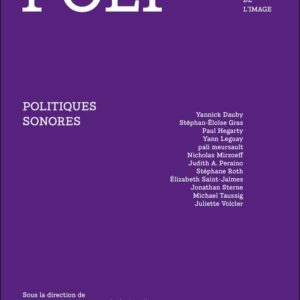
POLI N°11
“Politiques sonores”
Under the direction of Maxime Boidy, Pali Meursault et Fred Pailler, this magazine - all in French (18 x 24 cm) - was build around an interview with Jonathan Sterne on Sound Studies.
Texts by Textes de Maxime Boidy, Pali Meursault, Fred Pailler, Michael Taussig, Juliette Volcler, Paul Hegarty, Elizabeth Saint-James, Judith A. Peraino, Yannick Dauby, Nicholas Mirzoeff, Stéphan-Eloïse Gras, Yann Leguay, Jonathan Sterne.
12,00€
Out of stock
LP
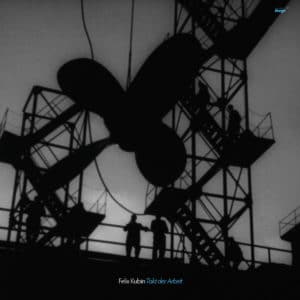
Felix KUBIN
“Takt der Arbeit”
Felix Kubin (org, electr, sampler). Mi osz P kala (vib, xyl, sampler, perc, effects). Magdalena Kordylasi ska (mar, perc, effects). Hubert Zemler (glsp, dr, perc). The pieces are soundtracks to educational and industrial 16mm films dealing with the subject of “work”. They were commissioned by NDR das neue werk (North German Radio).
Originally developed as a film score “Takt der Arbeit” is inspired by a handful of industrial and instructional films from the early 1960’s until the early 1990’s that portrait different forms of work. Felix Kubin is translating these historic documents into a musical poem of conceptual depth. “Takt der Arbeit” - the beat of work - is not only serving as a title but also as constructive element in this endeavour. Being hunted down by the ever accelerated pulse of our reality is an omnipresent issue in capitalist societies of the the Western world. Living in times of constant exhaustion, its not only our bodies that have been disciplined by and synchronized to the rhythms of working processes, but also our minds that rage in the tempo of our surroundings.
Following an almost analytical effort, Kubin and an ensemble of 3 percussionists are investigating the different qualities and intensities of time that are catalyzed in working processes. While picking up precise temporal and motoric motives of the films, condensing paces and excavating rhythmic patterns, the ensemble is mapping out an animist choreography, shifting from a time when labour was still relying on bodily efforts to a time when machines and ticking clocks seem to reign and model our perception. While Side A is dedicated to procedures that are still based on manual and mechanical movement, Side B is inspired by the digital age, marked by invisible processes and subcutaneous pulses that we internalize.
The result is a critical and poetic reflection on the rhythms of our daily life and yet another example of Felix Kubin’s skills as a composer, placing him in the field of academic contemporary music.
15,00€