
Out of stock
2 CD
Robert ASHLEY
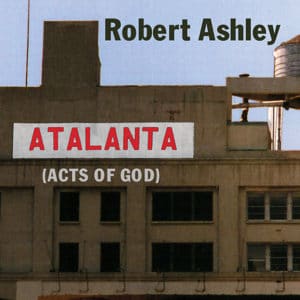
“Atalanta (Acts of God)”
Robert Ashley, solo voice; with Thomas Buckner, Carla Tato, Jacqueline Humbert, voices; “Blue” Gene Tyranny, keyboards; Paul Shorr, mixing and electronics. Recorded live at the Teatro Olimpico in Rome. Sung in English and Italian. “Ashley makes use of the story of “Atalanta” - a royal princess, discarded by her family, who was raised by the animals to become the fastest-running human, and who was later reclaimed by her father to marry her off for dynastic purposes-to present the character aspects of the "successful suitor." These three aspects of character are presented in the opera as anecdotes about three extraordinary men of our times: Max Ernst (surrealist painter), Willard Reynolds (shaman storyteller) and Bud Powell (composer pianist). The genius of these three men can be taken to represent three aspects of the opera itself: image, narrative and music. In the imaginary setting of Atalanta (Acts of God), one companion (singer) reminds her of her excellence (the “Odalisque” arias); another recommends to her the characteristics of excellence in men (the “Character Reference” arias); and a third amuses her with anecdotes, as if told to her by each of the three men (the “Anecdotes”).”
26,00€
Out of stock
2 CD
Robert ASHLEY
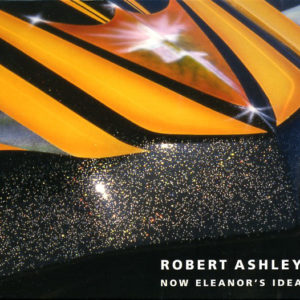
“Now Eleanor’s idea”
Music and libretto by Robert Ashley. With Joan La Barbara, Amy X Neuberg, Marghreta Cordero, Robert Ashley, Sam Ashley, Thomas Buckner and Jacqueline Humbert. Performance Orchestra mixed and processed by Tom Hamilton. 2CD + 132 pages booklet. Robert Ashley’s Now Eleanor’s idea is a quartet of short operas based on the notion of a sequence of events seen from four different points of view. At the same time, each opera is an allegory, like Bunyan’s Pilgrim’s Progress, for an individual’s self-realization within the context of a major “religion” found in the United States. “Improvement” takes its imagery and plot from Judaism, “Foreign Experiences” from Pentecostal Evangelism, “eL-Aficionado” from corporate mysticism, and “Now Eleanor’s Idea” from (Spanish) Catholicism. As “versions” of a single series of events, the four libretti involve a common group of characters. But the continuation of the characters’ roles in the different versions is not dramatized and so the four operas can be heard (and described) as separate projects. They may be produced separately, or together, as a single performance work. The operas share principal characters and vocal techniques (including the relationship of the voice to instrumental settings.) The operas differ, principally, in the language style of the librettos and in the relationship of the music to the presentation of the visual imagery.Robert Ashley tells us that the inspiration for these works came specifically from four sources: the work of the historian, Frances A. Yates (1900-1983), whose specialty of interests included the influence of Kabalistic mysticism on the birth of modernism and scientific philosophy in Italy in the 16th century (as a result of the expulsion of Jews from Spain during the Inquisition); the writings of Carlos Castaneda (and the arguments about him as a writer and about the intentions of his work); “Low Rider Magazine,” the fan-cult magazine of the “Low Rider” movement in the Southwestern United States; and finally, “corporate vocabulary”-what it sounds like and how it is used in popular publications, like “The New York Times,” “The Wall Street Journal” or “Fortune Magazine.”
30,00€
Out of stock
2 CD
Robert ASHLEY
“Celestial excursions”
“Celestial Excursions delves into the wild intermingling of reminiscence, regret, love, nightmare, old sayings, and songs on the radio-all seemingly to no purpose, except for the operatic end of relentless speed and precision in ensemble singing and the possible stage magic inherent in illusion, hallucination, and a physically changed state of the senses. The opera’s originality lies in a use of a new vocal technique Ashley has built over the last 20 years, which enables several stories to be heard at the same time. In an intricate vocal system, a principal voice is “chased” by other voices whose parts rotate in sequence in a given order. The result of this technique creates a complex jungle of voices, delivered with an extraordinary rhythmic intensity rarely heard in ensemble singing.
As for all of Ashley’s latest works, the orchestra music of Celestial Excursions was composed in the computer-synthesizer studio. All the voices and the orchestra (on multi-track tape or on disc) are processed again during the concert in order to match the sound of the opera to the performance space. And for this CD release, Ashley went back to the studio with live recordings to rework the piece, extending the orchestra in the final act.
“With the exception of a few condescending and silly movies, “old” people are one of the few “minority” groups basically unrecognized in the arts. Not that they care, but among the “marginalized,” old people are the most marginalized, because, obviously, unlike racial or ethnic groups or the poor, they have no future. Or rather, in the most important sense, their future will never change for the better.” Robert Ashley
As for all of Ashley’s latest works, the orchestra music of Celestial Excursions was composed in the computer-synthesizer studio. All the voices and the orchestra (on multi-track tape or on disc) are processed again during the concert in order to match the sound of the opera to the performance space. And for this CD release, Ashley went back to the studio with live recordings to rework the piece, extending the orchestra in the final act.
“With the exception of a few condescending and silly movies, “old” people are one of the few “minority” groups basically unrecognized in the arts. Not that they care, but among the “marginalized,” old people are the most marginalized, because, obviously, unlike racial or ethnic groups or the poor, they have no future. Or rather, in the most important sense, their future will never change for the better.” Robert Ashley
30,00€
Out of stock
2 CD
Robert ASHLEY
“Dust”
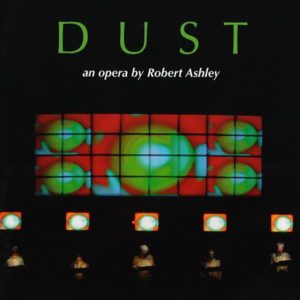
DUST, an opera by Robert Ashley and Yukihiro Yoshihara (video direction) whose imaginary setting is a street corner anywhere in the world, where those who live on the fringes of society gather to talk, to each other and to themselves, about life-changing Spotlight , missed opportunities, memory, loss and regret.
Five "street people" recount the memories and experiences of one of their group, a man who has lost his legs in some unnamed war. As part of the experience of losing his legs, he began a conversation with God, under the influence of the morphine he was given to ease his pain. Now he wishes that the conversation, which was interrupted when the morphine wore off, could be continued so that he could get the "secret word" that would stop all wars and suffering. (90 minutes)
Voices: Robert Ashley, Sam Ashley, Thomas Buckner, Jacqueline Humbert, Joan La Barbara; Musicians: "Blue" Gene Tyranny, synthesizer, Tom Hamilton, live mixing and sound processing; electronic orchestration by Robert Ashley, Tom Hamilton and "Blue" Gene Tyranny; sound effects for "Friends" composed by Tom Hamilton.
Five "street people" recount the memories and experiences of one of their group, a man who has lost his legs in some unnamed war. As part of the experience of losing his legs, he began a conversation with God, under the influence of the morphine he was given to ease his pain. Now he wishes that the conversation, which was interrupted when the morphine wore off, could be continued so that he could get the "secret word" that would stop all wars and suffering. (90 minutes)
Voices: Robert Ashley, Sam Ashley, Thomas Buckner, Jacqueline Humbert, Joan La Barbara; Musicians: "Blue" Gene Tyranny, synthesizer, Tom Hamilton, live mixing and sound processing; electronic orchestration by Robert Ashley, Tom Hamilton and "Blue" Gene Tyranny; sound effects for "Friends" composed by Tom Hamilton.
30,00€
In stock
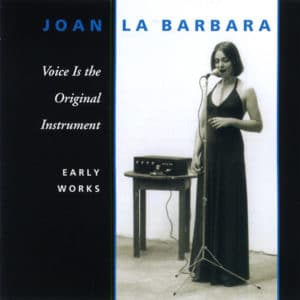
2 CD
Joan LA BARBARA
“Voice is the original instrument”
Collection of early works and her first vocal compositions, originally released on LPs in the 1970s and early 1980s on her own Wizard Records. “One of my earliest pieces, ‘Hear What I Feel’, was a self-exploratory, sensory-deprivation experimental work, designed to help me discover new sounds, delve into psychological aspects, as well as communicate with the audience on a pre-verbal level of awareness. After spending an hour in isolation with my eyes taped shut and not touching anything with my hands, I was led our into the performance space where my assistant had placed a variety of substances in six small glass dishes. As I touched the material, I tried to give an immediate vocal response to what I felt both emotionally and physically, without the benefit of visual information. I expected the shock of bringing a solitary state of mind into the heightened awareness of a performance situation to intensify my experience, and the poignancy of my ‘prepared’ state to affect the audience. The sounds are presented here in their raw state; it is truly an experimental work with no intentional musical implications or designs. ‘Voice Piece: One-Note Internal Resonance Investigation’ explores the color spectrum of a single pitch. Circular Song was inspired by the circular breathing technique of horn players. ‘Des Accords pour Teeny’, an exploration of multi-phonic technique or choral singing, was dedicated to Teeny Duchamp. In much of my early work I dealt with sound as a physical presence, sculpting it, building up layers in complex constructions, letting the flow of thought and the visualization of sonic gestures direct my studio art. Voice Is the Original Instrument was both a statement of purpose and a manifesto as, through various experiments and explorations, I tried to rediscover the basic function of the voice as the first means of expression as well as to release untapped sonic material. As I gave my classically trained voice its freedom, letting it direct me toward new places and ideas, I developed what was a unique vocabulary and used those sounds to score an orchestra of layered voices.”
23,50€
Out of stock

2 CD
Eliane RADIGUE
“Jetsun Mila”
Performed (Arp synthesizer) and recorded digitally by Eliane Radigue. “Jetsun Mila (1986) is inspired by the life of Milarepa, a great yogi and poet of Tibet who lived in the 11th Century. The story of his life as told to his closest disciple, Rechungpa, represents one of the most famous works within Tibetan culture. The Mila Kabum, or Namthar, has been translated into several Western languages, including English and French. Eliane Radigue’s 84-minute musical evocation of Milarepa’s life is in nine sections, with prelude, which correspond to major periods of the life of this famous yogi. The sections flow from one to the other without breaks, one giving birth naturally to the next.”
24,00€
Out of stock

2 CD
Eliane RADIGUE
“Songs of Milarepa”
Performed (Arp synthesizer) and recorded by Eliane Radigue; Robert Ashley, English voice; Lama Kunga Rinpoche, Tibetan voice. “2 CD of all 5 of Radigue’s songs in tribute to the Tibetan saint and poet from the eleventh century. Two of the tracks date from an 1983 LP (Radigue’s first release), two are previously unreleased and the final 62-minute track was previously issued as a sole CD in 1987. The material is performed by Radigue (synthesizer and recording), Robert Ashley (English voice) and Lama Kunga Rinpoche (Tibetan voice). Radigue was born in France and has studied under Pierre Shaeffer and Pierre Henry; her musical has an extremely organic and mystical electronics vibe, and has been previously documented on Phill Niblock’s XI label, as well as Metamkine and Lovely. Milarepa is a great saint and poet of Tibet who lived in the 11th Century. Through years dedicated to meditation and related practices in the solitude of the mountains, Milarepa achieved the highest attainable illumination and the mental power that enabled him to guide innumerable disciples. His ability to present complex teachings in a simple, lucid style is astonishing. He had a fine voice and loved to sing. When his patrons and disciples made a request or asked him a question, he answered in spontaneously composed free-flowing poems or lyric songs. It is said that he composed 100,000 songs to communicate his ideas in his teachings and conversations.”
24,00€
In stock
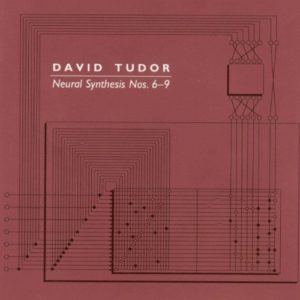
2 CD
David TUDOR
“Neural synthesis N° 6-9”
Performed by David Tudor; produced and recorded by David Tudor and John D.S. Adams. Binaural and stereo mixes on 2 CDs. This recording combines the art of music, the engineering of electronics, and the inspiration of biology. In it, David Tudor orchestrates electronic sound in ways analogous to our biological bodies’ orchestration of consciousness. The performance originates from a neural-network synthesizer conceived and built especially for Tudor. He surrounds this synthesizer with his own unique collection of electronic devices, and in the recording on this CD made for headphone playback, he uses a new binaural technique for translating sound into out-of-head localizations in which sound seems to originate from specific, changing points within a space around the listener.
23,50€
Out of stock
2 CD
Alvin LUCIER
“Still and moving lines of silence in families of hyperbolas”
2 CD release of of a four-part work, initiated in 1972 and recorded as presented here in 1983-4 and 2001. This reissues two long-out-of-print LPs on Lovely, with four added parts (the strings) released for the first time. A series of mostly solo instrument works for the likes of: clarinet, marimba, viola, voice, xylophone, violin, flute, glockenspiel, cello, horn, vibraphone. Performed by: Thomas Ridenour, William Winant, Dan Panner, Rebecca Armstrong, Conrad Harris, Susan Palma, Gregory Hesslink, James de Corsey. An absolute masterpiece of “interference sound”.
23,50€
Out of stock
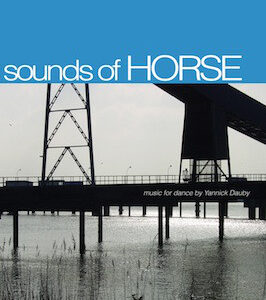
2 CD
Yannick DAUBY
“Sounds of horse”
Publication by Atelier Hui-Kan and Horse Dance Company. “Since 2008, French sound artist Yannick Dauby is collaborating with Horse, a taiwanese male-only contemporary dance company. During these years, he created the soundtracks for the following performances : Bones (2008, National Experimental Theater, Taipei). Growing Up (2009, Theater of Taiwan University of the Arts, Taipei). I (2010, National Experimental Theater, Taipei and Theater in Tainan). Faceless by Chou Shu-Y (2011, National Experimental Theater, Taipei). The sound material used for these projects is quite unusual for dancers and it became one of the specificity of the shows of HORSE : recordings of animal voices, urban soundscapes, industrial textures, electroacoustic abstractions… sounds of HORSE is a glamorous publication documenting this collaboration. Its two CD contains more than two hours of sound works, organized and remastered for a domestic listening, and a double-folded booklet with high-quality photography of the dancers with texts by choreographers and dancers Chen Wu-Kang and Chou Shu-Yi, and Yannick Dauby. This double-CD has been published in collaboration with HORSE and Atelier Hui-Kan”.
14,00€
Out of stock
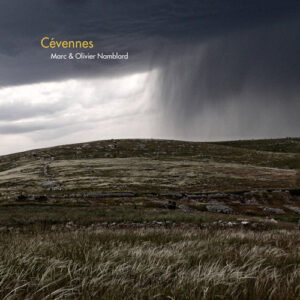
2 CD
Marc & Olivier NAMBLARD
“Cévennes”
Marc & Olivier Namblard, audio-naturalists and listening wanderers, examining from childhood this contrasted and elusive landscape, situated in the southeast of the Massif Central, called “Cévennes”.
Patience, exploration and familiarity with the natural environment have enabled them to create a body of work of field recordings that are of the highest depth and quality. The best from amongst them have been assembled on these two disks, as an homage to the landscape of Cévennes and to the sounds of its fauna. Amongst the subjects presented here: singing insects of the Causses, vultures feeding, passerine songs, underground streams, barking stags, rumbling storms, amphibian choruses and sheep bells.
Two CDs and 28 page booklet with colour illustrations included.
Published by Kalerne Editions and Atelier Hui-Kan, in Taiwan, Autumn 2013.
Recording, montage, mixing : Marc and Olivier Namblard
Production, mastering : Yannick Dauby
Photographies : Marc et Olivier Namblard, Martine Schnoering
Design : Atelier Hui-Kan
English translation : Patrick McGinley
21,00€
Out of stock
2 CD
NURSE WITH WOUND
“An awkward pause”
“Originally released in 1999, “An Awkward Pause” adds David Tibet, Christoph Heemann, Colin Potter and Petr Vastl (Aranos) to the mix, resulting in an extremely unique sounding and dare we say, rocking release. This two CD set is released in a deluxe 6 panel digifile and adds a second disc of all previously unreleased tracks.”
15,00€
Out of stock

2 CD
Bernard PARMEGIANI
“Matières premières”
Bernard Parmegiani (1927 - 2013).
CD1 with three previously unreleased pieces, “L’écho du miroir” (1980-2008), “Adagio” (1980), “Un arbre… c’était le mien!” (1987).
CD2 with a large number of tapes of preparatory work for future musical compositions.
CD1 with three previously unreleased pieces, “L’écho du miroir” (1980-2008), “Adagio” (1980), “Un arbre… c’était le mien!” (1987).
CD2 with a large number of tapes of preparatory work for future musical compositions.
23,50€
Out of stock

2 CD
Bernard PARMEGIANI
“Violostries”
“Violostries” (1964), “Pour en finir avec le pouvoir d’Orphée” (1972), “Dedans-Dehors” (1977), “Rouge-Mort” (1987), “Exercisme 3” (1986), “Le Présent Composé” (1991).
15,00€
Out of stock
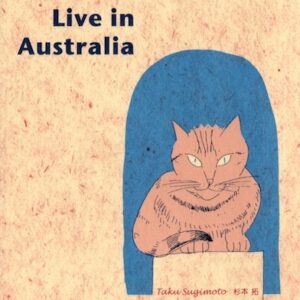
2 CD
Taku SUGIMOTO
“Live in Australia”
“Taku Sugimoto is an extremely restrained guitarist who produces very few sounds in performance, allowing silence to be the controlling force. As an improviser and composer, he’s garnered international acclaim, and also provoked strong reactions, both positive and negative. This two-CD set documents Sugimoto’s live performances, in Australia in September 2003, of two of his own compositions (one per CD): "Dot (73)" and "Music for Amplified Guitar." Environmental sounds-listeners’ coughs, footsteps, and chair scraping, as well as noises from outside-make their way clearly and naturally into Sugimoto’s live concerts. Occasionally there’s a sound from his guitar; it’s as if he were collaborating with the sounds around him. This is very much the case on Live in Australia, and particularly on Disc 1. As the performance began, so did a rain shower, which grew more intense, filling the space with a sound like white noise. Over this background noise, Sugimoto quietly plucked a handful of short sounds. The set includes a long (1,000+-word) essay by Sugimoto that sheds new light on his musical ideas.” All composed by Taku Sugimoto. Taku Sugimoto: guitar. Packaged in a cardboard jacket. Mastered by Taku Unami. Drawing by Taku Sugimoto. Design by che chat. Includes liner notes by Taku Sugimoto in Japanese, and English.
16,00€
Out of stock
2 CD
COMPILATION
CULTURES ÉLECTRONIQUES 13
1999. Elzbieta Sikora “Aquamarina”, “La tête d’Orphée”, Patrick Kosk “Ice bice”, Jacky Merit “Emphase”, Kent Olofsson “Il liuto d’Orfeo”, Frédéric Kahn “Les fleurs, ces bouquets d’agonie”, Frank Corcoran “Sweeney’s vision”, Patrick Kosk “Nebula prospekt”, Tereasa Rampazzi “Atmen noch”, John Melby “Chor der Steine”.
15,00€
Out of stock
2 CD
COMPILATION
CULTURES ÉLECTRONIQUES 12
Joseph Hyde “Rhiannon”, Philippe Auclair “Spirale”, Akemi Ishijima “Solark”, Karl Friedrich Gerber “Beautiful numbers”, Jean Piché “Préceptes pour Attica”, Eduardo Reck Miranda “Electroacoustic samba II & III”, Michael Jude Bergeman “Hershe tube rundown”, William Brunson “Inside Pandora’s box”, Matt Ingalls “Silent cacophony”, Henri Demilecamps “Manège blues”, Ulrich Suesse “Klangbild AE 7”, Yves Coffy “Ys”, Philippe Blanchard “Casimir”.
15,00€
In stock
2 CD
COMPILATION
CULTURES ÉLECTRONIQUES 10 #Prix Magisterium et quadrivium Bourges 1997
Ludger Brümmer “Phrenos”, Frances White “Winter Aconites”, Mathew Adkins “Pagan Circus”, Elio Martusciello “Proiezioni”, Andrew Lewis “Ascent”, Eduardo Kusnir “Juegos I”, Joseph L. Anderson “ChAnGE’S MUSIC”, Joseba Torre “Mas libre y mas cautivo”, YeeOn Lo “Portrait of timbre as a wild wooddove”, Roger Doyle “Spirit Levels”.
15,00€
Out of stock
2 CD
COMPILATION
CULTURES ÉLECTRONIQUES 9 – Lauréats Bourges 1996
Francesco Boschetto ’Trasumanar’ pour violon et bande, Erik Mikaël Karlsson ’Interiors and Interplays’, Luigi Ceccarelli ’Birds for bass clarinet and magnetic tape’ pour clarinette basse et bande, Daniel Zimbaldo ’Cartas desde el real hospital de lunaticos’ pour soprano, ensemble instrumental et bande, Mark Wingate ’Klang, Kar und Melodie’, Mario Verandi ’Figuras Flamencas’, Lothar Voigtlaender ’Atemlos’, John Christopher Nelson ’They Wash their Ambassadors in Citrus and Fennel’ pour voix et bande, Jonty Harrison ’Sorties’, Jukka Ruohomaki ’Scratches’, Alain Michon ’Lutte au-delà’, Garnet Willis ’Clusterflux’.
15,00€
In stock
2 CD
COMPILATION
CULTURES ÉLECTRONIQUES 8
Eduardo Polonio ’ChC’, René Uylenhoet ’Wedge’, Christian Calon ’Les corps éblouis’, Joseph Hyde ’Songlines’, Ake Parmerud ’Kren’, Pablo Cetta ’ Que me hiciste mal’, Stephen Montague ’String Quartet n¡1’ pour quatuor à cordes et bande, John Palmer ’Beyond the Bridge’, Elio Martusciello ’Limite inferiore sinistro’ + Patrick Ascione ’Métamorphose d’un jaune citron’, Ivan Patachich ’Metamorfosis per marimbafono e magnetofon’.
15,00€
Out of stock
2 CD
COMPILATION
CULTURES ÉLECTRONIQUES 7
1993. Erik Mikael Karlsson “La disparition de l’azur”, Shuya Xu “Taiyi II” pour flûte et bande, Bernard Fort “L’impatience des limites” et “12 Haïkus”, Werner Cee “Droptrap”, Erik Mikael Karlsson/Jens Hedman “Anchorings/Arrows” + Marcelle Deschênes “Moll” (1978).
15,00€
In stock
2 CD
COMPILATION
CULTURES ÉLECTRONIQUES 6 – Lauréats
Justice Olsson: “Up!”, Cort Lippe: “Music for Harp and Tape” for harp and tape, David Arzouman: “Precipitation”, Alicyn Warren: “Longing for the Light”, Åke Parmerud: “Alias”, Roderik De Man: “Chordis Canam” for harpsichord and tape, Andrew Lewis: “Time and Fire”, Mike Vaughan: “Ensphered”for soprano saxophone and tape, Jon Appleton: “Stereopticon” (1973), Georg Katzer: “Rondo” (1976),
15,00€
In stock
2 CD
COMPILATION
CULTURES ÉLECTRONIQUES 5
Competition from 1990. With Kjell Johnsen: “Mura-Iki” for flute and tape, Paul Dolden: “Below the Walls of Jericho”, Robert Rowe: “Flood Gate” pour violon, piano et ordinateur interactif, Frances White: “Valdrada”, Carmelo Saitta: “La Maga o el angel de la Noche”, Frances White: “Still Life with piano” pour piano et bande, Gabriel Valverde: “Cumulos” + four pieces from the first competition, Eugeniusz Rudnik: “Mobile” (1973), Zohtan Pongracz: “Mariphonia” (1974), Jose Vicente Asuar: “Guararia Repano” (1975), Eduardo Kusnir: “La Panaderia” (1975).
15,00€
In stock
2 CD
COMPILATION
CULTURES ÉLECTRONIQUES 4
Leo Kupper: “Litanea”, Francisco Kropfl: “Orillas”, Richard Karpen: “Il Nome” pour soprano et bande, Gilles Gobeil: “Voix blanche” pour ondes Martenot et bande, Julio D’Escrivan: “Salto Mortal”, Christian Calon: “Minuit”, Takayuki Rai: “Four Inventions for piano and a signal processing computer”, Alistair MacDonald / Nicholas Virgo: “Busk”, Andrew Lewis: “Arrivals”.
15,00€
In stock
2 CD
COMPILATION
CULTURES ÉLECTRONIQUES 3 – Lauréats
SPECIAL CLEARANCE PRICES. Paul Dolden: ‘In the natural Doorway I crouch’, Robert Normandeau: ’Rumeurs, Place de Ransbeck’, Horacio Vaggione: ’Tar’ pour clarinette basse et bande, James Aikman / Armando Tranquilino: ’Tragoida / Komoidia’, Vivian Adelberg Rudow: ‘With Love’ pour violoncelle et bande, Ake Parmerud: ’Repulse’, Gabriel Poulard: ’La Mémoire des Pierres’, Ake Parmerud: ’Yan’ pour percussions et bande, Ricardo Mandolini: ’Microrreflexiones’, Lothar Voigtlaender: ’Maikfer Flieg’.
15,00€
Out of stock
2 CD
Ragnar JOHNSON assisted by Jessica MAYER
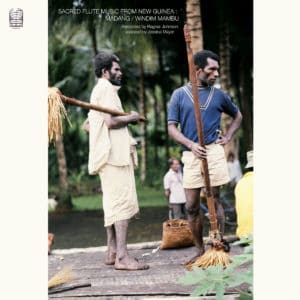
“Sacred Flute Music from New Guinea: Madang – Windim Mambu”
Recorded by Ragnar Johnson & assisted by Jessica Mayer, Papua New Guinea, April-August 1976.
Tape to digital transfer by Dave Hunt at Dave Hunt Audio, London 0715.
Mastered & cut by Rashad Becker at Dubplates & Mastering, Berlin 0815.
Notes and photographs by Ragnar Johnson & Jessica Mayer.
Thanks to Dave Hunt for transferring the original magnetic tape recordings onto digital media and to Stephen O’Malley, David Toop and Evan Parker for assistance.
Sacred flutes are blown (“Windim Mambu”) to make the cries of spirits by adult men in the Madang region of Papua New Guinea. Pairs of long bamboo male and female flutes are played for ceremonies in the coastal villages near the Ramu River. The Ravoi Flutes from Bak are accompanied by two garamut carved wooden slit gongs. The Waudang Flutes from Manam Island are accompanied by two large and two small slit gongs and six singers. The Jarvan Flutes from Awar are accompanied by a shell rattle. The Mo-mo resonating tubes were recorded in the Finisterre Range. There are the cries of six different pairs of flutes and one pair of conch shells from the Ramu coast, two pairs of Waudang Flutes from Manam Island with singing and Mo-mo resonating tubes from the Finisterre Range. Occasional percussion is provided by wooden slit gongs and hand drums.
These recordings were made in 1976.
Originally released on LP 1977 as !Quartz 001 & 1979 as !Quartz 002.
Publications by David Toop with the assistance of Sue Steward, Evan Parker, Robert Wyatt and Alfreda Benge.
Re-released on CD 1999 as Rounder Records 5154 & 5155.
Tape to digital transfer by Dave Hunt at Dave Hunt Audio, London 0715.
Mastered & cut by Rashad Becker at Dubplates & Mastering, Berlin 0815.
Notes and photographs by Ragnar Johnson & Jessica Mayer.
Thanks to Dave Hunt for transferring the original magnetic tape recordings onto digital media and to Stephen O’Malley, David Toop and Evan Parker for assistance.
Sacred flutes are blown (“Windim Mambu”) to make the cries of spirits by adult men in the Madang region of Papua New Guinea. Pairs of long bamboo male and female flutes are played for ceremonies in the coastal villages near the Ramu River. The Ravoi Flutes from Bak are accompanied by two garamut carved wooden slit gongs. The Waudang Flutes from Manam Island are accompanied by two large and two small slit gongs and six singers. The Jarvan Flutes from Awar are accompanied by a shell rattle. The Mo-mo resonating tubes were recorded in the Finisterre Range. There are the cries of six different pairs of flutes and one pair of conch shells from the Ramu coast, two pairs of Waudang Flutes from Manam Island with singing and Mo-mo resonating tubes from the Finisterre Range. Occasional percussion is provided by wooden slit gongs and hand drums.
These recordings were made in 1976.
Originally released on LP 1977 as !Quartz 001 & 1979 as !Quartz 002.
Publications by David Toop with the assistance of Sue Steward, Evan Parker, Robert Wyatt and Alfreda Benge.
Re-released on CD 1999 as Rounder Records 5154 & 5155.
18,00€
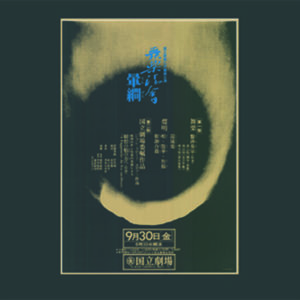
2 CD
Jean-Claude ELOY
“A l’approche du feu méditant…”
“Approaching the meditative flame…” (1983).
Theater Music for a sound and visual ceremonial. A tribute to the goddess of the light, the sun, and the stars.
For 27 instrumentalists from the Gagaku Orchestra (divided in three separate ensembles), two choruses of Buddhist monk singers (Shômyo singing traditionnal school - Tendai and Shingon sects - divided in four separated ensembles, with four monk singer soloist voices), six percussionists, five Bugaku dancers.
Extracts of this piece were published by Harmonia Mundi on a double vinyl in 1985.
18,00€
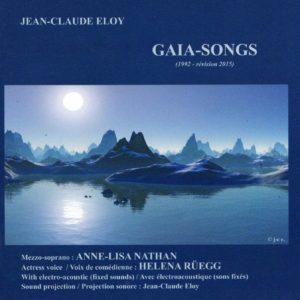
2 CD
Jean-Claude ELOY
“Gaia-Songs”
“Gaia-Songs” (1992 - revision 2015). Songs for the other half of the sky n° V - VI. For a soprano (or mezzo-soprano) solo and an actress voice (Sprechgesang technique) with electro-acoustic (fixed sounds).
Anne-Lisa Nathan, mezzo-soprano. Helena Rüegg, actress voice.
“First there’s this relation between sung voices and spoken voices with regard to the electro-acoustic parts. The sung voice is quite often separated from the electro-acoustical parts accompanying it. They may sometimes overlap each other but rather briefly. Those parts often highlight octave ratios, fifth ratios, thirdratios, etc. Hence more harmonious and consonant acoustic ratios. By contrast the spoken voice fully covers the electro-acoustic parts dedicated to it and made out of more complex material. Hence more dissonant acoustic ratios turned towards noises spectrums.” JC Eloy from the liner notes
18,00€

2 CD
Jean-Claude ELOY
“Le minuit de la foi”
“Le minuit de la foi” (“The midnight of the faith”) (2014) for electronic and concrete sounds, around selected sentences by Edith Stein recorded by German actress Gisela Claudius. New work from Jean-Claude Eloy, a long piece under the power of expanded sounds and sacred words.
“Le minuit de la foi” is a double album, each CD of which forms a stand-alone entity. Each CD can therefore be listened to separetly. However, you do need to liSten to the full album for it to become meaningful through its complementary balances, and to grasp its very essence.
18,00€

2 CD
Jean-Claude ELOY
“Electro-Anâhata”
“Electro-Anâhata” (1986-1994). Fully electro-acoustic version of Anâhata realized on the composer’s personal computer from the original electro-acoustic recordings of this work.
Electronic music studios where the original Anâhata was produced (1984-86) : Studio of the Sweelinck Conservatory of Music, Amsterdam (1984 and 1986): the entire production (pre-recorded material processing, new material generation, premixing) and all final mixing processes. Tokyo-Gakuso studio, Tokyo (1983): for the Shô and Ô-Shô (traditional mouth organs from Japan) sampling with Mayumi Miyata. Conny’s Studio, Neuenkirchen, near Cologne (1984) with Asian Sound and Michael W. Ranta: metal percussion instrument sampling, including Bonshôs (Buddhist temple bells from Japan) sampling. INA-GRM, Paris (1985): pre-recorded material processing. Studio ART, Geneva (1985): pre-recorded material processing and pre-mixing. Studio of Technische Universität (TU), Berlin (1985-86): pre-recorded material processing, new material production, pre-mixing.
CD 1 Metal metamorphoses. Five electro-acoustic works of a contemplative nature. Electro-acoustic parts alone of Âhata-Anâhata (struck sound - unstruck sound) including a new unreleased part.
CD 2 The Bird-Mirror in the Magic Forest (a tribute to Paul Klee). Electro-acoustic parts alone of Akshara-Kshara (unchanging-changing). “The Reed, the Sea and the Stars” (1986-1994). Electro-acoustic parts alone of Nimîlana-Unmîlana (that which awakens - that which slumbers) among which a new unreleased part.
Jean-Claude Eloy: “In the past composers would often arrange or adapt their works themselves, often for practical or economic reasons. Let us take a look at the most prestigious examples… Take Wagner: Prelude and Love Death (Tristan and Isolde) is played two different ways. Sometimes the orchestral part alone is played as a concert piece. Other times the voice solo part is added as it is in the original opera (which then becomes the magnificent Liebestod). Such examples could be repeated endlessly among the greatest composers.
In the early 1990s I faced a challenging situation: the Japanese Gagaku musicians who had performed my work Anâhata for the first time in 1986 (for the Sigma Festival of Bordeaux and the Autumn Festival in Paris), and had performed it again in 1990 (for the Donaueschingen Festival) were not able to find time in their schedule to accept an important invitation to the Warsaw Autumn Festival. Only the two Buddhist monk singers were able to fit it in.
Before that and to complete the Anâhata project and its electro-acoustic parts I had to travel across part of Europe and spend two whole years commuting between Paris and Amsterdam several times, later between Paris and Berlin, then between Paris and Geneva… even within Paris, thanks to my friends from the GRM who had kindly let me use their studio for several weeks during night hours. Those were very precious nights for me.
During those two years I would always carry boxes of tapes and Betamax or U-Matic cassettes with two PCM Sony and two Betamax cassette decks that I had purchased a little earlier. For the first time I was then able to arrange digital recording sequences and carry out several mixing, recording and reading processes without compromising signal quality. I also had to carry boxes of multitrack bands of all types: the Amsterdam studio was equipped with a two-speed 16-track Studer, the Geneva studio with a three-speed 24- track Otari; the Berlin studio with two 8-track Telefunkens including a variable-speed one.”
During those two years I would always carry boxes of tapes and Betamax or U-Matic cassettes with two PCM Sony and two Betamax cassette decks that I had purchased a little earlier. For the first time I was then able to arrange digital recording sequences and carry out several mixing, recording and reading processes without compromising signal quality. I also had to carry boxes of multitrack bands of all types: the Amsterdam studio was equipped with a two-speed 16-track Studer, the Geneva studio with a three-speed 24- track Otari; the Berlin studio with two 8-track Telefunkens including a variable-speed one.”
18,00€

2 CD
Jean-Claude ELOY
“Chants pour l’autre moitié du ciel : III – Erkos. IV – Galaxies.”
Songs for the other half of the sky. With “Erkos” (1990-91) and “Galaxies” (1986-1996). Performed by Junko Ueda (satsuma biwa and voice) and Jean-Claude Eloy (sound projection).
Erkos is a word from the Indo-European language and means song, praise. It is close to the Sanskrit word Arkas (hymn, chant, radiance) and to the Tokharien term Yarke (reverence, homage). The texts consist of extracts from the Devî-Upanishad and Devî-Mâhâtmya writings, in Sanskrit. In those texts, an homage is paid to the Goddess who, in Indian philosophy, is considered as the mother of all energies. For this work, I have been inspired by Junko Ueda, a particularly gifted young musician whom I met in Japan in 1987, mastering at the same time the traditional technics : those from Japan (Shômyô and Satsuma-Biwa), those of the other countries of Asia (Gamelan), as well as the western technics (piano, composition). It was possible, with a performer of such a vast background, to translate these ancient and original techniques into a free contemporary creation without distorting their original nature. Erkos was commissioned by the Cologne Westdeutscher Rundfunk (WDR), at the invitation of Karlheinz Stockhausen, in collaboration with the Institut Français de Cologne and was produced in its entirety in 1990-91 at the WDR Electronic Studio.
The electroacoustic materials are essentially concrete in nature and have been drawn from three sources Junko Ueda’s voice, Satsuma Biwa (plucked string instrument with plectrum), Unban (metallic plate with complex resonance). Consequently, the recording studio is not used here as a generator but as a “multiplier-transformer” to the soloist, who is the real origin of all sounds. Symbolically, she is the source, the Goddess-mother as written about in the Sanskrit texts I have used here.
“Galaxies” is an electroacoustic work composed of two large groups of elements, contrasting with each other in function, construction, etc. but still unified as they are born from the same sources of timbre and treatment : the Japanese Shô (traditionnal mouth organ) from which all of the work’s sound material is taken, to which are added an ensemble of five Bonshô’s (temple bells from Japan and Korea).
18,00€

2 CD
Jean-Claude ELOY
“Shânti (1972-73)”
“Shânti” (1972-73) for electronic and concrete sounds. Electronic music studio, WDR, Cologne, Germany, 1972-73. Digitalized and revised version from 2001.
“The term “meditation music” triggered many conflicting comments including
positive ones (“... let us say that Shânti belongs to those very rare works that change you after listening to them. You are not exactly the same before and after.” - Gérard Mannoni, Le Quotidien de Paris, 1974). Others, wondering at the strong sound presence of the piece, consider such aspect as hardly helpful to their own meditation... Let us be clear: “what meditates” here (”that” who meditates) is the composer. He is the one who takes you on his journey and guides you through his work like in a classic or romantic symphony. As a listener you are invited to follow “his” meditation... The composition is the meditation.”
positive ones (“... let us say that Shânti belongs to those very rare works that change you after listening to them. You are not exactly the same before and after.” - Gérard Mannoni, Le Quotidien de Paris, 1974). Others, wondering at the strong sound presence of the piece, consider such aspect as hardly helpful to their own meditation... Let us be clear: “what meditates” here (”that” who meditates) is the composer. He is the one who takes you on his journey and guides you through his work like in a classic or romantic symphony. As a listener you are invited to follow “his” meditation... The composition is the meditation.”
18,00€