
Out of stock
LP
ORION MUSIC WORKSHOP
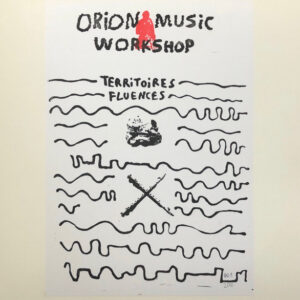
“Territoires Fluences”
3rd album of the Orion Music Workshop, closing a trilogy started with Atmosôn (2021) and Mâlemort (2023). A sonic adventure between the imaginary folklore, post-industrial and fourth world / free jazz.
“Previously in Orion Music Workshop : the second adventure of our stellar hero, beautifully named Mâlemort, took off and cemented a cycle in three acts. This second step was a tour de force, with the compositions gaining in thickness and the subject matter becoming more refined, while retaining its industrial and bucolic DNA. Today, acknowledgements, here he go again. Orion’s really reaching for the stars as the albums come out, completely independent of an industry that wouldn't know where to put our protagonist, once again. At the start of a simple formula, this arte-povera concept which saw an ancestral flute player locked in at night in the IRCAM studios hacking the system, swapping keys, ignoring other ways than towards paranormal electronic music, primitive at heart but rising like hallucinogenic shrooms, while transcending the listener, tickling the senses and putting in a trance. Today, this third act is meant to be definitive, like a condensed version of the best of itself. Territoires Fluences, where previous attempts are perfected in your ears, where everything fits together enchantingly, where everything seems obvious. The Facteur Cheval has become the director of the magic cave, the typical Tom Val elements are present but more beautiful, more embodied. If you've enjoyed the atmospherics created by the man who creates moods with three bits of string, you'll fall in love for his latest mutation. It's warbling, it's scratchy, it sounds right. Above all, it's a moving album, with something soul-warming lurking behind the sonic squiggles. It's good to see the goblin grow up, leaving the lo-fi skirts behind and move into the league of the big… spirits who meet in Brocéliande at night to dance like Saint Guy. Special mention must go to La Théorie des événements, where the art of collaboration shines through, Jeanne Gorisse's double bass joyfully copulating with the raw maelstrom of this unique Workshop. This music, open to the other, to musicians and to the craziest or most radical poets, promises to be fascinating for a long time to come. The endless spiral?!”
26,00€
Out of stock
LP
SMEGMA with L’AUTOPSIE A RÉVÉLÉ QUE LA MORT ÉTAIT DUE À L’AUTOPSIE
“Transmissions Des Fluides”
"Second Trick : name-dropping.
Always useful and often expected, name-dropping provides referential anchors to the reader. It's like a hug. She/he no longer feels alone in the world. Others, like them, are imbued with influences that they sometines have to keep quiet about to their skeptical surroundigs.
In our case, given the wicked monster generated, there is no need to seek external references for support, they're included in the package !
Ex : Smegma's historical wing incorporates the generation that nursed it. Alongside the "elders" like Jackie "Oblivia" Stewart and Eric "Ju Suk" Steward (Smegma, Tenses, The Rodney Forest...), Dennis "Duck" Mehaffey ( Airway, Doo-Dooettes, Human Hands, The Dream Syndicate...), the late Steve "Ace Farren Ford" Rietta (Ace & Dude, The Child Molester, The Mystery Band...), Amy DeWolfe (Smegma), Bradford "D.K." Hostetler (Smegma), the younger generation brings its share of fluids with Mars "Pharoah" Ford, Steve's son, and the indispensable L.A. saturator John Wiese (Sissy Spacek).
On the other side of the ring, the boy band L'AARQLMEDAL'A is complete of its four youthful fiftyish : The Argentine Alan "Anla" Courtis (Reynols, Origami Republika...) and the French triangle Franq de Quengo (Mahayoni Mudra, Dragibus, French Doctors...) Nicolas "Aka Bondage" Marmin (Osaka Bondage, French Doctors, Oleo Strut....), Sebastien "Ogrob" Borgo (Sun Plexus, Ich Bin, Micro_Penis...).
Yes, you can call it a gang-band ! "
Extract from Samon TAKAHASHI's Pynchonesque liner notes
Smegma : Ace Farren Ford, Mars Ford, Amy DeWolfe, D.K., Dennis Duck, John Wiese, Oblivia, Ju Suk Reet Meat.
L'AARQLMEDAL'A : Aka_Bondage, Alan Courtis, Frank de Quengo, Ogrob
24,50€
In stock
LP
Ravi SHARDJA
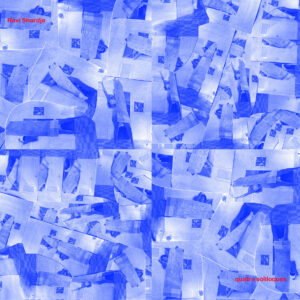
“Quatre soliloques”
The setup is simple and decisive: a similar electronic device for each instrument played in the soliloquies, for a direct and introspective music that follows my psychic states. In this case, a lap steel guitar, an electric sanza, and a bass guitar. Three instruments for four soliloquies, as there is no numerical logic here. The bass guitar plays twice on side S, and that's how it is. Speech is banned. 'Four soliloquies' without voice or words: the title may seem paradoxical, I admit. However, it took no less than four instrumental attempts to try and translate the thread of my emotions and intellect.
R.S
Ravi Shardja is a French composer and an experimental musician. He is a founding member of the free-form music collective GOL which released iconic LP with Charlemagne Palestine, Brunhild Ferrari, Dave Nuss, Mik Quantius, Charles Hayward, Iancu Dumitrescu, Ghédalia Tazartès...
Ravi is also part of the experimental new wave duo Couloir Gang.
Since 2018, he participes to the French industrial project Art et Technique.
22,50€
In stock
LP
Alain PIERRE
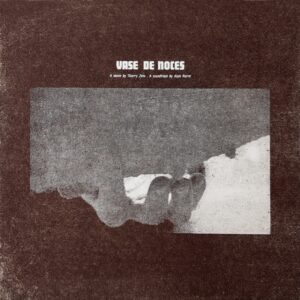
“Vase de Noces”
The first ever publication of the original soundtrack composed by Alain Pierre for the Belgian cult film Vase de noces, directed by Thierry Zeno in 1974. Limited edition of 400 copies with screen-printed sleeve. Vase de Noces wasn't released in Belgium. The only distribution Thierry's films might have accessed here was the "Swedish distribution," a code for distribution around adult movie theaters. Films by major directors such as Bergman or Polanski were released this way. In memory of Alain Pierre (1948-2024).
"Vase de noces was made with very little money. Thierry used 16mm reversal film, utilizing the ends of reels he obtained from friends who worked as TV cameramen. Similarly, I salvaged magnetic tape from my workplace, the Équipe sound studio. Film professionals looked down on him because he filmed everything on his own, without relying on technicians. The remarks became even more disparaging when they saw the quality of the result. Thierry shot this film gradually, just getting by, progressing intermittently, but he had a precise idea and memory of the framing and sequences. He really did a great job, as if he had the entire edit in mind from the start. The first shot had to be the right one. He showed me the film sequence by sequence when the editing was over. This was how he worked, and that's why it took him so long getting the right splices, the right light, etc. Thierry handled the framing and the lighting himself. His black-and-white work is unique; he operated within constraints, which is how creativity often flourishes. Thierry had a story in mind, and in the end, he achieved exactly what he wanted. The performance of actor Dominique Garny, for instance, and his aptitude -- it helped a lot. They spent hours together in the cold, in the mud. As the shooting progressed, I suggested samples of sounds obtained from my machine. This was what he wanted: bottle sounds. There isn't a single direct sound in the film -- it's all dubbed. I never distinguished music from the rest of the soundtrack. The idea of a 'sound object' never left me, and I've always kept that direction in mind when composing. One day, Thierry stopped by while I was working on a documentary about Saint Augustine, for which I was using a tune by Monteverdi. He told me about a certain sequence from his film, and I had the feeling that this music would work wonderfully with that sequence if I slowed it down to the extreme, to the point that it would be unrecognizable. Very rudimentary special effects. I had manipulated music sung by castrati this way for O Sidarta (FKR 107LP), and he liked it. My suggestion was accepted." -- Alain Pierre
21,50€
In stock
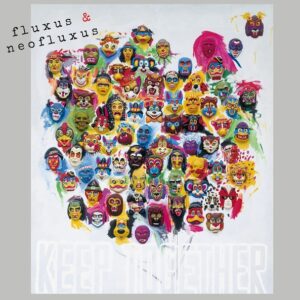
2 LP
COMPILATION
“Fluxus & Neofluxus: Keep Together (Part II)”
In April 2023, the first part of the Fluxus edition called Stolen Symphony was released. Now, in 2024, there is the second part, called Keep Together. At the center of this edition was a broken piano, acquired by the Opening Performance Orchestra for the purpose of making live and studio recordings. During this time other new works for this broken piano were written by diverse Fluxus and non-Fluxus composers. In the spring of 2022, the Opening Performance Orchestra and the broken piano participated in an event hosted by Mieko Shiomi. This was a new version of her early work Spatial Poem, documentation of which was presented at the 2022 Aichi Triennale in Tokyo. At present, the broken piano lies in the open air in Prague and is subject to gradual decay. This edition contains new and old pieces, live and studio recordings, finished pieces and scores to be performed, solos and pieces for ensemble, using classical and special instruments from 33 Fluxus artists, which have been played by ten soloists and four ensembles. There are new essays and articles from 15 writers on the theme Fluxus, as well as original photos and other documentation in the booklets. The Belgian label Sub Rosa provided technical support and a good place for the grand-scale release. The audio restauration and mastering were done by Gabriel Séverin at Laboratoire central, Brussels, and Kakaxa, 3bees, Prague. Archivio Conz in Berlin provided access to their extensive archives and Edizioni Conz provided co-production. Ursula and René Block made possible the realization of John Cage's historical composition "Mozart Mix" from the Edition Block archive. The photographic material comes from Marie Knízáková and Milan Knízák's private archive, the German photographer Wolfgang Träger, Archivio Conz's Fluxus archive, the private archives from diverse Fluxus artists and Opening Performance Orchestra's digital archive. Milan Knízák, Henning Christiansen, La Monte Young, Philip Corner, Bengt af Klintberg, George Maciunas, Takako Saito, Toshi Ichiyanagi, John Cage, Geoffrey Hendricks, Nam June Paik, Sara Miyamoto, Ken Friedman, Yoko Ono, Josef Anton Riedl, Giancarlo Cardini, Ay-O, and George Brecht.
27,00€
In stock
2 CD
COMPILATION
“Fluxus & Neofluxus: Keep Together (Part II)”
In April 2023, the first part of the Fluxus edition called Stolen Symphony was released. Now, in 2024, there is the second part, called Keep Together. At the center of this edition was a broken piano, acquired by the Opening Performance Orchestra for the purpose of making live and studio recordings. During this time other new works for this broken piano were written by diverse Fluxus and non-Fluxus composers. In the spring of 2022, the Opening Performance Orchestra and the broken piano participated in an event hosted by Mieko Shiomi. This was a new version of her early work Spatial Poem, documentation of which was presented at the 2022 Aichi Triennale in Tokyo. At present, the broken piano lies in the open air in Prague and is subject to gradual decay. This edition contains new and old pieces, live and studio recordings, finished pieces and scores to be performed, solos and pieces for ensemble, using classical and special instruments from 33 Fluxus artists, which have been played by ten soloists and four ensembles. There are new essays and articles from 15 writers on the theme Fluxus, as well as original photos and other documentation in the booklets. The Belgian label Sub Rosa provided technical support and a good place for the grand-scale release. The audio restauration and mastering were done by Gabriel Séverin at Laboratoire central, Brussels, and Kakaxa, 3bees, Prague. Archivio Conz in Berlin provided access to their extensive archives and Edizioni Conz provided co-production. Ursula and René Block made possible the realization of John Cage's historical composition "Mozart Mix" from the Edition Block archive. The photographic material comes from Marie Knízáková and Milan Knízák's private archive, the German photographer Wolfgang Träger, Archivio Conz's Fluxus archive, the private archives from diverse Fluxus artists and Opening Performance Orchestra's digital archive. Milan Knízák, Henning Christiansen, La Monte Young, Philip Corner, Bengt af Klintberg, George Maciunas, Takako Saito, Toshi Ichiyanagi, John Cage, Geoffrey Hendricks, Nam June Paik, Sara Miyamoto, Ken Friedman, Yoko Ono, Josef Anton Riedl, Giancarlo Cardini, Ay-O, and George Brecht.
20,00€
In stock
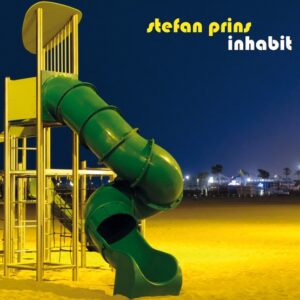
2 CD
Stefan PRINS
“Inhabit”
Inhabit, the second release by Stefan Prins on Sub Rosa, brings together four recent, large-scale compositions in which traditional instruments-from bass woodwind trio to electric guitar and symphonic orchestra-merge seamlessly with electronics, feedback, and field recordings. inhabit once again serves as a testament to how Prins, whose work is performed worldwide by some of the most celebrated musicians, ensembles, and orchestras, continues to stay attuned to the pulse of contemporary music. His compositions offer a refreshing, gripping, and consistently surprising exploration of the increasingly porous boundaries between the acoustic and electronic realms. The first disc of this double album, co-produced by Deutschlandfunk Kultur, opens with "Inhibition Space #1," a piece for amplified bass woodwind trio and feedback, delivered in a masterful performance by the Berlin-based Ensemble Mosaik. This exploration of instrumentally controlled feedback is juxtaposed with an acoustic chamber orchestra in the multidimensional "inhabit_inhibit," captured during a gripping live performance by Ensemble Kollektiv Berlin, conducted by Max Murray at Ultraschall Berlin in 2023. The second disc features Prins' provocative electric guitar concerto, "under_current," performed by the formidable Yaron Deutsch on electric guitar and the dream-team of the BBC Scottish Symphony Orchestra under the baton of conductor Ilan Volkov. In this expansive sonic landscape, ranging from delicate flageolet whispers to ear-splitting outbursts-the orchestra functions as an acoustic meta-amplifier for the electric guitar, enhanced by a range of effect pedals. The album concludes with "Mesh" for five instruments, feedback, electronics, and field recordings, in which the traditional boundaries between human, technology, and nature are completely deconstructed. In their place, Prins creates a world where unexpected sonic connections emerge and dissolve, like acoustic mirages. The Belgian Nadar Ensemble, which Prins co-directs, once again demonstrates why it is such a sought-after ensemble on the international concert stage, and one of Prins' principal musical ambassadors. Additionally, this release includes an exclusive, insightful 12-page booklet on these compositions by music journalist, researcher, and novelist Joep Christenhusz. This release is a co-production with Deutschlandfunk Kultur and BBC Radio 3 and was made possible by the generous support of the Flemish Community (Flanders State of the Art), the Nadar Ensemble, Ensemble Mosaik, and Ensemble Kollektiv Berlin, along with all the musicians involved.
16,00€
In stock

LP
Michael RANTA & Takehisa KOSUGI
“Multiple Musics”
Previously unreleased live recording from the Ranta archives. The creative duo of Michael Ranta and Takehisa Kosugi performed many times in the 1970’s and 1980’s. On this outstanding performance, recorded at the Japanese Culture Institute in Cologne in 1987, the application of an advanced multi delay system, independently utilized by both players, plays a central role. The smartly treated cyclic tapestry of the delay system (modulated, transformed, harmonized) injects additional dimensions to the highly coordinated improvisation with voice, percussion, violin and electronics, creating interactive ‘composition-like’ textures being ‘Multiple Musics’.
24,50€
In stock

LP
Rolf GEHLHAAR
“Wege / Ways”
Rolf Gehlhaar (1943-2019) was an instrumental and electronic music composer, and a pioneer in computer controlled interactive music. He grew up in the US where he studied philosophy and composition at Yale University. In 1967 he moved back to Germany to become Stockhausen’s personal assistant and member of his performing ensemble. In 1969 Gehlhaar co-founded, along with Johannes Fritsch (Metaphon 012) and David Johnson, the Feedback Studios in Cologne, a new-music performance center and publishing house. He later moved to England, where he became in 1979 a founding member of the Electro-Acoustic Music Association and later on senior lecturer in design and digital media. Gehlhaar’s compositions include symphonies, instrumental works, experimental and electronic music, interactive computer controlled music and everything in between.
The three previously unreleased tracks on this LP only show a glimpse of the versatility of his adventurous and innovative musical ideas.
The LP comes with a foldout insert including photos and extensive program notes.
24,50€
In stock
LP
IN CAMERA
“Arrival”
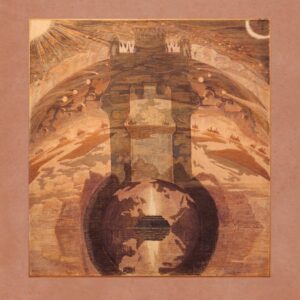
Not to be confused with the In Camera who had a couple of post-PiL releases on 4AD in the 80s, this In Camera is the work of Christoph Heemann and Timo Van Luijk. Four years after they got Lost in Spice they reached the point of Arrival. An altar on the surface of the water is burning with flames. Behind it you can see a half of the Earth's globe, and on it there’s a bright throne. A pale, translucent ruler wearing a crown sits in the throne. The globe is surrounded by a ball of shadows on which sits a larger dark ruler on a dark throne. Behind the globe are mountain peaks, and all of it is reflected in the water. Above the mountains are clouds which merge into rivers and end in a curved horizon on which forests stand, and the sun rises between them. Above this horizon is another sky with lunar crescents and comets. Above this sky are rows of angels bent over, above which the stars shine. The sun shines in the top left corner and the crescent moon in the right.
24,50€
In stock
LP
Timo van LUIJK – Kris VANDERSTRAETEN – Daniel DUCHAMP – Luis FERIN
“Traces du Hasard”
"This album is a bit of an accumulation of coincidences. It is the first recording session I did with Kris Vanderstraeten, back in 1994, together with Daniel Duchamp and Luis Ferin. The session recording had since disappeared from attention and 30 years later, while going through old DAT tape archives, I came across it by chance, initially even not knowing who/what it was… The tape started with a recording of cars, captured from my balcony in Brussels, where I lived at the time. I decided to integrate the cars as an intro to the music session that fitted in seamlessly. Both the recording quality and the musical performance were remarkably good. A lost and found little treasure. It was a refreshing time for me, playing with people from a jazz and free improvisation background. We became good friends."
Timo van Luijk
24,50€
In stock

LP
Michèle BOKANOWSKI
“Cirque”
The Circus is a place of lights and colors, but also of shadows, even darkness. Admittedly, it delights children and makes adults laugh. But you only need one rainy autumn evening near a circus tent and the smell of fodder to think of the sadness of the clowns, the endless training of the animals and the freaks who are hidden in some caravan... cinema, the essence of the circus – movement, light, danger and burlesque – will have been admirably rendered in Notes on the circus by Jonas Mekas (1966), one of the inventors of the filmed diary. With Cirque, Michèle Bokanowski does similar work, entirely dedicated to spinning, in the musical field.
She distinguished herself in particular in the composition of musique concrète, among others Tabou and Trois chambres d'inquiétudes, after having studied with Pierre Schaeffer and Éliane Radigue. The latter, great lady of drone and minimalism, fell under the spell of Cirque and wrote the booklet for the piece as a poem.
The piece, divided into five movements, is based on the handling and editing of recordings captured within one or more circuses (this is not specified and is of no importance) between 1988 and 1993. The initial allegro reveals the gallop of a horse joined gradually by other images. The idea of the circular space of the circus tent is immediatly and magnificently rendered and will be constantly recalled by an insistent use of the loop technique. Children's laughter, applause and drum rolls are thus sheared, repeated before being brutally interrupted. Accordion interludes and the distortion of sounds create a dreamlike atmosphere. This beautiful nightmare reminds us, to quote Éliane Radigue, the “Magic of childhood still living in the heart of man even beyond its abrupt end. »
Words by Alexandre Galand, from the book “Field Recording – L’usage sonore du monde en 100 albums” (ed. Le mot et le reste, 2012)
Major member of the french musique concrète scene, Michèle Bokanowski was born on August 9, 1943 in Cannes, FR, to a musician mother and a writer father.
She now lives and works in Paris.
Music lover since adolescence, it was relatively late, at the age of 22, that Michèle Bokanowski decided to study composition. Reading In Search of a Concrete Music by Pierre Schaeffer was decisive. After classical training on harmony, she met Michel Puig, a student of René Leibowitz, who taught her writing and analysis based on the Treatise of Schönberg. In September 1970 she began a two-year internship in the ORTF Research Department under the direction of Pierre Schaeffer. She takes part in the same time in a research group on sound synthesis, studies musical computing at the Faculty of Vincennes and electronic music with Éliane Radigue.
Her main works are intended for concert: Pour un pianiste, Trois chambres d’inquiétude, Tabou, Phone Variations, Cirque, L’étoile Absinthe, Chant d’Ombre, Enfance, Rhapsodia, Cadence, Elsewhere. She has also composed for theater (with Catherine Dasté), dance (with choreographers Hideyuki Yano, Marceline Lartigue, Bernardo Montet) and cinema: music for the short films of Patrick Bokanowski and his two feature films L'Ange ( 1982) and A Solar Dream (2016).
23,00€

14 CD box
Éliane RADIGUE
“Œuvres électroniques”
2024 repress
With a 80 pages booklet (french/english).
Tracklist
CD1
1. Chry-ptus (version 2001) 24’01
2. Geelriandre 29’57
CD2
1. Chry-ptus (version 2006) 23’10
2. Biogenesis 21’06
3. Arthesis 25’40
CD3
1. Ψ 847 (version concert) 71’08
CD4
1. Adnos I 71’28
CD5
1. Adnos II 72’44
CD6
1. Adnos III 72’40
CD7 Les Chants de Milarepa
1. Mila’s Song in the Rain 19’10
2. Song of the Path Guides 21’01
3. Elimination of Desires 17’22
4. Symbols for Yogic Experience 19’29
CD8 Les Chants de Milarepa
1. Mila’s Journey Inspired by a Dream 62’22
CD9 Jetsun Mila
1. Jetsun Mila (première partie) 44’25
CD10 Jetsun Mila
1. Jetsun Mila (seconde partie) 39’57
CD11 Trilogie de la Mort
1. Kyema 61’07
CD12 Trilogie de la Mort
1. Kailasha 56’09
CD13 Trilogie de la Mort
1. Koumé 51’18
CD14
1. L’Île re-sonante 55’04
70,00€
Out of stock
15 CD box
Roland KAYN
“The Ortho-Project”
Available early september october! 2024.
Returning to the unreleased oeuvre of the master of cybernetic sound Roland Kayn, frozen reeds hereby unveils a new high watermark for longform electroacoustic composition, unfolding across 15 CDs in a luxurious gold-stamped boxed set.
In 1970, Roland Kayn began a decades-long period of research, development and creation at the Instituut voor Sonologie in Utrecht. In the mid to late 90s, he retired, relocated to the Dutch countryside, and began to realise new electronic works at Reiger Recording Studio – his modest home facility. “I finally came to the conclusion,” Kayn would later point out, “that I no longer needed studios to construct my own electronic music.” The working methods Kayn arrived at individually – without the room-filling synthesisers, mixing desks and signal-processing equipment of Sonology at his disposal – saw him turning his own career into a cybernetic process. From the hours of recorded sound amassed in prior decades, he began processing and assembling a mountainous quantity of new music. His works of this period are focused on reabsorbing and recontextualising his life’s work to produce yet another series of utterly alien landscapes.
From his retirement until his death in 2011, Kayn was wildly prolific, leaving an archive of dozens of finished electronic pieces. Earlier source material is often re-sculpted using the technology Kayn had available to hand, while other techniques such as sampling radio broadcasts or the plunderphonic quotation of others’ works occasionally intercede. No notes accompany any of this music – no word of explanation or expression of intent. Only the works and their titles remain, the latter often simply deepening the mystery. Their durations range from around 20 minutes to almost 18 hours. ‘The Ortho-Project’, presented here in its 14-hour entirety, is among the longest. At this scale, Kayn’s music is perhaps at its most immersive; the listener senses they are being invited to envelope themselves in a rich environment of diverse timbral physicality rather than a programmatic work. This is simply electronic music as you have never experienced it before.
With Jim O’Rourke applying his signature restorative touch to the audio, and Robert Beatty taking his cryptic cybernetics-inspired artwork several steps beyond the label’s previous Kayn box, ‘The Ortho-Project’ (2007) – in its 14-hour entirety – finally sees a fitting release.
110,00€
In stock

LP
NURSE WITH WOUND
“Stoned in Stockholm”
A numbered edtion of 500 copies.
The latest release from ICR is this excellent Nurse live set on marbled vinyl* in a Santini-designed sleeve. Recorded in Sweden in 2016. featuring Stapleton, Liles, Waldron & Potter, the chilly ambience of the performance reflects the icy conditions at the time of the shows. Cool.....
*The vinyl used is an 'eco mix' & the colours can vary - purple/pink/mauve....who knows!
26,50€
In stock
CD
NURSE WITH WOUND
“Stoned in Stockholm”
CD version with extra material in a Santini-designed sleeve. Recorded in Sweden in 2016. featuring Stapleton, Liles, Waldron & Potter, the chilly ambience of the performance reflects the icy conditions at the time of the shows.
14,00€
In stock

CD
NURSE WITH WOUND – BLADDER FLASK
“Backside”
New studio album featuring Bladderflask. Originally issued as a limited edition Lp lathe cut.
Contains 20 minutes extra material. New cover art by Babs Santini.
Nurse With Wound and Bladder Flask first crossed paths in 1980. The following year saw the release of NWW’s fourth album, Insect & Individual Silenced and Bladder Flask’s debut (and in fact only) album, One Day I Was So Sad That The Corners Of My Mouth Met & Everybody Thought I Was Whistling (Orgel Fesper Music.) The LP quickly came to the attention of Steven Stapleton who distributed it via United Dairies and had the following to say when later interviewed for The Wire’s Invisible Jukebox feature:
‘…I love the Bladder Flask album – and what a great title, perhaps my favourite ever…’
The fact that One Day I Was So Sad… was distributed via United Dairies gave rise to rumours that Bladder Flask was NWW working under an assumed name. However, Stapleton was soon to set the record straight. Although certain similarities are obvious, Bladder Flask’s work was a lot less refined than NWW, ‘…a seemingly random mix of Dada, Free Improvisation and Musique Concrete – with a big dollop of absurdism thrown in for good measure, sounding at times as though The Goons had somehow gained control of the BBC Radiophonic Workshop!…’
In 1981 there were plans for a second Bladder Flask album to be issued on United Dairies but (for various reasons) the project was shelved.
With the 40th anniversary of the One Day I Was So Sad… LP, Richard Rupenus approached Steven Stapleton with a view to him remixing/reworking some Bladder Flask material, an invitation which Stapleton was happy to accept. However, rather than merely remixing/reworking existing Bladder Flask, Stapleton has created a brand new work which magnificently fuses both artists’ sense of the absurd.
15,00€
In stock

LP
John CAGE – Aaron DILLOWAY
“Rozart Mix”
So excited and honored to finally release the vinyl document of my realization of JOHN CAGE’s ROZART MIX. Back in the extremely strange year of 2020, I was approached by Wave Farm and John Cage Trust to stage a performance of this seldomly performed piece that Cage wrote for Alvin Lucier. The piece is comprised of 88 tape loops (one for each key of a piano), spliced together with multiple non-musical sounds played back on 12 reel to reel machines.
In January of 2021 I spent a wonderful and intense week researching ROZART MIX at John Cage Trust at Bard College. It was the first place I had visited during the pandemic. On October 23, 2021, with the assistance of Rose Actor-Engel, Twig Harper, C. Lavender, Quintron, Robert Turman, and John Wiese, I presented a 6 hour performance of ROZART MIX at John Cage Trust. Six hours of 12 individually amplified reel to reel tape machines, placed around multiple floors of a house, playing 88 tape loops spliced together by 5 to 175 splices, created an overwhelming and joyous environment of cacophonous sound. The performance culminated with John Wiese touching a frog for the first time as the final sound croaked through the speakers. The frog contact was just one of many magical moments that occurred during the preparation and presentation of the piece. I hope you enjoy listening to it as much as we enjoyed performing it. Special thanks to Galen Joseph-Hunter of Wave Farm and Laura Kuhn & Emy Martin of John Cage Trust for trusting me with this material.
-Aaron Dilloway, May 2024
27,00€
Out of stock

LP
WOLF EYES
“Wolf Eyes w/ Spykes”
Wolf Eyes w/ Spykes was recorded on Marshall St in Ann Arbor, Michigan on October 2nd, 2000. The group recorded this material live directly to 2-track reel to reel, giving it a raw and unrefined quality. The album credits Aaron Dilloway: electronics, tapes, and mix, John Olson: electronics and keys, and Nate Young: voice, keys, and secrets. Originally released in limited edition by Hanson Records for tour, this re-release is a glimpse into the foundation of what Wolf Eyes would become and remains a defining moment of the group's discography. Previously a two piece of Young and Dilloway, the result of this recording helped them decide to pull in Olson as a full time member and the first trio version of the band was formed. These are the strange creeping formulas that inspired Wolf Eyes to create over 300 releases and continue to push listeners towards the furthest edges of a raw homemade audio universe. Wolf Eyes is currently performing and releasing music as a duo consisting of John Olson and Nate Young. They have garnered a reputation as one of the most frightening and weird bands in the world. Their music is not for the faint of heart and is sure to leave a lasting impression on anyone who dares to listen.
23,00€
In stock

CD
David JACKMAN
“A Cloud Of Light”
‘A Cloud Of Light’ is the fourth album in the David Jackman / Organum Electronics release series on Die Stadt, and the first under his own name. The work sees him returning to calmer fields of sound which could already be heard on the acclaimed D. Jackman ‘Herbstsonne’ (DS119) from 2019, and the following Jackman ‘Silence In That Time’ (DS123) from 2020. Again the sounds of Tampura, Organ, Piano, Bells and Crows are the chosen sound sources, overlaid and structured to form a tapestry of shifting textures. Recorded in 2023 and edited by Alan Jones at RMS Studios in South London, the CD comes in a 4-panel Digisleeve with graphic artwork by Jonathan Coleclough.
UK-based composer and visual artist David Jackman began his career in the late 1960s in the experimental group Scratch Orchestra, co‑founded by Cornelius Cardew. He started recording solo work in the late 1970s, mostly on self-released cassettes in very small numbers. In the early 1980s he established his main project, Organum, which eventually evolved into a new version under the name Organum Electronics in 2019. Since 2019 five albums were released by Japanese imprint Siren Records, followed by (so far) four albums on Die Stadt. This is the fourth of seven albums which are scheduled for release on Die Stadt until the end of 2024. Apart from several albums under the Organum Electronics moniker these will also include works under David Jackman’s own name.
14,50€
In stock

CD
ORGANUM ELECTRONICS
“Noughwhere”
Organum Electronics ‘Noughwhere’ is the third OE album for Die Stadt, and could almost be seen as a culmination of all previous OE albums in terms of denseness and intensity. Like with all these works it’s a return to the electronic sounds David Jackman already created at the very beginning of his Organum project about 40 years ago. Similar sets of particular sound sources, arranged in a variety of permutations and combinations, and a variety of structures, to create a range of variations. They “offer an experience of instant immersion and sustained immediacy” as one reviewer observed listening to OE ‘Quietude’ (DS128) and OE ‘Darcknes’ (DS130) which were released end of 2023. Recorded in 2023 and edited by Alan Jones at RMS Studios in South London, the CD comes in a 4-panel Digisleeve with graphic artwork by Jonathan Coleclough.
UK-based composer and visual artist David Jackman began his career in the late 1960s in the experimental group Scratch Orchestra, co‑founded by Cornelius Cardew. He started recording solo work in the late 1970s, mostly on self-released cassettes in very small numbers. In the early 1980s he established his main project, Organum, which eventually evolved into a new version under the name Organum Electronics in 2019. Since 2019 five albums were released by Japanese imprint Siren Records, followed by (so far) three albums on Die Stadt. This is the third of seven albums which are scheduled for release on Die Stadt until the end of 2024. Apart from several albums under the Organum Electronics moniker these will also include works under David Jackman’s own name.
14,50€
In stock

4 LP box
Robert FESLER
“μP RPF78”
An anthology of the intensely arresting work of Robert Fesler (1936-2023), revealing many of his compositions (1975 -1987) created with his self-built synthesizers, with as pinnacle the μP RPF78.
Except one, all tracks are previously unreleased.
With profound simplicity and devotion, Fesler paints a hermetic inner world with strong emotions of confronting solitude, sensual alienation and traumatic angst. His music was as much a therapeutic treatment as an artistic expression. Fesler quotes, "Building my synthesizers and working with them enabled me to sublimate my anxieties".
Most tracks were played and recorded real time, often with two synthesizers (the Synthese 756 and the μP RPF78), capturing the heat of the moment in one take, without multitracking. The austere and reductionist approach reinforces the overall spirit of his work, resulting in an engaging, mysterious solitary journey.
It’s quite incredible how one person can put so much technical cerebral content in the development of a machine and use it in such an emotional way.
The music of Robert Fesler might be considered as very Belgian.
To situate it within a close entourage, one can say it has:
the endurance of Baudouin Oosterlynck
the purity of Dominique Lawalree
the mysticism of Arsène Souffriau
Hardboard linen LP box with silkscreened titles, 12 page booklet with notes by Robert Fesler and Baudouin Oosterlynck + A5 card with reproduction of oil on wood self-portrait by Robert Fesler.
Edition of 300 copies with download code.
120,00€
In stock
LP
Jean-Marie MASSOU
“Sodorome Vol. III : Les Romans De Massou”
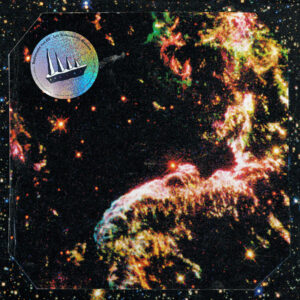
From 1973 until his death, Jean-Marie Massou lived isolated in the heart of the forest in the Lot, a territory he traversed and redrew in his own way, digging countless underground galleries, unearthing gigantic stones that he shifted, erected, aligned, piled up, engraved. When he was not moving heaven and earth, he drew and recorded on hundreds of cassettes his laments, his stories, his dreams, his speeches about the end of the world, ecological disaster, or the arrival of extraterrestrials. Jean-Marie died on May 28, 2020, at the age of 70.
During his lifetime, in early 2015, the label and collective La Belle Brute was created to publish Jean-Marie Massou’s first musical opus: Sodorome Volume I (2016), which presented an overview of his various sound practices. In 2018, the second volume of the collection followed: La Citerne de Coulanges, containing the contents of a cassette from the 1970s where Jean-Marie Massou sings while accompanying himself with stone strikes on the wall of a cistern inside which he records himself. This third opus: Les Romans de Massou, was the last sound project initiated in 2019 by Jean-Marie Massou and La Belle Brute. This album presents what Jean-Marie called his Novels. It was around the 2000s that he embarked on this series of sound fictions, where he tells a story and accompanies it with sound effects, music, and ambient sounds. He makes use of soundtracks he gathers from the radio but also uses his environment like a sound designer. To create his montages, he sometimes works simultaneously on three tape recorders, some playing, others recording.
Jean-Marie had played for us Le Repenti des Prostituées that we had agreed to publish; we later discovered, in the recordings found since then, the two other novels published here. The hundreds of hours of tapes still awaiting listening may reveal new ones to us. Like his galleries, Jean-Marie’s creations are fathomless.
21,50€
Out of stock
5 CD box
Iannis XENAKIS
“Electroacoustic Works”
2024 repress
The 5 CD box set „Electroacoustic Works“ celebrates the 100th anniversary of IANNIS XENAKIS (on May 29th, 2022), one of the most influential 20th century avantgarde composers. All tracks have been newly mixed by longtime zeitkratzer sound engineer MARTIN WURMNEST and mastered by RASHAD BECKER and finally reveal their full sonic range and dynamics. Booklet with English / German liner notes by REINHOLD FRIEDL (zeitkratzer) and rare photos from the Xenakis archive.
IANNIS XENAKIS (1922-2001) is one of the most important composers of the 20th century avantgarde whose influence on music can be traced to the present day – not only in the world of conservatory-trained composers but also in various streams of current non-academic underground aesthetics such as experimental electronic music, noise and industrial.
After he arrived in Paris in 1947, XENAKIS not only studied composition with MESSIAEN and later became a member of the famous GRM (Groupe de recherches musicales), he also worked as assistant to the famous architect LE CORBUSIER and realized a.o. the Philips Pavilion for the World Exhibition in Brussels 1958. His compositions often are based on mathematical principles which give his music an unprecedented aesthetic and “shocking otherness” (The Guardian).
Although XENAKIS also composed for orchestra (his most famous works are “Metastasis“, “Pithoprakta” and “Terretektorh”), electronic music became his way for exploring new ideas and concepts and to develop new techniques like a graphic interface for sound synthesis or later, when computers were easier accessible, his so-called "stochastic synthesis" (Gendy 3, S.709 > Disc V, Late Works).
XENAKIS’ first electroacoustic pieces (Disc I) like “Diamorphoses” or “Bohor” turned out groundbreaking works while the latter even caused, as MICHEL CHION put it, the “greatest scandal of electroacoustic music” on the occasion of its performance 1968 at the GRM in Paris.
His so-called „Polytopes“ (Discs II - IV) were overwhelming multimedia performances with especially designed architectures, laser and light shows etc. where sometimes up to several hundred loudspeakers were used to move the sounds in space. For example his most famous composition “Persepolis”, commissioned by the Persian Shah, premiered in 1971 in Shiraz-Persepolis (Iran) as a performance including light-tracks, laser beams, groups of children walking around with torches and 59 loudspeakers to project the music in an open-air situation.
The most radical aspects of sound can be found in Xenakis' late work and its merciless reduction to harsh, almost ruthless sound synthesis. In the early nineties, he devoted himself to the concept of a composing machine: a machine that designs everything independently and calculates the finished piece, the algorithm is the work.
For the first time, the complete electroacoustic works of XENAKIS are now available on record – the truly overdue testimony and legacy of a restless investigator and explorer of sound. Years of source studies and comparative research by zeitkratzer director REINHOLD FRIEDL, in collaboration with sound engineer MARTIN WURMNEST, made these critically reflected stereo mixes possible, which were appropriately mastered by RASHAD BECKER and which, in addition to the aspect of fidelity to the source, put the listener in the center. Xenakis' adventurous music can now finally be enjoyed in its full sonic range and dynamic.
To quote The Wire’s review from May 2018:
“This is the definitive Persepolis“
45,00€
In stock
LP
Phill NIBLOCK – Anna CLEMENTI – Thomas STERN
“Zound Delta 2”
A new piece by minimalist / experimental composer Phill Niblock (1933 – 2024), co-composed and performed by Anna Clementi & Thomas Stern. Intense, menacing layers of thick drones and alien sounds.
In summer 2022, within just a few weeks and by pure coincidence, 2 proposals regarding Phill Niblock albums arrived: one suggesting an overdue vinyl reissue of a CD release (more on that when the time has come for it), the other email was from Anna Clementi saying she and Thomas Stern were working on new pieces that Phill Niblock has written for her … when „Zound Delta 2“ was complete, Phill sent photographs for the two artworks, we met twice to discuss details, but unfortunately he died unexpectedly early january this year so the album now is, sad as it is, a posthumous release … an intense goodbye from one of 20th century most iconic composers.
Anna Clementi: voice
Thomas Stern: slide guitar, bass and soundprocessing
20,50€
In stock
CD
Phill NIBLOCK – Anna CLEMENTI – Thomas STERN
“Zound Delta 2”
A new piece by minimalist / experimental composer Phill Niblock (1933 – 2024), co-composed and performed by Anna Clementi & Thomas Stern. Intense, menacing layers of thick drones and alien sounds.
In summer 2022, within just a few weeks and by pure coincidence, 2 proposals regarding Phill Niblock albums arrived: one suggesting an overdue vinyl reissue of a CD release (more on that when the time has come for it), the other email was from Anna Clementi saying she and Thomas Stern were working on new pieces that Phill Niblock has written for her … when „Zound Delta 2“ was complete, Phill sent photographs for the two artworks, we met twice to discuss details, but unfortunately he died unexpectedly early january this year so the album now is, sad as it is, a posthumous release … an intense goodbye from one of 20th century most iconic composers.
Anna Clementi: voice
Thomas Stern: slide guitar, bass and soundprocessing
14,00€
In stock
CD
Reinhold FRIEDL / Martin SIEWERT
“Lichtung”
Reinhold Friedl (piano) meets Radian member Martin Siewert (guitar, electronics): three spontaneous sonic explorations – subtle and explosive!
With over a dozen releases on Karlrecords, and a total output of more than 100 albums in general, Reinhold Friedl doesn’t need much of an introduction to anyone interested in contemporary music / avantgarde: his ensemble zeitkratzer is as respected as it is feared for its radical approach on music, and it seems redundant to mention all collaborators and projects. Friedl is known for his unique piano sound, his advanced techniques, and his musical intensity paired with precise exuberant sound constructions and consistent compositional thinking. He cooperated with musicans from Phil Niblock to Lou Reed, Mario Bertoncini (Gruppo di Improvvisazione Nuova Consonanza) to Whitehouse, Laurie Anderson to Rashad Becker and works as guest professor at various universities across Europe. The “multi-talented renaissance man” (as Naut Human turned it) is also known as a specialist for Iannis Xenakis, and curates the Perihel series on Karlrecords.
„Lichtung“ is the collaboration of Friedl and no other than Vienna-based Martin Siewert, himself a highly prolific and reputated innovative guitar player and producer in groups like Radian or Trapist. Martin Siewert played with the who is who in experimental and improvised music and celebrated his strong musical identity in international collaborations with Otomo Yoshihide to Oren Ambarchi, Meg Stuart to Christian Fennesz, Sainkho Namtchylak to The Necks. Siewerts guitar play at the intersection of acoustic / electronic generated sounds is unique, evoking echoes of krautrock and musique concrete to electronic jazz and avantgarde.
“Lichtung” was recorded in Vienna: Several studio meetings condensed to three intense tracks, a statement and musical adventure between noise and silence, subtle and explosive! Two musicians, who couldn’t be more diverse, here – in every sense – they act in concert.
14,00€
In stock

LP
Richard PINHAS & RG ROUGH
“End of the line”
Richard Pinhas (creator of the legendary French band Heldon) is a key figure in the development of the treatment of rock music with electronic music. Together with the French-English multi-instrumentalist RG Rough, they create a soundscape emblematic of today's psychedelic rock.
20,00€
In stock
CD
MERZBOW + Nicolas HORVATH
“Pia-Noise”
Even the most experienced ear will not come out of Pia-Noise unscathed. Consecrating the meeting of two consummate artists, this release confronts their universe like a massive head-on shock in the eye of a sound storm. Masami Akita (Merzbow) has been surveying the territories of noise music for more than forty years, directing all sorts of instrumentaria, analogical or digital, instrument or software-based. For this record he relied on his favorite combination, a mix of various effects pedals and noise generators. Nicolas Horvath is a pianist of exceptional sensibility. More than well-versed in the classical repertoire, he also is fundamentally curious and multifaceted, as evidenced by his rescuing works and composers from oblivion, championing them on stage and patiently, carefully recording them. Nicolas Horvath also improvises and composes electronic music. Since the early 2000s, he has been active in the experimental and underground scene under many different names, especially Dapnom. A collaboration with Merzbow had already been considered some fifteen years ago. In the midst of forced isolation, it was all the more tempting to meet symbolically, following the ways of the World Wide Web. Pia-Noise is actually a project born from the health crisis and lockdowns, carried out from different homes in days of anguish and uncertainty. Both artists thus projected their worries about the ongoing crisis and today's ecological disaster. The music produced took on the shape of a constant struggle between, on the one hand, Merzbow's continuous release of energy, saturated sounds, masses, stridencies, powerful granulations, surrounding textures, chaotic rhythms and organized chaos, and on the other, Nicolas Horvath's improvisations, sometimes lyrical, sometimes harmonic, always deeply rooted in his classical culture and personal pantheon, like a memory of a golden age forever lost. No listener will escape it as they lend a careful and sometimes all but desperate ear to the raging soundwaves. The two continuous musical lines often collide and even seem to ignore each other every so often, but they also meet and complete each other, helping the compositions breath. This confrontation generates a great opulence of sound calling for an extremely active form of listening. In the midst of a global wreck and a period of upheaval, two artists still manage to communicate from one digital raft to another, and render the poetry of a moment. Comes in four-panel digipack with eight-page booklet.
13,50€
In stock
CD
COMPILATION
“Women In Turkish Electronic Music”
After the release of the Anthology of Turkish Experimental Music 1961-2014 (SR 390CD, 2016), this new series of recordings unveils the diverse creativity of young Turkish female artists. The majority of these compositions were crafted between 2021 and 2024. The anthology presents works from 15 Turkish female artists, each contributing to the album's beauty through their multifaceted creations. It encompasses various styles, ranging from purely formal music to innovative electronica, incorporating remnants of Turkish harmonies, as well as pieces with conceptual or political undertones, varying in intensity from subtle to overt. Featuring Aslz Kobaner, Eda Er, Elif Yalvaç, Eylül Deniz, Fulya Uçanok, Gökçe Uygun, Gülce Özen Gürkan, Güls¸ah Erol, KAOSMOS, MelteM Ural, Mine Pakel, Pervin Güzeldere, Senem Pirler, Seinemis, and Zeynep SarÏkartal.
13,50€
In stock
CD
Jean-Luc FAFCHAMPS
“Ensemble(s)”
Seen from the outside, Ensemble(s) is in a sense a kind of compilation of unreleased or rare pieces covering nearly three decades. Five essential pieces that count in the evolution of the Jean-Luc Fafchamps' writing. Post-spectral works that definitively position Fafchamps as one of the important European composers. It also weaves subtle links between him and Jean-Paul Dessy and Musiques Nouvelles, once created by Henri Pousseur. This disc is undoubtedly the best introduction to his work. Performed by Musiques Nouvelles. Conducted by Jean-Paul Dessy.
"At the instigation of Jean-Paul Dessy, the Musiques Nouvelles ensemble initiated all sorts of configurations to which I was often associated, and glad to be. This album is the journal of these criss-crossing collaborations: sometimes as part of the ECO (European Contemporary Orchestra) project, through which Musiques Nouvelles met the Ensemble Télémaque (from France) and Orkest de ereprijs (from the Netherlands) in a large orchestral formation; sometimes for a project produced with Art Zoyd (France); sometimes as a string ensemble or with Claire Bourdet as a soloist. I am glad to present, united in one album, such different periods, contrasting collaborations and multiple encounters not merely due to coincidence but also to affinities. May my style, and the story of my questionings, give a certain consistency to this ensemble of beautiful collaborations." --Jean-Luc Fachamps
13,00€
In stock
2 CD
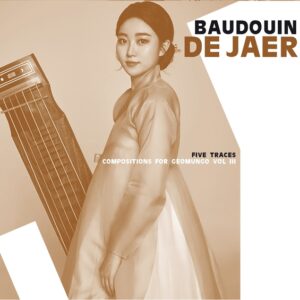
Baudouin De JAER
“Five Traces: Geomungo Compositions Vol. III”
Five Traces is a wordless opera in three acts. Its sound includes words and images. The notes must speak: "This wordless opera is certainly my most daring experiment with text in sound. Over the ten years I spent discovering the majestic Geomungo, the six-string Korean bass zither played with a suldae plectrum, working on Héros de la pensée gave soft, poetic, melodious and appeasing sounds. Some of my studies continued the reduction process I had started for the piano and the violin (and then for the Gayageum), in the compositions I wrote between 1986 and 2023, attempts at extreme reducing and simplifying down to lines, music stated on one and single note (with exceptions). Lines allows the interpreter to express themselves within the scope of rhythm, nuance, vibratos, stresses and attacks, and to show the many unheard orchestral possibilities at the root of this unique instrument. In stark contrast, Chanson Cubique (Vol II) or Trace III include moments with an excessive variety of notes driving the instrument into a corner. With the warm timbres of the recordings featuring on the first two CD volumes, the listener is an accomplice to the interpreter, standing in the wings while they rub strings on fret, prepare their fingers and release the strings, tune the instrument while playing, etc. On the other hand, 'Traces' (once every five of them have been listened to) offers a more panoramic view, a look at the geometric structures of the compositions. Vol I was my doorway to the geomungo, while the compositions gathered in Vol II were explorations (experiments, studies) with a more technical aspect, in preparation for the writing of Five Traces." --Baudouin De Jaer
16,00€