Michèle BOKANOWSKI
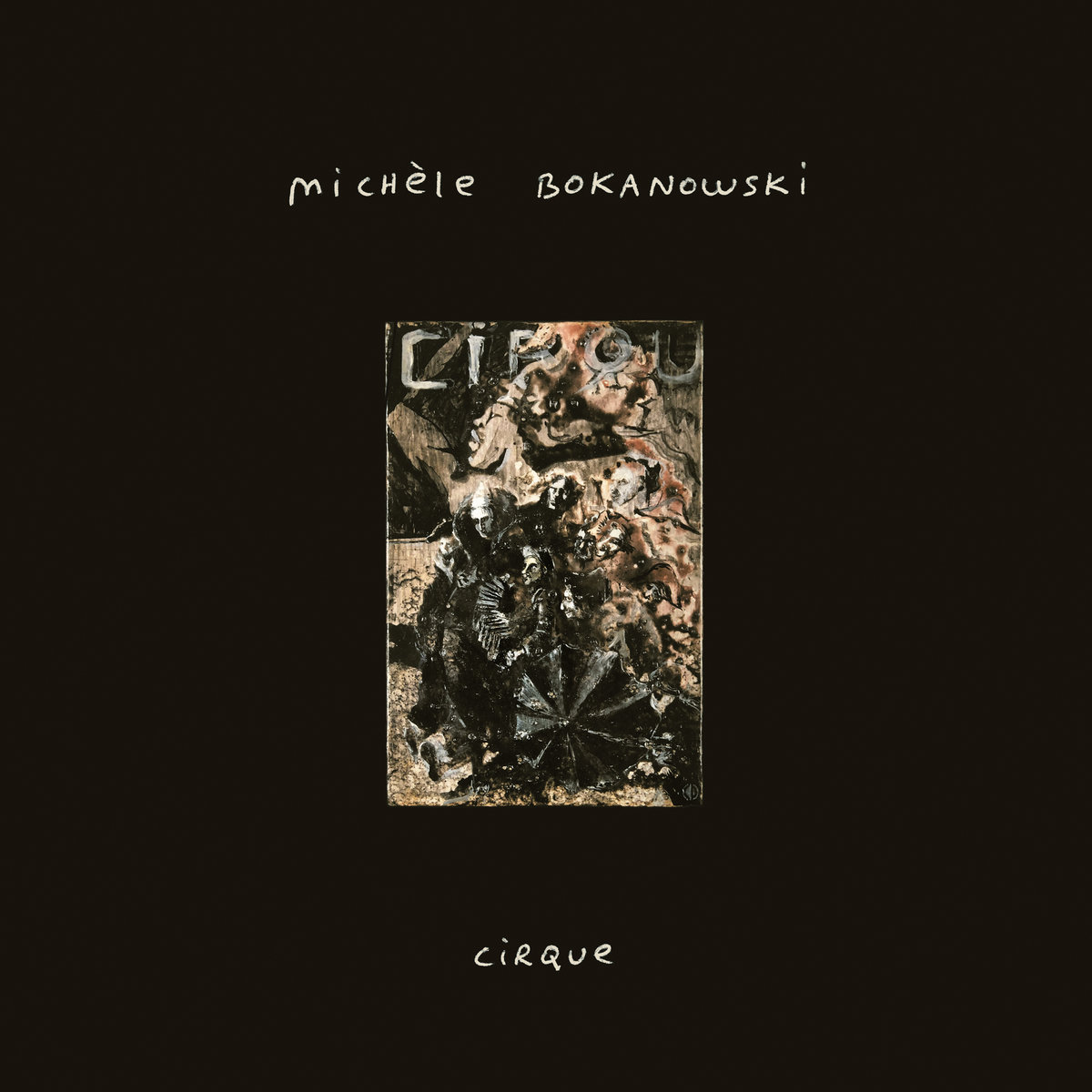
“Cirque”
23,00€
In stock
The Circus is a place of lights and colors, but also of shadows, even darkness. Admittedly, it delights children and makes adults laugh. But you only need one rainy autumn evening near a circus tent and the smell of fodder to think of the sadness of the clowns, the endless training of the animals and the freaks who are hidden in some caravan… cinema, the essence of the circus – movement, light, danger and burlesque – will have been admirably rendered in Notes on the circus by Jonas Mekas (1966), one of the inventors of the filmed diary. With Cirque, Michèle Bokanowski does similar work, entirely dedicated to spinning, in the musical field.
She distinguished herself in particular in the composition of musique concrète, among others Tabou and Trois chambres d’inquiétudes, after having studied with Pierre Schaeffer and Éliane Radigue. The latter, great lady of drone and minimalism, fell under the spell of Cirque and wrote the booklet for the piece as a poem.
The piece, divided into five movements, is based on the handling and editing of recordings captured within one or more circuses (this is not specified and is of no importance) between 1988 and 1993. The initial allegro reveals the gallop of a horse joined gradually by other images. The idea of the circular space of the circus tent is immediatly and magnificently rendered and will be constantly recalled by an insistent use of the loop technique. Children’s laughter, applause and drum rolls are thus sheared, repeated before being brutally interrupted. Accordion interludes and the distortion of sounds create a dreamlike atmosphere. This beautiful nightmare reminds us, to quote Éliane Radigue, the “Magic of childhood still living in the heart of man even beyond its abrupt end. »
Words by Alexandre Galand, from the book “Field Recording – L’usage sonore du monde en 100 albums” (ed. Le mot et le reste, 2012)
Major member of the french musique concrète scene, Michèle Bokanowski was born on August 9, 1943 in Cannes, FR, to a musician mother and a writer father.
She now lives and works in Paris.
Music lover since adolescence, it was relatively late, at the age of 22, that Michèle Bokanowski decided to study composition. Reading In Search of a Concrete Music by Pierre Schaeffer was decisive. After classical training on harmony, she met Michel Puig, a student of René Leibowitz, who taught her writing and analysis based on the Treatise of Schönberg. In September 1970 she began a two-year internship in the ORTF Research Department under the direction of Pierre Schaeffer. She takes part in the same time in a research group on sound synthesis, studies musical computing at the Faculty of Vincennes and electronic music with Éliane Radigue.
Her main works are intended for concert: Pour un pianiste, Trois chambres d’inquiétude, Tabou, Phone Variations, Cirque, L’étoile Absinthe, Chant d’Ombre, Enfance, Rhapsodia, Cadence, Elsewhere. She has also composed for theater (with Catherine Dasté), dance (with choreographers Hideyuki Yano, Marceline Lartigue, Bernardo Montet) and cinema: music for the short films of Patrick Bokanowski and his two feature films L’Ange ( 1982) and A Solar Dream (2016).
Le cirque est un lieu de lumières et de couleurs, mais aussi d’ombres, voire de ténèbres. Certes, il ravit les enfants et fait rire les adultes. Mais il suffit d’un soir d’automne pluvieux près d’un chapiteau et d’une odeur de fourrage pour penser à la tristesse des clowns, au dressage sans fin des animaux et aux monstres cachés dans quelque caravane… Le cinéma, l’essence du cirque – mouvement, lumière, danger et burlesque – auront été admirablement rendus dans Notes sur le cirque de Jonas Mekas (1966), l’un des inventeurs du journal filmé. Avec Cirque, Michèle Bokanowski effectue un travail similaire, entièrement dédié à la filature, dans le domaine musical.
Elle s’est notamment distinguée dans la composition de musique concrète, entre autres Tabou et Trois chambres d’inquiétudes, après avoir étudié avec Pierre Schaeffer et Éliane Radigue. Cette dernière, grande dame du drone et du minimalisme, est tombée sous le charme du Cirque et a écrit le livret de la pièce comme un poème.
L’œuvre, divisée en cinq mouvements, est basée sur le traitement et le montage d’enregistrements réalisés dans un ou plusieurs cirques (ce qui n’est pas précisé et n’a pas d’importance) entre 1988 et 1993. L’allegro initial révèle le galop d’un cheval rejoint progressivement par d’autres images. L’idée de l’espace circulaire du chapiteau est immédiatement et magnifiquement rendue et sera constamment rappelée par une utilisation insistante de la technique de la boucle. Rires d’enfants, applaudissements et roulements de tambour sont ainsi cisaillés, répétés avant d’être brutalement interrompus. Les interludes d’accordéon et la distorsion des sons créent une atmosphère onirique. Ce beau cauchemar nous rappelle, pour reprendre les mots d’Éliane Radigue, la « Magie de l’enfance qui vit encore dans le cœur de l’homme au-delà de sa fin abrupte. »
Alexandre Galand, « Field Recording – L’usage sonore du monde en 100 albums » (éd. Le mot et le reste, 2012).
Related products
Out of stock

In stock

Out of stock

Out of stock
Out of stock

Out of stock