
In stock

LP
ELG
“Mauve Zone”
“I DIG COSMIC MUSIC WITH ROCKS OFF… anathema to top 40, Èlg is the holy ghost of the new sound. his music deals with the altered state with muscle -> primed on transcendence like naked hug, the fire music of his previous duos or the zap force of his earlier Nashazphone jam “Capitaine Present 5”, it feels hip to stay forever eternal in the house of mirrors & emerge on the cyclone. coney island baby bataille. there's a dimensionality of miracles herein, we were born on earth... as humans. then there’s Èlg, Laurent Gérard -> he's a love lodge, a sonic native. this is immersion music… climb upward, go down and deep. my fave cosmic strip here is in cool color… the rare moment on this LP when the guitar solo explodes from the narrative ripping a hole in “song”. through the planet of one voice, we hear the inimitable Dylan Nyoukis and the one and only OG Alan Bishop. these heads are perfect jam vehicles to hang with Laurent. then there's the paramour lady Catherine hershey, forever muse… roast tongue. brand new language, brave nu world. this grabs the tusk of Francois Tusques and rides Mother Gong, all glissando and Kobaïan. learned from Shandar and transporting with a freer range Lard Free, organic music that slays all inner city mountains, outer realm gotham. bluer than noon. contempo lone gunman exploratory moderne with the controls set to the heart of love. we’re in the “Mauve Zone”, where is bananafish? hearing is believing. a transport to future analog and digital dialup. call this dude, he's beyond rap. what a crazy fucking life.” matt “mv” valentine, guilford, VT - U.S. Spring 2016
Èlg
Since 2004, Èlg has drawn concentric sound spirals made of musical pipes and entrails. He uses an arsenal of instruments and methods, constantly renewed while building improbable bridges between musique concrete and french song-writing, cartoon-like radiophonic creations and cosmic pop as well as lo-fi Dada-esque experimentation with electronic tentacles. Èlg is half of the electronic botanic duo Opera Mort, and a third of big band trios Orgue Agnes (with the members of Kaumwald) and Reines d'Angleterre (with Jo Tanz and Ghédalia Tazartes). He’s had albums released by Kraak, SS-Records, Lexi Disques, Fonal, Hundebiss Records, and Alter, among others.
17,00€
Out of stock

LP
Olivier BRISSON
“Horizon Capiton”
“ “What is Normal Music?” That was the title I chose for an article some years ago and despite the fact that I was searching something else, it was difficult to find anything better to start these lines about “Horizon Capiton”; the new LP by French musician Olivier Brisson. Monsieur Brisson lives in Lille and has been involved not only with sound experimentation but also with psychiatry. The latter is not just a detail but an important fact here: this is a work about frames and boundaries. But who (or what) are inside/outside those frames? That’s not easy to say. The sound collage brings us to a continuous flow where everything seems mixed: “professionals” cataloguing “mental illness”, voices of “patients”, tape failures, suggestive music passages, anomalous noises, field recordings from everywhere and several rivers of sounds sailing together along with the listener. The trip is intense and compelling. Beautiful and terrifying. The horizon might be a cushion but it might be also something else. We’re culturally trained to believe that something is “normal” or not and we put a lot of effort in trying to make the world fit in those categories. But in the end who is “normal” enough to say what is “not normal”? This is what this record is about and Beware! Sound can easily brake barriers, even those you didn’t notice were present.” Anla Courtis. Buenos Aires, Argentina. December 2017.
17,00€
In stock
LP
Robert PIOTROWICZ
“Lincoln sea”
Composed and recorded by Robert Piotrowicz in 2010-2012. Performed on modular analogue synthesizer. Design and graphics: Robert Piotrowicz. Visual adviser: Igor Krenz. Mastering and vinyl cut: Rashad Becker. “Lincoln Sea is Robert Piotrowicz’s second release in 2013 after the acclaimed ’When Snakeboy is Dying’. ’Snakeboy’ opened windows with it’s sophisticated weaving of guitar, piano and vibraphone, along with Piotrowicz’s more recognisable modular synth work. Praised from the likes of Brian Olenwick (Just Outside), Massimo Ricci (Touching Extremes) ’Snakeboy’ saw Piotrowicz take a confident leap into new
realms of sound. With Lincoln Sea, the potential of Piotrowicz’ vision is greatly expanded whilst exclusively focussing on modular synthesis. The result is a dizzying journey into the nature of machines and the elements of natural order that can be coerced out of them. Comprising of a single long form work split over 2 sides, Lincoln Sea is a complex multilayered combination of sonic architecture and narrative drama. Investigation of sound mass as an architectural form expands the work beyond the exploration of a single instrument resulting in significantly more vast and expansive sound landscape. The management of the electronic matter aligns itself with the logic and even sound world of an orchestra with wailing strings flying amongst the brass-like explosions of the bass. The tension resulting from the pull between the sonic world and the emotional capacity of the electronic microtonal explorations make for one of the years assured releases. On one hand, Lincoln Sea can be perceived as an exhilarating audio experience, one of immense thrills, intensity and a rich sonic experience.
With further listens, the intrinsic layers and idiosyncrasies will become more apparent providing further aesthetic experience as one hears new sounds, new corners, new worlds. Piotrowicz’s role as despot composer has created a remarkable release which incorporates an evolving landscape, human gestures, an absence of chaos, the orchestral (and rock?) organisation of sound, the false
ends and an extreme combination of scientific/architectural design seeped in abstraction and human emotion. This is a landmark release from one of Poland’s most revered musicians”. Mark Harwood
16,50€
In stock
LP
Robert PIOTROWICZ
“When snakeboy is dying”
140 gram white vinyl, 370 copies. Composed and recorded by Robert Piotrowicz in 2009, mixed in 2011. All instruments: modular synthesizer, guitar, piano, vibraphone, software by Robert Piotrowicz. Mastering and cut: Rashad Becker. “When Snakeboy is Dying” is the first album of Robert Piotrowicz in which he deploys a broad spectrum of instruments. Most of his previous published compositions were committed to creating a multilayered electronic sculpture built with analogue modular synthesizer. Performing on all instruments by himself alone and using a variety of composing methods, Piotrowicz created an album which strikes with internal integrity and organic complexity whilst leaving the recipient with an impression of listening to an ensemble. In terms of tonal reduction and assigned function of individual instruments, the score recalls the spirit of minimalism, however the density and dynamics of narration remains in vivid contrast to such associations. The strength of Piotrowicz’s work reveals itself in the complexity of events as well as the rich palette of colours and the mobility of architecture in the overall sound picture. The instruments are organized in careful relations with each other, to build not only the horizontal tensions but the vertical ones as well. The beauty of microtonal constructions is amplified by strong impacts and vitality of electronics. What at first might seem like a fragile recording, with every further second it builds and maintains drama and intensity.
18,00€
In stock
LP
Robert PIOTROWICZ
“Walser”
“Oleh Rami Pohon” (riverside performance for five / hut blow for any number of
participants and one muted mmempekík player).
“Tingal” (sylvan setup for two).
“Elok Pada Masa” (nighttime gathering for two and any numbers of attendees)
“Automatu” (for those who rebuild past events in memory).
“Udara Rosak” (for two anxious performers).
“Utara” (for one who heard everything / small band including strings,
percussion and electronics).
“Dimana” (for any number of pianists and one bad doublebass player).
Composed, recorded and mixed by Robert Piotrowicz. All instruments: double bass, piano, percussions, electronics and objects performed by Robert Piotrowicz. Accompanying texts by Grzegorz Jankowicz, Burkhard Stangl and Jon Wozencroft. Mastering and cut by Rashad Becker at D&M Berlin.
The music originally appeared as a 5.1 soundtrack to “Walser”, film directed by Zbigniew Libera.
The new album by Robert Piotrowicz Walser is a reiteration of the artist’s composition for the namesake film by Zbigniew Libera where a fictitious Concheli tribe enacts its ritual gestures through music and performance. Rather than following a traditional soundtrack format where music is written after the film is cut to illustrate the cinematic form, Piotrowicz treats the film music as a point of departure to create an autonomous sound work altogether. While its aesthetic narrative echoes the one that we are submerged into throughout the film, the record’s underlying structure and dramaturgy were reconfigured and reworked into a new spatial and affective arrangement.
Unlike Piotrowicz’s previous works, Walser is predominantly an acoustic album with a nod to his previous projects that imagined fictional music ensembles (such as Rurokura and Eastern European Folk Music Research Volume 2).
The idiosyncratic sound of instruments is a result of multifaceted composition process, which took as its starting point custom-made instrument design (wind, percussive and string), prototyping the music structure and meaning, and composer-led choreography of actors’ gestures that took place during the film shoot and in its predeceasing performance workshop.
In the film Walser, Piotrowicz’s original music score is thus enacted by body of sound rather than by actors on the filmset as it fills up the metastructure devised by the composer. Of course music always influences the way one views a film, but in Walser it becomes a cinematic language of its own kind, an extension of the camera apparatus, an omnipresent observer and narrator that sculpts our experience of watching and listening.
In the album Walser sound returns to its first and foremost dimension, time, and while the storyline is no longer in the foreplan, its immaterial traces persist in the LP structure and narrative, incorporating a myriad of mood changes and dramatic turns. The album is an analogue recuperation of the primal, original sound where music finds a new form of embodiment and occupies a new territory beyond the screen and beyond the image. It is a sensuous body of sound that carriers meaning beyond traditional ways of verbal and pictorial communication.
16,50€
In stock
LP
Anna ZARADNY
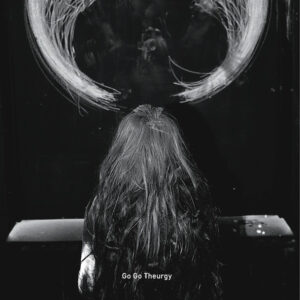
“Go Go Theurgy”
Composed and recorded by Anna Zaradny in 2015. Electronics, analogue and digital synthesizers. Photo by Magda Wunsche. Drawing by Anna Zaradny. Design by Lasse Marhaug. Mastering an Cut by Rashad Becker at D&M Berlin. Produced by Musica Genera. Coproduction Bocian & Musica Genera.
“Go Go Theurgy”, the first Anna Zaradny’s album in eight years, consists of two majestic compositions. Strikingly charismatic and intense, they teem with sensuality and anxiety, while their palpably dense and detailed texture is constantly filled with tension and sense of urgency. The crystal-clear narration of these structurally complex pieces creates a framework for Zaradny's uniquely intricate and emotional sound. This music celebrates performativity and defies genre limitations. Although bravely experimental, it is precisely structured at the same time, and sometimes builds a momentum usually connotated with pop music. “Go Go Theurgy” recalls the primordial but also cultural references, creating its own idiosyncratic value.
-----------------------------------
“ “Go Go Theurgy” is an intricately woven tangle of synthetic and natural textures and modulations; the next step for the Zaradny's unique sound; very organic, and somewhat seductive. The idea of sound sculpture, found in her earlier pieces, is particularly significant for “Go Go Theurgy” . Its loops and cycles create a specific rhythm completely without percussion, based solely on the pulse and dynamics of the composition itself. A high intensity of intersecting layers of sound and repetitions refers directly to the title, a kind of ritual suspended between dance and performance, and the concepts of rebellion and power, purification and liberation by the movement of the body.
Zaradny's works have often included a theme of a ritual stripped of mystical aura, reduced to the tension between cultural roles and their phantasms (e.g. in “Castration class” (2010), “The sweetest sound of circulating firmament” (2011), “GEN IUS” (2014), “Punctus Contra Punctum” (2014)), but for the first time it takes the form of a sound composition.
“Go Go Theurgy” has a clear sonic architecture and contains echoes of the space where the sound resonates and returns in subsequent cycles. The composition becomes not only a reflection of the ritual documented on the photos, but also a metaphor of the resounding open space. Elements that we hear in the initial parts of the composition return in a processed form, an effect of a redefined echo which becomes an independent sound object detached from its source. This physical multidimensionality of sound is another step towards a sound sculpture. An attempt at stopping the moment, experiencing trance, looping movement and gesture.” Daniel Bro ek
17,00€
Out of stock

LP
Pauline OLIVEROS and IONE
“Water above – Sky below now”
Morphine presents “Water Above Sky Below Now” from pioneering American composer Pauline Oliveros and Ione. An experimental musician and educator, Oliveros is the creator of the deep listening practice highly attentive full body audition. She is joined on the album by author, improviser of spoken word and sonic vocals Ione, artistic director of the former Deep Listening Institute founded by Oliveros.
The three-part improvisation was produced using Oliveros’ Expanded Instrument System (EIS), an electronic sound-processing environment that allows improvising musicians to transform their own acoustic input in real time. Here, her specially tuned digital accordion- accompanied by Ione’s vocals and spoken word - is converted via EIS, manipulated, and diffused through multiple channels.
“The EIS imperative (and improvisation imperative),” Oliveros writes, “is to listen and respond: spatial relationships and progressions are as important as the traditional parameters of music.” The release of “Water Above…” is the latest movement in Oliveros' six-decade-long career, which began at the San Francisco Tape Music Center in the ‘60s and was distinguished with the William Schuman Award for lifetime achievement in 2009. It is Morphine's third full release of the year, following from Charles Cohen’s Brother I Prove You Wrong. “Go Deep and Listen,” from that LP, is a silent dedication to Oliveros from Cohen, who participated in her workshops in Philadelphia.
The album was produced by Rabih Beaini and designed by Tankboys, with original cover art by Nathalie du Pasquier.
The three-part improvisation was produced using Oliveros’ Expanded Instrument System (EIS), an electronic sound-processing environment that allows improvising musicians to transform their own acoustic input in real time. Here, her specially tuned digital accordion- accompanied by Ione’s vocals and spoken word - is converted via EIS, manipulated, and diffused through multiple channels.
“The EIS imperative (and improvisation imperative),” Oliveros writes, “is to listen and respond: spatial relationships and progressions are as important as the traditional parameters of music.” The release of “Water Above…” is the latest movement in Oliveros' six-decade-long career, which began at the San Francisco Tape Music Center in the ‘60s and was distinguished with the William Schuman Award for lifetime achievement in 2009. It is Morphine's third full release of the year, following from Charles Cohen’s Brother I Prove You Wrong. “Go Deep and Listen,” from that LP, is a silent dedication to Oliveros from Cohen, who participated in her workshops in Philadelphia.
The album was produced by Rabih Beaini and designed by Tankboys, with original cover art by Nathalie du Pasquier.
19,00€
In stock

LP
Kevin DRUMM
“The back room”
Vinyl edition. There was a mistake in the previous listing !
Pulse generator, reverb, big muff.
One of the most interesting outsiders, icon of experimental electronic noise music first released this collection of intensive sounds on his own label, on CD-r limited to 60 copies. Now, three years after that premiere we’re glad to present you an LP.
17,00€
In stock
LP
David MARANHA – Gabriel FERRANDINI
“A fonte da aretusa”
“A fonte de Aretusa is the convergence between the legendary organist David Maranha and the free-form young revelation drummer Gabriel Ferrandini. Based in Lisbon, Portugal this duo started in 2010, with regular rehearsals and concerts that lead to this first album that captures a bloody free live act where the music is pulsing and vibrating over a droning flow of sound. 42 minutes (here divided in two, due to vinyl restrictions) of a massive attack to the listener among free percussive frames and brutal organic drone merging together into a powerful and permanent movement of vivid music captured in one of their first live performances at ZDB venue. 150g LP, 400 gr carton cover with black inner sleeve.”
16,50€
In stock
LP
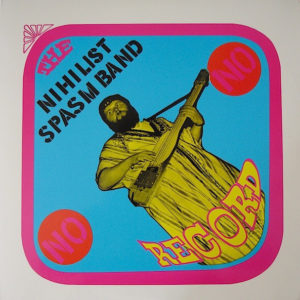
NIHILIST SPASM BAND
“No record”
One of very few indie label releases on Spin Magazine's list of 100 top counter-cultural music, ahead of legends like Mulatu Astatke, Brigitte Fontaine, Pärson Sound, Ornette Coleman, Sun Ra and His Solar Arkestra, Harry Partch, and Os Mutantes. Zowie! “In 1965, eight guys from London, Ontario, decided to start a free-improv group - “free” to the point of building their own instruments, which they decided couldn’t be set up to produce specific pitches. The band got together once a week with their electric kazoos and kludged-together guitars and Art Pratten’s ‘pratt-a-various’. Their vocalist, schoolteacher Bill Exley, banged on a cooking pot and bellowed hilariously about stupidity and destruction and Canada. They didn’t treat what they were doing as an advanced, visionary form of experimental music, but as a big, stupid, fun, ecstatic noise. By the ‘90s, noise artists finally recognized NSB as their ancestors - and, almost 50 years after they started, the surviving members of the Nihilist Spasm Band still play every Monday night while their children haunt loft spaces the world over.” Spin.
“The record you’re holding is one of the masterworks of that big gray area of noise/weirdo/freak-out music. It’s still hard to believe that No Record was released in 1968. This was a time when popular music was still growing up, and these outsider guys from Canada came out of nowhere and made this mindfuck of record that was years ahead of itself. And as with albums like Trout Mask Replica, and The Faust Tapes, it still sounds fresh today. No Record is mandatory listening.” Lasse Marhaug.
Same album as LP, equally great in full file-sized digital edition. Digipack comes with a 32-page color booklet jammed with band history, photos, and a list of live performances.
22,00€
In stock
LP
BIBI KONSPIRE
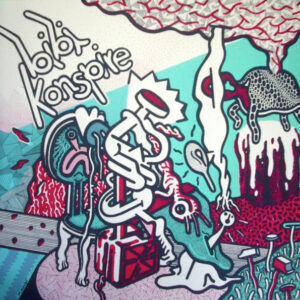
Bibi Konspire is a trio with two musicians, Olivier Bost et Patrick Charbonnier, and a poet, Charles Pennequin.
A noise music with some ghostly blues accents, made with strings, percussions, microphones, tapes, amplifiers…
The texts written and read by Charles Pennequin works with repetition, speed and power !
15,00€
Out of stock

LP
LUMINE
“All the unnamed”
Edition of 300 copies. With download card. New project of Timo van Luijk with Graham Stewart and John Whyte. Played, recorded and mixed by Timo van Luijk & Graham Stewart at Kulta Saha, 2015 2016. Sleeve drawing, design and titles by John Whyte. Photography by Conny Cams.
“From a blank page appeared six chapters of sparse electronics and acoustic instrumentals. A subtle story revealing the slowly moving interplay of delicate sonic tension and distant drama of desolate melodies”.
“From a blank page appeared six chapters of sparse electronics and acoustic instrumentals. A subtle story revealing the slowly moving interplay of delicate sonic tension and distant drama of desolate melodies”.
17,00€
Out of stock

LP
ELODIE
“Echos pastoraux”
2nd edition of 300 copies. Debut album of new project by Timo van Luijk & Andrew Chalk . Percussion on ’Récit Inouï’ by Daisuke Suzuki. Accidental Sounds on ’En Aval’ by Ian Middleton. Edition of 400 copies .
17,00€
In stock

LP
ELODIE
“Miniatures persanes”
Fourth album by Andrew Chalk & Timo van Luijk. “A musical fantasy in two movements symbolising the evocative power and poetry of ancient illustration”.
Edition of 300 copies.
Edition of 300 copies.
16,00€
In stock

LP
Timo van LUIJK & Kris VANDERSTRAETEN
“Costa Del Luna”
2007. “Vanderstraten and Van Luijk have played together before, but unlike their previous album “High Noon”, “Costa Del Luna” sees them both in a slightly different setting, more austere and carefully erected out of dusty late night encounters. Here the musical outcome is less AMM inspired and more bordering on ethereal planes that are reminiscent of France’s OM or Bertoia’s sonic worlds cross-breeding with an almost “Musik Fur Alle” era Anima aesthetic. Just like a reptile’s tail is a remnant of a long lost revolution, the duo here also slowly feeds of each other’s tiniest gestures and articulations in sound in order to trigger in response panoramic sound clusters that float somewhere between a poetic resonance of skeletal music and a shamanistic sense of poetry, all encapsulated in sonic molecules drifting in between your speakers. One of the best discs to have been released in that unholy year 2008, but again nobody seemed to notice it. Take my word for it, this record has the gift for unexpected impact, busy folding and manipulating the dead space that resides between your ears. Housed in a very beautiful jacket, with the inside lined out with imprinted shrimps floating against a blue toned background. Gonna be a major one in years to come, so mark my words. Awesome!” (Johan Wellens, Tiliqua Records). 400 copies, sleeve has printed shrimp pattern on the inside.” label info
17,50€
In stock

LP
Timo van LUIJK & Kris VANDERSTRAETEN
“Arrêt au Lac Chimère”
Edition of 300 copies, white vinyl.
Live at Karel Ball, Brussels 16-09-2013. Lac Chimère is a lake in Mensono, where many unknown and untouched sound creatures reside. They sometimes form musical gatherings in which their sounds float in ether. This album consists of field recordings captured at the very moment while making an accidental stop at the lake.
Live at Karel Ball, Brussels 16-09-2013. Lac Chimère is a lake in Mensono, where many unknown and untouched sound creatures reside. They sometimes form musical gatherings in which their sounds float in ether. This album consists of field recordings captured at the very moment while making an accidental stop at the lake.
18,00€
Out of stock

LP
Timo van LUIJK & Kris VANDERSTRAETEN
“High Noon”
2005. “Following the ecstatically brilliant “Aura legato” album, Timeau de Liege frees himself from the Af Ursin one-man-quest and teams up with skin mangler and percussive magician Kris Vanderstraeten. Together they are responsible for creating another delicately crafted sound sculptures, filled with a controlled tension and carefully created improvisation balancing on the razor’s edge of fragility and virtuosity. Both of them steer away from easy-going right in your face slabs of free improv power but instead choose to operate on a totally different time frame. This enables them to raise the stakes and augment the challenge that lies buried within these sonic territories. Sonic-wise, if I have to hit you with a comparison, it leans close to early AMM well-balanced free form structures that reveal an almost autistic sense of beauty. An almost austere listening experience that once again proves that Timo and his La Scie Doree imprint are forces to watch out for. Just sheer brilliant. Comes is silk-screened jacket, limited edition of 350 copies and destined to dry up quickly. Just brilliant stuff.” (Johan Wellens, Tiliqua Records) ” label info
Limited 3rd edition (70 copies) on original white vinyl – May 2019
White water based ink silkscreened by Gerard Herman onto heavy brown board with die cut
centre hole.
26,00€
In stock
LP
ELODIE
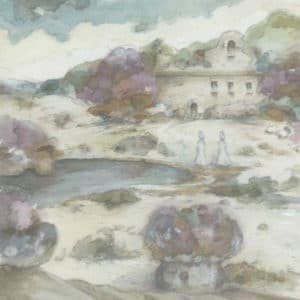
“Traces Ephémères”
2nd edition of 240 copies. Sleeve painting by Andrew Chalk. Eclectic ensemble of 18 instrumental arrangements evoking an epic and existential soundtrack determined by the power of momentary destiny and reflective sentiment. Music played by Andrew Chalk & Timo van Luijk. Clarinet by Jean Noël Rebilly. Piano and koto by Tom James Scott.
16,00€
Out of stock
LP
AF URSIN
“Aika”
Reprint of 2008 album. “Released on Timo Van Luijk’s own La Scie Dorée in 2008, this is Af Ursin’s third full length LP. Van Luijk is an autodidact who learned to make music in his own unique way. In the early 1990’s he formed - together with Geert Feytons - Noise Maker’s Fifes, a group that composed music for films, theater, installations and dance-performances. Most notably they composed their music with self made instruments, like trunks of dead trees.”
All instruments played by Timo van Luijk, recorded and mixed at Kulta Saha. Classical voice by G. Af Ursin, recorded Finland 1965. Piano on ‘Ombre Oubliée’ by F. Croene. Edition of 400 copies.
All instruments played by Timo van Luijk, recorded and mixed at Kulta Saha. Classical voice by G. Af Ursin, recorded Finland 1965. Piano on ‘Ombre Oubliée’ by F. Croene. Edition of 400 copies.
17,00€
Out of stock

LP
AF URSIN
“De overkant”
2nd edition of 300 copies (new cut, different sleeve).
A collection of 7 intimate pieces about detachment, the inner world,
timelessness, silence… Instrumentation : Hammond organ, voice, piano, guitar, harp, flute, percussion, field recordings. Played, recorded and produced by Timo van Luijk at Kulta Saha 2009 2014.
A collection of 7 intimate pieces about detachment, the inner world,
timelessness, silence… Instrumentation : Hammond organ, voice, piano, guitar, harp, flute, percussion, field recordings. Played, recorded and produced by Timo van Luijk at Kulta Saha 2009 2014.
17,00€
In stock

LP
Timo van LUIJK & Frederik CROENE
“Fortune de Mer”
Edition of 300 copies.
Played, recorded and mixed at Kulta Saha, April-September 2017.
In 9 sequences ‘Fortune de Mer’ describes the power and beauty of dramatic fate, the irreversible. Like a clause of force majeure, an unforeseen one way trip to the desperate bottom. After losing the long battle nothing is left, only acceptance and resignation.
Played, recorded and mixed at Kulta Saha, April-September 2017.
In 9 sequences ‘Fortune de Mer’ describes the power and beauty of dramatic fate, the irreversible. Like a clause of force majeure, an unforeseen one way trip to the desperate bottom. After losing the long battle nothing is left, only acceptance and resignation.
18,00€
In stock

LP
Timo van LUIJK & Frederik CROENE
“Voile au Vent”
2009. “The work that involves Timo van Luijk is always presented in the best possible way. No pennies are saved to make sure the listener has something great (literally in the shape of a LP) in his hands. No cheap, easy CD, but a small piece of art. Not that these art pieces provide you with much information. ’Voile Au Vent’ for instance just states the names of Van Luijk and Frederik Croene, when and where it was recorded and the name of the label, but nothing much else. Of Van Luijk we know he plays trumpet, electronics, toys and such like, and Croene, we learn somewhere else, is a piano player. Over the years Van Luijk has moved in his solo and collaborative work towards more traditional forms of improvised music. While he is responsible for the electronic part of it, always loose and free, waving just above the ground, the other player, a pianist in this case, places both of them on the ground with his playing. Although I must say that it seems to me here that Croene is also using electronics in his music. Four pieces are played here of which one”... Pour Que Le Vent...” has a regular rhythm of some kind, and is the most worked out, i.e. composed piece of music, it seems. But all four pieces are equally great I think. A remarkable outsider record, of someone who doesn’t care about trends and such like”. (Frans de Waard/Vital Weekly). Edition of 400 copies.” label info
15,00€
Out of stock

LP
GLORIAS NAVALES
“Cofradia Nautica”
Kye is proud to present “Cofradia Nautica” the debut LP by Chile’s Glorias Navales, and the follow-up to 2015’s “Carta a Maureen Tucker” cassette on ETCS. “Glorias Navales is a band based in Santiago, Chile, who combine local folk traditions and paganism with a post-Velvets aesthetic. Imagine Lou Reed, John Cale and Violeta Parra together, doing late night acoustic lo-fi trance jams in a rural area of Chile.” (Ivan Daguer)
Drawn from live concert tapes recorded at BYM Records, and recordings made in the band’s private practice space “Cofradia Nautica” offers a raw, unvarnished walkway straight into heart the of the contemporary Chilean underground. “Cofradia Nautica” arrives in a full-color matte stock sleeve with printed innersleeves, mastered by Jason Lescalleet, in an edition of 400.
Drawn from live concert tapes recorded at BYM Records, and recordings made in the band’s private practice space “Cofradia Nautica” offers a raw, unvarnished walkway straight into heart the of the contemporary Chilean underground. “Cofradia Nautica” arrives in a full-color matte stock sleeve with printed innersleeves, mastered by Jason Lescalleet, in an edition of 400.
19,00€
In stock

LP
MATHS BALANCE VOLUMES
“Absence”
Kye is proud to announce the release of ‘Absence’, the new LP by Maths Balance Volumes. Side A presents material recorded live at the Arts Center of St. Peter, Minnesota as part of Free Form Freakout’s ‘An Evening of Experimental and Improvised Sound’ (04/21/17) while Side B gathers unreleased home recordings from the previous decade. Visionary cassette-based constructs with enough crude mechanics and smudged internal logic to delight the corpse of Arthur Pétronio. Edition of 250 copies.
19,00€
Out of stock

LP
Michael MORLEY
“Moonrise”
Kye is proud to announce the release of “Moonrise”, the brand new solo LP by Michael Morley. After a 30-odd year history cutting electric music with the likes of Wreck Small Speakers on Expensive Stereos, The Dead C, and Gate, Morley opens a new chapture with “Moonrise”, being the first readily available document of the man in solo acoustic mode. “Moonrise was recorded as an experiment in my newly established recording studio to see what might happen if I played acoustic instruments only, with an ear to some early Spanish guitar music and the Persian oud. After 30 years of playing the acoustic guitar in private for no good reason, I decide to record the activity.” (Michael Morley).’Moonrise’ arrives in a full color Morley designed matte stock sleeve, with complimentary inner bags, in an edition of 500 copies.
20,00€
In stock

LP
Mark VERNON
“Lend an ear, leave a word”
Kye is proud to present “Lend an ear, leave a word” the new LP from Glasgow’s Mark Vernon. “The pieces composed for this album combine field recordings of contemporary Lisbon with found tape recordings from the past; reel-to-reel tapes, micro-cassettes and Dictaphones collected from the Feira de Ladra market, a popular and lively flea market in the Alfarma district. Each tape recording is an audio snapshot of a specific time; a family album in sound, a musical performance, a compilation of treasured music, or even just the fun of playing around with a tape recorder captured for posterity. Every thoughtless edit or push of the record button teleports us to a different time and place. The musical material extracted from the tapes is also an evocative signifier that locates it within a specific era. The interesting thing is how the tapes accumulate different strata of time even within a single side. There are consecutive chronological recordings but also sequences with unexpected breakthroughs where the user has carelessly fast-forwarded through the tape, randomly ‘dropping-in’ new recordings. These accidental edits create instantaneous new collages of sounds and voices. I have endeavoured to retain the essence of these unintentional edits and unexpected outbursts in the pieces I have assembled here. The noisy whir and clicking of the various tape mechanisms is evident on many of the found recordings. As the material is sped up and slowed down it acts as an internal clock, a continuous, steady marker of time, almost like the second hand of a timepiece. All of the pieces contained here within explore one particular environment - the city of Lisbon. Field recordings by their very nature are time-based but the introduction of found tapes into the mix expands the time-scale of these studies from just the short period spent in the city making recordings, backwards to possibly forty or more years in the past. It is a portrait in time *and* place, an archeology of sound. The result of the audio flotsam and jetsam washed up on the shores of low commerce in the flea markets of Lisbon.” (Mark Vernon) “Lend an ear, leave a word” arrives in a full color matte stock sleeve with insert and download card that features additional pieces left off the LP due to time constraints. Mastered by Jason Lescalleet in an edition of 400.
19,50€
In stock

LP
Marcia BASSETT & Samara LUBELSKI
“Sunday Night, Sunday Afternoon”
Sunday Night, Sunday Afternoon is the debut LP by the duo of Marcia Bassett
and Samara Lubelski. Both musicians have played crucial roles in the development of underground sound over the last 20 years, tinting the broad waters of abstract folk, chromatic noise and longform drone, and cementing themselves as cornerstone artists in the process. Sunday Night, Sunday Afternoon is the perfect synthesis of Bassett and Lubelski’s individual crafts - two sidelong forays into deep black string meditation that hang in the air like ghosts on Ludlow Street. Sunday Night, Sunday Afternoon was recorded, mixed by Barry Weisblat in 2010 in Brooklyn, NY, and arrives in a high gloss monochrome sleeve, in an edition of 500 copies.
and Samara Lubelski. Both musicians have played crucial roles in the development of underground sound over the last 20 years, tinting the broad waters of abstract folk, chromatic noise and longform drone, and cementing themselves as cornerstone artists in the process. Sunday Night, Sunday Afternoon is the perfect synthesis of Bassett and Lubelski’s individual crafts - two sidelong forays into deep black string meditation that hang in the air like ghosts on Ludlow Street. Sunday Night, Sunday Afternoon was recorded, mixed by Barry Weisblat in 2010 in Brooklyn, NY, and arrives in a high gloss monochrome sleeve, in an edition of 500 copies.
16,00€
In stock

LP
Dan MELCHIOR
“Home of the blues”
Kye is proud to present ‘Home of the Blues’, the latest LP by Dan Melchior, and his sophomore effort for the label following 2012’s now legendary ‘Excerpts (& Half-Speeds)’. For ‘Home of the Blues’ Dan agreed to undergo a series of exercises aimed not only at destabilizing his natural songwriting process, but also testing the durability of the blues idiom when placed under stress. As one would expect, Dan met the challenge with aplomb, hoisting the project beyond a one-dimensional art-school prank, toward a sincere and multi-faceted presentation of damage and survival as sound. ‘Home of the Blues’ arrives in a full color, high gloss sleeve featuring original artwork by Dan, with an accompanying 18” x 24” foldout poster, in an edition of 400 copies.
20,00€
In stock

LP
ZEITKRATZER
“performs songs from the albums “Kraftwerk” and “Kraftwerk 2”
Founded in 1997 by Reinhold Friedl, Zeitkratzer have since been creating an impressive catalogue of recordings that embraces 20th century avant-garde composers (Cage, Stockhausen, Lucier) as well as electronic artists (Carsten Nicolai, Terre Thaemlitz) or underground experimentalists like Throbbing Gristle or Column One. In their 20th anniversary year, the critically acclaimed ensemble will release a series of diverse albums that will explore new grounds in the typical, adventurous zeitkratzer way – the first of these albums is dedicated to Kraftwerk and their early, kraut-esque albums “Kraftwerk” and “Kraftwerk 2”. As Kraftwerk never re-released these albums, Zeitkratzer gave its best to cover the first tranche of the songs (second tranche to come…).
Recorded in Marseille, France in May 2016, the six tracks reveal a bucolic and even psychedelic aspect of the ensemble that’s mostly known (or feared) for its interpretatory and aesthetic acerbity. And yet there’s no doubt that “Songs From The Albums “Kraftwerk“ And “Kraftwerk 2“ turned out a true Zeitkratzer recording in the best and full meaning!
Zeitkratzer directed by Reinhold Friedl with Frank Gratkowski, flute, clarinets, Elena Kakaliagou, French horn, Hilary Jeffer, trombone, Reinhold Friedl harmonium, piano, Didier Ascour, guitar, Maurice de Martin, drums, Lisa Marie Landgraf, violin, Burkhard Schlothauer, violin, Elisabeth Coudoux, violoncello, Ulrich Phillipp, double bass.
Recorded and mixed by Martin Wurmnest. Mastered & cut by Mike Grinser at D&M, Berlin.
Recorded in Marseille, France in May 2016, the six tracks reveal a bucolic and even psychedelic aspect of the ensemble that’s mostly known (or feared) for its interpretatory and aesthetic acerbity. And yet there’s no doubt that “Songs From The Albums “Kraftwerk“ And “Kraftwerk 2“ turned out a true Zeitkratzer recording in the best and full meaning!
Zeitkratzer directed by Reinhold Friedl with Frank Gratkowski, flute, clarinets, Elena Kakaliagou, French horn, Hilary Jeffer, trombone, Reinhold Friedl harmonium, piano, Didier Ascour, guitar, Maurice de Martin, drums, Lisa Marie Landgraf, violin, Burkhard Schlothauer, violin, Elisabeth Coudoux, violoncello, Ulrich Phillipp, double bass.
Recorded and mixed by Martin Wurmnest. Mastered & cut by Mike Grinser at D&M, Berlin.
19,00€
In stock
LP
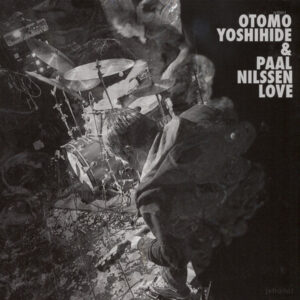
Otomo YOSHIHIDE & Paal NILSSEN-LOVE
The first duo release ever by these two masters of improvised music presents revelatory and astonishing music for electric guitar and drums. A landmark ! The LP comes in an awesome heavy and sturdy gatefold. The CD comes in a nice digipak. “This is one ear-cleansing ride. One to play loud and one to play on repeat for a couple of time. Excellent recording of an excellent concert.” Vital Weekly, number 935. Otomo Yoshihide: guitar. Paal Nilssen-Love: drums. Recorded at Copenhagen JazzHouse 4 May 2013.
18,00€
In stock

LP
ELEH
“Radiant Intervals I”
Eleh’s influential Radiant Intervals I, originally released on CD/LP in 2010, is a meticulously nuanced, restrained exploration of the rhythmic and harmonic relationships inherent in pure analog frequencies using a blend of intuitive and mathematically based tunings. Dense patterns of sound slowly unravel and are woven together again in new ways while harmonics hover and shift overhead. Radiant Intervals is a purely analog recording, made with a Serge Modular system, Mini Moog, Sequential Circuits Prophet 5 and a Pro-One.
Part two in the series will be available in 2017.
25,00€
In stock
LP
CHEVAL RÉTRÉCI – Will GUTHRIE – JUNKO
Cheval Rétréci (Romain Hebert, Shenhai / FX + Adrien Silvestre, Taepyongso / FX) with Will Guthrie on drums and Junko on voice. Analog noise with shamanistic accents. Close to “Brainnectar” from Rudolf Eb.er and also a direct tribute to “Consume Red” from Ground Zero.
Great work.
12,00€