
Out of stock

LP
Luc FERRARI
“Hétérozygote – Petite symphonie…”
Cut by Rashad Becker at Dubplates & Mastering, Berlin, October 2016. Digital Transfer: Jonathan Fitoussi. Translations: Valérie Vivancos. Layout: Stephen O’Malley. Coordination GRM: Daniel Teruggi & François Bonnet.
“Hétérozygote” (1963–1964).
Composed between December 1963 and March 1964. In the field of biology Heterozygous (Hétérozygote) means: a plant whose heredity is mixed. It implies that this composition is an attempt to engineer a language located both on the musical and on the dramatic plane. You could call this music “Anecdotal Music” for if the organisation of events is purely musical, their choice suggests situations justified at two levels: the music and the anecdote. However, the anecdote is hardly formulated and is open to plural interpretations. The listener is then asked to imagine their own story by rejecting – if necessary – the one suggested by the author. More specifically, the author suggests an anecdotal complex, potentially bearing several meanings. The work preceded by an opening is made of eight scenes, separated (or not) by interludes. And if we wished to push the paradox further, we could say that the titles of the scenes are optional and the interludes are also scenes, etc.
Petite symphonie intuitive pour un paysage de printemps (1973–1974), 25’09
“This electroacoustic music is part of a series that could be called “imaginary soundscape”. Unlike ‘Presque rien ou le lever du jour au bord de la mer (almost nothing or daybreak by the seaside)’, where the landscape narrates itself, here a traveller discovers a landscape which he tries to convey as a musical landscape.
Brunhild and I were in the Gorges du Tarn area. We chose to take a small path that was going up a rocky mountain for about ten kilometres. After a last turn, a totally unexpected landscape opened before my eyes. It was sunset. Before us, a vast plateau spread open with soft curves up to the horizon, up to the sun. The colours ranged from dry grass yellow to purple, in the distance, with the darkness of a few small groves punctuating the space. The almost bare nature was presenting itself to the eye, free from any obstacle. We could see everything. Later, when I recollected this place and the sensations I had experienced there, I tried to compose a music that could revive this memory. The "Causse Méjean" is a high plateau, about 1000 m high, in the Massif Central mountain range. It is dotted by scattered farms. A few people bring their flocks of sheep home. I thought about evoking this solitary and hazy human presence by including snippets of conversations I had had with some of the shepherds. Human language is woven into the musical texture; the sound of the voice says more than its actually meaning. Once, a shepherd told me “... I am never bored. I listen to the landscape. Sometimes I play my flute and then I listen to the echo responding...” Thinking of him, I used the flute and its echo in my music.” Luc Ferrari. October 18, 2002
————
Ten years separate Hétérozygote, a concrete piece regarded as the first to use “anecdotal sound materials” from the Petite symphonie intuitive pour un paysage de printemps, an “attempt to musically reproduce the impression of a landscape.” Ten years out of the fifty during which Luc Ferrari’s truly unique body of work unfolded, a work free from dogma which, through a singular type of listening, wrought a hymn to the living world, to the exploration and discovery of things, men and women who inhabit it. François Bonnet, Paris, 2016
“Hétérozygote” (1963–1964).
Composed between December 1963 and March 1964. In the field of biology Heterozygous (Hétérozygote) means: a plant whose heredity is mixed. It implies that this composition is an attempt to engineer a language located both on the musical and on the dramatic plane. You could call this music “Anecdotal Music” for if the organisation of events is purely musical, their choice suggests situations justified at two levels: the music and the anecdote. However, the anecdote is hardly formulated and is open to plural interpretations. The listener is then asked to imagine their own story by rejecting – if necessary – the one suggested by the author. More specifically, the author suggests an anecdotal complex, potentially bearing several meanings. The work preceded by an opening is made of eight scenes, separated (or not) by interludes. And if we wished to push the paradox further, we could say that the titles of the scenes are optional and the interludes are also scenes, etc.
Petite symphonie intuitive pour un paysage de printemps (1973–1974), 25’09
“This electroacoustic music is part of a series that could be called “imaginary soundscape”. Unlike ‘Presque rien ou le lever du jour au bord de la mer (almost nothing or daybreak by the seaside)’, where the landscape narrates itself, here a traveller discovers a landscape which he tries to convey as a musical landscape.
Brunhild and I were in the Gorges du Tarn area. We chose to take a small path that was going up a rocky mountain for about ten kilometres. After a last turn, a totally unexpected landscape opened before my eyes. It was sunset. Before us, a vast plateau spread open with soft curves up to the horizon, up to the sun. The colours ranged from dry grass yellow to purple, in the distance, with the darkness of a few small groves punctuating the space. The almost bare nature was presenting itself to the eye, free from any obstacle. We could see everything. Later, when I recollected this place and the sensations I had experienced there, I tried to compose a music that could revive this memory. The "Causse Méjean" is a high plateau, about 1000 m high, in the Massif Central mountain range. It is dotted by scattered farms. A few people bring their flocks of sheep home. I thought about evoking this solitary and hazy human presence by including snippets of conversations I had had with some of the shepherds. Human language is woven into the musical texture; the sound of the voice says more than its actually meaning. Once, a shepherd told me “... I am never bored. I listen to the landscape. Sometimes I play my flute and then I listen to the echo responding...” Thinking of him, I used the flute and its echo in my music.” Luc Ferrari. October 18, 2002
————
Ten years separate Hétérozygote, a concrete piece regarded as the first to use “anecdotal sound materials” from the Petite symphonie intuitive pour un paysage de printemps, an “attempt to musically reproduce the impression of a landscape.” Ten years out of the fifty during which Luc Ferrari’s truly unique body of work unfolded, a work free from dogma which, through a singular type of listening, wrought a hymn to the living world, to the exploration and discovery of things, men and women who inhabit it. François Bonnet, Paris, 2016
15,50€
Out of stock

LP
François BAYLE
“Tremblements…”
“Tremblement de terre très doux” (1978).
The familiar generates the strange. These rolls, these hums, these sudden rushes; this song, these peaceful circlings; these sudden outbursts, these returns to quiescence – what do they remind us of?
This piece’s trajectory could also be a representation of the dramatic unfolding of a day - of a life - from sunrise (climate 1) to night-time (landscape 4) via restless encounters, transitions (1 to 3) that announce the drama climaxing in landscape 3, before reaching its denouement in climate 4… A whole concrete ‘story’.
The subterranean properties inherent to listening gently shift our ideas…
François Bayle
First performance: 19 March 1979 – Grand Auditorium of Radio-France,
Ina-GRM’s Cycle Acousmatique. .
“Toupie dans le ciel” (1979)
A wave is swaying on two minors thirds. This constantly uniform yet constantly varied swaying revolves in a swarm of sharp designs that blink on and off in a layer of growing density and mobility. Distance, speed, pressure, density, temperature, colour, intensity, are the “themes” of the 27 short interconnected cells flowing together though this seemingly unified movement. Occasionally, a breach in the texture reveals skyes dotted with little comets. In the centre, a slow
gliding picks up the distant harmonics of a basic chord. Toward the end, this gliding returns with a fiery burst.
Fine lines and whirs are generated from the song of a spinning antique top.
To end on a lighter note the title Toupie dans le ciel – Spinning Top in the Sky reminds us of Lucy in the Sky with Diamonds by The Beatles as well as Lucy, the oldest Australopithecine (3 million years), our African grandmother in the Erosphere…The overall title Erosphere alludes to the desire inherent to the listening experience, and to the very primitive cues that sustain the auditory attention and are the basis of all musical pleasure.
François Bayle
First performance: 21 January 1980 – Grand Auditorium of Radio-France,
Ina-GRM’s Cycle Acousmatique.
The familiar generates the strange. These rolls, these hums, these sudden rushes; this song, these peaceful circlings; these sudden outbursts, these returns to quiescence – what do they remind us of?
This piece’s trajectory could also be a representation of the dramatic unfolding of a day - of a life - from sunrise (climate 1) to night-time (landscape 4) via restless encounters, transitions (1 to 3) that announce the drama climaxing in landscape 3, before reaching its denouement in climate 4… A whole concrete ‘story’.
The subterranean properties inherent to listening gently shift our ideas…
François Bayle
First performance: 19 March 1979 – Grand Auditorium of Radio-France,
Ina-GRM’s Cycle Acousmatique. .
“Toupie dans le ciel” (1979)
A wave is swaying on two minors thirds. This constantly uniform yet constantly varied swaying revolves in a swarm of sharp designs that blink on and off in a layer of growing density and mobility. Distance, speed, pressure, density, temperature, colour, intensity, are the “themes” of the 27 short interconnected cells flowing together though this seemingly unified movement. Occasionally, a breach in the texture reveals skyes dotted with little comets. In the centre, a slow
gliding picks up the distant harmonics of a basic chord. Toward the end, this gliding returns with a fiery burst.
Fine lines and whirs are generated from the song of a spinning antique top.
To end on a lighter note the title Toupie dans le ciel – Spinning Top in the Sky reminds us of Lucy in the Sky with Diamonds by The Beatles as well as Lucy, the oldest Australopithecine (3 million years), our African grandmother in the Erosphere…The overall title Erosphere alludes to the desire inherent to the listening experience, and to the very primitive cues that sustain the auditory attention and are the basis of all musical pleasure.
François Bayle
First performance: 21 January 1980 – Grand Auditorium of Radio-France,
Ina-GRM’s Cycle Acousmatique.
15,50€
Out of stock

LP
Christian ZANÉSI
“Grand Bruit – Stop! l’horizon”
“Grand Bruit” (1991).
The great mobile sound bodies have an ordinary yet amazing ability to place the listener-traveller within, as if he or she was inside a giant double bass, in this case a train stroked by a double bow: the rails and the air.
In 1991, I explored this phenomenon during my daily commute from the studio to my home. I used only a 21 minutes recording and treated it as a single sound object. I then processed and enhanced it as a photographer would have done, immersing it in successive 'baths'. The title I chose for this singular form was Grand Bruit.
“Stop ! l’horizon” (1983).
Saturday morning, nine o’clock as I reach the studio. No one here. I only turn on the spotlights as the fluorescent tubes are too noisy. I switch the power on, shut the door, unplug the telephone. I then switch the mixing desk on, which sends an electronic impulse into the amps. The four speakers react individually with a very brief and low hiss. A kind of presence. I haven’t listened to anything since the evening before and my ear is refreshed by a night’s sleep.
I feed the original mix into the master recorder and sit down in the centre.
Remote control: PLAY. With the first sound I close my eyes. The studio instantly vanishes. Another place, a much larger space opens up. I enter it. I have the very distinct feeling that music is merely a “great noise”, chiselled inside with a thousand details. It opens up like a living organism to let my hearing wander across it. A magnetic relation quickly occur and all the sounds that constitute this great noise draw me towards the East. I accept this direction. Later, much later, I reach a distant point on the horizon which pulls me towards it.
The great mobile sound bodies have an ordinary yet amazing ability to place the listener-traveller within, as if he or she was inside a giant double bass, in this case a train stroked by a double bow: the rails and the air.
In 1991, I explored this phenomenon during my daily commute from the studio to my home. I used only a 21 minutes recording and treated it as a single sound object. I then processed and enhanced it as a photographer would have done, immersing it in successive 'baths'. The title I chose for this singular form was Grand Bruit.
“Stop ! l’horizon” (1983).
Saturday morning, nine o’clock as I reach the studio. No one here. I only turn on the spotlights as the fluorescent tubes are too noisy. I switch the power on, shut the door, unplug the telephone. I then switch the mixing desk on, which sends an electronic impulse into the amps. The four speakers react individually with a very brief and low hiss. A kind of presence. I haven’t listened to anything since the evening before and my ear is refreshed by a night’s sleep.
I feed the original mix into the master recorder and sit down in the centre.
Remote control: PLAY. With the first sound I close my eyes. The studio instantly vanishes. Another place, a much larger space opens up. I enter it. I have the very distinct feeling that music is merely a “great noise”, chiselled inside with a thousand details. It opens up like a living organism to let my hearing wander across it. A magnetic relation quickly occur and all the sounds that constitute this great noise draw me towards the East. I accept this direction. Later, much later, I reach a distant point on the horizon which pulls me towards it.
15,50€
Out of stock

LP
The GUERILLA ART ACTION GROUP
“Action-Interview at WBAI Radio Station-N.Y.”
The participants making up The Guerrilla Art Action Group on this recording were Jon Hendricks, Poppy Johnson, Jean Toche. They were joined by Laurin Raiken, a member of the New York Free Theater and Art Workers Coalition.
The recording documents a liven bonne et dûe formee action/interview by the group on January 5, 1970 on the progressive radio station WBAI.
Action-Interview at WBAI Radio Station-N.Y. was first published in 1983 by Edizioni Lotta Poetica and Studio Morra as part of their Radio Taxi series. The gatefold sleeve contains the complete text of the performance. The LP is produced in an edition of 500.
The LP consists of a series of spoken statements describing the problematic relationship between art and business, art and the military, art and class, art and community, and art and race. Some of these statements are directed to an open public, but others are questions addressed to artists, forcing them to question their role in a dehumanizing, repressive, and corrupt system:
“How long will you accept being the repressed lackey of society’s manipulations?”
“Are you guilty of being a repressor?”
“Is it more important to you to sell your painting, or help human beings?”
“What is more important to you? To exhibit in a museum, or to fight for the human rights of the oppressed?”
These questions, like many of the group’s activities, undermine the notion that there is a separation between art and life or that art can enjoy an exemption from the systemic discrimination and corruption that permeates all aspects of American society. The group sought an artist model that could enact political and social change and they encouraged their fellow artists to follow suit by focusing less on aesthetic abstractions and more on direct personal experiences and expression. They believed that artists had become dehumanized through their willingness to operate inside of a racist and sexist cultural system that relied on corporate money while aiding and abetting a military that used art to distract people from wartime atrocities.
The recording documents a liven bonne et dûe formee action/interview by the group on January 5, 1970 on the progressive radio station WBAI.
Action-Interview at WBAI Radio Station-N.Y. was first published in 1983 by Edizioni Lotta Poetica and Studio Morra as part of their Radio Taxi series. The gatefold sleeve contains the complete text of the performance. The LP is produced in an edition of 500.
The LP consists of a series of spoken statements describing the problematic relationship between art and business, art and the military, art and class, art and community, and art and race. Some of these statements are directed to an open public, but others are questions addressed to artists, forcing them to question their role in a dehumanizing, repressive, and corrupt system:
“How long will you accept being the repressed lackey of society’s manipulations?”
“Are you guilty of being a repressor?”
“Is it more important to you to sell your painting, or help human beings?”
“What is more important to you? To exhibit in a museum, or to fight for the human rights of the oppressed?”
These questions, like many of the group’s activities, undermine the notion that there is a separation between art and life or that art can enjoy an exemption from the systemic discrimination and corruption that permeates all aspects of American society. The group sought an artist model that could enact political and social change and they encouraged their fellow artists to follow suit by focusing less on aesthetic abstractions and more on direct personal experiences and expression. They believed that artists had become dehumanized through their willingness to operate inside of a racist and sexist cultural system that relied on corporate money while aiding and abetting a military that used art to distract people from wartime atrocities.
18,00€
Out of stock
LP
C Spencer YEH
“RCA Mark II”
The RCA Mark II is a follow-up to Yeh’s recent vocal work and is focused solely on the non-musical operation of the famed RCA Mark II synthesizer. Built and installed in 1959 at Columbia University, it was the first programmable synthesizer and became the bedrock upon which the Columbia-Princeton Electronic Music Center was founded. The machine has not worked since 1997.
While visiting a friend at the university, Yeh discovered the synthesizer and began to make regular trips to work with it acoustically: flipping switches, rubbing surfaces, turning knobs, and plugging/unplugging cables. Using contact and room microphones, Yeh recorded these operations over the course of several sessions, and the recordings became the basis from which he composed this 12-track LP. The artist then further manipulated and processed the material through a series of live performances, which were recorded and edited to complete the album.
The finished tracks are jagged, sparse, and hypnotically rhythmic. In listening to the record, one does not so much hear the original synthesizer, but rather an artist dismantling the historical weight of the source through a composition of its transformation from a legendary machine to a one-ton hunk of scrap metal no longer operational. It is here perhaps that Yeh finds virtuosity and spectacle in the most basic acts of instrumentation, the movement and clank of mechanical parts.
The album was designed by Robert Beatty and includes liner notes by Andy Battaglia.
500 copies.
While visiting a friend at the university, Yeh discovered the synthesizer and began to make regular trips to work with it acoustically: flipping switches, rubbing surfaces, turning knobs, and plugging/unplugging cables. Using contact and room microphones, Yeh recorded these operations over the course of several sessions, and the recordings became the basis from which he composed this 12-track LP. The artist then further manipulated and processed the material through a series of live performances, which were recorded and edited to complete the album.
The finished tracks are jagged, sparse, and hypnotically rhythmic. In listening to the record, one does not so much hear the original synthesizer, but rather an artist dismantling the historical weight of the source through a composition of its transformation from a legendary machine to a one-ton hunk of scrap metal no longer operational. It is here perhaps that Yeh finds virtuosity and spectacle in the most basic acts of instrumentation, the movement and clank of mechanical parts.
The album was designed by Robert Beatty and includes liner notes by Andy Battaglia.
500 copies.
18,00€
In stock
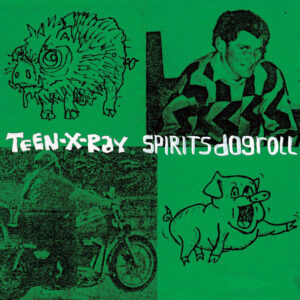
LP
TEEN-X-RAY
“Spirits Dogroll”
Edition limited to 300 copies.
A dogroll is a cheap giant sausage of bad meat to feed your pets. It’s a magic wand and it is a pizzle.
Teen-X-Ray came from Hamilton, NZ, which is known for agricultural innovation, frosts, fog and Taniwha in the Waikato river. Live cows with windows permanently inserted into their bodies for research live on the edge of town.
As Stefan ‘Smetal’ Neville recalls: “Glen Frenzy asked me to join his new ‘rock n roll’ band Teen-X-Ray at a ska concert at the Hillcrest Tavern in Hamilton in 1993. He had probably already recorded most of the first cassette ‘The Ballad Of Vince Neil’ using the karaoke sound on sound function of his flat-mates stereo. Then & now I would do anything Glen asked of me so I’ve been in X-Ray ever since”.
Glen also recruited Dusk, his girlfriend’s German Shepard who howled when she heard sirens. She would bite and claw at Casio keyboards. She didn’t share her dogroll. Teen-X-Ray recorded their music on cassette decks, performed on top of kitchen tables and released many tapes on the Plop, M60 and Stabbies And The Rocket labels.
Glen and Dusk got a reel-to-reel tape machine, moved to Upper Hutt and could make noise long into the night. Dusk got into Neil Young and killing mice while Glen got into home brewing beer and computers. Stefan Neville moved to Dunedin but Upper Hutt became his favorite holiday destination and each visit would result in new albums. Upper Hutt is known for its pig hunting and for producing NZ’s first Hip Hop group.
Spirits Dogroll was compiled from recordings from 1994-1996. Teen-X-Ray is still active today.
LP in full color sleeve issued in an edition of 300 copies.
19,50€
In stock
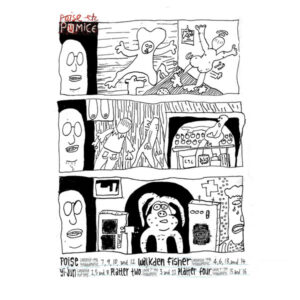
LP
PUMICE
“Poise etc”
A collection of Pumice recordings from 1993-99 when teenagers Sugar Jon Arcus and Stefan Neville learned about music by doing it. The album covers the earliest days of the band recording on ghetto blasters with untuneable guitars at home in Whatawhata and Hamilton, NZ. There are a couple of recordings from their first public performance with drummer Ugly Dog Davies where their friends yelled at them relentlessly. There is material from the years living in Dunedin, NZ with cassette 4 track machines. Living cheaply in a cheap city with pet dogs and all the time in the world. Finally the album includes music from the move back north to Hamilton and Auckland. Material that was released in microscopic editions as lathe cut 7 inches and cassettes and the last times Jon participated in Pumice activities. The LP features trio, duo and solo recordings by both Jon and Stefan.
The basic multi-directional creative impulse that Pumice is known for today is there from the beginning. One chord pop songs, crumbling folk music and smeared organ sound sculptures. Small speakers shitting themselves with distortion and tape saturation. Acoustic guitars twanging and Stefan and Jon clearly learning to write songs of real quality. This music making manages to be bold, reckless and stupid, as well as delicate, sad and instinctive. Pumice has always done whatever the fuck it wants to.
Edition of 300 copies in silkscreened sleeve.
19,00€
In stock
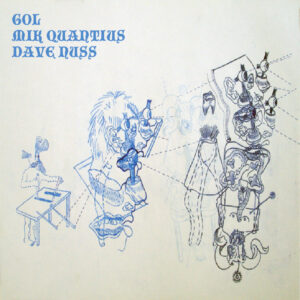
LP
GOL – Mik QUANTIUS – Dave NUSS
“Bruxelles”
Drinking Belgian beer in a moisty cellar after an exhausting night might be the best situation to jump on the instruments that surround you and gig over and over again until you barely find the way to gather your legs together and improve the tricky exercise of wasted walking. This is what seems to have happened that frozen night of September 19th, 2009 when Dave Nuss (No Neck Blues Band, Sabbath Assembly) wrung from his Amolvacy concert and accompanied by mate Mik Quantius (Embryo) accepted GOL’s perverse invitation to pursue the darkness of Brussels abusing of the aforementioned liquid. Warped and deep bass lines support the disturbed vocalisms and spontaneous words of Mister Quantius shaped by a shamanistic percussive Nuss while the crispy electronics and whatsoever instruments by the french GOL combo reach out for a "blues" extravaganza that says it all with lyrics such as "I have sex on Christmas" or “Tomorrow maybe not”. Gollaboration No.5, recorded at 2 am by Yann Leguay. LP cover and insert with drawings by Mattia Denisse giving a hint of this twisted and skittish psychedelic must have. One-time pressing edition limited to 300 copies.
19,00€
In stock
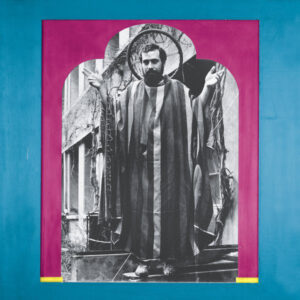
LP
PAPIRO
“Teopatia”
The subtitle of this album describes it as “Messa in scena arcaica per strumenti elettronici e voci ingannevoli” - a play of words which could be translated as “Mass in an archaic scene (or archaic enactment) for electronic instruments and deceptive voices”. The italian graphic designer and musician Marco Papiro deliberately plays with different forms of religious music, and loosely oscillates between the spiritual and the illusory world, starting on the cover where we can see a self-portrait of his father disguised as a saint with a steering wheel in place of the halo. As for the voices, they are deceptive in a double sense... Not only because they seem to promise eternal bliss, but also because they are completely artificial, and have been masterfully created - like everything here - from scratch with an array of aged modular synthesizers. It’s the thin line between the human warmth and the eeriness of its simulation that makes up the fascination of the music on “Teopatia”, which by the way is the term used to describe an indirect divine contact. Though this record might be too odd to become a religious classic, it might very well help future generations understand the turmoil of an early 21st-century youth converting to synthesizers after growing up with catholicism. First pressing limited to 300 copies of which only the half are available for distribution outside Switzerland.
19,00€
Out of stock
LP
GOL – TAZARTES
“Alpes”
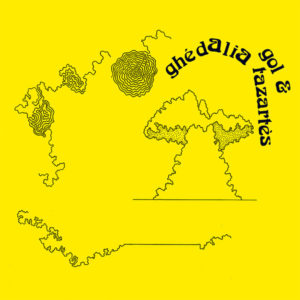
The sixth Gollaberration features a rather odd encounter indeed! It all happened when matchless vocalist Ghedalia Tazartes challenged GOL dada-style quartet. Ghedalia threw in the game his pan-africanasian singing techniques blending gypsy, jewish and trans-continental flavor. GOL exceeded on Electric Mandoline, Jew’s Harps, Percussions, Janotron, Flutes, Electric Guitar, Bass Guitar, Electronic Garage and Voice. Together with Ghedalia they developed into what became a "bal musette" for mentally disabled. Reaching at some points the sides of rock that doesn’t roll, this sonic attack jumps from topic to topic as a ritualistic anthology of unknown "ritournelles". Such a decadence was hardly contained in the neutral environment of the Swiss Cultural Center in Paris where the recording took place on Feb 22nd and 23rd, 2011. Tired liver resonances accurately rendered by the acid yellow cover created by Dennis Tyfus of Ultra Eczema. A mountain peaks journey below the very heart of no-where Europe to be consumed gently without skis on. One-time pressing edition limited to 400 copies.
20,00€
In stock
LP
THEE IDEAL GUS
“99”
Thee Ideal Gus began in Hamilton, New Zealand in the early 90’s and sprung from the same gene pool and time as Armpit, Gfrenzy and Pumice. Its participants include Sugar Jon Arcus, Clayton Noone, Indira Neville, Kaatarama “Motty” Morehu, Stefan Neville, Witcyst, Dan “Eemonk” Powell and Rachel Garbott but membership has never been settled or defined. The band have released numerous cassettes and lathe cut records on cult labels such as Plop, Root Don Lonie For Cash, Extemporaneous and Stabbies And The Rocket Recordings.
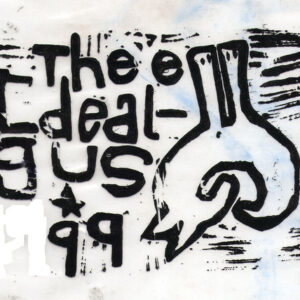
Thee Ideal Gus love double barrelled year numbers so during the year 1999 daily recordings were conducted in Whangarei and Wellsford in the far north of New Zealand, and Dunedin in the far south. Diaries were kept, artwork was assembled and tapes were posted up and down the country. The resulting material was released in an edition of 20 lathe cut 2 LP’s as “1999” by Stabbies And The Rocket Recordings.
This “99” LP is a selection of material compiled from that ridiculous obscurity by Clayton Noone & Stefan Neville. The music Thee Ideal Gus made that year documented the days as they happened. It charted weather patterns, prophesized the future and celebrated team sports. Eddie Murphy and Yoko Ono are held in equal high regard. Nude drunk partying and the New Zealand general election of 1999 are all there in this record where a rusted clothes line is played alongside a primary school xylophone, sampled techno records and ukulele through a heavy metal pedal. It is mundane and marvelous.
Edition of 200 copies in very elaborate packaging, including prints on acetate, xerox inserts and several hand-drawn original artworks.
19,00€
In stock
LP
ARMPIT
“Leisure & The Elderly”
Edition limited to 300 copies.
As reported by Stefan Neville…
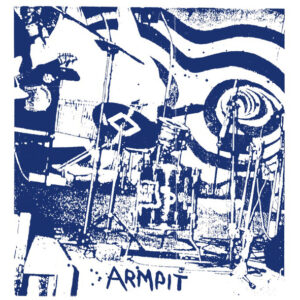
Clayton “CJA” Noone and Jon “Sugar Jon” Arcus are some of my oldest and dearest friends. I’ve been listening to their band Armpit pouring out infinite sweat and toe jams for 20+ years and I still can’t work out what Armpit even is. They are the wrongest band I’ve ever heard.
We were all part of the same gang in early 1990s Hamilton, New Zealand. Armpit would always happen in rooms next door. They would keep me awake with the eternal strumming of bad guitars through bad equipment, bottles falling over, people falling over, things catching fire and always lots of giggling. I saw them play at a party once where they were too wasted to plug in their guitar pedals. They wrestled with them giggling for about ten minutes and then gave up. They didn’t make a sound but it’s one of the greatest concerts I’ve ever seen.
Their recordings are always confusing. They display their deepest awful humanity and their sweet sweet heart’s all in the same mouthful. Scorched hateful noise, incompetent absurdity, smoochy crooning folk songs with poignant words & brutal sausage fingered editing to highlight the horror and hilarity.
“Leisure & The Elderly“ was recorded in Dunedin in the mid 1990’s. Jon was doing a Nursing foundation course and learnt to simulate giving a skinhead a sponge bath. A classmate gave him some of her tortured poetry so Armpit blended it with a Nursing textbook and disappeared into the room next door to record the album in one go ping ponging recordings with two tapedecks.
It was originally released on cassette in an edition of just 3 copies.
Edition limited to 300 copies in silkscreened sleeve.
19,50€
In stock
LP
WITCYST
“Soibiast Anti-Culler”
Edition limited to 300 copies
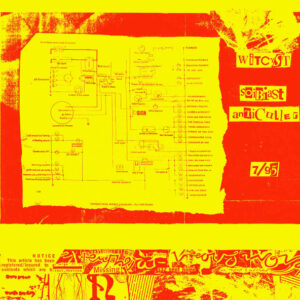
Recorded in 1995 by the winterless north of New Zealand’s Witcyst. Another monolithic skid mark serving of crackers plucked from the man’s vast lifetime archive of sound making and beard.
Witcyst makes his music with oceans of constant daily mutation. Machines get used upside down and back to front and inside out. Layers of string, tin foil and expired medicine are saved up to dazzle the eye. Parcels in the post come and go full of nostril hair and pamphlets and wool. What would that sound like through a funnel and a heavy metal pedal? Is the room shrinking? One knock for yes. Two for no.
This audio is severely distressed and swollen. It is particularly buried and murky and howling here. Are they voices or organs? Meat or musical instruments? Is that a drum solo or decades of tape degradation? Are the hums musical or malfunction? It starts to sound like it was recorded inside your brain and has always been there. I wonder if it means us any harm? And then it starts to sound like a basket full of wise puppies.
“Soibiast Anti-Culler” is one of the most relevant works among at least a thousand albums Witcyst has originally released on cassettes and CDR’s on his own Extemporaneous and Lifespace labels since the early 1990s.
Edition limited to 300 copies in silkscreened sleeve.
19,50€
In stock
LP
MENSTRUATION SISTERS
“Glass walking”
Pica Disk is proud to release “Glass Walking” - an LP of recently unearthed recordings by the infamous Australian noise band Menstruation Sisters.
Over the years the Menstruation Sisters have through a selective, but incredibly varied output of albums steadily built a reputation among music fans as a unique band. It was never a secret who the members of Menstruation Sisters were, yet the band’s aura was shrouded in mystery and confusion, possibly because they would completely reinvent themselves with every new recorded statement. As a fan of the Menstruation Sisters you had to abandon everything you knew with each new piece of the puzzle.
And now we can go back to the beginning, the birth of the Sisters, as by pure luck early previously unreleased material from 1995 was recently discovered in the vaults in Perth’s Endless Studios archives. On these recordings the band was the duo of Oren Ambarchi and Nik Kamvissis, but with producer Anthony Maher assisting and performing on some tracks. Ambarchi and Kamvissis would continue as a duo until Brendan Walls joined in 2001
The material heard on “Glass Walking” has a different flavor to the albums that would follow. Fans will immediately be struck by the almost total absence of drums and guitars, as the music on “Glass Walking” is built around electronics and vocals. This makes the music feel more immediate, urgent and desperate. Tracks like “Give Blood” and “Don’t Fuck” reveals the missing link between Hanatarash, Maurizio Bianchi and the monkeys in the Evolution Revolution band. This is noise music history in reverse.
The album also contains the first Menstruation Sisters live concert, which documents that the band’s ferocious performance antics were also fully developed from the very first time they set foot on stage. This is the complete set, all glorious 9 minutes and 35 seconds of it.
“Glass Walking” will only be available on vinyl and comes with liner notes and archival photos that explains everything.
Over the years the Menstruation Sisters have through a selective, but incredibly varied output of albums steadily built a reputation among music fans as a unique band. It was never a secret who the members of Menstruation Sisters were, yet the band’s aura was shrouded in mystery and confusion, possibly because they would completely reinvent themselves with every new recorded statement. As a fan of the Menstruation Sisters you had to abandon everything you knew with each new piece of the puzzle.
And now we can go back to the beginning, the birth of the Sisters, as by pure luck early previously unreleased material from 1995 was recently discovered in the vaults in Perth’s Endless Studios archives. On these recordings the band was the duo of Oren Ambarchi and Nik Kamvissis, but with producer Anthony Maher assisting and performing on some tracks. Ambarchi and Kamvissis would continue as a duo until Brendan Walls joined in 2001
The material heard on “Glass Walking” has a different flavor to the albums that would follow. Fans will immediately be struck by the almost total absence of drums and guitars, as the music on “Glass Walking” is built around electronics and vocals. This makes the music feel more immediate, urgent and desperate. Tracks like “Give Blood” and “Don’t Fuck” reveals the missing link between Hanatarash, Maurizio Bianchi and the monkeys in the Evolution Revolution band. This is noise music history in reverse.
The album also contains the first Menstruation Sisters live concert, which documents that the band’s ferocious performance antics were also fully developed from the very first time they set foot on stage. This is the complete set, all glorious 9 minutes and 35 seconds of it.
“Glass Walking” will only be available on vinyl and comes with liner notes and archival photos that explains everything.
14,00€
Out of stock
LP
SULT – Lasse MARHAUG
“Harpoon”
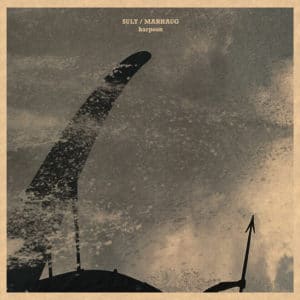
Håvard Skaset / Jacob Felix Heule / Guro Skumsnes Moe / Lasse Marhaug. Recorded at Tunnelen, Oslo, May 2014. Mixed at the best studio in Oslo, 2015–2016. A collaborative LP of acoustic improvisors SULT (Håvard Skaset: guitar / Jacob Felix Heule: percussion / Guro Skumsnes Moe: double bass) and Norwegian sound artist Lasse Marhaug. The source material is performed by SULT, while the album was constructed and produced by Lasse Marhaug. In the hands of Marhaug the already dense and visceral expression of SULT is transformed into a maelstrom of layered sheets of scraping noise, rising and collapsing simultaneously. Some listeneres will place “Harpoon” in the proximity of artists like Organum, David Tudor and Ferial Confine, but the music carves its own place in the landscape. A joint release between Pica Disk and Conrad Sound, limited to 200 copies.
14,00€
Out of stock
LP
Stine Janvin MOTLAND
“In labour”
Stine Janvin Motland is a vocal performer from Stavanger, Norway. She has been active for a number of years in different constellations and as a solo performer, but In Labour is her debut solo album. Stine has a distinct way of working with her voice - with a strong focus on intervals, repetition and texture.
In Labour is recorded and produced by Lasse Marhaug.
The recordings were made at various outdoor and indoor locations in Norway during the summer and autumn of 2013. The idea was to place Stine in challenging sonic environments, and to explore how the surroundings affected the performances. The locations were picked for their sonic qualities.
In Labour is both a solo voice and a field-recording album at the same time, but it is quite different from what either of these usually sound like.
180 gram vinyl LP.
In Labour is recorded and produced by Lasse Marhaug.
The recordings were made at various outdoor and indoor locations in Norway during the summer and autumn of 2013. The idea was to place Stine in challenging sonic environments, and to explore how the surroundings affected the performances. The locations were picked for their sonic qualities.
In Labour is both a solo voice and a field-recording album at the same time, but it is quite different from what either of these usually sound like.
180 gram vinyl LP.
14,00€
In stock
LP
Chee Wai YUEN – Lasse MARHAUG
“In Praise of Shadows”
Yuen Chee Wai is a musician, artist, designer and curator based in Singapore. Often inspired by ideas drawn from philosophical and literary texts, and perspectives glimpsed through the filmic eye and photographic lens, Yuen’s stylistic oeuvre in improvised music is marked by internalised reflections on memory and loss, invisibility and indeterminacy. In 2008, he teamed with Otomo Yoshihide (Japan), Ryu Hankil (South Korea), and Yan Jun (China) to form FEN (Far East Network), a music quartet that continues to work with multifaceted networks and collaborations between musicians and artists across Asian countries. He is also a member of the avant-rock band The Observatory, with whom he plays guitar, synth and electronics.
Lasse Marhaug has since the early 1990s been one of the most active artists in the Norwegian noise/experimental music scene. As a performer and composer he has contributed to well over 300 CD, vinyl and cassette releases over the years, as well as extensive touring and performing live on all continents of the world. In addition to his solo work, Marhaug has collaborated with many artists in the fields of noise, experimental, improv, jazz, rock and metal, as well as working with music and sound for theatre, dance, installations, cinema and video.
In 2006, the two spent a full night recording together at the now defunct FluxUs record store in Singapore. The material for the sessions were partially mixed, but remained unfinished. Ten years later, in 2016, the two met again to record in Marhaug’s Oslo studio. The previous recording wasn’t thought of during the new session, but in the course of the mixing it was discovered that the two recordings fit together like a glove. The long-form droney 2006 sessions, recorded late at night in the humid heat of Singapore, complimented the more angular electronic 2016 recording, which was captured in daytime during the brutally cold January winter of Norway. The opposing qualities of the sessions complemented each other, and now the result is available as “In Praise of Shadows”. Sometimes it takes ten years to make an album.
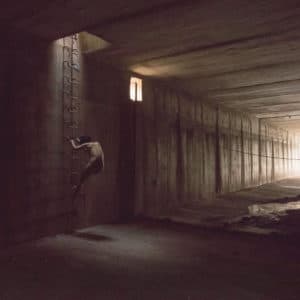
“In Praise of Shadows” is co-released by Pica Disk and Ujikaji Records as a vinyl LP, as well as streaming/download via Bandcamp. The LP features liner notes by Marhaug, as well as photography by Philipp Aldrup.
Yuen Chee Wai - Computer (2006), Guitar and electronics (2016).
Lasse Marhaug - Computer (2006), Electronics (2016).
Only 50 copies available through Metamkine.
Lasse Marhaug has since the early 1990s been one of the most active artists in the Norwegian noise/experimental music scene. As a performer and composer he has contributed to well over 300 CD, vinyl and cassette releases over the years, as well as extensive touring and performing live on all continents of the world. In addition to his solo work, Marhaug has collaborated with many artists in the fields of noise, experimental, improv, jazz, rock and metal, as well as working with music and sound for theatre, dance, installations, cinema and video.
In 2006, the two spent a full night recording together at the now defunct FluxUs record store in Singapore. The material for the sessions were partially mixed, but remained unfinished. Ten years later, in 2016, the two met again to record in Marhaug’s Oslo studio. The previous recording wasn’t thought of during the new session, but in the course of the mixing it was discovered that the two recordings fit together like a glove. The long-form droney 2006 sessions, recorded late at night in the humid heat of Singapore, complimented the more angular electronic 2016 recording, which was captured in daytime during the brutally cold January winter of Norway. The opposing qualities of the sessions complemented each other, and now the result is available as “In Praise of Shadows”. Sometimes it takes ten years to make an album.
“In Praise of Shadows” is co-released by Pica Disk and Ujikaji Records as a vinyl LP, as well as streaming/download via Bandcamp. The LP features liner notes by Marhaug, as well as photography by Philipp Aldrup.
Yuen Chee Wai - Computer (2006), Guitar and electronics (2016).
Lasse Marhaug - Computer (2006), Electronics (2016).
Only 50 copies available through Metamkine.
17,00€
In stock
LP
Bjørn HATTERUD – André BORGEN
“Dalstrøka Bortafor”
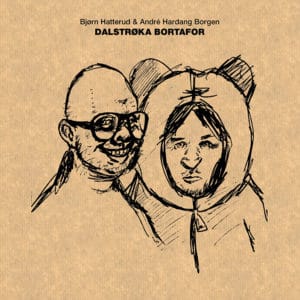
Bjørn Hatterud and André Hardang Borgen have been staples of the Norwegian experimental music underground for 20+ years. Individually they have been active with numerous projects – spanning from post-ironic queernoise and decontructed folk plunderphonics to cloudy guitar psychedelia and hard hitting avant boogie – both musicians have wandereed the kind of adventurous artistic paths that starts to make sense when viewed in hindsight, revealting continuous multidisciplinary lines of ideas.
Despite being long-time collaborators Dalstrøka Bortafor is Hatterud and Borgens debut album as a duo. It’s also a record that took 13 years to make. Not that the twosome were aiming to making an album, Dalstrøka Bortafor slowly fell in place through numerous recording sessions that accumulated and eventually took the shape of an album. (You can’t rush magic).
The six tracks that make the album are dream-like electronic excursions, with layers of synth, guitar, percussion, viola and found sounds the duo weaves a sonic tapestry that hints at a kinship to 1970’s German electronic music pioneers. This is probably not accidental, as Hatterud collaborated with Conrad Schnitzler in the years before his passing. But there’s more to it, the Norwegian title translates to The Valleys Beyond – and this is music that brings you deep into Norwegian folklore, with trolls, draugen and other mythical creatures lurking within the forest. But, Hatterud and Borgen are there to guide you through the mysterious landscape, making sure that you come out at the other end unharmed.
Available on LP in an edition of 200 copies, and on all digital platforms.
Despite being long-time collaborators Dalstrøka Bortafor is Hatterud and Borgens debut album as a duo. It’s also a record that took 13 years to make. Not that the twosome were aiming to making an album, Dalstrøka Bortafor slowly fell in place through numerous recording sessions that accumulated and eventually took the shape of an album. (You can’t rush magic).
The six tracks that make the album are dream-like electronic excursions, with layers of synth, guitar, percussion, viola and found sounds the duo weaves a sonic tapestry that hints at a kinship to 1970’s German electronic music pioneers. This is probably not accidental, as Hatterud collaborated with Conrad Schnitzler in the years before his passing. But there’s more to it, the Norwegian title translates to The Valleys Beyond – and this is music that brings you deep into Norwegian folklore, with trolls, draugen and other mythical creatures lurking within the forest. But, Hatterud and Borgen are there to guide you through the mysterious landscape, making sure that you come out at the other end unharmed.
Available on LP in an edition of 200 copies, and on all digital platforms.
14,00€
In stock

LP
ÉTANT DONNÉS
“Aurore”
First vinyl reissue originally released on CD in 1990 by Touch.
“Through them, it is the volume of each word that becomes an “objectsculpture”.The word, the voice, the volume take shape with each other, unveiling a theatre that theatre usually ignores. In the power of voices and semantics, as well as in the severe body/mind combination, inseparable from each other, I find in Aurore a song of the bodies, indispensable to any sound values” Henri Chopin.
Penultimate Press presents the first release in a threepart series based around the four fieldrecordingbased works made between 1990 and 1994 by the legendary French act Étant Donnés (brothers Eric and Marc Hurtado, born 1959 and 1962 respectively in Rabat, Morocco).
Aurore opens the triptych and is made from ambient sounds collected like dew from nature. The gathered sounds were then used as a sound texture for the poems strewn among the field resulting in a single entity of arresting sound and text. Aurore is focused around an alchemical fire/water battle, this water which does not wet the hands. Aurore shares some convulsive movements that establish a link with Étant Donnés's earlier works, for instance that exuding scream, worthy of the one Artaud uttered in his legendary 1947 radio program Pour en finir avec le jugement de Dieu. Eric and Marc Hurtado succeed in achieving what many sages consider to be the very purpose of magical art: to
create one's own ritual and, being one's own referent, to become a vibrating point in the cosmos and be receptacle for natural energy, in the heat of the sun in an attempt to merge with the Whole. Aurore comes remastered and repackaged in a highgloss sleeve with fully printed highgloss inner sleeve, in
a limited edition of 500 copies. It remains an extreme and beautiful sonic journey sitting outside of time.
“Listening to Aurore, our two actors' record, undoubtedly owing to the influence of the Mediterranean cradle, single umbilical cord of two great religions, the influence of both Latin and Arab worlds Gaelic short and long sounds can sometimes be perceived since their dictions are such a synthesis of several origins. Any true sound poetry is shattering, the really oral one is there in space,
with the plus of the media machines, of the voices that slip through them, overwhelming them with the splendor of the bodies”. Henri Chopin
“Through them, it is the volume of each word that becomes an “objectsculpture”.The word, the voice, the volume take shape with each other, unveiling a theatre that theatre usually ignores. In the power of voices and semantics, as well as in the severe body/mind combination, inseparable from each other, I find in Aurore a song of the bodies, indispensable to any sound values” Henri Chopin.
Penultimate Press presents the first release in a threepart series based around the four fieldrecordingbased works made between 1990 and 1994 by the legendary French act Étant Donnés (brothers Eric and Marc Hurtado, born 1959 and 1962 respectively in Rabat, Morocco).
Aurore opens the triptych and is made from ambient sounds collected like dew from nature. The gathered sounds were then used as a sound texture for the poems strewn among the field resulting in a single entity of arresting sound and text. Aurore is focused around an alchemical fire/water battle, this water which does not wet the hands. Aurore shares some convulsive movements that establish a link with Étant Donnés's earlier works, for instance that exuding scream, worthy of the one Artaud uttered in his legendary 1947 radio program Pour en finir avec le jugement de Dieu. Eric and Marc Hurtado succeed in achieving what many sages consider to be the very purpose of magical art: to
create one's own ritual and, being one's own referent, to become a vibrating point in the cosmos and be receptacle for natural energy, in the heat of the sun in an attempt to merge with the Whole. Aurore comes remastered and repackaged in a highgloss sleeve with fully printed highgloss inner sleeve, in
a limited edition of 500 copies. It remains an extreme and beautiful sonic journey sitting outside of time.
“Listening to Aurore, our two actors' record, undoubtedly owing to the influence of the Mediterranean cradle, single umbilical cord of two great religions, the influence of both Latin and Arab worlds Gaelic short and long sounds can sometimes be perceived since their dictions are such a synthesis of several origins. Any true sound poetry is shattering, the really oral one is there in space,
with the plus of the media machines, of the voices that slip through them, overwhelming them with the splendor of the bodies”. Henri Chopin
16,00€
Out of stock
LP
KSIEZYC
“Ksiezyc”
2017 repress of the classic 1996 debut recording by Polish outfit Ksiezyc (Moon).
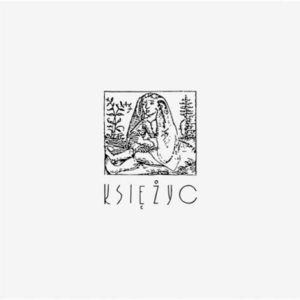
Penultimate Press is proud to re-issue the defining statement by Polish outfit Ksiezyc (Moon). Ksiezyc was a project from Poland, active in the 1990s.
Members included Agata Harz (vocals), Katarzyna Smoluk (vocals, piano), Robert Nizi ski (wind instruments, keyboards), Lechos aw Polak (accordion, keyboards, synthesizers) and Remigiusz Mazur-Hanaj (lyrics, tapes). The spirit of Ksiezyc captures early and late music with a medieval sound, rooted in Slavic tradition combined with elements of minimalism and vocal experiments of the 20th Century. The alchemy of these constituent parts results in a breathtaking original music, both delicate and sinister. The surreal fairy tale inspired lyrics (written by Remigiusz Mazur-Hanaj) add to the inherent beauty, sadness and madness within.
Originally released on 10” vinyl on Obuh records this has been remastered by Piotr Nykiel at Nykiel Audio and cut on 12” allowing for vastly improved sound quality. An elegant reworking of the artwork introduces lyrics including English translations for the first time.
“Ksiezyc” comes in a beautiful gatefold with printed inner sleeve. Limited to 500 copies.
Penultimate Press is proud to re-issue the defining statement by Polish outfit Ksiezyc (Moon). Ksiezyc was a project from Poland, active in the 1990s.
Members included Agata Harz (vocals), Katarzyna Smoluk (vocals, piano), Robert Nizi ski (wind instruments, keyboards), Lechos aw Polak (accordion, keyboards, synthesizers) and Remigiusz Mazur-Hanaj (lyrics, tapes). The spirit of Ksiezyc captures early and late music with a medieval sound, rooted in Slavic tradition combined with elements of minimalism and vocal experiments of the 20th Century. The alchemy of these constituent parts results in a breathtaking original music, both delicate and sinister. The surreal fairy tale inspired lyrics (written by Remigiusz Mazur-Hanaj) add to the inherent beauty, sadness and madness within.
Originally released on 10” vinyl on Obuh records this has been remastered by Piotr Nykiel at Nykiel Audio and cut on 12” allowing for vastly improved sound quality. An elegant reworking of the artwork introduces lyrics including English translations for the first time.
“Ksiezyc” comes in a beautiful gatefold with printed inner sleeve. Limited to 500 copies.
21,00€
In stock
LP
ETANT DONNÉS
“Royaume – Aimant + Aimant-”
Royaume / Aimant + Aimant- is second in the three part reissue series focussing on the works of Etant Donnes based around field recording and voice.
Run horse run
Sting bee sting
Fly fish fly
Burn miracle burn
How beautiful your eyes are when they look into the void
Marc Hurtado
Royaume (originally a CD on Touch, 1991) is made up of 4 tracks and is a kind of purifying travel through the four elements which symbolically refers to the light evoked by the colour green, an allegory of the grail and of the lightcarrier angel. As to the poems, they tend to amount to their essentials, as is the case in Matin which is both Taoist and surrealistic. Aimant + Aimant - (originally as a split 10”/CD on Danceteria,1992) presents itself as a magical alchemical mantra based upon the force of love, the force of life. Two pole like two bodies like two hearts like two magnets.
“Like true buffoons from ultra - world, Eric and Marc Hurtado succeed in achieving what many sages consider to be the very purpose of magical art : to create one’s own ritual and, being one’s own referent, to become a vibrating point in the cosmos and be a receptacle for natural energy, like those bright patches or that black point recurring in their magical music, real poemspaintings
and irremediably aiming, like an insect caught between the circle and the cross, in the heat of the sun in an attempt to merge with the Whole”. Stephane Duval
Two pole like two bodies like two hearts like two magnets.
The wind, the sea, the breath, the fire.
Nothing more than nothing.
Everything is in everything.
Marc Hurtado
Run horse run
Sting bee sting
Fly fish fly
Burn miracle burn
How beautiful your eyes are when they look into the void
Marc Hurtado
Royaume (originally a CD on Touch, 1991) is made up of 4 tracks and is a kind of purifying travel through the four elements which symbolically refers to the light evoked by the colour green, an allegory of the grail and of the lightcarrier angel. As to the poems, they tend to amount to their essentials, as is the case in Matin which is both Taoist and surrealistic. Aimant + Aimant - (originally as a split 10”/CD on Danceteria,1992) presents itself as a magical alchemical mantra based upon the force of love, the force of life. Two pole like two bodies like two hearts like two magnets.
“Like true buffoons from ultra - world, Eric and Marc Hurtado succeed in achieving what many sages consider to be the very purpose of magical art : to create one’s own ritual and, being one’s own referent, to become a vibrating point in the cosmos and be a receptacle for natural energy, like those bright patches or that black point recurring in their magical music, real poemspaintings
and irremediably aiming, like an insect caught between the circle and the cross, in the heat of the sun in an attempt to merge with the Whole”. Stephane Duval
Two pole like two bodies like two hearts like two magnets.
The wind, the sea, the breath, the fire.
Nothing more than nothing.
Everything is in everything.
Marc Hurtado
20,00€
In stock
LP
Timo van LUIJK and Mark HARWOOD
“Vang Circular”
Vang Circular is the first outing from Timo van Luijk (La Scie Dorée / Af Ursin, Elodie) and Mark Harwood (Penultimate Press / Astor). Employing vibes, mellotron, natural reader, an iron ant, synth, metal pipes, slide guitar and a double bass these audacious souls conjure a wonky musical vision that gently peels away the familiar. The results are a surprising synthesis of the two individuals somewhat oppositional agendas. From the farthest reaches of the galaxy to the highest celestial plane the core of this haunted and bewitching release exists as a spectre at the edge of time.
Recorded over a weekend at Kulta Saha studio, Belgium in the summer of 2017 Vang Circular lands in a reverse board sleeve in an edition of 300 copies.
Recorded over a weekend at Kulta Saha studio, Belgium in the summer of 2017 Vang Circular lands in a reverse board sleeve in an edition of 300 copies.
18,90€
In stock
LP
Henning CHRISTIANSEN
“Opus 67 STRATEGYGETARTS A Symphony, Hommage á Richard Demarco”
Opus 67 STRATEGYGETARTS A Symphony, Hommage á Richard Demarco is a previously unissued recording by Henning Christiansen from 1971. In 1970 the Richard Demarco Gallery in collaboration with the Kunsthalle Düsseldorf organised the exhibition, Strategy: Get Arts. This celebration of art from Düsseldorf was held at the Edinburgh College of Art during the Edinburgh International Festival. The title of the exhibition was a palindrome created by André Thomkins and featured works by Joseph Beuys, Claus Böhmler, George Brecht, Henning Christiansen, Robert Filliou, Dorothy Iannone, Mauricio Kagel, Dieter Roth amongst others.
Opus 67 STRATEGYGETARTS A Symphony, Hommage á Richard Demarco was sent to Demarco as a gift following the exhibition. Having returned to Denmark Christiansen, along with sound technician Peter Sakse created Strategygetarts, a sound collage incorporating field recordings from urban spaces, supermarkets, a boxing game, etc.
The sole ‘musical’ element is a piano motif which repeatedly punctuates the recordings. The first side moves forwards, the flip back. A reverse groove will set you straight. Opus 67 STRATEGYGETARTS A Symphony, Hommage á Richard Demarco comes in a high gloss sleeve featuring two original artworks by Henning Christiansen in a limited edition of 500 copies.
Opus 67 STRATEGYGETARTS A Symphony, Hommage á Richard Demarco was sent to Demarco as a gift following the exhibition. Having returned to Denmark Christiansen, along with sound technician Peter Sakse created Strategygetarts, a sound collage incorporating field recordings from urban spaces, supermarkets, a boxing game, etc.
The sole ‘musical’ element is a piano motif which repeatedly punctuates the recordings. The first side moves forwards, the flip back. A reverse groove will set you straight. Opus 67 STRATEGYGETARTS A Symphony, Hommage á Richard Demarco comes in a high gloss sleeve featuring two original artworks by Henning Christiansen in a limited edition of 500 copies.
21,00€
Out of stock

LP
William S. BURROUGHS
“Curse go back”
William Burroughs was in and out of London from the mid-50s through to 1974 and for several years quite settled in a flat near Piccadilly. During this latter time he developed and refined the techniques he used for creating cut-ups on tape. Working closely with Ian Sommerville, who helped acquire, and no doubt maintain, the various tape recorders that Burroughs used and abused in these experimental works.
The work here is in 2 sections, which in their original form lasted for over an hour and first appeared in 1998 under the name Electronic Revolution as a free CD with Issue One of the French magazine Crash. The CD was quickly withdrawn with maybe only 100 copies finding their way into circulation.
This edition is edited down to 46 minutes and comprises the core of the original recording. It employs the now familiar techniques of random drop-ins and cut-ups of readings. The readings themselves also being cut-ups of words on the page. The first section of the tape uses further processing by means of a 2nd tape recorder.
Recorded in Duke Street circa 1968, the tape was then passed on to Brion Gysin in Paris where it remained in his archive until 1998. This is the first readily available edition of an hypnotic and meditative recording that examines the hidden power of words. Closer to a work of sound poetry than anything literary.
The album includes a 12”x12” insert with an essay by Ben Harper and several previously unseen portrait photos of Burroughs, taken by Harriet Crowder in her Hammersmith flat during a drug experiment. The back cover uses another Crowder image - the very next frame after the famous shot that appeared on the cover of the English Bookshop/ESP “Call Me Burroughs” LP.
Pressed at Optimal on transparent vinyl in a first numbered edition of 500.
The work here is in 2 sections, which in their original form lasted for over an hour and first appeared in 1998 under the name Electronic Revolution as a free CD with Issue One of the French magazine Crash. The CD was quickly withdrawn with maybe only 100 copies finding their way into circulation.
This edition is edited down to 46 minutes and comprises the core of the original recording. It employs the now familiar techniques of random drop-ins and cut-ups of readings. The readings themselves also being cut-ups of words on the page. The first section of the tape uses further processing by means of a 2nd tape recorder.
Recorded in Duke Street circa 1968, the tape was then passed on to Brion Gysin in Paris where it remained in his archive until 1998. This is the first readily available edition of an hypnotic and meditative recording that examines the hidden power of words. Closer to a work of sound poetry than anything literary.
The album includes a 12”x12” insert with an essay by Ben Harper and several previously unseen portrait photos of Burroughs, taken by Harriet Crowder in her Hammersmith flat during a drug experiment. The back cover uses another Crowder image - the very next frame after the famous shot that appeared on the cover of the English Bookshop/ESP “Call Me Burroughs” LP.
Pressed at Optimal on transparent vinyl in a first numbered edition of 500.
18,50€
In stock

LP
Rev. Dwight FRIZZELL & ANAL MAGIC
“beyond the black crack”
Beyond the Black Crack was the concept of Reverend Dwight Frizzell, a musician, film maker, Doctor of Metaphysics and minister in the Universal Church of Life. It remains a little known classic, and one of the most unique listening experiences in modern experimental music. Recorded between 1974 and 1976 in locations as diverse as factories, the pyramid opposite Harry Truman’s grave site as well as more ‘conventional’ concert settings. Beyond the Black Crack is a dark, dizzying and exhilarating journey through free jazz, electronics and environmental sound, all shattered by Frizzell's radical tape editing. This 40th anniversary LP re-release has been remastered from the tapes and adds a 4 page booklet with photos from the time. Pressed at Optimal in a numbered edition of 500.
Beyond the black crack was originally released in mono in an edition of 200 copies by Cavern Custom in 1976 (cat. no. 6104-12), to commemorate the First Annual End of the World Celebration, November 18 1976.
Rev. Dwight Frizzell (tenor saxophone, clarinet, oscillator, objects, percussive objects), Mike Roach (clarinet, vocals, tenor saxophone), Kurt Eckhardt (flute, percussion, percussive objects), Rev. Tommy Gomersall (percussive objects, piano, vocals), Rich (percussion), Rush Rankin (clarinet), Rev. Jim Rogers (kazoo), Gary Jeffers (sousaphone, percussion), Bill Jones (sousaphone), Sylvia Thomas (harmonica), Radio Rich Dalton (guitar), Bill Scanlan (percussion, tapes)
19,50€
In stock
LP
Lars-Gunnar BODIN – Bengt Emil JOHNSON
“Semikolon;”
LP, 500 numbered, 4 page insert. Originally created as a 6 part radio series in 1965, and released in 1966 by Sveriges Radio. This is the first LP recording by either of these composers. Recorded at EMS (Elektron Musik Studion), the newly established studio facility at Swedish Radio. This pioneering work did not easily fit in any category that existed at the time. Inspired by the work of Öyvind Fahlström (who was a pioneer of concrete poetry along with the Lettrists and Futurists), a few young Swedish artists began exploring new text based experiments. The only other artist releasing records of similar soundworks at this early time in Sweden was Åke Hodell who had released two 7” singles. These Swedish sound poets differ in style from their other European counterparts mainly due to their easy access to the high quality facilities available at EMS, with its own in house engineers and sophisticated studio equipment. Given the close relationship at that time between EMS and the national Swedish radio station, their works often have a strong narrative (radio art) quality. Semikolon is one such work, but it also uses found sounds, musique concrète and electronics to create a collage, the likes of which had not been heard before. By 1967, Bodin and Johnson had together finally agreed upon a term for this particular style of sound poetry; text-sound composition. This term was then taken up by other Swedish artists working in the same field including Hodell and Sten Hanson, and soon became internationally recognised. The following year Bodin and Johnson in association with Fylkingen inaugurated the first annual festival of text-sound composition. This international festival, and the commissions it gave rise to, became a major part of the work at Fylkingen and EMS. The festival ran for 10 years. 7 LPs from the early years were released by Sveriges Radio and more recently Fylkingen have compiled the series as a 5CD set. Naturally, both artists were included in the festivals, but they also created a large body of work which appeared on many of the essential anthologies of European sound poetry at the time, including the OU Revue and Klankteksten (released by the Stedelijk Museum in 1970 to accompany their exhibition of concrete poetry), as well as other international compilations. Both artists have also worked in the area of pure electro-acoustic composition, and these works are also mostly available on compilations. This record though, is a collaboration rather than a compilation and retains a timeless contemporary feel that is shared with other radio art projects like the Hörspiel Heute series released by Luchterhand in the 70s. This new vinyl edition of the original LP adds an extra 7 minute composition by Bodin, also taken from the original Semikolon radio series.
17,00€
In stock
LP
Adam BOHMAN
“Bunhill row”
LP in standard sleeve. “1980 was an incredibe year for London’s experimental music scene with many different strands. Recommended Records were rereleasing the first two Faust LP’s, L. Voag had found ‘the way out’, Swell Maps were ‘in occupied Europe’. Throbbing Gristle and other industrialists were giving plenty of live actions. Nurse With Wound had just released their first LP, as had This Heat. The other great LP on Piano Records by Steve Beresford was also on the shelves. Meanwhile, elsewhere in the capitol Adam Bohman was making his first recordings working with two budget cassette recorders. Bunhill Row was the first complete album of material, but whilst the aforementioned artists were pressing up their recordings and making them easily available via Rough Trade or the Recommended Records ‘shop’, Adam’s releases remained in tiny cassette editions made for friends or exchanged on the mail art network.
So here for the first time is Bunhill Row, released as it should have appeared at the time - on vinyl. It must be said that this is quite unlike any of Adam’s other releases, and quite unlike his work with Morphogenesis, or his work as one half of The Bohman Brothers. This is ‘songs’ - 30 in all, and the main instrument used is a trumpet (an ordinary trumpet), along with a variety of other acoustic instruments and objects, many of which are still part of the Bohman armoury as known. The overall feel sits somewhere between R. Steevie Moore and Caroliner Rainbow, but this is British of course. Somehow it all works, and all in all opens another window on to the incredibly fruitful astral alignment that occured over London at this time. Adam also has a solo CD on Paradigm Discs, and also appears on ’Variations - a London compilation’ the first CD released on Paradigm Discs.”
17,00€
In stock
LP
Peter BROTZMANN – John EDWARDS – Steve NOBLE
“…The Worse The Better”
2016 RePress.
Recording of the stunning first set performed by the trio of Peter Brötzmann, Steve Noble and John Edwards at Cafe OTO in January 2010 during Brotzmann’s first residency at the venue. This was also the first time the trio had played together. Recorded at Cafe OTO by Shane Browne, mixed by John Edwards and mastered by Andres [LUPO] Lupich at Dubplates & Mastering,
Berlin.
REVIEWS : “...a 40minute splurge of sax, drums and bass skronk, live at the venue in 2010, from the German freejazz giant Brötzmann and two stars of the London improv scene. Unrepeatable moments of collective inspiration and sudden sunlit shafts of modal near melody punctuate the continuing energy blur. Business as usual down Dalston Junction.” Stewart Lee, The Sunday Times
“These two extended improvisations, recorded in January 2010 during Brötzmann’s first residency at OTO, finds the group attaining neartelepathic
modes of interconnectedness, despite this being the trio’s first outing together. From the off, Brötzmann’s gills are gurning, throwing up torrents of molten
roar, while Noble’s mulekicking at the traps reels out ride hits like a baby sporting a bonnet of bees.” Spencer Grady, BBC Music
“All three are on outstanding form, from the opening yelp when it comes to Big Bang beginning, nobody does it better than Brötzmann to Edwards’s snarling drone 38 minutes later. Shame engineer Shane Browne slammed thos faders down so brutally: for once, you feel like joining in with the whoops and hollers of the punters.” Dan Warburton, The WIRE
20,00€
In stock

LP
Fabrice FAVRIOU
“Divers Horizontaux”
Fabrice Favriou : electric guitar. Five pieces of drone music, electromagnetic fieds, emphases, insistence...
15,00€
In stock

LP
Bill NACE – Paul FLAHERTY – Chris CORSANO
“These”
“Wherein we come upon three visceralists who have been collaborating for years - innumerable instances in a roulette wheel of settings – finally shacking up in a studio and fashioning a proper trio record. Glory be. Let’s listen in…
“These.” It’s a phrase that never gets started, and an apt title for this record, which right off bolts from the barn and burns so brightly it nearly gets away from you by the time you’re done twisting your head around looking for whoever it was that left the door open. He asked me when I planned to come back. Always, I said.
Nace’s guitar mines savage depths, egging on the propulsive swing of Flaherty and Corsano. The results are as beastly as the heart itself. Swing. Bounce. Joust. Jab. Uppercut. Flutter. Wink. Sneer. They all play with anguish and ecstatic rupture – the frustrating joy of pushing an instrument to its limits, fashioning a necessary and brutal needlepoint. They move with all the otherworldly elegance and mania of moths at a lamp show.
The music asks no specific questions, but wrenches open a space for all manner of questions – this is one of art’s most vital functions!
It deals in shades, no matter how sharp the apparent angle.
Check out “Blue Water”: the solemn bells of Bill’s guitar signal not so much a funeral, but a new dawn after a tragedy. Flaherty’s saxophone sounds innocent, almost tentative at first, but as Chris’ drums chime in, Paul starts to wrench the fabric loose. The track builds into a fierce and alien vista, charting a territory all its own – a simmering judgement. It becomes hard to talk about.
Didn’t you ever try to eat your own tail in the midday sun?
No?
These three, whose veins are coursing straight through with a nuanced emotional lexicon and the smarts to harness it, have given us a record that expands potential with each listen.”- Matt Krefting, Holyoke, MA 2017
23,00€
Out of stock
LP
Akio SUZUKI
“a i sha”
Needless to say, Akio Suzuki is one of the representative sound artists in Japan. Many of his previous releases are sometimes interpreted as the work of a hermit or wizard creating beautiful sounds with his self-made musical instrument called “Analapos,” glass harmonica (De Koolmees), and stone flute, but the title of Suzuki's first sound piece, aidan ni Mono wo Nageru (Throwing Things at the Stairs) at Nagoya Station in 1963, reflects his perspective on the noises in his work. This LP consists of two 2009 performances created with the use of radio. “Howling Objects,” with reverberation of a large museum space, and “a i sha,” in which the radio moves throughout the museum, can be noise itself, but they exist in accordance with the method of “Oto-date” and “Tadori” for which Suzuki has been continuously searching. Here, an approach to Suzuki’s hardcore sound in his nature is surely concentrated.
“It was at a solo exhibition in the Minamigaro gallery in Nihonbashi, Tokyo in 1976 when I held the premiere showing of “Howling Objects”. When I inserted the microphone into the cylinder of the stand type Analapos, and played echo sound, I was surprised to cause a howling. From that incident, I arranged iron “wappa” boxes (cylindrical containers formed by bending a thin plate), inserted two wireless microphones with echoes in the boxes and moved the position of the boxes to search for a sound. ... In the performance I did at the 21st Century Museum of Contemporary Art, Kanazawa, I used roll papers, microphones and radios to revisit “Howling Objects”. These radios and microphones used from the 1970s have been increasingly degraded in recent years, so this performance has become the last one. “a i sha” is a performance in which the two radios used in “Howling Objects” are loaded onto a small dolly and moved around the museum. After setting the radios to AM, selecting the noise wavelengths and tuning the two radios to be able to hear an interesting rhythm, I adjust the volume to an appropriate level and start. As the sound landscape changes by the directionality of radio by moving over to a corridor, wide space and a window, I share the sound field with the people who happen to be there by chance and the people chasing the dolly”. Akio Suzuki
Full-color cover photo on sleeve. New liner notes in Japanese and English by Suzuki. Limited edition of 250.
“It was at a solo exhibition in the Minamigaro gallery in Nihonbashi, Tokyo in 1976 when I held the premiere showing of “Howling Objects”. When I inserted the microphone into the cylinder of the stand type Analapos, and played echo sound, I was surprised to cause a howling. From that incident, I arranged iron “wappa” boxes (cylindrical containers formed by bending a thin plate), inserted two wireless microphones with echoes in the boxes and moved the position of the boxes to search for a sound. ... In the performance I did at the 21st Century Museum of Contemporary Art, Kanazawa, I used roll papers, microphones and radios to revisit “Howling Objects”. These radios and microphones used from the 1970s have been increasingly degraded in recent years, so this performance has become the last one. “a i sha” is a performance in which the two radios used in “Howling Objects” are loaded onto a small dolly and moved around the museum. After setting the radios to AM, selecting the noise wavelengths and tuning the two radios to be able to hear an interesting rhythm, I adjust the volume to an appropriate level and start. As the sound landscape changes by the directionality of radio by moving over to a corridor, wide space and a window, I share the sound field with the people who happen to be there by chance and the people chasing the dolly”. Akio Suzuki
Full-color cover photo on sleeve. New liner notes in Japanese and English by Suzuki. Limited edition of 250.
29,00€
Out of stock
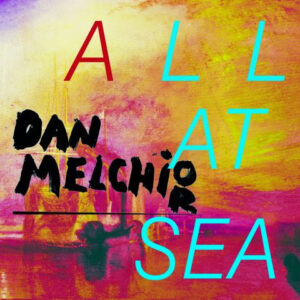
LP
Dan MELCHIOR
“All At Sea”
We have been following Dan Melchior since the beginning with the Broken Revue, the collaboration with Billy Childish and the amazing project Dan Melchior und Das Menace. We are amazed by his own original and personal evolution from (let’s say) “orthodox” garage punk songwriter (and what a songwriter! Someone said one of the best in the US, but remember, he is british) to avant rock, experimental folk/blues and weird sounds.
The stuff he played changed with him, slowly affected by electronic music, Krautrock (like Can and Faust), avantgarde, concrete music... as well as a couple of the best Franco Battiatio’s works (“Fetus” and “Pollution”).
“All At Sea” consists of all these elements together: Dan wrote and built great songs never loosing his upset melodic streak BUT breaking down and decomposing the refrain, stretching and forcing the normal structure of a song, filling it with avant-solutions and experiments: “All At Sea” is the result.
10 songs able to keep you there - tied up - for 40 mins - in the dark.
10,00€