
Out of stock

LP
ELODIE
“Vieux Silence”
Music by Andrew Chalk & Timo van Luijk with Tom James Scott - piano, Jean-Noël Rebilly - clarinette, Daniel Morris - guitare pedal steel. Mastered & cut by Rashad Becker at Dubplates & Mastering, Berlin 0417.
“Having been entranced by both Andrew Chalk’s work with Mirror (and back to his solo works as Ferial Confine, plus multiple collaborations with David Jackman, The New Blockaders, Daisuke Suzuki, etc) and Timo van Luijk (as Af Ursin, In Camera, La Poupée Vivante, and collaborations with Kris Vanderstraeten and others) for many years, I was naturally intrigued to hear about and hear their duo project Elodie. The project formed in 2010, and has spanned eleven beautiful albums already, to date. “Vieux Silence” for Ideologic Organ is their first release presented outside of their own record publishing nook, Faraway Press & La Scie Dorée. However this is not the first encounter between Ideologic Organ & Elodie, they performed at a night in London I curated in February 2012, alongside Jessika Kenney & Eyvind Kang. Elodie’s performance was among the most delicately engaging and savant I have witnessed… so very quiet, with snow falling in London outside Cafe Oto’s windows, the audience palpably entered a high intensity listening focus. The impression of this vivid memory is striking, considering how spare each of the individual elements present that night were. “Vieux Silence”, and Elodie in general provoke a visual imagination in an instant, perhaps filtered through aged watercolour, tape grain, antique lenses, forgotten levels of listening and observational patience. Each detail carefully considered and colouring step by step, like an impressionist watercolour.” Stephen O’Malley, Les Lilas 2017
15,00€
Out of stock
LP
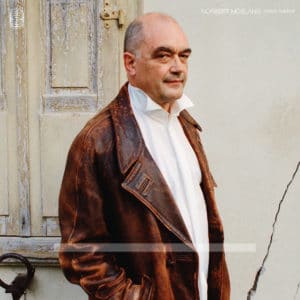
Norbert MÖSLANG
“Indoor_outdoor”
A: indoor_outdoor (2005). Recording and processing by Norbert Möslang.
Mixed by Norbert Möslang at zackstudio. Mastered by Pierre Bendel at zackstudio.
B: hot_cold_shield (2012). Toshimaru Nakamura: no-input mixing board. Norbert Möslang: cracked everyday-electronics. Recorded by Eric Mattson at “Manif d’art” at Espace 400e Bell, Québec 12 May 2012. Mastered by Toshimaru Nakamura. Vinyl cut by Rashad Becker at Dubplates & Mastering, Berlin October 2012.
“Absolute deep electric-rain-forest sound atmosphere that the listener will hear on this record is the tip of the iceberg of a same rich and elaborate work process. For over 30 years, Norbert Möslang is making the world sounding. He does not play with things, but he allows things’ sounding. His art installations, sound performances and music records are deeply involved in the hidden world of vibrations to convert them into loud sounds and thick textures. Living simultaneously in spheres of inside/outside, micro-vibrations, spacial structures, underground music venues, art galleries, underwater, glass windows, body movement, precise equalizers, insects microcosm and electronic devices; Möslang constructs fascinating untrammeled worlds of both philosophical and physical power. Möslang’s music meet clearly Brian Eno’s words about : “the idea of music as a highly physical, sensual entity - music free of narrative and literary structures, free to be pure sonic experience. And the idea of music as a highly intellectual, spiritual experience.” But this does not mean to be earnest.
The “Everyday Cracked-Electronics” are a kind of poetry, a celebration of the banality in all of his greatness, which link Voice Crack to the other amazing Swiss duo Fischli/Weiss. In the movie “The Way the Things Go”, also made in the mid-80s, you see a chain reaction of every day objects that activate each others in a kind of huge fresco of absurdity. The film was shoot without sound. The sound track was added in post production by a Foley artist. Thus again the sound was made by the use of other everyday objects. In the mid 80s, without knowing each others, both Voice Crack and Fischli/Weiss made the banality meeting with the marvelous. Instead of having historically unified art and musical movements, Switzerland generated very idiosyncratic bands or individuals as key figures. Think of Celtic Frost, The Young Gods, Samael, Günter Müller, Grauzone, Yello, Lilliput, Les Reines Prochaines, Christian Marclay or Braintickets, among others. Voice Crack are certainly part of this dream list! This country is like an fractured and exploded megapolis scattered in many small parts. Here you find as many underground venues and music festivals in industrial buildings of urban areas as ancient castles basements and old vineyard cellars of peripheries of urban cities.
In this context, I attempted to a Voice Crack gig when I was 21 in a city of 35000; in the Middle Ages bulwark of the city of Fribourg existed the annual experimental arts festival. The concert was a path-clearing musical experience. Möslang and Voice Crack opened to me both the ways to experimental noise music as well as sound art performance. These doors never closed and allowed to drift again and again into a continually larger and deeper endlessness; worlds of sounds and noises. But the Swissness stops here. Voice Crack and Möslang belong to a international underground current. When looking through the rear-view mirror it’s clear that in late 70s and early 80s there weren’t many artists working with harsh noise, a list which now read as “classics” : The New Blockaders, Whitehouse and Throbbing Gristle in UK; Hijokaidan, Merzbow, Incapacitants in Japan; NON, The Haters in the states, among only few others.
Since the break up of Voice Crack in 2002, Norbert Möslang enlarged his practice to cover all noise and experimental practices, from lo-fi Everyday-Cracked-Electronics”, saturation/overdrive work, performance and improvisation, field recordings and multi layered ambientnoise composition. Through interconnecting heterogeneous everyday objects; linking the outside sound environment into a quiet art museum by fixing microphones to its windows; filming the underwater Venice’s canal in order to set off never ending imagery flux; allowing a movie to play its own sound track by triggering photo-sensors; Möslang proves to our entire nervous system that the world we inhabit is no more than infinite continuum. To talk about “indoor_outdoor” specifically, again Möslang music drives us from nothing to everything. A field recording in the water of a swiss harbour close from his house is then processed and composed these files in a studio. The second track “hot_cold_shield” is a collaborative duo with Toshimaru Nakamura, the influential member of the Onkyokei scene in Japan, a brutal live improvisation recorded at “Manif d’art” in Québec this year.” Balthazar Lovay. Deborence, September 2012.
Mixed by Norbert Möslang at zackstudio. Mastered by Pierre Bendel at zackstudio.
B: hot_cold_shield (2012). Toshimaru Nakamura: no-input mixing board. Norbert Möslang: cracked everyday-electronics. Recorded by Eric Mattson at “Manif d’art” at Espace 400e Bell, Québec 12 May 2012. Mastered by Toshimaru Nakamura. Vinyl cut by Rashad Becker at Dubplates & Mastering, Berlin October 2012.
“Absolute deep electric-rain-forest sound atmosphere that the listener will hear on this record is the tip of the iceberg of a same rich and elaborate work process. For over 30 years, Norbert Möslang is making the world sounding. He does not play with things, but he allows things’ sounding. His art installations, sound performances and music records are deeply involved in the hidden world of vibrations to convert them into loud sounds and thick textures. Living simultaneously in spheres of inside/outside, micro-vibrations, spacial structures, underground music venues, art galleries, underwater, glass windows, body movement, precise equalizers, insects microcosm and electronic devices; Möslang constructs fascinating untrammeled worlds of both philosophical and physical power. Möslang’s music meet clearly Brian Eno’s words about : “the idea of music as a highly physical, sensual entity - music free of narrative and literary structures, free to be pure sonic experience. And the idea of music as a highly intellectual, spiritual experience.” But this does not mean to be earnest.
The “Everyday Cracked-Electronics” are a kind of poetry, a celebration of the banality in all of his greatness, which link Voice Crack to the other amazing Swiss duo Fischli/Weiss. In the movie “The Way the Things Go”, also made in the mid-80s, you see a chain reaction of every day objects that activate each others in a kind of huge fresco of absurdity. The film was shoot without sound. The sound track was added in post production by a Foley artist. Thus again the sound was made by the use of other everyday objects. In the mid 80s, without knowing each others, both Voice Crack and Fischli/Weiss made the banality meeting with the marvelous. Instead of having historically unified art and musical movements, Switzerland generated very idiosyncratic bands or individuals as key figures. Think of Celtic Frost, The Young Gods, Samael, Günter Müller, Grauzone, Yello, Lilliput, Les Reines Prochaines, Christian Marclay or Braintickets, among others. Voice Crack are certainly part of this dream list! This country is like an fractured and exploded megapolis scattered in many small parts. Here you find as many underground venues and music festivals in industrial buildings of urban areas as ancient castles basements and old vineyard cellars of peripheries of urban cities.
In this context, I attempted to a Voice Crack gig when I was 21 in a city of 35000; in the Middle Ages bulwark of the city of Fribourg existed the annual experimental arts festival. The concert was a path-clearing musical experience. Möslang and Voice Crack opened to me both the ways to experimental noise music as well as sound art performance. These doors never closed and allowed to drift again and again into a continually larger and deeper endlessness; worlds of sounds and noises. But the Swissness stops here. Voice Crack and Möslang belong to a international underground current. When looking through the rear-view mirror it’s clear that in late 70s and early 80s there weren’t many artists working with harsh noise, a list which now read as “classics” : The New Blockaders, Whitehouse and Throbbing Gristle in UK; Hijokaidan, Merzbow, Incapacitants in Japan; NON, The Haters in the states, among only few others.
Since the break up of Voice Crack in 2002, Norbert Möslang enlarged his practice to cover all noise and experimental practices, from lo-fi Everyday-Cracked-Electronics”, saturation/overdrive work, performance and improvisation, field recordings and multi layered ambientnoise composition. Through interconnecting heterogeneous everyday objects; linking the outside sound environment into a quiet art museum by fixing microphones to its windows; filming the underwater Venice’s canal in order to set off never ending imagery flux; allowing a movie to play its own sound track by triggering photo-sensors; Möslang proves to our entire nervous system that the world we inhabit is no more than infinite continuum. To talk about “indoor_outdoor” specifically, again Möslang music drives us from nothing to everything. A field recording in the water of a swiss harbour close from his house is then processed and composed these files in a studio. The second track “hot_cold_shield” is a collaborative duo with Toshimaru Nakamura, the influential member of the Onkyokei scene in Japan, a brutal live improvisation recorded at “Manif d’art” in Québec this year.” Balthazar Lovay. Deborence, September 2012.
15,00€
Out of stock
LP
Jessica KENNEY & Eywind KANG
“The face of the earth”
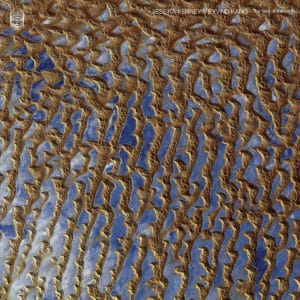
Eyvind Kang (viola, setar, electronics). Jessika Kenney (voice, percussion, electronics). The second beautiful album by the duo of Jessika Kenney - a vocalist known for her haunting timbral sense, as well as her profound interpretation of Persian vocal traditions, and Eyvind Kang - a violist for whom the act of music and learning is a spiritual discipline. “The compositions on this album are about drawing the binary from the unary, like reflections from a mirror, and its inverse, the concealed unity. Listener/reader, translation/composition, memory/imagination- reflecting each other, they open up a current which flows in a sudden oscillation. Here we have followed a geological image; in the expression of the face of the earth (from Pr. "rokh-e khåk"), a new spectrum of binaries is revealed. In the Classical Persian traditions, this can be found in the dynamic multiplicity exemplified by the term ’radif’, used in both poetry and music, as both poeme and matheme. We would invite the listener as reader, by making our "reading cards" in the insert, to become a participant in the creation
of meaning, including translation processes which seek corresponding musical atmospheres, for example: The Central Javanese Wangsalan is a kind of riddle(two lines, 12 syllables each, divided 4 and 8), sung by the female vocalist in the gamelan, often using images of natural phenomena alongside descriptions of human characteristics, invoking atmospheres of primordial knowledge, humor, heightened sensation, philosophy, with much hidden wordplay and reference.” JK/EK. All tracks composed by Jessika Kenney & Eyvind Kang. Tavaf composed by JK based on a ghazal by Attar (12th c.). Tavaf and Ordered pairs II recorded by Randall Dunn at ADA studios, Istanbul July 2012. Ordered pairs I, Mirror stage and The face of the earth recorded by Mell Dettmer at Studio Soli, Seattle, June 2012 & St. Bartholomeo’s, Bologna. Kidung and Mirror stage recorded by Mell Dettmer at Dympna’s, Seattle 2012. Vinyl cut by Rashad Becker at Dubplates & Mastering, Berlin October 2012. Ideologic Organ curation and art direction by Stephen O’Malley. Manufactured and distributed by Editions Mego.
of meaning, including translation processes which seek corresponding musical atmospheres, for example: The Central Javanese Wangsalan is a kind of riddle(two lines, 12 syllables each, divided 4 and 8), sung by the female vocalist in the gamelan, often using images of natural phenomena alongside descriptions of human characteristics, invoking atmospheres of primordial knowledge, humor, heightened sensation, philosophy, with much hidden wordplay and reference.” JK/EK. All tracks composed by Jessika Kenney & Eyvind Kang. Tavaf composed by JK based on a ghazal by Attar (12th c.). Tavaf and Ordered pairs II recorded by Randall Dunn at ADA studios, Istanbul July 2012. Ordered pairs I, Mirror stage and The face of the earth recorded by Mell Dettmer at Studio Soli, Seattle, June 2012 & St. Bartholomeo’s, Bologna. Kidung and Mirror stage recorded by Mell Dettmer at Dympna’s, Seattle 2012. Vinyl cut by Rashad Becker at Dubplates & Mastering, Berlin October 2012. Ideologic Organ curation and art direction by Stephen O’Malley. Manufactured and distributed by Editions Mego.
15,00€
Out of stock
LP
RM
“Unfit”
RM is Italian mastermind of bad vibes Riccardo Mazza. The man has a free approach to his music, with no interest what so ever in the device used as a source. RM is dark, meditative harshness at it's absolutely TOP. The intent is to submerge the listener with a gloomy, ancestral mood. This is truly capturing, ambient and pulsating electronic music with nods to both minimal techno and industrial music. iDEAL is proud to release this great work of brilliance. Also, for info lovers, Mazza is half of industrial filth duo Lettera 22.
300 copies.
300 copies.
13,00€
Out of stock
LP
JH1.FS3
“Loyalty”
“This is deeply personal and sensual music. The listener is allowed to enter the inner zones of the private and artistic relationships between Frederikke Hoffmeier and Jesse Sanes. It is something beautiful, rare and very intimate that is communicated through words and restrained electronic experimentalism. It is almost violent in its openness. “Loyalty” is more than reading someones diary. “Loyalty” is more like reading someones mind. JH1.FS3 is a special collaboration between Los Angeles-based Hoffmeier (Puce Mary) and Jesse Sanes (Liebestod/Hoax). They have released a couple of hard to find tapes and this is their debut album.” (label info) transparent vinyl
14,00€
In stock
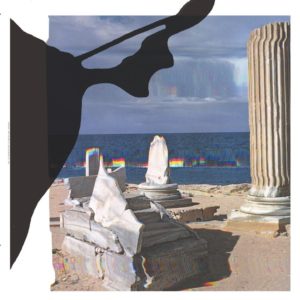
LP
DIONYSIAN
“Protest music”
Joel Brindefalk (1975-2013) in memoriam. Our common memorial project together with Börft Records to celebrate the music of our lost brother Joel Brindefalk is presenting Dionysian. Joel recorded this during a weekend in 1992 together with Joachim Nordwall, Christan Topac and Johan Petersson. This was intended to become a cassette for some label but was abandoned or lost. Now, for the first time available, on vinyl. Difficult musique concrète/harsh noise from a man that were as comfortable recording this as warm electronic dub stuff and comforting techno as ü.
400 copies black vinyl.
400 copies black vinyl.
8,00€
Out of stock
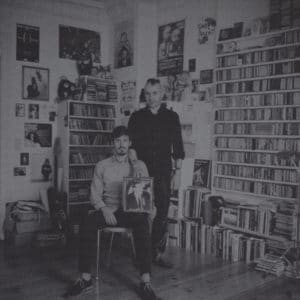
LP
Joke LANZ
“Plays Sudden Infant”
Joke Lanz travels down memory lane! Two decks a mixer and a dozen of old Sudden Infant vinyls to spin, scratch, manoeuvre, loop and juggle into a narrative new composition. Recorded and mastered by Rashad Becker in Berlin, this album combines Joke Lanz' unique turntablism and intuition for mutant-body-dramas peppered with a great sense of humour from the rhythms of amplified faders and his own breath to spoken interjections of Bryan Lewis Saunders' dream lyrics. You can dance, you can cry, you can smile, you can die!
Edition: 300.
Edition: 300.
13,00€
In stock
LP
Daniel LÖWENBRÜCK & Marcellvs L.
“Stallgewitter”
Edition of 300 copies. 45RPM LP for maximum sound quality. Composed of field-Recordings captured in Thailand, Iceland, and UK. Mastered and cut by Andreas “Lupo” Lubich at Calyx, Berlin.
Marcellvs L. (b.1980) is a renowned Brazilian Video- and Sound-Artist currently living in Berlin and Seydisfjödur, Iceland. His particular and radical production attracts attention by the intensity with which it associates philosophical concepts to electronic images and sounds. His work places itself in a zone of undiscernibility, which turns it inapprehensible by this or that audiovisual genre creating its own discursive universe. Working in both video and sound, he has exhibited internationally since the mid 00'. He has participated in the 16th Biennale of Sydney (2008), 9th Biennale of Lyon (2007) and 27th Biennale of São Paulo (2006) and exhibited at Singapore Art Museum (2009), Museo Nacional Centro de Arte Reina Soía (2008), ZKM Museum of Contemporary Art in Karlsruhe (2008) and Museum of Modern Art in São Paulo (2007) amongst others. Including some of the prizes he has received are the Ars Viva Price 07/08, the main prize of 51st International Short Film Festival Oberhausen in 2005 and the Nam June Paik Award in 2006.
Daniel Löwenbrück (b.1974) is a German performance artist, composer of tape-music and (sometimes) visual-artist living in Berlin. He is releasing music and performing internationally since the 90’s as part of the Schimpfluch-Gruppe (with Rudolf Eb.er, Dave Phillips, Joke Lanz), as a duo with singer and performance artist Doreen Kutzke, as part of the Cabaret Performance-Group Ohne (with Tom Smith, Dave Phillips, Reto Mäder), and solo as Raionbashi and under his real name, including performances and festival appearances in New York, Paris, Moscow, Minsk, London, Oslo, Stockholm, Helsinki, Tokyo, Vienna etc. He has collaborated with Mattin, Column One, and lately with Leif Elggren and Marcellvs L. He founded the label Tochnit Aleph in 1994 publishing records and editions of Musique Concrete, Sound Poetry, Artist-Records & -Multiples and Noise Music. Since 2008 Löwenbrück curates the Gallery & Record-Shop Rumpsti Pumsti (Musik) in Berlin.
Marcellvs L. (b.1980) is a renowned Brazilian Video- and Sound-Artist currently living in Berlin and Seydisfjödur, Iceland. His particular and radical production attracts attention by the intensity with which it associates philosophical concepts to electronic images and sounds. His work places itself in a zone of undiscernibility, which turns it inapprehensible by this or that audiovisual genre creating its own discursive universe. Working in both video and sound, he has exhibited internationally since the mid 00'. He has participated in the 16th Biennale of Sydney (2008), 9th Biennale of Lyon (2007) and 27th Biennale of São Paulo (2006) and exhibited at Singapore Art Museum (2009), Museo Nacional Centro de Arte Reina Soía (2008), ZKM Museum of Contemporary Art in Karlsruhe (2008) and Museum of Modern Art in São Paulo (2007) amongst others. Including some of the prizes he has received are the Ars Viva Price 07/08, the main prize of 51st International Short Film Festival Oberhausen in 2005 and the Nam June Paik Award in 2006.
Daniel Löwenbrück (b.1974) is a German performance artist, composer of tape-music and (sometimes) visual-artist living in Berlin. He is releasing music and performing internationally since the 90’s as part of the Schimpfluch-Gruppe (with Rudolf Eb.er, Dave Phillips, Joke Lanz), as a duo with singer and performance artist Doreen Kutzke, as part of the Cabaret Performance-Group Ohne (with Tom Smith, Dave Phillips, Reto Mäder), and solo as Raionbashi and under his real name, including performances and festival appearances in New York, Paris, Moscow, Minsk, London, Oslo, Stockholm, Helsinki, Tokyo, Vienna etc. He has collaborated with Mattin, Column One, and lately with Leif Elggren and Marcellvs L. He founded the label Tochnit Aleph in 1994 publishing records and editions of Musique Concrete, Sound Poetry, Artist-Records & -Multiples and Noise Music. Since 2008 Löwenbrück curates the Gallery & Record-Shop Rumpsti Pumsti (Musik) in Berlin.
12,00€
In stock

LP
Christer BOTHÉN
“Ljudskulptur…”
Christer Bothén’s new LP on iDEAL is a beautiful creation moving comfortably between improv, sound art and drone. Christer Bothén is a main character in the Swedish improv, jazz and world music scene. He studied music in Mali and Morocco in the 70s and collaborated w Don Cherry. Bothén has been active in bands like Bitter Funeral Beer Band, FIRE! Orchestra, Mats Gustafson NU Ensemble, Spjärnsvallet and Bolon Bata. We are very proud to work with him on this exclusive vinyl LP release.
13,00€
Out of stock
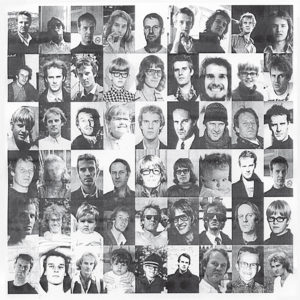
LP
Carl Michael von HAUSSWOLFF
“Matter transfer”
Limited to 300 copies. Hand numbered. All tracks composed at The Castle, 2006, and pre-mastered at La Hacienda, 2008, by Carl Michael von Hausswolff. Recorded at Färgfabriken Center for Contemporary Art and Architecture, Stockholm, Sweden, in connection with the exhibition Matter! by Carl Michael von Hausswolff (12-channel audio composition) and Anita Gordh (visuals), 2006, curated by Jan Åman. Matter Transfer (model 4 and 5) was installed 2009 in Stavanger, Norway, within the series Enter: Sonic Tank, Tou Scene, curated by Anne Hilde Neset.
In addition: • No Rest Even for the Static (Matter II) - a 47-channel composition - was installed and premiered 2010 in Istanbul, Turkey, as a part of the second installation of The Morning Line by Matthew Ritchie with Aranda/Lasch and Arup AGU organized by Thyssen-Bornemisza Art Contemporary and curated by Russell Haswell. • Matter III - an 8-channel composition - was installed 2011 at MuseumsQuartier in Vienna, Austria, as a part of the series Tonspurcurated by Georg Weckwerth.
Matter is a part of the Moderna Museet collection in Stockholm.
Matter II is a part of the Thyssen-Bornemisza Art Contemporary collection in Vienna.
In addition: • No Rest Even for the Static (Matter II) - a 47-channel composition - was installed and premiered 2010 in Istanbul, Turkey, as a part of the second installation of The Morning Line by Matthew Ritchie with Aranda/Lasch and Arup AGU organized by Thyssen-Bornemisza Art Contemporary and curated by Russell Haswell. • Matter III - an 8-channel composition - was installed 2011 at MuseumsQuartier in Vienna, Austria, as a part of the series Tonspurcurated by Georg Weckwerth.
Matter is a part of the Moderna Museet collection in Stockholm.
Matter II is a part of the Thyssen-Bornemisza Art Contemporary collection in Vienna.
12,00€
Out of stock

LP
Stephanos VASSILIADIS
“En Pyri – Bacchae”
Two previously unreleased recordings from one of Greece’s pioneers of electroacoustic music. Stephanos Vassiliadis (1933 - 2004) founded in 1979, together with Iannis Xenakis, the Contemporary Music Research Center (CMRC) and remained its director until his death in 2004. His largely undocumented artistic output consists of works for theatre productions, mostly unfinished or fragmented electroacoustic pieces, as well as numerous children songs. Vassiliadis was also a significant pedagogue and some of his initiatives have reformed the musical education system of Greece.
“En Pyri” (1973).
Recorded in 1976 by Andreas Rodousakis on double-bass and the composer himself on the mixing desk of Radio Sweden Studio in Stockholm, En Pyri presents a previously unreleased version of Stephanos Vassiliadis’s composition for tape and double-bass written in the memory of Jani Christou. En Pyri was composed three years after a multi-fatal car crash that caused the untimely deaths of Anastasia Vassiliadi (first wife of Stephanos Vassiliadis), Jani Christou (acclaimed composer, close friend and collaborator of Stephanos Vassiliadis) and of Christous’s wife Theresia Christou Choremi. The title En Pyri, translating as In Fire, comes from the First Epistle of the Corinthians “..for the day will disclose it, because it is revealed in fire..”, referring to that what remains after death, or in the composer’s words: “man’s song-creation is the only thing that can withstand and overcome destruction”.
The fire is clearly pictured during a particularly long climax starting midway to the end of the piece. The dramatic aspect of this spectrally dense section is even stronger during live shows, with the performer centre-stage fiercely playing double-bass, but failing to be heard over the full-range audio of the 8-track tape. This staged element of En Pyri is inevitably lost with the reproduction of this recording, but the audio alone carries a heavy load. Sounds as if written out of total need and almost physical necessity to deal with death and loss. At the end of the composition, while the performer is still onstage, a quiet tone is “revealed” and held for a few minutes signifying that what remains; that what is “revealed in fire”.
“Bacchae” (1974).
Bacchae was written for a production of Euripide’s tragedy The Bacchae directed [and choreographed] by the distinguished choreographer Zouzou Nikoloudi. This particular play was part of the University of California Intercampus Cultural Exchange Program and was never performed in Greece. From the 25th of September to the 3rd of October 1974, it was staged seven times in different campuses of the University of California (Santa Barbara, Irvine, San Diego, Riverside, Davis, Santa Cruz, Berkeley). These seven shows were to become the only occasions this composition was presented to the public.
Bacchae seems to be Vassiliadi’s first attempt in bringing together his background in electroacoustic music with the music he grew up to. He beautifully achieves this by juxtaposing modular synthesizer tones with samples of greek traditional music from his collection of archival recordings. These two elements ebb and flow throughout the composition, at times becoming indistinguishable from each other. The manner in which Vassiliadis mixes acoustic and synth drones together resembles electronic music of following decades. Developed gradually over a duration of 23 minutes of uninterrupted and texturally thick audio, Bacchae is a kind of proto-ambient, folk-drone electroacoustic piece, luckily rediscovered in the archipelago of recorded music.
This release was made possible thanks to the invaluable support of some close persons to Stephanos Vassiliadis.
Mastering from the original tapes by Nikos Lavdas at Kiwi, Athens, 2017. Cover photo by S. K. (close-up photo of Stephanos Vassiliadis). Insert artwork by Stephanos Andreou. Design and layout by We Are Still Bold and Beautiful.
“En Pyri” (1973).
Recorded in 1976 by Andreas Rodousakis on double-bass and the composer himself on the mixing desk of Radio Sweden Studio in Stockholm, En Pyri presents a previously unreleased version of Stephanos Vassiliadis’s composition for tape and double-bass written in the memory of Jani Christou. En Pyri was composed three years after a multi-fatal car crash that caused the untimely deaths of Anastasia Vassiliadi (first wife of Stephanos Vassiliadis), Jani Christou (acclaimed composer, close friend and collaborator of Stephanos Vassiliadis) and of Christous’s wife Theresia Christou Choremi. The title En Pyri, translating as In Fire, comes from the First Epistle of the Corinthians “..for the day will disclose it, because it is revealed in fire..”, referring to that what remains after death, or in the composer’s words: “man’s song-creation is the only thing that can withstand and overcome destruction”.
The fire is clearly pictured during a particularly long climax starting midway to the end of the piece. The dramatic aspect of this spectrally dense section is even stronger during live shows, with the performer centre-stage fiercely playing double-bass, but failing to be heard over the full-range audio of the 8-track tape. This staged element of En Pyri is inevitably lost with the reproduction of this recording, but the audio alone carries a heavy load. Sounds as if written out of total need and almost physical necessity to deal with death and loss. At the end of the composition, while the performer is still onstage, a quiet tone is “revealed” and held for a few minutes signifying that what remains; that what is “revealed in fire”.
“Bacchae” (1974).
Bacchae was written for a production of Euripide’s tragedy The Bacchae directed [and choreographed] by the distinguished choreographer Zouzou Nikoloudi. This particular play was part of the University of California Intercampus Cultural Exchange Program and was never performed in Greece. From the 25th of September to the 3rd of October 1974, it was staged seven times in different campuses of the University of California (Santa Barbara, Irvine, San Diego, Riverside, Davis, Santa Cruz, Berkeley). These seven shows were to become the only occasions this composition was presented to the public.
Bacchae seems to be Vassiliadi’s first attempt in bringing together his background in electroacoustic music with the music he grew up to. He beautifully achieves this by juxtaposing modular synthesizer tones with samples of greek traditional music from his collection of archival recordings. These two elements ebb and flow throughout the composition, at times becoming indistinguishable from each other. The manner in which Vassiliadis mixes acoustic and synth drones together resembles electronic music of following decades. Developed gradually over a duration of 23 minutes of uninterrupted and texturally thick audio, Bacchae is a kind of proto-ambient, folk-drone electroacoustic piece, luckily rediscovered in the archipelago of recorded music.
This release was made possible thanks to the invaluable support of some close persons to Stephanos Vassiliadis.
Mastering from the original tapes by Nikos Lavdas at Kiwi, Athens, 2017. Cover photo by S. K. (close-up photo of Stephanos Vassiliadis). Insert artwork by Stephanos Andreou. Design and layout by We Are Still Bold and Beautiful.
14,00€
In stock
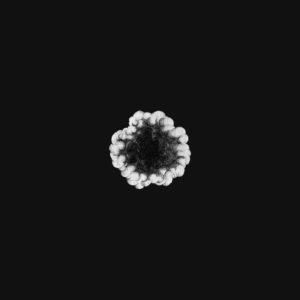
LP
Ghédalia TAZARTES + Maya DUNIETZ
“Schulevy maker”
Holotype Editions was founded as a means of bringing out music by some of the most unique and peculiar artists of the last decades. What could be more fitting for the imprint’s seventh release, than the duo of cult artist Ghédalia Tazartès and multi-instrumentalist, composer and singer Maya Dunietz. Recorded live at Cafe Oto, in December 2013, Schulevy Maker documents the duo’s first live appearance. An amalgam of bizarre samples, concrete sounds, live piano and bells, juxtaposed with the otherworldly voices of Dunietz and Tazartès. At times light and humorous, at others dark and ritualistic, Schulevy Maker can hardly be labeled or tagged. The album title refers to Shoemaker-Levy 9, a disrupted comet that collided with Jupiter in July 1994. Tazartès and Dunietz freely reassembled the syllables of the comet’s name, coming up with this obscure title. A truly life-affirming record, by two artists defying categorization, Schulevy Maker comes in a limited edition of 300 copies, pressed on black vinyl with a beautiful cover designed by We Are Still Bold and Beautiful. Recorded live at Cafe Oto, London - December 2nd, 2013 by James Dunn. Mixed by Daniel Meir. Mastered by Nikos Lavdas at Kiwi, Athens, 2017.
14,00€
In stock

LP
Maria MONTI
“Il Bestiario”
Thirs and last edition. 16 page booklet with lyrics and translations.
Deluxe vinyl reissue of Maria Monti’s legendary Il Bestiario, a prime example of the avant-garde art-song of the 1970s. Knew for her renderings of Italian popular songs, Maria Monti is an Italian singer and actress with a noteworthy career: cabaret singer in the ‘60s, ambitious avant-garde folk artist in the ‘70s, and starring in films by directors as such as Sergio Leone (Fistful of Dynamite) and Bernardo Bertolucci (1900).
Il Bestiario is a near perfect emblem of the fascinating territory gained through collaboration. It enlisted the radical poet Aldo Braibanti as its lyricist, features arrangements and synthesizer from Alvin Curran (Musica Elettronica Viva), the baritone saxophone of Roberto Laneri (Prima Materia), as well as the soprano saxophone of jazz legend Steve Lacy. The result is absolutely stunning, musically unique within the respective outputs of its participants’ long and noted careers. Unquestionably one of the most beautiful and neglected albums of its decade.
18,50€
In stock

LP
Hartmut GEERKEN
“Orpheus”
Fantastic sound poetry piece by Hartmut Geerken restringing the Sun Harp, the Ukranian bandura that Sun Ra gave him in 1971 when he visited Egypt for the first time. The acoustics of his manual workings emerge without any esthetic intention: the bandura’s voluminous resonating body forms the reverb of the room. Each manual action and each contact of the tuning key with the wooden body is “reverbed”. The instrument creates its audio space. A mythic dream play is evoked: the myth’s space of reverb. An ear ready to absorb, hears the labor pains of voice and string ahead of language and music. A human voice in search for language and thus for communication. A string instrument in search for sound and thus for music. Based on this phonemic pre-space, words do rise only sporadically. Through certain techniques of vocal chords the phonemes move close to the meditative Indian Dhrupad-singing, as well as to lunacy and disturbance. Animal languages, signals, shepherds’ calls, silvered drum-language, hamboning, calls, litany, subconscious voicings, sirens: the search for Eurydike and the search for the origin of letter and syllable, out of the breath. Besides one single ‘superimposition’ no further mounting, no computer-generated sounds, no digital gimmicks, no remix or art mix do exist in this live-recorded dream play.
pressing info: 200 copies on black
17,00€
In stock

LP
FOSSIL AEROSOL MINING PROJECT
“August 53rd”
The Fossil Aerosol Mining Project continues their post-industrial dialectics through their “songs of enhanced decay and faked resurrection.” This cryptic ensemble from the American Midwest has been quietly producing such works since the ‘80s, with a deep catalogue highlighting a uniform brilliance in the exquisite reconstruction of exhumed cassette tapes and moldering 35mm film stock.
On August 53rd, Fossil Aerosol has collaged their reclamations of found sounds into an inquisitive, dynamic cinema of the ear. The tape loops and recombinant samples create elliptical orbits and vertiginous spirals. Down-pitched, disquieting rumbles form the foundations for much of Fossil Aerosol’s compositions, which mutate the fractured, crumbled, and mildewed artifacts into patterned yet shifting phrases. The result seems like hybrid, time-compressed mimicry of the evolution of our media-driven language.
The official statement from the ensemble reads as such:
“This album, arranged specifically for Helen Scarsdale, might be considered a prequel to The Day 1982 Contaminated 1971, featuring the damaged remains of certain pop culture pleasantries in a less decomposed state than found on the previous vinyl release. August 53rd, a month extended to accommodate a changing climate, predates the day 1982 contaminated 1971.”
Such inquiries characterize the many non/fictions that contextualize the work of Fossil Aerosol. Through the process of decoding lost melodies and dialog of the 1960s, ‘70s, and ‘80s, Fossil Aerosol intentionally or unintentionally deflates the vanity of consumerism while at the same time providing an archaeological view of contemporary culture.
These conceptual frameworks would be meaningless if Fossil Aerosol did not deliver on the aesthetics. And deliver the Project most certainly does. August 53rd harbors the rich enigmas of distressed sound collages found in the work of likeminded artists such as Philip Jeck, Felicia Atkinson, and of course Fossil Aerosol’s occasional collaborators :zoviet*france:.
Noted photographer Michael Eastman (Vanishing America, Havana) contributed the artwork used for the cover of the album, specifically selecting imagery from decaying landscapes of the American Midwest.
19,00€
In stock

LP
FOSSIL AEROSOL MINING PROJECT
“The day 1982 contaminated 1971”
An enigmatic cartel of urban spelunkers, ruinous sound ecologists and earnest refuseniks, the Fossil Aerosol Mining Project began its collective service in the 1986. Film, sound installation, and audio recordings have all been part of their broader agenda, all of which falls under a wholly unified aesthetic. Their’s is a post-industrial model, sifting detritus from the wastelands located in Midwestern rust-belt communities shuddering in the downward spiral of economic demise. Upon the re-assembly of these materials -- often culled from 35mm film and 1/4” magnetic tape found in abandoned drive-in movie theatres and warehouses -- the Fossil Aerosol Mining Project interweave with ready-mades of their own disintegration. At this site of cultural and anthropological research, forgotten memes and planned obsolesce begin to map previously hidden routes through the psychological and existential landscape of the American psyche -- past, present, and future.
Over the years, the Fossil Aerosol Mining Project has collaborated with :zoviet*france: -- the semi-anonymous cabal of pseudo-ethnomusicologists into our pre-apocalyptic past that could easily be seen as Fossil Aerosol’s British counterpart. With The Day 1982 Contaminated 1971, the Fossil Aerosol Mining Project reconstitutes dissociated fragments from nearly-lost genre films of the 1970s, filtered by scratched celluloid, bad splices, dropouts, and damaged control tracks. Within piles of reversed tape loop miasma and time-lag accumulation, Fossil Aerosol magnifies the grit, the errors, the bad splices, and the dropouts within their mesmerizing and hypnogogic studies of uncanny dislocations. Helen Scarsdale is honored and flattered to be working with Fossil Aerosol for their first solo vinyl release.
19,00€
Out of stock
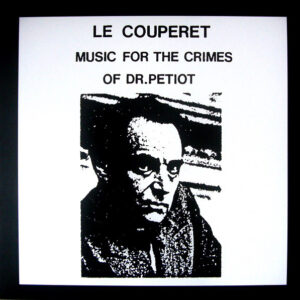
LP
COMPILATION
LE COUPERET
A vinyl reissue of the legendary Broken Flag compilation cassette from 1983. Featuring tracks by Ramleh, Vortex Campaign, The New Blockaders, Sir Ashleigh rove, Citipati and the Depilate Corps. Limited to
300 copies. Complete with printed inner sleeve. Released with the authorization of every contributing artist.
17,00€
In stock

LP
Adrian REW
“Slot machine music”
Picture Disc LP edition of Adrian Rew’s field recordings from middle American casinos: originally released in a small edition of CD-R’s on his own Ergot Records label, this picture disc is a limited edition of 500 copies. Includes digital download card. Mastered for vinyl by Jason Lescalleet. “one of the rare [field] recordings with a precise polemical thrust, an eloquent constellation of supporting ideas, and ... a laser beam focus on the strangest corners of the modern world” -The Wire
Adrian Rew’s original notes: “Video gambling addicts, academic researchers, and industry professionals alike describe the trancelike state into which problem gamblers suspend themselves with remarkable consistency: they unanimously call it the machine “zone”, a kind of inner experience during which the rhythmic flow of human-machine collusion borders on mysticism. Time is abolished in the act of contemporary video gambling-simulated slot reels roll, virtual poker decks deal, and all worldly concerns are lost-leaving only the aura of total zone immersion in its wake. Sometimes characterized as the crack cocaine of gambling, the intensity of the machine zone is a symptom of casino ergonomics: oxygen-saturated pleasure air, subtly controlling walkways, mesmerizing lights, and, as captured here, meticulously engineered sonic environments all play a role in evoking the timeless void of the zone. Although I was not yet aware of the extent to which casinos tailor their environments for maximum comfort (and, correspondingly, profit), I did know as I crossed the threshold of my first casino floor earlier this year that it would not be my last visit. Hit by a cornucopia of slot machine tones, triggering aleatorically and coalescing into shimmering masses, I was struck by the need to return and record the sounds that so entranced me. It wouldn't prove to be easy-casino security is intense (you can hear me get warned of the consequences of taking photos at the beginning of the disc’s second track)-and due to the clandestine nature of the operation, my recording techniques were by no means sophisticated. Equipped with nothing but an Olympus LS-11 recorder's internal microphone stashed in a sweaty coat pocket, I allowed the lure of the zone to guide me through a series of ambling recording sessions over a period of four months, the best of which are included here.
I learned a lot about casino sonics in the process: game designers, for example, tune their machines to the key of C in order to optimize harmonic cohesion; one team of designers, the story goes, even spent a month perfecting a single 'ding' sound on one machine. In the interest of preserving the true ambient sounds of the casino these recordings are completely untreated, but lost in the sea of chance I did exert some affirmative control by means of meandering intent and my actual playing of the machines. And by participating in the games myself I got a taste of the financially debilitating consequences that accompany the enchantment of video gambling. The disc in your hands represents my endeavor to bring you the zone experience without the harsh comedown of its unfortunate reality.” Adrian Rew
20,50€
In stock
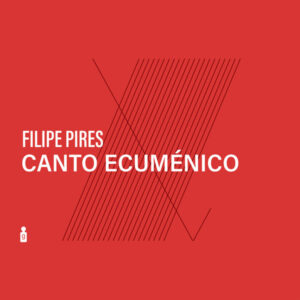
LP
Filipe PIRES
“Canto Ecuménico”
“Canto Ecuménico” (1979)
The choice of a religious theme is a pretext for an approximate comparison of authentic traditional music from different cultural areas in many different styles. The similarities and differences are presented in the form of collages and quotations, connected and superimposed on the sequences of sonorous material, vocal and instrumental, drawn exclusively from the musicians.
The most important musical material in this work is drawn from a great variety of countries. Some parts are fragments of Australian Aboriginal rites, joined with rain spirits and mixed with sonorous sounds taken from a funeral ceremony of the ethnic Somba from the North of Benim. Included also, are Buddhist ceremonies from Tibet and Japan, orthodox Christian songs from Armenia and Syria, Islamic rites from Morocco, Syria and Yugoslavia. The jews of Morocco, Yemen and Tunisia are also quoted.
From a formal point of view, the grand lines of the composition come together in a single block, in the middle of which are evolved distinct sections.
“Litania” (1972)
This work was composed while studying with the Groupe de Recherches Musicales, formerly ORTF in Paris. The improvised instrument parts are controlled in the process of the montage. The origin of the principal sound consists of sheets of iron, and metal wires. They are joined at their respective extremities. To produce sounds they are plucked, struck or rubbed, obtaining an extensive range and variety of vibrations. On the other side, the technique is to catch and put in relief a grand number of profiles of variations, ressonances, and multiple details and structures of sound.
Other objects to make sounds, elaborated for manipulation, are inserted into the discourse, upon which there are opposite characters, regular and punctual, that stop and start themselves under a repetitive form.
“Homo Sapiens” (1972)
The human voice, used as the symbol of earth and creation, constitutes the earth of this work. It is the phonetic frame in the context which evolves the sorrow of the movement, and for the elaboration and the fusion of various elements of sound.
Homo Sapiens is a revision of the first part of the ballet Nam Ban, composed in 1970, commissioned by the Portuguese Secretariat for the Exhibition of Osaka. The present version was composed while studying with the Groupe de Recherches Musicales in Paris.
200 copies.
19,00€
In stock
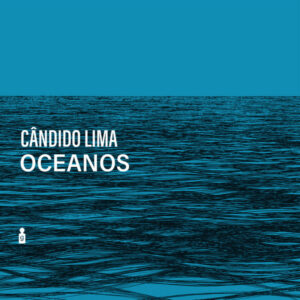
LP
Cândido LIMA
“Oceanos”
“Oceanos” (1978/79). “Autómatos da Areia” (1978/84), “Lendas de Neptuno” (1987).
Cândido Lima (Viana do Castelo, 1939) is a portuguese composer, pianist, organist, teacher, chronicler, critic, disseminator, essayist and lecturer. He holds a degree in Piano and Composition from the Conservatories of Lisbon and Porto, and a PhD from the Universities of Paris I and Paris IV.
Cândido Lima attended internships and courses in electronic music, computer science and music informatics at Universities of Paris VIII (Vincennes), Paris I-II (Paris-Sorbonne and Pantéon-Sorbonne) (1975/1978), CEMAMu, 1978 and subsequent years, and at IRCAM (1981/1992). He was a fellow of the Gulbenkian Foundation and the Secretary of State for Culture. He created the northern movement of study trips to the Gulbenkian Encounters of Contemporary Music, with the sponsorship of the Calouste Gulbenkian Foundation itself. He founded the Música Nova Group in 1973, presenting for the first time in Portugal composers such as Wilfried Jentzsch, Jean-Battiste Barrière, Kaija Saariaho, Pascal Dusapin and instrumentalists like Stefano Scodanibio. In 1982 he collaborated in the coming to Portugal (Porto, Lisbon) of IRCAM and UPIC-CEMAMu. He has written chamber music, for orchestra, choir and orchestra, choir, solo instruments, for voice and instruments, theater music, electronic music, electroacoustic and computer. His works Oceanos and A-MÈR-ES, composed between 1978 and 1979, introduce, for the first time in Portuguese music, and in the orchestra, computer media and electro-acoustic media.
Composer’s text : “The work was about the oceans to which NASA has paid attention in recent times to Neptune! The proper graphics to illustrate this work would be distant images where there are hypotheses of the existence of oceans, because it was in those oceans, in fact, that the composer thought, hence the original title, canceled to avoid terminological, semantic and scientific controversies!”
Production of the 1st edition (CD), Portugalsom, 1992.
200 copies.
19,00€
Out of stock

LP
Klaus LANG
“Organ works vol. 2”
The second instalment of Klaus Lang’s organ works and once again, two monumental works that span over two vinyl sides. “ABD” - contemporary vision of sacral chord progressions. “melrose abbey” - perverse art of mourning music.
Ultimate drone. Absolute torment. Performed by the composer in Graz, Austria, 1997.
18,00€
In stock

LP
Marc BARON
“Carnets”
“Just as 2014’s widely-lauded Hidden Tapes marked a turn from saxophone improvisation to an embrace of what the Potlatch label referred to as “music for speakers” or, more elegantly, “sound diffusion,” Carnets is not only another leap forward, but could easily be considered Baron’s masterpiece.
Glistening Examples is very proud to be publishing such a great work of art.
Carnets is a dynamic interplay of degraded magnetic tape and unsettlingly normal everyday recordings dating back to Baron’s childhood, the album showcases Baron’s deftness in crafting compositions that leave the listener with more questions than answers. Attempts to pin down his methods are eschewed at every turn by the abstract yet suggestive nature of the pieces. Personal memories become a platform for a series of inscrutable, elegantly-arranged compositions. Baron’s misused tapes carry evocative resonances which linger hauntingly in the mind of the listener, begging to be heard again.
This record is the analog debut for Marc Baron, and his hand-constructed audio works sound completely alive on this vinyl pressing mastered by Jason Lescalleet. Each slab of 150 gram vinyl comes slipped between special black poly lined dust sleeves inside 300gsm white on white art board, all lovingly protected by a polyvinyl bag. The front cover includes a striking black and white photograph of a sculpture by French artist, Loïc Blairon, something very intimate and personal for Marc Baron. This album is truly something very special.”
23,00€
Out of stock

LP
COMPILATION
TEXT-SOUND COMPOSITIONS 9
During the years from 1968-70, Fylkingen Records released series of 7 LPs in collaboration with the Swedish Radio, all of which contained material that was presented during the yearly festivals for Text-Sound Composition that Fylkingen arranged during those three years. The yearly festivals continued from 1971-71. A series of records that documented these festivals was planned but, due to economic reasons at that time, they were never made. Fylkingen Records has now, over 40 years later, found the material that was presented at these festivals and continues the series with vol. 8-11 - one record for each year’s festival during the years 1971-74.
Volume 9 (1972) with Christer Grewin, Bob Cobbing, Maud Reuterswärd & Bengt Nyquist, Öyvind Fahlström, Charles Amirkhanian.
Volume 9 (1972) with Christer Grewin, Bob Cobbing, Maud Reuterswärd & Bengt Nyquist, Öyvind Fahlström, Charles Amirkhanian.
18,00€
Out of stock
LP
COMPILATION
TEXT-SOUND COMPOSITIONS 8
During the years from 1968-70, Fylkingen Records released series of 7 LPs in collaboration with the Swedish Radio, all of which contained material that was presented during the yearly festivals for Text-Sound Composition that Fylkingen arranged during those three years. The yearly festivals continued from 1971-71. A series of records that documented these festivals was planned but, due to economic reasons at that time, they were never made. Fylkingen Records has now, over 40 years later, found the material that was presented at these festivals and continues the series with vol. 8-11 - one record for each year’s festival during the years 1971-74.
Side A
Bengt Emil Johnson - 1/1971: under publikens jubel
Gust Gils - Making Out In Windy Stockholm
Side B
Herman Damen - Magic
Bob Cobbing - Trilogy Three
Side A
Bengt Emil Johnson - 1/1971: under publikens jubel
Gust Gils - Making Out In Windy Stockholm
Side B
Herman Damen - Magic
Bob Cobbing - Trilogy Three
18,00€
Out of stock

LP
LARY 7
“The end of an era”
Lary 7 is a New York downtown legend who has blessed the city’s experimental music scene with his creative presence since the early 80s. As a musician, he has worked and/or collaborated with artists and bands such as The Jickets, Swans, Jarboe, Jimi Tenor, Alexander Hacke of Einstürzende Neubauten, to name but a few, and he has a yet unfinished album together with Tom Verlaine to come. As a photographer, Lary 7 has worked with artists including Matthew Barney and The Andy Warhol Foundation. He has also hosted evenings in Manhattan for years, usually in basements, showcasing experimental film and strange performances.
Lary 7 does not use digital technology and is strictly devoted to analogue equipment and old instruments, often using objects found in the streets of New York, at flea markets or in junk yards.
“The End of an Era” was recorded live at Fylkingen in 2006. The front cover photo shows a cassette trapped inside NYC sidewalk concrete. Lary 7 says it has been there for years. It is slowly disappearing; a beautiful image of old technology slowly fading away - and an illustrating image of the title of this record.
17,00€
In stock

LP
Lars AKERLUND – Zbigniew KARKOWSKI
“Aware Not Aware – Radio Enemy”
This split LP is one of several collaborative projects between Zbigniew Karkowski and Lars Åkerlund, which took place during the years 2012–2013. The collaboration between Karkowski and Åkerlund goes back to the 1980s, with projects like P.I.T.T. and the Dreamers and Onge-4-X. They continued during the 90s with an opera setting of Dostoyevsky’s The Idiot and a trio with Dror Feiler, among other things. Collaborations during recent years include the CD Horology, which Karkowski and Åkerlund made together with Jean-Louis Huhta. The three of them also made a couple of live performances during 2012 and 2013 in the re-unioned 80s group Mental Hackers. It was after their acclaimed concert with Mental Hackers at Fylkingen in May 2012 that the idea of this LP was born, whereafter Karkowski and Åkerlund each began working on one piece for it. The record proved to become Karkowski’s last one – at least the last that he, himself, took part in the planning of.
Zbigniew Karkowski died on December 12th 2013, after having been diagnosed with cancer only two months earlier.
15,00€
Out of stock
LP
COMPILATION
5 SEPTEMBER 1982 – A TRIBUTE TO JOHN CAGE
1983. This is Fylkingen’s contribution to the celebration of John Cage´s 70th birthday. The album presents works - all commissioned by Fylkingen on this special occasion - by composers from the 1960´s generation and shows their relations to an important percursor. Lars-Gunnar Bodin "For Jon III", Leo Nilsson "Early Ear", Folke Rabe "To the Barbender", Sten Hanson "The Flight of the Bumble Bee", Arne Mellnäs "31 Variations on CAGE".
16,00€
Out of stock
LP
COMPILATION
STOCKHOLMS ELEKTRONMUSIKFESTIVAL 1982
In October 1982 a festival for electronic music was arranged cooperatively by The Swedish Radio Company, Electronic Music Studio (EMS) and the Culture House in Stockholm for the fourth consecutive year. The festival, which was held in the concert hall of the Culture House included works for tape alone, instruments and tape, live electronics and text-sound composition. As previous years, both recent and older works of Swedish and international composers were presented at the three well- attended concerts. Stanley Haynes “Prisms for piano and tape”, Anders Hillborg “Rite of Passage”, Ingvar Karkoff “The Dogs”, Ilmar Laaban “Chien d’absolu”, Charles Amirkhanian “Hypothetical moments”.
16,00€
In stock

LP
Tamas UNGVARY
“Ita Missa Est”
1982. Tamas Ungvary is a conductor and computer music composer. Since 1972, Ungvary’s many compositions have been performed at the majority of the European and American festivals. Ungvary has held numerous workshops and seminars both in Europe and in the United States. "Melos No. 3", "Interactions No. 2", "Traum des Einsamen", "Ite, missa est". Torsten Nilsson, organ. Rimma Gotzkozik, violin.
16,00€
Out of stock

LP
Sven-Erik BÄCK
“Electronic music”
1978. Sven-Erik Bäck was in his versitality unique among Swedish composers. Since his debut in the 1940´s, he was regarded as a radical avantgardist and since Bäck was also a performer, the musical result became most interesting. Since his first electronic work - In Principio (1970) Bäck produced many electronic as well as instrumental and vocal compositions. He also combined music with other media such as dance and visual art. "Through the Earth through the Sea". "Walls". "Hommage aux grands faux-penseurs...". "Organ Butterfly".
15,00€
Out of stock
LP
Rolf ENSTRÖM
“TNT”
1986. Rolf Enström can look back on a fifteen year period as a composer. His list of works includes a number of very carefully crafted compositions of high artistic quality. Several of his works have become "classics"; one thinks especially of "Directions" (1979) and "Final Curses" (1981). Rolf Enström is a composer who unceasingly seeks new artistic paths and new means of expression and this is something which has led him to combine music with other art forms, primarily the visual arts and literature. On this record, we meet Enström as a composer of pure electroacoustic music. The three works Dagbrott, Sekvens i blått and TNT span a period of eight years.
16,00€
Out of stock
LP
Lars-Gunnar BODIN
“Clouds”
Produced in 1977. Lars-Gunnar Bodin, Swedish composer and graphic artist, was one of those who during the first half of the 60’s tried to integrate elements of different fields of art in his works: instrumental music, tapes, texts, actions, projections etc. In Clouds (1972-76) he developed an advanced form of musical drama involving electronic music in 8 channels, singers, dancers and slide and film projections on five screens. The music on this record is a shortened version of Clouds, especially created for this medium. Ilona Maros, soprano. Margaretha Ljunggren, mezzosoprano. Anne-Marie Mühle, alto.
16,00€