
Out of stock
CD
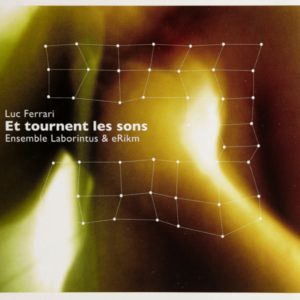
Luc FERRARI-ENSEMBLE LABORINTUS & eRikm
“Et tournent les sons”
A coproduction Césaré, La Muse en Circuit, Ensemble Laborintus.
Ensemble Laborintus : Hélène Breschand : harp. Philippe Cornus : percussions. Sylvain Kassap : clarinets. Adeline Lecce : cello. Franck Masquelier : flutes.
& eRikm : cd player on ’Archives sauvées des eaux’.
1.’Et tournent les sons dans la garrigue (1977) (Réflexion sur l’écriture n°1)’.
("and sounds are spinning in the garigue")
For tape and instrumental ensemble.
The idea here is to propose a score of intentions and desires of sound - a tape part that indicates materials, forms and general ideas that combine to create meaning. Communication among the musicians is key as they choose the way they realise or "invent" the piece.
2. ’Archives sauvées des eaux (2000-2005) (Exploitation des concepts n°3)’.
("Archives rescued from the waters (exploitation of concepts
3)")
Version for two cds and instrumental ensemble.
Two Cds contain sequences over which the instruments improvise - little bits of magnetic memory rescued from a flood. The ensemble must stay together, but can otherwise do as it pleases, occasionally slipping in quotes from Patajaslocha, a dance suite composed in 1984. This version was prepared with Luc Ferrari during the summer of 2005. He was to perform the CDs part himself, but he passed away six days before the recording.
Ensemble Laborintus : Hélène Breschand : harp. Philippe Cornus : percussions. Sylvain Kassap : clarinets. Adeline Lecce : cello. Franck Masquelier : flutes.
& eRikm : cd player on ’Archives sauvées des eaux’.
1.’Et tournent les sons dans la garrigue (1977) (Réflexion sur l’écriture n°1)’.
("and sounds are spinning in the garigue")
For tape and instrumental ensemble.
The idea here is to propose a score of intentions and desires of sound - a tape part that indicates materials, forms and general ideas that combine to create meaning. Communication among the musicians is key as they choose the way they realise or "invent" the piece.
2. ’Archives sauvées des eaux (2000-2005) (Exploitation des concepts n°3)’.
("Archives rescued from the waters (exploitation of concepts
3)")
Version for two cds and instrumental ensemble.
Two Cds contain sequences over which the instruments improvise - little bits of magnetic memory rescued from a flood. The ensemble must stay together, but can otherwise do as it pleases, occasionally slipping in quotes from Patajaslocha, a dance suite composed in 1984. This version was prepared with Luc Ferrari during the summer of 2005. He was to perform the CDs part himself, but he passed away six days before the recording.
12,00€
Out of stock

CD
Lionel MARCHETTI
“Noord five Atlantica”
A new piece of musique concrete from French composer Lionel Marchetti composed in 2003-2005. ’Noord five Atlantica’ is working around the world of the sea, animals and humans using sounds of birds, voices (haïkus), melotron (a keyboard instrument manufatured in the 60s and 70s that uses pre-recorded tape as it´s soundsource), foghorns…
Lionel Marchetti has compositions on differents labels like Metamkine, Selektion, Crouton, Absurd, Auscultare, Ground Fault, Musica Genera… He is also an improvisor working a lot with Jérôme Noetinger among others. And he’s part of the Quintet Avant.
Lionel Marchetti has compositions on differents labels like Metamkine, Selektion, Crouton, Absurd, Auscultare, Ground Fault, Musica Genera… He is also an improvisor working a lot with Jérôme Noetinger among others. And he’s part of the Quintet Avant.
12,00€
Out of stock

CD
DIATRIBES & Barry GUY
“Multitude”
“Barry Guy : doublebass. D’Incise : laptop, objects. Cyril Bondi : drums, percussions. Benoît Moreau : clarinet on track 3. Nervous encounter between the doublebass master-improv-virtuoso Barry Guy and a young Geneva entity called Diatribes. A tense and rich mix-testimony of strings, drums-percussion and electronics.” label info
15,00€
Out of stock
CD
DARLING
Serie Cave12 fetish. Adrien Kessler : bass, voice (compositions, texts). Vincent Hänni (Young Gods), guitar. Andrea Valvini (ex. Goz of Kermeur), drums. Anne Cardinaud, keyboards. “Adrien Kessler, former bass player and singer of the band “Goz of Kermeur”who toured their three albums between 1992 and 2000, comes back full of fantastic strenght with this new super-power band and their first cd release. Darling is what you need ! A rabid pop mood, hypnotic, violent and grinding, somewhere between the young Bowie’s glam rock, the obscure violence of Birthday Party, the craziness of Pere Ubu or Beefheart and this unique little touch, free and indescribable that will encompass Darling and make them an impressive outstanding band. Darling, baby, IS WHAT YOU NEED !”
12,00€
Out of stock
CD
PATERAS – BAXTER – BROWN
“Live at l’Usine”
Serie Cave12 Alive.
“Anthony Pateras : prepared piano. Sean Baxter : drums. David Brown : prepared guitar. Recorded live in concert at l’Usine, Geneva, December 2006 by Adrien Kessler. “Percussive prepared piano... Percussive prepared guitar... Percussive drums... Dense and fascinating progressive pile & tangle of percussive sonorities by one of the best improv trios around, caught live during a dense concert on the black & rock building of l’Usine in Geneva. Great “Percussive” Impro !” Formed in 2002 Pateras-Baxter-Brown have performed countless concerts throughout Australia, New Zealand and Europe, developing a worldwide reputation for their uncompromising, intensely focused and remarkably fluid live shows. Using the unique combinations of prepared piano, prepared guitar and percussion, Pateras-Baxter-Brown allude to numerous traditions of percussive contemporary and traditional music, including contemporary classical chamber music, rarefied improvisation and non-western percussive traditions such as gamelan.”
“Anthony Pateras : prepared piano. Sean Baxter : drums. David Brown : prepared guitar. Recorded live in concert at l’Usine, Geneva, December 2006 by Adrien Kessler. “Percussive prepared piano... Percussive prepared guitar... Percussive drums... Dense and fascinating progressive pile & tangle of percussive sonorities by one of the best improv trios around, caught live during a dense concert on the black & rock building of l’Usine in Geneva. Great “Percussive” Impro !” Formed in 2002 Pateras-Baxter-Brown have performed countless concerts throughout Australia, New Zealand and Europe, developing a worldwide reputation for their uncompromising, intensely focused and remarkably fluid live shows. Using the unique combinations of prepared piano, prepared guitar and percussion, Pateras-Baxter-Brown allude to numerous traditions of percussive contemporary and traditional music, including contemporary classical chamber music, rarefied improvisation and non-western percussive traditions such as gamelan.”
8,50€
Out of stock
CD
Francisco MEIRINO
“Untitled phenomenas in concrete”
Composed between 2008 and 2011, “Untitled Phenomenas In Concrete” is a piece made out of 85 HighC/UPIC* sessions and 18 external sounds (recordings of snow falling, bones cracking, magnetic fields and insects). *UPIC is a computerised musical composition tool, devised by the composer Iannis Xenakis. It consists of a digitising tablet linked to a computer, which has a vector display. Interested by Xenakis’ approach and wanting to draw the sound before hearing it, Francisco Meirino spent nearly four years composing/drawing line by line “Untitled Phenomenas In Concrete”, listening to every line, gradually adding on lines and sounds, erasing, reassembling, gathering and discreetly weaving recorded sounds into the piece to “humanise” the whole. As a final touch, the piece was transferred on reel-to-reel tape to add some warmth to the cold digital processing of the UPIC. In short, this is a meticulously created album, the result of which is a completely coherent sound arrangement. Made with great care, “Untitled Phenomenas In Concrete” is a captivating and dense piece, a new gem in the already impressive discography of Francisco Meirino.
15,00€
Out of stock

CD
Marc BARON
“ ”
A seven part composition involving saxophone, silence, guttaral splutters and a few other items aside. Individual, unusual music by one of the most intriguing musicians around today.
10,00€
Out of stock
CD
Sarah HENNIES
“Gather & Release”
The 10 last copies !
Gather & Release is the result of years worth of composer Sarah Hennies’ exploration of the vibraphone in synthesis with her experiences of identity, obsession, anxiety, tension, grief, and loss.
Over the course of an hour, Hennies entangles highly focused percussion playing with field recordings, sine waves, signifiers from her personal & family history (including a 20+ year old recording of her grandfather reciting poetry), and bilateral stimulation, a tool for anxiety release and a major component of EMDR therapy (a branch of psychotherapy that focuses on relieving the patient of disturbing memories as a treatment for psychopathology).
Gather & Release is personal, immediate, yet reserved. Coppice welcomes Sarah Hennies to Category of manifestation: with this challenging new work of reclaim.
Sarah Hennies (b. 1979, Louisville, KY) is a composer and percussionist currently residing in Ithaca, NY. Her work is primarily concerned with an immersive, psychoacoustic presentation of sound brought about by an often grueling, endurance-based performance practice that Nathan Thomas of Fluid Radio described as, “a highly sophisticated and refined performance technique…that starts and ends with listening and encourages a different way of listening from its audience.”
Gather & Release is the result of years worth of composer Sarah Hennies’ exploration of the vibraphone in synthesis with her experiences of identity, obsession, anxiety, tension, grief, and loss.
Over the course of an hour, Hennies entangles highly focused percussion playing with field recordings, sine waves, signifiers from her personal & family history (including a 20+ year old recording of her grandfather reciting poetry), and bilateral stimulation, a tool for anxiety release and a major component of EMDR therapy (a branch of psychotherapy that focuses on relieving the patient of disturbing memories as a treatment for psychopathology).
Gather & Release is personal, immediate, yet reserved. Coppice welcomes Sarah Hennies to Category of manifestation: with this challenging new work of reclaim.
Sarah Hennies (b. 1979, Louisville, KY) is a composer and percussionist currently residing in Ithaca, NY. Her work is primarily concerned with an immersive, psychoacoustic presentation of sound brought about by an often grueling, endurance-based performance practice that Nathan Thomas of Fluid Radio described as, “a highly sophisticated and refined performance technique…that starts and ends with listening and encourages a different way of listening from its audience.”
5,00€
Out of stock
CD
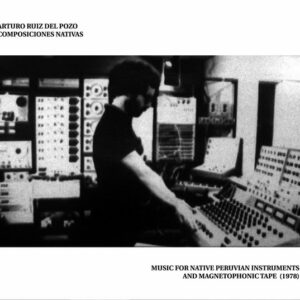
Arturo RUIZ DEL POZO
“Composiciones nativas”
Set of Concrete Music works composed in solo mode by Arturo Javier Ruiz del Pozo, Mmus. Music for Native Peruvian instruments and Magnetophonic Tape created in the Electronic Music Studio of the Royal College of Music of the University of London between 1976 and 1978. Arturo Ruiz del Pozo composed each work as an independent and different sound texture from the others by the characteristic timbres of each native instrument executed properly.
For example in “Parantara” develops a blown melodic and harmonic tissue with Sikus (Zampoñas or Pan Flutes), while in “Lake of Totoras” also uses Sikus but rubbed. A sample of creative freedom is “Despegue” (Takeoff), where Ruiz del Pozo sums and merges all previous works by playing them at full speed generating a multiple white sound crescendo ending in sudden silence.
Compositional concrete music techniques as loops (repetitive tape fragments), variable speed (faster or slower playback of tape), superimposition (several channels recording), polyrhythm (simultaneous execution of fragments with different tempos), polytonality (simultaneous execution of fragments with different tonality looking for harmonization), aleatory mix (fusion of melodies, rhythms, textures, etc. produced randomly.) Microtonality (use of variable tuning microtones), tape echo ; coupled with creative techniques as free improvisation, classic and twelve-tone harmony, leitmotiv, dynamics, structure, etc.; were used with a coherent elaborated logic trying to create a unifying style of works that arose with spontaneous enthusiasm during the course of time.
The expressive character of Native Compositions, while being own and unique in the development of each work, can be defined as relaxing because the set of works conveys a meditative state of consciousness that brings us to the longing for inner peace so important and necessary in our lives.
By the encounter of the special sonority of Native Peruvian Instruments with academic techniques of musical composition at that time (management, development and process of sound elements physical and specifically recorded at tape), Native Compositions achieves a unique result in form, style, and artistic expression; driving us to a contemplative state of the amazement of existence.
Bonus tracks : “D” and “Kanon expansivo”.
Arturo Ruiz del Pozo, was born in Lima, Peru, in 1949, he studied with Miguel Donoso, Lily Rosay, Andres Sas, Edgar Valcárcel, Kenneth Jones and Lawrence Casserley. Studies in Lima: National School of Music. At the University of London: Royal College of Music. Academic Degree: Master of Music in Composition 1978.
16,00€
In stock
CD
Jonas KOCHER
“Plays Christian Kesten & Stefan Thut”
Jonas Kocher, accordion. Christian Kesten & Stefan Thut, composition. Recorded at Studioboerne 45 Berlin in July 2014 by Christoph Schlimbach.
Mixed by Jonas Kocher and mastered by Ilia Belorukov. Ekopack single CD. Photography by Lucas Dubuis, design by Ilia Belorukov.
Christian Kesten “Untitled (solo for accordion)” (2014). Written for Jonas Kocher and premiered in Paris in April 2014. “The accordion contains some remarkable mechanical characteristics. In the highest register of the right hand, the last few buttons don’t play the expected tones. The pitches are simply too high. The necessary reeds would be too small and fragile to produce them. These buttons transpose the tones an octave down. The buttons in the neighbouring octave do play the expected tones. One might assume that the two octave registers would actually play the same pitches. But as they play them on different reeds, there is a slight microtonal difference.” - ck2016
Stefan Thut “Eine/r 1-6” (2007).
“If the full set of chromatic pitches within a wide range is randomly generated the probability of new pitches appearing decreases. Repeated events become silences. A group of two or three pitches is represented here by the variables y and z, single events by the variable x, reminiscent of a single point in Euclidean space. The present score mirrors the concluding section of the above procedure.” - st2016
14,00€
Out of stock

CD
ON
“Second souffle”
ON was born in July 2003 with the meeting of Chicago-based Steven Hess and French musician Sylvain Chauveau when they joined for a lowercase improv session recorded by Jeremy Lemos (member of White-Light, collaborator of Jim O’Rourke, Town and Country, Sonic Youth...). Their first album, “Your Naked Ghost Comes Back At Night” was mixed by Helge Sten aka Deathprod, the illustrious member-producer of Supersilent, and then released in 2004 by French label Les Disques du Soleil et de l’Acier. The album appeared as a brilliant collection of dense, monochromatic layers. Second Souffle is now built upon the same recording session, but with new mixes and editing by French musician Pierre-Yves Macé (Sub Rosa, Tzadik). The album is a slick display of ambient, improv and concrete music; a rich electro-acoustic composition made of piano, prepared guitar, vibes and percussion. It has the post-rock surgical flair of early Pluramon along with the sumptuous cadences of Gastr del Sol’s Upgrade & Afterlife. ON has played live in the USA, France, Italy, Austria and Germany. The duo even joined Christian Fennesz for the 2004 edition of the French Musique Action festival.”
15,00€
Out of stock
CD
MINIZZA
“Hotel Monterey”
“Hotel Monterey is Minizza’s second album, following Music for girls (2005) and collaborations with various artists like Erlend Oye (The Kings of Convenience), Edward Ka-Spel (The Legendary Pink Dots) and Erik Arnaud. But Minizza has been active during these last six years. Hotel Monterey, inspired by Chantal Akerman’s movie, was commissioned by the festival Electroni[k] (Saint-Brieuc, France), recorded on Radio France studios in May 2009, then reworked, remixed and mastered at Minizza studio. For the realization of this project, Rainier Lericolais and David Sanson (That Summer) joined the original band members Franck Marguin and Geoffroy Montel. Hotel Monterey is a one hour long, dark, ambient instrumental piece, close to experimental music from the 90s (such as first Jim O’Rourke records, Christoph Heemann or Coil).”
15,00€
Out of stock
CD
MINIZZA
“A rebours”
Adapting a novel to produce a concept album has been a dream of Minizza’s ever since their formation in 2000. So when French national radio station France Culture asked the band to produce a radio drama for the legendary Atelier de Création Radiophonique, they took the opportunity to adapt Joris-Karl Huysmans’s masterpiece À Rebours (Against Nature, 1884), the ultimate example of "decadent" literature they’ve been worshiping since their teenage years. This work led to the third album of the band which combines elements of « Hörspiele », real songs, and experimental music. Huysmans’s words are never referenced directly yet they form the basis for the transformation into their lyrical interpretation. The goal was to recreate the atmosphere of the novel.
À Rebours is without a doubt the most ambitious and successfully completed album of the band. Franck Marguin and Geoffroy Montel formed Minizza in 2000. They worked several times with Erlend Øye from The Kings Of Convenience, and their first album, Music for girls, features Edward Ka-Spel from The Legendary Pink Dots.
At the end of the 2000s Minizza became a trio when joined by contemporary artist Rainier Lericolais. Their second album, Hotel Monterey (with David Sanson from That Summer) is an imaginary soundtrack from Chantal Akerman’s movie of the same name. For their third, À Rebours, they also collaborated with the four members of That Summer (Etienne Bonhomme, Olivier Cavaillé, Nicolas Jorio and David Sanson), Pierre-Yves Macé and Daniel Palomo-Vinuesa. Together, they write music that combines elements of pop, electronic and experimental music.
À Rebours is without a doubt the most ambitious and successfully completed album of the band. Franck Marguin and Geoffroy Montel formed Minizza in 2000. They worked several times with Erlend Øye from The Kings Of Convenience, and their first album, Music for girls, features Edward Ka-Spel from The Legendary Pink Dots.
At the end of the 2000s Minizza became a trio when joined by contemporary artist Rainier Lericolais. Their second album, Hotel Monterey (with David Sanson from That Summer) is an imaginary soundtrack from Chantal Akerman’s movie of the same name. For their third, À Rebours, they also collaborated with the four members of That Summer (Etienne Bonhomme, Olivier Cavaillé, Nicolas Jorio and David Sanson), Pierre-Yves Macé and Daniel Palomo-Vinuesa. Together, they write music that combines elements of pop, electronic and experimental music.
15,00€
Out of stock
CD
MINIZZA
“Le voyage au Groenland”
Minizza return to their electro-pop roots with the soundtrack to French director Sébastien Betbeder’s latest film. Betbeder has in the past worked with Sylvain Chauveau (Nuage, 2007), Bertrand Betsch (2 automnes, 3 hivers, 2013) and Sébastien Tellier (Marie et les naufragés, 2016).
In a departure from their previously more experimental albums in this release Minizza opts for a clear, eminently melodic approach. Both catchy and yet melancholic it is reminiscent of the late 70s/80s movie soundtracks from the likes of François de Roubaix, Pierre Bachelet, Vladimir Cosma and Ennio Morricone.
Franck Marguin and Geoffroy Montel formed Minizza in 2000. They worked several times with Erlend Øye from The Kings Of Convenience, and their first album, Music for girls, features Edward Ka-Spel from The Legendary Pink Dots.
At the end of the 2000s Minizza became a trio when joined by contemporary artist Rainier Lericolais. Their second album, Hotel Monterey (with David Sanson from That Summer) is an imaginary soundtrack from Chantal Akerman’s movie of the same name. For their third release, À Rebours, a concept album based on Joris-Karl Huysmans’s masterpiece, they also collaborated with the four members of That Summer (Etienne Bonhomme, Olivier Cavaillé, Nicolas Jorio and David Sanson), Pierre-Yves Macé and Daniel Palomo-Vinuesa.
In 2016, Minizza signed the soundtrack of Le voyage au Groenland, a tragi-comedy by French director Sébastien Betbeder, who has previously worked with Sylvain Chauveau (Nuage, 2007), Bertrand Betsch (2 automnes, 3 hivers, 2013) and Sébastien Tellier (Marie et les naufragés, 2016).
In a departure from their previously more experimental albums in this release Minizza opts for a clear, eminently melodic approach. Both catchy and yet melancholic it is reminiscent of the late 70s/80s movie soundtracks from the likes of François de Roubaix, Pierre Bachelet, Vladimir Cosma and Ennio Morricone.
Franck Marguin and Geoffroy Montel formed Minizza in 2000. They worked several times with Erlend Øye from The Kings Of Convenience, and their first album, Music for girls, features Edward Ka-Spel from The Legendary Pink Dots.
At the end of the 2000s Minizza became a trio when joined by contemporary artist Rainier Lericolais. Their second album, Hotel Monterey (with David Sanson from That Summer) is an imaginary soundtrack from Chantal Akerman’s movie of the same name. For their third release, À Rebours, a concept album based on Joris-Karl Huysmans’s masterpiece, they also collaborated with the four members of That Summer (Etienne Bonhomme, Olivier Cavaillé, Nicolas Jorio and David Sanson), Pierre-Yves Macé and Daniel Palomo-Vinuesa.
In 2016, Minizza signed the soundtrack of Le voyage au Groenland, a tragi-comedy by French director Sébastien Betbeder, who has previously worked with Sylvain Chauveau (Nuage, 2007), Bertrand Betsch (2 automnes, 3 hivers, 2013) and Sébastien Tellier (Marie et les naufragés, 2016).
15,00€
Out of stock
CD
Sylvain CHAUVEAU
“Post-everything”
Myriam Pruvot, backing vocals, Chantal Acda, backing vocals, Joseph Mills, electronics, Jacques Coursil, trumpet, Sylvain Chauveau, vocals, guitar, harmonium, programming, radios, ebows, field recordings.
Post-Everything is the third and final part of a trilogy where Chauveau deconstructs the pop song format. Three album titles like the three verses of a haiku: Singular Forms (Sometimes Repeated), Kogetsudai, Post-Everyting. This last album is the most accessible and romantic, and shows two distinct climates: electronic & vocals, acoustic guitar & vocals. Post-Everything has been two years in the making and was 100% self-funded thanks to streaming platform revenues. The album includes 10 tracks, including two Lykke Li covers: I Follow Rivers and No Rest For The Wicked.
Sylvain Chauveau has made solo records on labels like FatCat, Type, Les Disques du Soleil et de l'Acier, and Brocoli: very minimal compositions for acoustic instruments, electronics and vocals. His music has been played on John Peel's BBC show and reviewed in The Wire, Pitchfork, Mojo, Les Inrockuptibles, Libération, The Washington Post and many others. One of his tracks was published on the compilation WVI Reflections on Classical Music (Decca/Universal) alongside peices by Philip Glass, Gavin Bryars and Ryuichi Sakamoto. He has played live around the world (Europe, America, Asia), performed in museums and art galleries, and was artist in residence at the Villa Kujoyama (Kyoto 2011), Fundacao Serralves (Porto 2011), and Lieu Unique (Nantes 2004). He runs the labels Onement, whose aim is to release one-copy vinyl records (onement-label.com) and I will Play This Song Once Again Records where musicians re-record their songs for each buyer. He has composed a piece titled You Will Leave No Mark On The Winter Snow whose duration is seven years, with extremely long silences inside (7yearsofsilence.com). He has made soundtracks for long feature films and dance performances. Sylvain Chauveau also plays with 0 (with Joël Merah and Stéphane Garin), Arca (with Joan Cambon) and On (with Steven Hess). He was born in 1971 in Bayonne (France) and lives in Brussels, Belgium.
Sylvain Chauveau back catalog on Brocoli: How To Live In Small Spaces (Brocoli 017), Kogetsudai (Brocoli 013), The Absence (Brocoli 007, with Rainier Lericolais), Second Souffle (Brocoli 003, with ON).
Post-Everything is the third and final part of a trilogy where Chauveau deconstructs the pop song format. Three album titles like the three verses of a haiku: Singular Forms (Sometimes Repeated), Kogetsudai, Post-Everyting. This last album is the most accessible and romantic, and shows two distinct climates: electronic & vocals, acoustic guitar & vocals. Post-Everything has been two years in the making and was 100% self-funded thanks to streaming platform revenues. The album includes 10 tracks, including two Lykke Li covers: I Follow Rivers and No Rest For The Wicked.
Sylvain Chauveau has made solo records on labels like FatCat, Type, Les Disques du Soleil et de l'Acier, and Brocoli: very minimal compositions for acoustic instruments, electronics and vocals. His music has been played on John Peel's BBC show and reviewed in The Wire, Pitchfork, Mojo, Les Inrockuptibles, Libération, The Washington Post and many others. One of his tracks was published on the compilation WVI Reflections on Classical Music (Decca/Universal) alongside peices by Philip Glass, Gavin Bryars and Ryuichi Sakamoto. He has played live around the world (Europe, America, Asia), performed in museums and art galleries, and was artist in residence at the Villa Kujoyama (Kyoto 2011), Fundacao Serralves (Porto 2011), and Lieu Unique (Nantes 2004). He runs the labels Onement, whose aim is to release one-copy vinyl records (onement-label.com) and I will Play This Song Once Again Records where musicians re-record their songs for each buyer. He has composed a piece titled You Will Leave No Mark On The Winter Snow whose duration is seven years, with extremely long silences inside (7yearsofsilence.com). He has made soundtracks for long feature films and dance performances. Sylvain Chauveau also plays with 0 (with Joël Merah and Stéphane Garin), Arca (with Joan Cambon) and On (with Steven Hess). He was born in 1971 in Bayonne (France) and lives in Brussels, Belgium.
Sylvain Chauveau back catalog on Brocoli: How To Live In Small Spaces (Brocoli 017), Kogetsudai (Brocoli 013), The Absence (Brocoli 007, with Rainier Lericolais), Second Souffle (Brocoli 003, with ON).
15,00€
Out of stock
CD
Sylvain CHAUVEAU
“Kogetsudai”
Kogetsudai is Sylvain Chauveau’s 10th album, the second in a trilogy initiated by Singular Forms (Sometimes Repeated) (2010), where the song structure is dismantled and reconstructed on the fringe of silence.
Whereas Singular Forms found inspiration from Abstract Painting, Kogetsudai is influenced by Zen rock gardens found in Japan — also the location where the album was conceived (for the most part) — and from which the album borrows its title. Layers of minimal electronic sounds and filtered field recordings meet Sylvain’s rich baritone voice, with ghosts of piano.
Sylvain Chauveau has made solo records on labels such as FatCat, Type, Les Disques du Soleil et de l’Acier, and Brocoli: very minimal compositions for acoustic instruments, electronics and vocals. He has played live around the world (Europe, America, Asia), performed in museums and art galleries, and was artist in residence at the Villa Kujoyama (Kyoto 2011), Fundacao Serralves (Porto 2011), and Lieu Unique (Nantes 2004). He runs the labels Onement, whose aim is to release one-copy vinyl records (www.onement-label.com) and I Will Play This Song Once Again Records where musicians re-record their songs for each buyer. He has composed a piece titled You Will Leave No Mark on the Winter Snow whose duration is seven years, with extremely long silences inside (www.7yearsofsilence.com). He has made soundtracks for long feature films and dance shows. Sylvain Chauveau also plays with 0 (with Joël Merah and Stéphane Garin), Arca (with Joan Cambon) and On (with Steven Hess). He was born in 1971 in Bayonne (France) and lives in Brussels, Belgium.
Kogetsudai is the third album featuring Sylvain Chauveau published by Brocoli, following ON’s Second Souffle (with Steven Hess and Pierre-Yves Macé), and the 7 inches The Absence (with Rainier Lericolais).
Whereas Singular Forms found inspiration from Abstract Painting, Kogetsudai is influenced by Zen rock gardens found in Japan — also the location where the album was conceived (for the most part) — and from which the album borrows its title. Layers of minimal electronic sounds and filtered field recordings meet Sylvain’s rich baritone voice, with ghosts of piano.
Sylvain Chauveau has made solo records on labels such as FatCat, Type, Les Disques du Soleil et de l’Acier, and Brocoli: very minimal compositions for acoustic instruments, electronics and vocals. He has played live around the world (Europe, America, Asia), performed in museums and art galleries, and was artist in residence at the Villa Kujoyama (Kyoto 2011), Fundacao Serralves (Porto 2011), and Lieu Unique (Nantes 2004). He runs the labels Onement, whose aim is to release one-copy vinyl records (www.onement-label.com) and I Will Play This Song Once Again Records where musicians re-record their songs for each buyer. He has composed a piece titled You Will Leave No Mark on the Winter Snow whose duration is seven years, with extremely long silences inside (www.7yearsofsilence.com). He has made soundtracks for long feature films and dance shows. Sylvain Chauveau also plays with 0 (with Joël Merah and Stéphane Garin), Arca (with Joan Cambon) and On (with Steven Hess). He was born in 1971 in Bayonne (France) and lives in Brussels, Belgium.
Kogetsudai is the third album featuring Sylvain Chauveau published by Brocoli, following ON’s Second Souffle (with Steven Hess and Pierre-Yves Macé), and the 7 inches The Absence (with Rainier Lericolais).
15,00€
Out of stock
CD
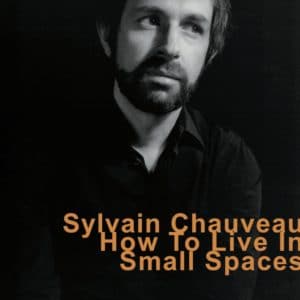
Sylvain CHAUVEAU
“How to live in small spaces”
His new solo instrumental album. The album title is taken from two long pieces in the work; new versions of compositions for Christian Rizzo choreography. Reminiscent of Morton Feldman, time is suspended to the unresolved piano chords. Each one if followed by a minimal electronic piece. They were also composed for a dance performance by Cécile Loyer, recalling Sylvain's works on S. (Type 2007) and his collaboration with Stephan Mathieu, Palimpsest (Schwebung, 2012). Sylvain Chauveau has made solo records on labels like FatCat, Type, Les Disques du Soleil et de l'Acier, and Brocoli: very minimal compositions for acoustic instruments, electronics and vocals. His music has been played on John Peel's BBC show and reviewed in The Wire, Pitchfork, Mojo, Les Inrockuptibles, Libération, The Washington Post and many others. One of his tracks was published on the compilation WVI Reflections on Classical Music (Decca/Universal) alongside peices by Philip Glass, Gavin Bryars and Ryuichi Sakamoto. He has played live around the world (Europe, America, Asia), performed in museums and art galleries, and was artist in residence at the Villa Kujoyama Kyoto 2011), Fundacao Serralves (Porto 2011), and Lieu Unique (Nantes 2004). He runs the labels Onement, whose aim is to release one-copy vinyl records (onement-label.com) and I will Play This Song Once Again Records where musicians re-record their songs for each buyer. He has composed a piece titled You Will Leave No Mark On The Winter Snow whose duration is seven years, with extremely long silences inside (7yearsofsilence.com). He has made soundtracks for long feature films and dance performances. Sylvain Chauveau also plays with 0 (with Joël Merah and Stéphane Garin), Arca (with Joan Cambon) and On (with Steven Hess). He was born in 1971 in Bayonne (France) and lives in Brussels, Belgium.
Also available this fall: Un Autre Décembre, Sylvain Chauveau's third album reissue for the first time on vinyl, out on Minority Records in September 2015. Down To The Bone, Sylvain Chauveau's acoustic tribute album to Depeche Mode reissue on vinyl for the first time, out on Ici, D'Ailleurs... on August 28th 2015.
Brocoli is a French label founded in 2005 and dedicated to experimental music in various genres: musique concrète (Michel Chion, Sébastien Roux, Pierre-Yves Macé), electronic music (Rainier Lericolais, Roux/Epplay, ON), repetitive / neo-classical (Quentin Sirjacq) and pop (Sylvain Chauveau, Minizza).
Also available this fall: Un Autre Décembre, Sylvain Chauveau's third album reissue for the first time on vinyl, out on Minority Records in September 2015. Down To The Bone, Sylvain Chauveau's acoustic tribute album to Depeche Mode reissue on vinyl for the first time, out on Ici, D'Ailleurs... on August 28th 2015.
Brocoli is a French label founded in 2005 and dedicated to experimental music in various genres: musique concrète (Michel Chion, Sébastien Roux, Pierre-Yves Macé), electronic music (Rainier Lericolais, Roux/Epplay, ON), repetitive / neo-classical (Quentin Sirjacq) and pop (Sylvain Chauveau, Minizza).
15,00€
Out of stock
CD
Sébastien ROUX
“Quatuor”
Sébastien Roux’s new album is an ambitious work of musique concrète. Like the title track of his previous album More Songs, Quatuor is based on Beethoven's 10th string quartet.
The sonic material of the piece is culled from arrangements of the original score by Mathieu Bonilla, for flute, clarinet, cello, French horn, and percussion. Quatuor follows the same structure as the original string quartet, classic and solid, but the sound is profoundly original, in turns woody, rubbed, creaking, jerky or enveloping.
Quatuor will without a doubt become a milestone in the canon of electroacoustic music.
Sébastien Roux (born 1977) writes electronic music, and presents it in diverse formats, from CD’s and records, to public listening sessions, sound installations, sound walks, and radio pieces. In 2011 he began to develop an approach focused on principles of translation, analyzing the structures of pre-existing art works (visual, musical, literary) and transposing them into into scores for new works (radiophonic or electro-acoustic taped music). This process has led to the creation of Quatuor (2011) an electroacoustic work based on Beethoven’s 10th String quartet, commissioned by Groupe de Recherches Musicales and Nouvelle (2012) a radio work, based on Flaubert's short story The Legend of Saint Julien L’Hospitalier, commissioned by the Westdeutscher Rundfunk. The most recent development out of this process of “translation” is Inevitable Music which has involved an exhaustive research on the wall drawings of Sol Lewitt, and a long-term examination and development of a methodology for applying the rules and means of these works to sonic ends. He has written music for dance and theater, for choreographers Lionel Hoche, Sylvain Prunenec, and DD Dorvillier, and theater director Annie Dorsen.
The sonic material of the piece is culled from arrangements of the original score by Mathieu Bonilla, for flute, clarinet, cello, French horn, and percussion. Quatuor follows the same structure as the original string quartet, classic and solid, but the sound is profoundly original, in turns woody, rubbed, creaking, jerky or enveloping.
Quatuor will without a doubt become a milestone in the canon of electroacoustic music.
Sébastien Roux (born 1977) writes electronic music, and presents it in diverse formats, from CD’s and records, to public listening sessions, sound installations, sound walks, and radio pieces. In 2011 he began to develop an approach focused on principles of translation, analyzing the structures of pre-existing art works (visual, musical, literary) and transposing them into into scores for new works (radiophonic or electro-acoustic taped music). This process has led to the creation of Quatuor (2011) an electroacoustic work based on Beethoven’s 10th String quartet, commissioned by Groupe de Recherches Musicales and Nouvelle (2012) a radio work, based on Flaubert's short story The Legend of Saint Julien L’Hospitalier, commissioned by the Westdeutscher Rundfunk. The most recent development out of this process of “translation” is Inevitable Music which has involved an exhaustive research on the wall drawings of Sol Lewitt, and a long-term examination and development of a methodology for applying the rules and means of these works to sonic ends. He has written music for dance and theater, for choreographers Lionel Hoche, Sylvain Prunenec, and DD Dorvillier, and theater director Annie Dorsen.
15,00€
Out of stock
CD
Sébastien ROUX & Vincent EPPLAY
“Concatenative Mu”
Following Klavier intégral (2006, commissioned by INA/GRM), Sébastien Roux (12k, Optical Sound, ROOM40, ...) and Vincent Epplay (artist/musician, he has released albums on Tiramizu, Stembogen, and exhibited his art installations at Palais de Tokyo and Beaubourg in Paris) are back and have come up with punk musique concrète !
Plunderphonics of John Oswald, Negativland or The Tape Beatles, and German experimental music from the 80s/90s (HNAS, Rowenta/Khan, P16D4) have without a doubt influenced Concatenative Mu, but Roux & Epplay bring them further on, adding some virtuosity that makes it exhilarating. This is a demanding, disturbing, rich, yet funny and fully inventive work of art. Born 1977, Sébastien Roux came to music as a guitarist in different rock groups until beginning a career as an electronic music composer, working in an eclectic variety of formal trajectories: records (solo as well as collaborations with Greg Davis, Vincent Epplay, and Eddie Ladoire), electroacoustic concerts, improvisations (with Kim Myhr and David Fennech), audiovisual performances, music for dance (in current collaboration with young choreographer Marinette Dozeville, as well as a recent music and sound design for Pan by choreographer Lionel Hoche), radio art (he was awarded the Radio Art Prize by La Muse en Circuit in 2005), live music for cinema (for Nanouk of the North, in collaboration with Vincent Epplay at The Fondation Cartier), sound installations (most notably a current series entitled Wallpaper Music, with its next incarnation at Fri Art in Fribourg, as well as the soundtrack for Precisions Sur les Vagues, by Celia Houdart at the Festival d’Avignon in 2008). Concurrently Roux works at IRCAM as an assistant to the composer Georges Aperghis. He has performed in Europe, Australia and North America. He has been invited by several festivals like Musique Action (Nancy), Nuit d’hiver (Marseille), Netmage (Bologna), Whynote (Dijon), Présence Electronique (Paris), J’en Rêve (Fondation Cartier Paris), Musica (Strasbourg), Net Days (Bruxelles), Santarcangelo (Italy), Akousma (Montreal). His work is documented by Brocoli, Apestaartje, 12k, Carpark, Room 40, n-rec and Optical sound. He will be composer in residence at La Muse en Circuit in 2009, as well as during the 2009-2010 season at Studio Césaré in Reims. This year he is also commissioned by the GRM to create a sequel to his album Songs (12k, 2006) to be completed in 2010. Vincent Epplay is a virtual artist and musician, working on visual arts, experimental music, the relationship between sound and image, and spatial sound diffusion. His latest installations are Cabines d’écoute and Ebruitement des Rochers Parlants at Laboratoires d’Aubervilliers, Juke-box pour musique sans titre at the Palais de Tokyo (Paris), Cabine n°5 for the Ecoute exhibition at Centre Georges Pompidou (Paris), Musique pour les plantes des dieux with Arnaud Maguet at Villa Arson (Nice). He also often performs live, either solo or with other performers, and at music festivals in Europe (such as Villette numérique - Paris, Netmage - Bologne, Transmediales - Berlin, Buenos Aires festival).
Plunderphonics of John Oswald, Negativland or The Tape Beatles, and German experimental music from the 80s/90s (HNAS, Rowenta/Khan, P16D4) have without a doubt influenced Concatenative Mu, but Roux & Epplay bring them further on, adding some virtuosity that makes it exhilarating. This is a demanding, disturbing, rich, yet funny and fully inventive work of art. Born 1977, Sébastien Roux came to music as a guitarist in different rock groups until beginning a career as an electronic music composer, working in an eclectic variety of formal trajectories: records (solo as well as collaborations with Greg Davis, Vincent Epplay, and Eddie Ladoire), electroacoustic concerts, improvisations (with Kim Myhr and David Fennech), audiovisual performances, music for dance (in current collaboration with young choreographer Marinette Dozeville, as well as a recent music and sound design for Pan by choreographer Lionel Hoche), radio art (he was awarded the Radio Art Prize by La Muse en Circuit in 2005), live music for cinema (for Nanouk of the North, in collaboration with Vincent Epplay at The Fondation Cartier), sound installations (most notably a current series entitled Wallpaper Music, with its next incarnation at Fri Art in Fribourg, as well as the soundtrack for Precisions Sur les Vagues, by Celia Houdart at the Festival d’Avignon in 2008). Concurrently Roux works at IRCAM as an assistant to the composer Georges Aperghis. He has performed in Europe, Australia and North America. He has been invited by several festivals like Musique Action (Nancy), Nuit d’hiver (Marseille), Netmage (Bologna), Whynote (Dijon), Présence Electronique (Paris), J’en Rêve (Fondation Cartier Paris), Musica (Strasbourg), Net Days (Bruxelles), Santarcangelo (Italy), Akousma (Montreal). His work is documented by Brocoli, Apestaartje, 12k, Carpark, Room 40, n-rec and Optical sound. He will be composer in residence at La Muse en Circuit in 2009, as well as during the 2009-2010 season at Studio Césaré in Reims. This year he is also commissioned by the GRM to create a sequel to his album Songs (12k, 2006) to be completed in 2010. Vincent Epplay is a virtual artist and musician, working on visual arts, experimental music, the relationship between sound and image, and spatial sound diffusion. His latest installations are Cabines d’écoute and Ebruitement des Rochers Parlants at Laboratoires d’Aubervilliers, Juke-box pour musique sans titre at the Palais de Tokyo (Paris), Cabine n°5 for the Ecoute exhibition at Centre Georges Pompidou (Paris), Musique pour les plantes des dieux with Arnaud Maguet at Villa Arson (Nice). He also often performs live, either solo or with other performers, and at music festivals in Europe (such as Villette numérique - Paris, Netmage - Bologne, Transmediales - Berlin, Buenos Aires festival).
15,00€
Out of stock
CD
Sébastien ROUX
“More songs”
More Songs is the fourth solo album by Sébastien Roux, and a sequel to Songs, released on Taylor Deupree’s 12k label. It consists in three electroacoustic compositions which use an ensemble of acoustic instruments (strings, clarinet, horn, percussion, flute) recordings as source material. It starts with the short Créancier de secondes, a musique concrète rereading of the eponymous work by French composer Gérard Pesson. For More Songs, Roux asked fellow composer Mathieu Bonilla to transcribe seven fragments of Beethoven’s 10th string quartet, which are used as sound content within the piece as well as drawing from their structure to build the piece. Obliques is a revised version of a live piece written for cellist Séverine Ballon.
15,00€
Out of stock
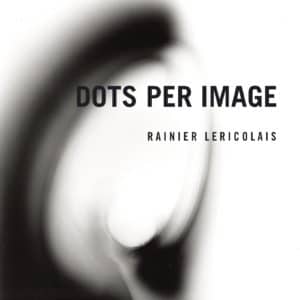
CD
Rainier LERICOLAIS
“Dots per image”
“Central to Chris Marker’s artistic concerns were his preoccupations with memory, the human voice, photography, cinema, poetry, Japanese culture... and cats. In Dots Per Image, multidisciplinary artist Rainier Lericolais confronts Marker’s œuvre - and also in his book Le Dépays (1982) in particular -, and with his own experience traveling in Japan. These memory fragments are transformed into music and poetry with the help of Etienne Sandrin (French voice-over), Lili Kim (japanese voice-over), his friend musicians (Pierre-Yves Macé, Simon Fisher Turner, Daniel Pabeuf, David Sanson, Geoffroy Montel), film director Daniella Marxer and sculptor Michel Aubry. “My first encounter with this Dépays (”non-country”) was in Japan, when I asked for directions to the Goutokuji cats cemetery. The only response I got was “over there and a vague gesture”. (Rainier Lericolais). Limited edition of 300 copies.”
15,00€
Out of stock
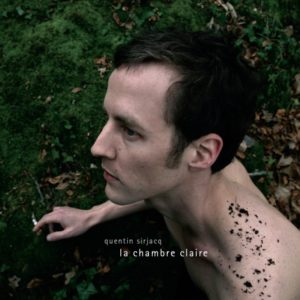
CD
Quentin SIRJACQ
“La chambre claire”
“Quentin Sirjacq, a native of Paris, studied classical piano from an early age. But by 15 he was a devotee of Ellington, Mingus and Coltrane, who began to exert as strong an influence on him as Ravel and Satie. His interest in classical and jazz music guided his studies at the Royal Conservatory in The Hague and at Mills College in Oakland, California, and shaped his development as pianist and improviser to composer. Though always faithful to the melodic line, Sirjacq has embraced the avant-garde and improvised music; he’s performed or recorded with Fred Frith, Joëlle Léandre, and William Winant, in addition to realizing the works of James Tenney, Steve Reich, Frederic Rzewski and José Maceda, among others. His compositional approach combines strong, evocative melodic ideas with a sound treatment and organization taken from the disparate strains of musique actuelle (pop, electronic, improvised, experimental). This versatility has made Sirjacq’s work a perfect fit for theater, television, radio and documentary films, where he has worked with Bruno Bayen, Marion Vernoux, Richard Bean, Jacques Taroni et Loui-Do de Lencquesaing.”
15,00€
Out of stock
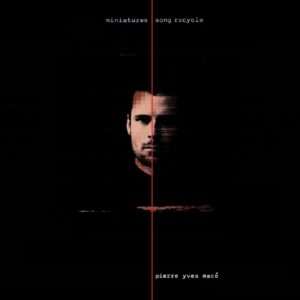
CD
Pierre-Yves MACÉ
“Miniatures – Songs recycle”
Pierre-Yves Macé is a young French composer, he was born in 1980, but has already released four albums on respected labels including Tzadik and Sub Rosa. Miniatures - Song Recycle is his second album for the Parisian imprint Brocoli, following the acclaimed Passagenweg. Miniatures - Song Recycle, as the title suggests, alternates musique concrète studies and songs in the form of lieder, where the voice is made of recycled, chopped and transformed a cappella vocals from YouTube, accompanied by the composer/pianist.
15,00€
In stock
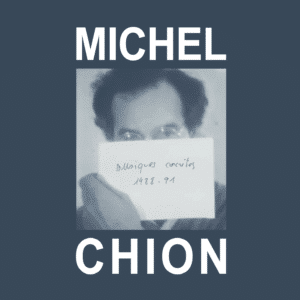
CD
Michel CHION
“Musiques concrètes 1988-91”
Brocoli continues to unearth Michel Chion’s unreleased gems, after the concrete melodrama Tu and the collection of early works Musiques Concrètes 1970-71. This time it focuses on the period from 1988 to 1991, starting with 10 études de musique concrète, a series of obsessive pieces, sounding in turns dry and liquid. While Variations smashes a waltz theme to pieces, Crayonnés Ferroviaires is a work and manifesto, an ode to the tape recorder and to the possibilities offered by the microphone and magnetic tape.
A bright, lively and bold experimental music.
Michel Chion, born 1947, is a writer, historian, independent researcher and teacher, director and composer. He was a member of the Groupe de Recherches Musicales (GRM) between 1971 and 1976 and has been composing a diverse and rich set of works since 1970: melodramas, suites of short pieces, technical and formal studies, and religious music. Michel Chion is recognized worldwide as one of the most influential composers of musique concrète.
A bright, lively and bold experimental music.
Michel Chion, born 1947, is a writer, historian, independent researcher and teacher, director and composer. He was a member of the Groupe de Recherches Musicales (GRM) between 1971 and 1976 and has been composing a diverse and rich set of works since 1970: melodramas, suites of short pieces, technical and formal studies, and religious music. Michel Chion is recognized worldwide as one of the most influential composers of musique concrète.
15,00€
In stock

CD
Michel CHION
“Musiques concrètes 1970-71”
Brocoli is pleased to announce the release of seven early works by Michel Chion, the celebrated musique concrète composer. Composed before he joined the Groupe de Recherches Musicales (GRM) in 1971 his characteristic style and sounds are already present. The abrasive electronics and sanctity in Blanche prefigure 1973’s Requiem; Sonatine and Train de pianos are based on prepared piano improvisations; Habanera and L’Oiseau en Cage evoke La Ronde, and Le Ciel Tremble is the composer’s first melodrama. Essential listening for lovers of the composer and genre, and for anyone interested in the history of electronic and experimental music.
15,00€
Out of stock
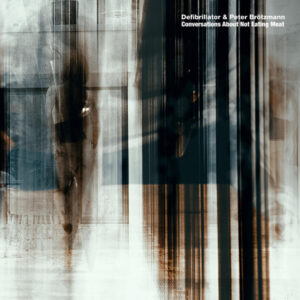
CD
DEFIBRILLATOR & Peter BRÖTZMANN
“Conversations about not eating meat”
Sebastian Smolyn, e-trombone. Artur Smolyn, electronics. Oliver Steidle, drums. Peter Brötzmann, reeds.
Sebastian Smolyn (trombone) and Artur Smolyn (electronics) are Defibrillator. They have committed themselves to improvised music and do enthralling performances full of energy and love of adventure. They have been educated in classical music in conservatories in Germany, France and Switzerland. They have played in numerous well-known orchestras and ensembles. Their experience is the matrix for a kind of music that follows its own rules, that makes use freely of what it needs. The music is pushed by two musicians who engage in everything that serves the organic thriving of their sound. They unfold their own acoustic vocabulary in a very convincing way. After the show you want to try to find out what their possible influences are and you will find New Music, Free Jazz, Noise and Hardcore in its many different shapes. There are familiar rhythmic patterns, harmonies and tonal references, which are broken and altered. The beat comes and goes, is dominant at times or gets pushed away by soundscapes and spherical sounds. When the Smolyn brothers meet it is a meeting of electronics and e-trombone on an equal level. Since they can trust each other blindly, they can also challenge each other and push their boundaries.
The Smolyn Brothers played several concerts together with Peter Brötzmann, Oliver Steidle, Daniel Buess, Julian Sartorius, Olaf Rupp, Maxime Hänsenberger and others. (Text: Matthias Kogon)
14,00€
In stock

CD
Slawomir KUPCZAK
“Report”
“You’ve been carrying this suicide for the twentieth year and for the twentieth year in a row you still don’t know what to do about this suicide you’ve been nestling in yourself for twenty years - and, after twenty years now, you still don’t know what to do about the suicide you’ve been carrying for forty years. You go to the kitchen, you make coffee, you forget where you are, your thoughts concentrate only on the defeat you’ve been living with for sixty years, that after sixty years you still have no idea what to do with the suicide you’ve been carrying in yourself for eighty years. And you move on. As if nothing ever happened.” Bô t Records i Niklas Records proudly present a new radio play by S awomir Kupczak (an outstanding young Polish composer of electroacoustic music) to libretto by Pawe Krzaczkowski. The album belongs to a series “Wroc aw Klang”, coproduced by Bô t Records and Niklas Records and devoted to new experimental music created in The European Capital of Culture 2016.
5,00€
In stock

CD
Raphael ROGINSKI
“Plays Henry Purcell”
Raphael Rogi ski, guitar. Olga Mys owska, voice, synth. Sebastian Witkowski, synths.
“I feel a very intimate relation with English culture thanks to my admiration to the music of the 60s. But then there is also William Blake’s Albion, Benjamin Britten and the myths. I have been puzzled by why do I constantly hear the same thing in the music of Bert Jansch and Led Zeppelin, Joy Division and Dead Can Dance. And then in the music of PJ Harvey and Traffic. And in Henry Purcell too, and in John Dowland and William Byrd. I am sure there is a sense of strong continuity in English music. The sound of it is something like a call from moors, delicate and blurred by the wind. Perhaps it does not suit the contemporary English people, maybe it is more of a sound of King Arthur. If I am not mistaken, it was England where the custom of titling pieces originated from. Dream is something totally different from Sarabande. Titles suggest something and this something sticks in your mind when you are playing the piece. Purcell fascinates me because he speaks of profound emotions that we only know as flattened today. Back then feelings were a magic maze. Purcell was a genius who wrote functional music but somewhere in its depths he managed to put his own mantras, as if woven of haze, full of longing and desire.”
13,00€
Out of stock

CD
INNER EAR
“Return from the Center of the Earth”
Mikolaj Trzaska, saxophones, bass clarinet. Steve Swell, trombone. Per- Åke Holmlander, tuba. Tim Daisy, drums. All compositions by Inner Ear. Recording during concerts in Chicago: Hideout (02.03.2011) & Elastic (30.08.2012). Mixing by David Zuchowski. Cover Design: Marek Wajda.
15,00€
Out of stock

CD
WOLFRAM
“Atol Drone ±”
A former member of trio Neurobot, since 2000 a solo artist who also performs in spontaneously created lineups (eg. with Thomas Ankersmit, Alexei Borisov, Xavier Charles, Phil Durrant, Facial Index, David Galbraith, Janko Hanushevsky, Martin Koller, Robert Piotrowicz, Ignaz Schick, Andrew Sharpley, Torben Tilly, Viön & Mem). He has played in Poland, Germany, Austria and France. He made 3 records with Neurobot: Normal Subjects (1998), Tarcza 9800 (2000), l.i.v.e.v.i.l. (2001) and 6 solo records Projekt Drei (2000), Mind Locations (2001), Atol Drone (2002), Superrecombination_sys (2002), Habitat (2004), Thinking Dust (2005). Neurobot’s music explored the areas of improvised noise and power electronics, however, Wolfram’s solo projects incline towards ambient music mixing blurred sounds in the foreground with the noise elements receded into the background. His slowly developing, mostly minimalist compositions are based on ambient and noise. The result of this fusion is music which seems calm, but is a full of tension underneath. Wolfram’s latest album "Thinking Dust" has received enthousiastic reviews from music critics in Poland. Co-released with Bô t Records. 1, 2, 4, 6 taken from Atol Drone album previously released in 2002 on Polycephal. 3, 5, 6 taken from Superrecombination_sys mini-album previously released in 2002 on Mik.Musik.!
“Atomic Fears. Rarely you remember the moment you listen to a record for the first time as something clear and tangible - what is retained in the memory is the atmosphere and the emotions that the music evokes, but not much else. Atol Drone (Polycephal 2002) was an altogether different case. It broke through into my mind surreptitiously like a high Pacific wave and for years it held sway over the area of my musical memory responsible for the rough sea, atomic fears, sea fever, incomplete Morse signals nobody can decipher anymore, spectral sounds from a sunken orchestra which keeps on playing, stray radio waves picked up at random by a stranded survivor, and sounds of an approaching freighter, possibly bringing relief and rescue. The world Wolfram conjures up on Atol Drone is an oneiric and delicate one, weaved from delicate samples. Somewhere in the background you can make out murmurs of unrest from a volcano, silence of a never-ending calm interrupted by the sound of a bird gliding in the sky, sea waves rhythmically crashing against a coral reef, sounds of an impending disaster and, finally, violence and cruelty of the enraged Ocean. So intense and powerful is the sense of unrest this album seems to convey that virtually each of its pieces could work as a soundtrack to a film. Its narration, well thought-out composition, and drama-like structure makes it a soundtrack ready to be used in that medium. Ten years having passed since, the re-issue contains an addition of four new tracks to the original four: GameLAN, Smokgame, Minimumgame, and specially composed for this release Back to the Atol. Yet again, despite the changes I felt the same atomic fears I felt back then. Apparent suspension and calm (SE), soothing drones of cicadas (GameLAN) and nostalgic beauty (Flashback) seem a mere prelude to an imminent disaster (Smokgame, Minimumgame) but a past or a future one? Wolfram makes time freeze - after all, an atoll’s exotic, unusual, circular structure imposes repetitions and recurring motifs which may equally be of the present (Back to the Atol) and the past (NW). Both the original and the re-issue bonus tracks evoke a similar rush of emotions and fuel one’s imagination in the same way: a landscape extending under the scorching sun, pristine sand on the beaches unspoilt by human foot, the murmur of the sea, palm tree groves waving in slow-motion - the bliss soon to be shattered by an approaching disaster. Tremendously nostalgic and oneiric in each of its track, a perfect collection of atmospheric drone music, born of an exceptional imagination of a Polish artist”. (-) Monika Powalisz (transl. Przemek Chojnacki).
10,00€
Out of stock

CD
VENN CIRCLES
“veNN circles is a typical Bocian release, therefore definitely not for the faint of heart. Gerard Lebik (electronics), Piotr Damasiewicz (trumpet) and RED Trio’s Gabriel Ferrandini (dr) draw you down to their personal hell consisting of distant, muffled, agonized cries that seem to come out of a huge anthill populated by tiny, spooky creatures. The sounds are intimidating echoes, the electronics cause a ringing in the ears providing an atmosphere of constant drizzle. Ferrandini’s percussion remind of objects falling down from nowhere, while Damasiewicz’s style seems to be based on Nate Wooley’s more adventurous albums. This could be an alternative soundtrack for David Lynch’s Eraserhead - creepy, painful, but also exciting!” (http://www.freejazzblog.org)
10,00€
Out of stock

CD
SEC_
“Moscaio”
Composed, edited and mastered by SEC_ between December 2010 and September 2011 using: Revox tape recorder, computer, no-input feedback, field recordings, radio, microphones and pick-ups. The first version of this piece has been produced in the framework of the serie “A short guide to becoming-bat”, curated by Stefano Perna for ORF Ö1 Kunstradio - Radiokunst in 2011. “Long time before humans began to exploit the properties and the uses of the electromagnetic spectrum, animals had already developed a sophisticated system for the manipulation of waves and the transmission of sound signals for the purpose of communication and orientation. Ethologists and natural scientists have shown that many species of animal like dolphins, whales and insects live into an undulatory space made of signals and calls, of frequencies and amplitudes, a radically temporalized space, a pulsating space, that constantly changes, evolves, expands and contracts.
But what an insect feels ? How does it perceives the environment, itself, the other living beings ? Science, on one side, can give us some answer in the form of concepts and theories; this way we can understand the process. Music, on the other side, can assemble for us swarms of perceptions that drag our senses and bodies toward zones where man and insect become indiscernible; there, we are affected by the process. In that region, one is suddenly caught in a becoming-animal that alters its organs, environment, space and time. It let us enter into a waveform space, whose geometry is unknown, a kind of non-human spatiality populated by forces and signs to which our perceptual system is not correctly attuned.
This is the way this composition works. No naturalistic descriptions, no documentary impulses, no metaphoric translations. Here we have a contraption. And, like all machines, this device doesn’t ask to be read or interpreted. You have to activate it, to put it into work, so it can start extracting from your body ways of perceiving of which you were not aware. An insect body appears: weight loss, oblique speed, exhausting slowness, entangled spaces. A shift in the umwelt happens: an imperceptible and obscene sensorial universe comes to the senses, done of buzz, drone, tiny sounds, sudden appearances, unpredictable trajectories and sharp movements.
But these sounds are very far from any desire of reproduction, a simplistic acoustic mimesis of the natural world. Everything here comes from a deeply altered technical world.
In fact, unlike all machines, this device avoids functionality, it works through series of faults: the ambiguous analog autoeroticism of no-input feedbacks, the uptake of radio signals, interferences, the unauthorized excavation of electromagnetic fields, quirky bits of digital data, all stuffed into shreds of tape abominably manipulated. All communication technologies, once designed to preserve information and to exchange watchwords, are brought to the threshold of collapse. And now they start talking an unprecedented language: a nomadic population of traces and marks that, like a swarm made of millions of flying hungry insects, flutter rapidly in the space, than suddenly flock around a piece of meat and then, again, dissolve into chaos”. (-) Stefano Perna
10,00€