
Out of stock

CD
Horacio VAGGIONE
“Points critiques”
Argentinian composer living and working in Paris since 1978. Horacio Vaggione was an incredible user of tape machine. Even if he’s working now with digital tools, you can remember it. Five pieces working on ideas of acoustic transformations. “Points critiques” (2011), “Arenas” (2007), “Nodal” (1997), “Ash” (1991), “Phases” (2001).
15,00€
In stock

CD
Guy REIBEL
“Chœurs imaginaires”
“On eût dit des coups d’ailes” (1996). “Suite pour Edgar Poe” (1973). “Langages imaginaires” (1981).
15,00€
In stock

CD
Gilbert AMY
“Une saison en enfer”
’Une saison en enfer’ (1980). Around the work from Arthur Rimbaud, for instrumental and vocal ensemble, and tape. Fusako Kondo and Edwige Parat, voice ; Jean-Pierre Drouet, percussions ; Carlos Roque Alsina, piano ; Daniel Teruggi and gilbert amy, electroacoustic realisation.
15,00€
In stock

In stock

Out of stock

CD
Daniel KIENTZY
“Sax-computer”
Pieces for saxophones and syter (live processing of sound) from Daniel Teruggi, Jean-Claude Risset and Gilles Racot, played by Daniel Kientzy.
15,00€
Out of stock

In stock

CD
Christian ZANÉSI
“Le paradoxe de la femme poisson”
Electroacoustic pieces composed in 1998 for a dance company in Marseille.
15,00€
In stock

CD
Bernard PARMEGIANI
“La mémoire des sons”
“Capture éphémère” (1967). “Sons/Jeu” (1998). “La mémoire des sons” (2001).
15,00€
In stock

Out of stock

CD
Alejandro VIÑAO
“Hildegard’s dream”
Back in stock and last copies. "Chant d"ailleurs" (1992) for soprano and computer, "Hildegard"s Dream" (1994) for soprano and computer, "Borjes y el Espejo" (1992) for soprano and computer, "Go" (1981).
15,00€
Out of stock

book + 4 CD
Jean-Claude ELOY
“Gaku-no-Michi (1977-78)”
*** Book and CDs version ***
Book (in english, also available in french): “Between concrete and abstract. Gaku-No-Michi”
This publication is made of a group of varied texts published in different programs of festivals between 1978 and 2001, and a totaly new unpublished text : “Between concrete and abstract” (about “Gaku-no-Michi”) first interview with Avaera text n° 68 (2004). With photographies and reproductions of calligraphies made for “Gaku-no-Michi”.
“Gaku-no-michi”, Tao of music or Ways of music. Film without images for electronic and concrete sounds. Produced at the electronic music studio of NHK Radio, Tokyo 1977-78. Digitalized and revised version from 2006.
“Jean-Claude Eloy is a French composer, born in 1938. He studied at the Paris National Superior Conservatory of Music, where he won First Prizes in Piano, Chamber Music, Counterpoint, Ondes Martenot, and studied composition with Darius Milhaud. He attended summer courses at Darmstadt (Pousseur, Scherchen, Messiaen, Boulez, Stockhausen) and was a student in composition in Pierre Boulez’ master class at the Music Academy in Basel (1961-1963). Works by Jean-Claude Eloy have been performed all over the world. They have been conducted by Pierre Boulez, Ernest Bour, Michael Guilen, Bruno Maderna, Diego Masson, Michel Tabachnik, Arthur Weisberg and others ... He has lived in the United States (professor at the University of California, Berkeley, in the sixties), Germany (invited by the WDR studios in Cologne, the Technische Universität in Berlin, guest artist at the Berliner Künstlerprogramm), Holland, Japan (where he collaborated with NHK and the National Theater of Japan, among other activities). He participates regularly in numerous international festivals, principally in Europe, but also in Asia, the United States, Canada and Latin America as sound-projectionist for his electro-acoustic works and with the soloists closely associated with his compositions : Fatima Miranda (vocalist), Yumi Nara (soprano), Michael Ranta (percussionist), Junko Ueda (Shômyô singer and Satsuma-Biwa player), Kôshin Ebihara and Kôjun Arai (Buddhist monk singers), Mayumi Miyata (Shô player), etc.”
CD 1: “Pachinko” introduces “Tokyo” in a deliberately stiff, regular, almost mechanical and untranscended way while the big spiral of long successive waves, which further develops through Tokyo, becomes more and more varied in its material ending in the surpassing and searched-for transubstantiation taking place throughout the fi nal part.
CD 2: The second disc, “Fushiki-e”, takes us (through varied, complex, contrasted and sometimes violent sound episodes) towards the four “stages of contemplation” including the last one, “Mokuso”, which represents the ultimate stage of the contemplative. It is the longest part of the whole piece, lasting almost 80 minutes.
CD 3: “Banbutsu no Ryûdô” is a boundless continuous “weft” travelling so to say through all sorts of daily or exceptional « sound scenes » continually metamorphosing, going from political speeches to a Shishi Odoshi, transformed for a long time well before its pure, direct appearance.
CD 4: “Kaiso “ is a moment of gravity innervated and built around the annual commemorative ceremony of Hiroshima, which however leads us beyond the evoked drama to a place of surpassing with peace through the « Han » sound, extending the work to infinity…”
35,00€
Out of stock

book
PORTRAITS POLYCHROMES 3
GILLES RACOT
“Le jeu des contraintes tangibles: de quelques accidents passagers dans l’art sonore de Gilles Racot” par P.A.Castanet, entretien de Gilles Racot avec E.Gayou, “Introduction à l’écoute de Subgestuel” par Frédéric Kahn, catalogue des œuvres…
9,00€
In stock
book + CD
COMPILATION
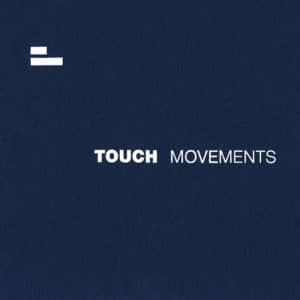
TOUCH MOVEMENTS
Touch MOVEMENTS has been compiled over the course of 3 years. It is a response to many requests for Touch to publish a fuller account of Jon Wozencroft’s photography for the cover art of the project. The book follows the music, which was compiled step-by- step, like a jigsaw – there was not an “open call” to the artists, rather a sequential development which gives the CD a special narrative quality. And since our last Touch 30 compilation in 2012, the accuracy of the music has grown and rises to the challenge of what sound can do to transform perceptions about the immediate emotion of musical work and its more dif cult, longer term evolution.
Following Touch Folio 001 in 2015, this series is a dedication to finding new ways of audiovisual publishing, somewhere between the twin peaks of a jewel-cased CD and a lavish box-set. The two elements of sound and the visual work in parallel to create the idea of an “Ear-book”, whose interdependency reveals itself over time, and allows the richest of listening and viewing experiences. The music and the photography is fully annotated, alongside a rarely-seen manifesto by the Surrealist film-maker Jan vankmajer which celebrates the spirit of the creative act.
With tracks from Mika Vainio, AER, Bethan Kellough, Wire, Carl Michael Von Hausswolff, Chris Watson, Jana Winderen, The Magical Land of the North, Claire M Singer, Hildur Gudnadottir, Three 20, Philip Jeck, Simon Scott, Eleh, Russell Haswell, Heitor Alvelos, Johann Johannsson, Mark Van Hoen, Fennesz, Sohrab, Strafe FR, Jim O’Rourke, Situation Stabilised / BJ Nilsen, Peter Rehberg, Oren Ambarchi.
76pp full colour book + CD. Limited edition of 1000.
37,00€
Out of stock
book
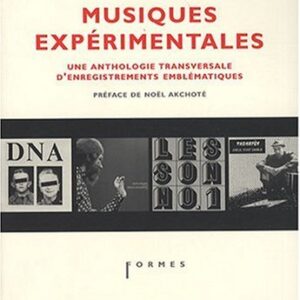
Philippe ROBERT
“Musiques expérimentales”
Only in French, a selection of different recordings of experimental music. With among others Luigi Russolo, Walter Ruttmann, Kurt Schwitters, Halim El-Dabh, Isidore Isou, Henri Chopin, Pierre Schaeffer, Edgar Varèse, Harry Partch, Raymond Scott, Moondog, Robert Ashley, Iannis Xenakis, Jean Dubuffet, William S. Burroughs, Terry Riley, Philip Corner, Alvin Lucier, Henry Flynt, Tony Conrad, La Monte Young, Albert Ayler, Luc Ferrari, Earle Browne, John Cale, AMM, Yoko Ono & John Lennon, Sonny Sharrock, Annette Peacock, Derek Bailey, Cornelius Cardew, Joe Jones, Evan Parker, Dean Roberts, Dominique Petitgand, Eric Aldéa, Alan Licht, Toshimaru Nakamura, Jason Khan, Taku Sugimoto, Martin Tétreault, MIMEO, Francisco Lopez, RRR, Rhodri Davies, Kaffe Matthews, Merzbow, Mnortham, eRikm, Sachiko M, Bhob Rainey & Greg Kelley, Lê Quan Ninh & Günter Müller… Préface de Noël Akchoté.
24,00€
Out of stock
In stock
book + mini-CD
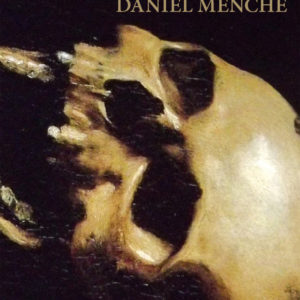
Guillaume BELHOMME – Daniel MENCHE
“D’entre les morts”
Published in February 2017, French edition, 10 x 15,5 cm (softcover), 78 pages + mini CD.
Mastered by Andrew Liles.
The words of Guillaume Belhomme inspired American musician Daniel Menche to create a 20-minute composition (mastered by Andrew Liles) which recalls the atmosphere of the French writer's text: a train on the move, a glass, the color of blood...
Born 1976, writer and musician Guillaume Belhomme lives and works in Paris. He runs Lenka lente editions.
American musician Daniel Menche (born 1969, Portland, Oregon) developed an impressive discography, both in solo or in collaboration with Kiyoshi Mizutani, KK Null, Kevin Drumm, Zbigniew Karkowski, and Mamiffer.
9,00€
Out of stock
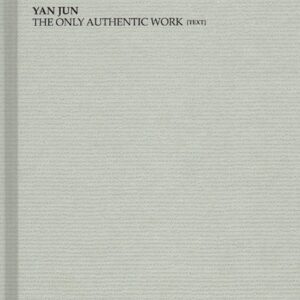
book + CD
Lionel MARCHETTI – YAN Jun
“23 formes en élastique” – “The only authentic work”
“23 formes en élastique”
New work of Lionel Marchetti. 23 tracks. Length more than 77 minutes. Materials went through last 23 years of his field recording, composition, experiments and musiques concrètes composition studies. A backward looking by a forward creating. By this CD Lionel Marchetti built a labyrinth of elasticity, empty space, reality and its metamorphose. A material world of sound.
“The only authentic work” (Chinese and English)
Yan Jun’s writing with inspiration of Marchetti’s music. 23 essays on music, literature, art and everything. The writing has a musical style as it also sampled and modurated sentences, thoughts and works of Gerhard Richter, Guy Debord, Pythagoras, Pierre Schaeffer, Cioran, Baudrillard, Glenn Gould, Duchamp, Foucalt, Proust, Maurice Blanchot, Rimbaud, Aristote and Artaud…
25,00€
In stock
CD
MORI-SHIGE
“Fukashigi”
“Mori-Shige is an improvisor and composer based in Japan. He plays improvised music by cello, piano, and other instruments. Fukashigi is his first released CD. All tracks are solo improvisation recorded playing totally acoustic instruments, cello and piano. His music is characterized by deep sound and noise of acoustic instruments, and silence and space between the sounds.”
15,00€
Out of stock

maxi CD
Jon MUELLER & Martjin TELLINGA
“Bowl, helicopter”
“Korm Plastics is proud to present the thirteenth release in the Brombron series. Originally a co-production between Staalplaat and Extrapool, it is now hosted by co-curator Frans de Waard. In the year 2000 Frans de Waard and Extrapool started the Brombron project. Two or more musicians become artists in residence in Extrapool, an arts initiative in Nijmegen, The Netherlands, with a fully equipped sound recording studio. These artists can work in a certain amount of time on a collaborative project; a project they always wished to do, but didn’t have the time or the equipment to realize. Jon Mueller and Martijn Tellinga have started a collaboration to explore the musical dialogue between the instrumentalist and realtime computer-performer. Their mutual interest in the outlining and structuring of improvisation, both in sonic properties and compositional shape, resulted in an ensembled playing that is partly responsive, partly autonomous. During their residency at the Extrapool studio in Nijmegen, Netherlands december 2005. During this residency they experimented with a system that consisted of live-sampling and processing of Jon’s playing, on top of a layer of pre-recorded soundmaterials taken from a previous session. Crucial to this system, was that the actual triggering of the samples and processing in the computer during performance was also caused by that same playing; i.e., while Jon was improvising he not only provided new sonic material for recording, but also triggered previously recorded events. The realtime manipulation and transformation of these events was done by Martijn following that same structural order. This experimental system was developed to get to a musical body that can either blend into one (percussion and computer) or exist as two entities that function in an autonomous way (bypassing the triggering and playing the computer as a stand-alone instrument, using the same set of soundmaterials) and perform by listening and responding to each others input. This can be seen as an attempt to get beyond the many electro-instrumental collaborations where the computer-performer seems to function as a huge effect-processor of the instrumental input, and by doing that, reduces the instrumentalist to a soundsource for realtime processing.”
5,00€
In stock

CD
FLIM
“Orange”
“CD only - 200 copies. It has been quiet for Flim, also known as Enrico Wuttke, since his last release ’Pola Music’ and ’Ohne Titel, 1916’ (the latter being his second release on Plinkity Plonk). However he still works as a designer, and creates music for dance companies and short films, as well as enjoying family life. His new release is a 28 minute EP with four pieces he created for a dance piece ’Refugium’, based on the novel ’The Wall’ by Marlen Haushofer. Originally published in German in 1962 and touted more recently as a feminist’s Robinson Crusoe, this somber classic from prize-winner Haushofer chronicles the experiences of a (nameless) woman cut off from her familiar city ways in a remote hunting lodge, after Armageddon has snuffed out all life in the world beyond. With the woman’s diary of activities during the first two years of isolation as foundation, the story assumes the shape and flavor of a journal. Saved from instant death by a transparent, apparently indestructible wall enclosing a substantial area of forest and alpine meadow, the woman finds relief from her isolation in companionship offered by a dog, a cat, kittens, and a cow and her calf, making them into a family that she cares for faithfully and frets over incessantly with each season’s new challenges. Crops of potatoes, beans, and hay are harvested in sufficient quantity to keep all alive, with deer providing occasional meat for the table, but the satisfaction of having survived long winters and a halcyon summer is undone by a second sudden and equally devastating catastrophe, which triggers the need in her to tell her story. Although heavy with the repetition of daily chores, the account is also intensely introspective, probing as deeply into the psyche of the woman as it does into her world, which circumstances have placed in a new light. Subtly surreal, by turns claustrophobic and exhilarating, fixated with almost religious fervor on banal detail, this is a disturbing yet rewarding tale in which survival and femininity are strikingly merged.” label info
5,00€
In stock

CD
Jan ANDERZÉN & Sam HAMILTON
“Time banking”
Korm Plastics is proud to present the twenty-fourth release in the Brombron series (missing numbers will follow later this year). Originally a co-production between Staalplaat and Extrapool, it is now hosted by co-curator Frans de Waard. In the year 2000 Frans de Waard and Extrapool started the Brombron project. Two or more musicians become artists in residence in Extrapool, an arts initiative in Nijmegen, The Netherlands, with a fully equipped sound recording studio. These artists can work in a certain amount of time on a collaborative project; a project they always wished to do, but didn’t have the time or the equipment to realize. Here we have Jan Anderzen from Finland, who works as Tomutonttu and is the leader of Kemialliset Ystavat. A true artist when it comes to cut, copy, paste and collage with sound (as well as images), cooking up a wonderfully naïve pastiche of sound. Sam Hamilton is surely the odd ball out in the world of New Zealand’s experimental music. He likes punk, opera, techno and pop and collates them all together in his own unique blend of pop music. Here’s two men who share a strong love of the wicked pop tunes and their twelve pieces are short and to the point. A classic pop record length release, with likewise classic tunes. Design by Sam Hamilton. 300 copies.
5,00€
Out of stock

12"
CLAY RENDERING
“Vengeance candle”
Clay Rendering is a new band born of Aries couple Mike (Wolf Eyes, Hair Police, Failing Lights) and Tara Connelly (the Haunting and The Pool at Metz). The two began work on the project in the fall of 2012, dedicated to resurrection, (much like their sun signs) with a focus on arcane structures. Droning and melancholic guitars are propelled by the skeletal remains of industrial music. Low light vocals weave in and out of the stark atmosphere. Electronics mix with acoustics, vocals and guitar to create songs inspired by last days. Mastered by Russell Haswell. Edition of 500.
5,00€
Out of stock

maxi CD
Marcus MAEDER
“This ship in trouble”
This ship in trouble was first performed live at the EEI festival 2006 in Labin, Croatia. It was reworked into single tracks during fall, winter 2006-2007. The music was originally composed on Unije island, using a single guitar chord from the piece with the same name by the band And Also The Trees. The six pieces carry names of ships that have sunk - six musical narrations of the imaginary fate of these ships now lying wrecked on the bed of the Adriatic Sea. Marcus Maeder realized his first musical projects mid of the nineties, when the term "digital culture" was just beginning to gain usage. The setting was the Kombirama, an artists collective and project space in Zurich. It was during this period that he and Bernd Schurer founded the domizil music label. domizil is a platform for recorded music, an occasional concert venue, a loosely connected group of artists, and, as a label, an interface and instrument for reaching the public. The focus of Marcus Maeders work is on computer music and sound art, which he regularly tries to integrate into broader contexts, creating networks and building bridges, either in connection with theatre projects and installations or in his capacity as author and curator.
3,00€
Out of stock

CD
TO LIVE AND SHAVE IN L.A.
“Absence Blots Us Out”
Absence Blots Us Out, a tribute to our late brother-in-arms Chris Grier. A co-production of Blossoming Noise and Karl Schmidt Verlag, the recording features nearly twenty members of our extended collective. Mastered by Rat Bastard, mixed and produced by Tom Smith, with design and screen print by Makeup Diaries and graced by a poignant remembrance penned by our own Thurston Moore. Edition of 200 copies.
Original price was: 12,00€.5,00€Current price is: 5,00€.
Out of stock

CD
SYNAPSES
“Synapses IV and I”
Synapses (Jean-Luc Guionnet et Eric Cordier) is an instrumental device of combined string instruments (acoustic and electric guitars, detuned piano, spinett-vina, hurdy-gurdy and cello), percussion instruments and metal resonnators --all interconnected with double-bass-, cello- and guitar strings. When one string is played the resulting sound or movement is transfered by the connected strings to the next resonator. Thus one action causes several sound events. In fact, it’s impossible to touch one element of the system without getting response of the whole device. Synapses is an hanging sensible network...
5,00€
Out of stock
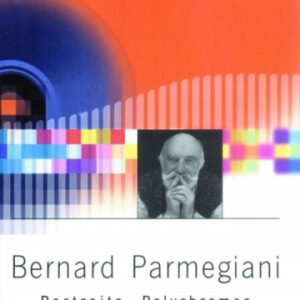
book
PORTRAITS POLYCHROMES 4
BERNARD PARMEGIANI
New edition with more texts. “Bernard Parmegiani, matière et continuité” par Régis Renouard-Larivière, entretien de Bernard Parmegiani avec Evelyne Gayou, “A propos de De Natura Sonorum” par Guy Reibel, “L’œil écoute”, commentaires analytiques de Philippe Mion et Jean Christophe Thomas, Parmegiani et le service de la recherche par Philippe Langlois, “La crème des hommes” par Bernard Fort, textes de Parmegiani, catalogue des œuvres.
12,00€
Out of stock
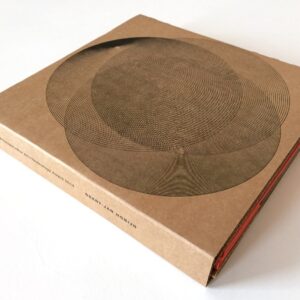
book + 7"
Geert-Jan HOBIJN
“Witteveen+Bos Art+Technology Award 2014”
Former of Staalplaat and Staalplaat Soundsystem, Geert-Jan Hobijn (1959) is “an open-minded, enthusiastic artist with a boundless curiosity. Fascinating by sound and space and making use of pedestrian materials, Geert-Jan is constantly devising new creations to use in his experiments.” This book shows some of his work through several photos, an introduction by Douglas Kahn, an essay by Jorinde Seijdel. Plus a single with locked grooves that you can manually or with a turntable, and a small electronic device that react to light.
Very last copies !
17,00€
In stock

book + CD
eRikm
Bilingual edition (English - French), 17 x 23 cm, 176 pages (color ill.). Edited by Maud Chavaillon and eRikm. Texts by Yann Beauvais, Christophe Kihm, Louis-José Lestocart, Jean-Luc Nancy, Leïla Quillacq, Graeme Thomson. Published by Sextant et plus, with the Gantner multimedia centre. Audio CD included with “Arrow” (1999, “Feedback & Ficker” (2001), “Klein surface” (2009), “Corrélation i” (2005), “Soulage” (2010), “Généresense soustractive” (2005).
A key figure of the international sound art scene, eRikm’s practice is nevertheless rooted in the field of visual arts through sculpture, installation and video. This first monograph, which is accompanied by an audio CD, unveils a less visible part of his work that dares to play simultaneously with different practices and composition modes, in all the languages.
25,00€
In stock
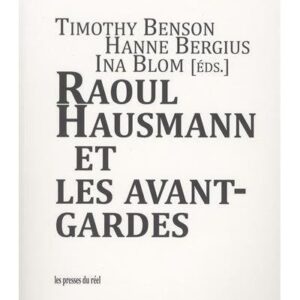
book
COMPILATION
RAOUL HAUSMANN ET LES AVANT-GARDES
Published in February 2015. French edition. 17 x 24 cm (softcover). 512 pages (80 b/w ill.).
Edited by Timothy Benson, Hanne Bergius, Ina Blom. Texts by Timothy Benson, Hanne Bergius, Ina Blom, Jean-François Chevrier, Bertrand Clavez, Michel Giroud, Andreas Haus, Adelheid Koch-Didier, Ghislain Lauverjat, Arndt Niebisch, Pascal Rousseau, Adrian Sudhalter, Hubert Van Den Berg & Lidia G uchowska, Michael White.
This publication aims to explore how the multiple production of Raoul Hausmann, a central figure of Dada, has helped to shape the art of modernity.
26,00€
Out of stock
Out of stock

CD
Billy GOMBERG
“Comme”
Billy Gomberg (b 1979, Chicago) is a musician and video artist living in Brooklyn, New York. His studio practice incorporates analog synthesis, digital treatments, acoustic recordings and custom programming that gives rise to electronic sound caught gazing at its own physicality, acoustics in love with their own abstraction. Billy’s debut CD release displays abstract and complex dimensions of texture and tone that might make more sense at first on a subconscious level before it will on a conscious one. Therefore, it is advised to first approach this music from a pure listening standpoint, free from preconceived notions of musical structure and form since it can defy such prosaic logic. "These tracks are the start of my working toward a more immediate sound-improvisation w-software, real-time construction of the sound material and structure, taking priority. While some material comes from software in real-time, all other sound was generated by Roland Juno synthesizers, plus a few tracks incorporate my voice. Post-production editing and treatment were mostly employed to find the clearest expression of my improvisations and shape them into more conventional “tracks” or “songs”.”
5,00€