
In stock

LP
Joe JONES
“Solar Music Tent”
LP reissue of the cassette edition ”Solar Music Tent” documenting an installation and performance in Hagen, Germany, originally released by Joe Jones in 1982 in an edition of 10 copies.
From the early 1980s onwards, Joe Jones released a handful of self-recorded music machine performances on tape under his own record label “Tone-Deaf Music”. Most tapes came in a standard xeroxed sleeve with a handwritten title and instrument listing. A few, including “Solar Music Tent”, were released in combination with a book: The cassette was included in a red ring binder that held a handwritten photo documentation of the performance of the same name at Karl-Ernst-Osthaus-Museum in Hagen on April 1, 1982, a handwritten music notebook, and an invitation card. The recording itself was titled “Solar Music
5” and was made on March 16, 1982, with the instrument ensemble of the Solar Music Tent at Jones’ apartment in Düsseldorf.
Like the previous Jones releases on Edition Telemark, this reissue is limited to 200 copies and comes in a gatefold PVC sleeve: The right-hand side holds the LP, the left-hand side holds A4-sized facsimiles of all artwork that was included in the original edition.
34,00€
In stock
CD
Xavier CHARLES / Jacques DI DONATO
“Ilex”
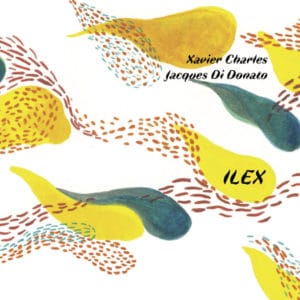
Xavier Charles & Jacques Di Donato, clarinet. Great duo that started at the beginning of the 90’s. “Ilex” is a great moment of free improvisations full of air, sounds and silence, recorded in Mhère (Morvan, France), May 2014. Mastering done by Anthony Laguerre. Artwork by Marie Bouchacourt.
12,00€
Out of stock
CD
Gérard BROUTIN
“Ère isouienne an 52 : un musicien lettriste”
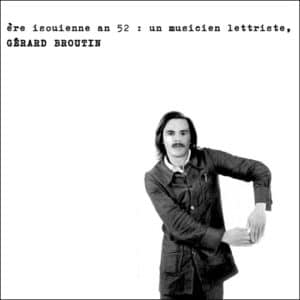
First ever release of the text-sound pieces by French lettrist artists Gérard-Philippe Broutin (b. 1948). Broutin studied Art History at the University of Paris and the École du Louvre. Alongside other artists such as Maurice Lemaître, Roland Sabatier, Alain Satié, François Poyet or Jean-Pierre Gillard in particular, Broutin meets Isidore Isou in 1968 and from then on participates in most of the events and literary exhibitions of the lettrist movement.
The remarkable lettrist text-sound pieces contained on this CD were written during the early 1970’s and recorded and broadcasted at Radio France in September 1976, with introductory texts by Jean-Pierre Gillard.
“Stances à Jean-Paul Curtay”. “Étude no.1”. “3 brèves improvisations”. “Étude no.2”. “Un fameux chapeau”. “Polyphonie”.
Edition of 300 copies in six-panel digipak.
8,00€
Out of stock

LP
Steve REICH
“Four Organs / Phase Patterns”
2017 repress.
“Steve Reich remains one of the most important figures in 20th century music. Though he studied at the prestigious arts institutions Julliard and Mills College, by the mid- 1960s Reich set about dismantling the very orthodoxy that he had been trained in. Forming a new musical language based on repetitive processes, Reich became established as part of the so-called 'Big Four' of New York minimalists (along with La Monte Young, Terry Riley and Philip Glass). Reich's influence can easily be seen today in both the classical world and contemporary pop music. 'Four Organs' is the ultimate minimalist composition. Performed by Reich, Glass, Art Murphy and Steve Chambers, four identical Farfisa organs strike a single chord and gradually lengthen each note to produce polyrhythms between the players. Anchored by Jon Gibson's stoicallysteady pulse on maracas, the piece deconstructs its opening burst to a sustained mass of sound -- stretching the tones to create (in Reich's words) 'slow-motion music.' Inspired by Reich's early training on drums, 'Phase Patterns' treats the keyboards like tuned percussion instruments: a basic rhythm pattern is played in unison and almost imperceptibly increases tempo to move out-of-sync. Each progressive cycle emphasizes unique figures that are not generated by an individual alone, but rather emerge from the communal expression of the group. Originally released on Shandar in 1971, Four Organs / Phase Patterns is one of most highly regarded avant-garde recordings in the past 45 years. This first-time vinyl reissue features cover photography by artist Michael Snow and is recommended for fans of Neu!, Glenn Branca and Tim Hecker.”
20,00€
In stock

LP
Jon GIBSON
“Visitations”
Back in stock.
Since the mid-1960s, Jon Gibson has played a key role in the development of American avant-garde music. No other artist has performed in the world premieres of Terry Riley's “In C,” Steve Reich’s “Drumming,” and Philip Glass’ “Einstein on the Beach,” three major works that changed the course of musical history. While his expertise on woodwind instruments made Gibson a go-to collaborator in Reich’s, Glass’, and La Monte Young’s ensembles, less known are his remarkable contributions as a composer and visual artist.
Visitations, Gibson’s first release under his own name, originally appeared on the Chatham Square imprint in 1973. Inspired by the books of Carlos Castaneda, Gibson departs from the structured repetition of his minimalist peers and takes the listener on an aural journey – spanning organic field recordings, ambient flutes and synthesizers, and free-flowing textures. Visitations’ two side-long tracks are at once solemn and unsettling, making this an astonishing debut that firmly establishes Gibson as a pioneer in his own right.
18,00€
In stock

LP
Nicolas WIESE
“Unrelated”
Born 1976, Nicolas Wiese studied design, illustration sound art, philosophy and sociology and has since been working on various fields: his (audio-)visual art has been presented in galleries and at exhibitions in Teheran, Gent, London, Vienna, St. Louis, Istanbul, Madrid a.o. As musician / composer, he released a number of solo and collaborative albums under the [-Hyph-] moniker and his civilian name on labels like Walter Ulbricht Schallfolien or Corvo Records. Wiese’s latest effort “Unrelated” contains seven new pieces, constructed from sonic elements of various compositions, audiovisual works, fragments, remixes and experiments from a time span of 6 years, drawn from different contexts and a wide range of international musicians and collaborators. Wiese’s trademark working method is to combine complex sample-based layers with modulated feedback which is triggered by the samples, their overtones and harmonic properties. This playing technique, using the mixing board as a feedback-instrument, adds a special live feel to the meticulous musique concrète constructions based on the original acoustic source material.
Rich in details, “Unrelated” is a vital proof of Wiese’s artistic skills and a highly entertaining concern, melting electro-acoustic, musique concrète and sampledelia!
3 in the Periklas series comes from Nicolas Wiese, a Berlin based electronic and audio-visual artist. Mastered & cut by Rashad Becker, artwork by Joe Gilmore, format LP (200 handnumbered items, silk-screened sleeve, DL code, clear vinyl).
Original price was: 22,00€.10,00€Current price is: 10,00€.
Out of stock

LP
Gruppo d’Improvvisazione NUOVA CONSONANZA
s/t
Back in stock.
Considered the first collective of experimental composers, Gruppo D’Improvvisazione Nuova Consonanza formed in 1964 in Rome to chase the expressive potential of live improvisation to its furthest reaches. Led by Franco Evangelisti, Gruppo also included Ennio Morricone before he found fame composing soundtracks. The ensemble advanced the innovations of 20th century avant-garde in laboratory-like studio settings where the intuitive interplay between members flourished.
Before 1976’s benchmark release, Musica Su Schemi, Gruppo recorded this eponymous album in 1973. Whether the passages are jarring or soothing, clamorous or silken, the ensemble retains astounding organic coherence. An ultra-rare entry in Gruppo’s formidable discography, Gruppo d'Improvvisazione Nuova Consonanza is finally reissued for the first time ever.
18,00€
Out of stock

LP
Franco BATTIATO
“Fetus”
“Franco Battiato is often heralded as Italy’s answer to Brian Eno. A quizzical composer/lyricist, Battiato turned pop music upside down in the early '70s with three classic LPs -- Fetus, Pollution and Sulle Corde Di Aries -- that formed a confluence of avant-folk sensibilities and analog electronics. Originally released in 1971 on Bla Bla, Fetus predated the prodigious Cramps and Multhipla catalogues to become one of the first electronic records produced in Italy. With his trusted VCS3 synthesizer, Battiato created primordial soundscapes that shift between dreamy and delirious. His unsentimental, yet evocative voice -- combined with a sublimely detached approach to lyrics -- spawned a new breed of divergent songwriting. Fetus, a concept album exploring themes of genetic engineering, is enigmatically sub-titled ‘Ritorno al Mondo Nuovo’ (Return to the New World) and dedicated to Aldous Huxley. While the sleeve design may have raised a few eyebrows upon its initial release, the back cover photograph of Battiato (standing defiant in dark glasses) makes the real iconoclastic statement. Battiato’s infectious melodies and innovative sound-collage techniques remain uniquely spry given that each track averages less than four minutes in length. Pink Floyd’s Meddle, Os Mutantes’ eponymous recordings and Jim O’Rourke’s experimental-pop idiosyncrasies all find parallels to the curious beauty of Fetus. Superior Viaduct is honored to present the first-time domestic release of Fetus on vinyl. Reproducing the original gatefold jacket, this reissue is part of an archival series that chronicles Franco Battiato's masterful body of work from 1971 to 1978.”
23,50€
In stock

2 CD
OMIT
“Interceptor”
2008. Back in stock.
“Omit is the nom de plume for Clinton Williams, an electronic musician who has been quietly toiling in New Zealand for a good portion of the past two decades. His work has appeared alongside such luminaries of the NZ free noise community as Birchville Cat Motel, The Dead C, Flies Inside The Sun, Dean Roberts, Surface Of The Earth, etc.; however, Omit’s home-spun constructs widely detour from the sculpted grit and mottled distortion found in the work of his countrymen and -women. In listening to his masterful Quad (a 3CD opus released in 1998 through Corpus Hermeticum), one gets the very palpable sense of an artist in a contentious argument with his own unwieldy mousetrap of tape-loops, modular electronics, effects pedals, drum machines, and the creaking sounds of his house. That internal debate with himself through his machine exudes an existential melancholy, which could be applied to any number of grander metaphors of the dependency of electronics, cybernetics, and technology upon mankind. Interceptor is the result of an experiment whereby Williams worked with a portable studio away from his longtime home of Blenheim. He possessed two suitcases of drum machines, effects, and analog synths; and, Williams recalls being “pissed off with myself wasting time recording this stuff when I was trying to find a job”. His frustrations stripped away much of the grandiose sweeps of ambience and shadow, leaving behind a life-support system grid of overlapping, phase-shifted blip and click. An undertow of hypnotic tonalities pulls those rhythms towards a crepuscular gloom. Williams has always been at odds with his own work, yet his self-doubt continues to deliver magnificent albums which thrive in a symbiotic struggle with mechanical disintegration. Interceptor conjures the best offered by Mika Vainio, Klaus Schulze, and the Throbbing Gristle tracks authored by Chris Carter. Always the pessimist, Williams grumbles, “In many ways, it’s a document of my failure to do the most simplest things in life”. If only all of our failures could be this brilliant.”
16,50€
Out of stock
LP
Hanno LEICHTMANN / Valerio TRICOLI
“La Casa delle Chimere”
Hanno Leichtmann: percussion, loops and synthesiser. Valerio Tricoli: Revox B77. Recorded live at Plivka, Kiev, 2017. Mixing and additional production by Hanno Leichtmann at Static Music, Berlin.
Hanno Leichtmann is a sound artist and musician from Berlin.
Valerio Tricoli is an italian musician currently living in Munich.
Mastered by Jacques Beloeil. Limited edition of 200 copies
16,00€
In stock

LP
COPPICE
“Surreal Air Fortress”
Outside: light-filters-to-be-entered are Surreal Air Fortress.
New songs from Coppice for physical modeling and modular syntheses.
This is post-industrial device music.
Limited edition of 200 copies. Mastered by Jacques Beloeil.
15,00€
In stock

LP
ISSS / Venzha CHRIST
ISSS (Indonesia Space Science Society).
Ltd. Ed. 300 ex. w/ poster and inlet. Working with artists, scientists, astronomers and engineers in Indonesia, Venzha Christ has established Indonesia Space Science Society as a framework for the exploration of space from a different perspective. Whilst lacking the means that large space agencies such as NASA have, the Indonesia Space Science Society provides us with a compelling encounter with space nonetheless.
The record presents radio waves from space, sent and collected through self-made radio antennas gathering precise data from astronomical objects in space. The transmitted signals received from the planets and stars are then decoded into audible sounds.
Includes a text from Ewen Chardronnet (Association of Autonomous Astronauts / Aliens in Green / Laboratory Planet). Graphic design by Jean-Baptiste Parré.
Original price was: 23,00€.12,00€Current price is: 12,00€.
In stock

LP
COMPILATION
DANSKE BÄNDAMATORER // DANISH TAPE AMATEURS 1959-1976
The tape amateurs – a piece of forgotten Danish music history. The Institute for Danish Sound Archaeoloy is releasing a collection of tape works and electronic compositions, created by people who had reel-to-reel tape recorders as their hobby. The vinyl release Danish Tape Amateurs 1959-1976 brings to light a completely overlooked and unheard chapter of Danish music and sound history, making these amazing works available for the first time.
A swarm of tape hobbyists.
When the reel-to-reel tape recorder became commercially available in Denmark in the 1950s, having the tape recorder as a hobby became a widespread phenomenon and in the following decades thousands of people recorded sounds and music, and experimented with cutting and splicing tape, both at home and together in so-called tape amateur clubs. Some also made sound collages and experimental music, exploring the tape recorder as a musical instrument in itself.
On June 26th the Institute for Danish Sound Archaeology is releasing the compilation Danish Tape Amateurs 1959-1976. The release uncovers the history of the tape amateurs with a selection of tape works, as well as an extensive essay by Danish composer Jonas Olesen, who through a comprehensive work of ‘sonic excavation’ and countless phone calls has assembled the history of the tape amateur clubs and the sonic and musical experiments.
With Jesper Hendze, Mads-Erik Michaelsen, Ole Steen Petersen, Benny Jensen, Kaj Ellermann Christensen, Carsten Elbro, Arne Juul Jacobsen, Peter Henriksen & Carsten Elbro, Anders Møller, Poul Otto Udsen, Holger Sindbæk, Arne Juul Jacobsen.
24,00€
Out of stock
LP
STILLUPPSTEYPA
“Beach Jolanda”
“It’s taken 14 years for these extravagant Icelandic artist troubadours to follow up their last (untitled) album. (At least they managed to give this one a name ; imagine what else they’d be capable of if we’d waited another five years.) Beach Jolanda transposes their classic calipso - beach - bar - laptop - organ gibberish to the unmanned terrain of public lavatories in the dead of night. But i t wouldn’t be a party without guests: BJ Nilsen, Oren Ambarchi, Porsteinn Eyfjörd, Gerard Herman and Kristin Anna all turn up here, wielding bottles and other unlikely instruments.”
Limited edition of 400 copies, full-colour sleeve and insert.
19,00€
In stock
LP
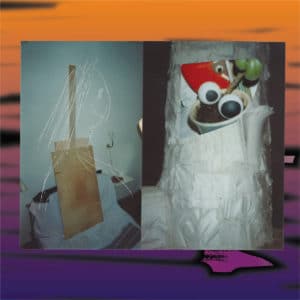
Dan MELCHIOR & Sigtryggur Berg SIGMARSSON
“Dark Arc”
Two side-long mental bar crawls with these distinguished minds. Payment in kind, please! And definitely no cards; this is not Copenhagen. Burping the blues, straining for Schnapps, sweating for extra ice. Make mine a double!
Or 300, with a full-colour sleeve and insert.
19,00€
Out of stock
LP
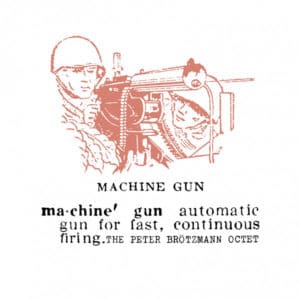
Peter BRÖTZMANN OCTET
“Machine Gun”
Recorded May 1968 at “Lila Eule”, Bremen.
Peter Brötzmann: baritone saxophone, tenor saxophone. Peter Kowald: acoustic bass. Buschi Niebergall: acoustic bass. Sven-Ake Johansson: drums. Han Bennink: drums. Fred Van Hove: piano. Evan Parker: tenor saxophone. Willem Breuker: tenor saxophone.
Finally THE European Free Jazz album is getting the Cien Fuegos treatment too!
With a screenprinted cover.
25,00€
In stock
LP
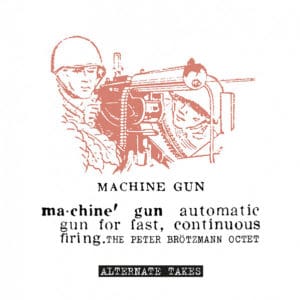
Peter BRÖTZMANN OCTET
“Machine Gun – Alternate takes EP”
First time on vinyl, appeared first on FMP CD 24 Machine Gun & later on Atavistic’s “Complete Machine Gun Sessions” on CD.
Recorded May 1968 at “Lila Eule”, Bremen. Peter Brötzmann: baritone saxophone, tenor saxophone. Peter Kowald: acoustic bass. Buschi Niebergall: acoustic bass. Sven-Ake Johansson: drums. Han Bennink: drums. Fred Van Hove: piano. Evan Parker: tenor saxophone. Willem Breuker: tenor saxophone.
Finally THE European Free Jazz album is getting the Cien Fuegos treatment too!
With a screenprinted cover.
20,00€
In stock

CD
Simone FORTI
“Al Di Là”
Saltern presents Al Di Là, the first full-length collection of recordings by renowned dancer/choreographer, artist, and writer Simone Forti. Forti (born 1935, Florence, Italy) has influenced generations of artists through her innovative approaches to dance and movement. Forti is noted for her extensive work with musicians, including Charlemagne Palestine, La Monte Young, Jon Gibson, Peter Van Riper, and Z’EV, among others. With Al Di Là, we hear Forti musically in her own right through a diverse collection of never-before-released pieces, ranging from the early ‘60s to mid-80s, that highlight Forti’s use of her voice, folk songs, handmade instruments, and physical space. The album, compiled by Forti with the assistance of Tashi Wada, includes a rare guest appearance by La Monte Young and Marian Zazeela and features a 28-page color booklet of writings, drawings, and photos by Forti. Al Di Là is a uniquely personal and intimate portrait of one of the truly visionary artists of our time.
From Forti's liner notes: “I’m awaiting a song from afar, from afar, a song of goodbye from afar. For now I've seen the game I was playing, slowly leaving the earth and drifting far among the stars.” Edition of 550.
19,00€
In stock

CD
Jean-Luc GUIONNET / Seijiro MURAYAMA
“Idiophonic”
Seijiro Murayama (percussion, voice) lived in France for many years and is currently based in Paris. Alto sax player Jean Luc Guionnet, who lives in Paris, is also known as a pipe organist. The two musicians have released three CDs to date: “Le Bruit du Toit” (Xing-Wu Records, 2007), “Window Dressing” (Potlatch, 2011), and “Mishima, Day & Night” (Ftarri, 2015). Guionnet played the sax on each of these albums. Their fourth release, Idiophonic, is the first on which Murayama performs with Guionnet the organist.
This album contains three improvised pieces. Two of them were performed at a church in Berlin, Germany, in June 2015, and the third at a church in Ljubljana, Slovenia, in September 2012. Murayama plays only the snare drum. (His voice is also heard from time to time on the first track.) The sound of Guionnet’s organ--at different times loud, soft, majestic, and rough--is both noise-like and expressive. Murayama, meanwhile, effectively fires out sharp, striking sounds as he switches between sticks and brush. Each of them plays with restraint and a high degree of tension, never producing too much sound. Their musical compatibility, combined with the richly reverberating church acoustics, make for truly impressive performances.
12,00€
Out of stock
CD
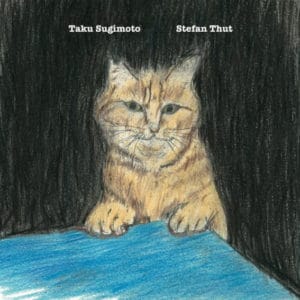
Taku SUGIMOTO / Stefan THUT
Guitarist, composer and improviser Taku Sugimoto frequently performs overseas as well as in Japan. He’s also a member of the Suidobashi Chamber Ensemble, which consists of five Japanese musicians. Stefan Thut is a Swiss cellist and composer. Both Sugimoto and Thut are known as unique performers and composers, and both have close ties with the contemporary classical Wandelweiser group. The two have a long association, performing together when Sugimoto visits Switzerland and when Thut comes to Japan.
Sugimoto and Thut performed in Geneva and Basel during Sugimoto’s 2015 European tour. (They'd previous collaborated in larger formations, but this was their first duo performance.) The concert in Basel on March 21 is documented on this CD. The duo of Thut (cello) and Sugimoto (guitar) performed Thut's 2015 composition “Ten Strings, 1-24” (which includes the sound of rolling dice) and Sugimoto's 2014 composition “Mada”. The two pieces (each about 25 minutes long) are presented here as a single 49-minute track instead of separate tracks. (Thut’s piece is heard before Sugimoto’s) Each work displays the special character of these two highly individual composers, whose performances on this collaboration album are endlessly fascinating.
12,00€
Out of stock
2 CD
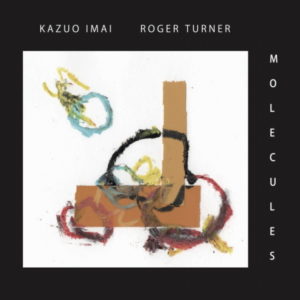
Kazuo IMAI / Roger TURNER
“Molecules”
This masterful performance was born of the meeting of two master improvisers, Kazuo Imai of Japan and Roger Turner of the UK.
Imai, who studied with Masayuki Takayanagi and Takehisa Kosugi, is one of Japan’s leading improvisers and guitarists.
Turner is a drummer and percussionist who has been actively performing throughout the world since the beginning of the 1970s.
His Japan tour in October 2017 included concerts with Japanese musicians in various locations, including his performance with Kazuo Imai at Bar Isshee in Tokyo on October 11. In this duo concert, Imai played one nylon string guitar, while Turner used only snare drum, tom tom, cymbals, metal and wood instead of setting up a complete drum set; and the sound was acoustic, without electric amplification. The overall sound is somewhat controlled, in keeping with the nylon string guitar volume; and within that context the musicians’ interacting sounds are remarkably diverse, dynamic, and beautiful. The concert’s first and second set are documented in their entirety on this album.
17,00€
In stock
CD
Morgan EVANS-WEILER
“Unfinished Variations (for Jed Speare)”
The remarkable Boston violinist and composer Morgan Evans-Weiler doesn’t have a score for this record, but its focus is ultra-precise. The piece, dedicated to the stalwart experimentalist Jed Speare, a close friend of the musician and who died in 2016, is a rigorous exploration of pitch, specifically in the microtonal complexity of the simplest bowed gestures. Evans-Weiler relies on a handful of simple pitch variations from memory, but ultimately the results don’t rely on any sort of melodic movement. Rather, the violinist pulls his bow across the strings in richly striated tones both gentle and piercing, marbled by a bounty of sounds—high-pitched squeals, abraded drags, intensely ringing double stops—that eventually bypass the lack of compositional shape to create an enveloping experience all its own.
Evans-Weiler explained that “the performance of the piece is specifically dictated by my experience of the repetitions and the fatigue that accompanies,” and that certainly can apply to the listener, whose level of engagement depends on a certain freshness of the ears, the volume of playback, and attention level. The performance draws heavily on psychoacoustics, where an immersion in the sounds creates an almost psychedelic experience—where the bowed violin seems to produce ever-fattening tones, both viscous and biting. Extended passages are interrupted by brief moments of silent repose, with the violinist changing his fingering before embracing a slightly different pitch—it also allows the listener to recalibrate and retrench for another study that builds in volume and attack. It’s probably not for everyone, but the degree of focus and the richness of Evans-Weiler’s sound-worlds are nothing short of astonishing. - Peter Margasak, Bandcamp Daily
14,00€
In stock

CD
Prune BÉCHEAU
“Stries ton, tripes et poils”
Prune Bécheau lives and works in France (Dordogne). Classically trained on the baroque violin, she has distanced herself from a traditional approach in order to express her idiosyncratic range of glitch sounds using special bow pressure and angle techniques performed solo or collectively in Europe. She is a member of the bands Pancrace (Penultimate Press, 2017) and Urs Graf Consort (Synchronies / La République des Granges, 2016) in which she also sings and plays keyboards (organ, piano, synthesizer) as well as of the sextet La Peuge. She is also involved in sound theory and contextual installations here and there.
The album ”Stries ton, tripes et poils” is comprised of a series of pieces exploring microtonality and specific timbres produced through different usages of the bow, playing with the diverse relationships between horse hair and gut strings (pressure / angle / velocity of the bow, transversal / oblique / torsional frictions, etc). The music is neither fully written nor completely improvised. It breaks the integrity of sounds and sound sets through obsessive physical processes to the point of highlighting specific ritornellos - composed of overtones, undertones and “off tones”. This “geographical” approach of the concrete violin-object has been influenced by music as diverse as Bach and Wyschnegradsky, polyphonic Pygmy music and Inuit throat singing, the sound of birdsongs and frogs. - Prune Bécheau
14,00€
In stock
CD
Matt SARGENT
“Ghost Music”
Recorded by Ryan Streber at Oktaven Audio in Yonkers, NY, November 2015.
Matt Sargent teaches music at Bard College, which lies close by the Hudson River, and percussionist Bill Solomon, the sole performer on Ghost Music, is a member of Ensemble Signal. Since the music of Steve Reich figures prominently in the Ensemble’s repertoire, and this piece is composed of spare, often repetitive bell tones, it would be easy to file it under New York minimalism - easy, but incomplete. Solomon is also a member of Queer Percussion Research Group, and Weighter Music is operated by Sarah Hennies, whose own music has articulated the isolation and confusion she experienced before coming out as a trans woman. When Sargent first composed the piece a decade ago, he conceived it as “a movable sanctuary.” This music isn’t about following in anyone’s footsteps; it uses bare resources to establish a bounded and essential space. - Bill Meyer, The Wire Magazine August 2018
14,00€
In stock
2 CD
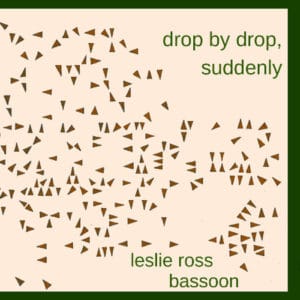
Leslie ROSS
“Drop By Drop, Suddenly”
XI Records is very proud to release this 2 CD set of eleven compositions for bassoon composed and performed by Leslie Ross, internationally renowned instrument builder and uncompromising creative musician.
The first CD starts with the shortest seed pieces that play primarily with the timbral and microtonal differences highlighted between tone-holes, forming a layered, pseudo-multitrack effect while playing with only one fingering, single note or multiphonic. They range from the more strictly tonal or modal pitch-centered to the thicker atonal and dissonant collection of frequencies found in some multiphonics. Pieces progress to longer complex ones by the second CD, some of which have as minimal material as the shorter ones, but make more extensive use of live multitrack recordings and frequency filters to further bring out changes in frequencies or accentuate beatings inherent in specific multiphonics. The electronics used were created explicitly for each composition using the computer based program MAX/MSP.
Save for the unconventional 15 microphones of the “prepared bassoon”, these recordings include pieces with no sound processing whatsoever, as well as pieces that do involve sound processing and multi-tracking. Importantly, however, any processing (timed entrances of microphones, overdubbing, looping, spectrum filtering, pitch shifting...) is made in real time, not post-recording. All recordings are single-take recordings where four speaker channels along with room microphones have been mixed down to stereo. Key clicks occasionally get picked up in a loop recording to return sometimes processed, sometimes not later; in circular breathing a multiphonic might drop out a moment before sounding again –what might sound like clicks or occasional drop outs on some of the recordings are not overlooked mastering faults but the result of this live processing and playing as would be experienced in performance.
14,00€
In stock

LP
CONTAINER
“LP”
Recorded in Cleveland, OH October 2017 by Andrew Veres. Artwork by Ren Schofield.
Ren Schofield has returned with a new installment in his notorious “LP” series for Spectrum Spools. “LP” has all the earmarks of the classic Container sound with it’s uber-mangled, saturated tape garble and headlong tempo macabre. However, this new set of tracks feature an attention to composition unlike much of the Container we’ve previously heard. While the tracks unfurl across two sides of wax the contours and jagged edges of each sonic sculpture display a new refinement while maintaining the full capacity to vaporize any club floor with Container’s traditional recklessness.
Miraculously, this new “LP” manages to incorporate some more traditionally ‘musical’ elements thus far untouched upon in the projects output while simultaneously delivering it’s most damaged and blown out offering yet. Despite leaving a trail of albums that get more intense with each passing year, this “LP” is bar none the most loaded. The tracks feature a trajectory with narrative, surrounded by broken acid basslines grating against disintegrating tape loops. This is the infectious and singular hypnosis Container has become well-known for. Overloaded drum patterns, washes of feedback, and dying melodies - it's all here and somehow it's restructured to be different and better than ever before. With this latest installment, there are no longer shambles but merely dust left behind.
As Container continues to evolve in an upward motion, “LP” presents a refreshing and welcome new chapter.
16,00€
Out of stock

CD
Joan LA BARBARA
“The Early Immersive Music of Joan La Barbara”
“as lightning comes in flashes” (1981) for 8 track tape. New 2017 stereo mix. “Autumn Signal” (1978) for 8 track tape, mixed to 4 channels. “Cyclone” (1976-77) for 16 track tape.
Joan La Barbara is a long recognized pioneer of extended vocal techniques and a champion of new music. She emerged from the New York Downtown scene to perform in the ensembles of Steve Reich and Philip Glass, including the premiere of Glass’ Einstein on the Beach. She has performed and recorded works by composers including John Cage, Robert Ashley, Morton Feldman, Philip Glass, Alvin Lucier, and her husband Morton Subotnick. Composer/Vocalist Joan La Barbara has created a rich body of experimental works, many initially produced on analog tape. This collection includes a first release of the award-winning “Cyclone”, first presented at a the ISCM World Music Days festival in Bonn, Germany in 1977. The other two works were initially issued on LP on the Wizard label, but now in new mixes. The reissues offered here remixed to her original surround concept: as lightning comes, in flashes explores a vast array of La Barbara’s signature extended vocal techniques. “Autumn Signal” is a rare example of the composer’s work with Buchla synthesizer, which she utilized for spatialization as well as modification of vocals.
For this release, fresh 96khz/24-bit transfers were made from the original multi-track analog tapes. Then all new stereo and surround mixes were then created under the supervision of the composer.
Liner notes by Bernard Gendron trace La Barbara’s beginnings in the New Music world from the early 1970s Downtown Scene and her evolution as an avant-garde vocalist and composer. In addition, La Barbara contributes detailed notes on the works.
16,50€
Out of stock

CD
George CRUMB
“Metamorphoses (Book I) (2015–17)”
“Metamorphoses (Book I)” (2015–17). First recording. Written for Margaret Leng Tan. “Five Pieces for Piano” (1962). Margaret Leng Tan, piano.
This important release couples George Crumb’s (b. 1929) earliest work for piano, the Five Pieces for Piano (1962) with his most recent piano cycle, Metamorphoses (Book I) (2017). Margaret Leng Tan has long been a champion of Crumb’s music, and he composed Metamorphoses (Book I) for her. This recording is of the German premiere at the legendary Donaueschingen Festival in 2017. Crumb’s Metamorphoses is a natural descendent of his monumental Makrokosmos I & II piano cycle of the early 1970s. With a nod to Mussorgsky’s Pictures at an Exhibition, each movement of the Metamorphoses is inspired by a famous painting. And, like the Makrokosmos, it requires the pianist to be a virtuoso not only at the keyboard but playing inside the piano and vocalizing as well. Ms. Tan is regarded as the “Diva of the Toy Piano,” and Crumb has also incorporated the toy piano and toy percussion instruments into some movements. Crumb says: “I have always been most fortunate to have had outstanding pianists who were willing to tackle the formidable technical and musical innovations in my scores. And among the very finest of these is Margaret Leng Tan for whom I wrote Metamorphoses (Book l). Margaret’s technical prowess and superb artistic sensitivity is a combination that must warm the heart of any composer!”
The CD also includes the early Five Pieces for Piano. All the components of Crumb’s mature compositional language are already evident: a broad palette of coloristic effects along with an extraordinarily sensitive command of nuance, his unmistakable musical gestures, an inherent sense of drama coupled with a magical suspenseful atmosphere and a battery of interior piano effects demanding that the pianist be somewhat of a harpist and percussionist as well. This newly remastered recording is taken from Ms. Tan’s Sonic Encounters recital on Mode (mode 15, from 1988).
Original price was: 16,00€.8,00€Current price is: 8,00€.
In stock

CD
Henry COWELL & Percy GRAINGER
“Works for Saxophones”
Percy Grainger (Australian-American) and Henry Cowell (American) were forward-looking, pioneering composers and close friends. These two men had so much in common, musically and personally, that it is almost as if they were mirror images of one another. Besides having classical training and folk music influences, both were also musical avant-gardists. They experimented with new sounds, new forms of expression, and new notational systems. Most of their saxophone pieces are either folk arrangements or original compositions inspired by British and Celtic folk music. Cowell and Grainger created a rich repertoire for the classical saxophone, but much of it is overlooked, only partially published, and therefore widely unknown until this CD.
22 works are included, 9 by Grainger, 7 by Cowell and 5 by Cowell as arranged by Grainger. Many are first recordings. They are scored for varied instrumentation : sax ensembles, sax & piano and sax & orchestra. Two works are presented in two versions, both for sax piano and sax & orchestra, performed here by the Glens Falls Symphony conducted by Charles Peltz. The uniquely scored pieces are the first recording of Cowell’s Chrysanthemums (1937), a short song for soprano & small ensemble and Cowell’s first chamber music piece featuring saxophones. It was thought to be lost but was rediscovered in 2003. Grainger’s Random Rounds (1912) is technically not a piece for saxes, but is too important a work to leave out. It is a composition for unspecified, soloistic chamber ensemble and probably the first aleatoric piece ever in the history of Western music. Written for flexible instrumentation, it is performed here by a large ensemble including 3 singers, 2 guitars, mandolin, piano, percussion, winds and strings.
Saxophonist/composer Ulrich Krieger lived and worked in Berlin since 1983, then moved to work from CalArts University. His arrangement of Lou Reed’s Metal Machine Music lead to a touring ensemble with Mr. Reed. He has recorded many records for Mode of Bryars, Berio, Cage and his own works.
Percy Grainger (1882–1961), “The Immovable Do” (1939), “Lisbon” ( 3 versions: July – low key with 3 altos; August – high key; July – low key with soprano) (1943). “Ye Banks and Braes O Bonnie Doon” (1932). “The Lonely Desert-Man Sees the Tents of the Happy Tribes” (versions with orchestra and with piano) (1949). “The Merry King” (1936-39). “Molly on the Shore” (1938). “Random Round” (1912-14/43).
Henry Cowell (1897–1965), “Air and Scherzo” (versions with piano & with orchestra) (1961). “Sailor’s Hornpipe” (1949). “Hymn and Fuguing Tune Nr.18” (1964). “Caoine” (arranged Grainger, ca.1937/38). “Sax Quartet” (1961). “60 – For Percy Grainger” (1942). “Chrysanthemums” (1937).
16,00€
In stock
CD
Michael BARTHEL
“Halber Pogo”
Edition of 300 copies in six-panel digipak.
Second full-lenght release by German sound-poet and writer Michael Barthel on Tochnit Aleph. Recorded April 2018 straight to tape without overdubs. Raw, unsettling, and poetically incorrect!
“Halber Pogo (half a pogo) is a 60 minute recording in which scripted text-pieces are recited from memory. The selection of the pieces is left up to the moment, as much as how much content of each piece is remembered; along with their actually determined pronounciation - that often buggers off. This inaccuracy, the resulting pauses, the sensuality that arises from these circumstances, is what is of interest to Halber Pogo.”
Original price was: 12,50€.8,00€Current price is: 8,00€.
Out of stock
2 CD
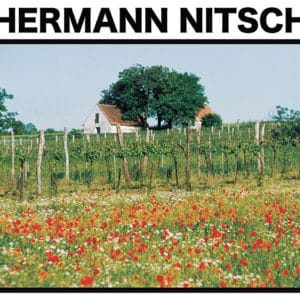
Hermann NITSCH
“Traubenfleisch”
Double CD. Edition of 300 copies in six-panel digipak.
First recording of the grand scale “Traubenfleisch 2007-2017” symphony by Hermann Nitsch. Performed at the Nitsch Museum, Mistelbach, September 2, 2017, by Orchestra “Klangvereinigung Wien” and a new choir formed for the occasion. Directed by Andrea Cusumano.
21,00€
Out of stock

CD
Mark VAN HOEN
“Invisible Threads”
All titles composed and recorded by Mark Van Hoen in Los Angeles 2016.“[…] Other Touch artists were also an influence here – Claire M Singer, Jana Winderen and as ever Chris Watson (who has been an enduring influence from the moment I first heard Cabaret Voltaire in 1979)… along with my project ‘drøne’ with Mike Harding… the collaborative aspect of drøne brought up a few new paths in itself.During the time I was recording the album I was editing audio and sound design for films – this too went some way to defining the structure and sound of ‘Invisible Threads’. At the time of recording several of the titles on the album, I had re-read ‘The Conversation of Eiros and Charmion’, a short story by Edgar Allen Poe… and in some ways this record is a soundtrack to that.The title ‘Invisible Threads’ refers to the intangible connection between all of the musical and personal influences that brought this record into being.”Instrumentation/sound sources : Modular synthesizer notably using modules manufactured by Make Noise, The Harvestman & Mutable Audio. Software – Ableton Live, Pro Tools and many plugins – heavily used were Max, Soundhack and Native Instruments’ Reaktor & Kontakt. Fender Rhodes piano, Fender Jaguar guitar. Farfisa Organ, Vox continental.
Original price was: 12,50€.7,00€Current price is: 7,00€.