
In stock

LP
Thomas ANKERSMIT
“Homage To Dick Raaijmakers”
Thomas Ankersmit, last seen on a pair of excellent albums for PAN and Touch (in 2011 and 2014, respectively) pays tribute to legendary Dutch composer / electronic and tape music pioneer Dick Raaijmakers with an extended study in electronic music, utilising Serge Modular feedback and sine/pulse/random generators, contact mic, and tape speed variation to mirror some of Raaijmakers’ deeply weird experiments. As the label so eloquently explain - despite the abstract nature of the material, a sense of loss somehow pervades.Raaijmakers is a genuinely legendary figure in the history of electronic music, and Thomas Ankersmit’s fitting homage lands almost five years to the date of his passing, aged 83, in September 2013. Replete with experiments with sounds not found in the music, but generated by the listener’s own ear as a strange side-effect, this extended piece re-contextualizes Raaijmakers’ ideas about composition and spatial experience to focus on the sounds of raw electricity through creatively abused electronics, composing with analogue micro-sounds, and the three-dimensional sound fields; referencing storms, thunder, crashing and falling objects, and distant radio transmissions.The concept of the recording is directly inspired by Raaijmakers’ thoughts on “holophonic” sound fields to be individually explored by the listener. With this phenomenon, the listener’s inner ears actively generate sounds that don’t exist in the recorded signal, and which can change with a small movement of the head. In other words; it’s unlikely that you will experience this piece of music in quite the same way as anyone else, or that you will experience it that way more than once. And it’s perhaps this sense of transience; of not quite knowing whether what you’re listening to has a real, physical presence, or is a direct result of strange otoacoustic phenomena, that imbues this work with such unexplained melancholy.
An exceptional recording; approach with patience and care.
Pressed on 140g vinyl housed in reverse-board outer and inner sleeve.
17,00€
In stock
CD
Thomas ANKERSMIT
“Homage To Dick Raaijmakers”
Thomas Ankersmit, last seen on a pair of excellent albums for PAN and Touch (in 2011 and 2014, respectively) pays tribute to legendary Dutch composer / electronic and tape music pioneer Dick Raaijmakers with an extended study in electronic music, utilising Serge Modular feedback and sine/pulse/random generators, contact mic, and tape speed variation to mirror some of Raaijmakers’ deeply weird experiments. As the label so eloquently explain - despite the abstract nature of the material, a sense of loss somehow pervades.Raaijmakers is a genuinely legendary figure in the history of electronic music, and Thomas Ankersmit’s fitting homage lands almost five years to the date of his passing, aged 83, in September 2013. Replete with experiments with sounds not found in the music, but generated by the listener’s own ear as a strange side-effect, this extended piece re-contextualizes Raaijmakers’ ideas about composition and spatial experience to focus on the sounds of raw electricity through creatively abused electronics, composing with analogue micro-sounds, and the three-dimensional sound fields; referencing storms, thunder, crashing and falling objects, and distant radio transmissions.The concept of the recording is directly inspired by Raaijmakers’ thoughts on “holophonic” sound fields to be individually explored by the listener. With this phenomenon, the listener’s inner ears actively generate sounds that don’t exist in the recorded signal, and which can change with a small movement of the head. In other words; it’s unlikely that you will experience this piece of music in quite the same way as anyone else, or that you will experience it that way more than once. And it’s perhaps this sense of transience; of not quite knowing whether what you’re listening to has a real, physical presence, or is a direct result of strange otoacoustic phenomena, that imbues this work with such unexplained melancholy. An exceptional recording; approach with patience and care.
12,00€
Out of stock

LP
Reinhold FRIEDL
“String quartets”
“String Quartet 1, 2 et 3” composed by Reinhold Friedl (Zeitkratzer) and performed by Quatuor Diotima.
“Reinhold Friedl’s string quartets do not pretend to be string quartets, they are anti-Goethe. There is no sophisticated conversation of four elder gentlemen, sitting in armchairs. The music is physical work for the performers and intended to be physical pleasure for the listeners. All three quartets are based on the same idea: smooth transformations from a given texture into another one. The random-driven details vary between the pieces and the parts of the pieces. Meanwhile Reinhold Friedl developped a sotware in the frame of a PHD projects at Goldsmiths University London to help him modeling these texture transpositions.
The CD version is available here.
16,00€
Out of stock

LP
Burkhard STANGL
“Zwölf”
12 short live solo guitar, like a portrait of the Austrian musician at a time of his course, oscillating between minimalism, American primitive, improvisation or noise. Guitar's lover will be pleased.
Some tracks with field recordings from Steve Bates.
Mastered by Martin Siewert.
16,00€
In stock

3 CD
Éliane RADIGUE
“Naldjorlak I, II, III”
The Naldjorlak trilogy composed between 2004 and 2009. "Naldjorlak I" for cello. Charles Curtis. "Naldjorlak II" for two basset horn. Carol Robinson and Bruno Martinez. "Naldjorlak III" for two basset horn and cello. Carol Robinson, Bruno Martinez and Charles Curtis. Recorded in Paris, June and September 2011 by Daniel Deshays. The recording of "Naldjorlak I" is different from the first one issued by the label.
"There is no score of Naldjorak and never will be. It was a mutual friend of Charles Curtis and Eliane Radigue who gave her the idea of composing a piece for cello. The work came into being, little by little, during sessions between the composer and the instrumentalist. Radigue speaks of choosing from among sounds proposed by the musicians, whereas Charles Curtis explains having learned to listen like Radigue, that she led him "to be sensitive to sonic details that normally pass by us, unnoticed". When seated in front of her ARP 2500, Eliane Radigue was in the position of a listener: she would listen to her own music as it unfolded beneath her fingertips. What she does today is rather similar, which explains why her music has not been radically transformed in passing it to acoustic instruments: she continues conversing with her instrumentalists in the same way she had lived for years with her "Jules" (the French nickname for boyfriend that she gave to her synthesizer), dialoguing and listening on a one-to one basis.
I like the idea that Eliane Radigue is a composer totally unhindered by scores and thus a part of the great historical lineage of the avant- gardes. Yves Klein practised Judo as a performance art and sold "immaterial sensitivity" at the price of gold. John Cage appreciated Zen and taught us to listen to what is found in silence. Eliane Radigue, with a perfect grasp of Tibetan thought, invites us to apprehend space and time in another way. This is perhaps the true lesson of Naldjorak (the title, invented by the composer to approximate Tibetan, evokes the concept of union): a spirituality liberated from all mysticism and from texts (or scores) too heavy to bear. Simply learn to listen to the "almost nothing", without having any need for a visual trace." Thibaut de Ruyter, translated by Jeffrey Grice.
49,00€
Out of stock
CD
Matthew REVERT / Vanessa ROSSETTO
“Everyone Needs A Plan”
“Everyone needs a plan” records the evolution of communication from its tentative genesis toward an eruption of language that cannot be stopped. It is a documentary of connection and how, as words passed from one to another become refined, a deeper understanding of not just the other, but also the self is achieved. “Everyone needs a plan” condenses years of communication into an essence wherein profundity exists not just in the grandiose, but also within the smallest unit of human experience. As communication blooms, it reveals how one can connect with another and the myriad ways in which this can occur. It is not just what lives within the words spoken, but within the silences, sighs, coughs and laughter. “Everyone needs a plan” is what results when we stop preventing ourselves from groping toward whatever our personal truths may be. Matthew Revert/Vanessa Rossetto
14,50€
In stock
CD
Lucio CAPECE / Marc BARON
“My Trust In You”
Marc Baron: field recordings, tape recorders and other analog devices. Lucio Capece: bass clarinet, slide saxophone, analog synthesizer and filter, drum machines, double looper, equalizers in feedback, regular and telephone field recordings, mini speakers in movement.
Recorded and mixed by Marc Baron and Lucio Capece. Mastered by Taku Unami.
14,50€
Out of stock

LP
Ben PATTERSON
“The Lost Tape & The Three Required Musics”
“Radiophonic minutes of the search for a probably lost tape piece, and a reconstruction thereof with real instruments.” Produced by Hessischer Rundfunk (Hessian Broadcasting Corporation), Germany, in 2015. When future Fluxus artist Ben Patterson (1934–2016) traveled to Germany in 1960 in order to study with Karlheinz Stockhausen, he brought along a tape piece that he had produced in Hugh Le Caine’s electronic studio in Canada and that he wanted to show to Stockhausen. They met briefly in the context of the World Music Days of the International Society for Contemporary Music (ISCM) in Cologne, but Patterson immediately sensed that their aesthetic ambitions and viewpoints differed too much, and in the end, he didn’t even present him his piece. Instead, his attention was drawn to the Contre Festival at Mary Bauermeister’s studio, a counter event to the ISCM festival presenting works by George Brecht, La Monte Young, John Cage, a.o. Virtually overnight, Patterson’s aesthetic thinking changed radically, and the cornerstone was laid for his coming role within the Fluxus movement. In 2013, Stefan Fricke, editor for new music at Hessischer Rundfunk, approached Patterson about a broadcast of that old tape piece. Patterson didn’t know its whereabouts, so Fricke and him together with Cologne-based composer hans w. koch set out for a journey through Patterson’s large collection of tapes, some labeled, some unlabeled, sometimes the labels not matching the contents. The journey was recorded with Patterson inserting and ejecting various cassettes, always commenting on what was being heard. In the end, the electronic piece couldn’t be found, so it was decided to re-record it using various toys, instruments, and small devices. For the new recording, Patterson brought a score titled “The Three Required Musics” which he considered to be related to the tape piece and which required preparatory work in the form of cutting out colored pieces of paper and pasting them into a time grid. This LP contains the recording of the search on side A and the new recording of the score on side B. It is presented in a full-color sleeve showing a detail of hans w. koch’s paper time grid, with liner notes by Stefan Fricke and hans w. koch, and two inserts: the first containing the original score “The Three Required Musics” with new notes by Ben Patterson, the other reproducing koch's complete paper score in A2 format. Edition of 300.
Original price was: 21,50€.12,00€Current price is: 12,00€.
Out of stock
CD
Ken IKEDA / Eddie PRÉVOST
“The whole moon rests in a dewdrop on the grass”
Ken Ikeda, electronics, Eddie Prévost, percussion. Recorded at Cafe Oto, London 8th January, 2018.
Experimental combination of electronics and mostly bowed percussion.
"Rare duo set from Japanese musician and artist Ken Ikeda - who has composed and recorded for David Lynch and Moriko Mori amongst others - and English percussionist Eddie Prevost, the seminal figure of free improvised music since the 1960s." - Cafe OTO
12,00€
Out of stock
CD
N.O. MOORE / John EDWARDS / Eddie PRÉVOST
“Darkenend, yet Shone”
N.O. Moore, electric guitar, John Edwards, double bass, Eddie Prévost drums.
Recorded 2017at Iklectic, London.
"The trio of Eddie Prévost (drums), NO Moore (guitarism), and John Edwards (bass) combines improvisation, free jazz, rock, and electronic sound into a sonorous aggregate that avoids collapsing into any one category, being something in its very own right. Propulsive rhythm, new sounds, and energetic improvisation will be called down, with expectations both met and mangled." mkgallery.org
12,00€
In stock
CD
Francisco MEIRINO
“The Ruins”
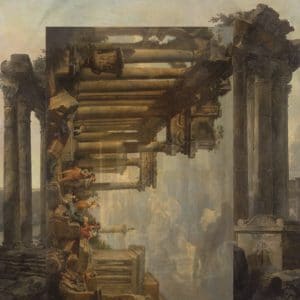
From the ruins of hours of multi-channel recordings created during his residency at EMS Stockholm, Francisco Meirino has created a definitive statement of time and discovery.
Inspired by the Serge and Buchla modular synthesizers, he felt as if he were standing before ancient ruins, familiar yet unknown. After allowing these recordings to sit and decay over time, he discovered, when he finally came back to them, that all that was left were the pieces and ruins of sonic archives.
The end result is a masterpiece statement, an exercise in abandonment and discovery.
The ruins Francisco Meirino has unearthed reach deep into our psyche from seemingly the most unlikely source, machines, evoking a story of damage and resurrection.
12,00€
In stock

LP
Chris CORSANO – Massimo PUPILLO
“Via Combusta”
Chris Corsano, drums and percussion. Massimo Pupillo, electric bass. Recorded, mixed, mastered by Bruno Germano at Vacuum Studio, Bologna. Artwork, Lasse Marhaug.
Original price was: 20,00€.14,00€Current price is: 14,00€.
Out of stock
4 CD
Mats GUSTAFSSON & FRIENDS
“MG 50 – Peace & Fire”
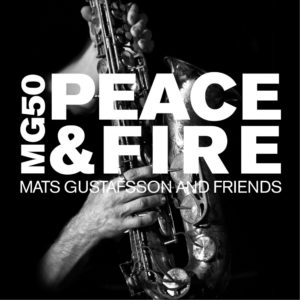
In October 2015 happened a big 3day-celebration in the Viennese venue Porgy&Bess for the 50th birthday of Mats Gustafsson - saxophone player extraordinaire in contemporary (free) jazz, for instance with The Thing, Fire!, and in various duo/trio/ensemble-formations. Many musicians Gustafsson played with or currently plays with were invited to join in various formations. Comes in a heavy cardboard box with two thick booklets including essays and many photos !
CD 1 - 26 october
Mats Gustafsson / Didi Kern
RISC (Billy Roisz/Dieb 13)
Sven- Åke Johansson
Swedish azz
CD 2- 27 october
FAKE THE FACTS + Paul Lytton & Martin Brandlmayr
Christof Kurzmann / Sofia Jernberg
FIRE! Plus guests
CD 3 - 28 october
Klangforum Wien & Mats Gustafsson
TR!O + 1 (Günther Christman /Paul Lovens/Thomas Lehn/Mats Gustafsson)
THE THING & KEN VANDERMARK
CD 4 - STRENGE KAMMER
Kjell Nordeson
Per – Åke Holmlander
Agustí Fernández
Erwan Keravec
Christof Kurzmann / Ken Vandermark
Anna Högberg
Original price was: 45,00€.25,00€Current price is: 25,00€.
In stock

2 LP
eRikm & LES PERCUSSIONS DE STRASBOURG
“Drum-machines”
Drum-Machines, the 2nd recording made and produced under the label Percussions de Strasbourg, marks an important turning point in our approach, that of the 4th generation of our ensemble. At the junction between contemporary and electronic music, Drum-Machines was created following a process of dynamic composition: the performers first proposed sound materials on two research residencies and then eRikm ensured the composition, the music production and mixing.
Commissioned by Percussions de Strasbourg and GMEM, Drum-Machines was created on October 7 th, 2016 at Musica Festival in Strasbourg.
«Les Percussions de Strasbourg perform augmented sound material that showcases the intuitive and sensitive universe of eRikm. Between rustling electric razors, the tingling of metal, swirling marbles and ballets danced by twigs, the performers caress, rub, react, transform, develop multiple modes of play and offer a fresh, delicate and unexpected exploration of sound. In a truly collective effort, both in terms of the making of materials and the design of the form and the execution of this unique piece of work, Les Percussions de Strasbourg have fully enjoyed their collaboration with one of the most recognized producers of electronic music of our time.
Drum-Machines is a living sound installation marked by the imprint of five individuals that mixes sound mechanics with organic and subtle electronics, suggesting a reorganization of the boundaries of today's forms of musical expression. » Minh-Tâm Nguyen
«Throughout the ages and their various uses, survival tools (rhombus wind instruments, flute-calls, etc.) have become musical instruments. In the context of this work, these vectors of affects co-exist side-by-side with an electro-acoustic system. This machine cannibalizes its own sound production while simultaneously thriving on sounds produced by the musicians. From this agora spring forth "multitimbral" landscapes whose edges dissolve into microtonal steppes, devoid of human action. From liminal pulsation to decimal infinity, the physicality of the sound summons an allegory to geology, from the infra thin (l’émoi - volute) to the supra massive (embâcle – doline).
Drum-Machines consists of subconscious and collective archaic fields that reach all the way to the noise aberration of the contemporary world. The 21 st century begins in its great collapse, the imbalances and the disruptions of the sound masses deployed by (percussionist) organisms in movement compress time and sounds until their paroxysms. This work is the elaboration of a lengthy sifting approach in which process creates form through a dynamic composition. This process uses accumulation, manipulation and re-arrangement across several generations of sound data. Speed, pulse, timbre and instruments are subject to numerous distortions by real or virtual machines.
The original intention is modified and transformed.
Drum-Machines is polymorphic in its arrangement, suspended on a line of time and actions.» eRikm
Original price was: 27,00€.14,00€Current price is: 14,00€.
Out of stock

CD
LA MORTE YOUNG
“A Quiet – Earthquake Style”
La Morte Young is a supergroup including the members of the bands Nappe, Sun Stabbed and Talweg. Their first studio album, released 5 years ago, has been acclaimed by some press and has also been tip of the tongue of the now defunct Volcanic tongue mailorder.
A Quiet – Earthquake Style is the second studio album by La Morte Young, recorded during a residency in november 2015 at GRIM in Marseille.
It’s always hard to describe a record when you are part of it, so here is a the thoughts of Stefan Neville (Pumice, Olympus, ...) while listening to it : « This is an unpleasant, confusing & transcendental new record by some very heavy french bastards. It is destructive & haunted & ridiculous. Side one begins with cold violent ripping splatter. Almost rock music but tortured & distressed like a tough metal buffoon falling over wearing dangerous nail studded armbands tumbling & screaming down the steps of an infinity dungeon, into an open sewer where his bullet belt short circuits the worlds electricity & his shitty corpse gets boiled up into a spiritual paste of false hope. On side two we hear a duet between apocalyptic wind & some bulldozers. Cannons are fired into the ocean and a chorus of concussed whale's reply unhappily. Then the world dies and robot scanners on autopilot move in to forever check the pulse of the rubble & giggle amongst themselves for eternity. None of this feels like mere humans playing instruments to me. It is a huge, terrifying, obscene & hilarious record... »
For whom think that Sunn O))), the Dead C and François Bayle are also ridiculous and hilarious.
CD version exists in red or blue Riso cover.
11,00€
In stock

LP
LA MORTE YOUNG
“A Quiet – Earthquake Style”
La Morte Young is a supergroup including the members of the bands Nappe, Sun Stabbed and Talweg. Their first studio album, released 5 years ago, has been acclaimed by some press and has also been tip of the tongue of the now defunct Volcanic tongue mailorder.
A Quiet – Earthquake Style is the second studio album by La Morte Young, recorded during a residency in november 2015 at GRIM in Marseille.
It’s always hard to describe a record when you are part of it, so here is a the thoughts of Stefan Neville (Pumice, Olympus, ...) while listening to it : « This is an unpleasant, confusing & transcendental new record by some very heavy french bastards. It is destructive & haunted & ridiculous. Side one begins with cold violent ripping splatter. Almost rock music but tortured & distressed like a tough metal buffoon falling over wearing dangerous nail studded armbands tumbling & screaming down the steps of an infinity dungeon, into an open sewer where his bullet belt short circuits the worlds electricity & his shitty corpse gets boiled up into a spiritual paste of false hope. On side two we hear a duet between apocalyptic wind & some bulldozers. Cannons are fired into the ocean and a chorus of concussed whale's reply unhappily. Then the world dies and robot scanners on autopilot move in to forever check the pulse of the rubble & giggle amongst themselves for eternity. None of this feels like mere humans playing instruments to me. It is a huge, terrifying, obscene & hilarious record... »
For whom think that Sunn O))), the Dead C and François Bayle are also ridiculous and hilarious.
LP version includes 2 postcards.
16,00€
Out of stock
LP
DARKSMITH
“Hatred Of Sound”
200 copies.
“New record from Darksmith years away from the previous ... well, it is not easy to talk about the records of Tom, even if this difficulty, on the borders with the impossibility, validates the complete success of his work. We are not dealing with an abstract thing, reality is omnipresent in these furrows ... yet it manages to escape any attempt at semantic classification and makes even impossible the definition of an emotional tonality; rather the listening leads back to places of the familiar insignificance in which life is immersed. The two sides are both tripartite, perhaps less messed up than usual, with the usual limping of difficultly identifiable sounds, phantom appearances of music, deteriorated, elsewhere.” (Francesco Tignola)
18,00€
In stock
LP
Mario DE VEGA
“38”
“An immersion into Classics. That kind of Classics which holds in his pantheon Pierre Henry and Pierre Schaeffer, even though I should maybe refer to Michel Chion, given the powerful dramatic intensity displayed by these two compositions.
Mario De Vega has once again proved himself a master at mixing in his works all of the elements that make me love electro-acoustic music so much. The unpredictability of the sound sources, some sort of spectral musicality, and the sudden moves; those compositional jumps that drag you from one space to another, from a world which you’ve just settled into, to another one, totally unknown, sometimes frightening, sometimes simply disorientating.
There are also many moments of delicacy in these 27 minutes, and I find the punk aura that lingers over every turning point so fascinating, reminding of the early works of Valerio Tricoli, so volcanic and unpredictable, and yet so controlled.
Mario De Vega’s sure is a very personal work that displays enormous respect for the History and the classic narrations of experimental and concrete music, without losing anchor with the present.” (Claudio Rocchetti)
18,00€
In stock
LP
R.A.N.
“eb-i Yelda”
Hailing from stanbul and based in Berlin for a couple of years now, Hüma Utku has been a prolific artist lately: as R.A.N. (Roads At Night) she released her debut album “Her Trembling Ceased”, followed by the remix album “Remixed: Stories Retold” (both 2015, Partapart Records), and contributed several tracks and remixes to various compilations. Besides studio production, she travels the planet to perform live or as DJ, and in November / December 2017 UTKU was Artist in Residency at Yara Mekawei’s Submarine Studio, Cairo.
The title of her debut on Karl, “ eb-i Yelda” (pronounced Shab-e Yalda in English), is a Persian term that signifies ‘the longest night’. Inspired by the Ottoman poet Bosnian Sabit Efendi’s verses, R.A.N. created four new, very personal tracks, developing further her musical language by fusing traditional instruments with deep electronic sounds, distortion and dark ambience, in order to create intense atmospheres of anger, anxiety, grief – but also empowerment and hope. These compositions are Utku’s personal reflections on the long lasting devastation and turmoil in the Middle East as well as witnessing the individual experiences related to these happenings. The titles translate as: “ eb-i Yelda” (The Longest Night), “Ay” (The Moon), “Sabah” (The Morning) and “Kul” (The Servant).
13,00€
Out of stock

2 LP
NURSE WITH WOUND
“Homotopy To Marie”
Homotopy To Marie is the fifth album by Nurse With Wound, released in 1982, created by Steven Stapleton, music and sleeve.
The album is “a step on from the Dadaist rock of Merzbild Schwet, with much use of tape manipulation and classical avant-garde techniques”. The album which combined tape edits with resonating gong tones and disembodied children's voices to create a sonic collage far removed from the harsh improvisations of the group's early albums.
The title of the brief closing track derives from a passage from Les Chants de Maldoror, a surreal poetic novel written by Le Comte de Lautréamont. This appropriation of a phrase from Maldoror is shared in common with the title of Nurse With Wound’s debut album Chance Meeting on a Dissecting Table of a Sewing Machine and an Umbrella; both phrases appear in Lautréamont’s work.
The album was first issued on Stapleton's own United Dairies label on vinyl, cassette and later in remastered compact disc including an extra track “Astral Dustbin Dirge”.
This masterpiece reissue, is the official full double album from the original recording sessions. The 4 tracks from the original LP plus additional recordings from the same period.
This second, double album masterpiece in the Silver Collection of Nurse With Wound albums, is a technically better, crystal clear performance, in comparison to the original 1982 cut.
Black vinyl, 800 copies.
29,00€
Out of stock
2 LP
NURSE WITH WOUND
“Homotopy To Marie” (silver)
Vinyl silver & black + deluxe metallic gatefold limited to 700 copies.
Homotopy To Marie is the fifth album by Nurse With Wound, released in 1982, created by Steven Stapleton, music and sleeve.
The album is “a step on from the Dadaist rock of Merzbild Schwet, with much use of tape manipulation and classical avant-garde techniques”. The album which combined tape edits with resonating gong tones and disembodied children's voices to create a sonic collage far removed from the harsh improvisations of the group’s early albums.
The title of the brief closing track derives from a passage from Les Chants de Maldoror, a surreal poetic novel written by Le Comte de Lautréamont. This appropriation of a phrase from Maldoror is shared in common with the title of Nurse With Wound’s debut album Chance Meeting on a Dissecting Table of a Sewing Machine and an Umbrella; both phrases appear in Lautréamont’s work.
The album was first issued on Stapleton’s own United Dairies label on vinyl, cassette and later in remastered compact disc including an extra track “Astral Dustbin Dirge”.
This masterpiece reissue, is the official full double album from the original recording sessions. The 4 tracks from the original LP plus additional recordings from the same period.
This second, double album masterpiece in the Silver Collection of Nurse With Wound albums, is a technically better, crystal clear performance, in comparison to the original 1982 cut.
36,00€
In stock

LP
L.A.F.M.S.
“35 S. Raymond Avenue”
One afternoon in 1975, friend and fellow music traveler, Harold Schroeder, showed up at Poo-Bath Record Shop where Tom Recchion worked selling records and experimental music to people, forcing them to buy albums that he swore would change their lives. Harold asked if Tom wanted to share in a studio space close to the shop. After seeing it Tom Recchion immediately said “YES!”.
They moved in and divided the space in half. On Tom’s half he made drawings, paintings, performances, video, sculptures, installations and music. Harold had his all set up for music with his newly acquired Steiner-Parker synth and guitars and things. At the beginning they played under the name “The Two Who Do Duets”. Soon the late night jam sessions that took place in the back of Poo-Bath moved over to the 4th floor of 35 South Raymond. It was pretty beat up and derelict, the way one imagines an artists’ studio to look. They could make all the noise they wanted. No one else was on their floor.
The music heard on this LP has remained unheard since it was recorded and was created just before and right after the inaugural concert by the LAFMS groups Le Forte Four, Doo-Doettes and Ace & Duce. This concert took place in late January 1976.
The sessions on this release feature members of the newly formed and expanded Doo-Doettes, which now included Dennis Duck, Juan Gomez, Harold Schroeder and Tom Recchion, as well as Ju Suk Reet Meate from Smegma and Ace, of Ace & Duce.
35 S Raymond eventually became a sort of LAFMS headquarter, with Chip Chapman of Le Forte Four, artist and future Extended Organ vocalist/guitarist Paul McCarthy, and soon to become singer for Nervous Gender, punk/folk artist Phranc, who along with many other artists and musicians, moved into the building. 35 S Raymond allowed for free expression and explorations of all sort. Some wild parties ensued, not to mention the luxury of endless hours of experimentation. Parking was free and so was the art and music.
Ace found the tapes for side one (“Tom’s Studio”) in his archive and Ju Suk Reet Meate found the tapes for side two (“50 of Every American Are Machines”) and edited them both for this release. No overdubs or remixing was employed.
Edition of 200 copies presented in luxury gatefold sleeve.
23,00€
In stock

LP
SMEGMA
“Abacus Incognito”
New primitive-suburban-folk music from Temple City and Pasadena, CA, circa 1973-4.
This new edition is culled from the original unissued Smegma tape vaults of Ju Suk Reet Meate and represents the most pure expression of the insular sound-world that was spontaneously discovered as a group.
Unlike last years’ “Look’n For Ya” no song forms are ever used, instead fearless group improvisational vocals take you on a strange shape-shifting journey thru operatic show tunes, spirit visions and visits to a delirium motel room.
The only exception is the title track “Abacus Incognito” that features poetry by Dennis Duck (also, Human Hands, Dream Syndicate, LAFMS...) with accompaniment by the family stereo console record player/Radio unit and utilizing conventional instruments creating a strangely unique non-jamming sound.
Except for the first track, all sounds were recorded casually in various band-members parents’ houses while they were away… they would have been horrified!
The final track is possibly one of the strangest concepts ever recorded, inspired by both the Lord Dunsany story “The Three Infernal Jokes” and the most popular record of 100 years ago “The O.K. Laughing Record” we have - The Smegma “Laughing to Death Record”.
Edition limited to 200 numbered copies.
20,00€
In stock

2 LP
Steve REICH
“Drumming”
Steve Reich’s Drumming is regarded as one of the most important musical works of the last century. Distilled through his studies of African percussion in Ghana during 1970 and Balinese gamelan music, Reich revolutionized our understanding of polyrhythms, sculpting a new sonic territory to illuminate the radical potential of Minimalism.
Divided into four sections, performed without pause, Drumming is written for eight small tuned drums, three marimbas, three glockenspiels, piccolo and voice. The singers recite melodic patterns that mimic the sounds of the instruments, gradually rising to the surface and then fading out. The overall effect can be transfixing – pulling listeners into the rhythm and possessing a raw immediacy, directness and energy.
The premier performances of Drumming took place in December 1971 in New York City – first at The Museum of Modern Art, then at Brooklyn Academy of Music and finally at Town Hall where this recording was made – and featured the composer along with a cast of longtime collaborators including Art Murphy, Steve Chambers, Russ Hartenberger, James Preiss, Jon Gibson, Joan La Barbara, Judy Sherman, Jay Clayton, Ben Harms, Gary Burke, Frank Maefsky and James Ogden.
Originally released in 1972 by gallerist John Gibson in a small private edition, Drumming represents the culmination of Reich’s investigation into rhythmic phase relationships and its early realization captures a remarkably organic feel, especially compared to the more widely known version on Deutsche Grammophon from 1974.
This first-time vinyl reissue and first-time CD release has been carefully remastered from the original master tapes.
29,00€
Out of stock
2 CD
Steve REICH
“Drumming”
Steve Reich’s Drumming is regarded as one of the most important musical works of the last century. Distilled through his studies of African percussion in Ghana during 1970 and Balinese gamelan music, Reich revolutionized our understanding of polyrhythms, sculpting a new sonic territory to illuminate the radical potential of Minimalism.
Divided into four sections, performed without pause, Drumming is written for eight small tuned drums, three marimbas, three glockenspiels, piccolo and voice. The singers recite melodic patterns that mimic the sounds of the instruments, gradually rising to the surface and then fading out. The overall effect can be transfixing – pulling listeners into the rhythm and possessing a raw immediacy, directness and energy.
The premier performances of Drumming took place in December 1971 in New York City – first at The Museum of Modern Art, then at Brooklyn Academy of Music and finally at Town Hall where this recording was made – and featured the composer along with a cast of longtime collaborators including Art Murphy, Steve Chambers, Russ Hartenberger, James Preiss, Jon Gibson, Joan La Barbara, Judy Sherman, Jay Clayton, Ben Harms, Gary Burke, Frank Maefsky and James Ogden.
Originally released in 1972 by gallerist John Gibson in a small private edition, Drumming represents the culmination of Reich’s investigation into rhythmic phase relationships and its early realization captures a remarkably organic feel, especially compared to the more widely known version on Deutsche Grammophon from 1974.
This first-time vinyl reissue and first-time CD release has been carefully remastered from the original master tapes.
20,00€
Out of stock
CD
Toshimaru NAKAMURA
“Re-Verbed (No-Input Mixing Board 9)”
Re-Verbed (No-Input Mixing Board 9) is the latest edition from Tokyo based artist Toshimaru Nakamura.
The No-Input Mixing Board is a unique instrument pioneered by Nakamura. As its name suggests, it is a mixing console within which external no input exists. The instrument is fuelled only by its own feedback. Initially used by Nakamura as a more tonal instrument, creating incredibly high frequency outputs, over time the mixing board has become decided more rhythmic and harmonic. It is this sonic territory that is the focus of this edition.
Re-Verbed (No-Input Mixing Board 9) is by far one of Nakmura’s most musical recordings. The board’s tonality is front and centre; low pulses and cavernous pulses fizzle and murmur with a subtle but frenetic energy. Drifting into decidedly dub oriented directions, Nakamura allows the instrument to breathe; specifically he finds new dimensions to the ways interference can be brought into harmony within the pieces. While the instrument might suggest a sense of indeterminacy, Nakamura’s intimate relationship with it means he can maintain an unerring sense of control over it.
Re-Verbed (No-Input Mixing Board 9) is evidence of his intense capacity to create profound work with this most unusual of devices. A conjuring of something truly unique from literally nothing.
12,00€
In stock

LP
Francis PLAGNE & Crys COLE
“Two Words”
Two Words is the debut release from the duo of Canadian sound artist crys cole and Australian songwriter Francis Plagne. Building on a series of experimental live performances in which the pair toyed with possible common languages for their seemingly unrelated approaches to music, the LP’s two sides present a single piece that brings together abstract texture and slow-motion song in a sonic space where genre cedes to the logic of dreams.
The piece begins with a long, nearly static sequence built primarily from rubbed surfaces, using movement in the stereo field and changing mic placements to create a unified but unstable sonic environment that mimics wind, water, and breath, opening an impossible space between nature and artifice. This artificial outdoors ultimately makes room for Plagne’s electric organ, which sounds a series of melancholic chords to accompany a wandering Wyatt-esque keyboard line as cole’s intimate contact mic textures sizzle and pop in the foreground.
From here the piece makes a surprise detour into song, as the majority of the second side finds Plagne intoning a series of obtuse two word phrases (from a text by Berlin-based poet Marty Hiatt) to an austere organ accompaniment. Working closely with engineer and producer Joe Talia, cole and Plagne extend the studio-as-an-instrument tradition of Teo Macero and This Heat, introducing subtle yet unexpected production shifts that lead the listener from the initial austerity of the organ and voice to an oneiric space of asynchronised vocal doubles, creaking textures, and distant whistling, ultimately arriving at something like an imagined meeting of Organum and Arthur Russell.
Packaged in a suitably mysterious sleeve featuring a lush work by Australian painter Anne Wallace on the front and text by Hiatt on the back, Two Words is both comforting and strange, a disorienting blend of seemingly discrepant elements.
Original price was: 19,00€.12,00€Current price is: 12,00€.
In stock

LP
Eiko ISHIBASHI & Darin GRAY
“Ichida”
Black Truffle is pleased to announce the release of Ichida, the first release from the duo of two important yet often underappreciated musicians, Eiko Ishibashi and Darin Gray. Ishibashi is a singer-songwriter, keyboardist, drummer, and multi-instrumentalist, known in Japan both for her own elaborately conceptual solo albums and for her frequent collaborations with figures such as Jim O’Rourke, Merzbow, and Phew. Darin Gray is a bassist and multi-instrumentalist known for a multitude of collaborations (with O’Rourke and Loren Connors, among many others), for On Fillmore, his cinematic post-exotica project with Glenn Kotche, and as one half of Chikamorachi with Chris Corsano, one of the finest free-jazz rhythm sections around.
Presenting the entirely of a live set performed at Tokyo’s Super Deluxe in March 2013, the set begins as a duet for Ishibashi’s flute and Gray’s upright bass. Calmly melodic yet harmonically inventive, with shades of ‘spiritual jazz’, the pair’s acoustic ruminations are gradually joined by Ishibashi’s lush electronics, which randomly flicker between chords in a manner recalling the classic work of David Behrman. As the electronics build into a gloomy fog of slowly cycling loops, Gray lays his bass aside and turns to making strangely mournful interjections on a mouthpiece. Eventually Ishibashi moves to the piano, enveloping the audience in rippling pools of sustained, octave-doubled melody, provided by Gray’s bass with a fluid and dynamic foundation.
For much of the second side, both Ishibashi and Gray turn to electronics, ultimately arriving in a bizarre space of melancholic arpeggios and random sputter and sizzle, oddly reminiscent of 70s outsider prog acts like Wapassou. An uneasy coda of rich piano chords ends the set. Captured in warm room ambience and beautifully mixed by Jim O’Rourke, Ichida is a rare combination of improvisational acumen and emotional directness, both adventurous and immediately accessible.
19,50€
In stock

CD
Melaine DALIBERT
“Musique pour le lever du jour”
Melaine Dalibert (born 1979), a French composer/pianist, has been increasingly recognized for his compositional piano works as well as his interpretations of works by Gérard Pesson, Giuliano D’Angiolini, Tom Johnson, Peter Garland and many others. Trained as a classical pianist in Rennes (where he teaches now), Dalibert studied a large repertoire of contemporary composers' works at the Paris Conservatories. Being involved with experimental music at a young age, Dalibert found a way to compose music through mathematical concepts.
Fascinated by natural phenomena which are both expected and unpredictable, and also inspired by the work of the Hungarian-born French media artist Véra Molnar, Dalibert has developed his own algorithmic procedures of composition which contain the notion of stretched time evoking Morton Feldman, minimal and introspective, adopting a unique concept of fractal series. His piano music has been released on two recordings to date: Quatre pièces pour piano, self-released in 2015, and Ressac, issued by Another Timbre in 2017. ‘Musique pour le lever du jour’ (the title meaning 'Music for The Daybreak') was composed by Dalibert over two years and completed in 2017, with the concept being an ‘endless piece’ with no beginning or no end. This one-hour piece adopts slow tempi, leaving meditative space for long resonances in which pentatonic coloring gradually modulate in all tones, resulting in complex layers of direct tones, overtones, and prolonged reverberation, all organically subliming into rich sonorities with incredible harmonic clarity. Produced and design by Yuko Zama, artwork by David Sylvian. The single CD is a limited edition of 500.
15,00€
In stock

3 CD
Biliana VOUTCHKOVA / Michael THIEKE
“Blurred Music”
The Berlin-based Bulgarian violinist Biliana Voutchkova and German clarinetist Michael Thieke have worked together intensely within both compositional and improvisational duo and group projects in Berlin since 2011.
In their current project “Blurred Music”, the duo works with musical structures that create a blur; improvised parts alternate with fields of pre-structured material in which digital recordings of the duo are duplicated by live performance. Virtually identical fragments of the live performance synchronize simultaneously with the playback, unavoidably giving rise to blur in the temporal dimension, in the rhythmic, timbral, and motivic variations, and in the microtonal interpretation of individual pitches. The triple CD “Blurred Music” features three of the duo’s live performances, recorded in Chicago, Philadelphia and New York during their USA tour in December 2016. These three live recordings are all very differently structured, factoring in the conditions and the atmosphere of each venue as well as the musicians' own perspective and mindset. This series of three concerts, all occurring within a nine day period, showcase the very wide range of this duo, so all three recordings combine to form a saga of their peak. Using their highly trained virtuosic skills and intense concentration, the duo carefully deconstructs the conventional tones of instruments into fine particles in an organic flow, to create a completely new world of music on their own, somewhere between tonality and atonality, and will hopefully be recognized as one of the most mature accomplishments of improvisational/compositional works of this era. Co-produced by David Sylvian and Yuko Zama, artwork by David Sylvian. The three CD set is a limited edition of 500.
28,00€
In stock
LP
The FUTURIANS
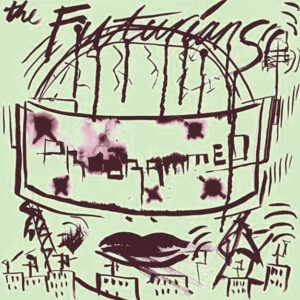
“Programmed”
Matt Middleton (Crude / The Aesthetics / Dirtlove): The Futurians are a band that have soul. Their music, a pulsating, minimalist, primitivist, machinistic monster of a thing is at once fiction and fanstasy, at once politics and hyper-reality. Theirs is an approach synthesizing elements of no-wave, new-wave, synth-rock, drone rock, doom rock, kraut-rock, Dunedin dirge, robot rock, riot grrllism, and calculator punk.
Brad Rose: Clayton Noone and his posse of Duckling Monster, ISO12, Rocko Mandroid, and Krauss have enough energy to light a small town for a year. Have enough energy to light a small town for a year.
LP in full color sleeve issued in an edition of 200 copies.
19,50€
In stock

LP
CJA
“Sido Not Dead”
As reported by Campbell Kneale (Birchville Cat Motel / Our Love Will Destroy The World / C-Psi-P) : “I narrowly avoided an English-second-language tete-a-tete in Belgium once when I refused to believe in the face of all evidence that Sunn O)))’s newly released “Flight of the Behemoth” was not CJA. I was wrong, but whatever… I was already ascending Lucifers path to the stars not garbed in chic grim-robes but a pilling homespun jersey that stunk of wet dog. I confess and repent… for me, all ‘this kinda music’ was an exercise in deftly crafted slovenliness and anonymous surface texture, but in spending time with a tape simply labeled “Sido Not Dead” I was struck dumb with the burning religious fervor of real people who had truly forgotten to give a fuck and at that very moment unto me was bestowed a mighty vision of two-bar heaters, worn cream carpet, mooching about in slippers with cups of budget herbal tea. A long winter weekend that passed too close to a tape recorder and whose glacial momentum had accidentally combed the little magnetic thingies on the cassette into recognizable geometric shapes. This was my (unwashed) fork in the road: facile, nihilistic, too lazy to make it to the letterbox, yet enlightened, enlivened, ascended, eternal…”
blangblangblang
GRONGGRONG
blangblangblang
GRONGGRONG… Fellow pilgrims and travellers to furthest inner outposts…herein lies your scripture. Edition limited to 200 copies in silkscreened sleeve.
Original price was: 19,50€.10,00€Current price is: 10,00€.