
Out of stock
CD
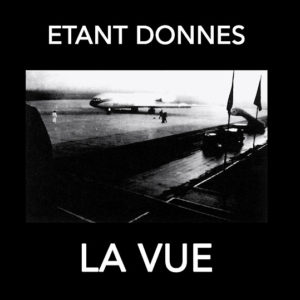
ETANT DONNES
“La vue”
Etant Donnes is a French duo named after Marcel Duchamp's last major work. The group consists of brothers Marc and Eric Hurtado, born in Morocco and working mainly as performance artists and musicians. Their sound can be described as a mix of field recordings, found sounds and sometimes whispered, sometimes violent vocals. They describe their sounds like this: "Through Marc and Eric, it is the volume of each word that becomes an object-sculpture, together with the power of their bodies expressing their voices. Each event is a scream - indeed even the glissando - of the strength of the word that sometimes abruptly becomes a rock, a solid surface, not in the least fluvial, as is the narrative of a tale, novel or poetic epic. With both of them, there is no more trace of ancient prosodies, no more trace of the incomprehensible Sainte-Beuve who could claim: "I have to collect a volume of prose". The word, the voice, the volume take shape with each other, unveiling a theatre that theatre usually ignores, which has given it such things as a Samuel Beckett's Fin de Partie." Over the years Etant Donnes have collaborated with people like Lydia Lunch, Michael Gira, Alan Vega and Genesis P-Orridge. La Vue was the first ever recording, dating back to 1979 and originally issued on French Bain Total label (run by Philippe Fichot of Die Form). For this re-issue, the band has found a longer version than was previously available, so this is a unique chance to hear Etant Donnes in their earliest form in a version that has previously been unpublished.
12,00€
In stock

LP
Luc FERRARI
“Photophonie”
To celebrate the 90th anniversary of Luc Ferrari's birth Transversales Disques is very glad to announce the release of Photophonie, unpublished archives, spanning 1973-1992, revelatory collection of commercial, commission and secret music by electroacoustic music pioneer Luc Ferrari.
- « Photophonie » (1989) / Music for the photographic exhibition of Alain Willaume.
- « Il était une fois » (1973) / Commissioned by the G.M.E.B.
- « Trans-Voices » (1992) / Curated by the American Center, Paris.
- « Leica » - (1977) / Advertising for the Leica camera.
Affiliated with French Radio’s Groupe de Musique Concrète, co-founder of the GRM with Pierre Schaeffer in 1958, Luc Ferrari (1929-2005), major figure of musique concrète and electroacoustic music, broke away to pave his own path of individualistic expressions of minimalist music, musical theater, field recordings, orchestral music and soundtracks…
22,50€
Out of stock
Out of stock
Out of stock
Out of stock
Out of stock
Out of stock
Out of stock
In stock

LP
DOME
“Dome 3”
With the demise of the group Wire in 1980, founder members Bruce Gilbert and Graham Lewis joined forces to create Dome. With the assistance of engineer Eric Radcliffe and his Blackwing Studio Dome took the ethic of “using the studio as a compositional tool” and recorded and released three Dome albums on their own label in the space of 12 months: DOME (July 1980), DOME 2 (October 1980) and DOME 3 (October 1981). A final fourth album, WILL YOU SPEAK THIS WORD: DOME IV was released on the Norwegian Uniton label in May 1983.
These albums represent some of the most beautifuly stark and above all timeless exercises in studio experimentation from early 1980s alternative music scene.
16,00€
In stock

CD
HECKER
“Inspection II”
Florian Hecker’s latest CD release continues his work with computational techniques for analysis and resynthesis. In Inspection II we hear the progressive reconstruction of original source material using algorithms based upon human hearing and designed to capture timbral characteristics of sound. As the source is iteratively extracted from featureless noise, a complex ongoing dialogue commences between formal model and empirical experience of sound. Like Charon, the boatman who ferries souls of the dead across the styx, Inspection II crosses perpetually from one bank to the other: from the formal anticipations of analysis to the unexpected artefacts of synthesis.
In Robin Mackay’s libretto, recited by a synthetic voice, this inspective dialogue is transferred to the introspective psychoanalytic situation, where the continual re-narration of the self creates further disturbances and transformations—to attain a definitive image of oneself would be to face one’s own death.
As discussed in Amy Ireland’s essay Beside a Cold Statue commissioned for the CD sleevenotes, this process, whose symptomatology is recognisably that of masochism, sees the coldness of the formal model subverted as Hecker’s continual resynthesis delivers up a series of harsh, tantalising, and bewildering textures and timbres: ‘the resynthesized sound is more intractable, more disorienting, and more empirically obscene—a contingency that always disrupts the plan […] synthetic progeny, nourished on nothing but ice and noise…’.
Florian Hecker is an artist who works with synthetic sound, the listening process and the audience’s auditory experience, traversing performance, installation, and publications. Since 1996 he has exhibited and performed internationally.
Original price was: 14,00€.7,00€Current price is: 7,00€.
In stock

CD
Jean-Yves EVRARD & Christine WODRASKA
s/t
Jean Yves Evrard : Guitar
Christine Modraska : Piano
Two personalities. Two different instruments. Christine Wodrascka, pianist and improviser, and Jean Yves Evrard, guitarist and improviser, have produced a uniquemusical matter both homogeneous and complex at the same time and showcasing a form of freedomhidden between the musical notes. The two musicians, free from the typical conventions in both their content and the shape of their work, become receptors and then transmitters of the vibrations surrounding every space. In unison, their instruments are the extension of this musical mass, free and lush.
12,00€
In stock

CD
Joëlle LÉANDRE & Alexandra GRIMAL
“Désordre”
Joëlle Léandre : Double Bass and voice. Alexandra Grimal : Saxophone and voice.
Two instruments linked, calling to each other, leaping around, recalling and fooling around with the music of Joelle Leandre, improviser, composer and double bass player, and Alexandra Grimal, composer, singer and saxophone player. With chaos, a joyful mess of unique moments, bright, plural and playful, the two musicians have no care for determinism : The music just is, and they simply follow it.
12,00€
Out of stock

CD
Max EASTLEY – Fergus KELLY – Mark WASTELL
“The map is not the territory”
Max Eastley : arc (electro-acoustic monochord)
Fergus Kelly : invented instruments, found metals, electronics
Mark Wastell : tam tam, metal percussion, piano frame
Recorded at Studio 3, Stoke Newington, London on 8th March 2017 by Rupert Clervaux.
Edited, mixed and mastered by Fergus Kelly.
Produced by Mark Wastell.
Original price was: 9,00€.5,00€Current price is: 5,00€.
In stock
CD
Sarah HENNIES
“Reservoir 1: Preservation”
Black Truffle is thrilled to present “Reservoir 1: Preservation,” a gorgeous new piece by American composer/percussionist Sarah Hennies. Sarah's work explores a variety of musical, sociopolitical, and psychological issues including queer & trans identity, love, intimacy, psychoacoustics, and percussion. The “Reservoirs” are a series of three one-hour pieces based on the relationship between the conscious and unconscious human mind. Jung and Freud described the unconscious mind as a reservoir, a repository for memories that we don’t readily need access to, yet are kept forever somewhere in our minds. Specifically, Freud believed that one function of the unconscious mind is to store traumatic memories, filed away so that we don’t have to confront them every day. The conscious mind has no direct access to the unconscious, yet the unconscious is a constant yet mysterious presence in our lives.
“Reservoir 1: Preservation” is scored for piano and three percussionists, performed by Phillip Bush and Meridian, the long-running experiment in percussion, improvisation, and interpersonal relationships that includes Tim Feeney, Sarah Hennies, and Greg Stuart. In “Preservation” the piano functions as a constant, pervasive, but almost subliminal murmur amid the percussion playing that cycles through a variety of timbral and gestural areas, including gentle droning, frenetic scraping, and bricks violently dropped into metal buckets. The percussion group never interacts with or responds to the piano, while the piano subtly absorbs aspects of the trio.
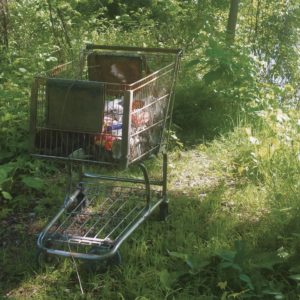
“Preservation” was recorded, mixed, and mastered by Jeff Francis at the University of South Carolina and performed by Meridian: Tim Feeney, Sarah Hennies, Greg Stuart (percussion), and Phillip Bush (piano). Released in a CD digipak with design by Lasse Marhaug. Cover photo from Abby Grace Drake’s photo series, “Shopping Carts of Southside Ithaca.
14,00€
Out of stock

2 LP
Keiji HAINO – Jim O’ROURKE – Oren AMBARCHI
“In the past only geniuses were capable of staging”
For its 50th release, Black Truffle presents the ninth album from one of the label’s core ensembles, the power trio of Keiji Haino, Jim O’Rourke, and Oren Ambarchi. Drawn from a November 2015 performance at Tokyo’s now-defunct SuperDeluxe, the record’s opening piece drops us immediately into the maelstrom, abruptly cutting into an extended episode of Ambarchi’s pummeling drums, O’Rourke’s fuzzed-out six-string bass, and Haino’s roaring guitar and electronics. Eventually settling into a hypnotic bass and drum groove over which Haino unleashes some almost Ray Russell-eque skittering atonal screech, these opening 13 minutes act as a potent reminder of the trio’s power.
Alongside showcasing the steady development of a unique language for the guitar-bass-drums power trio, the group’s succession of releases over the last decade has demonstrated a constant experimentation with new instruments, which continues here with O’Rourke use of Hammond organ (played at the same time as his roaming, sometimes knotty basslines). On the album’s second piece, the organ plays a key role, furnishing a harmonically rich shimmer over O’Rourke’s angular six-string bass chords, Haino’s distant, chirping electronics and Ambarchi’s crisp cymbal work; arriving somewhere halfway between Albert Marcoeur and Terje Rypdal, this piece is undoubtedly a highlight in the trio’s catalog so far.
The second and third sides are slow-burning, multi-part epics that range from spacious reflection to furious tumult. Where the trio’s previous double-LP set — This Dazzling, Genuine “Difference” Now Where Shall It Go? (BT 030LP, 2017) — was primarily instrumental in focus, here you find Haino’s voice taking the spotlight on the expansive third side, intoning, wailing. and exhorting in Japanese and English over a backdrop that moves from hushed bass and organ atmospherics to rolling toms and cymbal crashes before arriving at an ecstatic finale of searing guitar, tumbling drums and reverb-saturated bass. The fourth side returns to the hypnotic grooves of the opening piece, fixing on a relentless riff and riding it into oblivion under Haino’s roaming psychedelic soloing and jagged chordal slashes.
25,00€
Out of stock
CD
Keiji HAINO – Jim O’ROURKE – Oren AMBARCHI
“In the past only geniuses were capable of staging”
For its 50th release, Black Truffle presents the ninth album from one of the label’s core ensembles, the power trio of Keiji Haino, Jim O’Rourke, and Oren Ambarchi. Drawn from a November 2015 performance at Tokyo’s now-defunct SuperDeluxe, the record’s opening piece drops us immediately into the maelstrom, abruptly cutting into an extended episode of Ambarchi’s pummeling drums, O’Rourke’s fuzzed-out six-string bass, and Haino’s roaring guitar and electronics. Eventually settling into a hypnotic bass and drum groove over which Haino unleashes some almost Ray Russell-eque skittering atonal screech, these opening 13 minutes act as a potent reminder of the trio’s power.
Alongside showcasing the steady development of a unique language for the guitar-bass-drums power trio, the group’s succession of releases over the last decade has demonstrated a constant experimentation with new instruments, which continues here with O’Rourke use of Hammond organ (played at the same time as his roaming, sometimes knotty basslines). On the album’s second piece, the organ plays a key role, furnishing a harmonically rich shimmer over O’Rourke’s angular six-string bass chords, Haino’s distant, chirping electronics and Ambarchi’s crisp cymbal work; arriving somewhere halfway between Albert Marcoeur and Terje Rypdal, this piece is undoubtedly a highlight in the trio’s catalog so far.
The second and third sides are slow-burning, multi-part epics that range from spacious reflection to furious tumult. Where the trio’s previous double-LP set — This Dazzling, Genuine “Difference” Now Where Shall It Go? (BT 030LP, 2017) — was primarily instrumental in focus, here you find Haino’s voice taking the spotlight on the expansive third side, intoning, wailing. and exhorting in Japanese and English over a backdrop that moves from hushed bass and organ atmospherics to rolling toms and cymbal crashes before arriving at an ecstatic finale of searing guitar, tumbling drums and reverb-saturated bass. The fourth side returns to the hypnotic grooves of the opening piece, fixing on a relentless riff and riding it into oblivion under Haino’s roaming psychedelic soloing and jagged chordal slashes.
14,00€
In stock
2 LP
PAN SONIC & Charlemagne PALESTINE
“Mort aux Vaches”
Special vinyl re-issue of the work initially released on CD by Staalplaat 19 years ago.
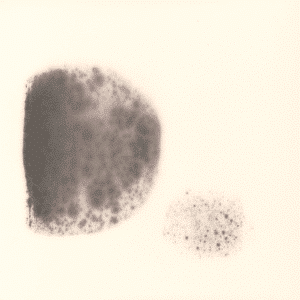
First time on vinyl, brand new mastering, and new cover design (a 1974 drawing by Charlemagne Palestine).
This is the first release in the 'GodBear' series, a project consisting in the re-issue of existing works and production of unreleased material by Charlemagne. In partnership with the Charlemagne Palestine Foundation.
31,00€
Out of stock
3 LP
Carlos CASAS
“Mutia”
3xLP Limited Artist Edition limited to 200 copies on red vinyl.
With exclusive handnumbered bonus LP & art print.
---
"While developing my last film about the elephant graveyard myth, I tried to imagine what that jungle and landscape that protected it might sound like. To do this, I created a series of soundscapes, atmospheres to help me understand that park, to imagine it; I tried to place it in the near future, around 2046. All the sounds that make up those sound compositions come from my references throughout the project, and from the atmospheres and radiofrequencies captured during the filming in Sri Lanka; the deep jungles and magical places that helped me undertake that journey. When I finally finished editing the film itself, I decided to rework those sessions, to create an album that would recap that entire imaginary world I had created. The album is a way of inviting audiences to undertake that journey." Carlos Casas, 2019
Sound compositions, field recordings and radio frequencies by Carlos Casas.
Additional sound captured in location by Marc Parazon.
Mastering and cut by Frédéric Alstadt at Ångström studio, Brussels.
49,00€
Out of stock
2 LP
Carlos CASAS
“Mutia”
"While developing my last film about the elephant graveyard myth, I tried to imagine what that jungle and landscape that protected it might sound like. To do this, I created a series of soundscapes, atmospheres to help me understand that park, to imagine it; I tried to place it in the near future, around 2046. All the sounds that make up those sound compositions come from my references throughout the project, and from the atmospheres and radiofrequencies captured during the filming in Sri Lanka; the deep jungles and magical places that helped me undertake that journey. When I finally finished editing the film itself, I decided to rework those sessions, to create an album that would recap that entire imaginary world I had created. The album is a way of inviting audiences to undertake that journey." Carlos Casas, 2019
Sound compositions, field recordings and radio frequencies by Carlos Casas.
Additional sound captured in location by Marc Parazon.
Mastering and cut by Frédéric Alstadt at Ångström studio, Brussels.
31,00€
In stock
LP
Charlemagne PALESTINE
“Dinggg Donggg Dinggg Vs Singgg Songg Singgg”
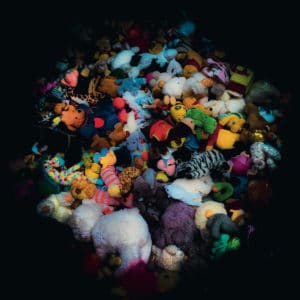
Singing songs while playing ding dongs, Charlemagne Palestine’s solo voice over the bells of his studio carillon is a premiere in his recorded works, and possibly the first voice/carillon record in musical history. All the little shamanic stuffed deities inhabiting the carillon added their souls to the spirit of the reverberating songs, including a song in memory of Mika Vainio.
23,00€
Out of stock

2 LP
COMPILATION
“Strain, Crack & Break: Music From The Nurse With Wound List Volume 1 (France)”
After years of mythology, misinterpretation and procrastination Nurse With Wound’s Steven Stapleton finally chooses Finders Keepers Records as the ideal collaborators to release “the right tracks” from his uber-legendary psych/prog/punk peculiarity shopping list known as The Nurse With Wound List, commencing with a French specific Volume One of this authentically titled Strain Crack Break series. Featuring some Finders Keepers’ regulars amongst galactic Gallic rarities (previously presumed to be imaginary red herrings) this deluxe double vinyl dossier demystifies some of the essential French free jazz and Parisian prog inclusions from the alphabetical “dedication” inventory as printed the anti-bands 1979 industrial milestone debut.
When Steven Stapleton, Heman Pathak and John Fothergill’s anti-band Nurse With Wound decided to include an alphabetical dedication to all their favourite bands on the back of their inaugural LP the notion of creating a future record dealers’ trophy list couldn’t have been further from their minds. By adding a list of untravelled European mythical musicians and noise makers to their own debut release of unchartered industrial art rock they were merely providing a suggestive support system of existing potential likeminded bands, establishing safety in numbers should anyone require sonic subtitles for Nurse With Wound’s own mutant musical language. Luckily for them, the record landed in record shops in the midst of 1979’s memorable summer of abject apathy and its sound became a hit amongst disillusioned agit-pop pickers and artsy post-punks, thus playing a key role in the bourgeoning “Industrial” genre that ensued. On the most part, however, the list , like most instruction manuals, remained unreadable, syntactic and suspiciously sarcastic… As potential “real musicians” Nurse WIth Wound became an Industrial music fan’s household name, but in contrast many of the names on The Nurse With Wound List were considered to be imaginary musicians, made-up bands or booby traps for hacks and smart-arses. It took a while for the rest of the record collecting community to catch on or finally catch up.
Since then, many of the rare, obscure and unpronounceable genre-free records on The Nurse With Wound List have slowly found their own feet and stumbled in to the homes of open-minded outernational vinyl junkies, D’s and sample hungry producers, self-propelled and judged on their own merit, mostly without consultation of the enigmatic NWW map. But, to the inspective competitive collector’s chagrin, one resounding fact recurs, NWW got there first! via vinyl vacations, on cheap flights and Interrail tickets, buying bargain bin LPs on a shoestring while oblivious to the pending pension worthy price tags after their 40 year vintage, Stapleton and Fothergill, even if you’ve never heard of them, were at the bottom of the pit before “digging” became paydirt. And NOW at huge international record fairs that occur in massive exhibition halls (or within the confines of your one-touch
palm pilot) amongst jive talk acronyms such as SS, PP, BIN, DNAP and BCWHES the coded letters NWW have begun to appear on stickers in the corner of original copies of the same premium progressive records accompanied by a customary 50% price hike to titillate/coerce the initiated as dealers extort the taught. Like “psych” “PINA” or “Krautrock” did before, “NWW” has become a buzzword and in the passed decades since its first publication The List has been mythologised, misunderstood and misconstrued. It’s also been overlooked, overestimated and under-appreciated in equal measures, but with a growing interest it has also come to represent a maligned genre in itself, something that all members of the original line-up
would have deemed sacrilegious. Bolstered by the subtitle “Categories strain, crack and sometimes break, under their burden,” all bands on the inventory (many chosen on the strength of just one track alone) were chosen for their genre-defying qualities… A check-list for the uncharted.
Forty years after Nurse With Wound’s first record, Finders Keepers Records, in close collaboration with Steve Stapleton remind fans of THIS kind of “lost” music, that there once existed a feint path which was worn away decades before major label pop property developers built over this psychedelic underground. As long-running fans and liberators of some of the same records, arriving at the same axis from different-but-the-same planets, Finders Keepers and Nurse WIth Wound finally sing from the same hymn sheet resulting in a collaborative attempt to officially, authentically and legally compile the best tracks from the list, succeeding where many overzealous nerds have deferred (or simply, got the wrong end of the stick). Naturally our lavish metallic gatefold double vinyl compendium would only scratch the surface of this DIY dossier of elongated punk-prog peculiarities hence out decision to release volume one in a series which, in accordance with Steve’s wishes, focuses exclusively on individual tracks of French origin, the country that unsurprisingly hosted the highest content of bands on the list. Comprising of musique concrète, free jazz, Rock In Opposition, Zeuhl School space rock, macabre ballet music, lo-fi sci-fi, and classic horror literature inspired prog, this first volume of the series entitled Strain Crack And Break throws us in at the deep end, where the Seine meets the in-sane, introducing the space cadets that found Mars in Marseilles.
Like the Swedish flat-pack record shelves that attempt to house the vast amounts of vintage vinyl that goes into a multi-volume compilation like this, it is time to prepare your own musical penchants and preconceived ideas about DIY music and hear them slowly strain, crack and break.
26,50€
Out of stock

LP
Zdeněk LIŠKA
“Ikarie XB-1”
Liška, the Czechoslovakian word for fox. Beguiling in its beauty, cunning in it's charm. Said to be one of the most intelligent animals on the planet its global family consists of thirty-seven varieties; all of them recognised, respected and feared for their persuasive, creative, resourceful and elusive nature. The Liška we will talk about today is no exception to these hereditary rules and within the grooves of this record Finders Keepers present an "elusive" musical artefact that best exemplifies every facet of this composer’s animal namesake.
Had he not been born in the small Bohemian town of Smečno in the early 1920s the story of The Fantastic Mr. Liška might have well taken a different course. Alternatively, fettered by the hampers of communism, this lifelong resident of Czechoslovakia would never quite find his seat at the same table as the likes of John Barry, Ennio Morricone, Michael Nyman and Stanley Myers, nor drop enough phonographic breadcrumbs to track his legacy. But having waited patiently behind the borders of the wider landscapes of international cinema, Liška's musical brood, spanning multiple stylistic decades and generations, has now started to walk proudly amongst his would-be, latter-day compeers. In an era where music lovers have almost become immune to adjectives like "lost", "rare" and "unreleased" in a climate where previously lesser-known off-kilter master composers such as Vannier, Kirchin and Axelrod have become widely revered, it is perhaps the perfect time for discerning listeners to advance above the feeding trough and seek out this truly pioneering and revolutionary Eastern European composer. Rivalled only by the likes of Krzysztof Komeda and Andrzej Korzynski in Poland, alongside Alexandr Gradsky in Russia, and often splitting workloads with fellow Czech composers like Luboš Fišer, Zdeněk Liška's filmography of over almost 300 fully formed movie scores virtually eclipses the achievements of these socialist era luminaries. Respected unanimously in both Czech and Slovakian by studio bosses, producers, directors and actors alike Liška is widely known for his ability to take the existing energy in a reel of film and literally change the polarity to suit his own interpretation while maintaining the full support from his "client" who would in-turn end up working under this composer’s creative direction. Not only was Liška a genius of emotive orchestral and coral composition, his grasp on small group arrangements and intimate, minimal scores set him above the competition. By utilising primitive sample techniques by "looping" a films existing ambient noise, or rearranging found sounds and dialog into subtle melodic arrangements, Liška would independently develop his own techniques which had simultaneously become known in Paris as musique concrète. It is a direct extension of these experiments that saw Liška also draw parallels with Walter Branchi (Ennio Morricone's main electronic sidekick) in Italy as well as Daphne Oram in the UK, making Liška a relatively untravelled pioneer of early electronic composition and sound design due to his unlikely global environment. Imprisoned, preserved or reserved; time has been kind to Liška's music.
18,00€
Out of stock

LP
Mike COOPER
“Distant Songs Of Madmen”
« Distant Songs of Madmen was recorded live in Palermo and was my solo set in a concert organised by Lelio Gianetti and Curva Minore which included my trio Truth In The Abstract Blues and Eugene Chadbourne. My set was free improvisation; some cover versions of folk and pop songs and some of my own songs. The title of the record and some of the improvised pieces were taken from Sam Shepard's writing. Sam, one of my favourite writers, has sadly died since I recorded this record and I dedicate it to his memory ». Mike Cooper
Available in a beautiful designed cover with an exclusive amazing artwork made by Italian artist Carla Indipendente.
Mastered for vinyl by Brian Pyle (Ensemble Economique).
200 black copies. 100 red copies.
Original price was: 18,50€.10,00€Current price is: 10,00€.
In stock
2 LP
Claire M. SINGER
“Trian: recent works”
Vinyl edition of Solas (Touch TO:101) + Fairge on side 4.
- Solas (‘Light’ in Gaelic) is Claire M Singer’s debut album spanning 14 years of her work in acoustic and electronic composition. In recent years she has focused on writing and performing a mix of organ, cello and electronics with regular performances at Union Chapel where she is Music Director, running a diverse programme of concerts and educational workshops around the Chapel’s Henry Willis 1877 organ.
- Fairge : Recorded by Clare Gallagher at Oude Kerk, Amsterdam, 12th June 2017 on the transept organ built by Ahrend & Brunzema (1965)
18,00€
In stock
LP
David WATSON and Tony BUCK
“Ask the axes”
Besom Presse announces "ask the axes," the first collaborative release by the duo of experimental bagpiper David Watson and famed percussionist of the Necks, Tony Buck. Watson and Buck’s premiere recording documents two twenty-plus minute tracks featuring the hallucinatory sound palette of the highland bagpipes, drums and percussion.
Ask the axes leads with Watson blowing out a grounding and sonorous fundamental tone. moments later it’s redoubled with the serrated buzz of a higher register saw wave, suggesting a startling revelation of the untapped potential of the highland pipes. as watson steadily accumulates layers, the sound takes on a prismatic effect. from the droning choir of reeds, phantasmic overtones suddenly surface and are submerged in a fizzing backdrop like aural phosphenes. when Buck enters he manages to do so without interrupting Watson’s uncanny suspension of time. His toms and snare splinter with a giddy phasing effect as he shakes a number of bells into a thrumming substratum.
On side b, the duo evolve into an ecstatic kinesis, expanding and accelerating sensations of space and time. Buck’s measured crescendo conjures the trance-inducing meditations of the sufi dervishes while Watson’s pipes peal out glossolalic spasms that sound like a long lost maclise ritual. as the record closes in heaves and gasps, a warm afterglow settles in ahead of a startling conclusion.
23,00€
In stock
2 LP
Werner DURAND with Amelia CUNI and Victor MEERTENS
“Processions”
Besom Presse is pleased to announce the release of "processions," a double lp by composer, performer, and instrument-maker Werner Durand, with Amelia Cuni and Victor Meertens. Recorded and mixed in his home studio in Berlin from 2012-16, Durand offers four just-intoned drone works distilling global influence into compositions of singular beauty. The pieces presented here are rooted in Durand’s past work with Meertens (an Australian visual artist), a partnership that dates back to the early 90’s. Performed on an unlikely array of instruments including various self-made wind and reed instruments, sarod, mirliton, bi (a vietnamese free reed instrument), trumpet, and hammered electric guitar, the result is narcotic.
Each piece is a rich tapestry woven by timbral combinations that cut clearly defined swaths of the spectral field, yet cradle each other with mandala-like elegance. processions opens with Meertens’ hammered guitar percolating within the glacial flow of Durand’s omnipresent hum—like an embryonic Dreyblatt excitation set adrift in the bardo of LaMonte Young’s eternal music. Dhrupad singer Amelia Cuni’s voice enters, beckoning like an oneiric shepherd. As the record proceeds, Durand doubles down on his elemental sound—before long the listener, without realizing it, sits straddling a borderline in a hypnagogic state of fleeting consciousness.
33,50€
In stock
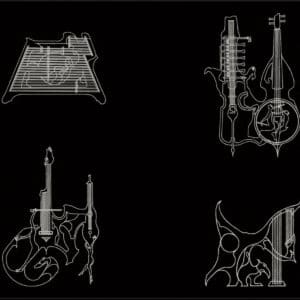
CD
MANINKARI
“L’océan rêve dans sa loisiveté – third session”
Maninkari's third session of L'océan rêve dans sa loisiveté.
All selections composed, improvised, recorded by Frédéric & Olivier Charlot : santoor, cimbalom, duduk, viola, synths, frame drums, percussions, cello, melodica, jaw, harp, voice, zither.
Claudie Ponget and Catherine Marmet : voice, drone
Drawings: Frédéric Charlot
9,00€
In stock
LP
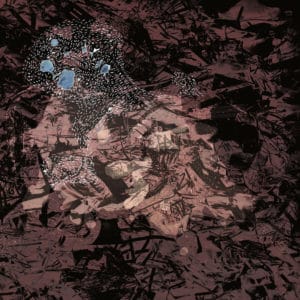
Giovanni Di DOMENICO
“Zuppa di pazienza”
Insalata Statica (Silent Water, 2017), Giovanni Di Domenico's first solo album, allowed the Italian pianist based in Brussels to free himself from his abundant creativity by proposing 6 dense movements. It took him 5 years to record and produce this first record. With Zuppa di pazienza, recorded and produced in 5 months, Di Domenico worked much faster, but the result is that these compositions are more thorough. Reduced to two, the movements are more refined, taking the time to develop around the main melody, which is repeated at leisure in a multitude of additional tracks, thus giving several faces of the same theme.
Recorded using numerous analog keyboards at the Klangendum/Worm studio in Rotterdam, Zuppa di pazienza is entirely played by Di Domenico. The filed recordings and overdubs were recorded in a second time, without listening to the original base of the music. Di Domenico then edited the whole thing. The result is a tingling of sound material around the main theme.
If Zuppa di pazienza is only Giovanni Di Domenico's second, he is no stranger. He is involved in many projects (Going, Eggstream, and many collaborations) and is a regular contributor to Jim O'Rourke with whom he has released Arco (Die Schachtel, 2015).
Zuppa di pazienza is his third collaboration with three:four records after his participation in the Denki Udon trio (In ZDB, three:four, 2015) and the Oba Loba sextet (Sir Robert Williams, three:four, 2017).
15,50€
Out of stock
LP
ELG
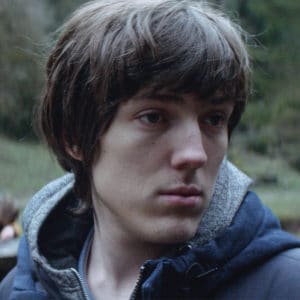
“Les particules”
Label notes :
"Since our first listening, we've been obsessed by the strange beauty of this small pop track that seems to be fallen on a dark hole. After having the chance to see the film before its screening at Cannes Festival' La Quinzaine des Réalisateurs, we decided to release this music. The LP comes in a beautiful gatefold sleeve designed by Coline Sunier and Charles Mazé.
Since 2004, Èlg, has drawn concentric sound spirals made of musical pipes and entrails. He builds improbable bridges between concrete music and french song debris, between cryptic electronic tribal incantations and russian doll dancing in Plutonia. When not in french, language is reduced to alien babble of an old man, a child, a dusty revenant, an epileptic bard, a peaceful messenger...
Èlg, is 1/2 Opéra Mort, 1/3 Orgue Agnès, 1/3 Reines d'Angleterre, 1/2 Schultz et Èlg."
15,50€
In stock
LP
Yvan ETIENNE
“Twist”
For Serge Modular and field recordings. French artist/activist Yvan Etienne, is engaged in research in the field of sound art. As a musician, he composes and plays pieces using electronic, phonography, analog synthesizers and the hurdy-gurdy. His sound art research questions the perception and physicality of sound spaces. Collaborations with Phill Niblock, Yann Gourdon, Richard Glover, Brice Jeannin, Patrice Grente, Robert Poss, Paul Panhuysen, Marie Verry, la novia, Perinne Bourel…
CD : Mastered by Yvan Etienne / LP : Mastered by Giuseppe Ielasi. Cut by Mike Grinser at Dubplates & Mastering, Berlin. Artwork by Gregory Weiss
Original price was: 18,00€.9,00€Current price is: 9,00€.
In stock

CD
Yvan ETIENNE
“Twist”
For Serge Modular and field recordings. French artist/activist Yvan Etienne, is engaged in research in the field of sound art. As a musician, he composes and plays pieces using electronic, phonography, analog synthesizers and the hurdy-gurdy. His sound art research questions the perception and physicality of sound spaces. Collaborations with Phill Niblock, Yann Gourdon, Richard Glover, Brice Jeannin, Patrice Grente, Robert Poss, Paul Panhuysen, Marie Verry, la novia, Perinne Bourel…
CD : Mastered by Yvan Etienne / LP : Mastered by Giuseppe Ielasi. Cut by Mike Grinser at Dubplates & Mastering, Berlin. Artwork by Gregory Weiss
10,00€