
In stock

2 LP
François J. BONNET & Stephen O’MALLEY
“Cylene”
First time outing from two ardent explorers of peripheral sound tactics. Cylene is the first collaboration by François J. Bonnet ( Kassel Jaeger) and Stephen O’Malley (Sunn O))) ). Laid bare we have a subtle and nuanced study of their individual practices forming a titanic whole. O’Malley’s guitar inscribes a void that patiently opens up a spacious universe for Bonnet to discreetly alter with perception re-orientating studio maneuvers.
Cylene is infinitely rewarding for those that succumb to its delicate detours. A vast glacial plain unfurls slowly upon the listener invoking a mood similar to the stillness found following despair. As Joseph Ghosn succinctly outlines in his liner notes, “Stephen and François deal in those moments and instants that happen after the violence, and the ugliness and the mess. Their music is about chaos being summoned and ordered. It is about the noise that nurtures your ears after a long heartbreaking pain. I have heard the sounds of wars being fought and the noises of hearts being broken, and I have never found a shelter as soothing as this music which makes me think of sunken ships and beauty found in the depths of oceans long forgotten”.
24,00€
Out of stock

CD
Eliane RADIGUE
“occam ocean vol.2”
Occam Ocean, for orchestra, 2015 (52:06)
Occam Ocean is a unique project, the result of two years of collaboration between Eliane Radigue, pioneer and emblematic figure of electronic music, and the musicians of ONCEIM (Orchestra of New Musical Creation, Experimentation and Improvisation). In the early 2000’s Eliane Radigue gives up her mythical ARP synthesizer to fully dedicate herself to the creation of instrumental pieces.
In 2013 when Frédéric Blondy invited her to collaborate with ONCEIM, she had mainly composed pieces for soloists or small ensembles of 2 or 3 musicians. She initially refused to do the piece for orchestra, the work seeming too enormous: « […] but Frédéric insisted, and I thank him for it. The orchestra is the most wonderful of instruments, its richness is unrivalled.»
ONCEIM directed by Frédéric Blondy with Pierre Cussac, accordion, Jean Dousteyssier, Jean-Brice Godet, Joris Rühl, Julien Pontvianne, Xavier Charles, clarinet, Benjamin Duboc, Fred Marty, Sébastien Beliah, contrabass, Jean Daufresne, Vianney Desplantes, euphonium, Giani Caserotto, Jean-Sébastien Mariage, Richard Comte, guitar, Akino Kamiya, Alvise Sinivia, Antonin Gerbal, percussions, Benjamin Dousteyssier, Bertrand Denzler, Carmen Lefrançois, Pierre-Antoine Badaroux, Stéphane Rives, Yoann Durant, saxophones, Alexis Persigan, trombone, Louis Laurain, trumpet, Robin Hayward, tuba, Charlotte Hug, Julia Robert, viola, Patricia Bosshard, violin, Anaïs Moreau, Félicie Bazelaire, cello.
18,50€
In stock
CD
Burkhard SCHLOTHAUER
“harmonies and structures”
« Nine – for John Cage » (2010) by Zeirkratzer with Reinhold Friedl (inside piano), Frank Gratkowski (bass clarinet), Hilary Jeffery (trombone), Hild Sofie Tafjord (horn), Burkhard Schlothauer (violin), Anton Lukoszevieze (cello), Ullrich Philipp (double bass), Marc Weiser (electric guitar), Christian Lillinger (percussion).
The well-known Zagreb music biennale, which has been a hotspot for contemporary music for more than 30 years, asked Reinhold Friedl, musical director of Zeitkratzer, to perform a program of late ensemble works by John Cage in 2010. Unfortunately, however, there are only a few works that could be performed with the full cast of Zeitkratzer. So i suggested that i would rewrite the non-existent number piece nine for Zeitkratzer. In my master thesis, i had thoroughly studied John Cage's number pieces, their compositional style - in particular seven, one of the first works in this series - and had already recorded and produced this composition in 2002 (EWR 0604).
« yo tampoco lo entiendo » (2019) with Burkhard Schlothauer (viola, sine-waves).
For the dance piece « Bewegte Bauhausbilder » at Theater Gera 2019.
« structures indépendantes » (2007) with Antoine Beuger (flute), Gudula Rosa (tenor recorder), Burkhard Schlothauer (viola), Thomas Stiegler (viola), Jürg Frey (clarinet), Eva-Maria Houben (indian harmonium), Christoph Nicolaus (stone harp), Tobias Liebezeit (timpani).
Delicately spotted tones of two identical instruments (flutes, violas) in symmetrical intervals meet two different sound surfaces - on the one hand unisons with more or less beatings (violas, flutes) of about 5 seconds each and on the other hand 3 minute long sound blocks of clarinet and harmonium. The distribution of the action spaces of the duos is independent of each other: while the meeting of the tones is organized completely geometrically, we experience it as somehow coincidental. In addition, there are blocks of time in which the tympani sometimes glissandize very slowly and thus irritate the sound surfaces above in a subtle way. The stone harp contributes very beautiful, clearly microtonally defined tones.
9,00€
Out of stock
2 CD
Eva-Maria HOUBEN
“ensemble works”
CD 1: Echo Fantasy I, IV & V
CD 2: Gesang XI, Unter Anderen
Performed by Ordinary Affects: Morgan Evans-Weiler (violin), Laura Cetilia (cello), J.p.a. Falzone (vibraphone/piano), Luke Martin (guitar) with Eva-Maria Houben (organ).
10,00€
Out of stock

CD
Jean-Philippe GROSS
“Reflex”
“Reflex” is a piece in 13 parts performed on a Serge analog modular synthesizer system between between 2013 and 2018 and edited in 2019.
Beyond the notion of a study, and far from being a demonstration, one could consider Reflex as a collection of sound situations (all with different durations) possible on such a modular synthesizer. For some history, this system dates from 1972, from the West Coast of the United States.
It's quite some time now that the modular synthesizer has come back into favour, but rare are the opportunities to listen to something apart from just drone or beats. With Jean-Philippe Gross, there is a willingness to get back to the fundamentals of electronic music, without falling into a sort of objective purity of the 1950S. His pieces have an animal side, all the sounds are alive, in their pulsations, their grain, their vibrations and frequencies, their stereophonic movement and of course their dynamics.
A liveliness that knows how to tickle our eardrums and will always surprise us at each new listening.
Originally a drummer, he has played in the field of electronics, experimental and improvised music since 2001. He is curently playing with Stéphane Garin (Dénombrement), Jean-Luc Guionnet (Angle), Jérôme Noetinger, Axel Dörner, Clare Cooper (Nevers), John Hegre.
Recent works included music for theater, dance and performances, as well as compositions, Cutting Lines for the ensemble Dedalus, and Sécante for the project Phonoscopie.
From october 2001 to june 2009 he was engaged as a music program curator for Fragment (Metz, France).
Eich is a new label created by musician and composer Jean-Philippe Gross to release his collaborations and solo work.
8,00€
In stock

CD
Jean-Philippe GROSS
“Curling”
“Curling” was composed in February 2018. This electroacoustic piece is based on a recording of a Curling match – a sport shown very late at night on public television channels and played on ice with granite stones, where the aim is to get them as close as possible to a circular target, using a sweeping motion with a brush. This sonic tableau becomes a scene from sound theatre, as mysterious as it is tense and disturbing, placed over an electronic layer which slowly evolves over the duration of the work. The principle is simple, and, as is often the case with a simple and great idea and the know-how that goes with it, it works. We are seized by this tension playing out before us - and apart from a certain number of aficionados – in total ignorance of the unfolding drama! Highly recommended.
Originally a drummer, he has played in the field of electronics, experimental and improvised music since 2001. He is curently playing with Stéphane Garin (Dénombrement), Jean-Luc Guionnet (Angle), Jérôme Noetinger, Axel Dörner, Clare Cooper (Nevers), John Hegre.
Recent works included music for theater, dance and performances, as well as compositions, Cutting Lines for the ensemble Dedalus, and Sécante for the project Phonoscopie.
From october 2001 to june 2009 he was engaged as a music program curator for Fragment (Metz, France).
Eich is a new label created by musician and composer Jean-Philippe Gross to release his collaborations and solo work.
8,00€
In stock

CD
R.P.M. (K. ROWE – C. POTTER – P. MOULDYCLIFF)
“Circle Line”
Circle Line initially started life as a graphic score created by Phil Mouldycliff as a piece to be played by Keith Rowe in 1989. Over a period of twelve years this open form composition developed to the point where by 2002 an opportunity arose to make a recording of the work at IC Studio in Preston, using ambient recordings taken from Circle Line Tube stations made specifically for the project by Phil and Colin Potter . Keith effectively solos over the assemble tape collage of sounds from the Underground, starting and finishing with material collected at Edgeware Road. Given that a full circuit of the Line takes upwards of fifty minutes, the individual stations are grouped together to create workable sections delineated by geographical boundaries. Since making the recording the work has been performed live by Rowe, Potter and Mouldycliff on a number of occasions.
12,00€
In stock

LP
COMPILATION
“Bidödaren”
With Unken Reflex, Joe Colley, Daniel Menche, Small Cruel Party, Tarab, BJNilsen, Toy Bizarre, Steve Roden.
"Bidödaren = Beekiller, approximately... In Swedish there is a double meaning; bi is the insect bee (in English), but also has the meaning of something like a "side-effect".
Like if the killing of bees is just something being done beside doing something else. (Leif Elggren)"
Limited to 200 copies.
18,00€
In stock
CD
Massimo TONIUTTI
“Cava xi.xi.86”
Cava xi.xi.86 was a concept album split into two parts, side 1 formerly called gravi tracks 1-4 and side 2 le ghiaie tracks 5-7.
Mixed at the stanza delle uova (1987) using a (4+4) multi-track system.
Two more compositions have been added to this reissue:
Track 8 (cube version of gravi) and track 9 (with a little help from l'orchestra dei becchi di Fuji), both of them using '86/'87 archive sessions, re-worked and digitally mixed at my ground floor studio (2019).
Re-mastered from the original tapes.
All material recorded from November 1986 to April 1987 at the laboratory and its surroundings.
Sound sources : clothes horse, metal ladders, pipes, welded wire mesh, railing, metal cans, occluders, muffles, clamps, springs, mandrels, drill bits, wrenches, hacksaws and unidentified objects; processed field recordings, via sistiana's hammers ad venetian blinds, and trains; hi & lo-fi speakers and microphones, handheld cassette players and recorders.
10,50€
Out of stock

LP
Jerzy MAZZOLL and Jerzy PRZEZDZIECKI
“Melodnie”
Jerzy Mazzoll is a key figure of polish music over last twenty years. He is a bass clarinet virtuoso that goes deep into the tradition of Polish improvisers and contemporary music composers of the mid-twentieth century. He played in many bands such as Arhythmic Perfection, Pieces of Brain, Mazzoll & Arhythmic Memory. He cooperated, among others with musicians such as Roscoe Mitchell, Greg Fox, Django Bates, Peter Brotzmann, Jon Dobie, Alfred Harth, Peter Kowald, Vytutas Labutis, Jeffrrey Morgan, Tony Oxley, Olga Szwajgier and Tomasz Stańko,
Jerzy Przeździecki is an electronics producer. He successfully performs at contemporary music festivals such as Warsaw Autumn or in clubs presenting techno music. Music has no limits for him. He cooperates with pianist Andrzej Karałow but also with other electronic music producers such as Jacek Sienkiewicz (Tumult Hands). Recently, performing improvised music in duets with virtuoso of classical instruments, he significantly reduces his impressive music setup by limiting itself to simple sound generators. He stays away from the beaten formulas and surprises with his sound. The most important thing for him is improvisation, from which the essence of the musical structure emerges.
Artistic experiences of these two made up the template for this kind of music , which is governed by its own rules and uses all possible means to achieve a goal.
On Melodnie their sound is firmly anchored in the aesthetics of contemporary compositions, free or noise.
16,50€
In stock

CD
TRIGGER + Jérôme NOETINGER
“Camera Obscura”
Trigger is an acoustic wind instrument trio working in the context of experimental music. Together they aim for the creation and shaping of a homogenous overall sound. The three instruments function as generators of noise and sound and blend together in a complex sound mass, which is permanently moving, changing and renewed. By using advanced playing techniques such as circular breathing, multiphonics and a vast palette of air sounds the instruments are removed from their traditional context and resemble electro acoustic sound sources, which interact by imitating and contrasting with the specifically use of timbre, density and dynamic. The players react to each other immediately, allowing fast changing sound constellations with a compositional awareness for structure and duration.
Nils Ostendorf | trumpet
Matthias Müller | trombone
Chris Heenan | contrabass clarinet
Jérôme Noetinger | Revox tape recorder
Recorded december 14th 2014 at NK Berlin. Editing: Nils Ostendorf. Mixing and Mastering: Werner Dafeldecker
10,00€
Out of stock

LP
Caterina BARBIERI
“Ecstatic Computation”
*** Back in stock ***
Caterina Barbieri is an Italian composer who explores themes related to machine intelligence and object oriented perception in sound through a focus on minimalism.
Following 2017’s acclaimed 2LP “Patterns of Consciousness”, “Ecstatic Computation” is the new full-length LP by Caterina Barbieri. The album revolves around the creative use of complex sequencing techniques and pattern-based operations to explore the artefacts of human perception and memory processes by ultimately inducing a sense of ecstasy and contemplation. Computation is turned from being a formal, automatic writing technique into a creative, psychedelic practice to generate temporal hallucinations. A state of trance and wonder where the perception of time is distorted and challenged.
Equally nervous and ecstatic, the fast permutation of patterns can create a state where time stands still whilst simultaneously being in motion. Is this propulsive music moving forward or backward? As long as the perception of the present is constantly enhanced and refreshed
in an endless sense of loss, re-discovery and the search for self-orientation this question lies mute aside the thrilling and perplexing moment of the matter at hand.
19,00€
Out of stock

CD
Hélène BRESCHAND plays Éliane RADIGUE and Kasper T. TOEPLITZ
“Octopus”
Hélène Breschand (harp) plays :
- Occam Ocean XVI, composed by Eliane Radigue (27:12)
- Convergence, Saturation & Dissolution, composed by Kasper T. Toeplitz (26:23)
11,00€
Out of stock
2 LP
TWO DAUGHTERS
“Two Daughters Recordings 1979-1981”
Two Daughters were recording in Brixton around 1980-1982 and were closely connected to the Industrial Records and Throbbing Gristle Gang. They recorded a debut tape called Ladder of Souls released on their own „Methane Music“ in 1980 Their one and only Lp Kiss The Cloth / Gloria was released in 1981 on Anthony & Paul Records, a sub-division of United Dairies Records, the label run by Stephen Stapleton of Nurse with Wound. The Lp then also got reissued on United Dairies in 1987 as UDT026 Two Daughters have also appeared on two other releases. A substantially edited version of 'Return Calls - We Are' can be found on the Cherry Red compilation, "Perspectives and Distortion". The music and ist unique percussion-driven style of ambient & experimental in the vein of bands like O Yuki Conjugate still holds the test of time. Anthony passed away in 2004.
30,00€
In stock

LP
Kayo MAKINO & Tori KUDO
“Ein Traum Für Dich”
Black Truffle announce the release of this genuine head-scratcher, the first collaboration between DJ/mixtape-compiler Kayo Makino and underground legend Tori Kudo. Originally created to be played between acts at the launch of Eiko Ishibashi‘s acclaimed The Dreams My Bones Dream (2018) and then reworked and refined for LP release, the two side-long pieces are sonic environments constructed by Makino for Kudo’s piano to inhabit, or, as the LP’s credits suggest, a “cinéma pour l’oreille” in which Kudo’s piano plays the starring role.
Beginning with a soothing field recording of crickets dramatically punctuated by smashing glass, the first side finds Kudo playing his way repeatedly through one of Satie‘s 1897 Pièces froides. Best known to many listeners for his role as leader of the ecstatically shambolic rock unit Maher Shalal Hash Baz, Kudo’s performance of Satie’s whimsical yet haunting melody is alternately halting and fluid, delighting in the hesitations of unstudied technique and the subtle variations between repeated attempts. While the combination of Kudo’s piano and the background of crickets initially suggests a documentary approach to recording — as if the you are simply hearing incidental sounds creeping through an open window — things take an unexpected turn a few minutes in when Kudo’s piano is suddenly doubled. Layering two separate attempts at the same piece of top of each other, Makino’s unorthodox mixing blurs Satie’s original into a fog of stumbling echoes that becomes increasingly dreamlike as the chirping crickets are overtaken by pattering rain, German dialogue and traffic sounds.
The second side begins in a similarly inscrutable vein, with snatches of birds and film music providing a gentle backdrop for Kudo’s improvisational variations on a chord progression that, as his performance builds over its twenty-minute duration, somehow begins to suggest the sadly swaggering grandeur of Mick Taylor-era Rolling Stones. Makino accompanies and eventually overwhelms Kudo’s piano with a bizarre layer of digitally processed voice and drums, stretched out into a disorienting haze before suddenly retreating to leave Kudo’s piano accompanied only by a barking dog. Seemingly unrelated to anything else being produced in the world of contemporary music, this is a striking collaboration between two unique musical personalities that bridges the mundane and the surreal, opening up a dream-space both haunted and hospitable.
Cover design by Lasse Marhaug. Mastered by Jim O’Rourke at Steamroom, Japan. Vinyl cut by Rashed Becker at Dubplates & Mastering, Berlin.
21,00€
In stock
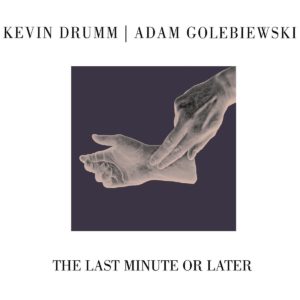
CD
Kevin DRUMM – Adam GOLEBIEWSKI
“The Last Minute Or Later”
Kevin Drumm – electronics
Adam Golebiewski – drums, percussion, objects
All music by Kevin Drumm and Adam Golebiewski.
Recorded at LAS club – no audience – on 18th September 2016 by Maciej Maciągowski.
Mixed and mastered by Lasse Marhaug.
12,00€
Out of stock
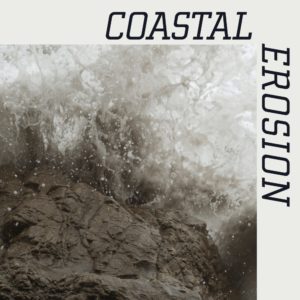
LP
MERZBOW & VANITY PRODUCTIONS
“Coastal erosion”
On their riveting debut collaboration, Merzbow (Masami Akita) and Vanity Productions (Christian Stadsgaard) transmute worries about ecological disaster into a torrent of spirit-gnawing, experimental noise that surpasses the sum of its parts
Both hailing from places with a lot of coastline vulnerable to sea level rises, Masami Akita from Japan, and Stadsgaard in Denmark, ‘Coastal Erosion’ sees them grasp the nettle of impending doom with typically gauntleted grip and an unswerving intensity that speaks to clear and present concerns. While perhaps not the most obvious bedfellows for collaboration, the artists patently share an emphatic empathy for the situation that resonates through their music, where human forces of emotion intersect elemental chaos in a pair of poetically tempestuous, even harrowing works.
Merzbow’s visceral, primal roar sustains a perpetual force of attrition that constantly threatens to overwhelm VP’s widescreen, panoramic pads on both of the LP’s monolithic tracts. But it’s due to their democracy of vision that they speak as one, rather than over each other. In the A-side’s 18 minutes of ‘Erosion Japan’ they connote the frothing might of the Pacific tide encroaching and destroying towering walls of steel and glass with an arrestingly Ballardian quality to their instrumental description of violence and anguish. The B-side’s 17 minute ‘Erosion of Denmark’ follows with a more pensive arrangement of low-lying, unyielding drone frequencies smeared to stereo extremes and overlapped with spirit-penetrating shards of distortion, limning the prospective submergence of the Danish peninsula and its archipelagoes with a Thunbergian seriousness and intractable logic.
Taken as a profound warning or as an elegy for anthropocene extinction, ‘Coastal Erosion’ is a frighteningly powerful statement that leaves its message like the murky stain of flood waters inside the mind.
300 copies, clear vinyl.
20,00€
Out of stock
2 LP
Felicia ATKINSON
“The Flower And The Vessel”
Félicia Atkinson has frequently fixated on the elusive interwoven relationship between microcosms and macrocosms – how even the quietest creative act ripples outward in unforeseen ways, a whisper with no fixed meaning. Her latest work pursues this notion in a more literal and lasting fashion, as it was crafted while pregnant on tour, in impersonal hotel rooms in foreign cities. She describes it as “a record not about being pregnant but a record made with pregnancy.” Each day and night, finding herself far from home, she asked herself “What am I doing here? How can I connect myself to the world?” The answer gradually revealed itself: “With small gestures: recording my voice, recording birds, a simple melody.”
The album’s 11 songs span a vast pantheon of whispering textures, opaque moods, and surreal spoken word, leading the listener through a mirrored hall of beguiling mirages. Atkinson cites a trio of French classical compositions from her childhood as formative influences on this particular collection: Maurice Ravel’s “L’enfant et les sortilèges”, Debussy’s “La Mer” and Erik Satie’s “Gymnopédies”. There’s certainly a shade of classicism woven within these tracks, however veiled, abstracted, or unorthodox. Melancholic piano motifs repeat then retreat into a radiant frost of shivering frequencies; processed voices recite cut-up poems and interviews over delay-refracted Rhodes and Wurlitzer;
Although much of Atkinson’s past discography is shaped by speech and the lyricism of language, The Flower & The Vessel ventures farther into silence, absence, and voiceless wilderness. Here Atkinson’s synergy feels close to apotheosis, emotive but ambivalent, a ceremony of expectation and invisible forces. The 19-minute closing collaboration with SUNN O))) guitarist Stephen O’Malley, “Des Pierres,” is one of the album’s few pieces tracked in a proper studio (Music Unit in Montreuil, France) but it broods and burns with the same subliminal majesty as the rest of the album: an ember in amber, seeds planted in shifting sands. Atkinson’s voice flickers like a flame, framed by slabs of shadowy feedback. Her process may be personal is but its impact ripples to the edges of existence.
29,00€
Out of stock
CD
Felicia ATKINSON
“The Flower And The Vessel”
Félicia Atkinson has frequently fixated on the elusive interwoven relationship between microcosms and macrocosms – how even the quietest creative act ripples outward in unforeseen ways, a whisper with no fixed meaning. Her latest work pursues this notion in a more literal and lasting fashion, as it was crafted while pregnant on tour, in impersonal hotel rooms in foreign cities. She describes it as “a record not about being pregnant but a record made with pregnancy.” Each day and night, finding herself far from home, she asked herself “What am I doing here? How can I connect myself to the world?” The answer gradually revealed itself: “With small gestures: recording my voice, recording birds, a simple melody.”
The album’s 11 songs span a vast pantheon of whispering textures, opaque moods, and surreal spoken word, leading the listener through a mirrored hall of beguiling mirages. Atkinson cites a trio of French classical compositions from her childhood as formative influences on this particular collection: Maurice Ravel’s “L’enfant et les sortilèges”, Debussy’s “La Mer” and Erik Satie’s “Gymnopédies”. There’s certainly a shade of classicism woven within these tracks, however veiled, abstracted, or unorthodox. Melancholic piano motifs repeat then retreat into a radiant frost of shivering frequencies; processed voices recite cut-up poems and interviews over delay-refracted Rhodes and Wurlitzer;
Although much of Atkinson’s past discography is shaped by speech and the lyricism of language, The Flower & The Vessel ventures farther into silence, absence, and voiceless wilderness. Here Atkinson’s synergy feels close to apotheosis, emotive but ambivalent, a ceremony of expectation and invisible forces. The 19-minute closing collaboration with SUNN O))) guitarist Stephen O’Malley, “Des Pierres,” is one of the album’s few pieces tracked in a proper studio (Music Unit in Montreuil, France) but it broods and burns with the same subliminal majesty as the rest of the album: an ember in amber, seeds planted in shifting sands. Atkinson’s voice flickers like a flame, framed by slabs of shadowy feedback. Her process may be personal is but its impact ripples to the edges of existence.
15,50€
In stock

LP
SINS FOR BEGINNERS
“Fireburn the Bloodlot”
‘Fireburn the Bloodlot’ commits crenellated walls of guitar noise by CM Von Hausswolff and Joachim Nordwall under their Sins For Beginners alias for avant-garde powerhouse, iDEAL
Mantled after a phrase Richard Kern graffitied on the bathroom wall of Hausswolff’s Lower East Side apartment in the late ‘80s, ‘Fireburn the Bloodlot’ dispatches a pair of unrelenting and incendiary exercises in amp worship and FX-mutilated electric guitars - which is perhaps not what one might expect from these masters of the oscillator.
Unflinchingly recorded by Linus Andersson (Goat, The Skull Defekts, The Leather Nun), the music surely warrants comparisons with Glenn Branca’s massed armies of strings, or Sunn 0))) at their crankiest, but it’s simply a swaggering swell of pure, white hot evil destined to get under the skin of fans of all kinds of extreme metal, drone and noise.
Original price was: 18,00€.10,00€Current price is: 10,00€.
In stock

LP
ZEITKRATZER
“performs songs from Kraftwerk 2 and Kraftwerk”
2nd volume of "modern composition supergroup" (The Wire) Zeitkratzer's re-interpretations of early compositions by electronic pioneers Kraftwerk.
In more than two decades Zeitkratzer has created an astonishing broad catalogue from the obligatory (20th century avant-garde composers like Cage or Stockhausen) to the unexpected (electronic artists such as Carsten Nicolai, Terre Thaemlitz or underground experimentalists like Throbbing Gristle and Keiji Haino) – but hardly anyone was prepared for the ensemble’s choice of early Kraftwerk pieces! When volume 1 was released in 2017, Zeitkratzer founder and director Reinhold Friedl announced that there'll be a volume 2 of course – and here it is : from the opening drony horns of "Harmonika" to the subtle guitar of the album closer "Wellenlänge", the 4 tracks own all the interpretatory and aesthetic acerbity the ensemble is known and praised for.
19,00€
In stock

CD
Hans-Jürg MEIER
“colours de la rose . presso il passo di cristallina . diaphanés”
Colours de la rose (2001) for flute, oboe, saxophone. A work in nine parts contrasting the music by Guillaume de Machaut.
Presso il passo di cristallina (1993) for 2 recorders. "the piece was preceded by the real experience of surprising silence just before crossing the Passo di Cristallina" (Hans Jürg Meier)
Diaphanés (durchscheinend), 2015, for three baroque transverse flutes and percussion. Music to Santo Stefano in Rotondo in Rome, the musical sensation while entering the room and its architectonical athmosphere.
In Hans-Jürg Meier's music, translations from architecture have become increasingly meaningful.
On the one hand, in both art forms, the power of imagination is of fundamental importance.
On the other, both work with holistic formal inventions that unfold in time or/and in space.
Endeavouring to make physically tangible the sensual qualities of the musical material (tones, intervals, texture), his compositions are committed to exploring the interaction of nature, form and beauty.
Original price was: 9,00€.5,00€Current price is: 5,00€.
In stock
CD
Antoine BEUGER
“… of being numerous”
“... of being numerous” for us opened up a space in which to affirm this tension, this challenge of being (singular and) numerous. In the name of this practice we left the subject of the preposition open to allow numerous possibilities to resonate: the challenge, the joy, the danger, the fragility, the grace, the condition, the difficulty, the meaning, the reality, the roots, the boun- daries, the promise, ..., ..., ... of being numerous.
Performing “... of being numerous” we would try to be as detached, as much by ourselves, as possible. we would all be involved in the same kind of things: playing a “phrase” (some “phrases”) with some mostly longish, quiet sounds; articulate a slow, but regular pulse with 2 little stones; reading some words, or syllables or letters from a poem one brought or knew by heart (just to oneself); humming a melody, so quietly, that maybe only oneself would hear it; making a very soft, continuous, spectrally complex frictional sound (paper on paper, stone on stone, paper on wood, finger on skin, ...); moving dry leaves from one bowl to another, trying to make no sounds; etc.; or just being silent, listening inward rather than outward.
Colectivo maDam: David Area (synthesizer, voice and objects), Joan Espasa (bass clarinet, voice and stones), Tomás Gris (melodica, voice and objects), Rubén (sinewaves, voice and objects), Víctor (singing bowls, voice and objects), Guillermo Torres (flugelhorn, voice and stones)
Guest: Antoine Beuger (flute, voice and objects)
9,00€
Out of stock
CD
Benjamin NELSON
“Miniatures”
Miniatures was recorded between 2016 and 2018 in Oslo and Vienna.
It is a collection of short electronic sound objects, situations, landscapes, or puzzles.
300 copies
12,00€
In stock

CD
Emiliano ROMANELLI
“Untitled (9 patterns)”
Music for acoustic guitar and four cassette players.
300 copies
12,00€
In stock

CD
Francisco LÓPEZ
“Untitled #370”
New solo full-length album by the master of sonic virtuality and ‘sonogenic composition’. An epic work; cryptic, dark, multiform, ineffable and (in the artist’s own words) ‘proudly monomedia’. [Pedro Higueras]
Created at ‘mobile messor’ (Tórshavn, Den Haag, Medellín, Luxembourg) and ‘Dune Studio’ (Loosduinen), 2018-2019. Piece commissioned by CC Conde Duque (Madrid).
13,50€
In stock

LP
TO LIVE AND SHAVE IN L.A.
“Spatters of a Royal Sperm”
« Twenty-Four years ago back in 1994 the first To Live and Shave in L.A. CD 30-Minuten Männercreme was released. Jim Magas, the indie buyer at the local Ann Arbor Borders Books and Music convinced myself and pal Andrew W.K. to buy it...telling us that it's some of the most fucked up music we would ever hear. He wasn't wrong, it blew our teenage minds....we had NEVER heard ANYTHING that sounded like this...and it remains one of the most influential music releases of my life. It was and is one of the most psychedelic things I've ever heard. It was a maximalist blast of pause-button tape "loops", doubled up rock crooner vocals, noise guitar blasts (supplied by Harry Pussy's Bill Orcutt), recorded and mixed with mind scrambling hi-fi clarity, by Tom and long time Miami underground music beacon Frank Falestra aka Rat Bastard.
Before that monumental album was recorded, TLASILA's main man Tom Smith had recorded 4 songs to be released as a 7 inch back in 1992. The label, afraid of the new name wanted to release the record under Tom's previous moniker 'Peach Of Immortality'. This wouldn't do as it was a new beast all of it's own. Alas, the release was shelved... until now.
The Side A of this LP contains the complete unleaded 4 song 7 inch, recorded by Tom in his very first of many projects with longtime collaborator Rat Bastard. Tape loops of dollar bin garbage reworked into disorienting alien rock music with freak-pop hooks. I challenge you to find me another recording project as freaked out and unlike anything as this. Go for it! No hyperbole...This is the unheard blueprint recordings of one of the most creative projects in the history of underground music.
The B-side of this LP is unreleased dub experiments Tom was doing through the years 1977 - 1980 and available only on this vinyl, and not available with the digital download. » Aaron Dilloway, May 2019
250 copies
For Fans Of: Harry Pussy, Sonic Youth, early Severed Heads, TheHanatarashi, Aaron Dilloway, Evil Moisture, Tod Dockstader, J Dilla, Giorgio Moroder, Public Image Ltd, Pussy Galore, Death Mix-era Bambaataa, Doris Wishman, and Captain Beefheart.
18,00€
In stock
CD
Francisco MEIRINO
“Three Realizations for Ensembles”
Three compositions written by Francisco Meirino for ensembles.
Utilizing pitch and timbre of traditional acoustic instruments Meirino’s unique compositional voice speaks out. Guiding the listener through tension and decompression, unease and malaise.
Performed with Ensemble Vortex and Ensemble Phoenix Basel.
Recorded 2016-2019.
12,00€
In stock
CD
Paul DEMARINIS
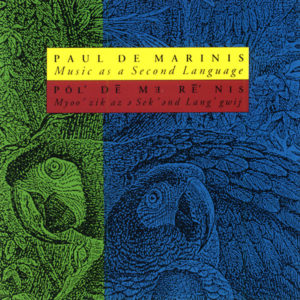
“Music as a second language”
***2019 repres***
Paul De Marinis : performer-electronics. “Speech melodies extracted from sources as various as language instruction recordings, hypnotists and televangelists are resynthesized and applied to digital musical instruments, becoming eerily beautiful, "the singing of voices more ancient than language.”
15,00€
Out of stock

LP
CITY OF WOMEN
II
Jimi Tenor and a group of friends visited twice at Edward Vesala's unique home (Sound and Fury Studio) in Korkeakoski in southwest Finland. It was winter 1998.
Matti Knaapi and Jimi Tenor have been designing and building instruments since early 80s. They brought vanful of apparatus to Sound and Fury which already had a large collection of Vesala's exotic and self built instruments.
During the two rather extreme sessions 13 songs got finished. The first part was released in year 2000. Sadly Edward Vesala passed away before the first part City of Women I was released.
Now after 20 years of calming down we are ready to evoke the second part of the sessions.
City of Woman is Edward Vesala, drums, vocals, instruments - Jimi Tenor, flute, instruments - Iro Haarla, harp - Jimi Sumen, programming - Matti Knaapi, instrument design and construction
Original price was: 14,00€.9,00€Current price is: 9,00€.
Out of stock

CD
CYANOBACTERIA & HÜBSCH
“Are You an Orchid or a Dandelion ?”
"Here's a duo called Cyanobacteria, consisting of Francesco Gregoretti (drums) and Renato Gricco (double bass), teaming up one day in September 2016 with Carl Ludwig Hübsch, a well-known improviser playing the tuba. The duo has a similar background, even when I only heard of Gregoretti before. The five tracks span fifty-two minutes and form an on-going exploration of ideas, textures and all of that within the world of improvisation. It is a meeting of like-minded people, with one foot in a more traditional field of the genre and one firmly planted in something newer. You can recognize each of the instruments pretty easily here, in all of these pieces, but at times they also sound like something completely different; especially the tuba has a dual role in this. Unlike some of the other releases on Toxo Records, this isn't as loud and noisy but with amplification and feedback, there are occasional hints towards that. There is some fine interaction between the players, leaving room for the other to act and react, and none of the players seems to downplay their own role in the overall sound. It is most of the time the sum of three equal parts playing the music and throughout it works very fine. It is mostly an intense listening experience, which doesn't allow any loss of concentration. Not on behalf of the players, nor the listeners." Vital Weekly
9,00€
Out of stock

LP
COMPILATION
“Albania, There Where the Avalanche Stops”
"For one week in every five years, two thousand singers, dancers and musicians along with fifty thousand spectators make their way to the small town of Gjirokastra in southern Albania for the Festivali Folkloric Kombelar. In the great castle overlooking the town, they participate in the incredible National Folk Festival of Albania, hoping to attain the highest level of interpretation and win one of the many awards available the festival… the banner, even.
Considering the comparatively small size of the country (just over three million inhabitants) the range of instruments, styles and costumes seen at the festival is exceptional, sustaining a folk tradition that dates back to ancient Illyria.
The works presented here in volume one are all live recordings made at the Gjirokastra Festival, taken from six of the 26 participating districts: Vlora, Gjirokastra and Lorca from the south, and Shkodra, Debra and Tropoja from the north (see map).
The original compact disc, released in 1990, was a collaboration between The Institute of Popular Culture, Tirana, The Albanian Shop Ltd. and Touch.
Edited from the original 1/4” tapes, mastered and produced by Touch"
15,00€