
In stock

CD
Werner DAFELDECKER
“Neural”
A Note From Werner Dafeldecker
For whatever reason, I have always found the idea of using alien material as the structuring element of an artistic process exciting. That doesn’t mean the elements always stay, but rather I often remove them right at the end of the creative process. This working method creates areas of tension that reflect the artistic process on a different emotional level. It reduces the sense of creation and moves more toward accomplishment. This method applies to both pieces of this phonogram in a similar way.
„Neural“ places sound surfaces as its central focus and is inspired by the idea that neural networks develop a memory when they repeatedly send information. The ensemble focuses on vibrations and rhythmic variations of the overtones, which are caused by dynamics and pitch shifts in the microtonal range. With the passage of time and performance practice, spherical, acoustic stamps become established, caused by the conscious perception of when rhythm changes into sound sensation and vice versa.
For „Tape 231“ I re-discovered a long-forgotten music cassette in my archive which contained peculiar percussive electronic sounds.
As Lucio and I worked on the recordings of his elongated tones and multi-phonics I again was drawn to the idea to use the tape sounds primarily as a structuring element for the piece, (time, density, dynamics) only to be left out afterwards.
The targeted handling of hidden structures evokes a somewhat stubborn emotionality when dealing with creative processes, I like that.
NEURAL
Nicholas Bussmann - cello
Werner Dafeldecker - double bass
Judith Hamann - cello
John Heilbron - double bass
TAPE 231
Lucio Capece - bass clarinet
Werner Dafeldecker - electronic
Wolfgang Seidl - gongs
14,00€
In stock

LP
Francesco FABRIS & Ben FROST
“Vakning”
A Note from Lawrence English on Vakning
Nothing is fixed, nothing is permanent, nothing holds for anyone, any time or anything.
As stable as we might choose to think it is, this planet is anything but that. A paper thin crust, the zone in which we find ourselves, and mostly concern ourselves with, exists as a modest veil cloaking a dynamic seismic turbulence that is as powerful as it is unknowable.
There are moments though where ruptures occur. The pressure from within carves its way to, and through, the surface of the planet simultaneously delivering destruction and virgin landscapes, as primordial as any we might care to imagine. It is here, in these places, where we can literally see the living planet, that geologic time is condensed and world building is made visible, and audible to us, in an unrestrained and provocative detail.
These volcanic ruptures, such as those captured on Vakning by Francesco Fabris and Ben Frost, speak to the very living geology of Earth. These recordings, captured at close range, exist at a nexus where liquid rock becomes solid. They capture moments of transformation, of obliteration and of creation, often all at once.
These are recordings of a living, material planet, dynamic and unrestrained.
24,00€
Out of stock

CD
Mike COOPER
“Black Flamingo”
Collaboration, improvisation, innovation.
The remit for Black Flamingo.
During the Covid lockdown period I started on line long distance collaborations with a team of friends and made Oceans Of Milk and Treacle for Room40.
A family of long time associates plus some more recent and one that I have never met in person. All of them with a unique ability to respond creatively, in any genre or context, in a creative, spontaneous and improvised manner.
Featuring Geoff Hawkins on tenor sax. Our 60 year friendship goes back to the 1960s and my first band The Blues Committee then on through the 1970s to Trout Steel and the Machine Gun Company on the Dawn label meeting up again in the mid 1990s on my Island Songs c.d. and more recently on Oceans Of Milk and Treacle on Room40.
His son Aaron Hawkins who I have known since he was born, is now a prominent figure on the Bristol music scene in the UK joins us on tenor saxophone as well.
Elliott Sharp, guitarist, composer, improviser from the Downtown New York music scene. We first played together in Rome many years ago. We have a duo digital collection on my Bandcamp site and here on Black Flamingo Elliott plays bass clarinet.
Jon Raskin, a founder member of The Rova saxophone quartet based in California surprised me one night in London by appearing in the audience at a folk club concert I gave. We also have a duo collection together on my Bandcamp site.
Scot Ray, slidationist; lap steel and pedal steel guitar visionary. We have never met in the real(?) world, only on line. I am always seeking audacious players of both those instruments and Scot is a true star. Check out his own solo and other projects.
Michael Thieke, a fellow part time Roman part time Berliner member of the International Nothing (great name) brings peace on the clarinet with breathy playing on this most beautiful of wind instruments.
Viv Corringham has shared her voice on many past musical roads with me from Greek Rembetronika to an improvising trio with Lol Coxhill and Soundwalks in hills around Hong Kong.
Tim Hill on Baritone sax. We go back to my 1980’s in Reading in the UK. Together we had Beating Time with Paul Burwell on drums and Gary Jones on bass, both sadly gone now and Mayhem Quartet with Pat Thomas on keys and Neil Palmer our improvising dj both happily still with us. Then we started Trystero System which became a floating membership duo spanning several years and has included both Viv Corringham and Pat Thomas with myself and continues from time to time.
Lastly The Migrant School of Bodies Choir was the result of a workshop in Milan for a performance/dance piece organised by choreographer/dancer Ariella Vidach. The text is each member counting from one to 26 in their own language each one starting to count after the neighbour had reached the number eight . Most of the members were from Africa and shared no common African language. The rhythmic and tonal variations set up an interesting shingling effect with the voices tumbling over one another.
14,00€
In stock
LP
PRIMITIVE MOTION
“Portrait Of An Atmosphere”
A Note From Leighton Craig
Portrait of an Atmosphere was recorded with the intention of crafting a long duration work of constituent parts; a suite of related compositions to be listened to as a singular narrative. It focuses on acoustic elements to achieve the kind of sound immersion that is central to our practice, without using the typical palette of reverb and delay. It is rewarding for us, that in the absence of these tools, it still enters the dream-float realm, attaining that sense of something 'other'. It is at once the least and most Primitive Motion-sounding album to date.
The title of the album has been taken from one of Sandra's cut-poems, an ongoing series of work where she reduces/cuts the text on the page of a found book to arrive at a poetic denouement. In this context it seems fitting that some recordings on the album also have the sense of being cut together, although perhaps more as collage than reduction. Most obviously Portrait IV joins a piano track with fragments of studio improvisation, a drifting fog that finally clears by restating the single-string guitar motif of Portrait I. The beginning at the end; mirror in a mirror.
The final track on the album, Trenches of Time (another cut-poem title), sits outside the Portrait suite but shares the same path of call and response intra-studio exchanges and acoustic intervention. But this album is more than a recording project. It represents the ongoing thread of non-verbal conversation that passes between sound makers, and has been exchanged between these band members for over a decade, captured here in an evolving dialect. It's a peculiar language that can be understood through the bowing of a cymbal and the wheezing of a reed organ. It's this conversation that is the joy and otherness of making music.
Recorded and produced by Primitive Motion between 2018 and 2020 at Kindling House and Woodburn Laboratory, Meanjin/Brisbane, Australia.
Sandra Selig: voice, handclap, flute, cymbals, melodica, radio, saxophone, glass bowl, drums, marble in bamboo, zither, wind chimes, bowed cymbal.
Leighton Craig: acoustic guitar, reed organ, cymbals, field recordings (Kyoto Japan), tremolo guitar, miniature saxophone, voice, piano, metal stool, bird call, synthesiser, wind chimes, shaker, timber box.
24,00€
In stock

CD
Matt RÖSNER
“Empty, Expanding, Collapsing”
Empty, Expanding, Collapsing was recorded in the months after the release of 2021’s No Lasting Form. Whilst No Lasting Form documented a return to the creative process after a long period away, Empty, Expanding, Collapsing comes from a more confident and assured place.
At the heart of this record is an upright piano, loaned from a dear friend for safe keeping. Built in the 1898, the piano is heavy, laden with time, a resonant lead sound board and the carefully restored hammers and strings.
These pieces started as loose piano improvisations played in the early morning light to be later assembled alongside an array of guitars, electronics, synthesisers and percussion. Whilst the basis of the tracks started as tentative improvisations, the overdubbed parts were very much painstakingly written, rewritten and aged with sounds of the surrounding dune systems seeping through the wafer thin studio walls.
- Matt, December 2022
14,00€
In stock

CD
Bill SEAMAN and Stephen VITIELLO
“The Clear Distance”
From Bill Seaman
I got a note from Stephen. As the consummate archiver he had inherited a tape of an interview with me in 1985 done with Kevin Concannon, in particular about my music production. He points out that in it I mention “a device called a digital delay” that I had been exploring. A Deltalab Effectron II Digital Delay, which let you make little short 1 second loops and manually inject other sounds among other things – nice kind of kluge aesthetic. We knew each other through Electronic Arts Intermix where Stephen worked for some time. I had started out as a Video Artist exploring Image/Music /text relations.
I had liked Stephen’s work in the past with Molly Berg called “Between You and the Shapes You Take.” I also enjoyed “Captiva” with Taylor Deupree. More recently I had started a collaboration with Michael Grigoni (who lives here in Durham, NC) that was put on pause due to his course schedule. Stephen sent me his lovely album with Grigoni – “Slow Machines.” So I wrote Stephen a note and asked “Would love to collaborate with you if you ever feel like it!” and he responded “Sure, I'd be happy to work on something together. Let me know what you're thinking - or when something feels like a time and idea to start. I can generate some material and send it your way, or just as happy if you want to send me something.” He sent me some things.
I had just completed working with a very good recording engineer on some new piano recordings, which I edited into short sample libraries, which I in turn sent to him. I often use these to build up my tracks in a very physical manner in Ableton live, often exploring chance relations and juxtapositions, then choosing what I feel “works”. Later I sent him some other things – DX7 and analogue synth.
We started working on both our own linear tracks with the materials and others, and also exploring the re-arrangement of each other’s work samples juxtaposed with some other parts of the library of materials. Stephen also began to include some found sound that was quite lovely.
I was hoping he might convince Molly Berg to contribute – I really love her sound.
Stephen sent me acoustic guitar, some ebow which I love, and some experimental abstraction of guitar. Later he sent some tracks with Molly on them. We both went at the material and did a series of back and forths. Stephen arranged some of my Piano samples into a lovely repetitive long work which is the center of our digital release. I went back in and further arranged the arrangement and added some new layers. Stephen added Banjo in one case to the album material…in any event we seemed to find a good method of sending, experimenting and responding to each other – then moving forward with the best of those digital volleys.
14,00€
Out of stock
CD, Book
Philip SAMARTZIS
“Atmospheres And Disturbances”
From Philip Samartzis
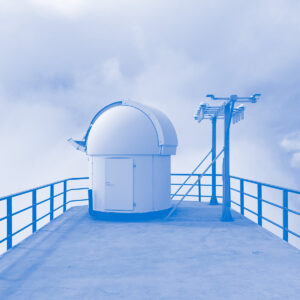
Atmospheres and Disturbances registers the changes in high altitude ecologies caused by increasing global temperatures. The composition is based on field work undertaken at the High-Altitude Research Station at Jungfraujoch, Switzerland where for four weeks I deployed various recording devices around the station, and in the surrounding alpine environment to register natural, anthropogenic and geophysical forces. The project provides new encounters of an endangered alpine environment to enhance the way we perceive and engage with notions of place, community, and environmental dissonance.
During fieldwork I used different microphones to record a variety of acoustic, spatial, atmospheric, and vibration-based phenomena. Omnidirectional microphones registered wind, snow, and ice as well as social, material, and industrial sound emanating from the nearby train terminus and viewing platforms. Hydrophones were placed within water and ice to record geophysical sound resonating within the frozen environment of Jungfraujoch and the adjacent glacier. The recordings capture the pervasive presence of anthropogenic sound permeating throughout the landscape produced by tourists, transport operations and recreational sports. Accelerometers were attached to various surfaces and structures to record solid vibration generated by high-velocity wind, and the process of melting and freezing. The recordings produced by the accelerometers clearly express the stress and fatigue occurring within the material structure of buildings and infrastructure.
Atmospheres and Disturbances is designed to place audiences deep inside an extreme environment to afford embodied experiences of an alpine ecology under duress.
18,00€
Out of stock

CD
Lionel MARCHETTI & DECIBEL
“Inland Lake (le lac intérieur)”
From Cat Hope
This is the second Room 40 release of collaborations between Australian chamber ensemble Decibel, and French music concrète composer Lionel Marchetti, after ‘The Last Days of Reality’ in 2018. This release consists of two pieces: Inland Lake (le lac intérieur (2019), and La Patience (2020). Working with Lionel is magical.
Inland Lake was devised with the ensemble when Lionel visited Australia in 2019. As he sometimes does, he came with an ‘partition concrète’ that was part score, part ensemble member, part fixed media. The music is coaxed from the ensemble, without score, but with discussions, listening and experiments. In the live performances, Marchetti efficiently and imaginatively positions speakers in strange directions, heights and places and somehow, the sounds melt together, intertwining and indiscernible - as on this recording. Marchetti adapts the partition concrète after first rehearsals and performances, integrating recordings of the acoustic instruments with synthesizers, tape and electronic manipulations in his home studio.
The recording of Inland Lake occurred in two places at once: at the Digital Hub, Sir Zelman Cowen School of Music and Performance at Monash University, Melbourne and Soundfield Studio in Perth, Western Australia. Marchetti joined from France. Determined to make this recording despite the ongoing border closures within Australia and the world, the group came together telematically – using software to reduce the perception of latency and improve the sound quality ‘down the line’ for the performers. The ensemble was split in half between the east and west coasts of Australia, listening together over the Internet, recording locally. Marchetti later mixed and mastered the track in his own studio. Listening to the piece once the recording and mixing process was complete was like hearing it for the first time, again.
The recording of La Patience was also an overcoming of separations. Commissioned for Decibel’s ‘2 Minutes from Home’ project, this is Marchetti’s first notated composition.The score is beautiful – hand written in ink on crinkled paper, with white out, blurry artefacts and scraps of paper pasted on, a combination of traditional and graphic notations sitting on and around the stave. The project saw each member record their part in their own home, mixed by Marchetti, and blended with video by Karl Ockelford. The score is read in motion, and contains some precise coordination uncommon in other Marchetti works.
14,00€
In stock

CD, Book
PHAUSS
“Audiodrome”
Phauss is Carl Michael von Hausswolff and Erik Pauser. Formed in the early 1980s, Phauss operated amidst of generation of uncharacteristic Swedish artists concerned with reshaping the edges of practices in sound, light, performance and vision. It was a monumentally fertile period for Sweden in that a confluence of factors allowed artists to dedicate themselves to the relentless excavation of ideas, drilling down to the absolute core of their interests and ways of making.
Von Hausswolff and Pauser, who both operated across sound and installation, used Phauss as a means for deconstructing ideas of composition, situationalism, site-specific works and extended performance methodologies. Across the second half of the 1980s and into the early 1990s, they made connections, through their travels, outward from their homeland into scenes and communities that stretched from the Middle East, through North America and into Asia.
Like their travels, their ways of approaching the work they made was similarly wide-reaching and innately curious. They worked with often quite strict conceptual structures within which they were able to unlock entirely new ways of considering composition and also the material production of sound, through performance, through iteration and through considered experimentation which allowed for failure, just as much as success.
Audiodrome collects together two discreet works that sit somewhere between field recording, chance composition and experimental soundscape. Both pieces pre-date the widespread arrival of field recording as a creative practice, and expand outward the work that had been developed by musique concréte and other experimental music approaches concerned with the intersections of found sound and composition. Both works were devised using the same working methodology, whereby an alarm would sound every few days and wherever and whenever it sounded the pair would start recording their surroundings. Those raw material became the basis for the pieces.
The first composition Zürich - Zürich is a piece that traces a line around the world, Phauss travelling on a round the world air ticket stopping only in countries where conflict was present. This unsettling journey became a meditation on the evolving state of the world in those moments. Voices, traffic, cafes, radios, transportation system and other incidental environments float into one another in a kind of stream of (temporally incongruous) consciousness.
The second work Alger - Lagos brings to mind some of Brion Gysin and William S. Burroughs tape cut-ups. Street musicians are splice against bursts of radio, roadside conversations and searing blasts of industrial noise captured from aircraft and other unfamiliar sources. It is an unsteadying journey where even the sounds of the everyday feel alien and repositioned. The sounds call to us prompting a sensing that is at its heart utterly fascinated, and fascinating.
The edition includes a book featuring an exhaustive collection of photographs, documents and artworks made by Von Hausswolff and Pauser during their journeys undertaken to complete each of the compositions. Many of these images and artworks have never been published previously.
18,00€
In stock

CD
Simon SCOTT
“Long Drove”
‘Long Drove’, the title of Scott’s first edition for Room40, is a location in the Fens close to the home of British composer, multi-instrumentalist and mastering engineer Simon Scott. It is the connective pathway between two nature reserves, called Holme Fen and New Decoy, and both sites are part of a habit restoration project called The Great Fen Project and is close to where Scott grew up as a child. This area first became a location of compositional inspiration over a decade ago, when Scott created 'Below Sea Level' on 12k (later reissued on Touch). His return to the Fens has produced a number of new works, presented here on ‘Long Drove’, that are intimate sonic narratives of place and rural trauma.
‘Long Drove’ is a site-specific sound study which shifts the Anthropocene discourse from spectatorship to musical participation, accountability, and creative engagement. The near future of the Fens, with concerns of further subsidence and threat of flooding, remains a palpable concern. One can almost hear Scott’s thought processes within these five compositions, of what the Fens would sound like if submerged and flooded by water again, returning to its original marshland state as a result of climate change, as the field recordings dissipate and unfurl with melancholic washes of decaying tape loops and digitally processed textures of Fenland sonorities.
“I regularly visit the remote and nameless broken bridge,” Simon explains, “that is situated over a long drainage ditch that connects Holme Fen and New Decoy nature reserves, simply to listen. Each season I’d return to observe the sonorities of wildlife merge and coalesce with the hum of the long telephone wires that stretch across the wide and flat Fens. Within my audition I’d perceive different sonic characteristics within the same location and I soon began to record its vast polyphonic glory. By pure serendipity my water bottle accidentally struck the steel bridge, and it rang out like a gong across the Fen landscape. This inspired me to use soft mallet beaters to actually play the bridge as a percussive musical instrument and capture its resonant qualities. A subsequent desire was also to place my tiny DPA microphones inside one of the bridge vertical openings to act as a filter of the many sonorities within and outside of the metal bridge. The vibratory aural qualities of the bridge would differ depending on what part of the bridge I struck and what season it was.”
‘Holme Fen Posts' traces out looped recordings taken from one of two of the famous steel Holme Fen nature reserve posts, which are located at the lowest cartographical location in England (six feet below mean sea level). The posts were driven into the ground in 1851 to take ground readings of subsidence by local landowner William Wells. Metal placards were attached to the posts to depict the subsequent dates of the level of the ground and Scott wedged two contact microphones in between the horizontal posts to capture its sonorities. The recordings reveal not only the slow and deep vibratory sounds of the steel sculptures but also the rhythmic dynamics created by natural phenomena, such as the downpour occurring as Scott recorded, and the resonances within the surrounding area.
The natural phenomena of wind became aeolian sound characteristics, as heard in The Whistling Wire, and the soft rhythm of the bridge being struck became the long-pitched drones and reverberant textures that these vibrations produced reveals the complex sonic topography of the Fens. From capturing the symphonic glory of the wind which, without any human intervention, ignites the holes in the wires. This triggers shifting planes of transmissible climate change induced musicality. ‘The Black Fen’ traces sound fields through cassette tape loops of aeolian field recordings which are manipulated when fed into Scott’s modular synth system to gradually tease out submerged hidden melodies.
14,00€
Out of stock

CD, Book
PHAUSS
“Nya Sverige – Nothing But The Truth”
Phauss is Carl Michael von Hausswolff and Erik Pauser. Formed in the early 1980s, Phauss operated amidst of generation of uncharacteristic Swedish artists concerned with reshaping the edges of practices in sound, light, performance and vision. It was a monumentally fertile period for Sweden in that a confluence of factors allowed artists to dedicate themselves to the relentless excavation of ideas, drilling down to the absolute core of their interests and ways of making.
Von Hausswolff and Pauser, who both operated across sound and installation, used Phauss as a means for deconstructing ideas of composition, situationalism, site-specific works and extended performance methodologies. Across the second half of the 1980s and into the early 1990s, they made connections, through their travels, outward from their homeland into scenes and communities that stretched from the Middle East, through North America and into Asia.
Like their travels, their ways of approaching the work they made was similarly wide-reaching and innately curious. They worked with often quite strict conceptual structures within which they were able to unlock entirely new ways of considering composition and also the material production of sound, through performance, through iteration and through considered experimentation which allowed for failure, just as much as success.
Nya Sverige - Nothing But The Truth is a recording made in the United States whilst the pair were undertaking an exhaustive tour in 1991 alongside Hafler Trio and Zbigniew Karkowski. This, now legendary, tour was both arduous and rewarding. Living in a van for many weeks at a time, travelling between cities with the most modest of means meant Phauss came to know a very particular vision of the United States, one that existed below plain view. Their’s was an experience had at the rawest edges of cities.
Equally the performances they gave, from which this edition is assembled, were raw and quite frankly dangerous. Fire on stage, sparks flying from short circuiting electronics and intense physical rituals guided so much of their work during this tour and looking back at bootleg videos from the time it’s difficult to imagine the work being able to be presented in the modern world.
One of the flyers from their tour reads ‘Extreme Swedish Industrial’, and as familiar as those words might appear now, in 1991 they held a very different resonance. They were unfamiliar terms of reference and the intensity of Phauss’s music maintains that unknowability to this day. This is a profoundly individual work and sets the stage for a generation of musicians who followed them.
The edition includes a book featuring a long-form in conversation between Carl Michael Von Hausswolff and Erik Pauser with Lawrence English. It also includes never before seen photos and documents from their North American tour and collects together an essential and largely under-documented history of this period of the group’s work.
18,00€
Out of stock

LP
Félicia ATKINSON / Richard CHARTIER
“Ni envers ni endroit … / Recurrence.Expansion”
Félicia Atkinson: »Ni envers ni endroit que cette roche brûlante (Pour Georgia O’Keeffe)« (2021)
Félicia Atkinson’s Ni envers ni endroit que cette roche brûlante (Pour Georgia O’Keeffe) is approached as a meditation, not as meditative music, but as a reflection on the art of creation: how to inhabit one’s creation, how to convey it, domesticate it and live with it. Drawing inspiration from the artist Georgia O’ Keeffe, both in her work as a painter and in the houses in which she lived in New Mexico, and even in the landscapes that surround them, Félicia Atkinson has composed a piece that evokes and celebrates, in a poetic and holistic way, the mystery of art, the somnambulic oscillation that accompanies the act of creating. Blending fragmentary voices, islands of piano, electronic textures and patterns, and field recordings, Félicia Atkinson’s music is sincere and inspired, a meditation, then, but also a lesson we sometimes forget: being an artist is not an activity, even less a profession, it’s a singular way of approaching the world and, in so doing, densifying it.
Richard Chartier: »Recurrence.Expansion« (2020)
Richard Chartier’s music takes up residence at the frontiers of the audible, on the edge where sound diffracts into an inter-dimensionality where sounds, space, listening and silence recombine in an arborescence of becomings that present themselves to us and then disappear. The space-time in which Richard Chartier’s music unfolds is a stretched space-time, barely emerging in the world of sound. The delicacy, precision and accuracy of the composition Recurrence. Expansion lies precisely in this dialogue between a shape that is exposed and developed in an inspired and masterful way, and the sonic biotope in which this shape develops. It is from such an encounter that the singularity of Richard Chartier’s music emerges, music of attentive listening, but also sensitive, inhabited music, a music of discreet metamorphosis.
25,00€
In stock

LP
KMRU
“Dissolution Grip”
The inaugural release on KMRU's own fledgling OFNOT imprint, 'Dissolution Grip' is an ambitious project that emerged from his studies at Berlin's prestigious UDK. The Kenyan composer and sound artist is best known for his field recording work, and as he traveled across Europe and the wider world for regular live performances, he made a point to snapshot each city. But the more he studied and the more he examined his practice, the more KMRU began to wonder what the purpose of these recordings were, and what bearing they might actually have on his self-expression. Simultaneously, he'd begun to dive more wholeheartedly into the world of synthesis. In a way, synthesis is the most basic form of sound, and KMRU started to wonder not just how he could harness these sounds but how he might be able to more dynamically combine them with field recordings.
Guided by Jasmine Guffond at Berlin's Universität der Künste (better known as UDK), KMRU looked at waveforms - the visual representation of sound itself - and embarked on a process where he would write scores from the shapes, gradually turning the scores into raw synth sounds. Considering the spaces he was inspired by and shuttled through, KMRU decided that instead of using environmental recordings as an aesthetic marker, he would use these captured moments to guide the waveforms. So each sound is birthed from a field recording, but none of those recordings are audible in their original form. For example, on the digital bonus track 'Along A Wall', KMRU recorded in an old shack on his family's compound in Nairobi, where wind was shaking the building to its foundations. Listening to the finished piece, we can hear subtle electronic tones that rub and vibrate against each other, slowly saturating and mimicking the erratic motion of the wind. The original recording has been removed, but the feeling remains.
The album's opening side 'Till Hurricane Bisect' is a 15-minute epic that evolves at its own glacial pace, carefully transforming blustering wind sounds into gasping drones, glassy oscillations and choked distortion. Cosmic and meditative, it's a testament to KMRU's skill as a sound engineer and patience as a composer, combining the gentle world building of his acclaimed Editions Mego album 'Peel' with the rumbling energy of 'Limen', last year's collaboration with Aho Ssan. On the title track, KMRU takes the opportunity to flex his orchestral muscle, conducting a cast of warbling synth tones into a durational symphony. Starting as quietly as a whisper, 'Dissolution Grip' expands at its own pace until it's a dense wall of harmony, powerful but never completely overwhelming. It's music embedded with a rich sense of place that informs us of KMRU's past and present, and signals where his musical philosophy might take us in the future.
22,00€
Out of stock

LP
KMRU – Abul MOGARD
“Drawing Water”
In November 2020, KMRU self-released »Drawing Water«. The release contained 3 supple works of porous resonance and intimate motion, giving way to a very heartfelt body of work that peers directly into the fabric of the everyday; gestures, movement, conversation, rendered graciously into waveform.
Now, Vaagner is proud to present a special edition vinyl and cassette reissue of »Drawing Water« via its A Sunken Mall imprint, with the original material spanning the first side of the record in remastered from.
For the second half of the record, the label has taped none other than Abul Mogard, who prepared a new piece by reworking various layers from KMRU’s original compositions.
This new 17 minute long piece, tilted »Drawing Water On Matching Teal Surfaces’« is defined by a continuously cascading and deeply resounding solemnness, which, towards the work’s concluding moments, gradually disperses through a subtle downpour of warm pads, delicately rippling through the fabric of the work, before gently dissolving into thin air.
23,00€
In stock

LP
Maria W HORN & Mats ERLANDSSON
“Celestial Shores”
The music heard on this album was originally the result of a commission to score the second half of the film Nico/Nico Crying made by Andy Warhol in 1966. The commission was made by Art Cinema OFFoff in collaboration with B.A.A.D.M for a screening of the film together with a live presentation of the score in September 2021 at Ancienne Belgique in Brussels. The recording presented here was made in the last week of that year and mixed soon after in January 2022. These recordings are essentially live-recordings performed by the composers together in the same room and recorded in a manner reminiscent of the record making process as it was in the late 1960s. The instrumentation used to make the sounds on this album consists of modular synthesis, zither, voice, contaminated field recordings and metal percussion.
Mats Erlandsson is a composer and musician part of the vibrantly re-emerging field of drone music in Stockholm, Sweden, and is associated with practices characterized by the extensive use of sustained sound. Erlandsson presents his work both as a solo artist and in collaborations, most notably together with Yair Elazar Glotman and Maria W Horn. Recent releases include Gyttjans Topografi on XKatedral, Minnesmärke on Hallow Ground and the collaboration Emanate made with Yair Elazar Glotman on the label 13070. In addition to his own artistic practice Erlandsson holds a position as studio technician and was temporarily, from October 2022 to September 2023, the acting studio director at Elektronmusikstudion in Stockholm.
The compositions of Maria W Horn implement synthetic sound, electroacoustic and acoustic instruments and audiovisual components, often devicing generative and algorithmic processes to control timbre, tuning and texture. She employs a varied instrumentation ranging from analog synthesizers to choir, string instruments, pipe organ and various chamber music formats. Acoustic instruments are often paired with digital synthesis techniques, in order to extend the instruments timbral capacities. Often based on minimalist structures, her music explores the inherent spectral properties of sound and their ability to transcend time and space, reality and dream.
24,00€
In stock

LP
CONTINUITY
“Continuity”
Eponymous first album by ‘Continuity’, the new project of Swedish artist Martin Herterich, whose sonic explorations of memory and imagination have come to full bloom in this atmospheric and elusive narrative of seven intense cityscapes.
Martin Herterich previously released music (as Sand Circles, etc) on labels like Posh Isolation, Not Not Fun Records, iDEAL and Irrlicht.
“Have you ever felt like all you want is to go back?
Continuity is a sonic narrative, a story arc set in a fictional East Asian metropolis. It is not a city you have been to.
When you have fallen in love with a place, you long to go back; but it’s a memory; fiction if you like. You want to catch the fleeting moment of leaves rustling in the wind, the sun reflecting from the glass panels of the roof above.
These memory cycles create emotional patterns. But unlike reality, these spaces are limited. They carry elements of reality in them, narrative components that evoke feelings and signify meaning. Traveling there becomes impossible. Through streetview surfing and 4K walking videos on Youtube, these spaces that are very much real become fictionalized, much like the virtual spaces of video games. Movement is narration. Fiction is something that is, but at the same time isn’t, real. In order to understand an imaginary place, one needs to travel there.” (Martin Herterich, 2023)
24,00€
In stock

LP
MONOPOLY CHILD STAR SEARCHERS
“Barbados Wild Horses”
After the not-quite-reissue of »Prince of Parrot Shooters/The Aqueducts of Cannel Island«, wide-eyed mystic and tireless searcher of the netherworld Spencer Clark returns to the Discrepant fold with »Barbados Wild Horses« under his Monopoly Child Star Searchers moniker. Recorded while Clark was living in the Canary Island's by Tupperware and Lagoss' Dani Tupper, 'Barbados Wild Horses' brims with insular romanticism and escapist bliss, with sunkissed synth-lines interwoven around his trademark hand percussion bouncy rhythms reflecting the scenery of the islands as a liberating utopia.
With track titles taking an almost self explanatory stance, the album starts with the crepuscular vibes of »Upper Romantico«, a poetic meditation on the lovelorn potential of the fading sunlight, setting the tone for the rest of the tour. »Lava Tube Solos on Horseback«, the first of two tracks featuring Sun Araw's Cameron Stallones, sees the latter's guitar noodles riding the cascading rhythms and digital choir harmonies while in »Neopreno Antiguo« he solos freely around an hypnotic synth line. Finishing off the escapade, »Nightcharcos Punta Brava« drifts in ethereal starlit contemplation, with the percussion taking a more backseat approach, setting into a steady pulse for Clark's gliding synth tapestries. Nightswimming as transcendence. Another piece of the fascinating puzzle Clark's been assembling for over two decades now, 'Barbados Wild Horses' glimmers with a laid back sensibility that's as unhinged as enveloping. Not an easy feat by any measure. Clark succeeds again.
24,50€
Out of stock

LP
The PITCH & Julia REIDY
“Neutral Star”
The Pitch is a quartet made up of Boris Baltschun, Koen Nutters, Michael Thieke and Morten Joh. Founded in Berlin in 2009, they play a hypnotic form of structured improvisation full of acoustic exploration and electronic intervention. On Neutral Star, The Pitch are joined by Australian guitarist/composer extraordinaire Julia Reidy for a record of star gazing electro-acoustic jazz.
Reidy's playing and compositional technique between Takoma-style fingerpicking and Glenn Branca'esque microtonality, perfectly complements the loose improvisational framework The Pitch is providing. Endless ≠ Limitless, a recent piece by Reidy and Joh, is transformed from a washed-out/obscured tape delay composition into a colorful, meandering ensemble piece with a swarming character - blooming with intrigue for the patient ear. The B-side strikes a more gentle tone: the 24-minute Neutral Star begins with a siren-like overtone whose drone-like flowing slowly morphs into a deterritorial modality with jazzy undertone. Accompanied by constant eruptions of vibraphone, clarinet, electronics and double bass punctuation – while permanently questioned by Reidy's drippingly pearly steel guitar work. Slowly evolving into new territories through the expansive instrumentation and keen listening between the players.
The fact that Neutral Star was recorded in one take (by Rabih Beaini in his Morphine Raum studio/venue) in front of a live audience and without overdubs is hard to believe, even for the trained ear. The recording appears to be too multilayered for a single snapshot, with its compositional structures constantly shifting and moving against themselves, counterintuitively and anti-cyclically. Reidy´s playing has been described as "unstable harmonic territory, and the collaboration with The Pitch interprets this concept brilliantly - adding further non-places to the territory. And the listener, however, is never left alone in the process of tectonic shifts - at least as long as their listening is attentive and contemplative at once.
28,50€
Out of stock

CD
Francisco MEIRINO & Jérôme NOETINGER
“Drainage, In Six Parts”
Francisco Meirino is a sound artist based in Switzerland. His music explores the tension between programmable material and the potential for its failure. His interest lies primarily in what is not supposed to be recorded : the end of life of electronic devices, electrostatic noise, magnetic fields and the unconventional use of music hardware and sound systems and how to exploit these sonic failures in radically different ways in his sound pieces. His music combines intricate textures, sonic precision, wide spatial panning and is fascinating by its physical intensity and detail precision. Born April 1966, in Marseille, Jérôme Noetinger discovered experimental music under the influence of the Déficit Des Années Antérieures in Caen. He is a composer/improviser/sound artist working with electroacoustic devices. Composing sometimes musique concrete in the studio, and performing improvised music using electroacoustic devices such as: the reel to reel tape recorder Revox B77 and magnetic tape, analogue synthesizers, mixing desks, speakers, microphones, various electronic household objects and home-made electronica. Performing both solo and in ensembles, and collaborating often, and touring extensively internationally. Jerome also used to be the director of Metamkine, a non-profit organisation dedicated to the distribution of improvised and electroacoustic music, which has now been changed to Corticalart with a different personnel.. The music on this CD was recorded by the duo in 2019 in Switzerland.
12,50€
In stock

CD
Rhys CHATHAM & David FENECH
“Tomorrowstartstonight”
The first duet album by Rhys Chatham and David Fenech, two well-known musicians of the experimental scene. It is a long piece of music in a minimalist spirit, where the two guitarists meet and merge with Rhys’ trumpets, flutes and vocals and David’s small percussion.This record has an organic feel and natural development that makes it unique. Tomorrow starts tonight ! Rhys Chatham is best known for his compositions for electric guitar orchestra… he began his musical career as a harpsichord tuner, studied flute with Sue Ann Kahn, studied shortly thereafter with electronic music pioneer Morton Subotnick and later with La Monte Young (also as a member of his famous “Theatre of Eternal Music” ensemble). He also played with Tony Conrad in an early version of his band The Dream Syndicate. In 1971, while still a teenager, Chatham became the first musical director of the famous venue The Kitchen in New York. He has played and recorded with musicians as varied as Charlemagne Palestine, Sonic Youth, Arthur Russell, Jonathan Kane (Swans), George Lewis, Band of Susans, David Toop, and in his large guitar ensembles with members of Tortoise, Godspeed You! Black Emperor, Hüsker Dü… David Fenech is a French musician living in Paris, guitarist, singer, improviser. He plays a wide variety of instruments and is an accomplished guitarist with his own technique… but his main instrument may well be the microphone, his music being composed of whatever he records with it. His distinctive, slightly baroque style, on the bangs of rock, jazz and improvised music, has often been described as “a kind of musique concrète punk”. He has performed and recorded with musicians as diverse as Felix Kubin, Tom Cora, Pierre Bastien, Jac Berrocal, Ghédalia Tazartès, Nurse With Wound… The music on this CD was recorded live at two concerts, one in Paris and one in Vienna. It was mastered by James Plotkin
12,50€
Out of stock

CD
GEINS’T NAÏT
“Fishes”
Geins't Naït was founded in Nancy, France, in 1986 by Thierry Merigout and Vincent Hachet, both students at the Architecture School of Nancy. A year later Laurent Petitgrand joined the band. Their sound is often described as an equivalent of bands like Einstürzende Neubauten, Coil or Test Dept., but Geins't Naït is not pure classic Industrial. While Geins't Naït offers rough pieces of music as an extension of its punk attitude, Petitgand refines them to create some musicality within the post-industrial collages, adding guitars, piano, and classical instruments. Geins't Naït and Laurent Petitgand sharpen sounds, giving them a kind of balance and density and ensuring that the musical language evokes a deep experience. Their music is raw and fascinating, and largely influenced by Surrealists and Situationists. Their early albums were released by French label Permis De Construire, with Fishes being the band's fifth album, originally released in 1989. It features fifteen tracks which have been carefully remastered for this first ever CD re-issue by Martin Bowes.
12,50€
In stock

CD
HASTINGS OF MALAWI
“Visceral Underskinnings”
Hastings of Malawi are Heman Pathak, David Hodes and John Grieve. They recorded the album in one night in 1981 with no plan and no idea of what they were doing. They played drums, clarinet, synthesiser and piano but also made use of things that they found lying around the studio – old records, cookery books, telephone directories and a telephone. The recordings were played down the phone to randomly dialled numbers and the reactions added to the recording. All three had been involved in the recording of the first Nurse with Wound album Chance Meeting On A Dissecting Table Of A Sewing Machine And An Umbrella and had contributed metal scrapings, piano, effects, clarinet and guitar during the session. Their debut album, Vibrant Stapler Obscures Characteristic Growth, is a masterpiece from 1981, re-issued on vinyl by Sub Rosa and on CD by Klanggalerie. Originally 1000 copies pressed on orange/red vinyl. 120 copies were sold through Rough Trade and Virgin Records. 800 copies were bought and later destroyed by the United Dairies label, making this record even more rare. 35 years later, the British dadaist group Hastings of Malawi have released a new album - an epic sound poem entitled Visceral Underskinnings. It is a 40 minute film without light that reflects on the human condition, on modern society, on the nature of telephony and electricity and an attempt to make sense of the world in which we live that provides no answers. It is a sound collage of diverse elements including the voices of George Washington Johnson (First African American star of the phonograph 1846-1914) and Dr Hastings Banda - the first president of Malawi. It includes randomly generated computer music, voice synthesis, recordings of cold war number stations, American military sound weaponry and recordings of the some of the many sound sculptures produced by Hastings of Malawi over the last 30 years. Hastings of Malawi produce sounds that sit in that grey area where sound art and music meet but they reject both labels and cannot be comfortably placed in either camp. This is not an easy album to listen to but persevere and you may or may not be able to decipher its meaning.
12,50€
In stock

CD
Kevin TOMKINS
“Music For An Unprepared Autoharp”
Kevin Tomkins is best known for his work in Whitehouse and his own group Sutcliffe Jugend, now called Sutcliffe No More. He also worked with Bodychoke, Inertia and Patient K. Most of his music has its background in the power electronics scene that evolved in Great Britain around the label Come Organisation and the group Whitehouse. Power electronics is a style of noise music that typically consists of static, screeching waves of feedback, analogue synthesizers making sub-bass pulses or high frequency squealing sounds; with screamed and distorted vocals. The genre is noted for its influence from industrial. It is generally atonal, like most noise music and also features a lack of conventional melodies or rhythms. To match its sonic excess, power electronics relies heavily upon extreme thematic and visual content: whether in lyrics, album art, or live performance actions. For his solo work, Kevin sometimes uses a very different style to his group work. An autoharp or chord zither is a string instrument belonging to the zither family. It uses a series of bars individually configured to mute all strings other than those needed for the intended chord. This album's music was all generated on such an instrument and is totally different to Sutcliffe No More. Its roots lie in avantgarde music rather than noise, with rhythms and melodies generated on the instrument. It was edited from over 20 different recordings to present an album of stunning variety and beauty.
12,50€
In stock

LP
VOMIR & Anla COURTIS
“Sin Comentarios”
The dense HNW blocks of sound does not dominate or overpower the more dynamic guitar excursions of Courtis, but instead there is a good balance of the elements, making room for both artists to shine. The two sidelong pieces that makes up “Sin Comentarios” appears to be composed in a considered manner. The first piece is a full-on ferocious hailstorm of electronic shards, like a thousand pieces of scarp metal disappearing into a prehistoric black hole. Midway through piece a metallic drone appears and slowly takes over the music. This leads us into the second part, which feels like the grinding cosmos of part one twisted inside out, like an alternate reality, all elements in an inverted state of weightlessness. The piece is more open, the elements more clearly defined, there’s a different sense of both space and pace, but the piece is no less intense. Towards the end the music slowly builds down, almost like a sonic origami that folds itself into nothing. I’m sure it was not intended as a symbolic Zen-like closure, but it in the context of what happened, it’s hard not let the thought cross your mind when listening to this remarkable last Vomir recording. (extract from Lasse MARHAUG's liner notes)
22,50€
In stock

LP
Z.B. AIDS
“For Franz”
A bad torrent file for the theme from Miami Vice rings in your ears as you struggle to get out of an elevator that’s crashing real fast while you were waiting for a phone call from Bill Orcutt. Enjoy life while it lasts.
– Guy Mercier
22,50€
Out of stock

LP
Michel HENRITZI – Michael MORLEY
“Mirrors”
For their first collaboration as a duo, rather than succumb to the devastating fury that is the hallmark of so-called 'noise' music, Michael Morley (electric guitar) and Michel Henritzi (lapsteel) have opted for the open sea, and the interior landscapes with the ghostly strangeness that is usually associated with them. The emergence of embryonic melodies under their fingers never frightens them. On the contrary, it allows them to delve deeply into the contemplative and hypnotic dimensions of listening, through skilful interweaving of constantly shifting masses of sound. Although they conceived Mirrors at a distance from each other, what emerges is a fascinating maelstrom, sculpted over time like a long blast spread over two sides. The first, in the form of effluvia, relays primitive forces in gestation since the appearance of the blues. The second, majestic and devoid of ostentation, explores a succession of stases that could have been extended ad infinitum, so much so that the suspension that constantly postpones the fall abolishes any notion of time.
(Philippe Robert)
22,50€
In stock

CD
Sophie AGNEL – Joke LANZ – Michael VATCHER
“Animals”
With solid training as a classical musician, Sophie Agnel took a close interest in modern jazz before committing in the early Nineties to the shifting, deliciously uncertain ground of free improvisation, thanks to her fascination for the powers of expression displayed by a few great keyboard-heretics such as Keith Tippett, Fred Van Hove or Christine Wodrascka. She began reworking the prepared piano techniques imagined by John Cage and transformed her instrument into a sort of extended piano. Coming from a Punk music background Joke Lanz started in the mid 80s to play Experimental- and Noise music. Best known for his internationally acclaimed project Sudden Infant, Lanz is presenting his work since 30 years all over the world. Born in Switzerland and currently operating out of Berlin, he is one of the most prolific and profound artists working in the border zones where performance and body art meet Improvisation and Noise. California native Michael Vatcher, now residing in Amsterdam, quickly progressed from hitting household furniture to taking vibraphone and snare drum lessons as a child. The trio impresses with precise playing, intensity, spontaneity and a great sense of musical humour. Radical playing techniques, curiosity and the exploration of sound possibilities create constant tension. Their first trio release Animals brings together 13 tracks full of twists and turns, creative lightness and complex virtuosity.
12,50€
In stock

CD
Asmus TIETCHENS
“Ptomaine 2”
Asmus Tietchens is a sound artist and composer from Hamburg, Germany. He got interested in Musique Concrete by listening to a German radio programme when he was 10 years old. In 1965, at the age of 18, Asmus started experimenting with tape loops and turned them into musical collages. Soon, the use of synthesizers was added. In 1980 his debut album Nachtstücke was released, produced by Peter Baumann of Tangerine Dream. This was soon followed by a series of albums of electronic pop music for the Sky label, home of many Krautrock bands. Tietchens often uses special source materials for his compositions such as water (Seuchengebiete), human voices (Von Mund zu Mund), paper (Papier ist geduldig). He is associated with the Industrial music scene through his collaborations and releases on labels such as United Dairies, Esplendor Geometrico or Dom Records. Tietchens never studied composition, he has no academic background, everything he does is self taught or learnign by doing. Nevertheless, he was professor for sound design in Hamburg in recent years. Ptomaine was originally released on RRRecords in 1996 as a 3 LP set. This is the second volume of the first ever CD re-issue.
12,50€
In stock

CD
Joe McPHEE & John EDWARDS
“Tell Me How Long Has Trane Been Gone”
Joe McPhee, born 1939 in Florida, USA, is a multi-instrumentalist, composer, improviser, conceptualist and theoretician. He is currently the member of Trio X, Survival Unit III and has collaborated with Pauline Oliveros, Peter Brötzmann, Evan Parker, Raymond Boni, The Thing, Trespass Trio, and Universal Indians among many others. With a career spanning nearly 50 years and over 100 recordings, he continues to tour internationally, forge new connections and reach for music’s outer limits. John Edwards is a true virtuoso on the double bass whose staggering range of techniques and boundless musical imagination have redefined the possibility of the double bass and dramatically expanded its role, whether playing solo or with others. Perpetually in demand, he has played with Evan Parker, Sunny Murray, Derek Bailey, Joe McPhee, Lol Coxhill, Peter Brötzmann, Mulatu Astatke and many others. In 2019 McPhee and Edwards met at Artacts festival in Austria and performed together as a duo for the first time. The concert was held at a public school with the duo performing in front of the Wilder Kaiser mountain and left the audience stunned and speechless. This CD is a recording of this amazing concert. Joe McPhee plays sax and sings, John Edwards plays the double bass.
12,50€
In stock

CD
HET ZWEET
“Het Zweet”
Het Zweet (Sweat) was the band project by Marien van Oers, native of Breda in the Netherlands active from 1983 to about 1988. The music consisted of long 10 minute percussion pieces played on self built instruments (shopping trolleys amplified with pickups, blown cardboard tubes etc.) with repetitive shouted vocals by Marien. The music was often placed in the industrial camp and linked with the likes of Test Dept. but in fact Het Zweet were more concerned with ‘tribal’ music, physicality and trance effects like Z'ev. During concerts he often performed together with other players. Marien Van Oers sadly passed away in 2013. This self-titled album originally came out on the great Dossier label in Germany in 1987. The bonus material included on this reissue consists entirely of previously unreleased material. There's three untitled tracks and two live excerpts presented as long experiences that belie their disparate origins with a unity of sound and purpose. Van Oers’ percussive nous and distantly yelled chants certainly sound capable of working up a sweat in both the performer and any movement-minded listeners, but maybe the most striking thing about Het Zweet is how vital it still sounds, despite its age and relative obscurity.
12,50€
In stock

CD
Jac BERROCAL – David FENECH – Vincent EPPLAY
“Transcodex”
Jac Berrocal is a 1946-born musician (trumpet player), poet and sometime film actor who came of age in the ‘70s Paris improv scene, where the boundaries between music, art and theatre were porous and begging to be breached. Inspired by bebop, chanson, free jazz, beat poetry, early rock ‘n roll and myriad Eastern influences, and with an iconoclastic, anything-goes approach to instrumentation and technique that would later align him with post-punk sensibilities, Berrocal blazed an eccentric and unstoppable trail across the underground throughout the ‘70s and ‘80s, both solo and as part of the Catalogue group he co-founded. During this time his uproarious performances routinely wound up jazz and rock audiences alike, but earned the admiration of many musicians: Steven Stapleton invited him to perform on two Nurse With Wound albums, and other notable collaborators in his career include Sunny Murray, Lizzy Mercier-Descloux, Lol Coxhill, Yvette Horner and James Chance. In the 90s his protean achievements were celebrated on the Fatal Encounters compilation, but far from slowing down in the autumn of his life, Berrocal has maintained an extraordinary work-rate, keeping studio dates with Pascal Comelade, Telectu and Jaki Liebezeit, among others. Now Berrocal has found the perfect foil in David Fenech and Vincent Epplay, two fearlessly inventive improvisers, composers and catalysts who create challenging, acutely modernist yet historically aware settings – wrought out of synthesis, guitars, computer processing, field recordings and unorthodox percussions – for Berrocal’s unmistakeable voice and breathtakingly lyrical horn sound to flourish. Fenech cut his teeth in the mail-art scene of the early ‘90s, leading the Peu Importe collective in Grenoble. His 2000 solo debut was recently reissued by Felix Kubin’s Gagarin label, and he has also worked as a software developer at IRCAM, and played with Jad Fair, Tom Cora, Rhys Chatham and James Plotkin; in 2011 he formed a trio with Berrocal and Ghedalia Tazartes for the Superdisque LP. Epplay is a highly regarded sonic and visual artist with a particular interest in aleatory composition and autonomous pieces, concrète, and the puckish reappropriation of vintage sound and film material, with dozens of published works to his name on labels like Alga Marghen and PPT/Stembogen. Transcodex is the fourth album by the trio. Turning more towards pop than in their beginnings, this fourth record follows the footsteps of their previous album, Exterior Lux. The trio seems limitless: they experiment with a large variety of styles (pop, dub, electronica, dark jazz), always coloured by their very own touch. For this album, they invited two amazing musicians. Jah Wobble, founding member of the mighty Public Image Ltd. and Jean-Hervé Peron, one of the fathers of German krautrock legend Faust.
12,50€
In stock

CD
COMPILATION
“Mysterious Kitchens (Terse Tapes)”
A special delicacy for all you Severed Heads fans: In the 1980s the cassette was a much desired format. They were cheap, inexpensive to buy, easy to duplicate and manageable for less technically skilled people, too. The sound was raw and hissy, encouraging raw and hissy ideas. If you couldn't afford to have a vinyl LP pressed, you could still get heard. It was the most DIY product ever.
Terse Tapes was one the first cassette labels in Australia ever, although the label started with two vinyl releases. Bands like Severed Heads soon found vinyl production too slow - by the time an album was finished, they had recorded much more music and has changed stylistically. Mysterious Kitchens was billed as a various artists compilation, but in reality it was a group of ten friends that swapped roles and instruments as the mood took them. Future Severed Heads members are here under obvious multiple band names. Wet Taxis are the only real band on the album. Many other participants formed their own groups later. In 1980, shops were kind to Terse Tapes. They hung their cassette releases on shop walls and so encouraged other people to start their own DIY labels. This is the first ever CD release of this legendary "compilation" album. It is, of course, more of a Severed Heads release.
12,50€