
Out of stock

12"
CLAY RENDERING
“Vengeance candle”
Clay Rendering is a new band born of Aries couple Mike (Wolf Eyes, Hair Police, Failing Lights) and Tara Connelly (the Haunting and The Pool at Metz). The two began work on the project in the fall of 2012, dedicated to resurrection, (much like their sun signs) with a focus on arcane structures. Droning and melancholic guitars are propelled by the skeletal remains of industrial music. Low light vocals weave in and out of the stark atmosphere. Electronics mix with acoustics, vocals and guitar to create songs inspired by last days. Mastered by Russell Haswell. Edition of 500.
5,00€
Out of stock
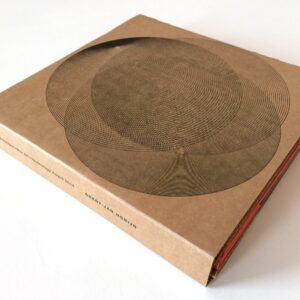
book + 7"
Geert-Jan HOBIJN
“Witteveen+Bos Art+Technology Award 2014”
Former of Staalplaat and Staalplaat Soundsystem, Geert-Jan Hobijn (1959) is “an open-minded, enthusiastic artist with a boundless curiosity. Fascinating by sound and space and making use of pedestrian materials, Geert-Jan is constantly devising new creations to use in his experiments.” This book shows some of his work through several photos, an introduction by Douglas Kahn, an essay by Jorinde Seijdel. Plus a single with locked grooves that you can manually or with a turntable, and a small electronic device that react to light.
Very last copies !
17,00€
In stock
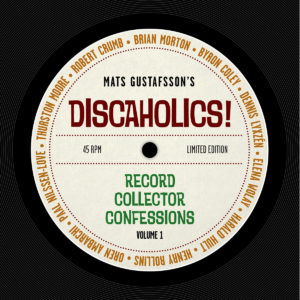
book + 7"
Mats GUSTAFSSON’S
“Discaholics!”
Record Collector Confessions Volume 1.
Swedish saxophone player/improviser/composer/music archivist Mats Gustafsson has worked in the outer regions of jazz, avant-garde, experimental rock and free improvisation for more than 35 years. Gustafsson is also a passionate record collector who strongly believes that actively nurturing the urge to seek for rare and obscure vinyl is a gateway to higher musical knowledge – a knowledge that it is a musician’s duty to share. He has coined the term Discaholism – and on his website Discaholic Corner he interviews fellow artists who have the same urge to spend all their waking hours obsessing about music and records.
This book presents ten selected interviews with artists/record collectors: Brian Morton, Byron Coley, Dennis Lyxzén, Elena Wolay, Harald Hult, Henry Rollins, Oren Ambarchi, Paal Nilssen-Love, Thurston Moore and Robert Crumb.
Also included are 25 TOP 10 lists of Gustafsson’s personal vinyl obsessions; an in-depth interview with Gustafsson himself; numerous illustrations and photos; plus a one-sided 7” vinyl single with an exclusive new track recorded 2017,
created using elements from Gustafsson’s record collection.
30,00€
In stock
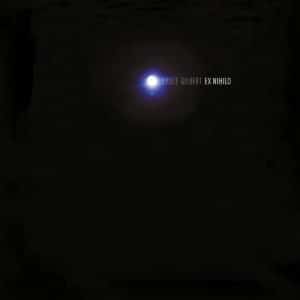
LP
Bruce GILBERT
“Ex Nihilo”
All tracks written and recorded by Bruce Gilbert, mastered by Russell Haswell. Design: David Coppenhall, front image/ concept: Bruce Gilbert. Cut by Rashad Becker @ Dubplates and Mastering, Berlin.
Editions Mego’s 250th release continues its ongoing legacy of cross-pollinating and perverting various threads of radical 20th Century music whilst concocting and properling further ideas into the nebulous region where we currently reside.
With Ex Nihilo, Editions Mego resumes it’s enduring relationship with long term collaborator and stalwart representative of the labels aesthetic with a new release from London’s most charming deviant occupant, Mr Bruce Gilbert (formerly of Wire, Dome etc..).
Gilbert’s peculiar approach to sound over four decades has seen him engage with a wide variety of practice and performance always hovering amongst the grey area between his mind and the surrounding architecture. Ex Nihilo is another significant entry into Gilbert’s outre sound-book.
Inhabiting a murky zone between interference and trauma, Ex Nihilo is a daring and dark audio ride through a contemporary ketamine haze, one which haunts identifiable parameters whilst remaining too oblique to be truly quantified.
Change and Not teases discomfort, Black Mirrors embraces disorder, Nomad skirts the unsettling. Whilst never quite resolving its own logic Ex Nihilo invites the casual listener to privy a devastating peculiar and somewhat paranoid fantasy (reality?).
Another effortless Gilbert classic.
15,50€
In stock
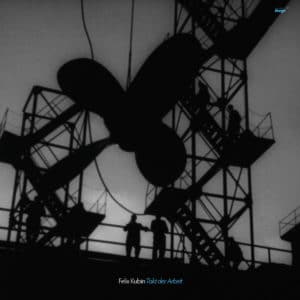
LP
Felix KUBIN
“Takt der Arbeit”
Felix Kubin (org, electr, sampler). Mi osz P kala (vib, xyl, sampler, perc, effects). Magdalena Kordylasi ska (mar, perc, effects). Hubert Zemler (glsp, dr, perc). The pieces are soundtracks to educational and industrial 16mm films dealing with the subject of “work”. They were commissioned by NDR das neue werk (North German Radio).
Originally developed as a film score “Takt der Arbeit” is inspired by a handful of industrial and instructional films from the early 1960’s until the early 1990’s that portrait different forms of work. Felix Kubin is translating these historic documents into a musical poem of conceptual depth. “Takt der Arbeit” - the beat of work - is not only serving as a title but also as constructive element in this endeavour. Being hunted down by the ever accelerated pulse of our reality is an omnipresent issue in capitalist societies of the the Western world. Living in times of constant exhaustion, its not only our bodies that have been disciplined by and synchronized to the rhythms of working processes, but also our minds that rage in the tempo of our surroundings.
Following an almost analytical effort, Kubin and an ensemble of 3 percussionists are investigating the different qualities and intensities of time that are catalyzed in working processes. While picking up precise temporal and motoric motives of the films, condensing paces and excavating rhythmic patterns, the ensemble is mapping out an animist choreography, shifting from a time when labour was still relying on bodily efforts to a time when machines and ticking clocks seem to reign and model our perception. While Side A is dedicated to procedures that are still based on manual and mechanical movement, Side B is inspired by the digital age, marked by invisible processes and subcutaneous pulses that we internalize.
The result is a critical and poetic reflection on the rhythms of our daily life and yet another example of Felix Kubin’s skills as a composer, placing him in the field of academic contemporary music.
Originally developed as a film score “Takt der Arbeit” is inspired by a handful of industrial and instructional films from the early 1960’s until the early 1990’s that portrait different forms of work. Felix Kubin is translating these historic documents into a musical poem of conceptual depth. “Takt der Arbeit” - the beat of work - is not only serving as a title but also as constructive element in this endeavour. Being hunted down by the ever accelerated pulse of our reality is an omnipresent issue in capitalist societies of the the Western world. Living in times of constant exhaustion, its not only our bodies that have been disciplined by and synchronized to the rhythms of working processes, but also our minds that rage in the tempo of our surroundings.
Following an almost analytical effort, Kubin and an ensemble of 3 percussionists are investigating the different qualities and intensities of time that are catalyzed in working processes. While picking up precise temporal and motoric motives of the films, condensing paces and excavating rhythmic patterns, the ensemble is mapping out an animist choreography, shifting from a time when labour was still relying on bodily efforts to a time when machines and ticking clocks seem to reign and model our perception. While Side A is dedicated to procedures that are still based on manual and mechanical movement, Side B is inspired by the digital age, marked by invisible processes and subcutaneous pulses that we internalize.
The result is a critical and poetic reflection on the rhythms of our daily life and yet another example of Felix Kubin’s skills as a composer, placing him in the field of academic contemporary music.
15,00€
In stock
2 LP
UUUU
UUUU are Edvard Graham Lewis, Valentina Magaletti, Matthew Simms & Thighpaulsandra. Recorded and Mixed at Aeriel Studios, Brechfa by Valentina Magaletti, Thighpaulsandra. Mastered by Sarah Register. Photography by Antonio Curcetti.
Individually these humans have implanted feathers in caps such as Coil, Dome, Wire, Tomaga, etc. Collectively they form UUUU, a powerhouse construction of fierce and free sonic exploration, as liberating as it is frightening, resulting in, the richly rewarding. The artists united present a project of exquisite curiosity and confident chaos where the individual thumbprints mesh into a gloriously muscular frenetic free sonic soup. It’s Going All Over The Floor presents itself as a terse meeting between dance, ambient, abstraction and improvisation. The Latent Black Path Of Summons Served proceeds in a tense energy field where random elements bounce around until locking into a fourth world pattern designed to fall into a dense mass of ecstatic noise. Boots with Wings is classic Lewis - a pop tune from the other side of the mind.
UUUU is a schizophrenic seething/soothing masterpiece of a past/present hybrid equally at home in the club, the home and the mind.
Individually these humans have implanted feathers in caps such as Coil, Dome, Wire, Tomaga, etc. Collectively they form UUUU, a powerhouse construction of fierce and free sonic exploration, as liberating as it is frightening, resulting in, the richly rewarding. The artists united present a project of exquisite curiosity and confident chaos where the individual thumbprints mesh into a gloriously muscular frenetic free sonic soup. It’s Going All Over The Floor presents itself as a terse meeting between dance, ambient, abstraction and improvisation. The Latent Black Path Of Summons Served proceeds in a tense energy field where random elements bounce around until locking into a fourth world pattern designed to fall into a dense mass of ecstatic noise. Boots with Wings is classic Lewis - a pop tune from the other side of the mind.
UUUU is a schizophrenic seething/soothing masterpiece of a past/present hybrid equally at home in the club, the home and the mind.
21,00€
In stock
2 LP
VOICES FROM THE LAKE
“Live at MAXXI”
After last year’s releases on Spectrum Spools, Italian techno masterminds Donato Dozzy and Nuel are returning as the duo Voices From The Lake with a release on the mother label Editions Mego: “Live @ MAXXI” is a marvellous organic live-set of hypnotic ambient techno, proofing the outstanding and elegant craftsmanship of their sonic sculpturing, that they both are famous for.
As was to be expected they stay true to their polyphonic topography of liquid scapes: aquatic sceneries are embedded in soaking dense atmospheres, gently gyrating us into trance. Sometimes soft echoes of sirenic voices are heard - the only remnants of human traces in these spaces that have suspended time, where smooth silky textures are being channeled into fractal structures that induce a state of transcendence. The haptic quality of their sound is adding up to a sonic matrix of metaphysic imaginary that is provoked by gentle glides and dynamic beat patterns of almost tribalistic quality.
Dunked in a bath of dark fluid, sometimes washed away at the shores of Kosmische - VFTL’s tunes are not scared to seduce us into a condition of haziness, culminating in a cover of Paolo Conte’s, Max’ which is turned into a dazzling sample of sweet, dreamy melancholia.
With this release Voices From The Lake succeed again in strengthening their position as one of todays most refined ambient techno producers.
As was to be expected they stay true to their polyphonic topography of liquid scapes: aquatic sceneries are embedded in soaking dense atmospheres, gently gyrating us into trance. Sometimes soft echoes of sirenic voices are heard - the only remnants of human traces in these spaces that have suspended time, where smooth silky textures are being channeled into fractal structures that induce a state of transcendence. The haptic quality of their sound is adding up to a sonic matrix of metaphysic imaginary that is provoked by gentle glides and dynamic beat patterns of almost tribalistic quality.
Dunked in a bath of dark fluid, sometimes washed away at the shores of Kosmische - VFTL’s tunes are not scared to seduce us into a condition of haziness, culminating in a cover of Paolo Conte’s, Max’ which is turned into a dazzling sample of sweet, dreamy melancholia.
With this release Voices From The Lake succeed again in strengthening their position as one of todays most refined ambient techno producers.
19,00€
In stock
3 LP
THIGHPAULSANDRA
“The Golden Communion”
September 2015 will see the release of Thighpaulsandra’s 7th full length album “The Golden Communion”, his first since 2006’s “The Lepore Extrusion”. Well over a decade in the making, this is his debut for Editions Mego. It comprises 10 new songs, running well over two hours with individual pieces clocking in between 4 and 28 minutes. Featured musicians on the album include regular collaborators Martin Schellard and Sion Orgon, plus the odd guest/ghost from bands Thighpaulsandra has worked with in the past.
If you have heard any of Thighpaulsandra's previous albums, you will know that you'd best approach this record with no fixed set of expectations, because once again he changes genres and defies easy classification, sometimes more than once within one song. Drawing on his long-time background as a key member in such diverse groups as Coil, Spiritualized and Julian Cope's band (in each case arguably at the height of their creative prowess) and his work as producer and sound engineer for an even larger variety of customers, you'll find classical passages next to hard rock riffing, krauty experimental work-outs turning into super catchy, almost radio-friendly songs and more.
Many adjectives have been used to describe Thighpaulsandra’s work: epic, challenging, timeless, idiosyncratic, but certainly never predictable or boring.
Possibly his most rewarding album yet and a welcome and unusual entry, in the Mego catalogue, which will entertain and astonish listeners who are fond of having their mind severely altered by sound.
If you have heard any of Thighpaulsandra's previous albums, you will know that you'd best approach this record with no fixed set of expectations, because once again he changes genres and defies easy classification, sometimes more than once within one song. Drawing on his long-time background as a key member in such diverse groups as Coil, Spiritualized and Julian Cope's band (in each case arguably at the height of their creative prowess) and his work as producer and sound engineer for an even larger variety of customers, you'll find classical passages next to hard rock riffing, krauty experimental work-outs turning into super catchy, almost radio-friendly songs and more.
Many adjectives have been used to describe Thighpaulsandra’s work: epic, challenging, timeless, idiosyncratic, but certainly never predictable or boring.
Possibly his most rewarding album yet and a welcome and unusual entry, in the Mego catalogue, which will entertain and astonish listeners who are fond of having their mind severely altered by sound.
31,00€
In stock
LP
BJ NILSEN & STILLUPPSTEYPA – Anla COURTIS
“Golden circle afternoon”
Recorded and mixed in Berlin, Reykjavík, Buenos Aires, 2013. Artwork by Helgi Thorsson, Bj Nilsen & Sigtryggur Berg Sigmarsson.
“Here back in Buenos Aires after more than three months touring… so nice to slow down and relax a bit.”
Those were the first words coming from an email from Anla after another long tour around Europe but there had been many other tours.
Day 10.
After a long train delay in Mannheim we were confused and exhausted and not remembering where the next destination would be. Mannheim had only offered a hard floor as bed and no sheets, and this is in the middle of winter time. Of course this experience gave us the idea that we should or more precisely MOST do a record together which concept would be: Travelling. Like an audio travel guide. Plus we are all big fans of the Travelling Wilburys. We thought this idea
to be one of the best one on this tour so far. In the train we were listening to Future Days by CAN.
Day 4.
Moving backwards a bit here. We caught Anla working on recordings in his hotel room. This was in Stockholm and one of the better paid gigs, with hotel rooms for all of us. Anla was interested in the sound coming from the heater in the bathroom. So he started recording it’s sound using a dictaphone. It sounded really interesting and was made into a long fade at the nights gig in Stockholm.
That same sound you can hear on the record.
Day 6.
Copenhagen: Here traditional town flavors, located bookstores can be found all around. Beer capital town some might say. Weather was not on our side and the trip took close to 12 hours but was all worth it. I think it was Siggi saying something along the lines of: “Expensive but worth it!” Helgi also remembering that time in the late 90s when touring with Reynols. Back then we did gigs with small card paper boxes as main sound source.
Day 8.
The Keukenhof Gardens, Leiden, Holland. We decided to invite some local musicians to the bar, as we had a few days off we took advantage of doing a few outtakes. Some of it appears on this record but we can't tell you where as the track listing got mixed-up by the recording engineers.
“Here back in Buenos Aires after more than three months touring… so nice to slow down and relax a bit.”
Those were the first words coming from an email from Anla after another long tour around Europe but there had been many other tours.
Day 10.
After a long train delay in Mannheim we were confused and exhausted and not remembering where the next destination would be. Mannheim had only offered a hard floor as bed and no sheets, and this is in the middle of winter time. Of course this experience gave us the idea that we should or more precisely MOST do a record together which concept would be: Travelling. Like an audio travel guide. Plus we are all big fans of the Travelling Wilburys. We thought this idea
to be one of the best one on this tour so far. In the train we were listening to Future Days by CAN.
Day 4.
Moving backwards a bit here. We caught Anla working on recordings in his hotel room. This was in Stockholm and one of the better paid gigs, with hotel rooms for all of us. Anla was interested in the sound coming from the heater in the bathroom. So he started recording it’s sound using a dictaphone. It sounded really interesting and was made into a long fade at the nights gig in Stockholm.
That same sound you can hear on the record.
Day 6.
Copenhagen: Here traditional town flavors, located bookstores can be found all around. Beer capital town some might say. Weather was not on our side and the trip took close to 12 hours but was all worth it. I think it was Siggi saying something along the lines of: “Expensive but worth it!” Helgi also remembering that time in the late 90s when touring with Reynols. Back then we did gigs with small card paper boxes as main sound source.
Day 8.
The Keukenhof Gardens, Leiden, Holland. We decided to invite some local musicians to the bar, as we had a few days off we took advantage of doing a few outtakes. Some of it appears on this record but we can't tell you where as the track listing got mixed-up by the recording engineers.
15,00€
In stock
LP
Alan LICHT
“Four years older”
Alan Licht, solo electric guitar. Four Years Later recorded December 14, 2012 at Echo Canyon West engineering: Ted Young technical assistance: Bentley Anderson. Four Years Earlier recorded live December 7, 2008 at the Electric Possible, Washington, D.C. All selections played as heard, no overdubs. A new set by the coolest chap in New York City documenting the development process of a solo electric guitar piece that Alan Licht has been playing out for last four years. Revered for his work in the Blue Humans and Text of Light, and a key figure in the pantheon of experimental solo guitar players born in the late sixties such Jim O’Rourke and Oren Ambarchi, ‘Four Years Older’ is his debut Editions Mego release, representing another peak in a career of mining the rich seams of minimalism, noise and avant-garde in general that stretches back more than two
decades. As it says on the box side A was recorded four years later than the side B (and vice versa). If that wasn’t enough it’s been four years since his last solo LP, YMCA, on Family Vineyard. Four Years Older sees a move away from the loop-based pieces of recent releases. On Four Years Later in particular the guitar’s fingerboard is actually touched more than on any other solo piece of the last ten years, although the guitar is pushed to sound more like a suitcase synth, a church organ, a hornet’s nest, and a malfunctioning PlayStation than a guitar per se. As Alan points out: “Four Years Earlier was the debut of the piece; it was in three sections, the latter two of which appear here. The first section was identical to the first section of Four Years Later. I scrapped the second two parts after a couple of subsequent performances and developed it into a six-part piece, and then a seven part piece in this studio version. In concert the piece lasts at least 30 minutes, I’ve shortened it on Four Years Later with an eye towards top 40 radio play. :)” The initial ‘Four Years Earlier’ session is a blistering electronic nailstorm that would not feel out of place on one of Russell Haswell’s legendary ‘Live Salvage’ sets. ‘Four Years Later’ is equally relentless but lets in some light with an ecstatic mid section that ascends toward the spiritual.
At the end of the day the final result is music which is both corrosive and lyrical, a feeling which is reflected in Stephen O’Malley’s eye melting artwork.
decades. As it says on the box side A was recorded four years later than the side B (and vice versa). If that wasn’t enough it’s been four years since his last solo LP, YMCA, on Family Vineyard. Four Years Older sees a move away from the loop-based pieces of recent releases. On Four Years Later in particular the guitar’s fingerboard is actually touched more than on any other solo piece of the last ten years, although the guitar is pushed to sound more like a suitcase synth, a church organ, a hornet’s nest, and a malfunctioning PlayStation than a guitar per se. As Alan points out: “Four Years Earlier was the debut of the piece; it was in three sections, the latter two of which appear here. The first section was identical to the first section of Four Years Later. I scrapped the second two parts after a couple of subsequent performances and developed it into a six-part piece, and then a seven part piece in this studio version. In concert the piece lasts at least 30 minutes, I’ve shortened it on Four Years Later with an eye towards top 40 radio play. :)” The initial ‘Four Years Earlier’ session is a blistering electronic nailstorm that would not feel out of place on one of Russell Haswell’s legendary ‘Live Salvage’ sets. ‘Four Years Later’ is equally relentless but lets in some light with an ecstatic mid section that ascends toward the spiritual.
At the end of the day the final result is music which is both corrosive and lyrical, a feeling which is reflected in Stephen O’Malley’s eye melting artwork.
9,00€
In stock

LP + DVD audio
Russell HASWELL & Florian HECKER
“Kanal Gendyn”
“Editions Mego is happy to announce the release of “Kanal Gendyn”, a Vinyl and DVD set by Russell Haswell & Florian Hecker. This is the first full length release by the artists following their highly acclaimed albums, ’Blackest Ever Black (Electroacoustic UPIC Recordings)’ (Warner Classics, 2007), and ’UPIC Warp Tracks’ (Warp, 2008), in addition to their remix’s of Popol Vuh, and Voice Crack. In the late 90s, early 2000s, it became common for bands, or solo artists to perform live - often alternative - soundtracks to feature films or silent classics. Critical of obvious instrumentation and the combination with known classic film, the artists Russell Haswell & Florian Hecker chose to create a real-time soundtrack, to an unscored film, ’Kanal Video’ (1992, 60 min) by the Swiss artist duo Peter Fischli & David Weiss. Core to Kanal Gendyn is Haswell & Hecker’s ongoing research on the legacies of polymath Iannis Xenakis (1922-2001) and in particular his concept of the Dynamic Stochastic Synthesis, an abstract sound synthesis procedure that creates ‘sound out of nothing’. In an interview with Peter Hoffmann, the artists recall: “This video, which consists of an hour long ‘ride’ through the Zurich sewage system, with a remotely controlled maintenance vehicle equipped with a video camera to survey the sewers for eventual irregularities of defects - struck us both as an ideal piece to be projected in a ‘nightclub’ or music venue with a Gendyn only performance. We found twisted relations with such an hour long ‘tunnel vision’. Once with the seemingly endless amount of computer generated video projections used as visuals accompanying raves and techno parties during the 1990’s - and also to the accounts of visual hallucinations induced by Mescaline as described by Heinrich Klüver in the 1920’s - with the so called ‘form constants’ - where he mentions amongst others, ‘tunnel like’ patterns. The particularities of Gendyn, with its ever changing and meandering waveforms appeared to us as an ideal counterpart.” Kanal Gendyn was performed on the occasion of the event ‘Musterraum 9. Dual Presentation - Peter Fischli & David Weiss - Russell Haswell & Florian Hecker’ at Musterraum, Munich, 30.01.2004. Originally constructed as an experimental building, ‘Musterraum’ - German for sample or reference room - was a freestanding cube with a base area of 10 12 meters. Built as a test and reference space for the planning and construction of the adjacent Pinakothek der Moderne. Two stereo feeds were crossed for quadraphonic (4.0) diffusion using a L&B F12 / B12 loudspeaker system. Performed concurrently to the Peter Fischli & David Weiss, ‘Kanal Video’ (1992, 60 min.) screened on three facing walls. Kanal Gendyn is released as stereo vinyl LP + 4.0 DTS 24 Bit / 48 KHz DVD (audio only) set. The cover features 10 stills from the original Fischli & Weiss video, included inside is a 30 x 30 cm 170 gramm paper insert with a further, full-page still, plus extensive sleeve notes by musicologist and software developer Peter Hoffmann, and everything was designed by NORM, Zurich. Its also worth noting that, with a running time of over a hour, this is one of the longest single LP releases you will come across ! Cut by Rashad ’the Master’ Becker at Dubplates & Mastering, Berlin, September 2011.”
22,00€
Out of stock
LP + 7"
RAGLANI
“Real Colors Of The Physical World”
Sounds : Joseph Raglani. Speech : Melissa Meinzer. Mastered & Cut by Rashad Becker. Art: Jeremy Kanappell. “Real Colors of the Physical World” is a title whose parameters of reference may at first seem obvious, but a moment’s consideration renders it strange. The physical world, as opposed to the phenomenal, is, as we are able to suppose through the insights of science, an invisible place, if it is even enough to count as a place. What, then, are the qualities being named here? By way of an answer, it is worth recalling that musique concrete has not only an historical but a conceptual priority over kosmiche musik. The concrete in the cosmic: electronic music concerned itself from the beginning with getting past the emotional, historical, and religious themes that had defined traditional composition in order to head straight into the very matter of sound. For the concrete composers, this meant literal experimentation, stretching, analyzing, and recombining the properties and limits of auditory material and its perception. The kosmiche musicians conserved those approaches through metaphor as much as technique. The continuity between them involves a vocabulary of fundamental concerns: space, time, shapes, speed.... Electronic music arguably allowed for music to become actively self-reflexive, even ontological, for the first time. Its natural epic form has always been the cosmogony. The kosmiche focus on space travel and cybernetic futures has its roots in the earlier electro-acoustic renderings of a universe whose deepest origins are electrical and sonic. Two tacit, convergent metaphors structure the conceptual explorations of both approaches: that "electronic composition" accurately describes the activity of the human nervous system; and that cosmic evolution may be legitimately qualified as an act of modular synthesis. But much electronic music today has lost sight of the ambition to map that convergence, giving way instead to an emphasis on superficial prettiness, period nostalgia, the merely pleasant stupor of the New Age; or else to a vacuous static of technical fiddling. Raglani has never abandoned the grand vision that distinguished his ancestors, and this is his most determinedly comprehensive piece of work. It revisits the promise in the electronic synthesis of sound, implicit from its beginning, to construct a plastic image of the imperceptible dynamics beneath the surface of the world. This is a drama realized at constantly telescoping scales, in all directions. If the disintegration of a divine voice into the skittering communications of machines, or the transformation of a densely alien jungle into the promise of personal redemption, can count as objects of experience, they can do so only here, through the condensation of sound. But this hectic, exotically diffuse rendering has more in common with the world as we know it than does the placid stability of actual things; inner life has its own geometry, its own physics. The cosmic in the concrete: real colors remain within. Raglani has been making electronic music since he saw Otomo Yoshihide perform while under the influence of severe fever. This is his first full length album under his own name since 2006’s Of Sirens Born.” Michael Ferrer
9,00€
In stock

LP
HOX
“Duke of York”
Hox is Edvard Graham Lewis (Wire/Dome/He Said/He Said Omala/Ocsid) and Andreas Karperyd (Omala/He Said Omala/Woodwork). Duke of York is their second release following on from the highly acclaimed ‘it-ness’ in 1999. Duke of York a bittersweet contemporary electronic pop record which could only exist as a result of the unison of these particular, peculiar souls.
At once tender, skewered, sophisticated and unsettling Duke of York is a both a journey through the collective minds of Lewis and Karperyd and a substantial representation of their individual talents. Whilst both tackling the sonic side of the outing Lewis also presents pleasantly paranoid lyrics, Karperyd drapes it all in a distinguished design. This combination presents a substantial study of the sonically impressive, visually inviting and songs rich in brooding, dark atmosphere and melodic content.
The production retains the mood of classic Lewis output whilst achieving a very fresh and radical approach to electronics and studio production with Karperyd. Duke of York is another significant chapter in Lewis’ distinguished and uncompromising career whilst adding to the intriguing output of Karperyd. As with the best experimental pop records, Duke of York, unfolds with repeated listening, revealing infinite charms.
At once tender, skewered, sophisticated and unsettling Duke of York is a both a journey through the collective minds of Lewis and Karperyd and a substantial representation of their individual talents. Whilst both tackling the sonic side of the outing Lewis also presents pleasantly paranoid lyrics, Karperyd drapes it all in a distinguished design. This combination presents a substantial study of the sonically impressive, visually inviting and songs rich in brooding, dark atmosphere and melodic content.
The production retains the mood of classic Lewis output whilst achieving a very fresh and radical approach to electronics and studio production with Karperyd. Duke of York is another significant chapter in Lewis’ distinguished and uncompromising career whilst adding to the intriguing output of Karperyd. As with the best experimental pop records, Duke of York, unfolds with repeated listening, revealing infinite charms.
15,00€
In stock

LP + DVD
ETANT DONNES
“Le paradis blanc”
This album, recorded in 1983, is also the music of a movie directed by Etant Donnés the same yearand titled “Le paradis blanc”. Mastering Norscq.
The album Le Paradis Blanc was recorded in 1983. This unreleased album until today is also the music of a film directed by Etant Donnés the same year.
The film and music were part of a three days installation and performance of Etant Donnés in the ELAC (Espace Lyonnais d’Art Contemporain) at the Fifth Symposium of Art Performance in Lyon in 1983 : one day for the construction of the installation, one day with a performance and one day for the destruction.
The film on the DVD is an edit made with the movies of the construction and the destruction of the installation.
This music like all first works of Etant Donnés was made without any instrument or effect but is the fruit of a long work on a raw sound material coming from nature field recordings and other source like TV, films, radio, streets, factorys, etc.
In 1977, Eric and Marc Hurtado founded Etant Donnés that quickly became essential in the field of experimental films, performance and experimental and industrial music, recording approximately 30 albums and counting numerous collaborations with major artists of the international music scene and cinema : Alan Vega, Genesis P.Orridge, Michael Gira, Lydia Lunch, Philippe Grandrieux, Mark Cunningham, Bachir Attar and the Master Musicians of Jajouka, etc.
23,00€
In stock
2 LP
GOODIEPAL
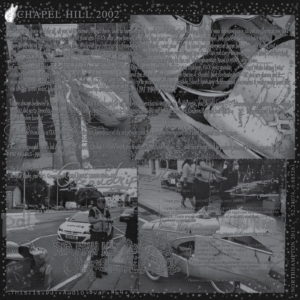
“Red Man K’s Bedrifter – Goodiepal Live, Chapel Hill 2002”
In 2001, Peter Rehberg (then of Mego) asked Parl Kristian Bjørn Vester aka Goodiepal while visiting Austria, if he would be interested in “doing something” for the label. Despite meeting on numerous occasions at various events and happenings around Europe nothing was delivered. One hot August day in 2013, a large package arrived containing lacquers for a double vinyl LP. Here it was! The Goodipal Mego album delivered as lacquers and not a wetransfer link.
To actually hear the audio the lacquers were sent to plant and made into test pressings, which revealed 3 looong sides of audio from a concert in Chapel Hill, NC in 2002. Not exactly 11 in years in the making but more like 11 years in the waiting. The fourth side is made up of a letter to Peter Rehberg etched onto the vinyl explaining amongts other things ’the longer a message have to travel over time the more importance you can add to it’. With this in mind this release has no ’digital footprint’ and is made available only as a physical vinyl LP in gatefold cover.
“And it came to my mind like a flashlight: Goodiepal is not an artist. He is an art critic. Or to be more precise: an art art critic, for he is using his art criticism as an art form. But of course, he would criticise this definition. Ahoi!”
Felix Kubin
To actually hear the audio the lacquers were sent to plant and made into test pressings, which revealed 3 looong sides of audio from a concert in Chapel Hill, NC in 2002. Not exactly 11 in years in the making but more like 11 years in the waiting. The fourth side is made up of a letter to Peter Rehberg etched onto the vinyl explaining amongts other things ’the longer a message have to travel over time the more importance you can add to it’. With this in mind this release has no ’digital footprint’ and is made available only as a physical vinyl LP in gatefold cover.
“And it came to my mind like a flashlight: Goodiepal is not an artist. He is an art critic. Or to be more precise: an art art critic, for he is using his art criticism as an art form. But of course, he would criticise this definition. Ahoi!”
Felix Kubin
19,00€
In stock
12"
Valentina VUKSIC
“Harddisko”
“About the record : Live-recordings of Harddisko: 16 computer harddrives on power. Superreal computer music. Upon powering, each harddrive moves with its own speed and pattern, as directed by the firmware and mechanical constitution. Electromagnetic emissions picked up as acoustic signal reveal the specific tone of a drive. In various formations, the harddrives perform according to their past usage and current state.
About the artist : Valentina Vuksic (CH - 1974) is a computer artist and programmer living and working in Zürich. She explores an individual articulation of hard- and software mediation. The processes in such intermediate space imply actors rendered audible.
Vynil 12” - Maxi 45rpm - Limited Edition 512 copies. Each record is hand packed with an antistatic bag, sealed by a sticker and numbered.” label info
21,00€
In stock
12"
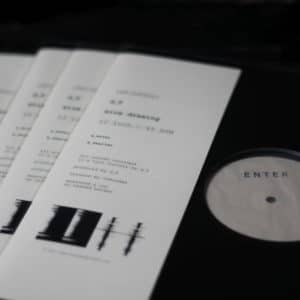
d_T
“Wire Drawing”
Working at once on site-specific field recordings, using the microphone as an instrument, and in-studio composition, it took several months of labour for the artist to reach the essential: a thirty-minute piece depicting a typical worker's day, from beginning to end.
Enter and Shelter both reflect the artist's chosen standpoint: in recording the factory's sounds, he gives voice to the voiceless, without having them speak.
The resulting physical displacement conveys political meaning, with the immersion weaving the work into a historicity.
limited to 150 copies.
all sounds recorded in a tyre factory by d_T
mastered and cut by rashad becker
15,00€
In stock
10"
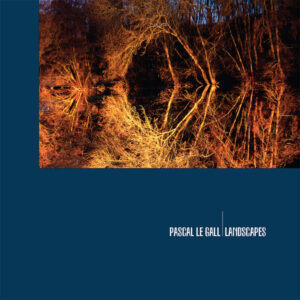
Pascal LE GALL
“Landscapes’
Pascal Le Gall, electrophon Philips (6rpm), laptop. Landscapes was mixed and recorded in the home-studio of Pascal Le Gall in Tours March 2016.
A carefully thought out, simple, clean but rich performance using really almost nothing, just a turntable, teach yourself foreign language LP’s, the impeccable timing of a percussionist, and an idea.
With the intense focus of a scientist fed up with pointless repetition, Pascal takes a scalpel to composition, improvisation and performance, and (with the most basic means) examines their sameness, and their miniscule but important differences. A riveting public dissection, his performances are, maybe you could say, allegories, in that an allegory (a symbolic representation of something else) builds away from itself, outwards, towards an idea. Totally non-literal, Pascal’s performances communicate the idea that improvisation and composition are harder to tell apart than you might think.
Pascal Le Gall, Curious French percussionist of jazz and musical thinker. Composer of electroacoustic musique for himself and the choregrapher Bernardo Montet, he performed alone or with the musician Marc Baron.
16,00€
In stock
10"
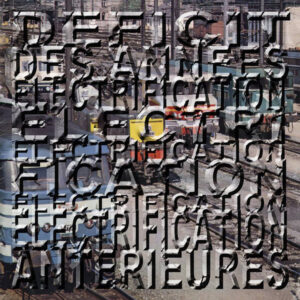
DDAA
“Electrification”
This 10inch offers 3 tracks where the DDAA plays with songs and world music. Another musical hit from these French underground legends.
17,50€
Out of stock
10"
Ghédalia TAZARTÈS
“5 Rimbaud 1 Verlaine”
Vinyl reissue of this great tribute to the poetry of Rimbaud and Verlaine made by our favorite French sorcerer, who exceptionally abandones his typical imaginary language to reinterpret six small poems in his own way, jumping from one musical genre to the other and happily letting them crunch together in a childish, enthusiastic play. Recorded in Paris in his flatelier around the same time he recorded the wonderful Hystérie Off Music and previously available in an almost unnoticed mini CD edition published by the French label Jardin au Fou, it’s now available in a remastered vinyl version - with an excellent 45 rpm cut made by SST in Frankfurt.
Pressing info: 350 copies on black.
15,50€
In stock

10"
ASTATINE – OGROB
“œil céleste”
This record is the result of a collaboration between Astatine aka Stéphane Récrosio, head of the Orgasm label since 1994 and Ogrob aka Sébastien Borgo, member of Micro_pénis and L’Autopsie A Révélé Que La Mort Etait Due A L’Autopsie. 6 compositions, created in 2014, mixing Astatine’s noise experimentations in Paris and Ogrob’s field recordings and short waves in Sydney, Australia and Tasmania.
Astagrob.
Astatine / Ogrob.
Digital precision / Lo-fi fog.
Junk sounds / Clean noise.
Field recordings / Kitchen utensils.
Collect / Rubbish tip.
Northern hemisphere / Souther hemisphere.
Astral / Holocaust.
Table of the elements / Elements on the table.
Postal card / Stamped cardboard.
Oeil Céleste.
Mastered by Nicolas Marmin. Transparent 10”. 200 numbered copies. Cardboard cover by Ogrob. Postcard by Astatine.
Astagrob.
Astatine / Ogrob.
Digital precision / Lo-fi fog.
Junk sounds / Clean noise.
Field recordings / Kitchen utensils.
Collect / Rubbish tip.
Northern hemisphere / Souther hemisphere.
Astral / Holocaust.
Table of the elements / Elements on the table.
Postal card / Stamped cardboard.
Oeil Céleste.
Mastered by Nicolas Marmin. Transparent 10”. 200 numbered copies. Cardboard cover by Ogrob. Postcard by Astatine.
13,50€
Out of stock

10"
Francisco LÓPEZ
“Untitled #205”
“Francisco López states: “Based exclusively on end grooves from vintage
records, ‘untitled
205’ is a straightforward and joyful exploration of the potential for reincarnation of these unintended sonic structures into new life. More a tool than a final product, it delves into static, noise and rhythm with a hopeful perspective.” The untitled
205 mix on the a-side brings us 18 minutes of hissy, textural sound in dissolution, ranging from ryhthm to noise. The b-side has the 20 original loops López constructed out of old vintage 78s so if you buy 20 copies of this 10” you might be able to recreate the track… Clear vinyl in clear plastic sleeve, with 20 locked grooves for DJs on B-side. Limited to 300 copies.” Attention: it’s delivered in a white inner sleeve for protection reasons during transport. Please throw it away and put the record itself in the clear plastic sleeve.
15,00€
In stock
10"
Yann LEGUAY
“Drift-02”
Drift is a record series that uses non conventional technics of vinyl cutting. For its second issue, Drift-02, a strict protocol was set, cutting 12 grooves of silence on each side, superimposed on top of each other and progressively cut on the surface of the record.
Playing the record produces a randomized path into the different silent grooves. The listener concretely enters the vinyl materiality, experiences the shapes of the empty grooves, the disturbances and the crossings.
Hearing a sound from passing through the stereo panning indicates the pickup is physically drifting on the surface. The same applies to the cracks and drifts, that manifest that the needle has leaped, as the pickup continually drifts grooves throughout its progression. And even if there is no sound cut on the record, singular sounds arise, producing a complex soundscape.
The settings of the turntable, the quality and wear of its needle, its different parameters (consweight, anti-skating…) affect the reading path, unveil the non deterministic nature of the record : the duration is not stable, the reading becomes chaotic, punctuated with accidents, looping or backward phenomena may occur.
DRIFT-02 is the second opus released on the collection DRIFT, after the famous DRIFT-01, released in 2012, with 4 grooves per side, reuniting Martin Tétreault, eRikm, DJ Sniff and Arnaud Rivière.
Cut by Yann Leguay at DK Mastering
Texts by Samon Takahashi « Drift-02 introduction » & « Grooving in Silence ».
Brussels based sound artist Yann Leguay, defined as a media saboteur by the Consumer Waste label, he seeks to fold materiality in on itself using basic means in the form of objects and videos or during installations and performances.
His flagrant disregard for the accepted norms of audio behaviour appropriates unusual machinery for the playback of audio media: using an angle grinder to perform the live destruction of a microphone or using opened hard-drives as turntables. His release activity is equally deviant, releasing silkscreen records or a 7” single without a central hole and a record composed from recordings of vinyl being scratched by scalpel.
His Phonotopy label proposes a conceptual approach to recording media and he also curates the DRIFT series on the Artkillart label which overlays several grooves onto a single record, causing randomised playback.
Comes with an English text from Samon Takahashi. Limited to 222 copies.
Playing the record produces a randomized path into the different silent grooves. The listener concretely enters the vinyl materiality, experiences the shapes of the empty grooves, the disturbances and the crossings.
Hearing a sound from passing through the stereo panning indicates the pickup is physically drifting on the surface. The same applies to the cracks and drifts, that manifest that the needle has leaped, as the pickup continually drifts grooves throughout its progression. And even if there is no sound cut on the record, singular sounds arise, producing a complex soundscape.
The settings of the turntable, the quality and wear of its needle, its different parameters (consweight, anti-skating…) affect the reading path, unveil the non deterministic nature of the record : the duration is not stable, the reading becomes chaotic, punctuated with accidents, looping or backward phenomena may occur.
DRIFT-02 is the second opus released on the collection DRIFT, after the famous DRIFT-01, released in 2012, with 4 grooves per side, reuniting Martin Tétreault, eRikm, DJ Sniff and Arnaud Rivière.
Cut by Yann Leguay at DK Mastering
Texts by Samon Takahashi « Drift-02 introduction » & « Grooving in Silence ».
Brussels based sound artist Yann Leguay, defined as a media saboteur by the Consumer Waste label, he seeks to fold materiality in on itself using basic means in the form of objects and videos or during installations and performances.
His flagrant disregard for the accepted norms of audio behaviour appropriates unusual machinery for the playback of audio media: using an angle grinder to perform the live destruction of a microphone or using opened hard-drives as turntables. His release activity is equally deviant, releasing silkscreen records or a 7” single without a central hole and a record composed from recordings of vinyl being scratched by scalpel.
His Phonotopy label proposes a conceptual approach to recording media and he also curates the DRIFT series on the Artkillart label which overlays several grooves onto a single record, causing randomised playback.
Comes with an English text from Samon Takahashi. Limited to 222 copies.
14,50€
In stock

10" monoface
Henning CHRISTIANSEN
“Hesteofringen”
On January 30, 1970 Henning Christiansen and Bjørn Nørgaard - a figure nearly radical as Christiansen himself - hit the Danish national consciousness when a large portion of the Danish population watched a TV broadcast performance piece in protest to the Vietnam War. “Hesteofringen” (The Horse Sacrifice, 1970) features the work Min døde hest (My Dead Horse, 1970) OPUS 55 for piano, voice and violin (green), a beautiful haunting fragile song featuring a poem written by Bjørn Nørgaard and performed by Lene Adler Pedersen, accompanied by Nørgaard and Christiansen on piano and (green) violin. Laden with metaphor, this beautiful, sad lullaby, is as simple and unusual as anything in Christiansen’s output. Previously unreleased.
Pressing info: 350 copies on black, embossed lettering. 10”, Single Sided.
17,00€
Out of stock
10"
Pali MEURSAULT
“Mécanes”
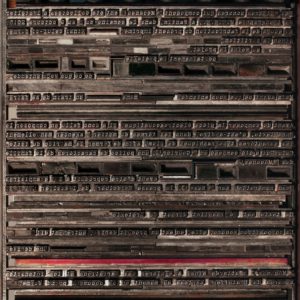
Commissioned by GRM, < Mécanes > brings further the “machinic” research pali meursault had started with Offset. This time, sound matter was recorded in a letter-pressing workshop. With the help of the artisans, and on the pretext of printing the text insert of the record, it as possible to bring the microphones even closer to the mechanics, to the machines as a musical instrument.
Side A focuses on the delicate handcrafting, while on side B it's the energy of the presses that is setting the pace.
Sounds were collected with the welcome and support of atelier m.u.r.r., the piece was first created in january of 2016 at GR’'s “Festival Multiphonies”.
12,00€
In stock

10"
PUMICE
“Some time ago, I got a message from Stefan Neville about this record: "I been working on some recording for you. some dumb punk slop and some tape loop soup and a pretty love song." I couldn’t describe the record better. It’s maybe the end of an era for Pumice with his 8 track pushed to its maximum limits and dying soon after these recordings were finished. So the result is maybe one of the noisier Pumice records to date... with a pretty love song. Recorded in june 2009 in Sandringham, Auckland, NZ. And mixed in January 2010 at Mainz. Black vinyl packed in black paper silkscreened by Cotoreich, with 2 postcards. Artwork by Stefan Neville. Mastering by Aigle noir. Limited to 500 copies.
10,00€
In stock
LP + 7"
Tom RECCHION
“Proscenium”
“Proscenium” is a subtle and remarkably controlled collection of atmospheres. The air of mystery, deliberate pacing, the deep tones and unidentified sounds of Recchion’s 2006 album “Sweetly Doing Nothing” have been explored even further here. It’s a logical development but the results are unexpected and strikingly original, sounding wholly unfamiliar and yet like no one’s but Tom Recchion’s. Proscenium’s six pieces mostly began life as music for puppeteer Janie Geiser’s play “Invisible Glass,” an adaptation of Poe’s “William Wilson”. The play’s intricate beauty and the story’s moody confusion have been perfectly mirrored and expanded on by Recchion who used that inspiration as a leaping off point for Proscenium’s rich and surprising compositions.
Tom Recchion has been a sound and visual artist - composer - art director and graphic designer in California since the 1970s. He is the co-creator of the legendary Los Angeles Free Music Society (LAFMS) and has collaborated with David Toop, Christian Marclay, Oren Ambarchi, Keiji Haino, and Max Eastley, among many others. Though Proscenium’ is only his fourth proper album as a solo artist, Recchion has had many recordings released by labels such as Birdman, Touch, PSF, RRR, Idea, Staubgold, and the Cortical Foundation. He also occasionally writes for The Wire magazine. Tom Recchion lives in California.
“Proscenium” consists of one 180-gram virgin vinyl LP inside a black poly-lined sleeve, plus 7” record, each with five-color labels, housed in a full-color gatefold jacket. Included with each copy of this set is a full-color download card featuring access to high-quality MP3s of the complete contents of the vinyl records. This package has been issued in an edition of 500 copies.
25,00€
In stock

LP single-sided
Adam ASNAN – Giuseppe IELASI
“Quarry”
Quarry is the latest chapter in the ongoing collaboration between the London-based composer-performer of musique concrète Adam Asnan and the Italian sound artist and mastering engineer Giuseppe Ielasi. As the title may suggests, this encounter produced a dusty sculpture whose shape was only drafted immediately after the stone has been excavated from the ground, and where it is hard to distinguish the acousmatic touch of Asnan from the rhythmic textures of Ielasi. Pressing info: 200 copies on black.
15,00€
In stock

LP monoface
COMPILATION
FYLOOP
One-sided LP in white vinyl with 360 locked grooves by Fylkingen artists!
Irina Anufrieva, Jan Carleklev, David Linnros, Henrik Rylander, Fredrik Olofsson,
Dr. Robin McGinley, Jacek Smolicki, Christian Bock, Girilal Baars, Jan Carleklev,
Ida Lundén, Jocke Roséen, Daniel Borgegård Älgå, Daniel Rozenhall, Jan Liljekvist, Dinka Pignon, Iwo Myrin, Johan Boberg, Hanna Hartman, David Bremer, Gunnel Pettersson & Amit Sen, Ingrid Engarås in collaboration with Karl Ture Rydby, Joel Dittrich, Charlotte Engelkes, Bo Leth, Adrian Knigth, Johan Lindvall, Helene Hedsund, Daniel Wiklander.
17,00€
Out of stock

LP monoface
Philip CORNER
“Coldwater Basin No.2”
“Re-emerging from deep Fluxus celebrations in this 2012 summer, alga marghen realized that Philip Corner “Coldwater Basin” LP was instantly sold out. Could there be a better decision than issuing an alternative version of this masterpieces from the glorious 60s, by master of ecstatic music Philip Corner? If you fluctuated over sonic landscapes with the first version, then “Coldwater Basin No.2” will knock your socks off! More intense than Whitehouse, more liquid than your wildest dreams. “Remember? When you made these things at home, on the best equipment you or your other poor friends could find? And you had that Japanese tape recorder with built-in mike; indeed that was the only piece of furniture on your tatami floor on the Lower East Side that summer of 1961”. Coldwater Basin No.2” by Philip Corner. Again, a home recording of water running from a faucet into a sink. New York City, the Lower East Side, sometime in the 60s. With Bill Fontana still on microphone. “And I always dreamd of passing an entire night bathed in this… It was never long enough”. Edition limited to 310 copies with front sleeve design and calligraphies by Philip Corner.”
19,00€
Out of stock

LP monoface
Luc FERRARI
“Labyrinthe de violence – DANSE”
“Danse” was part of a sound & visual installation called "Labyrinthe de violence". Previously unpublished, this radical experimental work has now been released on LP record in collaboration with the New Media Dept of Centre Pompidou (National Museum of Modern Art) in Paris for “Œuvres sonores 2”, a 2-day-event organised by Emanuele Carcano at Beaubourg on April 5th & 6th, 2009. "Labyrinthe de violence" was an installation for tape sounds and 2 slide projectors conceived in 1975 by Luc Ferrari. The installation was a visual and sound metaphore of violence within contemporary civilised society. Four different rooms with a central space created the spacial context of this work. The specific environmental sonority (1. "Violence"; 2. "Pollution"; 3. "Profit"; 4. "Mechanism" / "Paysage" / "Danse") created for each of the four rooms naturally superposed themselves in the central space. "Danse" was one of those sonorities minimally constructed using 2 different sounds: a very low electronic drone deeply resonating for the whole duration with, in the end, the accumulation of deconstructed sequences played by Luc Ferrari on an electric organ. Documenting one of Luc Ferrari most beautiful and mysterious sonic works, this LP edition will be the first in a series of alga marghen projects presenting a still undiscovered side of the poetical universe of this foundamental composer. This 1-sided LP, issued in an edition limited to 500 copies only, will first be presented at Centre Pompidou in Paris and offered to the audience participating to the second “Œuvres sonores” event.
19,00€
Out of stock

LP monoface
Brunhild FERRARI
“Tranquilles impatiences”
“alga marghen proudly presents the first record edition ever by Brunhild Meyer-Ferrari, a very refined and talented german composer, wife of Luc Ferrari with whom she collaborated for over 40 years in creating some of the most beautiful sound works ever created in the past decades. First there was "Et tournent les sons dans la Garrigue" that Luc Ferrari composed in 1977 before "Exercises d’Improvisation" in the same year (a previous unreleased work, soon to be issued on the PLANAM label). These two pieces "...conceived for individual or collective improvisation for any instrument or instrumental group..." are based on identical sound elements. "Exercises d’Improvisation" consists of a sequence of 7 separate tapes, while for "Et tournent les sons dans la Garrigue" Luc Ferrari mixed these tapes into one. Listening to the separate tapes Brunhild Meyer-Ferrari felt the irresistible desire to compose a new piece using ad libitum five of these seven tapes. As she remarked: "Impatiences represents for me those high-pitched rhythmic sounds, those imperturbable wriggling interfering with the low rhythms which are falsely quiet, because each of them is submitted to different and contradictory rhythms. I wished these to be perturbing enough to make the physical balance stagger by fractions of seconds". Edition limited to 300 copies, issued by alga marghen to celebrate the "Oeuvres sonores 3" event conceived in collaboration with the New Media Department of Centre Pompidou and La maison rouge, Fondation Antoine de Galbert in Paris. This LP is the third in the "Oeuvres sonores" series after the now sold out Charlemagne Palestine "Sound I" LP and Luc Ferrari "Danse" LP.” label info
19,00€