
In stock

4 CD
William BASINSKI
“The Disintegration Loops (Arcadia Archive Edition)”
From label :
Since the turn of this century, perhaps no other modern composition has had a more resonant healing effect than The Disintegration Loops. Composer William Basinski’s deteriorating analog tape loops evolved from melodic symphonies to melancholic silence over a span of time that uncannily turned passing minutes into pensive lifetimes. In her foreword for the new box set reissue of The Disintegration Loops, the pioneering multimedia storyteller, Laurie Anderson, describes the impact of this transformation in poetic detail: “These dissolving sounds, this emptying space, has gained my complete confidence. They are taking me somewhere. I am willingly following these sounds, becoming more and more transparent.” The Disintegration Loops – Arcadia Archive Edition is an expansive new box set that includes the entire 5-hour suite of iconic work. Newly remastered from the original recordings by Josh Bonati, the hefty package includes eight vinyl records (or four CDs for the less analog-inclined) in sturdy full-color jackets featuring the restored original artwork, and a new 1000-word foreword by Laurie Anderson – all housed in a striking heavyweight, case-wrapped box. It is the ideal encapsulation of one of the 21st Century’s most truly transcendent works. As Anderson concludes in her foreword, “this music has created another world, a world to be carried away in.”
42,00€

4 CD
Jean-Claude ELOY
“Réminiscences”
The four pieces that compose Réminiscences, a masterpiece if ever there was one, create the equivalent of a human day, from dawn to night, from call to cry, from meditation to revolt, through the clash of the sounds of human and natural activities. Simply unique and grandiose.
Jean-Claude Eloy (1938) is a French composer with a classical background who moved away from the structures and models that had carried him until then (models imposed on contemporary music through various institutional and official hegemonies) to create, from the early 1970s onwards, long electroacoustic frescoes, vast poems of sounds and noises between Western and Eastern traditions, the main aim of which is to liberate the sound imagination.
__
« To achieve these four works (Incantation, Confrontation, Contemplation, Oppression-Liberation), I relied on the sound elements used for the creation of my former work Yo-In, from which I recycled all the electroacoustic parts created at the Institute of Sonology of the University of Utrecht in 1979/1980. I relied also on the huge amount of samples and recordings of percussion instruments made at my request by the japanese percussionist Sumire Yoshihara, in 1979, at the Studio of Electronic Music of Radio NHK in Tokyo ; a studio where I had worked a lot in 1977/1978 (realization of Gaku-no-Michi).
This, for the purpose of transforming this work into an entirely electroacoustic work, freed from the heavy practical constraints of the 1980 version (sound theater for an imaginary ritual), produced with the wonderful participation of Michael W. Ranta.
In other words, my aim was to refocus on the most characteristic sound sources of this work : sirens boats ; sounds from nature (solfatares, volcanoes, wind, rain, waves...) ; african bird song ; noise from machines and factories ; not to mention the many samples of metal, wood and skin percussion instruments...
With this new composition, I turn my back on the « live » aspects that were strongly present since the creation of Yo-In and i have good chances of making the listener focus on the « power of listening », on perception, on the concentration of consciousness around the concrete sound phenomena that were at the source of this work. We are now dealing with a celebration of sound, an acoustic celebration, through the many metamorphoses of its materials and the specific theme of each work. »
Jean-Claude Eloy
Réminiscences (2017-2019)
Incantation 77’20
Confrontation 79’30
Contemplation 71’40
Oppression-Libération 78’40
Total length : 307’ (5h 07’)
Production: Studio Eve-Défense (composer's home studio) 2017/2019.
Sound materials taken from previous works: “Yo-In”, electroacoustic realization at the Institute of Sonology, Utrecht University (1979/1980).
Samplings of percussion instruments:
- Sumire Yoshihara, electronic music studio (Denshi Ongaku Studio), NHK, Tokyo (1979).
- Gaston Sylvestre (skin percussion instruments), Paris (1979).
- Michael Ranta, Asian sound, Cologne (metal percussion instruments). Conny's Studio, Neunkirchen (1984).
Various contributions of recorded sound material: Michel Fano, Daniel Deshays
5 panel digipak + 24 page booklet
(extract cd1)
(extract cd4)
30,00€
Out of stock
4 CD
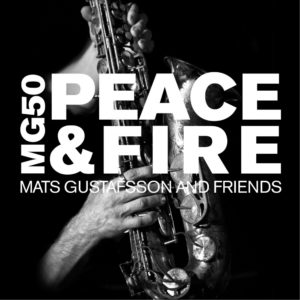
Mats GUSTAFSSON & FRIENDS
“MG 50 – Peace & Fire”
In October 2015 happened a big 3day-celebration in the Viennese venue Porgy&Bess for the 50th birthday of Mats Gustafsson - saxophone player extraordinaire in contemporary (free) jazz, for instance with The Thing, Fire!, and in various duo/trio/ensemble-formations. Many musicians Gustafsson played with or currently plays with were invited to join in various formations. Comes in a heavy cardboard box with two thick booklets including essays and many photos !
CD 1 - 26 october
Mats Gustafsson / Didi Kern
RISC (Billy Roisz/Dieb 13)
Sven- Åke Johansson
Swedish azz
CD 2- 27 october
FAKE THE FACTS + Paul Lytton & Martin Brandlmayr
Christof Kurzmann / Sofia Jernberg
FIRE! Plus guests
CD 3 - 28 october
Klangforum Wien & Mats Gustafsson
TR!O + 1 (Günther Christman /Paul Lovens/Thomas Lehn/Mats Gustafsson)
THE THING & KEN VANDERMARK
CD 4 - STRENGE KAMMER
Kjell Nordeson
Per – Åke Holmlander
Agustí Fernández
Erwan Keravec
Christof Kurzmann / Ken Vandermark
Anna Högberg
Original price was: 45,00€.25,00€Current price is: 25,00€.

4 CD
Jean-Claude ELOY
“Gaku-no-Michi (1977-78)”
“Gaku-no-michi”, Tao of music or Ways of music. Film without images for electronic and concrete sounds. Produced at the electronic music studio of NHK Radio, Tokyo 1977-78. Digitalized and revised version from 2006.
“Jean-Claude Eloy is a French composer, born in 1938. He studied at the Paris National Superior Conservatory of Music, where he won First Prizes in Piano, Chamber Music, Counterpoint, Ondes Martenot, and studied composition with Darius Milhaud. He attended summer courses at Darmstadt (Pousseur, Scherchen, Messiaen, Boulez, Stockhausen) and was a student in composition in Pierre Boulez’ master class at the Music Academy in Basel (1961-1963). Works by Jean-Claude Eloy have been performed all over the world. They have been conducted by Pierre Boulez, Ernest Bour, Michael Guilen, Bruno Maderna, Diego Masson, Michel Tabachnik, Arthur Weisberg and others ... He has lived in the United States (professor at the University of California, Berkeley, in the sixties), Germany (invited by the WDR studios in Cologne, the Technische Universität in Berlin, guest artist at the Berliner Künstlerprogramm), Holland, Japan (where he collaborated with NHK and the National Theater of Japan, among other activities). He participates regularly in numerous international festivals, principally in Europe, but also in Asia, the United States, Canada and Latin America as sound-projectionist for his electro-acoustic works and with the soloists closely associated with his compositions : Fatima Miranda (vocalist), Yumi Nara (soprano), Michael Ranta (percussionist), Junko Ueda (Shômyô singer and Satsuma-Biwa player), Kôshin Ebihara and Kôjun Arai (Buddhist monk singers), Mayumi Miyata (Shô player), etc.”
CD 1: “Pachinko” introduces “Tokyo” in a deliberately stiff, regular, almost mechanical and untranscended way while the big spiral of long successive waves, which further develops through Tokyo, becomes more and more varied in its material ending in the surpassing and searched-for transubstantiation taking place throughout the fi nal part.
CD 2: The second disc, “Fushiki-e”, takes us (through varied, complex, contrasted and sometimes violent sound episodes) towards the four “stages of contemplation” including the last one, “Mokuso”, which represents the ultimate stage of the contemplative. It is the longest part of the whole piece, lasting almost 80 minutes.
CD 3: “Banbutsu no Ryûdô” is a boundless continuous “weft” travelling so to say through all sorts of daily or exceptional « sound scenes » continually metamorphosing, going from political speeches to a Shishi Odoshi, transformed for a long time well before its pure, direct appearance.
CD 4: “Kaiso “ is a moment of gravity innervated and built around the annual commemorative ceremony of Hiroshima, which however leads us beyond the evoked drama to a place of surpassing with peace through the « Han » sound, extending the work to infinity…”
26,00€
4 CD
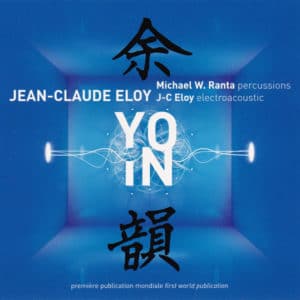
Jean-Claude ELOY
“Yo-In”
*** Regular edition without book ***
“Yo-In” (1980). Sound theater for an imaginary ritual, in four acts. For electronic and concrete sounds, fixed on multi-tracks. For a “percussionist-character” (solo percussionist). With about two hundred varied percussion instruments. Performed by Michael W. Ranta (solo percussionist) and Jean-Claude Eloy (electroacoustic projection, synchronisation, mixings). Recorded during a public concert given at the Warsaw Autumn festival Polish-Radio, Warsaw, September, 1994. Electro-acoustic production : Instituut voor Sonologie, Rijkuniversiteit, Utrecht. Institute of Sonology, State University, Utrecht. With the collaboration of NHK, Denshi Ongagu Studio, Tokyo. First world publication. Digipack 4 x CDs with a booklet of 20 pages.
26,00€
In stock
4 CD
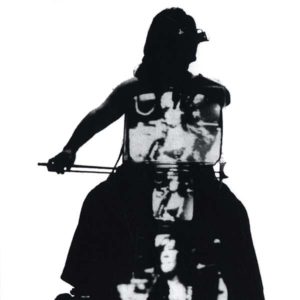
Charlotte MOORMAN
“Cello anthology”
4 CD with book and inserts in splicase. New edition of 250 copies!
It is certainly surprising that until now an exhaustive recognition of the work of Charlotte Moorman has not been undertaken. The cellist can be numbered among the most charismatic and influential protagonists to have appeared on the avant-garde or experimental music scenes since the early '60s. A documentation of her activities as a performer is generally available only in various catalogues which document the crucial intersection with the work of Nam June Paik, or the association with manifestations and events connected with the so exquisitely realistic gestures of the Fluxus movement. To have accepted the transformation of herself into a 'living icon' through the works realised in collaboration with Paik, has perhaps contributed to obscure a part of her individuality. As Giuseppe Chiari correctly noted, in a text which is authoritatively integrated into the documentation provided by the present publication, Charlotte Moorman's œuvre can in fact be sympathetically felt only in the absolutely 'unique' character of her interpretative gesture, a character which justly identifies her originality, her capacity of an authentic 'author'. The presence of Charlotte Moorman as catalyst must be realised in such an evaluation.
“Cello Anthology" is a collection of documents—sonic and photographic—as well as original texts and testimonials, made available for the first time in a unitary form, which permits a complete recognition of Charlotte Moorman's work. The biography and chronology faithfully reproduce the materials that the artist herself had ordered in booklet form. The range of her activity not only as an interpreter, but also as a promoter of the avant-garde artistic research progressively open to intersecting with the most varied disciplines—from music to sound and concrete poetry, form visual and plastic art to cinema and to video art—is moreover reconstructed through an unpublished text with which Charlotte Moorman meant to review the history of the fifteen editions of the New York Avant Garde Festival she organised between 1963 and 1980. At the core of her uninterrupted performative activity, here documented across a rich iconographic apparatus ordered chronologically, the works realised in collaboration with Nam June Paik doubtless represent a culminating moment in her striking career. It therefore seemed appropriate to also integrate the transcription of the primary texts and documents pertaining to them, to better perceive to what extent the aesthetic project of the Korean artist was indissolubly bound to the peculiar 'corporeality' of the cellist's performance 'gesture' and to her absolutely unique capacity of translating the musical experience within the limits of her own non-exchangeable physical presence. Giuseppe Chiari's affectionate testimony dedicated to the faithful interpreter of some of his most important works of the early '60s—works which affirmed the Florentine artist on the international scene—and the reprint of Gisela Gronemeyer's poignant essay dedicated toCharlotte Moorman, likewise offer a useful explanatory setting for the introduction of these copious texts and documents.
Indeed, for the first time, the work of Charlotte Moorman can be appreciated by means of a significant selection of vintage recordings. The first two CDs highlight a pair of exceptional documents—a performance recorded by radio station WBAI in New York on 12 September 1964, and a concert from 25 July 1966 in the Theatersaal in Aachen, Germany. These events superbly represent the type of repertoire that Moorman and Paik cultivated and proposed in the US and Europe, in the years following their meeting, in their memorable 'duo' exhibitions. The programs of the two concerts present several homogeneous choices and others more clearly divergent. The Aachen event, in fact, is testimony to the progressive and always more pronounced emergence of meta-musical elements deliberately turned toward the demystification of 'ritualistic' meanings of a concert, even while consciously accepting it as an exhibition frame. It is for this reason that the Aachen recording can document, with respect to the comprehensive programme, only those works in which the sound matrix constitutes the prominent factor. This is particularly evident, beyond several tried and true war-horses of their exhibitions which recur or are distributed equally in both concerts (26'1.1499" for a String Player by John Cage, Duet II by Toshi Ichiyanagi and two works by Giuseppe Chiari: Per arco and Ave Maria di Schubert, both of which were written for the cellist and dedicated to her), in the premiere of Earle Brown's Synergy, a rare and delightful duet with Terry Jennings on saxophone, an almost systematic version of Plus Minus by Karlheinz Stockhausen aided by Paik's Robot in the WBAI concert, as well as, in the Aachen concert Sonata No. 1 for Adults Only and especially the first performance of Opera Sextronique, both by Paik, in addition to other pieces by Earle Brown and Sylvano Bussotti. The second disc includes another unspecified rendering of Ichiyanagi's Duet II and an abbreviated version of Cage's 2'1.1499" for a String Player. Of the famous TV Cello—conceived by Paik for Moorman as a 'living sculpture'—the third CD offers an in situ recording realised on one of the three days inaugurating the Paik retrospective at the Museum of Contemporary Art in Chicago, on 11, 12 and 14 September 1982. This version contains respectively the TV Cello Duets with Paul Garrin and the Concerto for TV Cello and Videotapes, largely improvised, “including a tape collage by Ornette Coleman prepared for Charlotte, also talking with audience”. The fourth CD restores three other documents, collateral but definitely not secondary. One happy example is a choral work performed on 3 September 1964, during the second New York Avant Garde Festival, a performance of Jackson Mac Low's composition The Long Hot Summer, sees in an exceptional reunion the names of Charlotte Moorman, Nam June Paik, Benjamin Patterson, Philip Corner, and Malcolm Goldstein, as well as Mac Low himself. On the relevance of this performance, distinguished by a marked ethico-political intonation and valence, Philip Corner dwells extensively in an unpublished text printed here as an attachment to the sonic documentation. The voice of Charlotte Moorman, characterised by her unmistakable vital charge, is brought back to us through a long and meaningful interview conducted by Harvey Matusow in October of 1969 in the BBC New York Studios. The soundtrack of the video Waiting for Commercials, realised by Paik in 1972 in collaboration with Russel Connor, whose sound collage integrates musical insertions by Charlotte Moorman and David Behrman, completes the anthology put together and offered here.
Luxury edition including a 154 page book with original documents, full colour photos and scores; a set of 16 full colour inserts reproducing the original posters and programs of the Annual Avant Garde Festival of New York; 4 compact discs. Slipcase edition limited to 250 copies.
It is certainly surprising that until now an exhaustive recognition of the work of Charlotte Moorman has not been undertaken. The cellist can be numbered among the most charismatic and influential protagonists to have appeared on the avant-garde or experimental music scenes since the early '60s. A documentation of her activities as a performer is generally available only in various catalogues which document the crucial intersection with the work of Nam June Paik, or the association with manifestations and events connected with the so exquisitely realistic gestures of the Fluxus movement. To have accepted the transformation of herself into a 'living icon' through the works realised in collaboration with Paik, has perhaps contributed to obscure a part of her individuality. As Giuseppe Chiari correctly noted, in a text which is authoritatively integrated into the documentation provided by the present publication, Charlotte Moorman's œuvre can in fact be sympathetically felt only in the absolutely 'unique' character of her interpretative gesture, a character which justly identifies her originality, her capacity of an authentic 'author'. The presence of Charlotte Moorman as catalyst must be realised in such an evaluation.
“Cello Anthology" is a collection of documents—sonic and photographic—as well as original texts and testimonials, made available for the first time in a unitary form, which permits a complete recognition of Charlotte Moorman's work. The biography and chronology faithfully reproduce the materials that the artist herself had ordered in booklet form. The range of her activity not only as an interpreter, but also as a promoter of the avant-garde artistic research progressively open to intersecting with the most varied disciplines—from music to sound and concrete poetry, form visual and plastic art to cinema and to video art—is moreover reconstructed through an unpublished text with which Charlotte Moorman meant to review the history of the fifteen editions of the New York Avant Garde Festival she organised between 1963 and 1980. At the core of her uninterrupted performative activity, here documented across a rich iconographic apparatus ordered chronologically, the works realised in collaboration with Nam June Paik doubtless represent a culminating moment in her striking career. It therefore seemed appropriate to also integrate the transcription of the primary texts and documents pertaining to them, to better perceive to what extent the aesthetic project of the Korean artist was indissolubly bound to the peculiar 'corporeality' of the cellist's performance 'gesture' and to her absolutely unique capacity of translating the musical experience within the limits of her own non-exchangeable physical presence. Giuseppe Chiari's affectionate testimony dedicated to the faithful interpreter of some of his most important works of the early '60s—works which affirmed the Florentine artist on the international scene—and the reprint of Gisela Gronemeyer's poignant essay dedicated toCharlotte Moorman, likewise offer a useful explanatory setting for the introduction of these copious texts and documents.
Indeed, for the first time, the work of Charlotte Moorman can be appreciated by means of a significant selection of vintage recordings. The first two CDs highlight a pair of exceptional documents—a performance recorded by radio station WBAI in New York on 12 September 1964, and a concert from 25 July 1966 in the Theatersaal in Aachen, Germany. These events superbly represent the type of repertoire that Moorman and Paik cultivated and proposed in the US and Europe, in the years following their meeting, in their memorable 'duo' exhibitions. The programs of the two concerts present several homogeneous choices and others more clearly divergent. The Aachen event, in fact, is testimony to the progressive and always more pronounced emergence of meta-musical elements deliberately turned toward the demystification of 'ritualistic' meanings of a concert, even while consciously accepting it as an exhibition frame. It is for this reason that the Aachen recording can document, with respect to the comprehensive programme, only those works in which the sound matrix constitutes the prominent factor. This is particularly evident, beyond several tried and true war-horses of their exhibitions which recur or are distributed equally in both concerts (26'1.1499" for a String Player by John Cage, Duet II by Toshi Ichiyanagi and two works by Giuseppe Chiari: Per arco and Ave Maria di Schubert, both of which were written for the cellist and dedicated to her), in the premiere of Earle Brown's Synergy, a rare and delightful duet with Terry Jennings on saxophone, an almost systematic version of Plus Minus by Karlheinz Stockhausen aided by Paik's Robot in the WBAI concert, as well as, in the Aachen concert Sonata No. 1 for Adults Only and especially the first performance of Opera Sextronique, both by Paik, in addition to other pieces by Earle Brown and Sylvano Bussotti. The second disc includes another unspecified rendering of Ichiyanagi's Duet II and an abbreviated version of Cage's 2'1.1499" for a String Player. Of the famous TV Cello—conceived by Paik for Moorman as a 'living sculpture'—the third CD offers an in situ recording realised on one of the three days inaugurating the Paik retrospective at the Museum of Contemporary Art in Chicago, on 11, 12 and 14 September 1982. This version contains respectively the TV Cello Duets with Paul Garrin and the Concerto for TV Cello and Videotapes, largely improvised, “including a tape collage by Ornette Coleman prepared for Charlotte, also talking with audience”. The fourth CD restores three other documents, collateral but definitely not secondary. One happy example is a choral work performed on 3 September 1964, during the second New York Avant Garde Festival, a performance of Jackson Mac Low's composition The Long Hot Summer, sees in an exceptional reunion the names of Charlotte Moorman, Nam June Paik, Benjamin Patterson, Philip Corner, and Malcolm Goldstein, as well as Mac Low himself. On the relevance of this performance, distinguished by a marked ethico-political intonation and valence, Philip Corner dwells extensively in an unpublished text printed here as an attachment to the sonic documentation. The voice of Charlotte Moorman, characterised by her unmistakable vital charge, is brought back to us through a long and meaningful interview conducted by Harvey Matusow in October of 1969 in the BBC New York Studios. The soundtrack of the video Waiting for Commercials, realised by Paik in 1972 in collaboration with Russel Connor, whose sound collage integrates musical insertions by Charlotte Moorman and David Behrman, completes the anthology put together and offered here.
Luxury edition including a 154 page book with original documents, full colour photos and scores; a set of 16 full colour inserts reproducing the original posters and programs of the Annual Avant Garde Festival of New York; 4 compact discs. Slipcase edition limited to 250 copies.
98,00€
Out of stock
4 CD
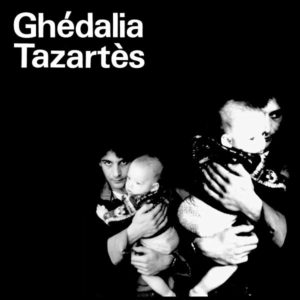
Ghédalia TAZARTÈS
“Les danseurs de pluie – coffret”
New slipcase edition!
This lavish set includes the complete Ghédalia Tazartès recordings previously issued on CD by Alga Marghen. This editions is presented in a newly designed slipcase box including 4 CDs in elegant slim digipak sleeves.
“Diasporas” is the CD edition of Tazartès’ first album also including “Ferme ta gueule, Zarathustra” (previously issued as side A of “Granny Awards” LP).
“Tazartès’ Transports” is the CD edition of Tazartes' second album complete with four “Assassins” bonus tracks (previously issued as "Les danseurs de la pluie" miniCD).
“Une eclipse totale de soleil” is the CD edition of Tazartès' third album. Originally conceived in two parts, this CD edition is completed by the long bonus track “Il regalo della befana”, or “Eclipse totale de soleil (Part III)”.
“Tazartès” is the CD edition of Tazartès’ forth album also including “Whatever Works Singing Wild My Rock Ghédalia” (previously issued as side B of “Granny Awards” LP).
Ghédalia Tazartès is a nomad. He wanders through music from chant to rhythm, from one voice to another. He paves the way for the electric and the vocal paths, between the muezzin psalmody and the screaming of a rocker. He traces vague landscapes where the mitre of the white clown the plumes of the sorcerer, the helmet of a cop and Parisian anhydride collide into polyphonic ceremonies… The greatest trips were made in the deep end of the throat: the extra-European music open the ear to Ghédalia’s intra-European exoticism. Where was music before music halls? Where was the voice before it learned how to speak? Ghédalia is the orchestra and a pop group all in one person: the self is multitude and others. The author and his doubles work without a net, freely connecting the sounds, the rhythms, his voice, his voices. The permanent metamorphosis is a principle of composition, it escapes control, refuses classification. To hell with the technocrats of noise and the purists of synthetic culture. All art like all true mythology use a double clavier, playing nature and culture, feeling and the distance of the flesh, death. Off limits!
This lavish set includes the complete Ghédalia Tazartès recordings previously issued on CD by Alga Marghen. This editions is presented in a newly designed slipcase box including 4 CDs in elegant slim digipak sleeves.
“Diasporas” is the CD edition of Tazartès’ first album also including “Ferme ta gueule, Zarathustra” (previously issued as side A of “Granny Awards” LP).
“Tazartès’ Transports” is the CD edition of Tazartes' second album complete with four “Assassins” bonus tracks (previously issued as "Les danseurs de la pluie" miniCD).
“Une eclipse totale de soleil” is the CD edition of Tazartès' third album. Originally conceived in two parts, this CD edition is completed by the long bonus track “Il regalo della befana”, or “Eclipse totale de soleil (Part III)”.
“Tazartès” is the CD edition of Tazartès’ forth album also including “Whatever Works Singing Wild My Rock Ghédalia” (previously issued as side B of “Granny Awards” LP).
Ghédalia Tazartès is a nomad. He wanders through music from chant to rhythm, from one voice to another. He paves the way for the electric and the vocal paths, between the muezzin psalmody and the screaming of a rocker. He traces vague landscapes where the mitre of the white clown the plumes of the sorcerer, the helmet of a cop and Parisian anhydride collide into polyphonic ceremonies… The greatest trips were made in the deep end of the throat: the extra-European music open the ear to Ghédalia’s intra-European exoticism. Where was music before music halls? Where was the voice before it learned how to speak? Ghédalia is the orchestra and a pop group all in one person: the self is multitude and others. The author and his doubles work without a net, freely connecting the sounds, the rhythms, his voice, his voices. The permanent metamorphosis is a principle of composition, it escapes control, refuses classification. To hell with the technocrats of noise and the purists of synthetic culture. All art like all true mythology use a double clavier, playing nature and culture, feeling and the distance of the flesh, death. Off limits!
53,00€
Out of stock

4 CD
MUSICA ELETTRONICA VIVA
“Mev 40”
This 4-CD set, covering the years 1967-2007, comprises the best surviving recorded documents from four decades of performances, personally curated by its three core members - Alvin Curran, Frederic Rzewski, and Richard Teitelbaum. As such, it is an invaluable historical anthology of one of the pioneering and truly legendary exponents of live-electronic music. With Alvin Curran, Frederic Rzewski, Richard Teitelbaum, Karl Berger, Allan Bryant, Steve Lacy, George Lewis, Garrett List, Carol Plantamura, Gregory Reeve, Ivan Vandor… “Musica Elettronica Viva (MEV) was begun one evening in the spring of 1966 by Allan Bryant, Alvin Curran, Jon Phetteplace, Carol Plantamura, Frederic Rzweski, Richard Teitelbaum and Ivan Vandor in a room in Rome overlooking the Pantheon. MEV’s music right from the start was also totally open, allowing all and everything to come in and seeking in every way to get out beyond the heartless conventions of contemporary music. Taking its cue from Tudor and Cage, MEV began sticking contact mics to anything that sounded and amplified their raw sounds: bed springs, sheets of glass, tin cans, rubber bands, toy pianos, sex vibrators, and assorted metal junk; a crushed old trumpet, cello and tenor sax kept us within musical credibility, while a home-made synthesizer of some 48 oscillators along with the first Moog synthesizer in Europe gave our otherwise neo-primitive sound an inimitable edge. In the name of the collectivity, the group abandoned both written scores and leadership and replaced them with improvisation and critical listening. Rehearsals and concerts were begun at the appropriate time by a kind of spontaneous combustion and continued until total exhaustion set in. It mattered little who played what when or how, but the fragile bond of human trust that linked us all in every moment remained unbroken. The music could go anywhere, gliding into self-regenerating unity or lurching into irrevocable chaos-both were valuable goals. In the general euphoria of the times, MEV thought it had re-invented music; in any case it had certainly rediscovered it”. Alvin Curran.
49,00€
Out of stock
4 CD
Brunhild & Luc FERRARI
“Contes sentimentaux”
These pieces have been made between 1989 and 1994 for the German radio. Brunhild and Luc Ferrari are speaking around the pieces from Luc like “Petite symphonie intuitive pour un paysage de printemps”, “Ce qu’à vu le Cers”, “Collection de petites pièces” (36 enfilades pour piano et magnétophone), “Music promenade” among others, describing small details and anecdotes. They speak in French and German and consider the recorder as a scratchpad.
40,00€
Out of stock
4 CD
Nate WOOLEY
“The Complete Syllables Music”
Composer, improviser, and trumpet player Nate Wooley continues to cement his place as an American iconoclast by releasing the complete recordings of his revolutionary solo [Syllables] compositions. Pleasure of the Text Records is releasing the deluxe 4 CD set consisting of two reissues of out-of-print early works: 8 [Syllables] (originally released on Peira Records 2013) and 9 [Syllables] (originally released on Mnoád 2014) as well as the premiere recording of his
150 minute epic For Kenneth Gaburo.
The Complete Syllables Music is the first collected edition of trumpet experimentalist Nate Wooley’s groundbreaking solo compositions. His attempt to sidestep a positive/negative value based musical aesthetic and to expand his own preconceptions of what the trumpet tone should be led him to the construction of a new compositional language, based on adjusting the physical parameters of how one makes sound. This new way of thinking was based on the shape and positioning of the oral cavity necessary to produce the phonetic sounds in speech; using the International Phonetic Alphabet as a new kind of tone-row to create structures on the position of the teeth, tongue, throat and nasal cavity. The result is an approach to the sound of the trumpet that is involved in traditional nor extended technique, but treats virtuosity as a non-issue. The box set features the first two works in this vein, reissued from out of print recordings on the Peira and Mnoád labels and is capped off with the most ambitious, and final solo version of the Syllables pieces, the 150 minute long electro-acoustic masterpiece For Kenneth Gaburo.
Personnel: Nate Wooley: trumpet, amplifier, tape, analog synthesizers.
Recorded Disc 1 Recorded at Issue Project Room, Brooklyn, NY Originally Released on Peira Records October 1, 2011 Recorded, mixed and mastered by Philip White.
Disc 2 Recorded at I Beam, Brooklyn, NY Originally Released on Mnóad Records October 7, 2012 Recorded, mixed and mastered by Jeremiah Cymerman.
Discs 3 and 4 Recorded at Curtis R. Priem Experimental Media Performing Arts Center EMPAC), Troy, NY Previously Unreleased Recorded, mixed and mastered by Jeff Svatek.
27,00€
In stock
4 CD
WITCYST
“Real Folk – Lathe Cut Singles 1993-1997”
A bone-fide underground legend, Witcyst has been creating completely unique noise music from the isolation of smalltown New Zealand since the late eighties. For three decades Witcyst has been an infamous prol yet mysterious force of the deep noise underground, sharing handmade cassettes, lathe cut singles, CDRs and art objects via the post, but never touring or appearing live.
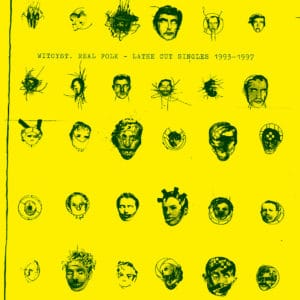
Witcyst’s mysterious career is marked by a complete absence of live performances and a massive prolificness in recordings wrapped in his own hand-made day-glo collaged artworks and assemblages. His music is the freest of free music. Unhampered by arch design or advanced technique, his work stands as an ever-surprising, unmatchable feast for the ears and eyes.
With the release of “Real Folk” Pica Disk and End of the Alphabet hope to break the long-held secret of Witcyst and bring his glorious visions to a wider audience. The 4xCD boxset collects 40 tracks from 20 self-released 7” lathe cut singles from the mid-nineties (all from legendary New Zealand lathe-cutter, Peter King), that were originally released in editions of 10 to 20 copies, so rare most of them have never appeared on Ebay or Discogs. The box-set also includes three booklets of artwork, photos and an extensive first-time home interview of Witcyst himself by Noel Meek.
• 4 CDs > 40 tracks > more than four hours of material
• 3 booklets totaling 72 pages, including first time in-depth interview with Witcyst and almost 100 colour photos and artwork.
• CDs in individual colour wallets reproducing the artwork of each 7” single
• Limited edition of 300 copies.
Witcyst’s mysterious career is marked by a complete absence of live performances and a massive prolificness in recordings wrapped in his own hand-made day-glo collaged artworks and assemblages. His music is the freest of free music. Unhampered by arch design or advanced technique, his work stands as an ever-surprising, unmatchable feast for the ears and eyes.
With the release of “Real Folk” Pica Disk and End of the Alphabet hope to break the long-held secret of Witcyst and bring his glorious visions to a wider audience. The 4xCD boxset collects 40 tracks from 20 self-released 7” lathe cut singles from the mid-nineties (all from legendary New Zealand lathe-cutter, Peter King), that were originally released in editions of 10 to 20 copies, so rare most of them have never appeared on Ebay or Discogs. The box-set also includes three booklets of artwork, photos and an extensive first-time home interview of Witcyst himself by Noel Meek.
• 4 CDs > 40 tracks > more than four hours of material
• 3 booklets totaling 72 pages, including first time in-depth interview with Witcyst and almost 100 colour photos and artwork.
• CDs in individual colour wallets reproducing the artwork of each 7” single
• Limited edition of 300 copies.
30,00€
Out of stock
4 CD
Keith ROWE
“The room extended”
Keith Rowe, guitar, electronics. Recorded at home from mid-2013 to mid-2016. 4 solo CDs, 246 minutes, no content overlap with the earlier The Room (ErstSolo 001) this is Keith’s solo masterwork.
“One of the first things that hits you is the immense depth of much of the work; there always seems to be at least four or five layers of sound occurring, enough that on each subsequent listen (I've been through its four-plus hours five times so far), you pick up not only sounds you've not heard/noticed before but, more rewardingly, new relationships between them, both simultaneous ones and ones spanning the course of the piece. For a while, Rowe has been interested in revisiting sound areas he's investigated over the years, seeing if there might be aspects he'd previously missed or investigating new ways of deploying them and at several moments here, listeners familiar with his history may well recognize some signature sounds. There are plenty of new, even startling ones as well, such as the artificial sounding bird call that's looped for an almost unconscionable length at one point. More tellingly, the habit he first (as far as I know) used in his solo performance in Tokyo in 2008, that of the intentional inclusion of extracts from Western classical music, is a thread that winds through the entirety of 'The Room Extended'. In at least one sense, it's simply an honest evocation of his room, the main room of his home in Vallet, in which any visitor will hear over his stereo, not the latest release from the contemporary improvising world, but rather Wagner, Haydn, Brahms, Purcell, Mondonville and others. This is, in a circumscribed sense, his room.” Brian Olewnick, Just Outside
“One of the first things that hits you is the immense depth of much of the work; there always seems to be at least four or five layers of sound occurring, enough that on each subsequent listen (I've been through its four-plus hours five times so far), you pick up not only sounds you've not heard/noticed before but, more rewardingly, new relationships between them, both simultaneous ones and ones spanning the course of the piece. For a while, Rowe has been interested in revisiting sound areas he's investigated over the years, seeing if there might be aspects he'd previously missed or investigating new ways of deploying them and at several moments here, listeners familiar with his history may well recognize some signature sounds. There are plenty of new, even startling ones as well, such as the artificial sounding bird call that's looped for an almost unconscionable length at one point. More tellingly, the habit he first (as far as I know) used in his solo performance in Tokyo in 2008, that of the intentional inclusion of extracts from Western classical music, is a thread that winds through the entirety of 'The Room Extended'. In at least one sense, it's simply an honest evocation of his room, the main room of his home in Vallet, in which any visitor will hear over his stereo, not the latest release from the contemporary improvising world, but rather Wagner, Haydn, Brahms, Purcell, Mondonville and others. This is, in a circumscribed sense, his room.” Brian Olewnick, Just Outside
38,00€
Out of stock

4 CD
Jakob ULLMANN
“Fremde Zeit – 1-4”
“Fremde zeit addendum” + “Fremde zeit addendum 4. Solo III für Orgel” now in a 4 audio-CDs box, booklet German-English.
Recordings in neuen Aufnahmen 2008-2011 · in new authorized recordings 2008-2011. “disappearing musics for six players (more or less)”, 1989-1991. Maruta Staravoitava, recorder. Pavlos Serassis, clarinet. Patrick Stadler, saxophon. Orsolya Sepsi, Éva Csizmadia, violins. Lucie Martin, Hans-Peter Schulz, keyboards. “solo I + II + III”, (1992-1993-2010). Molly McDolan, oboe. Dafne Vicente-Sandoval, fagott. Hans-Peter Schulz, organ. “komposition für streichquartett 2”, (1997-1999). Pellegrini-Quartett : Antonio Pellegrini, Thomas Hofer, violins. Fabio Marano, viola. Helmut Menzler, cello. “PRAHA: celetná. - karlova - maiselova” (2004-2007). Jardena Flückiger, voice. Christoph Bösch, recorder. Dafne Vicente-Sandoval, fagott. Helena Winkelman, violin. Oliver Margulies, viola. Ellen Fallowfield, cello. Clara Gervais, doublebass, percussion. Stephan Schmidt, voice. Leonardo Idrobo Arce, electronics. “Thus, Ullmann creates a quiet music in order to give himself and his listeners the opportunity to hear more, and better. This comes about because our ability to hear is augmented when listening to quiet music. We hear better because we make an effort to hear better. That is why Ullmann likes to locate his sound sources at the periphery, so as not to make it too easy for the ear. In order to let sounds develop and move on their own time, the pieces are usually longer than the general concert norm dictates. The opening minutes serve as the exposition of the tempo and the mode, to condition, as it were, the listening.” Bernd Leukert
39,00€