
Out of stock

book
John CAGE
“A composer’s confessions – Confessions d’un compositeur”
An address given before the National Inter-Collegiate Arts Conference, Vassar College, Poughkeepsie, New York, 28 February 1948. “I am going to tell you the story of how I came to write music, and how my musical ideas and my ideas about music developed.” Bilingual edition. 100x170.
6,20€
In stock

2 LP + CD
Thomas TILLY
“Script geometry”
“Approaching the forest as if were a city, a construct, an ensemble of strata and vertical heights where signals answer, contrast and ignore each other. Variations occur, fullness and emptiness are created according to the weather and the peak and off-preak hours. This density that language can't define presents a challenge for the ear, and from this density surfaces, from time to time, certain analogies to a modern sound environment. Cultural leads fraw our experience of these natural acoustic phenomenin towards the domain of technology : “it sounds like... it's like…”.
The timbres ? The sound structures ? There exists something in a tropical forest that sounds like and plays within the realms of electronics, music and electronics noise ; something characteristic of an era long before the birth of biotopes that form this forest and create this sound. Script geometry comes from this idea and the desire to work with density, in an attempt to extract forms that characterize these analogies. Taking these sounds out of their context and rearranging them as we would patch cables on a synthesizer ; weaving these strata and vertica heights into a different pattern by using the signals from the forest as if they were synthetic sounds : dissecting this spectrum and looking for something that can only be revealed through listening, this is the essence of the project”. Thomas Tilly - Winter 2012
“In March 2013, I traveled to the Nourages scientific research station in French Guiana. Situated in the heart of a tropical rainforest, this station welcomes international scientific research progams dealing with tropical forests and their biodiversity. For the 30 days and nights of my stay, i listened to and captured the sound environment with an emphasis on animal communications : those wich are perceptible to the huan ear, but also the inaudible spectrum. The result is a collection of compositions and phonography characteristic of the zone.
No electronic treatement has been added to these recordings other than a low cut filter and a light EQ mix.
Script Geometry was conducted as an artist-in-residency programme at the Confort Moderne, Jazz à Potiers, the Lieu Multiple and the Nouragues Station in French Guiana between February and June 2013. A series of concerts, conférences, broadcasts and a creative workshop took place in accompaniment to the project”.
2 LP mastered by James Plotkin. CD mastered by Thomas Tilly. Cut by Rashad Becker at Dubplates and Mastering, Berlin.
23,00€
In stock

CDR
Lionel MARCHETTI
“Pépète Lumière 2016”
Pépète Lumière is a festival in France happening every year close to the city of Cluny in the countryside. In 2016, Lionel Marchetti was invited to play there and did a lot of recordings of what was happening. Then he composed in studio a serie of pieces using this sound material + a lot of his own electronic sounds. This was done with the help of Patrick Charbonnier. And together with the CD Benoit Guillaume did a serie of drawings around the festival.
CDR professionnaly duplicated.
15,00€
In stock

CDR
Lionel MARCHETTI
“Labyrinthe d’une ligne”
Pépète Lumière is a festival in France happening every year close to the city of Cluny in the countryside. In 2016, Lionel Marchetti was invited to play there and did a lot of recordings of what was happening. Then he composed in studio a serie of pieces using this sound material + a lot of his own electronic sounds. This was done with the help of Patrick Charbonnier. This is CDR professionnaly duplicated. You can also find another version with a serie of drawings by Benoit Guillaume.
10,00€
Out of stock
mini CD
IN BE TWEEN NOISE
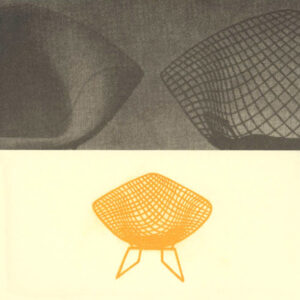
“Chair (a subscape of resonance)”
Very last copies found at home ! "Lamp (designed by George Nelson in 1952) has three tracks, the first one is a metallic like rhythm and some samples swirling around - if you said this was a shortwave I thought it would be a good guess. Then ’Undulant Spores’ is deep bass-time stretched thing that slowly grows into a lighter coda. The last track - the shortest too - bangs lighty on the lamp and has a natural echo and an unnatural crackling. The Chair that is the sound object here was designed by Harry Bertoia (who we all know as a sculptor and who has made 10 LP’s with music playing his sculptores) has 7 shorter tracks (and each is dediacted to somebody, like RLW, id Battery, Harry etc.), but the austerity started on Lamp, and in fact on most In Be Tween Noise releases, is still there. The curves that each track take is small and are in a pretty straight linear way. The rhythm that starts ’glisten’ is a break from this, but by no means a bad one. The three CD’s form an excellent series, well executed and very consitent in it’s high quality." Vital weekly
8,00€
Out of stock
mini CD
IN BE TWEEN NOISE
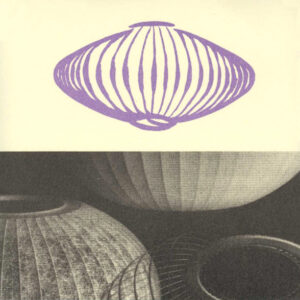
“Lamp (within-without the skin)”
Very last copies found at home ! "Lamp (designed by George Nelson in 1952) has three tracks, the first one is a metallic like rhythm and some samples swirling around - if you said this was a shortwave I thought it would be a good guess. Then ’Undulant Spores’ is deep bass-time stretched thing that slowly grows into a lighter coda. The last track - the shortest too - bangs lighty on the lamp and has a natural echo and an unnatural crackling. The Chair that is the sound object here was designed by Harry Bertoia (who we all know as a sculptor and who has made 10 LP’s with music playing his sculptores) has 7 shorter tracks (and each is dediacted to somebody, like RLW, id Battery, Harry etc.), but the austerity started on Lamp, and in fact on most In Be Tween Noise releases, is still there. The curves that each track take is small and are in a pretty straight linear way. The rhythm that starts ’glisten’ is a break from this, but by no means a bad one. The three CD’s form an excellent series, well executed and very consitent in it’s high quality." Vital weekly
8,00€
In stock
mini CD
DDAA
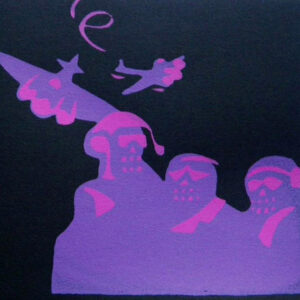
“Jet over Kashima airport include the hit Miss Vandann”
This is a way for DDAA to perform again their first single from 1979 in a new way ! Special cover limited to 200 copies.
10,50€
Out of stock

mini CD
BJ NILSEN
“Terroir”
All source material recorded in Krems, Langenlois, Kalvarienberg at Schönberg am Kamp at, April - September 2016. Recordings made of the terroir, harvest and fermentation during vinification. Original four channel version presented at the opening of Drahtsicht, an outdoor sculpture by Günter Wolfsberger, 9 October 2016.
7,00€
Out of stock

maxi CD
Michèle BOKANOWSKI
“Pour un pianiste”
“Pour un pianiste” (1973-1974). Piano and prepared piano : Gérard Frémy. Electroacoustic music edited and mixed in the composer‘s studio (Paris) and GMEB studios (Bourges). Sound recording : GRM studio, ORTF. Sound engineer : N’Guyen Van Tuong. First performance :May 28th,1974, Bourges, Maison de la Culture,4th International Festival of Experimental Music. Mastering 2005 :Lionel Risler. Thanks to Roger Cochini.
“This work was commissioned by Gérard Frémy. I wrote the different themes, the patterns and rythmic cells first. Gérard Frémy played them on piano as well as on prepared piano. These recordings gave me the necessary material to create the magnetic tape. All the sounds are issued from the piano with the exception of the opening clavicord clusters. I wrote another version of this work that is for concerts only. In this instance a piano partition is played live along with the magnetic tape. Pour un Pianiste is dedicated to Gérard Frémy.”
8,00€
In stock
maxi CD
FENNESZ
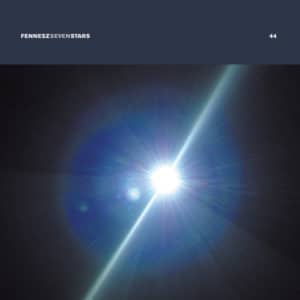
“Seven stars”
The Kalahari desert is a vast and open space where most of the wildlife is nocturnal. After sunset the dunes, grasses and thorn bushes are patrolled by an emerging alien empire - the insects. Midnight at the Oasis’ presents an unseen soundscape from this beautiful and hostile environment.
9,00€
In stock
maxi CD
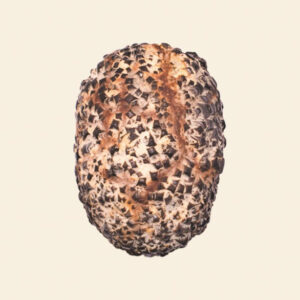
L’OCELLE MARE
“Serpentement”
“The very old catfish, covered in moss, that live in the depths of the lake, never go up towards daylight and disdain any bait that nature offers them.They are only attracted by the oddest shapes that fishermen can invent, shiny and silvery blades in the shape of a human hand that, attached to their line, dance a jig; or also a bat made of red glass with hooks treacherously sewn inside their wings”. G.Meyrink. Instruments: mechanical metronome with bell, harmonica reeds, six string banjo, amps, microphones, feet tapping, hand clapping, six string ukulele, tuning forks, timer, mouth organ, Harmonicas, concertina, dry poppy pods,whistlings,... The solitary project of Thomas Bonvalet initially focused on the nylon string guitar, taking short, dynamic and abrupt forms and limiting itself exclusively to the acoustic possibilities of the instrument. A radical posture, it constantly threatened to put itself at an impasse, seeing itself forced into metamorphosis and movement. The instrument thus became less and less identifiable. At the periphery it absorbed the sound of objects (metronome, tuning forks...) deviating from their common usage, integrating the breath and the sounds rising from the instrumental gesture, splitting up to reveal a new fleeting form. Amplification has also progressively taken an essential part in this new instrumentarium/organism. However, there remains this same subterranean voice, the consideration of detail and tension, the seeking of possible points of sudden revelation. “Serpentement” is the fourth recording of "l’ocelle mare" and was recorded by Adrian Riffo, in the Protestant temple of Bergerac (France), in november 2011. Thomas Bonvalet, (born October, 1977) lives in Alpedrete, Spain. Guitar player of the band Cheval de frise between 1998 and 2004, he made is first solo show under the name of l’ocelle mare in September 2005. He toured Europe, Scandinavia, Israel, USA and China.
15,00€
In stock

maxi CD
Thomas KÖNER – Asmus TIETCHENS – Ditterich von Euler-DONNERSPERG
A three track EP released in conjunction with a live performance on the 29th April 2012 on the MS Stubnitz in Bremen. Initial copies were given away for free to ticket holders on the night of the concert. Each artist contributes one exclusive track. 500 numbered copies in full color slipcase cover.
13,00€
In stock
maxi CD
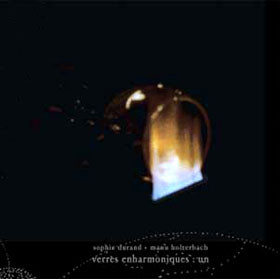
Sophie DURAND & Manu HOLTERBACH
“Verres enharmoniques : un”
The first acoustic recording of a performance in Paris utilizing Manu Holterbach’s invented glass instrument from April of 2003. The Cloud of Statics project is a series for commissioned works on CD by newly discovered or independent contemporary composers and ar tists working with suspended acousmatic sound phenomena. Cloud of Statics releases will consist of two formats, long works and shor t works. Long works will be full length CDs published in 12 x 15 cm landscape hardback book packaging. Shor t works will be 20 minutes length semi transparant large CDs packaged in double car ton sleeves.
10,00€
Out of stock
maxi CD
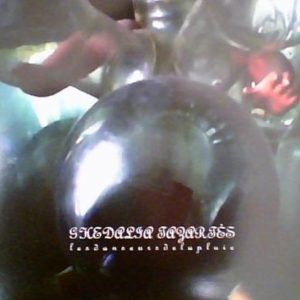
Ghédalia TAZARTÈS
“Les danseurs de la pluie”
“Assassins 1” et “Assassins 2”, recorded in 1977 from sessions of “Une éclipse totale de soleil” and “Assassins 3”, “Assassins 4”, recorded in 2005.
11,00€
Out of stock
2 CD
KERNEL
“Kernel #2” + “Kernel #2 (second version)”
A special offer to get the two versions of the same piece for 20 euros instead of 26 !
20,00€
In stock
CD extra
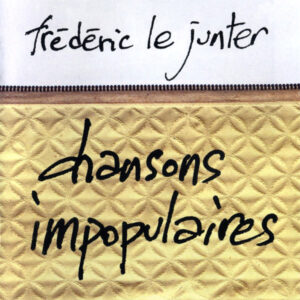
Frédéric LE JUNTER
“Chansons impopulaires”
“Frédéric Le Junter builds mechanical instruments that strip down banal music.
His workshop is far from contemporary cool electronic processes. That’s the reason why Le Junter is a true “Hickno Pop” follower (and took part of the compilation released by In-Poly-Sons). To move forward he needs space to stock raw material, to cut into the flesh, extract intestines, solder membranes, automate cardboards and nail down salvage wood. Therefore one would think that’s just a brutish work which could hardly transform a badly dented saucepan into a slide valve trombone. In the contrary it’s always the brain that works in Le Junter ! And he’s got lots of clouds and fancy in his head, humor and puns, rhymes and songs, roots and sincerity. So one could think that he’s just a gullible fool obsessed by a post-1968 utopia, who like to sing the beauty and the kindness hitting his undeted saucepans. But it’s rather subtility that drives Le Junter. Someone like him doesn’t agree with the world as it is. You should listen like him to the surroundings to extract ridiculousness, then shout out that even if you would become unpopular towards the good society. This is the meaning of the simple but beautiful lyrics of these unpopular songs. A kind of anti-populist manifesto that criticizes today’s absurdities and claims the right not to follow the letter of the law. Frédéric Le Junter’s work is close to Pierre Bastien’s or to his former partner Pierre Berthet’s and to every mechanical instruments or mechanical music promoters. He’s been on the road since the mid-eighties with his machines for exhibitions and sound art performances. Besides he improvises on his machines in a regular group called Silent Block with Xavier Charles, Jérôme Jeanmart and Stéphane Levigneront. A new release by Frédéric Le Junter should be noticed as this lively musician produces few records. Finally Le Junter is a complete artist as he designed his own cover and sleeves for this record and also created the two video that you can read on your computer on this enhanced CD.”
12,00€
In stock

CD extra
DEAD PENI
“2-4+1”
“This is the first full length release from Dead Peni. Electric bass, a drum-machine, voice and backing tapes, as well as live drum contributions from Christian Weber. Includes full length record with bonus track in the form of a music video. Heavy sounds from the underground. Edition of 300.”
9,00€
Out of stock

CD
Robert NORMANDEAU
“Puzzles”
Reissue in CD !
‘Empreintes DIGITALes innovates again! Fifteen years after its foundation, the 100% ’digital’ label jumps from CD to DVD, bringing the sound’s richness and spaciousness from concert halls to the living room of music lovers. DVD offers very high fidelity with its 24-bit encoding and immersive sound spatialization with the famous ‘5.1’ home theatre sound. The first release in this new format is Puzzles from composer Robert Normandeau. Available since February 3, 2005 this disc was officially launched on February 12 at the ’trans_canada’ festival at the ZKM in Germany.’
1. Puzzle (2003) 16-track multichannel work. Adapted from the music composed for the play ’Farces conjugales’ by Georges Feydeau, staged by Brigitte Haentjens, at Théâtre du Rideau Vert (Montréal) in March 2003.
2. Éden (2003) 16-track multichannel work. Adapted from the music composed for the play ’L’Éden cinéma’ by Marguerite Duras, staged by Brigitte Haentjens at the National Arts Centre (Ottawa), and at Festival de théâtre des Amériques (Montréal), in May 2003.
3. Chorus (2002) Overture; Judaism ; Christianity ; Islamism; War; Pain ; Peace.
16-track multichannel work. To the victims of September 11, 2001.
4. StrinGDberg (2001-03) 16-track multichannel work. Adapted from the music composed for the play ’Miss Julie’ by August Strindberg (Stockholm, Sweden, January 22, 1849-Stockholm, Sweden, May 14, 1912), staged by Brigitte Haentjens at Espace GO (Montréal) in May 2001.
5. Hamlet-Machine with Actors (2003) 16-track multichannel work. To Marc Béland. Adapted from the music composed for the play ’Hamletmachine’ (1979) by Heiner Müller (1929-1995), staged by Brigitte Haentjens in Montreal in 2001. The actors were Marc Béland, Céline Bonnier, Annie Berthiaume, Louise de Beaumont, Gaétan Nadeau, Line Naud, Guy Triffero, and François Trudel.
13,00€
In stock
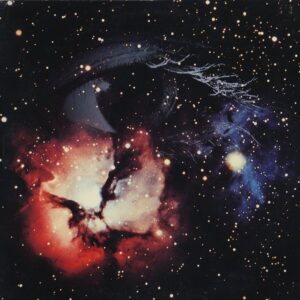
CD + mini-CD
Matsuo OHNO
“I saw the outer limits”
The vinyl version is sold out. CD version + Incl. a bonus mini-CD reissue of a rare “Play on Animals (Choju Gigaku)” + Foldout thick paper sleeve. About bonus disc : A miniature reproduction of “Play on Animals (Choju Gigaku)”, which has been reissued on 7’ (rated as one of 2011’s top releases by Byron Coley of The Wire) + Pressed on a mini-CD (8cm) and packed in a triple foldout sleeve, same style as a original 1970 issue, and is inserted in the EM1098CD sleeve. “I am not interested in sounds that already exist.” Thus spoke the esteemed “onkyo designer” Matsuo Ohno, early in his expansive, influential career. This reissue of his stellar 1978 LP “I Saw the Outer Limits” presents him at the peak of his powers, combining his mastery of classic analog tape music techniques (honed to perfection whilst providing sound design for “Astro Boy” and numerous other films and TV programs) with then-state-of-the-art analog synthesizers. This is a true under-recognized classic, a masterfully recorded, massive-sounding poetic construction of unearthly sound, an undulating, breathing behemoth, with Ohno’s galaxy moving beyond "sounds that already exist" in search of new sonic spaces. Matsuo Ohno was born in Kanda, in central Tokyo, in 1930. The relentless bombing onslaught of the war years, the near-apocalyptic conditions, were defining, formative forces. As a youth he was interested in surrealism and philosophy, and was uninfluenced by music and musicians — an exception being the electronic works of Karlheinz Stockhausen, especially his "Gesang der Jünglinge" ("Song of the Youths"), which inspired him further in his quest to create "unearthly sounds." Other early influences were the film director Fumio Kamei and the dramatist Michio Kato; rather than viewing himself as a musician, and never studying under any masters, Ohno has forged his own path as the original "onkyo sound" artist, defining himself as an "onkyo designer" in the 1960s. His innate independent streak manifested itself early on, when, chafing under creative restrictions and unhappy with the low esteem in which his efforts were viewed by his hierarchical "betters", Ohno left a prestigious post at NHK, Japan’s national broadcaster. But of course his skills were in high demand and he was extremely busy as a freelance sound designer for a wide range of films, television shows and radio programs, developing his ear and his technical savvy. In 1963 he began his most famed efforts, providing sound design for the legendary Japanese animation series "Astro Boy," with Takehisa Kosugi as his assistant. The 1978 LP "I Saw the Outer Limits," reissued here, was the first full-length non-soundtrack release by Matsuo Ohno. The record was a huge step for him, being non-programmatic music, designed to stand alone, free of visual imagery. Ohno himself has stated that he was uninterested in notions of message, expression and representation. Ohno had nothing to do with the title and subtitle of this album. Shinji Hinoki, a producer at Toho Records, approached Ohno with the offer of releasing an album; Hinoki perhaps envisioned something to cash in on the popularity of the synth-driven elements of Pink Floyd — what he got was something much more abstract and otherwordly. Hinoki supplied both title and subtitle, including the latter’s variant spelling of "marijuana," a ploy to evade Japanese censors. On these recordings, made at Sogosha in Tokyo, his private studio, Ohno used the AMS Synthi AKS, which at that time in Japan carried a price close to that of a family car, the newly released Roland System 100 (three of these, in fact), and a custom-made synth. He combined these synthesizers with his virtuosic control of analog tape recording techniques, resulting in a magnificent LP. The original vinyl release was, however, somewhat marred by 50 Hz hum generated during the mastering process at Toho Studios. This EM reissue of "I Saw the Outer Limits" restores the masterpiece to its primal, clear, massive glory.”
22,00€
Out of stock
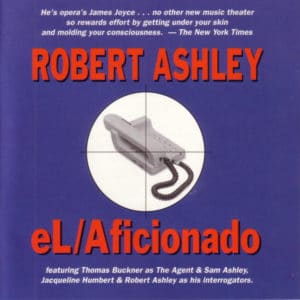
CD
Robert ASHLEY
“eL-Aficionado”
1994. Featuring Thomas Buckner as The Agent and Jacqueline Humbert, Sam Ashley and Robert Ashley as his interrogators. Orchestration by Robert Ashley. Engineering and mixing by Tom Hamilton. 1 CD + Booklet with full libretto. This is the fourth opera in Ashley’s Now Eleanor’s Idea tetralogy: Junior, Jr.’s story. A group of scenes from the life of an Agent. The scenes are a kind of debriefing to a jury of Interrogators, in which the Interrogators challenge the Agent in various forms of musical dialogue. The mood of the opera owes much to our fascination with espionage and with the character of those people who lead double lives.
14,00€
Out of stock
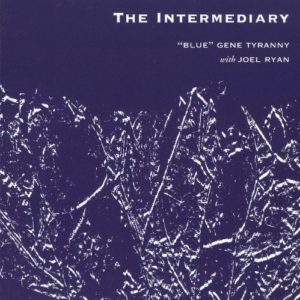
CD
“Blue” Gene TYRANNY with Joel RYAN
“The intermediary”
“Blue” Gene Tyranny: prose, music, piano improvisation and sample-burst electronics.
Joel Ryan: computer afterimages and pre-conditions. Reissue of this 1982 record. “In this self-generating composition, a live "shadowing" electronic network records, processes and returns the sounds of an improvising performer on an acoustic instrument or voice, creating sounds that can seem to be both "messages" for the performer(s) to act upon and-or reflective "shadows" for the listener(s) of what the performer has already played. In a truly spontaneous performance, the performer is continually in an intermediate state or situation, where he or she discovers themselves playing things he or she never conceived of before, where something other than conscious intention seems to have taken over. The performer is spontaneously playing and listening and "calculating" (following kinetic impulses, the movement of brief inevitabilities of gesture and phrase, etc.) at the same time. The live electronic setup amplifies this active music-making for an audience for whom this internalized task of the performer would normally remain completely hidden. The electronics remember (record and sample) the performer’s sounds, change them (through a specified network of pitch and amplitude followers and other processors given in the score), and re-introduce the changed sound back into the performance situation - a constant, "intermediate", full feedback state of changing conditions, with the performer both as sender and receiver (as in a dream, waking or sleeping). For the initial recording, the piece was firstly separated into its component parts rather than recorded in the full setup. A spontaneous improvisation of was recorded in a studio in Geneva, Switzerland, at 4 o’clock in the morning (a time of day guaranteed to find this particular performer especially susceptible to musical and other influences) in the winter of 1980. The shadowing electronics part was realized with an Apple II computer program created by composer Joel Ryan - a series of oscillators created delicate shimmerings and dramatic bass tones. The two parts were then interlaced in the final production studio to create the concert effect mentioned above.” BGT, March 6, 2002.
12,00€
Out of stock

CD
Luigi NONO
“20 Jahre Inventionen V”
“Quando Stanno morendo (diario polacco no. 2)” (1982) for female voices, bass flute, cello, live electronics. “Canciones a Guiomar” (1962-63) for soprano solo, chor and instruments. “Omaggio a Emilio Vedova” (1960), electronic music. Interpreters : Ingrid Ade, Monika Bair-Ivenz, Bernadette Manca di Nissa, Halina Nieckarz, Roberto Fabbriciani, Frances-Marie Uitti, Arturo Tamayo, Experimentalstudio der Heinrich-Strobel-Stiftung des SWF, Ars nova ensemble Berlin, Edelgard Neubert-Imm, Peter Schwarz. “The live electronics that Nono worked with for the first time in the early 1980’s at the Freiburg Experimental Studio also serves the musical displacement: the music moves away from clear spatial and timbral assignations. Due to electronic processing, the sonic characteristics of both instruments, bass flute and cello, can hardly be recognized. Tones and gestures are lengthened into seeming infinity and move in space.” Lydia Jeschke
14,00€
In stock

CD
Klaus LANG
“Einfalt. stille.”
Interpreters: Bettina Junge (flute), Natalia Pschenitschnikova (voice), Adam Weisman (percussion), Karen Lorenz (viola).“Flow. state.Through concentration on listening or concentration on what we are listening to we can enter a state of simplicity of mind which is a state of the highest inner clarity or inner silence. In other words:when concentrating on the flow of music we can reach an inner state: The inner silence which is the simultaneity of stasis and flow. This paradoxical situation poses the question: Is the flow of music passing us, is music flowing through us thus evoking this inner stasis or is it not a state at all what we experience: should we not most seriously take into consideration the possibility that it is us who are flowing through the sound?” (label info)
12,00€
Out of stock

CD
Jakob ULLMANN
“A catalogue of sounds”
Jakob Ullmann “A catalogue of sounds” for violin, viola, cello and ensemble (1995-1997). Performers : Ensemble Oriol Berlin, M.M. Kasper, S. Renshaw, F. Ritts-Kirby. Audio CD, Digisleeve, Booklet German/English. “Ullmann’s music realises an infinite variety of gradations in all areas of musical formation. That the music of the "catalogue" is nearly always played very softly leads to the ear noticing the smallest differentiations; the listener is put into a state of constant, acute attentiveness. The musical stream is constantly subjected to small irritations, sometimes its flow quickens, sometimes there are brief splashes like those caused by pebbles thrown into water.”
14,00€
In stock

CD
Agostino DI SCIPIO
“Hörbare ökosysteme”
Composer: Agostino Di Scipio. Title: “Hörbare Ökosysteme”, Live elektronische Kompositionen 1993-2005. Performers: Ensemble Mosaik, Prometeo String Quartet, Natalia Pschenitschnikova. Format: Audio CD, Digisleeve, Booklet German/English. “Agostino di Scipio teaches his sounds to listen to themselves. The digital sound processing algorithms associated with the pieces listen to their own results, and then modify themselves accordingly, during the course of the piece. through complicated cybernetic procedures inside the black box the software adjusts to the heard in order to create the unheard.” Frank Gertich
15,00€
In stock
CD
MY DAILY NOISE
My Daily Noise is the duo of Buess & Toeplitz, playing loud, aggressive music which sometimes is very peaceful, using symphonic bass drums, giant springs, metal percussions, noise effects, low strings, lots of sub-bass and tons of distortion.
Daniel Buess : percussions & electronics. Daniel plays with Phoenix Ensemble, Basel, but also in different noise units and solo. He likes big drums, metal and heavy sounds.
Kasper T. Toeplitz : bass & computer. Kasper composes music between noise and contemporary and plays in many different set-ups, from orchestra to noise-gigs. He plays his bass through a computer.
8,00€
In stock

CD
ZEITKRATZER
“Whitehouse. Performed live”
2nd collaboration between the critically acclaimed ensemble zeitkratzer and the great pioneer of noise / industrial William Bennett aka Whitehouse. Music with crystal clear, even neurosurgical precision - pure acoustic power!
William Bennett, the musical mastermind behind Whitehouse and Cut Hanvioloncellods, has already worked with zeitkratzer at several occasions. 4 years after their first CD (Whitehouse, zeitkratzer records) the critically acclaimed ensemble and the highly influential noise pioneer release their second album. Recorded live at the festival Musique Action in Nancy / France, the new recording goes even further: while the deep bass frequencies - produced by the huge orchestra drum, at some points as well by the beaten bass strings of the piano or by subtones of the horns - made vibrate not only the floor of the venue while on the other hand high piping sounds, amplified violin harmonics, bitten clarinet tones attack the listener. A music with crystal clear or even neurosurgical precision. And one can hear voices all over - distorted from being spoken through a trombone, a French horn, phantom voices in the density of the sounds, etc. No electronic effects are used - it’s pure acoustic power!
zeitkratzer directed by Reinhold Friedl. Frank Gratkowski, clarinets / Hild Sofie Tafjord, french horn / Hilary Jeffery, trombone / Reinhold Friedl, piano / Tony Buck, percussion / Lisa Marie Landgraf, violin / Burkhard Schlothauer, violin / Anton Lukoszevieze, violoncello / Uli Phillipp, double bass. Guest: William Bennett, voice [01]. Recorded live at Musique Action in Nancy, France. Recorded and mixed by Martin Wurmnest. Mastered & cut by Rashad Becker at D&M, Berlin.
15,00€
In stock

CD
ZEITKRATZER
“(Old school) James Tenney”
“Critical Band” (1988), “Harmonium
2” (1976), “Koan: Having Never Written A Note For Percussion” (1971). Zeitkratzer directed by Reinhold Friedl: Frank Gratkowski (clarinet), Hayden Chisholm (alto saxophone), Matt Davis (trumpet), Hilary Jeffery (trombone), Reinhold Friedl (piano), Maurice de Martin (percussion), Burkhard Schlothauer (violin), Anton Lukoszevieze (cello), Uli Phillipp (doublebass), Ralf Meinz (sound ). Recorded live at Philharmonie Luxembourg, Luxembourg, October 3, 2009. Recorded and mixed by Ralf Meinz and Reinhold Friedl, produced by Burkhard Schlothauer, executive producer: Reinhold Friedl.
“The internationally acclaimed “hilarious releases” [vital weekly] of zeitkratzer records will continue with the new series [old school]. The first two CDs, dedicated to the music of John Cage [zkr0009] and James Tenney [zkr0010] are now released together. The collaboration of zeitkratzer with William Bennett /Whitehouse [zkr0007], recorded live in 2009 in Marseille/France and Den Haag/Netherlands, will follow this summer. Later in 2010, the [old school] series will continue with two more releases, dedicated to the music of Alvin Lucier [zkr0011] and Morton Feldman [zkr0012] respectively. James Tenney’s music has been part of zeitkratzer’s repertoire for almost a decade. This CD presents a new recording of Critical Band - Tenney’s late classic - with maximum clarity. Also included is the first recording of Harmonium
2. Both works demonstrate the remarkable power and resplendent sharpness which Tenney achieved by composing with pure tunings. Koan: Having Never Written A Note For Percussion for tam-tam completes this CD with an orgiastic listening experience in the form of a huge crescendo on this wonderfully simple instrument - from whispering to singing, culminating in shrill roaring and blustering - and it’s dark decay. Tenney’s music as a sensual sound adventure !”
15,00€
In stock

CD
ZEITKRATZER
“(Old school) John Cage”
“Four6” (1992), “Five” (1988), “Hymnkus” (1986). Zeitkratzer directed by Reinhold Friedl: Frank Gratkowski (bassclarinet, clarinet), Hayden Chisholm (clarinet), Franz Hautzinger (trumpet), Reinhold Friedl (piano), Maurice de Martin (percussion), Burkhard Schlothauer (violin), Anton Lukoszevieze (cello), Uli Phillipp (doublebass), Ralf Meinz (sound). Recorded live at Huddersfield Contemporary Music Festival, UK, November 26, 2006. Recorded and mixed by Ralf Meinz and Reinhold Friedl, produced by Burkhard Schlothauer, executive producer: Reinhold Friedl.”
“The internationally acclaimed “hilarious releases” [vital weekly] of zeitkratzer records will continue with the new series [old school]. The first two CDs, dedicated to the music of John Cage [zkr0009] and James Tenney [zkr0010] are now released together. The collaboration of zeitkratzer with William Bennett (Whitehouse) [zkr0007], recorded live in 2009 in Marseille, France and Den Haag, Netherlands, will follow this summer. Later in 2010, the [old school] series will continue with two more releases, dedicated to the music of Alvin Lucier [zkr0011] and Morton Feldman [zkr0012] respectively. John Cage’s compositions have been part of zeitkratzer’s repertoire since the very first day. The pieces presented here justify zeitkratzer’s reputation as sound specialists. Avant-garde composer Cage is played in a conservative, precise and sensual way, apart from all philosophical ambitions, and hopefully as seductive as a Schubert quintet! The “Wire Magazine” acclaimed: zeitkratzer convinced us that Cage‘s music can still live with all its complexities, stripped of the debris of its iconic-ironic status, if we only give ourselves time, space and ears to hear !”
15,00€
Out of stock
CD
ZEITKRATZER & Keiji HAINO
“Electronics”
“The Berliner Zeitung wrote about zeitkratzer’s cooperation with Keiji Haino, one of the most renowned japanese noise artist: the result was mind-blowing. Haino made music on the guitar and on the drums, on electronic devices, on two Theremins and with his wunderfully changeable tenor; zeitkratzer infolded him, pushed him away, embedded him in noise and carried him through the sound space like on atomising waves. Only one thing did not exist: the reconciliation between the soloist and his ensemble, which would have denied the differences in traditions and styles; The greatness of the sound, the richness of his textures was a result purely of the contrast and its dynamic.” zeitkratzer continued the cooperation with Keiji Haino and performed with him also at Donaufestival Krems. This CD contains the music from the legendary Volksbühne concert - ending in standing ovations.”
15,00€
In stock

CD
ZEITKRATZER
“performs songs from the albums “Kraftwerk” and “Kraftwerk 2”
Founded in 1997 by Reinhold Friedl, Zeitkratzer have since been creating an impressive catalogue of recordings that embraces 20th century avant-garde composers (Cage, Stockhausen, Lucier) as well as electronic artists (Carsten Nicolai, Terre Thaemlitz) or underground experimentalists like Throbbing Gristle or Column One. In their 20th anniversary year, the critically acclaimed ensemble will release a series of diverse albums that will explore new grounds in the typical, adventurous zeitkratzer way – the first of these albums is dedicated to Kraftwerk and their early, kraut-esque albums “Kraftwerk” and “Kraftwerk 2”. As Kraftwerk never re-released these albums, Zeitkratzer gave its best to cover the first tranche of the songs (second tranche to come…).
Recorded in Marseille, France in May 2016, the six tracks reveal a bucolic and even psychedelic aspect of the ensemble that’s mostly known (or feared) for its interpretatory and aesthetic acerbity. And yet there’s no doubt that “Songs From The Albums “Kraftwerk“ And “Kraftwerk 2“ turned out a true Zeitkratzer recording in the best and full meaning!
Zeitkratzer directed by Reinhold Friedl with Frank Gratkowski, flute, clarinets, Elena Kakaliagou, French horn, Hilary Jeffer, trombone, Reinhold Friedl harmonium, piano, Didier Ascour, guitar, Maurice de Martin, drums, Lisa Marie Landgraf, violin, Burkhard Schlothauer, violin, Elisabeth Coudoux, violoncello, Ulrich Phillipp, double bass.
Recorded and mixed by Martin Wurmnest. Mastered by Mike Grinser at D&M, Berlin.
15,00€
In stock
CD
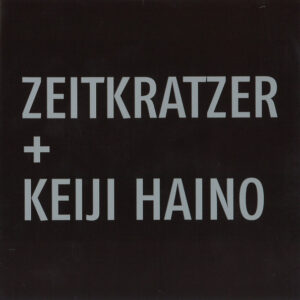
ZEITKRATZER + Keiji HAINO
“Live at Jahrhunderthalle Bochum”
One of the most prolific artists of the Japanese experimental / noise scene, Keiji Haino teams up for his 2nd album with the critically acclaimed ensemble Zeitkratzer. Frenetic musical material, wild and beautiful.
On his second release with Zeitkratzer, the enigmatic icon of the Japanese noise / experimental scene Keiji Haino concentrates solely on his voice. No electronics are used except for amplification. Nevertheless, this live recording is even more radical than the first one (“Electronics”, 2008). Radical is the concentration on the very limited but frenetic musical material, worked out in detail, which is rarely heard in the noise context - enabling Keiji Haino to sit on it, fly over, to merge or just to oppose. Zeitkratzer’s amplified instruments, played with extended techniques as developed by the group and its outstanding musicians over more than a decade and Haino’s incredible richness in voice timbres and noises complement each other perfectly. It’s one of the closest and most natural cooperations zeitkratzer ever had. Wild and beautiful.
Shouting, scratching, screaming, piping, chattering, crying, rumbling, oscillating, roaring, clashing, juttering, tinkling, singing… and at the end it’s one hilarious powerful music, pure noise and pure melody! As the Chicago Reader noted: “The supernova finally occurs!” and The Wire agreed: “A real highlight, with Zeitkratzer enfolding Keiji Haino in its grasp like some tentacular kraken of the deep. Haino effectively becomes another member of the group.” Rock-a-Rolla cheered: “Forcefull and utterly compelling!” Nothing left to say than: listen!
zeitkratzer directed by Reinhold Friedl. Frank Gratkowski, clarinets. Hild Sofie Tafjord, french horn. Hilary Jeffery, trombone. Reinhold Friedl, piano. Marc Weiser, acoustic noises. Maurice de Martin, percussion. Burkhard Schlothauer, violin. Anton Lukoszevieze, violoncello + Keiji Haino, voice. Recorded live at Jahrhunderthalle Bochum, Ruhrtriennale. Recorded & mixed by Martin Wurmnest.
LP version available on Karl records.
15,00€