
In stock

CD
NURSE WITH WOUND
“Opium Cabaret”
Contains the full Opium Cabaret album plus an additional 40 minutes previously unreleased studio material. Housed in deluxe full colour digipack with new art by Santini.
4 tracks, 74 minutes
Steven Stapleton, Andrew Liles & Colin Potter
13,00€
In stock
2 CD
NURSE WITH WOUND
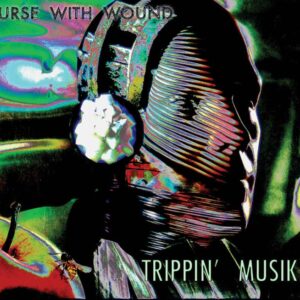
“Trippin’ Musik”
This is a new edition on United Jnana with different artwork.
The 2CD version of the triple LP boxset, with an additional 35 minutes of unheard music, housed in a 6 panel digipak.
Trippin’ Musik’ is Nurse With Wound’s most significant new dose in a while, collecting 3 epic discs of steeply psychedelic sonics that may well alter your breathing and heart rates and mental state. No tracklisting provided, play however you like.
17,00€
Out of stock

CD
NURSE WITH WOUND
“3 Lesbian Sardines”
A recording of Nurse performing live at The Great Monster Dada Show
Henie Onstad Kunstsenter, Oslo 2019
Steven Stapleton, Andrew Liles, Colin Potter
6 - panel digipack with beautiful Babs Santini artwork
16,50€
In stock

CD
NURSE WITH WOUND
“Chance Meeting of a Defective Tape Machine and Migraine”
CD only from Nefarious Vol 1.
Chance Meeting of a Defective Tape Machine and Migraine, housed in a hand made sleeve with new artwork.
Remastered by Matt Waldron
When Matt Waldron attempted to make a tape to tape copy of Nurse With Wound's 'Chance meeting on a dissecting table of a sewing machine and umbrella' he didn't expect the machines to do their own remix. The music on this disc was performed by two slightly defective disobedient tape recorders.
14,00€
In stock

2 CD
NURSE WITH WOUND
“Shipwreck Radio Volume Two”
Double CD. Eight enigmatic episodes from Utvaer.
Between June & July 2004, as guests of Kunst I Nordland, NWW broadcast twenty four unexpected radio transmissions from the Arctic Lofoten Islands, eight of which are included here.
Review by Lucas Schleicher from Brainwashed : Eight new broadcasts from the chilly world of the Arctic Lofoten Islands are made available on this double disc and, in some ways, they all exemplify just how much Steven Stapleton must be falling in love with digital sound stretching. Just as the first volume was an effort to reshape the world around them in sound, the second volume of Shipwreck Radio turns the world of Lofoten into a strange place occupied by distortions of the Arctic's natural sound world.
14,00€
In stock

CD
NURSE WITH WOUND
“Shipwreck Radio: Final Broadcasts”
“June 22,” the first of the two half hour tracks, begins with the by-now familiar greeting of Utvaer’s most beloved Deadhead, echoed by his perky sidekick. As they vanish, something sinister appears in their place. The image most prominent in my mind is of a furnace possessed by spirits best left unidentified, swelling into aggressive bursts of volume in increasing lengths as the track progresses, with a particularly bone-rattling eruption occurring just after the twenty minute mark. Frequently the sound hovers like thick, humid air, as if waiting for an unnamed menace to slither forth from the darkness. A subdued alarm bell appears out of the fog from time to time, commingling with faint metallic overtones on the fringe of perception while revenant gasps hiss in the mist. Even listening to the this track in the daylight, I have to say that I found it to be one of the more viscerally thrilling and frightening Nurse With Wound experiences I’ve had in a while, much like the gut feeling I used to get just before the initial drop on a roller coaster. As the last track in the Shipwreck series, “July 13” is quite the headcleaner. After the initial greetings, loops of the phrase “Welcome to Shipwreck Radio” are subjected to repeated unsettling voice manipulations that become a rippling landscape of their own, stretching syllables into unnatural technological groans. Each time the phrase returns, it is slower and contains more glitch material, eventually obfuscating the source completely. As the length of the recurring phrase increases, so too does the silence between the repetitions. The slower the voice gets, the more it sounds like broken zeros and ones, high-pitched tones with little musical value. Because of this, the track feels more like an algorithmic exercise than a creative one. I can’t imagine what was going through the minds of the Norwegians tuning in to this particular broadcast, though I wouldn’t be surprised if they smacked their radios a few times thinking something was broken. In some ways, the predictable pattern of “July 13” is the antithesis of the previous track’s ability to surprise, and it’s one I probably won’t return to frequently. Even so, the force of “June 22” alone is enough to make this release an invigorating addition to the group’s catalog. From Brainwashed
9,00€
Out of stock

CD
NURSE WITH WOUND
“Rat Tapes One”
"An accumulation of discarded musical vermin 1983 - 2006." With Mr. Stapleton returning to publishing through his United Dairies imprint, he has collected various studio outtakes from over the years and compiled them into this exceptional body of NWW ephemera. Immediately, Nurse fans will recognize vastly mangled variations of "Black Is The Colour Of My True Love's Hair" from She And Me Fall Together Into Free Death, "Cold" from Thunder Perfect Mind, and "Rock 'N Roll Station" from any number of those sessions. Stapleton has long recycled themes in a kaleidoscope of distortions, permutations, and hallucinations, and hearing such favorites all over again, brings a smile to us all. From Helen Scarsdale
10,50€
In stock

2 CD
Trevor WISHART
“Red Bird / Anticredos & Voiceprints”
This Double Album brings together many of my major pieces from the last 40 years. "Red Bird" has been held up as a pioneering work, using both a "cinematic" approach to audio, and sound morphing, especially because it predates the use of computers but prefigures many of the techniques later used for making computer sound art. "Anticredos" brought together my research into new vocal sounds, developing new ways to notate sound itself, and uses sound-morphing as a live-performance technique. "Tongues of Fire" was the first full-length piece I made on the Composers Desktop Project, and won an award (the Golden NICA for computer-music) at the Linz Ars Electronica, International Computer Arts Festival, while "Two Women" crossed the boundary into actuality, using and transforming the voices of people in the public eye.
From Allmisic:
Both works feature some of the composer's most striking music, but they belong to two very different realms. "Red Bird" is a 45-minute piece of musique concrète in four movements. Made for the most part of bird sounds, body sounds, and selected mouthed words, it weaves an intricate network of symbols. Completed in 1977, it was made with traditional electro-acoustic techniques. It has a crude tape splicing aspect that aged surprisingly well. Often brutal in its contrasts, it presents interesting sound transformations, but most of all a dense, relentless abstract drama that compares very well to Pierre Henry's best works from the '60s and '70s. The result of four years of work, "Red Bird" is a significant work and conveys ideas of imprisonment and freedom that are beautifully expressed. "Anticredos" dates from 1982. It involves no electronics at all; it is a live performance by the experimental vocal group Singcircle. Wishart scored the piece for six voices, using extended techniques to expand, so to speak, the word "credos." Often the listener is tempted to believe there are electro-acoustic manipulations involved, but on close-up inspection it turns out Wishart simply found ways to make real voices perform sound morphings that some musique concrète composers used to work on relentlessly in the days before the computer age.
16,00€
Out of stock

CD
BLACK GLASS ENSEMBLE
“Arise From The Twilight”
Black Glass Ensemble is a British collective that reveals new music for the anthropocene in the margins of classical and experimental music. Arise From the Twilight is the new album which is out via omnempathy.
According to the press release, These recordings combine signals from mixing desk output and ambient microphone placement. Elements of the performance were conducted with no amplified signal. Consequently, these brief passeages appeared only on the ambient signal and are correspondingly quiet.
Michael Begg; witness engines, data, electronics, keyboard, erosions
Douglas Caskie; tuned and bespoke percussion
Jen Cuthbertson; French horn
Neil Cuthbertson; trumpet
Clea Friend, cello, voice
Julia Lungu; violin
Aisling O’Dea; violin
Ben Ponton; VLF receiver, electronics, field recordings, lapsteel guitar, forensics
13,50€
In stock
CD
AIRWAY
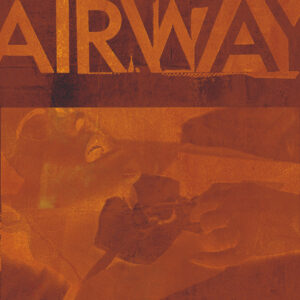
“Live at Zebulon”
In December 2019, Los Angeles Free Music Society pioneers Airway performed live at Zebulon with a stacked cast of collaborators, unleashing a constantly mutating wave of raucous free improv experiments and unexpected art damage sonics from their collection of objects, electronics, and self-made musical instruments. Now carefully mixed & mastered by John Wiese from a deluxe multichannel soundboard recording for, perhaps, the best sounding live recording in Airway’s long-running history.
Airway lineup: Ace Farren Ford, Joseph Hammer, Kevin Laffey, Keith Lubow, Maya, Aaron Moore, Fredrik Nilsen, Joe Potts, Rick Potts, Tom Recchion, Michael Ruiz, Vetza, John Wiese.
11,50€
In stock
CD
THE CHERRY POINT
“Black Witchery”
A black mass ritual for fans of heavy sound and lurid nightmares, photocopied fanzines and grey market VHS catalogues. The Cherry Point casts a dark spell across nearly an hour of spectral violence and amplified clatter, crafting a murky potion of macabre frequencies, derelict moans, and ear-piercing terror. Mastered LOUD by Control’s Thomas Garrison and now packaged in a deluxe 6-panel digipack designed by John Wiese.
11,50€
In stock
LP
Drew DANIEL – John WIESE
“Continuous Hole”
2018 release
Gilgongo Records is pleased to announce “Continuous Hole”, a collaborative album by Drew Daniel and John Wiese. The fruit of over ten years of home recordings in San Francisco, Los Angeles and Baltimore, “Continuous Hole” melds improvisation and musique concrète composition into a uniquely sweaty document of labor-intensive rhythm. A finger puzzle of reconciled opposites: lockstep structure and constant flux. Many of the tracks reflect the unique blending of the disparate backgrounds of its creators: on “Abhorred Shears”, “Sleek Disorder” and “Cosmic Joke” the relentlessly variable source material is relegated to precisely timed gated forms and patterns. Without using any sampling or MIDI sequencing, the rhythmic cuts evoke the tempo/BPM of footwork, juke or gabber, but they are constructed entirely from volcanic, gnarled abstraction, and eschew typical genre elements.
“Progress Bar” goes from frantic cuts to weightless slo-mo freefall and back to frenzy. Moving from mayhem to menace, “Surprise” concludes the album with ominous flutters of a pedal steel guitar and the sound of a dog’s toenails scraping a stone floor. In the final milliseconds of the song, the dog leaps for the listener’s throat. Raw yet precise, it’s a dynamic conclusion to an album of strong contrasts from two American artists discovering common ground in the joy of frenzied cutting. A prolific recording artist and visual artist with an extensive discography under his own name, and with grindcore stalwarts Sissy Spacek, John Wiese is currently based in Cleveland. One half of the electronic band Matmos and all of The Soft Pink Truth, Drew Daniel is based in Baltimore.
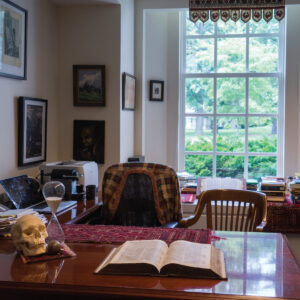
The album was mastered by Thomas Dimuzio. The cover photograph was shot by John Wiese in Drew Daniel’s office on the campus of Johns Hopkins University where Daniel is a Shakespeare professor. Videos for album tracks are slated from John Wiese, Max Eilbacher, M.C. Schmidt, and Ola Vasiljeva. Summer concerts in support of the album are currently being planned.
16,00€
In stock
3 CD box
SISSY SPACEK
“Radio Format”
While we may live in an over saturated time of hi-definition, microwave-pulse paced images and video snippets, one format that has remained in play since the early 1900’s is that of radio. A format perhaps overlooked most in its ability to not only act as a conduit of audio, but also that of a uniquely non-visual live performance, facilitating a direct audio-only portal from performer to the imagination of the listener.
Radio is a place where live collaboration and conversation can occur not just between performers, but with that of the unseen and unheard. There is no immediately distinguishable audience reaction for the performer to intake or react upon. No other sounds or stimuli for the audio generator to realize other than that of which are produced from the point of broadcast. The listener however, collaborates deeply (and often unconsciously) in the listening experience dependent on their environment. A car radio stuck in loud honking Los Angeles traffic with the windows down. A live improv broadcast blasted on a boombox in the back room of a noisy, busy restaurant kitchen. A strange mix show heard only through an open window, intriguing a passerby with the small tidbit that is overheard, unaware of the content let alone the station or origin of the sound. This methodology forces new ways of listening as well as performing, and if there’s one unit evolving and dissecting audio that thrives in such an area of exploration, it is that of Sissy Spacek. The primary core of the ever morphing group here consists of John Wiese and Charlie Mumma, but as shown on these recordings and throughout their discography, Sissy Spacek not only includes, but more accurately incorporates a host of brilliant collaborators from many walks of life and realms. Here we find Sara Taylor (Youth Code) Sarah Bernat (Bad News, 16 Bitch Pile Up), GX Jupitter-Larsen (The Haters), and Damion Romero (Speculum Flight, Astromero) collaborating with the group on these utterly unique, live KXLU broadcasts (a Los Angeles station which Damion Romero himself hosts the decades long running Psychotechnics program that these very sessions appeared on).
Which brings us back back to perhaps one of the greatest tricks, traps, and aspects found in radio — What are we hearing? Who has made this sound and where does it come from? Do these sounds come from the radio room itself? Or are they a product of some crude tape recording forged in a bedroom and brought to be manipulated? Was the group together throughout these decisions or were they conjured individually? What was the vibe and time of day? Was the studio well lit, or draped in darkness for these mysterious sessions? Who is doing what and how? With the visual senses removed, and while simultaneously understanding that these were live radio performances, even a veteran listener is still left to be puzzled by the thoughts and sounds therein. May this collection mark a crucial chapter in the infinite sonic freedom that Sissy Spacek represents. An ability to wildly, freely, expertly navigate the ever changing waters of improvisation and experimental creativity. An appreciation for forms and formats new and old. A respect and reverence for the transmission of thought and sound in all forms, and for the powerful experiences that these methods evoke. (Brandon Hill)
32,00€
In stock
LP
SISSY SPACEK
“Blear”
Widening their scope from recent grindcore on Nuclear War Now! Productions, Sissy Spacek’s Blear LP explores a much more dynamic and spacious approach to sound—an entropic vortex of full-room tear-up texture. Duo lineup of Charlie Mumma and John Wiese, released in an edition of 300. The group’s 8th release on Gilgongo Records. —Label Description
16,00€
Out of stock
CD
SISSY SPACEK
“Besiege”
Deluxe CD reissue from Damien Records of the Helicopter release, originally a cassette in an edition of 33. Raging electronics from Mumma/Wiese assembled in April 2020. Six panel digipak with new and original artwork reproductions.
10,50€
In stock
CD
SISSY SPACEK
“BMW”
A screeching smash of searing grit and demolished shock from the trio of Blankenship / Mumma / Wiese, which can be identified as a distinct subgroup within the Sissy Spacek discography, responsible for such carnage as Wreck (2013), Basement (2014), and Slow Move (2017). BMW stands as a sharp-edged monument in the trio’s advancing decay, culled from a session at Blankenship's high-security Bronson studio and utilizing the equipment and environment that fueled sessions by LHD, White Gold, and The Cherry Point.
Limited edition, partially metalized CD housed in a 6-panel digipak, featuring a series of detailed collages by Wiese.
10,50€
In stock
2 CD
LHD
“In Mono”
BURNING IN HELL WITH NO RELIEF. Nearly two full hours of scorched audio and blistering paralysis recorded in Los Angeles between 2002 and 2007 by the double flamethrower unit of PHIL BLANKENSHIP and JOHN WIESE. Compiling four original LHD albums onto two compact discs, featuring the complete recordings of Curtains (PACrec), Young and Restless (Blossoming Noise), Opaque (RRR/Pure) and Limbs of the Fawn (Misanthropic Agenda).
16,00€
In stock

CD
STRAIN OF LAWS
“The Plotted Pavillion”
From the cryptic duo of Aaron Hemphill and John Wiese, a bleak industrial landscape bathed in heavy hypnotics and mood-drenched vocals. Recorded in 2010 in Venice, California, cauldron-brewed for a decade, and finally escaped in a low hanging fog. An absolutely essential CD reissue of the ultra-limited double 7-inch on Helicopter.
11,50€
Out of stock
LP
HIJOKAIDAN / SISSY SPACEK
“Entropic”
2019 release
On the verge of their 40th and in the midst of their 20th anniversaries, respectively, Hijokaidan and Sissy Spacek merge in Tokyo for their first collaboration, featuring Jojo Hiroshige, Junko, T. Mikawa, Charlie Mumma, Futoshi Okano, Tentenko (guest), and John Wiese.
Hijokaidan formed in 1979, marking the first wave of groups in Japan exploring extreme noise. Sissy Spacek formed in 1999, often playing in large ensembles of players, and frequently exploring grindcore as a base for creating extreme music, often while eschewing the notion of music altogether.
During Sissy Spacek’s 20th anniversary tour in Japan, the recordings of “Amok Time” and “Seven Directions” were made with Hijokaidan in collaboration. While Hijokaidan’s sound has been described as a continuous climax of your entire progressive rock collection, Sissy Spacek’s “Twenty-Five Fragments” is a sequence of peak chaos from their 2018 tour, recorded on walkman for maximum effect.
Additionally, the CD edition contains Hijokaidan’s full live set at Akihabara Club Goodman.
18,00€
Out of stock
CD
HIJOKAIDAN / SISSY SPACEK
“Entropic”
2019 release
On the verge of their 40th and in the midst of their 20th anniversaries, respectively, Hijokaidan and Sissy Spacek merge in Tokyo for their first collaboration, featuring Jojo Hiroshige, Junko, T. Mikawa, Charlie Mumma, Futoshi Okano, Tentenko (guest), and John Wiese.
Hijokaidan formed in 1979, marking the first wave of groups in Japan exploring extreme noise. Sissy Spacek formed in 1999, often playing in large ensembles of players, and frequently exploring grindcore as a base for creating extreme music, often while eschewing the notion of music altogether.
During Sissy Spacek’s 20th anniversary tour in Japan, the recordings of “Amok Time” and “Seven Directions” were made with Hijokaidan in collaboration. While Hijokaidan’s sound has been described as a continuous climax of your entire progressive rock collection, Sissy Spacek’s “Twenty-Five Fragments” is a sequence of peak chaos from their 2018 tour, recorded on walkman for maximum effect.
Additionally, the CD edition contains Hijokaidan’s full live set at Akihabara Club Goodman.
11,50€
In stock
CD
TESTICLE HAZARD
“Kiki & Kastor”
A blistering blitzkrieg of blazing electronics, explosive audio, and psychedelic sound recorded in Oslo by the duo of Lasse Marhaug and Tommi Keränen. It's a fast-paced frenzy blurring the lines between man, machines, madness, and ecstasy, showcasing two top artists working together at the peak of their abilities.
A Troniks / Helicopter co-release, 2021
11,50€
In stock

Book + CD
Steve RODEN
“Oionos”
Notes from Steve Roden on Oionos:
Oionos was created for the exhibition The Grand Promenade, in Athens, Greece.
The exhibition took place in various archaeological and historical sites in central Athens, creating a situation for contemporary site specific works to be in dialogue with their historical surroundings.
While it was not originally offered as a possible site, I pleaded with the curator to allow me to work with architect Dimitris Pikionis’s Church of St. Dimitris Loumbardiardis, about a 10-minute walk from the main path of the Grand Promenade. Pikionis designed the original promenade which is still visible in several areas, but much of the area’s original designs were altered during the “restoration” before the 2004 Olympics. The small path that leads to the church gives a much stronger impression of Pikionis’s vision for the entire promenade as it was; so i wanted to use my work to draw viewers/listeners into his world.
When I first saw the small church it totally took my breath away, and I immediately began to think about a work that could exist in resonance with it — but not distract from it. The church itself is still in use, and I wanted to the work to be gentle and out of the way of the people who worship there. I decided to use the large tree in the front of the church for a hanging work that would a little bit of visual presence as well as sound which could blend with all of the insect noises and the overall quiet of the area.
The audio was built from field recordings and small “poor” objects such as tin whistles, toy harmonicas, and the like. These “instruments” suggested by the museum of musical instruments in Athens, where the proper instruments take up most of the museum, but there is a wonderful display case in the basement with musical toys, religious objects, and other sounding devices not considered musical instruments. I felt that these simple things related to Pikionis’s ideas about architecture and craft, and his interests in indigenous culture in conjunction with intellectual and modern culture. I felt there could be a relationship.
Oionos was created in 2006 for the exhibition The Grand Promenade, in Athens, Greece.
18,00€
In stock

Book + CD
Mike COOPER
“Oceans Of Milk And Treacle”
From Mike Cooper
This is a soundtrack for an otherwise silent film. The title of the album, and of course the film, is borrowed from my late friend Fred Hardy’s book The Religious Culture of India - Power, Love and Wisdom, considered to be one of the most important books on the subject. In this book Fred wrote...
Mike Cooper plays Electric Lap Steel Guitar. Acoustic Brazilian Viola Ciapira and Virtual Pedal Steel Guitar, Double Bass, Koto, Strings, Percussion and Drums.
Viv Corringham - Voice.
Tim Hill - Baritone Saxophone.
Aaron Hawkins - Tenor Saxophone.
Geoff Hawkins - Tenor Saxophone.
Lol Coxhill - Soprano Saxophone.
Roger Turner - Percussion.
Ambient and Field Recordings from Bali, Cambodia, Vietnam, Martinique, Crete, Sri Lanka, Australia.
18,00€
In stock

CD
Maria MOLES
“For Leolanda”
A Note from Maria Moles:
'For Leolanda' was created during the lockdown in Melbourne 2020. Listening to and making music was healing and I'm very grateful I was able to create during that time.
Most of the pieces are inspired by listening to Kulintang music of the Philippines; some of the compositional techniques are applied to the combination of synthesizer, percussion, tape loops, and drum kit.
The name 'In Pan-as' refers to my grandfather's farm in Pilar that my mum regularly played at. The drum kit part is adapted from a rhythm I heard on a beautiful album 'Muranao Kakolintang - Philippine Gong Music'. The initial inspiration for this track struck me after a conversation on the phone with my mum, during which, out of the blue, she requested I spread her ashes on the farm Pan-as after she passed.
I realised I would never really know how that would feel until it happened, and I wondered what kind of ritual I would perform to help me celebrate the life of one of the dearest people to me. I thought that perhaps dancing to rhythms similar to this one would feel right.
The track 'Mansaka' was inspired by the Mansaka tribe in Compostela Valley, I fell in love with the music I heard from them. The piece developed into something entirely different, something that felt like me. Being a drummer, I usually compose from the drum kit as a starting point, but this album was an attempt at composing on the synthesizer and harmonically matching the overtones from singing bowls, bowed cymbals, and bells.
The album is dedicated to my mother, Leolanda.
12,00€
In stock

CD
Christina GIANNONE
“Zone 7”
Notes from Christina Giannone:
While I was making this record, I found myself coming back to the idea of escapism and how focused psychological exploration plays a role in that. The primary purpose of the project became a process of seeking to encourage a disengagement from the forefront of conscious awareness, and allow a willingness to take flight into the subconscious. In some ways perhaps, it was like the idea of falling away from consciousness into this other state and through that falling away we are able to begin this process of escape.
It’s in this place, away from consciousness that you will find the soul’s domain, where there are “zones” and “portals” to other dimensions within the trenches of the psyche. I wanted this album to offer a chance for people to reach into these trenches, to begin to know them and to be invited to reside there, even for just a moment.
Each piece, I hope, helps to facilitate transcendence into these rooms and spaces within the subconscious world, where one's perception can transform or evolve into any direction of their choosing, allowing free range of expression and self-reflection. It is in the subconscious that new possibilities for freedom can be found, and perhaps even cultivated more generally.
Often we are afraid to observe the worlds within ourselves, but they can serve a higher purpose and provide tools for basic awareness and survival. By allowing ourselves to visit our inner dimensions we may find an oasis of peace and eternal self-assurance. This work is a soundtrack to those places, to the promise they hold and to the journey we all take into our own minds.
14,00€
In stock

CD
Jeph JERMAN – Tim BARNES
“Hiss Lift”
A note from Jeph Jerman
What I remember …
…a car on fire alongside the highway in the middle of the night. Waking in someone else’s bed in London with an entire poem spilling into my head, and then recording it with Tim in the kitchen after breakfast.
Seemingly endless car, bus and train rides full of the country side splintered and refracted through glass and fatigue, always the same, always different. The screaming woman at the airport who pulled the fire alarm, evacuating the terminal. Some guy in Brooklyn talking through our entire set…
…smoking rope and playing chess with Jean-Herve Peron. Playing in that giant concrete bunker on Mare Island, our sounds smeared by endless reverberation. People smoking heroin in the bathroom in Oslo, setting off the fire alarm toward the end of our set, and the freezing room in Den Haag. Improvising in the back seat of Tim’s car while he drove and recorded it, somewhere in Indiana. The guy shooting up in the stairwell of that dilapidated squat in Berlin, and the whirlwind tour of the city at 3 AM. Chocolate you could snort in Antwerp. Crossing the English Channel through the Chunnel, and our entire train loaded onto a ferry to cross the Baltic Sea.
Spending a lot of time together, without ever running out of things to talk about.
It was Tim who said that our next record should be called hiss lift. We saw it on a sign pointing to an elevator in some hotel, the two words in different languages. For me, that phrase conjures up vague thoughts about tape manipulation, a finger on a switch so marked. We talked about the record a lot, mostly on trains, and came up with other titles launched from subtle in-jokes. What we didn’t talk about in any detailed way, was what it would sound like.
Lounging on-board and resting, not focusing on any one thing I could watch the landscape from two or three different directions at once, all rolling into and out of each other’s reflection. Different surfaces displayed aspects on the inside of our compartment, highly distorted by their curvature. It struck me that it was very similar to the music that Tim and I had been making, and that spark set off the fire you now hold.
Every tour that Tim and I did is represented here: Two runs through California and two up the east coast, a tight circle in the mid-west, and three weeks in Europe and Scandinavia. The spoken word bit is the recording we made in the apartment in London, and the rest is a melange of places and times superimposed. Sounds reoccur, jutting up in varied combinations, ghosts peeled and pasted. Sudden thwacks announce shifts of scenery, a door closes, another opens.
In Schiphorst, there was a William S. Burroughs book lying on the sofa. Burroughs once talked about all human experience being a cut-up. You walk down the street and your eyes alight on different things as you scan your surroundings: don’t walk/DRUGS/“spare change?”/ PLAY on the side of a bus, now the street through flashing glass. This idea also illuminates hiss lift, spotlighting the notion that what you remember is not what happened.
Here then are our cut-ups, mnemonic prods diced and displaced. The residue of experience passed hand-to-hand.
Jeph Jerman & Tim Barnes: percussion and field recordings.
Recorded mostly on tour 2014-2017 with assistance from: Billy Gomberg, Barry Weisblat, Jean-Herve Peron, Zappi Diermaier, Mike Majkowski, Chris Heenan, Joachim Nordwall, Ted Byrnes, Bill Hutson and Mitchell Brown. We'd like to thank everyone who put on a show or hosted us during our tours. Thank You Lawrence English for releasing our work.
12,00€
Out of stock

CD
Ian WELLMAN
“On The Darkest Day, You took My Hand and Swore It Will Be Okay”
A note from Ian Wellman
‘On The Darkest Day, You took My Hand and Swore It Will Be Okay’ spawns out of reflections and realizations from the past year. The musical pieces themselves teeter between anger, anxiety, and hope, usually turning to distortion and noise. These were often an attempt to make sense of the happenings around the world. At times this process was a way to soothe my own frustrations with life at a standstill.
A big influence on this album was watching events unfold online. Technology made it incredibly easy to ‘experience’ something without having actually been there via live streaming and second-to-second updates on social media. You can now watch the world burn without leaving your home, and I did. With work on hiatus, I would obsessively watch how the world was fairing with the crises on our hands.
For an escape, I would often venture out for field recording. Unlike the reports I had heard about the silent cities, human-generated noise in Los Angeles never ceased. As people slowed their movement, the sound of LAPD helicopters were amplified. During the height of the fire season, I had recorded several areas to see how the air pollution had affected the soundscape. In North Hollywood, the electrical wires felt particularly loud as ash fell from the sky. Even as our forests burned, we continued to pump oil behind public parks and across the street from homes, only to speed up our own decline.
Through the year’s ups and downs, and navigating lots of unknowns, friends and family reassured me that it will be ok. This period was a constant reminder of how important it was to keep the folks you love close, physically or otherwise. Please hold on to each other.
12,00€
In stock

CD
Olivia BLOCK
“Innocent Passage in the Territorial Sea”
From Olivia
During the lockdown, unable to do anything in the world, I turned inward, adopting a regular practice of listening with intention while on psychedelic mushrooms. The mushrooms helped me to listen somatically, pulling my ears towards low tonal patterns and the warped sounds of a broken Mellotron I had recorded earlier.
I started playing in my studio, creating bass-driven pieces on my vintage Korg synth organ, using a very limited tonal palette.
The pandemic seemed like a strange dream or a surrealistic science fiction story. As a thought-exercise, I imagined this moment as a film; a mental lens through which I could conceive of this pandemic and all of the complex factors which converged to make it happen.
I approached this music as the soundtrack to this speculative science fiction film, an attempt to translate my emotions.
Composed and performed by Olivia Block in 2021 on Korg CX3 organ, Organelle, tapes, field recordings and Mellotron.
Mellotron was recorded at Electrical Audio, Chicago, engineered by Greg Norman.
Mastering and some mixing by Tomas Korber.
14,00€
In stock

Book + CD
Marina ROSENFELD
“Index”
For over two decades, New York-based artist and composer Marina Rosenfeld has pioneered a specific language for turntable music, based on an ever-expanding collection of dub plates she creates.
The dubplate is a one-off, hand-cut record. Each dubplate can be made to contain any array of sounds decided on by its creator. For Rosenfeld, her discovery of the dubplate in the late 1990s was a pivotal moment, when she recognised the material instability of the medium as critical tool for performance and composition.
On Index, the investigation of this materiality is paramount. The physical intimacy that colors the relation between the hand and the plate is revealed through a very particular reading of the turntable, one which sits in parallel to the more recognised ways in which that technology has been deployed as a performative tool.
This edition features a series of live recordings and related materials that trace the development of Rosenfeld’s tactile approach and her shifting collection of sound materials. The recordings are published alongside a book featuring extensive archival documentation, photography and a long-form conversation between Marina Rosenfeld and Lawrence English.
18,00€
In stock

Book + CD
Magda MAYAS & Tina DOUGLAS
“Objects of Interest”
From Magda Mayas
Tina and I met around 10 years ago in Melbourne through mutual musician friends.
Tina has heard me perform in various context and I have visited her studio and seen her perform on multiple occasions. There was an immediate personal and aesthetic connection and conversations over the years revealed shared ways of working - a collaboration seemed natural and exciting.
We are both drawn to improvisational and intuitive processes and we both use individualised objects or tools to create and develop close relationships with these. For me, it’s a symbiotic process: the objects generate ideas, they afford and limit what I do and structure a piece in a fundamental way. Tina’s scores are very sculptural and tactile - the piano and my objects and preparations in them likewise feel sculptural, tactile, embodied -objects, materials and relationships crossing over.
When I started recording music to respond to Tina’s scores, I had a wish to slowing things down, to expose a certain fragility or imperfection and to let one melody or one chord or one little noise be enough. With the piano you can have such an orchestral approach, and I often do that, but with this collaboration I didn’t feel like I wanted this kind of complexity.
There is a certain fragility that I like about the project and the scores: the fact that they are thin paper scores and I transported them from Australia to Berlin, the cut-outs… it’s all very fragile and beautiful and I kind of felt that I wanted to allow the music to be like that too.
Tina Douglas: scores, 2019 -2020
Magda Mayas: piano, clavinet, rhodes, objects
Recorded in Berlin January 2021
Tony Buck: Recording and Mixing
Lawrence English: Mastering
18,00€
In stock

CD
Kristof HAHN
“Six Pieces”
From Lawrence English
In 2012, I had the good fortune to be in Sydney when SWANS toured on the back of their most recent master work The Seer. The show was, as one would expect, an all out consumption of body and ears.
Before SWANS took the stage however, Kristof Hahn performed a solo set. It was in many respects a stark contrast to what would come from SWANS, but it also laid bare the role Kristof plays in the group. As Kristof moved through the phases of his performance, he staked out a territory of tonal and timbral activity that was deeply revealing, not just of the very personal language he had developed for his instrument of choice, but moreover for how he created unexpected pairings between harmony, texture and even melody.
Six Pieces, a record that is essentially born from the ashes of the final SWANS reformation line-up tour, uses various found elements, stored loops, thematic notes and other acoustic debris as a means for launching off a series of interrogation into solo guitar composition.
The pieces bare the marks of touring life, sometimes intensely claustrophobic, other moments languid and at times euphoric, each pieces creates a vista of sound that describes a kind of fluid landscape without relying on the perceptual land-marks we might fall back on.
Hahn’s music is one of repetition and unfolding variation, it is unsettled, but never rushed or careless. He knows that music is an art form of time and is not afraid to allow his compositions to build, evolve and finally arrive with a casual sense of hushed determination.
Kristof Hahn: lapsteel guitars, electric guitar, recording, editing, mixing
Instruments used: 10-string lap-steel, 8-string lap-steel, 7-string hybrid lap-steel, electric guitar, eBow, simple loop pedal, slightly more advanced loop pedal, delay pedal, tremolo pedal, volume pedals, guitar amplifiers
Lawrence English: Production
12,00€
In stock

CD
Robert CROUCH
“Jubilee”
All tracks composed and performed by Robert Takahashi Crouch.
“A Ritual” is based on a recording of an improvised, private performance from 2014.
The title for “I’ve been a part of evil doing.” is in reference to “People Like Us,” a track written, performed, and recorded by The Dears for their 2007 EP “You And I Are A Gang of Losers.”
“Reconciliation” contains a sample from “Excerpts from Memorial Day” by Ted Berrigan, taken from “The Dial-A-Poem Poets: Biting off the Tongue of a Corpse,” 1975 (Giorno Poetry Systems records).
On Jubilee, Los Angeles based artist Robert Takahashi Crouch conjures a profoundly personal vibrational landscape. The edition, which is a mediation on, and suture for experiences of conflict and violence, Jubilee merges longform low-frequency drone work against a reductive sense of harmony. It is a record of hushed intensity, punctuated with moments of ascendant dynamism. Jubilee, whilst innately personal at its heart, is ultimately invitational in that it affords a space in which the listener becomes paramount, their narrative and reflections in the moment as critical and valuable as those of the album’s creator.
12,00€