
Out of stock
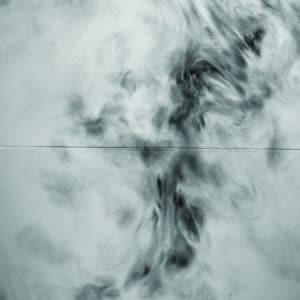
LP
Jean-Luc GUIONNET
“Arantzazu Close & Far”
Nearly 15 years after the edition "Maison.House II-V" CD - in duet with his electroacoustic friend Eric La Casa - Vert Pituite La Belle is pleased to collaborate once again with Jean-Luc Guionnet, this time alone and at the organ.
For Arantzazu Close & Far, the vinyl medium makes perfect sense: two sides, two versions of the same sound event, the recording of the same improvisation on the organ of the basilica of the monastery of Arantzazu in the Spanish Basque country, realized during a residency of a few days in this high-place of the history of the region at the invitation of the collective AudioLab.
On the first side, we hear the sound recording made by a pair of microphones arranged closer to the organ while the second we hear the same improvisation but from the bottom of the monastery.
16,00€
In stock
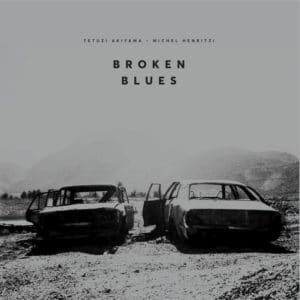
12"
Tetuzi AKIYAMA & Michel HENRITZI
“Broken Blues”
Reissue of an ultra-limited cdr that popped out quietly on absurd in 2007, this record finds Tetuzi Akiyama and Michel Henritzi joining strengths for a singular set of guitar music recorded at the Alchemy Music Store in Osaka.
Captured during the heyday of stylised and pensive improvisation, the music here breaks protocol by avoiding some of the more polite mannerisms of the genre. What starts as a coarse yet beautiful duet of sparse melodic fragments, soon brings into fold the systematic undoing of the bodies of the two guitars themselves. Putting drills, hammers, nails, screws and saws into good use, and with maximum amplification, the two artists manage to bridge the distance between the freely atonal sketches of post-Derek Bailey guitar music and the Fluxus tradition of more overtly disruptive actions. In the process, they craft a singular work that, through raw tactile means, channels some of the violence and expressiveness that runs deep throughout the long tradition of guitar music.
Edition of 192 hand-stamped numbered copies.
15,00€
In stock
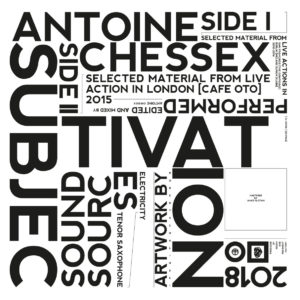
LP
Antoine CHESSEX
“Subjectivation”
Subjectivation is the new solo album from Swiss artist Antoine Chessex. Produced by Rekem Records (GR/UK) and Fragment Factory (DE), it features some of his most direct and developed work to date.
Using material from solo live performances in San Francisco, Berlin, Zurich and London between 2010 and 2015, the sides of this record distill the touchstones of Antoine's sonic language into two sharp and forceful statements. The first side opens with a formidable tour-de-force, a developing field of distortion in which tenor saxophone adds on a metal-tinged sludgy tonality, wedged through dense masses of sound.
Following on the second side, are some subtly executed sonics, documented at London's Café Oto. Here it is Chessex's multiphonics taking centre stage, a rapid-fire of voices from the horn that gets enveloped in a back-and-forth between electroacoustic structures, psychoacoustics, and pure tone. Connecting the two sides is a meticulous attention to the different levels that operate within sound, and a compositional hand that favours intensity and depth, making this one of Chessex's most definitive statements.
Antoine Chessex is a multifaceted composer and sound artist who works across a number of areas within adventurous sonic practices and art.
Edited and Mixed by Antoine Chessex
Mastered by James Plotkin
Cut by Flo Kaufmann
Artwork by Robert Schalinski
Edition of 323
Original price was: 19,00€.10,00€Current price is: 10,00€.
In stock
LP
Félicia ATKINSON & Jeffre CANTU-LEDESMA
“Limpid as the Solitudes”
"When is one plus one not two? When two paths converge and a new one appears. But what is this newly activated neural pathway? A Third Mind? In the 1960s, multimedia artist Brion Gysin cut through the words of a newspaper and rearranged them to reveal a new kind of truth contained within the words but not freed until his knife cut it loose. He described this as part of the Third Mind. Likewise, «Limpid As The Solitudes» cuts through sound-making techniques to enter a new zone of sonic revelations.
If you had to look for musical precedents, you might say the record recalls the turn-of-the-century Mille Plateaux glitch era, the warmth of La Monte Young’s raga-inspired microtonal electronic «dream house» drones, a sense of adventure evident in the acousmatic non-space recordings made by GRM artists in the 1960s/ 1970s, 4AD’s floor gazing guitar sound circa Cocteau Twins peak, and blissfully diverse field recordings. But you could equally equate it with entirely different recording sources. «Limpid As The Solitudes» has a widescreen sound that is both familiar and unfamiliar. Warm, comforting and also unsettling in unpredictable ways. Deliberate yet exploratory. It’s a record composed of opposites and contrasts. Following historical guidelines yet also throwing them out of the window. It’s hard to tell if the process of creating it was more akin to abstract painting but it might possibly be easier to understand if it was a large museum painting (to steal a thought from David Stubbs). To describe the album as ambient would indicate a much too passive engagement with the sound – leave it to play in the background and you’ll miss a lot of the joy.
Felicia Atkinson and Jefre Cantu-Ledesma describe the record as a series of postcards – «things and sounds that happen vertically as a slow ascension, vessels communicating in dreams.» In this collaborative recording, there is a feeling of «becoming» – things metamorphose – a concrete sound turns into a electronic sound that turns into a spiral-like melody which then furls / unfurls at the same time.
The title of the album – «Limpid As The Solitudes» – as well as track titles, are all verses stolen from Sylvia Plath’s poems – Atkinson notes «like dropped pearls from a lost collar.» Trying further to capture the records poetic impulses she notes it’s reflects «Empathy to objects and nature’s elements, meteorological states, seasons that answer to your heart, granular etchings carved and sustained to create a blurred sentimental landscape.» But notes with a sharpness that «the finale is more optimistic than Plath’s poetry. Love and lyricism win, the music soaring from deep water to interstellar galaxies.»
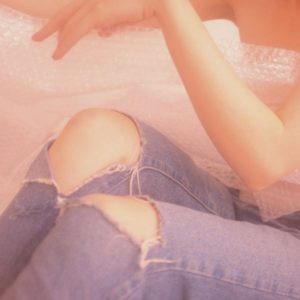
If you look at the cover, you’ll find another key clue – you’ll see an image created by photographer Julien Carreyn of a young women wearing destroyed jeans, playing with bubble wrap. The image is intended to give the viewer an eerie 1990’s feeling that echoes the recording. They note – «think films such as by «Trust» (Hal Hartley, 1990) or «Chuncking Express» (Wong Kar Wai, 1994).» They add «it’s the «ultra modern solitude» of characters lost in an early-digital urban vacuum, looking for a more time to wonder, a soul mate or just some compassion in the grey sky.»
Among the many other references for this album is how Google Maps have created new digital perceptions of space, Gilles Deleuze’s examination of Alice In Wonderland, Andre Bretons poems and more films including the classics «Sacrifice» (Tarkovsky), «Passenger» (Antonioni) and «Last Year In Marienbad» (Resnais). To dig into the more of the ideas and sources behind this record you’ll simply have to talk to the duo. We simply cannot give you the full depth here.
Be sure to come back to this record more than once – it’s then that it’s power will work – you’ll recall the sound of a lover, a garden you once walked through, an echo of a record you once loved. To be appreciated, «Limpid As The Solitudes» requires you to immerse yourself as if in a hot spring, letting the sounds float over you and alter your perceptions and memories." (Shelter Press)
Mastered and cut by Helmut Erler at D+M, Vinyl Edition housed in printed inner and outer jacket, with high-gloss lamination finish. Art by Julien Carreyn. Out on November 9, 2018.
18,00€
Out of stock
LP
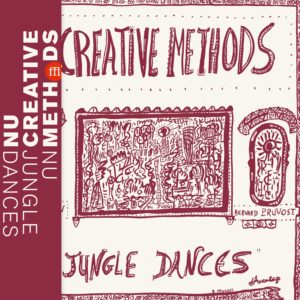
NU CREATIVE METHODS
“Nu Jungle Dances”
"When the second Nu Creative Methods album was released, New And Rediscovered Musical Instruments by Max Eastley and David Toop had already been available for almost three years. Without being able to say that there was a direct, real-time influence, the direction taken by the British and French duos was however the same, combining research and tradition in a quest for a new imaginary folklore.
The name chosen by the pair was anything but innocent, linking them to both the track «Nu Creative Love» by Don Cherry (from Symphony For Improvisers) and the book My Creative Method by Francis Ponge. Because the first outlines the route of a free jazz the boundaries of which have constantly been demolished and through which Pierre Bastien and Bernard Pruvost traced their own path, while the second, an anarchist creating a bomb with the irrational as gunpowder, is close to providing an intellectual method. Close, because even this is undermined by other essential routes taken by Nu Creative Methods. The Oulipo, for example, encouraged all sorts of creativity; or perhaps pataphysics, according to which a banal saucepan is equivalent to the Mona Lisa! To get closer to the source of their imagination, the following names would have to be added to the list, Locus Solus by Raymond Roussel, the Art Ensemble of Chicago, Harry Partch, New Phonic Art and «Zwei Mann Orchester» by Maurizio Kagel. That shows, in broad strokes, the creative wheels in motion behind Nu Creative Methods and Nu Jungle Dances offers a taste of the pathways offered by chance, following improvisations using instruments from the five continents.
By proceeding thus, that is to say entering an esthetic zone where popular and esoteric music come together at last, an infinite palette of sounds opens up, offering fantastic perspectives. Between free jazz and ancestral music, Nu Jungle Dances makes it happen without pretence but with a rare and luminous extravagance. But also with the willingness to take on board unexpected surprises, and with a natural charm combating for the craft of sound creation." (Souffle Continu)
20,00€
Out of stock

LP
STREIFENJUNKO
“Like Driving”
Streifenjunko has taken a shift towards electronic sounds. Their previous albums "No Longer Burning" (SOFA 2009) and "Sval Torv" (SOFA 2012) was remarkable in the magnificent sound achieved only with a saxophone and trumpet. With the seemingly endless possibilities of electronic instruments their strategy of finding simple tasks has been put to the test, and in the making of this album Streifenjunko was put back to the starting position to re-discover their focus and recognisable simplicity. The result is music with sharp edges and sudden changes, crude starting and stopping. The engine of the music is the interlocking of slow moving streams. Some of the electronics are self generating for Espen and Eivind to follow, and the different sounds and layers are multiplexed using starting and stopping signals. To play is simply to follow the signals, like driving.
Streifenjunko has been making music together since 2005, and during these years, the members Espen Reinertsen (saxophone) and Eivind Lønning (trumpet) have worked closely together to present truly unique and original compositions on more than 200 concerts all over the world.
It is presented with a beautiful artwork by video artist Kjell Bjørgeengen.
17,50€
In stock

LP
FULL BLAST
“Rio”
Peter Brötzmann – Reeds. Marino Pliakas – E-Bass. Michael Wertmüller – Drums.
Live at at Audio Rebel, Rio, Brazil - 17.7.2016. Released in cooperation with Brasil label QTV
"Three great jazz masters are demonstrating their best abilities of improvising - This album is a great occassion to hear a marvelous record of three great stars of avant-garde jazz" – Avantscena, 2018.
"True to their name they play like a force of nature, something substantial to be reckoned with akin to an aural tsunami - A decidedly enjoyable listen, I recommend it at maximum volume." - Nick Metzger, Free Jazz Blog, 2018
"The speed that the sound is presenting is astonishing, with gales of saxophone, notes of bass that become a blur and lightning fast drumming- The music is more than raw noise however, there is depth and breadth to it and it exists in three dimensions plus time, enveloping the stage with its relentless power and glory" – Jazz´n´Blues Blogspot, 2018
20,00€
In stock

LP
BRÖTZMANN / LEIGH
“Sparrow Nights”
Peter Brötzmann, b-flat/bass/contra-alto clarinet, alto/tenor/bass saxophone. Heather Leigh, pedal steel guitar.
There is complexity in simplicity, and Sparrow Nights is Peter Brötzmann and Heather Leigh's most enduring record to date, and their first studio album. A series of emotionally rich and boldly elucidated tonal and timbral exchanges played like compositions on pedal steel and reeds, the tracks (released as a 6 track LP and 10 track CD) are cold-forged minimalist blues motifs dragged from instrumental laments.
After three years playing together Brötzmann/Leigh's connection and understanding is by now both cerebral and deeply invested in the physical and sensory possibilities of their combined sound, while retaining a melancholic distance. Within this duo there is fluidity – neither is the anchor – and these recordings sound with as much variety as the sea. At times Sparrow Nights carries the clarity and poeticism of still water and open horizon ("This Word Love"), and at others it contains the elemental and ferocious roar of white water breakers on black rocks ("This Time Around").
On their previous three live albums (Ears Are Filled With Wonder, Sex Tape, Crowmoon) the duo have developed an intimate and intense language that manifests here as a focus on power and control, where figures blasted of unnecessary decoration are drawn from the shadows and smoke of collapse. The studio setting also allows Brötzmann to bring a broader range of reeds than in live scenarios: where previously he has played primarily tenor, clarinet and tarogato with Leigh, here he delivers the heat of alto and the low pressure of bass saxophone and clarinet.
Brötzmann's duo with Leigh continues to trace a fresh new arc in his trajectory, and this release also falls at a time when Leigh releases Throne, her most song-based record to date. Here as a studio duo they play a new-old blues for times of complexity, noise and chaos, continuing to redefine and re-sound possibilities for improvised music.
Recording and mastering by Martin Siewert. Artwork by Peter Brötzmann.
23,00€
Out of stock
LP
TROU AUX RATS
s/t
Trou aux rats is synthetic organs driven music, romantic and funeral.
'Heavily distorted organ mingling with the damp and mould and scrape of corroded metal. But there’s loveliness peeking through as well, bleached-out melodie'
Trou aux rats is Romain Perrot aka Vomir (Harsh noise wall) aka Roro Perrot (Shit folk).
100 copies, hand stamped white label and signed by the artist.
Original price was: 17,50€.10,00€Current price is: 10,00€.
In stock
LP
BAZUINSCHAL
“Bazuingeschal”
One night, a few years ago, Danish saxophonist Mette Rasmussen blew so extremely hard on her instrument that Dennis Tyfus - in bed in Belgium, fending off animals in his sleep - woke up with permanent ear and brain damage.
Sometime later, Rasmussen travelled to Belgium to record with the afflicted Tyfus. The result is a fruit cake, kneaded with the bloodied hands of a butcher. It sounds like a room but it's pitted with chewy rubber, spat onto a cassette recorder that is playing and recording at the same time whilst Lisa Simpson grins and presses a tiny yellow foot on the tape. It's 'free' and it's 'jazz', like a steamed-up window in a car park toilet.
Edition of 300 copies
18,00€
Out of stock
LP
Jean-Luc GUIONNET & Thomas BONVALET
“Fusées”
Second collaboration between Thomas Bonvalet (strings, percussions, objects…) and Jean-Luc Guionnet (keyboards, saxs, electronics…). Second album, more electric in a way. Recorded at Instants Chavirés January 2014 by Adrian Riffo.
Original price was: 15,50€.10,00€Current price is: 10,00€.
In stock

2 LP
Valerio TRICOLI
“Clonic earth”
The experimental Italian composer returns to PAN with a new LP, titled ‘Clonic Earth’. His ongoing output for the label has long-presented his electroacoustic sound compositions where since the mid-’00s, he has utilized analogue live sampling and real-time editing of field and studio recordings by means of manipulation of 1/4 inch tape.
Asides from being a founding member of the Italian avant-rock group 3/4HadBeenEliminated, he has worked extensively with various musicians, choreographers and multimedia artists including Thomas Ankersmit, Antoine Chessex, Werner Dafeldecker, Anthony Pateras, and Robert Piotrowicz.
His studio compositions, documented on few records, often explore themes of the internal – represented both by the psychological and the physical – and of the occult, which with the use of spoken text makes them often deeply existential works, self-investigations of the psychological, emotional and irrational horror within.
The new record, ‘Clonic Earth’ is a perturbing, compelling and eventually mind-expanding work, marked by compositional strategies of exploded narratives, psychological insight and oracular literary references, where questions about the boundaries of spatial perception in the decoding processes of acousmatic music are overturned into existential, metaphysical questions.
Tricoli’s allegorical and philosophical universe takes the form of an unhinged mind’s landscape swarming with estranged sound objects, and sometimes reminiscent, in the complexity of details and surrealistic effects, of Hieronymus Bosch’s larger paintings. Compared to his previous works, the content of ‘Clonic Earth’ explores more synthesized and heavily processed sounds, especially vocals, often appearing in the form of a religious, electrified chanting.
The record is described by its author as a natural consequence of the internal collapse depicted in his previous record, ‘Miseri Lares': “As if all the debris left inside my loudspeakers have been ignited to expand into the ether, to find a justification at the principle of Chaos, or Cosmos alike.”
This movement is expressed by references to the theme of fire as original matter in the Chaldean Oracles which, together with the later work of Philip K. Dick, are the main sources for the vocal/text elements of the composition. Fire, intended as the convulsive principle of existence, but also an ontologically terminal element – hence a representation of the infinite decay and a mean of communication with the otherworldly – serves the author a metaphor for the acousmatic listening experience itself: a borderline perception of sounds eternally fixed in their spasmodic disappearance, which could eventually drag us into a different layer of reality, drastically changing, subverting, or expanding the space in which they are diffused. A ritual, somehow, which may link the listener and the perceptive space that he inhabits with whatever lies beyond the loudspeakers, beyond the vibrating surface of the world.
The 2xLP is mastered and cut by Rashad Becker at D&M, featuring artwork by Bill Kouligas.
Original price was: 25,50€.14,00€Current price is: 14,00€.
In stock

2 x 10"
Thomas DIMUZIO
“Amid Zero Echo”
Thomas Dimuzio’s Amid Zero Echo marks the new release from this US underground legend from San Francisco, whose massive hypnotic soundscapes already released in the 90’s were much ahead of the time!
Four new transcendental drone masterworks abstracted from electric guitar bristle with life through the dense, rich and detailed sonic expanse of Dimuzio's glorious sound world. Vibrating wires of the electric guitar inform a digital musique concrete modus operandi replete with unheard studio techniques which form a music with a strong organic core. These four drones open wide rooms for phantastic aural imaginations: like flying over endless grounds of unknown origin, sensing a heavy suction of extreme gravity, moving towards a black hole center... or driving into a totally dark mining tunnel with all the metallic ore and dust around… These are drones that LIVE from the inside! Striking gatefold artwork by Mars Wellink showcases two clear vinyl 10”s in an equally compelling and beautifully designed package. Limited in edition to 500 copies.
Thomas Dimuzio is a musician, composer, sound designer, mastering engineer, label proprietor, and music technologist residing in San Francisco, California. Inspired as much by John Cage as Led Zeppelin, Dimuzio’s music forms a sonic excursion that transports the listener into other worldly aural realms. “His work has a narrative, filmic tug that will draw you into its dark corners, ears alert… brilliant and rarely less than entertaining.” [Peter Marsh, BBC]
Long regarded as a musical pioneer for his innovative use of live sampling and looping techniques, Dimuzio has earned a deserved reputation worldwide as an avant-garde sound artist in touch with the aesthetic pulse of time and technology. A true sonic alchemist who can seemingly create music events out of almost anything, Dimuzio’s listed sound sources on his various releases include everything from “modified 10 speed bicycle” and “resonating water pipe” to short-wave radios, loops, feedback, samplers, synthesizers and even normal instruments such as guitar, clarinet and trumpet. Dimuzio’s eclecticism bespeaks a career equally informed by a profound dedication to his craft and collaborations with friends, artists and technologists alike.
Dimuzio's recordings have been released internationally by ReR Megacorp, Asphodel, RRRecords, No Fun Productions, Sonoris, Record Label Records, Odd Size, Seeland, and other independent labels. Among his collaborators are Chris Cutler, Dan Burke, Joseph Hammer, Anla Courtis, Nick Didkovsky, Due Process, Voice of Eye, Fred Frith, David Lee Myers, 5uu’s, Matmos, Wobbly and Negativland.
Original price was: 22,00€.12,00€Current price is: 12,00€.
Out of stock

2 LP
Anton HEYBOER
“Rules of the universe”
Kye is proud to announce the release of Rules Of The Universe, a fully authorized anthology of archival audio work by the renowned Dutch artist Anton Heyboer (1924-2005). Heyboer’s stature in visual arts is well known and internationally celebrated, but documentation of his audio work is scant and difficult to locate. Heyboer’s only previous vinyl release - 1976’s ill-fated “She And She As One” LP (EMI) introduced a music so resolutely personal and uncommercial in nature that EMI ordered the unsold bulk of the pressing withdrawn and destroyed. Further recordings of Heyboer’s anomalous music eventually trickled out via a string of private press micro-edition CDs/CDRs through the Anton Heyboer Foundation in the 1990’s.
Released with full approval from VOF Heyboer and overseen by Lotti Heyboer, Rules Of The Universe draws from over seven hours of surviving archival tapes, restoring the cream of the CDR editions and supplementing it with a selection of previously unheard tracks. Rules Of The Universe offers a fresh reappraisal of a lesser-known - but no less important field of creativity from one of the 20th Century’s most original artistic minds.
Rules Of The Universe arrives in a full color high gloss gatefold sleeve, with an accompanying fold-out color poster, in an edition of 500 copies.
Released with full approval from VOF Heyboer and overseen by Lotti Heyboer, Rules Of The Universe draws from over seven hours of surviving archival tapes, restoring the cream of the CDR editions and supplementing it with a selection of previously unheard tracks. Rules Of The Universe offers a fresh reappraisal of a lesser-known - but no less important field of creativity from one of the 20th Century’s most original artistic minds.
Rules Of The Universe arrives in a full color high gloss gatefold sleeve, with an accompanying fold-out color poster, in an edition of 500 copies.
Original price was: 28,00€.15,00€Current price is: 15,00€.
Out of stock

LP
TRANSISTOR
“The Din of Eons”
Transistor was founded in New York city by Ben Miller (vocals) and Franck Vigroux (electronics). Collaboration began in 2009 followed by live performances in Europe and the US. After a well-received 2010 LP, Transistor is releasing destination a new studio album in 2013. Transistor’s live performance is known to produce intense physical energy with the use of Vigroux’s sub-bass frequencies and miller’s cryptic vocal stance. Influences range from industrial to punk to electroacoustic music. LP limited edition 300 copies.
Original price was: 17,00€.9,00€Current price is: 9,00€.
Out of stock
LP
Ben VIDA
“Slipping control”
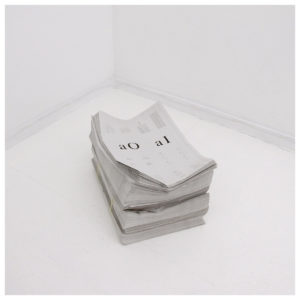
Slipping Control derives from the text piece “Tztztztzt Î Í Í…” wrote last year by Ben Vida (and published as a book by Shelter Press).
Composed to act as a score, a sound piece and as raw data for electronic control source, Tztztztzt Î Í Í… became the intrinsic element that tied some different pieces of art made by Ben Vida and presented at the eponymous show at AVA Gallery (NY, USA) in april 2013.
“I was interested in the rhythm of speaking, interested in using the voice to create rhythmic patterns that would inevitably break out of time and become asymmetrical and awkward. I wanted to create one set of control sources (the text) and run them through a bunch of different systems (the video, the book, the record etc) and see how the original source material morphed and changed as it manifested in these different modalities. The process of developing each unique work involved setting of control paths for the text to be processed though. In terms of this path the first step after writing the text was to find the primary filter of interpretation and translation that would start this process of slipping control - and this is where Tyondai and Sara come in…”
A Control Path may look something like this: Text > Performer/Vocalist > Voiced Recording > Electronic Analysis > Reconfigured
Text > Audio Synthesis > LP Record.
Or maybe like this: Text > Performer/Vocalist > Video/Audio Recording > Electronic Analysis > Audio Synthesis > Video Editing > Color Synthesis > Video Installation.
Or this: Text > Performer/Vocalist > Video/Audio Recording > Electronic Analysis > Audio Synthesis > Video Editing > Color Synthesis > Video Installation > Color Field Panel Display.
Or more simply: Text > Poster.
All music by Ben Vida, with Tyondai Braxton, and Sara Magenheimer. Mastered and cut by mastered by Helmut Erler at Dubplates & Mastering, Berlin. First edition of 500 copies, color cover + printed inner sleeve + double sided insert, 140gr black vinyl.
Original price was: 16,50€.10,00€Current price is: 10,00€.
Out of stock

LP
Mike COOPER
“Light on a wall”
Orange vinyl limited to 100 copies. New album from Mike Cooper recorded live on Radio Lebanon in Beirut. Cooper plays electric lap steel and sings several of his “Spirit Songs” - a body of vocal works that he has been presenting live over the past few years. These “songs” are constructed by chopping up - (William Burroughs / Brion Gysin / Tom Phillips style) - Gravity’s Rainbow and V - two novels by Thomas Pynchon.
No chords, melodies or harmonic patterns for each song are planned prior to them being performed. Both accompaniment and the songs melody are improvised during each performance rendering each performance unique. There are other recorded versions of these pieces which, by the very nature of this approach to presentation, are completely different.
This set differs radically from other versions also because it was recorded using an electric Vietnamese lap steel guitar (as apposed to his usual electro-acoustic resonator guitar) heavily processed through a vintage Kaos Pad and Zoom Sampletrack looper. The guitar has built in, on board, distortion, wah-wah and tremolo. The result is a more dense and “heavy metal” sound than is usually associated with Cooper’s music.
All the songs and improvisations are original apart from the last track Masters At War - a version of an anti war song from the sixties written by a master of the genre but here presented as a thundering call to throw light on a wall…
“Every war and every conflict between human beings has happened because of some disagreement about names. It is such an unnecessary foolishness, because just beyond the arguing there is a long table of companionship set and waiting for us to sit down…” - Rumi - Sufi Poet.
Original price was: 18,00€.10,00€Current price is: 10,00€.
In stock

LP
SQUADRA OMEGA
“Nervoso”
The Squadra Omega teams up again revealing itself in the shape of a trio composed - exactly as for the session which gave birth to Il serpente nel cielo - by OmegaFrank (drums), OmegaG8 (bass, electronics) and OmegaMatt (guitar, organ, sax and electronics). An improvised session recorded live by Matt Bordin at Outside Inside Studio, where the Squadra goes nervously FREE - constantly suspended and harmonically non resolved - following a trail of skilled atonal jazz rock guitar tunes leading to moments of dazed electronics. Definitely not an easy-listening album, wonderfully rendered by a masterful cut made by Daniel Krieger at SST in Frankfurt. For fans of early ECM records. Pressing info: 250 copies on black.
Original price was: 17,00€.10,00€Current price is: 10,00€.
In stock

LP
Ekin FIL
“Being Near”
Had the titular contest in Guy Maddin’s The Saddest Music In The World not been rigged from the onset, Turkey could have delivered an impeccable contestant in Ekin Fil. For many years now, her spectral dream-pop deconstructions hold a thousand-yard stare of an unconsolable melancholy; and she's drawn the highly favorable comparisons to Grouper and lovesliecrushing thanks to her understated yet beloved catalogue of releases on Root Strata, Students Of Decay, No Kings, and Sacred Phrases. Helen Scarsdale has long been a fan of Ekin Fil’s work, and we are delighted to have her in our constellation of artists here at The Agency.
Born Ekin Üzeltüzenci and based in her native Istanbul, she cites the shoegazing classics (Cocteau Twins, Cranes, Slowdive, etc.) as her earliest influence, seeking out worn issues of Melody Maker or NME from second hand shops and trading cassettes with friends and fellow enthusiasts. This Proustian obsession with rainsoaked melodies from the British Isles blossomed into a foundation for her own art. Being Near stands as the pinnacle in her luminous career, with achingly beautiful and elegantly simple arrangements for guitar and electronics saturated in cavernous amounts of reverb, whose semi-mystical blur extends well into the vocal melodies. Ekin Fil’s songs emote a timelessness of human desire and longing, albeit constrained to this plane of existence. For Üzeltüzenci, her music is not an escape valve from the patriarchal hammer of the dominant culture in Turkey, but a reflection through her own condition, in her own context, from her own body that may have actualized what Helene Cixous theorized as “écriture féminine” but through sound and not language.
Original price was: 19,00€.10,00€Current price is: 10,00€.
In stock

LP
ORCHESTRA OF CONSTANT DISTRESS
“OOCD”
Orchestra of Constant Distress is the new Swedish supergroup featuring Joachim Nordwall (Skull Defekts, Alvars Orkester), Anders ‘Drajan’ Bryngelsson (Brainbombs, No Balls), Henrik Rylander and Henrik Andersson.
Their self-titled debut LP on 8mm is a nice slab of Hard Rock from the year 3000. 5 tracks of pure mechanical alienation, built upon very minimal guitar/drums patterns and waves of harsh electronics, sounding pretty much like anything else in the actual noise rock scenario.
Limited edition of 200 copies.
Original price was: 17,00€.10,00€Current price is: 10,00€.
In stock
LP
Garrett LIST
“Your Own Self”
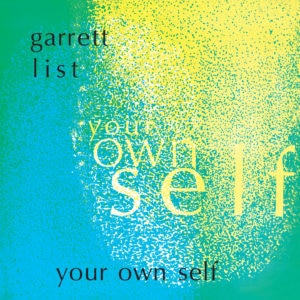
Garrett List's work for Opus One, in 1972, was a remarkable creative effort, conceived like a celebration of a higher self-consciousness. The context is avant-garde minimalism, but the music is enriched by a deep spiritualism; it echoes the most meditative jazz of the age, taking also advantage from the mystic lesson of La Monte Young. Everything is solved in a free, moderate and brilliant language, pure and elegant. It's quintessential, in these rare moments of beauty, the instrumentation of the voices and the relative interpretation of the text. The sibilant female chant is lost in an intimate and ethereal recitation, wrapped by the drones of the horns and the dripping notes of the piano and vibraphone. It's the ideal atmosphere for an impalpable ecstatic way, the echo of a secret dialogue with the inner cosmos. List seems to condense perfectly all his emotional and transcendental sound universe, making Your Own Self, non only a seminal work, but also a radiant message of total harmony.
21,00€
In stock

LP
Frederic RZEWSKI
“Coming Together / Attica / Les Moutons De Panurge”
This milestone of the avant-garde music, published in 1974 by the historic Opus One, was a very significant political awareness. With Coming Together and Attica, Rzewski celebrates in music the famous revolt of the American prison in 1971. The texts of Sam Melville and Richard X. Clark make pulsating and alive the invocations of the prisoners; full of pathos, these fragments of life oscillate between a confessional tone and the hymn to freedom, in a touching emblem of compassion. The fixity of the sound images is incisive, unnerving and melancholic, embroidering a solid minimalist repetition. The different combination of the verses produce a psychosis or obsession of a cathartic experience, at the same time emotional, physical and mental.
Together with great guests such as Alvin Curran, Jon Gibson, Garrett List and Karl Beger, Rzewski seems to merge his radical vocation with the most meditative and suffered plots of the spiritual jazz; sealing all with Les Moutons Des Panurge, an amazing suite for percussion, a timeless masterpiece of polyrhythmic expertise.
21,00€
Out of stock
LP
Pan DAIJING
“Lack”
*** Back in stock ***
Culminating as the purgative ‘finale’ to her improvisational live performances, Pan Daijing’s debut album also offers an insight to her future works. The process was intuitive and raw, born out of her previous explorations. Over the past 2 years, she has composed, recorded and edited different concerts and field recordings across Europe, China, and Canada, forming the basis of the record. Arriving as her first full-length album, ‘Lack’ was crafted from this long, painstaking mental and physical practice.
Daijing’s pieces are created around a very intense and intimate mental catharsis, often expressed through a close physical interaction with strangers in her live sets which seek to engage them in a highly personal way. “When I was finalising this album, they didn’t feel like tracks to me anymore, but more like a psychoanalytical process,” she says. “I saw myself being this absurd, mad person ‘acting’ out the sounds… It’s rather physical, and became like a mindgame. All things came out naturally as part of me.”
The narrative of the album presents a perspective of the world as ‘the theatre of our minds’ – where Daijing sees the record as an ‘opera piece’ in its storytelling and drama.
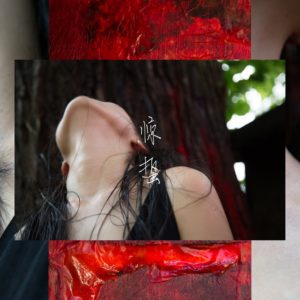
The release is mastered by Rashad Becker at D&M, featuring photography by Ralf Marsault, and artwork by Bill Kouligas.
20,00€
In stock

LP
MACIUNAS ENSEMBLE
s/t
The Maciunas Ensemble was founded in Eindhoven, The Netherlands, in 1968 as a free improvisational music group that set out to realize the score "Music for Everyman" by Fluxus initiator George Maciunas, which they interpreted as allowing total freedom in the sounds being produced. In the mid-1980s, after a number of personnel changes, the group settled on the line-up of artists Paul Panhuysen and Mario van Horrik, musician Jan van Riet, and scientist Leon van Noorden, which remained stable until Panhuysen's death in 2015. The group met and played on a regular basis, usually improvising on instruments that were at hand and recording every session. Before playing the next session, the previous recording was listened to and discussed. In 1980, the Eindhoven art initiative Het Apollohuis, also the home of Panhuysen and his family, became their home base, a place that subsequently gained fame for being one of the first and longest-running venues for sound art and experimental music in Europe.
In the recent years, the Maciunas Ensemble has begun to go through its vast archive of recordings and to select material for publication that remained unreleased so far. The first bundle of archival recordings, dating from 1968 to 1980, was released on an 11-CD set on Apollo Records in 2012. For their 50th anniversary in 2018, the second part of archival recordings is to be published, its first instalment being this LP on Edition Telemark comprising unreleased tracks recorded between 1982 and 2012. More archival material will be released in digital format by the ensemble.
This LP allows a glimpse into the musical directions the Maciunas Ensemble has been undergoing during those 30 years. Side A features "Ice Cream Man" and "Toxic Metals", two repetitive, thundering tracks from the early 1980s played on guitar, piano, and cello, and heavily inspired by minimalist rock and post-punk music. Side B contains four shorter tracks: "Russolution" (1985), played on self-built aluminium monochords, "Stamples" (2002), employing sampled voices, and "ZENder" (2009) and "Dèdeboum" (2012), both improvised tracks on vocals and a number of instruments.
Regular edition of 250 in brown Kraftpak sleeve with printed inner sleeve containing various photos of the ensemble and liner notes by Mark van de Voort and Werner Durand.
21,50€
In stock

LP
die ANGEL
“Yön Magneetti Sine”
Edition Telemark presents the ninth album by die ANGEL (pronounced [diː ˈaŋl̩], previously called Angel), an improvisational noise and electro-acoustic project founded in 1999 by Dirk Dresselhaus and Ilpo Väisänen. Dresselhaus, a.k.a. Schneider TM, is based in Berlin and has been active in electric and electronic music since the late 1980s in various bands and projects ranging from rock music to electro-acoustic improvisation. Väisänen has been playing in Finnish electronic duo Pan Sonic in the 1990s and 2000s, and, more recently, in a number of solo projects.
die ANGEL's music meanders between the poles of improvised noise and electro-acoustic music, encompassing processed electronic sounds, instruments, and field recordings, with some tracks featuring guest musicians. Yön Magneetti Sine can be considered their most stripped-down album to date, completely recorded in July 2017 in Väisänen's cottage near Karttula, Finland. It contains five improvised tracks featuring only processed acoustic signals from two self-built one-string resonance instruments and an acoustic guitar. Both one-stringed instruments were built by Väisänen from parts of a weaving loom, a bench, and two barbecue bowls.
All tracks were recorded live without overdubs and, according to Dresselhaus and Väisänen, relate directly to the surrounding landscape and the special atmosphere of the white nights that occur in central and northern Finland during summer. To them, the music heard here is to be called blues, albeit with non-standard instrumentation and structure. Thus, their working title has been "The Electro-Acoustic Blues Album". Edition of 300 on blue vinyl in full-colour sleeve with various photos of the recording process and the surroundings.
21,50€
In stock

LP
SATURN AND THE SUN
“In love with the extreme”
Joachim Nordwall and Henrik Rylander created Saturn and the Sun for their mutual passion in mindchanging sound experiments. Since 2005, they have created music together in ritual rock band The Skull Defekts, but since the death of the Skulls in April 2018 their common focus now is Saturn and the Sun. Deep, often monotonous and harsh electronic music inspired by 60s minimalism, early techno and tribal music. This is what you get when the two comes together.
Rylander is working as a forensic photographer, makes extreme sound art and Nordwall runs the iDEAL Recordings label and records experimental music on his own and with artists like Mats Gustafsson, Mika Vainio (RIP), Ryan Martin and Leif Elggren. They both share the legendary studio space Gothenburg Sound Experiment.
Original price was: 16,00€.9,00€Current price is: 9,00€.
In stock

LP
FOUR HORSEMEN
“Nada Canadada”
The Four Horsemen was a sound poetry group of Canadian poets composed of bpNichol, Rafael Barreto-Rivera, Paul Dutton and Steve McCaffery. They started performing in 1970 and quickly moved from radical improvisation to the use of a notational system, with an effort to develop a scoring method adequate to the group's dynamic and visceral sound show. The four-piece soon became a living workshop with regular weekly rehearsals leading to the best refined group-conceived and group-written compositions. Third volume in a series of sound poetry coordinated by Luca Garino, Nada Canadada - nine outbursts of controlled madness dedicated to the memory of Hugo Ball - is indeed one of the highest examples of poetry as product of a community.
"The number of words we still use in our poetry comes as somewhat of a surprise to us, especially in the light of this album. Strictly speaking we cannot call what we do sound poetry if by it is meant that poetry which has its basis in non-verbal, vocal, and sub-vocal elements of sound. Nor are we into the electronic ramifications of sound in any sense beyond doing a record. We are in fact reluctant to pin the aesthetic continuum on which we operate to the first wall available. Still, perhaps the best name for what we do is what it always has been – poetry". (Rafael Barreto-Rivera)
250 copies on black, embossed lettering, 16 page booklet
18,50€
In stock
LP
Audrey CHEN
“Runt Vigor”
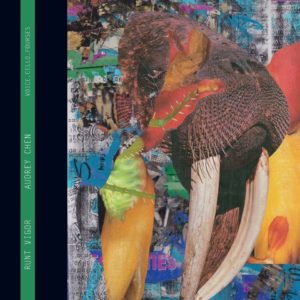
Audrey Chen’s long-awaited new solo album “Runt Vigor” is an adventurous sonic exploration of the voice, cello and analog electronics.
Audrey Chen began her relationship with sound through the cello and voice over 30 years ago and since the past 15 years, her predominant focus has been her solo work, joining together the extended and inherent vocabularies of the cello, voice and analog electronics (with all sounds created without electronic effect or enhancement other than amplification).
More recently, she has begun to shift back towards the exploration of the voice as a primary instrument, delving even more deeply into her own version of narrative and non-linear storytelling. She derives her sound material in continuous process, championing the "in-between" and overlooked. Regardless of instrument, Chen’s mode of experimentation touches both the abstractly beautiful and the aggressively unsettling, creating a kind of curiously imagined architecture, non-prosaic song or ritual that reaches beyond gravity or language.
Recent projects, aside from performing solo, include her long running voices duo with Phil Minton, duos Hiss & Viscera with modular synth player Richard Scott, Beam Splitter with Norwegian trombonist Henrik Munkeby Norstebo, and the “romantic noise duo” Afterburner with Doron Sadja (electronics/light projection). Past projects include work with German conceptual artist John Bock, a duo with NYC abstract turntablist Maria Chavez, and a quartet with Nate Wooley, C. Spencer Yeh and Todd Carter that released a LP on Monotype.
Format: 180gr LP + DL code / download.
18,50€
Out of stock
LP
Heather LEIGH
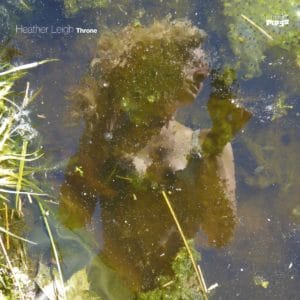
‘Throne’
Heather Leigh: pedal steel guitar, vocals, synthesizer, drum machine
Music composed & performed by Heather Leigh
Additional instrumentation by John Hannon: violin, synthesizer & David Keenan: electric bass
"Heather Leigh takes her Throne as queen of pedal steel with a suite of heartbleed ballads cauterised with burning riffs. After the rawness of its precursor I Abused Animal, Throne is a record of late night Americana and heavy femininity; intimate love songs smoked in sensuality. The songs on Throne are woozy, gorgeous and uncomfortable, smothered in thick layers of bass but lifted by multitracked vocals. These are rich song forms that stand in contrast to the stripped down steel in her duo with Peter Brotzmann.
Prelude To Goddess sashays in wearing leopard print jeans under the twinkling fluorescent illuminations of the British seaside, like Brighton Rock with extra bass. It is followed in by Lena – arguably Leigh's Jolene – a perverse love song soaked in a subversive sexuality, weighed down with a heavy pulse. Soft Seasons is anchored with sunken beats shrouded in wailing, growling steel and an earwormy melody. Gold Teeth, the longest track on the record, crests and breaks in waves; ecstatic peaks balanced and echoed by melancholic troughs. It soars on an updraft, and from cosmic heights dives seaward into a gnarly and riotous pedal steel breakdown, before catching the breeze again.
Days Without You and Scorpio & Androzani are shorter, intimate songs, in the latter the synths seethe and the steel bows and bends as Leigh's voice falters above a Greek chorus of shadows and reflections. But this isn't autobiography, and Throne departs on Days Without You, a confrontationally unfinished romantic song, anxious with half-thoughts and missed connections. It glides into the night on stilettos leaving unanswered questions, in a fug of psychic disturbance and lovesick sensuality.
Leigh's artwork (which she photographed and designed) is a visual mirror of the songs on Throne. It is an album of cosmic echoes, abstractions and introspection, of characters and stories that make up Leigh's first best pop record, its melodies and hooks set alight with the fiery core of her unique and distinctive pedal steel." JLA August 2018
15,90€
In stock

LP
Bernard PARMEGIANI
“Mémoire Magnétique, Vol. 1 (1966 – 1990)”
Never before released !
Transversales is very glad to announce the release of « Mémoire Magnétique, vol.1 » spanning 1966-1990, revelatory collection of commercial and secret music by electronic music pionneer Bernard Parmegiani.
Since the late 50's, Bernard Parmegiani, a major figure of electroacoustic music and a founding member of GRM has created some sixty concert music.
From the start, Parmegiani’s work was closely linked to the screen, with dozens of documentaries, films, long features, animation films but also musical pieces for dance, stage or television. If many of his pieces are landmarks in the history of electroacoustic music (De Natura Sonorum, La Roue Ferris...), his application music compositions are strongly embedded in the subconscious landscape of the French public (Stade 2, Roissy CDG Paris Airport...).
The first volume of this compilation allows us to discover some of these lost tapes and unpublished recordings which were composed for the screen or the performing arts.
“This series of rare application music compositions are representative of the vast scope explored by Parmegiani. Far from the strict format of concert music, its codes and usages, this music designed to fit with the screen is a work of amazing freshness and spontaneity.
It is pervaded with a singular balance, between minimalist music and a more articulated language. There is a space for melody, for word repetitions. Actually, repetition is a constant feature, blurring the line between his concert work and the rest. More than a border line, it seems to define two worlds, which communicate through it.
With an impressive number of application works, and some time spent at the head of the Sound / Image sector in the research service led by Pierre Schaeffer, the composer has managed to build up a framework designed for research and mutual exchange. Bernard Parmegiani presents us with lights, gestures, lines, various registers. Besides, how could one perceive these pieces of music without the pictures they are supposed to enhance? Each title is suggestive, and the best answer is in the field of imagination.
In the middle of the B-side, there is a true gem dated 1977. In this second extract of “Versailles… peut-être“ Bernard Parmegiani gives us a glimpse of the future. One can feel the pulse of the 80’s and of the first accents of Techno Music. It feels like driving a drop head car at 134 BPM, faster than on Kraftwerk’s “Autobahn”. One can also sense that soon the LFO will be replaced by the drum-machine.
Listening to these pieces of music arouses the same sensation as reading the prose of an author already known for his poetry. If one has never read his poems, here is the record that will open the door on a new world to be discovered.” Maxime Barthélemy.
Remastered high-resolution audio transferred directly from the original tapes.
Exclusive Liner Notes + obi strip.
24,00€
In stock

LP
François BAYLE
“Electrucs !”
Never before released.
On the occasion of the 80th anniversary of the GRM, the composer François Bayle introduces us to some of his unpublished archives : “Electrucs !” (1974) composed on a 1970’s Synthi AKS synthesizer like an imaginary soundtrack.
“Foliphonie” (1974) inspired by “La Grande Polyphonie”. “Marpège” (1995) dedicated to Bernard Parmegiani. Also includes “Cinq dessins en rosace” (1973).
Born in 1932 in Tamatave (Madagascar) where he lived for 14 years, François Bayle is a major figure of electro acoustic music and member of the historic Pierre Schaeffer’s “Groupe de Recherches Musicales” (GRM) joined in Paris in 1958. In 1975, the GRM was integrated with the new Institut national de l’audiovisuel (INA) with Bayle as its head, which post he held until 1997, he brought a valuable contribution to the opening of musical research in these original innovative institutions. Ever since his first productions (“L’expérience acoustique” 1971) François Bayle has developed through a great variety of “formats” and designed the Acousmonium a sound diffusion system used originally by the GRM.
He also originated the record series Collection Ina-Grm, organizes concerts and supports the development of technologically advanced musical instruments (Syter, Grm tools...).
After leaving GRM in 1997, he founded his own electronic music studio and record label Magison.
22,00€
Out of stock
2 LP
Bernard BASCHET
“4 espaces sonores”
Excellent release from april 2018 but not stock so far.
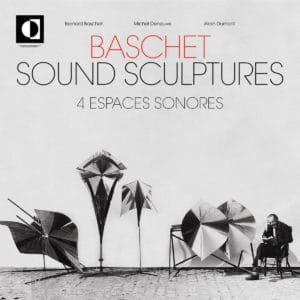
Rare 1979 recording of Bernard Baschet performing on his Sound Sculptures. The Baschet brothers are known worldwide as creators of Sound Sculptures, fantastic shapes of moulded metal and glass, which combine the visual arts with music. François Baschet had always been fascinated by acoustics, by the relationships between the shape and material of an instrument and the beauty of its sound. Bernard Baschet was passionately interested in contemporary music and firmly believed that such instruments were the proper tools for modern music, for they offered to the artist and performer a personal means of expression denied by electronic devices. Together the brothers began to design and produce Sound Sculptures, which could also be regarded as musical instruments. Circa 1965, Bernard worked alongside Pierre Schaeffer as a member of the GRM (Musical Research Group) on the elaboration of what was to become Schaeffer's Traité des objets musicaux (Treatise on Musical Objects). The Baschet brothers also created structures and instruments of all sizes, including bell towers, windmills and fountains, using the natural elements of wind and water to make music. Bernard Baschet was especially proud of his pedagogical work amongst deprived and handicapped children, with the instrumentaium made up of fourteen pieces.
25,00€