
In stock

LP
Francis PLAGNE
“Moss Trumpet”
Having released four full length albums framed around more ‘‘song’ orientated spheres, Melbourne artist Francis Plagne has concurrently moved around collaborative endeavours with Andrew Chalk, Joe Talia and Crys Cole. He was also a part of that Food Court record released on Graham Lambkin’s Kye label in 2014. Which brings us to Moss Trumpet. Plagne’s first solo album which exclusively orbits a more abstract domain.
Taking inspiration from Costin Miereanu’s Luna Cinese this gentle curiosity records the private use of flute, harmonium, keyboards, microphones, organ, paper, percussion, recorder, synthesizer, tapes, tuba, voice, whistle and zither. Like Miereanu’s master stroke these recordings were then collated in semi-random layers creating shifting beds of subtle startling sound.
Moss Trumpet is a timeless affair, warm and woozy as if it is drifting over two sides where each could be either, where the audio perpetually falls in on itself creating a bed of sound inexplicably eschewing standard movement and progression as it unfolds out and around the listener.
Artwork by John Nixon. Mastered by Joe Talia.
Limited edition of 250 copies.
19,90€
In stock
LP
Arek GULBENKOGLU
“A gift like a hollow vessel”
Melbourne based artist Arek Gulbenkoglu presents his second full length album for Penultimate Press.
Following on from the 2017 release Three days afterwards, A gift like a hollow vessel sees a sharper scalpel at play resulting in a more nuanced release which unfolds a curious journey of suburban psychedelia.
Sourced from voice and body sounds, recording of non-musical processes, actions and events, breath, tapes of animal sounds slowed and sped up, processed field recordings, electronics, percussion, tape delay, sample of old folkways records and Esperanto text to voice translations.
A gift like a hollow vessel is striking and intimate musique concrete. A work of confounding beauty as created by one of the most unique voices operating in orbit of psychedelic music as it presents itself today.
Mastered by Giuseppe Ielasi with artwork by Matthew Revert.
Limited edition of 250 copies.
Original price was: 19,90€.10,00€Current price is: 10,00€.
In stock
LP
MP HOPKINS and Mark HARWOOD
“Disfigured with Abbreviations”
Debut recording from two troubadours of oppositional creep. Inspired by Philip K. Dick and the useless machines that haunt us all, Disfigured with Abbreviations is a roundtable exquisite corpse which crawls through a miraculous environment, at once sensual and sinister. How is it that the perpetual promise of a future lands us in a deeper quagmire? How do two gentlemen with scruffy vocabularies fall into a sonic landscape of such haunted beauty?
Following their debut live performance on the rooftop of a bakery in Northcote, Victoria in January 2018 Harwood and Hopkins soon set about making a recording. Initially structured with individual recordings placed on each other regardless of content and positioning. These works soon evolved into a rich labyrinth of found sound, field recordings, electronics and voice with all elements mapping out a landscape heroic in it’s embracing of utter failure.
Mastered by Giuseppe Ielasi with artwork by MP Hopkins and Mark Harwood. Comes with a printed inner disco sleeve housed in a charming reverse board sleeve.
Limited edition of 250 copies.
Original price was: 20,00€.14,00€Current price is: 14,00€.
Out of stock

LP
Alvin CURRAN
“Canti E Vedute Del Giardino Magnetico”
American composer and multi-instrumentalist Alvin Curran has remained one of the great emblems of experimental music for the last half-century. In 1966, along with Frederic Rzewski and Richard Teitelbaum, Curran co-founded Musica Elettronica Viva, a seminal gesture in collective free improvisation. In the early '70s, his solo work would become a crucial bridge between minimalist traditions on both sides of the Atlantic.
Canti E Vedute Del Giardino Magnetico, Curran's solo debut, was recorded by the artist himself and issued on Ananda, the small Italian imprint started by Curran and fellow composers Giacinto Scelsi and Roberto Laneri. The piece itself was put together in the winter of 1973 and presented for the first time at Teatro Beat 72 (Rome's The Kitchen).
Encouraged by the work of Terry Riley, La Monte Young, Charlemagne Palestine and Simone Forti, Curran binds the listener to aberrant notions of place and time: blending field recordings (wind, high-tension wires, beach waves, etc.) with simple and often primitive instruments. Across two sidelong tracks, Giardino Magnetico forms a lyrical collage of synthesizer, glass and metal chimes, plastic tubes, brass and the composer's alluring voice – converging in an immersive realm of Curran's inner / outer experiences.
This first-time vinyl reissue is recommended for fans of Harry Bertoia, Michel Redolfi and Lino Capra Vaccina.
22,00€
In stock

LP
Phill NIBLOCK
“Niblock For Celli / Celli Plays Niblock”
Composer, filmmaker and photographer Phill Niblock is a true pillar of the New York avant-garde. In the past 50 years, he has curated over 1,000 performances at his Centre Street loft and steadfastly built a massive, multidisciplinary body of work. While his earliest musical compositions date back to 1968, Niblock waited until the early '80s to release any recordings. Nothin To Look At Just A Record, a powerful debut with densely layered trombones, would be the first to unfurl his unique approach to sound.
The second album and perhaps the most rare in Niblock’s vast catalogue, 1984’s Niblock For Celli / Celli Plays Niblock is a meeting of two great minds. Working with reed player Joseph Celli (a composer in his own right, who has collaborated with John Cage, Pauline Oliveros and Ornette Coleman), Niblock nimbly removes the breathing pauses from Celli’s oboe and English horn to create seamless, enchanting drones.
Niblock insists that his music be played loud: only in this way can one experience the visceral ringing of these long instrumental tones through the speakers and their natural overtones generated by the room. Niblock For Celli remains deeply absorbing.
This first-time reissue is recommended for fans of Alvin Lucier, Yoshi Wada and Dome.
22,00€
Out of stock

LP
Michael LIGHTBORNE
“Sounds of the Projection Box”
These recordings, made in 2016 and 2017, document the shifting sonic texture of the cinema projection box, as it changes from 35mm to digital projection. By 2014, the majority of UK cinemas had already converted to digital, making many projectionists redundant, and quietly altering the way that cinema works, as both an industry and an experience. Very few cinemas maintain the ability to project 35mm film alongside digital, and it was in some of the remaining, tenacious boxes that I sought the persistent sounds of analogue projection.
The unique space that this album investigates is simultaneously a workshop, an engine room, and an artist’s studio. The projection box is a small room at the back of the cinema auditorium that conceals both the apparatus of the moving image, and the labour of the projectionist, ensuring that both remain invisible, and inaudible, to the cinema-goer.
This album was developed as part of The Projection Project, a research project based in the Film and Television Studies Department at the University of Warwick, which seeks to record and investigate the history of cinema projection in Britain. A special issue of the Journal of British Cinema And Television Studies (Vol 15, No 1, 2018), edited by members of The Projection Project, features a number of articles about the history of British cinema projection and the work of the projectionist in Britain, through the twentieth and twenty-first centuries. It includes an article entitled, Sounds of the Projection Box: Liner Notes for a Phonographic Method’, which augments this album, and elaborates upon the theoretical and methodological rationale for the use of sonic field recording as a mode of enquiry.
All of the images that accompany this record were made by Richard Nicholson. Some of them form part of a series of portraits entitled The Projectionists.
500 copies.
Original price was: 17,50€.10,00€Current price is: 10,00€.
In stock
LP
Vic SERF & THE VILLAINS
“Rok Y Roll”
Edition limited to 300 copies
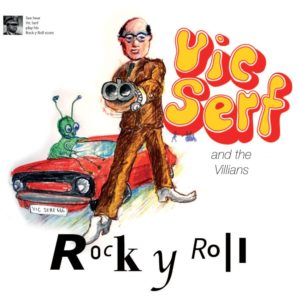
War Extention is proud to announce the vinyl re-issue of “Rok y Roll” by Vic Serf & The Villains originally released by the It’s War Boys label on cassette in 1982. Musicians on the album comprised Vic Serf, Cathy Spermwrecker, Rita Chulo and Larry O'Houlihan along with guest appearances from Ron Dealo, Lepke B. and Sara Fancy. The recording is situated in a particularly fervent and inventive period of 1980's independent and experimental music making, in which many musicians moved freely between such bands as Milk From Cheltenham, Tesco Bombers, Raincoats, Sarah Fancy, and record labels such as Rough Trade, Y Records, and UMYU in Barcelona. This album, however, was more part of a rampant recording program by Whelton in which he released, with help from many collaborators, an irrepressible number of bands and their albums, such as by the Just Measurers, Milk From Cheltenham, Amos and Sara, The Aaron Tenecil Singers, Klak Klak Moguls as well as Vic Serf & The Villains.
"Rok y Roll" imagines an alien race based on a planet far away who have received radio signals beamed from earth in the 50's – rock and roll music. They assume that these signals are the language of the earth people and, inspired to communicate in the spirit of galactic fellowship, concoct a suitable reply. Unfortunately, their culture has no concept of music or song and, as a consequence, their replies are somewhat skewed. "Rok y Roll" is the result.
The It's War Boys' record label was an epitome of musical subversion, resistance to all the crap happening in 80's Britain and a fast rolling index of beauty and fun. The label was originated by Lepke B., Jim Whelton, Susan B. Smoothe and C.D. Greyt. The music, recorded mostly on lo-fi tape machines, and borrowed 4 track cassette machines, found its locus in the various squats and derelict mansions that defined a now long-ago London. Important to this was the ever-present involvement of non-musicians and the untutored approaches and altered techniques they employed. Rejecting the wannabe naked careerism of 80's pop, IWB's mission was, as Susan B. Smoothe said, 'nothing less than to turn the whole rotting wriggling carapace of music on it's back and carefully prod each segment with a perceptually sharpened stick'.
The question remains... Was "Rok y Roll" a mining of past forms of inverted science fiction, in which chronologically displaced music functioned as an alien artifact... or was it an all-out attack on popular music forms? Primarily, though, "Rok y Roll" could be read as a celebration of utter naffness. Vic Serf and his collaborators asked 'how atrocious could a music and the idea behind it be? What would result?'
Here you have the answer!
20,00€
Out of stock
LP
Jérôme NOETINGER / Robert PIOTROWICZ / Anna ZARADNY
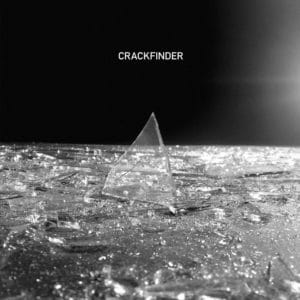
“Crackfinder”
Jérôme Noetinger - revox tape machine, electronics . Robert Piotrowicz – synthesizer, electronics. Anna Zaradny - saxophone, computer.
Zaradny is a composer, instrumentalist and visual artist; Piotrowicz a composer, author of sound installations and virtuoso of analog synthesizers. They founded and curated the Musica Genera festival and label. Noetinger, an improviser, publisher and instrumentalist, specializes in electroacoustic collages full of permutations on his tape recorder and using all sorts of electronics. What connects these musicians are their methods of work: experiment as the basis of action, controlled accidents, repetition, processing and processuality.
Crackfinder is intense and saturated, intriguing with fragments that are rhythmic yet distant from the repetitiveness of minimalism. They give a degree of structure to the otherwise loose amalgam of raw electroacoustics and instrumental improvisation at times evoking free jazz (when Zaradny reaches for the saxophone). At any time, however, the division of roles is clear, an impressive feat at such a high density of sound texture.
Crackfinder the album comprises of two distinct parts. The first is extremely intense and eventful, creating a strong tension, giving the sense of an immense effort or even wrestling between the musicians; a clash of ideas and values. This dialog is not monotonous but dynamic, full of changing and new hypotheses – as if in a process of reaching the truth. We can suppose that these investigated issues are philosophical and existential, giving the impression of greatness and overwhelming significance.
The second part evokes a kind of a soothing stabilization. One may think that the interlocutors have reached a consensus. However, no-one is celebrating, and the mood is somewhat melancholic. The discovery proved to be depressing and the truth is not liberating – it becomes a burden. There is a poignant feeling of failure or unfulfilment, despite concluding and solving the task.
Finally, we are left with silence, and even emptiness – with a symbolic and absolute dimension of the end. The effort of the first part, motivated by the conviction of the significance and need for proving something, is confronted with the disillusion brought by the end of the road. The effort, however, was not in vain – the discovery of the truth, although painful, can be purifying.
Edited, mixed and premastered by Robert Piotrowicz. Mastering and cut by Rashad Becker at D&M Berlin.
12' LP, 140 gr, 150 clear, 50 black vinyl
16,00€
In stock

LP
THE THING
“Again”
Recorded July 2nd and 3rd, 2017 by Øyvind Gundersen at Studio Paradiso, Oslo. Mixed October 2017, by Andreas Werliin at Repeat Until Death, Stockholm. Produced by Johan Berthling, artwork by Lasse Marhaug.
Mats Gustafsson, soprano and tenor saxophones. Ingebrigt Håker Flaten, acoustic and electric bass. Paal Nilssen-Love, drums and percussion. Plus Joe McPhee, pocket trumpet, as guest on one track.
“Though “Again” is the well-proved mixture of cover versions and original compositions, this time the focus is rather on jazz. The only cover, Decision in Paradise, is an old, rather conventional Frank Lowe piece. […] The center of the album is the 21-minute “Sur Face“, presenting the band at full throttle featuring Gustafsson at his most effective and juxtaposed with more aggressive playing from the rhythm section. […] Vicky Di rounds out the album, it’s the only composition that recalls the old, more rock-ish days at the beginning of their career.” By Martin Schray - freejazzblog.org
Original price was: 20,00€.12,00€Current price is: 12,00€.
Out of stock

2 LP
Massimo TONIUTTI
“Museo Selvatico”
Black Truffle is honoured to present the first reissue of a true underground masterpiece, Massimo Toniutti’s Il Museo Selvatico (The Wild Museum), originally self-released on LP in 1991. Like his better-known brother Giancarlo (whose classic 1985 Broken Flag LP La Mutazione was reissued by Black Truffle in 2015), Massimo Toniutti was active in the vibrant underground industrial/noise scene of the 1980s, contributing to releases on legendary labels such as Broken Flag and RRR and self-releasing a series of cassettes between 1984 and 1988.
Existing in a private world apart from the noise and dark industrial tropes of many of his contemporaries, Toniutti’s Il Museo Selvatico is an entirely singular work of domestic electro-acoustic exploration. Made up primarily of what Toniutti calls ‘small and rare noises’ or sonic ‘knick-knacks’ recorded between 1987 and 1990, the five pieces that make up the original LP usher us into a crepuscular space populated by mysterious traces of everyday life. Toniutti weaves a loose net of distant clanks, dull thuds, metallic resonance and skittering percussive sounds, allowing the sounds to breathe against a backdrop of near-silent atmosphere. Although the haunted ambience recalls the work of contemporaries like Organum, Toniutti generally steers clear of long tones and drones, preferring to arrange brief, sometimes staccato sonic objects into patters of repeating figures and isolated events whose overall compositional shape remains somehow ungraspable. Although glimpses of recognisable location recordings and instrumental sounds can occasionally be made out, for most of the record the sources of the sounds we hear remain teasingly mysterious, an abstracted memory of everyday actions and atmospheres.
Museo Selvatico is accompanied here by an additional LP of material recorded at the same time, composed especially for this reissue into two side-long suites that inhabit the same haunted space as the original LP while occasionally making use of more maximal compositional strategies. Black Truffle is pleased to return this overlooked masterwork to the world. Essential listening for fans of Organum, Nurse With Wound, Christoph Heemann, and the tradition of outsider musique concrète.
Lovingly presented as a double LP in a lavish gatefold with printed inner sleeves featuring archival images and notes.
Remastered and cut at D&M, Berlin
23,00€
In stock
LP
Klara LEWIS & Simon FISHER TURNER
“Care”
Composed & Edited by Klara Lewis and Simon Fisher Turner. Editions Mego is proud to present the first outing from the legendary English musician, song-writer, composer and producer Simon Fisher Turner alongside the highly acclaimed emerging Swedish sound artist Klara Lewis. Care is a unique outing rife with delicious dichotomy. The opening track positions the aggressive directly against more fragile moments. On the subsequent track medieval melodies sprout from a dense rhythmic hiss. Witness a Middle Eastern song appearing amongst a haunted rattling reverb in the epic ‘Tank’ whilst a beautiful force of hope can be found within the sound world of the the closing track ‘Mend’. The wide scope of references and constant pull of forces make this debut off ering a timeless patchwork of sonic spaces. Care is an album which sways in such a salubrious manner one can’t help but delight in its unique form of location/disorientation.
16,00€
In stock
LP
ELG
“Vu du dôme”
Forming a bridge between improbable dimensions of GRM / musique concrète, electro-acoustic and chanson spheres, Èlg riddles his music with a literal and metaphorical take on sound poetry; blending French language vocals against quietly enigmatic, impeccably produced backdrops whose low, shifting lighting and mid-fi resolution lends them to comparisons with illusive theatre stage designs as much as the overgrown corners of the imagination explored by Luc Ferrari or Èlg’s Reines D’Angleterre bandmate Ghédalia Tazartès before him.
18,50€
In stock

LP
Thomas ANKERSMIT
“Homage To Dick Raaijmakers”
Thomas Ankersmit, last seen on a pair of excellent albums for PAN and Touch (in 2011 and 2014, respectively) pays tribute to legendary Dutch composer / electronic and tape music pioneer Dick Raaijmakers with an extended study in electronic music, utilising Serge Modular feedback and sine/pulse/random generators, contact mic, and tape speed variation to mirror some of Raaijmakers’ deeply weird experiments. As the label so eloquently explain - despite the abstract nature of the material, a sense of loss somehow pervades.Raaijmakers is a genuinely legendary figure in the history of electronic music, and Thomas Ankersmit’s fitting homage lands almost five years to the date of his passing, aged 83, in September 2013. Replete with experiments with sounds not found in the music, but generated by the listener’s own ear as a strange side-effect, this extended piece re-contextualizes Raaijmakers’ ideas about composition and spatial experience to focus on the sounds of raw electricity through creatively abused electronics, composing with analogue micro-sounds, and the three-dimensional sound fields; referencing storms, thunder, crashing and falling objects, and distant radio transmissions.The concept of the recording is directly inspired by Raaijmakers’ thoughts on “holophonic” sound fields to be individually explored by the listener. With this phenomenon, the listener’s inner ears actively generate sounds that don’t exist in the recorded signal, and which can change with a small movement of the head. In other words; it’s unlikely that you will experience this piece of music in quite the same way as anyone else, or that you will experience it that way more than once. And it’s perhaps this sense of transience; of not quite knowing whether what you’re listening to has a real, physical presence, or is a direct result of strange otoacoustic phenomena, that imbues this work with such unexplained melancholy.
An exceptional recording; approach with patience and care.
Pressed on 140g vinyl housed in reverse-board outer and inner sleeve.
17,00€
Out of stock

LP
Reinhold FRIEDL
“String quartets”
“String Quartet 1, 2 et 3” composed by Reinhold Friedl (Zeitkratzer) and performed by Quatuor Diotima.
“Reinhold Friedl’s string quartets do not pretend to be string quartets, they are anti-Goethe. There is no sophisticated conversation of four elder gentlemen, sitting in armchairs. The music is physical work for the performers and intended to be physical pleasure for the listeners. All three quartets are based on the same idea: smooth transformations from a given texture into another one. The random-driven details vary between the pieces and the parts of the pieces. Meanwhile Reinhold Friedl developped a sotware in the frame of a PHD projects at Goldsmiths University London to help him modeling these texture transpositions.
The CD version is available here.
16,00€
Out of stock

LP
Burkhard STANGL
“Zwölf”
12 short live solo guitar, like a portrait of the Austrian musician at a time of his course, oscillating between minimalism, American primitive, improvisation or noise. Guitar's lover will be pleased.
Some tracks with field recordings from Steve Bates.
Mastered by Martin Siewert.
16,00€
Out of stock

LP
Ben PATTERSON
“The Lost Tape & The Three Required Musics”
“Radiophonic minutes of the search for a probably lost tape piece, and a reconstruction thereof with real instruments.” Produced by Hessischer Rundfunk (Hessian Broadcasting Corporation), Germany, in 2015. When future Fluxus artist Ben Patterson (1934–2016) traveled to Germany in 1960 in order to study with Karlheinz Stockhausen, he brought along a tape piece that he had produced in Hugh Le Caine’s electronic studio in Canada and that he wanted to show to Stockhausen. They met briefly in the context of the World Music Days of the International Society for Contemporary Music (ISCM) in Cologne, but Patterson immediately sensed that their aesthetic ambitions and viewpoints differed too much, and in the end, he didn’t even present him his piece. Instead, his attention was drawn to the Contre Festival at Mary Bauermeister’s studio, a counter event to the ISCM festival presenting works by George Brecht, La Monte Young, John Cage, a.o. Virtually overnight, Patterson’s aesthetic thinking changed radically, and the cornerstone was laid for his coming role within the Fluxus movement. In 2013, Stefan Fricke, editor for new music at Hessischer Rundfunk, approached Patterson about a broadcast of that old tape piece. Patterson didn’t know its whereabouts, so Fricke and him together with Cologne-based composer hans w. koch set out for a journey through Patterson’s large collection of tapes, some labeled, some unlabeled, sometimes the labels not matching the contents. The journey was recorded with Patterson inserting and ejecting various cassettes, always commenting on what was being heard. In the end, the electronic piece couldn’t be found, so it was decided to re-record it using various toys, instruments, and small devices. For the new recording, Patterson brought a score titled “The Three Required Musics” which he considered to be related to the tape piece and which required preparatory work in the form of cutting out colored pieces of paper and pasting them into a time grid. This LP contains the recording of the search on side A and the new recording of the score on side B. It is presented in a full-color sleeve showing a detail of hans w. koch’s paper time grid, with liner notes by Stefan Fricke and hans w. koch, and two inserts: the first containing the original score “The Three Required Musics” with new notes by Ben Patterson, the other reproducing koch's complete paper score in A2 format. Edition of 300.
Original price was: 21,50€.12,00€Current price is: 12,00€.
In stock

LP
Chris CORSANO – Massimo PUPILLO
“Via Combusta”
Chris Corsano, drums and percussion. Massimo Pupillo, electric bass. Recorded, mixed, mastered by Bruno Germano at Vacuum Studio, Bologna. Artwork, Lasse Marhaug.
Original price was: 20,00€.14,00€Current price is: 14,00€.
In stock

2 LP
eRikm & LES PERCUSSIONS DE STRASBOURG
“Drum-machines”
Drum-Machines, the 2nd recording made and produced under the label Percussions de Strasbourg, marks an important turning point in our approach, that of the 4th generation of our ensemble. At the junction between contemporary and electronic music, Drum-Machines was created following a process of dynamic composition: the performers first proposed sound materials on two research residencies and then eRikm ensured the composition, the music production and mixing.
Commissioned by Percussions de Strasbourg and GMEM, Drum-Machines was created on October 7 th, 2016 at Musica Festival in Strasbourg.
«Les Percussions de Strasbourg perform augmented sound material that showcases the intuitive and sensitive universe of eRikm. Between rustling electric razors, the tingling of metal, swirling marbles and ballets danced by twigs, the performers caress, rub, react, transform, develop multiple modes of play and offer a fresh, delicate and unexpected exploration of sound. In a truly collective effort, both in terms of the making of materials and the design of the form and the execution of this unique piece of work, Les Percussions de Strasbourg have fully enjoyed their collaboration with one of the most recognized producers of electronic music of our time.
Drum-Machines is a living sound installation marked by the imprint of five individuals that mixes sound mechanics with organic and subtle electronics, suggesting a reorganization of the boundaries of today's forms of musical expression. » Minh-Tâm Nguyen
«Throughout the ages and their various uses, survival tools (rhombus wind instruments, flute-calls, etc.) have become musical instruments. In the context of this work, these vectors of affects co-exist side-by-side with an electro-acoustic system. This machine cannibalizes its own sound production while simultaneously thriving on sounds produced by the musicians. From this agora spring forth "multitimbral" landscapes whose edges dissolve into microtonal steppes, devoid of human action. From liminal pulsation to decimal infinity, the physicality of the sound summons an allegory to geology, from the infra thin (l’émoi - volute) to the supra massive (embâcle – doline).
Drum-Machines consists of subconscious and collective archaic fields that reach all the way to the noise aberration of the contemporary world. The 21 st century begins in its great collapse, the imbalances and the disruptions of the sound masses deployed by (percussionist) organisms in movement compress time and sounds until their paroxysms. This work is the elaboration of a lengthy sifting approach in which process creates form through a dynamic composition. This process uses accumulation, manipulation and re-arrangement across several generations of sound data. Speed, pulse, timbre and instruments are subject to numerous distortions by real or virtual machines.
The original intention is modified and transformed.
Drum-Machines is polymorphic in its arrangement, suspended on a line of time and actions.» eRikm
Original price was: 27,00€.14,00€Current price is: 14,00€.
In stock

LP
LA MORTE YOUNG
“A Quiet – Earthquake Style”
La Morte Young is a supergroup including the members of the bands Nappe, Sun Stabbed and Talweg. Their first studio album, released 5 years ago, has been acclaimed by some press and has also been tip of the tongue of the now defunct Volcanic tongue mailorder.
A Quiet – Earthquake Style is the second studio album by La Morte Young, recorded during a residency in november 2015 at GRIM in Marseille.
It’s always hard to describe a record when you are part of it, so here is a the thoughts of Stefan Neville (Pumice, Olympus, ...) while listening to it : « This is an unpleasant, confusing & transcendental new record by some very heavy french bastards. It is destructive & haunted & ridiculous. Side one begins with cold violent ripping splatter. Almost rock music but tortured & distressed like a tough metal buffoon falling over wearing dangerous nail studded armbands tumbling & screaming down the steps of an infinity dungeon, into an open sewer where his bullet belt short circuits the worlds electricity & his shitty corpse gets boiled up into a spiritual paste of false hope. On side two we hear a duet between apocalyptic wind & some bulldozers. Cannons are fired into the ocean and a chorus of concussed whale's reply unhappily. Then the world dies and robot scanners on autopilot move in to forever check the pulse of the rubble & giggle amongst themselves for eternity. None of this feels like mere humans playing instruments to me. It is a huge, terrifying, obscene & hilarious record... »
For whom think that Sunn O))), the Dead C and François Bayle are also ridiculous and hilarious.
LP version includes 2 postcards.
16,00€
Out of stock
LP
DARKSMITH
“Hatred Of Sound”
200 copies.
“New record from Darksmith years away from the previous ... well, it is not easy to talk about the records of Tom, even if this difficulty, on the borders with the impossibility, validates the complete success of his work. We are not dealing with an abstract thing, reality is omnipresent in these furrows ... yet it manages to escape any attempt at semantic classification and makes even impossible the definition of an emotional tonality; rather the listening leads back to places of the familiar insignificance in which life is immersed. The two sides are both tripartite, perhaps less messed up than usual, with the usual limping of difficultly identifiable sounds, phantom appearances of music, deteriorated, elsewhere.” (Francesco Tignola)
18,00€
In stock
LP
Mario DE VEGA
“38”
“An immersion into Classics. That kind of Classics which holds in his pantheon Pierre Henry and Pierre Schaeffer, even though I should maybe refer to Michel Chion, given the powerful dramatic intensity displayed by these two compositions.
Mario De Vega has once again proved himself a master at mixing in his works all of the elements that make me love electro-acoustic music so much. The unpredictability of the sound sources, some sort of spectral musicality, and the sudden moves; those compositional jumps that drag you from one space to another, from a world which you’ve just settled into, to another one, totally unknown, sometimes frightening, sometimes simply disorientating.
There are also many moments of delicacy in these 27 minutes, and I find the punk aura that lingers over every turning point so fascinating, reminding of the early works of Valerio Tricoli, so volcanic and unpredictable, and yet so controlled.
Mario De Vega’s sure is a very personal work that displays enormous respect for the History and the classic narrations of experimental and concrete music, without losing anchor with the present.” (Claudio Rocchetti)
18,00€
In stock
LP
R.A.N.
“eb-i Yelda”
Hailing from stanbul and based in Berlin for a couple of years now, Hüma Utku has been a prolific artist lately: as R.A.N. (Roads At Night) she released her debut album “Her Trembling Ceased”, followed by the remix album “Remixed: Stories Retold” (both 2015, Partapart Records), and contributed several tracks and remixes to various compilations. Besides studio production, she travels the planet to perform live or as DJ, and in November / December 2017 UTKU was Artist in Residency at Yara Mekawei’s Submarine Studio, Cairo.
The title of her debut on Karl, “ eb-i Yelda” (pronounced Shab-e Yalda in English), is a Persian term that signifies ‘the longest night’. Inspired by the Ottoman poet Bosnian Sabit Efendi’s verses, R.A.N. created four new, very personal tracks, developing further her musical language by fusing traditional instruments with deep electronic sounds, distortion and dark ambience, in order to create intense atmospheres of anger, anxiety, grief – but also empowerment and hope. These compositions are Utku’s personal reflections on the long lasting devastation and turmoil in the Middle East as well as witnessing the individual experiences related to these happenings. The titles translate as: “ eb-i Yelda” (The Longest Night), “Ay” (The Moon), “Sabah” (The Morning) and “Kul” (The Servant).
The title of her debut on Karl, “ eb-i Yelda” (pronounced Shab-e Yalda in English), is a Persian term that signifies ‘the longest night’. Inspired by the Ottoman poet Bosnian Sabit Efendi’s verses, R.A.N. created four new, very personal tracks, developing further her musical language by fusing traditional instruments with deep electronic sounds, distortion and dark ambience, in order to create intense atmospheres of anger, anxiety, grief – but also empowerment and hope. These compositions are Utku’s personal reflections on the long lasting devastation and turmoil in the Middle East as well as witnessing the individual experiences related to these happenings. The titles translate as: “ eb-i Yelda” (The Longest Night), “Ay” (The Moon), “Sabah” (The Morning) and “Kul” (The Servant).
13,00€
Out of stock

2 LP
NURSE WITH WOUND
“Homotopy To Marie”
Homotopy To Marie is the fifth album by Nurse With Wound, released in 1982, created by Steven Stapleton, music and sleeve.
The album is “a step on from the Dadaist rock of Merzbild Schwet, with much use of tape manipulation and classical avant-garde techniques”. The album which combined tape edits with resonating gong tones and disembodied children's voices to create a sonic collage far removed from the harsh improvisations of the group's early albums.
The title of the brief closing track derives from a passage from Les Chants de Maldoror, a surreal poetic novel written by Le Comte de Lautréamont. This appropriation of a phrase from Maldoror is shared in common with the title of Nurse With Wound’s debut album Chance Meeting on a Dissecting Table of a Sewing Machine and an Umbrella; both phrases appear in Lautréamont’s work.
The album was first issued on Stapleton's own United Dairies label on vinyl, cassette and later in remastered compact disc including an extra track “Astral Dustbin Dirge”.
This masterpiece reissue, is the official full double album from the original recording sessions. The 4 tracks from the original LP plus additional recordings from the same period.
This second, double album masterpiece in the Silver Collection of Nurse With Wound albums, is a technically better, crystal clear performance, in comparison to the original 1982 cut.
Black vinyl, 800 copies.
29,00€
Out of stock
2 LP
NURSE WITH WOUND
“Homotopy To Marie” (silver)
Vinyl silver & black + deluxe metallic gatefold limited to 700 copies.
Homotopy To Marie is the fifth album by Nurse With Wound, released in 1982, created by Steven Stapleton, music and sleeve.
The album is “a step on from the Dadaist rock of Merzbild Schwet, with much use of tape manipulation and classical avant-garde techniques”. The album which combined tape edits with resonating gong tones and disembodied children's voices to create a sonic collage far removed from the harsh improvisations of the group’s early albums.
The title of the brief closing track derives from a passage from Les Chants de Maldoror, a surreal poetic novel written by Le Comte de Lautréamont. This appropriation of a phrase from Maldoror is shared in common with the title of Nurse With Wound’s debut album Chance Meeting on a Dissecting Table of a Sewing Machine and an Umbrella; both phrases appear in Lautréamont’s work.
The album was first issued on Stapleton’s own United Dairies label on vinyl, cassette and later in remastered compact disc including an extra track “Astral Dustbin Dirge”.
This masterpiece reissue, is the official full double album from the original recording sessions. The 4 tracks from the original LP plus additional recordings from the same period.
This second, double album masterpiece in the Silver Collection of Nurse With Wound albums, is a technically better, crystal clear performance, in comparison to the original 1982 cut.
36,00€
In stock

LP
L.A.F.M.S.
“35 S. Raymond Avenue”
One afternoon in 1975, friend and fellow music traveler, Harold Schroeder, showed up at Poo-Bath Record Shop where Tom Recchion worked selling records and experimental music to people, forcing them to buy albums that he swore would change their lives. Harold asked if Tom wanted to share in a studio space close to the shop. After seeing it Tom Recchion immediately said “YES!”.
They moved in and divided the space in half. On Tom’s half he made drawings, paintings, performances, video, sculptures, installations and music. Harold had his all set up for music with his newly acquired Steiner-Parker synth and guitars and things. At the beginning they played under the name “The Two Who Do Duets”. Soon the late night jam sessions that took place in the back of Poo-Bath moved over to the 4th floor of 35 South Raymond. It was pretty beat up and derelict, the way one imagines an artists’ studio to look. They could make all the noise they wanted. No one else was on their floor.
The music heard on this LP has remained unheard since it was recorded and was created just before and right after the inaugural concert by the LAFMS groups Le Forte Four, Doo-Doettes and Ace & Duce. This concert took place in late January 1976.
The sessions on this release feature members of the newly formed and expanded Doo-Doettes, which now included Dennis Duck, Juan Gomez, Harold Schroeder and Tom Recchion, as well as Ju Suk Reet Meate from Smegma and Ace, of Ace & Duce.
35 S Raymond eventually became a sort of LAFMS headquarter, with Chip Chapman of Le Forte Four, artist and future Extended Organ vocalist/guitarist Paul McCarthy, and soon to become singer for Nervous Gender, punk/folk artist Phranc, who along with many other artists and musicians, moved into the building. 35 S Raymond allowed for free expression and explorations of all sort. Some wild parties ensued, not to mention the luxury of endless hours of experimentation. Parking was free and so was the art and music.
Ace found the tapes for side one (“Tom’s Studio”) in his archive and Ju Suk Reet Meate found the tapes for side two (“50 of Every American Are Machines”) and edited them both for this release. No overdubs or remixing was employed.
Edition of 200 copies presented in luxury gatefold sleeve.
23,00€
In stock

LP
SMEGMA
“Abacus Incognito”
New primitive-suburban-folk music from Temple City and Pasadena, CA, circa 1973-4.
This new edition is culled from the original unissued Smegma tape vaults of Ju Suk Reet Meate and represents the most pure expression of the insular sound-world that was spontaneously discovered as a group.
Unlike last years’ “Look’n For Ya” no song forms are ever used, instead fearless group improvisational vocals take you on a strange shape-shifting journey thru operatic show tunes, spirit visions and visits to a delirium motel room.
The only exception is the title track “Abacus Incognito” that features poetry by Dennis Duck (also, Human Hands, Dream Syndicate, LAFMS...) with accompaniment by the family stereo console record player/Radio unit and utilizing conventional instruments creating a strangely unique non-jamming sound.
Except for the first track, all sounds were recorded casually in various band-members parents’ houses while they were away… they would have been horrified!
The final track is possibly one of the strangest concepts ever recorded, inspired by both the Lord Dunsany story “The Three Infernal Jokes” and the most popular record of 100 years ago “The O.K. Laughing Record” we have - The Smegma “Laughing to Death Record”.
Edition limited to 200 numbered copies.
20,00€
In stock

2 LP
Steve REICH
“Drumming”
Steve Reich’s Drumming is regarded as one of the most important musical works of the last century. Distilled through his studies of African percussion in Ghana during 1970 and Balinese gamelan music, Reich revolutionized our understanding of polyrhythms, sculpting a new sonic territory to illuminate the radical potential of Minimalism.
Divided into four sections, performed without pause, Drumming is written for eight small tuned drums, three marimbas, three glockenspiels, piccolo and voice. The singers recite melodic patterns that mimic the sounds of the instruments, gradually rising to the surface and then fading out. The overall effect can be transfixing – pulling listeners into the rhythm and possessing a raw immediacy, directness and energy.
The premier performances of Drumming took place in December 1971 in New York City – first at The Museum of Modern Art, then at Brooklyn Academy of Music and finally at Town Hall where this recording was made – and featured the composer along with a cast of longtime collaborators including Art Murphy, Steve Chambers, Russ Hartenberger, James Preiss, Jon Gibson, Joan La Barbara, Judy Sherman, Jay Clayton, Ben Harms, Gary Burke, Frank Maefsky and James Ogden.
Originally released in 1972 by gallerist John Gibson in a small private edition, Drumming represents the culmination of Reich’s investigation into rhythmic phase relationships and its early realization captures a remarkably organic feel, especially compared to the more widely known version on Deutsche Grammophon from 1974.
This first-time vinyl reissue and first-time CD release has been carefully remastered from the original master tapes.
29,00€
In stock

LP
Francis PLAGNE & Crys COLE
“Two Words”
Two Words is the debut release from the duo of Canadian sound artist crys cole and Australian songwriter Francis Plagne. Building on a series of experimental live performances in which the pair toyed with possible common languages for their seemingly unrelated approaches to music, the LP’s two sides present a single piece that brings together abstract texture and slow-motion song in a sonic space where genre cedes to the logic of dreams.
The piece begins with a long, nearly static sequence built primarily from rubbed surfaces, using movement in the stereo field and changing mic placements to create a unified but unstable sonic environment that mimics wind, water, and breath, opening an impossible space between nature and artifice. This artificial outdoors ultimately makes room for Plagne’s electric organ, which sounds a series of melancholic chords to accompany a wandering Wyatt-esque keyboard line as cole’s intimate contact mic textures sizzle and pop in the foreground.
From here the piece makes a surprise detour into song, as the majority of the second side finds Plagne intoning a series of obtuse two word phrases (from a text by Berlin-based poet Marty Hiatt) to an austere organ accompaniment. Working closely with engineer and producer Joe Talia, cole and Plagne extend the studio-as-an-instrument tradition of Teo Macero and This Heat, introducing subtle yet unexpected production shifts that lead the listener from the initial austerity of the organ and voice to an oneiric space of asynchronised vocal doubles, creaking textures, and distant whistling, ultimately arriving at something like an imagined meeting of Organum and Arthur Russell.
Packaged in a suitably mysterious sleeve featuring a lush work by Australian painter Anne Wallace on the front and text by Hiatt on the back, Two Words is both comforting and strange, a disorienting blend of seemingly discrepant elements.
Original price was: 19,00€.12,00€Current price is: 12,00€.
In stock

LP
Eiko ISHIBASHI & Darin GRAY
“Ichida”
Black Truffle is pleased to announce the release of Ichida, the first release from the duo of two important yet often underappreciated musicians, Eiko Ishibashi and Darin Gray. Ishibashi is a singer-songwriter, keyboardist, drummer, and multi-instrumentalist, known in Japan both for her own elaborately conceptual solo albums and for her frequent collaborations with figures such as Jim O’Rourke, Merzbow, and Phew. Darin Gray is a bassist and multi-instrumentalist known for a multitude of collaborations (with O’Rourke and Loren Connors, among many others), for On Fillmore, his cinematic post-exotica project with Glenn Kotche, and as one half of Chikamorachi with Chris Corsano, one of the finest free-jazz rhythm sections around.
Presenting the entirely of a live set performed at Tokyo’s Super Deluxe in March 2013, the set begins as a duet for Ishibashi’s flute and Gray’s upright bass. Calmly melodic yet harmonically inventive, with shades of ‘spiritual jazz’, the pair’s acoustic ruminations are gradually joined by Ishibashi’s lush electronics, which randomly flicker between chords in a manner recalling the classic work of David Behrman. As the electronics build into a gloomy fog of slowly cycling loops, Gray lays his bass aside and turns to making strangely mournful interjections on a mouthpiece. Eventually Ishibashi moves to the piano, enveloping the audience in rippling pools of sustained, octave-doubled melody, provided by Gray’s bass with a fluid and dynamic foundation.
For much of the second side, both Ishibashi and Gray turn to electronics, ultimately arriving in a bizarre space of melancholic arpeggios and random sputter and sizzle, oddly reminiscent of 70s outsider prog acts like Wapassou. An uneasy coda of rich piano chords ends the set. Captured in warm room ambience and beautifully mixed by Jim O’Rourke, Ichida is a rare combination of improvisational acumen and emotional directness, both adventurous and immediately accessible.
19,50€
In stock
LP
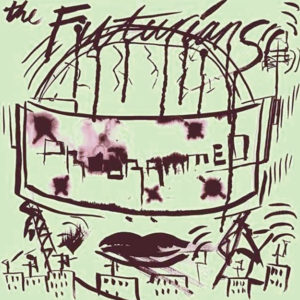
The FUTURIANS
“Programmed”
Matt Middleton (Crude / The Aesthetics / Dirtlove): The Futurians are a band that have soul. Their music, a pulsating, minimalist, primitivist, machinistic monster of a thing is at once fiction and fanstasy, at once politics and hyper-reality. Theirs is an approach synthesizing elements of no-wave, new-wave, synth-rock, drone rock, doom rock, kraut-rock, Dunedin dirge, robot rock, riot grrllism, and calculator punk.
Brad Rose: Clayton Noone and his posse of Duckling Monster, ISO12, Rocko Mandroid, and Krauss have enough energy to light a small town for a year. Have enough energy to light a small town for a year.
LP in full color sleeve issued in an edition of 200 copies.
19,50€
In stock

LP
CJA
“Sido Not Dead”
As reported by Campbell Kneale (Birchville Cat Motel / Our Love Will Destroy The World / C-Psi-P) : “I narrowly avoided an English-second-language tete-a-tete in Belgium once when I refused to believe in the face of all evidence that Sunn O)))’s newly released “Flight of the Behemoth” was not CJA. I was wrong, but whatever… I was already ascending Lucifers path to the stars not garbed in chic grim-robes but a pilling homespun jersey that stunk of wet dog. I confess and repent… for me, all ‘this kinda music’ was an exercise in deftly crafted slovenliness and anonymous surface texture, but in spending time with a tape simply labeled “Sido Not Dead” I was struck dumb with the burning religious fervor of real people who had truly forgotten to give a fuck and at that very moment unto me was bestowed a mighty vision of two-bar heaters, worn cream carpet, mooching about in slippers with cups of budget herbal tea. A long winter weekend that passed too close to a tape recorder and whose glacial momentum had accidentally combed the little magnetic thingies on the cassette into recognizable geometric shapes. This was my (unwashed) fork in the road: facile, nihilistic, too lazy to make it to the letterbox, yet enlightened, enlivened, ascended, eternal…”
blangblangblang
GRONGGRONG
blangblangblang
GRONGGRONG… Fellow pilgrims and travellers to furthest inner outposts…herein lies your scripture. Edition limited to 200 copies in silkscreened sleeve.
GRONGGRONG
blangblangblang
GRONGGRONG… Fellow pilgrims and travellers to furthest inner outposts…herein lies your scripture. Edition limited to 200 copies in silkscreened sleeve.
Original price was: 19,50€.10,00€Current price is: 10,00€.
In stock

LP
Joe JONES
“Solar Music Tent”
LP reissue of the cassette edition ”Solar Music Tent” documenting an installation and performance in Hagen, Germany, originally released by Joe Jones in 1982 in an edition of 10 copies.
From the early 1980s onwards, Joe Jones released a handful of self-recorded music machine performances on tape under his own record label “Tone-Deaf Music”. Most tapes came in a standard xeroxed sleeve with a handwritten title and instrument listing. A few, including “Solar Music Tent”, were released in combination with a book: The cassette was included in a red ring binder that held a handwritten photo documentation of the performance of the same name at Karl-Ernst-Osthaus-Museum in Hagen on April 1, 1982, a handwritten music notebook, and an invitation card. The recording itself was titled “Solar Music
5” and was made on March 16, 1982, with the instrument ensemble of the Solar Music Tent at Jones’ apartment in Düsseldorf.
Like the previous Jones releases on Edition Telemark, this reissue is limited to 200 copies and comes in a gatefold PVC sleeve: The right-hand side holds the LP, the left-hand side holds A4-sized facsimiles of all artwork that was included in the original edition.
34,00€