
Out of stock
book + CD
Christian MARCLAY
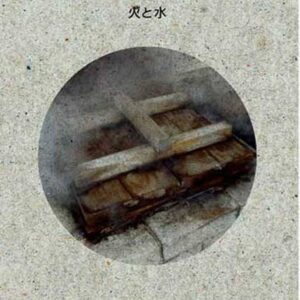
“Fire & water”
In 2012, Christian Marclay was invited to create an artwork for “Mixed Bathing World”, a contemporary art festival held in the town of Beppu, Japan, famous for its onsen (hot springs). It has eight major geothermal hot spots, sometimes referred to as the “Eight Hells of Beppu”.
On a jetty near the harbor Marclay installed a field of 100 flags banners, 50 represented water and 50 fire. At the bottom corner of each flag he attached a small bell.
This ArtBook CD includes an innovative work made of sound and pictures. A perceptual process which allows us to experience the world around us.
French and English. Size: 6.5 x 8.5 inch. Format: paperback.
29,00€
Out of stock
book
Peter BRÖTZMANN
“We thought we could change the world – Conversations with Gérard Rouy”
One day in 2008 an old friend of mine came to me and said, ”I want to make a film about Peter Brötzmann, do you want to be part of it?” What a question! He didn”t know that much about (free) jazz and freely improvised music but from the late 70s on, he had been very much attracted - as we all were - by the graphic work of most of the Free Music Production records, a lot of them being worked out by Brötzmann. He also knew that I had been one of Brötzmann”s great fans and I had been acquainted to him for a very long time.
”Soldier of the road” was shot between November 2008 and August 2009. We went to different venues where Brötzmann was playing between those dates. We also had four long interviews with Brötzmann in his home in Wuppertal. Interviews of other people were made at the same time with Jost Gebers, Evan Parker, Fred Van Hove, Han Bennink, Fred Frith, Michael Wertmüller. And others with Joe McPhee, Conny and Johannes Bauer, Michael Zerang and Paal Nilssen-Love, Ken Vandermark and Mats Gustafsson, that were not used in the movie. Bernard Josse suggested me to ask Brötzmann some specific questions, some of them I did, some others I didn’t.
But I felt frustrated about the fantastic amount of information that Brötzmann gave us about the history of this music that would not going to be used in that 90 minutes long film - we can easily understand why. That’s how I started to realize that not using all that information would be a great loss.
All interviews appearing happened either during the shooting period of the movie, or have been published by the French Jazz Magazine during the last forty years, or were never published.
Illustrated with 58 photos by Gérard Rouy and 18 artworks by Peter Brötzmann.
in English.
28,00€
In stock
book
Caroline GRIVELLARO
“À la recherche de Pierre Schaeffer. Portrait(s)”
Texts from and around Pierre Schaeffer in French only. Translated from original edition in Spanish.
19,50€
Out of stock
book
PORTRAITS POLYCHROMES 22
MUSIQUE ET TECHNOLOGIE. ÉVEILLER – ENSEIGNER – CRÉER
In French only. A book under the direection of Évelyne Gayou about the connections between technologies and teaching methods in electroacoustic musics. With texts by Claire Renard, François Delalande, Serge de Laubier, Vinvent Maestracci, Beatriz Ferreyra, Philippe Mion, Lucie Prod’omme, Christine Groult, Denis Dufour, Andrea Cohen, Francis Dhomont, Annette Vande Gorne, Laurent Pottier, Sébastien Béranger, Dominique Saint-Martin.
12,00€
Out of stock
book
Peter BRÖTZMANN
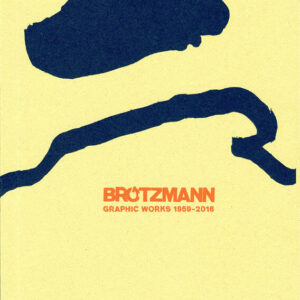
“Graphic Works 1959-2016”
With contributions by Lasse Marhaug, John Corbett, Gérard Rouy, David Keenan, Karl Lippegaus, and Jost Gebers.
Brötzmann has always created and still creates the covers of his recordings himself – sometimes also for other musician colleagues – and in the past also often the posters for various FMP projects (Workshop Freie Musik in the Academy of Arts or Total Music Meeting in the Quartier Latin, later in Podewil).
“Looking at his early posters and record covers it’s striking how fully formed his visual sense was from the very beginning. He had a background from both advertising and Fluxus art and built upon that. Just like his playing, he knew what he wanted to say with his graphic design. The music and visuals were coming from the same place. And there’s no question who it’s coming from. When you see a design by Peter there is little doubt who made it. His work has such a strong character that when we try to copy the style (and many have) it’s obvious who we’re stealing from – so we fail”. (Lasse Marhaug)
“In his graphic endeavors, Brötzmann has in fact made a body of work consistent with his music and his art, an oeuvre that undermines the presumption that design is inherently rigid. More than just the decoration of information, Brötzmann"s five decades of design bear witness to a sophisticated, delicate, and earthy sensibility, along with a dogged sense of internal logic. His record covers and posters are passionate and thoughtful, playful and brutal, basic and human”. (John Corbett)
This catalog with about 260 works is published to the exhibition at the Bimhuis, Amsterdam, Sept. 2016. 368 pages, catalogue, soft cover.
49,00€
In stock
book + 2 CD
Olivier CAPPAROS & Lionel MARCHETTI
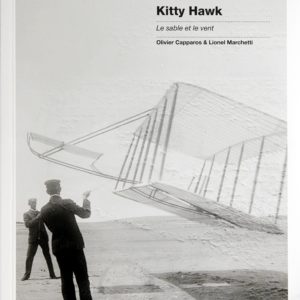
“Kitty Hawk, le sable et le vent”
A composition by Olivier Capparos & Lionel Marchetti. For string quartet, two voices and three loudspeakers. An oratorio of musique concrète and instrumental music about “Kitty Hawk” the city where the Wright brothers did the first experiment with plane.
18,00€
Out of stock
book
Raymond MURRAY SCHAEFER
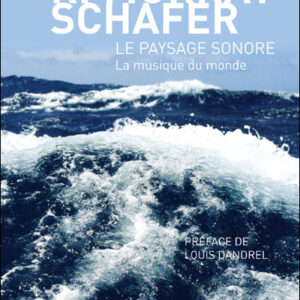
“Le paysage sonore”
French edition of the historical book from Canadian composer Raymond Murray Schaefer, The Tuning of the World written in 1977.
20,00€
book + CD
Jean-Claude ELOY
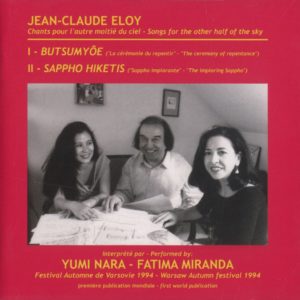
“Butsumyôe” – “Sappho hiketis”
*** Book and CD edition ***
A book (English or french text) around the cycle “Songs for the other half of the sky” with the following pieces “Butsumyoê”, “Sappho hikètis”, “Erkos”, “Galaxies”, “Gaia-songs”. Interview, documents, technicazl specification, photos. A CD with “Butsumyoê” and “Sappho hikètis”.
“Butsumyôe” (1989). For voices, percussions and electroacoustic. With Yumi Nara and Fatima Miranda, voice and percussions. In “Butsumyôe” (”The ceremony of Repentance”) the singer Yumi Nara (soprano) occupies the function of a first solo voice, whereas Fatima Miranda (vocalist) assures the function of the second accompanying voice. In Sappho hiketis, it is the opposite: Fatima Miranda occupies the function of the first solo voice, and Yumi Nara assures the function of the second accompanying voice. But in practice, the vocal activities are mixed, creating an actual creative vocal duet. These two works are freely conceived and of pure imagination, which lean on not any pre-existent "model". Butsumyôe is a long monologue for voice that sings, speaks, shouts, and is modulated with a host of techniques, punctuated by the exclamations of the accompanying voice and by various percussion instruments played by the two female singers. Basing myself on Saïkaku’s beautiful text, I have worked in the original language (ancient Japanese from the area of Osaka), striving to magnify the expressive capacity of each word. The point is to cause Western vocal techniques to expand towards more expressive possibilities, particularly in the very difficult and rich space between “sung” and “spoken” texts. Curiously, the recent practice of electro-acoustic techniques sheds light on these issues, forcing us to rediscover the acoustic, whose perception and conception had been gradually obscured, standardized and diminished by our cultural certainties.
“Sappho hiketis” (1989). For voice, percussions and electroacoustic. With Yumi Nara and Fatima Miranda, voice. A vocal duet articulated from an electro-acoustic piece (realized during the production of Anâhata at the Electronic Studio of the Sweelinck Conservatory in Amsterdam). The basic material is composed of pre-recorded metallic percussion instruments (samplings realized in 1984 by Michael W. Ranta).
Prosody and vocal technique: unlike the previous piece, the text is used in a very broken up mode, with somewhat scattered phonemes, also integrating a listing of the names of Sappho’s most famous female lovers. The adaptation of the text (in modern Greek) is totally free and makes no reference to the metrics or musical modes allegedly used by Sappho.
Prosody and vocal technique: unlike the previous piece, the text is used in a very broken up mode, with somewhat scattered phonemes, also integrating a listing of the names of Sappho’s most famous female lovers. The adaptation of the text (in modern Greek) is totally free and makes no reference to the metrics or musical modes allegedly used by Sappho.
18,00€
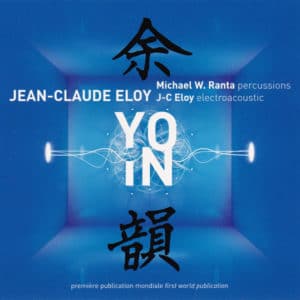
book + 4 CD
Jean-Claude ELOY
“Yo-In”
*** Book and CDs version ***
This is a book on the piece “Yo-in” + the piece on a digipack 4CDs. “Yo-In” (1980). Sound theater for an imaginary ritual, in four acts. For electronic and concrete sounds, fixed on multi-tracks. For a “percussionist-character” (solo percussionist). With about two hundred varied percussion instruments. Performed by Michael W. Ranta (solo percussionist) and Jean-Claude Eloy (electroacoustic projection, synchronisation, mixings). Recorded during a public concert given at the Warsaw Autumn festival Polish-Radio, Warsaw, September, 1994. Electro-acoustic production : Instituut voor Sonologie, Rijkuniversiteit, Utrecht. Institute of Sonology, State University, Utrecht. With the collaboration of NHK, Denshi Ongagu Studio, Tokyo. First world publication. Digipack 4 x CDs with a booklet of 20 pages.
The book on Yo-In : “Of literal and the oral”, documents (texts, photos, interview) from 1980 to 2010. Bilingual publication English-French, 154 pages, from which 20 pages of photos, format A5.
“Jean-Claude Eloy is a French composer, born in 1938. He studied at the Paris National Superior Conservatory of Music, where he won First Prizes in Piano, Chamber Music, Counterpoint, Ondes Martenot, and studied composition with Darius Milhaud. He attended summer courses at Darmstadt (Pousseur, Scherchen, Messiaen, Boulez, Stockhausen) and was a student in composition in Pierre Boulez’ master class at the Music Academy in Basel (1961-1963). Works by Jean-Claude Eloy have been performed all over the world. They have been conducted by Pierre Boulez, Ernest Bour, Michael Guilen, Bruno Maderna, Diego Masson, Michel Tabachnik, Arthur Weisberg and others ... He has lived in the United States (professor at the University of California, Berkeley, in the sixties), Germany (invited by the WDR studios in Cologne, the Technische Universität in Berlin, guest artist at the Berliner Künstlerprogramm), Holland, Japan (where he collaborated with NHK and the National Theater of Japan, among other activities). He participates regularly in numerous international festivals, principally in Europe, but also in Asia, the United States, Canada and Latin America as sound-projectionist for his electro-acoustic works and with the soloists closely associated with his compositions : Fatima Miranda (vocalist), Yumi Nara (soprano), Michael Ranta (percussionist), Junko Ueda (Shômyô singer and Satsuma-Biwa player), Kôshin Ebihara and Kôjun Arai (Buddhist monk singers), Mayumi Miyata (Shô player), etc.”
35,00€
Out of stock

book + 2 CD
Guy DEBORD
“Enregistrements magnétiques (1952-1961)”
A book and two CDs where we can discover texts and voice of Guy Debord from the beginning of Internationale Lettriste (1952-1957) to the middle of Internationale (1957-1961). Great document ! With also the voices from Serge Berna, Michèle Bernstein, Jacques Fillon, Abdelhafid Khatib, Gil J Wolman, Claude Frère, Serge Korber, Giors Melanotte.
19,50€
Out of stock
4 CD + book
Walter MARCHETTI
“De musica inversa”
“alga marghen very proudly presents the only authorized reissue of all Walter Marchetti original recordings previously released by Cramps Records. An LP sized 4CD box set including “La caccia”, “In terram utopicam”, “Per la sete dell’orecchio”, “Natura morta” and “Vandalia”. Also included is the new book by Walter Marchetti titled “De musica inversa”, an instruction manual of both theory and practice for the proper and improper use of music. A method for perfecting oneself in composition annotated and commented upon by Gabriele Bonomo.
“The most amazing thing about music is its exterior aspect. High, vertical, translucent, almost turgid, maybe a bit too monolithic. One should, in any case, give a lot of attention to the large number of interstices which lead to the centre of the ear, wherefrom sounds spread out through a dense network leading to more circuits which direct these same and their relationships directly to the brain, in a logic of musical articulation which is nothing less than frightening. Even if, to attentive listening, dominating all is the eye of silence”.
CD1, titled “La caccia”, includes “La caccia” (1965), “Adversus” (Home-made electric music) (1966) and “Osmanthus fragrans” (Home-made electric music) (1973). The 16 page booklet presents the orginal scores, photos of both the 1965 ZAJ performances and of Marchetti recording “La caccia” in the 1970s, photos of the concert at Galleria Multhipla in 1974, and the reproduction of the original “La caccia” LP layout.
CD2, titled “In terram utopican”, includes “J’aimerais jouer avec un piano qui aurait une grosse queue” (1974/75) and “Per la sete dell’orecchio” (1981). The 16 page booklet presents the original score of “J’aimerais jouer”, photos of the performances in Milano and at the Venice Biennale, and the reproduction of the original “In terram utopicam” LP layout.
CD3, titled “Natura Morta”, includes the piece with the same title from 1980. The 8 page booklet reproduces original photos of the performance at Milanopoesia in 1988, as well as the text titled “In my music”.
CD4, titled “Vandalia”, includes “Perpetuum mobile” (1981), “Song for John Cage” (1985) and “Le secche del delirio” (1989). The 8 page booklet presents the photo of the “Perpetuum mobile” performance at Musicalia in 1981, the score of “Song for John Cage”, the photos of two “Musica da camera” installations, as well as the reproduction of the original “Vandalia” CD layout.
The 180 page “De musica inversa” book and all the texts included in the CD booklets are published in both English and Italian. “Too true: in all music there are, in effect, a lot of sounds henceforth... more than that, too many; everything that we listen to has become heavy beyond measure, completely unbearable. Rather than chasing it we should look for how to escape from music. Everything in it is monolithic, frozen, and the notes of music which slowly, more or less, are thickening around the listeners wrap them all in dripping blankets of death.” CD edition limited to 400 copies.” label info
“The most amazing thing about music is its exterior aspect. High, vertical, translucent, almost turgid, maybe a bit too monolithic. One should, in any case, give a lot of attention to the large number of interstices which lead to the centre of the ear, wherefrom sounds spread out through a dense network leading to more circuits which direct these same and their relationships directly to the brain, in a logic of musical articulation which is nothing less than frightening. Even if, to attentive listening, dominating all is the eye of silence”.
CD1, titled “La caccia”, includes “La caccia” (1965), “Adversus” (Home-made electric music) (1966) and “Osmanthus fragrans” (Home-made electric music) (1973). The 16 page booklet presents the orginal scores, photos of both the 1965 ZAJ performances and of Marchetti recording “La caccia” in the 1970s, photos of the concert at Galleria Multhipla in 1974, and the reproduction of the original “La caccia” LP layout.
CD2, titled “In terram utopican”, includes “J’aimerais jouer avec un piano qui aurait une grosse queue” (1974/75) and “Per la sete dell’orecchio” (1981). The 16 page booklet presents the original score of “J’aimerais jouer”, photos of the performances in Milano and at the Venice Biennale, and the reproduction of the original “In terram utopicam” LP layout.
CD3, titled “Natura Morta”, includes the piece with the same title from 1980. The 8 page booklet reproduces original photos of the performance at Milanopoesia in 1988, as well as the text titled “In my music”.
CD4, titled “Vandalia”, includes “Perpetuum mobile” (1981), “Song for John Cage” (1985) and “Le secche del delirio” (1989). The 8 page booklet presents the photo of the “Perpetuum mobile” performance at Musicalia in 1981, the score of “Song for John Cage”, the photos of two “Musica da camera” installations, as well as the reproduction of the original “Vandalia” CD layout.
The 180 page “De musica inversa” book and all the texts included in the CD booklets are published in both English and Italian. “Too true: in all music there are, in effect, a lot of sounds henceforth... more than that, too many; everything that we listen to has become heavy beyond measure, completely unbearable. Rather than chasing it we should look for how to escape from music. Everything in it is monolithic, frozen, and the notes of music which slowly, more or less, are thickening around the listeners wrap them all in dripping blankets of death.” CD edition limited to 400 copies.” label info
80,00€
Out of stock
book
Max NEUHAUS
“Program notes”
Max Neuhaus’ Program Notes records the aphoristic statements of the innovative sound artist as he redefined the boundaries of his new audio practice. Seeking to eschew the “small area music [had] been concentrating on for the past several hundred years,” Neuhaus consciously relocated his work in the late ‘60s to what he deemed “the realm of space” as opposed to that of time—choosing to present his music in public and communal settings, decidedly outside of the “proscenium situation.” This short pamphlet was initially published in 1974 by York University Press.
Max Neuhaus (1939 – 2009) began his career as a percussionist and experimental musician in the late ‘50s, working with the likes of John Cage and Karlheinz Stockhausen. By the mid-‘60s however, Neuhaus became increasingly interested in the broader realm of sound, eventually becoming a pioneer in the field of sound art. His sound installations are permanently installed in New York’s Times Square, at Dia Beacon, and at Houston’s Menil Collection.
5.4 x 8.4 inches, 32 pages, Paperback, Edition of 500.
Max Neuhaus (1939 – 2009) began his career as a percussionist and experimental musician in the late ‘50s, working with the likes of John Cage and Karlheinz Stockhausen. By the mid-‘60s however, Neuhaus became increasingly interested in the broader realm of sound, eventually becoming a pioneer in the field of sound art. His sound installations are permanently installed in New York’s Times Square, at Dia Beacon, and at Houston’s Menil Collection.
5.4 x 8.4 inches, 32 pages, Paperback, Edition of 500.
7,50€
Out of stock
book
Luc FERRARI
“Musiques dans les spasmes – Ecrits (1951-2005)”
Edited by Brunhild Ferrari and Jérôme Hansen. Foreword by Jim O’Rourke.Introduction by Brunhild Ferrari. Interview with Luc Ferrari by Pierre-Yves Macé and David Sanson. French edition. 17 x 24 cm (softcover), 236 pages (color & b/w ill.).
Luc Ferrari’s writings, most of them previously unpublished. A pioneer of musique concrète at the beginning of the Groupe de Recherche Musicales in Paris (GRM), Luc Ferrari (1929-2005) is one of the most important and intriguing figures of the last forty years.
Luc Ferrari’s writings, most of them previously unpublished. A pioneer of musique concrète at the beginning of the Groupe de Recherche Musicales in Paris (GRM), Luc Ferrari (1929-2005) is one of the most important and intriguing figures of the last forty years.
22,00€
Out of stock
Out of stock
book
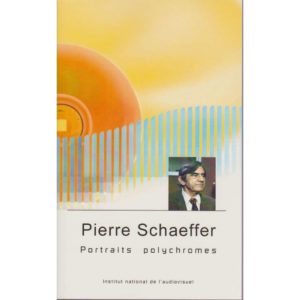
PORTRAITS POLYCHROMES 14
PIERRE SCHAEFFER
IN ENGLISH ONLY. “To celebrate the 50 years of the GRM founded by Pierre Schaeffer - and the 60th anniversary of musique concrète, this special issue of Polychrome Portraits is faithful to the collection’s usual format: a monoagraph that will be useful to all members of the artistic communityof today. Pierre Schaeffer was born on August 14, 1910 and died on August 19, 1995. A plural man with a singular career, he has managed to warn, surprise, shock, and invent. Neither a work of praise nor a history lesson, this little book aims at evocating the multiple, interdisciplinary Schaeffer, as he liked to introduce himself. Twenty-five recent and previously unpublished testimonies, some from foreign authors, take us back to the modernity and strength of the man’s ideas, along with his rich and complex personality.” Preface: Emmanuel Hoog, President & General Manager of Ina. Foreword: Évelyne Gayou. Authors: Pierre Shaeffer, Pierre Henry, Brian Kane, Réjean Beaucage, Marcus Erbe and Simon Grintsch, Martin Laliberté, Philippe Langlois, Jacques Perriault, Jean-Claude Risset, John Dack Rolf Inge Godøy, Jacqueline Schaeffer, Evelyne Gayou, François Bayle, Claude Guisard, Francis Coupigny, François Delalande, Beatriz Ferreyra, Roger Cochini, Nicolas Frize, Jean-Michel Jarre, Daniel Teruggi, Marie- Claire Schaeffer, Jocelyne Tournet.”
9,00€
Out of stock
book
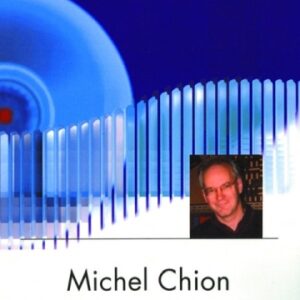
PORTRAITS POLYCHROMES 8
MICHEL CHION
Introduction by Albert Castanet. “L’en-delà du concret, notes pour une physionomie musicale de Michel Chion” by Martin Kaltenecker. “Construire le temps alors même qu’il se fissure”, interview with Évelyne Gayou. “Les tentations de Michel Chion”, by Marie-Noëlle Moyal. “Pour une musique concrète “mdédiatiste” , by Michel Chion. “L’élève-Maître” by Pierre Schaeffer. Lettrers of Lionel Marchetti to Michel Chion etc
Special offer : if you buy this book, we will offer you the book from Lionel Marchetti “La musique concrète de Michel Chion”.
9,00€
Out of stock
book
William BURROUGHS
“Révolution électronique”
The Electronic Revolution is an essay collection by William S. Burroughs that was first published in 1970. The French translation is by Jean Chopin.
6,50€
Out of stock
book
Peter SHAPIRO
Modulations. Une histoire de la musique électronique
“Modulations. A history of electronic music : throbbing words on sound” from 2000 under the direction of Peter Shapiro, with texts by Rob Young, Simon Reynolds, Kodwo Eshun, David Toop, Mike Rubin, Chris Sharp, Tony Marcus, Kurt B. Reighley, Mike Berk. French translation by Pauline Bruchet and Benjamin Fau.
20,00€
Out of stock
book
John CAGE
“A composer’s confessions – Confessions d’un compositeur”
An address given before the National Inter-Collegiate Arts Conference, Vassar College, Poughkeepsie, New York, 28 February 1948. “I am going to tell you the story of how I came to write music, and how my musical ideas and my ideas about music developed.” Bilingual edition. 100x170.
6,20€