
In stock
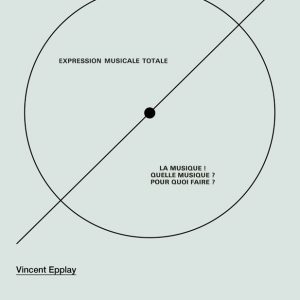
Livre + 45t
Vincent EPPLAY
“L’atelier des sons au service de l’inouï”
Cette édition (disque/ livre) est une libre interprétation d’archives audios et visuelles issues d’expériences sonores réalisées lors d’ateliers musique dans les écoles Freinet des années...
20,00€
In stock
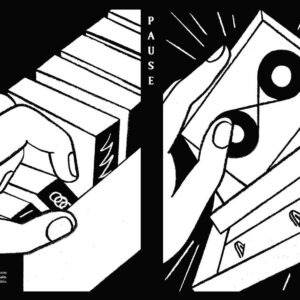
Book - Livre
COMPILATION
“Pause”
352-pages book (Bilingual: French/English) on the theme : cassettes, graphics, printing, screen printing, labels and music...1000 refs of cassettes jackets and interviews with: Tanzprocesz, Zad Kokar, Ultra Eczema, Zamzamrec, Rrrecords, Agraf'prod, Maître Selecto, Hästen & Korset, Notice Recordings, Zoomin'night, Hanson Records, Falt Records, Chocolate Monk, Tomaturj, Social Harmony, Third Type Tapes, Altered States Tapes, Animal Biscuit, Copy Pasta, Senufo Editions, Lal Lal Lal, Los Emes Del Oso, Scum Yr Earth, Fougère, Silo, Manoï, Papier Crash Test, Herberg Rustiek, Peace Noise. And an intro by JM Bertoyas. Cover art by L'Atelier McClane.
15,00€
In stock

2 CD, book
Akio SUZUKI
“Only Just Once, Space in the sun”
Space in the Sun was one of Akio Suzuki’s major sound projects, a unique construction completed in 1988 and located on the merdian line, which took around 18 months to build. Its purpose was to allow Suzuki to spend one day, on the autumnal equinox, purifying his sense of hearing in nature. This release comprises a 44 page book containing plans and materials from the time alongside texts, and two CDs of environmental recordings created on site at Space in the Sun. To date only tiny fragments of the recordings made between those massive clay brick walls have been used in performances and no environmental recordings of the objective of the project, i.e. the space itself, have been released. The first disk consists of the first release of “person-less” field recordings made at the same spot that Akio sat at during the event (recorded in 1993, 60 minutes). The second disk consists of a performance that took place in the space. Space in the Sun’s earthen walls have since been demolished, so these recordings represent a return to life of their soft echo, an experience accessible nowhere else.
CD1: A record of the space (60:00)
An unedited one hour cut, taken from one of the three different recordings of Space in the Sun. Recorded by Yoshihiro Kawasaki.
CD2: Playing in the space: Throwing and Following (41:30)
A record of a performance by Suzuki at Space in the Sun using tree branches and small pebbles.
26,00€
Out of stock

Book
Frans de WAARD
“This Is Supposed To Be a Record Label”
In 1992, Frans de Waard (of Kapotte Muziek, Beequeen and the Korm Plastics label) was asked to work for Staalplaat, then one of the biggest independent labels for experimental and electronic music. Staalplaat was the home for bands like Muslimgauze, :zoviet*france:, Rapoon, O Yuki Conjugate as well as Jaap Blonk, Normally Invisible and Kingdom Scum. With an average of three new releases every month, Staalplaat remained a major player for the next eleven years. Hired to set-up a database and to sell and buy new music, Frans de Waard over the years also assumed a role as (unofficial) business director and A&R man, and came to be regarded as the
head honcho. In 2003 he’d had enough and decided to quit.
This book tells his story about those eleven years, the many high and as many lows of working for a small independent record label, which also functioned as a shop, mail order, radio programme, news outlet, and concert organiser. It’s about embarrassing confrontations with musicians, labels, distributors, and the endless spending on the most unique packaging
CD-Land ever saw.
Including an interview with Staalplaat founder Geert-Jan Hobijn, a transcript of a radio interview with Muslimgauze, a 1980’s account of Staalplaat’s activities, and a discography, among others.
For everyone with an interest in the experimental music scene, and anyone else who wants to read a crazy, funny and sad story about a small struggling record label.
Anyone who is interested in a manual of how (not) to run your record label might want to take notes.
18,00€
In stock

Book, miniCD
Renée VIVIEN – NURSE WITH WOUND
“Le Christ”
The story of Jesus, or that of a fin-de-siècle anarchist, by the sapphic poet Renée Vivien, accompanied by a new piece by Nurse With Wound on CD.
Renée Vivien (born Pauline Mary Tarn, 1877-1909), alias "Sapho 1900", is a British poetess of French language. Prolific despite her short life, she is the author of more than five hundred poems of autobiographical nature singing lesbian love, translations of Greek poetesses including Sappho, several volumes of prose and a dozen novels, and correspondence with Colette, Natalie Clifford Barney, Kérimé Turkhan Pacha, Amédée Moullé and Jean Charles-Brun.
A British music project formed in 1978 by Steven Stapleton, John Fothergill and Heman Pathak, Nurse With Wound (now Stapleton's variable geometry project) is an essential figure of English experimental and industrial music since the early 80's. With more than 150 releases, alone or with other musicians, Stapleton has swept widely different musical styles, from industrial music to mambo, through electronics, improvisation, electroacoustics, with a lot of humor.
14,00€
Out of stock
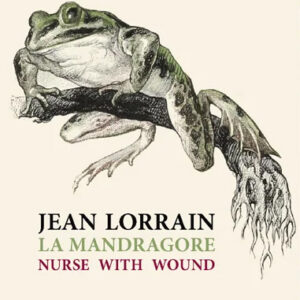
Book, miniCD
Jean LORRAIN – NURSE WITH WOUND
“La Mandragore”
The most accomplished tale of Jean Lorrain (1855-1906), decadent dandy, ardent erotomaniac and corrosive pen, accompanied by a new piece by Nurse With Wound.
Jean Lorrain (Paul Alexandre Martin Duval, 1855-1906) was a French writer, parnassian poet and art critic, a flamboyant and scandalous figure of the Belle Époque and of "decadent" literature.
A British music project formed in 1978 by Steven Stapleton, John Fothergill and Heman Pathak, Nurse With Wound (now Stapleton's variable geometry project) is an essential figure of English experimental and industrial music since the early 80's. With more than 150 releases, alone or with other musicians, Stapleton has swept widely different musical styles, from industrial music to mambo, through electronics, improvisation, electroacoustics, with a lot of humor.
13,00€
In stock
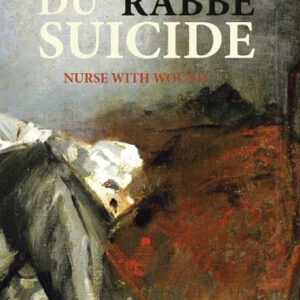
Book, miniCD
Alphonse RABBE – NURSE WITH WOUND
“Du suicide”
An excerpt from the Album of a Pessimist by the suicidal writer Alphonse Rabbe, whose exaltation and licentiousness were made for Nurse With Wound, who musically accompanies the text.
Alphonse Rabbe (1784-1829) was a French journalist, historian, biographer, romantic writer and poet.
A British music project formed in 1978 by Steven Stapleton, John Fothergill and Heman Pathak, Nurse With Wound (now Stapleton's variable geometry project) is an essential figure of English experimental and industrial music since the early 80's. With more than 150 releases, alone or with other musicians, Stapleton has swept widely different musical styles, from industrial music to mambo, through electronics, improvisation, electroacoustics, with a lot of humor.
12,00€
Out of stock

2 CD, book
Stefan ROIGK
“de—COMPOSED”
An artist's book by Berlin-based sound artist Stefan Roigk, documenting acousmatic compositions, sound installations, musical graphics and text-sound compositions of the years 2005 to 2023 on 144 pages and 2 audio CDs.
Sound as a mark to place ephemeral splinters in the surroundings—Sound as a gesture to draw with invisible lines and pervasions (forms)—Sound as a color to paint environments with transparent atmospheres—Sound as a volume to determine or fill space in time.
A complex assemblage, composed of documentation photos, texts and drawings, becomes an interlocking whole in its dynamic flows and fields and animates the paper as a vibrantly structured visual composition. A piece of music for the eyes, in which the boundaries between documentation, draft and work become blurred in a surreal mesh of the concrete and fictional. Here, the reader generates their own individual temporal axis based on their speed of observation and focus on the optical elements, thus becoming a mixing board for a composition realized as a catalogue. Three text pieces give a deeper insight into Roigk's understanding of sound as material and the translation of sound events into other media.
As an equivalent to the visual approach of the catalogue and in order to adequately convey the sonic dimension of the artistic work, (sound) fragments of all the works covered in the catalogue were transferred into a dynamic collage-like arrangement with Roigk's typical aesthetics and are included with the catalogue as an independent listening experience in the form of two audio CDs.
The catalogue is published in the format 21 x 26 cm with gatefold softcover and includes 180 color illustrations on a total of 144 pages. Besides the catalogue itself, the publication contains 2 audio CDs with 33 tracks and a total playing time of 141 minutes, 2 A5 postcards and a bandcamp download code to enjoy the release also digitally.
Stefan Roigk (born 1974) is a sound artist based in Berlin. He studied fine art with a focus on sound art in Hannover under Professor Ulrich Eller. In his work, Roigk pursues the intermedial interweaving of sound collage, installation, musical graphics and text-sound composition. The resulting works approach sound as a field for artistic and aesthetic research, taking it as both their departure point and central medium. Roigk's artistic focus lies on the dynamic staging of context-related fragments of everyday existence, which he imbues, in the sense of visual music, with an extraordinarily developed, visually poetic formal language. In realizing these aims, Roigk uses compositional and deconstructivist techniques of collage and assemblage for the development of stage-like spatial compositions with an implicit underlying narrative sense, in which the diverse media blend together like the instruments of an orchestra. In his work, Roigk reflects on his own living and production conditions, while investigating the political potential of aurality and tracing the subjective construction of reality. Since 2010, he has worked regularly in co-operation with visual artist Daniela Fromberg on intermedial installations and compositions.
28,00€
Out of stock

CD, Book
eRikm
“Douze horizons”
A sound postcard by eRikm: an instant composition recorded on CD, somewhere between sound performance and radio creation, accompanied by a booklet of photographs.
Since 1992, eRikm, a Marseilles based artist, has extended the field of artistic experimentation on the international scene.
Maintaining a constant fusion between thought, instinct and sensitivity, he pursues a simultaneity of practices and addresses the interplay between various compositional modes, relating to and using all languages.
From his early experience as a guitarist through to his later visual work, he is a maverick genre-bender who breaks down anyone's attempts to conveniently classify him.
Quickly recognised as a virtuoso turntablist and sound artist (1996), eRikm has made a longlife habit of crossing all territories and “world-systems” deemed “independent”, “institutional”.
12,00€
Out of stock
CD, Book
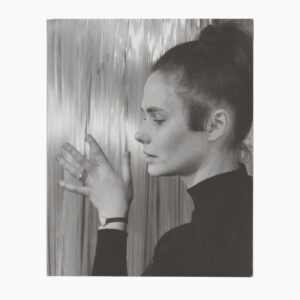
Annea LOCKWOOD
“Glass World”
“I have become fascinated by the complexity of the single sound.” - Annea Lockwood
A note from Lawrence English
To attempt to summarise the journey of Annea Lockwood’s life, as a composer and performer, is difficult if not impossible. For six decades now, she has carved out a multifarious and fluid existence that has orbited various musical movements and approaches. Hers is a life led by intuition, curiosity and listening, one in which passion is paramount and wonderment abounds.
If you were to reflect upon one aspect of her way of being that holds the greatest gravity in her day to day, it is perhaps listening that resonates most vibrantly. It is a practice that she has sought to deepen, with an unwavering dedication across her life, and a it is practice that has sustained her in the absolute. It’s here that Glass World comes into focus for it documents some of her first significant studies into sound, object and listening. It is a recording that captures her in a moment of profound fascination with a rather familiar material, glass.
This recording celebrates many things, amongst them Lockwood’s willingness to allow single sounds to resonate, fully. Across each of the twenty three vignettes captured here, Annea Lockwood invites us to lean into the material nature of sound with her. Glass World shimmers with an almost fanatical incandescence. It radiates a vibrational intensity that holds as strongly today as it did upon its original release in 1970 on Tangent Records. I had the privilege to re-master these recordings, under the guidance of Annea, and sitting with them so intensely was nothing but a delight.
In tandem with this project, Annea and I have undertaken a long-form in conversation, which is collected in the book which sits alongside this edition. The conversation splays outward from Annea’s work on Glass World and it deliberately seeks to visit upon her interests and passions, and through doing so revel a certain perspective that has guided her ways of being, and ways of making.
It’s an honour to have the opportunity to share this edition with you. I hope you too can catch Annea’s resonate curiosity and be as captivated by these sounds as I (and many others) have been.
18,00€
Out of stock
CD, Book
Philip SAMARTZIS
“Atmospheres And Disturbances”
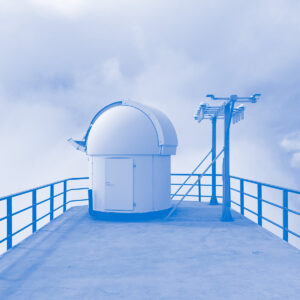
From Philip Samartzis
Atmospheres and Disturbances registers the changes in high altitude ecologies caused by increasing global temperatures. The composition is based on field work undertaken at the High-Altitude Research Station at Jungfraujoch, Switzerland where for four weeks I deployed various recording devices around the station, and in the surrounding alpine environment to register natural, anthropogenic and geophysical forces. The project provides new encounters of an endangered alpine environment to enhance the way we perceive and engage with notions of place, community, and environmental dissonance.
During fieldwork I used different microphones to record a variety of acoustic, spatial, atmospheric, and vibration-based phenomena. Omnidirectional microphones registered wind, snow, and ice as well as social, material, and industrial sound emanating from the nearby train terminus and viewing platforms. Hydrophones were placed within water and ice to record geophysical sound resonating within the frozen environment of Jungfraujoch and the adjacent glacier. The recordings capture the pervasive presence of anthropogenic sound permeating throughout the landscape produced by tourists, transport operations and recreational sports. Accelerometers were attached to various surfaces and structures to record solid vibration generated by high-velocity wind, and the process of melting and freezing. The recordings produced by the accelerometers clearly express the stress and fatigue occurring within the material structure of buildings and infrastructure.
Atmospheres and Disturbances is designed to place audiences deep inside an extreme environment to afford embodied experiences of an alpine ecology under duress.
18,00€
In stock

CD, Book
PHAUSS
“Audiodrome”
Phauss is Carl Michael von Hausswolff and Erik Pauser. Formed in the early 1980s, Phauss operated amidst of generation of uncharacteristic Swedish artists concerned with reshaping the edges of practices in sound, light, performance and vision. It was a monumentally fertile period for Sweden in that a confluence of factors allowed artists to dedicate themselves to the relentless excavation of ideas, drilling down to the absolute core of their interests and ways of making.
Von Hausswolff and Pauser, who both operated across sound and installation, used Phauss as a means for deconstructing ideas of composition, situationalism, site-specific works and extended performance methodologies. Across the second half of the 1980s and into the early 1990s, they made connections, through their travels, outward from their homeland into scenes and communities that stretched from the Middle East, through North America and into Asia.
Like their travels, their ways of approaching the work they made was similarly wide-reaching and innately curious. They worked with often quite strict conceptual structures within which they were able to unlock entirely new ways of considering composition and also the material production of sound, through performance, through iteration and through considered experimentation which allowed for failure, just as much as success.
Audiodrome collects together two discreet works that sit somewhere between field recording, chance composition and experimental soundscape. Both pieces pre-date the widespread arrival of field recording as a creative practice, and expand outward the work that had been developed by musique concréte and other experimental music approaches concerned with the intersections of found sound and composition. Both works were devised using the same working methodology, whereby an alarm would sound every few days and wherever and whenever it sounded the pair would start recording their surroundings. Those raw material became the basis for the pieces.
The first composition Zürich - Zürich is a piece that traces a line around the world, Phauss travelling on a round the world air ticket stopping only in countries where conflict was present. This unsettling journey became a meditation on the evolving state of the world in those moments. Voices, traffic, cafes, radios, transportation system and other incidental environments float into one another in a kind of stream of (temporally incongruous) consciousness.
The second work Alger - Lagos brings to mind some of Brion Gysin and William S. Burroughs tape cut-ups. Street musicians are splice against bursts of radio, roadside conversations and searing blasts of industrial noise captured from aircraft and other unfamiliar sources. It is an unsteadying journey where even the sounds of the everyday feel alien and repositioned. The sounds call to us prompting a sensing that is at its heart utterly fascinated, and fascinating.
The edition includes a book featuring an exhaustive collection of photographs, documents and artworks made by Von Hausswolff and Pauser during their journeys undertaken to complete each of the compositions. Many of these images and artworks have never been published previously.
18,00€
Out of stock

CD, Book
PHAUSS
“Nya Sverige – Nothing But The Truth”
Phauss is Carl Michael von Hausswolff and Erik Pauser. Formed in the early 1980s, Phauss operated amidst of generation of uncharacteristic Swedish artists concerned with reshaping the edges of practices in sound, light, performance and vision. It was a monumentally fertile period for Sweden in that a confluence of factors allowed artists to dedicate themselves to the relentless excavation of ideas, drilling down to the absolute core of their interests and ways of making.
Von Hausswolff and Pauser, who both operated across sound and installation, used Phauss as a means for deconstructing ideas of composition, situationalism, site-specific works and extended performance methodologies. Across the second half of the 1980s and into the early 1990s, they made connections, through their travels, outward from their homeland into scenes and communities that stretched from the Middle East, through North America and into Asia.
Like their travels, their ways of approaching the work they made was similarly wide-reaching and innately curious. They worked with often quite strict conceptual structures within which they were able to unlock entirely new ways of considering composition and also the material production of sound, through performance, through iteration and through considered experimentation which allowed for failure, just as much as success.
Nya Sverige - Nothing But The Truth is a recording made in the United States whilst the pair were undertaking an exhaustive tour in 1991 alongside Hafler Trio and Zbigniew Karkowski. This, now legendary, tour was both arduous and rewarding. Living in a van for many weeks at a time, travelling between cities with the most modest of means meant Phauss came to know a very particular vision of the United States, one that existed below plain view. Their’s was an experience had at the rawest edges of cities.
Equally the performances they gave, from which this edition is assembled, were raw and quite frankly dangerous. Fire on stage, sparks flying from short circuiting electronics and intense physical rituals guided so much of their work during this tour and looking back at bootleg videos from the time it’s difficult to imagine the work being able to be presented in the modern world.
One of the flyers from their tour reads ‘Extreme Swedish Industrial’, and as familiar as those words might appear now, in 1991 they held a very different resonance. They were unfamiliar terms of reference and the intensity of Phauss’s music maintains that unknowability to this day. This is a profoundly individual work and sets the stage for a generation of musicians who followed them.
The edition includes a book featuring a long-form in conversation between Carl Michael Von Hausswolff and Erik Pauser with Lawrence English. It also includes never before seen photos and documents from their North American tour and collects together an essential and largely under-documented history of this period of the group’s work.
18,00€
In stock

CD, Book
ZIMOUN
“Guitar Studies I-III”
From Zimoun
With the Guitar Studies series I’ve dealt solely with noises and sounds produced by guitars.
Partly I played the guitars by hand in a more conventional way, but more often I prepared them, or activated them by using small DC motors. I used various microphones for the recordings, as well as the loose contact of a pickup and many different amps; from a small toy amp that was partially defective to a beautiful Magnatone amp with analogue tremolo from the sixties and an old Fender Amp I bought together with my first guitar when I was 10 years old.
I also played recorded sounds back in different environments, for example inside a cardboard tube or in different rooms with various sizes, and then recorded them again. This way I added natural resonate and spatiality to the sounds. I also created a distorted sounds by sending the signal of the guitar to a naked speaker membrane lying on the table, and then put some sand on the membrane itself. The friction between the membrane and the sand then created various forms of distortion. I was trying to test various processes of iteration to discover how transformed the guitar might become.
I did not work with loops in any of the compositions. For each layer in each piece, I recorded whatever I was exploring over the whole period of about an hour. In this way, I put together countless hours of sounds. Through the almost endless overlaying and long recording takes, I have tried to achieve a kind of liveliness, even if at the same time no major changes happen in the composition. It’s never exactly the same, but never going somewhere else either. In that sense these compositions also have a strong sculptural component.
After this process, I started working on the microstructures of the recordings. For example, I recorded slow equalizer shifts in some of these tracks over the whole period of time. I also played these live via various controllers and analogue equalizers. This approach allowed the individual frequencies to become more present over long periods of time or mix with others. Figuratively speaking, this is similar to using a lamp (or various lamps) to illuminate a sculpture from different perspectives, or to create slow changes in light, which affects our perception of the sculpture. At different sonic stages, this can also provoke additional psychoacoustic phenomena. Through these methods I have tried to create a complexity in the microstructures of the sounds and their evolutions.
All three compositions last about an hour each. Digitally, they are released in their full length, while the CD contains shortened versions.
18,00€
In stock

CD, Book
Lawrence ENGLISH
“Viento”
In the summer of 2010 I had the opportunity to visit Antarctica through an invitation extended by the Argentine Antarctic Division. It was nothing short of life-altering, as I am sure anyone would suspect.
Upon departing from Buenos Aires for the iced continent the Hercules transport aircraft, under direction of the Argentine military, made a routine stop at an airbase outside Rio Gallegos.
What was meant to be a few hours layover turned into several days as, on landing, a strong wind storm blew in unexpectedly. Conditions exceeded expectations, and before long it was clear the transport could not take off. The situation was only compounded by adverse weather along the Antarctic Peninsula.
Whilst the scientists and military personnel we were travelling with bunkered down in their quarters, I found myself drawn outside into the howling air. The wind in Patagonia is, well, breathtaking. Literally, there were moments where it was so physical, that it was difficult to catch my breath. Across three days I recorded abandoned buildings, lone trees folded over in fields of tundra-like grasses, quivering road signs, wailing fences and other objects shaken into life by the wind. It wasn't a comfortable experience by any means, but the multiplicity of sounds I was able to capture, I hope, speak for themselves.
The Antarctic recordings were made during two blizzards at Marambio and Esperanza bases. During the blizzard in Marambio, the temperature dropped to -40 degrees centigrade (with wind chill) which made recording particularly challenging. The wind battered the base’s structures and telecommunications equipment, making a range of unsettling, phasing choral drones and deep low frequency vibrations that resonated inside the base itself. The blizzard at Esperanza was mild by comparison, but still strong enough to coat penguins in layer of snow as they huddled together during the worst of the storm.
This year marks the 10th anniversary of completing these compositions and since that time, I have had the pleasure to diffuse them on numerous occasions. With those experiences in mind, as well as the format on which these works are now being made available, I have revisited them and completely remixed and remastered the pieces.
Listening back to these recordings I am struck by the sheer physicality of the wind. It's rare that you feel physically reduced by the motion of air, but in both Patagonia and Antarctica that is just how I felt. A small speck of organic dust in a howling storm.
Recorded on location in Patagonia and Antarctica in the summer of 2010.
Mixed and mastered at Negative Space 2022.
18,00€
In stock

Book + 2CD
KRISTOFF K.ROLL – Jean-Michel ESPITALLIER
“World is a blues”
"Immersed in the Calais Jungle to record the refugees' memories of their dreams in all their languages, such as Farsi, Sudanese Arabic, Foor, Pashto, Eritrean, Tigrinya, we sensed these dream stories drifting to life stories, reality's violence penetrating the dream. Thereafter, we surveyed other territories, attentive to the refugees' testimonies, and were struck by the epic and tragedy they summoned. We then invited authors Jean-Michel Espitallier and Anne Kawala to translate them into their poetic language."
20,00€
Out of stock

Book + CD
NURSE WITH WOUND
“Gyllensköld, Geijerstam And I At Rydberg’s”
Art Book CD – Silver Collection 24 page Deluxe Art Book with augmented CD album. All artworks by Babs Santini.
22,00€
In stock

Book + CD
Steve RODEN
“Oionos”
Notes from Steve Roden on Oionos:
Oionos was created for the exhibition The Grand Promenade, in Athens, Greece.
The exhibition took place in various archaeological and historical sites in central Athens, creating a situation for contemporary site specific works to be in dialogue with their historical surroundings.
While it was not originally offered as a possible site, I pleaded with the curator to allow me to work with architect Dimitris Pikionis’s Church of St. Dimitris Loumbardiardis, about a 10-minute walk from the main path of the Grand Promenade. Pikionis designed the original promenade which is still visible in several areas, but much of the area’s original designs were altered during the “restoration” before the 2004 Olympics. The small path that leads to the church gives a much stronger impression of Pikionis’s vision for the entire promenade as it was; so i wanted to use my work to draw viewers/listeners into his world.
When I first saw the small church it totally took my breath away, and I immediately began to think about a work that could exist in resonance with it — but not distract from it. The church itself is still in use, and I wanted to the work to be gentle and out of the way of the people who worship there. I decided to use the large tree in the front of the church for a hanging work that would a little bit of visual presence as well as sound which could blend with all of the insect noises and the overall quiet of the area.
The audio was built from field recordings and small “poor” objects such as tin whistles, toy harmonicas, and the like. These “instruments” suggested by the museum of musical instruments in Athens, where the proper instruments take up most of the museum, but there is a wonderful display case in the basement with musical toys, religious objects, and other sounding devices not considered musical instruments. I felt that these simple things related to Pikionis’s ideas about architecture and craft, and his interests in indigenous culture in conjunction with intellectual and modern culture. I felt there could be a relationship.
Oionos was created in 2006 for the exhibition The Grand Promenade, in Athens, Greece.
18,00€
In stock

Book + CD
Mike COOPER
“Oceans Of Milk And Treacle”
From Mike Cooper
This is a soundtrack for an otherwise silent film. The title of the album, and of course the film, is borrowed from my late friend Fred Hardy’s book The Religious Culture of India - Power, Love and Wisdom, considered to be one of the most important books on the subject. In this book Fred wrote...
Mike Cooper plays Electric Lap Steel Guitar. Acoustic Brazilian Viola Ciapira and Virtual Pedal Steel Guitar, Double Bass, Koto, Strings, Percussion and Drums.
Viv Corringham - Voice.
Tim Hill - Baritone Saxophone.
Aaron Hawkins - Tenor Saxophone.
Geoff Hawkins - Tenor Saxophone.
Lol Coxhill - Soprano Saxophone.
Roger Turner - Percussion.
Ambient and Field Recordings from Bali, Cambodia, Vietnam, Martinique, Crete, Sri Lanka, Australia.
18,00€
In stock

Book + CD
Marina ROSENFELD
“Index”
For over two decades, New York-based artist and composer Marina Rosenfeld has pioneered a specific language for turntable music, based on an ever-expanding collection of dub plates she creates.
The dubplate is a one-off, hand-cut record. Each dubplate can be made to contain any array of sounds decided on by its creator. For Rosenfeld, her discovery of the dubplate in the late 1990s was a pivotal moment, when she recognised the material instability of the medium as critical tool for performance and composition.
On Index, the investigation of this materiality is paramount. The physical intimacy that colors the relation between the hand and the plate is revealed through a very particular reading of the turntable, one which sits in parallel to the more recognised ways in which that technology has been deployed as a performative tool.
This edition features a series of live recordings and related materials that trace the development of Rosenfeld’s tactile approach and her shifting collection of sound materials. The recordings are published alongside a book featuring extensive archival documentation, photography and a long-form conversation between Marina Rosenfeld and Lawrence English.
18,00€
In stock

Book + CD
Magda MAYAS & Tina DOUGLAS
“Objects of Interest”
From Magda Mayas
Tina and I met around 10 years ago in Melbourne through mutual musician friends.
Tina has heard me perform in various context and I have visited her studio and seen her perform on multiple occasions. There was an immediate personal and aesthetic connection and conversations over the years revealed shared ways of working - a collaboration seemed natural and exciting.
We are both drawn to improvisational and intuitive processes and we both use individualised objects or tools to create and develop close relationships with these. For me, it’s a symbiotic process: the objects generate ideas, they afford and limit what I do and structure a piece in a fundamental way. Tina’s scores are very sculptural and tactile - the piano and my objects and preparations in them likewise feel sculptural, tactile, embodied -objects, materials and relationships crossing over.
When I started recording music to respond to Tina’s scores, I had a wish to slowing things down, to expose a certain fragility or imperfection and to let one melody or one chord or one little noise be enough. With the piano you can have such an orchestral approach, and I often do that, but with this collaboration I didn’t feel like I wanted this kind of complexity.
There is a certain fragility that I like about the project and the scores: the fact that they are thin paper scores and I transported them from Australia to Berlin, the cut-outs… it’s all very fragile and beautiful and I kind of felt that I wanted to allow the music to be like that too.
Tina Douglas: scores, 2019 -2020
Magda Mayas: piano, clavinet, rhodes, objects
Recorded in Berlin January 2021
Tony Buck: Recording and Mixing
Lawrence English: Mastering
18,00€
In stock

Book + CD
Philip SAMARTZIS + Eugene UGHETTI
“Polar Force”
From Eugene Ughetti
As Philip was preparing to leave for his second Australian Antarctic Division residency, he invited me to lunch to discuss the possibility of collaborating on a new work. He recounted his first experience on the ice, where the surrounding landscapes seemed to articulate avant-garde percussion works of an epic scale. On this visit, he wanted his field work to explicitly shape the formation of a new performance work with a particular focus on katabatic winds in and around Casey Base station.
Intrigued, I accepted the challenge provided I could create a live performance utilising the same recorded materials of ice, air and water. We undertook an ambitious collaboration with sound, instrument, lighting and industrial designers, a dramaturg and percussionist.
For Polar Force we built an environment, a white inflatable structure reminiscent of a remote research station on the ice. Emanating from outside the space come the complex and foreboding sounds of the natural environment, inside, a live event akin to scientific research in sound occurs. This hour-long performance installation work gives rise to a hyper-realistic sensing of Antarctica, bursting with natural beauty, power and the audible evidence of human impact.
Concept, Composition & Instrument Design - Eugene Ughetti
Direction - Clare Britton and Eugene Ughetti
Field Recordings - Philip Samartzis
Performance - Matthias Schack-Arnott & Eugene Ughetti
18,00€
In stock

Book + CD
Lawrence ENGLISH
“A Mirror Holds The Sky”
From Lawrence English
In late months of 2008, I had the great fortune to spend some weeks in the Amazon. The visit, facilitated through Francisco Lopez’s Mamori Artlab residency, remains one of the most deeply affecting experiences I have had. Each time I hear a Screaming Piha, which many would identify instantly thanks to their prevalence in Werner Herzog’s Aguirre Wrath Of God and Fitzcarraldo, I am transported back into a place that, to this day, features regularly in my daydreams.
The reason this place made such an impression is simple; the Amazon dwarfs us. This is not some vulgar display of power on its behalf, rather its a tangible reminder of our place in, and on, this planet. Once you step into the Amazon it prompts us (strongly) to refocus the perspective we hold of ourselves, of our ways of being, of our understandings and it (not so gently) reminds us that we are but one very minor function in an equation that extends in all directions across time, and space.
Living in Australia, tropical rainforests are not foreign to me. I would even say I am rather at home in them. My family, who lived and worked on the land of the Ngajanji people, had an admiration for, or in the very least a respect of, the rainforest. What makes time spent in the jungles of the Amazon different however is the scale and sheer volume (metaphoric and literal) of the life that inhabits it. Hundreds of thousands of narratives are in play moment to moment, their interactions flow together forming a perpetual cascade of arrival and departure, fertility and decay - these fundamental states are intrinsically linked and constantly informing one another.
The jungle is never silent. Even when you might expect the Amazon to be hushed, in those hours before dawn or in the heat of the midday sun, it is hardly what could be described as quiet. What might be true to say though is during these moments where the chorus of insects takes a step back, the jungle opens just a little. To listen in the jungle is to listen in close relief - in every square metre, thousands of insect cry out, their voices reducing the horizon of listening to a matter of centimetres at certain times of the day (and night). The sensation is sensorially disorienting and frankly, overpowering.
In those moments where you can get a sense of dimension and depth, the dynamism of the environment comes to the for. The abundance of birds, mammals, beetles, flies, ants and so many other creatures are a source of constant and evolving fascination. In the lakes and rivers too, the hydro-sonic environments are perpetual and effortlessly deep. It’s humbling to acknowledge how little we come to know of that which lies just below us.
A Mirror Holds The Sky is in some ways an act of acoustic and temporal compression. It is a rendering down of the lived in moments and environments that became points of intense listenership. If I am to be honest, it has taken me the better part of a decade to know how to approach this archive of materials. I owe a debt of gratitude to Chico Dub at Festival Novas Frequências, who very gently encouraged me to realise a piece for diffusion as part of his program in 2019. That invitation retuned my ears and in the process unlocked a way of approaching the mammoth 50+ hours of recordings I had gathered during my time there. I also owe a special debt of gratitude to my wife Rebecca, who was instrumental in gathering some of these recordings. Her ears reflected an entirely other set of interests than my own and without that, this piece would be substantially less than what it is.
Recorded in Dec 2008, Lago Mamori, Amazonas.
18,00€
Out of stock

Book + CD
David TOOP – Akio SUZUKI – Lawrence ENGLISH
“Breathing Spirit Forms”
From Lawrence English
I am ceaselessly fascinated by how memory operates and, I’m regularly struck by how individually subjective a collective experience can be when recalled by its participants. Lynch’s Lost Highway comes to mind here, specifically Bill Pullman’s character Fred Madison who says “I like to remember things my own way. How I remembered them, not necessarily the way they happened.” Like Madison, I can’t help but sense that memory takes shape through an accumulative process that reflects how each of us have lived (and maybe even wanted to live) up to that point in time.
Going back to listen again to these recordings of which I was a part with David and Akio, I was surprised by what elements had stayed with me and what others had slipped into the eternal greying of my mind. I have vivid recollections of listening to a Lyre bird before recording the pieces together at Witches Falls. I remember both Akio and David finding musicality in decaying palm fronds. I remember Akio’s voice, amplified through his Analpos, bouncing off the stones and trees. I remember David’s flute, so quiet in the pitch black of the night forest as to appear like a hushed tone of wind or a distant animal calling. I also remember trying to match my modest hand held electronics with the pulsing and pitching of the insects around me.
Reading David’s text, which is included in the book published alongside this edition, he recounts several things I had forgotten. Conversations about memory, ironically enough, had vanished from my mind until reading his words. I also didn’t really remember my role as tick surgeon, removing a living insect from David’s ear. I do remember his cooking though, as does Akio (captured aptly in his drawings), no doubt a testament to David’s improvisational culinary expertise.
Breathing Spirit Forms represents a distinctive exchange between friends and collaborators. Tamborine commands a special presence and encourages a deep patience from those who are willing to give time to its varied environments. For the three of us, we were fortunate to share these moments together, fleeting in our lives as they might be, to sense the mountain’s unique qualities, to respond to them through our exchanges and to form memories (as disparate as they might be) we carry forward with us in time.
David Toop - Flutes, sticks
Akio Suzuki - Analapos, flutes, stones, sponge & hand mirror, pocket bottle & mallet
Lawrence English - Shortwave radio, handheld electronics, percussion.
18,00€
In stock

Book + CD
Akio SUZUKI
“Analapos”
In 1979, Akio Suzuki recorded a performance, ’New Sense Of Hearing’, at the Nagoya American Centre. During the performance, Suzuki used voice, turntables, glass harmonica and his self-designed instrument the Analapos to create a series of improvised pieces that effectively charted out his sonic investigations for the proceeding decades.
In 1980 these recordings were issued by ALM records as Analapos, the first work made publicly available by Akio Suzuki.
For going on six decades now, Akio Suzuki has been responsible for creating amongst the most otherworldly, yet deeply affective sound works of his generation. As a musician, sculptor and sound artist, Suzuki’s work threads an important linkage between Eastern and Western sound art practices. His approaches, that focus primarily on intense states of listening, ’throwing and following’ and a relentless sense of open curiosity, have allowed him to continuously deepen his work.
Originally published in an edition of just 200 copies in 1980, Analapos has been out of print literally since its release. Clocking in an over an hour, the original pressing of the recordings to a single LP, presented some technical limitations.
This 40th anniversary edition of Analapos is entirely remastered and is published with a booklet that includes a long form interview with Akio Suzuki conducted by sound artist and collaborator Aki Onda, plus extensive photographic documentation of the development of the Analapos. The publication of this edition is announced in conjunction with the Sense Of Ekō retrospective exhibition which opens at The Substation in Melbourne late January.
18,00€
Out of stock

Book + CD
Yannick DAUBY
“Fushan & Taipingshan”
A project (Book+CD) by Yannick Dauby about sounds and stories of low and middle altitude mountains of Yilan, North East of Taiwan.
The book (in English and Chinese) features interviews with five persons who have special knowledge and experience about the forests of Taipingshan and Fushan : Lue Kuang-Yang, Kacuzi Hacyo, Wu Chiu-Hsiang, Lai Chun-Piao, Lai Bo-Shu. Notes about listening and sound recording practice by Yannick Dauby. Identification of animal sounds with Chinese, English and Latin names.
The 75 minutes audio CD contains field recordings realized in Fushan Botanical Garden and Taipingshan Forest Area between 2013 and 2015, edited and mixed in 2016.
15,00€
In stock

Book + CD
David TOOP
“Field Recording and Fox Spirits”
Field Recording and Fox Spirits is a collection of personal recordings -- from the field, from performance, from interviews -- that sketch out the breadth of David Toop's work over the past five decades. The recordings exist both as individual memories and as a hazy auditory daydream-like collage woven together by Lawrence English. Additionally, the edition includes a 40-page book, consisting of an extended in conversation with David Toop, which features extensive visual works and photographs from his archive.
From David Toop: "What are field recordings? 'My memory is not what it used to be, David,' my grandfather, Syd Senior, said to me as we huddled round a fireplace in 1979. Thanks to a cassette tape I have the memory of his gradual loss of memory, hearing him speak of Queen Victoria's funeral and the severity of patriotism back in those old days, 1901. Syd Senior is long dead, no longer part of the field of living relations but still within the field of memories that can be revived by technology, albeit an old one that squeaks like a mouse, hisses like a cat. Where is the field? The field is populated by all the ravishing, painful, poignant, nondescript moments of remembered life. Field recordings forget, just as memories forget. My recording of Ornette Coleman forgets that he fell asleep as we were talking together. I sat quietly, waiting for him to wake; the tape machine continued its work, oblivious. During lockdown, a warm spring day, I sat working in the garden. A small fox appeared close to me, started, retreated into the shelter of plants by my pond. I took a photo with my phone but when I looked at the image no fox was visible. Earlier that day I had been reading Strange Tales from a Chinese Studio, a collection of short stories written by Pu Songling during the course of his life in the late seventeenth/early eighteenth century. In many of these tales, fox spirits inhabit the physical spaces of living humans in a variety of guises. Some are malicious; some benign. Their presence in the material world is wrong and yet accepted as either a temporary nuisance or a blessing that would later be regretted..."
18,00€
Out of stock

book + 2 CD
Steve RODEN
“…i listen to the wind that obliterates my traces”
*** 2021 restock ***
Edited by Steve Roden. 184 page hardback book with 2 CDs. 150 full-color photographs. The CDs feature 51 vintage recordings from 1925-1955.
“… i listen to the wind that obliterates my traces brings together a collection of early photographs related to music, a group of 78rpm recordings, and short excerpts from various literary sources that are contemporary with the sound and images. It is a somewhat intuitive gathering, culled from artist Steve Roden’s collection of thousands of vernacular photographs related to music, sound, and listening. The subjects range from the PT Barnum-esque Professor McRea - “Ontario’s Musical Wonder” (pictured with his complex sculptural one man band contraption) - to anonymous African-American guitar players and images of early phonographs. The images range from professional portraits to ethereal, accidental, double exposures - and include a range of photographic print processes, such as tintypes, ambrotypes, cdvs, cabinet cards, real photo postcards, albumen prints, and turn-of-the-century snapshots. The two CDs bring together a variety of recordings, including one-off amateur recordings, regular commercial releases, and early sound effects records. there is no narrative structure to the book, but the collision of literary quotes (Hamsun, Lagarkvist, Wordsworth, Nabakov, etc.). Recordings and images conspire towards a consistent mood that is anchored by the book’s title, which binds such disparate things as an early recording of an American cowboy ballad, a poem by a Swedish Nobel laureate, a recording of crickets created artificially, and an image of an itinerant anonymous woman sitting in a field, playing a guitar. The book also contains an essay by Roden.”
37,00€
In stock

Book + CD
Steve RODEN
“Gradual small fires (and a bowl of resonant milk)”
From Steve Roden:
"gradual small fires (and a bowl of resonant milk), was commissioned by the university of hong kong’s new media school, and more specifically, the work was created initially for daniel libeskind’s building for the university’s cmc (creative media center). for the grand opening of the building, several sound and new media artists were invited to create works on site.
the work consisted of 5 different pieces – each object constructed of plexiglass, and each sound work anchored by a recording of a fire that i had made in denmark 10 years or so ago. i added sounds (such as bells, rocks, guitar, field recordings), and everything was manipulated, for the most part with analog guitar pedals.
each sound/sculpture was placed in a discreet location, generally a space that seemed to have no use. the pieces were relatively quiet, and the hope was that a student or visitor would happen upon these works accidentally, and that the piece would then offer a diversion.
my goal was to complete a piece for every photo in ruscha’s book.
along with the five works exhibited at the cmc in hong kong, a 6th piece, gradual small fire 5, was commissioned for the exhibition “sound art. sound as a medium of art” at the zkm in karlsruhe."
60-page A5 colour sewn-bound book plus CD in a cardboard wallet.
Edition of 300 copies.
25,00€
In stock

CD, book
Phill NIBLOCK
“G2,44+/x2”
Liner Notes From Bill Meyer
In 2001, Phill Niblock wrote, "You should play the music very loud. If the neighbors don't complain, it's probably not loud enough."
In 2019, Niblock can no longer host his annual 6 hour-long solstice concert at the Experimental lntermedia loft; not only did the neighbors complain, the landlord sued. But the validity of his prescription is undiminished, for it takes sonic volume and spatial confinement to unlock his music's true nature. Give the sound waves a boost and something hard to smack against, and they begin to shiver and multiply so that tones transform tones and every turn of the head (or every new room) yields a new listening experience. But Guitar too, for four is notable in Niblock's oeuvre for its independence from loudness. While it sounds great turned up, the additive process that yielded the CD's two versions has resulted in music that changes most rewardingly, even when heard at modest volume.
Victor Frankl opined that in the hierarchy of essential human motivations, meaning eclipses pleasure. In some ways, this music hews closer to the pleasure principle. Once you let go of the yearning for tunes and grooves, it's a sensuous delight to dunk yourself in the warm sound-bath of his music. And Niblock would be the first person to scotch any efforts to assign the sort of cosmic significance fhaf certain other drone-oriented minimalists did to their art. But consider this notion; Niblock's music is fundamentally social. It only truly happens in spaces where people gather.
While he does much of the composing and assembling of this music alone, Niblock didn't treat Guitar too, for four as finished until he got some more people in on the act. He asked Rafael ToraI and Jim O'Rourke to contribute to a CD edition. And when O'Rourke declined to play on his own production, but instead invited Kevin Drumm, Alan Licht, Thurston Moore, and Lee Renaldo to do the honors, Niblock's reaction was the more, the merrier.
To the extent that connecting people is an essentially meaningful activity, this music is the connective tissue of meaning.
Matte laminate embossed sleeve, insert card, 24 page book with linear notes from Bill Meyer, interview and photos.
18,00€
In stock

CD, book
Philip SAMARTZIS
“Boleskine”
Boleskine comprises an unfolding set of sound recordings made over a three-mile stretch of General Wade’s Military Road set on the south-east shore of Loch Ness. Scattered throughout the luminous countryside are memorial stones, burial ground, and various ruins indicating a long and troubled history. Boleskine situates the metaphysical alongside the prosaic to offer an encounter with a place of curiosity, imbued with atmosphere and shrouded by intrigue.
Philip Samartzis is a sound artist, scholar and curator with a specific interest in the social and environmental conditions informing remote wilderness regions and their communities. His art practice is based on deep fieldwork where he deploys complex sound recording technology to capture natural, anthropogenic and geophysical forces. The recordings are used within various exhibition, performance and publication outcomes to demonstrate the transformative effects of sound within a fine art context. He is particularly interested in concepts of perception, immersion and embodiment in order to provide audiences with sophisticated encounters of space and place. Philip is an Associate Professor within RMIT School of Art, and the artistic director of the Bogong Centre for Sound Culture.
Comes with A4 Booklet Silver Printed on Black Stock.
15,00€
In stock

Book, 2 CD
Philip SAMARTZIS
“Antartica, an absent presence”
Antarctica is a paradox of the sublime and prosaic: with its vast expanses of ice, snow and mountains—and traces of human habitation, from weathered huts to abandoned machinery. It is a blank space bordered by nothingness concealing a confounding set of encounters for those fortunate enough to breach its frozen perimeter. This book is an invitation to share in a remarkable journey to a place that is for all intents and purposes simply incomprehensible. The book is accompanied by two CDs of soundscape compositions documenting natural and anthropogenic characteristics of the frozen continent and its surrounding ocean.
Philip Samartzis is a sound artist, scholar and curator with a specific interest in the social and environmental conditions informing remote wilderness regions and their communities. His art practice is based on deep fieldwork where he deploys complex sound recording technology to capture natural, anthropogenic and geophysical forces. The recordings are used within various exhibition, performance and publication outcomes to demonstrate the transformative effects of sound within a fine art context. He is particularly interested in concepts of perception, immersion and embodiment in order to provide audiences with sophisticated encounters of space and place. Philip is an Associate Professor within RMIT School of Art, and the artistic director of the Bogong Centre for Sound Culture.
Hardcover, 208 pages (24.8 x 2.5 x 18.8 cm)
30,00€