
In stock

2 LP
ELEH
“Living Space”
Following ‘Slow Fade for Hard Sync’ (2009) and Location Momentum (2010), Living Space is Eleh’s third physical release for Touch. Seven years in the making, this new release consolidates the artist’s parallel narrative between a series of vinyl and CD releases for Important Records – where the emphasis is on a minimalist aesthetic – to a visual counterpoint that hints at the cinematic and painterly qualities of the music.
Sound, as a healing force, is an idea as old as the medium itself. Inspired by the legacy and above all the spirit of John Coltrane, Living Space features 5 new compositions that seek to express the beauty of slow change, not only through the microtonal shifts in sound that Eleh navigates but moving with the atmospheric and shape–shifting conditions that the music creates as it interacts with the listening space, whether bedroom or concert hall, each one of them unique.
If the ambition of Living Space is to reflect both personal and collective growth cycles, the experience of its audition has the effect of stopping time. Melodic and harmonic progressions are implied and not stated obviously, to enable listeners to apply their own emotions and feelings to the music.
Using modular and analogue synthesisers, piano, organ, bass and symphonic chimes, Living Space stresses the promise of the final track – ‘Lighter Touch’ – forsaking the forceful hand for an approach that mirrors the slower and softer exposures of plant life and leaf formations, slow moving waters, not flash floods nor forest fires.
For those for whom Eleh needs no introduction, see if you agree. Anyone who has yet to experience the artist’s sonic alchemy, Living Space is the perfect starting point.
Now available as 2LP with gatefold cover.
Original price was: 23,00€.12,00€Current price is: 12,00€.
Out of stock
LP
FENNESZ
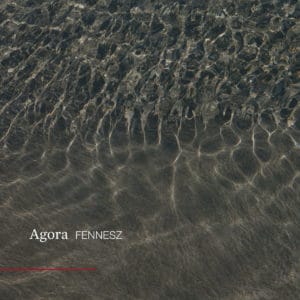
“Agora”
Agora is Christian Fennesz's first solo album since 'Mahler Remixed' [Touch, 2014] and 'Bécs' [Editions Mego, 2014]. Fennesz writes: "Its a simple story. i had temporarily lost a proper studio workspace and had to move all my gear back to a small bedroom in my flat where I recorded this album. It was all done on headphones, which was rather a frustrating situation at first but later on it felt like back in the day when I produced my first records in the 1990s. In the end it was inspiring. I used very minimal equipment; I didn't even have the courage to plug in all the gear and instruments which were at my disposal. I just used what was to hand.
Fennesz uses guitar and computer to create shimmering, swirling electronic sound of enormous range and complex musicality. "Imagine the electric guitar severed from cliché and all of its physical limitations, shaping a bold new musical language." - (City Newspaper, USA). His lush and luminant compositions are anything but sterile computer experiments. They resemble sensitive, telescopic recordings of rainforest insect life or natural atmospheric occurrences, an inherent naturalism permeating each piece. He lives and works in Vienna.
19,00€
In stock
2 LP
Claire M. SINGER
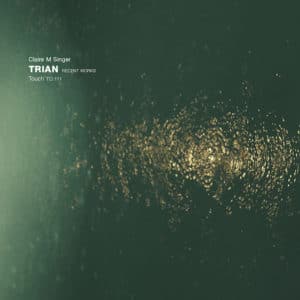
“Trian: recent works”
Vinyl edition of Solas (Touch TO:101) + Fairge on side 4.
- Solas (‘Light’ in Gaelic) is Claire M Singer’s debut album spanning 14 years of her work in acoustic and electronic composition. In recent years she has focused on writing and performing a mix of organ, cello and electronics with regular performances at Union Chapel where she is Music Director, running a diverse programme of concerts and educational workshops around the Chapel’s Henry Willis 1877 organ.
- Fairge : Recorded by Clare Gallagher at Oude Kerk, Amsterdam, 12th June 2017 on the transept organ built by Ahrend & Brunzema (1965)
18,00€
Out of stock

LP
COMPILATION
“Albania, There Where the Avalanche Stops”
"For one week in every five years, two thousand singers, dancers and musicians along with fifty thousand spectators make their way to the small town of Gjirokastra in southern Albania for the Festivali Folkloric Kombelar. In the great castle overlooking the town, they participate in the incredible National Folk Festival of Albania, hoping to attain the highest level of interpretation and win one of the many awards available the festival… the banner, even.
Considering the comparatively small size of the country (just over three million inhabitants) the range of instruments, styles and costumes seen at the festival is exceptional, sustaining a folk tradition that dates back to ancient Illyria.
The works presented here in volume one are all live recordings made at the Gjirokastra Festival, taken from six of the 26 participating districts: Vlora, Gjirokastra and Lorca from the south, and Shkodra, Debra and Tropoja from the north (see map).
The original compact disc, released in 1990, was a collaboration between The Institute of Popular Culture, Tirana, The Albanian Shop Ltd. and Touch.
Edited from the original 1/4” tapes, mastered and produced by Touch"
15,00€
In stock

CD
Bana HAFFAR
“Genera, Live at AB Salon, Brussels”
A lifelong expatriate, Bana Haffar was born in Saudi Arabia in 1987 and spent much of her childhood in the GCC. Through her switch from 10 years of electric bass, preceded by classical violin, to modular synthesizers in 2014, Bana is attempting to dismantle years of institutional conditioning in traditional systems of music theory and performance. She is interested in exploring sonic disintegration and coalescence into new forms and synthesized experiences. Bana lives in Asheville, North Carolina.
Original price was: 11,00€.6,00€Current price is: 6,00€.
In stock

CD
Zachary PAUL
“A Meditation on Discord”
On Zachary Paul’s debut album for Touch, “A Meditation on Discord” compiles two live recordings from 2018 and a short film score, showcasing his expressive range and unique playing style. Both live recordings — “Premonition” and “Slow Ascent” — were fully improvised on his violin (“The Duke,” 1878), a minimal assortment of pedals (Earthquaker Afterneath, Diamond Memory Lane Jr, and Boss RC-30) and looped vocals.
Original price was: 10,50€.6,00€Current price is: 6,00€.
Out of stock
CD
FENNESZ
“Agora”
Agora is Christian Fennesz's first solo album since 'Mahler Remixed' [Touch, 2014] and 'Bécs' [Editions Mego, 2014]. Fennesz writes: "Its a simple story. i had temporarily lost a proper studio workspace and had to move all my gear back to a small bedroom in my flat where I recorded this album. It was all done on headphones, which was rather a frustrating situation at first but later on it felt like back in the day when I produced my first records in the 1990s. In the end it was inspiring. I used very minimal equipment; I didn't even have the courage to plug in all the gear and instruments which were at my disposal. I just used what was to hand.
Fennesz uses guitar and computer to create shimmering, swirling electronic sound of enormous range and complex musicality. "Imagine the electric guitar severed from cliché and all of its physical limitations, shaping a bold new musical language." - (City Newspaper, USA). His lush and luminant compositions are anything but sterile computer experiments. They resemble sensitive, telescopic recordings of rainforest insect life or natural atmospheric occurrences, an inherent naturalism permeating each piece. He lives and works in Vienna.
13,00€
Out of stock
CD
Simon SCOTT
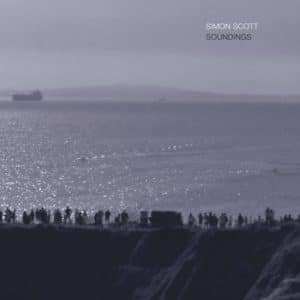
“Soundings”
Soundings, his debut studio album for Touch (he previously released the live album 'Floodlines' in 2016 and re-issued "Below Sea Level" in 2017), finds Simon Scott, the composer and sound ecologist, using field recordings from various cities around the globe; modular synthesizer treatments; live strings and laptop electronics to create an album of transition and shifting time zones. The recordings were edited and composed in hotels rooms across the world as Scott was constantly on tour as the drummer for Slowdive, who successfully reformed in 2014.
Hodos, the album opener, begins with 85 mph Storm Barney recordings, ending with the fading sounds of bellbirds and cicadas recorded in Brisbane 2018. "I took a home recording I made of Storm Barney in Cambridge, listening to it on repeat when I was flying from continent to continent. I wanted this to be the starting point of the process of musically documenting how much travelling I was doing". This album was created from the US to Asia, South America to Europe and the Arctic Circle back to the UK via California. "Working in hotel rooms and on flights, listening to and editing the recordings I'd made from all of these distant cities formed the basis of the album. It's the soundtrack to four years of my life in flux with constant change, jet lag, excitement and the seeming perpetual motion of travelling".
All tracks composed by Simon Scott
Strings played by Charlie Campagna & Zachary Paul
Artwork & photography by Jon Wozencroft
Mastered by Denis Blackham
12,50€
In stock
CD
Ipek GORGUN
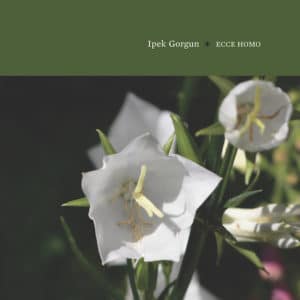
“Ecce Homo”
Ipek Gorgun is an electronic music composer currently enrolled in the doctoral program of Sonic Arts at Istanbul Technical University’s Center for Advanced Studies in Music.
Besides group projects and solo performances, she also composed the soundtrack for the documentary ‘Yok Anasinin Soyadi (Mrs. His Name) directed by Hande Cayir in 2012, portraying Turkish women’s struggle for keeping their original surnames after marriage.
Her debut album Aphelion was self-released in February, 2016 and is reissued by Touch in December, under the TOUCHLINE catalogue. In 2017 she released a collaborative album from Halocline Trance, with Canadian producer Ceramic TL (aka Egyptrixx) entitled “Perfect Lung”, and a mini-album with the Italian electroacoustic duo, Alberi.
Ecce Homo explores the lighter and darker shades of the human psyche, behaviour and existence, and humanity’s ability to create beauty and destruction. What lies in the essence of such complexity has become a core idea for the album, while Gorgun seeks to figure out if there is a true meaning to being human, and human being.
Starting with “Neroli” as a human fascination with nature and finalising with “To Cross Great Rivers”; the album reflects the contemplations of a spectator being exposed to the human civilization, and witnessing human activity, including his/her own.
Trying to acquire a glimpse of the various layers of human flesh and bones, the sound of the album aims to present a diversity of the sonic spectrum, with tracks varying between ambient and noisy landscapes.
12,50€
Out of stock

CD
Mark VAN HOEN
“Invisible Threads”
All titles composed and recorded by Mark Van Hoen in Los Angeles 2016.“[…] Other Touch artists were also an influence here – Claire M Singer, Jana Winderen and as ever Chris Watson (who has been an enduring influence from the moment I first heard Cabaret Voltaire in 1979)… along with my project ‘drøne’ with Mike Harding… the collaborative aspect of drøne brought up a few new paths in itself.During the time I was recording the album I was editing audio and sound design for films – this too went some way to defining the structure and sound of ‘Invisible Threads’. At the time of recording several of the titles on the album, I had re-read ‘The Conversation of Eiros and Charmion’, a short story by Edgar Allen Poe… and in some ways this record is a soundtrack to that.The title ‘Invisible Threads’ refers to the intangible connection between all of the musical and personal influences that brought this record into being.”Instrumentation/sound sources : Modular synthesizer notably using modules manufactured by Make Noise, The Harvestman & Mutable Audio. Software – Ableton Live, Pro Tools and many plugins – heavily used were Max, Soundhack and Native Instruments’ Reaktor & Kontakt. Fender Rhodes piano, Fender Jaguar guitar. Farfisa Organ, Vox continental.
Original price was: 12,50€.7,00€Current price is: 7,00€.
In stock

LP
HOWLROUND
“The Debatable Lands”
In December 2017, Howlround (Robin the Fog) was invited to perform at "The Winter Solstice Soundscapes" event for the recently opened record store "Vinyl Café" in his home town of Carlisle, Cumbria. Inspired by the reception to his first ever performance in the great border city, he covered his parent's dining room table with the same equipment, stretched loops of tape around his mum's seasonal candlesticks when she wasn't looking... and this LP is the result. The only equipment used on the album is two 1/4" reel-to-reel tape machines and one microphone. The sounds created are entirely at the discretion of the machines (much of them derived from 'closed-input' recordings) and all tracks were produced in a single take. There are no edits, no overdubs and no additional effects.
This marks a new, heavier direction for Howlround, a project better known for more ambient work. Described as 'Tapeloop Techno', thick knotty tangles of dense, pulsating bass are an echo of Robin's early days making bad dance music, while the abrasive snarls of feedback swirling around these tracks point to his more recent embrace of indeterminacy and chance composition. Previous vinyl releases on Psyché Tropes, The Wormhole, A Year in the Country and Front & Follow as well as his own label The Fog Signals have shown a deep understanding of the possibilities of tape manipulation. On The Debatable Lands Howlround eschews the usual field recordings in favour of exploring the interior world of the machines themselves.
Original price was: 16,00€.10,00€Current price is: 10,00€.
In stock
CD
STRAFE F.R.
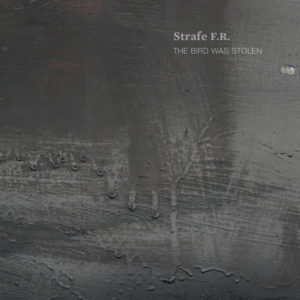
“The Bird Was Stolen”
Based in Düsseldorf, Germany, Strafe F.R. is a long-term collaboration between the artists Bernd Kastner and S. M. Syniuga, which started in 1979. After a long period of hibernation, The Bird Was Stolen marks their return to Touch following four previous releases in the 80s and early 90s.
From their early connection with the local punk and new wave scene, centered around the Ratinger Hof in Düsseldorf, Strafe went on to develop a unique and influential form of sound sculpture that pioneered the use of field recordings alongside home-made instruments and the use of the studio as a performance space.
A new track, ‘Virgin’, which appeared on the recent Touch Movements CD/book, gave an early indication that they are back at the peak of their powers. The Bird Was Stolen presents 14 new compositions that push the signature sound of Strafe F.R.
12,50€
In stock
book + CD
COMPILATION
TOUCH MOVEMENTS
Touch MOVEMENTS has been compiled over the course of 3 years. It is a response to many requests for Touch to publish a fuller account of Jon Wozencroft’s photography for the cover art of the project. The book follows the music, which was compiled step-by- step, like a jigsaw – there was not an “open call” to the artists, rather a sequential development which gives the CD a special narrative quality. And since our last Touch 30 compilation in 2012, the accuracy of the music has grown and rises to the challenge of what sound can do to transform perceptions about the immediate emotion of musical work and its more dif cult, longer term evolution.
Following Touch Folio 001 in 2015, this series is a dedication to finding new ways of audiovisual publishing, somewhere between the twin peaks of a jewel-cased CD and a lavish box-set. The two elements of sound and the visual work in parallel to create the idea of an “Ear-book”, whose interdependency reveals itself over time, and allows the richest of listening and viewing experiences. The music and the photography is fully annotated, alongside a rarely-seen manifesto by the Surrealist film-maker Jan vankmajer which celebrates the spirit of the creative act.
With tracks from Mika Vainio, AER, Bethan Kellough, Wire, Carl Michael Von Hausswolff, Chris Watson, Jana Winderen, The Magical Land of the North, Claire M Singer, Hildur Gudnadottir, Three 20, Philip Jeck, Simon Scott, Eleh, Russell Haswell, Heitor Alvelos, Johann Johannsson, Mark Van Hoen, Fennesz, Sohrab, Strafe FR, Jim O’Rourke, Situation Stabilised / BJ Nilsen, Peter Rehberg, Oren Ambarchi.
76pp full colour book + CD. Limited edition of 1000.
Following Touch Folio 001 in 2015, this series is a dedication to finding new ways of audiovisual publishing, somewhere between the twin peaks of a jewel-cased CD and a lavish box-set. The two elements of sound and the visual work in parallel to create the idea of an “Ear-book”, whose interdependency reveals itself over time, and allows the richest of listening and viewing experiences. The music and the photography is fully annotated, alongside a rarely-seen manifesto by the Surrealist film-maker Jan vankmajer which celebrates the spirit of the creative act.
With tracks from Mika Vainio, AER, Bethan Kellough, Wire, Carl Michael Von Hausswolff, Chris Watson, Jana Winderen, The Magical Land of the North, Claire M Singer, Hildur Gudnadottir, Three 20, Philip Jeck, Simon Scott, Eleh, Russell Haswell, Heitor Alvelos, Johann Johannsson, Mark Van Hoen, Fennesz, Sohrab, Strafe FR, Jim O’Rourke, Situation Stabilised / BJ Nilsen, Peter Rehberg, Oren Ambarchi.
76pp full colour book + CD. Limited edition of 1000.
37,00€
Out of stock

LP
WALO SHATAN GWARI
“Drumming for creation”
A new series of vinyl and download only releases, "from the archives...". Originally released on cassette in 1985, Touch
T33.3 is now available on vinyl. Walo Shatan Gwari: The ensemble, led by Malam Walo, belongs to the Gwari people of Niger State. The performances, at London’s Commonwealth Institute, also encompassed drumming sessions and instrument-making workshops.
Edition of 300 vinyl.
T33.3 is now available on vinyl. Walo Shatan Gwari: The ensemble, led by Malam Walo, belongs to the Gwari people of Niger State. The performances, at London’s Commonwealth Institute, also encompassed drumming sessions and instrument-making workshops.
Edition of 300 vinyl.
9,00€
Out of stock
LP
Hildur GUDNADOTTIR
“Saman”
Back in stock. A few copies left !
This album is about resonance: on “Saman”, which means “Together”, Hildur melts her voice with her cello, connecting the two instruments together. The result is a highly involving and moving album, recorded, mixed and mastered in Berlin. Hildur’s sylph-like vocals contrast beautifully with rich cello tones, resolving the tension between light and dark to produce a unique listening experience. Renowned bassist Skúli Sverrisson guests on “Heima”. This is Hildur’s 4th album for Touch, after “Without Sinking”, “Mount A” and "Leyfdu Ljósinu”. All tracks composed, performed and recorded by Hildur Gudnadóttir in Berlin, except Heyr Himnasmiour (track 4), composed by orkell Sigurbjörnsson, lyrics by Kolbeinn Tumason. Track 6, bass by Skúli Sverrisson. Tracks 1, 4 and 6 recorded by Francesco Donadello. All tracks mixed by Francesco Donadello and Hildur Gudnadóttir at Vox-Ton Studio, Berlin.
This album is about resonance: on “Saman”, which means “Together”, Hildur melts her voice with her cello, connecting the two instruments together. The result is a highly involving and moving album, recorded, mixed and mastered in Berlin. Hildur’s sylph-like vocals contrast beautifully with rich cello tones, resolving the tension between light and dark to produce a unique listening experience. Renowned bassist Skúli Sverrisson guests on “Heima”. This is Hildur’s 4th album for Touch, after “Without Sinking”, “Mount A” and "Leyfdu Ljósinu”. All tracks composed, performed and recorded by Hildur Gudnadóttir in Berlin, except Heyr Himnasmiour (track 4), composed by orkell Sigurbjörnsson, lyrics by Kolbeinn Tumason. Track 6, bass by Skúli Sverrisson. Tracks 1, 4 and 6 recorded by Francesco Donadello. All tracks mixed by Francesco Donadello and Hildur Gudnadóttir at Vox-Ton Studio, Berlin.
13,00€
In stock
LP
CM von HAUSSWOLFF
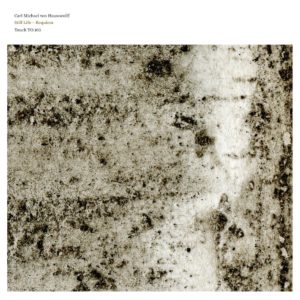
“Still Life – Requiem”
Conceptualised (2010–2013), composed and produced (2014–2017) by Carl Michael von Hausswolff in Palma (Majorca) and Stockholm. This musical piece consists only of sounds emitted and extracted from physical matter using emission spectroscopy as the sole basic technology. Acknowledgements to Linköping University (IFM), Sweden.
“Still Life - Requiem” consists of one piece with the same title and is divided up into two to fit the LP format. The piece is, as the title suggests, a requiem and it’s contents are solely composed by sounds captured from a specific physical solid state material. The composer has used a technique called ‘emission spectroscopy’ whereby the frequencies generated from the material was analysed and transferred into, for humans, a listenable pitch (between 15 and 14000Hz). This captured organic sound material has been stretched, looped, equalised and composed to produce the recording.
A requiem is a piece of music dedicated to certain sole or several restless souls that wander our worlds looking for a place to call home. A requiem radiates calm, peace and perhaps comfort for tormented spiritual beings - it’s a piece dedicated to promote and insert tranquility and transcendence.
This requiem also provides the listener with a certain feeling of connection - perhaps a connection with the unknown and with the energy field clusters and mental abilities of post-mortem life forms that would be the incorporeal essence of a living being.
500 copies.
“Still Life - Requiem” consists of one piece with the same title and is divided up into two to fit the LP format. The piece is, as the title suggests, a requiem and it’s contents are solely composed by sounds captured from a specific physical solid state material. The composer has used a technique called ‘emission spectroscopy’ whereby the frequencies generated from the material was analysed and transferred into, for humans, a listenable pitch (between 15 and 14000Hz). This captured organic sound material has been stretched, looped, equalised and composed to produce the recording.
A requiem is a piece of music dedicated to certain sole or several restless souls that wander our worlds looking for a place to call home. A requiem radiates calm, peace and perhaps comfort for tormented spiritual beings - it’s a piece dedicated to promote and insert tranquility and transcendence.
This requiem also provides the listener with a certain feeling of connection - perhaps a connection with the unknown and with the energy field clusters and mental abilities of post-mortem life forms that would be the incorporeal essence of a living being.
500 copies.
16,00€
Out of stock
2 LP
LUSTMORD
“Dark matter”
Double vinyl version limited to 1100 copies. Coporoduced with Hydra Head label.
Conceived and produced by B.Lustmord. Recorded in Los Angeles October-December 2015. Artwork & Photography by Jon Wozencroft.
Derived from an audio library of cosmological activity collected between 1993 and 2003. It was gathered from various sources including NASA (Cape Canaveral, Ames, The Jet Propulsion Laboratory and Arecibo), The Very Large Array, The National Radio Astronomy Observatory and various educational institutions and private contributors throughout the USA.
Lustmord writes: “The Universe we inhabit is a vast expanse far larger than we are able to comprehend. As we attempt to understand its underlying structure and as we gain new insight into the nature of matter, new questions arise and further gaps in our understanding are revealed.
Behind the world that we experience lies a veil of darkness and much is hidden between, beyond and unseen.
We are limited by our inability to truly grasp the infinite breadth of the Universe, the time scales involved in its measure and our insignificant position within.
Some things will always be unknowable, and existence does not begin or end with man's conception.
Everything that has ever been observed by man, even with our most sophisticated instruments amounts, to less than five percent of the Universe.
Approximately sixty-eight percent of the Universe is unseen dark energy and approximately twenty-seven percent is unseen dark matter. We have yet to discover what dark matter is, and only know the things it is not. Although it has not been directly observed, its existence and properties are inferred from its effects on visible matter, its influence on the Universe's large-scale structure, and its effects in the cosmic microwave background.
The universe began of darkness, not of light.
While space is a virtual vacuum, it does not mean there is no sound in space. It exists in space as naturally occurring electromagnetic vibrations, many well within the range of human hearing while others exist at different regions of the electromagnetic spectrum and these can be adjusted with software to bring them within our audio range.
The recordings of these interactions in space come from several different environments including radio, ultra violet, microwave and X-ray data and within these spectra a wide range of sources including interstellar plasma and molecules, radio galaxies, pulsars masers and quasars, charged particle interactions and emissions, radiation, exotic astrophysical objects, cosmic jets and flares from magnetars.”
About Lustmord: Widely credited as the originator of the “Dark Ambient” genre. Credits on over forty motion pictures including The Crow and Underworld. One of the two composers for the Turtle Rock/2K game Evolve. Worked with John Balance, Chris & Cosey, Clock DVA, Current 93, Paul Haslinger, Maynard James Keenan, Melvins, Nurse With Wound, Tool and Wes Borland amongst others.
Conceived and produced by B.Lustmord. Recorded in Los Angeles October-December 2015. Artwork & Photography by Jon Wozencroft.
Derived from an audio library of cosmological activity collected between 1993 and 2003. It was gathered from various sources including NASA (Cape Canaveral, Ames, The Jet Propulsion Laboratory and Arecibo), The Very Large Array, The National Radio Astronomy Observatory and various educational institutions and private contributors throughout the USA.
Lustmord writes: “The Universe we inhabit is a vast expanse far larger than we are able to comprehend. As we attempt to understand its underlying structure and as we gain new insight into the nature of matter, new questions arise and further gaps in our understanding are revealed.
Behind the world that we experience lies a veil of darkness and much is hidden between, beyond and unseen.
We are limited by our inability to truly grasp the infinite breadth of the Universe, the time scales involved in its measure and our insignificant position within.
Some things will always be unknowable, and existence does not begin or end with man's conception.
Everything that has ever been observed by man, even with our most sophisticated instruments amounts, to less than five percent of the Universe.
Approximately sixty-eight percent of the Universe is unseen dark energy and approximately twenty-seven percent is unseen dark matter. We have yet to discover what dark matter is, and only know the things it is not. Although it has not been directly observed, its existence and properties are inferred from its effects on visible matter, its influence on the Universe's large-scale structure, and its effects in the cosmic microwave background.
The universe began of darkness, not of light.
While space is a virtual vacuum, it does not mean there is no sound in space. It exists in space as naturally occurring electromagnetic vibrations, many well within the range of human hearing while others exist at different regions of the electromagnetic spectrum and these can be adjusted with software to bring them within our audio range.
The recordings of these interactions in space come from several different environments including radio, ultra violet, microwave and X-ray data and within these spectra a wide range of sources including interstellar plasma and molecules, radio galaxies, pulsars masers and quasars, charged particle interactions and emissions, radiation, exotic astrophysical objects, cosmic jets and flares from magnetars.”
About Lustmord: Widely credited as the originator of the “Dark Ambient” genre. Credits on over forty motion pictures including The Crow and Underworld. One of the two composers for the Turtle Rock/2K game Evolve. Worked with John Balance, Chris & Cosey, Clock DVA, Current 93, Paul Haslinger, Maynard James Keenan, Melvins, Nurse With Wound, Tool and Wes Borland amongst others.
25,00€
In stock
maxi CD
FENNESZ
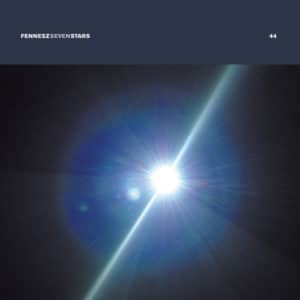
“Seven stars”
The Kalahari desert is a vast and open space where most of the wildlife is nocturnal. After sunset the dunes, grasses and thorn bushes are patrolled by an emerging alien empire - the insects. Midnight at the Oasis’ presents an unseen soundscape from this beautiful and hostile environment.
9,00€
In stock
CD
BIOSPHERE
“Wireless-Live at the Arnolfini, Bristol”
Back in stock! “Recorded live at The Arnolfini, Bristol, 27th October 2007 by the doyen of sound recordists, Chris Watson, using 2 x Sony ECM 77s with a Nagra P11 Ares flash card recorder, and from desk to hard drive. The recording was mixed, edited and mastered by Touch stalwart BJNilsen, in Berlin during March 2009. This concert was part of Touch 25 Live, which also featured a performance of Storm [by Chris Watson & BJNilsen]. Biosphere is Norwegian composer and performer , and this is his sixth release for Touch. In the early 1990s he was a pioneer of so-called “ambient techno”, but since then, he has refined his sound into something more magnetic and enduring. His last album, Dropsonde, wasn’t a soundtrack like the interwoven Substrata, nor an episodic journey in the way that Autour de la Lune is. It pushed new directions towards the jazz colors of Miles Davis and Jon Hassell, while re-invigorating the pulse and projection of his signature sound: a hypnotic combination of pleasure and dread. Here Geir Jenssen takes this further, incorporating samples of field recordings by Jony Easterby and trumpet by Anders Karlskås, invoking a sparser, more arresting sound. A landmark release for Biosphere, his first live album, heralding new beginnings without jettisoning the past…” label info
13,00€
Out of stock
CD
LUSTMORD
“Dark matter”
Conceived and Produced by B.Lustmord. Recorded in Los Angeles October-December 2015. Artwork & Photography by Jon Wozencroft.
Derived from an audio library of cosmological activity collected between 1993 and 2003. It was gathered from various sources including NASA (Cape Canaveral, Ames, The Jet Propulsion Laboratory and Arecibo), The Very Large Array, The National Radio Astronomy Observatory and various educational institutions and private contributors throughout the USA.
Lustmord writes: “The Universe we inhabit is a vast expanse far larger than we are able to comprehend. As we attempt to understand its underlying structure and as we gain new insight into the nature of matter, new questions arise and further gaps in our understanding are revealed.
Behind the world that we experience lies a veil of darkness and much is hidden between, beyond and unseen.
We are limited by our inability to truly grasp the infinite breadth of the Universe, the time scales involved in its measure and our insignificant position within.
Some things will always be unknowable, and existence does not begin or end with man's conception.
Everything that has ever been observed by man, even with our most sophisticated instruments amounts, to less than five percent of the Universe.
Approximately sixty-eight percent of the Universe is unseen dark energy and approximately twenty-seven percent is unseen dark matter. We have yet to discover what dark matter is, and only know the things it is not. Although it has not been directly observed, its existence and properties are inferred from its effects on visible matter, its influence on the Universe's large-scale structure, and its effects in the cosmic microwave background.
The universe began of darkness, not of light.
While space is a virtual vacuum, it does not mean there is no sound in space. It exists in space as naturally occurring electromagnetic vibrations, many well within the range of human hearing while others exist at different regions of the electromagnetic spectrum and these can be adjusted with software to bring them within our audio range.
The recordings of these interactions in space come from several different environments including radio, ultra violet, microwave and X-ray data and within these spectra a wide range of sources including interstellar plasma and molecules, radio galaxies, pulsars masers and quasars, charged particle interactions and emissions, radiation, exotic astrophysical objects, cosmic jets and flares from magnetars.”
About Lustmord: Widely credited as the originator of the “Dark Ambient” genre. Credits on over forty motion pictures including The Crow and Underworld. One of the two composers for the Turtle Rock/2K game Evolve. Worked with John Balance, Chris & Cosey, Clock DVA, Current 93, Paul Haslinger, Maynard James Keenan, Melvins, Nurse With Wound, Tool and Wes Borland amongst others.
12,00€
In stock
CD
BIOSPHERE DEATHPROD
“Stator”
Available on March 30.
stator ( ste t ) n
1. (Electrical engineering) The stationary part of a rotary machine or device, esp of a motor or generator.
2. (Aeronautics) A system of nonrotating radially arranged parts within a rotating assembly, esp the fixed blades of an axial flow compressor in a gas turbine
[C20: from Latin: one who stands (by), from st re to stand]
Biosphere is the main recording name of Geir Jenssen, a Norwegian musician who has released a notable catalogue of ambient electronic music.
He is well known for his “ambient techno” and “arctic ambient” styles, his use of music loops, and peculiar samples from sci-fi sources. His track “Novelty Waves” was used for the 1995 campaign of Levi’s. His 1997 album Substrata is generally seen as one of the all time classic ambient albums. Biosphere regularly performs live during electronic music festivals and in clubs throughout Europe and various other locales around the world. Live performances usually consist of Jenssen performing improvisations or variations on newer tracks on a laptop while video art is projected behind him; for example, full-screen video art was projected in his Picturehouse cinema tour in April 2006. Although these performances are rarely tied specifically to a recent album release, the uptempo material from the Bleep and Microgravity/Patashnik era is rarely featured in Biosphere performances. He has been working with Touch since 1999…
Deathprod is a musical pseudonym used by Norwegian artist Helge Sten. Sten began creating music under this name starting in 1991, culminating with a box set of most of his recorded work being released in 2004. Simply titled Deathprod, the collection contains three albums along with a bonus disc of previously unreleased, rare, and deleted tracks. On recordings, Sten is usually credited with “Audio Virus”, a catchall term for “homemade electronics, old tape echo machines, ring modulators, filters, theremins, samplers and lots of electronic stuff”. Sten also did the mixing of the album “PB” by the Norwegian artist Per Bergersen. Sten is a member of Supersilent and works as a producer on many releases on the Norwegian label Rune Grammofon. He has also produced Motorpsycho and has worked with Biosphere on an Arne Nordheim tribute album called Nordheim Transformed. Mastered by Helge Sten at Audio Virus LAB. This work was commissioned by Tape To Zero.
13,00€
Out of stock
CD
Simon SCOTT
“Floodlines”
Recorded live at Cafe Oto as part of “Touch presents…” on 31st January 2016
Simon Scott is a sound ecologist and multi-instrumentalist from Cambridge, England. His albums ‘Insomni’ (Ash International) and ‘Below Sea Level’ (12k / TouchLine) are out now (see above). His work explores the creative process of actively listening, the implications of recording the natural world using technology and the manipulation of natural sounds used for musical composition. He plays the drums in Slowdive and has recently collaborated with artists James Blackshaw, Spire, Taylor Deupree (Between), Isan + many more.
This is his first physical release for Touch.
Source material recorded in The Fens, East Anglia.
Simon Scott's blistering live set from London follows his 2015 album ‘insomni’ but features his field recordings of areas of The Fens in East Anglia that cartographically are below mean sea level. They’re complimented by underwater hydrophone recordings taken on field research trips, making the unheard audible and brings the unseen to the surface. It’s a flat landscape that was devastated by the draining of The Fens in the 17th century. The ecosystem was damaged but these areas have been left to reflood and re-establish it’s vernacular wildlife, replete with its own instrumentation and orchestras. Tapping into these, Scott's vision encourages us to explore the fertility of the flatlands of England.
Simon Scott is a sound ecologist and multi-instrumentalist from Cambridge, England. His albums ‘Insomni’ (Ash International) and ‘Below Sea Level’ (12k / TouchLine) are out now (see above). His work explores the creative process of actively listening, the implications of recording the natural world using technology and the manipulation of natural sounds used for musical composition. He plays the drums in Slowdive and has recently collaborated with artists James Blackshaw, Spire, Taylor Deupree (Between), Isan + many more.
This is his first physical release for Touch.
Source material recorded in The Fens, East Anglia.
Simon Scott's blistering live set from London follows his 2015 album ‘insomni’ but features his field recordings of areas of The Fens in East Anglia that cartographically are below mean sea level. They’re complimented by underwater hydrophone recordings taken on field research trips, making the unheard audible and brings the unseen to the surface. It’s a flat landscape that was devastated by the draining of The Fens in the 17th century. The ecosystem was damaged but these areas have been left to reflood and re-establish it’s vernacular wildlife, replete with its own instrumentation and orchestras. Tapping into these, Scott's vision encourages us to explore the fertility of the flatlands of England.
9,00€
Out of stock
CD
Ryoji IKEDA
“Matrix”
“This is Ryoji Ikeda’s fifth solo CD and his third for Touch, following the highly acclaimed +/- [1996] and 0*C [1998]. He previously released 1000 Fragments on his own cci recordings, and Time and Space, a double 3” CD, for Staalplaat.
15,00€
Out of stock
CD
Ryoji IKEDA
“+–”
Back in stock. 4th edition. This is Ryoji Ikeda’s 1st CD for Touch. Released originally in 1996, a new version for the Millennium was released in 2000. +/- has a particular sonority whose quality is determined by one’s listening point in relation to the loudspeakers. Furthermore, the listener can experience a particular difference between speaker playback and headphone listening. The sound signals can be thought of in the same way as spotlights. Lastly, a high frequency sound is used that the listener only becomes aware of upon its disappearance.
12,00€
Out of stock
CD
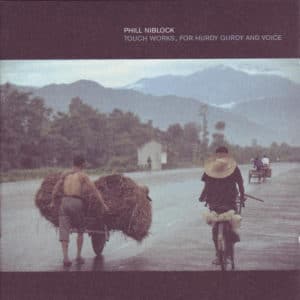
Phill NIBLOCK
“Touch works, for hurdy gurdy and voice”
This is the first CD by Phill Niblock for Touch. Thomas Buckner, baritone voice (samples and live) All were completed with Protools software in a Macintosh computer, and are 24 tracks mixed to stereo. There are two versions of the voice piece, one the original tape piece, the other a version with three added voices, live, plus four tracks of pitch shift on each, done in Robert Poss’s (Trace Elements) studio. Samples and live elements were recorded by Robert Poss at Trace Elements Studios in New York. The pieces were constructed and mixed in ProTools by Phill Niblock at Experimental Intermedia in New York. [AYU was commissioned by Thomas Buckner] Track Listing: "Hurdy Hurry" (October 1999) Jim O’Rourke, hurdy gurdy (samples). "A Y U", aka "as yet untitled" (October 1999) Thomas Buckner, baritone voice (samples). "A Y U, Live" (October 1999/2000).
12,00€
In stock
CD
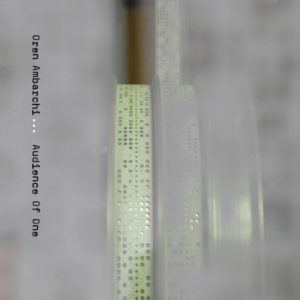
Oren AMBARCHI
“Audience of one”
“On Audience of One, Oren Ambarchi, presents a four-part suite which moves from throbbing minimalism to expansive song-craft to ecstatic free-rock. While his previous solo albums for Touch have exhibited a clear progression towards augmenting and embellishing his signature bass-heavy guitar tones with fragile acoustic instrumentation, Audience of One, while also existing in clear continuity with his previous recordings, opens the next chapter in his catalogue of solo works. Remarkable in its confidence and breadth, but also in the sensuous immediacy of its details, this is the first time a single record has come close to encapsulating Ambarchi’s musical personality in its full range and singularity; as, among other guises in addition to the guitar based solo-works he is best known for, electro-acoustic improviser with Keith Rowe, explorer of the outer limits of rock with Sunn O))) and Keiji Haino, and, in the epic yet faithful Ace Frehley cover which closes the record, classic rock enthusiast. The album features a multitude of different collaborators, who, far from appearing in incidental roles, are integral to the pieces on which they perform: on the opening ‘Salt’, Ambarchi paints a hypnotic, chiming backdrop for Paul Duncan’s (Warm Ghost) vocals, and Joe Talia’s virtuoso drumming and driving cymbals are at the core of the epic ‘Knots’, in which Ambarchi, alongside a chamber arrangement by Eyvind Kang, weaves a net of frequencies and textures with the organic push and pull of a 70s psych jam, the bass response of a doom metal ritual and the psycho-acoustic precision of an Alvin Lucier composition. Where on his previous records, Ambarchi’s signature guitar tone was the ever-present bedrock over which other elements of the arrangements sounded, at moments on Audience of One it even disappears entirely, as on the beautiful ‘Passage’, which, recalling the 70’s Italian minimalism of Roberto Cacciapaglia and Giusto Pio, is composed of overlapping tones from Hammond organ and wine glasses, Jessika Kenney’s voice, various acoustic instruments, and the delicate amplified textures of Canadian sound-artist Crys Cole. Rather than being provided by any particular sound, the unified experience of listening to Audience of One stems simply from the unique, patient sensibility Ambarchi has developed over twenty years of abstracting musical forms into their barest forms, while somehow always managing to leave their emotive power intact. [Francis Plagne]” Artwork & photography: Jon Wozencroft. Mastered by Francois Tetaz at Moose, Melbourne.
13,00€
In stock
CD
Chris WATSON & Marcus DAVIDSON
“Cross-Pollination”
“1.Chris Watson - Midnight at the Oasis 28:08. The piece is a 28 minute time compression from sunset to sunrise in South Africa’s Kalahari desert and features the dense and harmonic mosaic of delicate animal rhythms recorded in this remote habitat.” Midnight at the Oasis was first performed at the Marquee in Parliament Street, York, on 13th September 2007 as part of SightSonic’s contribution to the BA Festival of Science.
13,50€
Out of stock
CD
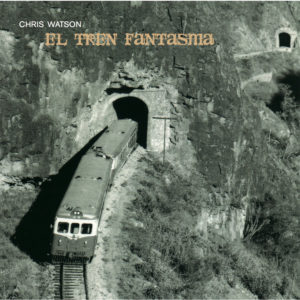
Chris WATSON
“El tren fantasma”
Reissue.
“Take the ghost train from Los Mochis to Veracruz and travel cross country, coast to coast, Pacific to Atlantic. Ride the rhythm of the rails on board the Ferrocarriles Nacionales de México (FNM) and the music of a journey that has now passed into history.” El Tren Fantasma (The Ghost Train) is Chris Watson’s 4th solo album for Touch, and his first since Weather Report in 2003, which was named as one of the albums you should hear before you die in The Guardian. A Radio programme was broadcast on BBC Radio 4 on Saturday 30 Oct, 2010, produced by Sarah Blunt, and described as "a thrilling acoustic journey across the heart of Mexico from Pacific to Atlantic coast using archive recordings to recreate a rail passenger service which no longer exists. It’s now more than a decade since FNM operated its last continuous passenger service across country. Chris Watson spent a month on board the train with some of the last passengers to travel this route. As sound recordist he was part of the film crew working on a programme in the BBC TV series Great Railways Journeys. Now, in this album, the journey of the ‘ghost train’ is recreated, evoking memories of a recent past, capturing the atmosphere, rhythms and sounds of human life, wildlife and the journey itself along the tracks of one of Mexico’s greatest engineering projects.
13,00€
Out of stock
CD
Chris WATSON
“Weather report”
Ryoji is constantly touring as part of the Japanese performance group Dumb Type, who are shortly to undertake a tour of Japan, and also as a solo artist.”
13,00€
Out of stock
3 CD
Phill NIBLOCK
“Touch three”
“Sethwork” (2003) Seth Josel, acoustic unamplified guitars played with e-bow. “Harm” ( 2003) Arne Deforce, cello. “Lucid Sea” (2003) Lucia Mense, recorders. “Parker’s Altered Mood, aka, Owed to Bird” (2004) Ulrich Krieger, alto saxophone. “Zrost” (2004) Martin Zrost, soprano saxophone. “Not Yet Titled” (2003) Franz Hautzinger, trumpet. “Valence” (2005) Julia Eckhardt, viola. “Alto Tune” (2004) Ulrich Krieger, alto saxophone. “Sax Mix” (2004) Ulrich Krieger, alto, tenor and baritone saxo. These nine pieces were made from March 2003 to January 2005. They were all made (except "Sax Mix") by recording a single instrument with a single microphone. The recordings were direct to the computer-hard disk, most of them using my Powerbook G4, Protools, an M-box and an external firewire drive. The resulting mono sound files were edited to remove breathing spaces, leaving the natural decay of the tone, and the attack of the subsequent iteration of the same tone. Each note was represented by several repetitions, perhaps ten for each tone, of about 15 seconds duration each. Each piece uses a few tones. A simple chord, perhaps. Additional microtonal intervals were produced in Protools using pitch shift. The pieces were assembled in multitracks, usually either 24 or 32 tracks. The recording environment varied from a simple apartment in Berlin (Ulrich Krieger’s) to a very large hall used for symphony orchestra performances and recordings, with a sizable audience space (Deutschland Radio, Cologne). The recordings were generally done quite closely miked. One hears only the sound of the instrument. There is no electronic manipulation in the recording, the editing of the tones, or in the mix. The only changes to the recorded tones are the pitch shifts to create microtones. The microtones are doing the work.
20,00€
In stock
2 CD
Phill NIBLOCK
“Touch five”
“FeedCorn Ear” (2012). Arne Deforce, cello. “A Cage of Stars” (2012). Rhodri Davies, electric harp. Two Lips (2011). Zwerm Guitar Quartet. “Two Lips” (2011). Dither Guitar Quartet. “Two Lips” (2011). Coh Da Guitar Quartet.
These CDs have pieces made in two different ways. Traditionally (since 1968), I recorded tones played by an instrument (by an instrumentalist), arranging these single tones into mutli-layered settings, making thick textured drones, with many microtones. In the early days, I prescribed the microtones, tuning the instrumentalist, when I was using audio tape. Later, I used the software ProTools, and made the microtones as I made the pieces. FeedCorn Ear and A Cage of Stars were made this way. In 1998, Petr Kotik asked me to make a piece for orchestra, so, I began to make scores for the musicians to play from. The form of that piece, and the subsequent six scored works, were patterned after a piece in 1992-94, where the musicians were tuned by hearing tones played from a tape through headphones. These are the instructions for the scored piece on the second CD, Two Lips. The score was prepared by Bob Gilmore, from specific directions by me. Two Lips, aka Nameless, is conceived as two scores, A and B, to be played simultaneously, lasting 23 minutes. Each score consists of ten instrumental parts. The twenty separate parts should be distributed randomly amongst the musicians of the ensemble; the ’A group’ and the ’B group’ are not separated spatially. In each part, one note changes to the next in a graded sequence of microtonal steps. In score A, G gradually goes to F
. In score B, G
gradually goes to A. The piece calls for very subtle gradations of tuning in order to achieve a richness of ensemble sound, full of beatings of near-unison pitches, and with clouds of overtones and difference tones. The microtonal displacements are conceived in gradations of 10 cents, therefore resulting in ten divisions of the equal-tempered semitone (100 cents). An electronic tuner may be useful in rehearsal, and perhaps in performance, to achieve these small gradations. Be careful not to use glissandi to move from one note to the next; these are antithetical to Niblock’s musical language.
In score A, the G of the beginning is presented ’straight’, without microtonal embellishments of any kind, whereas the F
(into which it slowly transforms) is heard by the end in a multitude of microtonal variants above and below.
In score B this process is reversed: the G
at the beginning is immediately presented with a multitude of microtonal variants above and below, the pitches slowly transforming into the unison A by the end.
General comments: Phill Niblock’s music utilizes dense collections of microtones to yield a unique sonic palette. The musicians should sense being part of an intonational cloud of sound. The density will change throughout the piece, but the ’cloud’ will always be present. This score was used in recording three different guitar quartets; Zwerm (of Belgium), Dither (of New York) and an assembled group of world widers, Coh Da (well, ad hoc spelled backwards).
Each quartet recorded 40 tracks from the score, each playing the 23 minute piece ten times in one day. Stamina.
Zwerm line up for this recording: Kobe Van Cauwenberghe, Matthias Koole, Toon Callier, Guy De Bièvre (guest).
Dither: Taylor Levine, David Linaburg, Joshua Lopes, James Moore
Coh Da Quartet David First, Seth Josel, Robert Poss and Susan Stenger.
These CDs have pieces made in two different ways. Traditionally (since 1968), I recorded tones played by an instrument (by an instrumentalist), arranging these single tones into mutli-layered settings, making thick textured drones, with many microtones. In the early days, I prescribed the microtones, tuning the instrumentalist, when I was using audio tape. Later, I used the software ProTools, and made the microtones as I made the pieces. FeedCorn Ear and A Cage of Stars were made this way. In 1998, Petr Kotik asked me to make a piece for orchestra, so, I began to make scores for the musicians to play from. The form of that piece, and the subsequent six scored works, were patterned after a piece in 1992-94, where the musicians were tuned by hearing tones played from a tape through headphones. These are the instructions for the scored piece on the second CD, Two Lips. The score was prepared by Bob Gilmore, from specific directions by me. Two Lips, aka Nameless, is conceived as two scores, A and B, to be played simultaneously, lasting 23 minutes. Each score consists of ten instrumental parts. The twenty separate parts should be distributed randomly amongst the musicians of the ensemble; the ’A group’ and the ’B group’ are not separated spatially. In each part, one note changes to the next in a graded sequence of microtonal steps. In score A, G gradually goes to F
. In score B, G
gradually goes to A. The piece calls for very subtle gradations of tuning in order to achieve a richness of ensemble sound, full of beatings of near-unison pitches, and with clouds of overtones and difference tones. The microtonal displacements are conceived in gradations of 10 cents, therefore resulting in ten divisions of the equal-tempered semitone (100 cents). An electronic tuner may be useful in rehearsal, and perhaps in performance, to achieve these small gradations. Be careful not to use glissandi to move from one note to the next; these are antithetical to Niblock’s musical language.
In score A, the G of the beginning is presented ’straight’, without microtonal embellishments of any kind, whereas the F
(into which it slowly transforms) is heard by the end in a multitude of microtonal variants above and below.
In score B this process is reversed: the G
at the beginning is immediately presented with a multitude of microtonal variants above and below, the pitches slowly transforming into the unison A by the end.
General comments: Phill Niblock’s music utilizes dense collections of microtones to yield a unique sonic palette. The musicians should sense being part of an intonational cloud of sound. The density will change throughout the piece, but the ’cloud’ will always be present. This score was used in recording three different guitar quartets; Zwerm (of Belgium), Dither (of New York) and an assembled group of world widers, Coh Da (well, ad hoc spelled backwards).
Each quartet recorded 40 tracks from the score, each playing the 23 minute piece ten times in one day. Stamina.
Zwerm line up for this recording: Kobe Van Cauwenberghe, Matthias Koole, Toon Callier, Guy De Bièvre (guest).
Dither: Taylor Levine, David Linaburg, Joshua Lopes, James Moore
Coh Da Quartet David First, Seth Josel, Robert Poss and Susan Stenger.
15,00€
Out of stock
2 CD
Phill NIBLOCK
“Touch strings”
CD One - (6 tracks): 1. - 6. “Stosspeng”. Susan Stenger and Robert Poss, guitars and bass guitars. CD Two - (6 tracks): 1. “Poure”. Arne Deforce, cello. 2. - 6. “One Large Rose”. The Nelly Boyd Ensemble, Hamburg - Robert Engelbrecht, cello; Jan Feddersen, piano strummed with nylon strings; Peter Imig, violin; Jens Roehm, acoustic bass guitar strummed with nylon strings or e-bow. This is Phill Niblock’s 4th release on Touch, after Touch Works... [TO:49, 2000], Touch Food [TO:59, 2003] and Touch Three [TO:69, 2006]. “Stosspeng was completed in April 2007; Poure in September 2008 and One Large Rose in May 2008. The Stosspeng recording session to obtain the materials for the piece was on December 20 2006 at Robert Poss’s Trace Elements studio on E 4th Street and Ave A, in New York. Robert was the engineer. The piece was completed using Protools in April 2007, in Vienna, Austria. It was premiered at the Donau Festival in Krems Austria on April 30 2007. The material for Poure was recorded in Johan Vandermaelen’s Amplus studio in Aaigem Belgium, with technical assistance by Guy De Bievre. Much of the construction of the piece, in Protools, was done in a residency at Atelier Azur in Hoenefoss, Norway at the Hval Station, in mid August 2008. It was finished in Ellen Fullman’s studio in Berkeley California on September 7. It was premiered at Kasteel Schuurlo, Sint-Maria-Aalter, Belgium on September 12 2008 and it was commissioned by the Centre de Recherches et de Formation Musicales de Wallonie, CRFMW, Liege, Belgium. One Large Rose was made with the musicians playing from a score, and recorded acoustically and in real time. There are four recordings of 46 minutes each, superimposed. Recorded by Jens Roehm at Christianskirche, Hamburg, Germany, recording assistance by Julia Berg, on May 15 and 16 2008. Mixing was done by Jens Roehm and the ensemble in Hamburg, and the final mix was done in New York at Experimental Intermedia on October 13 2008. The mastering for CD, of all pieces, was done by Tom Hamilton, in New York.” Phill Niblock, August 2009. “Phill Niblock is a New York-based minimalist composer and multi-media musician and director of Experimental Intermedia, a foundation born in the flames of 1968’s barricade-hopping. He has been a maverick presence on the fringes of the avant garde ever since. In the history books Niblock is the forgotten Minimalist. That’s as maybe: no one ever said the history books were infallible anyway. His influence has had more impact on younger composers such as Susan Stenger, Lois V Vierk, David First, and Glenn Branca. He’s even worked with Sonic Youth’s Thurston Moore and Lee Ranaldo on “Guitar two, for four” which is actually for five guitarists. This is Minimalism in the classic sense of the word, if that makes sense. Niblock constructs big 24-track digitally-processed monolithic microtonal drones. The result is sound without melody or rhythm. Movement is slow, geologically slow. Changes are almost imperceptible, and his music has a tendency of creeping up on you. The vocal pieces are like some of Ligeti’s choral works, but a little more phased. And this isn’t choral work. “A Y U (as yet untitled)” is sampled from just one voice, the baritone Thomas Buckner. The results are pitch shifted and processed intense drones, one live and one studio edited. Unlike Ligeti, this isn’t just for voice or hurdy gurdy. Like Stockhausen’s electronic pieces, Musique Concrete, or even Fripp and Eno’s No Pussyfooting, the role of the producer-composer in “Hurdy Hurry” and “A Y U” is just as important as the role of the performer. He says: “What I am doing with my music is to produce something without rhythm or melody, by using many microtones that cause movements very, very slowly”. The stills in the booklet are from slides taken in China, while Niblock was making films which are painstaking studies of manual labour, giving a poetic dignity to sheer gruelling slog of fishermen at work, rice-planters, log-splitters, water-hole dredgers and other back-breaking toilers. Since 1968 Phill has also put on over 1000 concerts in his loft space, including Ryoji Ikeda, Zbigniew Karkowski, Jim O’Rourke.”
15,00€