
Out of stock

LP
Henning CHRISTIANSEN
“Mediterranean Music Water”
Edition of 350 copies, 16 page book. Previously unreleased.
Mediterranean Music Water (Mare nostrum in moedium terrae) Op. 203, a never before issued tape composition, belongs to a body of work embarked upon during the 1980s and '90s connected to Sicily, the other most notable and available being Op. 201 L'Essere Umano Errabando, La Voca Errabando, issued by The Henning Christiansen Archive in 2020. These works were an extension of Ursula and Henning Christiansen's meeting and befriending the Sicily based couple Carlo Quartucci and Carla Tatò, with whom they regularly visited and collaborated. Like its predecessor, the aforementioned Op. 201, Mediterranean Music Water Op. 203 is a conceptualization of abstract theatricality at the connection of place and its relationship to the sea. Performed by Ursula Reuter Christiansen and Henning Christiansen and recorded at a small performing arts theatre in Erice, Sicily -- Teatro Gebel Hamed -- during December of 1991, the abstract for this work reads: "In the morning (after the storm), on the beach. The sea has thrown some things on the beach. Blue light -- some mist? On the ground. Ursula's slides on the wall. Henning is rolling from the background of the stage slowly, very slowly, towards, in a fish net. I come in looking for the things the sea has left and discover him. I roll him out of the net, he's nearly dead, and try to get life in him. Light in the background in rainbow colours. Ursula wears a partlett dress, as a siren." These images lay a foundation and context for the sounds that emerge over the album's two sides, a fascinating conjunction between the power of water and the human spirit. Through the processing of heavy delay and reverb, we encounter the howling utterances of violin tones, vocalizations, and countless unplayable instrumental and non-instrumental sound sources, gathering in a vast and sprawling serious of sonorous expanses that seem to echo the power, movements, and myths tied to the Mediterranean.
24,00€
In stock

LP
Henning CHRISTIANSEN
“Schafe statt Geigen – Verena Vogelzymphon”
Second edition of 250 copies, 20 page photographic book
“I have worked together with sheep before” - says Henning Christiansen - introducing the performance he did in front of the Brucknerhaus in Linz in July 1988. But this time he went beyond, building a “Concert-Castle” with hay blocks where thirty sheep could perform music. Another time the animals - Christiansen’s obsession and passion - become the musical instruments used for his compositions: “Originally most of instrumental sounds derived from animal voices or other sounds of natural phenomena. The violins, for instance: someone found out that stretched intestines, dried bowels, could produce a sound. This has simply been civilized, refined”.
Schafe statt Geigen (Sheep Instead of Violins, 1988) and “Verena” Vogelzymphon (Bird Symphony, 1990) first appeared as a small CD edition issued by Galerie Bernd Klüser in 1991. Both works, each one occupying a full side of this LP edition, extend from one of Christiansen’s long standing conceptual strategies - deploying recordings of animals as stand-ins for musical instruments, sheep and birds respectively. While each work allows these source to take the natural lead, at times masquerading as field recordings, both feature subtle tonal and electronic interventions by the composer, creating strange and brilliant compositions which shift the terms and subjects of music as they were long understood. Accompanied by a twenty page booklet featuring drawings and texts by Henning Christiansen, as well as pictures of the performance by René Block.
“The background, the space where music happens is what I want to put into the foreground.”
24,00€
Out of stock

5 CD box
Henning CHRISTIANSEN
“OP.176 Penthesilea”
A previously unreleased project of Henning Christiansen, monumental in scope, traversing years, countries and now, formats. The Henning Christiansen Archive is proud to finally present one of the crown jewels of the archive, the masterpiece ‘Penthesilea’ as a 2LP and 5CD set.
Pentheseila is one of the most ambitious works in the entire Henning Christiansen oeuvre. A large-scale work from the mid eighties based on the play of the same name by Heinrich von Kleist (1808). Both Henning and his widow, Ursula Reuter Christiansen, were enthusiastic about Kleist’s text, both making works around the themes within this portent text.
Henning Christiansen first developed a work around this text for the Rosenfest festival performed in Berlin in 1984. Rosenfest was curated by René Block and featured a variety of composers presenting works in response to Kleist’s work including Robert Ashley, “Blue” Gene Tyranny etc. Henning formulated a composition utilising tape, field recordings, voice, soprano, and violoncello alongside the home made instruments of Werner Durand.
The live presentation was then expanded upon and first performed two years later at Teatro Olímpico, Rome on the 8th November 1986 as directed by Carlo Quartucci. The two releases presented here include a 2 x vinyl LP of the Rosenfest recordings in 1984 and a 5CD set sharing the four and a half hour backing track prepared for the Teatro Olímpico performance in Rome in 1986. Together these two releases make up a substantial overview of one of the most significant works in the entire Christiansen canon.
45,00€
Out of stock

2 LP
Henning CHRISTIANSEN
“OP.163 Penthesilea”
A previously unreleased project of Henning Christiansen, monumental in scope, traversing years, countries and now, formats. The Henning Christiansen Archive is proud to finally present one of the crown jewels of the archive, the masterpiece ‘Penthesilea’ as a 2LP and 5CD set.
Pentheseila is one of the most ambitious works in the entire Henning Christiansen oeuvre. A large-scale work from the mid eighties based on the play of the same name by Heinrich von Kleist (1808). Both Henning and his widow, Ursula Reuter Christiansen, were enthusiastic about Kleist’s text, both making works around the themes within this portent text.
Henning Christiansen first developed a work around this text for the Rosenfest festival performed in Berlin in 1984. Rosenfest was curated by René Block and featured a variety of composers presenting works in response to Kleist’s work including Robert Ashley, “Blue” Gene Tyranny etc. Henning formulated a composition utilising tape, field recordings, voice, soprano, and violoncello alongside the home made instruments of Werner Durand.
The live presentation was then expanded upon and first performed two years later at Teatro Olímpico, Rome on the 8th November 1986 as directed by Carlo Quartucci. The two releases presented here include a 2 x vinyl LP of the Rosenfest recordings in 1984 and a 5CD set sharing the four and a half hour backing track prepared for the Teatro Olímpico performance in Rome in 1986. Together these two releases make up a substantial overview of one of the most significant works in the entire Christiansen canon.
45,00€
In stock

2 CD
Henning CHRISTIANSEN
“To look inside music”
The Henning Christiansen Archive is proud to present a collection of previously unreleased ‘classical works’ by Henning Christiansen, a large part of his oeuvre which has remained out of sight, until now. This 2CD compilation encompasses a variety of stylistic approaches written in the years from 1963 to 1988.
“This collection gathers music by Christiansen targeted on (in one sense or another) the concert hall. All the recordings presented here are previously unreleased. The majority of publicly available Christiansen recordings have focused on music related to dramatic works, soundtrack works, music made for and within artist performance and tape music. This time, Christiansen as composer is truly at the forefront. His voice is always recognisable even as his expressive range is surprisingly broad; his approach ranges from the conventional to the radical. Any niggling concert-hall questions about craft are settled, yet at the same time he continues to question the role of form and genre in music”. From the liner notes written by Ben Harper
25,00€
In stock

CD
Henning CHRISTIANSEN
“Op.1984 (160C) Goodday, Mr Orwell, Green Ear-Year”
Previously unreleased Henning Christiansen work from 1984. A dedication to George Orwell. Someone he was very fond of. In 1977 Henning visited the USSR only to become a staunch anti Stalinist. A pro Trotskyite who, when visiting the USA, also saw Big Brother watching the US in the same way in the USSR through media and the journalists that worked for each side to manipulate the masses. Henning painted his ear green that year because he wanted to listen to nature and not the media and politicians. Performed at the Møn Musikfestival in the green ear year, 1984 with his first son, Esben, a local celebrity for his work in rock music. Encountering this performance people were very upset that Esben was not playing the rock music he was known for resulting in them setting fires and yelling at our trusty duo throughout the performance. Henning and Esben continued until the end. This was the last performance Esben did, he never played rock music or performed again after this.
Version 1. Esben and Henning Christiansen action tape
First performed 11-12:00 duration: 44 min.
Version 2. Esben and Henning Christiansen radio version duration: 43 min. 45 sec.
finished the 11th of October 1984 culture and society department Danish Radio
Broadcast in Danish Radio Program 1. 25.12.1984
12,50€
Out of stock

LP
Henning CHRISTIANSEN
“Op.201 L´Essere Umano Errabando La Voca Errabando”
The third release on the Henning Christiansen Archive features a previously unreleased work from 1991. The Wandering Human Being – The Wandering Voice, as the title suggest is a piece for voice and featurues Carlo Quartucci, Carla Tatò, Ursula Reuter Christiansen and Henning Christiansen.
Ursula and Henning met the couple Carlo Quartucci and Carla Tatò through the curator Johannes Gachnang on a visit to Genazzano in Italy 1983 and became close friends, collaborating on a variety of projects, most notably on Carlo and Carla’s epic adaptation of Heinrich von Kleist’s play Penthesilea (forthcoming on The Henning Christiansen archive).
The Wandering Human Being – The Wandering Voice came about from a conversation between the four of them whilst on a beach on the island of Møn in the eastern sea in Denmark, looking south. Here they all laughed at the realisation that on the other ide of Europe in this direction was Sicily where Carlo and Carla lived. The island Sicily, The island Møn. As Henning says “The human-being was wandering from sea to sea”. Henning saw no difference in their way over life ‘over there’ and mused on the means of which we cross over oceans and move around facilitating awareness of the same family of human being. People from islands meet people from islands and they can all look across vast waters and laugh together.
This conversation and collective realisation of the simplicity of it all lead to this work which is one of the finest in Henning’s vast catalogue. L´essere Umano Errabando La Voce Errabando is a mantra for four voices, the sound of the ocean, a pvc tube, effects and wind instument. The piece moves in an organic hypnotic fashion lulling and rolling, ebbing and flowing over the two sides of the record. Rudimentary phrases in various languages interlope and weave a mystical music, as primitive as it is ‘contemporary’.
The Wind, The Stars, etc are repeated over in random untrained fashion. The two couples from different countries weave voices, words and language into a common sonic fabric which eradicates identity, the idea of ‘national’, the idea of country, the idea of difference.
Unlike anything else in Henning’s output L´essere Umano Errabando La Voce Errabando is a calm and meditative work which rolls along two sides wrapping the listener in a random melancholic meditative mantra. Only Henning Christiansen could summon such haunting, beautiful, gothic music carved from political hope.
Limited LP in an edition of 500 copies with large bespoke fold out sleeve on grey board with white reverse, printed inner sleeve, 195 x 280 booklet.
Mastered by Giuseppe Ielasi
25,00€
In stock

LP
Henning CHRISTIANSEN
“Op. 41 Badet / Kom Frem For Satan / Min Døde Hest / Op.72 Bondeføreren Knud Lavard”
The second release on the Henning Christiansen Archive is a compilation of four works from 1967-1972 including a poem set in a bath, an unknown musical work, the musical backdrop to a horse sacrifice and a soundtrack to a school play. What binds these works together alongside the period when written is their basis in ‘song’ and some traditional ‘musical’ elements. What separates it from said tradition is that they were composed by Henning Christiansen.
Op.41 Badet is a simple work featuring 3 elements: Charlotte Strandgaard reading her poem Badet (The Bath), Henning playing melodica and the sound of water splashing in a bath. The result is an unusual and evocative lo-fi setting to the resigned nature of the reading.
Not a lot is known about Kom Frem For Satan (Come Forward Satan). Possibly a soundtrack of sorts? It certainly carries that mood with it’ jazz inflicted interludes, melodic organ moments all interlaced with the diegetic sounds of cars, footsteps, gunshots, etc. The result comes across like a gangster tinged musique concrete radio play. Kom Frem For Satan also shares musical motifs that appear in Op.72 on side two of the lp.
Min Død Hest was previously released as a single sided 10” under the name Hesteofringen, here restored under it’s correct name. Min Død Hest (My Dead Horse) was written to accompany the Bjørn Nørgaard performance Hesteofringen (The Horse Sacrifice) on the 30th of Jan 1970, one of the most notorious performances in Danish art history. Featuring a poem written by Lene Adler Pedersen, this is a recording made after the performance with Lene Adler Pedersen singing, accompanied by Christiansen on piano (as opposed to the green violin he used in the performance), Min Død Horse is a beautiful haunting fragile song laden with metaphor, a sad lullaby is as simple and unusual as anything in Christiansen’s output.
Op.72 Bondeføreren Knud Lavard is a the soundtrack to a school play performed on at the Fanefjord School on the island of Møn, Denmark, where he lived, in 1972. Another surprising work in Christiansen’s oeuvre the 6 pieces that make up this work shift between the sinister and sweet, often in the same track. Falling within the same period Henning made the soundtrack to The Executioner, Bondeføreren Knud Lavard mixes the melancholic romantic mood of that soundtrack whilst deep organ chords, military drumming and an acoustic guitar solo (played by Henning’s first son Esben Christiansen) all make an appearance.
This is an sublime collection from one the 20th Centuries most diverse composers at the bridge between his romantic and avant-garde phases.
Limited LP in an edition of 500 copies with large bespoke fold out sleeve on craft board with white reverse, printed inner sleeve, A2 poster, postcard.
Compiled by Thorbjørn Reuter Christiansen and Mark Harwood.
Mastered by Giuseppe Ielasi
25,00€
In stock
2 LP
Henning CHRISTIANSEN
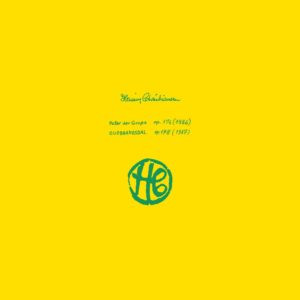
“Peter der Große / Gudbrandsdal”
Two of Henning Christiansen’s tape works from the 1980’s, Peter der Große and Gudbrandsdal, are now released for the first time by the Institute for Danish Sound Archaeology. Originally composed for different contexts – Peter der Große as the score for a German radio feature and Gudbrandsdal for a performance in collaboration with Joseph Beuys and later Bjørn Nørgaard – the two works stand out in Christansen’s many-faceted oeuvre by employing almost entirely electronic sounds. Two absolutely enthralling and immersive pieces of tape music, now available for the first time. Background
With a career spanning six decades Henning Christiansen (1932-2008) was prolific as a composer, sound artist, and visual artist. Having studied composition at the Royal Danish Conservatory, Christiansen took a sharp turn towards the experimental art scene in the 1960’s and got involved with Fluxus and the Danish Experimental Art School, Eks-Skolen. In 1964, Christiansen met German artist Joseph Beuys, and they quickly started working together. During the sixties, Christiansen became a central collaborator for Beuys and created sounds for several of his actions using multiple tape machines, often on stage with Beuys, playing back mixes of his own compositions as well as recordings made specifically for the actions. In the seventies, Christiansen took another sharp turn: instead of Fluxus, performances and conceptually based art music, he began composing in a neo-romantic style with classical forms like waltzes, symphonies, and songs in the Danish song tradition. Return to tape music Around 1984, Christiansen returned to the artistic strategies he had left in the late sixties with a renewed commitment to his own vision of Fluxus. The following years were some of Christiansen’s most prolific – and also the period in which he composed some of his very best tape works. During these years, Christiansen also worked intensely as a visual artist, integrating performance art, sound, and visual art. During the eighties and nineties, Christiansen created tape music as commissions for theater productions, for radio, and performances – a large part of which have never been released. Neither of the two tape works on this release have been issued before. Peter der Große op. 174 (1986) and Gudbrandsdal op. 178 (1987) are close in time and both of them were created with the technical assistance of sound engineer Ernst Ludwig Kretzer, who worked on and contributed to several of Christiansen’s tape works and performances in the mid-to-late eighties. Peter der Große stands out in Christiansen’s body of work by involving electronic instruments like synthesizer and a crackle box, while Gudbrandsdal employs a more minimal approach and aesthetics through the heavy use of echo effects and manipulation of the tape speed. Gudbrandsdal was created for the performance Tiefland (– som det stiger frem) [Lowlands ( – as it rises up). Tiefland was a originally thought of as a series of performances that Christiansenhad been planning with Joseph Beuys since 1980, and when Beuys died in 1986, Christiansen instead collaborated with artist Bjørn Nørgaard on the project. Both of the tape works carry a heavy atmospheric tone and are set in a largely electronic sound world – something quite unprecedented in regard to Christiansen’s extensive and many-faceted oeuvre. First and foremost, these are two enthralling and immersive pieces of music, that now see their first release.
Double 180g LP + digital, housed in reverse-printed gatefold cover.
29,00€
In stock
LP
Henning CHRISTIANSEN
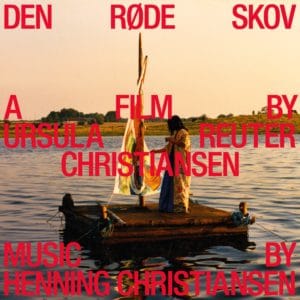
“Den Røde Skov”
Edition: 500 copies.Second in a series of two previously unreleased soundtracks Henning Christiansen made for the films made by his partner and collaborator Ursula Reuter Christiansen. Den Røde Skov (The Red Forest) was Ursula’s second film made in 1986.In stark contrast to the exquisite romantic melancolia of their first collaboration, The Executioner, Den Røde Skov resides as one of the wildest recordings in the entire Christiansen catalogue. Aligned more with works like the legendary collaboration with Nam June Paik and Joseph Beuys, Abschiedssymphonie, Den Røde Skov unfolds as a delirious and demonic audio exhibit, at once deeply e ccentric and utterly enthralling. Featuring the exceptional sound work of Ernst Kretzer and contributions from Ursula Reuter Christiansen, Addamaria Reuter Christiansen, Bjørnstjerne Reuter Christiansen, Carla Tató and Werner Durand this is a rich tapestry of sounds, voice and obtuse atmospheres drifting from the deeply meditative to the outright hysterical. Den Røde Skov was remastered by Giuseppe Ielasi from the original master tapes sourced from the Henning Christiansen Archive and comes as a deluxe limited edition of 500 copies on red vinyl housed in a full colour gatefold sleeve incorporating a full sized 8 page booklet featuring a selection of striking images from the original film.
27,00€
In stock

10" monoface
Henning CHRISTIANSEN
“Hesteofringen”
On January 30, 1970 Henning Christiansen and Bjørn Nørgaard - a figure nearly radical as Christiansen himself - hit the Danish national consciousness when a large portion of the Danish population watched a TV broadcast performance piece in protest to the Vietnam War. “Hesteofringen” (The Horse Sacrifice, 1970) features the work Min døde hest (My Dead Horse, 1970) OPUS 55 for piano, voice and violin (green), a beautiful haunting fragile song featuring a poem written by Bjørn Nørgaard and performed by Lene Adler Pedersen, accompanied by Nørgaard and Christiansen on piano and (green) violin. Laden with metaphor, this beautiful, sad lullaby, is as simple and unusual as anything in Christiansen’s output. Previously unreleased.
Pressing info: 350 copies on black, embossed lettering. 10”, Single Sided.
17,00€
In stock

LP
Henning CHRISTIANSEN
“Opus 67 STRATEGYGETARTS A Symphony, Hommage á Richard Demarco”
Opus 67 STRATEGYGETARTS A Symphony, Hommage á Richard Demarco is a previously unissued recording by Henning Christiansen from 1971. In 1970 the Richard Demarco Gallery in collaboration with the Kunsthalle Düsseldorf organised the exhibition, Strategy: Get Arts. This celebration of art from Düsseldorf was held at the Edinburgh College of Art during the Edinburgh International Festival. The title of the exhibition was a palindrome created by André Thomkins and featured works by Joseph Beuys, Claus Böhmler, George Brecht, Henning Christiansen, Robert Filliou, Dorothy Iannone, Mauricio Kagel, Dieter Roth amongst others.
Opus 67 STRATEGYGETARTS A Symphony, Hommage á Richard Demarco was sent to Demarco as a gift following the exhibition. Having returned to Denmark Christiansen, along with sound technician Peter Sakse created Strategygetarts, a sound collage incorporating field recordings from urban spaces, supermarkets, a boxing game, etc.
The sole ‘musical’ element is a piano motif which repeatedly punctuates the recordings. The first side moves forwards, the flip back. A reverse groove will set you straight. Opus 67 STRATEGYGETARTS A Symphony, Hommage á Richard Demarco comes in a high gloss sleeve featuring two original artworks by Henning Christiansen in a limited edition of 500 copies.
Opus 67 STRATEGYGETARTS A Symphony, Hommage á Richard Demarco was sent to Demarco as a gift following the exhibition. Having returned to Denmark Christiansen, along with sound technician Peter Sakse created Strategygetarts, a sound collage incorporating field recordings from urban spaces, supermarkets, a boxing game, etc.
The sole ‘musical’ element is a piano motif which repeatedly punctuates the recordings. The first side moves forwards, the flip back. A reverse groove will set you straight. Opus 67 STRATEGYGETARTS A Symphony, Hommage á Richard Demarco comes in a high gloss sleeve featuring two original artworks by Henning Christiansen in a limited edition of 500 copies.
21,00€
Out of stock
2 CD
Henning CHRISTIANSEN
“OP.192 UMWÄLZUNG”
CD1: Op.192 Umwälzung - fluxorum organum 1990 Eurasienstab ist immernoch Angelpunkt.
CD2: Op.192 Grundband Umwälzung - fluxorum organum 1990 Eurasienstab ist immernoch Angelpunkt
“Op.192 Umwälzung - fluxorum organum 1990 Eurasienstab ist immernoch Angelpunkt” is a previously unissued work by Henning Christiansen from 1990. Around the formation of the European Union Henning approached his original Eurasienstab organ recordings from 1968 as a platform to remold a vast amount of audio he made over the subsequent years. This special 2CD release comprises two different mixes of Umwälzung that were made for Werner Durand in 1990 to be used as backing tapes for a performance at Ballhaus Naunynstrasse in February 1990.
Umwälzung is unique in Henning’s output as it resides in a more contemporary landscape positioning itself more as a ‘mix’ than a stand alone recording. One which retains the skewered sensibility that only Henning could conjure. The two hour long versions of Umwälzung are haunted with tape hiss, weird interference and a deeply melancholic aura that moves from the original Eurasienstab organ recordings through to the somewhat hysterical 180 Hammer Blows Against War Monkeys resulting in an epic and hypnotic excursion. As unusual and inspired as the best of Henning’s works Penultimate Press, in full cooperation with the Henning Christiansen estate, is extremely proud to release this 2CD in a mini album gatefold sleeve in an edition of 500 copies.
CD2: Op.192 Grundband Umwälzung - fluxorum organum 1990 Eurasienstab ist immernoch Angelpunkt
“Op.192 Umwälzung - fluxorum organum 1990 Eurasienstab ist immernoch Angelpunkt” is a previously unissued work by Henning Christiansen from 1990. Around the formation of the European Union Henning approached his original Eurasienstab organ recordings from 1968 as a platform to remold a vast amount of audio he made over the subsequent years. This special 2CD release comprises two different mixes of Umwälzung that were made for Werner Durand in 1990 to be used as backing tapes for a performance at Ballhaus Naunynstrasse in February 1990.
Umwälzung is unique in Henning’s output as it resides in a more contemporary landscape positioning itself more as a ‘mix’ than a stand alone recording. One which retains the skewered sensibility that only Henning could conjure. The two hour long versions of Umwälzung are haunted with tape hiss, weird interference and a deeply melancholic aura that moves from the original Eurasienstab organ recordings through to the somewhat hysterical 180 Hammer Blows Against War Monkeys resulting in an epic and hypnotic excursion. As unusual and inspired as the best of Henning’s works Penultimate Press, in full cooperation with the Henning Christiansen estate, is extremely proud to release this 2CD in a mini album gatefold sleeve in an edition of 500 copies.
17,00€