
Out of stock

CD
Beatriz FERREYRA
“La rivière des oiseaux”
“Les rivières du rêve” (1998-2000), “Médisances” (1968), “L’orvietan” (1970), “Vivencias” (2001), “Cantos de Antes” (2002).
12,00€
In stock
CD
eRikm & Natacha MUSLERA
“Cartouche”
“Cartouche is a mixed duet featuring eRikm and Natacha Muslera, active since 2010. Fragments that break off of a body, like a shattering windshield. The electronics and the voice trigger eruptive sound phenomena, either rushed or stretched, in which the listener is immersed in a physical experience that is transversal to music itself. Leaving only debris and brilliant ruins. With malice, Cartouche is freed of all semantic background and takes delight in this. An untamed and convulsive distanciation essay, both natural and forceful. eRikm : electronics. Natacha Muslera : vocals.”
10,00€
In stock
CD
eRikm – Michel DONEDA
“Razine”
eRikm, turntable, electronic, live-sampling. Michel Doneda, soprano and sopranino saxophones. Live in March 2009 in Albi, France.
“Razine by eRikm and Michel Doneda At the very beginning of the year 1900, Velimir Khlebnikov is listening to the new century on the banks of the Caspian Sea. In the gyrations of the Dervishes he conceives his Futurian equations. He creates the coming models of "modern" art. He is the first to write poems from mathematical series and in the form of the palindrome. Fourty years later this will become the system behind twelve-tone serialism. Velimir spreads his writings in different points in space, materialising the cut-up technique. He creates ZAOUM, his transreason language which speaks of the Unconscious mind before its revelation by Freud. Later, well after his death, he would influence surrealists and lettrists. And to us improvisers he has given RAZINE, the wild horseman of sound. This very recording recounts how the ride went that evening : sliding, breaking of rhythmical lines, sudden transformations, textures, and who knows, maybe the listener will hear the ring of the "Trumpet of the Martians", the one that Khlebnikov caught through his utopian poetry.” Michel Doneda 2011
10,00€
In stock
CD
MIRT + TER
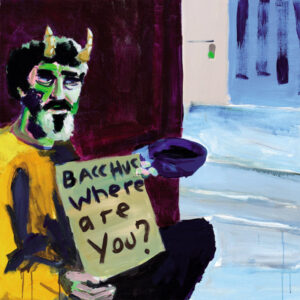
“Bacchus where are you ?”
The two staples of Polish electronica are on it again. Mirt and TER, after solo releases are back together with their next offering.
Culled from hours of “live-in-the-studio” improvisation, these 45 minutes stand out among the contemporaneous albums with a one-of-a-kind mix of post-ambient electronica having as diverse roots as techno, minimal music, krautrock electronica and afrobeat.
Based on sounds created with modular synthesizers with a dash of Prophet 12, Mirt and TER venture on a journey into thick textures obscuring lace melodies. Instead of typical four-on-the-floor rhythms they draw inspirations from African music and translate them into rich yet subtle digital structure. Subtlety is in fact the key word here. Instead of immediacy of many present-day acts they prefer their music to unravel in a leisurely manner. Each of the five tracks here has a different focus. “Bacchus Theme” is a rhythmic-oriented, almost tribal 5-minute piece, whereas “Disaster Reworked” is a floating composition carrying dense drone structures. The centrepiece seems to be “Wooden Object” closing in at 14 minutes, where Mirt and TER seem to play with their toys, but at the same time not losing focus on creating a cohesive piece of work. You can say the same thing about the whole album: it’s varied, each fragment stands on its own, but at the same time all five of them create one coherent record.
The album is released on an old-school CD, hip LP and omnipresent download. Each of them is adorned with a cover by Mirt himself.
13,00€
Out of stock
CD
S4
“Cold duck”
John Butcher, Christian Kobi, Hans Koch, Urs Leimgruber. 4 soprano saxophones and 4 friends in an unveiling and resonating output of creative energy in a form of improvised structure. There is no miss here. Experienced musicians and excellent skills connected with talent build up sonorous structures which surround the listener as an evolving ambience. The clichees of free-improvised music luckily steer away from this disc but I still feel that almost naked open form of such interesting compositions can be spoiled by lack of proper surrounding as for the time space situation which is needed to truly appreciate this form.
12,00€
In stock
CD
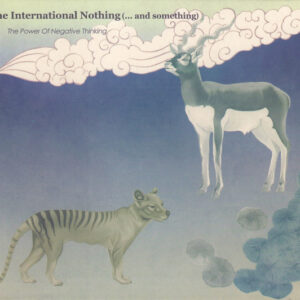
The INTERNATIONAL NOTHING (…AND SOMETHING)
“The power of negative thinking”
Kai Fagaschinski, clarinet. Michael Thieke, clarinet. Christian Weber, double-bass. Eric Schaefer, drums & percussion.
In case it doesn’t ring a bell, The International Nothing is the psycho-acoustic clarinet duo of Mr. Thieke and Mr. Fagaschinski. Since 2000 the two clarinetists have been collectively composing multilayered sound sculptures using multiphonics, beat frequencies and difference tones as an integral part of their unique language. They have released three duo albums on the Japanese Ftarri Label.
There have been collaborative extensions in the past – check out their avant pop band The Magic I.D. with Margareth Kammerer and Christof Kurzmann – and when they first met with drummer Eric Schaefer and bass player Christian Weber in 2006 it was obvious this was also asking to become a band on its own terms: The International Nothing (… and something).
Mr. Weber and Mr. Schaefer lent not only their individual instrumental skills to the fold - it was a true collective effort which brought these seven quartet compositions into being. And though you might regularly find each of the four musicians happily involved in context of improvised music, like anything previously produced by The Nothin’ the music heard here is precisely determined, created through an extensive process of rubbing sounds and ideas against each other, long before entering the stage or pressing the record button.
The aesthetic foundation of the clarinet duo is undeniable throughout the album, but Weber and Schaefer extend the sonic spectrum strikingly. The low end explorations of the bass and drums add a mysterious darkness. A moment of pulse is no longer provided solely as a secret message within the clarinet twin’s microtonal beatings. Rhythmical figures sneak in gently, and at times you may even be boldly struck by a shameless groove.
Name a band which sounds similar and you’ll win … something.
13,00€
Out of stock
CD
Toshimaru NAKAMURA – John BUTCHER
“Dusted machinery”
“Butcher and Nakamura first played together in 2002 at “Super Deluxe” in Tokyo at the invitation of promoter Hisashi Teruchi. The concert was released as half of “Cavern with Nightlife” prompting Jason Bivins (Dusted Magazine) to write : “Not only is Nakamura one of the worlds great improvisers working today, I am hugely impressed with Butchers ability to work in concert with him. Whisper soft soprano squeaks and gently coaxed feedback saxophone meld fluidly, seamlessly with the stripped-metal tones from Nakamura. And Butchers occasional crackles and sizzling flareups from his electronics derail some of Nakamuras more restrained inclinations in provocative ways, especially in the pieces wonderfully nasty conclusion. Let’s hope there’s more to come from this duo”. Further chances to develop the duo have happenend back in Japan, and in London and France. When the two musicians were invited to record in London for David Sylvian’s “When we return you won’t recognise us” project they set the next afternoon aside to visit Dave Hunt’s Shepherd’s Bush studio and made the recording that is now “Dusted Machinery”.”
10,00€
In stock
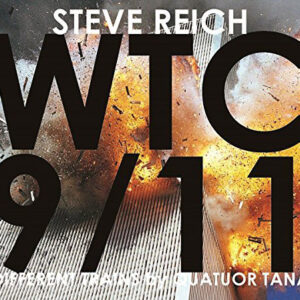
CD
Steve REICH
“WTC 9-11”
32 pages & Notes in English ans French.
Performed by Quatuor Tana.
Steve Reich composed WTC 9/11 in 2010 in homage to the victims of the attack on the World Trade Center, September 11th, 2001. First performed on March 19, 2011 at Duke University in North Carolina by the Kronos Quartet, WTC 9/11 would be played for the first time in New York, at Carnegie Hall, in late April of the same year.
WTC 9/11 is written for a string quartet playing live, on which are juxtaposed pre-recorded voices and two string quartets. With a playing time of 16 minutes, the work is in three movements played without a break: “9/11”, “2010” and “WTC”.
The first movement, “9/11”, is moving, disturbing and even stressful. Deliberately bruitist, it begins and develops to the haunting rhythm of the alarm of a telephone left off the hook: an F played on the violin with the superimposed archive voices of the NORAD (North American Aerospace Defense Command) air traffic controllers and the FDNY (Fire Department City of New York).
The second movement, entitled “2010”, uses interviews of memories from 2001. In it, we hear Steve Reich’s neighbors, an officer of the FDNY and the first ambulance driver to arrive at the scene.
In the third movement, Steve Reich takes inspiration from his friend the composer David Lang, creator in 2003 of World To Come, “WTC” being the common acronym of both their works. Steve Reich’s is concerned with metaphysical and spiritual preoccupations. Brought up in the Jewish faith, he knows that it imposes the ritual of presence around the body to accompany the deceased from the time of death to burial, thus accompanying the soul, which floats above the body until inhumation. It was impossible for the composer to ignore the fact that after the 9-11 attacks, the problem of identifying the bodies lasted seven months...
In 2011, for the release of WTC 9/11, the cover photo showing the Twin Towers at the moment of the attack created such a shock and controversy that it was replaced by another visual showing a cloud of smoke.
Steve Reich, who was a neighbor of the World Trade Center for 25 years, wrote on his label’s website: “I believed… that a piece of music with documentary material from an event would best be matched with a documentary photograph of that event”.
Serge Thomassian, the producer of the Megadisc Classics label - whose offices, four blocks from the Twin Towers, were destroyed during the 2001 attack - now proposes an unambiguous cover photo of the World Trade Center being struck by the plane.
DIFFERENT TRAINS
The idea for this work comes from Steve Reich’s childhood. He was a year old when his parents separated, his mother going to live in Los Angeles, his father staying in New York. Thus, accompanied by his nanny, the young Steve was going to make frequent trips between the East and West Coasts. Those pleasant train trips, taking four days, doubtless did not prevent him from knowing that, between 1939 and 1942, European Jewish children his age were getting into very different trains…
This is what would result in Different Trains (1988), a 27-minute work laid out in three movements: “America-Before the War”, “Europe-During the War” and “After the War”. The composition uses and superimposes conversations on tape and the instruments of the string quartet. The retrieval of numerous sonorities of daily life, voices like announcements, recorded sounds of trains from the 1930s and ‘40s make up the musical material of Different Trains. To his composition he adds recorded interviews of witnesses from his childhood: his nanny, Virginia Mitchell, who evokes their train trips; Lawrence Davis, an employee of the New York-Los Angeles railroad line, who relates his life; and finally, testimony collected from Rachella, Paul and Rachel, Holocaust survivors.
Different Trains opened new directions and new perspectives for Steve Reich. Although he brings together four string quartets, one playing live, the three others being added to the pre-recorded tape, it is above all the taped voices that make for the work’s originality. The spoken language thus becomes a full-fledged musical material, and after Different Trains, this technique would lead to The Cave, composed in 1990, Three Tales (2002) then WTC 9/11 (2010)…
Steve Reich, born October 3, 1936, is one of the most important and influential composers of today’s music, his impact on his contemporaries being considerable. Since the Minimalism of his beginnings, he has remained faithful to repetitive writing (patterns), even though his latest creations have become more harmonic and thereby richer and more delightful, tinged with the fantastic.
20,00€
In stock
CD
Christian ZANÉSI
“Paysage électronique avec train”
“Audio visage” (2004). “Ambiance Matisse” (2010-12). “Paysage électronique avec train” (2006-14).
“My current artistic propensity has been drawn to electronic sound. Far from being soft and appeasing, it is a rather tense sound; almost acidic: the sound of an alert. I reached it thanks to a very old synthesiser; build at the GRM in the sixties by the engineer Francis Coupigny. A modular synthesiser with its own audio matrix – it might have been the first of its kind – discarded (forgotten) in a basement, but still fully operational. I have shaped this ‘today’ sound by combining it with materials charged with emotions: train noises and signals, blasts, breaths, etc, the very sonorities that have been lingering inside me as available memories. The original title of the piece was «2006, l’aube rouge» (2006, Red Dawn) because when I finished this work, a few hours before the 2006 New Year, I might have wanted to talk about a world that had become terribly disquieting and dangerous: a red dawn was rising. Eight years later, around the same period, towards the end of the year, I worked again on the piece by simplifying it, only keeping (I hope) its essential elements.”
Former student of Guy Maneveau and Marie-Françoise Lacaze at the Pau University (South of France) (1974-1975), of Pierre Schaeffer and Guy Reibel at the Paris Conservatory (1976-1977), he joined the Groupe de Recherches Musicales (GRM) in 1977. There, he learnt and practised all the technical skills linked to sound, thanks to a wide range of experiences, productions and encounters. He has initiated many projects in the field of radio, publications and musical events.
20,00€
In stock
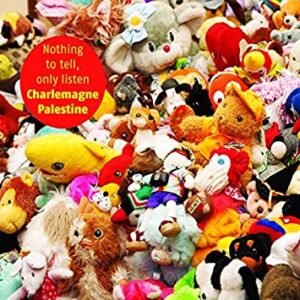
CD
Charlemagne PALESTINE
“Nothing to tell, only listen”
Born in Brooklyn, New York in 1947, Palestine began by singing sacred Jewish music and studying accordion and piano. At the age of 12 he started playing backup conga and bongo drums for Alan Ginsberg, Gregory Corso, Kenneth Anger, and Tiny Tim. Throughout the seventies Palestine created records, videos, abstract expressionist visual scores and performed regularly in the company of his stuffed animals! This new release entitled Nothing to Tell, only Listen explores his unique soundscape.
Recorded at Boghossian Foundation Villa Empain January 26, 2015.
20,00€
Out of stock
CD
AMM
“Spanish fighters”
John Tilbury, piano. Eddie Prévost, percussion. Recorded at the festival Neposlusno (Sound Disobedience) in Ljubljana, Slovenia in 2012, the AMM duo of Eddie Prevost on percussion and John Tilbury on piano perform an extend improvisation of tension and dynamic, delicately balancing sound in a rich dialog.
12,00€
Out of stock
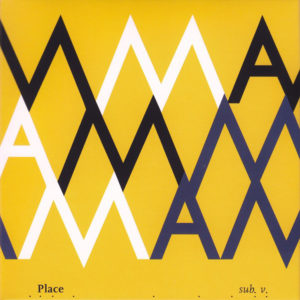
CD
AMM
“Place sub.v.”
John Tilbury, piano. Eddie Prévost, percussion. An AMM concert in Lublin, Poland, May 16, 2012. Atmosphere of place pervades the music - place from the Latin platea and Greek plateia - ‘open space’. Open space is what AMM music thrives upon. New open spaces offer new challenges. Acoustics too are different, as is the piano and often the percussion. Materially they can be different. Sense of place is also coloured by cultural context.[…] A poetic whisper of what may be possible i human creativity and affairs.
12,00€
Out of stock
CD
AMM
“Two London concerts”
John Tilbury, piano and Eddie Prévost, percussion. Two London concerts recorded in 2011.
14,00€
Out of stock
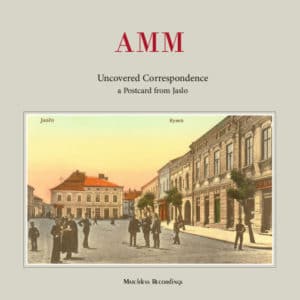
CD
AMM
“Uncovered Correspondence”
“John Tilbury - piano. Eddie Prévost - percussion. Recorded at the concert hall of the Jasielski Dom Kultury (Jaslo Cultural Centre) in southern Poland on 15th May 2010. The performance represented by this CD took place on 15th of May 2010 in the concert hall of the Jas o Cultural Centre in southern Poland. I had spoken to John Tilbury in 2007 about the possibility of AMM performing in Jas o, but for various reasons the project did not come to fruition until three years later. We had not planned for a CD release of the concert; in fact, we only spoke about recording the day before. There was no opportunity for the usual setup procedures. The recording was only intended as a document of the occasion.
The concert began with John Tilbury using the piano to produce a gamelan-like quality, which was quickly followed by Eddie Prévost bowing a cymbal producing subtle metallic sounds. One could feel an electric atmosphere of concentration and note the exceptional care and elegance with which the performers selected even the tiniest details of the complex sound structure. Intriguing phrases from the prepared piano and sonorous tones from percussion instruments wafted around the huge expanse of the hall - whose excellent acoustics let the audience immerse themselves in the music - savouring the subtle sounds emerging from the silence. The changes within the slow stream of improvisation occurred in such a natural way introduced by either musician by turn. Sometimes a highly abstract motif seemed to be a logical development rather than a step into the unknown — which in reality it was. The dominant impression was that such an advanced level of intuitive understanding between the two performers was the result of many years of collaboration. In my view each sound produced during the concert was not only ‘desirable’ but also essential (inevitable) and created its own profound aesthetic justification. Especially noteworthy was the compelling way in which both musicians made use of silence, whose role in AMM is as important as sound. The performance of a shorter or longer period of silence entailed the same creative intervention as did playing a sound or motif. The moments when the sound structure intensified and thickened became less frequent yet did not disappear completely. Particularly embedded in my memory are two moments: one was an exceptionally loud and shattering fragment of sound when dust could be seen rising out of the piano. And, when Eddie got up from his percussion and went to the wood-panelling, playing the wall with a beater generating a very low and vibrating sound —
a convincing demonstration that any object may be used as a means to create music. It is only because I attended the concert, and can recall it in my mind, that now when listening to the recording I can identify the sources of those extraordinary sounds. The music presented on this CD requires a serious commitment from the listener. However, anyone familiar with the music of AMM would expect nothing else.
To uncover the hidden beauty of these lovingly crafted improvised sound abstractions requires an appropriate level of concentration on the part of the listener. Such effort will be rewarded by a profound aesthetic experience. In organising this concert I feel honoured I have been able to contribute, albeit inadvertently, to the release of another AMM CD. Andrzej Serwa — August 2010” label info
13,00€
Out of stock
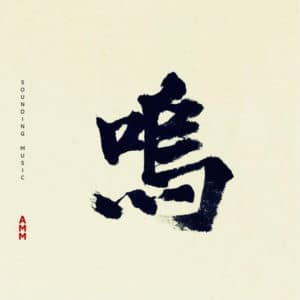
CD
AMM
“Sounding music”
“John Butcher (tenor & soprano saxophones), Ute Kanngiesser (cello), Eddie Prévost (percussion), John Tilbury (piano) and Christian Wolff (piano, bass guitar, melodica). Recorded at the “Freedom of the City” festival, Conway Hall, London on Sunday 3rd May 2009. Calligraphy from Qu Lei Lei and text from Harry Gilonis.
12,00€
Out of stock
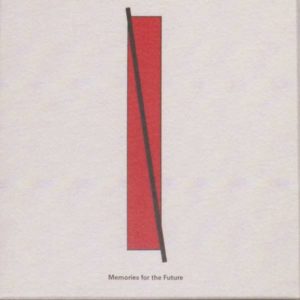
CD
FREE JAZZ QUARTET
“Memories for the future”
“The late Paul Rutherford (trombone), Harrison Smith (saxophones, bass clarinet), Tony Moore (cello) and Eddie Prevost (drums); this is a newly discovered recording of a concert given in Bristol in 1986.” “A lazier title would have been Memories Of The Future, a predictable contradiction that succeeds as word-play but flirts with nostalgia. The ‘for’ is important because it implies effort, a conscious decision to store up something for later use. Here is, or are, momentary occasions that resist the temporal sift and refuse to be blown away. Here is, to adapt the title of a fine book on architectural heritage, a future for the past. In its first incarnation, now twenty years ago, the Free Jazz Quartet cast its music in an urgent future tense. The track titles on Premonitions, the group’s only previous CD, were all cast as warnings: ‘Roman Geese’, ‘Tocsin’, ‘Eddystone’, which is not just the name of a great lighthouse that warns of dangerous sands, but a pun on the drummer’s name and his sound, and ‘Red Flags’, which neatly combines a beach warning with the bloodied shirt of demonstrators turned into banners of protest. ‘Old Moore’s’ referred to a famous annual publication which offers predictions for the year ahead, but also to an old LP by the trombonist, which went out as Old Moers Almanac. Paul Rutherford is no longer with us, but the music here captures him, as well as saxophonist Harrison Smith, cellist Tony Moore and percussionist Eddie Prévost in one of their finest performances. Each has moved along individual paths over the years, sometimes converging, sometimes deliberately not. Each has taken a step away from jazz, sometimes away from music altogether. Prévost has committed his ideas to writing; Moore to the visual and plastic arts. Smith has refined a saxophone voice that is not so much a vehicle for self-expression as an aspect of personality, which is a far more difficult and disciplined route. ” extract from liner notes by Brian Morton.
12,00€
Out of stock
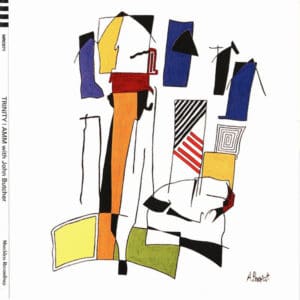
CD
AMM with John BUTCHER
“Trinity”
Eddie Prévost, percussion. John Tilbury, piano. With John Butcher, soprano and tenor saxophone. Recorded at Trinity College of Music, Greenwich, England on 13th January 2008. Recording and mastering Sebastian Lexer. Cover design ’Lamberton Court’ by Andrew Prévost.
12,00€
Out of stock
CD
AMM
“Norwich”
First AMM CD in a while, featuring the new duo AMM (Keith Rowe is no longer a member). Eddit Prévost on percussion and John Tilbury on piano. "AMM at UEA. Eddie Prévost and John Tilbury recorded at a concert given at The School of Music, University of East Anglia, Norwich, England on 14th February 2005." From Simon Waters’ liner notes: "Despite availing themselves of entirely different technologies, they can produce sounds which are almost identical, or fuse sounds through awesome real-time skill and intimate awareness of their vastly different resources: a moment where John’s piano clusters isolate and make explicit the pitches in Eddies bowed cymbal is one magical example here."
13,00€
Out of stock
CD
AMM
“Fine”
“AMM (John Tilbury, Keith Rowe, Eddie Prévost) with Fine Kwiatkowski... Music for dance, another great and somehow different work from the masters. Every sound counts.”
12,00€
Out of stock
CD
AMM
“Tunes without measure or end”
Rowe/Tilbury/Prévost. Recorded in Glasgow, Scotland May 2000, at the free radiCCAls festival, curated by Evan Parker. First AMM CD since 1996 recording. One continuous 58-minute piece.
13,00€
Out of stock
CD
AMM
“Before driving to the chapel we took coffee with Rick and Jennifer Reed”
Keith Rowe, John Tilbury, Eddie Prévost. Concert in Houston, Texas. 1996.
14,00€
Out of stock
CD
AMM
“Live in Allentown USA” (1994)
Prévost-Rowe-Tilbury. “Live in Allentown is an exceptionally fine addition to an already admirable and incomparable canon.” The Wire
12,00€
Out of stock
CD
ORGANUM – Eddie PRÉVOST
“Crux + Flayed”
“Crux an Organum track. Flayed a drumming sequence played by Eddie Prévost.
“....... anyone used to Prévost’s other ventures might get quite a shock......huge flurries of hyperactive, thunderous drumming. Crux creates similarly resonant, intense soundscapes.” Electric Shock Treatment (U.K.)
13,00€
Out of stock
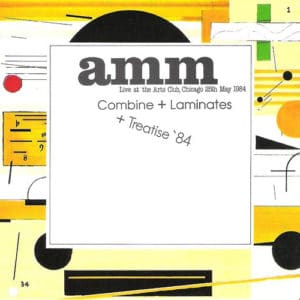
CD
AMM
“Combine + Laminates + Treatise” (1984)
“A re-issue of the Pogus LP format with additional material taken from the same concert at the Arts Club, Chicago, USA, 25th May 1984
The difference in the music included on this CD version is the addition of Treatise 84. This, as the audience was aware, was an improvisation inspired and guided, rather than dictated or controlled by Cornelius Cardews graphic masterpiece. There is, of course, no way that this work could be identified as a composition in the accepted sense. There is no universal correlation between the symbols on the page and the sounds the musicians make. Cardew gave no indications as to what any of his graphics might represent. Later, in the Treatise Handbook he offered thoughts upon how such a musical engagement might develop. Nothing however was prescriptive.
Dated entry in Treatise Handbook :
5th January 1966. Joining AMM was the turning point, both in the compositions of Treatise and in everything I have thought about music up to now. Before that Treatise had been an elaborate attempt at graphic notation of music (which I can only describe as a graphic score that produces in the reader, without any sound, something analogous to the experience of music), a network of nameless lines and spaces pursuing their own geometry untethered to themes and modulations, 12 note series and their transformations, the rules or laws of musical composition and all the other figments of the musicological imagination.” Eddie Prévost
14,00€
Out of stock
CD
ORGANUM
“Veil of tears”
“Collection of recent tracks, recorded by the Organum core of David Jackman, Michael Prime, Dinah Jane Rowe and Jim O’Rourke; further mastering of sound cluster presentation and development.”
15,00€
Out of stock
CD
AMM
“The nameless uncarved block” (1990)
Lou Gare, Eddie Prévost, Keith Rowe, John Tilbury.
15,00€
Out of stock
CD
AMM
“The inexhaustible document” (1987)
Rohan de Saram (cello). Eddie Prévost. Keith Rowe. John Tilbury. “A music desolated by a beauty so bleak and alien to received definitions of the term, yet somehow familiar.” The Wire
12,00€
Out of stock
Out of stock
CD
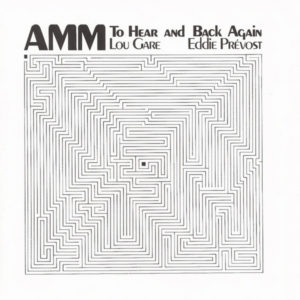
AMM
“To hear and back again” (1973-75)
Lou Gare (tenor sax) and Eddie Prévost (drums).
“1. And Back to Hear Again.
The music herein, like most of the vital music of the last thirty years, is totally improvised. Such non hierarchic and non idiomatic music is beyond pigeon holes, even though it usually gets pigeon holed as abstract and/or jazz.
Of course, all music is essentially abstract. Even such relatively realistic pieces as Charles-Valentin Alkans LE CHEMIN DU FER and Meade Lux Lewis HONKY TONK TRAIN BLUES do not necessarily reveal what they are depicting unless one knows the title. (They certainly do not have any extra appeal to railway buffs!). The analogy to the visual arts is usually raised to justify calling improvisation “abstract”. Visual arts are called abstract if they do not resemble the real world out there. If any music resembles the sound sequences of the real world out there (apart from trains) it is surely totally improvised music, making it the least abstract of all. If one thinks in terms of the real susbstance of music, which is arguably its emotional content (whatever that may be), then total improvisation gives musicians the most unrestricted scope of expressing their emotions, so once again it is the least abstract of musics since it allows for the fullest expression of the substance.
The most succinct definition of jazz that I have come across is that of Peter Riley Afro-American group instrumental part improvised music. Total improvisation hardly fits in with this, especially as so few Afro-Americans seems to have taken any part or interest in it, and since it contains virtually nothing of the Afro-American tradition that permeates all of jazz. Most total improvisation is inherently non idiomatic or pan idiomatic, and therefore should really not be lumped together with any particular idiom. Some improvisation, like that on this disc, does sound somewhat like jazz, but then so do some of the compositions of George Gershwin and Igor Stravinsky. In both cases the methodology - either total improvisation or total composition - is decidedly non jazz.
It is true that jazz was a major influence on the world of total improvisation, and many (perhaps most) of the practitioners came from a jazz background. However, other musics also had important inputs. For instance, there is the area of music usually known by such egocentric names as classical, legitimate, serious and straight, as if there was nothing else worthwhile. (Since this is by far the most popular area of music worth listening to, I usually refer to it as popular music) Shortly after the middle of this century, several composers were producing scores that amounted to improvise but pay me royalties. Groups like AMM decided, quite reasonably, to improvise and keep any royalties themselves, rather than give them to any absentee composer. The musicians became both the composers and the interpreters, and the recordings became the score preserving the music - recorded sound having made scores somewhat redundant. It should also be remembered that AMM has included musicians who were otherwise composers (Cornelius Cardew and Christian Wolff) or interpreters (Rohan de Saram and John Tilbury) of classical, legitimate, serious, straight music.
2. Back And Again Hearing Two In 1963, Lou Gare answered a saxophonist wanted advertisement in a then music trade paper, and as a result became a member of Eddie Prévost's Band. He later joined Mike Westbrook’s band, which at that time also included Keith Rowe and Lawrence Sheaff. Meanwhile, Gare, Rowe and Sheaff also began to make music with Prévost, and in 1965 they left Westbrook, called themselves AMM, and were subsequently joined by Cornelius Cardew. Virtually all the resemblances to a jazz group were soon discarded as more and more emphasis was placed on total group improvisation - they being one of the very first groups to take this direction. There was a decided preference for bowing and live electronics (including radios) in which the overall sound was so unified that it was often impossible to isolate any individual contributions.
Sheaff’s tenure with the group ended in 1967 (after which he dropped out of music making altogether), and AMM became the quartet it remained for a further four years, sometimes augmented either by Christopher Hobbs or Christian Wolff. By 1970, the electronics had been dropped by everyone except Rowe, who alone was left to create the dense mass of sound that seeped around the others contributions. This became a sort of sonic cushion and/or springboard, rather like (in their very different ways) a baroque continuum or a jazz rhythm section.
At the end of 1971, Cardew and Rowe departed for other things leaving just the tenor saxophone and percussion of Gare and Prévost - an acoustic duo in the age of electronics they had presaged. The absence of Rowe’s swirling veil meant that this duo was the most naked version of AMM - there was nothing for Gare and Prévost to hide behind or amongst. It was also the AMM with the most jazz like sound, revealing that this highly original pair of individuals had long absorbed their early influences of Sonny Rollins and Max Roach. However, as before, the methodology was unlike jazz - absolutely nothing (melody, harmony, rhythm, tempo) was predetermined. (Even the use of Gare’s beautiful tune BURNISHED GOLD at the start of BACK AGAIN was improvised on the whim of the moment.)
The two 1974 recordings are unique in that they include natural unedited AMM silences. These were an integral part of the music of both this duo and the preceding quartet - an influence (like the use of radios, not used by this duo) of John Cage (who was probably the first to package silence). In this era when every space is stuffed with noise (sometimes called disco, muzak or internal combustion engines), these silences will probably be the most difficult part of this music for most people. One needs to stop to think whether it is really necessary to say something when there is nothing to say. (And whether the world would be a much better place if all jukeboxes and all muzak tapes were full of recordings of 4’33”).
By contrast, in between the silences, the music sometimes reaches the ferocity usually associated with the more energetic varieties of free jazz, but without that genre’s all too frequent loss of balance. Things never get out of control, and one is always aware of the saxophone’s melodic lyricism and the percussion’s arhythmic propulsion. Gare and Prévost were (and are) superb exponents of the art of creating something substantive of out nothing.
It was not always tenor and percussion, however. Every so often, Gare would produce and bow a gong (lying on its belly and filled with large stones) and other little instruments would appear. An example of this different area of exploration (also related to certain aspects of the earlier, larger AMM) can be heard on one of the three previously unissued performances include herein.
In 1976, Cardew and Rowe rejoined AMM for some rehearsals that were not very successful. This time it was Cardew and Gare that left, leaving Prévost and Rowe to form the second AMM duo. They were eventually joined by John Tilbury to make the trio that has been the nucleus of AMM ever since. Other musicians who have augmented this trio include Rohan de Saram, Ian Mitchell and, from 1989 to 1991, Lou Gare. With hindsight, the 1971-76 duo of Gare and Prévost can be seen as a unique version of AMM that continued the magnificent tradition of constantly evolving AMMmusic in an untypically Roweless manner.
And To Gain A Hearback In common with virtually all writings about music, the above probably reveals more about the writer than about the music. But then music as good as this speaks for itself.” Martin Davidson 1993
12,00€
Out of stock
CD
John BUTCHER & Eddie PREVOST
“Interworks”
John Butcher - tenor and soprano saxophones. Eddie Prévost - tam-tam and other percussion. Recorded at Gateway Studios, Kingston-upon-Thames, England on July 17th 2005.
12,00€
Out of stock
CD
John TILBURY – Evan PARKER
“Two chapters and an epilogue”
Blistering fast sax tootling from Parker and raindrop-falling piano from Tilbury are contrasted against lower register clumps of reverberation and flaky, polyphonic seagull impersonations. It’s a glorious, immersive experience. The Wire (UK)
12,00€
Out of stock
CD
Evan PARKER & Eddie PREVOST
“Imponderable evidence”
Evan Parker, tenor saxophone. Eddie Prévost, drums.
12,00€