
In stock
LP
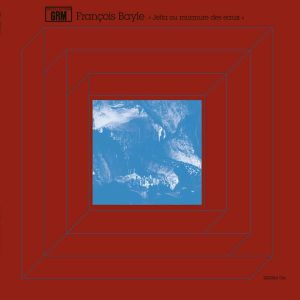
François BAYLE
“Jeita ou murmure des eaux”
A major work in François Bayle’s repertoire, Jeîta ou murmure des eaux provides a journey and an immersion into a world of unleashed energies, with the Jeîta cave serving both as a backdrop and a particle accelerator. Here, the cave indeed stands for the concrete source of the composer’s inspiration as much as the mind space where metamorphoses occur. By combining such figurative spaces and immaterial sound projections, François Bayle evokes another subject, an inhabitant of the multiple and symbolic cave: the listening subject, who always reveals himself, implicitly, at the heart of François Bayle’s musical concerns and the path he has always defended: the acousmatic approach.
28,00€
In stock
LP
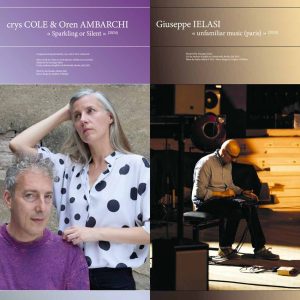
Crys COLE & Oren AMBARCHI / Giuseppe IELASI
“Sparkling or Silent / unfamiliar music (paris)”
Sparkling or Silent, by the duo composed of crys cole and Oren Ambarchi, is a moment apart in their respective artistic approaches, taking a step aside and marking a point of fixation around an electroacoustic method which, while always latent in both of their works, here asserts itself as a central compositional modality. However, the electroacoustic approach is not called upon here for its formal reasons, or even less as an aesthetic line to follow. On the contrary, it is seen as a writing tool, open to all possible sonic possibilities, a tool that allows the artist to draw, within the sound itself, an intertwined space where reminiscences, impressions and sensations weave a narrative on the edge of the imagination and the moments experienced together, a narrative in which a complex and sensitive layer of sound is embedded, blurring the boundaries between artistic project, intimate journey and shared dreams.
—
Derived from a live performance, unfamiliar music (paris) reveals the essence of the obsessions and sonic universe of Giuseppe Ielasi, a musician whose discretion is matched only by his talent and boundless dedication to musical creation over almost 30 years. unfamiliar music (paris) is a remarkable manifestation of Ielasi’s approach, an approach in which delicacy, sometimes nostalgia, and emotions know how, with discretion, to infuse a sound universe built around polyphony and reminiscence, around textures and motifs that intertwine, combine and drive each other with grace and inspiration.
François J. Bonnet
24,00€
In stock
CD
Ben VIDA
“Oblivion Seekers”
To be an attentive listener to the world as it stands is to be saturated with language. Speech resounds through nearly every space that features human beings, whether unwanted or desired, mundane or profound. Words sit on the page and in the ear, proliferating endlessly. This superabundance has long been a point of fascination for composer and musician Ben Vida, but over the past several years it has led to a new method of music making that simultaneously exalts and interrogates the primacy of language in our sonic and cultural environments. Gently, playfully, Vida breaks down language’s hierarchy of meaning and sound until they exist in egalitarian harmony.
Oblivion Seekers is Vida’s newest album in this mode of composition, following 2023’s collaboration with new music ensemble Yarn/Wire The Beat My Head Hit. Like its predecessor, the music’s focus is on coordinated duets of spoken word in a neutral tone, the variable cadences of the words in motion creating complex internal rhythmic structures. He is joined by the voices of Nina Dante, Christina Vantzou, John Also Bennett, and Félicia Atkinson, creating a singular tone that is neither theirs nor his, fluid in its gender presentation, accent, and diction. The instrumental compositions that form the album’s understory have the casual flow of dialogue, conversational but subdued, rarely the agent of change. Here, Vida likewise called upon an accomplished community of players to accompany him: Dante on harp, Bennett on bass flute, Matt Bauder and Will Epstein on saxophones, Henry Fraser on bass, Cleek Schrey on violin, and Booker Stardrum on percussion.
Performed By:
Ben Vida - Voice, Keyboards, Vibraphone, Guitar, etc
Nina Dante - Voice and Harp
Christina Vantzou - Voice
Felicia Atkinson - Voice
John Also Bennett - Voice and Bass Flute
Matt Bauder - Tenor and Alto Saxophone
Will Epstein - Soprano and Alto Saxophone
Henry Fraser - Acoustic Bass
Cleek Schrey - Violin
Booker Stardrum - Percussion
17,00€
In stock
LP
Ben VIDA
“Oblivion Seekers”
To be an attentive listener to the world as it stands is to be saturated with language. Speech resounds through nearly every space that features human beings, whether unwanted or desired, mundane or profound. Words sit on the page and in the ear, proliferating endlessly. This superabundance has long been a point of fascination for composer and musician Ben Vida, but over the past several years it has led to a new method of music making that simultaneously exalts and interrogates the primacy of language in our sonic and cultural environments. Gently, playfully, Vida breaks down language’s hierarchy of meaning and sound until they exist in egalitarian harmony.
Oblivion Seekers is Vida’s newest album in this mode of composition, following 2023’s collaboration with new music ensemble Yarn/Wire The Beat My Head Hit. Like its predecessor, the music’s focus is on coordinated duets of spoken word in a neutral tone, the variable cadences of the words in motion creating complex internal rhythmic structures. He is joined by the voices of Nina Dante, Christina Vantzou, John Also Bennett, and Félicia Atkinson, creating a singular tone that is neither theirs nor his, fluid in its gender presentation, accent, and diction. The instrumental compositions that form the album’s understory have the casual flow of dialogue, conversational but subdued, rarely the agent of change. Here, Vida likewise called upon an accomplished community of players to accompany him: Dante on harp, Bennett on bass flute, Matt Bauder and Will Epstein on saxophones, Henry Fraser on bass, Cleek Schrey on violin, and Booker Stardrum on percussion.
Performed By:
Ben Vida - Voice, Keyboards, Vibraphone, Guitar, etc
Nina Dante - Voice and Harp
Christina Vantzou - Voice
Felicia Atkinson - Voice
John Also Bennett - Voice and Bass Flute
Matt Bauder - Tenor and Alto Saxophone
Will Epstein - Soprano and Alto Saxophone
Henry Fraser - Acoustic Bass
Cleek Schrey - Violin
Booker Stardrum - Percussion
28,00€
In stock
LP
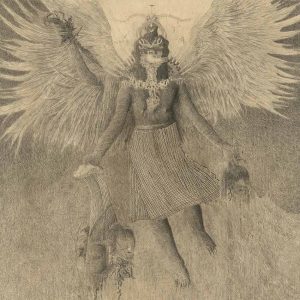
Alex Zhang HUNGTAI
“Dras”
Alex Zhang Hungtai stands in stillness on 'Dras', but it's the kind of stillness that contains entire ranges of possibility. Recorded in 2019 inside Montreal's Saint Joseph Oratory (right before a piano demolition, no less), these nine pieces sat dormant on his hard drive through pandemic years until something finally clicked. What emerges now feels like watching someone trace the contours of their own interior landscape, each melodic line a careful negotiation with the unconscious. This is only a saxophone record in the barest sense.
The terrain here is tactile and unforgiving. On the title track, difficult melodies get torn apart and molded into emotive drones, dissonance interlocking where tones cut paths through the senses with metallic sheen. "El Khela" refracts into spectral layers that pull with eternal gravity, while "Estado" finds solace inside its own haze, rhythms barely audible but guiding forward with their cadence smeared against grey walls. These are small moments that become cathartic sonic breaths, each one revealing new passages through psychic geography.
There's beauty encased in the subtle repetitions of opener "Erg,” and in the glowing progressions of "White Dwarf." Zhang's saxophone becomes a dowsing rod for the uncharted, with electricity running through the album's veins while his breath anchors everything to something wordlessly human. The digital manipulation applied to those church recordings doesn't obscure that human element of 'Dras'. It transforms the raw material into something that navigates between external space and internal landscape.
By the time closer "Mazil" arrives, Alex Zhang Hungtai lets his saxophone speak its full resonance. Low, guttural expressions open up like chasms beneath melodic constellations floating in thick gravity. There’s a finality here even though something in these passages feels weightless. This is music permeated with inner dialogue, a wordless spell dancing above the psychic abyss. Tonal sequences disintegrate into narcotized sonics, a sharp elegant edge that cuts without drawing blood. This lonely work of exploration becomes something communal. 'Dras' is a map for traversing the space between where we are and where we might go.
28,00€
In stock
LP
Carlos GIFFONI & Joachim NORDWALL
“New Music”
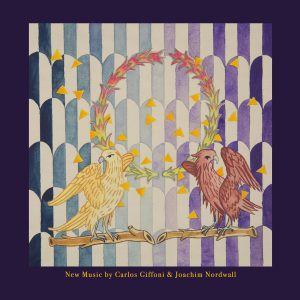
A meeting of two uncompromising sound artists, New Music fuses pulsating electronic rhythms, immersive drones, and abstract textures into a vivid, physical listening experience. Rising from the outer fringes where abstract techno, noise, and electro-acoustic composition converge, both artists channel their distinct sonic vocabularies into a shared space of tension and transformation. Giffoni’s deep synth drones collide with Nordwall’s ritualistic sense of structure and rhythmic, creating a sound that feels at once mechanical and organic, grounded and cosmic. Moving between dense rhythmic sequences and vast stretches of tonal drift, New Music unfolds like a continuous exploration of energy and decay - music that challenges the boundary between motion and stasis, chaos and control.
For listeners of forward-thinking electronics, this collaboration stands as a compelling testament to the power of sound and the unique chemistry that emerges when two creative worlds intersect. Nordwall explains: “Even though we spent a lot of time together, we never really talked about making music together. But when Carlos visited Sweden, I asked if he’d be into it, as I felt our recordings were starting to sound like they came from the same planet. He kindly agreed and sent me a batch of files to work on. That became New Music - our music, our shared sound.”
Carlos Giffoni is a Venezuelan-born experimental musician and composer known for his visceral approach. A central figure in the 2000s New York noise and experimental scene, he founded No Fun Fest and has collaborated with artists such as Merzbow, Prurient and Jim O’Rourke.
Joachim Nordwall is a Swedish artist and musician exploring industrial, drone, and minimalist, repetitive electronics. As head of iDEAL Recordings and a member of projects like The Skull Defekts and Organ of Corti he remains a key force in Sweden’s experimental music landscape.
22,50€
In stock

CD
FNTC
“Opera”
he experimental landmark Opera by FNTC returns in a remastered CD edition, nearly forty years after its original cassette release on Staalplaat in 1987. A striking document of Europe’s late 80s cassette underground, Opera captures the collective at their most adventurous - merging spontaneous composition, sound collage and performance art into a single immersive experience. As a member of the Fluxus movement, Willem de Ridder brought his conceptual sensibility to the project. Cora Emens, known for her erotic performances, contributed a distinctive vocal presence. Nick Nicole expanded the palette using everyday instrumental objects, while Hessel Veldman shaped and structured the work’s unique soundscape. Also featuring Jon Rose on violin, the recording remains a testament to the fearless creativity that defined the experimental music scene of its time.
Recorded during the summer of 1986, Opera showcases FNTC’s distinctive approach to instant composing and live sound construction. Conceived as a three-dimensional ‘hearplay’, the original performance unfolded across a multi-speaker setup, with the audience blindfolded and reclining on couches. Following its cassette release, Opera was featured in the All Chemix Radio Series, issued by Staalplaat and the Radio Art Foundation on tape and broadcasted internationally. It also became a part of FNTC’s European Instant Composing Tour throughout the late 1980s.
Now available on CD for the first time, this edition restores the full depth and atmosphere of the original performance. The accompanying artwork, discovered in Willem de Ridder’s archive, features a collage created by De Ridder and Peter Pontiac. Faithful to the spirit of the avant-garde and the legacy of Dutch cassette culture, Opera stands as a vivid reminder of a time when pushing boundaries defined the underground.
14,00€
In stock
CD
Seth PRICE
“Inner Storm”
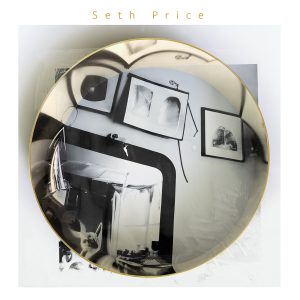
Seth Price is an American contemporary artist known for his conceptually driven, multidisciplinary practice spanning video, music, sculpture and writing. His work explores circulation, media systems and the production of images and meaning in contemporary culture. Price has exhibited widely at major international institutions and is also recognized for his influential essays on art and distribution.
Music has long been central to Price’s practice. Beginning in 1994 with a 4-track recorder, his approach was rooted in experimentation, using field recordings, found sounds, feedback and tape loops. For over a decade, music functioned as both an experimental laboratory and an undercurrent to his film and video work. “It was really the emotional soundtrack to my life.”
That sensibility returns here with renewed focus. Inner Storm is rooted in a deeply personal moment and unfolds as an intense document, charged with immediacy. The album comprises four pieces built from single-pass improvisations using a replica of an early synthesizer, requiring real-time manual control. A constant LFO pulse acts as an internal rhythm, unifying the compositions. Effects pedals are adjusted on the fly, making each moment of sound inseparable from the act of its creation. More than a return to music, Inner Storm reaffirms its role within Price’s broader practice: a space where process, emotion and time converge.
14,00€
In stock
CD
Enno VELTHUYS – Paul RIEDL
s/t
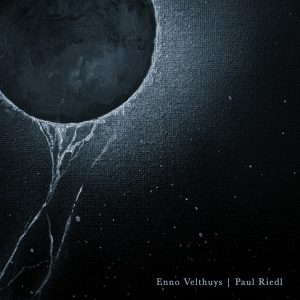
A bridge between generations of ambient exploration, this split release unites two artists connected through mood, texture, and introspection: Enno Velthuys, the late Dutch composer and visual artist whose melancholic ambient works defined a quiet corner of the 1980s cassette underground and Paul Riedl, best known as the creative force behind visionary metal band BLOOD INCANTATION, who here reveals a parallel world of deep ambient sound. Together, these recordings form a contemplative journey across aesthetics: a meeting of two artists who, though separated by time, share a commitment to sound as emotional architecture.
Velthuys’s contributions are drawn from the EXART vaults and carefully selected by Hessel Veldman to serve as an appetizer for an upcoming LP of more unreleased material on Stroom Records. Across four cassettes, Velthuys crafted a deeply personal sound - minimal, dreamlike and steeped in solitude - that would later come to be recognized as a cornerstone of European ambient music. The pieces presented here continue that fragile lineage: meditative, intimate and quietly transcendent.
Flipping over the record, melancholy turns into total darkness and time seems to stand still. Massive slabs of sound and tar-coated melodies emerge from the depths. In contrast yet in harmony, Riedl’s side of the album presents archival recordings that explore a fascination with cosmic sound and isolation. While known for exploring the outer reaches of metal, Riedl has long been devoted to ambient and experimental composition. His selections for this release, curated to complement the music of Velthuys, trace a dialogue between decades and sensibilities, blending analog warmth and deep atmospherics with a sense of timeless drift.
14,00€
In stock
CD
CLUB MORAL
s/t
Club Moral is an organization founded by artists Anne-Mie Van Kerckhoven (AMVK) and Danny Devos (DDV) on January 1st, 1981, in Antwerp, Belgium. From 1981 until 1987, Club Moral functioned both as an industrial band and a venue. The venue, located in Antwerp, became a hub for underground culture, hosting numerous exhibitions, happenings and live performances by artists like Produktion, Boyd Rice, John Duncan and Coupe de Grace. The first event at Club Moral took place on June 19th, 1981, featuring État Brut performing live together with DDV and Mécanique Végétale. Later that year, on September 19th, the band Club Moral made its live debut. They quickly gained a reputation for their confrontational performances, provocative imagery and uncompromising attitude. Between 82 and 87, the group released a series of legendary cassettes, filled with raw industrial sounds, primitive power electronics, noise and conceptual art.
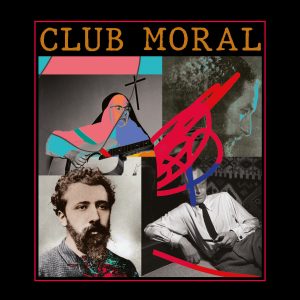
In 1989, the band remained active and recorded their first LP for Cthulhu Records. Around the same time, Frank Gorissen began producing electronic music and hosting a radio program called Radio Militia. He invited Club Moral to perform a live radio session in his studio, where the band played a mix of new versions of familiar tracks and improvised pieces. The recordings were never released, until 2024, when Frank rediscovered the original tapes and produced a new master that perfectly captures the raw energy of the performance. Club Moral agreed on releasing it as an album and AMVK designed the cover art, featuring images of people who were born or died on the date of the performance, March 29th.
In the late 1990s, DDV was a teacher-in-residence at the art school where I was studying. I enrolled in his performance workshop and on the first day, he showed us videos of extreme performance art and then challenged the group to do similar actions. His determination and hardline approach left me impressed and it became an inspiring and intense week for me personally. I’m happy and proud to be able to release this Club Moral CD as a follow up to the Lonely Weekends 7” from 2006.
14,00€
Out of stock

LP
Christina VANTZOU & Felicia ATKINSON
“Reflections Vol. 3: Water Poems”
On Reflections Vol. 3: Water Poems, Félicia Atkinson and Christina Vantzou channel their friendship and atmospheric artistry into ceremonial focus. Spoken-word environments and orchestral imagination flow like tributaries into a unified stream, resulting in a collection of dreamlike songs and soundscapes anchored in sea, sky and stone. Through electro-acoustic instrumentation, voice, and environmental sound, Water Poems invites listeners into a subconscious space somewhere between everyday intimacy and the oceanic enigma from which all life unfolds.
26,00€
In stock
CD
Kali MALONE & Leila BORDREUIL
“Music For Intersecting Planes”
Recorded at night by candlelight in the Temple of La Tour-de-Peilz, Switzerland, Music for Intersecting Planes captures the immediacy of sound in space. Cellist Leila Bordreuil and organist Kali Malone join in a work of austere, ritualistic presence, where the granularity of air, the vibration of strings, feedback, and subdued sine waves intersect in sculptural form.
Minimal in means yet expansive in effect, the music slowly unfolds like beads on a thread, punctuated by silence and deep breaths. Bellows whistle within feathered string harmonics, interference patterns pulsate throughout the chapel, and the environment itself becomes part of the composition, with ringing church bells and motorcycles passing in the distance.
Performed live in single takes, the music balances patience and intensity, composure and chance. The collaboration reveals new terrain: more tonal and composed than Bordreuil’s work, more textural and raw than Malone’s.
Music for Intersecting Planes is both severe and tender, an elemental convergence of cello and organ that resonates with the timeless intrigue of acoustic phenomena.
17,00€
In stock
LP
Kali MALONE & Leila BORDREUIL
“Music For Intersecting Planes”
Recorded at night by candlelight in the Temple of La Tour-de-Peilz, Switzerland, Music for Intersecting Planes captures the immediacy of sound in space. Cellist Leila Bordreuil and organist Kali Malone join in a work of austere, ritualistic presence, where the granularity of air, the vibration of strings, feedback, and subdued sine waves intersect in sculptural form.
Minimal in means yet expansive in effect, the music slowly unfolds like beads on a thread, punctuated by silence and deep breaths. Bellows whistle within feathered string harmonics, interference patterns pulsate throughout the chapel, and the environment itself becomes part of the composition, with ringing church bells and motorcycles passing in the distance.
Performed live in single takes, the music balances patience and intensity, composure and chance. The collaboration reveals new terrain: more tonal and composed than Bordreuil’s work, more textural and raw than Malone’s.
Music for Intersecting Planes is both severe and tender, an elemental convergence of cello and organ that resonates with the timeless intrigue of acoustic phenomena.
28,00€
In stock
2 LP
Meryll AMPE
“Two Daughters”
Méryll Ampe conceives sound as a medium to be sculpted in real time and improvises from analog sources oscillator, filters + drum machine.
All this to interrogate in a relentless way a dense and sonorous matter which evolves underground and in relief. Creating live different layers and playing with the interweaving of volumes,perspectives and dynamics, creates sharp and very raw materials.
29,50€
In stock
LP
ErikM – Pierre BASTIEN
“Observations”
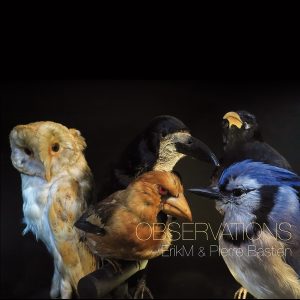
Limited edition of 250. Textured sleeve. Marbled yellow flame color. Jean Dubuffet used to define his music as something disordered and dirty. But here, it is a Dubuffet returning from a long journey in Africa, with haunting rhythms that reach trance-like states, corrupted by ErikM's UK Drill.
"With one exception, this disc is a recording of a concert given at the Ateliers Claus in Brussels in March 2024. It was preceded by three short hours of improvisation the day before and the day before that, during which ErikM and I made a series of careful observations of each other's playing. It must be said that neither of us had skimped on transporting a few cases, the contents of which would have allowed us to play several concerts in a row without ever repeating ourselves. Erik had brought his turntables to Brussels, as well as sophisticated electronic machines, accompanied by a virtually infinite sound bank. For my part, I had both a mechanical orchestra and a range of acoustic instruments at my disposal. In two sessions, we eliminated the superfluous and the ineffective. On the evening of the concert, it was through close observation-of each sound, each direction taken by one or the other, each intention, each break-that we composed this record in the moment: vigilant and scrutinizing, like the pairs of eyes on the cover of this album." --Pierre Bastien
16,50€
In stock
CD
Miroslav BEINHAUER
“Pieces For Broken Piano”
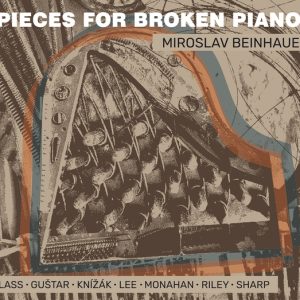
Grand Piano Gebrüder Stingl from 1916. The year is 2021. The piano is in the garden; the sun shines on it and rain falls on it. The piano cannot be tuned. Some keys work only partially, some not at all. It is Broken Piano. The first pieces for Broken Piano were recorded on this piano in 2021 and became part of the Fluxus editions Stolen Symphony (2023) and Keep Together (2024). The pieces for this edition were written and provided by Terry Riley and Milan Knízák. "Broken Piano," which was acquired by the Opening Performance Orchestra to make live and studio recordings, was the focus of both volumes of this edition between 2021 and 2023. Compositions for Broken Piano intended for Fluxus editions were recorded by Czech pianist Miroslav Beinhauer. During this time, other new works for Broken Piano were written by a variety of Fluxus and non-Fluxus composers. In the spring of 2022, the Opening Performance Orchestra and Broken Piano participated in an event hosted by Mieko Shiomi. This was a new version of her early work "Spatial Poem": it was a moving event, documentation of which was presented at the Aichi Triennale 2022 in Tokyo. During this performative event, consisting of moving any object, Broken Piano was moved from the village Vyzlovka to Unhost, where the SONO music studio is located. It is in the SONO studio that the new compositions for Broken Piano were recorded, written by Terry Riley, Philip Glass, Milan Knízák, Gordon Monahan, Elliot Sharp, Milan Gustar, and Yoon-Ji Lee, which form the content of this album. All the new compositions were recorded by pianist Miroslav Beinhauer.
13,50€
In stock
3 CD
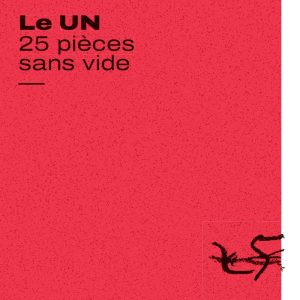
Le UN
“25 pièces sans vide”
3 CDs providing an overview of Le UN's work through improvisation in large ensembles (CD1 & 2) in different acoustics, improvisation in small and medium-sized ensembles (PME), and outdoor performances in public spaces (brigade d'intervention légère).
Le UN was started in 2012 at the initiative of David Chiesa. In 2019, the team was renewed to concentrate solely on what is known as free or non-idiomatic improvisation. Key principles being: no recourse to any sort of score or direction, and improvisation considered not as a style or genre but rather as an attitude to music making. Improvisation also poses questions about the ephemeral and impermanence: the music leaves traces, and not proof.
There are 25 of us, including a light artist and a performer. We play on different stages in different venues or theatres, and we also adapt to exhibition spaces, and we sometimes even invent "devices" that bring improvisation to the fore. We are increasingly attracted to playing with ideas beyond that of the traditional stage, to where the ensemble can be conceived as an ecosystem, taking as starting points ethical notions (the links between us, our rapport with the world and the environment, our choices of self-organisation...) and aesthetics (accepting or taking responsibility for the contradictions in our own practices, interrogating improvisation in all its components, and questioning the practice of the frontality of performance...). We venture into contexts that throw us, like playing on the street, on a river, in caves, in acousmatic situations with speaker projections, etc. We confront our sounds, our ephemeral discourses with all manner of surveying. Without quite knowing where we are going, we think that walking, breathing, feeling, looking, also speaks to a place that is rightly musical.
With Sophie Agnel, piano, Pascal Battus, rotating surfaces, Claire Bergerault, accordion and voice, Benjamin Bondonneau, clarinet, Christophe Cardoen, light apparatus, Patrick Charbonnier, trombone, David Chiesa, double bass, Michel Doneda, soprano saxophone, Camille Emaille, percussion, Nina Garcia, electric guitar, Amanda Gardone, double bass, Bertrand Gauguet, alto saxophone, Anouck Genthon, violin, Rozemarie Heggen, double bass, Benoit Kilian, percussion, Soizic Lebrat, cello, Lionel Marchetti, electronics, Michel Mathieu, actions, Natacha Muslera, voice, Jérôme Noetinger, electronics, Jean-Luc Petit, bass clarinet, sopranino saxophone, Christian Pruvost, trumpet, Dominique Regef, hurdy- gurdy, Aude Romary, cello, Mathieu Werchowski, violin and viola.
25,00€
In stock
Livre + 45t
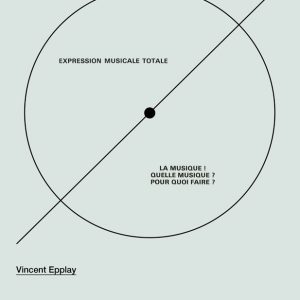
Vincent EPPLAY
“L’atelier des sons au service de l’inouï”
Cette édition (disque/ livre) est une libre interprétation d’archives audios et visuelles issues d’expériences sonores réalisées lors d’ateliers musique dans les écoles Freinet des années...
20,00€
In stock
LP
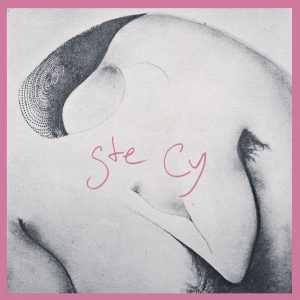
Jac BERROCAL – Vincent EPPLAY – Timo van LUIJK
“Ste Cy”
Ste Cy, the latest studio offering from the trio of Jac Berrocal, Vincent Epplay, and Timo van Luijk, ripens like a forbidden fruit—born of an improvised instrumental session captured in the secluded hush of Kulta Saha by Timo van Luijk.
These raw recordings were later reshaped into 12 songs by Vincent Epplay at Studio Villejuif in Paris. And over it all drifts the poetry of Jac Berrocal— sensual and incendiary, seeping into the music like spice into flesh.
Jac Berrocal: voice, words, trumpet, double bass
Timo van Luijk: guitar, piano, vibraphone, percussion
Vincent Epplay: field recording, drums, percussion, EMS Synthi A, Noizoid OCS 2, double bass
26,00€
In stock
LP
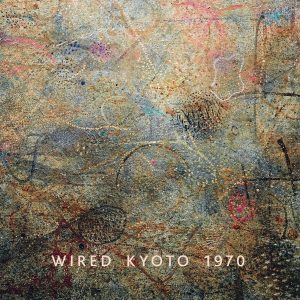
WIRED (Michael RANTA & Karl-Heinz BÖTTNER)
“Kyoto 1970”
Wired was an ephemeral improvisational music project formed by Michael Ranta, Karl-Heinz Böttner, and Mike Lewis. On 28 April 1970, the trio recorded an extended studio session of approximately 140 minutes, in collaboration with Conny Plank, who engineered and mixed the recording in real time, incorporating elements of live electronics. This session was subsequently edited to album length and released in 1974 as part of the Free Improvisation 3LP box set issued by Deutsche Grammophon, alongside recordings by Iskra and New Phonic Art.
Owing to its exploratory electric sound world and Plank’s distinctive spatial production techniques, the Wired recording acquired a degree of underground cult status, particularly among listeners associated with krautrock and psychedelic improvisation.
Shortly after the studio session, Ranta and Böttner travelled to Japan, where they spent approximately six months performing with Karlheinz Stockhausen at Expo ’70 in Osaka. In addition to these activities, they engaged in various independent musical projects and performances.
The present release, sourced from the personal archive of Michael Ranta, documents a live duo performance by Ranta and Böttner, recorded on 27 July 1970 in an outdoor setting in Kyoto (the exact location remains unknown), before an audience of approximately 200 music teachers. The recording exhibits sonic and aesthetic characteristics closely aligned with the previously recorded studio material, retaining the distinctive “Wired” sound while situating it within a live, site-specific context.
Michael Ranta: percussion, voice, home-made instruments, tapes, tape delay, effects
Karl-Heinz Böttner: guitar, organ, ocarina, voice, effects
26,00€
In stock
3 LP box
Liliane DONSKOY
“Intégrale Acousmatique” (box)
Hardboard linen box set edition with 8 page booklet and download code - 200 copies
Metaphon is pleased to present this première edition, which brings together a near-complete collection of the acousmatic works of Liliane Donskoy, recorded in the 1970s and 1980s.
Liliane Donskoy (*1933) is a French, classically trained pianist, music teacher, and composer of both instrumental and acousmatic music. She began her musical training at an early age, undertaking private piano studies with Yves Nat at the age of thirteen, shortly after the Second World War. During the 1960s and 1970s, she pursued advanced studies with prominent figures of twentieth-century music, including Darius Milhaud, Olivier Messiaen, Pierre Schaeffer, and Guy Reibel, and participated in courses led by Karlheinz Stockhausen, Luciano Berio, György Ligeti, and Iannis Xenakis.
Despite this extensive and diverse training, Donskoy encountered limited institutional and professional opportunities to fully realize her artistic vision. A decisive turning point occurred in 1977, when she gained access to the facilities of the Institute of Psychoacoustics and Electronic Music (IPEM) in Ghent. There, she realized and completed the majority of her acousmatic compositions.
Donskoy’s oeuvre is characterized by a high degree of structural complexity, precision, and expressive intensity. Her work reflects a pronounced and distinctive artistic temperament, manifested through a rigorous exploration of sound material and form. Notwithstanding its artistic significance, her music has remained largely unknown, as her compositions were neither widely circulated nor formally released, leading to their relative obscurity until the present publication.
Anthology produced by Timo van Luijk
Mastering by EARLabs
Booklet edited by Vincent de Roguin
Design by Meeuw
110,00€
In stock
3 LP
Liliane DONSKOY
“Intégrale Acousmatique”
Slipcase edition with 8 page booklet - 250 copies
Metaphon is pleased to present this première edition, which brings together a near-complete collection of the acousmatic works of Liliane Donskoy, recorded in the 1970s and 1980s.
Liliane Donskoy (*1933) is a French, classically trained pianist, music teacher, and composer of both instrumental and acousmatic music. She began her musical training at an early age, undertaking private piano studies with Yves Nat at the age of thirteen, shortly after the Second World War. During the 1960s and 1970s, she pursued advanced studies with prominent figures of twentieth-century music, including Darius Milhaud, Olivier Messiaen, Pierre Schaeffer, and Guy Reibel, and participated in courses led by Karlheinz Stockhausen, Luciano Berio, György Ligeti, and Iannis Xenakis.
Despite this extensive and diverse training, Donskoy encountered limited institutional and professional opportunities to fully realize her artistic vision. A decisive turning point occurred in 1977, when she gained access to the facilities of the Institute of Psychoacoustics and Electronic Music (IPEM) in Ghent. There, she realized and completed the majority of her acousmatic compositions.
Donskoy’s oeuvre is characterized by a high degree of structural complexity, precision, and expressive intensity. Her work reflects a pronounced and distinctive artistic temperament, manifested through a rigorous exploration of sound material and form. Notwithstanding its artistic significance, her music has remained largely unknown, as her compositions were neither widely circulated nor formally released, leading to their relative obscurity until the present publication.
Anthology produced by Timo van Luijk
Mastering by EARLabs
Booklet edited by Vincent de Roguin
Design by Meeuw
62,00€
In stock
LP
BJ NILSEN / Bruno DUPLANT
“Stratégies Obliques III”
The Stratégies Obliques series continues with two previously unreleased tracks. Still based on the principle of randomly drawn cards invented by Brian Eno and Peter Schmidt.
BJ Nilsen
Recorded in 2022 and refurbished in 2025 at Odd Phasing and Echoes, Amsterdam NL
Bruno Duplant
Dispositifs électroacoustiques
24,00€
In stock

2 CD
SMALL CRUEL PARTY
“Quietly Flows The Ouabache”
"Old material never released before, different from his other releases"
17,50€
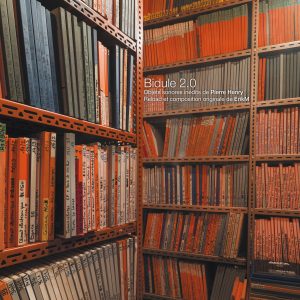
LP
ErikM
“Bidule 2.0”
Unreleased Sound Objects by Pierre Henry / Reload and Original Composition by ErikM
Bidule 2.0 is an unique reinterpretation of Pierre Henry's little-known sound heritage combined with ErikM's original composition. The album explores previously unused raw materials, transformed through ErikM's highly digital approach, balancing fixed composition and unexpected sonic events, a singular sonic experience where where historical archives and contemporary creation converge.
« Bidule 2.0 is a composition by ErikM that revisits a selection of the unused sonic heritage of composer Pierre Henry, covering the period from 1950 to 1974, sourced from the Son/Ré studio and digitized by the BnF (Bibliothèque nationale de France).
Over the decades, Pierre Henry and his team accumulated a vast collection of sonic materials from their studio research.This sound library, recorded on analog tape, is a testimony to the recording techniques of that era — including the quality of microphones and recording media, as well as the acoustics of the recording spaces — all of which define the sound of a time.
Not wanting to create a remix from the composer’s iconic sounds, I chose instead to work with selections of raw material from unused recording sessions, 168 sequences ranging from one to twenty-two minutes each. Isabelle Warnier and Bernadette Mangin provided me with sessions of prepared piano, series of electronic sounds, feedbacks, and voice recordings.
Pierre Henry’s analog sounds were, for the most part, processed through successive stages (up to five generations of transformation), using a custom electronic device: Idiosyncrasie 9.3, built on Max/MSP and Lemur. »
ErikM
Production : CNCM/La Muse en Circuit, Alfortville et INA/GRM Paris
Coproduction : CNCM/GMEM, Marseille
Mastering : Frédéric Alstadt – Angstrom Mastering
A live performance at Présences électronique festival is included on CD version as bonus track.
22,00€
CD
ErikM
“Bidule 2.0”
Unreleased Sound Objects by Pierre Henry / Reload and Original Composition by ErikM
Bidule 2.0 is an unique reinterpretation of Pierre Henry's little-known sound heritage combined with ErikM's original composition. The album explores previously unused raw materials, transformed through ErikM's highly digital approach, balancing fixed composition and unexpected sonic events, a singular sonic experience where where historical archives and contemporary creation converge.
« Bidule 2.0 is a composition by ErikM that revisits a selection of the unused sonic heritage of composer Pierre Henry, covering the period from 1950 to 1974, sourced from the Son/Ré studio and digitized by the BnF (Bibliothèque nationale de France).
Over the decades, Pierre Henry and his team accumulated a vast collection of sonic materials from their studio research.This sound library, recorded on analog tape, is a testimony to the recording techniques of that era — including the quality of microphones and recording media, as well as the acoustics of the recording spaces — all of which define the sound of a time.
Not wanting to create a remix from the composer’s iconic sounds, I chose instead to work with selections of raw material from unused recording sessions, 168 sequences ranging from one to twenty-two minutes each. Isabelle Warnier and Bernadette Mangin provided me with sessions of prepared piano, series of electronic sounds, feedbacks, and voice recordings.
Pierre Henry’s analog sounds were, for the most part, processed through successive stages (up to five generations of transformation), using a custom electronic device: Idiosyncrasie 9.3, built on Max/MSP and Lemur. »
ErikM
Production : CNCM/La Muse en Circuit, Alfortville et INA/GRM Paris
Coproduction : CNCM/GMEM, Marseille
Mastering : Frédéric Alstadt – Angstrom Mastering
A live performance at Présences électronique festival is included on CD version as bonus track.
13,00€

6 CD box
Steve RODEN
“Every color moving (1988 – 2003)” (2026 reissue)
2026 reissue.
“Every Color Moving” consists of 6 discs, covering 7 hours of the 15 first years of Steve Roden musical activities. The first 4 discs contain unreleased works and impossible to find small editions. The last 2 discs offer a selection of tracks made for compilations during the same period. From the surprising early experiments to the development of his often imitated but never equalled ‘lowercase’ aesthetic, these are some of Roden’s earliest works, documenting numerous rare and unreleased recordings.
The discs are accompanied with a 32 page booklet with an essay and extended track notes, written by the artist.
Steve Roden (1964-2023) was a visual and sound artist born in Los Angeles. Roden’s work includes painting, drawing, sculpture, film/video, sound installation, and performance. Roden’s earliest musical experience was as the singer of the Los Angeles punk band “Seditionaries” from 1978 - 1982, performing locally with some famous bands from this scene. Roden’s early works moved from loud to quiet in the midst of an emotional crisis at age 18, fueling a shift in his work, with the discovery of Eno’s Obscure label. In the early -1990’s Roden discovered the Broken Music catalog (an encyclopedic survey of records related to visual artists), offering a context for an artistic practice rooted in both visual and sound art.
In 1990 Roden released his first recording on a self-released cassette titled “the secret of happiness” under the artist name “in be tween noise”. Since then, Roden has released 45 solo recordings on various labels, alongside numerous collaborations and compilations. By the late 1990’s Roden began to use his own name as the artist of his solo recordings. Most of Roden’s sound works tend towards using a singular source - such as objects, architectural spaces, field recordings, or texts. These things, become abstracted through humble electronic processes to create new audio spaces, or “possible landscapes”. In 2000, he used the term “lowercase” to describe a music that “bears a certain sense of quiet and humility”. Over the years, he has created a rich and diverse body of work that is uniquely his own, mixing conceptual rigor, experimentation and musicality.
40,00€

6 CD box
Steve RODEN
“A thousand breathing forms” (2026 reissue)
2026 reissue, similar to the first one but without the bonus 3"CD.
“A thousand breathing forms”, the second boxset of Steve Roden archive works released by Sonoris, is a selection of unreleased or hard to locate works from 2003 to 2008, a very prolific and creative period for the californian artist.
The boxset is centered on his hard-to-describe loop based sound works that are uniquely his own (such as Stars of ice, A Christmas play for Joseph Cornell) but also includes the conceptual “One hour as the bumps of surfaces” and some more musical or instrumental works. “So delicate and strangely made”, the title of one of his very first records, could still be the right description of his sound work, rooted in visual arts and architecture, mixing conceptual rigor and experimentation without neglecting musicality.
Steve Roden (1964-2023) was a visual and sound artist born in Los Angeles. Roden’s work includes painting, drawing, sculpture, film/video, sound installation, and performance.
Most of Roden’s sound works tend towards using a singular source - such as objects, architectural spaces, field recordings, or texts. These things, become abstracted through humble electronic processes to create new audio spaces, or “possible landscapes”.
Mastering by Giuseppe Ielasi.
"Over the last thirty years, Steve Roden has risen as a singular voice, attacking and advancing the highest challenges of the avant-garde - blurring the lines between nearly every creative field, moving outwardly toward the boundary with every day life. A visual and sound artist, his work spans the fields of painting, drawing, sculpture, film/video, sound installation, and performance.
A pioneer of Lowercase music, a movement which uses amplification as a means to address the quiet and unheard sounds of objects and environments, Steve Roden is one of the great contemporary successors of John Cage. Looking beyond the shadow cast by chance and indeterminacy, he casts the ear toward a world indicated by the composer’s most original, radical, and often neglected idea - the value and beauty of the sounds of non-instrumental sources and of the every day. Through subtle intervention, he has illuminated the path for a rising generation of artist working in sound - refusing categorization, working as comfortably in a museum or gallery, as the contexts of music. Guided by rigorous conceptual perimeters and concerns, across A Thousand Breathing Forms the axis of Roden’s work snaps into view - the monumental presence of the smallest moment and sound.
This boxset, which collects Roden’s unreleased and hard to find works from the incredibly prolific period between 2003 and 2008, is drenched in musicality. Centered around loop based works, it pulls relentlessly and democratically from a seemingly endless world of source - samples of records from an array of cultures, field recordings, instruments, object, and environments. It is a body of work, which, for being birthed electronic process, appears stunningly organic - steeped in humanity and touch. A world of intimacy. The discrete at a towing scale. A realm to be inhabited, which burrows deep - taking residence in the ear. As it sounds, resonances, and structures intertwine, Roden appears as a vision of the future, and a bridge to the past - a breaking of dogma, and a reconciliation for the schism between Minimalism and the conceptualism of Cage. A world guided by ideas, presenting the profound beauty, meaning, and importance of sound, across its six CDs, A Thousand Breathing Forms is a revelation - a lens into the practice and work of an artist of incredible significance, as much as an opening to the larger field. Capturing and advancing some of the most important and difficult ideas of the last hundred years with elegance, accessibility, and grace, this is a collection which promises to grow over time and at every turn."
Bradford Bailey
CD1
1. stars of ice (2008, cdr, new plastic music)
2-9. stills for guru dutt (2004, unreleased)
CD2
1-4. in flows and spuns (2004, released as a 100 copies lp by en/of)
5. 22 letters and the resonance of a three pointed star (2006, compilation track)
CD3
one hour as the bumps of surfaces (2003, radio broadcast, unreleased)
CD4
1. calmem (2008, unreleased)
2. for you the sunrise (2008, unreleased)
3. banjoharmonium (2006, unreleased)
CD5
1. a christmas play for joseph cornell (2007, cdr, new plastic music)
2. thomas sat down and looked at the sea (2004, compilation track)
3. vester fields (2007, cdr, volume projects)
CD6
1. winter is herd or heard (2007, unreleased)
2. to these 4 horizons (2008, unreleased)
3-5. sleep/walk/drive (2003, unreleased)
6. aucla irde lalu ne (2008, compilation track)
“as i listen to the tracks that are compiled here, i realize that for so many times my works have been inspired by the works of others, and other objects. ‘stars of ice’ was inspired by a chinese 7” record salvaged from a thrift store. ‘stills for guru dutt’ came out of my love of discovering my favorite bollywood director, and the en/of record used the sound of the great indian playback singer mohammed rafi. ‘22 letters and the resonance of a three pointed star’ was inspired by an early 1960’s building for the olivetti design firm in ivrea italy, where the original installation was placed within the lobby where it was “modulated” by the space. ‘a christmas play for joseph cornell’ was of course, inspired by the work of joseph cornell, but also george brecht’s water yam scores. the banjo used in banjoharmonium was found at the flea market (my home from home), and the harmonium was a gift from my friend damon. yes, maurice blanchot!, herd and heard - wordplay always. ‘these 4 horizons’ was, again with collaborating with architecture, making recordings in the rain on the site of le corbusier’s roncham after getting lost for hours while trying to find our way through torrential rains (that you can hear on one of these tracks). ‘sleep walk drive’ was a collaboration, also something important to keep one honest. the last track, so tiny, was a cover version of the oldest recorded sound we know, and the story of that not only generated this track, but a sound and video installation… and so i have been collaborating not only with people but with objects, ideas, and forms.” Steve Roden
40,00€
Out of stock
10"
Aaron DILLOWAY
“Songs About Jason”
2016 release
Amethyst Sunset is proud to present the absolutely necessary vinyl version of Aaron Dilloway's Songs About Jason. Originally released in limited edition of forty copies for a solo/duo show with Jason Lescalleet in 2013, the audio has been remastered wonderfully by Jason and pressed to vinyl in an edition of 500. Two side long pieces presented by the Hanson Records master of tape loops build from a disorienting melodic wooziness to a darker ambient drone that leave you drowning with an ear splitting destruction in crystal lake. Black vinyl in antique green paper sleeves.
16,00€
Out of stock
CD
Jon DALE
“Last Blues”
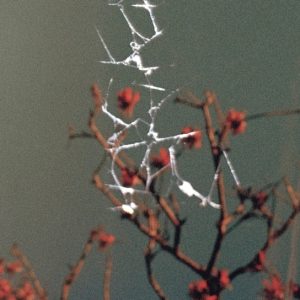
In Last Blues, De la Catessen presents a mysterious folio of sonic snapshots, as much recaptured as composed, by Jon Dale's project, Moth, in Adelaide in the late '90s and early '00s. Listeners are invited to tune in to these liminal frequencies, to observe and inhabit them, and relish the glowing sensual overdrive of their manifestation. From the ready means and at-handedness of guitar, amp, and tape, a congruous but diverse selection of unnamed tracks emerge -- musical moments borrowed from oblivion with the as yet unfulfilled good intention of returning them. Their sounds evoke abstract polaroids of winter seascapes flecked with spare, brittle detail, or the scaly-winged flutterings of elusive nocturnal insects. Here, a homely hum like a vacuum cleaner on sunny childhood's weekend morning; there, suburban power lines buzzing gently in the mist. The last track of Last Blues is like a reverent vision of lava-flow for harmonium, the slow-motion eruption of a single chord, which echoes in the mind for hours. Last Blues comes from somewhere that doesn't exist anymore, and shows listeners something that may never have happened there.
"Jon Dale collapses old dichotomies (such as organic vs. inorganic and heavy vs. light) into a pure horizon of tone with only guitar and a little harmonium. Sonically, it makes me think of a middle point between if Organum snuck into the studio to remix Glenn Branca, and what I imagine the electric synapses firing off in Raymond Roussel's brain would've sounded like if committed to wax cylinder. Which is to say, it sounds rad." --Ben Chasny, Six Organs Of Admittance
15,00€
In stock

CD
Jon DALE
“Theatre”
"It's music where nothing happened. It's the kind of music somebody might write in Adelaide, Australia. Nothing happened." --Morton Feldman
Theatre is De la Catessen's second venture into the archive of Jon Dale. Originally released in a tiny CD-r edition of 50 copies on Tristes Tropiques in 2019, Theatre now reappears in an edition of 150 glass-mastered CDs. Theatre sees Jon Dale eschewing the hearthwarm drones of his previous album on de la Catessen, Last Blues, and dwelling upon an elusive aural concept: a limbo. Theatre hums with an occupied silence, heightened by scattered expectant sounds: a door opens or closes; muffled voices murmur nearby. As almost nothing continues to happen, the listener occupying the silence seems to hover at the edge of (non)existence. It's tempting to classify Theatre as a purely conceptual listening experience, or to compare it to listening to someone who is in the quiet act of listening to something else, just out of earshot. But at its heart, Theatre is a simple and elegant manifestation of the dichotomy that dynamizes minimalism: how little of something -- versus how much of nothing -- must be.
15,00€
In stock
CD
WOLF EYES & Anthony BRAXTON
“Live At Pioneer Works, 26 October 2023”
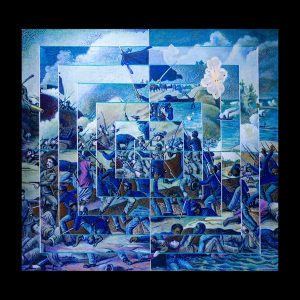
Formed 29 years ago (1996) by Nate Young, Wolf Eyes is currently a duo generally characterized as "noise," though they have called themselves "psycho jazz" (among other things). Extremely prolific, they have literally hundreds of releases and are a towering presence in underground music. Saxophonist Anthony Braxton was an early member of the AACM (Association for the Advancement of Creative Musicians) and has won a MacArthur and been named an NEA Jazz Master, though his work is hardly confined to jazz. He's also an extremely prolific recording artist, debuting on record in 1968. Braxton famously first heard Wolf Eyes at the Festival International de Musique Actuelle de Victoriaville and immediately bought all the band's CDs that they were selling that night; a year later, they made their first album together, Black Vomit (also a concert recording). Their new untitled album (calling it Live At Pioneer Works, 26 October 2023 is merely a way of helping people distinguish it from their other collaborations and to give it a vintage) is the third Wolf Eyes/Braxton release. The LP has no track titles or even side designations. ESP has tried to keep that same spirit in the other formats.
"Both parties clearly understand what the other stands for and adapt their approaches accordingly. Braxton purists are in for a solid headache, of course, but something really clicked between these artists, and it was all in good fun. As far as Wolf Eyes' discography goes, this is also one of their best-recorded albums." --François Couture, All Music Guide, regarding Black Vomit
13,00€