
In stock
2 LP
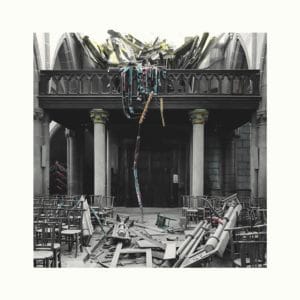
PANCRACE
“The Fluid Hammer”
Music for Organous (spatialized and midi controlled pipe organ), Uilleann Pipes, Pi-Synth, Piano, Motorised Bow, Boîte à Bourdons, Gaida, Baroque Violin, Hurgy Toys, Toy Piano, Componium, Bodhran, Low Whistle, Bird Calls, AM-Radio and Shaker.
Pancrace is a quintet from France comprising Prune Bécheau, Arden Day, Julien Desailly, Léo Maurel and Jan Vysocky. Pancrace began with a residence in 2015 at the Saint Pancrace church in Dangolsheim where the instrument inventor Léo Maurel resides.
The approach of Pancrace is based on the physicality of sound, a choice of specific tone qualities within a given spatial contextual awareness. Therefore the manufacturing and usage of the musical instrument are constantly reassessed. Consequently, playing with the mechanical aspect of the instruments is central to their musical approach and narrative. Designing an unbound pipe organ – though emulating some of the mechanical idiomatics of the initial Pancrace church organ – seemed the obvious way to gain more spatial control over a vast choice of places. This allowed them to approach their music from a totally new angle and work from within the organ. The results of these experiments are captured here, on their second opus, Fluid Hammer.
“ During the 2017 OrgelFesl in Waldkirch, we discovered Wolfram Stuetzle’s workshop, he is a church organ maker. In his attic we discovered thousands of old pipes and other elements for organ making. It was here we had the idea we could one day have our own organ for Pancrace. Thanks to his help, we started to collect some parts in his attic. We also met another organ maker Stefan Freisen who gave us an old bellow which he used as a flower pot in his garden and I also bought some of his 80 year old electromagnets. In January 2018, we were all together in Marmoutier to discover the possibilities of MIDI controlled organs. A month later, the organ “ORGANOUS “ was built in my workshop.” – Léo Maurel
This new beast of an instrument, somewhere between a spider or an octopus, lead Pancrace to compose from the frontality of the instrument as well as with the interactive tone possibilities brought by other instruments. With its six panels display (two bass registers, two treble and a pair of crumhorns) the organ projects sound like the musique concrèt Acousmonium giving the listener a spatialised perception of a wide range of tones and harmonics. Unbounded, the pancrace people have achieved a whole new cosmos of sounds focusing on sources rather than reverberation. Here the ORGANOUS is both the process and the context.
Throughout the double albums 17 tracks one is exposed to a wide variety of Pancrace potential along with the sprinkled conversation with the makers of the water pumps, (reproduced in English inside the sleeve). At once playful, intriguing, surprising and warm this is an exceptional sonic experience from one of today’s most exceptional units.
25,00€
Out of stock
LP
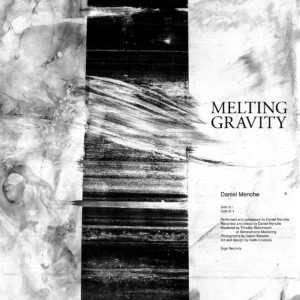
Daniel MENCHE
“Melting Gravity”
Daniel Menche follows up his triple CD opus Sleeper with the razor drone constructs of Melting Gravity. Hailing from Portland, Oregon, Menche is an iconic musician with three decades working with intense noise, immersive ambience, and turbulent field recordings. With Melting Gravity, Menche continues to carve his spot as a figurehead in the experimental community.
The title of Melting Gravity refers to an allegory on the human pursuit of transcendence with all of its connotations to weightlessness, ascension, flight, out-of-body experiences, and just getting high. Gravity, on the other hand, becomes that which negates and nullifies those transcendent pursuits. In the context of this particular allegory, gravity is the devil. Music, long a vehicle aimed towards transcendent ideals, becomes the weapon to defeat gravity, to defeat the devil. Daniel Menche wields the weapon of music in composing the mercurial grandeur that is Melting Gravity.
Implementing an elegant arc of acceleration and dissolve, Menche presents a slow-motion tumble of drones from his signature manipulation of FM synthesis, oscillators, and sustained tones from various stringed instruments. The tangles and tendrils of these extended frequencies are bright and liquid, rich in harmonic complexities though mottled with a scrap metal discord. Menche balances these slippery, luminous overtones with a dub-inspired lattice of recursive bass tones. Read as an industrial mantra or as amplified minimalism, Melting Gravity stands as an exemplary work in Menche’s storied catalogue of recordings.
Daniel Menche’s lengthy discography contains over 60 albums, many of which have been published by some of the most esteemed experimental record labels. Over the years he has worked with Editions Mego, Sige, Touch Music, Alien8 Records, Ash International, Utrecht Records, and many others. He has collaborated with Mamiffer, Andrew Liles, KK Null, John Wiese, Aaron Bradford Turner, Joe Preston, Anla Courtis, Zbigniew Karkowski, Kiyoshi Mizutani, and Kevin Drumm. He has performed extensively in North America, Japan, Europe, and Australia.
- Jim Haynes
20,00€
In stock
LP
Jon MUELLER
“Canto”
Jon Mueller is a multi-faceted percussionist, presenting his latest body of work in Canto for gongs, voice, and percussion. In his solo work that spans two decades, Mueller has embarked on a lengthy exploration of the timbres, the dissonance, and the physicality of repetition from his array of percussive instruments. Gongs had long been a part of his repertoire, but here on Canto he addresses their specific sonic attributes in conjunction with extended vocal techniques bolstered through his studies with the legendary NYC minimalists LaMonte Young and Marian Zazeela. In ruminating upon this shift in focus for ‘Canto,’ Mueller explains that “The driving energy of drums is replaced by deep contemplation and wonder, questions, confusion, darkness and ultimately, calm.”
The three tracks to Canto — entitled “Oil,” “Wick,” and “Flame” — have their names taken from a Sufi text, representing parts that create a whole, just as a canto is a part of a longer poem. “Oil” is an expansive piece that builds upon frameworks that build gradual crescendos from his gongs through volume and complexity of frequency. This unfurls into an eerie yet beautifully rendered sound bath of metallic resonance and reverberation girded by slowly paced vocal melodies. “Wick” stems from Mueller’s lessons with Young and Zazeela. While his goal was not to become an Indian classical singer, he adopts those techniques in this vigorous concentration of sustained vocal tones for a piece that is as trenchant as it is meditative. “Flame” reprises the combination of gong overtones that amass out of a deep somatic chant. Canto stands as a bold, expressive album that follows a long line of avant-garde percussionists that include Eddie Prevost, Jason Kahn, Daniel Schmidt, and Christopher Tree’s Spontaneous Sound.
20,00€
In stock

LP
Luc FERRARI
“Photophonie”
To celebrate the 90th anniversary of Luc Ferrari's birth Transversales Disques is very glad to announce the release of Photophonie, unpublished archives, spanning 1973-1992, revelatory collection of commercial, commission and secret music by electroacoustic music pioneer Luc Ferrari.
- « Photophonie » (1989) / Music for the photographic exhibition of Alain Willaume.
- « Il était une fois » (1973) / Commissioned by the G.M.E.B.
- « Trans-Voices » (1992) / Curated by the American Center, Paris.
- « Leica » - (1977) / Advertising for the Leica camera.
Affiliated with French Radio’s Groupe de Musique Concrète, co-founder of the GRM with Pierre Schaeffer in 1958, Luc Ferrari (1929-2005), major figure of musique concrète and electroacoustic music, broke away to pave his own path of individualistic expressions of minimalist music, musical theater, field recordings, orchestral music and soundtracks…
22,50€
Out of stock
Out of stock
Out of stock
Out of stock
Out of stock
Out of stock
Out of stock
In stock

LP
DOME
“Dome 3”
With the demise of the group Wire in 1980, founder members Bruce Gilbert and Graham Lewis joined forces to create Dome. With the assistance of engineer Eric Radcliffe and his Blackwing Studio Dome took the ethic of “using the studio as a compositional tool” and recorded and released three Dome albums on their own label in the space of 12 months: DOME (July 1980), DOME 2 (October 1980) and DOME 3 (October 1981). A final fourth album, WILL YOU SPEAK THIS WORD: DOME IV was released on the Norwegian Uniton label in May 1983.
These albums represent some of the most beautifuly stark and above all timeless exercises in studio experimentation from early 1980s alternative music scene.
16,00€
Out of stock

2 LP
Keiji HAINO – Jim O’ROURKE – Oren AMBARCHI
“In the past only geniuses were capable of staging”
For its 50th release, Black Truffle presents the ninth album from one of the label’s core ensembles, the power trio of Keiji Haino, Jim O’Rourke, and Oren Ambarchi. Drawn from a November 2015 performance at Tokyo’s now-defunct SuperDeluxe, the record’s opening piece drops us immediately into the maelstrom, abruptly cutting into an extended episode of Ambarchi’s pummeling drums, O’Rourke’s fuzzed-out six-string bass, and Haino’s roaring guitar and electronics. Eventually settling into a hypnotic bass and drum groove over which Haino unleashes some almost Ray Russell-eque skittering atonal screech, these opening 13 minutes act as a potent reminder of the trio’s power.
Alongside showcasing the steady development of a unique language for the guitar-bass-drums power trio, the group’s succession of releases over the last decade has demonstrated a constant experimentation with new instruments, which continues here with O’Rourke use of Hammond organ (played at the same time as his roaming, sometimes knotty basslines). On the album’s second piece, the organ plays a key role, furnishing a harmonically rich shimmer over O’Rourke’s angular six-string bass chords, Haino’s distant, chirping electronics and Ambarchi’s crisp cymbal work; arriving somewhere halfway between Albert Marcoeur and Terje Rypdal, this piece is undoubtedly a highlight in the trio’s catalog so far.
The second and third sides are slow-burning, multi-part epics that range from spacious reflection to furious tumult. Where the trio’s previous double-LP set — This Dazzling, Genuine “Difference” Now Where Shall It Go? (BT 030LP, 2017) — was primarily instrumental in focus, here you find Haino’s voice taking the spotlight on the expansive third side, intoning, wailing. and exhorting in Japanese and English over a backdrop that moves from hushed bass and organ atmospherics to rolling toms and cymbal crashes before arriving at an ecstatic finale of searing guitar, tumbling drums and reverb-saturated bass. The fourth side returns to the hypnotic grooves of the opening piece, fixing on a relentless riff and riding it into oblivion under Haino’s roaming psychedelic soloing and jagged chordal slashes.
25,00€
In stock
2 LP
PAN SONIC & Charlemagne PALESTINE
“Mort aux Vaches”
Special vinyl re-issue of the work initially released on CD by Staalplaat 19 years ago.
First time on vinyl, brand new mastering, and new cover design (a 1974 drawing by Charlemagne Palestine).
This is the first release in the 'GodBear' series, a project consisting in the re-issue of existing works and production of unreleased material by Charlemagne. In partnership with the Charlemagne Palestine Foundation.
31,00€
Out of stock
3 LP
Carlos CASAS
“Mutia”
3xLP Limited Artist Edition limited to 200 copies on red vinyl.
With exclusive handnumbered bonus LP & art print.
---
"While developing my last film about the elephant graveyard myth, I tried to imagine what that jungle and landscape that protected it might sound like. To do this, I created a series of soundscapes, atmospheres to help me understand that park, to imagine it; I tried to place it in the near future, around 2046. All the sounds that make up those sound compositions come from my references throughout the project, and from the atmospheres and radiofrequencies captured during the filming in Sri Lanka; the deep jungles and magical places that helped me undertake that journey. When I finally finished editing the film itself, I decided to rework those sessions, to create an album that would recap that entire imaginary world I had created. The album is a way of inviting audiences to undertake that journey." Carlos Casas, 2019
Sound compositions, field recordings and radio frequencies by Carlos Casas.
Additional sound captured in location by Marc Parazon.
Mastering and cut by Frédéric Alstadt at Ångström studio, Brussels.
49,00€
Out of stock
2 LP
Carlos CASAS
“Mutia”
"While developing my last film about the elephant graveyard myth, I tried to imagine what that jungle and landscape that protected it might sound like. To do this, I created a series of soundscapes, atmospheres to help me understand that park, to imagine it; I tried to place it in the near future, around 2046. All the sounds that make up those sound compositions come from my references throughout the project, and from the atmospheres and radiofrequencies captured during the filming in Sri Lanka; the deep jungles and magical places that helped me undertake that journey. When I finally finished editing the film itself, I decided to rework those sessions, to create an album that would recap that entire imaginary world I had created. The album is a way of inviting audiences to undertake that journey." Carlos Casas, 2019
Sound compositions, field recordings and radio frequencies by Carlos Casas.
Additional sound captured in location by Marc Parazon.
Mastering and cut by Frédéric Alstadt at Ångström studio, Brussels.
31,00€
In stock
LP
Charlemagne PALESTINE
“Dinggg Donggg Dinggg Vs Singgg Songg Singgg”
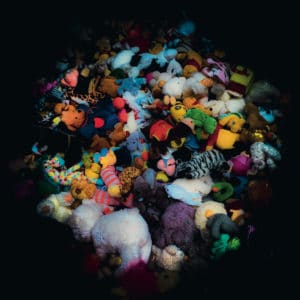
Singing songs while playing ding dongs, Charlemagne Palestine’s solo voice over the bells of his studio carillon is a premiere in his recorded works, and possibly the first voice/carillon record in musical history. All the little shamanic stuffed deities inhabiting the carillon added their souls to the spirit of the reverberating songs, including a song in memory of Mika Vainio.
23,00€
Out of stock

2 LP
COMPILATION
“Strain, Crack & Break: Music From The Nurse With Wound List Volume 1 (France)”
After years of mythology, misinterpretation and procrastination Nurse With Wound’s Steven Stapleton finally chooses Finders Keepers Records as the ideal collaborators to release “the right tracks” from his uber-legendary psych/prog/punk peculiarity shopping list known as The Nurse With Wound List, commencing with a French specific Volume One of this authentically titled Strain Crack Break series. Featuring some Finders Keepers’ regulars amongst galactic Gallic rarities (previously presumed to be imaginary red herrings) this deluxe double vinyl dossier demystifies some of the essential French free jazz and Parisian prog inclusions from the alphabetical “dedication” inventory as printed the anti-bands 1979 industrial milestone debut.
When Steven Stapleton, Heman Pathak and John Fothergill’s anti-band Nurse With Wound decided to include an alphabetical dedication to all their favourite bands on the back of their inaugural LP the notion of creating a future record dealers’ trophy list couldn’t have been further from their minds. By adding a list of untravelled European mythical musicians and noise makers to their own debut release of unchartered industrial art rock they were merely providing a suggestive support system of existing potential likeminded bands, establishing safety in numbers should anyone require sonic subtitles for Nurse With Wound’s own mutant musical language. Luckily for them, the record landed in record shops in the midst of 1979’s memorable summer of abject apathy and its sound became a hit amongst disillusioned agit-pop pickers and artsy post-punks, thus playing a key role in the bourgeoning “Industrial” genre that ensued. On the most part, however, the list , like most instruction manuals, remained unreadable, syntactic and suspiciously sarcastic… As potential “real musicians” Nurse WIth Wound became an Industrial music fan’s household name, but in contrast many of the names on The Nurse With Wound List were considered to be imaginary musicians, made-up bands or booby traps for hacks and smart-arses. It took a while for the rest of the record collecting community to catch on or finally catch up.
Since then, many of the rare, obscure and unpronounceable genre-free records on The Nurse With Wound List have slowly found their own feet and stumbled in to the homes of open-minded outernational vinyl junkies, D’s and sample hungry producers, self-propelled and judged on their own merit, mostly without consultation of the enigmatic NWW map. But, to the inspective competitive collector’s chagrin, one resounding fact recurs, NWW got there first! via vinyl vacations, on cheap flights and Interrail tickets, buying bargain bin LPs on a shoestring while oblivious to the pending pension worthy price tags after their 40 year vintage, Stapleton and Fothergill, even if you’ve never heard of them, were at the bottom of the pit before “digging” became paydirt. And NOW at huge international record fairs that occur in massive exhibition halls (or within the confines of your one-touch
palm pilot) amongst jive talk acronyms such as SS, PP, BIN, DNAP and BCWHES the coded letters NWW have begun to appear on stickers in the corner of original copies of the same premium progressive records accompanied by a customary 50% price hike to titillate/coerce the initiated as dealers extort the taught. Like “psych” “PINA” or “Krautrock” did before, “NWW” has become a buzzword and in the passed decades since its first publication The List has been mythologised, misunderstood and misconstrued. It’s also been overlooked, overestimated and under-appreciated in equal measures, but with a growing interest it has also come to represent a maligned genre in itself, something that all members of the original line-up
would have deemed sacrilegious. Bolstered by the subtitle “Categories strain, crack and sometimes break, under their burden,” all bands on the inventory (many chosen on the strength of just one track alone) were chosen for their genre-defying qualities… A check-list for the uncharted.
Forty years after Nurse With Wound’s first record, Finders Keepers Records, in close collaboration with Steve Stapleton remind fans of THIS kind of “lost” music, that there once existed a feint path which was worn away decades before major label pop property developers built over this psychedelic underground. As long-running fans and liberators of some of the same records, arriving at the same axis from different-but-the-same planets, Finders Keepers and Nurse WIth Wound finally sing from the same hymn sheet resulting in a collaborative attempt to officially, authentically and legally compile the best tracks from the list, succeeding where many overzealous nerds have deferred (or simply, got the wrong end of the stick). Naturally our lavish metallic gatefold double vinyl compendium would only scratch the surface of this DIY dossier of elongated punk-prog peculiarities hence out decision to release volume one in a series which, in accordance with Steve’s wishes, focuses exclusively on individual tracks of French origin, the country that unsurprisingly hosted the highest content of bands on the list. Comprising of musique concrète, free jazz, Rock In Opposition, Zeuhl School space rock, macabre ballet music, lo-fi sci-fi, and classic horror literature inspired prog, this first volume of the series entitled Strain Crack And Break throws us in at the deep end, where the Seine meets the in-sane, introducing the space cadets that found Mars in Marseilles.
Like the Swedish flat-pack record shelves that attempt to house the vast amounts of vintage vinyl that goes into a multi-volume compilation like this, it is time to prepare your own musical penchants and preconceived ideas about DIY music and hear them slowly strain, crack and break.
26,50€
Out of stock

LP
Zdeněk LIŠKA
“Ikarie XB-1”
Liška, the Czechoslovakian word for fox. Beguiling in its beauty, cunning in it's charm. Said to be one of the most intelligent animals on the planet its global family consists of thirty-seven varieties; all of them recognised, respected and feared for their persuasive, creative, resourceful and elusive nature. The Liška we will talk about today is no exception to these hereditary rules and within the grooves of this record Finders Keepers present an "elusive" musical artefact that best exemplifies every facet of this composer’s animal namesake.
Had he not been born in the small Bohemian town of Smečno in the early 1920s the story of The Fantastic Mr. Liška might have well taken a different course. Alternatively, fettered by the hampers of communism, this lifelong resident of Czechoslovakia would never quite find his seat at the same table as the likes of John Barry, Ennio Morricone, Michael Nyman and Stanley Myers, nor drop enough phonographic breadcrumbs to track his legacy. But having waited patiently behind the borders of the wider landscapes of international cinema, Liška's musical brood, spanning multiple stylistic decades and generations, has now started to walk proudly amongst his would-be, latter-day compeers. In an era where music lovers have almost become immune to adjectives like "lost", "rare" and "unreleased" in a climate where previously lesser-known off-kilter master composers such as Vannier, Kirchin and Axelrod have become widely revered, it is perhaps the perfect time for discerning listeners to advance above the feeding trough and seek out this truly pioneering and revolutionary Eastern European composer. Rivalled only by the likes of Krzysztof Komeda and Andrzej Korzynski in Poland, alongside Alexandr Gradsky in Russia, and often splitting workloads with fellow Czech composers like Luboš Fišer, Zdeněk Liška's filmography of over almost 300 fully formed movie scores virtually eclipses the achievements of these socialist era luminaries. Respected unanimously in both Czech and Slovakian by studio bosses, producers, directors and actors alike Liška is widely known for his ability to take the existing energy in a reel of film and literally change the polarity to suit his own interpretation while maintaining the full support from his "client" who would in-turn end up working under this composer’s creative direction. Not only was Liška a genius of emotive orchestral and coral composition, his grasp on small group arrangements and intimate, minimal scores set him above the competition. By utilising primitive sample techniques by "looping" a films existing ambient noise, or rearranging found sounds and dialog into subtle melodic arrangements, Liška would independently develop his own techniques which had simultaneously become known in Paris as musique concrète. It is a direct extension of these experiments that saw Liška also draw parallels with Walter Branchi (Ennio Morricone's main electronic sidekick) in Italy as well as Daphne Oram in the UK, making Liška a relatively untravelled pioneer of early electronic composition and sound design due to his unlikely global environment. Imprisoned, preserved or reserved; time has been kind to Liška's music.
18,00€
Out of stock

LP
Mike COOPER
“Distant Songs Of Madmen”
« Distant Songs of Madmen was recorded live in Palermo and was my solo set in a concert organised by Lelio Gianetti and Curva Minore which included my trio Truth In The Abstract Blues and Eugene Chadbourne. My set was free improvisation; some cover versions of folk and pop songs and some of my own songs. The title of the record and some of the improvised pieces were taken from Sam Shepard's writing. Sam, one of my favourite writers, has sadly died since I recorded this record and I dedicate it to his memory ». Mike Cooper
Available in a beautiful designed cover with an exclusive amazing artwork made by Italian artist Carla Indipendente.
Mastered for vinyl by Brian Pyle (Ensemble Economique).
200 black copies. 100 red copies.
Original price was: 18,50€.10,00€Current price is: 10,00€.
In stock
2 LP
Claire M. SINGER
“Trian: recent works”
Vinyl edition of Solas (Touch TO:101) + Fairge on side 4.
- Solas (‘Light’ in Gaelic) is Claire M Singer’s debut album spanning 14 years of her work in acoustic and electronic composition. In recent years she has focused on writing and performing a mix of organ, cello and electronics with regular performances at Union Chapel where she is Music Director, running a diverse programme of concerts and educational workshops around the Chapel’s Henry Willis 1877 organ.
- Fairge : Recorded by Clare Gallagher at Oude Kerk, Amsterdam, 12th June 2017 on the transept organ built by Ahrend & Brunzema (1965)
18,00€
In stock
LP
David WATSON and Tony BUCK
“Ask the axes”
Besom Presse announces "ask the axes," the first collaborative release by the duo of experimental bagpiper David Watson and famed percussionist of the Necks, Tony Buck. Watson and Buck’s premiere recording documents two twenty-plus minute tracks featuring the hallucinatory sound palette of the highland bagpipes, drums and percussion.
Ask the axes leads with Watson blowing out a grounding and sonorous fundamental tone. moments later it’s redoubled with the serrated buzz of a higher register saw wave, suggesting a startling revelation of the untapped potential of the highland pipes. as watson steadily accumulates layers, the sound takes on a prismatic effect. from the droning choir of reeds, phantasmic overtones suddenly surface and are submerged in a fizzing backdrop like aural phosphenes. when Buck enters he manages to do so without interrupting Watson’s uncanny suspension of time. His toms and snare splinter with a giddy phasing effect as he shakes a number of bells into a thrumming substratum.
On side b, the duo evolve into an ecstatic kinesis, expanding and accelerating sensations of space and time. Buck’s measured crescendo conjures the trance-inducing meditations of the sufi dervishes while Watson’s pipes peal out glossolalic spasms that sound like a long lost maclise ritual. as the record closes in heaves and gasps, a warm afterglow settles in ahead of a startling conclusion.
23,00€
In stock
2 LP
Werner DURAND with Amelia CUNI and Victor MEERTENS
“Processions”
Besom Presse is pleased to announce the release of "processions," a double lp by composer, performer, and instrument-maker Werner Durand, with Amelia Cuni and Victor Meertens. Recorded and mixed in his home studio in Berlin from 2012-16, Durand offers four just-intoned drone works distilling global influence into compositions of singular beauty. The pieces presented here are rooted in Durand’s past work with Meertens (an Australian visual artist), a partnership that dates back to the early 90’s. Performed on an unlikely array of instruments including various self-made wind and reed instruments, sarod, mirliton, bi (a vietnamese free reed instrument), trumpet, and hammered electric guitar, the result is narcotic.
Each piece is a rich tapestry woven by timbral combinations that cut clearly defined swaths of the spectral field, yet cradle each other with mandala-like elegance. processions opens with Meertens’ hammered guitar percolating within the glacial flow of Durand’s omnipresent hum—like an embryonic Dreyblatt excitation set adrift in the bardo of LaMonte Young’s eternal music. Dhrupad singer Amelia Cuni’s voice enters, beckoning like an oneiric shepherd. As the record proceeds, Durand doubles down on his elemental sound—before long the listener, without realizing it, sits straddling a borderline in a hypnagogic state of fleeting consciousness.
33,50€
In stock
LP
Giovanni Di DOMENICO
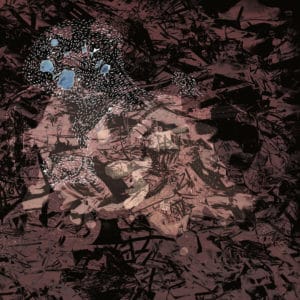
“Zuppa di pazienza”
Insalata Statica (Silent Water, 2017), Giovanni Di Domenico's first solo album, allowed the Italian pianist based in Brussels to free himself from his abundant creativity by proposing 6 dense movements. It took him 5 years to record and produce this first record. With Zuppa di pazienza, recorded and produced in 5 months, Di Domenico worked much faster, but the result is that these compositions are more thorough. Reduced to two, the movements are more refined, taking the time to develop around the main melody, which is repeated at leisure in a multitude of additional tracks, thus giving several faces of the same theme.
Recorded using numerous analog keyboards at the Klangendum/Worm studio in Rotterdam, Zuppa di pazienza is entirely played by Di Domenico. The filed recordings and overdubs were recorded in a second time, without listening to the original base of the music. Di Domenico then edited the whole thing. The result is a tingling of sound material around the main theme.
If Zuppa di pazienza is only Giovanni Di Domenico's second, he is no stranger. He is involved in many projects (Going, Eggstream, and many collaborations) and is a regular contributor to Jim O'Rourke with whom he has released Arco (Die Schachtel, 2015).
Zuppa di pazienza is his third collaboration with three:four records after his participation in the Denki Udon trio (In ZDB, three:four, 2015) and the Oba Loba sextet (Sir Robert Williams, three:four, 2017).
15,50€
Out of stock
LP
ELG
“Les particules”
Label notes :
"Since our first listening, we've been obsessed by the strange beauty of this small pop track that seems to be fallen on a dark hole. After having the chance to see the film before its screening at Cannes Festival' La Quinzaine des Réalisateurs, we decided to release this music. The LP comes in a beautiful gatefold sleeve designed by Coline Sunier and Charles Mazé.
Since 2004, Èlg, has drawn concentric sound spirals made of musical pipes and entrails. He builds improbable bridges between concrete music and french song debris, between cryptic electronic tribal incantations and russian doll dancing in Plutonia. When not in french, language is reduced to alien babble of an old man, a child, a dusty revenant, an epileptic bard, a peaceful messenger...
Èlg, is 1/2 Opéra Mort, 1/3 Orgue Agnès, 1/3 Reines d'Angleterre, 1/2 Schultz et Èlg."
15,50€
In stock

LP
Yvan ETIENNE
“Twist”
For Serge Modular and field recordings. French artist/activist Yvan Etienne, is engaged in research in the field of sound art. As a musician, he composes and plays pieces using electronic, phonography, analog synthesizers and the hurdy-gurdy. His sound art research questions the perception and physicality of sound spaces. Collaborations with Phill Niblock, Yann Gourdon, Richard Glover, Brice Jeannin, Patrice Grente, Robert Poss, Paul Panhuysen, Marie Verry, la novia, Perinne Bourel…
CD : Mastered by Yvan Etienne / LP : Mastered by Giuseppe Ielasi. Cut by Mike Grinser at Dubplates & Mastering, Berlin. Artwork by Gregory Weiss
Original price was: 18,00€.9,00€Current price is: 9,00€.
In stock

2 LP
François J. BONNET & Stephen O’MALLEY
“Cylene”
First time outing from two ardent explorers of peripheral sound tactics. Cylene is the first collaboration by François J. Bonnet ( Kassel Jaeger) and Stephen O’Malley (Sunn O))) ). Laid bare we have a subtle and nuanced study of their individual practices forming a titanic whole. O’Malley’s guitar inscribes a void that patiently opens up a spacious universe for Bonnet to discreetly alter with perception re-orientating studio maneuvers.
Cylene is infinitely rewarding for those that succumb to its delicate detours. A vast glacial plain unfurls slowly upon the listener invoking a mood similar to the stillness found following despair. As Joseph Ghosn succinctly outlines in his liner notes, “Stephen and François deal in those moments and instants that happen after the violence, and the ugliness and the mess. Their music is about chaos being summoned and ordered. It is about the noise that nurtures your ears after a long heartbreaking pain. I have heard the sounds of wars being fought and the noises of hearts being broken, and I have never found a shelter as soothing as this music which makes me think of sunken ships and beauty found in the depths of oceans long forgotten”.
24,00€
In stock

LP
COMPILATION
“Bidödaren”
With Unken Reflex, Joe Colley, Daniel Menche, Small Cruel Party, Tarab, BJNilsen, Toy Bizarre, Steve Roden.
"Bidödaren = Beekiller, approximately... In Swedish there is a double meaning; bi is the insect bee (in English), but also has the meaning of something like a "side-effect".
Like if the killing of bees is just something being done beside doing something else. (Leif Elggren)"
Limited to 200 copies.
18,00€
Out of stock

LP
Jerzy MAZZOLL and Jerzy PRZEZDZIECKI
“Melodnie”
Jerzy Mazzoll is a key figure of polish music over last twenty years. He is a bass clarinet virtuoso that goes deep into the tradition of Polish improvisers and contemporary music composers of the mid-twentieth century. He played in many bands such as Arhythmic Perfection, Pieces of Brain, Mazzoll & Arhythmic Memory. He cooperated, among others with musicians such as Roscoe Mitchell, Greg Fox, Django Bates, Peter Brotzmann, Jon Dobie, Alfred Harth, Peter Kowald, Vytutas Labutis, Jeffrrey Morgan, Tony Oxley, Olga Szwajgier and Tomasz Stańko,
Jerzy Przeździecki is an electronics producer. He successfully performs at contemporary music festivals such as Warsaw Autumn or in clubs presenting techno music. Music has no limits for him. He cooperates with pianist Andrzej Karałow but also with other electronic music producers such as Jacek Sienkiewicz (Tumult Hands). Recently, performing improvised music in duets with virtuoso of classical instruments, he significantly reduces his impressive music setup by limiting itself to simple sound generators. He stays away from the beaten formulas and surprises with his sound. The most important thing for him is improvisation, from which the essence of the musical structure emerges.
Artistic experiences of these two made up the template for this kind of music , which is governed by its own rules and uses all possible means to achieve a goal.
On Melodnie their sound is firmly anchored in the aesthetics of contemporary compositions, free or noise.
16,50€
Out of stock

LP
Caterina BARBIERI
“Ecstatic Computation”
*** Back in stock ***
Caterina Barbieri is an Italian composer who explores themes related to machine intelligence and object oriented perception in sound through a focus on minimalism.
Following 2017’s acclaimed 2LP “Patterns of Consciousness”, “Ecstatic Computation” is the new full-length LP by Caterina Barbieri. The album revolves around the creative use of complex sequencing techniques and pattern-based operations to explore the artefacts of human perception and memory processes by ultimately inducing a sense of ecstasy and contemplation. Computation is turned from being a formal, automatic writing technique into a creative, psychedelic practice to generate temporal hallucinations. A state of trance and wonder where the perception of time is distorted and challenged.
Equally nervous and ecstatic, the fast permutation of patterns can create a state where time stands still whilst simultaneously being in motion. Is this propulsive music moving forward or backward? As long as the perception of the present is constantly enhanced and refreshed
in an endless sense of loss, re-discovery and the search for self-orientation this question lies mute aside the thrilling and perplexing moment of the matter at hand.
19,00€
Out of stock
2 LP
TWO DAUGHTERS
“Two Daughters Recordings 1979-1981”
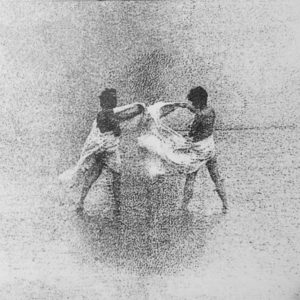
Two Daughters were recording in Brixton around 1980-1982 and were closely connected to the Industrial Records and Throbbing Gristle Gang. They recorded a debut tape called Ladder of Souls released on their own „Methane Music“ in 1980 Their one and only Lp Kiss The Cloth / Gloria was released in 1981 on Anthony & Paul Records, a sub-division of United Dairies Records, the label run by Stephen Stapleton of Nurse with Wound. The Lp then also got reissued on United Dairies in 1987 as UDT026 Two Daughters have also appeared on two other releases. A substantially edited version of 'Return Calls - We Are' can be found on the Cherry Red compilation, "Perspectives and Distortion". The music and ist unique percussion-driven style of ambient & experimental in the vein of bands like O Yuki Conjugate still holds the test of time. Anthony passed away in 2004.
30,00€
In stock

LP
Kayo MAKINO & Tori KUDO
“Ein Traum Für Dich”
Black Truffle announce the release of this genuine head-scratcher, the first collaboration between DJ/mixtape-compiler Kayo Makino and underground legend Tori Kudo. Originally created to be played between acts at the launch of Eiko Ishibashi‘s acclaimed The Dreams My Bones Dream (2018) and then reworked and refined for LP release, the two side-long pieces are sonic environments constructed by Makino for Kudo’s piano to inhabit, or, as the LP’s credits suggest, a “cinéma pour l’oreille” in which Kudo’s piano plays the starring role.
Beginning with a soothing field recording of crickets dramatically punctuated by smashing glass, the first side finds Kudo playing his way repeatedly through one of Satie‘s 1897 Pièces froides. Best known to many listeners for his role as leader of the ecstatically shambolic rock unit Maher Shalal Hash Baz, Kudo’s performance of Satie’s whimsical yet haunting melody is alternately halting and fluid, delighting in the hesitations of unstudied technique and the subtle variations between repeated attempts. While the combination of Kudo’s piano and the background of crickets initially suggests a documentary approach to recording — as if the you are simply hearing incidental sounds creeping through an open window — things take an unexpected turn a few minutes in when Kudo’s piano is suddenly doubled. Layering two separate attempts at the same piece of top of each other, Makino’s unorthodox mixing blurs Satie’s original into a fog of stumbling echoes that becomes increasingly dreamlike as the chirping crickets are overtaken by pattering rain, German dialogue and traffic sounds.
The second side begins in a similarly inscrutable vein, with snatches of birds and film music providing a gentle backdrop for Kudo’s improvisational variations on a chord progression that, as his performance builds over its twenty-minute duration, somehow begins to suggest the sadly swaggering grandeur of Mick Taylor-era Rolling Stones. Makino accompanies and eventually overwhelms Kudo’s piano with a bizarre layer of digitally processed voice and drums, stretched out into a disorienting haze before suddenly retreating to leave Kudo’s piano accompanied only by a barking dog. Seemingly unrelated to anything else being produced in the world of contemporary music, this is a striking collaboration between two unique musical personalities that bridges the mundane and the surreal, opening up a dream-space both haunted and hospitable.
Cover design by Lasse Marhaug. Mastered by Jim O’Rourke at Steamroom, Japan. Vinyl cut by Rashed Becker at Dubplates & Mastering, Berlin.
21,00€