
In stock

2 LP
Petra DUBACH & Mario van HORRIK
“Waves”
Petra Dubach and Mario van Horrik have been working together as an artistic duo in Eindhoven since 1983. Originally, they combined dance and music in concerts, performances and theater pieces, Dubach being a dancer and van Horrik making music. He is also a long-time member of the Maciunas Ensemble alongside Paul Panhuysen et al. Dubach’s and van Horrik’s starting point was the notion that movement and sound are essentially the same: If there is no movement (vibration), nothing can be heard; if there is no sound, nothing moves.
Over the years, the boundaries between movement and sound in their work became more and more blurred while they worked out their root idea in every thinkable form ranging from installations and site-specific works to performances and concerts. In 2010, they started their ongoing research project Waves which
involves producing movement feedback using shakers, a kind of loudspeakers that reproduce sound frequencies as vibrations, attached to long strings. Over the years, they have made numerous installations and concerts based upon this concept and have experimented with all sorts of objects incorporated into the basic Waves setup, including Chinese lanterns, hooks, loose strings etc.
This edition gathers four recordings of different Waves installations, all made in Dubach’s and van Horrik’s private studio in Eindhoven. It is presented as a double 12” set (45 rpm) with a full-color gatefold sleeve and liner notes by Milo Vojt chovsk . Edition of 300.
Over the years, the boundaries between movement and sound in their work became more and more blurred while they worked out their root idea in every thinkable form ranging from installations and site-specific works to performances and concerts. In 2010, they started their ongoing research project Waves which
involves producing movement feedback using shakers, a kind of loudspeakers that reproduce sound frequencies as vibrations, attached to long strings. Over the years, they have made numerous installations and concerts based upon this concept and have experimented with all sorts of objects incorporated into the basic Waves setup, including Chinese lanterns, hooks, loose strings etc.
This edition gathers four recordings of different Waves installations, all made in Dubach’s and van Horrik’s private studio in Eindhoven. It is presented as a double 12” set (45 rpm) with a full-color gatefold sleeve and liner notes by Milo Vojt chovsk . Edition of 300.
Original price was: 29,00€.15,00€Current price is: 15,00€.
In stock

CD
Tim FEENEY
“Caroline”
Performed and recorded by Tim Feeney in Berkshire, NY, and Tuscaloosa, AL, 2010-2013.
Tim Feeney seeks to explore and examine the timbral possibilities inherent
in everyday found and built objects. He treats his percussion setup as a
friction instrument, using bows, scrapers, and rosined drumheads to capture
and amplify frequencies that go unheard when an object is struck with a
traditional mallet. He supplements this acoustic console with an electronic
instrument, arranged from mixers, contact microphones, and effects pedals,
that synthesizes and alters the spectral characteristics of low-fidelity tones,
feedback, and noise.
Tim worked for years within Boston’s timbral improvising community, a group of
musicians interested in unstable sounds and silences, exploring austere
combinations of sound and the otherworldly ripple effects that pulse through
a silent space and alert ears. He has performed with musicians including
thereminist James Coleman, cellist/electronic musician Vic Rawlings, pianist Annie Lewandowski, tape-deck manipulator Howard Stelzer, trumpeter Nate
Wooley, sound artists Jed Speare and Ernst Karel, saxophonist Jack Wright,
the trio Meridian (with percussionists Nick Hennies and Greg Stuart), and
the trio ONDA (with vocalist Ken Ueno and violinist Hillary Zipper. His
concerts have been held at experimental spaces such as the Red Room in
Baltimore, Boston's Institute of Contemporary Art, Firehouse 12 in New
Haven, Connecticut, the Knitting Factory New York, and the Stone, as well as
the Center for New Music and Audio Technology at UC-Berkeley, the Stanford
Art Museum, Princeton University, and Dartmouth College.
Tim Feeney seeks to explore and examine the timbral possibilities inherent
in everyday found and built objects. He treats his percussion setup as a
friction instrument, using bows, scrapers, and rosined drumheads to capture
and amplify frequencies that go unheard when an object is struck with a
traditional mallet. He supplements this acoustic console with an electronic
instrument, arranged from mixers, contact microphones, and effects pedals,
that synthesizes and alters the spectral characteristics of low-fidelity tones,
feedback, and noise.
Tim worked for years within Boston’s timbral improvising community, a group of
musicians interested in unstable sounds and silences, exploring austere
combinations of sound and the otherworldly ripple effects that pulse through
a silent space and alert ears. He has performed with musicians including
thereminist James Coleman, cellist/electronic musician Vic Rawlings, pianist Annie Lewandowski, tape-deck manipulator Howard Stelzer, trumpeter Nate
Wooley, sound artists Jed Speare and Ernst Karel, saxophonist Jack Wright,
the trio Meridian (with percussionists Nick Hennies and Greg Stuart), and
the trio ONDA (with vocalist Ken Ueno and violinist Hillary Zipper. His
concerts have been held at experimental spaces such as the Red Room in
Baltimore, Boston's Institute of Contemporary Art, Firehouse 12 in New
Haven, Connecticut, the Knitting Factory New York, and the Stone, as well as
the Center for New Music and Audio Technology at UC-Berkeley, the Stanford
Art Museum, Princeton University, and Dartmouth College.
Original price was: 12,00€.5,00€Current price is: 5,00€.
In stock
CD
VISIONIST
“Safe”
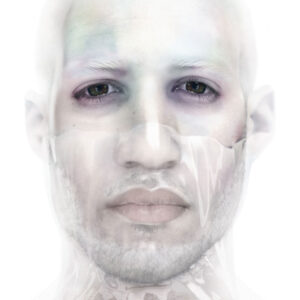
Having recently partnered with Bill Kouligas to relaunch his Lost Codes imprint as Codes, Visionist takes a defining step forward with the release of his PAN debut album, ‘Safe’.
The South London artist born Louis Carnell broke during a period of experimentation in UK music when, with the disintegration of the dubstep scene, emerging producers began looking to juke and Chicago house for inspiration. A pair of EPs on Lit City Trax (and a collaboration with Fatima Al Qadiri) in 2013 and ’14 introduced Visionist’s minimalist take on fractured R&B and liquid grime, establishing him as a leading voice in new-wave UK soundsystem culture.
On ‘Safe’, Visionist sculpts and extends that signature into new terrain and makes his most personal statement yet. Distilling his influences down to a sparse palette of manipulated folk, pop and R&B acapellas, icy synths, and metallic drum samples, he plays off ever-present anxiety and his own battle not to let it overwhelm him. “Comfort, protection, salvation—this is what we search for,” he says. “We are taught that a life of no worries is better for us, and therefore we try to create one that is ‘Safe.”
But while safe as a musical concept implies conformity, ‘Safe’ as an artistic statement is anything but. At a moment when the UK scene, once known for innovation, has settled into rehashing old tropes, Visionist continues to propel his sound into more experimental territory. The album traces the arc of an anxiety attack, from its onset through to recovery. Following the stately discord of brief opener “You Stayed,” the grimy, ballistic assault of “Victim” sends its targets diving into mirrored corners. “I’ve Said” is a brutal, almost militant advance, its sound cutting in and out as though transmitted via shortwave radio. “Too Careful To Care” trades in skittering paranoia, with the soporific “Sleep Luxury” closing out affairs.
Since 2012, Visionist has toured extensively throughout Europe, Unites States and Asia, appearing at industry standard clubs and festivals like Fabric, Berghain, Sonar and Unsound and as well as various underground venues. He has scored music for Kenzo, Liam Hodges and Roxanne Farahmand in the world of fashion, and remixed Kelis, Ghost Poet and Glasser. In 2014, he supported FKA Twigs on her first-ever UK tour.
Mastered by Jeremy Cox. It features photography & artwork by Daniel Sannwald and layout by Bill Kouligas.
Original price was: 15,00€.5,00€Current price is: 5,00€.
In stock
CD
COMPILATION
RESONANCIAS
This CD gathers the electroacoustic pieces awarded by Fondation Destellos and Mexican Center for Sound Art between 2008 and 2013. Basilio Del Boca, “Viscuap” (2008), Diana Salazar, “Papyrus” (2009), Adam Stansbie, “one time one” (2010), Panayiotis Kokoras, “Magic” (2011), David Hindmarch, “Golden Bowls” (2011), Christian Helm, “Aporie 2011” (2013), Daniel Judkovski, “El exilio infinito” (2013).
Original price was: 9,00€.4,00€Current price is: 4,00€.
In stock

In stock

In stock

In stock

mini CD
eRikm
“Frame”
“Frames is the result of a work that originates in the audio CD medium itself: “Digital anomaly and anomaly of the medium itself”; it was produced within the specific frame of hijacking the CDs from the Metamkine Cinéma pour l’oreille series.”
3,00€
In stock

In stock

In stock

In stock

In stock

Out of stock

In stock

In stock

In stock

CD
Roger DE LA FRAYSSENET
“Kitnabudja town”
“An unexplained sampling collage disc, made up of materials taken from the music of literally dozens of credited sources: mostly avant composers such as Henry, Artaud, Bayle, Xenakis, Feldman, Gunter, Schaeffer, Marclay, O’Rourke, etc., as well as figures such as Nusrat Fateh Ali Khan, Einstürzende Neubauten, Bob Marley. Jarringly assembled into 2 long tracks; 70+ minutes total.”
5,00€

CD
David MARANHA + Z’EV
“Obsidiana”
David Maranha, hammond organ. Z’ev, stainless steel discs, bass drum, maracas. Recorded live at zdb, Lisbon, 24 june 2010. Certain musicians names can speak for themselves, before even a note of music has been played. Their reputations proceed them, although of course there will also be those ignorant of both reputation and name. David Maranha - solo or with Osso Exotico - explores the territories opened up half a century ago by John Cale and Tony Conrad. Z’ev is the grandmaster of industrial/ tribal percussion. The fusion they create together is a magma of movement and stasis before which only legless cripples will remain motionless.
5,00€

CD
Yannick DAUBY
“Overflows”
“Yannick Dauby, originated from Mediterranean Alps and currently based in Taiwan. Sound and location, sound and community, sound and ecology, are the main topics of his projects. Overflows is a composition based on field recordings in natural, industrial and urban environments dealing with the overwhelming of listening. Fans of Francisco Lopez, Jean-François Laporte or Eric La Casa will be delighted.”
5,00€
CD
Seth NEHIL
“Furl”
“Furl is the sequel to Seth Nehil’s critically acclaimed 2009 release Flock & Tumble, also on Sonoris. Continuing his exploration of physically charged, acousmatic sound, these compositions whip, crash, swoop, glide and burble. Clusters of bell-like tones pierce hazy, corroded atmospheres. Animalistic yelps, distant pings, percussive bursts and glassy swells all merge in this unique sound-world. These five pieces are both rigorously-assembled and gracefully sparse. Furl will be a welcome addition to the expanding catalogue in Nehil’s futuristic organic paradox.
What others had to say about Flock & Tumble : “Extraordinary… a wonderful sense of confidence in the material, an ability to go somewhere quite new.” - Richard Pinnell (The Watchful Ear). “Not too often you come across something that just sounds like little else.” - Brian Olewnick (Just Outside). “An important demonstration of Nehil’s abilities, this is a classic sleeper which deserves immediate exposure, well beyond the small circle of experts to which music like this is usually addressed.” - Massimo Ricci (Touching Extremes). Biography : Seth Nehil is an artist, performance-maker, and composer with a practice that crosses between sound, performance-events and the visual arts. In recent years he has created large-scale sound performances, collaborated with choreographers including Liz Gerring (NYC) and Linda Austin (Portland, Ore), and has published music on various international labels, including Sonoris (France) and Senufo Editions (Italy). Seth Nehil has also been an editor of arts publications, an organizer of performance festivals and a curator of exhibitions. He currently teaches sound, video and art theory at WSU Vancouver and the Pacific Northwest College of Art.
What others had to say about Flock & Tumble : “Extraordinary… a wonderful sense of confidence in the material, an ability to go somewhere quite new.” - Richard Pinnell (The Watchful Ear). “Not too often you come across something that just sounds like little else.” - Brian Olewnick (Just Outside). “An important demonstration of Nehil’s abilities, this is a classic sleeper which deserves immediate exposure, well beyond the small circle of experts to which music like this is usually addressed.” - Massimo Ricci (Touching Extremes). Biography : Seth Nehil is an artist, performance-maker, and composer with a practice that crosses between sound, performance-events and the visual arts. In recent years he has created large-scale sound performances, collaborated with choreographers including Liz Gerring (NYC) and Linda Austin (Portland, Ore), and has published music on various international labels, including Sonoris (France) and Senufo Editions (Italy). Seth Nehil has also been an editor of arts publications, an organizer of performance festivals and a curator of exhibitions. He currently teaches sound, video and art theory at WSU Vancouver and the Pacific Northwest College of Art.
5,00€

CD
Mike SHIFLET & Daniel MENCHE
“Stalemate”
“Mike Shiflet and Daniel Menche: Hammond organs and electronics. Recorded in 2007-2008. Mastered in the analog domain at Stereophonic Masting in Portland, Oregon.
Mike Shiflet is one of the most interesting artists of the new US noise scene. He ran the Gameboy label with 100 releases in 10 years and, as musician, besides his solo recordings, he worked with C. Spencer Yeh-Burning Star Core, Brendan Murray, Francisco Meirino-Phroq & many others.
Daniel Menche is recognized since late eighties as a major figure of the experimental music world, exploring the fringe between noise and drone in a heavy and organic way. For 20 years Daniel Menche has harvested a vast discography of solo and collaborations.
Stalemate, the first collaborative work between these two prolific American artists, is based on Hammond organ sounds and electronics. The result is a heavy body of work - a powerful drone based music with densely textured sounds and some deep bass that’ll make your walls shaking.”
5,00€

CD
Jean-Michel RIVET
“À fleur de quai”
New CD on Sonoris from this French composer of electroacoustic music. Seven pieces (2005 - 2009) made mostly of sound events recorded through daily life.
5,00€

CD
Seth NEHIL
“Flock & tumble”
Seth Nehil is an American artist involved in various projects ranging from compositions for dance, installations, multimedia performances, publications and visual art. Over the years, he has collaborated with other significant sound researchers (John Grzinich, Olivia Block, Michael Northam, Matt Marble and Brendan Murray) and has released many CDs on international labels such as Kaon, Alluvial and Edition… It’s not so easy to describe the music of Seth Nehil: like a compound of several substances, obtained by capturing natural and urban sounds, manipulated instruments, as well as by electronic treatments and textured objects. Flock & Tumble is another fine example of his new direction : shorter tracks with an almost song-like structure and a large sound palette that includes the human voice as material. Flock & Tumble explores haphazard clusters, abrupt shifts, percussive rattles and gentle clouds.
5,00€

CD
BOWLINE
s/t
“Behind Bowline we find the more and more present musician David Maranha, who was once best known as Osso Exotico, and these days also works as a solo musician and one Francesco Dillon. He is from Italy and studied the cello. These days he is a member of Alter-Ego (see Vital Weekly 602 for their work with Gavin Bryars) as well as playing with people like Matmos, Pan Sonic and Scanner. A man of many talents. Here too Dillon plays cello, whereas Maranha gets credit for “hammond organ, violin, vox amplifier (with Francesco cello signal), glass harmonica, tremolo and distortion pedals”. Of the four tracks, the first is the most silent one, taking several minutes to get started. Like with so many other projects of David Maranha, in which ever form it takes, this is a work of minimalism. Of sheer, utter minimalism and what beauty, once again. The careful strumming of various string instruments, the drones added, sparsely of course, from the other instruments. Three short tracks which eventually culminate in the fourth track, which takes up about two-third of the cd and in which the three previous excursions return but glorified. Everything comes together here. If you love Osso Exotico or any of the works Maranha did after that, this is will be a most welcome addition. Also fans of traditional minimal music, especially Lamonte Young will find this a great release, I’m sure of that.” FdW -Vital Weekly 605
5,00€

CD
Kozo INADA
“j[ ]”
Special price.
"Kozo Inada is a japanese sound artist who has previously released records on various labels around the world (Staalplaat, Selektion, Digital Narcis, V2). His last record published is a collaborative work with Philip Samartzis on the australian label Room40. His music is a balance between austere minimalism and immense spaces in sound that creates a very strong tension and keeps the listener captivated from the beginning to the end. For J[], he uses samples and loops of classical music as sound materials for Max-Msp treatments. The result is a densely layered and strong sound work, with slow rises and falls, hypnotic loops and some ruptures that give texture to silence. A sonic journey into aerial and hypnotic universes sometimes also visited by P. Niblock or Hafler trio.”
"Moving away from the field recordings which Inada used in his previous releases, for this release he concentrates solely on classical music samples and loops. At first that sounded a bit cheap to me, clearly since they are not too difficult to recognize. Inada produces perfect loops that don't skip or anything, but make a sustaining wave of sound. In each of the five pieces things move slowly but steadily and Inada continues his working methods: from soft to loud, although it seems to me this time on a less radical level than before. It's again quite a powerful work, and opening up new worlds to explore for Inada. It would be great to see more of his work being available." (FdW - Vital Weekly 566)
5,00€

CD
Paul O’HARA
“Senseless acts of beauty”
Special price. “Minimal pastoralism influenced by the American and European Avant garde played on acoustic instruments with very sparse effects but plenty of beautiful accidents. First Sonoris C.D. release by English instrumentalist / composer takes it’s title from the story of counterculture revolution since the 60’s. A quiet revolution against attitude overload. (Paul O’Hara)
This records contains ten compositions mostly played on Wurlitzer piano. A very beautiful music (and I mean music) with cool bits of classic tonality, played like a cat lying in the sun, that might recall to the listener early 20th century french music (Satie, Debussy, ...), Brian Eno’s Obscure collection and also some aspects of the post-rock scene. A perfect music to do nothing, just looking at the ceiling and thinking of the persons you loved, ... something that recalls silence and absence. (Love it or hate it, this is the first record released on the label after a spontaneous demo and one of my favorite records so far)”
This records contains ten compositions mostly played on Wurlitzer piano. A very beautiful music (and I mean music) with cool bits of classic tonality, played like a cat lying in the sun, that might recall to the listener early 20th century french music (Satie, Debussy, ...), Brian Eno’s Obscure collection and also some aspects of the post-rock scene. A perfect music to do nothing, just looking at the ceiling and thinking of the persons you loved, ... something that recalls silence and absence. (Love it or hate it, this is the first record released on the label after a spontaneous demo and one of my favorite records so far)”
5,00€

CD
Steve RODEN
“Three roots carved to look like stones”
Special price. “This work was originally installed at inmo gallery in chinatown los angeles, december 2000. The piece was created using 3 objects purchased at chinatown giftshops as source material: a wooden toy flute, a small aluminum wind chime, and a small paper accordion. Each track used one of these objects as the only sound source. The installation was installed in front of a large picture window facing the chinatown pedestrian area.”
5,00€

CD
eRikm
“Mono face mirror”
Special price. “Beginning his recorded career as a turntablist, Erik M advanced over the years to include all manner of electronic manipulation, his work becoming progressively richer and more mysterious. Mono.Face.Mirror, a brief (26-minute) disc, offered one of the most compelling examples of his sonic investigations, piling allusion upon allusion into a huge and healthy sandwich of sound. There are surprising free jazz sax squalls toward the beginning of the single track that merge into what might be some ultra-low Tibetan horns, all overlaid on vinyl scratches and humming drones. A jumpy piano attack surfaces, is looped, and competes against whirring synth-like tones before abating, then reappears several minutes later as though grabbed from a parallel universe. Shards of contemporary strings appear, set against light percussion in a "sampled" manner that recalls some of John Wall’s work. Eventually, a male voice speaking in French is heard over a mix of natural sounds and drums, very reminiscent of the musique concrete of Luc Ferrari. Still, Erik M manages to make this particular sound world very much his own and, despite its apparent fragmentation, Mono.Face.Mirror ultimately coheres into a powerful, abstract statement, if one which belies easy explanation. Though brief, it’s a fine, mature statement and highly recommended. (Brian Olewnick / All Music Guide)”
5,00€

CD
Laurent DAILLEAU
“Supersternal notch”
“Laurent Dailleau (1959 - 2013) is a member of Triolid and Le Complexe de la Viande and perfoms from time to time with Helmut Schafer and Atau Tanaka. I’m unfamiliar with the bands but I know the two others as composers of powerbook music, both in their very own style. This CD is a solo CD recorded at various concerts, where he performed on theremin, msp-propelled theremin, aks synth and computer. These eight pieces can be best described as dense. Layered sounds with a drone like character, which can grow into noise (but it never reaches the peak of noise). Although some of the tracks remind me of laptop like cracklings and even a rhythm, such as ’Little Odyssey’, Dailleau never gets out of control and structure of the music remains important. The drone like character remains his important thing. Therefore this is an utmost enjoyable CD if you like the work of Asmus Tietchens, Troum but also Mego. Not the least names to be compared with. Great stuff indeed.” (FdW / Vital weekly)
5,00€
CD
Pierre BERTHET
“Un cadre de piano prolongé”
Special Price.
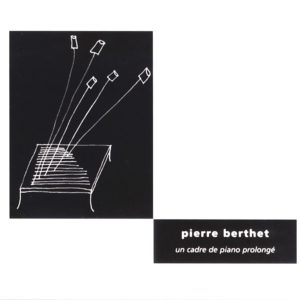
"Hanging above the audience, metal cans are linked to some strings of a piano frame by long steel wires (3 to 5 m.). Strings are excited by percussion, friction, magnetic fields and electric motors." (extract from inner notes) First solo record, before the CD released by Sub Rosa, from this musician/instrument builder from Liege, Belgium (after a collaboration CD of strange songs with Frederic le Junter and one long track on a Sub Rosa compilation), also collaborator of Arnold Dreyblatt for performances. A first part in a Dreyblatt style, a center part of layered and droning sounds (but without any effects) and a more strong finale.
5,00€
In stock

CD
Laurent GRAPPE
“Le luxe de la réflexion”
Special price. “For his first CD, Laurent Grappe has created a fascinating electro-acoustic tale. Le Luxe de la Réflexion! (The Luxury of Reflection!) blurs distinctions between field recording and acousmatics, urban and rural, French and Arab. At the center of the work is Isabelle Bassil, a Lebanese woman splitting her time between France and Lebanon. Her life experience, bridging two cultures, provides the main thread. Her interventions are spoken in Arab and other protagonists speak French, but comprehension of any or both languages is not a requisite to appreciate the listening experience - the same way understanding Spanish did not constitute an obstacle in Kristoff K. Roll’s South American sonic travel diary, Corazon Road. Grappe plays with the sound of speech, the emotions it conveys on a musical level transcending linguistic signification. His sound constructions at times evoke Fred Frith’s soundtrack to the film Middle of the Moment: atmospheric nomadic journeys into another culture. In other places, the music is resolutely musique concrete. The three "Interludes" feature vocal performances similar to Shelley Hirsch or Joane Hetu. Although a reduction of "life," Le Luxe de la Réflexion! feels surprisingly non-abstract. Of course, the unsuspecting listener will be destabilized, but most sound elements are traceable to their sources and many bits of music are left untouched. It makes a rewarding listening experience, even for seasoned sound art fans - a very impressive debut.” (François Couture - All Music Guide)
5,00€

CD
SENSORBAND
“Area – Puls”
Special Price.
"Sensorband is a trio of musicians using interactive technology. Gestural interfaces -- ultrasound, infrared, and bioelectric sensors -- become musical instruments. The group, Edwin van der Heide, Zbigniew Karkowski, Atau Tanaka, each soloists on their instruments for over six years, formed Sensorband to create a performance ensemble. Edwin plays the MIDIconductor, machines worn on his hands that send and receive ultrasound signals, measuring the hands’ rotational positions of and relative distance. Zbigniew activates his instrument by the movement of his arms in the space around him. This cuts through invisible infrared beams mounted on a scaffolding structure. Atau plays the BioMuse, a system that tracks neural signals (EMG), translating electrical signals from the body into digital data. Together, Sensorband creates a live group dynamic, bringing a visceral physical element to interactive technologies. The basic materials are pure oscillator waves. The result can be considered as the missing point between Hafler trio (Z. Karkowski used to be a regular member), Ryoji Ikeda and no-rhythmical Panasonic."
-
"Shame of course upon myself: I have never seen the Sensorband live, and that is a pity. Three guys with a bunch of ropes, connected with sensors. By moving around, climbing in the ropes, the sound is changed by the sensors. These three guys are Edwin van der Heide, Atau Tanaka and Zbigniew Karkowski - three guys with a wide experience in sound, electronic music and performances. The question of course is: will their sound last on CD? Since they use pure tones and oscillations which change because of bodily movements, nothing might happen if you play this at home. It's unclear wether these four tracks, one analogue and three digital, are recorded live, or used in live performances. The CD opens with 'digtal.1', a slowly moving static line with small pulses, gradually increasing tension. The 'analogue' track is much a like, but much slower. The built-up takes more time (no surprise in a track that lasts 28 minutes) and is very austere in setting. The two shorter 'digital.2' and 'digital.3' are like the opening track. More pulsating, without getting anywhere near a beat. Number is almost like a sentimental song, with a tone of sadness in there. The presstext talks about the missing link between Hafler Trio and Pan Sonic, I'd like to add a link to Alvin Lucier's Music On A Long Thin Wire: pure tones changed by the environment. A very minimal, but very nice work..." (FdW / Vital Weekly)
5,00€