
Out of stock

CD
Asmus TIETCHENS
“Ornamente (zwischen Null und Eins)”
“A new album by Asmus Tietchens can be quite an intimidating prospect. The Hamburg-based acoustics professor has been investigating the inner and outer realms of electronic sound production since the mid-sixties. He makes no concessions to mass marketing: the ‘press release’ for this disc simply features a quote, in German, from everyone’s favourite Romanian misanthropist philosopher, Emile Cioran, taken from a withering critique of French culture and high gastronomy. But you can forget about all that once you put the disc on and immerse yourself in the delicate, ethereal sounds that unfurl like wisps of light-reflecting dust.
The otherworldy tones and subtle dynamics here are rich in detail and complexity, but the drama is on a microscopic scale, giving that sense of being opened up to a new dimension of musical experience. Some of the weird tonal characteristics Tietchens favours remind me of Alvin Lucier’s ‘I Am Sitting In A Room’ - where a narration is gradually blotted out by the resonant feedback of the room through a process of replaying and re-recording. Tietchens manipulates and arranges his strange resonances to open up a haunting sound world of tones that float eerily amidst watery, metallic glints. The disc’s final track builds into the most expansive composition with a melodic arc surging through the deceptive stillness, suggesting more cosmic dimensions that I can imagine gracing an intense, introspective sci-fi film that’s probably impossible to make.”
(normanrecords.com)
The otherworldy tones and subtle dynamics here are rich in detail and complexity, but the drama is on a microscopic scale, giving that sense of being opened up to a new dimension of musical experience. Some of the weird tonal characteristics Tietchens favours remind me of Alvin Lucier’s ‘I Am Sitting In A Room’ - where a narration is gradually blotted out by the resonant feedback of the room through a process of replaying and re-recording. Tietchens manipulates and arranges his strange resonances to open up a haunting sound world of tones that float eerily amidst watery, metallic glints. The disc’s final track builds into the most expansive composition with a melodic arc surging through the deceptive stillness, suggesting more cosmic dimensions that I can imagine gracing an intense, introspective sci-fi film that’s probably impossible to make.”
(normanrecords.com)
11,00€
Out of stock
CD
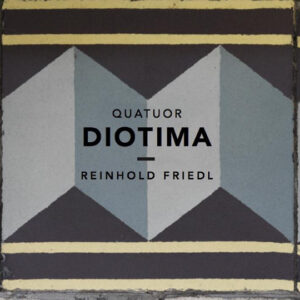
Reinhold FRIEDL – QUATUOR DIOTIMA
“String Quartet 1, 2 et 3” composed by Reinhold Friedl (Zeitkratzer) and performed by Quatuor Diotima.
“Reinhold Friedl’s string quartets do not pretend to be string quartets, they are anti-Goethe. There is no sophisticated conversation of four elder gentlemen, sitting in armchairs. The music is physical work for the performers and intended to be physical pleasure for the listeners. All three quartets are based on the same idea: smooth transformations from a given texture into another one. The random-driven details vary between the pieces and the parts of the pieces. Meanwhile Reinhold Friedl developped a sotware in the frame of a PHD projects at Goldsmiths University London to help him modeling these texture transpositions.
13,00€
In stock
CD
Reinhold FRIEDL – Franck VIGROUX
“Tobel”
Reinhold Friedl, inside piano. Franck Vigroux, electronics.
“An encounter between two worlds. Reinhold Friedl and Franck Vigroux are two musicians, both addicted to a real contemporary approach, getting to the core of sound but by very different means. Reinhold Friedl with his purely acoustic instrument and his highly developed and refined inside-piano techniques meets Franck Vigroux with his electronics - including all kind of devices from tape recorders to analog synthesizers. Their sole purpose is to meld these two opposite sound worlds.
Tobel, an almost 40-minute composition premiered at NK Berlin and at Anis Gras le lieu de l’autre, Paris is the result of their first collaboration, which happened in 2013. La Muse en Circuit, National centre of musical creation - the studio founded by Luc Ferrari - invited the duo to record Tobel in their studios in Paris.”
13,00€
Out of stock

CD
Moniek DARGE
“Crete soundies”
“Kye is pleased to announce the release of crete soundies, the major new work by moniek darge, and the follow-up to last years soundies (1980-2001) CD. Crete soundies presents three new pieces - Magnesia (2006), Anemos (2007) and East crete (2008-2009). These works were born from two years of levka ori sound research, and an additional year in east crete in collaboration with fellow sound artist Francoise Vanhecke. Moniek darge was born in bruges, 1952 and studied music theory and violin at the music conservatory of Bruges, painting at the ghent royal academy of fine arts; art history, philosophy and anthropology at the university of ghent, belgium. She is active as composer, violinist, performer and audio artist and has built light and soundsculptures, installations, musical instruments and for many years has been constructing a series of alternative music boxes, with which she also performs. darge has specialised in both soundscapes and live-art performances in which visual and musical aspects are combined and in interactional improvisation on violin. since 1970 she has performed around the world and has been active on stage, first with the logos ensemble, then with logos duo (together with godfired-willem raes), and more recently with the m&m robot ensemble. She also founded logos women, a small group specialised in intermedia improvisations performing their own compositions for various instruments, voices and music boxes. she’s often invited by international artists to collaboration. In 1986 the third program of the national belgian radio broadcasted a series of programs about her concerts and performances in new york city and about some artists with whom she collaborated there. a similar program was made about her music experiences in Kenya and Rwanda. and later on also about Japan, China, Bresil, Australia, New Zealand etc. She herself also realised radio programs about women artists over the world. in 1997 she received the title of cultural embassador of flanders for the logos duo. Moniek darge published several journalistic and literary essays, amongst which “inter media myths, auto-author” (1986), an art edition, combining poetry, drawings, scores and pictures (toronto, art metropole-catalogue no.12) and the book “lijf tegen lijf” (body against body, kritak, leuven, 1982). she’s general editor of the ’logos-blad’, the monthly magazine of the logos foundation, which appears already during more than 30 years and in which she also tells her international music travel experiences. many international magazines published her articles. besides her many concerts and performances all over the world and besides her activities as organiser, Moniek Darge is assistant professor at the "hogeschool gent" where she teaches 20th century art history, audio art and non western art studies at the fine arts department and an introductionary course in ethnomusicology at the music department. Crete soundies comes housed in 6-panel digipak, in an edition of 500, and is released with the support of the flemish government.” label info
16,00€
Out of stock
CD
Yannick DAUBY
“Echoes as Messengers”
This year 2015, Yannick Dauby and Wan-Shuen Tsai were part of a public art project at National Taiwan University. Yannick’s work was a creation project related to the sound universe of bats and led to a series of public events, including soundwalks and exhibitions in the campus. The blog chiroptera documented the activities of field recording and creation, some in collaboration with students. Here is a new output of this project, released as a CD.
Echoes as Messengers is a kind of domestic sound installation, an electroacoustic composition which develop itself slowly and sparsely, a “Discreet music” inspired by echolocation.
It has been composed with the ultrasonic voices of the Japanese House Bat (Pipistrella abramus) recorded in Taipei (Spring 2015), transformed and combined with the help of analogue electronics (notably the infamous Blippoo box by Rob Hordijk, the Sidrax organ by Peter Blasser and other modular synthesizers) and digital processing.
Please try to listen to it at low volume, or at dusk, or windows open.
This project as been informed and influenced by the remarkable works of Donald Griffin, Alvin Lucier, David Tudor and David Dunn.
10,00€
Out of stock
CD
Yannick DAUBY
“Vescagne, Salèse”
Two compositions (Spring 2014) related to the landscapes in the Mediterranean Alps. “Lignite”. Also called brown coal, this mineral was extracted in the mine of Vescagne, located near Vence, until 1953. Recordings : Bézaudun-les-Alpes, France, January 9th 2014. “Caïre Archas”. The toponym of this mount, located in the Mercantour area, relates to its shape : steep and protruding. But aren't moutains all analogue ? Recordings : Col de Salèse, January 15th 2014.
10,00€
Out of stock
CD
Marc NAMBLARD
“Chants of frozen lakes”
“Marc Namblard, sound artist and naturalist living in the northeast of France, has spent several years listening to and recording an acoustic phenomenon occuring in the winter time. The tiniest crackles inside the ice of frozen lakes produce mechanical vibrations. Under specific atmospheric conditions, these impulses propagate in the ice, whose tension makes it similar to the skin of a drum. The acoustic result is an unbelievable blend of drumming sounds and etheral resonances. This cd retraces the whole phenomena: in 55 minutes, one can discover the different steps of what happened at Lac de Pierre Percée (a lake close to Marc’s village) on the 16th of January 2006. It began with the frost falling on the vegetation accompanied by birds in the distance. The first brief percussive sounds announced the ice beginning its work under the first sunrays. A little bit later, the ice started to crackle : sounds became longer and more intense. At the end of the session, ice was breaking everywhere, the lake was singing. The phenomenon vanished with the appearance of a slight breeze. This soundwork gathers some of the most beautiful moments of hours and hours of Marc’s recordings into a whole piece, but there was no processing or overdub in the production of this publication : the aim is to propose to the listener an experience of what he would expect in the front of the lake (with the exception of the temperature). Marc’s recording technique is based on ORTF stereo configuration using condenser microphones and high-end preamplifiers. “Chants Of Frozen Lakes” can easily be classified in the domains of Naturalism, since it is based on straight observation of natural events, and in the field of Sound Art as it proposes a very intense listening experience. Therefore, this cd should delight listeners of nature sound recording, experimental music as well as electronica.”
10,00€
Out of stock
CD
Marc NAMBLARD
“Nuits de Guyane”
“Nuits de Guyane” is a sound collage of night time ambiances from Guiana (France), focusing on the calls of amphibians.
Field recordings realized in the forests and savannah near Sinnamary and Saül, close to the Saint-Elie trail and Savane Roche Virginie, from November 15th to December 10th 2014, between the dry season and the “little rainy season”.
10,00€
Out of stock
CD
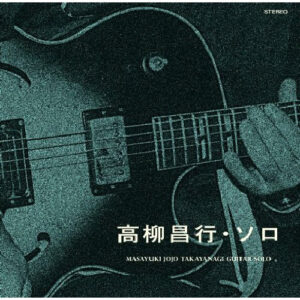
Masayuki TAKAYANAGI
“Solo”
Recorded on 21 December, 1982 at Airegin, Yokohama. Mastered by Kojima Yukio. Design by Sasaki Akira. This recording is the last night of his modern jazz guitar-style. The after this night, Takayanagi played more free, noisy-guitar solo style (Action Direct) and/or guitar machismo style (translation of Ayler’s style by his guitar - Angry waves) and/or Tango style guitar. He released his masterpiece called “Lonely woman” (TBM) on 1982, and its accomplishment is this recording exactly !”
21,00€
In stock
CD
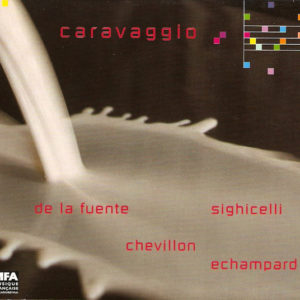
DE LA FUENTE – SIGHICELLI – CHEVILLON – ECHAMPARD
“Caravaggio”
“Canicule” (2000), “Vicolo del divino amore”, “Action!”, “Platz”, “Encres”, “Manège” (2001). Bruno Chevillon : doublebasse with effects. Eric Échampard : drums, percussions. Benjamin de la Fuente : violin with effects. Samuel Sighicelli : sampler, piano.
15,00€
Out of stock
CD
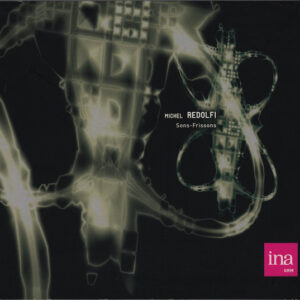
Michel REDOLFI
“Sons-Frissons”
Between sound imersion, soundscapes and narrative compositions. “History of sound” (2011), “L’ombre de la méduse” (2002), “Son frisson : deep EEG” (1998), “Songes drôlatiques” (1994), “Son frisson : light EEG” (1998), “Sonic immersion” (2011), “La galaxie du caïman” (1990).
15,00€
In stock
CD
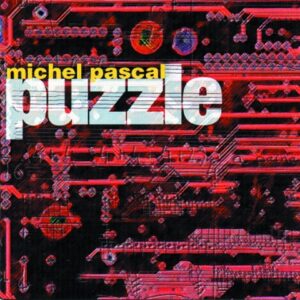
Michel PASCAL
“Puzzle”
“Puzzle” (with the participation of Pierre-Yves Artaud, Daniel Kientzy, Bernard Vitet, Vinko Globokar, Gérard Frémy, Barre Phillips…).
15,00€
In stock
CD
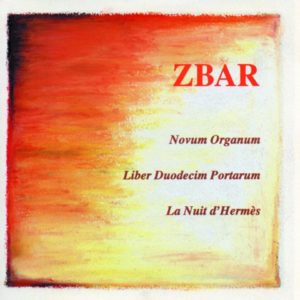
Michel ZBAR
“Michel ZBAR”
“Novum Organum” (1993), “Liber Duodecim Portarum” (1983), “La Nuit d’Hermès” (1981).
15,00€
In stock
CD
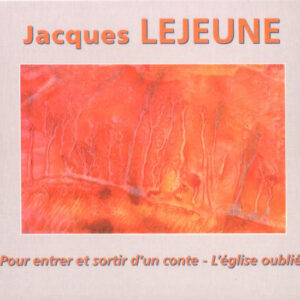
Jacques LEJEUNE
“Pour entrer et sortir d’un conte”
“Pour entrer et sortir d’un conte” (1990), “L’église oubliée” (1997).
15,00€
In stock
CD
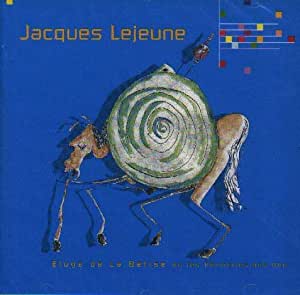
Jacques LEJEUNE
“Éloge de la bêtise ou les péripéties des Ubu”
“Éloge de la bêtise ou les péripéties des Ubu” (2004), for voices, saxophones and tape around “Pere Ubu” from Alfred Jarry.
15,00€
In stock
CD
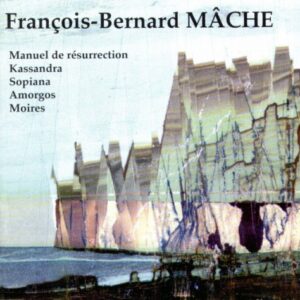
François-Bernard MÂCHE
“Manuel de résurrection” (1998) for soprano and keyboards, “Kassandra” (1977) for tape and orchestra, “Sopiana” (1980) for flute, piano and tape, “Amorgos” (1979) for 12 instruments and tape, “Moires” (1994) for string quartet and tape.
15,00€
In stock
CD
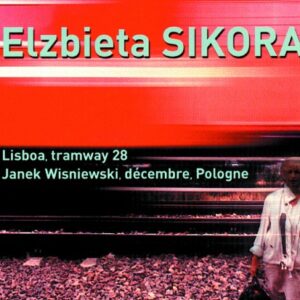
Elzbieta SIKORA
“Lisboa, tramway 28”
’Lisboa, tramway 28’ (1998). ’Janek Wisniewski, décembre, Pologne’ (1982).
15,00€
In stock

CD
Bernard PARMEGIANI
“Sonare”
One 25 minute piece, from 1996. A State/CIRM commissioned work. "There is already music... of an Italian an character in this title! Sonare: l love this word because it is Italian and because upon hearing it, music simly springs forth from within it. For each of the 5 movements, I have chosen a pseudo-instrumental or synthesis sound which I sense will allow me to bring out its very essence to develop it until it is within the deepest levels of the soul, if the soul can at all be rendered accessible to such acoustic resonance!!! I had to imagine the most suitable interplay to bring out such ’intrinsic resonance’. Now of course, no interplay can be genuine unless certain freedoms are present within or inherent to it, the rule being that such an interplay should remain musical whilst the sounds, ’in a real context’ become linked to or opposed to each other. No combat, just interplay for its own sake, for itself alone, and at the same time, changes in contour, an opening or closing in the tone, range, patterns of rhythm, as if the work were a living being in itself which these creations in sound so often closely resemble, these same creations in sound, intended firstly for our ears but not only for our ears." B.Parmegiani.
15,00€
Out of stock
CD
Bernard PARMEGIANI
“Plain-temps”
“Présent composé” (1991). “Entre-temps” (1992). “Plain Temps” (1991-93).
15,00€
Out of stock
CD
Bernard PARMEGIANI
“L’œil écoute”
“L’Œil écoute” (1970), “La roue Ferris” (1971), “Espèces d’espace” (2002-2003).
15,00€
Out of stock
CD
Beatriz FERREYRA
Argentinian composer born in 1937, Beatriz Ferreyra is living and working in France since the sixties. She is famous for her incredible work of all sound examples for the Pierre Schaeffer’s “Solfège de l’objet sonore”. She is also a great tape player. “Dans un point infini” (2005), “L’autre rive” (2007), “Les larmes de l’inconnu” (2011), “Un fil invisible” (2009).
15,00€
In stock
CD
COMPILATION
RYTHMÉ BRUT
“With Dragibus, Guylain Damonneville, Jaber, Fred Thabaut, André Robillard, Paul Bourre, Jean Clerembaux, Mordysabbath, Michel Dalmaso, Donna Collins. Does “raw” music exist? Is there any correlation with Raw Art? Don’t be afraid, this cd does not give any clue. One could find everything he wants in these recordings: musicians which could belong to the “Neuve Invention”, improvisers of noisy belches on a microphone, outstanding technicians accumulating several keyboards like other obsessionaly accumulate things (I think of the puppets of Michel Nedjar), soft and-or violent musicians. But from what I have listened to, there were sincere people, an essential quality for the raw approach. For some of them, their music was never “exported” before. This cd has the defaults and the advantages of a compilation. Default of heterogeneity and advantage of heterogeneity. Everybody can pick what he needs to imagine... Fullishly destroyed.”
12,00€
Out of stock
CD
Jean-François PAUVROS
“La belle décisive”
New edition in digisleeve !
1996. Jean-François Pauvros: guitar, voice. “Jean-François Pauvros is still a far lesser known name to those outside France, but he has a solid-gold history in European free-rock shenanigans stretching all the way back to the late seventies, when he played alongside Jac Berrocal in Catalogue. Recent years have seen many collaborations with dancers, poets, and Japanese musicians such as Makoto Sato, Setsuko Chiba, and Keiji Haino.” Alan Cummings
1996. Jean-François Pauvros: guitar, voice. “Jean-François Pauvros is still a far lesser known name to those outside France, but he has a solid-gold history in European free-rock shenanigans stretching all the way back to the late seventies, when he played alongside Jac Berrocal in Catalogue. Recent years have seen many collaborations with dancers, poets, and Japanese musicians such as Makoto Sato, Setsuko Chiba, and Keiji Haino.” Alan Cummings
10,50€
In stock
CD
BERTHET – LE JUNTER
“L’enclume des jours”
“(This title is taken for « foam of the days », a novel by Boris Vian. « Foams » has been changed for « anvil » since in french, « foam » stands for « écume » and « anvil » for « enclume »). Raw concrete music. Tubular dums, horns, nails, wind and rotary organs, water droplets, automatic bow, springs, foot bass, iron wires, tins, barrels, mirrors, singing... So many indications to penetrate the music of Pierre Berthet and Frédéric Le Junter, two french artists. This is a clever mix between the soundscape of our society (the concrete item of the music) and the creative diversion for construction and composition, in order to give an expressive signification of this world. We really are in the center of the globalization of our lifes; our urban future based on our agricultural roots. These recordings of the CD professionnaly duplicated (27 min long) were performed in the mid 90’s, when Pierre Berthet and Frédéric Le Junter played duo, with already some memories recorded on a CD published in 1994 on the Vand’Oeuvre french label. Today, InPolySons produces unreleased material from the same days, composed for the ballet show « Love is a stranger» of the late William Douglas (1953-1996) (excepted the last piece which appeared on a Vand’Oeuvre compilation). These are sounds staged for us, meaning sounds through simple and raw words, as a metaphor of the real life.”
9,50€
In stock
CD
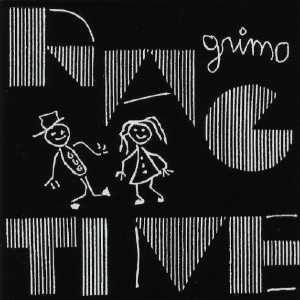
GRIMO
“Rag-time”
Dominique Grimaud plays guitar, synthesizer, banjo, mandolin, harmonica with old 78rpm. He plays with our memory, with the history of recording and with the surface noises of the old records.
Original price was: 12,00€.5,00€Current price is: 5,00€.
In stock
CD
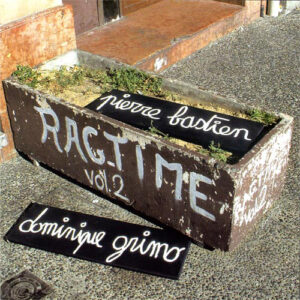
Dominique GRIMO-Pierre BASTIEN
“Rag-time vol.2”
“Rag-Time: jazz precursor, plenti-syncopes. Bastien et Grimo converted themselves into two analogical DJs, slicing old 78 rpm Lps and assembling them into Mecano wheels: with the aim to construct a true concept-album to criticize our present time which is getting irreversibly slashed. The different pieces of this cd are connected together by old and new diseases such as pest and cholera, the misery of our world. For that, Grimo took out his old Teppaz, cleaned the needle, wiped off the dust of his old 78 rpm Lps with their brownish sleeves and prepared-composed a strange program to his colleague Bastien. The so-call colleague sweap his little trumpet, oiled the movements of his mecanic robots and arranged the last year’s melodies, giddy and charming tunes. This produced a transe music, trans-duced, trans-versed and trans-formed that resembles nothing but the imaginary world we hear. Volume 2: the first (already on InPolySons) was a solo. Grimo-Bastien today act as a duo. Two mechanical DJs who officiate without mix artifice, recording in mono.”
12,00€
Out of stock

CD
Han BENNINK & Kazuo IMAI
“Across the desert”
European free jazz/free improvisation pioneer Han Bennink (drums) made this studio recording with Kazuo Imai (guitar) in Tokyo in May of 2002. Imai, who in the ’70s studied with Masayuki Takayanagi and Takehisa Kosugi, currently performs both on his own and with the annual five-member collective improvisation project Marginal Consort. Across the Desert contains nine duo pieces. Imai plays both acoustic and electric guitar while Bennink delivers strong, constantly changing rhythms. Here are two musicians who know their instruments inside out. Their unique affinity is powerfully conveyed in these dynamic exchanges.
14,00€
Out of stock

CD
Pauline OLIVEROS
“Accordion & voice”
Back in stock. “Utterly essential document of early American minimalism from this pioneering composer. Remastered from the original analog tapes by Carl Saff. Pauline Oliveros (b. 1930) is an accordionist and composer who currently resides in Kingston, New York. Her instrument is tuned in Just Intonation and she often includes it in her meditative improvisational music. Her music is not meditative in the sense that it is intended for listening to while meditating, rather each piece is a form of meditation, such as her aptly titled Sonic Meditations. A central figure in post-war electronic art music, Oliveros is one of the original members of the San Francisco Tape Music Center (along with Morton Subotnick, Ramon Sender, Terry Riley, and Anthony Martin), which was the resource on the U.S. west coast for electronic music during the 1960s. The Center later moved to Mills College, where she was its first director, and is now called the Center for Contemporary Music. Oliveros often improvises with the Expanded Instrument System, an electronic signal processing system she designed, in her performances and recordings. “Accordion and Voice was the first of my recordings as a soloist. I was living in an A-frame house in a meadow just below Mount Tremper at Zen Mountain Center. I had a wonderful view of the graceful saddle mountain top. When away on a performance trip I would imagine the mountain as I played Rattlesnake Mountain. I followed the feelings and sensations of my many experiences of the mountain - the changing colors of the season, the breezes and winds blowing through the grasses and trees. Horse Sings From Cloud taught me to listen to the depth of a tone and to have patience. Rather than initiating musical impulses of motion, melody and harmony I wanted to hear the subtlety of a tone taking space and time to develop. The tones linger and resonate in the body, mind, instrument and performance space. My thanks to Important Records for bringing these pieces to be heard again.” Pauline Oliveros 2007
13,00€
In stock

CD
Pauline OLIVEROS
“The wanderer”
Reissue. “This is the first time The Wanderer has been made available on cd after over 20 years out of print. Included as a bonus track is a lengthy live recording of Oliveros with David Tudor that was discovered on the reels during the digital transfer! Remastered from the original analog tapes by Carl Saff. Utterly essential document of early American minimalism from this pioneering composer. The Wanderer is the sister record to Accordion & Voice also available on cd from Important. The Wanderer is based on a single modal scale (B C
D D
E F
G
) and rhythmic modes based on a meter consisting of 3-4 and 3-8. Part I, Song, is intended to explore the unique resonant qualities of accordion reeds through long sounds. Subtle variations come about from differences in tuning and air pressure. Part II, Dance, demonstrates the sharp accenting power of the accordion bellows in a mixture of cross rhythms characteristic of jigs, reels, batucadas, Bulgars, klezmer forms, Cajun dances, and music of other diverse cultures. The Wanderer was composed in November, 1982 especially for the Springfield Accordion Orchestra, directed by Sam Falcetti. This recording documents The Wanderer’s world premiere, as it was performed 27 January, 1983 at Marymount Manhattan Theatre. The orchestra consists of twenty accordions, two bass accordions, and five percussion, with Pauline Oliveros as soloist, Sam Falcetti conducting. Horse Sings From Cloud, written in 1975, is one of Oliveros’ best known works. Like most of her Sonic Meditations, it can be performed vocally and/or instrumentally, solo or in collaboration. A solo version of Horse Sings From Cloud has been recorded on Accordion & Voice. An early version of the score reads, “Sustain a tone or sound until any desire to change it disappears. When there is no longer any desire to change the tone or sound, then change it.” This time, Horse Sings From Cloud is performed in ensemble. Joining Pauline Oliveros on bandoneion are Heloise Gold on harmonium, Julia Haines on accordion, and Linda Montano on concertina. This quartet version incorporates the microtonal differences in tuning of the selected instruments, creating shimmering reed sounds somewhat similar to the shimmering of a Balinese gamelan.”
D D
E F
G
) and rhythmic modes based on a meter consisting of 3-4 and 3-8. Part I, Song, is intended to explore the unique resonant qualities of accordion reeds through long sounds. Subtle variations come about from differences in tuning and air pressure. Part II, Dance, demonstrates the sharp accenting power of the accordion bellows in a mixture of cross rhythms characteristic of jigs, reels, batucadas, Bulgars, klezmer forms, Cajun dances, and music of other diverse cultures. The Wanderer was composed in November, 1982 especially for the Springfield Accordion Orchestra, directed by Sam Falcetti. This recording documents The Wanderer’s world premiere, as it was performed 27 January, 1983 at Marymount Manhattan Theatre. The orchestra consists of twenty accordions, two bass accordions, and five percussion, with Pauline Oliveros as soloist, Sam Falcetti conducting. Horse Sings From Cloud, written in 1975, is one of Oliveros’ best known works. Like most of her Sonic Meditations, it can be performed vocally and/or instrumentally, solo or in collaboration. A solo version of Horse Sings From Cloud has been recorded on Accordion & Voice. An early version of the score reads, “Sustain a tone or sound until any desire to change it disappears. When there is no longer any desire to change the tone or sound, then change it.” This time, Horse Sings From Cloud is performed in ensemble. Joining Pauline Oliveros on bandoneion are Heloise Gold on harmonium, Julia Haines on accordion, and Linda Montano on concertina. This quartet version incorporates the microtonal differences in tuning of the selected instruments, creating shimmering reed sounds somewhat similar to the shimmering of a Balinese gamelan.”
13,00€
In stock
CD
Pauline OLIVEROS and Connie CROTHERS
“Live At The Stone”
Live At The Stone was intended to be Pauline Oliveros’ tribute to the life and work of pianist Connie Crothers who passed away on August 13, 2016. Sadly, Pauline Oliveros passed away on November 25, 2016. This CD, Pauline’s memorial for Connie, is now a memorial for both women.
Pauline’s original dedication: “This recording resulted from my one and only performance with Connie Crothers at her invitation during her amazing residency at The Stone in August 2014. I was honored to play with Connie and did not realize that this would be a memorial recording. We have lost an extraordinarily original musician too soon on August 13, 2016. Here is her statement about her week-long residency: “I will be performing in every set with these great musicians–from Tuesday, August 19 through Sunday, the 24th. I am very happy about this, especially since every set will be very different from the other sets. Not only are the musicians different, the way they approach improvisation is different. A friend, noting this, said, “You like a challenge.” I responded, “Yes, I thrive from a challenge. That is where the fun is.” That's also where the surprises are, and the joy.”
I certainly was challenged by the energy and power of Connie’s performance during our set. Like Connie I thrive with challenges. The concert felt remarkable and very satisfying for me. I am grateful that Connie had the foresight to arrange for this excellent recording. She was looking forward to this release. May this recording be a tribute to Connie Crothers. Her spirit will always be present in the wonderful community of musicians in New York and around the world and most certainly in my heart.”
Pauline’s original dedication: “This recording resulted from my one and only performance with Connie Crothers at her invitation during her amazing residency at The Stone in August 2014. I was honored to play with Connie and did not realize that this would be a memorial recording. We have lost an extraordinarily original musician too soon on August 13, 2016. Here is her statement about her week-long residency: “I will be performing in every set with these great musicians–from Tuesday, August 19 through Sunday, the 24th. I am very happy about this, especially since every set will be very different from the other sets. Not only are the musicians different, the way they approach improvisation is different. A friend, noting this, said, “You like a challenge.” I responded, “Yes, I thrive from a challenge. That is where the fun is.” That's also where the surprises are, and the joy.”
I certainly was challenged by the energy and power of Connie’s performance during our set. Like Connie I thrive with challenges. The concert felt remarkable and very satisfying for me. I am grateful that Connie had the foresight to arrange for this excellent recording. She was looking forward to this release. May this recording be a tribute to Connie Crothers. Her spirit will always be present in the wonderful community of musicians in New York and around the world and most certainly in my heart.”
15,00€
Out of stock
CD
Maurizio BIANCHI & Francisco LÓPEZ
“KRMN”
“KRMN-FL and KRMN-MB were both created with the same original source
materials, jointly created by Maurizio Bianchi and Francisco López. Produced from the partial oxidation of carbon-containing compounds, carbon monoxide is a highly toxic gas and has no odor or colour. It is the most common type of fatal poisoning in many countries. Exposures can lead to significant toxicity of the central nervous system and heart. KRMN (for Karbona Monooksido) has been produced from the impartial de-oxidation of sonorous carbon-containing modular compounds. It’s not toxic and has a positive effect on the peripheral nervous system and symbolic heart. Pay
attention to its fatal antidote to the industrial poisoning in our dogmatic modernity (M.B.).” label info
12,00€
In stock
CD
Francisco LÓPEZ
“Untitled #274”
Untitled
274 was composed by Francisco Lopez and performed by Kasper T. Toeplitz at GRM Studios in Paris, France.
Francisco López is internationally recognized as one of the major figures of the sound art and experimental music. For more than thirty years he has developed an astonishing sonic universe, absolutely personal and iconoclastic, based on a profound listening of the world. Destroying boundaries between industrial sounds and wilderness sound environments, shifting with passion from the limits of perception to the most dreadful abyss of sonic power, proposing a blind, profound and transcendental listening, freed from the imperatives of knowledge and open to sensory and spiritual expansion.
Kasper T. Toeplitz has worked with academic research organizations, such as GMEM, GRM, IRCAM, and Radio-France, as well as with experimental musicians, such as Éliane Radigue, Zbigniew Karkowski, Dror Feiler, Tetsuo Furudate, Phill Niblock and Art Zoyd. Citing Giacinto Scelsi and Iannis Xenakis as influences, his early work was mostly written for traditional instruments.
15,00€