
Out of stock

2 CD
Matt ROGALSKY
“Visitations And Revisitations”
2024 release
With Visitations and Revisitations, Matt Rogalsky continues lines of work that seem to inevitably revolve around explorations and honoring of place, people, and memory. Ambient, expansive and immersive, twelve new songs without words invite listeners on travels through spectral sound worlds. All the compositions combine elements of acoustic and electronic sound, where the electronic sound is often derived from underlying acoustic sources which often remain unheard while their liminal, spectral qualities are evoked in new ways. On this collection, two "Visitations" bracket ten "Revisitations." Each "Revisitation" identified by a letter is an investigation into the work of a composer or musician whose work has meant much to Rogalsky: "The 'Revisitations' all function as homage compositions, in an alphabetical series of 26, where each letter references a composer whose work has touched me, and whose sounds I have spectrally explored in a new response piece." The "Visitations" are different from the "Revisitations" in their referencing of intensely personal conditions: one derives from the resonances of a family upright piano which came from Rogalsky's maternal side, and one evokes experiences in movement, sound and community around the base of Sacred Buffalo Guardian Mountain in Banff Alberta. The range of influences Rogalsky explores on Visitations and Revisitations span from musicians and poets in his local sphere, to internationally well-known contemporary and historical figures in music and sound. Some sources are revealed and others kept private as a guessing game for listeners. A number of the tracks on the album are based in recordings of live performances while others are purely studio compositions. Matt Rogalsky is based in Kingston/Katarokwi, in Ontario Canada where he runs the Sonic Arts Studio at Queen's University. He previously released a double CD album Memory Like Water on XI Records in 2006 (XI 131CD).
15,00€
Out of stock

2 CD
Merce BLASCO – Lucie VITKOVA
“Blasco/Vitkova/Anette”
2023 release
On this album, Lucie Vítková and Merche Blasco explore cyborgness through their relationships with their instruments. Lucie perceives the accordion as an extension of their body -- sound, matter, and movement locked in a self-generating cybernetic loop. Merche built Anette, a 3D printer, as her interlocutor and companion in the performance space; in return, Anette printed thimble-microphones Merche wears on her fingers, which render the machine's unique electromagnetic voice audible to human ears. Performed through an octophonic system, the wearable microphones expand Merche's hand gestures to sonically fill the performance space, surrounding the audience with the sensation of being within Anette's busy, mechanical body. For this album, the eight signals broadcast by Merche's thimble-microphones were later mixed down to stereo, replicating the spatial image created live. This album is the record of an inter-material conversation among the trio of Vítková, Blasco, and Anette (technically a quartet since Merche was six months pregnant at the time), in which human and nonhuman elements of the cyborgian system are in constant interflow. The album includes a text written by Shelley Hirsch.
15,00€
In stock

2 CD
Michael WINTER
“Counterfeiting in Colonial Connecticut / a lot of tiles (trivial scan)”
2022 release
XI Records announce the release of a double-CD set of Michael Winter's music organized by guitarist Elliot Simpson. Each CD features a single composition, demonstrating different sides of Winter's work.
The first, "Counterfeiting in Colonial Connecticut", is a socially-engaged piece written for Simpson and in honor of George Floyd. The second, a lot of tiles (trivial scan), derives music from a set of mathematical tilings (often referred to as tessellations). The album art features reprints of altered and counterfeit colonial Connecticut bills as well as custom-made, hand-stamped prints of the tilings. "Counterfeiting in Colonial Connecticut" interleaves guitar passages with readings of excerpts from the book of the same title written by Kenneth Scott and published by the American Numismatic Society in 1957. Readings from the Scott Compendium are complemented with readings of texts written by Winter reflecting events that occurred during the composition of the piece; particularly the protests sparked by the death of George Floyd, a black man brutally murdered by police while being arrested for allegedly using a counterfeit $20 bill. Simpson is accompanied by Gemma Tripiana Muñoz on piccolo and the texts are read by Simpson, Winter, and animator Mandy Toderian.
"a lot of tiles (trivial scan)" is based on a set of rectangle substitution tilings explored by Chaim Goodman-Strauss in his seminal paper "Lots of aperiodic sets of tiles". A rectangle substitution tiling is generated by dissecting a rectangle into four smaller rectangles, which are then dissected into eight even smaller rectangles, and so on. The parenthetical in the title, "trivial scan", refers to the method of sonification. Sonic parameters of the music are determined by scanning and reading the tilings. The piece is quite open. As Simpson explains about Winter's music in the notes: "Although his music covers a wide range of forms, formats, and concerns, there seems to always be a careful consideration of the adaptability of his works... They can expand and contract to accommodate diverse instrumentations, durations, spaces, and situations... There is an understanding that the myriad of possibilities defined by the scores will never be exhausted; new constellations of materials, performers, and contexts will always exist." In the recording of "a lot of tiles (trivial scan)", this variability is explored through different combinations of electronic, synthesized, and acoustic sounds featuring Simpson and saxophonist Omar López, the dedicatee of the work.
15,00€
In stock
CD
Phill NIBLOCK
“NuDaf”
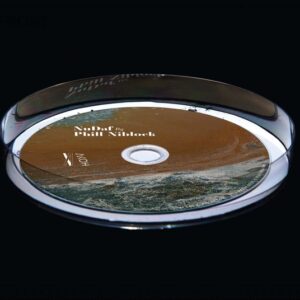
A 65-minute electroacoustic composition featuring Dafne Vicente-Sandoval, bassoon. "The aural effect is minimal to the max, but it isn't simplistic. The tones vibrate and glow, the densely packed texture shifting hues like a sonic aurora borealis" --John Rockwell, The New York Times. NuDaf (2020) is the second longest piece in Phill Niblock's repertoire of recorded audio works. NuDaf is a departure from his previous pieces in that he makes extensive use of multiphonics and constructed the work with fewer tracks than usual, creating uniquely transparent and ephemeral textures. The piece is the result of a collaboration between Niblock and the stellar bassoonist Dafne Vicente-Sandoval. Her musicality and breadth of knowledge, extended bassoon performance, and uncanny timing inspired the piece. This is the first of three collaborative projects between XI Records and Akoh Media. Akoh initiated the project, suggesting that Phill confront a longer form that also seemed eminently suitable to Dafne Vicente-Sandoval's interests. Akoh, as is its tradition, presents the work in a limited numbered edition of a one-of-a-kind Petri dish that incorporates Niblock's photos in an exquisite and unique design. From the liner notes by Michael Pisaro-Liu: "... over the course of the long duration of NuDaf we listen to a slow-motion explosion that frees it, creating a spectacular shape, right before our ears."
15,00€
In stock
2 CD
Tom CHIU
“The Live One”
XI Records announce the release of Tom Chiu's new double-CD, The Live One, a diverse and thoroughly engrossing album that showcases the multiple facets of Chiu's visions. Chiu is a polymath who is as comfortable with lyricism and the beauty of tonality as he is with process-based works and challenging conventions of composition. Chiu specializes in creating spatial experiences and altered states of mind with his music, with a singular, questing path. On the album opener, "Into The Forest", melancholic themes build and become wrapped in echoes that reverberate like a skipping stone casting ripples in a pond. Dry and delicate melodies emerge that float spatially. The piece is an assemblage of over 60 musical fragments composed by Chiu, which coalesce seamlessly into a homogeneous whole. "BABIP", a solo performance, begins with Chiu's pizzicato which evokes the spirit of gamelan, and builds through increasingly intense gestures, woozy double stops and extended techniques until he starts transforming the sound of his instrument with live effects. The functionally-titled "Duo Improvisation 16741" sees Chiu pairing with sound artist and composer Michael Schumacher. Together, they create a hypnotically jarring sonic whirling dervish. Chiu's live effects invoke undertones of Tuvan throat singing as glissandos layer with insistent bell tones. The insistent piece thrillingly morphs into electronic pulses and sirens, journeying deeply into sonic abstraction. The track "Birave Trifecta" sees Chiu performing with Dan Joseph on hammer dulcimer and Jason Cady on modular synthesizer under the moniker JCC Trio. The trio's piece begins as almost a folk stomp, with echoes of minimalism in its insistence. It builds to euphoric intensity with Chiu's bravura playing, sawing at his instrument with fierce abandon. "RETROCON" is a work performed by FLUX Quartet. The epic piece unfolds like a mini symphony, with the quartet creating a stunningly rich sonic world. The layers of the string quartet swell and undulate like a small boat in the middle of the ocean negotiating the waves of an impending storm, then wail plaintively before returning with clustered hives of notes. A startling and insistent monolithic pulsing then seems to summon dark deities before receding with a delicate beauty. The final piece on the album, "deKonstruct", is an improvisation which quotes from existing materials, colliding Bach and Chiu. Chiu uses a looping pedal to create a bed for his hyper-kinetic performance which mutates through his arsenal of sonic manipulation, to mesmerizing effect. (from the liner notes by JG Thirlwell)
13,00€
In stock
2 CD
Cecilia LOPEZ
“Red / Machinic Fantasies”
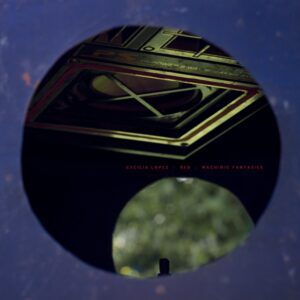
Cecilia Lopez's work is a perfect combination of flavors that slowly reveal themselves as you spend more time enjoying it. It has marvelous layers of sonic explorations that slowly unfold and draw you in. Red is more than a musical composition. It roots lie in its physicality. Nestled on a large cargo-like cable web are an array of small speakers and contact microphones. As this web sways the speakers and microphones come in and out of proximity and form an evolving feedback network, which slowly reveal themselves as a myriad of permutations accompanied by sympathetic synthesizer tones. Zero-input mixing works seem to be very popular now, but Red takes feedback further, beyond the electronic domain, by its use of a multi-faceted instrument creating a sonic architecture intertwined with the resonances of acoustical spaces. Her Machinic Fantasies, a kind of performed installation, explores another set of instruments she has constructed using two hand-rotated, 55-gallon drums each having a speaker inside with multiple cutouts that act as acoustical filters. Her sound materials, derived from field recordings to spoken word and live acoustic/electronic instruments, are fed into the oil drums and emanate through the holes and are at the same time amplified using microphones placed near the rotating holes. Driven by a detailed score, this recording resulted from a music commission at Roulette in Brooklyn, New York combining the two rotating drum instruments with instrumentalists Jean Carla Rodea, Julia Santoli, Christopher McIntyre, and Joe Moffett. Machinic Fantasies also has multiple dimensions with the resonances of the performance space excited by the instruments, the musicians weaving their sounds into the space from different locations, and the ongoing physical rotations of the spinning drums to create a swirling almost hypnotic music.
15,00€
In stock
LP
Neil LEONARD
“Sonance for the Precession”
Excerpts from a sound installation based on alto saxophone recordings and electronic sound. "Mr. Leonard creates a haunting, rhythmic, chantlike score, secular spiritual music for a New World. After leaving the gallery I kept hearing it, with delight, in my head, on the street, all afternoon." --Holland Cotter, The New York Times.
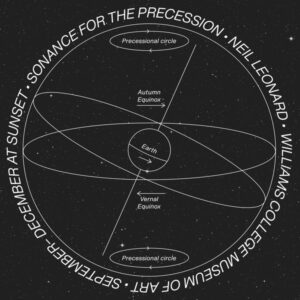
The electroacoustic composition Sonance for the Precession was commissioned by Williams College Museum of Art (WCMA). The piece furthers Leonard's practice in large scale sound installation, with recent commissions by documenta, Venice Biennale, and Fujiko Nakaya of Experiments in Art at Technology. The original composition, created for the quad adjacent to WCMA, played from the dome of the historic Hopkins Observatory, the oldest working astronomical observatory in the United States. The durational work explored ancient ideas connecting the precession, or movement, of the equinox with the harmonic series. Each day, the music began just a minute or two earlier than the previous day -- mirroring the disappearing sunlight as day turned to night and autumn shifted to winter. 30 minutes of the composition played daily. The composition provided a context to reflect on how Hindu and Greek theories of astronomy and acoustics developed through intercultural exchange as far back as prehistoric times. Working closely with WCMA and producer/engineer Joe Branciforte, Leonard remixed Sonance for the Precession specially for LP and stereo listening. The result is a stunning long form composition that brings the sense of contemplation, cosmic motion and intimate timbral nuance of the installation to your living room, headphones and/or car stereo.
18,00€
In stock
2 CD
Dave SEIDEL
“Involution”
From the liner notes by Dean Rosenthal: XI Records announce the release of Dave Seidel's new double-CD, Involution. The work contained on this recording represents Dave Seidel's second foray into the realm of releasing a full-length recording. But this new milestone was not reached until he had long immersed himself in the experimental scene in NYC in the 1980s and 1990s, working closely with established experimental music pioneers Lois V Vierk and Guy Klucevsek among others. Seidel's own composing and performing grew, blossoming into live performances in the 2000s and 2010s, allowing further exploration into programming and experimenting with sonority and algorithmic sonification. What we hear on this recording is the care and detail of his passion for these two features of composition and a steady integration of them. This leads us to the two pieces heard here: "Involution" and "Hexany Permutations". In thinking of sonority, Seidel has spoken of the strong influence of La Monte Young's use of perfectly-tuned intervals and Young's ideal of previously unheard sounds, those that may engender new sensations and emotions in the listener. But Seidel also confirms the influence of the work of Alvin Lucier, in particular the Orpheus Variations. For Seidel and his sonorities, he has found little use for the 12-note chromatic tempered system, no doubt the ubiquity of this universal tuning of Western music having too few possibilities for his ear. The question then appears: how does he apply this desire to explore new forms of sonority outside the well-tempered system and, for our purposes, in these pieces? The first CD in this set presents Seidel's composition "Involution", heard in three sections. The music is presented as an expansion of slowly-changing sonorities that explore the harmonic spaces inherent in certain microtonal tunings and scales, or modes within those tunings. Each section employs a different tuning and a different set of scales or modes and uses a combination of all the different technologies Seidel has been working with over the past several years: Csound, modular synthesizer, and pedals. "Hexany Permutations", the music that the second CD of this release contains, hints at the same concerns of sonority heard in Involution but tackles the composing slightly differently, with musical results of differing proportions. In this piece, the structure of the piece plays an equal if not more dominant role than the microtonal sonorities explored.
14,00€
In stock
2 CD
The DORF / Phil NIBLOCK
“Baobad”
Co-released with Umland Records, Germany. On one night in 2019, The Dorf (German for "village") took a heavy dose of the music of Phill Niblock. The impact on the musicians, gathering to play a double-length version of Niblock's "Baobab" and (in a second set) three "Dorf" tunes, was deep. It felt a bit like going to church -- a truly spiritual experience. At first, the audience did not believe the announcement that the "drone" piece would last for 46 minutes. Afterwards, their reactions showed the impression Phill's music had made on them. After a 20-minute break, three pieces followed -- a different game altogether, but connected to "Baobab" in the way that the energy and the feel for the evening had been thoroughly set by Mr. Niblock. Already his physical presence changed the reception for both musicians and listeners and the taste for this "wall of sound" was palpable. The Dorf (in itself already an orchestra of something like 25 people) had been augmented by friends to a total of 35 musicians -- almost too big to be true. In the second part of the evening, Katherine Liberovskaya projected along to the music some of her outstanding video work, which is obviously not documented on this album. Play the record at a not-too-soft volume and stick with it. One way or another, the music will get to you. Recorded live on September 19, 2019, domicil Dortmund Germany. Personnel: Moritz Anthes - trombone; Marvin Blamberg - drums, sampler; Julia Brüssel - violin; Simon Camatta - drums, sampler; Denis Cosmar - sound; Marie Daniels - vocals; Felix Fritsche - saxophone; Sebastian Gerhartz - saxophone; Christian Hammer - guitar; Florian Hartlieb - computer; Stefanie Heine - saxophone; David Heiss - trumpet; Volker Kamp - bass; Oona Kastner - synth, vocals; Jan Klare - saxophone, directing; Anja Kreysing - accordeon; Maika Küster - vocals; Katherine Liberovskaya - visuals; Raissa Mehner - guitar; Alexander Morsey - sousaphone; Johannes Nebel - bass; Fabian Neubauer - keyboards; Phill Niblock - composition; Kai Niggemann - Buchla; Adrian Prost - trombone; Gilda Razani - Theremin; Guido Schlösser - synth; Ludger Schmidt - cello; Hanna Schörken - vocals; Oliver Siegel - synth; Maria Trautmann - trombone; Luise Volkmann - saxophone; Martin Verborg - violin; Andreas Wahl - guitar; Florian Walter - saxophone; Max Wehner - trombone; Emily Wittbrodt - cello; Achim Zepezauer - electronics.
16,00€
Out of stock

3 CD
Charlie MORROW
“Toot!”
“CD 1: Central Park 1850; Breath Chant; Windsong; Very Slow Gabrieli; Marilyn Monroe Collage; Late Afternoon Chant. CD 2: Central Park 2007; Chorale Bounce 1; Chorale Bounce 2; Wave Music for 30 Harps; Wave Music for 40 Cellos; Toot ’n’ Blink Chicago; A Future Harvest. CD 3: Book of Hours of Catherine of Cleves; Feather. Charlie Morrow (b 1942) is a sound artist, composer, sound poet, eventmaker. Charlie Morrow is a conceptualist whose music and sound work explores many styles and forms, from events for media and public spaces to commercial soundtracks, new media productions, museum installations and programming for broadcast and festivals. Assembling expert project groups, Morrow employs a collaborative style that fuses arts, artists, and environment. Charlie Morrow, for an artist who has been making music for over 50 years, has been vastly underrepresented on recordings. This 3 CD retrospective set attempts to rectify that situation to some degree. The 15 works on these discs span the years from 1957-2007 and include : Morrow’s first major work, Very Slow Gabrieli, a super slow motion performance of G. Gabrieli’s Sonata Pian e Forte for double brass ensemble; Book of Hours of Catherine of Cleves, a beautiful polychromatic, almost tactile collage where chattering sparrows and mellifluous songbirds join the measured undulations of devotional voices. Brass rings out over cradles of bells, doves coo, gulls mew and the wash of the tide ushers in the late Medieval intricacies of dulcimer, recorder and viol. You can experience the sound made by herds of instruments through the two instances of Wave Music included in this set. As well as environmental works, chanting pieces, audio collages, and so much more.” label info
Original price was: 22,00€.12,00€Current price is: 12,00€.
In stock
2 CD
Leslie ROSS
“Drop By Drop, Suddenly”
XI Records is very proud to release this 2 CD set of eleven compositions for bassoon composed and performed by Leslie Ross, internationally renowned instrument builder and uncompromising creative musician.
The first CD starts with the shortest seed pieces that play primarily with the timbral and microtonal differences highlighted between tone-holes, forming a layered, pseudo-multitrack effect while playing with only one fingering, single note or multiphonic. They range from the more strictly tonal or modal pitch-centered to the thicker atonal and dissonant collection of frequencies found in some multiphonics. Pieces progress to longer complex ones by the second CD, some of which have as minimal material as the shorter ones, but make more extensive use of live multitrack recordings and frequency filters to further bring out changes in frequencies or accentuate beatings inherent in specific multiphonics. The electronics used were created explicitly for each composition using the computer based program MAX/MSP.
Save for the unconventional 15 microphones of the “prepared bassoon”, these recordings include pieces with no sound processing whatsoever, as well as pieces that do involve sound processing and multi-tracking. Importantly, however, any processing (timed entrances of microphones, overdubbing, looping, spectrum filtering, pitch shifting...) is made in real time, not post-recording. All recordings are single-take recordings where four speaker channels along with room microphones have been mixed down to stereo. Key clicks occasionally get picked up in a loop recording to return sometimes processed, sometimes not later; in circular breathing a multiphonic might drop out a moment before sounding again –what might sound like clicks or occasional drop outs on some of the recordings are not overlooked mastering faults but the result of this live processing and playing as would be experienced in performance.
14,00€
Out of stock

2 CD
Michael Vincent WALLER
“The south shore”
The South Shore the debut album of Michael Vincent Waller on XI Records featuring chamber works composed from 2011-2014 performed by the following twenty-five musicians, including ensembles: Christine Kim and Pauline Kim Harris (Project SiS) with Conrad Harris, Daniel Panner, Charity Wicks; Dedalus Ensemble with Didier Aschour, Amélie Berson, Cyprien Busolini, Thierry Madiot, Pierre Stéphane Meugé, Deborah Walker; 20<21 Ensemble with Yael Manor, Itay Lantner, Erin Wight, Clara Kennedy and Jessica Park; Nicolas Horvath; Esther Noh; Carson Cooman; Katie Porter and Devin Maxwell (Red Desert); Luna Cholong Kang; Marija Ilic; Eric Huebner and Max Mandel.
“The music of Michael Vincent Waller offers a welcome and rare alternative to the tempo and noise of modern life. These touching miniatures employ the pure modal scales first described by the ancient Greek philosophers and sustained through millenia in the folk song of many lands, in religious chant, and in the modern era by the works of composers such as Erik Satie (especially his monodrama Socrate) and Terry Riley (especially A rainbow in curved air).”
“Anthems” (2014) for cello and piano duo. “Atmosfera di Tempo” (2013) for string quartet. “Profondo Rosso” (2013) for piano trio. “Per La Madre e La Nonna” (2012) for string trio. “Pasticcio per meno è più” (2014) for piano solo. “La Rugiada del Mattino” (2013) for violin and cello duo. “Tre Pezzi per Trio di Pianoforte” (2014) - Pezzo I for piano trio. “Tre Pezzi per Trio di Pianoforte” (2014) - Pezzo II for piano trio. “Tre Pezzi per Trio di Pianoforte” (2014) - Pezzo III for piano trio. “Nel Nome di Gesù” (2013) - I. for cello and organ duo. “Nel Nome di Gesù” (2013) - II. for cello and organ duo. “Organum” (2014) for organ solo. “Tacca Prima” (2013) for cello solo. “Il Tenuto Mento Alto” (2014) for violin solo. “Ritatto” (2013) for sextet - flute, alto sax, electric guitar, viola, cello, trombone. “La Riva Sud” (2014) for piano and viola duo. “Pupazzo di Neve Partitas” (2013) for cello solo. “Variations for Quintet” (2014) - Variations I for flute, string trio, and piano. “Miniatures” (2014) - III. Return from The Fork for piano solo. “Y per Henry Flynt” (2012) for cello solo. “Capo Finale” (2012) - I. Capo for viola and piano duo. “Vocalise” (2014) for flute solo. “Arbitrage Deux” (2013) for clarinet solo. “Arbitrage” (2011) for bass clarinet and gong percussion duo.
Original price was: 16,00€.8,00€Current price is: 8,00€.
Out of stock
2 CD
Michael J. SCHUMACHER
“Room pieces”
“Much music has been written to guide listeners through the course of a preconceived form. Although Michael J. Schumacher’s music is distinctly his own it has been inspired by David Tudor and Morton Feldman as well as La Monte Young. Like their music it is about hearing sounds in themselves, about allowing the ear to register sonorities and then the hearing imagination may go to work, navigating amongst temporal realities and imaginary spaces, negotiating between a sense of control and perceived randomness, stasis and movement, finitude and limitlessness, Schumacher thrives on those creative tensions. At its most personal and expansive his singular music has the capacity to convey "intimate immensity."”(Julian Cowley, from the liner notes).
“Room Piece provides a unique solution and musical experience in reference to "the room." Generated by a specific method and possessing a decidedly emotional character, Room Piece is not merely "ambient music" but creates a bridge between the "eventfulness" herad in Cage-ian and serial music, and the new American drone music that has arisen intuitively to create the sound of a vibrant universe with rich interior activity. Piece in 3 Parts uses two 30-second samples of violinist Jane Henry improvising and a 40-second sample of percussionist Tim Barnes playing a gong. The samples are then processed by computer. Part I is a dense and passionately executed body of layered mutations of the source string sounds. Variations on the gong source begin Part II with bass tessitura resonances that fold into each other. The sounds gradually accumulate into a surreal polytextured mobile. The first Still is an exquisite and static density with interior movement, a quiescent and serene soundscape that "the listener can explore in his/her own rhythm." The second Still presents wonderfully crafted sounds compacted of different internal rhythms as constant and and fixed and thus ultimately "still" in their effect. Untitled offers a musical image where the "still" is now a drone consisting of multiple frequency-modulated sine tones beating against each other to create a richly dynamic rhythmic counterpoint”. ("Blue" Gene Tyranny, from the liner notes).
12,00€
In stock
CD
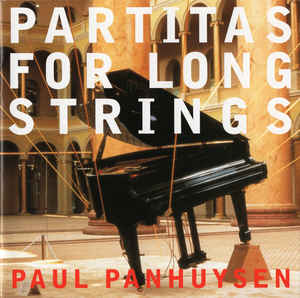
Paul PANHUYSEN
“Partitas for long strings”
The basic ingredients of Paul Panhuysen’s art, both visual and aural, are all here, and I think that can be fairly well summarized with three words: minimal, rational and libertarian. The partitas are minimal, because there is really only one idea - playing unamplified long strings. They are rational, because as always, Panhuysen has found a way to place a rational structure on top of his work - in this case a form and a tuning system. It is libertarian, because like John Cage, and so many since John Cage, he lets the music do what it wants to do - in this case the wires vibrate however they need to.
Included with the CD is a 32-page booklet which details the history of Paul Panhuysen’s work with installations through pictures and text.
12,00€
In stock
CD
Phill NIBLOCK
“Music by”
Music by Phill Niblock features The Soldier String Quartet performing in Five More String Quartets, a piece for five multi-tracked string quartets and in Early Winter for flute, bass flute, string quartet and synthesizer, also featuring Susan Stenger-flute and Eberhard Blum-bass flute.
In Five More String Quartets the musicians are tuned to specific pitches by calibrated sine tones as they play and the sound they produce is recorded, unprocessed, to multitrack tape. The piece is built up by means of multitrack recording. Early Winter has a different structure: a mixing of recorded instruments, computer controlled electronic instruments, and live instruments in the studio.
12,00€
In stock
CD
Phill NIBLOCK
“Four full flutes”
Phill Niblock’s music has no precedents, invites no comparisons, and doesn’t even suggest any metaphors to me. It is simply itself and must be heard to be believed," wrote Tom Johnson in The Village Voice a decade ago. The same is true today--no one is doing what Phill Niblock is doing. Niblock takes the building blocks of music and stacks them in inimitable formations. In Four Full Flutes, adjacent tones beat violently against one another while clouds of harmonics hover above the wavering drone....When the piece ends, it takes the listener a few moments to recover. This physiological experience, when the ossicles slow their vibrating and the membrane hairs come to a standstill, is probably the only aspect of the music not regulated by the score....Playing this compact disc in a different room or moving around the room while the disc is being played actually alters the outcome. Similarly, the music can be experienced anew through different combinations, extra speakers, home stereo pyrotechnics, and volume level alterations. The effects intensify with louder levels of volume. The higher the volume goes, the higher you go.
12,00€
In stock
CD
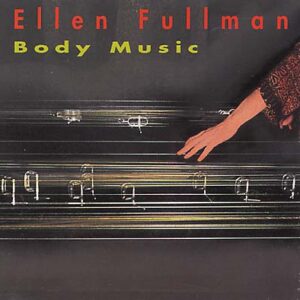
Ellen FULLMAN
“Body music”
Body Music is music for Ellen Fullman’s unique Long String Instrument, an eighty-foot long instrument with approximately eighty strings. Fullman has been developing this instrument for longitudinally vibrating long strings over the past thirteen years. Having received a BFA in sculpture, her interest in music began with the resonance of materials used in making sculpture. When she started making the Long String Instrument, she saw it as "sculpture as music;" now she has come full circle in conceiving "music as sculpture." For the most part, the music in Body Music relies harmonically on the diatonic scale. Because of the prominence of overtone content, more complex harmony is suggested. Through her studies of extended harmony, Fullman has come to realize that harmony is "dimensional."
14,00€
Out of stock
CD
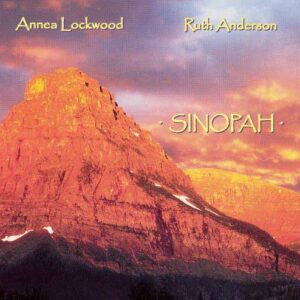
Annea LOCKWOOD – Ruth ANDERSON
“Sinopah”
World Rhythms originated as a ten-channel live improvisation in which the audience was surrounded by ten loudspeakers. The recorded sounds include volcanic eruptions, earthquakes, radio waves, geysers and pools, and tree frogs. These sounds are a physical manifestation of energies which shape us and our environment constantly, energies of which we are not always aware, but which powerfully influence and interact with the rhythms of our bodies.
15,00€
In stock

3 CD
Eliane RADIGUE
“Trilogie de la mort”
Trilogie de la Mort is a work in three parts for analogue Arp synthesizer. The first third of the work, Kyema is inspired by The Tibetan Book of the Dead and invokes the six intermediate states that constitute the existential continuity of the being. Kailasha, the second chapter, is structured on an imaginary pilgrimage around Mt. Kailash, one of the most sacred mountains in the Himalayas. Koumé, makes up the last part of the trilogy and emphasizes the transcendence of death.
28,00€
In stock

2 CD
Ulrich KRIEGER
“-RAW:ReSpace-”
Ulrich Krieger: electric tenor saxophone, saxophone-controlled feedback, pedals, delays; 1/4-inch jack cable, vocals; Joshua Carro, drums (CD 1, tracks 3, 5).
CD 1: RAW
CD 2: ReSpace
“[Krieger] ranges wide as he seeks the spots where noise and beauty meet” Anne Power, Los Angeles Times
RAW/ReSpace is the first-ever experimental noise-metal saxophone solo album, changing and re-defining how the saxophone can sound and what saxophone playing means. No saxophone player ever dared to explore these uncharted outer realms of woodwind expression. RAW brings together noisescapes and electronica with death and doom metal approaches and contemporary instrumental composition techniques. While ReSpace combines dark ambient, controlled-feedback soundscapes with a reductionist approach to create eerie ambient sound-fields. All sounds are saxophone-produced and performed live, no sampling and no purely electronic sounds. RAW and ReSpace are part of the ongoing Universe series.
Ulrich Krieger is well known as a saxophone player in rock, noise, contemporary composed and free improvised music as well as a composer of chamber music and electronic music. He has been active in pushing the boundaries of saxophone playing in general and the function of the saxophone in rock and noise in particular, collaborating with Lou Reed (Metal Machine Trio, Lou Reed Band), Lee Ranaldo (Text of Light), Faust, Zbigniew Karkowski and his own death-doom-noise-metal band Blood Oath. His recent focus lies in the experimental fields and fringes of contemporary Pop culture: somewhere in the limbo between Noise and Heavy Metal, Ambient and Silence. His original compositions go back and forth between Just Intonation, Silent Music, Noise, Instrumental Electronic, often asking for elaborate amplification, and works in the limbo of Rock culture - not accepting stylistic boundaries. Krieger developed his own, often amplified style of saxophone playing, he calls “acoustic electronics”. He uses refined acoustic, quasi-electronic sounds, which then get processed, the saxophone often becoming more an “analogue sampler” rather than a traditional finger-virtuoso instrument. By amplifying his instrument in various ways, he gets down to the 'grains of the sounds', changing their identity and structure from within.
“When Ulrich introduced his “acoustic electronic” concept, there was another door blown wide open, and another glorious field of pure expression revealed. There is an openness, and a level of abstraction to the music that leaves room for “me” to exist within the music; I can bring my own associations, patterns and inner visuals — and let it blend, mutate and morph into the intended delivery from the artist. The acoustic element in Ulrich’s music makes the sonic reality deeper, as the organic qualities of acoustic-to-electronic resonate with the mind and flesh in a way electronic-to-electronic cannot.” (Ivar Bjørnson of Enslaved, from the liner notes)
13,00€
In stock
2 CD
Phill NIBLOCK
“YPGPN”
YPGPN (Young Person’s Guide to Phill Niblock) is the long-awaited re-release of a 2 CD-set that was a joint production by the UK based Blast First label and The Wire magazine in 1995. It includes the following works: Held Tones (1982-94) Barbara Held, flute; Didjeridoos and Don’ts (1992) Ulrich Krieger, didjeridu; Ten Auras (1994) Ulrich Krieger, tenor saxophone; Ten Auras Live (1994) Ulrich Krieger, tenor saxophone; A Trombone Piece (1978-94) James Fulkerson, trombone; A Third Trombone (1979-94) Jon English, trombone; Unmentionable Piece for Trombone and Sousaphone (1982-94) George Lewis, trombone and sousaphone.
15,00€
In stock
2 CD
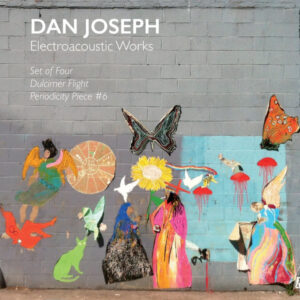
Dan JOSEPH
“Electroacoustic works”
CD 1: Set of Four (2008); Dulcimer Flight (1998-present).
CD 2: Periodicity Piece
6 (2005).
Electroacoustic Works collects three major pieces from the early 21st century by New York-based composer Dan Joseph. This 2 CD release includes Set of Four, a group of fixed-media sound collages using the processed hammer dulcimer as the primary sound source, two live performances of Dulcimer Flight for electroacoustic hammer dulcimer, and a 64-minute version of Periodicity Piece
6, a mixed-media work that originated as a multi-channel sound installation. With roots in early minimalism, ambient music and acoustic ecology, the works herein represent a significant subset of the composer’s larger body of work from the past twenty years that he has developed alongside an active career as a composer of instrumental chamber music.
From the liner notes by Alan Licht: “What’s striking about Dan Joseph’s music is that it’s drone oriented but also mindful of timekeeping. This would seem to be a paradox: most drone-based music and/or classic minimalism often reaches for a feeling of cosmic timelessness, or a sense of perpetuity via repetition, but the pieces on these discs all demarcate time in some way… Duration, another minimalist conceptual hallmark, is a means to an end rather than an end in itself for Joseph: the combination of simple harmonic material and extended lengths of time allows for more activity that is readily perceived, rather than to set up a near-static hypnotic state that is only occasionally jostled by a subtle shift in the music… In the computer age, digital memory and storage capacity are crucial technological attributes and an everyday concern; Dan’s electroacoustic pieces set up their own kind of memory banks for both the performer and the listener. The musical information is being supplied to and retrieved from both electronic and mental repository systems. This is post-minimal music where repetition is a mnemonic device, rather than a tool for trance or head-clearing.”
Based in New York City since 2001, Dan Joseph began his career as a drummer in the vibrant punk scene of his native Washington, DC. During the late 1980s, he was active in the experimental tape music underground, producing a series of ambient-industrial works for independent labels in the U.S. and abroad. He spent the ‘90s in California where he studied at CalArts and Mills College. His principal teachers include Pauline Oliveros, Alvin Curran, Mel Powell and Terry Riley. Since the late 1990s, the hammer dulcimer has been the primary vehicle for his music and he is active as a performer with his own chamber ensemble, The Dan Joseph Ensemble, as well as in various improvisational collaborations and as a soloist. In recent years he has also been active as a curator, presenter and writer, producing the monthly music and sound series Musical Ecologies in Park Slope, Brooklyn, the Music for Contemplation series in Williamsburg, Brooklyn and contributing to magazines and blogs such as NewMusicBox.org, Musicworks and the Brooklyn Rail.
15,00€