
In stock
CD
Ben VIDA
“Oblivion Seekers”
To be an attentive listener to the world as it stands is to be saturated with language. Speech resounds through nearly every space that features human beings, whether unwanted or desired, mundane or profound. Words sit on the page and in the ear, proliferating endlessly. This superabundance has long been a point of fascination for composer and musician Ben Vida, but over the past several years it has led to a new method of music making that simultaneously exalts and interrogates the primacy of language in our sonic and cultural environments. Gently, playfully, Vida breaks down language’s hierarchy of meaning and sound until they exist in egalitarian harmony.
Oblivion Seekers is Vida’s newest album in this mode of composition, following 2023’s collaboration with new music ensemble Yarn/Wire The Beat My Head Hit. Like its predecessor, the music’s focus is on coordinated duets of spoken word in a neutral tone, the variable cadences of the words in motion creating complex internal rhythmic structures. He is joined by the voices of Nina Dante, Christina Vantzou, John Also Bennett, and Félicia Atkinson, creating a singular tone that is neither theirs nor his, fluid in its gender presentation, accent, and diction. The instrumental compositions that form the album’s understory have the casual flow of dialogue, conversational but subdued, rarely the agent of change. Here, Vida likewise called upon an accomplished community of players to accompany him: Dante on harp, Bennett on bass flute, Matt Bauder and Will Epstein on saxophones, Henry Fraser on bass, Cleek Schrey on violin, and Booker Stardrum on percussion.
Performed By:
Ben Vida - Voice, Keyboards, Vibraphone, Guitar, etc
Nina Dante - Voice and Harp
Christina Vantzou - Voice
Felicia Atkinson - Voice
John Also Bennett - Voice and Bass Flute
Matt Bauder - Tenor and Alto Saxophone
Will Epstein - Soprano and Alto Saxophone
Henry Fraser - Acoustic Bass
Cleek Schrey - Violin
Booker Stardrum - Percussion
17,00€
In stock
LP
Ben VIDA
“Oblivion Seekers”
To be an attentive listener to the world as it stands is to be saturated with language. Speech resounds through nearly every space that features human beings, whether unwanted or desired, mundane or profound. Words sit on the page and in the ear, proliferating endlessly. This superabundance has long been a point of fascination for composer and musician Ben Vida, but over the past several years it has led to a new method of music making that simultaneously exalts and interrogates the primacy of language in our sonic and cultural environments. Gently, playfully, Vida breaks down language’s hierarchy of meaning and sound until they exist in egalitarian harmony.
Oblivion Seekers is Vida’s newest album in this mode of composition, following 2023’s collaboration with new music ensemble Yarn/Wire The Beat My Head Hit. Like its predecessor, the music’s focus is on coordinated duets of spoken word in a neutral tone, the variable cadences of the words in motion creating complex internal rhythmic structures. He is joined by the voices of Nina Dante, Christina Vantzou, John Also Bennett, and Félicia Atkinson, creating a singular tone that is neither theirs nor his, fluid in its gender presentation, accent, and diction. The instrumental compositions that form the album’s understory have the casual flow of dialogue, conversational but subdued, rarely the agent of change. Here, Vida likewise called upon an accomplished community of players to accompany him: Dante on harp, Bennett on bass flute, Matt Bauder and Will Epstein on saxophones, Henry Fraser on bass, Cleek Schrey on violin, and Booker Stardrum on percussion.
Performed By:
Ben Vida - Voice, Keyboards, Vibraphone, Guitar, etc
Nina Dante - Voice and Harp
Christina Vantzou - Voice
Felicia Atkinson - Voice
John Also Bennett - Voice and Bass Flute
Matt Bauder - Tenor and Alto Saxophone
Will Epstein - Soprano and Alto Saxophone
Henry Fraser - Acoustic Bass
Cleek Schrey - Violin
Booker Stardrum - Percussion
28,00€
In stock
LP
Alex Zhang HUNGTAI
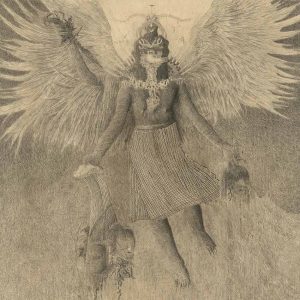
“Dras”
Alex Zhang Hungtai stands in stillness on 'Dras', but it's the kind of stillness that contains entire ranges of possibility. Recorded in 2019 inside Montreal's Saint Joseph Oratory (right before a piano demolition, no less), these nine pieces sat dormant on his hard drive through pandemic years until something finally clicked. What emerges now feels like watching someone trace the contours of their own interior landscape, each melodic line a careful negotiation with the unconscious. This is only a saxophone record in the barest sense.
The terrain here is tactile and unforgiving. On the title track, difficult melodies get torn apart and molded into emotive drones, dissonance interlocking where tones cut paths through the senses with metallic sheen. "El Khela" refracts into spectral layers that pull with eternal gravity, while "Estado" finds solace inside its own haze, rhythms barely audible but guiding forward with their cadence smeared against grey walls. These are small moments that become cathartic sonic breaths, each one revealing new passages through psychic geography.
There's beauty encased in the subtle repetitions of opener "Erg,” and in the glowing progressions of "White Dwarf." Zhang's saxophone becomes a dowsing rod for the uncharted, with electricity running through the album's veins while his breath anchors everything to something wordlessly human. The digital manipulation applied to those church recordings doesn't obscure that human element of 'Dras'. It transforms the raw material into something that navigates between external space and internal landscape.
By the time closer "Mazil" arrives, Alex Zhang Hungtai lets his saxophone speak its full resonance. Low, guttural expressions open up like chasms beneath melodic constellations floating in thick gravity. There’s a finality here even though something in these passages feels weightless. This is music permeated with inner dialogue, a wordless spell dancing above the psychic abyss. Tonal sequences disintegrate into narcotized sonics, a sharp elegant edge that cuts without drawing blood. This lonely work of exploration becomes something communal. 'Dras' is a map for traversing the space between where we are and where we might go.
28,00€
In stock

LP
Kassel JAEGER, Stephan MATHIEU & Akira RABELAIS
“Zauberberg”
2026 repress
An electroacoustic meditation on memories and on the persistence of the aura in a particular place, inspired by Thomas Mann's The Magic Mountain.
“Few years ago, an idea germinated while reading The Magic Mountain by Thomas Mann. An idea not driven by the narrativity of the book, but by the traces and the aura invoked in it. That was it: an audible auratic journey trough the memories of a place lost in the heights of the Swiss mountains.
A century after the events depicted in the book, we went where the story took place, trying to capture the remaining sounds that could have been heard at the time, and the ghosts who might have still wandered around.
Zauberberg is based on these captures, on recordings of the music played by Hans Castorp (the novel's main character), on acoustic / electronic instrumentation and digital processing. The result is an evokation of time and duration, an exploration of what remains and what is lost, a meditation of the dissolution and persistence of the aura surrounding everything.”
Kassel Jaeger, Nov. 19, 2015
26,50€
Out of stock

LP
Okkyung LEE
“Just like any other day: background music for your mundane activities”
Unlike anything we’ve heard from her before, Okkyung Lee returns to Shelter Press with Just Like Any Other Day: Background Music For Your Mundane Activities, a deeply intimate body of recordings at the juncture of ambient music, minimalism, and the baroque, that stands as radical intervention with what experimental music can be, and the place that organisations of sound occupy in our lives.
For more than two decades, Okkyung Lee has stood at the forefront of the most radical trajectories of experimental music: a virtuosic cellist and improviser, renowned for her creative rigour and emotive depth. Particularly noteworthy for her range, dexterity, and adaptability, over the last five years Lee’s output has revealed unexpected shifts and developments that move far afield from the realms of free improvisation for which she is most well know. 2020’s Yeo-Neun, a heart-wrenching, ambient chamber work - drawing inspiration from the Korean popular music of her youth - was issued by Shelter Press to great critical response, followed closely by Teum (The Silvery Slit) - one of a series engrossing electroacoustic works created at Groupe de Recherches Musicales in Paris - on Portraits GRM, and then 나를 (Na-Reul) in 2021, regarded by Lee as a closing statement of more than two decades living in New York, which set the precedent of her allowing her emotions to fully occupy the forefront of the music for the first time. Marking her return to Shelter press, Just Like Any Other Day: Background Music For Your Mundane Activities, encounters Lee upturning the apple cart once again, weaving a profoundly intimate artistic statement on completely unexpected terms.
Like its three aforementioned predecessors, Just Like Any Other Day belongs to broadening shift in Lee’s approach to composing that roughly aligns with her return to her native South Korea, having lived in the United States since her late teens. Infused with a deep reengagement with her own culture and relationship to memory, it is equally a response to those critical challenges and questions provoked by significant life change. Worked on in isolation, and continuously returned to, over the course of four years, the album’s nine pieces began with a simple recognition that experimental music is not always what we imagine it to be. It is a practice and a pursuit - a music for which, at its inception, the outcome is unknown - rather than an idiom defined by certain syntaxes, approaches, and qualities of structure and sound. From this departure point, Lee began to inquire after the utility of music itself: what is it for, what does it do, and what place does it (or can it) occupy in our lives?
Created at home on keyboard, computer, and an inexpensive cassette recorder, Just Like Any Other Day (어느날) presents a remarkable form of ambient music - organisations of sound that become their own environment, to be occupied - intended, as the album’s subheading infers, as Background Music For Your Mundane Activities. An expansion of the creative pathways opened by the Korean pop imbued compositions of Yeo-Neun, aspects of electronic process explored by Teum (The Silvery Slit), and the emotive foregrounding of 나를 (Na-Reul), each of the pieces presented across the two sides of Just Like Any Other Day (어느날) implies something far greater than the limits of its own temporarily: a mood, provocations of memory and place, mirrors for the solitude within which it was made, and palpable emotion lingering just out of grasp. For Lee, each of the album’s compositions could be continued or looped for an indeterminate duration: straddling a ground between the minimal and the baroque, enveloping the listener in endless cycles of appreciating, repetitive and rhythmical notes, flirting with the melodic and implying a disembodied imagism that borders on the profound.
27,00€
In stock

2 LP
SISSY SPACEK
“Entrance”
Entering its 26th year of activity, the morphing, Los Angeles based experimental outfit, Sissy Spacek, joins Shelter Press with Entrance, among the project’s most captivating outings to date. Encountering the duo of John Wiese and Charlie Mumma joined in various configurations by an incredible cast of collaborators - Tim Barnes, Marco Fusinato, Aaron Hemphill, Brad Laner, Katsura Mouri, Ralf Wehowsky, and C Spencer Yeh - collectively transformed into a series a deeply intimate and delicate gestures of musique concrète, Entrance radically repositions the possibilities presented by group improvisation outside of time and place.
Founded at the end of the last millennium, the Los Angeles based project, Sissy Spacek, initially emerged from the knotted, fiery context 1990s American noise and grindcore, producing sheets of visceral sonority that quickly set the scene on its head. Going through numerous evolutions, before eventually settling as a duo of John Wiese and Charlie Mumma - joined by a rotating and often recurring cast collaborators - over the last 25 years the band has continuously entered states of evolution that have defied the expectations of its own context, seeding the sonic extremes noise with subtle and sophisticated approaches to free improvisation and musique concrète.
Fiercely positioning its efforts within the outer reaches of contemporary experimental music, while resisting the constraints of a singular sound or proximity, Wiese regards Sissy Spacek as being primarily centred around the practice of musique concrète and the pursuit of extremes. From its earliest releases - collage treatments of material gathered from the band’s full throttle practice sessions - the project’s conceptual framework has continuously evolved within a deeply engaged process of experimentation, not only reworking tactical approaches, but also definitions and perception regarding the location and action of their work. In recent years, this has led to an increasingly varied and diverse output. Percolating within, is a thread marked by a striking sense of delicacy and intimacy, driving forward while doubling as an unexpected challenge, in real time, to perceptions connected to the band’s past. Entrance is the most recent of these.
Embarking upon the four compositions that comprise the finalized four sides of Entrance, Wiese and Mumma enlisted longstanding collaborators, Tim Barnes, Marco Fusinato, Aaron Hemphill, Brad Laner, Katsura Mouri, and C Spencer Yeh, as well as new initiate, Ralf Wehowsky (of the seminal German electronic noise collective P16.D4), requesting a contribution of sounds from each, determined by a general set guidelines that dictated certain qualities the given sonorities, while allowing for the expression of each player’s distinct creative voice. The sets of resulting recordings were then chopped, harvested, manipulated, and reassembled as the four tape compositions that make up the album - Web Of Unfolding Appearance, Figure Of Reflected Light, Trancher And The Inheritors, True Dimension (From The Opaque - Spike) - each blurring the lines of authorship and clear creative proximity in remarkable ways.
Where historical gestures of musique concrète tend to draw upon non-instrumental sound sources - regarding its sonorous material as raw elements, unburdened by inherent meaning or association, to be transformed and imbued with musicality - Sissy Spacek turns this position on its head. Entrance comprises works of musique concrète that not only draw upon instrumental sound sources, with all their possible meanings or associations, but also individual characters and personalities of their players, crediting each resulting piece to its respective configuration of contributors.
As such, Entrance is an effort of sound collage defined by a rare sense of intimacy and humanity: four pieces that often take on the resemblance of group improvisation, but have, in fact, been assembled outside of time and place. Bent under the ever-present hand of Wiese’s tape treatments and manipulation, each of the album’s four compositions unfurl startling states of sonic abstraction and percolating texture, marked by a striking sense of hard-shifting structure, that culminate as tense, driven manifestations of ambient music: scrapes, squeals, rattles feedback, rolling drums, bouncing tones, whispers, bent electronics, electric artefacts, and seemingly everything else under the sun, configured into immersive, sublime mediations in sound from the most improbable events.
33,00€
In stock
CD
SISSY SPACEK
“Entrance”
Entering its 26th year of activity, the morphing, Los Angeles based experimental outfit, Sissy Spacek, joins Shelter Press with Entrance, among the project’s most captivating outings to date. Encountering the duo of John Wiese and Charlie Mumma joined in various configurations by an incredible cast of collaborators - Tim Barnes, Marco Fusinato, Aaron Hemphill, Brad Laner, Katsura Mouri, Ralf Wehowsky, and C Spencer Yeh - collectively transformed into a series a deeply intimate and delicate gestures of musique concrète, Entrance radically repositions the possibilities presented by group improvisation outside of time and place.
Founded at the end of the last millennium, the Los Angeles based project, Sissy Spacek, initially emerged from the knotted, fiery context 1990s American noise and grindcore, producing sheets of visceral sonority that quickly set the scene on its head. Going through numerous evolutions, before eventually settling as a duo of John Wiese and Charlie Mumma - joined by a rotating and often recurring cast collaborators - over the last 25 years the band has continuously entered states of evolution that have defied the expectations of its own context, seeding the sonic extremes noise with subtle and sophisticated approaches to free improvisation and musique concrète.
Fiercely positioning its efforts within the outer reaches of contemporary experimental music, while resisting the constraints of a singular sound or proximity, Wiese regards Sissy Spacek as being primarily centred around the practice of musique concrète and the pursuit of extremes. From its earliest releases - collage treatments of material gathered from the band’s full throttle practice sessions - the project’s conceptual framework has continuously evolved within a deeply engaged process of experimentation, not only reworking tactical approaches, but also definitions and perception regarding the location and action of their work. In recent years, this has led to an increasingly varied and diverse output. Percolating within, is a thread marked by a striking sense of delicacy and intimacy, driving forward while doubling as an unexpected challenge, in real time, to perceptions connected to the band’s past. Entrance is the most recent of these.
Embarking upon the four compositions that comprise the finalized four sides of Entrance, Wiese and Mumma enlisted longstanding collaborators, Tim Barnes, Marco Fusinato, Aaron Hemphill, Brad Laner, Katsura Mouri, and C Spencer Yeh, as well as new initiate, Ralf Wehowsky (of the seminal German electronic noise collective P16.D4), requesting a contribution of sounds from each, determined by a general set guidelines that dictated certain qualities the given sonorities, while allowing for the expression of each player’s distinct creative voice. The sets of resulting recordings were then chopped, harvested, manipulated, and reassembled as the four tape compositions that make up the album - Web Of Unfolding Appearance, Figure Of Reflected Light, Trancher And The Inheritors, True Dimension (From The Opaque - Spike) - each blurring the lines of authorship and clear creative proximity in remarkable ways.
Where historical gestures of musique concrète tend to draw upon non-instrumental sound sources - regarding its sonorous material as raw elements, unburdened by inherent meaning or association, to be transformed and imbued with musicality - Sissy Spacek turns this position on its head. Entrance comprises works of musique concrète that not only draw upon instrumental sound sources, with all their possible meanings or associations, but also individual characters and personalities of their players, crediting each resulting piece to its respective configuration of contributors.
As such, Entrance is an effort of sound collage defined by a rare sense of intimacy and humanity: four pieces that often take on the resemblance of group improvisation, but have, in fact, been assembled outside of time and place. Bent under the ever-present hand of Wiese’s tape treatments and manipulation, each of the album’s four compositions unfurl startling states of sonic abstraction and percolating texture, marked by a striking sense of hard-shifting structure, that culminate as tense, driven manifestations of ambient music: scrapes, squeals, rattles feedback, rolling drums, bouncing tones, whispers, bent electronics, electric artefacts, and seemingly everything else under the sun, configured into immersive, sublime mediations in sound from the most improbable events.
17,00€
Out of stock

4 CD box
Joshua BONNETTA
“The Pines”
4xCDs housed in oversized digisleeves.
Hardcover slipcase.
12pp booklet with original text by Robert Macfarlane and foreward by jake moore
Sound artist and filmmaker Joshua Bonnetta wants to know what happens when a human listener exits a landscape. How might the soundscape differ? How is our presence affecting the recording? His ambitious long-form work The Pines I-IV, released on February 28, 2025 via Shelter Press and The Dim Coast, looks to interrogate some of these questions, capturing the sonic life of a single pine tree in upstate New York over the course of a year via remote recordings, edited into four hours of audio which will be released as a 4CD set with essay by acclaimed nature writer Robert Macfarlane and a foreword by curator jake moore, who suggests the forest knows when it is being listened to.
Macfarlane’s luminous essay proposes that this project offers an answer to the question of whether a tree in a forest makes any sound at all if nobody is there to hear it. Bonnetta turns that question around – entangling it in the surrounding environment, to ask what sort of noise it and other plants and animals make when there is no human listener; asking what sounds come to the fore when we step out of the frame, and in what ways a microphone might alter the way we listen in the environment.
A total of 8760 hours of audio were captured by a microphone strapped 10ft up a tree’s trunk in Tioga County, which was then reworked into a single hour of sound for each season, each of which captured events in and around the tree’s branches and immediate environment. We hear weather and wildlife; coyotes and owls; the creaking of branches under the weight of snow and ice – all act as a window into the sound of this place absent of humans; a time lapse of the audible world around the circumference of a single tree. The microphones used, and the methods of editing, are tech borrowed from conservation bioacoustics and passive acoustic monitoring, which offered Bonnetta a way to engage much more deeply than any standard field recording would.
The Pines I-IV is not bombastic sonic work, but is subtle, often contemplative and sometimes soothing, as when rushes of rain sweep over the landscape, or a flock of geese pass overhead. It is not about exotic renderings of place or or mythically veiled field recording, but about accessing a new way of listening to something familiar, by removing a human presence and extending the listening window beyond usual human capacities. Bonnetta purposefully chose a site he already knew, and which he had easy access to, but which might show itself differently when captured with durational sound recording technology. "For over a decade I taught in Ithaca" he says "and spent a lot of time exploring southern central New York, but never made any projects there. We decided to relocate to Munich a couple years back and before I left I wanted to document the sounds of this environment that I spent so much time in and had come to love. This technology afforded me the opportunity to be able to keep a record across a year and when I started to listen back I was surprised with results and began to devise a system to edit the work. There are several great bioacoustics applications which can analyze and interpret the data but I wanted to manually browse and edit the materials so that I could collect sounds outside of what the applications might traditionally identify: mainly weather and the sounds of the tree itself. The Dim Coast saw the potential in the work as an installation and publication and helped me realize that there might be a project outside of it just being a personal document."
He returned every few weeks to collect and replace storage cards and batteries, editing lengthy audio files using a combination of listening and looking at the visualized audio spectrum. He spent time listening to re-familiarize himself with the soundscape and then scanned the visual data for ‘events’ in the files, a method of analysis more typically used by scientists mapping bird and wildlife populations.
The draw of this type of recording Bonnetta locates in a childhood memory, of wolves captured on tape: “I grew up in a rural area in Ontario, and I have a very early memory of two brothers from our small school who had said they had made a recording of wolves, which were only rumoured to be as far south as we were. The previous evening they had taken their portable cassette recorder to the edge of their lane, which backed on to a large forest preserve, and claimed to have recorded wolves howling. They played it back at school the next day and I remember that the sound was primarily noise and hiss, but we were all listening intently and straining to hear something as they kept playing back the tape. Whether they were really there or this was just the collective imagination of a group of children, we started to hear wolves – or more likely coyotes. This project feels rooted in the initial wonder of that listening experience”.
45,00€
In stock

LP
Judith HAMANN
“Aunes”
Aunes is a rare solo album from peripatetic Australian cellist-composer-performer Judith Hamann, presenting six pieces recorded across several years and countries. Developing the collage techniques and expanded sound palettes heard on their previous releases, Aunes makes use of synthesizers, organ, voice and location recordings alongside the dazzlingly pure, enveloping tones of Hamann’s cello. The record takes its name from an old French unit of measurement for fabric, varying around the country and from material to material. Unlike the platinum metre bar deposited in the National Archives after the Revolution as an immovable standard, an aune of silk differed from an aune of linen: the measure could not be separated from the material. In much the same way, in these six pieces—which Hamann thinks of as ‘songs’—formal aspects such as tuning, pacing, melodic shape and timbre are not abstractions applied universally to musical material but are inextricable from the instruments and sounds used, even from the places and communities in which the music was made.
Audible location sound embeds the music in its place of making, as in the delicate duet for church organ and wordless singing ‘schloss, night’, where shuffles and cluttering in the reverberant church space form a phantom accompaniment, gradually displaced by a uneasy shimmer of wavering tones from half-opened organ stops. ‘Casa Di Riposo, Gesu’ Redentore’ documents a walk up a hill to an outdoor mass in Chiusure, layering voices near and far with footsteps, insects and other incidental sounds. Like in the work of Moniek Darge or Luc Ferrari, location recordings are folded on themselves in space and time, their documentary function dislocated to dreamlike effect. On other pieces, it is the emphatic presence of the performing body that grounds the music, whether in the intimate fragility of Hamann’s softly sung and hummed vocal tones or the clothing that rustles across a microphone on the opening ‘by the line’. The idea of a music inextricable from its material conditions is perhaps most strikingly communicated on the album’s briefest piece ‘bruststärke (lung song)’, composed from layered whistling recorded while Hamann suffered through an asthma flare up, the results halfway between field recordings of an imaginary aviary and the audiopoems of Henri Chopin.
More than any of Hamann’s previous solo works, a strong melodic sensibility runs through Aunes, even when, like on ‘seventeen fabrics of measure’, the music hangs together by the merest thread. At other points, Hamann’s love of pop music is more obvious: the rich synth harmonies of ‘by the line’ could almost be a melting fragment of a backing track from Hounds of Love. The expansive closing piece ‘neither from nor toward’ exemplifies the highly personal musical language that Hamann has developed in recent years through constant solo performance (and a rigorous discipline of instrumental practice), pairing two overdubbed voices with the boundless depth and harmonic richness of just-intoned cello notes, calling up Ockegham or Linda Caitlin Smith in its elegiac slow motion arcs. Hamann’s most personal work yet, Aunes arrives in a striking sleeve reproducing a section of a painting made from sewn pieces of dyed wool by Wilder Alison, a friend and fellow resident at Akademie Schloss Solitude, one of the temporary homes where much of this music was recorded.
26,00€
In stock

LP
Kassel JAEGER
“Shifted in Dreams”
Franco-Swiss composer François J. Bonnet, aka Kassel Jaeger, returns to Shelter Press with his new solo album, Shifted in Dreams. Over the years, Bonnet has been working closely with Shelter Press on different projects, whether as a musician (Zauberberg, Swamps / Things), a theorist (The Music To Come) or as Director of parisian institution INA GRM (SPECTRES, Recollection GRM, Portraits GRM). The common axis of all these actions is the exploration of the deep causes of music, its own potential and its possible appearances.
Shifted in Dreams is a continuation of such research but takes a somewhat deviated path. If we use the metaphor of music as a paradoxical mountain — an unreachable "Mont Analogue", then this record tries to opens up a way that at first seems simpler and marked out by the distinct presence of familiar harmonic and temporal elements. This path, however, is simple only in appearance, for soon it becomes less clear: its contours get blurred, drowned in the mist. Silhouettes form in the distance, like uncertain shadows. We grope our way forward, in this infra-sensitive thickness of the world outside of signs. The recognized markers disappear, giving way, at best, to reminiscences, but increasingly making way to qualities, occurrences, events. We leave the known world of musical codes to join that of sound apparitions, their memorial imprints and the impressions they produce.
Following a compositional approach stemming from the musique concrète tradition, without adopting a structuralist aesthetic, Shifted in Dreams explores a wide range of instruments and techniques, going seamlessly from instrumental improvisation to field recording, via micro-editing and asynchronous looping. Mixing the electronic waves of an ARP 2500 synthesizer with the acoustic drones of a positive organ, articulating guitar layers with resonances of a Cristal Baschet, bringing together recordings of slamming windows and sounds produced by complex modular synthesis patches, among other things, Bonnet offers a rich and generous palette of sounds, inviting a constantly renewed sonic investigation.
25,50€
In stock

CD
Valerio TRICOLI
“Say Goodbye To The Wind”
First emerging during the early years of the new millennium, over the last two decades, the Palermo born, Munich based composer, Valerio Tricoli, has forged a singular path within experimental sound practice, continuously rethinking the relationship between electroacoustic composition and narrative possibility. Say Goodbye to the Wind, his first record with Shelter Press, stands among his most poetic and groundbreaking efforts to date. Across three intricate, deeply personal works of concrète music - dense with themes drawn from J.G. Ballard, Samuel Beckett, theosophy, and the temporal blur of DMT - the composer blurs the boundaries between the tangible and abstract, weaving complex allegories for the self.
Exploring auditory phenomena and the narrative potential of electronic and acoustic sound sources, Valerio Tricoli’s work - as it has appeared across a carefully executed body of solo recordings, as well as noteworthy collaborations with Stefano Pilia, Dean Roberts, Thomas Ankersmit, Hanno Leichtmann, and numerous others - rests at the shadowy juncture of internal and external worlds; a meeting place where the synthetic and organic give way to utterances of the existential, psychological, physical, and occult. Most commonly created on a Revox B77 reel-to-reel - manipulating, live sampling, and real-time editing / mixing of field and studio recordings - in Tricoli’s hands, estranged moments of sonorous ephemera transmogrify and intertwine as metaphorical and allegorical sums, far greater than their parts.
Say Goodbye to the Wind, Tricoli’s sixth full-length, gathers three works of musique concrete, thematically bound by notions of absence, loss, stillness, and release. The album’s title is taken from a story by J.G. Ballard, set in the desolation of a holiday resort that rests among a landscape of endless rolling dunes that are populated by ʻsound sculptures’ and monsters. The otherworldliness of this reference is further expanded by the depth exposed by the many possible implications and meanings implied by the combination of words; wind being a metaphor of the breath of life, and its absence meaning death. If the wind is a storm, what is the abstraction that remains in the absent void when it leaves?
Historically, one of the primary pursuits of musique concrete is the transformation of everyday sonority - field recordings, found / incidental sound, etc. - into abstractions of profound meaning and weight. While this process unquestionable played a heavy hand in the composition of Say Goodbye to the Wind, Tricoli’s approach to the idiom sets the stage for something entirely unique. Not only are the practices of tape music applied to field recordings, but to the sounds of piano, synthesizers, objects, and the composer’s voice, in addition to interventions by Ecka Mordecai on cello, Lucio Capece on soprano saxophone, and Ida Toninato on vocals. Further expanding to potential of meaning, are the references - literal and abstract - that guided each work into being.
A masterstroke of contemporary musique concrète and auditory conceptualism, dense with metaphor, allegory and meaning, Shelter Press is thrilled to present Valerio Tricoli’s ‘Say Goodbye to the Wind’. Issued in a limited edition CD and Digital, mastered by Rashad Becker, with artwork by Mårten Lange.
14,00€
In stock

LP
Joshua BONNETTA
“Innse Gall”
Bridging acoustic ecology and interdisciplinary creative practice, Joshua Bonnetta returns to Shelter Press with Innse Gall ‘The Islands of the Strangers’, his second LP for the label. Recorded and assembled between 2017 and 2020 and acting as a companion piece to Bonnetta’s film, An Dà Shealladh ‘The Two Sights’, these two interrelated side-long works - Innse Gall I and Innse Gall II - respectively deploy a rigorous approach to field recording and auditory phenomena, pursuing the complex relationship between landscape, place, language, and culture in the Outer Hebrides, where both the film and album’s source material was gathered. Representing a radical rethinking of the potential of sound collage, Innse Gall ‘The Islands of the Strangers’, is issued by Shelter Press as a limited edition, deluxe vinyl LP, housed in a 7mm reverse-board outer sleeve and a heavyweight reverse-board inner sleeve, accompanied by a sixty page booklet containing extensive photographic studies made for ‘The Two Sights’ by the artist and an essay by Erika Balsom, as well as a postcard to download the film An Dà Shealladh ‘The Two Sights’, generously provided by Cinema Guild, and Arsenal - Institut für Film und Videokunst.
While very much the byproduct of sound collage, rather than the states of abstraction and ‘pure’ sonority most often pursued by musique concrète, or an experimental music “free of individual taste and memory (psychology)”, as pursued by John Cage, Bonnetta’s work displays a deeper sympathy with Luc Ferrari’s notion of ‘anecdotal music’, in which the social and autobiographical contexts of the source material / recordings - with their embedded dimensions of meaning - is accounted for and retained. Rather than enforcing a fixed vision of the artist, the listener in encouraged construct a narrative of their own. This is no less the case for Innse Gall ‘The Islands of the Strangers’, comprising two audio works constructed by Bonnetta from field recordings made on the Outer Hebrides islands of Barra, Berneray, North Uist, Harris, & Lewis between 2017-19.
Drawing upon Bonnetta’s fascination with sound as a primary means to survey place and people, Innse Gall ‘The Islands of the Strangers’ draws upon a vast range of sonorous material: hydrophone recordings made over extended periods in lobster creels and of gases escaping a peat bog, interview fragments, and field recordings feature capturing the sounds of maritime industry, song, seals, corncrake, snipe, and other elements of the natural world. Meticulously collaged and reworked within an exploration of the interrelated acoustic ecology of these diverse elements of the islands’ make-up, the album’s two works - Innse Gall I and Innse Gall II - bristle with the subcutaneous narratives embedded within these ancient and modern landscapes, played against the disappearing Gaelic oral traditions which hold their memories, resulting in a deep, auditory reflection on the relationship between narrative, environment, and the reciprocal influences they exact upon one another.
Challenging the perceived boundaries and interconnectedness of place and occupation - to what extent the perception of an environment is modelled by language, culture, and myth, or that the environment underscores the very becoming of those things - Bonnetta’s Innse Gall ‘The Islands of the Strangers’, draws profound poetry, beauty, and meaning from the everyday, rethinking the terms of field recording and sound collage every step of the way.
27,50€
In stock
LP
Claire ROUSAY
“Everything perfect is already here”
When words trail off at the beginning of claire rousay’s “everything perfect is already here,” ornate instrumentation is waiting to fill a void left by the breakdown of language. Yet it becomes clear as we trace rousay’s collaged sonic pathway that breakdown, of meaning and also of melody, is also a place to rest. everything perfect… is made up of two extended compositions that cycle between familiarity and unknowing. There are seemingly infinite ways to feel in response to these pieces of music, which shift tone across their languid duration, earnest like a familiar song but unbound from the emotional didacticisms of lyrical voice and pop form.
Rousay builds a fluid landscape around the acoustic contributions of Alex Cunningham (violin), Mari Maurice (electronics and violin), Marilu Donovan (harp), and Theodore Cale Schafer (piano), whose respective melodies weave gently in and out, sometimes steady, sometimes aching, sometimes receding altogether in deference to less overtly musical sounds. That is, percussive texture in the form of unvarnished samples and field recordings: the rattle and rustle and the stops and starts of life unfurling, voices sharing memories nearly out of reach, doors closing, wind against a microphone. Everything comes from somewhere in particular, possessing the veneer of the diaristic, but sound’s provenance is secondary here and so these details become tangled and fused. On this release I hear such details not as individual ornaments or stories but the collective architecture of the greater composition. It’s an architecture that is not quite formed and thus full of openings out to the world unfolding.
“The world unfolding,” that’s a kind way of saying change, movement, loss, transformation. Things rousay here indexes, not without shards of desire or pain, still somehow what I hear is coarse peace in the in-between. These two pieces sweep you away and then bring you to earth, but which is which, anyway? Where am I now? What is different outside of me? What is different inside of me? Um. I think. everything is perfect is already here, like the answers to these questions, is loose and beautiful in surprising ways.
The music guides a certain experience of the world around. In claire’s music there is this marriage—not just a pairing or juxtaposition but an interrelationship, an eventual confusion—of song/texture, narrative/abstraction, figure/ground. Everything comes from somewhere in particular but not just the voices, the field recordings, the what is being said or meant, what matters is “the where you are now.” There are so many ways of anchoring oneself in the present, some have to do with fantasy or storytelling and some with accepting what is.
These two compositions find peace between these modes. They sweep you away and then bring you to earth, but which is which, anyway? Their mode of feeling is inquisitive. Where am I now? What has changed outside of me? What has changed inside of me? The music, like the answers to these questions, is loose and beautiful in surprising ways.
21,00€
Out of stock
CD
Claire ROUSAY
“Everything perfect is already here”
When words trail off at the beginning of claire rousay’s “everything perfect is already here,” ornate instrumentation is waiting to fill a void left by the breakdown of language. Yet it becomes clear as we trace rousay’s collaged sonic pathway that breakdown, of meaning and also of melody, is also a place to rest. everything perfect… is made up of two extended compositions that cycle between familiarity and unknowing. There are seemingly infinite ways to feel in response to these pieces of music, which shift tone across their languid duration, earnest like a familiar song but unbound from the emotional didacticisms of lyrical voice and pop form.
Rousay builds a fluid landscape around the acoustic contributions of Alex Cunningham (violin), Mari Maurice (electronics and violin), Marilu Donovan (harp), and Theodore Cale Schafer (piano), whose respective melodies weave gently in and out, sometimes steady, sometimes aching, sometimes receding altogether in deference to less overtly musical sounds. That is, percussive texture in the form of unvarnished samples and field recordings: the rattle and rustle and the stops and starts of life unfurling, voices sharing memories nearly out of reach, doors closing, wind against a microphone. Everything comes from somewhere in particular, possessing the veneer of the diaristic, but sound’s provenance is secondary here and so these details become tangled and fused. On this release I hear such details not as individual ornaments or stories but the collective architecture of the greater composition. It’s an architecture that is not quite formed and thus full of openings out to the world unfolding.
“The world unfolding,” that’s a kind way of saying change, movement, loss, transformation. Things rousay here indexes, not without shards of desire or pain, still somehow what I hear is coarse peace in the in-between. These two pieces sweep you away and then bring you to earth, but which is which, anyway? Where am I now? What is different outside of me? What is different inside of me? Um. I think. everything is perfect is already here, like the answers to these questions, is loose and beautiful in surprising ways.
The music guides a certain experience of the world around. In claire’s music there is this marriage—not just a pairing or juxtaposition but an interrelationship, an eventual confusion—of song/texture, narrative/abstraction, figure/ground. Everything comes from somewhere in particular but not just the voices, the field recordings, the what is being said or meant, what matters is “the where you are now.” There are so many ways of anchoring oneself in the present, some have to do with fantasy or storytelling and some with accepting what is.
These two compositions find peace between these modes. They sweep you away and then bring you to earth, but which is which, anyway? Their mode of feeling is inquisitive. Where am I now? What has changed outside of me? What has changed inside of me? The music, like the answers to these questions, is loose and beautiful in surprising ways.
14,00€
In stock
CD
L’OCELLE MARE
“Sans Chemin”
A ritornello that awakens, unfolds, disappears, resurfaces, transforms, forgets itself, awakens again.
A ritornello in folds and hollows, which gives us something to see as well as to listen, a theatre of acoustic shadows where each timbre, each rhythm, each modulation, is born from a meticulously refined gesture. “I don’t write music, it’s an assemblage of gestural memories”, says Thomas Bonvalet. Gestures found, accidentally or not, through long practice: such keyboard rubs on such guitar while preparing a concert, such tambourine vibrates in a singular way when placed on such amp, the duration and intensity of breath given to the flute so that the strings of the open piano decline and reverberate the harmonics...
Gestures that are both very skilful and very simple, that sovereignly refuse the categories of modern and archaic, natural and cultural. Instead, they summon an entire genealogy, both intimate and collective, musical and technical, the memory of a thousand different pieces from a thousand different eras. There is no path, in fact, no path at all in this dismantled world.
There are, however, these gestures that allow us to search for the human measure, that allow for a new attention to be given to bodies, objects, space. Gestures that invent new relationships between themselves and other ways of being alive, gestures to be worked on and shared endlessly. “It’s fragile, it can always fall apart. I have to fight, to stay in tune with what is at stake in a piece, to breathe into it what will make it stand up.
And so the ritornello continues its mutations in the folds and hollows of our own memories.
14,00€
In stock
LP
L’OCELLE MARE
“Sans Chemin”
A ritornello that awakens, unfolds, disappears, resurfaces, transforms, forgets itself, awakens again.
A ritornello in folds and hollows, which gives us something to see as well as to listen, a theatre of acoustic shadows where each timbre, each rhythm, each modulation, is born from a meticulously refined gesture. “I don’t write music, it’s an assemblage of gestural memories”, says Thomas Bonvalet. Gestures found, accidentally or not, through long practice: such keyboard rubs on such guitar while preparing a concert, such tambourine vibrates in a singular way when placed on such amp, the duration and intensity of breath given to the flute so that the strings of the open piano decline and reverberate the harmonics...
Gestures that are both very skilful and very simple, that sovereignly refuse the categories of modern and archaic, natural and cultural. Instead, they summon an entire genealogy, both intimate and collective, musical and technical, the memory of a thousand different pieces from a thousand different eras. There is no path, in fact, no path at all in this dismantled world.
There are, however, these gestures that allow us to search for the human measure, that allow for a new attention to be given to bodies, objects, space. Gestures that invent new relationships between themselves and other ways of being alive, gestures to be worked on and shared endlessly. “It’s fragile, it can always fall apart. I have to fight, to stay in tune with what is at stake in a piece, to breathe into it what will make it stand up.
And so the ritornello continues its mutations in the folds and hollows of our own memories.
21,00€
In stock
LP
Andrew PEKLER & Giuseppe IELASI
“Palimpsests”
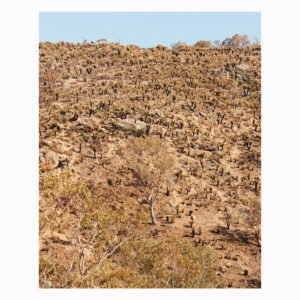
Both noted for strikingly forward-thinking bodies of solo work dating back to the 1990s, the duo of Andrew Pekler & Giuseppe Ielasi - collaborators for the better part of a decade - reemerge with 'Palimpsests’, their first outing with Shelter Press. Built from deconstructed layers of texture, tone, and arrhythmic percussiveness, the album’s 2 sides distill 6 years of work into 9 splintered, airy reimaginings of minimalism - each surprising, creatively rigorous, and startlingly beautiful - that rest at the outer reaches of contemporary electroacoustic practice and musique concrète.
Based in Berlin and Milan respectively, Andrew Pekler and Giuseppe Ielasi have individually carved singular paths across numerous disciplines within experimental music for more than 20 years, each deploying sampling, synthesis, and acoustic sources to weave their own, distinct worlds of sonorous abstraction. Brought together by years of friendship and a shared devotion to layered texture and complex, fractured structure, the pair first joined their creative energies in 2013, a collaboration that culminated as the LP, ‘Holiday For Sampler’, issued by Planam.
'Palimpsests’, the duo’s second outing, draws its material from a series of improvisations made by the Pekler and Ielasi in Milan during 2015. Over the ensuing six years, those recordings would undergo various transformations - cut, reworked, sampled, and added to by each artist, working at geographic distance between Berlin, Kyoto and Monza - before culminating, like the album’s title suggests, as a unique manifestation of musical palimpsest; “an object reused and altered, while still bearing visible traces of its earlier form”.
With each of the album’s compositions nodding toward a city with which Pekler and Ielasi hold biographical connections, 'Palimpsests’ constructs sound as poetic metaphor; a series of ghosts - traces of memory, image, and action - cut and reassembled, in cycling permutations, before been set into action at a glacial pace with layered, transparent forms.
Defined by remarkable restraint and pointillistic precision, across the album’s two sides Pekler and Ielasi weave the fractured remnants of their sessions - reduced to glitches and warbling fragments of texture and tonality - into pulsing expanses of spatial ambiance that defy imagism, blur the boundaries between the synthetic and organic - reducing their sources to a series of unknowns - recast the boundaries of electroacoustic practice on markedly singular terms.
Shelter Press is thrilled to present 'Palimpsests’, another brilliant outing from the duo of Andrew Pekler and Giuseppe Ielasi. Issued in a limited edition of 500 copies on black vinyl, with artworks on printed inner and outer sleeves by Traianos Pakioufakis.
21,00€
In stock
LP
Félicia ATKINSON & Jeffre CANTU-LEDESMA
“Un hiver en plein été”
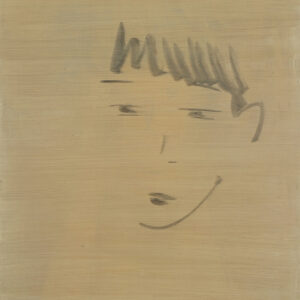
From its earliest utterances, experimental music has been particularly disposed to transnational and cross-cultural collaboration. Seeking the answer for a fundamental problem - how to transcend the boundaries of difference, distance, and time - it presents a means to find common ground and communicate through the elemental form of sound. Over the last 5 years, this precisely what the duo of Félicia Atkinson & Jefre Cantu-Ledesma has achieved, intertwining sublime sonorities across the geographic expanses between their respective homes in France and the United States. Their third album for Shelter Press, ‘Un hiver en plein été’ (‘A winter in the middle of summer’) - the first to have been largely recorded by Atkinson and Cantu-Ledesma together in the same space - distills a mesmerizing pallet of acoustic and electronic sources into an open discourse of radically poetic forms, offering glimpses of warmth and intimacy waiting in the post-covid world to come.
Both veteran experimentalists with celebrated bodies of solo work behind them - each traversing the challenges of electroacoustic practice in their own singular ways - prior to their first recorded outing in 2016, Félicia Atkinson and Jefre Cantu-Ledesma had only crossed paths in person once, initially meeting in San Fransisco during 2009. The mutual bond formed during that brief encounter flowered into their first LP, ‘Comme Un Seul Narcisse’, followed two years later by 2018’s ‘Limpid As The Solitudes’. Both recorded remotely - sending files back and forth, fortified by conversations on a vast range of subjects - these two albums were guided by impassioned conceptual nods to Guy Debord, Baudelaire, Brion Gysin and Sylvia Plath, while seeking resolutions for the challenges and unique possibilities that working at a distance provoked.
Where the triumphs of its predecessors rose from the bridging of disparate moments and divergent spaces, ‘Un hiver en plein été’ culminates as a celebration of closeness, a result of Atkinson and Cantu-Ledesma working together in the studio, responsively in real time, for the first time. Recorded in Brooklyn during August of 2019 - a handful of months before the pandemic would impose chasmic distances across the globe - its six discrete works, carefully crafted and finalized over the ensuing year, evolve seamlessly across the album’s two sides, weaving a sprawling tapestry of sonority, within which both artists retaining their own voices and visions, while drawing each other towards uncharted ground.
Atkinson likens the recording of ‘Un hiver en plein été’ to have been akin to “a playground”, each artist “hungry for each sound, a bit like the rush in the Louvre in Godard’s Bande à part”, to which Cantu-Ledesma adds that the process seemed to have had “a mind of its own”, with both “along for the ride”. This organic sense of entropy and enthusiasm - a joyous exploration of the unknown - guides the momentum of the album’s evolving arc, as unfolding chasms of ambient space ripple with humanity, life, and fleeting glimpses of the actions that led to its material core.
Crafted from deconstructed melodic elements and drifting long-tones - laden with subtle nods to Indian classical ragas and free jazz - searching patterns of speech, textural elements captured within the studio and the outside world, and searching tonal and percussive interventions, ‘Un hiver en plein été’ coheres as a multi-faceted series of electroacoustic dialogues; nesting conversations between two artists working at the juncture of abstraction and narration, field recording and harmony, and the philosophical and phenomenological, in search for the meaning of friendship, and its manifestation in pure sound.
21,00€
In stock
LP
James RUSHFORD
“Lake From The Louvers”
James Rushford tops over a decade of solo and collaboratibve work with Oren Ambarchi, Crys Cole, Will Guthrie, Graham Lambkin and Klaus Lang on this fathoms-deep, psychedelic treat, a next-level arrangement of microtonal drone, decaying concréte fuzz and windswept, somber melancholia recorded for the Shelter Press label.
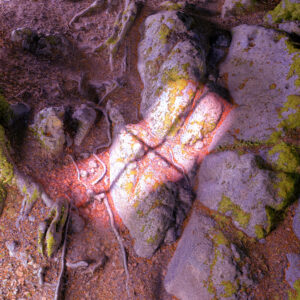
James Rushford impressed earlier this year with his excellent Black Truffle collab with Will Guthrie “Real Real World”, and he here heads further into the nether-realm on ‘Lakes From The Louvers’, an album that draws its inspiration from the interplay of shadow and light he observed on the surface of the lake and through his window while at an artist residency at La Becque on the shores of Lake Geneva in Switzerland. Rushford’s detailed sound particles and concrète world-building echo the tantalising shimmer of light on water, with amplified movements, synthesized squawks, pings and harp notes rippling across the length of each track. It’s music that accurately represents the landscape but is far from ambient - instead Rushford sculpts soundscapes that demand patient, attentive listening.
The slow-moving, deliberate processes that Rushford has been honing over the last 15 years betray a sensitive ear, swerving pretentious, exclusionary art for arts sake nonsense. This is electro-acoustic experimentation with a beating heart, designed to trigger thought and self reflection. Just clap yr ears around ‘Hyaline Apples’ as it melts buzzing clouds of synth into jagged harp plucks and woodblock percussion, or standout track ‘The Bise’ and its disquieting haze of microtonal bliss. When the album comes to a satisfying close on ‘Dents Du Midi’, it feels like the finale of a muticolored odyssey, as tangled synth notes fold in on themselves like an MC Escher painting. Futuristic and ancient, ‘Lakes From The Louvers’ is a breathtaking album that unspools with the patience it no doubt took to create.
25,00€
In stock
LP
Lisa LERKENFELDT
“Collagen”
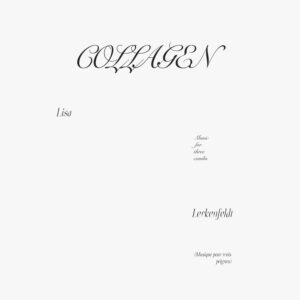
The full-length debut of Lisa Lerkenfeldt’s sanguine ambient drift marks the Aussie artist’s most significant release, slotting neatly into the roster of Félicia Atkinson & Bartolomé Sanson’s Shelter Press, and somewhere between Gas, Beatriz Ferreyra and Ben Bondy on your shelf.
Effectively her first album, proper, ‘Collagen’ introduces Lerkenfeldt’s sound like a wild meadow somewhere between the fields of modern classical, ambient, and musique concrète. Aspiring to “elevate the everyday”, her music feels naturally, gently ripe with variegated in/organic textures and slow, hypnotic melody that stealthily attunes listeners to her wavelength in a manner that she’s roughly finessed on previous tapes and digital releases with native label Longform Editions and Vienna Press and Canada’s Aught Void.
As the tracks unfold, Lerkenfeldt’s washed out strings and blanched electronics waver the weather vane between sombre and melancholy with a real windswept, isolationist feel that perhaps suggest best results when immersed by yourself, not as a communal experience. More like a solo hike with headphones or sheltering in front of a shifting landscape, the album plays thru Gas-like string pads gilded with elusive vocoder vox of ‘In Her Hair’ before dematerialising into elemental abstraction for 9 minutes of ‘Collagen’, whereas ‘Gates of Desire’ prove a tidier knack for arranging classically puckered ambient-pop keys, and the B-side expresses more liminal, hypnagogic states in the creaking gloom of ‘The Weight of History’. It all shares the same, rare air and sensitively perhaps errs best to the side of melancholy than anything overbearingly glum.
19,50€
Out of stock

2 LP
Kassel JAEGER
“Swamps / Things”
Over the last decade, Kassel Jaeger, the moniker of the Paris-based composer, writer / theorist, producer, and director of the Groupe de Recherches Musicales (GRM), François Bonnet, has meticulously sculpted a body of multidisciplinary work that rests at the forefront contemporary electronic and electroacoustic practice. On July 10th he will release his new album ‘Swamp / Things’ on Shelter-Press.
Rigorously experimental without sacrificing the intimacies of self, his efforts as a composer and musician extend across live contexts and numerous critically heralded solo releases, as well as collaborations with Jim O’Rourke and Lucy Railton, both contributing to the record, alongside Stephen O’Malley, Stephan Mathieu, Akira Rabelais, Oren Ambarchi, and James Rushford, and others.
Deeply invested in the potential of sound as an elemental form - a root phenomenon with a profound capacity for meaning, as much as a multidimensional material for creative process and ideas – Jaeger’s work across numerous fields, be it in text, action, or sound presents a crucial bridge between the optimistic, philosophical origins of electronic and electroacoustic music, the present and where they have yet to delve.
Sound is abstract. When the source is elusive, narrative and meaning shift between the concrete and obscure. With his first solo LP with Shelter Press, Swamps/Things, Kassel Jaeger wades into this foggy, conceptual realm. From memory and metaphor - sliding fluidly through the imagistic and emotive - emerges an immersive, cavernous world that rethinks electroacoustic music on organic terms.
‘Swamps / Things’ was conceived as an opera without distinct characters or text. It draws Kassel Jaeger into his own history, experiences, and the unlikely double of the swamp, a landscape that has held literal and metaphorical sway over him since childhood. Merging 8 works as a total environment, abstaining from distinct shape or discrete articulation, across the album's breadth, sound becomes a shifting mirror for the bubbling, ordered chaos of organic life.
Resting at the junction of concept, emotion, and phenomena - tapping the multidimensional potential for narrative and meaning possessed by each - Swamps / Things encounters an artist of remarkable craft, delving toward the unknown, deploying organized sonority as object and environment, as much as action, movement, passage, and arc. Seemingly possessed by an entropy entirely its own, the temporal gives way to the poetics of space, while the density of an endlessly evolving climate, laden with cacophonous happenings, renders itself still. Flickering images of the natural world - memory and the imagined reformed as sound - present an operatic double for human action and thought. From deep, fog like banks of minimalist long tone, to industrial clamors left as tracks in the mud, or the collisions of shifting pulses, overtones, and textures - captured from across the murky, drone laden waters between the acoustic and synthetic realms - moody, howling cries and tense meditations merge in ambient sheets, capturing a fleeting image of where decomposition gives way to new growth.
A remarkably intimate and forward-thinking aural balm, bristling with complex beauty, Shelter press is overjoyed to present Kassel Jaeger’s Swamps / Things. Two immersive, intoxicating sides overflowing with humanity and ideas.
Sound material collected and performed by François J. Bonnet
with additional help by Lucy Railton (River Wensum Roe Deers) and Jim O’Rourke (NYC Bobcats).
Artwork by Cameron Jamie.
Mastering by Giuseppe Ielasi.
Music composed by François J. Bonnet.
27,00€
Out of stock
LP
Okkyung LEE
“Yeo-Neun”
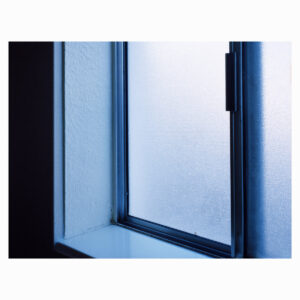
Springing from a decades deep body of work, defined by a rigorously singular and adventurous approach to sound, cellist, composer, and improvisor, Okkyung Lee, returns with Yeo-Neun, her first outing with Shelter Press, and arguably her most groundbreaking and unexpected album to date.
A vital, present force in the contemporary global landscape of experimental music, Okkyung Lee is widely regarded for her solo and collaborative improvisations and compositions, weaving a continuously evolving network of sonority and event, notable for its profound depth of instrumental sensitivity, exacting intellect, and visceral emotiveness. Yeo-Neun, recorded by Yeo-Neun Quartet - an experimental chamber music ensemble founded in 2106 and led by Lee on cello, featuring harpist Maeve Gilchrist, pianist Jacob Sacks, and bassist Eivynd Opsvik - represents the culmination of one of longest and most intimate arcs in her remarkable career. A radical departure from much of the experimental language for which she has become widely known, it is equally a fearless return.
Yeo-Neun loosely translates to the gesture of an opening in Korean, presenting window into the poetic multiplicity that rests at the album’s core. Balanced at the outer reaches of Lee’s radically forward thinking creative process, its 10 discrete works are born of the ambient displacement of musician’s life; intimate melodic constructions and deconstructions that traces their roots across the last 30 years, from her early days spent away from home studying the cello in Seoul and Boston, to her subsequent move to New York and the nomadism of a near endless routine of tours. At its foundation, lay glimpses of a once melancholic teen, traces of the sentimentality and sensitivity (감성 / Gahmsung) that underpins the Korean popular music of Lee’s youth, and an artist for whom the notions of time, place, and home have become increasingly complex.
Elegantly binding modern classical composition and freely improvised music with the emotive drama of Korean traditional music and popular ballads, the expanse of Yeo-Neun pushes toward the palpably unknown, as radical for what it is and does, as it for its approachability. In Lee’s hands, carried by a body of composition that rests beyond the prescriptive boundaries of culture, genre, geography, and time, a vision of the experimental avant-garde emerges as a music of experience, humanity, and life. Meandering melodies, from the deceptively simple to the tonally and structurally complex, slowly evolve and fall from view, the harp, piano, and bass forming an airy, liminal non-place, through which Lee’s cello and unplaceable memories freely drift.
Remarkably honest, unflinchingly beautiful, and creatively challenging, Shelter Press is proud to present Yeo-Neun, an album that takes one the most important voices in contemporary experimental music, Okkyung Lee, far afield into an unknown future, bound to her past.
Mastered and cut by Rashad Becker, housed in reversed-board printed inner and outer sleeve with artwork by American photographer Ron Jude.
22,00€
Out of stock

book
SPECTRES
“N° 02 – Résonances”
The second issue of Spectres is devoted to the concept of resonances, with contributions by Maryanne Amacher, Chris Corsano, Ellen Fullman, Christina Kubisch, Okkyung Lee, Pali Meursault, Jean-Luc Nancy, David Rosenboom, Tomoko Sauvage, The Caretaker, David Toop, and Christian Zanési.
To resonate: re-sonare. To sound again—with the immediate implication of a doubling. Sound and its double: sent back to us, reflected by surfaces, diffracted by edges and corners. Sound amplified, swathed in an acoustics that transforms it. Sound enhanced by its passing through a certain site, a certain milieu. Sound propagated, reaching out into the distance. But to resonate is also to vibrate with sound, in unison, in synchronous oscillation. To marry with its shape, amplifying a common destiny. To join forces with it. And then again, to resonate is to remember, to evoke the past and to bring it back. Or to plunge into the spectrum of sound, to shape it around a certain frequency, to bring out sonic or electric peaks from the becoming of signals.
Resonance embraces a multitude of different meanings. Or rather, remaining always identical, it is actualised in a wide range of different phenomena and circumstances. Such is the multitude of resonances evoked in the pages below: a multitude of occurrences, events, sensations, and feelings that intertwine and welcome one other. Everyone may have their own history, everyone may resonate in their own way, and yet we must all, in order to experience resonance at a given moment, be ready to welcome it. The welcoming of what is other, whether an abstract outside or on the contrary an incarnate otherness ready to resonate in turn, is a condition of resonance. This idea of the welcome is found throughout the texts that follow, opening up the human dimension of resonance, a dimension essential to all creativity and to any exchange, any community of mind. Which means that resonance here is also understood as being, already, an act of paying attention, i.e. a listening, an exchange.
Addressing one or other of the forms that this idea of resonating can take on (extending—evoking—reverberating—revealing—transmitting), each of the contributions brought together in this volume reveals to us a personal aspect, a fragment of the enthralling territory of sonic and musical experimentation, a territory upon which resonance may unfold. The book has been designed as a prism and as a manual. May it in turn find a unique and profound resonance in each and every reader.
Spectres is an annual publication dedicated to sound and music experimentation, co-published by Shelter Press and Ina GRM – Groupe de Recherches Musicales.
bilingual edition (English / French), 13,5 x 20 cm (softcover), 196 pages.
14,00€
Out of stock
2 LP
Felicia ATKINSON
“The Flower And The Vessel”
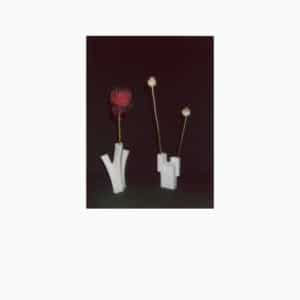
Félicia Atkinson has frequently fixated on the elusive interwoven relationship between microcosms and macrocosms – how even the quietest creative act ripples outward in unforeseen ways, a whisper with no fixed meaning. Her latest work pursues this notion in a more literal and lasting fashion, as it was crafted while pregnant on tour, in impersonal hotel rooms in foreign cities. She describes it as “a record not about being pregnant but a record made with pregnancy.” Each day and night, finding herself far from home, she asked herself “What am I doing here? How can I connect myself to the world?” The answer gradually revealed itself: “With small gestures: recording my voice, recording birds, a simple melody.”
The album’s 11 songs span a vast pantheon of whispering textures, opaque moods, and surreal spoken word, leading the listener through a mirrored hall of beguiling mirages. Atkinson cites a trio of French classical compositions from her childhood as formative influences on this particular collection: Maurice Ravel’s “L’enfant et les sortilèges”, Debussy’s “La Mer” and Erik Satie’s “Gymnopédies”. There’s certainly a shade of classicism woven within these tracks, however veiled, abstracted, or unorthodox. Melancholic piano motifs repeat then retreat into a radiant frost of shivering frequencies; processed voices recite cut-up poems and interviews over delay-refracted Rhodes and Wurlitzer;
Although much of Atkinson’s past discography is shaped by speech and the lyricism of language, The Flower & The Vessel ventures farther into silence, absence, and voiceless wilderness. Here Atkinson’s synergy feels close to apotheosis, emotive but ambivalent, a ceremony of expectation and invisible forces. The 19-minute closing collaboration with SUNN O))) guitarist Stephen O’Malley, “Des Pierres,” is one of the album’s few pieces tracked in a proper studio (Music Unit in Montreuil, France) but it broods and burns with the same subliminal majesty as the rest of the album: an ember in amber, seeds planted in shifting sands. Atkinson’s voice flickers like a flame, framed by slabs of shadowy feedback. Her process may be personal is but its impact ripples to the edges of existence.
29,00€
Out of stock
CD
Felicia ATKINSON
“The Flower And The Vessel”
Félicia Atkinson has frequently fixated on the elusive interwoven relationship between microcosms and macrocosms – how even the quietest creative act ripples outward in unforeseen ways, a whisper with no fixed meaning. Her latest work pursues this notion in a more literal and lasting fashion, as it was crafted while pregnant on tour, in impersonal hotel rooms in foreign cities. She describes it as “a record not about being pregnant but a record made with pregnancy.” Each day and night, finding herself far from home, she asked herself “What am I doing here? How can I connect myself to the world?” The answer gradually revealed itself: “With small gestures: recording my voice, recording birds, a simple melody.”
The album’s 11 songs span a vast pantheon of whispering textures, opaque moods, and surreal spoken word, leading the listener through a mirrored hall of beguiling mirages. Atkinson cites a trio of French classical compositions from her childhood as formative influences on this particular collection: Maurice Ravel’s “L’enfant et les sortilèges”, Debussy’s “La Mer” and Erik Satie’s “Gymnopédies”. There’s certainly a shade of classicism woven within these tracks, however veiled, abstracted, or unorthodox. Melancholic piano motifs repeat then retreat into a radiant frost of shivering frequencies; processed voices recite cut-up poems and interviews over delay-refracted Rhodes and Wurlitzer;
Although much of Atkinson’s past discography is shaped by speech and the lyricism of language, The Flower & The Vessel ventures farther into silence, absence, and voiceless wilderness. Here Atkinson’s synergy feels close to apotheosis, emotive but ambivalent, a ceremony of expectation and invisible forces. The 19-minute closing collaboration with SUNN O))) guitarist Stephen O’Malley, “Des Pierres,” is one of the album’s few pieces tracked in a proper studio (Music Unit in Montreuil, France) but it broods and burns with the same subliminal majesty as the rest of the album: an ember in amber, seeds planted in shifting sands. Atkinson’s voice flickers like a flame, framed by slabs of shadowy feedback. Her process may be personal is but its impact ripples to the edges of existence.
15,50€
In stock
LP
BLACK ZONE MAGICK CHANT
“Voyage Sacrifice”
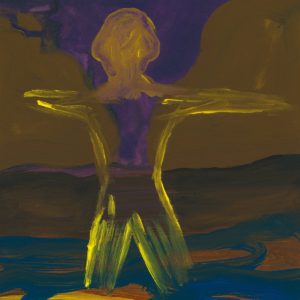
Black Zone Myth Chant acts as a dark interpreter for chemical elves in the steep sided, sunless psychedelia of ‘Voyage Sacrifice’ for Félicia Atkinson & Bartolomé Sanson’s faultless Shelter Press, under the slightly altered Black Zone Magick Chant alias.
Commendably, and temporarily sacrificing his consciousness for the good of your trip, on this release Maxime Primault aka BZMC has realised some of the most phantasmagoric sounds in his entire catalogue, which now stretches back over ten years and includes notable highlights in his psych drone project as High Wolf, and pulsing rhythmic noise as Iibiis Rooge. It’s perhaps testament to Shelter Press’ irrepressible vision that they have coaxed out this project’s most potent and far-out work, bar none.
Gutting out his screwed hip hop and dancehall inspirations in three durational parts embracing pitch black, miasmic abstraction, perceptions of time and rhythm become dissolved in the process, aided by a severely down pitched vocal growl that absorbs the listener into its tantric pacing on ‘Lightless Mountain’, holding the senses under as deathly bells peal for someone or something, and scattered metronomes occasionally accentuate the temporal smudge, spilling over into the seasick brownian slosh of ‘Incineration of Thoughts’.
But like the potential of any trip worth the effort, the darkness and the sublime become entwined in the 22 minute counterbalance of ‘Where will we meet when our ashes are spread in the wind’, which, thru its convincing, iridescent detail and lack of a ? in the track title, seems to describe from the inside, rather than speculate, a divine space or spirited beyond as the result of lived experience.
20,00€
In stock
LP
KTL
“The Pyre : Versions Distilled to Stereo
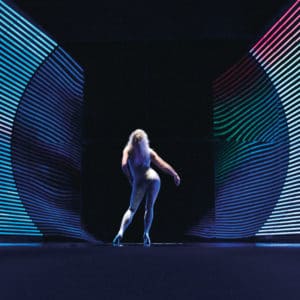
"‘The Pyre: versions distilled to stereo’ is the score composed and recorded by KTL (Stephen O’Malley & Peter Rehberg) for the dance piece ‘The Pyre’, written and directed by Gisèle Vienne.
The music created by KTL (Peter Rehberg and Stephen O’Malley) incorporates invisible and absent elements – ghosts, one might say. It proceeds from simulated diegetic sounds (which are part of the action) interwoven with real sounds - a musical creation that makes up an extra-diegetic sound score. This composition dizzyingly sculpts the space on stage and generates an impression of great spatial depth, which activates light-sculptures that in turn evoke the illusion of a tunnel, whose depth also results in a play of reflections. "
22,00€
In stock
LP
Félicia ATKINSON & Jeffre CANTU-LEDESMA
“Limpid as the Solitudes”
"When is one plus one not two? When two paths converge and a new one appears. But what is this newly activated neural pathway? A Third Mind? In the 1960s, multimedia artist Brion Gysin cut through the words of a newspaper and rearranged them to reveal a new kind of truth contained within the words but not freed until his knife cut it loose. He described this as part of the Third Mind. Likewise, «Limpid As The Solitudes» cuts through sound-making techniques to enter a new zone of sonic revelations.
If you had to look for musical precedents, you might say the record recalls the turn-of-the-century Mille Plateaux glitch era, the warmth of La Monte Young’s raga-inspired microtonal electronic «dream house» drones, a sense of adventure evident in the acousmatic non-space recordings made by GRM artists in the 1960s/ 1970s, 4AD’s floor gazing guitar sound circa Cocteau Twins peak, and blissfully diverse field recordings. But you could equally equate it with entirely different recording sources. «Limpid As The Solitudes» has a widescreen sound that is both familiar and unfamiliar. Warm, comforting and also unsettling in unpredictable ways. Deliberate yet exploratory. It’s a record composed of opposites and contrasts. Following historical guidelines yet also throwing them out of the window. It’s hard to tell if the process of creating it was more akin to abstract painting but it might possibly be easier to understand if it was a large museum painting (to steal a thought from David Stubbs). To describe the album as ambient would indicate a much too passive engagement with the sound – leave it to play in the background and you’ll miss a lot of the joy.
Felicia Atkinson and Jefre Cantu-Ledesma describe the record as a series of postcards – «things and sounds that happen vertically as a slow ascension, vessels communicating in dreams.» In this collaborative recording, there is a feeling of «becoming» – things metamorphose – a concrete sound turns into a electronic sound that turns into a spiral-like melody which then furls / unfurls at the same time.
The title of the album – «Limpid As The Solitudes» – as well as track titles, are all verses stolen from Sylvia Plath’s poems – Atkinson notes «like dropped pearls from a lost collar.» Trying further to capture the records poetic impulses she notes it’s reflects «Empathy to objects and nature’s elements, meteorological states, seasons that answer to your heart, granular etchings carved and sustained to create a blurred sentimental landscape.» But notes with a sharpness that «the finale is more optimistic than Plath’s poetry. Love and lyricism win, the music soaring from deep water to interstellar galaxies.»
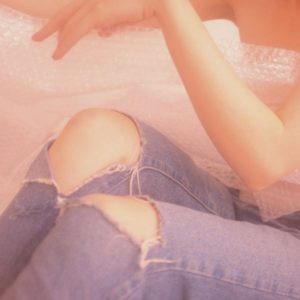
If you look at the cover, you’ll find another key clue – you’ll see an image created by photographer Julien Carreyn of a young women wearing destroyed jeans, playing with bubble wrap. The image is intended to give the viewer an eerie 1990’s feeling that echoes the recording. They note – «think films such as by «Trust» (Hal Hartley, 1990) or «Chuncking Express» (Wong Kar Wai, 1994).» They add «it’s the «ultra modern solitude» of characters lost in an early-digital urban vacuum, looking for a more time to wonder, a soul mate or just some compassion in the grey sky.»
Among the many other references for this album is how Google Maps have created new digital perceptions of space, Gilles Deleuze’s examination of Alice In Wonderland, Andre Bretons poems and more films including the classics «Sacrifice» (Tarkovsky), «Passenger» (Antonioni) and «Last Year In Marienbad» (Resnais). To dig into the more of the ideas and sources behind this record you’ll simply have to talk to the duo. We simply cannot give you the full depth here.
Be sure to come back to this record more than once – it’s then that it’s power will work – you’ll recall the sound of a lover, a garden you once walked through, an echo of a record you once loved. To be appreciated, «Limpid As The Solitudes» requires you to immerse yourself as if in a hot spring, letting the sounds float over you and alter your perceptions and memories." (Shelter Press)
Mastered and cut by Helmut Erler at D+M, Vinyl Edition housed in printed inner and outer jacket, with high-gloss lamination finish. Art by Julien Carreyn. Out on November 9, 2018.
18,00€
Out of stock
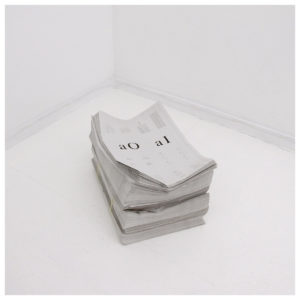
LP
Ben VIDA
“Slipping control”
Slipping Control derives from the text piece “Tztztztzt Î Í Í…” wrote last year by Ben Vida (and published as a book by Shelter Press).
Composed to act as a score, a sound piece and as raw data for electronic control source, Tztztztzt Î Í Í… became the intrinsic element that tied some different pieces of art made by Ben Vida and presented at the eponymous show at AVA Gallery (NY, USA) in april 2013.
“I was interested in the rhythm of speaking, interested in using the voice to create rhythmic patterns that would inevitably break out of time and become asymmetrical and awkward. I wanted to create one set of control sources (the text) and run them through a bunch of different systems (the video, the book, the record etc) and see how the original source material morphed and changed as it manifested in these different modalities. The process of developing each unique work involved setting of control paths for the text to be processed though. In terms of this path the first step after writing the text was to find the primary filter of interpretation and translation that would start this process of slipping control - and this is where Tyondai and Sara come in…”
A Control Path may look something like this: Text > Performer/Vocalist > Voiced Recording > Electronic Analysis > Reconfigured
Text > Audio Synthesis > LP Record.
Or maybe like this: Text > Performer/Vocalist > Video/Audio Recording > Electronic Analysis > Audio Synthesis > Video Editing > Color Synthesis > Video Installation.
Or this: Text > Performer/Vocalist > Video/Audio Recording > Electronic Analysis > Audio Synthesis > Video Editing > Color Synthesis > Video Installation > Color Field Panel Display.
Or more simply: Text > Poster.
All music by Ben Vida, with Tyondai Braxton, and Sara Magenheimer. Mastered and cut by mastered by Helmut Erler at Dubplates & Mastering, Berlin. First edition of 500 copies, color cover + printed inner sleeve + double sided insert, 140gr black vinyl.
Original price was: 16,50€.10,00€Current price is: 10,00€.
In stock

LP
Thomas ANKERSMIT
“Homage To Dick Raaijmakers”
Thomas Ankersmit, last seen on a pair of excellent albums for PAN and Touch (in 2011 and 2014, respectively) pays tribute to legendary Dutch composer / electronic and tape music pioneer Dick Raaijmakers with an extended study in electronic music, utilising Serge Modular feedback and sine/pulse/random generators, contact mic, and tape speed variation to mirror some of Raaijmakers’ deeply weird experiments. As the label so eloquently explain - despite the abstract nature of the material, a sense of loss somehow pervades.Raaijmakers is a genuinely legendary figure in the history of electronic music, and Thomas Ankersmit’s fitting homage lands almost five years to the date of his passing, aged 83, in September 2013. Replete with experiments with sounds not found in the music, but generated by the listener’s own ear as a strange side-effect, this extended piece re-contextualizes Raaijmakers’ ideas about composition and spatial experience to focus on the sounds of raw electricity through creatively abused electronics, composing with analogue micro-sounds, and the three-dimensional sound fields; referencing storms, thunder, crashing and falling objects, and distant radio transmissions.The concept of the recording is directly inspired by Raaijmakers’ thoughts on “holophonic” sound fields to be individually explored by the listener. With this phenomenon, the listener’s inner ears actively generate sounds that don’t exist in the recorded signal, and which can change with a small movement of the head. In other words; it’s unlikely that you will experience this piece of music in quite the same way as anyone else, or that you will experience it that way more than once. And it’s perhaps this sense of transience; of not quite knowing whether what you’re listening to has a real, physical presence, or is a direct result of strange otoacoustic phenomena, that imbues this work with such unexplained melancholy.
An exceptional recording; approach with patience and care.
Pressed on 140g vinyl housed in reverse-board outer and inner sleeve.
17,00€
In stock
CD
Thomas ANKERSMIT
“Homage To Dick Raaijmakers”
Thomas Ankersmit, last seen on a pair of excellent albums for PAN and Touch (in 2011 and 2014, respectively) pays tribute to legendary Dutch composer / electronic and tape music pioneer Dick Raaijmakers with an extended study in electronic music, utilising Serge Modular feedback and sine/pulse/random generators, contact mic, and tape speed variation to mirror some of Raaijmakers’ deeply weird experiments. As the label so eloquently explain - despite the abstract nature of the material, a sense of loss somehow pervades.Raaijmakers is a genuinely legendary figure in the history of electronic music, and Thomas Ankersmit’s fitting homage lands almost five years to the date of his passing, aged 83, in September 2013. Replete with experiments with sounds not found in the music, but generated by the listener’s own ear as a strange side-effect, this extended piece re-contextualizes Raaijmakers’ ideas about composition and spatial experience to focus on the sounds of raw electricity through creatively abused electronics, composing with analogue micro-sounds, and the three-dimensional sound fields; referencing storms, thunder, crashing and falling objects, and distant radio transmissions.The concept of the recording is directly inspired by Raaijmakers’ thoughts on “holophonic” sound fields to be individually explored by the listener. With this phenomenon, the listener’s inner ears actively generate sounds that don’t exist in the recorded signal, and which can change with a small movement of the head. In other words; it’s unlikely that you will experience this piece of music in quite the same way as anyone else, or that you will experience it that way more than once. And it’s perhaps this sense of transience; of not quite knowing whether what you’re listening to has a real, physical presence, or is a direct result of strange otoacoustic phenomena, that imbues this work with such unexplained melancholy. An exceptional recording; approach with patience and care.
12,00€
Out of stock
LP
Felicia ATKINSON
“A readymade ceremony”
Edition of 500 copies.
Relocated in the french Alps following a 5 years exile in Belgium, Felicia Atkinson returns on Shelter Press with A Readymade Ceremony, a concrete / post-digital oratorio in 5 parts.
Composed and recorded at home and on the Oregon coast, the opus documents a full range of bridges happening in Atkinson’s work. It documents the gather of her early-musical studies with her actual musical practice, the reunion of her two main projects - under her own name and Je Suis Le Petit Chevalier - and finally affirms the obvious link between her visual and sonic body of work.
Felicia Atkinson is a visual artist, a writer and musician graduated from Les Beaux-Arts de Paris. Her visual works - sculptures, paintings, installations and collages - includes a variety of media gathered together through the use of improvisation and its patterns such as delay, loop and saturations, with a chosen list of special tools : clay, silk, spray paint, watercolor, wood, or digital images…
Using the improvisation as a main technique to play music, write poetry and make art, her latest output is the book Improvising Sculpture as Delayed Fiction, a fiction / play published by Shelter Press in the fall of 2014.
Pursuing a radical position in the art world with the use of a publishing / economical autonomy as a very crucial element driving her carrier, this LP has been entirely recorded on her laptop using a super basic software. Felicia Atkinson reaffirms here the importance of the DIY in her creating process : the artist-run space as a place to exhibit, the studio space as a whole territory to record, the book as a score, the record itself as a proper documentation for a possible sculpture.
A readymade as the migration of one thing to another one’s context, involving a change of status, of genre, of politics. A ceremony as a possible gathering, a community shared moment, a happening, a celebration, a protest.
The first foundation of A Readymade Ceremony is the text, spread along the 5 tracks building the record. The text is a collage of extracts of Improvising Sculpture as Delayed Fictions (Félicia Atkinson, 2014), Recherche de la Base et du Sommet (René Char, 1955), and Madame Edwarda (Georges Bataille, 1937), and some random texts lying around while Atkinson was playing, mostly picked in the italian magazine Mousse.
16,00€