
Out of stock

LP
Luigi NONO
“Fragmente – Stille, An Diotima”
Edition of 300 copies, gold foil printed sleeve, includes 12-page booklet and two leporello inserts printed on translucent paper
On the centenary of the birth of Luigi Nono, the Maurice Quartet – Georgia Privitera (violin), Laura Bertolino (violin), Francesco Vernero (viola) and Aline Privitera (cello) – reinterprets the composition for string quartet by the Venetian composer: Fragmente - Stille, An Diotima, dedicated to LaSalle Quartet on the occasion of the thirtieth Beethovenfest in Bonn, in 1980. The driving force of inspiration must have been Beethoven, understood as a radical innovator of the conventions of his time. This same definition was attributed to Nono after composing this work, so much so that the critics of the time spoke of the "turning point work". An extreme chamber music work, at the same time private and political, which Nono himself summarized as follows: "I have not changed at all. Even tenderness, the private, has its collective, political side. Therefore my String Quartet is not the expression of a new retrospective line in me, but rather my current position of experimentation: I want the great, rebellious affirmation with the minimum means".
The edition includes a set of evocative photographs of the Giudecca in Venice – which follow the aesthetics of the fragment – realized by Sophie-Anne Herin and a precious musicological contribution by Francesca Scigliuzzo.
The Maurice Quartet – active for more than twenty years in the field of experimentation between contemporary music, electronics and multimedia – joins the numerous homages that the world of music pays to Nono one hundred years after his birth with a recording work of great philological and interpretative relevance, aimed at capturing the most intimate and feverish side of one of the most significant composers of the last century.
30,00€
In stock

LP
MP HOPKINS
“Coupla Triples”
Coupla Triples is a collection of two recordings made by MP Hopkins in 2014. The first piece, "Spins, Groans, Tones," was previously self-released as part of a CDR/chapbook edition, while the second piece "Waves, Feedback, Thoughts," has remained unreleased until now. Both pieces were created using a simple compositional method, in which random word prompts were selected from a list of sounds and "interpreted' in an immediate manner with only basic recording equipment -- a microphone, a tape loop, a voice recorder and an amp. Three sounds, twice. Arranged carelessly but carefully. A coupla triples, nothing fancy. Recorded and mixed on the land of the Gadigal people, Sydney, 2014. Pressing info: 200 copies, black vinyl, A2 poster.
22,50€
Out of stock

LP
Henning CHRISTIANSEN
“Mediterranean Music Water”
Edition of 350 copies, 16 page book. Previously unreleased.
Mediterranean Music Water (Mare nostrum in moedium terrae) Op. 203, a never before issued tape composition, belongs to a body of work embarked upon during the 1980s and '90s connected to Sicily, the other most notable and available being Op. 201 L'Essere Umano Errabando, La Voca Errabando, issued by The Henning Christiansen Archive in 2020. These works were an extension of Ursula and Henning Christiansen's meeting and befriending the Sicily based couple Carlo Quartucci and Carla Tatò, with whom they regularly visited and collaborated. Like its predecessor, the aforementioned Op. 201, Mediterranean Music Water Op. 203 is a conceptualization of abstract theatricality at the connection of place and its relationship to the sea. Performed by Ursula Reuter Christiansen and Henning Christiansen and recorded at a small performing arts theatre in Erice, Sicily -- Teatro Gebel Hamed -- during December of 1991, the abstract for this work reads: "In the morning (after the storm), on the beach. The sea has thrown some things on the beach. Blue light -- some mist? On the ground. Ursula's slides on the wall. Henning is rolling from the background of the stage slowly, very slowly, towards, in a fish net. I come in looking for the things the sea has left and discover him. I roll him out of the net, he's nearly dead, and try to get life in him. Light in the background in rainbow colours. Ursula wears a partlett dress, as a siren." These images lay a foundation and context for the sounds that emerge over the album's two sides, a fascinating conjunction between the power of water and the human spirit. Through the processing of heavy delay and reverb, we encounter the howling utterances of violin tones, vocalizations, and countless unplayable instrumental and non-instrumental sound sources, gathering in a vast and sprawling serious of sonorous expanses that seem to echo the power, movements, and myths tied to the Mediterranean.
24,00€
In stock

LP
Henning CHRISTIANSEN
“Schafe statt Geigen – Verena Vogelzymphon”
Second edition of 250 copies, 20 page photographic book
“I have worked together with sheep before” - says Henning Christiansen - introducing the performance he did in front of the Brucknerhaus in Linz in July 1988. But this time he went beyond, building a “Concert-Castle” with hay blocks where thirty sheep could perform music. Another time the animals - Christiansen’s obsession and passion - become the musical instruments used for his compositions: “Originally most of instrumental sounds derived from animal voices or other sounds of natural phenomena. The violins, for instance: someone found out that stretched intestines, dried bowels, could produce a sound. This has simply been civilized, refined”.
Schafe statt Geigen (Sheep Instead of Violins, 1988) and “Verena” Vogelzymphon (Bird Symphony, 1990) first appeared as a small CD edition issued by Galerie Bernd Klüser in 1991. Both works, each one occupying a full side of this LP edition, extend from one of Christiansen’s long standing conceptual strategies - deploying recordings of animals as stand-ins for musical instruments, sheep and birds respectively. While each work allows these source to take the natural lead, at times masquerading as field recordings, both feature subtle tonal and electronic interventions by the composer, creating strange and brilliant compositions which shift the terms and subjects of music as they were long understood. Accompanied by a twenty page booklet featuring drawings and texts by Henning Christiansen, as well as pictures of the performance by René Block.
“The background, the space where music happens is what I want to put into the foreground.”
24,00€
Out of stock

LP
Jean-Yves BOSSEUR
“Musiques Vertes”
First ever vinyl reissue of Jean-Yves Bosseur's visionary LP "Musiques Vertes", recorded by the legendary French ornithologist and wildlife field recordist Jean-Claude Roché, originally issued by Atelier 82. Utilising handmade instruments constructed from plants and other natural materials, played by a collective of children and untrained musicians, its radically experimental sounds build a revelatory bridge between the avant-garde and ancient forms of folk.
Jean-Yves Bosseur is a relatively obscure figure in the history of the French avant-garde. A student of Henri Pousseur and Karlheinz Stockhausen, as well as a close associate of Knud Viktor, he belonged to the legendary collective Groupe d'Etude et Réalisation Musicale GERM, widely celebrated for their realization of Terry Riley's Keyboard Study 2, issued by BYG / Actuel in 1970.
The "Musiques Vertes" project began in South East France during the late 1970s, spearheaded by Christine Armengaud, who was investigating, via elderly people in the region, a long tradition of musical instruments made with organic materials and plants. With their help, she was able to construct 240 instruments, collected in her book "Musiques Vertes", published in 1978 by Christine Bonneton éditeur, that had long been used for bird calls, dancing, toys of young shepherds and children, and much more, but had been lost to common usage following the First World War.
In 1980 the Direction de la Musique awarded the composer Jean-Yves Bosseur a grant to start a collective practice of music using the instrument constructed / reconstructed by Armengaud. Rather than working with professional musicians, he chose to use locals and children he encountered in Aix-en-Provence between 1981 and 1982. The Musiques Vertes album is the result of hours of practice and recording by these players, in each case, within the album 11 musical excursions, utilising a series of instructions or games set up by the composer in an attempt to create collective musical exchange, as well as a dialogic exchange between this practice and active listening within a natural environment.
While the acoustic practises that underscore Musiques Vertes display a deep resonance with those embarked upon by artists like Akio Suzuki, Toshiya Tsunoda, and Jeph Jerman, the structural resemblance, held deeply within utopian avant-garde principles, falls far closer to experimental electronic works that might have emerged from experimental electronic studios like Groupe de Recherches Musicales or EMS, or subtle object oriented efforts in free improvisation. Bubbling textures and atonalities, blended with sounds from the natural environment, intermingle with staggering birdsong-alike tonalities and rattling percussive passages, producing striking moments of abstraction that retain a remarkable sense of humanity and ease. A document of pure sonic magic and stunningly organic creativity.
300 copies, black vinyl, 20 page booklet
23,00€
Out of stock

4 CD box
TONGUES OF MOUNT MERU
“Naga Mountain”
Lasse Marhaug and Jon Wesseltoft have collaborated in a variety of projects over the years, but started the Tongues of Mount Meru duo back in 2008 as a collaboration to pursue their shared interest in sustained and closely calibrated sounds, and the phenomenological impact they have on the act of listening. They started recording a session each year from 2008 to 2011 in Oslo utilising harmoniums, organs, shruti boxes, oscillators, and computers and accumulated a large pool of material. Some of that material wound up on tapes and vinyls over the years, but they kept the hour-long pieces with an intended major future release in mind. These pieces are now collected in this monumental 4 disc box set.
Clocking in at the total of over 4 hours, with over 10 years in the making, this music was crafted with a clear intent to influence its listeners sense of time and mental colour analogous to the music's stringently, and at times claustrophobic, unfolding narrative. Slowly blooming clusters of wave interference kaleidoscopic blending together with lower frequency binaural pulse patterns. It is as if light has been pitched down, and its oscillating and shimmering coating of gradually shifting overtone cycles opens up and crashes down again into the ocean of waves continually churning around its own time axis.
Drawing upon their joint interest in minimalism and long-form music, raga theory and electro-acoustics, Marhaug and Wesseltoft conjures up a focused power of both beauty and unease to deeply establish a state of hypnotic attentiveness. The result is a hallucinatory and intense set of finely tuned and tectonic long-form pieces, and is a must for anyone even remotely interested in any form of sustained sounds, and its impact on the mind.
200 copies, black cardboard box set with embossed gold print
35,00€
In stock

2 LP
Alessandro BOSETTI
“Plane/Talea 31-34”
Since a few years Alessandro Bosetti has been collecting voices that become part of the Plane/Talea archive. The creation of the archive stems from dozens of individual meetings and recording sessions, in which each voice is detached from its owner or originator and anonymized. With each new iteration and performance, Bosetti plays the archive as if it were an instrument. He searches for hidden details and correspondences through exploration, immersion and contemplation. Each re-activation of the archive results in a dense and
swarming polyphony made up of thousands of short utterances - shorter than any word bearing a meaning - recombined and interwoven into complex textures. The particularity of the grain of Plane/Talea lies in the autonomous and darting life that each of these fragments lives in a teeming community of voices. Such polyphonies are rich in microtonal detail emerging from the incessant juxtaposition of vocal objets trouvés. Harmonic relationships are sometimes rough and chaotic, other times surprisingly just. The voices are never treated electronically but only recombined and musical tension is provided by the particular grain, inflection, energy of each one of them in counterpoint to the others and to a frugally used instrumentarium (Harpsichord, Ondes Martenot, Cristal Baschet, grand piano, analog synth, Hammond organ). Implicit reference goes to ancient, modern and postmodern forms of vocal polyphony. "Plane/Talea 31-34" - the continuation of the homonymous 2016 LP - is a work of sampling that projects an imaginary community and a disembodied choir. The four arching and extensive tracks were created between 2017 and 2018 and bear the trace of two specific moments: August nights in a country house in Vicobarone, in the hills of Piacenza (31-32) and a week-long residency at the "Studio Venezia", an environment created by French artist Xavier Veilhan in the French pavilion at the 2017 Venice Biennale (33-34).
« Encounters of this sort did happen, with the voice still clinging onto its own origin, and then seen, as it were, coming out of the original mouth and caught saying other things, with a slightly different intonation, a slightly different timbre, maybe due to a little aging, an extra cigarette, a cold. At that point we would come out unsettled, or maybe convinced that it was not the same voice anymore, but another. »
28,00€
In stock
LP
Michael ZERANG
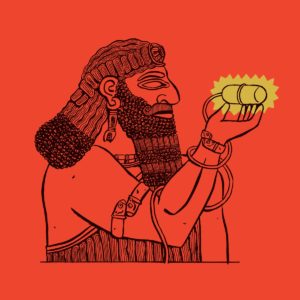
“Assyrian Caesarean”
Chicago-based percussionist Michael Zerang presents his first solo recording after a long career as an exploratory musician and composer. Recorded and mixed by Matt Bordin in the woods at (the new) Outside Inside Studio, the album features a range of approaches to percussion that Zerang has developed over the years, including the use of vibrating drumhead surfaces, expressive friction passages, multiple timbre percussion, and straight up trap-set drumming - all infused with a rich sense of melodic, rhythmic and textural innovation.
Zerang has performed and recorded with some of the most adventurous artists of his era, including a fourteen-year stint with The Peter Brotzmann Chicago Tentet, Joe McPhee’s Survival Unit III, and an extended collaboration with drummer and percussionist Hamid Drake. Frequent collaborators also include cellist Fred Lonberg-Holm, pianist and synthesist Jim Baker, bassist Kent Kessler, trumpeter Axel Dorner, along with an ever-widening pool of international improvisors. He also recently began performing with the experimental Middle-Eastern super group Karkhana - with Mazen Kerbaj, Sharif Sehnaoui, Maurice Louca, Tony Elieh, Sam Shalabi and Umut Çağlar.
19,00€
In stock
2 LP
Hüseyin ERTUNÇ Sextet
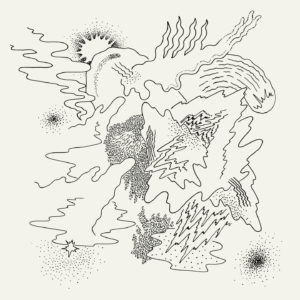
“A new world”
We consider ourselves extremely fortunate having met Hüseyin Ęrtunc during his terrestrial transit. After we reissued his wonderful album Mûsikî (privately released on Intex Sound in 1974) and a few collaborative albums with the Konstrukt collective, in 2017 we finally managed to invite him, Doğan Doğusel, Cem Tan and Umut Çağlar to play some shows in Italy as a quartet. Things got really complicated when their visas got rejected - one week before their plane was scheduled to take off - but we found a stalwart supporter of free jazz music at the phone when we contacted the Italian Embassy with a tiny bit of hope and (incredibly) we got the visas in time so we could spend a whole week with Hüseyin and his band, touring Italy and playing four shows of the best spiritual free jazz we heard in a long while.
Right after that, we took the chance to book a recording session at the good old Outside Inside Studio where our loyal partner Matt Bordin captured on tape two days of improvisation by Hüseyin Ęrtunc (Fender Rhodes electric piano, Philicorda organ and chant), Umut Çağlar (percussion and bamboo flutes), Doğan Doğusel (double bass), Cem Tan (drums), joined for this special occasion by the Jooklos Virginia Genta (tenor and sopranino saxophones, clarinet, flutes), and David Vanzan (percussion) leaving an incredible musical document, not only for the fact that - unfortunately - it was Hüseyin's last session on this world.
"Most of Ertunç’s recorded appearances have been on drum set, where he’s employed a massive and materialist cymbal approach that takes Sunny Murray’s explosive chatter as a lifting-off point. Ertunç waxed one LP as a leader in 1974, Mûsikî (with then-regular partners Michael Cosmic and Phill Musra, issued on the tiny Intex label), and returned to Turkey in the early 1990s. Ertunç’s playing, relentless as it might be, evinces a strident, swinging quality that reaches back decades. His pianistic approach is rooted in the outpouring of voluminous, allover rhythm in concentrated shards. One might first think of early Cecil Taylor, though another Boston resident is also worth mentioning – Jaki Byard, who could move from barrelhouse to crepuscular romanticism and dense chordal superimpositions at the drop of a hat. If he and Ertunç didn’t necessarily work together, their spirits are kindred." (Clifford Allen)
Original price was: 30,00€.18,00€Current price is: 18,00€.
In stock

LP
SQUADRA OMEGA
“Nervoso”
The Squadra Omega teams up again revealing itself in the shape of a trio composed - exactly as for the session which gave birth to Il serpente nel cielo - by OmegaFrank (drums), OmegaG8 (bass, electronics) and OmegaMatt (guitar, organ, sax and electronics). An improvised session recorded live by Matt Bordin at Outside Inside Studio, where the Squadra goes nervously FREE - constantly suspended and harmonically non resolved - following a trail of skilled atonal jazz rock guitar tunes leading to moments of dazed electronics. Definitely not an easy-listening album, wonderfully rendered by a masterful cut made by Daniel Krieger at SST in Frankfurt. For fans of early ECM records. Pressing info: 250 copies on black.
Original price was: 17,00€.10,00€Current price is: 10,00€.
In stock
LP
FOUR HORSEMEN
“Nada Canadada”
The Four Horsemen was a sound poetry group of Canadian poets composed of bpNichol, Rafael Barreto-Rivera, Paul Dutton and Steve McCaffery. They started performing in 1970 and quickly moved from radical improvisation to the use of a notational system, with an effort to develop a scoring method adequate to the group's dynamic and visceral sound show. The four-piece soon became a living workshop with regular weekly rehearsals leading to the best refined group-conceived and group-written compositions. Third volume in a series of sound poetry coordinated by Luca Garino, Nada Canadada - nine outbursts of controlled madness dedicated to the memory of Hugo Ball - is indeed one of the highest examples of poetry as product of a community.
"The number of words we still use in our poetry comes as somewhat of a surprise to us, especially in the light of this album. Strictly speaking we cannot call what we do sound poetry if by it is meant that poetry which has its basis in non-verbal, vocal, and sub-vocal elements of sound. Nor are we into the electronic ramifications of sound in any sense beyond doing a record. We are in fact reluctant to pin the aesthetic continuum on which we operate to the first wall available. Still, perhaps the best name for what we do is what it always has been – poetry". (Rafael Barreto-Rivera)
250 copies on black, embossed lettering, 16 page booklet
18,50€
In stock
7"
KONSTRUKT
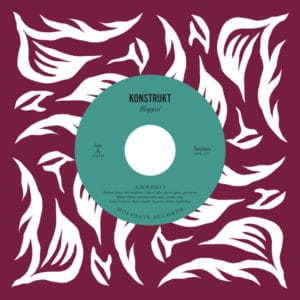
“Bloppin’”
To be considered a twin release of the previous For Ornette 7”. The single consists of two more short tracks - taken from the same Hayyam session - where the five-piece goes bebop, building some rhythmic and harmonic complexity filled by solo virtuosisms of core-members Korhan Futacı (saxophone) and Umut Çağlar (electric guitar).Limited one-time pressing of 200 copies on black.
10,00€
Out of stock
LP single-sided
Maurizio ABATE
“Live at eLaSTiCo”
Another wonderful live session by the multi-instrumentalist Maurizio Abate, captured by Ulrich Rois (Bird People) in 2014 during his exhibition at the old location of the art association eLaSTiCo - in the centre of Bologna - then mixed and edited by Maurizio himself. To be considered a twin release of the Live from the border EP published in 2012, this single-sided release features a twenty-minute track building a ritual and meditative soundscape made with the processed sound of a hurdy-gurdy and a harmonica. Limited to 150 copies.
Original price was: 15,00€.8,00€Current price is: 8,00€.
Out of stock
CD
Renato RINALDI
“Time Machine Vol.IV”
Fourth Volume of the series recorded directly from the Time Machine, a magic case containing an array of home-built oscillators activated by Rinaldi to create pulsing rhythms and noise patterns using the mixer feedback. Edited and mastered by Giuseppe Ielasi.
“The Time Machine project was conceived in order to find a simple and immediate way to work with rhythm. I built two cheap and imprecise, almost-square wave oscillators with a wide range of frequencies. These oscillators can sweep and cross-modulate from sparse pulses to high frequency audio signals. I use a mixer to create feedback between the filters, CV and audio signals and simply record the output; there are no overdubs.” (Renato Rinaldi). Pressing info: 200 copies
Original price was: 12,00€.5,00€Current price is: 5,00€.
Out of stock
10"
Ghédalia TAZARTÈS
“5 Rimbaud 1 Verlaine”
Vinyl reissue of this great tribute to the poetry of Rimbaud and Verlaine made by our favorite French sorcerer, who exceptionally abandones his typical imaginary language to reinterpret six small poems in his own way, jumping from one musical genre to the other and happily letting them crunch together in a childish, enthusiastic play. Recorded in Paris in his flatelier around the same time he recorded the wonderful Hystérie Off Music and previously available in an almost unnoticed mini CD edition published by the French label Jardin au Fou, it’s now available in a remastered vinyl version - with an excellent 45 rpm cut made by SST in Frankfurt.
Pressing info: 350 copies on black.
15,50€
In stock

10" monoface
Henning CHRISTIANSEN
“Hesteofringen”
On January 30, 1970 Henning Christiansen and Bjørn Nørgaard - a figure nearly radical as Christiansen himself - hit the Danish national consciousness when a large portion of the Danish population watched a TV broadcast performance piece in protest to the Vietnam War. “Hesteofringen” (The Horse Sacrifice, 1970) features the work Min døde hest (My Dead Horse, 1970) OPUS 55 for piano, voice and violin (green), a beautiful haunting fragile song featuring a poem written by Bjørn Nørgaard and performed by Lene Adler Pedersen, accompanied by Nørgaard and Christiansen on piano and (green) violin. Laden with metaphor, this beautiful, sad lullaby, is as simple and unusual as anything in Christiansen’s output. Previously unreleased.
Pressing info: 350 copies on black, embossed lettering. 10”, Single Sided.
17,00€
In stock

LP single-sided
Adam ASNAN – Giuseppe IELASI
“Quarry”
Quarry is the latest chapter in the ongoing collaboration between the London-based composer-performer of musique concrète Adam Asnan and the Italian sound artist and mastering engineer Giuseppe Ielasi. As the title may suggests, this encounter produced a dusty sculpture whose shape was only drafted immediately after the stone has been excavated from the ground, and where it is hard to distinguish the acousmatic touch of Asnan from the rhythmic textures of Ielasi. Pressing info: 200 copies on black.
15,00€
In stock

LP
Maria MONTI
“Il Bestiario”
Thirs and last edition. 16 page booklet with lyrics and translations.
Deluxe vinyl reissue of Maria Monti’s legendary Il Bestiario, a prime example of the avant-garde art-song of the 1970s. Knew for her renderings of Italian popular songs, Maria Monti is an Italian singer and actress with a noteworthy career: cabaret singer in the ‘60s, ambitious avant-garde folk artist in the ‘70s, and starring in films by directors as such as Sergio Leone (Fistful of Dynamite) and Bernardo Bertolucci (1900).
Il Bestiario is a near perfect emblem of the fascinating territory gained through collaboration. It enlisted the radical poet Aldo Braibanti as its lyricist, features arrangements and synthesizer from Alvin Curran (Musica Elettronica Viva), the baritone saxophone of Roberto Laneri (Prima Materia), as well as the soprano saxophone of jazz legend Steve Lacy. The result is absolutely stunning, musically unique within the respective outputs of its participants’ long and noted careers. Unquestionably one of the most beautiful and neglected albums of its decade.
18,50€
In stock

LP
Hartmut GEERKEN
“Orpheus”
Fantastic sound poetry piece by Hartmut Geerken restringing the Sun Harp, the Ukranian bandura that Sun Ra gave him in 1971 when he visited Egypt for the first time. The acoustics of his manual workings emerge without any esthetic intention: the bandura’s voluminous resonating body forms the reverb of the room. Each manual action and each contact of the tuning key with the wooden body is “reverbed”. The instrument creates its audio space. A mythic dream play is evoked: the myth’s space of reverb. An ear ready to absorb, hears the labor pains of voice and string ahead of language and music. A human voice in search for language and thus for communication. A string instrument in search for sound and thus for music. Based on this phonemic pre-space, words do rise only sporadically. Through certain techniques of vocal chords the phonemes move close to the meditative Indian Dhrupad-singing, as well as to lunacy and disturbance. Animal languages, signals, shepherds’ calls, silvered drum-language, hamboning, calls, litany, subconscious voicings, sirens: the search for Eurydike and the search for the origin of letter and syllable, out of the breath. Besides one single ‘superimposition’ no further mounting, no computer-generated sounds, no digital gimmicks, no remix or art mix do exist in this live-recorded dream play.
pressing info: 200 copies on black
17,00€
In stock

2 LP
KONSTRUKT and Alexander HAWKINS
“Live at Cafe OTO”
Istanbul-based free music ensemble Konstrukt perform alongside special guest Alexander Hawkins building the perfect groove in a sweaty Cafe OTO on August 10th 2015. Two sets from the same night, each a 40 minute long improvisation. First set is a psychedelic warm-up where the Turkish quartet welcomes Hawkins in a whirlwind of hypnotic funky tunes going electric in the Miles way. The second set starts with Hawkins piano keys bouncing along a silent background soon to be filled with a groovy odd drum tempo leading to a wall of sound where all parts build a perfectly unpredictable dialogue.
Pressing info: 200 copies on black.
28,00€
In stock

2 LP
Hartmut GEERKEN’S ROCK AND FREE JAZZ GROUP KABUL
“Live in Kabul 1976”
An incredible live recording of a concert hosted by the Goethe Institut of Kabul on September 22, 1976. More than sixty minutes of convulsive jams - and hypnotic obscure interludes to loop your head to - captured on reel-to-reel tape, edited and mastered for the best vinyl listening experience that will definitely prove you how free Afghanistan once was. The public too has never been this reactive, shouting and clapping to the music of the quartet directed by our beloved Hartmut Geerken, who also plays piano using both the keys and the chords. Cardboard album edition, first twenty copies come with an original copy of the program, signed and numbered on pink paper. ressing info: 250 copies on black.
24,00€