
Out of stock

10CD box
COMPILATION
“The Complete Obscure Records Collection 1975-1978”
Over the last few years, the Italian imprint, Dialogo, has showed a remarkable dedication to the history of experimental music via reissues of seminal artefacts from the Cramps catalog, and important albums by Piero Umiliani, Ennio Morricone, Bruno Nicolai, Enrico Rava, and others. This initiative now takes on a towering scale with the first ever box set gathering the entire ten album collection of Brian Eno's Obscure Records, originally issued between 1975 and 1978. A truly groundbreaking body of recordings - many of which have remained out of print and difficult to find for decades - it contains some of the most important, influential, and enduring music to emerge during the second half of the 20th Century, which collectively reconfigured the terms of minimalism and laid the groundwork for the emerging movement of ambient music over its short, three-year run. Issued in a deluxe CD edition of 1,000 copies, each box set contains all of Obscure's albums, completely remastered by Andrea Marutti and housed in faithful mini-replicas of their original covers and liner notes, as well as a 130-page booklet, this historic collection marks the first time such a seminal series has received a complete repress. This is certainly one of the year's most interesting, essential, and widely anticipated releases, stunningly produced with the complete involvement of all the artists or their estates. When viewed collectively, the Obscure catalog reveals a remarkable, and previously unexplored counterpoint -- bridging the United Kingdom and the American West Coast -- to the dominant threads of minimal and experimental music, centered in New York that had long dominated the public consciousness. This historic collection marks the first time the seminal Obscure catalog has received a complete repress; simply a dream come true. Featuring Gavin Bryars, Christopher Hobbs, John Adams, Brian Eno, David Toop, Max Eastley, Jan Steele, John Cage, Michael Nyman, The Penguin Café Orchestra, John White, Tom Phillips, Gavin Bryars, Fred Orton, and Harold Budd.
140,00€
In stock
LP
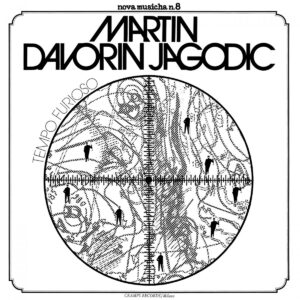
Martin DAVORIN JAGODIC
“Tempo Furioso”
Digging deep into the catalog of Cramps records, Dialogo returns with another stunning entry in their reissue series dedicated to the seminal imprint, the Croatian composer Martin Davorin Jagodić’s 1975 masterstroke, "Tempo Furioso (Tolles Wetter)". A bristling work of monumental scale at the vanguard of electroacoustic composition and musique concrète, its stunning two sides, created by his sinfully under-recognized associate of Groupe de Recherches Musicales, reshapes history at every turn. Issued by Dialogo in a limited edition of 300 copies on black vinyl, with fully remastered audio, housed in a gatefold sleeve that beautifully reproduces the original design, and complete with brand new English translations of the original liner notes.
26,00€
In stock
LP
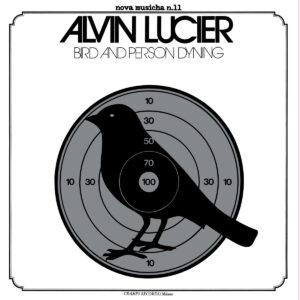
Alvin LUCIER
“Bird And Person Dyning”
At long last, after decades out of print, joining their growing Cramps Records Reissue Series, Dialogo brings us the long-awaited vinyl reissue of Alvin Lucier's "Bird and Person Dyning", the composer's first solo LP. As legendary as they come, and easily among the most important and groundbreaking efforts in experimental music ever recorded, this is Lucier at his most visionary. Issued in a limited edition of 300 copies of black vinyl, with fully remastered audio, housed in a sleeve that beautifully reproduces the original design, complete with brand new English translations of the original liner notes, it doesn't get better than this.
26,00€
In stock

LP
Costin MIERANU
“Luna Cinese”
At long last, after decades out of print, the Milan based imprint, Dialogo, dives into the legendary catalog of Cramps, bringing forth the first ever vinyl reissue of Costin Miereanu's "Luna Cinese", part of an ongoing initiative dedicated to bring the imprint’s seminal output back into the light. Easily one of the most singular and important experimental albums of the 1970s that remains as engrossing, creatively riveting, and as ahead of its time today as it was in 1975, this is as exciting as reissues come. Complete with new English translation of their original liner notes.
Edition of 300 LP on black vinyl. Audiophile pressing, including printed inner. Perfect replica of the original packaging and newly remastered for optimal sound.
The course of Luna Cinese (side X or Y) consists of continuous low-density repetitions – the kind of “woven” silence you find on mountains – occasionally disturbed by irregular and very dense insertions – the kind of intense noise you find in the city.
The purpose of these subsequent insertions is, on the one hand, given their relentless character, to deceive any desire of discovering a linear evolution, and on the other hand, due to their composite nature (= stasis of the present moment, in which past-present-future are mixed, as in a tourbillon), to break the straight-forward logic of development, thus assuming working as an interference. It is not about a “negative”, aphasic interference, but on the contrary a ‘positive’ burst of quantitatively immeasurable super-memorization.
Hence a constant ambiguity in the text’s montage – scattered fragments or a continuous series of rings as in a rosary: several stories develop together or in parallel lines, without being able to know which one is the real one. This kind of development recalls those tales – apparently all true and based on the same real facts, although they change from time to time – which are told on different occasions by those people who, in medical terms, are said to suffer from a certain mental disorder. Artistically speaking, I believe that such examples speak of an extraordinary ability to produce surrealism in its pure and/or unconscious state. Basing my work on this kind of ‘schizoid’ development, I have recently produced a number of “plural” works, which are both sonic and visual.
The formal structure of Luna Cinese (side X or Y) is circular and symmetrical on all sides, like a sphere that could be spun in any direction without shaking its perfect balance, transient and smooth as it is. It is a simple dreamy image of a sphere rotating around an axis that is itself the object of a rotating motion. It is likewise the simple, mechanical image of a spinning disc.
Semantically speaking, it is the superimposition of concentric spherical layers, like parallel, autonomous levels – a bit akin to geological strata’s curves. Many stories (German text) gravitate independently from each other around this sort of centre. They appear as fast as meteors (once only) or in subtle ways (2 to 7 times), creating a linear discourse and thus a meaning through disparate fragments, only to then destroy (erase) it, or to repeat the same mood over and over again, etc.
Such texts, short and to the point, will trigger, at each burst-flash, characteristic musical mini-situations that will always accompany them as involuntary leitmotifs.
Cooking recipes, childish songs, sarabandes of messy memories, mental transcriptions of actual or only imaginary discussions, will cross their paths in a rather sophisticated and structuralist montage. A musical science fiction tale, built from the smallest and most insignificant elements of everyday life.
A reading over time could, among other things, show a slow motion photoflash from “Journey to the Centre of the Earth”, an initiation journey towards the discovery of the idea of “centre”, the erotic-hermetic symbolism of the “shell”, the spiral of Marxist dialectics, the mechanical operation of the record player, the needle passing through coil after coil until the final stop, the empty centre, the silence of sound, the absence of music. Now, it is here that the initial ambiguity finally blooms: what do we find at the bottom of this “final” point, of this centre, shell, cul de sac or mantra? First of all, the progressive cancellation of every sonic being and the clear enunciation of the title itself, Luna Cinese (“Kinesische Mond”, “lune chinoise”, “Chinese Moon”) – a large and round flying disc. Theoretically, we can call the record’s A or B side a meaning-making process, a creeping or nascent process. Through a progressive (re)discovery that reached the title itself, we have now achieved a sonic seeding.
26,00€
Out of stock
LP
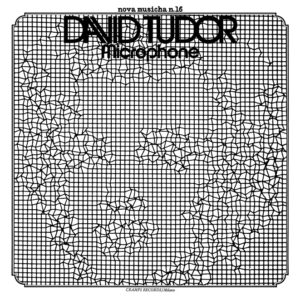
David TUDOR
“Microphone”
At long last, after decades out of print, the Milan based imprint, Dialogo, dives into the legendary catalog of Cramps, bringing forth the first ever vinyl reissue of David Tudor’s legendary LP, "Microphone", part of an ongoing initiative dedicated to bring the imprint’s seminal output back into the light. Still mind-blowing nearly half a century after it was first released, now complete with a new English translation of the album’s original liner notes, this is just about as exciting as reissues come and not to be missed.
Edition of 300 LP on black vinyl. Audiophile pressing, including printed inner. Perfect replica of the original packaging and newly remastered for optimal sound.
The only source of Microphone’s sound is the modulation of a microphone feedback produced in a distant echo chamber. The incidence and duration of the sounds are produced by the action of extremely close (narrow band) peak/notch filters (used in both modes), inserted into the lead signal. Each of the 9 versions is performed by the composer and simultaneously recorded on four tracks. Then the four tracks are spliced onto two, using a pan-matrix. The final product is a library of 9 stereo tapes, each about 32 min. long, which can be used in any combination, for live performances or for electronic installations. In these performances the tapes are played and stopped at any point, rewound and played again, altered in amplitude and/or equalisation, rotated on any given channel, etc., at will, for any period of time.
A live performance of Microphone (for instance without tapes) can be achieved by employing (a minimum of 4) performers using duplication systems, each one with 2 speakers.
This 1973 instantiation of Microphone covers a work originally conceived for the Pepsi Pavilion of Expo ‘70, in Osaka, Japan. Conceptually, the original work derives from discoveries made through the composer’s collaboration in the design of the Pavilion’s acoustic system. Sound diffusion was achieved through the use of 37 loudspeakers placed in a rhomboid grid system covering 3/4 of the sphere.
The loudspeakers could be “temporalised” at the entrance and exit of sounds, at variable speeds, following predetermined spatial models. The composer experimented with highly directional microphones, randomly pointed in space and amplified at the feedback level. The resulting signals were controlled in incidence and duration solely by the action of the loudspeaker’s temporaliser. Modulators, with variable features, designed and incorporated into the sound system by Gordon Mumma, were placed in the lead signals in order to vary the musical content of the feedback signals.
These experiments, although carried out through a compositional process, were not recorded in the Pavilion, due to the presence of “ambient noise” created by the multiple electrical fields. However, since the “tuned space” concept is now involved in Tudor’s compositional processes, the work could be recovered using variable bandpass filters (but capable of accommodating or excluding a cycle), and “q” variables, such as “tuning” elements, instead of operative loudspeakers. The used filters are manufactured by Ling Electronics, California.
The original tapes for Microphone were recorded in May 1973, at the Mills College Centre for Contemporary Music, using funds from their multi-track recording research project.
The recordings were conducted by Robert Sheff, with assistance from John Bischoff.
The two versions of Microphone featured in this recording were made with the assistance of the ZBS Foundation, Fort Edward, New York. Such grants were possible thanks to the public funds from the New York State Council of the Arts.
26,00€
Out of stock
LP
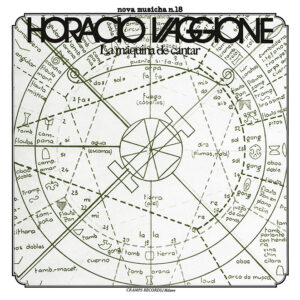
Horacio VAGGIONE
“La Maquina de Cantar”
At long last, after remaining out of print for decades, the Milan based imprint, Dialogo, dives into the legendary catalog of Cramps, bringing forth the first ever vinyl reissue of Horacio Vaggione’s LP, "La Maquina de Cantar", issued as the 18th instalment of the label’s Nova Musicha series in 1978 and among the most important examples of Latin American experimental music from the 1970s. Engrossing and creatively riveting, heard more than 40 years on its rippling electronic tones recast the terms of minimal music and shatter the historic perceptions of these sounds.
Edition of 300 LP on black vinyl. Audiophile pressing, including printed inner. Perfect replica of the original packaging and newly remastered for optimal sound.
Horacio Vaggione was born in Cordoba (Argentina) in 1943. He co-founded, in 1965, the Centro de Música Experimental de la Universidad de Cordoba, Argentina.
In 1966, he was awarded a Fullbright scholarship that allowed him to travel through the USA, where he visited several electronic music studios (Columbia, Illinois, California) and met John Cage. From 1969 to 1972, while living in Madrid, he belonged to a “live” electronic music group with Eduardo Polonio and Luis de Pablo. He was also in charge of the ALEA group’s electronic music studio.
In 1973, he visited the Far East. In 1974/75 he toured in the USA and Europe, more precisely with E. Wiener and the Kevan Cleary and Dance Company, while he was working in various electronic music studios (New York, Oakland, Montreal and Paris).
La Maquina de Cantar was produced in 1971, using the IBM 7090 computer owned by the data processing centre of the University of Madrid. Sound synthesis was carried out by a team under the technical advice of Florentino Briones, director of the centre.
The complete system is a “hybrid”, as it is made up of digital and analogue operations. To begin, the composer writes his “score” in musical notation and then transcribes it into decimal numerical notation. This numerical notation is then transcribed into the machine’s language, in the form of punch cards; in this way, the computer receives all the data that it has to process and translate into sound. At the same time, the POPOVA program, which supports all the operations, is also launched. The sound is produced in the central unit of the IBM 7090, via high-speed magnetisation changes. So, the sound values will be expressed in the form of the number of magnetisation changes (bits). Once the sound and its envelope have been generated through this digital process, the next step is to send this information to an analogue section, consisting of a series of filters, a VCO (voltage-controlled oscillator), and an echo chamber.
Contrastingly, Ending is a work for live electronic keyboards. In this version, three Minimoog synthesisers (played by the composer) and a Yamaha organ (played by E. Wiener) were used. The work is dedicated to Robert Ashley.
26,00€
Out of stock

LP
Steve LACY
“Straws”
At long last, after remaining out of print for decades, the Milan based imprint, Dialogo, dives into the legendary catalog of Cramps, bringing forth the first ever vinyl reissue of Steve Lacy’s LP, "Straws", issued as the sixth instalment of the label’s DIVerso series in 1977. Truly singular in the legendary American saxophonist’s discography - featuring stunning solo excursions and dialogs with himself - it remains one of the great documents of 1970s improvisation, and is as engrossing, creatively riveting, and as ahead of its time today as it was when it was laid to tape. Complete with original liner notes penned by Lacy himself.
Edition of 300 LP on black vinyl. Audiophile pressing, including printed inner. Perfect replica of the original packaging and newly remastered for optimal sound.
I can’t explain my work in words. For me, the music explains itself in sounds.
The saxophone is a machine like another, and it is only by breathing life into it, that it becomes of human interest. When I began to explore the possibilities in the soprano sax in 1950, it was in almost total disuse. By now, due largely to the example and inspiration of John Coltrane, but also somewhat to my own efforts, this instrument is in full flower.
Performance and composition are the two principal sides of my musical activities. Naturally, there is a constant feedback from one to the other. However, a musician is a sort of «medium», and quite often, the work is done in a state of trance, and only afterwards, can one realise what has happened, especially in a music which deals in large doses of improvisation.
This record contains two solo pieces, two more with celeste accompaniment, as well as two collages with background tapes.
Pinochle is a game of cards, enjoyed by the great pianist, Art Tatum. One of the most important «players» in jazz, Tatum had an enormous influence on me, especially as virtuoso, self-contained, soloist. In the course of this interpretation, I quote from a standard tune that Tatum used to like to play («Get happy» by Vincent Youmans).
Straws was written when Igor Stravinsky died, but has not been played ‘til now. This version uses a single strand of the melody, superimposed on a tape I made of three clarinet players and two saxophonists (myself included), trying out reeds, in a room at the Vandoren Reed factory in Paris. The piece is a solemn blues with joyou’s interferences.
Hemline is a recent tune, dedicated to Janis Joplin, the rock star, who was a tragic swinger, and one of the more interesting of the «new style» ladies on the scene in the late 60’s.
Bound to Irene Aebi, my «old» lady, whose voice I prefer to all others. This song (written in 1971), begins as a ballad, then turns blue (finally becoming grey and wise, at the and.
Feline (portrait of Marilyn Monroe). I wanted to capture the allure of the ordinary girl within the goddess, and the solitary space surrounding a «star». The celeste was discovered in the studio. The pussy-cat improvisation was sipped through the saxophone, as if it were a straw.
The rise is built upon a tape recording of sounds from the construction of the, still unfinished, centre culturel de Beaubourg, in Paris. Five layers of soprano sax are added on, all of them, improvised. A sort of « poeme sonore », it is dedicated to my good friend, Brion Gysin, the many-sided artist, who is himself, a «rising star».
Steve Lacy
26,00€