SEARCH
What are you looking for?
  • Account
  • Contact
  • Shipping
Facebook
  • Home
  • Shop
  • Sales
  • Infos
0 0

View Wishlist Add all to cart

0 0,00€ 0

No products in the cart.

Return To Shop
Shopping cart (0)
Subtotal: 0,00€

View cartCheckout

0 0
0 My Wishlist

View Wishlist Add all to cart

0 0,00€ 0
0 Shopping Cart

No products in the cart.

Return To Shop
Shopping cart (0)
Subtotal: 0,00€

View cartCheckout

  • Home
  • Shop
  • Sales
  • Infos
  • My Account
Facebook
Home Shop

Daniel MENCHE

Return to previous page
Grid
List
Show

Out of stock

CD

Daniel MENCHE
“Dirge”

Daniel Menche has yet again utilized a piano to create a vast and immense storm of noise and drones. In 2011 he created a piano noise album titled “Guts” that was the sound of a piano being violently attacked and then electronically treated. Ten years later Daniel Menche worked with a grand piano that was in tune and located in a very acoustically sound studio. With carful elegance and care Daniel Menche wove long horse hairs in between the longest strings of this grand piano and bowed the strings for several hour to create massive amounts of overtones, drones and noise. Edited, mixed and subtly treated, “Dirge” is presented in a rather raw manner. The bowing acoustic movements was the main focus to the music rather than the electronic making this a unique recording in the ever growing discography of Daniel Menche. “Rawest Dirge” is a bonus track only on this CD release that is the raw recording of several objects placed on the strings with tone generators resonating the strings. “Rawest Dirge” is presented raw without any edits or treatments. “Dirge” was a very physical recording to make and therefore an album that truly needs to be heard physically loud and deep as possible. Daniel Menche : Bowed Grand Piano and Noise Recorded at the Hallowed Halls studio in Portland Oregon. Great gratitude to Peter Drake who assisted me wit hthe creative recording process of the grand piano. Recorded throughout January 2021 Mastered at the Stereophonic Mastering.
11,00€
Read more

In stock

LP

Daniel MENCHE
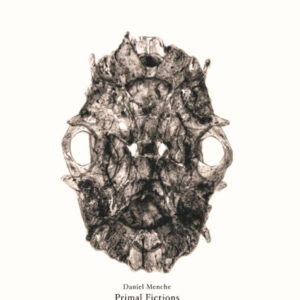
“Primal Fictions”

“Primal Fictions” may sound like the early work of a literary novelist, but words are not Daniel Menche's chosen form of expression - instead, sound and noise form the foundation of his 30 year dedication to abstract sonic exploration. “Primal Fictions” (LP) released by Ferns Recordings is a prime display of Menche’s unique approach to field recordings and electronic manipulation. An earthly marriage of the acoustic and electronic worlds, “Primal Fictions” is a stunning example of Menche’s immersive and overwhelming music, one that invites the listener to become lost inside a vast sound forest. 200 copies.  
19,00€
Add to cart

In stock

Sale
LP single-sided

Daniel MENCHE
MMXX-05 “4424”

Matière Mémoire presents the MMXX Series. In anticipation of the year 2020, Matière Mémoire asked 20 great artists to create an original 20 minutes piece and an artwork. Throughout this year, each quarter will see the release of 5 new vinyls, available individually or as a bundle. Each record is limited at 500 copies and comes as a crystal clear vinyl featuring an original track of 20 minutes on one side, and a laser engraved artwork on the other. Each contained in a transparent sleeve printed with the MMXX logo, and each coming with a print of the artist artwork.  
matière-mémoire · MMXX - 05 DANIEL MENCHE (4424) - Extract
25,00€ Original price was: 25,00€.12,00€Current price is: 12,00€.
Add to cart

Out of stock

LP

Daniel MENCHE
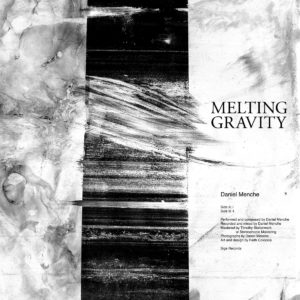
“Melting Gravity”

Daniel Menche follows up his triple CD opus Sleeper with the razor drone constructs of Melting Gravity. Hailing from Portland, Oregon, Menche is an iconic musician with three decades working with intense noise, immersive ambience, and turbulent field recordings. With Melting Gravity, Menche continues to carve his spot as a figurehead in the experimental community. The title of Melting Gravity refers to an allegory on the human pursuit of transcendence with all of its connotations to weightlessness, ascension, flight, out-of-body experiences, and just getting high. Gravity, on the other hand, becomes that which negates and nullifies those transcendent pursuits. In the context of this particular allegory, gravity is the devil. Music, long a vehicle aimed towards transcendent ideals, becomes the weapon to defeat gravity, to defeat the devil. Daniel Menche wields the weapon of music in composing the mercurial grandeur that is Melting Gravity. Implementing an elegant arc of acceleration and dissolve, Menche presents a slow-motion tumble of drones from his signature manipulation of FM synthesis, oscillators, and sustained tones from various stringed instruments. The tangles and tendrils of these extended frequencies are bright and liquid, rich in harmonic complexities though mottled with a scrap metal discord. Menche balances these slippery, luminous overtones with a dub-inspired lattice of recursive bass tones. Read as an industrial mantra or as amplified minimalism, Melting Gravity stands as an exemplary work in Menche’s storied catalogue of recordings. Daniel Menche’s lengthy discography contains over 60 albums, many of which have been published by some of the most esteemed experimental record labels. Over the years he has worked with Editions Mego, Sige, Touch Music, Alien8 Records, Ash International, Utrecht Records, and many others. He has collaborated with Mamiffer, Andrew Liles, KK Null, John Wiese, Aaron Bradford Turner, Joe Preston, Anla Courtis, Zbigniew Karkowski, Kiyoshi Mizutani, and Kevin Drumm. He has performed extensively in North America, Japan, Europe, and Australia. - Jim Haynes
20,00€
Read more

Out of stock

Placeholder
2 LP

Daniel MENCHE
“Vilke”

Vilké: of Lithuanian origin, a word for the female wolf. An avid and voracious hiker, Menche found great inspiration in the beautiful lament of howling wolves during his overnight expeditions; and ultimately chose these sounds as the core sonic elements for Vilké. By layering and distending wolves voices, a choir of howls was constructed - a massive sound wall colliding with layers of poly-rhythmic drums, abstracted guitar and piano.
“(Menche) eschews classification as a noise artist, and while many of his techniques suggest similarities to musicians who work within that realm, he works within specific structures, with a meticulous sense of the relationships between sounds and the overall development of a piece”- Dusted
“(Menche’s) honed style thrives on subtleties, crescendos, sublimation, and locomotive transformation. One can easily become immersed in his web of carefully sculpted sound hip-gnosis.” - Tiny Mix Tapes
“...proof of Menche’s uncanny talent for mutating common sounds into tracks that are dizzyingly unworldly. A tour of his universe is unlike any other and well worth the time and attention invested in attentive listening.” - brainwashed.com
24,00€
Read more

Out of stock

3 CD

Daniel MENCHE
“Sleeper”

Daniel Menche is best known for his assemblages of visceral, industrial- strength noise. In such head-rinsing recordings as Vilké (2013), Deluge (2003), and Fields of Skin (1997), Menche’s compositional directives instigate and exacerbate the physiological properties of anxiety -- increased blood pressure, blurred vision, claustrophobia, panic, disorientation, etc. In the hands of a talented composer such as Menche, noise can be demonstrative, cathartic and even communal. But after three decades of intense relentlessness, Menche posed the internal question: “Why the hell do I gravitate to compositions that stresses people out?” In re-evaluating his own compositional strategies and philosophical stances, Menche worked out the ideas through sound. Out of that research came the makings an ambient record that he could fall asleep to. These recordings seek to amplify the re-imagined traces of light and dark across the inner eyelid of the dreamer caught in that crepuscular moment between wake and sleep. To peg this album as merely an ambient record is to do Sleeper a gross disservice. This a Menche ambient record. Feckless new age drivel, this is not. While seeking a graceful tranquility and placid states of mind, Menche’s compositional tools remain the sonic equivalent of a chainsaw. Rough edges and bold gestures are steadfast reminders that Menche is at the helm. In Sleeper, Menche plunges into the harmonic dissonance and glassine minimalism found in the historical works of La Monte Young and Charlemagne Palestine. Never one to be static, Menche drapes his ephemerally half-melodic loops and unfurled sonic tapestries onto a distant, iron-clad thump as a rhythmic spine. The ghostly frequencies that flare out of from his drones almost always evolve into sharp and blinding coronas of sound, embruing the album with an unnerving tension. An opus at a third of the length, Menche’s Sleeper is a monumental album of colossal driftwork clocking in well over three hours. 3 CD edition of 500 copies, housed in a custom printed tri-gatefold stumptown printing CD jacket.
18,00€
Read more


Catalogue


  • BACK IN STOCK
  • SALES

New arrivals :

In stock

4 CD

Cornelius CARDEW
“The Great Learning”

All seven Paragraphs of Cardew's The Great Learning by the Scratch Orchestra Strasbourg under Didier Aschour, an orchestra born from an open call and two years of shared practice: 4CD box with a 116-page booklet. 4CD box with a 116-page booklet. Shiiin's thirteenth release is a complete recording of Cornelius Cardew's The Great Learning, the seven Paragraphs written between 1968 and 1971 on the opening of the Ta Hio (Daxue, "the Great Learning"), the Confucian treatise on self-cultivation and the harmonious ordering of collective life, in Ezra Pound's translation. Mixing voices, instruments, objects and actions through graphic and verbal notation, the score prescribes relationships between the performers more than sounds, and shares out among them the responsibility for the form. The work is inseparable from the Scratch Orchestra, which Cardew founded in London in 1969 with Michael Parsons and Howard Skempton. The Scratch Orchestra Strasbourg grew out of an open call launched by the Musica festival in spring 2023, with no condition of level or background: amateurs and professionals, the self-taught and people with no previous practice. First gathered in September 2023, the group worked regularly under Didier Aschour, with members of the Dedalus ensemble and Strasbourg musicians versed in improvisation, graphic scores and open protocols passing on tools rather than imposing a reading. The aim was neither to reproduce a traditional orchestra nor to rebuild Cardew's, but to put his principle back into play: turning a diversity of skills into a shared resource. On 15 September 2024 the orchestra performed all seven Paragraphs in the Saint-Paul church in Strasbourg, a concert of nearly seven hours that opened the music programme of the 42nd Musica festival, in dialogue with Mode d'emploi, the exhibition of instruction-based works at the city's museum of modern and contemporary art. The group went on working on other pieces and came back to The Great Learning for this recording, made in the same church from 27 to 29 November 2025. What it fixes is an interpretation shaped by more than two years of common practice, not a line-up assembled for a single date, which brings it close to Cardew's own idea of the orchestra as a lasting space of practice, learning and collective change. Alongside Aschour play Lou Renaud-Bailly, Jeanne Barbieri, Stéphane Clor, Yannick Guédon, Jean-Philippe Gross and Thierry Madiot, with Jérémy Marchal on the church organ, the Pelicanto choir directed by Mathilde Mertz and the De-ci De-là choir directed by Cédric Dosch. Paragraphs 1 to 3 fill the first disc and Paragraph 4 the second; Paragraph 5 alone runs over an hour and a quarter on the third, and the fourth holds Paragraphs 6 and 7. The booklet opens with a text by Stéphane Roth and gathers two essays. Dean Inkster's, written for the 2009 Cardew exhibition at CAC Brétigny, places the work within the composer's aesthetic and political path and shows how the dispersal of the voices opens onto a shared freedom of listening rather than a fusion of the collective. Matthieu Saladin's, first published in Revue & Corrigée in 2020, examines the devices of each Paragraph as so many attempts to contain the relations of domination that form again within any group.
49,00€
Add to cart

In stock

2LP

Eliane RADIGUE
“Occam XIII, Occam River XI, Occam V”

Occam Ocean is a series of acoustic compositions made for and with individual instrumentalists by the late French composer Éliane Radigue. Extending the interactive process pioneered in Naldjorlak (2005–2009), Occam Ocean employs a scoreless method of composing in dialogue with each performer. Dating back to 2011, the series has proliferated almost organically, growing out of a musical and social dynamic of combinatoriality and multiplication to a catalog of more than eighty discrete compositions. This body of work stands as one of the most extraordinary late-career outpourings in recent music history. The Occam series was catalyzed in part by a visit to the Natural History Museum in Los Angeles, where Radigue encountered a depiction of the electromagnetic spectrum—from radio signals to gamma rays—which impressed upon her the minuscule range of human hearing relative to the seemingly unlimited compass of universal wavelength and frequency. The Occam compositions seem to address this vertiginous confrontation with the infinite; each individual composition elaborates a radically reduced technique or sound process, frequently working outward from only a handful of fundamental tones, to expose the flickering, idiosyncratic spectral behavior of the instrument. The reference to William of Ockham indicates a principled commitment to parsimony; paradoxically, the reduction in material content makes possible an incommensurate richness in perceived acoustical detail. Notable in the Occam series is the inextricable identification of the composition with the performer for whom, and with whom, it was made. The particular sounds and techniques of each individual performer are thus indelibly stamped in the composition; the piece composes the playing of that musician, as much as the musician plays the composition. The time-honored division of labor between performer and composer is thus suspended and reconfigured, proposing a model for new music composition that has not yet been fully theorized or understood. Occam XIII, Occam River XI (presented here in two distinct readings, which reveal subtle variations in instrumental response), and Occam V feature two longtime collaborators of Radigue in solo and duo formations. Charles Curtis, the first instrumentalist for whom Radigue wrote an acoustic composition (Naldjorlak), performs on cello, while Dafne Vicente-Sandoval—whose parallel investigations into her instrument’s complex sounding properties led her to collaborate with Radigue—performs on bassoon. The works were recorded at Temple Saint-Théodule, La Tour-de-Peilz, Switzerland, during a 2024 residency at La Becque, a setting previously explored by the musicians for its distinctive acoustic properties.
45,00€
Add to cart

Out of stock

CD

Eliane RADIGUE
“Occam XIII, Occam River XI, Occam V”

Occam Ocean is a series of acoustic compositions made for and with individual instrumentalists by the late French composer Éliane Radigue. Extending the interactive process pioneered in Naldjorlak (2005–2009), Occam Ocean employs a scoreless method of composing in dialogue with each performer. Dating back to 2011, the series has proliferated almost organically, growing out of a musical and social dynamic of combinatoriality and multiplication to a catalog of more than eighty discrete compositions. This body of work stands as one of the most extraordinary late-career outpourings in recent music history. The Occam series was catalyzed in part by a visit to the Natural History Museum in Los Angeles, where Radigue encountered a depiction of the electromagnetic spectrum—from radio signals to gamma rays—which impressed upon her the minuscule range of human hearing relative to the seemingly unlimited compass of universal wavelength and frequency. The Occam compositions seem to address this vertiginous confrontation with the infinite; each individual composition elaborates a radically reduced technique or sound process, frequently working outward from only a handful of fundamental tones, to expose the flickering, idiosyncratic spectral behavior of the instrument. The reference to William of Ockham indicates a principled commitment to parsimony; paradoxically, the reduction in material content makes possible an incommensurate richness in perceived acoustical detail. Notable in the Occam series is the inextricable identification of the composition with the performer for whom, and with whom, it was made. The particular sounds and techniques of each individual performer are thus indelibly stamped in the composition; the piece composes the playing of that musician, as much as the musician plays the composition. The time-honored division of labor between performer and composer is thus suspended and reconfigured, proposing a model for new music composition that has not yet been fully theorized or understood. Occam XIII, Occam River XI (presented here in two distinct readings, which reveal subtle variations in instrumental response), and Occam V feature two longtime collaborators of Radigue in solo and duo formations. Charles Curtis, the first instrumentalist for whom Radigue wrote an acoustic composition (Naldjorlak), performs on cello, while Dafne Vicente-Sandoval—whose parallel investigations into her instrument’s complex sounding properties led her to collaborate with Radigue—performs on bassoon. The works were recorded at Temple Saint-Théodule, La Tour-de-Peilz, Switzerland, during a 2024 residency at La Becque, a setting previously explored by the musicians for its distinctive acoustic properties.
23,00€
Read more

In stock

CD

David GRANSTRÖM
“Echoes of Impermanence”

Echoes of Impermanence sees David Granström’s previously established strict hermetic minimalist musical topography undergo a major shift with the introduction of the electric guitar, which instigates a breaking of the sealed crystal walls of the composer’s previous work within music of long duration and precise digital synthesis, bringing forth a riff-laden spirit previously lingering below the surface. The album was recorded at the world-renowned Elektronmusikstudion EMS as well as in the composer’s own studio with the help of Mats Erlandsson and features a guest appearance by long-time collaborator and XKatedral co-founder Maria W Horn performing on the Hurdy-Gurdy on the title track. David Granström is a composer and musician from Umeå in the northern part of Sweden. His hometown is a stronghold of extreme musical expression and consequently Granström grew up playing guitar in a metal band and started to compose music within that context which eventually evolved into solo projects, having access to studio facilities adjacent to the rehearsal space. Granström initially found his personal musical voice within the context of electroacoustic composition utilizing his advanced programming ability to manifest a sound and formal structure governed by algorithmic processes. The resulting musical work is characterized by harmonic simplicity and spatiotextural complexity, employing sounds of synthetic and acoustic origin in combination with strict digital synthesis techniques.
17,00€
Add to cart

Out of stock

CD

William BASINSKI
“Passing the Cup of Sorrows”

In the realm of past-life regression hypnotherapy, there is a concept known as “Life Between Lives,” wherein a sacred exchange of energy occurs between two souls in the spirt world, helping a spirit fully understand and forgive a being who hurt them in a past life. This exchange – called “passing the cup of sorrows” – became the unexpected inspiration for William Basinski’s first new album in six years. While sinking deeper into the daily abyss of our collective negativity bias, William Basinski stumbled upon a video describing the spiritual hypnotherapy exercise known as “passing the cup of sorrows.” Fixed on the glow of a screen that projected mounting anxiety and cynicism at a seemingly interminable pace, Basinski found the testimonials of this fascinating therapeutic practice to be profoundly moving. He sat at his piano, translating the transformation of those traumatic memories of past lives into cathartic tears of the present day. Channeling the quiet curiosity and asymmetrical patterns of pioneering 20th Century composer, Morton Feldman, Passing the Cup of Sorrows is a single 40-minute piece that employs a solitary piano and subtle electronics to truly haunting effect. It recalls fragments of traumatic memories and projects them as fractals in a slow-moving soft focus that’s as eerie as it is enlightened.
15,50€
Read more

In stock

LP

Oren AMBARCHI
“Cooked”

With Cooked, Oren Ambarchi takes his adventurous sonic universe into gloriously unpredictable territory. Bringing together an extraordinary cast of international collaborators, including Eiko Ishibashi, Jim O’Rourke, Joe Talia and members of his Ghosted trio, the album unfolds across two expansive, side-long compositions. Blending hypnotic grooves, shimmering guitars, intricate electronics, jazz-inflected rhythms and surreal sonic detours, Cooked moves effortlessly between delicate atmospheres and exuberant experimentation. Meticulously constructed yet remarkably spontaneous, it reveals Ambarchi at his most playful, inventive and delightfully unpredictable. A dazzling journey through the outer limits of contemporary experimental music. Oren Ambarchi - Guitars and whatnot Hidden Tableau: Johan Berthling - Double bass Eiko Ishibashi - Piano Jim O'Rourke - Synth Konrad Sprenger - Voice synthesis, electronics & production Joe Talia - Drums Sleight of Hand: Johan Berthling - Double Bass Will Guthrie - Gamelan & drums Isak Hedtjärn - Whistling Michiko Ogawa - Shō Marcus Pal - Synthetic Sound Fredrik Rasten - Guitars James Rushford - Celeste, piano & portative organ Andreas Werliin - Drums
30,00€
Add to cart

CORTICALART

Mail-order and distribution of experimental music (electroacoustic, improvised music, sound-art, noise, sound poetry), past or present, along with some books, magazines and DVDs.

NEWSLETTER

INFORMATIONS

  • Contact
  • My Account
  • Shipping

CORTICALART / Ass. META
44, rue Camille Sauvageau
33800 Bordeaux
France

© Corticalart 2026    • Terms Of Use    • Legal Notice    • Privacy Policy

• CGV    • Mentions légales    • Politique de confidentialité